
Summer Synopsis: Philadelphia Flyers
With training camps now almost upon us, the bulk of the heavy lifting has been done from a roster perspective. Most unrestricted free agents have found new homes, the arbitration period has come and gone, and the trade market has cooled. Accordingly, it’s a good time to take a look at what each team has accomplished this offseason. Next up is a look at Philadelphia.
A year removed from narrowly missing the playoffs, the Flyers took a step back last season, ultimately resulting in them parting ways with John Tortorella. Rick Tocchet was brought in from Vancouver to take over behind the bench while GM Daniel Briere decided to largely stay the course as their rebuild continues but a pair of expensive forwards were brought in to try to bolster their group up front.
Draft
1-6 – F Porter Martone, Brampton (OHL)
1-12 – F Jack Nesbitt, Windsor (OHL)
2-38 – D Carter Amico, U.S. U18 (NTDP)
2-40 – F Jack Murtagh, U.S. U18 (NTDP)
2-48 – F Shane Vansaghi, Michigan State (Big 10)
2-57 – F Matthew Gard, Red Deer (WHL)
5-132 – F Max Westergard, Frolunda (Sweden U20)
5-157 – D Luke Vlooswyk, Red Deer (WHL)
6-164 – F Nathan Quinn, Quebec (QMJHL)
As the Flyers re-tool their team and look to build their next core of players capable of cotending for a Stanley Cup, one of the key needs for the franchise has been a high-level center capable of filling the all-important number-one center role. 32-year-old Sean Couturier has filled that role for the team in recent years, and remains a strong shutdown center. But he hasn’t been a high-end offensive contributor in several years, and it would be somewhat unreasonable to expect him to suddenly once again produce at a near point-per-game rate. So, with such a clear need established for the organization, many entered the 2025 draft expecting the Flyers to select a pivot with their top choice: potentially college hockey star James Hagens, OHL playmaking dynamo Jake O’Brien, or the high-upside Roger McQueen.
NHL teams generally draft using a “best player available, regardless of position” approach, and position typically comes into play when trying to decide between two similarly-rated players. So, rather than use their number-six pick to fill a key organizational need, they drafted the player they believed was the best available: Martone, a winger. That the Flyers passed over three highly-ranked center prospects to draft Martone says a lot about just how highly the organization regards the 6’3 Brampton Steelheads captain. Martone possesses rare offensive skill for someone his size, and has downright elite playmaking instincts. Martone ranked third on Bob McKenzie’s list, and was recently ranked by Eliteprospects as the fourth-best skater prospect in all of hockey. Alongside Michkov, Martone could be the second star winger in Philadelphia.
Behind Martone, the Flyers elected to trade two of their other first-rounders to jump up to the #12 slot to select OHL pivot Nesbitt, filling a key organizational need. The general consensus from scouts in the public sphere has been that Nesbitt projects more as a middle-six center with rare, valuable secondary qualities, rather than as a true top-of-the-lineup offensive force. With that said, Nesbitt offers prototypical size and strength at the position, and his potential value down the road should not be discounted.
The Flyers then made their mark on the second day of the draft with four second-round picks. They were able to add athletic blueliner Amico at #38, who could have been ranked even higher had he not suffered a season-ending injury early in his campaign. They then selected Murtagh, a responsible two-way forward who will play for Boston University in 2025-26 and was ranked inside the first round by some outlets. After Murtagh, the Flyers doubled down on taking projectable players with pro qualities by adding Vansaghi, who EliteProspects called “the ultimate bottom-six checking forward” in its draft coverage. With their final second-rounder, the Flyers took Gard, a hulking six-foot-five pivot whose defensive responsibilty has garnered praise from scouts.
After their second-round shopping spree, the Flyers didn’t pick until the fifth-round, where they took Westergard from of Frölunda’s J20 Nationell team. Westergard began 2025-26 with Frölunda’s senior team, skating in four Champions Hockey League games as well as an SHL game, and recording two assists in the team’s 5-2 August victory over Switzerland’s Lausanne HC.
Trade Acquisitions
F Tucker Robertson (from Seattle)
F Trevor Zegras (from Anaheim)
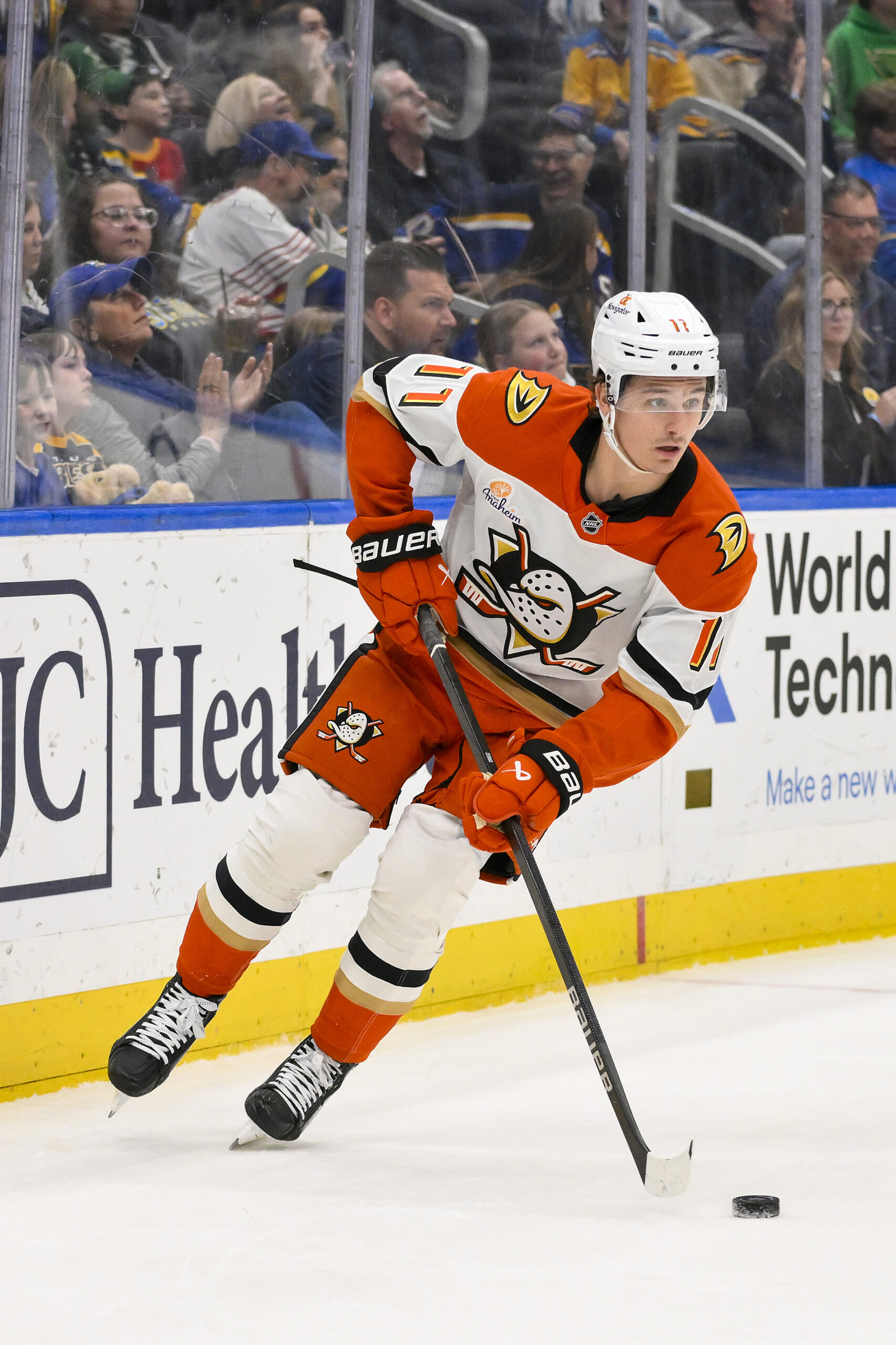 At one point, Zegras looked to be a long-term core fixture for the Ducks. He had a pair of 60-plus-point seasons in his first two NHL campaigns and things were looking up. However, injuries have been a problem for the last two years while his production took a big step downward and Anaheim GM Pat Verbeek decided to sell low, giving Zegras a fresh start along the way. He should slot in as a top-six forward right away, likely starting on the wing although he could get a look down the middle at some point. It’s a big year for him as he’s in the final season of a contract that pays $5.75MM per season, a number that will stand as his qualifying offer next summer. If things don’t go well again, he could wind up as a non-tender candidate, an outcome that would have seemed crazy when this deal was signed in 2023.
UFA Signings
F Rodrigo Abols (one year, $800K)^
F Christian Dvorak (one year, $5.4MM)
D Dennis Gilbert (one year, $875K)
D Noah Juulsen (one year, $900K)
F Lane Pederson (one year, $775K)*
G Daniel Vladar (two years, $6.7MM)
*-denotes two-way contract
^-denotes re-signing
Briere opted for the short-term overpayment to bring in help down the middle with Dvorak, a player who got back to the 30-point mark for the first time in three years last season. But while offensive production has been an issue for him, he is a reliable defensive center and well above average at the faceoff dot. Those elements will help the Flyers in the short term and if they wind up being outside the playoff picture in the second half, he’s someone they could retain on to help facilitate a move.
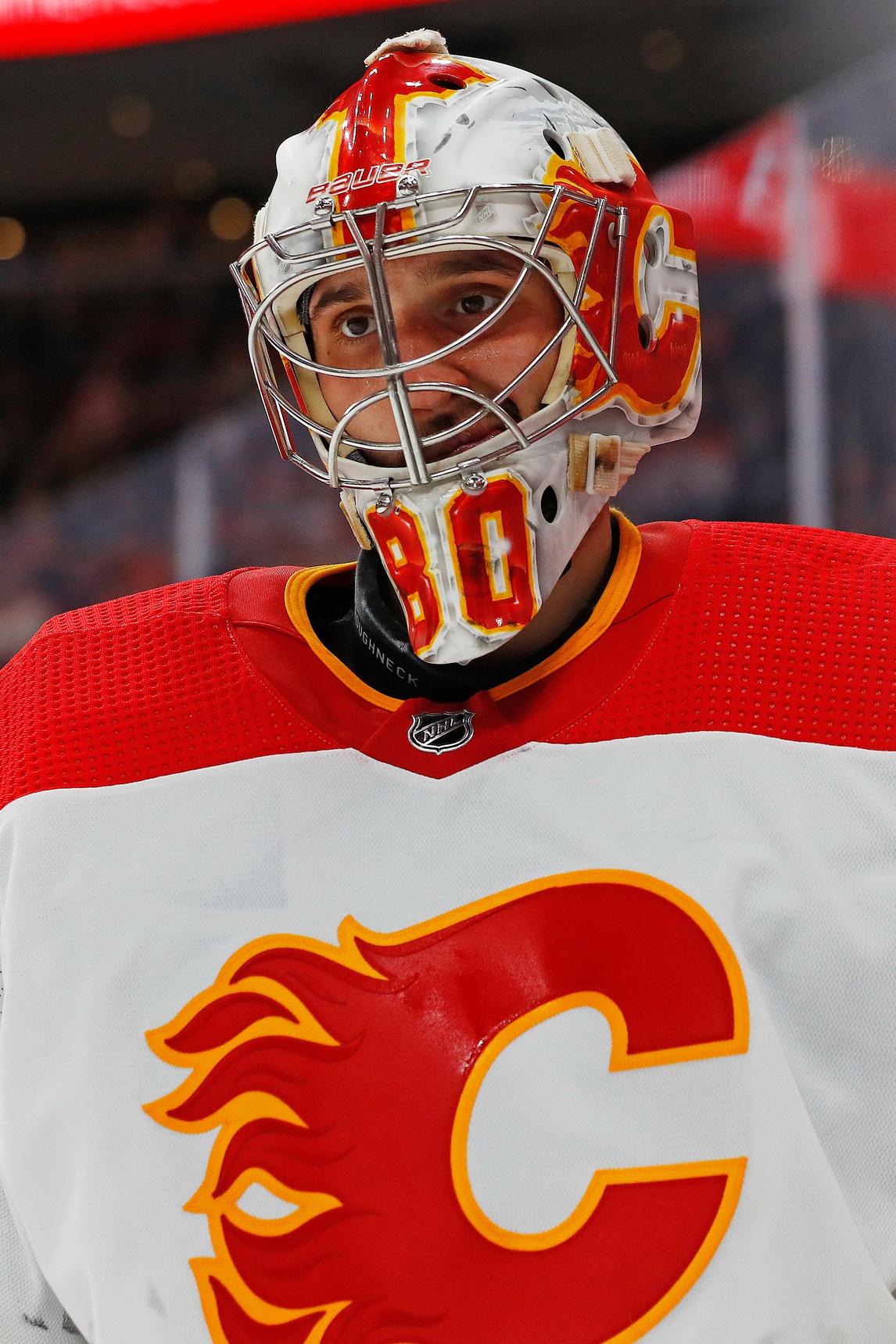 In a goalie market that didn’t have much depth at the start and lost some of that depth before free agency opened up, Vladar was one of the beneficiaries. He started last season as a platoon partner to Dustin Wolf, allowing the youngster to get eased into his first full NHL campaign. But in the second half, Wolf took over as the full-fledged starter with Vladar only making eight starts from February through April. Even so, he entered free agency as the top netminder available. Clearly, Briere thinks that Vladar has another level to get to and that he can compete for the starting spot in a goaltending group that is also bringing back all three goalies they had last season.
The additions of Juulsen and Gilbert give some extra depth and grit to a back end that isn’t expected to be fully healthy to start the season with Rasmus Ristolainen still recovering from triceps surgery. Juulsen is well-known to Tocchet who had him in Vancouver. When the group is fully healthy, however, playing time for both veterans could be hard to come by.
The re-signing of Abols and addition of Pederson helped shore up the club’s veteran depth, with both players expected to occupy roles either at the tail end of the club’s NHL roster or at the top of their AHL lineup. The Flyers signed Abols, 29, from the SHL last season and he rewarded them by scoring 32 points in 47 AHL games and five points in 22 NHL games. That quality performance earned him a significant raise from a $450k AHL salary to a full one-way deal.
For Pederson, this signing will present him with an opportunity to resume his place as one of the AHL’s more consistent scorers. Pederson’s 2024-25 season was limited to 18 games after the forward underwent season-ending shoulder surgery in February.
RFA Re-Signings
F Noah Cates (four years, $16MM)
F Tyson Foerster (two years, $7.5MM)
D Helge Grans (two years, $1.55MM)*
F Oscar Eklind (one year, $800K)
D Cameron York (five years, $25.75MM)
*-denotes two-way contract
The Flyers had a notable cohort of restricted free agents to re-sign this past summer, including three NHL regulars. The largest signing by total value was that of York, the club’s 2019 first-round selection. It was a difficult 2024-25 for York, without question. Late last season, he was benched for the entirety of the Flyers’ victory over the Montreal Canadiens, for reasons interim head coach Brad Shaw described as “disciplinary.” York reportedly had a verbal altercation with former coach John Tortorella, and his difficult season was compounded by a notable decline in some key personal statistics: his point total decreased from 30 in 2023-24 to 17 last season, and his time-on-ice per game went down nearly a full two minutes.
But despite York’s year to forget, the Flyers doubled down on the talented blueliner as a core piece for the next half-decade. York’s $5.15MM AAV is the second-highest among the club’s active defensemen, and its likely he’ll step into a top-pairing role alongside Travis Sanheim under new coach Rick Tocchet.
The second major name the Flyers re-signed was Foerster, a 2020 first-rounder who enjoyed career-best offensive production in 2024-25. Foerster is a natural goal-scorer and his total of 25 ranked second on the team, only behind star rookie Matvei Michkov. Foerster underwent offseason surgery after suffering an injury while representing Canada at the 2025 IIHF Men’s World Championship, but he’s expected to be ready to go in time of the start of the regular season. While the Flyers weren’t able to come to an agreement on a longer-term deal with Foerster, as long as he can continue his solid upwards trajectory (or at least repeat his scoring of last season) he should be able to provide the team with a solid surplus value on its $3.75MM AAV investment.
One of the more encouraging stories from the 2024-25 Flyers was the bounce-back season had by Cates, a reliable defensive center. Cates has been a developmental success story for the franchise as a 2017 fifth-rounder, and he came just one point shy of tying his career-high last year. After a difficult 2023-24 season saw his point total decline from 38 to 18, there was some question as to whether Cates would have the offensive chops be able to hold down a meaningful NHL role in the long term. He answered those questions emphatically in 2024-25, and the Flyers rewarded him with a four-year, $4MM AAV extension.
Grans and Eklind are not quite as high-profile players as the aforementioned trio, and that is reflected in the value of each player’s extension. The Flyers signed Eklind, 27, out of the SHL last year and he put together a decent debut season on North American ice. Veteran European pro free agent signings have a somewhat spotty record transitioning to the North American game, but Eklind managed to hold his own. He got into 64 games for the Phantoms and scored 22 points.
Grans, 23, is the 2020 35th-overall pick who the Flyers acquired in the 2023 Ivan Provorov trade. Grans played most of last season in Lehigh Valley, scoring eight points in a largely shutdown role. His defensive abilities earned him his first NHL call-up, and he ended up dressing for six games with the Flyers last year. Grans is subject to waivers, but the second season on his new contract at a full one-way, $800k price tag could provide the Flyers with some degree of protection against a claim. The added financial commitment could potentially motivate an interested team to go in a different direction on the waiver wire, assuming Grans does not make the Flyers’ opening-night roster.
Departures
F J-R Avon (trade with Seattle)
D Louis Belpedio (signed with Washington)
F Elliot Desnoyers (signed with Iowa, AHL)
F Rhett Gardner (signed in Russia)
D Ben Gleason (signed with Minnesota)
F Olle Lycksell (signed with Ottawa)
G Eetu Makiniemi (signed in Finland)
F Jakob Pelletier (signed with Tampa Bay)
G Calvin Petersen (signed with Minnesota)
F Ryan Poehling (trade with Anaheim)
F Givani Smith (signed PTO with Carolina)
F Zayde Wisdom (signed with Lehigh Valley, AHL)
*-denotes two-way contract
The Flyers’ most significant departure, from a financial perspective, undoubtedly Petersen. The veteran netminder played in just five total games for the Flyers across his two-year stint in the organization, and the expiration of his contract provided Briere with an additional $5MM in cap space to work with.
The most consequential loss, from an on-ice perspective, is the inclusion of Poehling in the trade that brought Zegras to Philadelphia. Poehling is not a star player by any means, but he scored 12 goals, 31 points, and had developed into a meaningful member of the team’s bottom-six. In Philadelphia, Poehling was able to reach new heights as an NHLer, not only setting career-highs in production but also serving a useful role on Tortorella’s penalty kill. With that said, Briere’s investment in Dvorak (who plays a similar role to Poehling) should help the club absorb his loss.
Lycksell, 26, led AHL Lehigh Valley in scoring last season, but the Flyers elected not to re-sign the player after he put up just 10 points across almost 40 NHL games between 2023-24 and 2024-25. Pelletier, a 2019 first-round pick of the Calgary Flames, was acquired via trade by the Flyers but only managed eight points in his 25-game stay with the club, and was not retained.
Salary Cap Outlook
At first glance, the $370K in cap space they’re listed at per PuckPedia looks concerning. However, they do have more flexibility than this. If Ivan Fedotov is waived and demoted as expected, that would open up $1.15MM in room. Additionally, Ryan Ellis is LTIR-eligible and is out for the season, meaning Philadelphia would get the full $6.25MM (less cap space at the time of placement), not the reduced amount for players expected to return in-season. While going into that would open up the potential for bonus carryover penalties, it would give them ample protection against a rash of injuries or would allow Briere to try to add a player should the Flyers find themselves in the playoff picture when the trade deadline comes around in March.
Key Questions
Will Vladar Stabilize The Goaltending?
The Flyers have long been believers in the potential of Samuel Ersson, who has been a nice find for the team since being drafted 143th overall in 2018. But Ersson, now 25, has looked overwhelmed at times as the club’s go-to number-one netminder since the departure of Carter Hart, and his overall body of work simply has not been good enough. Ersson put together an .890 save percentage across 51 games in 2023-24, and a very poor .883 mark this past season. Among goalies who played in at least 30 games last season, Ersson’s .883 save percentage ranked second-worst in the NHL, ahead of only recent Sabres signing Alexandar Georgiev. (.875)
While the Flyers are likely still believers in Ersson, and he remains overwhelmingly likely to play a solid role for the team moving forward, the team did bring in some additional help at the position. Philadelphia added Vladar, who played in 30 games last season and posted an .898 save percentage. While it is relatively unlikely that Vladar, 28, will suddenly transform into an elite netminder, it is somewhat more reasonable to expect him to be able to help stabilize the position for the organization. Vladar has put together some quality stretches over the course of his 105-game NHL career thusfar, and he has the opportunity to get a more consistent diet of starts with the Flyers than he was able to get in Calgary. The Flyers have quite a few question marks across their roster as they attempt to re-tool and return to the playoffs, but perhaps no player on the team has a greater opportunity to make his mark than Vladar.
How Will Michkov’s Sophomore Year Go?
Michkov, the 2023 seventh-overall pick, was one of the most highly-regarded prospects in hockey and his debut in Philadelphia was met with sky-high expectations. The 20-year-old Russian phenom more than met those lofty standards, coming second on the team in scoring with 26 goals and 63 points. Michkov possesses rare offensive talent, and it’s easy to imagine him quickly becoming the team’s most lethal scoring threat – if he isn’t there already.
The importance of Michkov to the Flyers’ future cannot be overstated. That is why one of the key storylines for the club’s upcoming season will be whether Michkov is able to avoid the dreaded sophomore slump, continue to grow offensively, and find a way to round out his game a little more on the other end of the ice. Nobody should expect Michkov to grow into a suffocating defensive force, and Michkov would probably not be best served trying to make too many drastic changes to how he plays. But NHL coaches have high expectations for their players in terms of defensive responsibility, and Michkov at times fell short of those expectations in his nonetheless brilliant rookie season. If Michkov can find a way to more sustainably balance his lethal offensive instincts with a reasonable level of commitment to defense that satisfies Tocchet, he could reach new heights of stardom and surpass Travis Konecny as the Flyers’ most valuable all-around force.
Will The Duo of Former Top Ducks Picks Take Needed Steps Forward?
Through two separate trades, the Flyers were able to acquire the two top-ten draft choices the Ducks made between 2019 and 2020: Zegras and Jamie Drysdale. Zegras is entering his first season in Philadelphia, and has a clear mandate entering an extremely important 2025-26 season: show he can still be the kind of impactful, high-level contributor he was early in his tenure with the Ducks. Injuries and inconsistent play have dimmed Zegras’ star quite a bit since he broke into the league with back-to-back 60-plus point seasons in his first two full NHL campaigns. The Flyers will be hoping that a change of scenery will do wonders in helping Zegras return to his formerly dynamic offensive identity.
As for Drysdale, 2025-26 will be his third season wearing Flyers orange, and he’s in a situation with some key similarities, and important differences, to Zegras. Drysdale has also had to deal with persistent injury trouble, although he did manage to get into 70 games for the club last season. For Drysdale, the challenge has been finding a way to make a consistent, high-level impact on both ends of the ice. Drysdale has the pedigree and potential to be a key two-way force for the Flyers, but with his contract set to expire at the end of the year, he’ll need to take some concrete steps forward to maintain his place at (or near) the center of the team’s future plans.
Ethan Hetu also contributed to this column.
Photos courtesy of Jeff Curry and Perry Nelson-Imagn Images.
Salary Cap Deep Dive: St. Louis Blues
Navigating the salary cap is one of the most important tasks for a front office. Teams that can avoid total cap chaos by walking the tightrope of inking players to deals that match their value (or compensate for future value without breaking the bank) remain successful. Those who don’t often see struggles and front office changes.
PHR will look at every NHL team and give a thorough look at their cap situation for the 2025-26 season. This will focus more on players who are regulars on the roster versus those who may find themselves shuttling between the AHL and NHL. All cap figures are courtesy of PuckPedia. We’re currently covering the Central Division, next up are the Blues.
St. Louis Blues
Current Cap Hit: $94,874,849 (below the $95.5MM Upper Limit)
Entry-Level Contracts
D Logan Mailloux (one year, $875K)
F Jimmy Snuggerud (two years, $950K)
Potential Bonuses
Snuggerud: $800K
Snuggerud joined St. Louis for the stretch run last season after his college campaign ended and made a solid first impression with four points in seven games while adding four more in their first-round loss to Winnipeg. He should land a middle-six role, giving him a shot at reaching some of his ‘A’ bonuses. He’s someone that, if all goes well, they’d want to sign long-term but with several other core youngsters up by then, can they afford to do so?
Mailloux came over from Montreal in a one-for-one swap for Zachary Bolduc in a swap of 2021 first-round picks. He has shown plenty of offensive promise in his first two seasons and should have a chance to come in and be a secondary contributor on their back end. At this point, it’s likely he’ll land a bridge agreement which, depending on his production this season, could plausibly run anywhere between $1.5MM and $2.5MM.
Signed Through 2025-26, Non-Entry-Level
D Philip Broberg ($4.581MM, RFA)
D Cam Fowler ($4MM, UFA)*
F Dylan Holloway ($2.29MM, RFA)
D Matthew Kessel ($800K, RFA)
F Mathieu Joseph ($2.95MM, UFA)
F Oskar Sundqvist ($1.5MM, UFA)
F Alexandre Texier ($2.1MM, RFA)
F Alexey Toropchenko ($1.7MM, UFA)
F Nathan Walker ($775K, UFA)
*-Anaheim is retaining an additional $2.5MM on Fowler’s contract.
Joseph was acquired from Ottawa with St. Louis picking up a third-round pick to take on the rest of his contract. He wasn’t particularly impactful in his first season with the Blues and while he’s only a year removed from a 35-point year, a similar showing in 2025-26 could have his next deal coming closer to half of this amount. On the other hand, Holloway is on the rise. Acquired for a third-round pick via the offer sheet (not the one they got to take on Joseph), he had a breakout year with 63 points, good for third on the team in scoring. With arbitration rights next summer, a similar showing this season could have him more in the $7MM range on a long-term deal. What a difference a year can make after being limited on the depth chart in Edmonton.
Texier was also brought in last summer with the hopes that a change of scenery could help him most consistently show the upside he briefly displayed with Columbus. Instead, injuries were once again an issue and his playing time was a career-low when he was in the lineup. At this point, he might be a non-tender candidate or needing to sign for close to his $2.1MM qualifying offer. Toropchenko surprisingly signed this one-year deal last October and while he brought plenty of physicality, he also only scored four goals in 80 games. A small raise could nonetheless come his way but if he remains around the 20-point range, he should land somewhere around the $2.25MM mark next year.
Sundqvist has been an effective bottom-six center for a good chunk of his two stints with St. Louis but still had to settle for a minimum contract just two summers ago. He’s done enough to earn a small raise but given his market limitations the last time he tested the market, it might only be worth a few hundred thousand per season. Walker had his best season in 2024-25, becoming more of an every-game player but his overall track record remains that of a depth piece. The increase to the minimum salary guarantees him a raise to $850K and it’s possible he can do a little better than that.
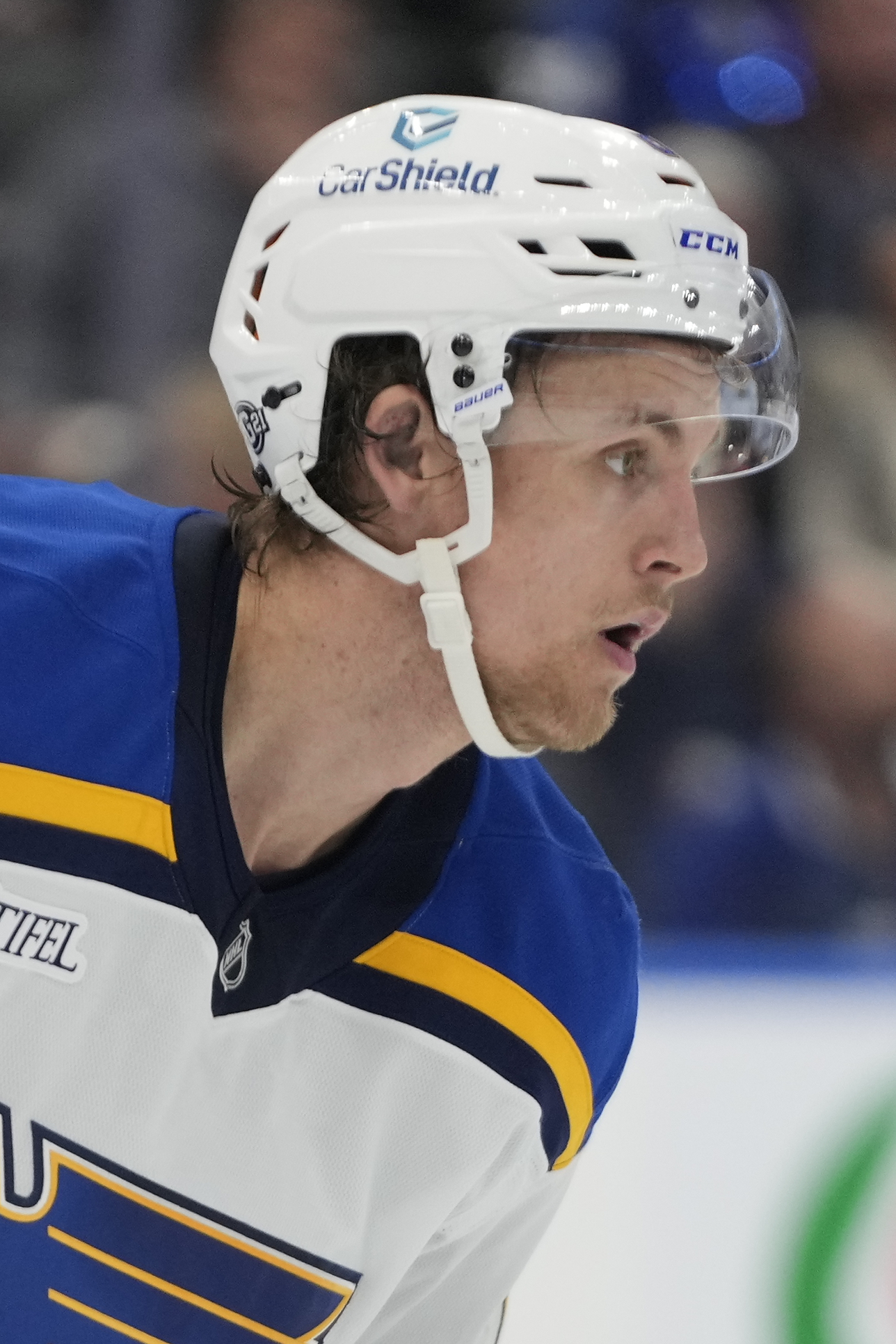 Broberg’s offer sheet was much riskier than Holloway’s given the higher cap hit associated with it and what was at the time a very limited track record. But the opportunity to play regular minutes in the top four for the first time in his career helped him break out and look more like the player Edmonton hoped he’d be when they drafted him eighth overall in 2019. Now, the deal has gone from a risky one to a team-friendly pact. Also like Holloway, Broberg will be arbitration-eligible next summer, putting him in a position for a big jump again. A long-term pact will likely run them past the $7MM mark while if they needed short-term flexibility, a one-year deal could be an option but still might check in around $6MM.
Fowler was an impactful pickup by GM Doug Armstrong early in the season as he stepped right into a top-four role. For the portion that they’re paying him, he’s a nice bargain. While he’s unlikely to command a price tag at the full portion of his current deal ($6.5MM), it’ll take more than what the Blues are currently paying him to keep him around. A two-or three-year deal around the midpoint of those two numbers might be enough. Kessel technically needs to play in ten NHL games to remain a restricted free agent, otherwise he’s a Group Six unrestricted free agent. Last season wasn’t as good as the year before in the NHL but he’s now waiver-eligible and should be up with St. Louis for the full campaign. If he can lock down a full-time role, he could plausibly double his current cost. If he’s more of a depth option, then something a little over the $1MM mark might make sense.
Signed Through 2026-27
G Jordan Binnington ($6MM, UFA)
F Nick Bjugstad ($1.75MM, UFA)
D Justin Faulk ($6.5MM, UFA)
G Joel Hofer ($3.4MM, RFA)
D Torey Krug ($6.5MM, UFA)
F Jake Neighbours ($3.75MM, RFA)
F Pius Suter ($4.125MM, UFA)
D Tyler Tucker ($925K, UFA)
Suter had a breakout year with Vancouver and with so few centers on the open market, it looked like he was poised to cash in. Instead, while he landed a nice raise over the $1.6MM he made in each of the last two years, only securing two seasons was a bit surprising. If he reverts to being more of a third liner as he has been, it’s still not really an overpay, making it a low-risk addition. Clearly, teams want to see him repeat his 46 points before committing big term and big dollars.
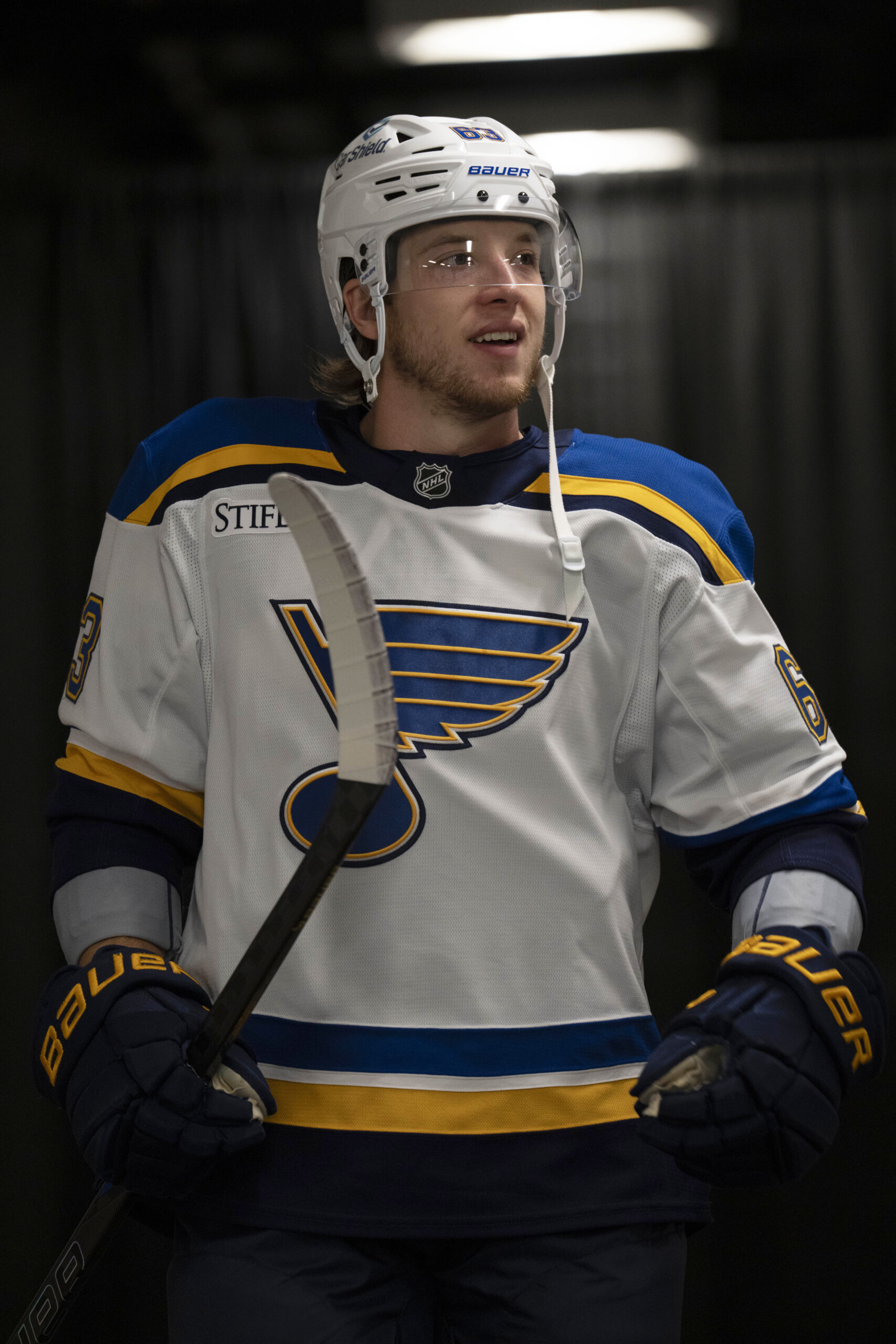 Neighbours continued to show steady improvement but St. Louis wasn’t in a spot to give him a long-term deal, making it another bridge pact. His production hasn’t quite taken off as much as Holloway’s but as a power forward, even maintaining a point total in the mid-40s would have him set for a notable raise on his $4MM qualifying offer. If he continues to progress, he could very well double his current cap charge. Bjugstad had a strong first year in Arizona but struggled last season with Utah which hurt his market. Still, he has been more of a bottom-six producer for the most part in recent years and at this price tag, there isn’t much risk.
Let’s get Krug out of the way quickly. He won’t play this season and probably won’t play next year, meaning he’ll again be LTIR-eligible. Under the new rules, St. Louis would get the full allotment of LTIR room (minus any amount they’re below the cap when they place him there.) Doing so means they can’t accrue cap space and any bonuses hit roll over to 2026-27 so their preferred method at this point is probably trying to avoid it. But while the LTIR change will affect a lot of teams and players this season, Krug will be one of the exceptions.
Faulk is not the higher-end offensive threat he was in his prime and as he nears the 1,000-game mark with the minutes he’s logged, he could start to wear down before too much longer. Nonetheless, he was still an all-situations top-pairing piece in terms of usage last season so even with the drop in production, they’ve still received a reasonable return in recent years. But if the drop continues, he will wind up with a drop of a couple million or so on his next contract. Tucker cleared waivers back in October but wound up playing a relatively regular role in the second half on the third pairing, a role he might be able to reprise. If he can become a full-timer, things will be looking up two years from now when doubling this could be an option. But if he remains more of a reserve player, he’ll stay in that range of being a little above the minimum salary.
It hasn’t always been pretty with Binnington on this contract with there being more ups and downs than teams typically like from their starter. But the good generally has outweighed the bad while he has been one of the workhorses around the league in recent years. Since he’s not in that top tier, he probably isn’t going to be able to reach the $8MM level that a few have hit but another multi-year pact at or even a little above this price point is feasible. As the Blues have done several times with their players, Hofer also received a bridge deal, one that gives them more time to assess if he can ultimately supplant Binnington as the starter. If so, he could land around where Binnington is now. If not, he likely wouldn’t get a big jump off where he is now as the high-end backup ceiling isn’t much higher than this at the moment.
Signed Through 2027-28
F Brayden Schenn ($6.5MM, UFA)
After two of his better offensive seasons in 2021-22 and 2022-23, Schenn’s production has come down over the last couple of years to more around the 50-point mark. Considering his physicality and the fact he plays center, this still isn’t a terrible price tag for someone who is deployed as a second liner. But with over 1,000 games under his belt now and the style he plays, there are going to be some concerns about his ability to provide similar value over these final three years.
Salary Cap Deep Dive: Nashville Predators
Navigating the salary cap is one of the most important tasks for a front office. Teams that can avoid total cap chaos by walking the tightrope of inking players to deals that match their value (or compensate for future value without breaking the bank) remain successful. Those who don’t often see struggles and front office changes.
PHR will look at every NHL team and give a thorough look at their cap situation for the 2025-26 season. This will focus more on players who are regulars on the roster versus those who may find themselves shuttling between the AHL and NHL. All cap figures are courtesy of PuckPedia. We’re currently covering the Central Division, next up are the Predators.
Nashville Predators
Current Cap Hit: $86,158,961 (below the $95.5MM Upper Limit)
Entry-Level Contracts
F Zachary L’Heureux (one year, $863.3K)
F Fedor Svechkov (one year, $925K)
F Matthew Wood (two years, $950K)
Potential Bonuses
Svechkov: $212.5K
Wood: $500K
Total: $712.5K
Wood signed late last season after finishing up his college campaign and held his own in limited action. Assuming he remains in his bottom-six role to start this year, it seems unlikely he’ll hit either of his ‘A’ bonuses and that would have him safely on the path to a bridge deal. Svechkov came up in late November and never looked back although his production was rather limited. It seems likely he’ll get a bigger opportunity this season which could give him an outside chance at his ‘A’ bonus. But barring a huge uptick in production, he’s also likely heading for a bridge deal, one that should push past the $2MM mark if he remains a regular this season.
L’Heureux spent most of the season with the Predators where he brought plenty of physicality but not a ton of production to the table, understandable given his limited role. Like the others, the offense simply isn’t there to justify a long-term deal so he’s also heading for a bridge deal, one that again should come in around $2MM if this season is a repeat of last.
Signed Through 2025-26, Non-Entry-Level
G Justus Annunen ($837.5K, RFA)
D Justin Barron ($1.15MM, RFA)
D Nick Blankenburg ($775K, UFA)
F Michael Bunting ($4.5MM, UFA)
D Andreas Englund ($775K, UFA)
F Erik Haula ($3.15MM, UFA)
F Michael McCarron ($900K, UFA)
D Jordan Oesterle ($775K, UFA)
F Cole Smith ($1MM, UFA)
D Spencer Stastney ($825K, RFA)
Bunting was brought in near the trade deadline with GM Barry Trotz opting for a player-for-player swap instead of being a straight seller. He hasn’t had the same type of success offensively since leaving Toronto and will need to push that point total more toward the mid-40s if he wants any sort of notable raise. Otherwise, another contract in this range seems likely. Haula came over from New Jersey this summer following a tough year although he’s averaged 40 points over the previous three seasons. If he gets back to that range, he should be able to get a raise and another multi-year pact, even at 35, which he’ll be in March. If this winds up being a repeat of last season, he might still be able to get two years but it’d be surprising to see him match let alone beat this price tag.
Smith saw his point total drop by nearly half last season despite nearly identical playing time. Still, he’s a big part of their penalty kill and throws the body around. A late-bloomer (he wasn’t a regular until 27), Smith has enough of a track record now that he could conceivably double his current price tag even with the limited output. McCarron hasn’t lived up to his draft billing but has settled in as a serviceable bottom-six checking center who is above-average at the faceoff dot and plays with an edge. Those elements will be appealing which could plausibly allow him to push past $2MM next summer.
Barron was acquired from Montreal midseason in another player-for-player swap, this time with veteran Alexandre Carrier going the other way. While the change of scenery allowed Barron to play a much bigger role, he didn’t do a whole lot with it. Still, he’s likely to push past the 200-game mark this coming season and will have arbitration eligibility this time around with a $1.2MM qualifying offer. Doubling that might be tough but he could come close.
The other four blueliners are all in a similar boat. They’ve been fringe third-pairing defenders in recent years while also seeing time in the minors. Two or three will make the team and if one stands out, he could push past $1MM next summer. The rest will likely stay at the league minimum salary which jumps to $850K in 2026-27. Notably, Stastney will need to play in at least 29 NHL games this season to retain his RFA rights. Otherwise, he’ll become a Group Six unrestricted free agent.
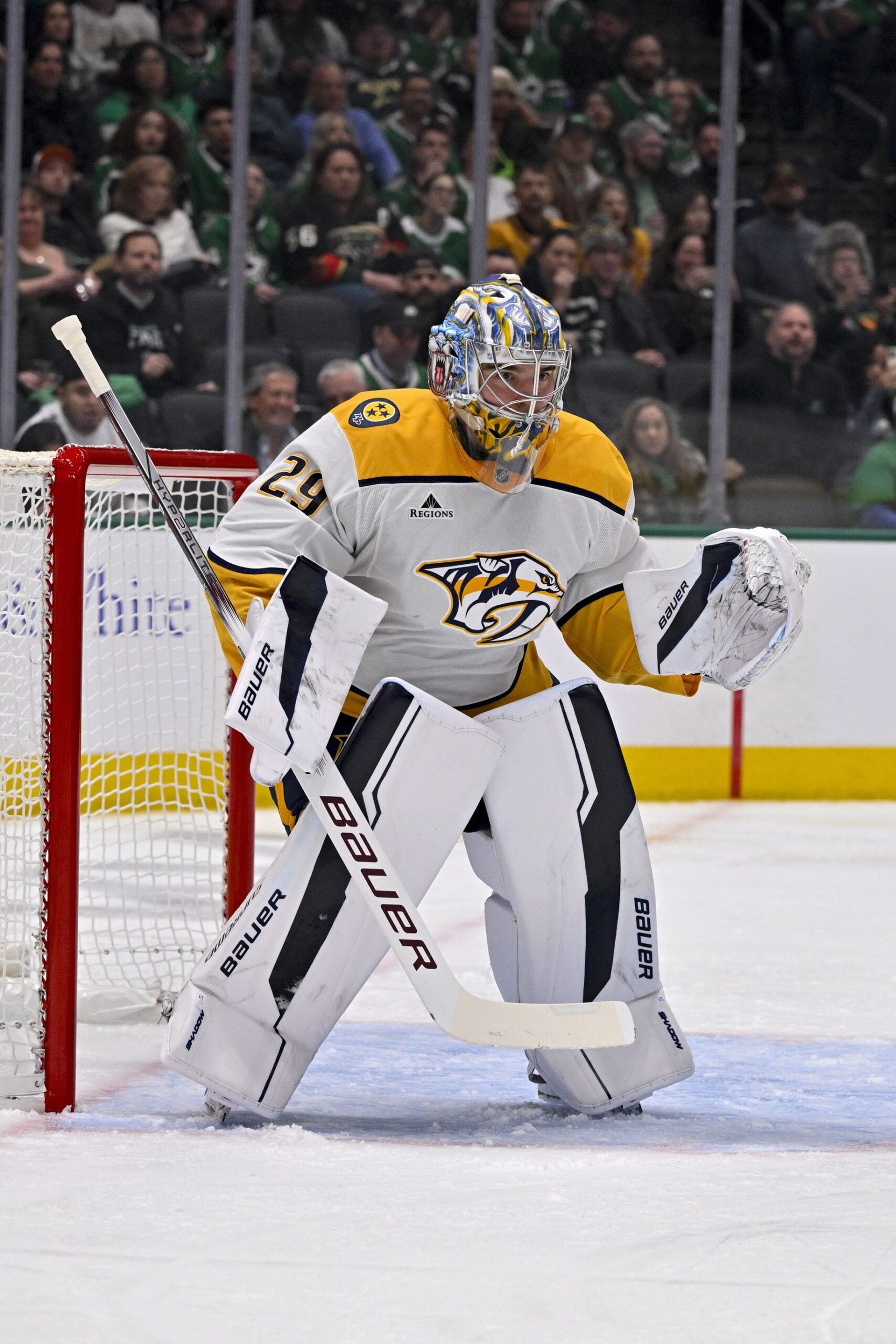 Annunen played a little better after coming over in an early-season trade from Colorado but his numbers were still below average. Just 25 with a fairly limited track record at the top level, it’s not a situation where Nashville should be looking to give up on him but he hasn’t shown enough to earn a long-term pact either. He has one RFA-eligible year left after this and the prudent move for both sides might be another two-year deal, one that would push the price to around $1.5MM, giving him a bit of stability while allowing the team a bit more time to evaluate his longer-term fit as the second-string option. If he bounces back with more of an NHL-average year, the cost could come closer to $2MM on that deal.
Signed Through 2026-27
D Nicklaus Perbix ($2.75MM, UFA)
F Ryan O’Reilly ($4.5MM, UFA)
As was the case with most of their veterans last season, O’Reilly underachieved offensively but he was still a two-way contributor. Between that and his contract, he was highly sought after at the trade deadline but nothing materialized. Even with the drop in production, this is a more than acceptable price tag for O’Reilly for now but at 34 with a lot of miles on him, that could change. Assuming he stays in this range a little longer, he could still beat this on a short-term deal two years from now.
Perbix comes over from Tampa Bay where he saw his playing time drop by more than two minutes a game last season. However, he has shown himself to be a capable third-pairing option, with some underlying numbers suggesting he could be capable of more. This contract suggested teams weren’t willing to bank on that just yet but if he can latch on to a bigger role, his next deal could land closer to the $3.75MM mark. If not, this is a reasonable floor for a third-pairing right-shot piece.
Signed Through 2027-28
D Roman Josi ($9.059MM, UFA)
F Steven Stamkos ($8MM, UFA)
Stamkos leaving the Lightning last summer was quite a surprise for many but his performance last season suggests Tampa Bay was wise to hold firm to their number which was lower than what Stamkos wanted. While 53 points is still respectable, that’s not worthy of an $8MM price tag and at 35, there is some concern that the decline will continue. If so, this could be a troublesome contract before long while a rebound would only delay those concerns a little longer.
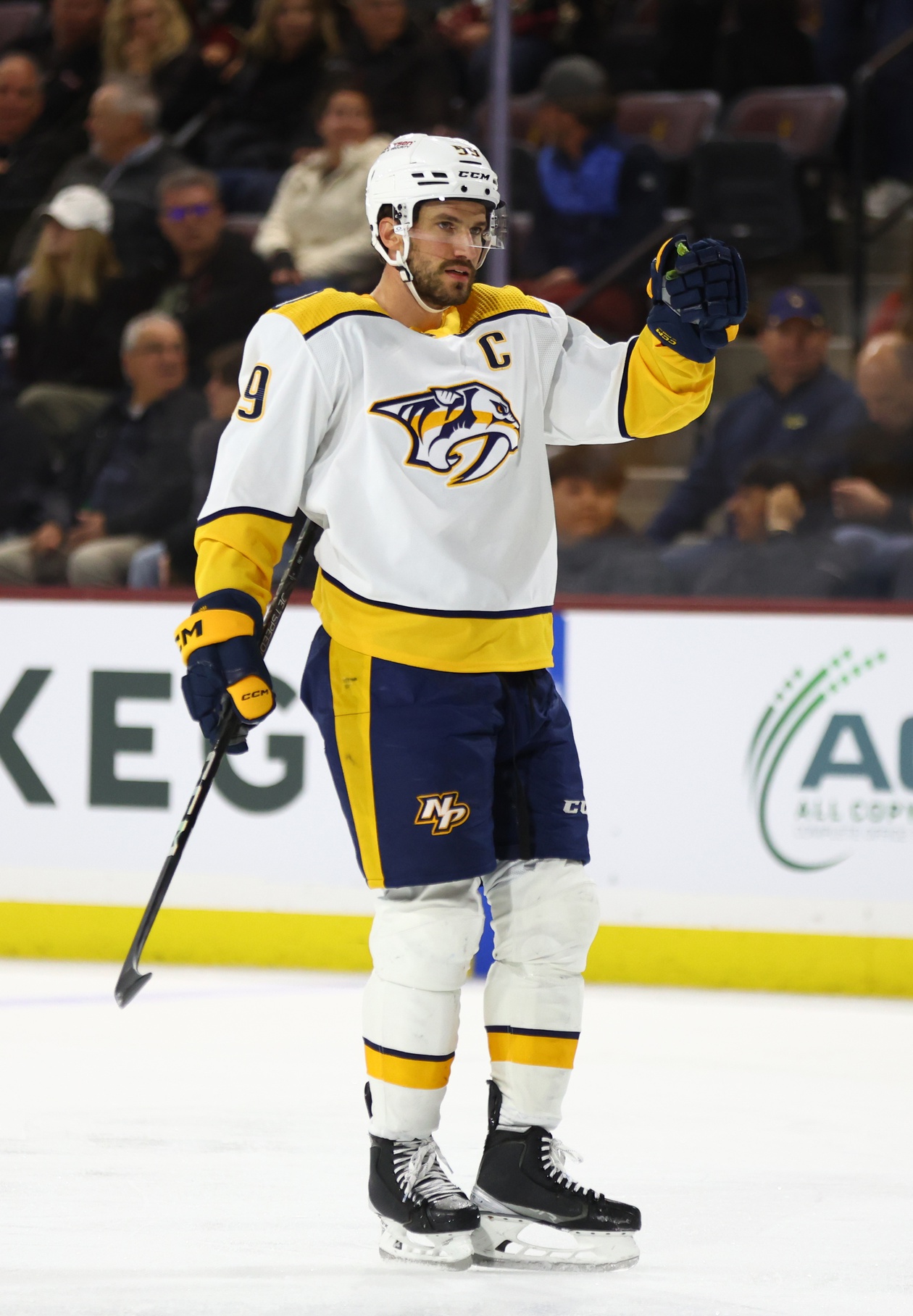 When healthy, Josi remains a legitimate all-situations number one defenseman. And this price tag for that type of role is a team-friendly one. However, Josi missed a big chunk of last season with what was eventually labelled as Postural Tachycardia Syndrome and while the team announced that he is recovering well and should be ready to start this season, it’s something that doesn’t have a cure, only treatments. Now 35, a decline in performance should be coming at some point soon and there could be some lingering concern from his diagnosis. With that in mind, it wouldn’t be surprising to see the team try to manage Josi’s minutes a bit more moving forward, perhaps not having him in that high-end number one role.
Summer Synopsis: Pittsburgh Penguins
With training camps now just a couple of weeks away, the bulk of the heavy lifting has been done from a roster perspective. Most unrestricted free agents have found new homes, the arbitration period has come and gone, and the trade market has cooled. Accordingly, it’s a good time to take a look at what each team has accomplished this offseason. Next up is a look at Pittsburgh.
The Penguins have been at a crossroads for a little while now but it appears that they’re now set to take a bit of a step back to focus on the future. Dan Muse takes over from Mike Sullivan behind the bench with an eye on player development although Pittsburgh will be entering training camp with the oldest roster in the NHL. That will likely change at some point during the season if the standings dictate a sell-off of players as expected.
Draft
1-11 – F Benjamin Kindel, Calgary (WHL)
1-22 – F Bill Zonnon, Rouyn-Noranda (QMJHL)
1-24 – F William Horcoff, Michigan (Big 10)
2-39 – D Peyton Kettles, Swift Current (WHL)
3-73 – D Charlie Trethewey, U.S. U18 (NTDP)
3-84 – G Gabriel D’Aigle, Victoriaville (QMJHL)
3-91 – D Brady Peddle, Waterloo (USHL)
4-105 – F Travis Hayes, Sault Ste. Marie (OHL)
5-130 – F Ryan Miller, Portland (WHL)
5-148 – D Quinn Beauchesne, Guelph (OHL)
5-154 – F Jordan Charron, Sault Ste. Marie (OHL)
6-169 – F Carter Sanderson, Muskegon (USHL)
7-201 – F Kale Dach, Sherwood Park (BCHL)
GM Kyle Dubas went into the draft with the most picks and was particularly active on the trade front, including trading down from 12 to 22 and then flipping one of the firsts acquired in that swap to move up to 24. For good measure, he swung two more swaps on the second day of the draft. Interestingly, at a time when a lot of teams mix in some international picks, all 14 of their selections played in North America last season.
Kindel was a surprising selection at 11th overall. Viewed as likely to land more in the late teens or early 20s, he wound up nearly going in the top ten with Pittsburgh believed to have tried to move up to make sure they got him. He plays with the type of pace that Dubas is hoping the Penguins will one day get to as their roster eventually gets younger and while he’s a little undersized, he profiles as a top-six piece for them. Kindel has played down the middle at times and if he’s able to stick at that position in the pros, he’ll become that much more valuable.
Zonnon is another player who went a bit earlier than expected with most of his rankings ranging from the late 20s to the early 40s. Like Kindel, he brings a lot of offensive creativity to the table as Pittsburgh’s early goal in the draft was clearly to increase their skill. Horcoff was another player picked well above his rankings but as a six-foot-five center, that was bound to happen. He wasn’t much of a difference-maker in the USHL but a midseason move to the University of Michigan helped his offensive game and certainly contributed to his rise on rankings lists. He might ultimately pan out as a two-way third liner but those players can be quite impactful overall. None of these three picks are likely to push for a spot with the big club for at least a couple of years.
In terms of their selections on the second day, they went in a different direction. Kettles is a big shutdown defenseman who profiles as someone who might best fit in on the third pairing but whose size and reach should cause some havoc if he develops as planned. Trethewey came into the season as a projected first-round pick, even slotting in with a lottery ranking in some preseason lists. But his season with the US National Team Development Program wasn’t as impactful as hoped. The raw tools are there to be a potential top-four selection but he’s someone who might wind up being a longer-term project.
D’Aigle was an interesting pick as he struggled mightily last year with QMJHL Victoriaville to the tune of a 4.53 GAA. But the Tigres were a weak team and at six-foot-four, he has the size that teams covet between the pipes. Peddle is a physical blueliner who wasn’t able to produce much in the USHL during the regular season although he flashed a little more upside in the postseason. He’ll move to the QMJHL this season and then head to college; both of these players are longer-term picks as well, a theme that can be said for most of the rest of their selections.
Trade Acquisitions
D Connor Clifton (from Buffalo)
D Mathew Dumba (from Dallas)
G Arturs Silovs (from Vancouver)
While Clifton and Dumba are veteran right-shot defensemen (the side teams typically covet), their additions were more about the second-round picks that accompanied them than they were about adding the players. Clifton will add some grit on the third pairing while Dumba may be in tough to simply crack the lineup. Both players are pending unrestricted free agents and likely won’t be part of their plans beyond this season.
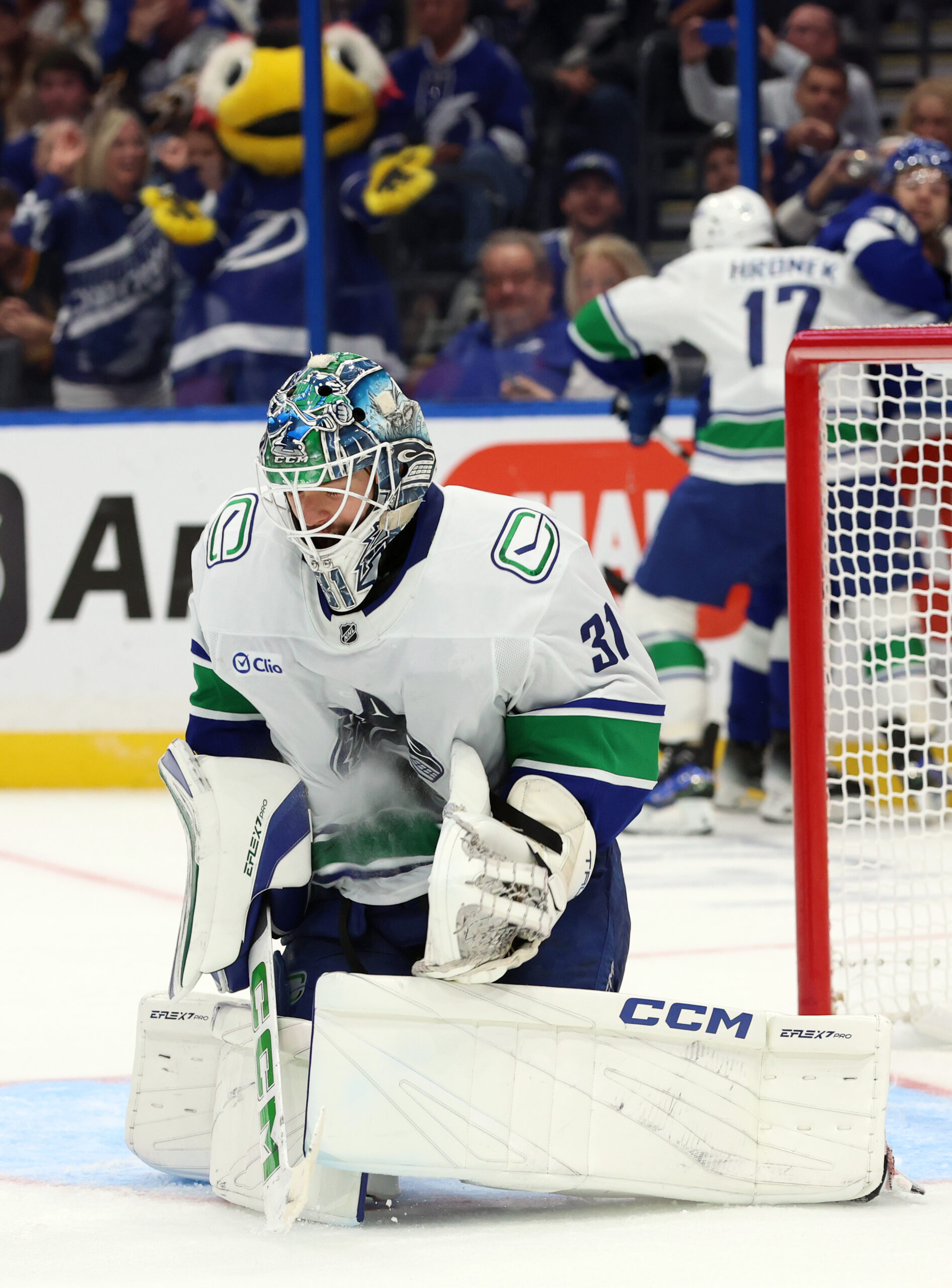 That isn’t the case for Silovs. While he struggled considerably in limited action with Vancouver last season, he held his own when a pair of injuries pressed him into their starting role in the playoffs the year before. He was the top goalie at the Worlds in 2023 and the AHL Playoff MVP this spring with Abbotsford and while it was widely expected that the Canucks would have to waive him with their veteran tandem now in place for several years, Dubas decided to jump the queue and swing a trade for him. He’ll go into training camp as the likely backup goalie with a chance to push for a bigger role if he fares well early on. He has a 3.13 GAA and a .880 SV% in his first 19 NHL regular season games.
UFA Signings
D Alexander Alexeyev (one year, $775K)
F Justin Brazeau (two years, $3MM)
F Connor Dewar (one year, $1.1MM after non-tender)^
F Rafael Harvey-Pinard (one year, $775K)*
F Bokondji Imama (one year, $775K)*^
D Caleb Jones (two years, $1.8MM)
D Philip Kemp (two years, $1.55MM)*
F Joona Koppanen (one year, $775K)*^
G Filip Lindberg (signed in Finland)
F Anthony Mantha (one year, $2.5MM plus $2MM in bonuses)
F Philip Tomasino (one year, $1.75MM after non-tender)^
D Parker Wotherspoon (two years, $2MM)
*-denotes two-way contract
^-denotes re-signing
Mantha was easily Pittsburgh’s most intriguing addition this summer. At his best, he has been an impactful top-six forward but consistency has been a challenge. Signed by Calgary last summer in effectively the same type of situation the Penguins are in now, he suffered a torn ACL barely a month into the season, making him eligible for performance incentives which are tied to games played. A good showing could be enough to convince Dubas that he’s worth keeping around a little longer or he could ultimately find himself on the trade block a few months from now. While most of their additions were of the depth variety, Mantha is one who brings a bit of upside if he stays healthy.
Tomasino and Dewar were both non-tendered to avoid salary arbitration but re-signed fairly quickly after the free agent market opened up. Tomasino got off to a tough start in Nashville and was flipped to Pittsburgh in November for a future fourth-rounder. He was able to hold down a regular role (when healthy) with the Penguins but still didn’t show the top-six upside he had at the beginning of his career. He remains RFA-eligible moving forward but will remain a non-tender candidate because of the arbitration rights. Dewar played sparingly with Toronto last season and was moved in a cap-clearing deal at the trade deadline. The change of scenery allowed him to play a bigger role and with seven points in 17 games following the swap, he did well enough to earn another chance. He and Tomasino should be in the mix for bottom-six roles.
Brazeau will also be a part of that mix. He only played his first full NHL campaign last season, splitting time between Boston and Minnesota in largely a fourth-line role. Given the later start to his NHL career, the 27-year-old still could have a bit of upside; otherwise, he’ll likely reprise that fourth-line role with the Penguins. Wotherspoon also played his first full NHL season in 2024-25 at the age of 27. He quietly logged 18 minutes a night for Boston and with the left side of Pittsburgh’s back end not particularly strong at the moment, he could have a chance to play a bigger role. Jones and Alexeyev also have NHL experience and could find themselves in the mix for a spot in training camp.
RFA Re-Signings
None. Pittsburgh non-tendered all of their restricted free agents except for one (who had already signed in the KHL). Dewar and Tomasino were eventually retained but as UFAs as noted earlier.
Departures
F Raivis Ansons (signed with Wilkes-Barre/Scranton, AHL, NHL rights relinquished)
D Isaac Belliveau (trade with Buffalo)
F Emil Bemstrom (signed in Switzerland)
F Kasper Bjorkqvist (signed in Finland)
D Nathan Clurman (signed with Montreal, one year, $775K)*
G Taylor Gauthier (signed with Wilkes-Barre/Scranton, AHL, NHL rights relinquished)
D Matt Grzelcyk (unsigned)
D Mac Hollowell (signed in Russia)
F Jimmy Huntington (signed with San Jose, one year, $775K)*
D Vladislav Kolyachonok (trade with Dallas)
D Filip Kral (signed in Czechia)
F Marc Johnstone (signed with Toronto, AHL)
D Pierre-Olivier Joseph (signed with Vancouver, one year, $775K)
F Mathias Laferriere (signed in Slovakia)
G Alex Nedeljkovic (trade with San Jose)
F Matthew Nieto (unsigned)
D Colton Poolman (unsigned)
F Vasiliy Ponomarev (signed in Russia, Pittsburgh retains his RFA rights)
F Chase Stillman (trade with Vancouver)
D Conor Timmins (trade with Buffalo)
*-denotes two-way contract
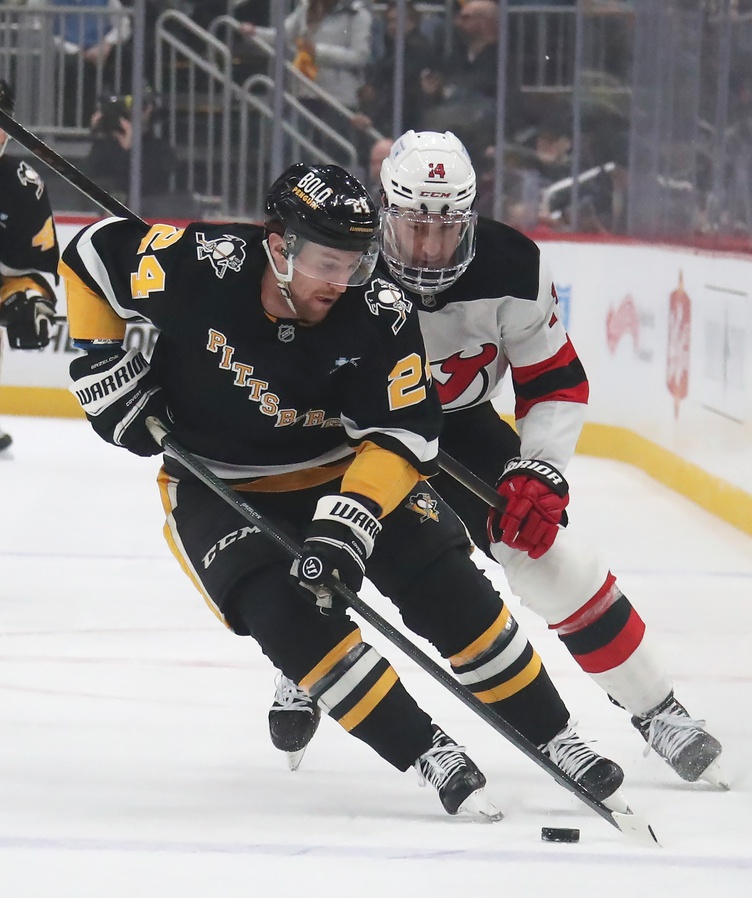 Grzelcyk had to settle for a one-year deal last summer and responded about as well as he could. He posted a career high in assists (39) and points (40) while logging over 20 minutes per game for the first time. In essence, it looked as if he had shown that he can still be a legitimate top-four defenseman. And yet, more than two months into free agency and training camps almost upon us, he’s still looking for a contract. Speculatively, his camp aimed high coming off the year he had and the limited options on the open market but his smaller stature likely didn’t help his cause. Now, another one-year deal might be what he has to wind up settling for.
Among the other blueliners who saw some NHL action last season, Timmins was the other part of the cap-clearing move from Toronto at the deadline. He played a somewhat limited role for them down the stretch and will have a similar role with Buffalo. Kolyachonok has been up and down in recent years and was a waiver claim back in February and likely would have been on the outside looking in at a roster spot had he stayed in Pittsburgh. Joseph’s second stint with the Penguins didn’t go particularly well which made his non-tendering for the second straight year a pretty safe decision.
Nedeljkovic had his ups and downs between the pipes, briefly taking over as the starter at times while at others, he struggled considerably to the point of his lowest full-season save percentage, checking in at .894. Considering their goal of getting a little younger, bringing Silovs into Nedeljkovic’s role carries a bit more risk but also more upside.
Among the forwards that moved on, Ponomarev is the most surprising given that he accepted a three-year deal in Russia at a time that the Penguins were hoping to see some prospects take a step forward and push for a roster spot. They’ll have to wait a while for that to happen with him now. Nieto dealt with more injury trouble last season and wasn’t anywhere near as effective as he was when he was last healthy in 2022-23. At this point, he’s a PTO candidate at best. Bemstrom’s stock had dropped in recent years, going from a roster regular with more than 200 games of NHL experience to someone who cleared waivers and spent most of last season in the minors.
Salary Cap Outlook
Even after taking on some pricey contracts for depth defensemen in Clifton and Dumba, the Penguins still have plenty of cap space, a little over $13MM, per PuckPedia. Depending on how the roster is configured, that number could still go up. They have all three of their retention slots remaining and although being a third-party retainer is out of the question following the early institution of the more restrictive rules on salary retention, Pittsburgh is well-positioned to try to utilize some of that flexibility, either through retention or taking on more unwanted contracts.
Key Questions
When Will The Trades Happen? Defenseman Erik Karlsson has been in trade speculation for a while now. So have wingers Bryan Rust and Rickard Rakell. Even centers Sidney Crosby and Evgeni Malkin have seen their names out there although the likelihood of them moving is much less certain (only if they decide they want to move which is far from a given). But as of yet, Dubas hasn’t pulled the trigger on a move, even though it has been a market featuring way more buyers than sellers this summer. Will he look to try to get more leverage closer to the trade deadline or will something materialize earlier in the season?
Can Novak Bounce Back? Among the moves made last season was Dubas acquiring center Thomas Novak from Nashville near the trade deadline. It was an odd move for a selling team to acquire a veteran middleman but it was an intriguing buy-low acquisition. Novak came into last season with back-to-back years of 40-plus points with strong possession numbers. Last season, the latter was still good but his point output dropped and he was injured two games after the trade. If Novak can get back to that 40-point level, he’s someone who could plausibly become part of their plans beyond the end of his contract in 2027 or, alternatively, become an intriguing trade chip in a market that is lacking in center depth.
Will Jarry Provide Starting-Level Goaltending? When Dubas signed Tristan Jarry to a five-year deal after being hired, it was a vote of confidence that Pittsburgh’s goaltending was set for a while. But the first two seasons of that deal have been up-and-down, to say the least, with last year being particularly rocky as he found himself clearing waivers and in the minors at one point. It’s clear that the team views Silovs as a possible piece for the future while Joel Blomqvist is waiting in the wings as well. If Jarry can get back to being a legitimate starter, things can settle down between the pipes for a bit. If not, his future with the team could get murky in a hurry.
Photos courtesy of Kim Klement Neitzel and Charles LeClaire-Imagn Images.
PHR Originals: 9/1/25 – 9/7/25
The waning days of summer yielded plenty of original content over the past seven days here at PHR as we eagerly wait for an uptick in transactions with training camps on the horizon. In case you missed them earlier, we’ll run through the pieces here. And if you have suggestions for content or features for the upcoming season, please note them here.
As is always the case, last season saw some players have breakout years and other long-time producing veterans wound up struggling. Josh Cybulski took a look at some of the players who could be in line for bounce-back seasons with Pittsburgh goaltender Tristan Jarry, Vancouver center Elias Pettersson, and Los Angeles winger Andrei Kuzmenko among the candidates to see their performance tick back up in the right direction.
Josh Erickson held his usual weekly chat plus an extra one on Labor Day. In the first, topics included the state of the Devils and the Luke Hughes negotiations, whether St. Louis should look into moving Jordan Binnington, and Filip Chytil’s potential as he’s set to begin his first full season in Vancouver. In the second, discussion points including Wyatt Kaiser remaining unsigned in Chicago, Berkly Catton’s potential to make Seattle’s roster next season, and who the first head coach to be fired might be this season.
Our Summer Synopsis continued as I examined Seattle’s offseason while Brennan McClain and I did the same for San Jose. The Kraken were busy early on with the hiring of a new coach and the promotion of Jason Botterill to GM but there wasn’t a lot of roster turnover although they added some grit on the wing in Mason Marchment and some defensive depth in Ryan Lindgren. Meanwhile, the Sharks were quite active this summer, swinging five trades while bringing in several veterans on short-term deals, including Dmitry Orlov, Jeff Skinner, and John Klingberg. San Jose isn’t expected to be in contention for a playoff spot but with so many short-term contracts on their books, they could be active on the trade front over the coming months as well.
Marc-Edouard Vlasic wasn’t expecting to be in this summer’s free agent class but he was among the few players who were bought out in June, sending him to the open market for the first time. Josh Cybulski looked at the veteran blueliner’s options while noting that a guaranteed NHL deal is going to be difficult for him to come by at this time. Vlasic made it clear he intends to keep playing but at this time, he’ll either have to settle for a PTO or look at overseas opportunities.
Among the changes that the NHL and NHLPA would like to bring in for the upcoming season is an exemption that would allow each NHL team to assign one 19-year-old CHL player to the minors. That amendment is pending an agreement between the NHL and CHL that is not yet in place at this time. If something can be worked out, Josh Erickson previewed some of the candidates to start in the AHL, including several top prospects.
Our tour of the Central Division continued in our annual Salary Cap Deep Dive series as I profiled Minnesota. The Wild had ample cap space at their disposal this summer for the first time in several years but wound up largely staying quiet aside from the acquisition of Vladimir Tarasenko and the signing of Nico Sturm. They left themselves ample flexibility to re-sign Marco Rossi and now, barring any late-summer activity, will be in a spot to bank plenty of cap space over the course of the season.
The Islanders brought in a new GM this summer with Mathieu Darche taking over. He made one significant trade by moving Noah Dobson to Montreal but has made it clear that he’s not intent on beginning a rebuild despite adding three lottery picks to his prospect pool in June. Josh Cybulski wonders what the team will be able to do this season; there’s a viable path for them to get back to the playoff picture but if some of their veterans struggle, they could find themselves outside the postseason once again with the odds of another draft lottery win being rather low.
While Matthew Tkachuk’s surgery will give Florida some LTIR flexibility heading into the season (though not as much as expected with the new LTIR rules coming into play this year instead of next), that will only allow them to kick the can down the road for a little bit when it comes to getting into cap compliance upon Tkachuk’s eventual return. Josh Erickson went through the roster for the Panthers to see what players could be the odd ones out when Florida gets back to full health midseason.
Kris Letang has been a mainstay on Pittsburgh’s back end for the better part of two decades; he’s set to play his 20th season with them this season. But his offensive output dropped sharply last season to 30 points, his lowest total since 2013-14 when he missed more than half the season due to injury. Josh Cybulski asked whether the 38-year-old can rediscover his game or if the decline is a sign of things to come. With three years left on his contract heading into this season, the Penguins are certainly hoping that he’ll be able to rebound from his tough 2024-25 showing.
2009 NHL Draft Take Two: Second Overall Pick
Hindsight is an amazing thing, and allows us to look back and wonder “what could have been.” Though perfection is attempted, scouting and draft selection is far from an exact science and sometimes, it doesn’t work out the way teams – or players – intended. For every Patrick Kane, there is a Patrik Stefan.
We’re looking back at the 2009 NHL Entry Draft and asking how it would shake out knowing what we do now. Will the first round remain the same, or will some late-round picks jump up to the top of the board?
Earlier in the week, we kicked off the 2009 Take Two series by polling PHR readers on their pick for first overall with the benefit of hindsight. Defenseman Victor Hedman jumped up to claim the number-one spot by a comparatively slim margin, capturing 53% of the vote. In past years, the choice has been rather clear, with PHR voters settling on the draft class’ best player by scores of 70% or more.
Now with Hedman off the board to the New York Islanders at first overall, John Tavares remains on the board, with the Tampa Bay Lightning picking at number two. At the time of the draft, there was no question about whether Tavares would fall. He was one of the few players granted exceptional status into the OHL as a 15-year-old and, given he was only five days away from being eligible for the 2008 draft, Tavares already had four full seasons of junior hockey under his belt with two 100-plus point seasons to show for it.
While the circumstances of Tavares’ departure in free agency from the Islanders for the Toronto Maple Leafs in 2018 have soured the fanbase’s opinion on his time with the team, he’s inarguably one of the most talented players in team history and was the cornerstone behind their first-round playoff win in 2016, ending a decades-long streak without a series victory. The team’s captain for five seasons ended up with 621 points in 669 games as an Islander and ranks fifth in team history in Hockey Reference’s point shares system.
Among his 2009 peers, he currently sits as the all-time leader in goals, assists and points and is the only one with more than 1,000 career NHL games under his belt. Despite that, Tavares hasn’t taken home any major awards like Hedman – although Tavares was a Hart Trophy finalist in 2013 and 2015 at just 22 and 24 years old. If he had fallen to Tampa for whatever reason, may they have won more Stanley Cups with this core with Tavares in the fold along with Steven Stamkos?
That’s what we’re asking you today, PHR readers. Will Tavares fall yet another spot in your hindsight-influenced 2009 draft ranking, or will the Lightning select a second franchise center to complement Stamkos, who they selected first overall just one year prior? Vote in the poll below:
2009 Redraft: Second Overall
-
John Tavares 77% (1,150)
-
Ryan O'Reilly 8% (127)
-
Chris Kreider 2% (37)
-
Matt Duchene 2% (31)
-
Mattias Ekholm 2% (27)
-
Evander Kane 1% (14)
-
Nazem Kadri 1% (13)
-
Dmitry Orlov 1% (12)
-
Brayden Schenn 1% (11)
-
Oliver Ekman-Larsson 1% (10)
-
Ryan Ellis 1% (9)
-
Anders Lee 0% (7)
-
Tomas Tatar 0% (7)
-
Calvin de Haan 0% (6)
-
Jakob Silfverberg 0% (6)
-
Reilly Smith 0% (6)
-
David Savard 0% (5)
-
Tyson Barrie 0% (4)
-
Nick Leddy 0% (3)
-
Robin Lehner 0% (3)
-
Kyle Palmieri 0% (3)
-
Craig Smith 0% (3)
-
Mike Hoffman 0% (2)
-
Marcus Johansson 0% (2)
-
Darcy Kuemper 0% (2)
-
Dmitry Kulikov 0% (1)
Total votes: 1,501
Click here to vote if the poll doesn’t display.
2009 NHL Draft Take Two: First Overall Pick
Hindsight is fantastic, allowing us to look back and wonder “what could have been.” Though perfection is attempted, scouting and draft selection is far from an exact science, and sometimes, it doesn’t work out the way teams – or players – intended. For every Patrick Kane, there is a Patrik Stefan.
As we find ourselves amidst the summer lull, it’s the perfect time to reflect on times gone by – the strategies that bore fruit and those that missed the mark. This sentiment resonates even with draft picks – where some early selections have blossomed into the cornerstones of their respective franchises, while others fell short of the lofty expectations. Having delved into the drafts of 2006, 2007, and 2008 in the past, it’s now an opportune moment to embark on a similar journey through a new NHL redraft series, focusing on the class of 2009.
The draft pool from this year stands out as notably robust, featuring an impressive tally of 39 players (and the count is ongoing) who have graced the NHL ice for a minimum of 500 games. Within this assembly, one can spot All-Star performers and, potentially, a small handful of players destined for the esteemed corridors of the Hall of Fame in the years to come. Conversely, a less fortunate facet also emerges, as five first-rounders failed to hit the century mark, keeping them out of the picture in the forthcoming series.
During the upcoming weeks, as we anticipate the commencement of training camps, we will delve into the 2009 NHL Entry Draft. In this quest, we invite the PHR community to make their choices, armed with the hindsight of each player’s career trajectory. A roster of players will be presented, and we will continuously update the first round as the selection process unfolds.
In the 2009 draft, the New York Islanders retained the first overall pick through a lottery win, granting them the privilege of making the top selection. At this pivotal juncture, the team confronted a crucial decision: opt for a cornerstone center or a cornerstone defenseman, much like the Tampa Bay Lightning the year prior. John Tavares and Victor Hedman emerged as the consensus top two prospects, with general manager Garth Snow looking to get the team back to relevance as quickly as possible after finishing last in their division for two consecutive seasons. Ultimately, the Islanders chose the former, and Tavares certainly became a cornerstone piece for them, leading the draft in games played (1,029) and in all major scoring categories. It’s worth noting that Hedman, though, would’ve been a very fair pick with hindsight in mind, as he’s manned a formidable Lightning blueline to four Stanley Cup Finals throughout his tenure and leads all 2009-drafted defenders in scoring by a wide margin. Armed with retrospective wisdom, the question arises: Did the Islanders’ decision to take Tavares give them the best shot at success before he departed for the Toronto Maple Leafs in free agency in 2018, or would Hedman get the team closer to a championship by now?
With the first pick of the 2009 NHL Entry Draft, who should the New York Islanders select? Make your voice heard below.
2009 Redraft: First Overall
-
Victor Hedman 53% (1,101)
-
John Tavares 38% (791)
-
Ryan O'Reilly 3% (58)
-
Matt Duchene 1% (21)
-
Chris Kreider 1% (18)
-
Evander Kane 1% (17)
-
Mattias Ekholm 0% (8)
-
Dmitry Orlov 0% (7)
-
Oliver Ekman-Larsson 0% (6)
-
Mike Hoffman 0% (6)
-
Nazem Kadri 0% (6)
-
Tomas Tatar 0% (6)
-
Calvin de Haan 0% (5)
-
Dmitry Kulikov 0% (5)
-
Robin Lehner 0% (5)
-
Reilly Smith 0% (5)
-
Tyson Barrie 0% (4)
-
Ryan Ellis 0% (4)
-
Craig Smith 0% (4)
-
Kyle Palmieri 0% (3)
-
Anders Lee 0% (2)
-
David Savard 0% (2)
-
Marcus Johansson 0% (1)
-
Darcy Kuemper 0% (1)
-
Brayden Schenn 0% (1)
-
Nick Leddy 0% (0)
Total votes: 2,087
App users, click here to vote.
Previewing The Top 2024 Unrestricted Free Agents
This year’s free agent class was underwhelming. There’s no disrespect intended here to players like Alex Killorn, Dmitry Orlov and Vladimir Tarasenko. However, we’ve grown accustomed to at least one true star being available on the market every year – at least a top-ten player at their position. But a flurry of extensions took some potential game-breakers, such as Boston Bruins sniper David Pastrnak off the market, limiting the amount of star power available.
With the salary cap finally expected to jump significantly by about $4MM next offseason, some NHL general managers will undoubtedly look to spend that extra cash on a shiny new toy on the UFA market. As 2023 is mainly in the rearview mirror, let’s take a look at some of the best players slated to hit the open market next summer, whether or not they may extend, and offer some way-too-early contract projections in the process:
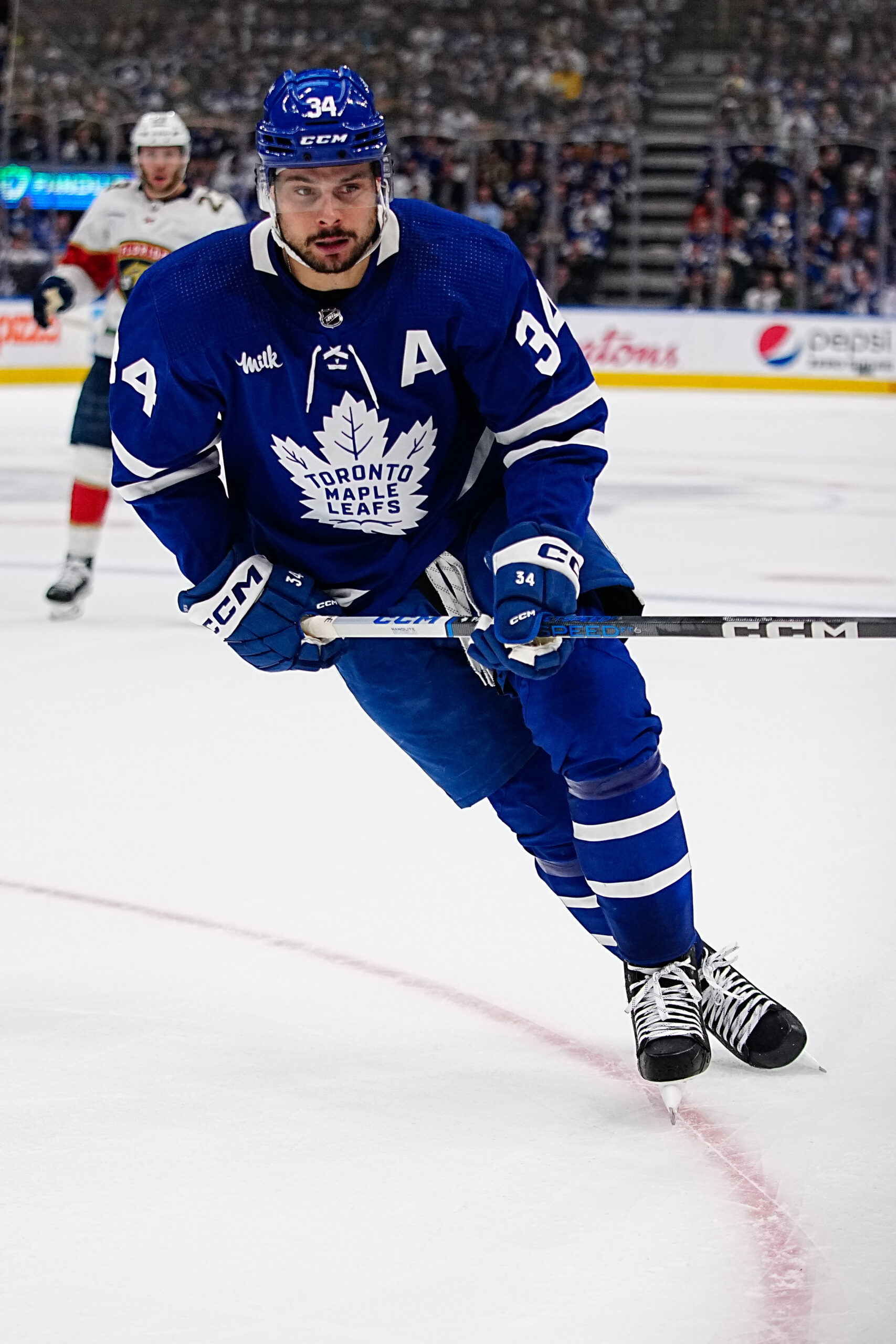 F Auston Matthews (Toronto Maple Leafs) – The unquestionable crown jewel of the 2024 free agent class might also be one of the least likely to hit the market. Matthews is more than just a superstar – he’s a season removed from back-to-back Rocket Richard Trophies, he’s led the league in even-strength goals in four out of his seven NHL seasons, and he’s coming off a “down season” in which he still managed 40 goals despite a career-low 12.2 shooting percentage. Toronto is still plugging away at an extension with Matthews, a process that was surely elongated by a change at the GM position earlier this offseason. While multiple reports suggested it likely won’t be a long-term deal to keep Matthews in Toronto, seeing his name available for anyone to pursue next July would be shocking.
Extension Likelihood: Very Likely
Projected Contract: Five years, $62MM ($12.4MM AAV)
F William Nylander (Toronto Maple Leafs) – Another star in Canada’s largest city is also headed for the open market next season. Nylander is coming off a strong season with a career-high 40 goals and 87 points, but multiple reports indicate contract talks are currently at an impasse between the two sides. The Swedish winger reportedly wants an eight-figure cap hit on his next deal, one he’s increasingly unlikely to receive after sub-$10MM extensions for players like the Carolina Hurricanes’ Sebastian Aho. He will be in his prime at 28 years old next summer, though, and he currently holds the undisputed title of the best pure winger slated to hit the market. Given the slated cap increase, Nylander may be able to garner the money he desires elsewhere if Toronto isn’t willing to fork over another eight-figure deal.
Extension Likelihood: Somewhat Unlikely
Projected Contract: Seven years, $70MM ($10MM AAV)
F Steven Stamkos (Tampa Bay Lightning) – Including Stamkos on this list seems like more of a formality than anything else. The captain of back-to-back Stanley Cup championship teams in Tampa and likely to go down as the greatest player in franchise history when he retires, it’s nearly impossible to imagine him wearing another jersey. Barring an unforeseen breakdown in communication, Stamkos will be re-upping with the Bolts on what could potentially be the final contract of his NHL career as he enters his mid-30s. After yet another point-per-game season, Stamkos will undoubtedly be sticking around in Tampa as long as they’ll have him, likely at a slight discount to help them replenish their depth reserves.
Extension Likelihood: Very Likely
Projected Contract: Four years, $31.5MM ($7.875MM AAV)
F Jake Guentzel (Pittsburgh Penguins) – The Penguins have exhibited a strong tendency toward keeping the band together in recent seasons, but it’s a trend that may change under the front-office leadership of Kyle Dubas. Still, it’s hard to imagine the Penguins won’t field a competitive offer to keep Guentzel in the fold. He’s been one of the most successful and consistent linemates to Sidney Crosby in the entire illustrious career of the future Hall-of-Famer, he’s a two-time 40-goal scorer, and he’s an incredibly clutch playoff performer. While contract extension talks haven’t begun between the two parties yet, reporting indicates the Penguins’ core shares the public’s view of Guentzel and would like to keep him around.
Extension Likelihood: Likely
Projected Contract: Eight years, $75MM ($9.375MM AAV)
F Mark Scheifele (Winnipeg Jets) – The first of two Jets on this list hasn’t been in trade rumors quite as much as his netminding counterpart, but there’s still a very good chance Scheifele is sporting a different jersey by the 2024 trade deadline. Speculation has immediately run rampant about Scheifele as a stop-gap fix down the middle for the Boston Bruins, who are without their number-one center after captain Patrice Bergeron announced his retirement last week. There are plenty of question marks about how highly Scheifele is actually valued around the league, given his significant defensive lapses, but he’s consistently produced the offense you’d want out of a number-one center. Despite scoring a career-high 42 goals last season, 2022-23 was actually Scheifele’s first campaign falling short of a point per game since 2015-16, when he was just 22 years old.
Extension Likelihood: Unlikely
Projected Contract: Seven years, $66MM ($9.4MM AAV)
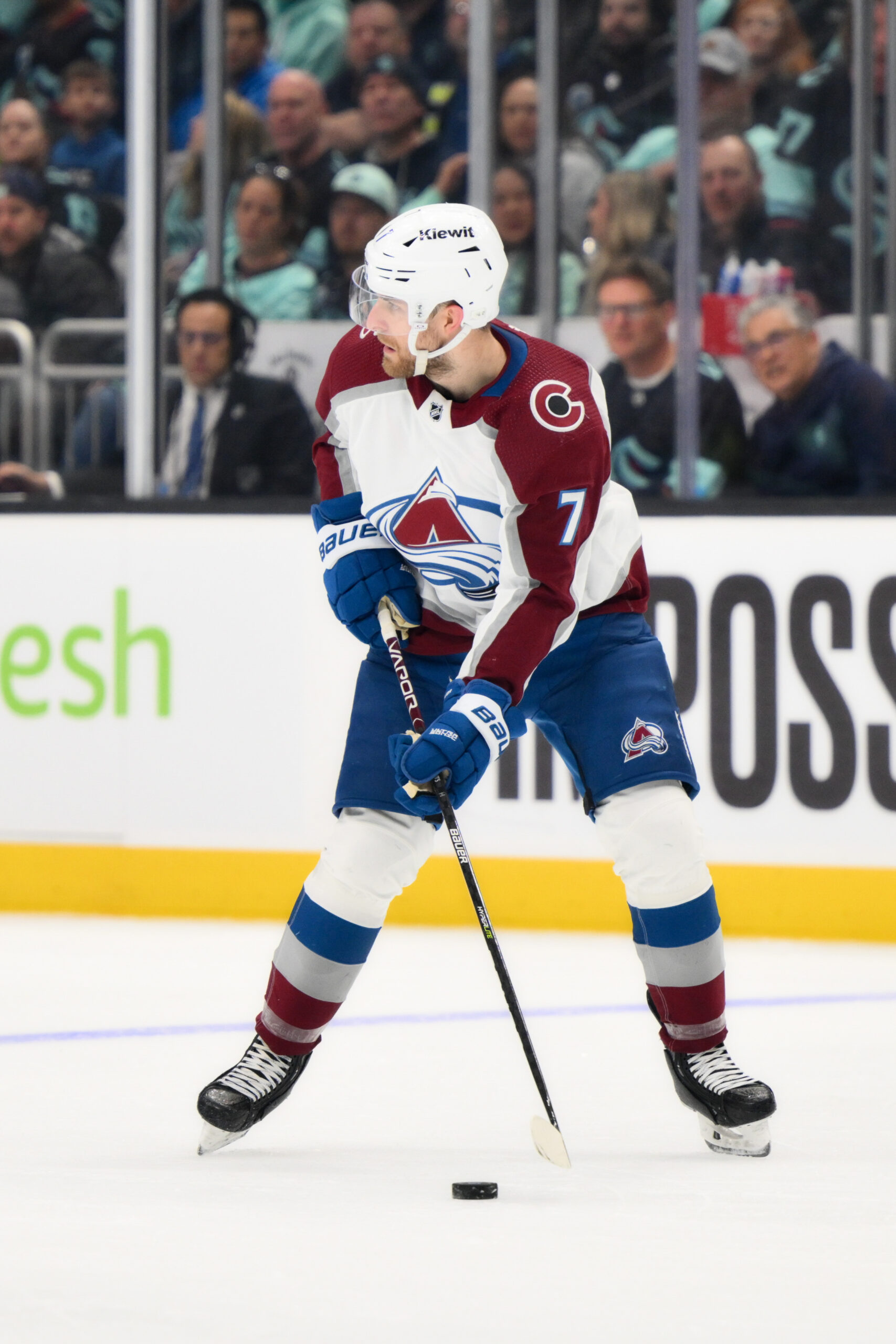 D Devon Toews (Colorado Avalanche) – Toews may be the most unheralded defenseman in the league thanks to his partner, Cale Makar. On almost any other team, Toews would be a legitimate number-one defender with very few holes in his game. Little has been made of his impending free agency, but he’ll be due a major raise on his current bargain-bin $4.1MM cap hit. Combined with the potential loss of captain Gabriel Landeskog‘s LTIR relief should he return to play in 2024-25, it could be incredibly difficult for Colorado to retain him even with the cap going up. Not only does Toews consistently rank among having some of the best defensive impacts in the league, but he’s also coming off back-to-back 50-point campaigns and has finished top-15 in Norris voting during each of his three seasons in Colorado.
Extension Likelihood: 50/50
Projected Contract: Seven years, $61MM ($8.7MM AAV)
D Brandon Montour (Florida Panthers) – A pair of prominent Panthers defenders are up for UFA status next season in Montour and Gustav Forsling, but Montour’s the one we’ll cover more in-depth here after he led the Panthers’ defense in playoff scoring with eight goals and 13 points in 21 games despite playing through a shoulder injury which will cost him the beginning of the 2023-24 campaign. His stock has never been higher after exploding for 73 points in 80 regular season games, along with a career-high 107 penalty minutes. While he’s still a rather one-dimensional player and likely to be somewhat of a liability defensively, he’s finally shown legitimate top-pair ability at 29 years old. Committing any term to Montour as a UFA may be a case of buyer beware, however, as his track record is far from consistent.
Extension Likelihood: Somewhat Unlikely
Projected Contract: Four years, $26MM ($6.5MM AAV)
G Connor Hellebuyck (Winnipeg Jets) – It seemed very unlikely a few months ago that Hellebuyck would be on this list today. While there’s no chance he’ll be signing an extension with the Jets, a trade followed by an extension with a new team seemed rather likely this offseason. However, some outlandish financial demands from Hellebuyck’s camp dried up trade interest, and there hasn’t been a lot of movement on that front lately. While small, the possibility that Hellebuyck lands on the open market next season seems to be increasing without a trade or extension any closer to fruition.
Extension Likelihood: Very Unlikely
Projected Contract: Seven years, $61.25MM ($8.75MM AAV)
Photos courtesy of USA Today Sports Images.
Seeking Writers For Pro Hockey Rumors
At the start of 2023, we at Pro Hockey Rumors called for new writers that proved fruitful. We grew the PHR family to its largest size, adding a long-term pair of great teammates in Brennan McClain and Josh Cybulski. As the chaos of the draft and free agency season has passed, we’re now looking to expand our team once again.
PHR is looking to hire part-time writers available to chip in on daytime coverage (before 3 p.m. CT) from Monday through Thursday. The biggest areas of need are:
- 7 a.m. – 1 p.m. CT, Monday and Wednesday
- 12 p.m. – 3 p.m. CT, Tuesday and Thursday
The position pays on an hourly basis. Applicants must meet all of the following criteria:
- Exceptional knowledge of all 32 NHL teams, with no discernible bias.
- Understanding of the salary cap, CBA, and transaction-related concepts.
- At least some college education.
- Extensive writing experience, professional experience, and a background in journalism are strongly preferred.
- Keen understanding of journalistic principles, ethics, and procedures. Completion of basic college-level journalism classes is strongly preferred.
- Attention to detail — absolutely no spelling errors, especially for player and journalist names.
- Ability to follow the site’s style and tone.
- Ability to analyze articles and craft intelligent, well-written posts summarizing the news in a few paragraphs. We need someone who can balance quick copy with thoughtful analysis. You must be able to add value to breaking news with your insight, numbers, or links to other relevant articles.
- Familiarity with Twitter, Tweetdeck, and other relevant platforms. In general, you must be able to multitask.
- Flexibility. You must be available to work on short notice.
If you’re interested, email prohockeyrumorshelp@
We understand that many of those who read this have applied in the past. If you have previously submitted an application for PHR and are still interested, please submit it again. Many will apply, so unfortunately, we cannot respond to every applicant.
Arbitration Breakdown: Jack McBain
Just a few arbitration cases remain, as the last day of hearings is slated for August 4. One player who will learn his financial fate before then is Arizona Coyotes forward Jack McBain, whose hearing is slated for Sunday along with Boston Bruins netminder Jeremy Swayman. The two sides have until the start of the hearing to reach an agreement, although PHNX Sports’ Craig Morgan reported earlier this month the two sides weren’t close to a deal.
Filings
Team: $1.2MM cap hit (two years)
Player: $2.25MM cap hit (one year)
Midpoint: $1.725MM cap hit
(via Sportsnet’s Elliotte Friedman)
The Numbers
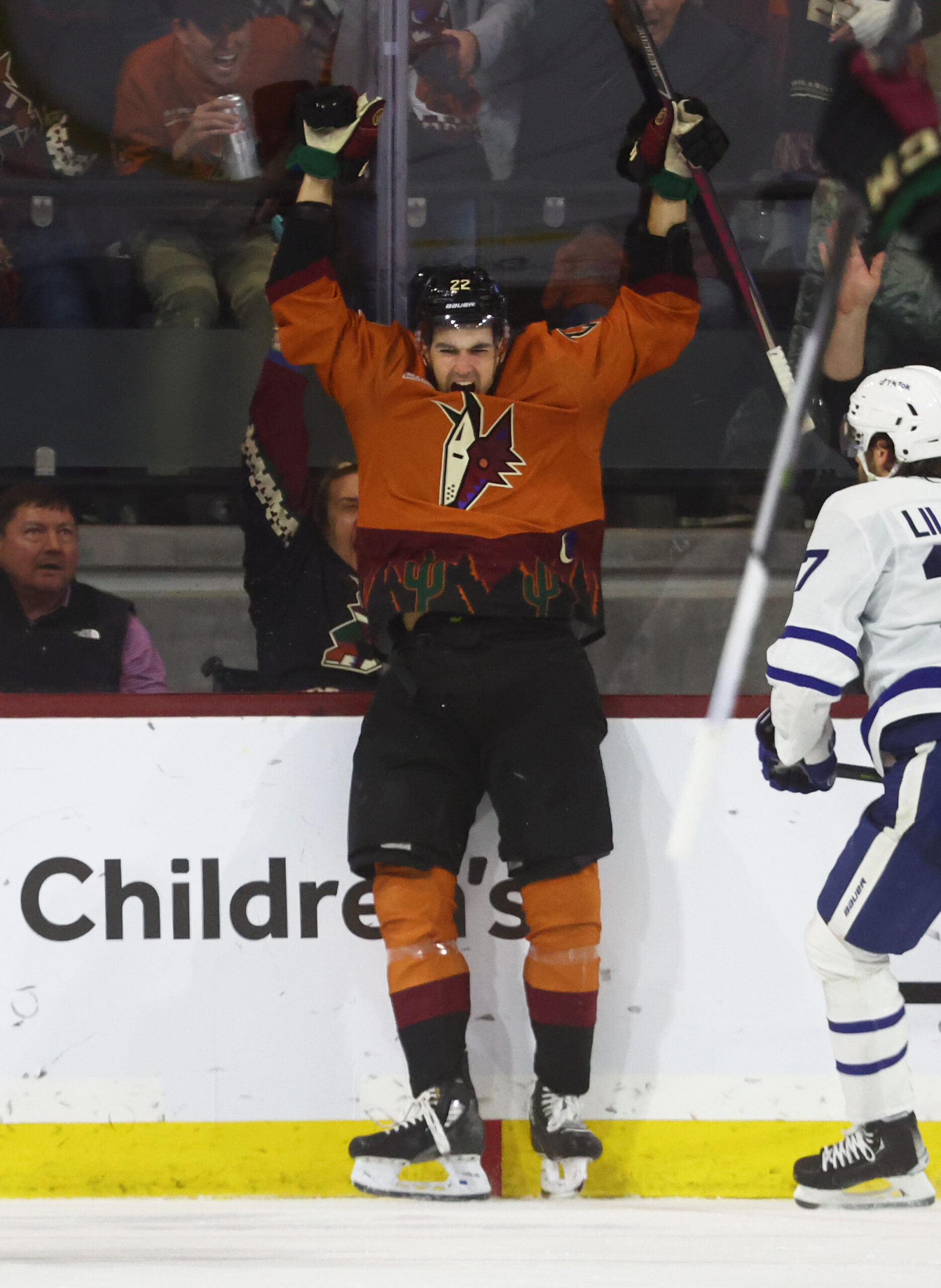 Despite being just 23 years old, this isn’t the first time McBain’s been in some contract turmoil with an NHL team. Drafted by the Minnesota Wild in the third round of the 2018 NHL Draft, the team was forced to trade his signing rights after a strong senior season at Boston College after McBain informed them he wouldn’t sign. The Coyotes picked him up at the end of last season via trade and immediately signed him to an entry-level contract, providing McBain with a clearer path to NHL ice than in Minnesota.
The decision to sign with Arizona proved fruitful for McBain out of the gate, who played in all 82 games for the Coyotes in his first full NHL season. While he played bottom-six minutes and didn’t post strong advanced numbers, he had some promising production on the scoresheet with 12 goals, 14 assists and 26 points. He did, however, get eaten alive in the faceoff dot, posting just a 44% win rate. That’s not uncommon for a rookie center, however.
The point totals are solid when you consider his most common linemates were enforcer Liam O’Brien and bottom-six grinder Christian Fischer, not exactly players who have had sustained offensive success at the NHL level. Consider every single one of McBain’s points came at even strength, and he has a strong case to see a bump in minutes next season. After the team added Alexander Kerfoot, Jason Zucker and Nick Bjugstad in free agency and Logan Cooley via entry-level contract, however, McBain could reprise a fourth-line role in 2023-24.
It’s likely why the Coyotes have gone with a rather low filing on a two-year deal, especially considering some of his advanced numbers suggest a sophomore slump may be in the cards. However, there is still a lot to like about McBain as a player, even if many of those positives still revolve around his upside. Projected as a two-way talent, the Coyotes will rely on him to leverage his 6-foot-3, 201-pound frame more often to make plays on both sides of the puck. That’s not to say he shied away from physicality – his 64 penalty minutes ranked third on the team behind O’Brien and defenseman Josh Brown. Still, the Coyotes remain wary of sinking too much into a player that may not see more than a 4C role as their forward group fills out.
2022-23 Stats: 82 GP, 12-14-26, -8, 64 PIMs, 85 shots, 13:59 ATOI, 40.1 CF%, 44.0 FOW%
Career Stats: 92 GP, 14-15-29, -14, 70 PIMs, 98 shots, 14:00 ATOI, 40.3 CF%, 42.9 FOW%
Potential Comparables
Comparable contracts are restricted to those signed within restricted free agency which means UFA deals and entry-level pacts are ineligible to be used. The contracts below fit within those parameters. Player salaries also fall within the parameters of the submitted numbers by both sides of McBain’s negotiation.
Barrett Hayton (Arizona Coyotes) – If you’re trying to find a player with similar age and production to McBain at this point in time, you don’t need to look very far. Hayton signed a two-year, $1.775MM deal with the Coyotes late last summer after failing to post top-six caliber numbers throughout three seasons and 94 games in the desert. While McBain doesn’t carry the same potential as Hayton (who did have a nice campaign in 2022-23) and is a few years older, it does warrant consideration and will likely be used in-house as a comparable during the arbitration hearing. The offensive production at the time of signing is similar, and it’s a deal quite close to the midpoint of the two filings.
Isac Lundeström (Anaheim Ducks) – This one is likely a better fit for McBain in terms of age and potential, and they’re both projected to be relied upon as defensively responsible threats down the middle long term. An arbitrator awarded Lundeström a two-year deal worth $1.8MM per season last summer, also making this a slightly better direct arbitration comparable. At the time of signing, Lundeström had slightly more NHL experience at 151 games played but produced at a similar offensive clip, posting 22 goals and 44 points in that span. Both players have yet to hit their defensive potential.
Projection
The gap between the two filings isn’t terribly wide at just over $1MM in difference, nor will an arbitrator decision be a significant factor in the team’s salary cap situation. It’s likely to be one of the least consequential cases to be decided via arbitration this summer, but that doesn’t mean it’s not worth discussion.
The comparables outlined and scoring numbers produced by McBain generate a strong argument for an arbitrator to side slightly north of the $1.725MM midpoint, but not by much. It is likely, however, that the arbitrator award will be a two-year deal based on McBain’s best comparables. Look for a two-year award close to, but not north of, the $2MM mark when the decision gets announced on Tuesday.
Photo courtesy of USA Today Sports Images. Contract information courtesy of CapFriendly.