
Offside Challenges Now With Harsher Penalties
One of the hottest items of debate all throughout the season was the newly introduced offside challenge, allowing coaches to ask for a video review of a goal to see if the opposing team carried the puck in onside. While in theory it makes sense—any goal scored because of a blown offside call can greatly swing the outcome of a game—in reality it became something of a circus. Referees were taking increasingly long periods to determine whether a player was on or offside, with things like skate blades barely touching the ice in dispute.
There were some who believed the challenges should be removed altogether, others who wanted the NHL to go to a sort of NFL endzone type plane that a player would have to break (as in, if any part of his body was above the blue line he would be considered onside) and still more that thought it was fine and just needed to have a limit in length of review. Instead, the NHL has decided to institute a new penalty for an incorrect challenge. According to Elliotte Friedman of Sportsnet, if a coach challenges a goal and fails, his team will immediately be given a two-minute penalty.
It seems as though this will have one of two outcomes. Either coaches will avoid challenging plays entirely, afraid of putting their teams in an even worse hole, or they will delay the ensuing faceoff enough to get their own team to look at it before deciding to challenge. That’s the same problem the MLB faced when it instituted video review, eventually leading to another rule that made managers challenge within a certain period of time.
As we’ve reported before, the league will also remove the ability to call a timeout after an icing and will be cracking down on slashes to the hands and body. Last year saw many incidents where players were injured on a slash to the gloves, including when Sidney Crosby chopped off a piece of Marc Methot‘s finger. How the league intends to further penalize these is still unclear.
NHL Announces 2018 Winter Classic Match-Up
The NHL has announced the two teams competing in the 10th Annual Winter Classic on New Year’s Day 2018. The league will return to the roots of the event, pitting the original host of the first Winter Classic in 2008, the Buffalo Sabres, against their in-state rival, the New York Rangers. It is the first Winter Classic to be held in New York City, and the Rangers will host the event at Citi Field in Queens, home of the New York Mets.
Ironically, the area of New York where the Mets play has been the rumored location of a possible new arena for the New York Islanders, the one New York team left out of the proceedings. Nonetheless, this will be a great event on January 1st, as hockey fans throughout the state and the Big Apple will flock to see the rivalry match-up between two exciting teams. The Sabres are a team in flux, but Jack Eichel and his teammates will have something to prove. Meanwhile, the Rangers want to defend their status as the best team in New York and will bring the King, Henrik Lundqvist, and a deep, talented line up to try to get the job done. Interestingly, due to an odd agreement regarding the tax status of Madison Square Garden, the Rangers will likely be the visitors and the Sabres the home team in the contest. The Rangers were the road team in each of their two outdoor games at Yankee Stadium in 2014.
Unfortunately, the timing of the announcement is not great, as the Rangers are in the middle of a do-or-die Game Six match-up with the Ottawa Senators and, at the time of this writing, are down 2-0. At least they will have something to look forward to to help get over the (potentially) disappointing loss.
NHL Releases Official Draft Lottery Odds
The NHL has released the official odds for the upcoming draft lottery, which determines the order in which each team outside the playoffs will select in this year’s entry draft. The Colorado Avalanche lead the way with an 18% chance of winning, while the Vegas Golden Knights will be given the same odds as the third worst team this season, the Arizona Coyotes at 10.3%. The lottery will be held in Toronto on April 29th. The full odds are as follows:
Colorado Avalanche: 18%
Vancouver Canucks: 12.1%
Vegas Golden Knights: 10.3%
Arizona Coyotes: 10.3%
New Jersey Devils: 8.5%
Buffalo Sabres: 7.6%
Detroit Red Wings: 6.7%
Dallas Stars: 5.8%
Florida Panthers: 5.4%
Los Angeles Kings: 4.5%
Carolina Hurricanes: 3.2%
Winnipeg Jets: 2.7%
Philadelphia Flyers: 2.2%
Tampa Bay Lightning: 1.8%
New York Islanders: 0.9%
In the draft lottery, three teams actually “win”, and have the chance to move up from their finishing position. This means teams currently slotted 1-12 can only move a possible three spots down in the order, and only if teams behind them are selected. Last season, the Maple Leafs were selected first and retained their top spot, though the Columbus Blue Jackets and Winnipeg Jets hopped from fourth and sixth to third and second respectively. Vancouver, who had the third highest odds, dropped to fifth overall.
One will also remember the lottery that gave the Edmonton Oilers Connor McDavid, despite the Buffalo Sabres and Arizona Coyotes both having worse records. It wasn’t the first time Edmonton won a draft lottery, but it looks like it will be the last for at least the next few years, as they’re in the playoffs and will pick in the back half of the first round for the first time since 2005-06.
This year, the top prize is Nolan Patrick who retained his crown as the top rated skater in today’s final release of the NHL Central Scouting rankings. Though he’s not McDavid, every team on this list will be hoping to win the lottery and have the chance of drafting a future #1 center.
Chris Johnston of Sportsnet was the first to tweet out the full odds, though TSN and HockeyViz.com had correct unofficial numbers over a month ago.
McDavid, Crosby, Holtby Take Home Statistical Awards
We are still a couple months out from the naming of the majority of NHL Awards – Hart, Vezina, Norris, Selke, Calder, and more – but as the regular season came to end last night, three phenoms of the game clinched some impressive hardware.
Connor McDavid, at just 20 years old, added two assists last night in a winning effort to finish the season with an even 100 points and seal the title of Art Ross Trophy winner. Awarded annually to the player with the most points in the regular season, McDavid took the lead in the scoring race early in the season and never looked back. He faced some competition along the way, such as last year’s winner, Chicago’s Patrick Kane, Boston’s Brad Marchand, and a certain superstar on the Pittsburgh Penguins, but in the end finished with 11 more points than the nearest challenger. McDavid’s point totals were mostly due to a league-leading 70 assists, seven more than second-place Nicklas Backstrom of the Capitals, and his 30 goals were not too shabby either, placing him just outside the top 25 in that category. McDavid is the second youngest winner of the Art Ross and even more impressively, won the award playing for a team that had only one other player, Leon Draisaitl, who has both 25 goals and 25 assists or better. Edmonton recorded 247 goals this season, good enough for eighth in the league, and McDavid contributed to over 40% of that scoring. The Art Ross winner is often the leading candidate for the Hart Trophy, given to the league’s Most Valuable Player, and don’t expect it to be any different for McDavid, whose efforts have almost single-handedly turned around the franchise and transformed them into a playoff team. The scary thing: he’s just getting started.
Not to be outdone, Sidney Crosby, the youngest Art Ross winner on record at 19 years old (he added another a few years later too) fell just short of a third crown in 2016-17 with 89 points, but managed to secure the goal-scoring title and the Maurice “Rocket” Richard Trophy. Crosby’s 44 goals were best in the league, just ahead of Toronto rookie Auston Matthews and Tampa Bay’s Nikita Kucherov, while Crosby too was pressured by Brad Marchand for much of the season. In the end, the Penguins captain proved to be too good. The last time that Crosby scored over 40 goals was in 2009-10, when his 51 tallies earned him a share in the Richard with Lightning star Steven Stamkos. Crosby now joins Stamkos, rival Alexander Ovechkin, and former teammate Jarome Iginla as the only active players to have won the award multiple times. In a season marked by injury for the Penguins, the team still managed to lead the league in goals for with 282 and Crosby led the way, potting 16% of those goals. Amazingly, Crosby is still not even 30 years old, so fans have plenty of years left to look forward to Crosby-McDavid scoring races.
On the other end of the ice, it was Washington Capitals’ brick wall goaltender Braden Holtby who backstopped his team to a league-best 182 goals against. The William M. Jennings Trophy is awarded each year to the goalie (or goalies) on the team that allowed the fewest scores and by a wide margin of 13 less than the Columbus Blue Jackets, Washington led the way behind Holtby. Holtby was near the top of nearly every statistical category for keepers this regular season with a league-best 42 wins (tied with Edmonton’s Cam Talbot), a second-place goals against average of 2.07, just one hundredth worse than the Blue Jackets’ Sergei Bobrovsky, and a top-five save percentage of .925. Holtby has certainly put him self in the mix for the Vezina Trophy this season, but faces stiff competition from Bobrovksy. Not to be forgotten in the Capitals’ stingy winning equation is backup Philipp Grubauer. The Jennings can be awarded to multiple goalies if each plays in a minimum of 25 games. Grubauer was fantastic in 2016-17, with numbers rivaling Holtby’s, albeit in a lesser sample size, but with just 23 games under his belt failed to qualify for the award. Nonetheless, Grubauer’s 2.05 GAA and .926 SV% were astounding and should earn him a look as a starter next year, whether by Washington trade or selection by the Vegas Golden Knights in the upcoming Expansion Draft.
Full First-Round Playoff Schedule
The regular season has come to an end, and with it the first round of the playoffs has been set in stone. After the last game of the night finished the league released the schedule for the first round, which starts Wednesday evening. It is as follows, all times in CST:
Montreal Canadiens vs. New York Rangers
Wednesday, April 12th, 6pm – NYR @ MTL
Friday, April 14th, 6pm – NYR @ MTL
Sunday, April 16th, 6pm – MTL @ NYR
Tuesday, April 18th, 6pm – MTL @ NYR
*Thursday, April 20th, TBD – NYR @ MTL
*Saturday, April 22nd, TBD – MTL @ NYR
*Monday, April 24, TBD – NYR @ MTL
Coyotes Exploring Ownership Restructure
It was reported earlier today that Randy Frankel, a minority shareholder for the MLB’s Tampa Bay Rays, was considering buying into the Arizona Coyotes. Sportsnet’s John Shannon believed that Frankel could be a potential partner for the ‘Yotes current majority owner, Andrew Barroway, as some part of larger shakeup. However, an article released later in the day by Arizona Sports’ Craig Morgan reveals that there are much bigger dealings afoot.
Morgan reports that the minority owners in Arizona have extended an offer to Barroway to buy out their shares of the organization. Barroway allegedly has until June 6th to raise the capital for a takeover and become sole owner of the Coyotes or at least leader of a new ownership group. As Shannon noted, Frankel is in the mix as a potential financial backer of the sale, as is his fellow Rays minority shareholder Tim Mullen. Morgan adds that, if Barroway chooses not to take advantage of the option, the minority owners will then be given the opportunity to buy out Barroway’s majority stake. It is also possible that neither sale occurs.
It is no surprise that the Coyotes are an organization in flux, as they have had highly-publicized issues for years with the state of Arizona. After the city of Glendale, their current home, recently terminated the team’s long-term arena lease, NHL Commissioner Gary Bettman made it clear that the “Arizona Coyotes must have a new arena location to succeed. The Coyotes cannot and will not remain in Glendale.” Bettman has been poignant in his remarks about how arena relations have gone for the Coyotes in Arizona, and has reached out to state leadership directly to discuss alternative options. So far, his efforts have been futile. A plan to construct an arena complex with Arizona State University in Tempe fell through, a privately-funded offer to build a new arena on an Indian reservation outside of Scottsdale has failed to gain steam, and most recently the team had been exploring the option of building a new home alongside the MLB’s Chicago Cubs’ spring training facility in Mesa. As always, there have been continuing rumors about relocation outside of Arizona as well, most of it geared toward a move up the west coast to Portland, Oregon or Seattle, Washington.
One thing is certain: finding a new home would be the core objective of any new majority ownership group for the Coyotes. Their relationship with the city of Glendale is ruined and the team ranks last in the Western Conference in attendance. An organization that is loaded with skilled, young talent has a bright future ahead of them, but can only maximize that success in a new location. This is a story that won’t be going away any time soon.
NHL Announces Regular Season Games To Be Held In Sweden
The NHL is headed to Europe once again. The league announced early Friday morning that the Ottawa Senators and Colorado Avalanche will play two regular season games next season in Stockholm, Sweden on November 10th and 11th. The games are the first announced matches in the new 2017 SAP NHL Global Series, which will include preseason games in China according to John Shannon of Sportsnet. Those games will be announced on March 30th at an event in Beijing.
This isn’t the first time the NHL has played regular season games in Sweden, but it has been many years. 2011 was the final year of the NHL Premiere Series, a tradition of starting the regular season with games across Europe. In that last example the New York Rangers took on the Los Angeles Kings and Anaheim Ducks in back to back games in Stockholm, led of course by the Swedish netminding of Henrik Lundqvist. 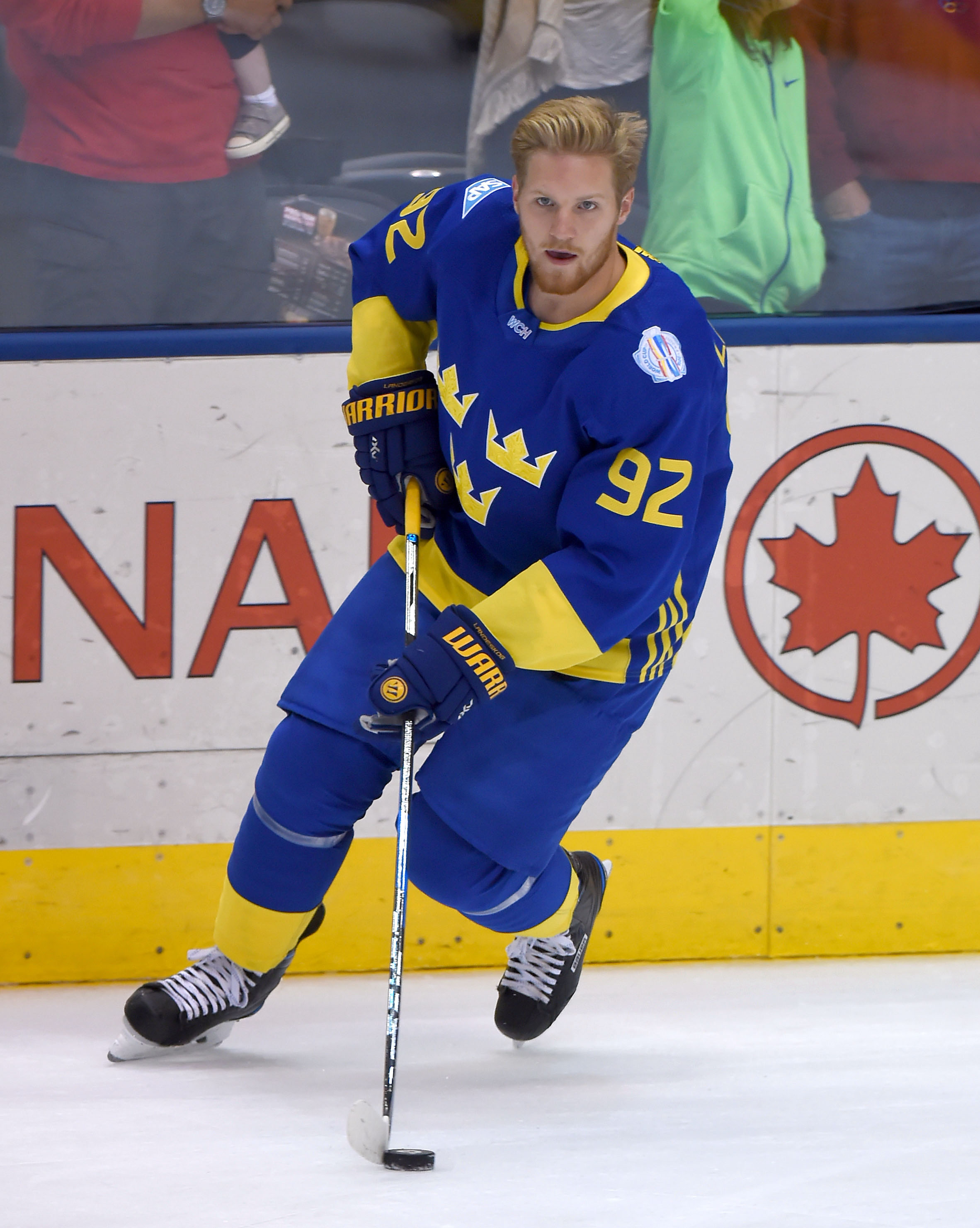
This time, the two teams heading to Europe are both captained by Swedish-born NHLers. Erik Karlsson and Gabriel Landeskog told NHL.com it is quite a rare experience and they’re both looking forward to it. From Karlsson:
Who thought they would have been able to play NHL games in your hometown. It’ll be surreal to do that. Stockholm is such a great hockey town and a great city overall. I’ll be really excited to show the boys around and show the team staff around the city.
In Colorado, the announcement of these games does come at an awkward time. With GM Joe Sakic publicly shopping captain Gabriel Landeskog at the trade deadline, and likely looking to move him this summer to start his rebuild, there is now likely pressure to wait at least through November. Landeskog was born and raised in Stockholm, and was surely the reason for the NHL choosing Colorado to participate, just as Karlsson was for Ottawa.
The announcement comes as the league continues its battle over whether to allow players to play in the upcoming Olympic Games in South Korea. As they try to grow their brand globally, the league seems to want to control the circumstances in which it sends its players, instead of participating in a tournament completely out of their control. Commissioner Gary Bettman has been as clear as ever recently, saying “assume we’re not going” when asked about the Olympic negotiations.
Morning Notes: Glendale, Niederreiter, Halverson
When Gary Bettman wrote a letter to Arizona lawmakers compelling them to pass Bill 1149—which would allow more than $200MM to be allocated from the state budget to build a new arena for the Coyotes closer to downtown Phoenix—he used some very strong wording. “The Coyotes cannot and will not remain in Glendale,” the Commissioner wrote in a thinly veiled threat that would hopefully force the Senate’s hand. He has received much backlash from the letter, including from a former mayor of Glendale herself, Elaine Scruggs (published by AZCentral).
Before the Coyotes moved out of downtown Phoenix they ranked 29th in attendance out of the league of 30 teams. Their first year in the Glendale Arena they ranked 19th in attendance. Attendance stayed in that tier until the floundering team started losing their disappointed fans’ support.
The truth is that the Coyotes have a world-class, taxpayer-funded arena that is designed for hockey and is only 12 years old. They have a City Council and City Manager ready to work with them to achieve an equitable long-term lease.
Scruggs makes a clear point in her letter, saying that it is not the people or city of Glendale’s fault, but the ownership groups the NHL has installed over their 19-year run. As the team struggles in last place in the Pacific Division, it is looking more and more like it won’t matter for the city that once loved their Coyotes. If they don’t get funding for another new arena, they might end up moving further than anyone—fans or the NHL—have ever wanted.
- According to Michael Russo of the Star Tribune, Nino Niederreiter will not receive any supplementary discipline for his knee-on-knee collision with Tyler Johnson last night. The Tampa Bay forward had to leave the game and is still being evaluated, but looks like he’ll miss at least some time with an injury. The Lightning also lost Vladislav Namestnikov and Cedric Paquette to injury last night, leaving them with several openings going forward.
- The New York Rangers have sent Brandon Halverson back to the ECHL after his emergency backup last night. The Swamp Rabbits goaltender filled in for Henrik Lundqvist on the bench last night, but wasn’t needed for any time on the ice. Lundqvist appears healthy enough to play in one of the Rangers’ back-to-back games against the Detroit Red Wings and Tampa Bay Lightning on Sunday and Monday.
- Ottawa has called up Phil Varone today prior to their game against the Colorado Avalanche tomorrow. It’s the final game of their current three game road trip, and as Ken Warren of the Ottawa Citizen reports, the team will likely be without Kyle Turris and Mark Stone. They’ll try to get a win against the NHL’s worst team before licking their wounds in the comfort of their own homes for the next three games.
Day Three Decisions From The GM Meetings
Alex Nylander is making waves. Not in the way you might think, dominating the AHL like his brother did two years ago as a teenager—Alex has just 22 points in 51 games this season for the Rochester Americans—but at the GM Meetings in Boca Raton this week. According to Chris Johnston of Sportsnet, Swedish hockey officials made a presentation to the GMs focused on keeping Sweden’s best prospects at home instead of developing them in the AHL. The Nylander brothers, along with some others, were likely focal points of the discussion as they both came over as teenagers to play in North American professional hockey.
Alex in particular had an interesting journey, playing first in OHL before using a loophole to move him straight into the AHL. Though normally players from the CHL aren’t allowed to “go pro” until their 20th birthday, Nylander had played the entire year with the Mississauga Steelheads on loan from his Swedish club, making him eligible like any other European prospect. Others like Andreas Johnson in Toronto, Adrian Kempe in Los Angeles and Julius Bergman in San Jose (and many more around the league) have come over early after being drafted by NHL clubs and continued their development in minor league hockey here. The NHL obviously has a vested interest in keeping the best prospects on their home turf, while individual teams enjoy having control of their development.
- The league did agree on one rule change that will be proposed to the competition committee. Under the proposed change, teams would no longer be allowed to call a time out after an icing to give their players a rest. A small change that could have a big impact late in games, it should be expected to go through and be implemented next season. As Stephen Whyno of the Associated Press points out, the AHL already introduced that change this season.
- The much talked about change to bye-weeks will be put into place next season according to Pierre LeBrun of ESPN. Instead of having each team take their bye-weeks at different times, there will be two set periods that will rest half the teams at a time. Since there will be 31 teams next season, 15 will rest the first week, and 16 the next. Coming out of their breaks, teams will play their first two games against opponents who shared the same rest period.
- The salary cap will increase slightly next season according to Johnston, sitting at $75.5-76MM depending on the inflator negotiations with the NHLPA this summer. While those extra couple of million may help some teams immensely, it doesn’t represent much revenue growth for either side. Frank Seravalli of TSN notes that because this isn’t a final number, most GMs are still assuming a flat cap and will adjust when the league makes an official announcement.
- Michael Traikos of Postmedia gives us the quote we were all dreading about NHL participation in the upcoming Olympics. Bill Daly told Traikos “Unless something changes we’re not going. We’ve said that consistently for three months. There’s nothing new about that.” It’s true that they’ve been consistent with it, but not so bluntly as Daly has finally put it. It seems as though there will be a fight between players wanting to go regardless, and their owners needing them during the season. As Traikos notes, Daly doesn’t seem pressured by that impending bat
NHL Will Not Change Definition Of Off-Side
Though it was discussed heavily at the GM Meetings this week in Boca Raton, Florida, the NHL will not change the off-side rule according to Pierre LeBrun of ESPN. The idea theorized was that the player wouldn’t need to have his skate blade on the ice to be considered on-side, just breaking the plane of the blue line as if it extended upwards from the ice. Similar to the endzone in football, this would allow review officials to more easily determine whether a scoring play was on-side or not.
This season has seen several reviews take close to 10 minutes as officials tried to see whether the very tip of a skate blade was touching the blue line or not. Though the proposed change would obviously make it easier to tell, it was also regarded with some opposition from traditionalists who didn’t want to change the rule just because of some review issues. The league will obviously want to speed up that process, but changing the off-side rule sounds like it’s off the table for now.
Also from the meetings, Chris Johnston of Sportsnet reports that the GMs were told there is no update on NHL participation at the 2018 Olympics. Though many players have expressed that they want to go no matter what, the league is still shuffling its feet on whether to break in the middle of the season again for a tournament that many owners dislike. The possibility of losing a key player to injury is a huge risk for teams that are competing for the Stanley Cup, and the league wants to build their own product—The World Cup of Hockey, held this past fall in Toronto—into the premiere international tournament.
While the GMs discuss how to improve the game and create more offense, many media members including TSN’s Ray Ferraro pondered various different rule changes on Twitter. One idea of expanding to the international-sized rinks was shot down immediately, with Ferraro saying that it does not in fact increase offense, just creates dead areas on the ice. Whether that’s true or not, Dave Stubbs of NHL.com put a period on the conversation when he noted that adding 15 feet of ice to every rink would eliminate many premium seats—no league owner would sign off on that.