
Looking At Phil Kessel’s Impending Free Agency
Earlier in the week, PHR’s own Ethan Hetu covered the situation surrounding the pending free agency of Carolina Hurricanes forwards Vincent Trocheck and Max Domi. Now, however, we pivot to the Western Conference, turning the magnifying glass on Arizona Coyotes veteran (and two-time Stanley Cup champion) Phil Kessel. Arizona opting to not move Kessel for a return at this year’s Trade Deadline surprised many. The NHL’s now-resident iron man has a respectable 52 points in 81 games this year on a Coyotes team that’s put up just 202 goals on the season, the worst such number in the NHL, and that wasn’t due to a crazy post-deadline bump in production. Now, after the eight-year contract extension he signed with the Toronto Maple Leafs in 2013 expires this offseason, the 34-year-old could hit the open market for the first time in his NHL career.
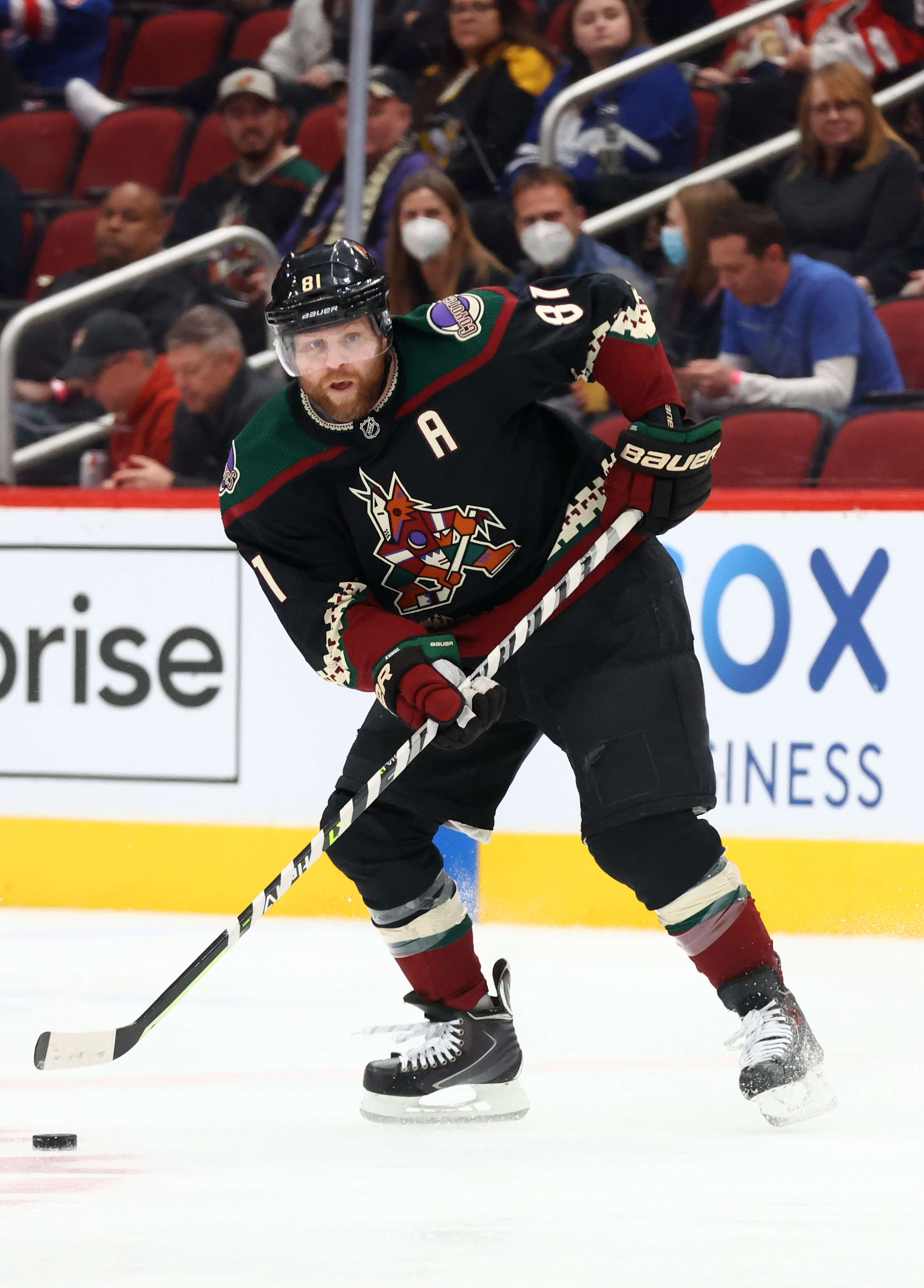 The bottom line remains that the Coyotes need NHL forwards next season. While their situation for 2022-23 has improved slightly after the acquisitions of young forwards Jack McBain and Nathan Smith, it’s unlikely that both of them (especially McBain) are ready for full-time NHL roles as soon as this fall. With the team surely a no-go destination for most of the NHL’s free-agent pool due to their arena situation, it’s not too far out of left field to assume Arizona’s choice not to move Kessel was influenced by the team’s desire to extend the veteran before he hits the open market.
If Kessel decides though, as he very well could, to join a team with more hype for 2022-23, the market for him should and will likely be there. While Kessel does just have eight goals on the year, his disastrous 4.7 shooting percentage (the lowest figure of his career) offers a compelling explanation for that. He’s not a factor defensively and hasn’t been for a few seasons now, but he remains a skilled and intelligent play-driver as evidenced by his 44 assists on the year. The fact that he’s having his best offensive season in Arizona in the year where he’s had the least talent surrounding him is sure to convince multiple general managers that Kessel still has it in him as a middle-six winger.
One near-perfect past comparable to Kessel’s situation is that of Corey Perry. Bought out a few years ago by the Anaheim Ducks, Perry signed a one-year, $1.5MM contract in Dallas after a career-worst season in Anaheim. He’s managed to continue performing as an extremely valuable depth piece on successful teams, helping provide secondary scoring. Kessel likely fits right into this mold, and could see a similar one- or two-year deal signed this offseason, albeit likely with a higher price tag. Perry had just 10 points the prior season, with Kessel outproducing that by about five times.
While there are multiple younger, flashier options on the market this offseason, they’re also a lot more expensive than Kessel would be. A short-term deal limits the negative implications of the contract if Kessel does enter a steep decline, and his Stanley Cup pedigree is obviously attractive around the league. A cap hit in the $4MM neighborhood seems likely for Kessel on a one- or two-year deal, though it could of course be lower if he opts to take a discount to join a cap-strapped contender. Arizona would likely need to offer more than that number to retain his services if they wish.
Photo courtesy of USA Today Sports Images
Looking At Max Domi’s Impending Free Agency
After taking a look at the upcoming free agency situation of Vincent Trocheck, we now pivot to looking at the future of his Hurricanes teammate, Max Domi. Tonight Domi hit an important milestone in his career: 500 NHL games played. Domi is famously the son of enforcer Tie Domi, who spent the majority of his career with just one team: the Toronto Maple Leafs. The stability that Tie Domi found once he established himself in Toronto is not something Max has managed in his career, and as a pending unrestricted free agent, the second Domi looks set to potentially land on the fifth NHL team of his career despite being just 27 years old.
As we previously mentioned when going over the situation of Trocheck, the Hurricanes already have significant cap dollars tied to their forward corps, (and more specifically their top three centers) and have important extensions to consider down the line. As a result, it is likely that Domi, who arrived in Carolina as part of a buzzer-beating deadline-day trade, is a pure rental for the team. So the former London Knights star looks primed to hit the unrestricted free-agent market for the first time in his career.
But what should his market look like? Domi is a bit of an enigmatic player. He is very talented offensively, having produced at an elite level once before (when he had 72 points for the Montreal Canadiens in the 2018-19 season) and having the overall skill level to appear on highlight reels. Additionally, Domi plays with a level of energy and enthusiasm that one would expect from the son of Tie Domi, and he plays a style that allows him to quickly endear himself to fans. Although coaches have mostly preferred to keep him on the wing, Domi also has experience playing center, which adds to his value. But with those positives comes a sometimes maddening level of inconsistency, as well as a shaky defensive game. Domi butted heads with coach John Tortorella in Columbus, and near the end of his tenure in Montreal, he found himself relegated to fourth-line center duty. So despite his intriguing package of skills and desirable work ethic, Domi’s overall offering as a free agent is more mixed than it may initially seem.
All of those factors make assessing what Domi could cost on the open market a challenging prospect. With many players, there are typically some generally accurate comparable players to use as a benchmark for estimating what kind of contract a player can command in free agency. But with Domi, are there many comparables that make sense for his situation? One tool we have to assess how Domi is viewed leaguewide is his trade value. It’s not perfect, as there are a whole host of factors that go into an in-season trade that are not present in the summer, but it can paint a somewhat accurate picture. 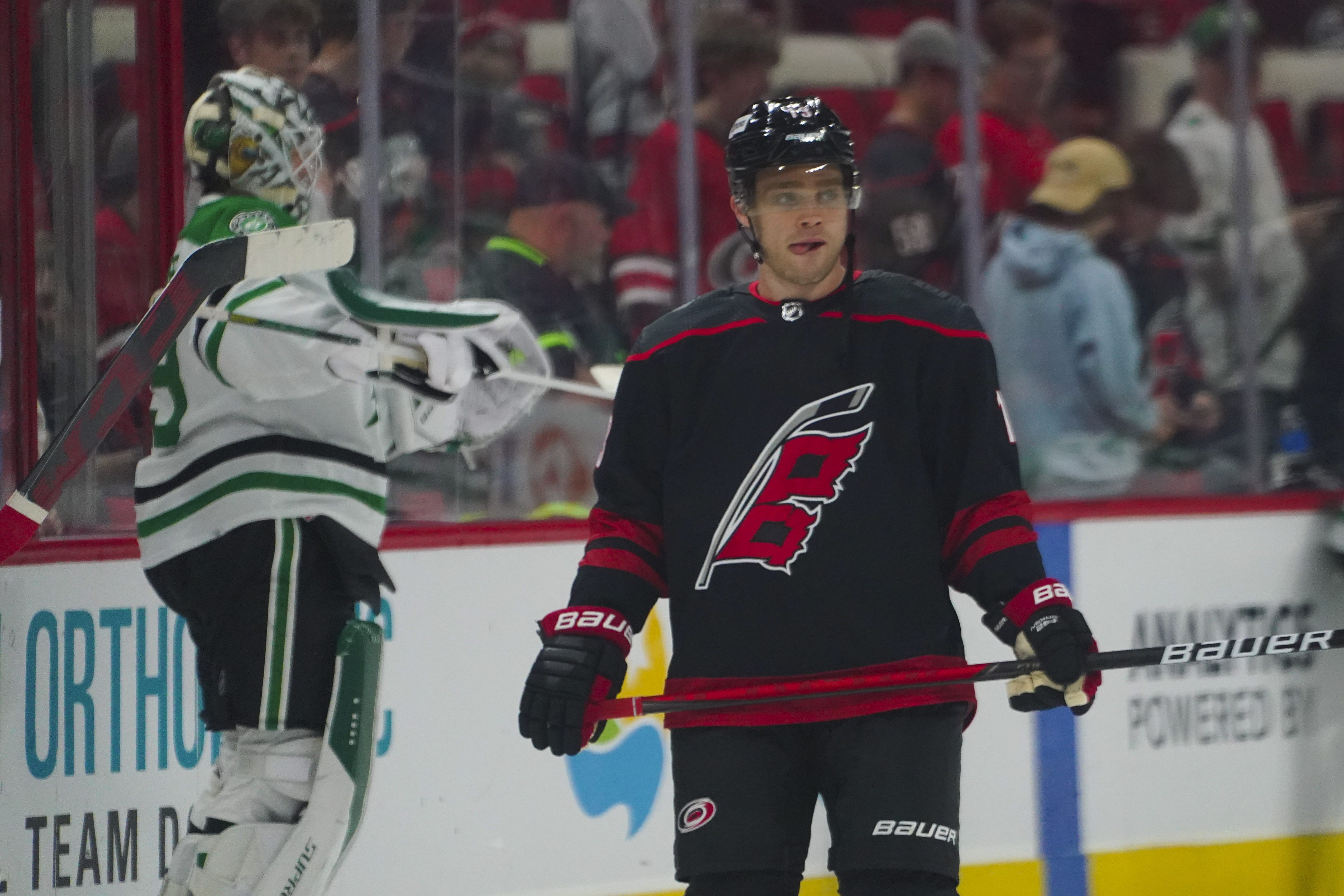
Domi’s trade was a complicated three-way deal that involved a “cap broker” and multiple assets being swapped just to account for the financial aspects of the deal. But in the end, the Blue Jackets, the team trading Domi, got just one asset in return for him, the rights to prospect defenseman Aidan Hreschuk, a 19-year-old playing for Boston College. Hreschuk was a third-round pick in 2021 and had 8 points in 37 games in this NCAA season. If that return is any indication, Domi’s value has declined sharply since a few years ago, when he was the main return in Columbus’ Josh Anderson trade and earned a contract worth over $5MM AAV.
This offseason’s market for offensive skill players is one that theoretically offers teams many options, with elite scorers such as Johnny Gaudreau, Filip Forsberg, and Nazem Kadri as the headliners, meaning Domi may not be the beneficiary of a bidding war caused by an imbalance between the supply and demand of scoring talent on the market. That means that Domi may not reach the $5.3MM AAV mark he is currently earning if he wants a long-term contract. But if Domi wants a shorter-term deal, one where he can prioritize role and fit in order to re-enter the market on the back of a better platform year, that would likely make him a desirable player for many cap-strapped teams. Domi’s 2018-19 season showed that he can score at a high level in the NHL, but he hasn’t come close to that since. His decision this offseason regarding where he wants to sign as a first-time UFA could determine if he reaches those heights again.
Photo courtesy of USA Today Sports Images
Snapshots: Kuzmenko, Boudreau, Price
While the IIHF recently announced an additional sanction on hockey in Russia, and the NHL has cut ties with the KHL, Russian players are still permitted to sign as free agents with NHL clubs. With the KHL season set to end shortly, KHL free agents seeking to cross the Atlantic and sign with an NHL team have come under the microscope. Perhaps the most attention has been paid to Andrei Kuzmenko, who is set to become a free agent on May 1st. Kuzmenko, 26, had 53 points in 45 games in this KHL campaign, along with 14 points in 16 playoff games. Kuzmenko’s offensive profile is tantalizing to many NHL teams, and since he is still just 26 years old it is not unreasonable to think there is room for him to grow.
Like many of the KHL free agents who came before him, Kuzmenko is expected to have a competitive market when he and his representatives choose to begin negotiations. On TSN’s Insider Trading program, TSN Hockey Insider Chris Johnston reported that next week Kuzmenko will begin the interview process with NHL teams. Johnston reports that it is believed that 20 NHL teams will reach out to Kuzmenko with at least “some degree of interest.” In terms of what factors may play into Kuzmenko’s decision-making process, Johnston says that Kuzmenko “wants to go somewhere where he can play, where he’s going to have a role,” and that the market and city a team plays in is a less important factor. That should certainly make the competition to secure Kuzmenko’s services a bit more wide-open, and given that he only costs a signing team cap space and no assets to acquire, there will likely be many fanbases across the NHL hoping their team can be the one to land this intriguing KHL veteran.
Now, some more snapshots from across the NHL:
- While Bruce Boudreau’s contract situation has been a major storyline in recent months, it seems the fears of a potential offseason departure for the 67-year-old Canucks skipper can be all but dismissed. In an interview with CHEK’s Don Taylor and Rick Dhaliwal, Sportsnet’s Elliotte Friedman gave an update on Boudreau’s status. In his interview, Friedman states that Boudreau will return as Vancouver’s coach “if everybody is reasonable.” Friedman believes that as long as neither party is “being ridiculous,” as he terms it, then there should be no real issue securing an agreement on Boudreau’s return. Both the Canucks’ players and fanbase have responded extremely well to Boudreau’s coaching, and since he arrived in Vancouver the Canucks have been among the tougher teams to beat in the NHL. So while there may have once been fears of an offseason divorce for Boudreau and the Canucks, it now seems that there is very little chance of those fears becoming reality.
- Carey Price has made his return to the Montreal Canadiens, but that doesn’t mean his future is made any more certain. In another note from TSN’s Insider Trading program, TSN Hockey Insider Pierre LeBrun gave an update on Price’s status. LeBrun reports that Price “wants to play next season” as a number-one priority for him, but in order to do so, he needs to have full health in the injured knee that cost him so many games this season. According to LeBrun, not a certainty that Price’s knee can get there. Lebrun doesn’t cast any majorly pessimistic forecasts on Price’s health, but he does state that there is “a bit of uncertainty” to Price’s health situation that may complicate not only his future but also the future of the Canadiens.
Dryden McKay Signs With Toronto Marlies
The interesting saga of Dryden McKay is heading to Toronto, as the free agent goaltender has signed a two-year AHL contract with the Toronto Marlies. Of note, McKay is currently serving a six-month sanction for breaking anti-doping rules by unknowingly ingesting a banned substance. He will be eligible to practice with a team in August and play in early October, meaning his professional career will not be significantly affected.
McKay, 24, is the reigning Hobey Baker winner after another outstanding college season, where he posted a .931 save percentage in 43 games for Minnesota State-Mankato. He led the group all the way to the national championship game (eventually losing to the University of Denver) and went 38-5 overall. Those kinds of numbers are nothing new for McKay, who posted a .932 save percentage and 113-20-4 record over 140 career appearances at the NCAA level, and was a finalist for the Hobey Baker in each of the previous two seasons.
It’s easy to see why he would choose Toronto. The Maple Leafs have had goaltending issues all season long after free agent signing Petr Mrazek never really got off the ground, and are facing the potential loss of Jack Campbell to unrestricted free agency in the summer. The team is currently using 25-year-old Erik Kallgren as the backup, who is signed through next season on a two-way deal, and also have the oft-injured Joseph Woll in the organization along with Mrazek. That doesn’t represent a ton of depth at the position, meaning McKay will have a clear path to playing time in the AHL if he shows his performance from college can carry over to the next level.
That’s by no means a certainty, though the Maple Leafs also have a strong development and support system to help him along the way. The organization has done exactly that for fellow college free agent Keith Petruzzelli, who decided to sign a similar minor league deal with Toronto last summer and has progressed nicely through the system. It appears as though the Maple Leafs are trying their hardest to add depth at the position in any way they can, including even trying to bring over KHL netminder Harri Sateri at the trade deadline; Sateri was eventually lost on waivers to the Arizona Coyotes.
This contract means he is not call-up eligible and will still need to sign an entry-level deal in order to play in the NHL.
Looking At Vincent Trocheck’s Impending Free Agency
The Carolina Hurricanes have been one of the NHL’s best teams over the past several seasons, and a major reason for that success has been their depth down the middle. The team has Sebastian Aho, one of the best centers in hockey, and Jordan Staal, who is in his tenth season with the club. In addition to those two, the team has had Vincent Trocheck since a February 2020 trade with Florida, but they may not have him for much longer. Trocheck, 28, is set to be an unrestricted free agent for the first time in his career, as the six-year, $4.75MM AAV contract he signed as a 23-year-old Panther is set to expire at the end of this season. With the Hurricanes having extended offseason addition Jesperi Kotkaniemi, getting him under contract until 2029-30 at $4.82MM against the cap, it looks as though Trocheck may be forced to join the third team of his career if he wants to maximize his earnings this summer.
That is not his preference, though. In an interview with Matt Larkin of Daily Faceoff, Trocheck reiterated his desire to stay in Carolina, saying:
That’s still the goal, to be here. I love being a Hurricane and having a chance to win every year is where you want to be. So hopefully we can figure something out.
As previously mentioned, though, staying in Carolina may not make financial sense for both the team and the player. The team has committed nearly $20MM for next season to the trio of Staal, Aho, and Kotkaniemi, and with other significant contracts on the books already, things are getting tight. Additionally, Vezina Trophy hopeful Frederik Andersen will need an extension after next season, meaning with all that in mind, Trocheck may be the player who becomes the odd man out this summer.
It may even be probable. With the extension to Tomas Hertl, the offseason’s center market is looking a bit thin. Beyond breakout Avalanche star Nazem Kadri, there aren’t many players available on this summer’s market who can play center and have a scoring pedigree. It is expected that franchise icons Evgeni Malkin and Patrice Bergeron will re-up with the only NHL clubs they have ever known, and Florida’s Claude Giroux has been more of a winger than a center in recent years. That leaves Trocheck and the Rangers’ Ryan Strome as the only two centers set to hit the market this offseason who have even crossed the 35-point mark in 2021-22, meaning the market for Trocheck this summer should be very player-friendly.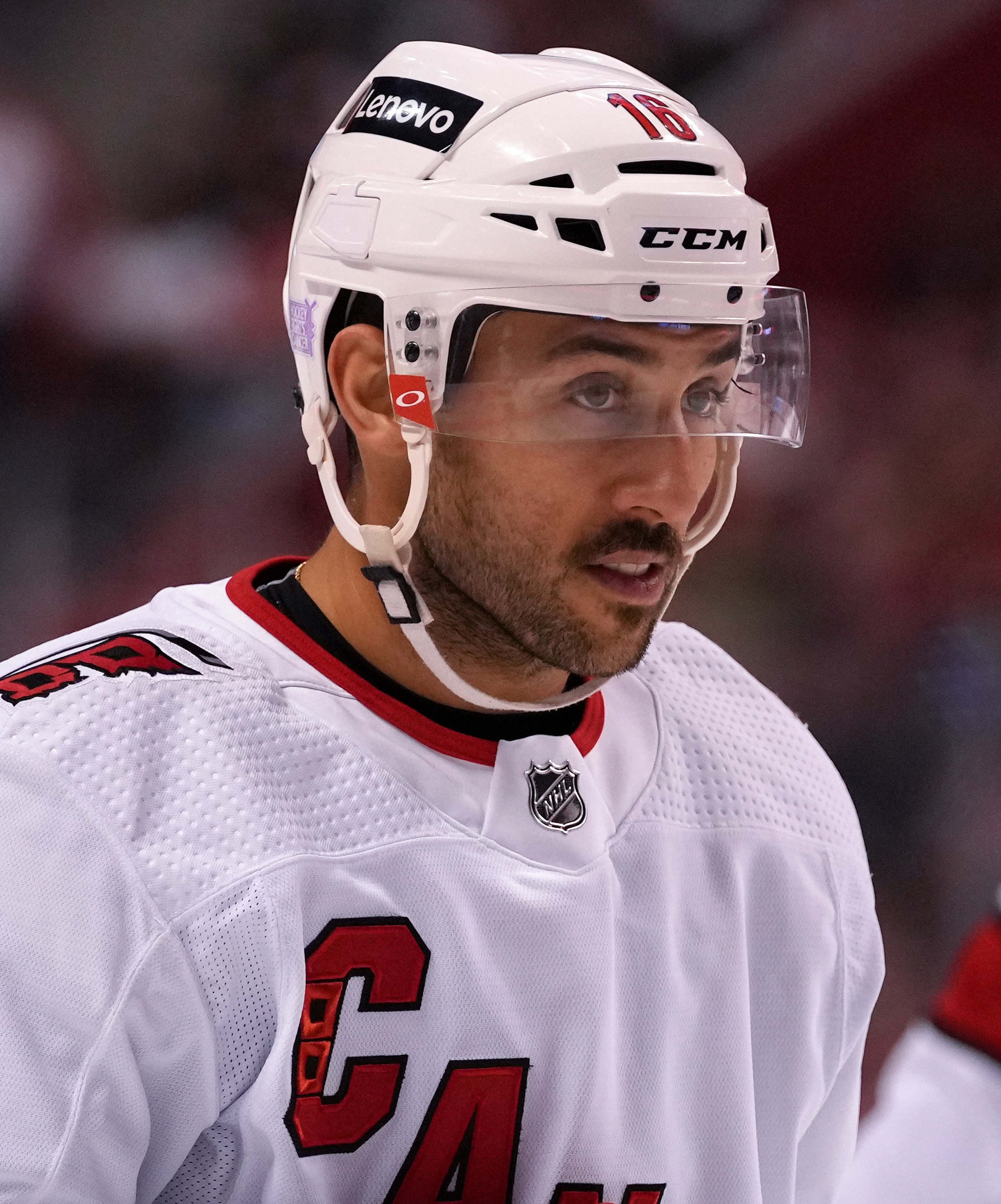
Trocheck has had a nice season in Carolina, with 20 goals and 48 points in 79 games. This is Trocheck’s fourth season where he has reached the 20-goal plateau, and he potted 17 in only 47 games last season. Trocheck also has flashed even higher levels of offensive upside, as he hit 31 goals and 75 points in the 2017-18 season with the Panthers. In addition to his offense, Trocheck has a decently well-rounded defensive game, and he ranks third among Hurricanes forwards in shorthanded time-on-ice per game. So, in short, Trocheck is a two-way center that can help a team defensively and add 20 goals and 50 points as a baseline level of offensive production. Players like that get paid on the open market, and with the aforementioned dearth of quality centers in this offseason’s free-agent class, Trocheck is lined up to get a major contract.
So even if his preference is to remain in Carolina, money is typically the ultimate deciding factor for most players, (and rightfully so) meaning Trocheck’s time as a Hurricane is likely coming to an end. But that leaves a question to be considered: with comparable centers like Kevin Hayes crossing the $7MM AAV threshold in their long-term free-agent contracts, is $7MM+ per year on a long-term contract an appropriate price to pay for a player like Trocheck, someone who is an accomplished all-around center but far from a superstar?
Photo courtesy of USA Today Sports Images
Looking Ahead To Andrew Copp’s Free Agency
The New York Rangers were active players at this year’s trade deadline, picking up several pieces, most notable among them, forward Andrew Copp, who the Rangers acquired from the Winnipeg Jets. The 27-year-old Copp is enjoying a fantastic breakout season, on the cusp of hitting unrestricted free agency this July, and will obviously look to capitalize on his excellent timing.
Copp has made work of continuously getting better throughout his career, culminating in what was a, to-date, career-best 39 points in 55 games in the shortened 56-game 2020-21 season. This season, Copp was on nearly the same trajectory, with 35 points in 56 games prior to the trade. However, since being traded to the Rangers, Copp has reached another level, putting up 18 points in 15 games, eight of those points from goals, and capped off by a hat-trick against the New York Islanders this past Thursday.
At 28 years of age on July 13th, the first day of NHL free agency, Copp will still be in the prime of his career, and any contract within range of expectation should see him still as an effective player through its entirety. Some factors to consider, when looking at what the gritty forward can sign for would be his production relative to offense around the NHL (i.e., increased offense league-wide), as well as his general role as a middle-six grinder who can provide offense and how he might age in that role.
Financially, Copp is making $3.64MM this season, the result of an agreement ahead of, and in lieu of, an arbitration hearing. One would certainly expect that he will command a fairly significant raise over that figure. After giving up significant assets to acquire Copp, and with his performance thus far, the Rangers would be expected to take a run at re-signing Copp, but with significant raises for Mika Zibanejad and Adam Fox taking effect next season, the expiration of Kaapo Kakko‘s ELC, and Ryan Strome, Frank Vatrano, Tyler Motte, and Justin Braun all hitting unrestricted free agency too, the organization will need to be careful and will have to make some tough decisions.
Now, we turn to a few comparable players with contracts in the vicinity of what Copp could push for in free agency this summer. These include a very similar player in a very similar situation, Jean-Gabriel Pageau of the New York Islanders, and a bit of a “high-hopes” contract on a player who is arguably a slightly better version of Copp: T.J. Oshie of the Washington Capitals.
T.J. Oshie: Eight-Years, $46MM, $5.75MM AAV
As mentioned, the Oshie contract is most likely going to be a real reach for Copp, however, a contract similar to this, at least in terms of AAV, may not be too far-fetched. This season, Copp has 53 points in 71 games following up a strong 39 in 55 last season. Due to COVID shortening Copp’s 2019-20 and 2020-21, and uncertainty surrounding a lower-body injury that is currently sidelining him, we’ll compare the players on a point-per-game basis.
This season, Copp’s production works out to 0.75 points-per-game, a marginal improvement over his 0.71 mark last year. Oshie signed his contract with Washington after the 2016-17 season, which saw him coming off a strong 56 points in 68 games, preceded by 51 points in 80 games in 2015-16. For a fair comparison, Oshie’s 2015-16 came in at 0.64 points-per-game, improving to 0.82 points-per-game the next season going into free agency.
Besides a higher jump in point-per-game going into free agency, what Oshie had that Copp does not, is a similar track record. Before the 2015-16 season, Oshie had already hit 54, 55, and 60 points in three of the previous four seasons, as well as 20 points in 30 games in 2012-13. In the three seasons prior to 2020-21, Copp averaged just 26.3 points. Though track record sets Oshie ahead of Copp, this contract is nearly five years old, and while the NHL is currently in a flat-cap state, the value of players has risen, meaning that Copp could push the $5.75MM AAV Oshie received. Eight years could be where Copp struggles more, considering the difference in the two players’ styles, one could argue that Oshie would be expected to age better as a smooth-skating, top-six, two-way point-producer over Copp’s middle-six grinder with offensive upside.
It should be noted also, that teams and players could look to trade term in exchange for AAV, much the same as the Rangers did when they signed Barclay Goodrow to a six-year, $21.85MM contract or when the Islanders signed Casey Cizikas to a six-year, $15MM contract, both coming just this past offseason.
Jean-Gabriel Pageau: Six-Years, $30MM, $5MM AAV
There may not be a better comparable player for Copp than Pageau. Both are similar players, both enjoyed breakout seasons heading into free agency, and both were dealt for a high price at the trade deadline to be impact players on teams that had their eyes set on a Stanley Cup. Pageau was dealt by the Ottawa Senators to the New York Islanders at the trade deadline in February of 2020, but unlike Copp, he would immediately ink an extension with his new club.
Like Copp, Pageau had truly broken out ahead of his new contract, with 24 goals and 16 assists in 60 games prior to signing, an average of 0.67 points per game. Pageau was injured the season prior, posting 12 points in 39 games, just a 0.31 points-per-game average, far short of his 2019-20 and his career best 43 points in 2015-16.
You wouldn’t be blamed for thinking Pageau has been better than Copp over their careers. While Copp has played in the postseason, Pageau has had a flair for the dramatic in a lengthy postseason career. But, it appears, Copp might be in a better position than Pageau was when he signed (keep in mind, two of Pageau’s deep postseason runs had not yet happened at that point). That said, if Copp is at least comparable and in the same position Pageau is heading towards his own contract, if not better, then six-years at $5MM per season would not only be attainable for Copp, but perhaps a jumping off point in negotiations.
Of course, it remains to be seen what exactly Copp will be able to sign for when his contract expires this summer, and right now his and his team’s focus is to get him healthy in time for the playoffs, and to chase a Stanley Cup. But, as it seems, Copp might look to sign somewhere between Pageau and Oshie–an excellent payday for a player well-regarded for his grit, but far from a superstar.
Snapshots: Ellis, PHF, Kane
It’s been a trying year for Ryan Ellis, who played just four games for the Philadelphia Flyers after a trade from the only organization he had ever known previously. Injured, recovered, and injured again, the 31-year-old has basically lost an entire season, while watching his new team go down in flames. Now, the speculation over his future in Philadelphia is starting to ramp up, with a report today from Anthony Di Marco of The Fourth Period, who writes that some within the Flyers “wonder if Ellis even wants to be part of the organization.”
There has certainly been some confusion around where the veteran defenseman stands in his current recovery, as in late March, more than four months after he last appeared in a game, general manager Chuck Fletcher told reporters that they were still making a decision on whether Ellis needed surgery. Of course, with five years remaining on his contract and carrying a $6.25MM cap hit, Ellis is one of the most important players the Flyers have and one that is integral to any thoughts of competing for the playoffs next season.
- The PHF has announced that free agency will open May 1 and this year will not include an entry draft. Instead, all amateur athletes graduating from NCAA and USports programs will immediately qualify for unrestricted free agency. The salary cap has also been confirmed to be set at $750K for this season, with a floor of $562.5K, and players are now eligible to sign two-year contracts which can include signing bonuses up to 10 percent of the total value. These increases all come following a massive private investment earlier in the year, which has also allowed the league to provide comprehensive benefit plans.
- Evander Kane‘s grievance hearing was started yesterday but will require a second day, according to Pierre LeBrun of The Athletic. Unfortunately, that doesn’t come right away, and the second day is still to be determined. As suggested yesterday, the outcome of this grievance is still not expected for some time and should not have any effect on Kane’s current contractual status with the Edmonton Oilers.
Looking At David Perron’s Impending Free Agency
With a dramatic 6-5 overtime victory over the division rival Minnesota Wild yesterday, the Blues clinched their spot in the playoffs this season. While the story of this Blues team is still unwritten, it isn’t too early to look forward to the offseason to examine what the future of this Blues team holds. With the emergence of Ville Husso as the team’s number-one goalie and Husso’s status as a pending unrestricted free agent, most of the attention paid to the Blues’ offseason decision-making has been centered around the situation with Husso and Jordan Binnington, who is the owner of a rich $6MM AAV contract extension. What has flown under the radar as a result has been the pending unrestricted free agency of winger David Perron.
That should not come as a surprise, though, as flying under the radar has become something of a trademark for Perron. Since he was selected from St. Louis to play for Vegas in the Expansion Draft, Perron has quietly become a star scoring winger in the NHL, flirting with point-per-game production several times over the past five years. After his campaign in Vegas where he had 66 points in 70 games, Perron signed in St. Louis, and with the Blues for the past four seasons Perron has a combined 218 points in 245 games, which is a 73-point pace over 82 games. That’s the kind of production that makes a player an elite winger, but Perron isn’t often viewed as the elite winger his production says he is. So, that can complicate his contract situation, as he has been by all accounts one of the better scoring wingers in the NHL for the past five seasons, but doesn’t carry the same name recognition that other scoring wingers hold. As an example, Max Pacioretty, one of the other successful scoring wingers from Perron’s 2007 draft class, has 187 points in 218 games over these past four seasons, which is 70-point pace. So Pacioretty has had similar levels of production to Perron (actually slightly lower) over the past four seasons’ worth of games, but Pacioretty is routinely mentioned as one of the league’s best left wingers while Perron typically maintains a lower profile.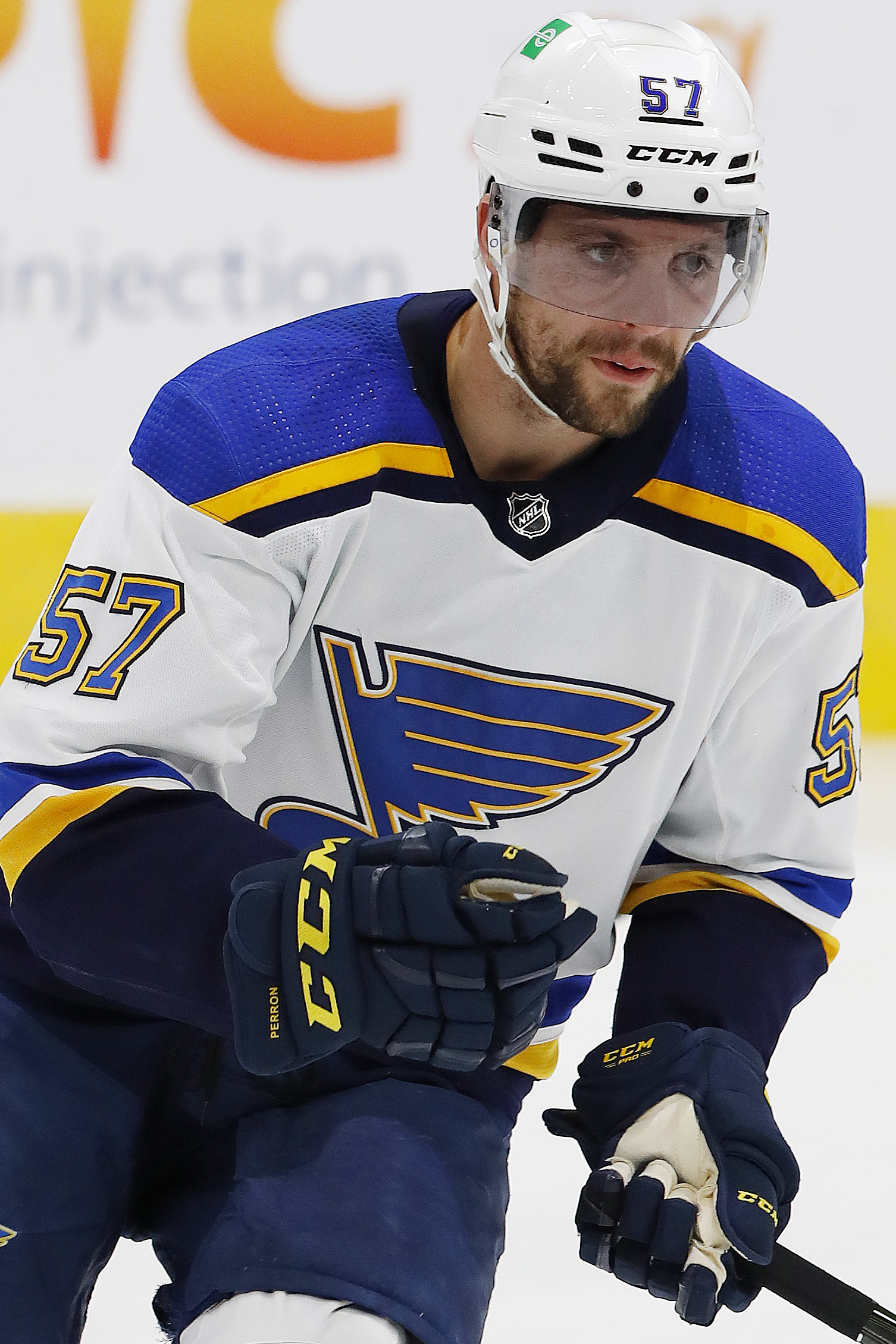
So, why is that relevant for Perron’s free agency situation? Because relative to his production, Perron has been underpaid. Perron’s contract in St. Louis carries a $4MM cap hit, a number that is significantly below market value for wingers who score at a 70+ point pace. To use the Pacioretty comparable again, his extension with the Golden Knights holds a $7MM AAV, and the going rate for wingers like Perron and Pacioretty is around $7MM, if not more. So that begs the question, is a $7MM+ contract something Perron will be aiming for this offseason? Moreover, given that Perron is already 33 years old, will he be able to get a contract at that number with any real term attached to it, beyond just one or two years? The market will obviously dictate the answers to those questions, but since Perron’s career has reached new heights as he’s aged (rather than getting worse with age, as happens with most players) it will be fascinating to see how the open market values him. Wingers who can score like Perron don’t grow on trees, so despite his age, it cannot be put out of the question that Perron will be able to earn a major contract.
While talented scorers like Perron don’t grow on trees for most NHL clubs, they seem to be readily available for Perron’s Blues. The Blues’ top three forward lines are an embarrassment of riches, and the team has seven players above 50 points on the year, and two more (Ryan O’Reilly and Brandon Saad) are set to reach that plateau by the end of the season. The team’s wealth of weapons up front further complicates Perron’s free agency situation, as, given the raise he is in line to receive, St. Louis may not be in a position to retain him. St. Louis’ forward corps has significant money on the books, with Brayden Schenn, Pavel Buchnevich, and Saad already locked into long-term deals. Additionally, two centerpiece young talents in Robert Thomas and Jordan Kyrou are set to be restricted free agents after next season. Two franchise icons in O’Reilly and Vladimir Tarasenko also are set to be free agents after next season as well.
All of this is to say that the Blues are going to have some major decisions to make in the near future, and it’s very possible that given the contracts set to expire, the situation with Husso this offseason, and the team’s need to add to their defense, there simply isn’t enough room to pay Perron what he deserves. While Perron’s third tour of duty as a Blue has been a success, and Perron obviously has a real connection with the market and the organization, if he wants to be paid like the elite winger he has been for the past five seasons, it’s going to be difficult for him to get that contract in St. Louis.
Photo courtesy of USA Today Sports Images
Update On Johnny Gaudreau
The Flames have had a remarkable season this year, bouncing back from last year’s disappointment and clinching a return to the Stanley Cup Playoffs. They sit sixth in the NHL with a 46-20-9 record and are in the conversation for the best team in the Western Conference. But despite these good times for the franchise, there is one looming uncertainty that could pose a serious threat to the team’s ability to compete after this season: Johnny Gaudreau‘s pending unrestricted free agency. Gaudreau, 28, has been the most skilled player to don a Flames sweater in years, and he has reached a new dimension of production this season, with 105 points in 75 games. He has played himself into the Hart Trophy conversation and cemented his status as the team’s most important player. But after this season, Gaudreau’s $6.75MM AAV contract expires, and he is set to hit the open market as an unrestricted free agent.
Naturally, that situation has been a consistent storyline all season for Calgary. The Flames reportedly began extension talks with Gaudreau last July, but those talks obviously have not borne fruit. After this season began both parties decided they would not negotiate a contract mid-season in order to remove all distractions for the team and player. As a result, Gaudreau’s contract situation still looms large over the franchise, so much so that in an interview with Sportsnet after his team clinched the playoffs, Flames GM Brad Treliving was asked about Gaudreau’s situation directly. Treliving stated that the two parties’ choice to “keep things quiet” on the extension front during the season “should by no means be taken as any indication” that the team does not want Gaudreau back. Treliving even goes further on that sentiment, saying that the Flames will “move heaven and earth” and “do everything [they] possibly can to get Johnny back.” Treliving communicated a general sentiment in his comments that the Flames’ overall philosophy is to try to retain and support the team’s most talented players rather than to trade them away or let them leave. These comments cannot be seen as anything but a strong indication that Treliving intends to apply that philosophy to the contract situation of Gaudreau.
But despite Treliving’s intention to “move heaven and earth” for Gaudreau, like with any unrestricted free agent, the decision is not his alone to make. Gaudreau has had a fantastic platform season as he enters the open market, and he looks in line to command a massive contract. The Flames have a Matthew Tkachuk extension to consider after this season and are heading into the final two years of Elias Lindholm‘s team-friendly $4.85MM AAV deal. There is definitely room for the Flames to give Gaudreau that extension, especially if the team can find a way to move Sean Monahan and his $6.375MM cap hit, but it won’t be easy.
Additionally, one external factor complicates things as well. Gaudreau is from southern New Jersey and has in the past flirted with the idea of playing for the Flyers. The Flyers will be under significant pressure this offseason to build a team that can win in 2022-23, and Sportsnet’s Elliotte Friedman reported on a 32 Thoughts podcast that the Flyers’ strategy for dealing with the financial pressures of losing is typically to “go out and get something shiny” that “the fans find attractive.” What would be more attractive to the Flyers fanbase and sponsorship base than a Hart Trophy candidate who grew up rooting for the Flyers? With all those factors in play, one has to wonder if the Flames are in the position to win a potential bidding war against a highly motivated Flyers club that has that hometown advantage over their player. But if Treliving’s comments from yesterday are any indication, the Flames look set to make a major push this offseason to retain their homegrown star.
Photo Courtesy of USA Today Sports Images
Chicago Blackhawks Extend Reese Johnson
The Chicago Blackhawks have reached a two-year contract extension with Reese Johnson, signing him through the 2023-24 season. The deal comes with a cap hit of $800K, and means that the young forward will avoid restricted free agency for the time being. PuckPedia reports that the one-way deal carries a salary of $750,000 in year one and $850,000 in year two.
If there’s an opponent that Johnson doesn’t want to hit, he hasn’t found it yet. The 23-year-old forward has racked up 111 hits in just 28 games this season, his first semi-regular NHL campaign. Coming into the year he had seen just five games with the Blackhawks and was still looking for his first NHL point, and he now has six of those to his name, including one goal.
While he might not offer much offense, the undrafted free agent signing can certainly provide some energy and physicality in a fourth-line role, and now appears to be penciled into that spot for the next few years. With the Blackhawks starting into a full tear-down, and other players likely traded out this offseason, there may be a full-time opportunity coming down the pipe for Johnson and other cheap forwards like him. This deal avoids arbitration and locks him in through his age-25 season at a price barely above the league minimum.
That’s certainly some job security, especially given Johnson would have to pass through waivers in order to be assigned to the minor leagues starting next season. The two-year term on the deal likely helps him clear, should that be the Blackhawks’ plan at any point.