
Free Agent Profile: Sam Gagner
The 2007 NHL Draft ended up bringing many superstars into the league, most namely Patrick Kane, Max Pacioretty, P.K. Subban, Ryan McDonagh, and others, but one forgotten name from that class is Sam Gagner. After a 15-year NHL career that’s included 967 games and 505 points, the journeyman forward finds himself without a team for the 2022-23 NHL season.
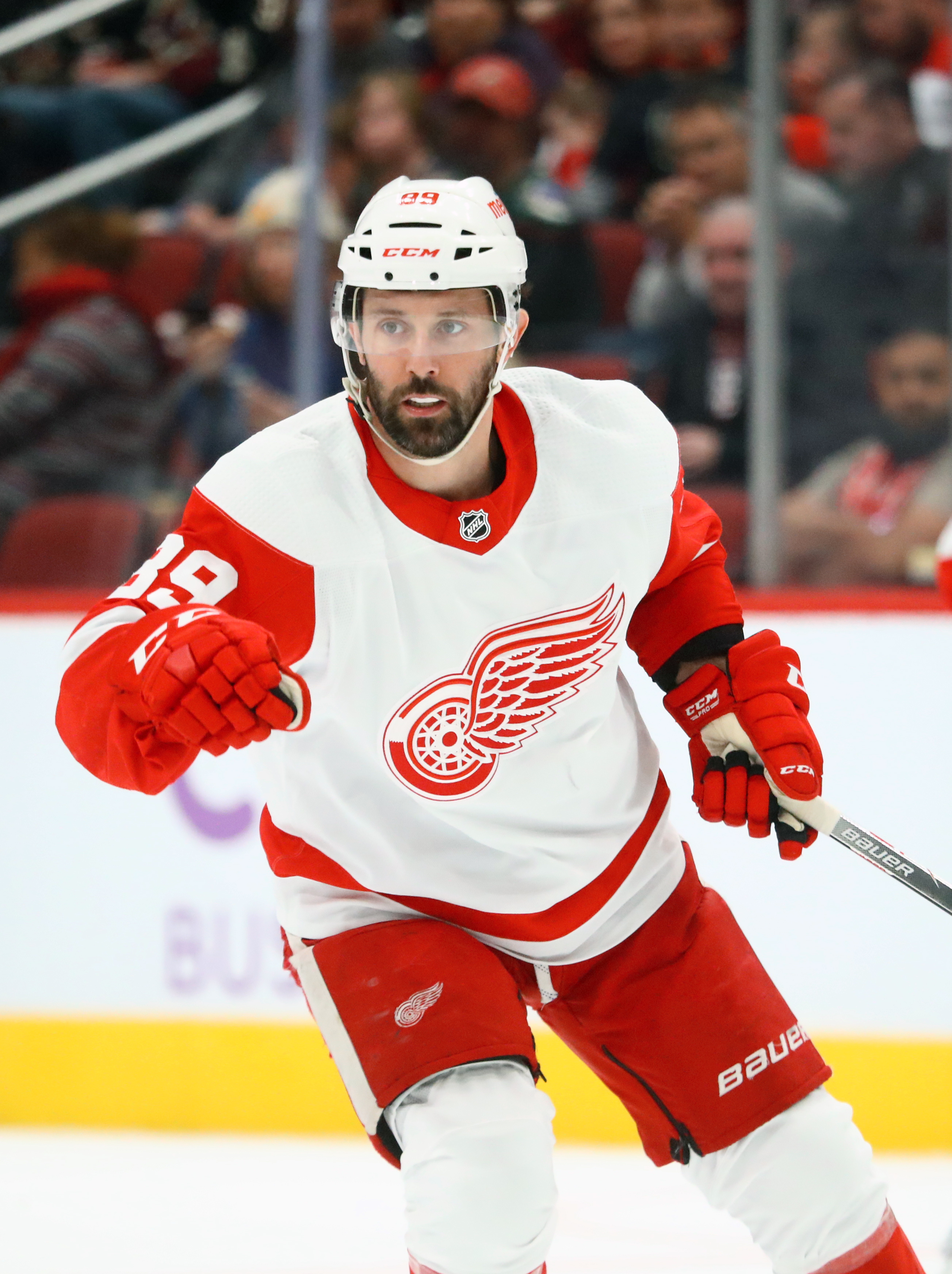 Gagner never quite reached his sixth-overall billing, hitting the 50-point mark only once, but he’s been nothing if not serviceable depth for a long time in this league. With a bit of a reduced role in Detroit last season, he actually produced his best offensive numbers since the mid-2010s. In a fourth-line role on a rebuilding team, Gagner still managed solid possession results all things considered, and there are certainly worse options to have in the faceoff circle in a pinch. It’s probably not a great bet to expect anything more than 10 goals and 25 points out of him, but on the league-minimum salary that he’ll undoubtedly cost, again, there are worse options.
33 years old now, Gagner presents a case for one of the more dependable, versatile options on the open market for low-risk veteran forwards. Whether anyone actually takes a swing on the former top-ten pick remains to be seen.
Stats
2021-22: 81 GP, 13 G, 18 A, 31 PTS, -4 rating, 32 PIMs, 132 shots, 13:37 ATOI
Career: 967 GP, 184 G, 321 A, 505 PTS, -133 rating, 427 PIMs, 1982 shots, 15:57 ATOI
Potential Suitors
The Winnipeg Jets jump out as a team with playoff aspirations that not only have ample cap space, but a clear roster need for depth forwards as well. While money won’t be a concern with accommodating Gagner, Winnipeg lacks forward depth with NHL experience at the bottom of the lineup. While Gagner may not be able to repeat last year’s production, he’s probably a safer bet to be an everyday NHL player than a player like Kristian Reichel or Morgan Barron.
Another Canadian team in a similar position, although maybe not with as much need, is the Ottawa Senators. Gagner could provide some competition at the bottom of the lineup for players like Parker Kelly, and he’d certainly provide more offensive upside than other veterans in the organization like Scott Sabourin and Jayce Hawryluk.
If Gagner does sign with a new team this offseason, it’ll be his seventh since entering the league.
Contract Projection
A player in Gagner’s position likely wouldn’t earn more than the $750K league minimum on a one-year deal. It’s also entirely possible that Gagner, similarly to players in years past like James Neal, has to settle for a professional tryout contract (PTO) to keep his NHL career (and dream of hitting 1,000 NHL games) alive.
Photo courtesy of USA Today Sports Images
Latest On Nazem Kadri
One of the running jokes of free agency every year is that if a player hasn’t signed for a while, they probably have a deal with the New York Islanders and Lou Lamoriello just hasn’t announced it. That’s what has been fueling rumors for Nazem Kadri, one of this summer’s top options who remains unsigned partway through August.
Frank Seravalli updated the situation on The DFO Rundown for Daily Faceoff today:
My understanding is [Kadri’s camp] have continued to engage with other teams. For all the reports that Kadri has something locked up with the Islanders, I think that is premature to say. I do think the Islanders have been one of the teams that have been in conversation with Kadri, I think they have put an offer on the table.
Other teams have told me they believe [the Islanders offer] is in the $7MM x 7 range for Kadri. At this point obviously it is not signed, and the fact that they continue to talk to other teams tells me at least that they haven’t agreed to terms with the Islanders. May he end up there? It is certainly possible, but they also have to move money there to make it work.
The Islanders do have more than $11MM in free cap space at the moment (according to CapFriendly’s projections) but still have Noah Dobson, Alexander Romanov, and Kieffer Bellows to factor in as restricted free agents. Dobson especially is expected to take up a huge chunk of that open space should he sign a long-term deal after his breakout 2021-22 campaign. The 22-year-old defenseman had 13 goals and 51 points in 80 games for the Islanders, establishing himself as a premier offensive defenseman in the league, while playing more than 21 minutes a night.
That means fitting Kadri will be difficult, and if Seravalli’s sources are right that the free agent’s camp is still talking to other teams, the Islanders don’t have that plan in place just yet.
Kadri, 31, is coming off a career-best 87-point season with the Colorado Avalanche that eventually resulted in his first Stanley Cup championship. The dynamic center can do just about everything on a hockey rink but still would represent plenty of risk on a seven-year deal. Not only will he turn 32 in October just before the season begins but has a history of supplementary discipline that removed him from important series for both the Toronto Maple Leafs and Avalanche.
Locking him into a big-money, long-term deal would be a bold move for the Islanders, who already have several players with rather hefty cap hits for multiple years and important negotiations right around the corner. Ilya Sorokin, for instance, is only signed through 2023-24 before he is scheduled for unrestricted free agency, while Mathew Barzal will be an RFA again next summer.
Still, it’s hard to know who they are really fighting against at this point, given how capped-out so many contenders are this deep into the summer. Only a handful of teams project to have the space available to fit in a $7MM center, and most of them would likely have no interest in adding a player of Kadri’s age. Remember that even Seravalli’s information could be a negotiating tactic from the Kadri camp, as they try to work out the best deal possible in New York.
Comparing The Johnny Gaudreau, Jonathan Huberdeau, And Matthew Tkachuk Contracts
The 2022 offseason has been a particularly memorable one thus far and is still not over. When we think back to this offseason years from now, the likely storyline that will be remembered most will be the major contracts and superstar shuffling that primarily involved the Calgary Flames. In a matter of days, Calgary lost franchise cornerstone Johnny Gaudreau to the Columbus Blue Jackets in free agency, found out that their other cornerstone Matthew Tkachuk would not consider a long-term extension with them, traded Tkachuk with an extension in place to the Florida Panthers, who proceeded to send their own franchise player in Jonathan Huberdeau back to the Flames alongside star defenseman MacKenzie Weegar, with Huberdeau ultimately signing his own massive extension.
That’s enough franchise-altering transactions to last some teams a decade or two, but Calgary fit it in in under a month, and all of this before even considering the impact these all had on Columbus and Florida. With the dust finally starting to settle and only Weegar left to deal with in Calgary, the attention can begin to turn to how these players will fit in with their teams, how their teams will build around them, and of course, how these contracts will ultimately play out.
Seeing as the three star forwards have a combined zero games played on their current contracts, it feels a bit premature to judge the contracts. However, given previous history with big-money deals like this and the fascinating nature in which they all came about, seeing how they all compare to one another and what each team might be faced with is an interesting exercise. Because it’s premature, we’ll look at previous history and we’ll consider what is more probable to happen rather than what is possible to happen. In other words, it’s possible Huberdeau immediately regresses into a third-line winger, but not probable. Instead, it’s probable he’s a similar player to the one he has been with some regression in his mid-30’s.
So, on this quiet Sunday in the NHL, take some time to carefully compare and contras these different contracts, not only to each other, but those from recent NHL history.
Johnny Gaudreau
The Contract: Gaudreau signed a seven-year, $68.5MM contract on the opening day of free agency with Columbus, who was then considered a surprise dark horse for his services. The deal carries a $9.75MM cap hit, comprised of $7.75MM in base salary and a $2MM signing bonus in each year of the contract. It also comes with a no-movement clause and a modified no-trade clause in the final three years of the deal where Gaudreau can submit a list of 10 teams he is willing to be dealt to.
Reasons for Optimism: Even at just 29, Gaudreau is a seasoned veteran of the NHL who has had plenty of personal and team ups and downs throughout his career. He was fortunate to have by far the best season of his career prior to hitting the free agent market, but this wasn’t exactly a breakout season either. Gaudreau put up 115 points this season, 40 of them goals, but has had as many as 99 points in the past, 36 of those goals, in 2018-19, a season where offense wasn’t up nearly as much as it was this year.
Also worth considering is Gaudreau’s production while playing alongside players like Tkachuk, Elias Lindholm, and Andrew Mangiapane. Some may argue that players like these simply serve to enhance Gaudreau’s numbers, however he was able to balance his need for puck control along with the needs of his teammates, creating a heap of goals and assists for not only himself, but the others, Tkachuk and Lindholm hitting the back of the net 42 times apiece and Mangiapane 35 times this season. On top of this, his 90 even strength points this year serve to show Gaudreau’s impact is not simply felt when his team is in the most offensively-favorable situations, but rather when the game is at its most balanced.
Reasons for Concern: Listed at 5’9″ and 165 pounds, Gaudreau is among the smaller players in the league, though size hasn’t been an issue thus far. The primary reason Gaudreau has been as great as he has, even with his size, is his elite skating. Gaudreau has been able to utilize his speed in order to protect the puck, create plays and make space for himself and his teammates, driving much of his dynamic gameplay. The forward hasn’t taken much of a step back and doesn’t figure to for a few more seasons, however as he gets into his mid-30’s, it stands to reason that some of his speed may be lost, and though he’ll be far from slow, what impact that has on his play style, especially given his frame, could have an impact on his performance.
Another worry as far as the value of the contract is concerned is Gaudreau’s previous inconsistencies. Yes, he has played near this level of elite in the past and his “lesser” performances have still been All Star level, but with a cap hit of $9.75MM, now Gaudreau’s ability to perform at this elite level year in and year out will be a prime factor in how his contract is evaluated long-term.
Jonathan Huberdeau
The Contract: Unlike Gaudreau and Tkachuk, Huberdeau’s contract doesn’t kick in for another year. The longtime Panther forward signed an eight-year, $84MM contract that will begin in the 2023-24 season, with one year at $5.9MM remaining on his current deal. The upcoming contract carries an AAV of $10.5MM with varying signing bonuses and base salaries. In sum, Huberdeau will take home a $7MM signing bonus in the first, second, third, and sixth year, a $9.5MM signing bonus in the fourth, fifth, and seventh years, and a $5MM signing bonus in the eighth year, with the remainder to be paid in base salary, constituting an even $10.5MM per season. His deal will also provide a full no-movement clause which allows Calgary limited trade availability in the final two years, Huberdeau picking 12 teams he is willing to be traded to. Given the even spread of salary, high signing bonuses and very strong movement protection, one could consider Huberdeau immovable and buyout proof for the next nine years.
Reasons for Optimism: Huberdeau’s 115 points in 2021-22 tied him for second in the NHL alongside Gaudreau. Also like Gaudreau, 2021-22 represented somewhat of a breakout for the winger, who was already playing at an elite level, but took another step forward in his production. The former Panther averaged 1.12 points-per-game in the three seasons prior to this one, stepping up to 1.43 this season. While Calgary is surely betting on him being the player he was this year for Florida, if Huberdeau is more like the player he was in the few years prior, he will still be worth at or around his $10.5MM cap hit, meaning that the Flames do have some room for Huberdeau to take a step back from his 2021-22 without it significantly impacting the value of the deal.
Additionally, Huberdeau’s game is one of an elite passer and playmaker that can find the back of the net plenty as well. However, his game has never necessarily relied on his skating, but instead his hands, vision, and hockey IQ on top of quality skating. It stands to reason that Huberdeau, like Gaudreau and many other players, might lose a step in his mid-30’s, which would be the middle of the contract, however given that his game relies primarily on skills that are unlikely to take the same kind of step back, he should be able to maintain his level of play or something close to it for longer than might be expected.
Reasons for Concern: As discussed, Huberdeau’s contract will be near impossible for Calgary to buyout or move down the road, but that alone is not necessarily a reason to be concerned. The trouble will come if Huberdeau cannot maintain the level of play that turned him into one of the NHL’s premier forwards of the past few years. Although it would seem he could maintain that level of play a bit longer, perhaps into his mid-30’s, the contract runs through Huberdeau’s age-37 season. Even if he were to age well, there are very few recent examples of players at that age that have been worth a cap hit of around $10.5MM. Still, the issue doesn’t have to be black and white, and if Huberdeau can produce at a high level, even if not necessarily worth every penny of his cap hit in the later seasons of the deal, it may not be a bargain, but may not be a disaster either.
Matthew Tkachuk
The Contract: Tkachuk’s contract was an interesting case of a true sign-and-trade. The forward technically signed with the Flames, who then turned and dealt him to the Panthers. Nonetheless, this was one that both Florida and Tkachuk had wanted and has no effect on the Flames outside of their return. The eight-year, $76MM contract carries a $9.5MM cap hit, the lowest of the three players compared here. The deal carries a largely front-loaded structure paid primarily through signing bonuses, each year of the contract paying just a $1MM base salary.
The first year of the contract contains no protections from movement or trades, but then contains a full no-movement clause through 2027-28. Starting in 2028-29, the final two years of the contract contain a modified no-trade clause where Tkachuk can submit a 16 team no-trade list.
Reasons for Optimism: At just 24 years old, Tkachuk’s eight-year deal carries him through his age 32 season, putting him on the UFA market a few months prior to his 33rd birthday. The main advantage to Tkachuk’s contract as compared to the other two is clearly his age, this long-term deal essentially covering his entire prime. Being able to secure one of the games better two-way forwards, a true elite point producer and perhaps the league’s best agitator all rolled into one for under $10M for his entire prime is nothing short of a major win for Florida, especially as they deal with their own salary cap issues. Even considering the cost to acquire Tkachuk, the team now has two of the games best players in Tkachuk and Aleksander Barkov signed through the 2029-30 season for under $20MM, giving them two players at a set price they can build around for the rest of the decade.
Reasons for Concern: A $9.5MM AAV for a 24-year-old coming off a 42 goal, 104 point season sounds hard to beat in today’s NHL, and it very well might be. But, say, what if that 1.27 points-per-game player actually only provided 0.88 points-per-game? This question will be the main point of concern for the Florida Panthers as they embark on this eight-year journey with Tkachuk, who averaged those 0.88 points-per-game over the three seasons prior to last. The player Tkachuk was over those three seasons, or his entire career for that matter, is no doubt an incredibly valuable asset, but for a cap-strung team, any overpayment on that player, no matter how good, could be an issue. Given his age and previous track record, it’s highly unlikely Tkachuk will be an objectively “bad” player during this contract, but living up to his AAV given he has only produced at this incredibly elite level just once, is of concern.
Not at all Tkachuk’s fault, he will have to contend with the price Florida paid to acquire him. Huberdeau, Weegar, prospect Cole Schwindt, and a first-round pick is a hefty price to pay for any player and that return package will be tied to Tkachuk and his performance as time goes on, especially with Huberdeau and Weegar both in their prime right now, and Huberdeau signed long-term in Calgary. This won’t have any bearing on the overall value of Tkachuk’s contract, but it is worth mentioning given how polarizing the trade itself is.
Other Comparables
The three contracts, all tied to one another and given in short order, will forever bond them to each other. However, since they are all their own, they will have to be evaluated that way as well, and not based on the performance of the others. Also considering that the players haven’t played a single game under their new deals, it’s hard to truly forecast them. One way to make those guesses more educated though, is to look at a few previous examples of similar contracts.
One example is New York Rangers winger Artemi Panarin, who signed a seven-year, $81.5MM contract carrying a cap hit just over $11.64MM per season. Panarin’s cap hit is over a million more per season than Huberdeau at $10.5MM but as a UFA, headed to a brand new team, is a relatable player in some form to all three. Signing Panarin gave the then-rebuilding Rangers a jumpstart, pushing them back into competitiveness quicker than many had imagined, and the winger has played up to his contract thus far. But, having taken somewhat of a step back in this year’s playoffs and on the wrong side of 30 with four years left, the reality of just how immovable Panarin is has resonated with many.
Panarin signing just prior to age 28 aligns most closely with Gaudreau, who signed just prior to turning 29, but carries with him an interesting distinction to all three here: his breakout to superstar status happened after he signed with the Rangers. After tallying a career-high 87 points in 79 games with Columbus in 2018-19, Panarin hit 95 points in just 69 games in his first season in Manhattan, taking his game to new heights. As well and good as this is, it raises the question: if Panarin took another step after signing and hasn’t taken much of a step back at age 30, what will Gaudreau, Huberdeau, and Tkachuk need to do to live up to their contracts?
Another example is John Tavares, who left the New York Islanders to sign a seven-year, $77MM deal with the Toronto Maple Leafs in July of 2018. Much like Panarin, Tavares was everything Toronto was hoping he would be when they signed him, scoring 47 goals for 88 points in his first season. However, since then, the Islanders captain turned Toronto captain hasn’t been able to repeat his success with either team, failing to be a point-per-game player since his Maple Leafs debut. Now 31, admittedly needing to work on his skating, Tavares is far from a bad player by any stretch of the imagination, but his $11MM cap hit has been the subject of almost every Maple Leafs-related contract discussion as the team is forced to make tough decisions about its depth and let some key pieces go. In effect, the Tavares example is one of the player being a great addition and player for his new team, but a big question as to whether the cap hit was worth it in the end.
A final example is Dallas Stars forward Jamie Benn, who signed an eight-year, $76MM contract extension to stay in Dallas during the summer of 2016. Signed three days ahead of his 27th birthday, the deal began in 2017-18, Benn’s age-28 season. Benn was, following a trend, every bit the player they hoped to extend the first year of the deal, putting up 79 points in 82 games, but hasn’t found that production since, finishing this season with a mere 46 points over 82 games. A relatively similar style of player to Tkachuk, Benn’s sharp regression at the age of 29 is a warning sign for any team looking to sign a long-term contract, but especially those seeking to ink a power-forward much like Benn. On the bright side for a Tkachuk comparison, even if the exact same trajectory was true for Tkachuk, an age-29 regression would only impact the final three years of his pact.
Wrapping up, it’s of course way too early to judge these contracts and in all honesty, it will be way too early to judge them halfway through (unless they’re bought out, of course). But considering the polarizing nature of all three, and the readily available examples of long-term, big-money deals, it is an interesting exercise to see what these could look like, not only compared to the league and its salary structure generally, but to one another, given that they will almost certainly be linked together for the remainder of their careers.
Free Agent Profile: Alex Galchenyuk
Much of the chatter in hockey circles these days focuses around the games best and most eccentric players like Auston Matthews, Connor McDavid, and Nikita Kucherov. Among these storied names, few seem to be talked about as much as former number three overall pick Alex Galchenyuk. The former Canadiens forward was seen as one of the most dynamic prospects in the 2012 NHL draft, a true center with game-breaking playmaking ability, and the future of the Canadiens franchise.
Given where Galchenyuk sits now, a free agent with no contract signed almost a month into free agency, some may feel his career is winding to a close at just 28 years of age. Due to his hype, many also forget just how good Galchenyuk was in his early days with Montreal. Debuting in his first pro season, Galchenyuk had 27 points as a rookie in 48 games during the lockout-shortened 2012-13 season. Seeing as he was still only a teenager, his less-than-incredible production was easily forgiven. However, he would take some time in his development, finally breaking out in 2015-16 with a career-high 30 goals and 56 points in 82 games.
Although that breakout performance was still not at the ceiling many hoped he would reach, it was an encouraging step forward. But, those looking for more wouldn’t find it. Galchenyuk would put up 44 points in 61 games the following season and 51 points in 82 games after that. The young forward was consistent and a quality top-six forward, but still wasn’t as billed and following the 2017-18 season, he was dealt to the Arizona Coyotes, which would begin a career of bouncing around the NHL. Galchenyuk regressed to 41 points in 72 games with Arizona. Following 2018-19, Galchenyuk would spend time with the Pittsburgh Penguins, Minnesota Wild, Ottawa Senators, Toronto Maple Leafs (including time in the AHL), finally returning to Arizona for the 2021-22 season.
This past season represented something of a turnaround for Galchenyuk, playing in 60 games, all with the Coyotes. However, he still couldn’t return to his previous level of production, tallying six goals and 15 assists, four of the goals coming in a single five-game stretch in February. Now a free agent with seemingly little interest, the forward awaits an opportunity to once again prove himself.
Stats:
2021-22: 60 GP, 6G, 15A, 21pts, -11 rating, 32 PIMs, 89 shots, 13:09 ATOI
Career: 643 GP, 146G, 208A, 354pts, -77 rating, 253 PIMs, 1,266 shots, 14:52 ATOI
Potential Suitors:
Considering his likely price-tag, discussed below, Galchenyuk could find a home in any of the 32 NHL teams in theory, however where he is most likely to find a spot is presumably in one of two groups: those in the basement and those married to the cap ceiling. For those teams currently rebuilding, Galchenyuk represents something of an upgrade, and if the forward can rebound, they may be able to deal him to a contender closer to the deadline for an asset. If not, the team is rebuilding and doesn’t have to commit to him any longer than they wish. Galchenyuk could merely be a roadblock for one of that team’s prospects or young players, but for some rebuilders, they may prefer to let those players continue their development in juniors, college, the AHL, or overseas as opposed to a struggling NHL roster, Galchenyuk then becoming a reliable placeholder at the least.
The other option could be a contender up against the salary cap. With his recent struggles, it’s fair to wonder why a contender would want to give Galchenyuk a roster spot. However, this team would more likely than not need a player playing at the league minimum, and if the preference is to give that spot to a veteran who has played, and performed, at this level before, as opposed to a younger, less polished option, then Galchenyuk would be a fit.
Projected Contract:
Coming off a 21-point season as a former 30 goal scorer with seemingly little to no interest at this point in free agency, a tryout with an invitation to training camp is probably Galchenyuk’s best bet for his next contract. If he impresses in training camp, he could easily turn that tryout into an NHL contract. Another benefit to this option is that teams that may not have particular interest in Galchenyuk could invite him to camp and allow him to open eyes around the league as other teams who may not have considered him gain places on their roster due to poor performance or injury. If the veteran is able to find a guaranteed contract this offseason, it’s very unlikely it would be for anything more than the league minimum.
Given his situation, the best option for Galchenyuk would not necessarily be the best contractual option, but a situation where he could succeed and begin the process of becoming the player he was with the Canadiens several years ago. A reunion with Montreal, who are currently rebuilding and could look to add veterans to their group as their young prospects develop, is an intriguing proposition, given that is where the overwhelming majority of Galchenyuk’s NHL success has come.
Snapshots: Free Agents, Oesterle, Bolduc
Nearly a month into free agency, several notable UFAs remain unsigned. One agent suggested to Adam Proteau of The Hockey News that it might be a strategy on their part. At this point, not many teams have cap space to offer contracts that are well above the minimum salary. However, if they wait until training camp or even early in the season when injuries arise, those teams might be able to use LTIR and potentially offer a higher salary than they’d be able to now. That approach certainly carries some risk but in an open market that has been tighter than expected for some veterans this summer, it could work out in the end for one or two of them if that is the route they’re taking.
Elsewhere around the NHL:
- With Detroit adding Ben Chiarot, Olli Maatta, Robert Hagg, and the injured Mark Pysyk this offseason, Ted Kulfan of the Detroit News pegs blueliner Jordan Oesterle as someone whose roster spot for next season could be in question. The 30-year-old played a limited role last season as he had eight points in 45 games while averaging a little over 18 minutes a night. With a $1.35MM AAV, that’s on the more expensive end for depth defenders although if the Red Wings were to waive him and send him down if he cleared, they’d be able to clear all but $225K off their cap for next season.
- With the Blues having some openings at the bottom of their roster, Jeremy Rutherford of The Athletic suggests (subscription link) that there’s a chance that Zachary Bolduc could break camp with St. Louis to start next season. The 2021 first-round pick is coming off a dominant year with Quebec of the QMJHL where he scored 55 goals and added 44 assists in 65 games. That could be enough to at least get him a nine-game look like Jake Neighbours received a year ago.
Free Agent Profile: Sonny Milano
Before 2021-22, it looked like Sonny Milano‘s career was headed in the direction many other former top prospects’ careers had gone. A talented run of scoring at lower levels, a solid first season in pro hockey, and then a stagnant development track that leads to an inability to hold down an NHL spot. That’s seemed to be where Milano was going.
The 16th overall pick at the 2014 draft, Milano’s puck skills and overall creativity made him an intriguing forward prospect. After a successful year in the OHL in his first season as a Blue Jacket, Milano made the transition to pro hockey, playing in 54 games for the AHL’s Cleveland Monsters. He played decently well, scoring 31 points, and even earned a three-game cup of tea at the NHL level.
From that point, Milano progressed slowly, but steadily. He had another productive AHL year, a few more NHL games, and then finally got an extended look in Columbus in 2017-18, scoring 14 goals and 22 points in 55 games. The offensive talent was there, but Milano’s struggles away from the puck meant that his NHL role was limited and his overall usage inconsistent. Under a demanding coach like John Tortorella, Milano needed to become a more well-rounded player in order to thrive, and he wasn’t able to.
Milano was dealt to the Anaheim Ducks in February 2020 for Devin Shore, and then missed most of 2020-21 due to an upper-body injury. He cleared waivers at the start of 2021-22 and then went on to have the most productive season of his career. In 66 games Milano scored 14 goals and 34 points, and featured in highlight-reel plays as a frequent running mate of superstar rookie Trevor Zegras.
It looked like Milano had finally found a home in the NHL, but earlier this summer the Ducks made a surprising move. They chose not to issue Milano a qualifying offer and let him hit unrestricted free agency, where he remains today. So, why might Milano still be on the market?
Well, it likely comes down to his flaws away from the puck, the holes in his game that have dogged him for his entire career. We know what Milano can do. He can stick with talented players and help finish their plays. He can dazzle with his creativity and help drive offense. But he can also hurt his team away from the puck and struggle to make any sort of impact when he’s not “on.”
His inability to polish his game is likely why he remains unsigned, but that doesn’t mean there’s no place for him in the NHL. Despite the issues in his two-way game, Milano is still an undoubtedly talented offensive player. He’s also still young at just 26 years old, and the combination of his offensive skill level and age isn’t easily found at this stage of the offseason market. Some teams might be weary of his overall profile, but the bottom line with him is that he can help a team score goals, so he’ll find a way to catch on somewhere.
Stats:
2021-22: 66 GP, 14G 20A 34pts, -9 rating, 10 PIMs, 94 shots, 15:17 ATOI
Career: 197 GP, 36G 45A 81pts, -26 rating, 46 PIMs, 255 shots, 13:15 ATOI
Potential Suitors:
Based on Milano’s profile on the ice, he’ll likely fit best on two types of teams: cap-strapped contenders looking to add some more offensive juice to their attack, or rebuilders who want to take a flyer on a relatively young free agent to occupy a roster spot and protect their current young forwards from being rushed to the NHL. With those two types of teams in mind, there are a few franchises that could make sense for Milano.
One team that makes sense for Milano is the St. Louis Blues. The Blues had one of the deepest top-nines in hockey last year, but the loss of David Perron this offseason means there could be a hole in their top nine that needs to be filled. They don’t have a ton of cap space, but assuming they can find room for Milano he could be a solid add to their lineup. He would have quality linemates to feed off of in St. Louis and would give coach Craig Berube more options as to how to deploy his top three forward lines.
Perhaps most importantly, the Blues have an overabundance of talented forwards who are responsible in their own end, such as Ryan O’Reilly, Ivan Barbashev, and Pavel Buchnevich. Their presence could limit the negative impact of Milano’s poor defensive game and free him up to focus on the offensive side of the ice.
Another club that could make sense on a one-year deal is the New York Rangers. Like St. Louis, they have a wealth of talented forwards to stick Milano with. The Rangers also have a pretty wide-open right side of their forward group, and although Milano is a left winger he could possibly slot in and compete with Vitali Kravtsov, Kaapo Kakko, and Sammy Blais for minutes on one of the Rangers’ top-two lines.
One club that is rebuilding that Milano could fit with is the Chicago Blackhawks. He would be a similar signing to their prior deals with Andreas Athanasiou and Max Domi, only at a lower cost. Milano would help the Blackhawks fill out their top two lines and keep them from needing to rush Lukas Reichel into a top-six role. The Blackhawks’ roster is among the weakest in the league, and adding a scorer like Milano would be wise in the case that he has a productive first half to his season, as he then could become a flippable asset at the deadline.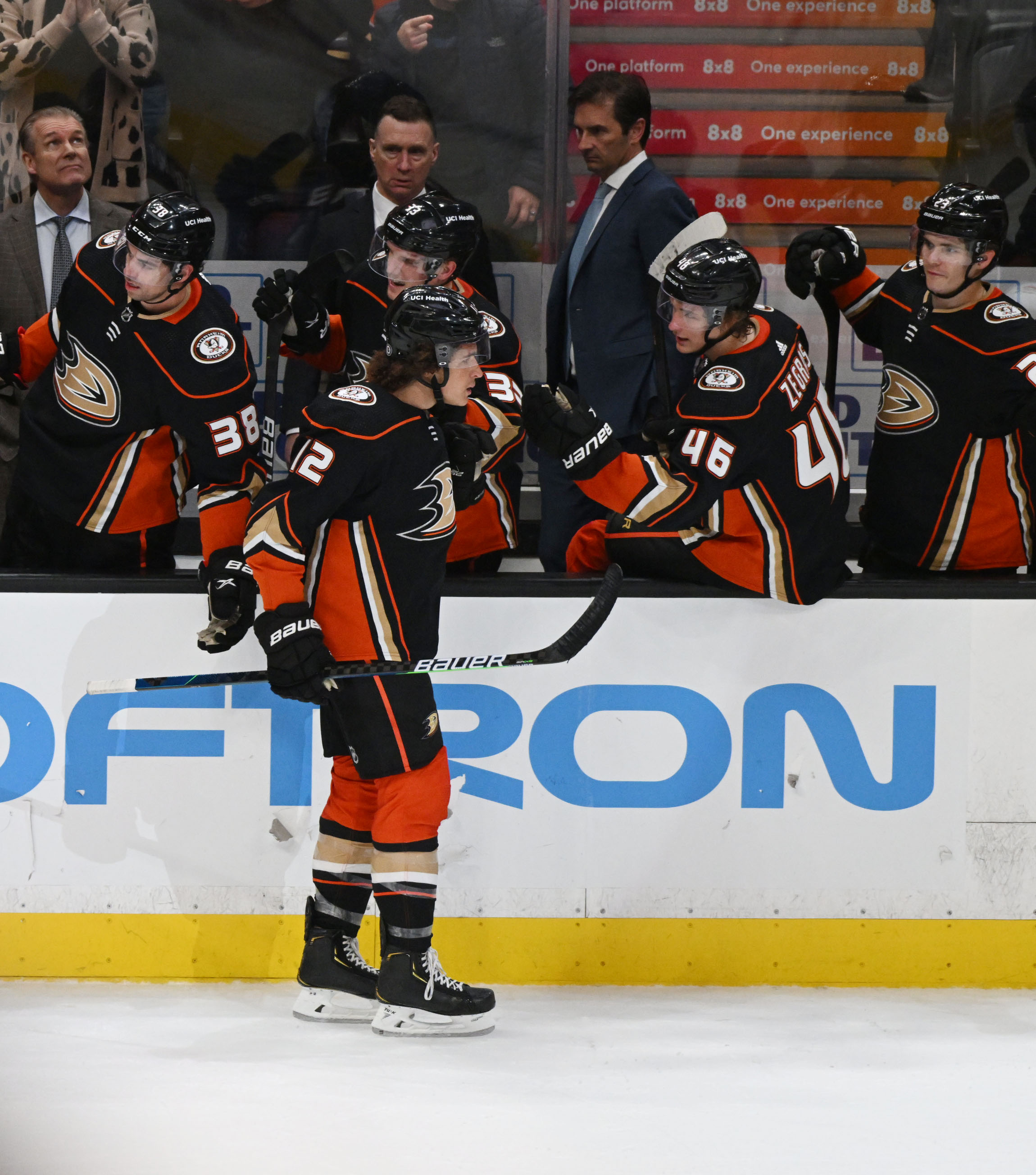
Projected Contract:
If a free agent is still available in August, they probably won’t be able to issue huge salary demands to interested teams, save for special cases like with still-unsigned center Nazem Kadri. As a result, Milano’s next deal is unlikely to pass the $1.7MM figure he played on last season. A one-year deal at around $1MM seems like the most likely outcome at this point, if he’s getting an NHL contract.
Adding a player in his mid-twenties who scored at a 42-point pace for just $1MM against the cap is a solid bit of business for many teams. But a team will have to be confident in their ability to properly utilize Milano so he doesn’t end up a net negative thanks to his defensive play.
Finding a proper fit in a lineup could be a challenge, but it’s far from impossible. At a cost at or below $1MM, Milano could quickly make it worth the hassle for any team that signs him.
Photos courtesy of USA Today Sports Images. Financial information courtesy of CapFriendly.
Free Agent Profile: Calvin De Haan
When it became clear that the Chicago Blackhawks would be pursuing a no-holds-barred teardown under new GM Kyle Davidson, many presumed that, at the very least, any player on an expiring deal in Chicago would be dealt by the team at the trade deadline. Davidson traded Ryan Carpenter and Marc-Andre Fleury, two players on expiring deals, but one of the team’s top pending unrestricted free agents, Calvin de Haan, stayed put. It seemed curious that a veteran, experienced defenseman with a defense-first game like de Haan would not be dealt as a deadline rental, but that’s exactly what happened.
Now, de Haan’s offseason free agent market is looking a lot like his trade market: curiously slow. Expecting a vibrant, robust market for de Haan would have been a mistake. The veteran of over 500 NHL games has been on the decline, and his health has been a nagging problem since he began his professional career. De Haan has played in a full 82-game season just once, which is worrying due to the fact that he made his NHL debut in 2011-12. He’s had every opportunity but just hasn’t been able to remain available consistently.
Additionally, de Haan’s game has become a bit one-dimensional. In a league where the two-way, transitional defenseman is in vogue, de Haan’s game is a bit of a throwback. To say de Haan is “defense-first” would be an understatement. He’s “defense-only” at this point in his career, with little in the way of offensive utility. He had just eight points in 69 games, and his issues with shoulder injuries have taken a toll on his puck skills. But, even with all that in mind, it still is a bit of a surprise to see de Haan unsigned in August, especially given the leaguewide sentiment of “you can never have too many capable defensemen.”
Despite all the flaws in his overall profile, there still is a place for de Haan in the NHL. His usage has been remarkably consistent throughout his career. He got around 19-20 minutes of ice time per game earlier in his career and now gets around 18 minutes a night with second-unit penalty-killing duties. While some could see his defensive style to be one-dimensional and a negative to his game, others could see value in the steadiness and safety he provides. To use a popular hockey cliche, de Haan is a defenseman who is best when he’s not noticed, and de Haan has become adept at remaining anonymous on the ice as he’s aged. That style isn’t for everyone, but it’s hard to believe that there aren’t any teams in the NHL who want to add that to their roster, even if he does have to spend some time on injured reserve.
Stats:
2021-22: 69 GP, 4G 4A 8pts, -21 rating, 33 PIMs, 107 shots, 18:57 ATOI
Career: 520 GP, 19G 100A 119pts, 0 rating, 195 PIMs, 736 shots, 19:29 ATOI
Potential Suitors:
Based on de Haan’s overall profile, he fits best with a team in need of a steady, veteran defenseman to stabilize their blueline and help them integrate young defensemen into the fold. Given de Haan’s status as a still unsigned free agent, he may not be in a strong enough position to be able to pick and choose his destinations. While he undoubtedly would like to sign with a contender, a mentorship role on a younger team could be a better fit at this stage of his career. Additionally, with cap space at an absolute premium, he may only receive the sort of contract he desires from a team with lots of cap space, and most teams with cap space right now are ones not in a “win-now” phase.
One potential fit for de Haan is the Buffalo Sabres. They had an encouraging season last year, but their team is still remarkably young, especially on defense. Their oldest defender who projects to be in their nightly lineup is Ilya Lyubushkin, who is 28 but has just 211 NHL games under his belt, and just seven career playoff contests. The next-oldest defenseman likely to make their NHL roster is Jacob Bryson, who is just 24 and made his NHL debut in 2020-21. If we assume Mattias Samuelsson will partner with Rasmus Dahlin on the team’s first pairing, as he did at times last season, and Owen Power will slide into a second-pairing role next to Lyubushkin, the Sabres have a possible opening for de Haan on their third pairing next to Henri Jokiharju. Jokiharju, a defenseman with puck-moving ability, could be a solid partner for de Haan and someone whose game could be improved thanks to the stability de Haan would provide.
Additionally, the Sabres have a glut of tweener defensemen in their organization, names like Lawrence Pilut, Chase Priskie, and Kale Clague, who could insulate team from a de Haan injury. They also have nearly $20MM in available salary cap space and just one remaining free agent to tie up, goalie Ukko-Pekka Luukkonen. While there hasn’t been a bidding war for de Haan’s services by any means, the Sabres could make any de Haan deal fit onto their books quite smoothly.
Another fit could be a return to his former team, the New York Islanders. The Islanders’ top-four on defense looks set. The Adam Pelech–Ryan Pulock pairing isn’t going to change anytime soon, and summer trade acquisition Alexander Romanov will likely get a long look next to breakout star Noah Dobson. Their bottom pairing, though, looks a bit more open. Scott Mayfield will play on the right side, but who will be his partner? The team could opt to go young and stick Robin Salo in the role, but if he’s not ready they could be forced to give Sebastian Aho regular minutes, which might not be ideal if the team is intent on returning to the playoffs. De Haan would fit into their current salary cap puzzle and give Salo veteran competition for that third-pairing role, as well as give the Islanders yet another defense-first option to fit into their style of play.
He has familiarity with the organization and a clear place to play in the lineup if the youngsters aren’t ready. Might the team prefer to stick a more up-tempo, pace-pushing option next to Mayfield? Sure, but giving de Haan a contract and a chance to win that job wouldn’t hurt, either.
Projected Contract:
De Haan ranked 49th on PHR’s 2022 Top 50 UFAs list, and was projected to earn a one-year, $1.5MM deal from the Ottawa Senators. A role on the Senators as either a seventh defenseman or competition to Erik Brannstrom for a third-pairing role could make sense, but maybe not at the $1.5MM cost we projected, especially if Senators GM Pierre Dorion is still seeking a big-name defensive addition.
It’s difficult to exactly project de Haan’s next deal, as on paper he’s more qualified than the veteran defensemen who have received one-year, two-way league minimum deals this summer.
But, on the other hand, he’s also had issues with availability and many teams place value on a defenseman who is able to stay in the lineup and remain healthy. It’s definitely possible that de Haan has to settle for a minimum contract with a sizeable minor-league guarantee, but that doesn’t seem likely. A one-year deal with one of the above clubs at a cap number similar to our $1.5MM projection seems like a reasonable outcome for his free agent journey, even if the ultimate number does come in a bit closer to $1MM.
Photos courtesy of USA Today Sports Images. Financial information courtesy of CapFriendly.
Colorado Avalanche Sign Anton Blidh
Per a team tweet Wednesday afternoon, the Colorado Avalanche have signed former Boston Bruins forward Anton Blidh to a one-year contract in free agency. Contract terms will be updated when they’re released.
Blidh joins the Avalanche after spending seven seasons playing in the Bruins organization, turning pro two years after he was drafted by the team in 2013. He finally became a full-time NHL player in 2021-22, and while he only played in 32 games for the Bruins, it was the first season in the organization that he never suited up in the AHL.
In 2021-22, Blidh set NHL career highs in goals (two), assists (seven), and points (nine) in those 32 games. He’d appeared in NHL games for the Bruins in six straight seasons, finishing with 12 points in 70 games.
Mostly a checking and energy forward, Blidh could look to replace the loss of Nicolas Aube-Kubel in the Avalanche lineup if he’s able to continue his regular NHL presence. If not, he’ll be a leader in the room for the Colorado Eagles.
Free Agent Profile: Tyler Motte
With their sights set on a Stanley Cup, the New York Rangers found themselves active buyers at last year’s trade deadline. Though the team made a few additions, forward Andrew Copp, who the team acquired from the Winnipeg Jets, stole most of the attention. However, the team would have one of the more underrated deadline pickups, bringing in two-way energy forward Tyler Motte from the Vancouver Canucks. While it was the likes of Copp, Chris Kreider, Mika Zibanejad, and Artemi Panarin that drove the Rangers offense up front, Motte showed through his complete game just how valuable he was to a team that was able to make a deeper playoff run than many had anticipated.
At age 27, Motte is a veteran of six NHL seasons, spending time with the Rangers and Canucks, as well as the Columbus Blue Jackets and Chicago Blackhawks, who originally drafted him in the fourth round of the 2013 draft. He debuted in 2016-17 with Chicago, but was dealt that offseason alongside Panarin to the Blue Jackets. Columbus dealt him just a few months later in the trade that brought Thomas Vanek the other way from Vancouver. Motte spent parts of five seasons in Vancouver prior to this season’s trade to the Rangers, where he would interestingly be teammates with Panarin on the third different team in as many seasons played together.
Never known much for his offensive game, Motte has made a career for himself out of being a high-energy and defensively reliable forward who can play in all situations. This season represented arguably his best, putting up seven goals and eight assists in 58 games, all of those coming in the 49 games he played for Vancouver. His highest point total came in 2018-19, where he had 16, however that came over 74 games. Where Motte becomes increasingly valuable is his ability to contribute on the penalty kill and to play in his own zone, which most notably includes a career 71% defensive zone starts percentage versus 29% in the offensive zone. In other words, Motte is capable and trusted to play important shifts of defensive hockey for his teams.
This summer is Motte’s first on the open market, coming off a two-year, $2.45MM contract that featured a $1.225MM AAV, having previously been an RFA. Although news has been quiet in regards to his free agency, there was plenty of chatter surrounding the veteran ahead of the market opening up, having impressed with his overall game and his poise in the Rangers playoff run, where he contributed two goals in 15 games. Despite the lack of interest, Motte’s game, and presumably lower price tag, will be enticing to clubs looking to add a smart, veteran winger to their bottom-six with a playoff run in mind.
Stats:
2021-22: 58 GP, 7-8-15, +2 rating, 22 PIMs, 101 shots, 39.9 CF%, 67.9% dZS%, 14:01 ATOI
Career: 269 GP, 35-27-62, -22 rating, 76 PIMs, 403 shots, 39.4 CF%, 71.0 dZS%, 12:56 ATOI
Potential Suitors:
Motte’s game is one that could suit any one of the NHL’s 32 teams, from playoff teams and Cup-contenders looking to add a smart, hard-worker that knows what he’s doing, to young up-and-coming teams that could add a veteran to help their inexperienced talent take another step, to rebuilders who are looking to add a spark that will help the rest of the team play the right way. Still, while there is likely no shortage of good fits, many teams are facing a cap crunch or a roster crunch, and adding a player like Motte, who as good as he is in his own zone, doesn’t bring much offensively, is a tough sell.
Some had wondered if a reunion with the Rangers could be in the cards for Motte. The fit is right, especially after his stint with the club, but with just over $1MM in salary cap space, bringing the forward back could be tough. Speaking of reunions, the Blackhawks could be an interesting option, as the team has stripped down many of its key parts, looking to start over with a more extensive rebuild. The organization has brought in several veterans in free agency including Max Domi and Andreas Athanasiou both on one-year deals and could look to do the same, perhaps retrieving an asset at this year’s deadline for what could be a popular rental.
The Minnesota Wild, who are actively looking for another forward could be an option, with ample cap space to accommodate Motte. However, it’s unclear what kind of player they would want, the team losing 85 points in the departure of Kevin Fiala and though there’s no option readily available to replace that production, there are other options out there that could provide more offensively than Motte can.
Projected Contract:
Motte came in 37th on PHR’s 2022 Top 50 UFAs list, predicting a landing spot with the Nashville Predators on a projected contract of four-years and $7MM, an AAV of $1.75MM. That contract would have represented a relatively significant raise for Motte and a doubling of term from his previous contract. At this point in free agency, with many teams spending all they had allotted on the free agent market, it’s unlikely Motte will be able to secure a contract of that length or salary. Still, Motte has proven he is worthy of a guaranteed one-way contract and there are more than a handful of teams remaining with salary cap space and a roster spot to offer. There is plenty of time until training camps open up and a couple of notable pieces remaining on the free agent market, chief among them being Nazem Kadri. As teams continue to gain clarity with additional signings and possibly miss out on a target they still have, Motte could see his own market gain some traction, even if it is not for the contract he might have hoped for or that we predicted for him.
Free Agent Profile: Evan Rodrigues
As he was enjoying a breakout season at the age of 28, many believed Pittsburgh Penguins forward Evan Rodrigues had put himself in perfect position to hit the open market this summer. A center who was good in his own end, Rodrigues finally found offensive success making him a true two-way forward and a perfect fit in almost any team’s middle-six. Given the Penguins cap situation and needing to re-sign Evgeni Malkin, Kris Letang, and Rickard Rakell, it appeared that Rodrigues would be too rich of an asset to remain with the club and could move on with a payday elsewhere. However, more than two weeks after the start of free agency, Rodrigues remains unsigned, with very little buzz around his name. After a season with 19 goals and 24 assists, shattering previous bests, it’s interesting to find Rodrigues still without any bites, at least that we are aware of.
Prior to this season, Rodrigues’ previous career best in points had been 25, which had come in 48 games with the Buffalo Sabres in 2017-18, a similar points-per-game pace to this season. That season was the forward’s first of a two-year contract that carried a $650K AAV. In 2018-19, Rodrigues took a step back, hitting what was then a career-high 29 points, but doing so in 74 games. An RFA, Rodrigues was awarded a $2MM salary via arbitration for the 2019-20 season. After that summer of 2019 arbitration award, Rodrigues struggled to rebound, recording just 24 points in 80 games between the Buffalo Sabres and Pittsburgh Penguins over the 2019-20 and 2020-21 seasons. This year, however, Rodrigues was able to show he is capable of being the player he was in 2017-18 with his 43-point breakout performance.
So, the question remains: what is holding Rodrigues’ market back? Of course, he’s not exactly teammate Sidney Crosby, but he has shown he has plenty to offer. One concern would be that, over six seasons with regular NHL games played, the veteran has only ever matched his 2021-22 production once, back in that 2017-18 season. Another concern is consistency. Looking closer at this season, Rodrigues was a borderline All-Star-caliber player, recording 32 of his 43 points in just 46 games prior to the All Star break. A dominant first-half indeed, he regressed to only 11 points in 36 games after the break.
Rodrigues’ pros and cons provide a basis for a negotiation, but still don’t get to the answer of why he’s still on the market? The answer may lie in the fact that Rodrigues recently turned 29 years of age and is coming off of his best season to date. He could very well view this as his best chance to secure a contract with very attractive term and salary, and is not willing to settle on either front. From a front office perspective, Rodrigues has shown flashes of being a 40-point, or maybe even 50-point player, but absent certain stellar stretches, he’s mostly been a 25-30 point player. Given the cap crunch all 32 teams are facing and having potentially found more statistically consistent players on the free agent and trade markets already, teams are weary of giving Rodrigues what he’d want (term and salary) without knowing which kind of player he really is.
Stats:
2021-22: 82 GP, 19-24-43, +3 rating, 14 PIMs, 243 shots, 59.8 CF%, 15:50 ATOI
Career: 316 GP, 53-76-159, -30 rating, 77 PIMs, 701 shots, 53.7 CF%, 14:24 ATOI
Potential Suitors:
Even if the market is slow and he doesn’t wind up with the contract he was hoping for, Rodrigues shouldn’t have an issue actually finding a suitor when he and teams are ready. The player Rodrigues was in the first half of this year was intriguing, but the player he has been for a majority of his career, that of a reliable two-way, bottom-six center that could give flashes of offense is always in demand, from Cup contenders to middle of the pack teams to rebuilders.
What exactly the veteran’s contract expectations are and how much, if at all, he is willing to compromise, will dictate what teams are able to be in the market for him. His poise and ability to play for a perennial contender like the Penguins, alongside the likes of Crosby, Malkin, and Letang stands to show that Rodrigues can handle the bright lights and the pressure that playoff and playoff-implicating games bring. Competitive teams who could use another forward for their middle or bottom-six, such as the Edmonton Oilers, New York Rangers, or even a reunion with the Penguins, make sense, but these teams are all close to, if not over, the salary cap.
Teams that are trying to get over or away from the salary cap floor, like the Anaheim Ducks, Arizona Coyotes, and Chicago Blackhawks, could be options for Rodrigues, all of whom not only can pay, but may want to pay for their own reasons. Maybe not some of the most attractive options, they could give Rodrigues an expanded role, valuing his leadership and providing more opportunities to repeat his offensive production. The Minnesota Wild, New York Islanders, and Calgary Flames, who could use another secondary-scoring option and have the cap space to make a solid offer along with an opportunity to be competitive may also be very strong options for Rodrigues, who could have the best of both worlds in terms of contract and competitiveness in those destinations.
Projected Contract:
Rodrigues came in 24th on our Top 50 UFAs list in early July. There, we projected a three-year, $3MM AAV contract with the Minnesota Wild. The Wild could very well be in the mix for Rodrigues, but at this point, it’s unlikely the forward will find the contract we had projected for him with a competitive team like the Wild, Islanders, Flames, Oilers, Rangers, or Penguins, all of whom are mentioned above. But, if a contract along those lines is a sticking point, it might not be out of the realm of possibility that a team like the Ducks, Coyotes, or Blackhawks could make the offer, betting on Rodrigues’ production and his value as an asset down the road. Ultimately, given his career track record, it’s still unlikely at this point in time that the 29-year-old is headed towards a PTO in training camp, even if it does mean taking what might be seen as an underwhelming offer.