
Offseason Checklist: Boston Bruins
The offseason is in full flight with the draft and free agency fast approaching. We continue our series which examines what each team needs to accomplish over the coming weeks and months. Next up is a look at Boston.
The Bruins underwent a few notable changes over the last year but the end result was the same as they were eliminated in the second round, this time by the eventual Cup winner in Tampa Bay. GM Don Sweeney has more salary cap flexibility this summer than he’s accustomed to although he also has some other holes to fill this time around as well. Here is an overview of what they should be looking to accomplish.
Goaltending Decisions
Tuukka Rask has been a fixture in Boston’s goaltending tandem for the past dozen years. However, he’s set to become an unrestricted free agent this summer and hip surgery will cost him the first half of next season. He has made it clear that he wants to return to the Bruins and that he’s not looking to go elsewhere but is the feeling mutual? More specifically, can they afford to wait for him?
With Jaroslav Halak also set to become an unrestricted free agent, Jeremy Swayman currently stands as the only goalie in the mix for one of the two spots. Swayman was quite impressive in his first taste of NHL action this season – a 1.50 GAA with a .945 SV% in 10 games (all starts) – but can they afford to enter 2021-22 with him as the starter and a placeholder as the backup while waiting for Rask to return? If they believe Swayman is ready for a full-time NHL role, they could certainly go that route and adding Rask midseason or soon after would give them a nice boost for the stretch run.
But if the answer to that is no, that complicates things a little bit. Daniel Vladar is the other goalie in the mix and has impressed in the minors but has just five career NHL games under his belt. He’s eligible for waivers and could be a candidate to be claimed. If they don’t want to run the risk of losing him, the Bruins could be faced with running two rookie goalies out to start the season.
If they opt to bring in a veteran goalie (which could simply be re-signing Halak) and re-sign Rask, that could create a situation where Swayman is the odd one out midseason by default once Rask returns. Unlike Vladar, he’s waiver-exempt so there are no issues there but if he has a strong first half making it difficult to send him down, it could be a three-goalie situation down the stretch for the second year in a row. It can work but it’s typically not an ideal spot for teams to be in.
With Rask’s injury, his specific fate doesn’t necessarily have to be decided at the beginning of free agency. But if they want to go outside the organization for a goalie, whoever they want to work with Swayman will need to sign sooner than later knowing how fast the goalie market typically is in free agency.
Re-Sign Or Replace Hall
The Bruins weren’t able to get a deal done with Taylor Hall last fall but when Buffalo opted to move him at the trade deadline, the veteran was able to leverage his trade protection to force a deal to Boston. At that time, both sides expressed an interest in a longer-term arrangement and reiterated the same following the playoffs.
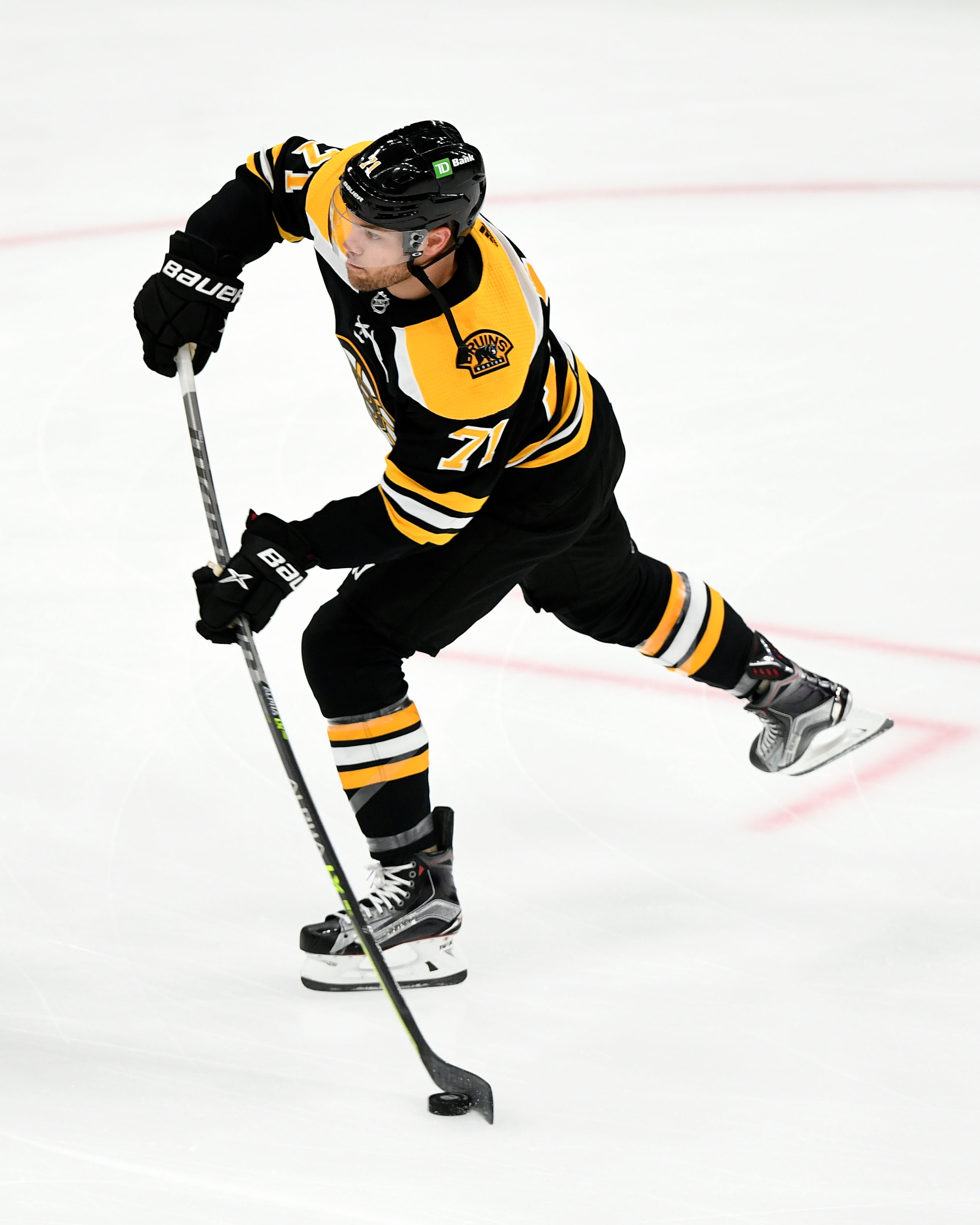 It’s one thing to have mutual interest in getting something done and another to actually agreeing on a contract. Hall opted for a pillow contract last fall with his one-year, $8MM agreement with the Sabres with the hopes that a rebound season would better position himself for a long-term deal this summer. That didn’t happen; at least, it didn’t happen with Buffalo. His time with them was nothing short of a disaster as he scored just twice in 37 games. But things went much better following his trade as he tallied eight goals in just 16 contests and came up just shy of a point per game average. That’s still not $8MM value but it was a whole lot better. He was a bit quieter in the playoffs, however, with just five points in 11 games.
It’s safe to say he’s looking at a cut in pay but by how much? The free agent market wasn’t particularly kind to wingers last fall and his marketability is probably a little lower now than it was in October. Accordingly, landing something at his prior contract – a $6MM AAV – may even be difficult as his recent production would justify something a little lower than that.
At this point, Boston would appear to be the odds-on favorite to bring back the 29-year-old but if they don’t, Sweeney will need to move quickly to try to replace him. A capable secondary scoring threat has been something they’ve been coveting for a while now and their offense was certainly boosted when Hall came in so bringing in someone else to fill that role if Hall leaves would certainly be helpful.
Add Defensive Upgrades
When Torey Krug (and to a lesser extent, Zdeno Chara) left as unrestricted free agents, there was an expectation that reinforcements were on the way. That didn’t happen. Then the season started and the hope became an early-season addition. That didn’t happen either. It took until the trade deadline for Sweeney to try to make a meaningful pickup and that came in the form of Mike Reilly, a player who had bounced around a bit but really found his footing with Ottawa before continuing that with the Bruins. Even so, Reilly is no more than a second-pairing defender but made a huge impact on Boston’s back end.
Between Reilly’s impact and the injuries they dealt with in the playoffs, that should have sent a strong message to Sweeney about the need to supplement their back end. Cap space certainly won’t be an issue as with the big-ticket deals coming off the books (Rask, Hall, and David Krejci), they have over $26MM at their disposal. Yes, a good chunk of that will be spent on goalies and re-signing or replacing Hall but there is more than ample cap room for the Bruins to try to add an impact defender as well as upgrade their depth.
Find A Second Line Center
Speaking of Krejci’s expiring contract, this creates another void up front that needs to be addressed. The 15-year Bruin has indicated he wants to return to Boston but is undecided on whether or not he’s going to play again in the NHL. If he does come back, this is a pretty easy spot to fill – re-sign Krejci for less than the $7.25MM cap hit he had on his most recent contract and call it a day.
If that doesn’t happen, Sweeney will need to go shopping. Charlie Coyle had a tough year in the third spot and recently underwent a pair of knee surgeries. While he’s expected to be ready for training camp, counting on him to boost the second line when he struggled as much as he did would be risky. Having said that, it’s once again not a great free agent class down the middle (Phillip Danault, Alexander Wennberg, Mikael Granlund, and Paul Stastny are the top options available) so if they can’t land one of those, the addition would need to come from outside the organization. The short supply of free agents means that this market should develop fairly quickly so Sweeney would certainly prefer a firm commitment sooner than later from Krejci in the hopes of filling that spot before it really opens up.
Photo courtesy of USA Today Sports Images. Contract information courtesy of CapFriendly.
Five Key Stories: 7/5/21 – 7/11/21
It was a week of highs and lows around the NHL with a triumph at one end and a tragedy at the other. Both of those are among the biggest stories from the past seven days.
Kivlenieks Passes Away: The week got off to a devastating start as Blue Jackets netminder Matiss Kivlenieks passed away as a result of chest trauma due to a fireworks mortar blast. The 24-year-old signed with the Blue Jackets back in 2017 and had been with them since then, splitting time between the AHL and NHL. Everyone here at PHR joins the rest of the hockey community in sending our condolences to his friends and family.
Bjugstad Stays Put: Nick Bjugstad decided that he likes playing in his home state and has decided to continue to do so as he turned down a shot at testing unrestricted free agency and instead signed a one-year, $900K contract with the Wild. The deal represents a significant pay cut as Bjugstad had a $4.1MM AAV on his previous contract with a $5.25MM salary. At the time his previous contract was signed, the 28-year-old looked like a fixture as a second liner but injuries and general ineffectiveness scuttled that. This past season, he was able to stay relatively healthy, suiting up in 44 games, recording 17 points and if he can put up even those numbers next year, he’ll go from being an overpaid role player to a bargain.
 Repeat Champions: It’s always difficult to win the Stanley Cup but even more so to do it in two years in a row but that’s what Tampa Bay has been able to accomplish after a 1-0 victory in the fifth game of their series against Montreal to take home their second straight title. Ross Colton was the unlikely hero in the series clincher with the only goal of the contest. Lightning goaltender Andrei Vasilevskiy took home the Conn Smythe Trophy as playoff MVP while Nikita Kucherov, who didn’t play at all during the regular season, led all playoff scorers with 32 points in 24 games. Now, GM Julien BriseBois will be tasked with stripping down his roster with the team already over the cap with several roster spots to be filled. If they’re going to try to make it three championships in a row, they’ll be doing so with a different-looking roster next season.
New Deal For Dermott: The Maple Leafs took care of their only NHL restricted free agent as they inked defenseman Travis Dermott to a two-year, $3MM deal. The 24-year-old had a much more limited role this season, logging a career low 13:13 per game and the end result was a quiet year at the offensive end with just two goals and four assists in 51 contests. He was then a healthy scratch in four of their seven playoff games. Still, Dermott has shown he can be a capable regular and this deal – one that yields a $1.75MM qualifying offer at the end of it – gives him a bit more time to prove himself. We’ll find out in a week and a half if that opportunity will be with Toronto or with Seattle as the Maple Leafs are likely to make him available in expansion.
Tarasenko Wants Out: Earlier this offseason, it was revealed that the Blues were working on finding a new home for winger Vladimir Tarasenko. However, it turns out that Tarasenko himself was seeking the change of scenery, citing a distrust with their medical staff after his first two shoulder surgeries in 2018 and 2019 didn’t solve the problem, resulting in a third procedure that cost him more than half of this season. Having only played 34 regular season games over the past two years combined, there would definitely be some risk but if Tarasenko truly has recovered from these lingering shoulder issues, there would also be plenty of upside in bringing in the 29-year-old.
Photo courtesy of USA Today Sports Images.
West Notes: Fiala, Smith, Tarasenko
The Wild would prefer to work out a medium-term contract with pending RFA winger, Michael Russo of The Athletic suggested on Daily Faceoff’s DFO Rundown (audio link). They’ve already given center Joel Eriksson Ek a max-term deal and offered one up to pending RFA winger Kirill Kaprizov; they don’t have the cap room to long-term with all of them. Fiala is two years away from unrestricted free agency so a four or five-year deal would still buy out some UFA years but would keep the cap hit a little lower in the process. He had a $3MM AAV on his most recent deal and could come close to doubling it this time around. Russo added that he believes Fiala’s name has been dangled as a trade chip for a top-six center which would also explain their hesitance in working on a long-term agreement.
Elsewhere around the Western Conference:
- The Oilers have made an offer to pending unrestricted free agent goaltender Mike Smith, reports Kurt Leavins of the Edmonton Journal. The 39-year-old had quite the bounce-back season in 2020-21, posting a .923 SV% and a 2.31 GAA in 32 games (30 starts) which has certainly boosted his stock heading into free agency. Last fall, he was basically the fallback option but with Edmonton tendering an offer now, it’s clear they value him more this time around. That should be enough to get him more than the $1.5MM base salary he had this season (plus $500K in bonuses). Leavins notes that if a deal does get done, it’s likely that it will come after the expansion draft which means that Stuart Skinner would likely be protected in expansion.
- The Bruins, Rangers, and Capitals are believed to have shown interest in Blues winger Vladimir Tarasenko with the Islanders also on the radar, reports Jim Thomas of the St. Louis Post-Dispatch. Of that group, Boston makes the most sense financially as they have the cap space to absorb Tarasenko’s $7.5MM AAV without needing to match money and if they can’t reach an agreement with pending UFA Taylor Hall, they’ll have a need on the wing to fill. The Rangers also have the cap room but their biggest need is down the middle. Washington and the Islanders would need to match money as they’re projected to be capped out by the time they re-sign their own pending free agents which would make a deal more difficult. Tarasenko has requested a trade from St. Louis and is working with the team to facilitate a deal.
Offseason Checklist: Carolina Hurricanes
The offseason is in full flight with the draft and free agency fast approaching. We continue our series which examines what those eliminated teams need to accomplish over the coming weeks and months. Next up is a look at Carolina.
The Hurricanes had a strong regular season, finishing first in the Central Division while slotting in third overall. However, it didn’t result in the playoff success that they were looking for as they were ousted in the second round by the eventual Stanley Cup champion in Tampa Bay. Now, GM Don Waddell enters the summer with ample cap space at his disposal – more than $29MM – but also some key areas to address which are noted on their offseason checklist.
Resolve The Hamilton Situation
Carolina made headlines last month when they gave pending UFA Dougie Hamilton permission to speak to other clubs early, basically giving him a head start on free agency. It’s an interesting move but it was necessitated by a sizable gap in contract talks. It allows Hamilton to see if he can get the contract his camp thinks he’s worth and if so, creates the potential for Carolina to try to get something in return for his rights.
The only card the Hurricanes have to play is that they can give Hamilton the extra year in basically what would amount to a sign-and-trade agreement. Otherwise, the negotiation rights on their own are only going to be worth a mid to late-round draft pick. That’s still better than losing him for nothing but it wouldn’t be much of a return.
If that happens, Waddell will likely need to turn towards trying to replace Hamilton. He’d be a big loss but at the same time, they should be bracing themselves to lose a defenseman to Seattle as well – one of Jake Bean or Brady Skjei – so there would be multiple holes to try to fill. There aren’t many impact blueliners on the open market so it may have to be addressed by a trade.
On the other hand, if Hamilton’s discussions with other teams don’t prove as fruitful as he hopes and the offers aren’t as strong as he hoped for, it’s quite possible he circles back and tries to work out a new deal with Carolina. If that’s the case, the window to do something will be limited as they’d likely want to wait until after expansion to sign him; that leaves one week to work a new deal out before the calendar flips to the new league year and with it, the ability to give him the extra year on his contract.
Make Goaltending Decisions
Carolina successfully managed to juggle three quality goaltenders down the stretch but that’s a strategy that isn’t going to be viable over the course of a full season. Accordingly, there are decisions to be made on all fronts.
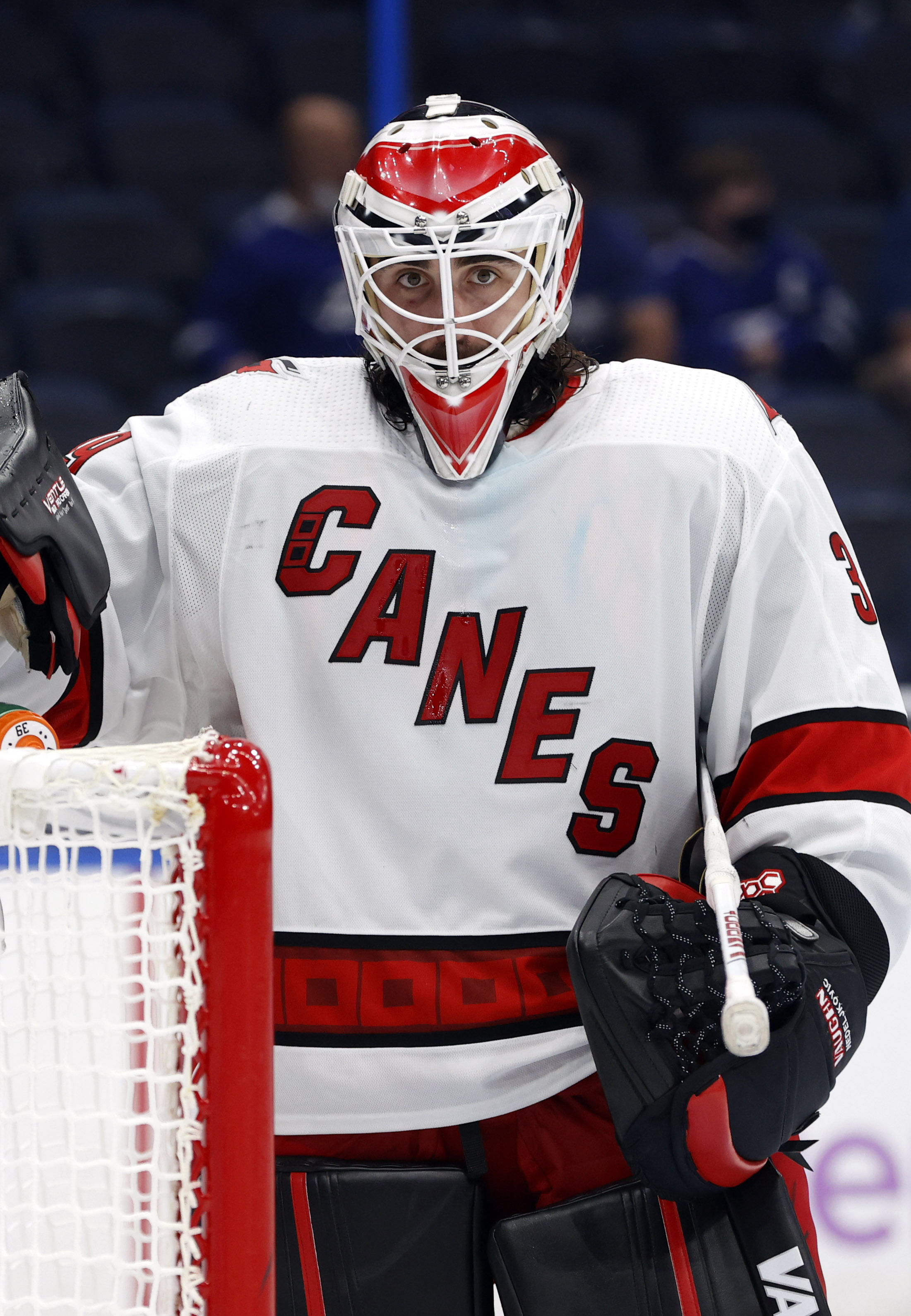 Alex Nedeljkovic went from being passed on by every team in the league on waivers to their starter late in the year and in the playoffs. In doing so, he played enough games for the Hurricanes to retain his rights as a restricted free agent but with that carries arbitration eligibility. A recent report suggested that the team is at least kicking around the possibility of non-tendering him to avoid the risk of an arbitration award that’s too high for their liking. That wouldn’t preclude him from signing a new deal – it’s a route that teams have increasingly taken in recent years to keep their players – but it also creates an opportunity for him to hit the open market. Are they committed to him as their starter? With such a small track record (less than 30 career regular season games), that’s a hard commitment to make. Are they ready to commit a year or two with a significant raise to keep him around? They have a few weeks to make that call still.
The question then becomes which of their unrestricted free agents do they keep around. Petr Mrazek has the better recent track record but is he going to get an opportunity to have a bigger role than a platoon goalie? There are enough vacancies around the league that makes it a legitimate possibility which could price him out of Carolina’s desired price range. That could open the door for James Reimer to stick around. He’s not at the top end of the backup/platoon goalies out there but still shouldn’t be facing too substantial of a pay cut from the $3.1MM salary he made this season.
Of course, with 11 goalies in unrestricted free agency playing in at least 20 of 56 games this season, Waddell could opt to change things up and bring in a newcomer. There is a possibility that two of the three goalies come back. There’s a possibility that none of them do. Given how quickly the spending happens on goalies in free agency, this is a decision that will be made soon.
Re-Sign Svechnikov
A new deal for winger Andrei Svechnikov was something Waddell was hoping to get done last fall but it didn’t happen. Instead, the 21-year-old will hit restricted free agency for the first time but will not have salary arbitration eligibility.
With all of that cap room, it appears that they have the ability to give him a max-term deal if they wanted but a lot depends on their internal budget; will they be a cap-spending team? And from Svechnikov’s perspective, is this the right financial environment to lock in a contract that buys out some UFA years? Such a deal would put him over $7MM annually in all likelihood but he’s coming off a quieter year than his sophomore campaign. Would a bridge contract make more sense, allowing him to ideally get another strong couple of years under his belt, become eligible for arbitration, and work out a new deal as the salary cap starts to increase? At this point, this seems like the likeliest outcome.
Such a move can often take time. Without any other leverage beyond the remote possibility of an offer sheet (and Carolina matched the last one quite quickly), all Svechnikov can do if he doesn’t like the status of negotiations is wait and hope that Waddell ups his offer. Patience may be required on this front but a deal that boosts his price tag beyond the $3.575MM he could have earned by maxing out on his bonuses will be forthcoming.
Utilize Cap Space
Even by the time they re-sign or replace Hamilton, figure out their goalies, and leave enough room for Svechnikov, Carolina will have ample space to work with. They’ll need to reshape their bottom six with a trio of pending UFAs there (Jordan Martinook, Brock McGinn, and Cedric Paquette) but there will be an opportunity to add another asset even after addressing their other areas. If they’re going to be a budget team, their best bet may be taking on a contract with a higher AAV than salary and leverage that into adding another asset on top of the player. If they are spending to the cap, however, they could be a sneaky presence in free agency and even one impact addition could vault them into contention as they return to the Metropolitan Division next year.
Photo courtesy of USA Today Sports Images. Contract information courtesy of CapFriendly.
PHR Mailbag: DeBrusk, Predictions, Vegas Goalies, Buyouts, Parise, Sabres, Panthers, Salary Cap, Kane, Blackhawks, Drouin, Free Agency
Topics in this edition of the PHR Mailbag include an underachieving Bruin, some crystal ball predictions, the goalie situation for the Golden Knights, buyout candidates, and much, much more. If your question doesn’t appear here, watch for it in next weekend’s mailbag.
Puckhead83: You’re Don Sweeney. Are you exposing Jake DeBrusk and taking the cap relief, trading him at his lowest value, or making him your reclamation project?
Can I take none of the above? If I’m Sweeney, I’m leaning towards buying DeBrusk out and taking the cap relief that way. The structure of his backloaded contract gives Boston a cap credit of $367K in 2021-22 and a charge of $808K in 2022-23; his buyout is only one-third instead of two-thirds because of his age (24). His qualifying offer in 2022-23 is $4.85MM and even a decent bounce-back season probably isn’t worthy of a tender so making him the reclamation project doesn’t make sense.
I’d leave him unprotected in expansion but I don’t think Seattle would bite. Jeremy Lauzon is my preferred target from the Bruins, a young and cheap defenseman with some upside and can already handle himself in the NHL.
As for a trade, what’s better for Boston – roughly $4MM in cap space this summer or taking on a similar underperformer in a trade for DeBrusk? The UFA market is going to be like last fall; there will be bargains to be had. If I’m Sweeney, I’m making my bet that a UFA signing will be a better fit than the addition of the prototypical change of scenery swap player that I’d get in a swap.
The Duke: Crystal Ball time: Where will Ekman-Larsson and Kessel end up – and what’s Adin Hill’s future hold? Bonus question: who will be Nashville’s backup goalie – and what is Connor Ingram’s status? Thanks!
Oliver Ekman-Larsson: I think he stays in Arizona. The Coyotes aren’t a team that’s going to want to carry a lot of dead money on the books and with the cap environment being what it is and the year he had, no one is taking on the six years and $8.25MM AAV outright. There’s a new coach in Andre Tourigny so why not see if the captain can turn things around over selling low and paying him a good chunk of money not to play for them?
Phil Kessel: They’ve already paid most of his contract for next season in the form of a signing bonus and only owe him $800K with Toronto covering the other $200K. This a budget-conscious team so while I know his name is out there, I don’t think they’re in much of a hurry to move his contract. If they’re out of it at the deadline, he’ll move then but I think he stays with the Coyotes.
Hill: He should be in the NHL next season, either as Darcy Kuemper’s backup or picked by Seattle in expansion. Hill has two years before reaching UFA eligibility so he is going to have to establish himself as a legitimate backup between now and then. He should get that chance starting next year though.
Ingram: Ingram did return to Nashville’s farm team late in the season and still has two years left on his contract with the final year being a one-way pact. He’s now waiver-eligible and is one of the more intriguing netminders in that situation. This year was a write-off with everything that happened which could push him out of the mix to be the Predators’ backup but in 2019-20, he was nothing short of dominant. Is there a team that is willing to give him a chance based on that? I’m quite interested in seeing how that plays out in the fall.
DirtbagBlues: Can Vegas really afford to keep this goalie tandem? There seems to be no interest in moving either of them, but they could badly use the cap space. Not that this helps them with the cap, but if Vegas doesn’t trade an NHL goalie, could Logan Thompson be moved for a young skater?
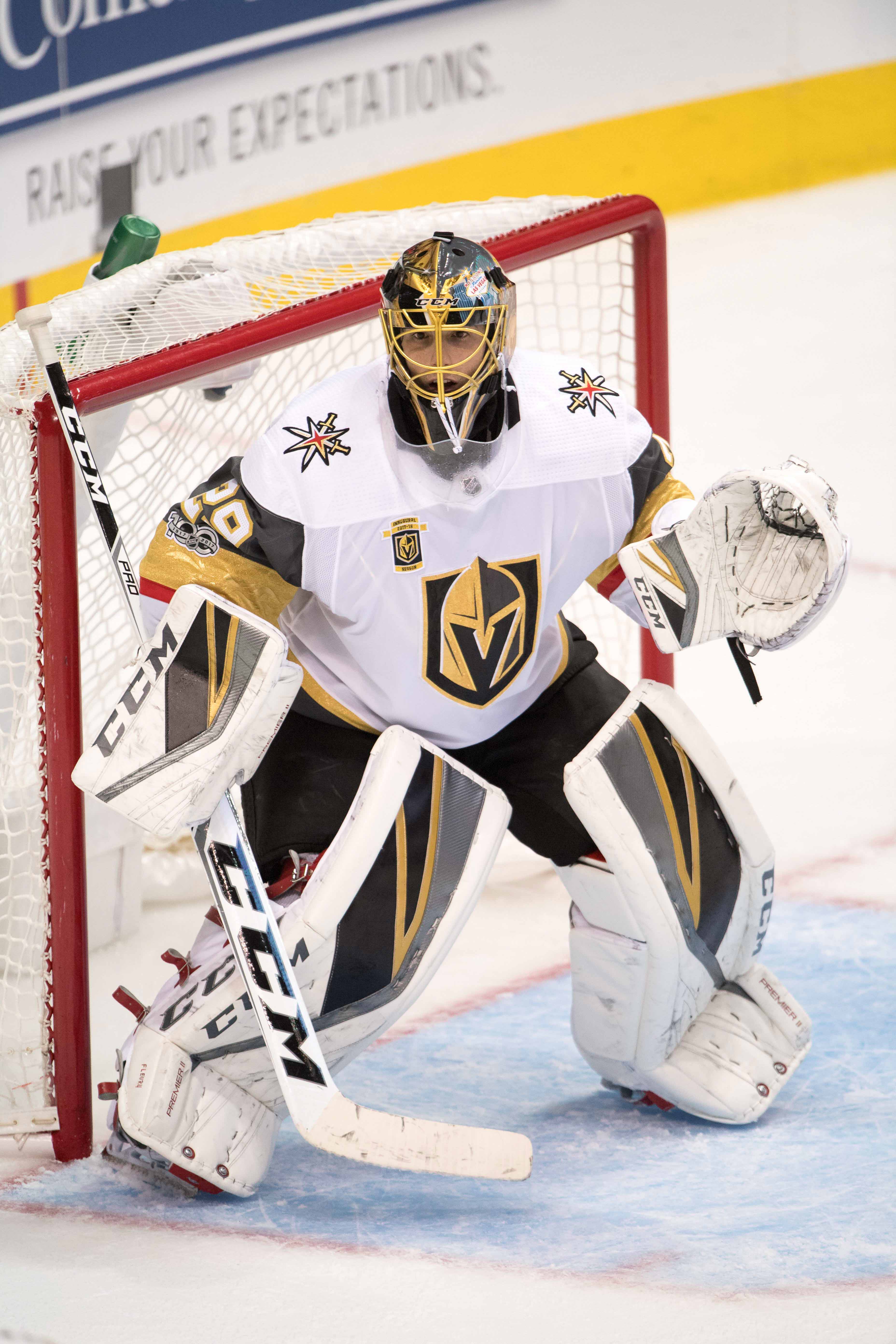 They can afford to if they want. They have probably three or four roster spots to fill (two forwards plus one or two defensemen) and roughly $6MM in cap space. Go cheap on those slots and there is room to keep both Marc-Andre Fleury and Robin Lehner. However, they’d be parting ways with Alec Martinez, Mattias Janmark, and potentially Tomas Nosek in the process and taking a step backwards so the question becomes is keeping both the right move to make?
Last year, the asking price to take on Fleury’s deal was high but things have changed since then. He’s now the reigning Vezina winner which helps his value. He also now has just one year left on his contract which also helps his value. With so many other goalies available in free agency, Vegas couldn’t command a significant return but they shouldn’t have to pay to get out of it either. Meanwhile, with Fleury being 36, they can’t really move Lehner who is the goalie of the near future. They can make keeping both of them work but there is a definite opportunity cost in doing so.
As for moving Thompson, sure, he could be swapped for a young skater but it would be of the fringe variety. He has one very good AHL season under his belt but that alone doesn’t give him much trade value. They’re not going to get someone that could step into the bottom six up front or the third pairing defensively for someone with that small of a track record. I’d hold onto him and if he has another strong year in Henderson, he’s a cost-effective backup to Lehner in 2022-23.
wreckage: Who is the most likely buyout candidate?
Anthony DeAngelo of the Rangers is the most obvious one. They’re not going to pay him $5.3MM in salary to sit at home for another year when a buyout cap charge would be less than $1.2MM spread out over two seasons. Teams aren’t going to trade for him at that salary so that one is pretty much a lock. I wouldn’t be surprised if Jake Virtanen is in a similar situation. The off-ice situation is still in play and his play on the ice (five goals and zero assists in 38 games) doesn’t warrant the contract he has. It’s another one-third buyout with just a $50K cap charge next season and $500K the year after that. Vancouver can do better with that money.
In terms of veterans, Edmonton’s Mikko Koskinen also seems quite likely. There is now only one year left on his deal at $4.5MM and that’s way too much money for a backup goalie that can’t be relied on. Even with a $1.5MM buyout charge for two years, I suspect GM Ken Holland can find a better fit between the pipes for the net $3MM savings for next season. With some uncertainty with a long-term starting option, they can’t afford to carry more uncertainty at the backup spot either.
I expect a few more buyouts than these but it would be surprising if any of these three aren’t hitting the open market later this month.
@DJ23420117: What are the Wild going to do about Parise? Buyout? Trade w/Kraken? Keep him and make nice?
There is no good answer in this situation. Let’s get that out of the way first. The buyout cost – one that would give them some room next season before jumping to $6.3MM, $7.3MM, and $7.3MM – accomplishes next to nothing. With his AAV being $7.538MM, they can’t even replace him without incurring a higher cap hit than had they just kept him. In that situation, keeping him makes sense although he’s clearly unhappy with the situation.
A trade with Seattle is nice in theory but what would it cost to get them to take the contract on? With the market being what it is, we’re probably looking at multiple first-round picks or comparable assets while also locking in the potential for salary cap recapture if he decides to retire early.
Honestly, I think they may be better off just keeping him; I don’t know about the make nice part though. No one is happy in this scenario either but I wouldn’t want to give up so many future pieces to move him or create a bunch of dead cap space that winds up costing them more money to fill his spot in some of those years than it would be to keep him. There’s no desirable answer here so for Parise, it’ll be a matter of choosing the least undesirable solution.
Y2KAK: Any chance Buffalo doesn’t go Owen Power?
Nothing is ever 100% certain but the odds they don’t go with Power would be low. I doubt they’re concerned with him leaning towards staying in college for another year; that wouldn’t scare them off from picking him. Big, top pairing defenders don’t become available very often and passing on one wouldn’t make much sense.
About the only scenario where I could maybe see them not taking him is if they traded Jack Eichel for a package that really shored up their defense with multiple long-term pieces to the point where they then look at someone like Matthew Beniers to replace Eichel up the middle. But even that isn’t a very realistic scenario. I’d be really surprised if Power isn’t a Sabre later this month.
Red Wings: What would it take for the Panthers to get rid of Bobrovsky? Or more realistically Yandle?
To move Sergei Bobrovsky, it would take eating a significant chunk of his $10MM cap hit for the next five seasons. That’s a lot of money to pay someone not to play for them and as a budget-conscious team, it’s an even bigger hit. From there, they’d have to take on a deal with at least three years left at a similar price tag as the non-retained portion on Bobrovsky. Is that worth doing for Florida? Probably not at this stage. I’m not expecting him to rebound significantly next season but a small improvement could get him closer to league average. That, coupled with one less year on his contract a year from now, might make it slightly less difficult to move him.
You’re correct that Keith Yandle is the more realistic trade option. With only two years left and a $6.35MM cap hit, that’s a lot less of a hit to take on than Bobrovsky. Yandle can also still contribute offensively although his struggles in his own end are what ultimately led to him being scratched in the playoffs. The formula to a trade is similar to Bobrovsky – retain a sizable percentage and take a player back making the difference between Yandle’s AAV and the retained portion, creating a cap-neutral trade which will be a key to many moves this summer. They’ll be losing some offensive punch with such a move but improved defensive zone play would help negate that.
Snapshots: Sharks, Killorn, Neal, Chiasson
With the pre-expansion trade freeze now just a week away, trade talk will be picking up around the league. Kevin Kurz of The Athletic notes (subscription link) that the Sharks are a team that is active in those discussions with winger Kevin Labanc, defenseman Radim Simek, and center Dylan Gambrell at the forefront of those discussions. Labanc underwhelmed in the first season of a four-year, $18.9MM deal with 12 goals in 55 games, Simek is on the expensive side for a third-pairing defenseman with a $2.25MM price tag, while Gambrell, a pending RFA, didn’t produce much this season – just 12 points in 49 games despite averaging over 16 minutes a game. Kurz adds that San Jose’s preference is to make a player for player swap; speculatively speaking, any deal involving the first two players would be seeking to bring in a cheaper replacement to give them some more financial flexibility.
Elsewhere around the league:
- Lightning winger Alex Killorn should be fully recovered for training camp, relays Eduardo A. Encina of the Tampa Bay Times. The veteran fractured his fibula blocking a point shot in the opening game of the Stanley Cup Final and has already undergone surgery. While he was hoping to get back into the lineup later in the series had it gone that far, the recovery time for this injury is closer to three to four weeks.
- After Edmonton was eliminated in the first round of the playoffs, Oilers GM Ken Holland strongly suggested a buyout or two was in the cards for his roster. However, his agent Kent Morris told Postmedia’s Jim Matheson that he hasn’t received a notification from the team yet about veteran winger James Neal heading down that path. A buyout of the final two years remaining on the contract for the 33-year-old is likely with Neal notching just five goals and five assists in 29 games this season but such a move may not come until after expansion.
- Morris also spoke about another Oilers client, telling Matheson in that same column that pending UFA winger Alex Chiasson would like to stay and that the team hasn’t yet shut a door on his return. Having said that, it seems likely that they’ll look at their options in free agency before potentially circling back to the 30-year-old who has managed just 20 goals over the last two seasons combined after scoring 22 times in his first season with the team.
Expansion Primer: Carolina Hurricanes
Over the last few weeks, we have been breaking down each team’s situation as it pertains to the 2021 NHL Expansion Draft. Which players are eligible, who will likely warrant protection, and which ones may be on the block to avoid the risk of losing them for nothing? Each team is required to submit their protection lists by 4:00 PM CDT on July 17th. The full eligibility rules can be found here, while CapFriendly has an expansion tool to make your own lists.
Back in 2017, the Hurricanes got off pretty easily in expansion as the Golden Knights selected Connor Brickley while accepting a fifth-round pick to stay away from other options. Brickley was a pending UFA and never signed with Vegas, ultimately going to Florida instead. Only losing a fifth-rounder is better than most teams fared back then but they’re unlikely to be similarly unaffected this time around.
Eligible Players (Non-UFA)
Forwards:
Sebastian Aho, Jesper Fast, Warren Foegele, Morgan Geekie, Steven Lorentz, Spencer Smallman, Nino Niederreiter, Jordan Staal (NMC), Andrei Svechnikov, Teuvo Teravainen, Vincent Trocheck
Defense:
Jake Bean, Jake Gardiner, Eric Gelinas, Maxime Lajoie, Brett Pesce, Brady Skjei, Jaccob Slavin
Goalies:
Jeremy Helvig, Alex Nedeljkovic
Notable Unrestricted Free Agents
D Jani Hakanpaa, D Dougie Hamilton, F Jordan Martinook, F Max McCormick, F Brock McGinn, G Petr Mrazek, F Cedric Paquette, G James Reimer
Notable Exemptions
F Dominik Bokk, F Seth Jarvis, D Joey Keane, F Martin Necas, F Ryan Suzuki
Key Decisions
There isn’t much to decide between the pipes. Even if Carolina is considering non-tendering Nedeljkovic to avoid the potential for arbitration, he’s still the logical one to protect. Even if they wanted to leave him unprotected and protect Helvig for some illogical reason, they’d have to first tender him his qualifier which takes away the option to avoid arbitration. This one is easy.
It isn’t anywhere near as easy on defense. Sure, Slavin and Pesce are the obvious selections but it gets a lot tougher from there.
 Skjei is a capable top-four defender and while his production has dried up since coming over in a trade from the Rangers, he’s still logging over 20 minutes a night and playing a significant role on their penalty kill. He has three years left on his deal at a $5.25MM price tag. That might be a little above market value considering the drop-off in points but if it is an overpayment, it’s not by much. And at 27, he’s in the prime of his career. Carolina is also less than a year and a half removed from trading a first-round pick to get Skjei so letting him go for nothing to Seattle would certainly sting. The Kraken need to pick up some notable contracts in their draft and Skjei would become an immediate fixture for them defensively if he was to be made available.
So why isn’t he the obvious choice? That would be the presence of Bean on the eligible list. The 23-year-old was a first-rounder himself back in 2016 and finally was able to establish himself as a regular this season despite being involved in 50 taxi squad transactions throughout the season; that number isn’t an exaggeration but the moves gave Carolina some salary savings. Is he ready for a top-four spot in the lineup? If so, he could be protected over Skjei and likely move into Skjei’s spot on the depth chart.
Hamilton also has to be considered here. He has been given permission to talk to other teams early which is a sign the two sides are far apart in contract talks but if Hamilton doesn’t get the deal he wants, he could circle back. If Carolina was able to sign him in the next week, he would then get the final spot. Meanwhile, Gardiner is a safe bet to be left protected after struggling in his first two seasons with the Hurricanes.
Up front, most of the spots are easily spoken for. Aho, Svechnikov, Teravainen, and Trocheck are all locks. Staal has a no-move clause which secures his spot as well. Niederreiter has been up and down since joining the Hurricanes and has a high enough contract ($5.25MM) that he could be left exposed but he was second on the team in goals this year; that’d be hard to part with so let’s put him on there as well. That’s six of the seven spots right there and enough sure-fire protectees to take away the eight-skater option which would allow them to keep both defensemen.
At first glance, Foegele would seem like the logical candidate. He has been a capable middle-six forward and has been productive in a limited role, notching at least ten goals in three straight years. However, he’s also arbitration-eligible and if they’re worried about Nedeljkovic’s arbitration eligibility, they could be concerned with Foegele’s as well. If they are, there’s no point protecting him if they’re considering non-tendering him.
Fast signed a pretty cheap deal in the fall, a contract that has two years left on it at a respectable $2MM. However, his numbers took a bit of a dip this season in more of a limited role than he was accustomed to with the Rangers. It’s still a good value deal but losing someone that’s on the third line with some frequency wouldn’t be a bad outcome for the Hurricanes.
Geekie is still largely unproven in the NHL with 36 of his 38 career regular season games coming this season. Most of that time was spent on the fourth line. However, he’s going to be cheaper than the other options and plays the premium position as he’s a center. So too does Lorentz but Geekie is a little younger which probably leaves Lorentz exposed.
Projected Protection List
F Sebastian Aho
F Morgan Geekie
F Nino Niederreiter
F Jordan Staal (NMC)
F Andrei Svechnikov
F Teuvo Teravainen
F Vincent Trocheck
D Brett Pesce
D Jaccob Slavin
D Brady Skjei
Skater Exposure Requirement Checklist
When Vegas had their expansion draft, a minimum of two forwards and one defenseman had to be exposed that were under contract and played either 40 games in the most recent season or 70 over the past two combined. Due to the pandemic, those thresholds have been changed to 27 games played in 2020-21 or 54 in 2019-20 and 2020-21 combined. In creating our expansion list for each team in this series, we will ensure that these criteria are met.
Forwards (2): Jesper Fast, Steven Lorentz
Defensemen (1): Jake Gardiner
Carolina is able to meet the requirements with the above players but it’s the restricted free agents in Bean and Foegele that will be the most attractive to Seattle. Kraken GM Ron Francis is quite familiar with both players having drafted when he was GM of the Hurricanes. Both are young – Foegele has two years of team control left and Bean four – which means Seattle will be getting a longer-term piece. Bean would likely be the favorite to be selected but either way, they’re going to get hit harder this time than they were by Vegas and a fifth-round pick alone wouldn’t be able to protect everyone this time around.
Photo courtesy of USA Today Sports Images. Contract information courtesy of CapFriendly.
Flames Begin Extension Talks With Johnny Gaudreau
With Calgary having another disappointing season, there is an expectation of change coming for the Flames. One of the players speculated to be in play is winger Johnny Gaudreau but Sportsnet’s Elliotte Friedman reported in his latest 31 Thoughts column that extension talks have gotten underway with the 27-year-old who is set to become an unrestricted free agent next summer without a new deal in place.
 It has been a quiet couple of seasons for Gaudreau. Back in 2018-19, he put up 99 points, his second straight year of averaging over a point per game. There was a significant drop-off in 2019-20 to 58 points (with only losing a dozen games to the pandemic-shortened campaign) and there wasn’t much of a rebound this season; his 49 points in 56 games yielded slightly better per-game numbers but still nowhere near what they were just two years ago. That performance is what put him at the forefront of trade speculation but Gaudreau has indicated in the past that he’d like to remain with Calgary.
There are two contractual elements to consider for Gaudreau. The first is that he has considerable trade protection that is going to kick in once the new calendar year begins on July 28th (which is also the earliest day an extension could be signed). Right now, he doesn’t have the ability to block a trade to any team. Come the 28th, that changes to just five teams that he’s allowed to be traded to without his consent. If there is any consideration being given to trading him if a new deal can’t be reached, it stands to reason that the 28th serves as a soft deadline for that to happen as moving him gets much tougher afterwards.
The second is the price tag. At $6.75MM, Gaudreau will likely be looking for an increase to forego a shot at free agency. He was the benchmark contract for Calgary forwards before Matthew Tkachuk got $7MM on his bridge deal and it’s likely that Gaudreau will be seeking a bit more than that considering he has outperformed Tkachuk in terms of production for most of their careers. But with the drop off in scoring the last couple of seasons, is that something that Calgary GM Brad Treliving will be willing to do? If this isn’t a blip but rather a sign of things to come, that type of financial commitment to someone whose numbers are declining isn’t really justifiable either.
It’s hard to see Calgary bringing back the same core as it has struggled in recent years, not making it out of the first round in the last six years. Accordingly, a key piece or two will probably be on the move. Knowing the trade protection that is on the horizon, if the Flames and Gaudreau can’t work out a new deal in the coming weeks, expect the trade speculation to quickly intensify.
Photo courtesy of USA Today Sports Images. Contract information courtesy of CapFriendly.
Metropolitan Notes: Nedeljkovic, Oshie, DeAngelo
It was quite the season for Hurricanes goaltender Alex Nedeljkovic. He cleared waivers to start the year and was expected to serve as their taxi squad netminder but an early injury to Petr Mrazek gave him an opportunity to play and he seized it, posting a league-best 1.90 GAA and a .932 SV% in 23 starts and was similarly stingy in the playoffs. Despite that, Sportsnet’s Elliotte Friedman notes in his latest 31 Thoughts column that Carolina appears to be giving some consideration to not tendering Nedeljkovic a qualifying offer. It’s not that they don’t want to keep him but rather that they’re worried about what an arbitration award would be.
With just 29 career regular season appearances, there are few close comparables for Nedeljkovic although Jordan Binnington of St. Louis could be one with the similarities in career trajectories. He signed a two-year deal after his only full NHL campaign with an AAV of $4.4MM. That’s below the walkaway threshold of $4.538MM per PuckPedia (Twitter link) which could give them some pause. If the Hurricanes go that route, it doesn’t guarantee he’d leave but Nedeljkovic would certainly be an intriguing late addition to the UFA market.
More from the Metropolitan Division:
- Capitals winger T.J. Oshie has not been given any indication from the team that he will be left unprotected in the expansion draft, relays J.J. Regan of NBC Sports Washington. Oshie has long been a speculative target for Seattle although with the year he had offensively – 43 points in 53 games – he’d undoubtedly be a big loss for Washington. While Oshie doesn’t have a no-move clause and thus doesn’t need to be notified in advance if he was being exposed, Regan suggests this could mean that the Caps intend to have the 34-year-old on their protected list when it’s submitted a week from today.
- While the Rangers could wait until after the expansion draft to finalize a buyout of Anthony DeAngelo in the hopes of working out a deal for Seattle to take him (a route that most teams are expected to take with their buyout candidates), Mollie Walker of the New York Post reports that this won’t be the case. Instead, the team is expected to make that move official in the coming days as the window to do so is now open. As only one-third of the remaining salary is owed, New York will carry a dead cap charge of $383K next year and $883K in 2022-23.
Offseason Checklist: Winnipeg Jets
The offseason is in full flight with the draft and free agency fast approaching. We continue our series which examines what those eliminated teams need to accomplish over the coming weeks and months. Next up is a look at Winnipeg.
This past season was an up and down one for Winnipeg. At times, they were good enough to contend for the top spot in the North Division and others where they struggled considerably. Things followed a similar pattern in the playoffs as they swept Edmonton before being swept by Montreal. GM Kevin Cheveldayoff has one of the cleaner cap situations in the league at his disposal this summer, giving him an opportunity to reshape his roster. One priority stands out amongst the rest, however.
Add Impact Defensive Help
Let’s not bother with delaying the obvious. The back end has been an issue for the last two years after Winnipeg lost Jacob Trouba (trade), Tyler Myers and Ben Chiarot (free agency), and Dustin Byfuglien (injury and eventual contract termination). They have two proven players in Josh Morrissey and Neal Pionk (part of the return for Trouba) but the depth takes a hit from there. Dylan DeMelo is a capable third pairing player, Nathan Beaulieu is serviceable depth, and Logan Stanley and Ville Heinola have some upside but are unproven.
As they’ve found out, that combination isn’t the makings of a top-level defense or even a league-average one. Cheveldayoff has made moves to try to raise the floor and add depth in the past two seasons since then with the pickup and re-signing of DeMelo last season, the signing of Derek Forbort (a pending UFA again this summer), and the trade deadline add of Jordie Benn this year but that isn’t going to drastically change their fortunes. Frankly, the Jets could benefit from trying to do that again this summer but that alone can’t the only upgrades made.
At least one top-four defender needs to be added to the mix. That would take some pressure off Morrissey and Pionk while also allowing Stanley and Heinola to continue to be eased in. Unfortunately, there aren’t a lot of impact blueliners available in free agency; you can probably count the number of top-four defenders on one hand. But with only $61MM in commitments for next season, they’ll have the ability to be a high bidder on those players if they want to go that way. Otherwise, it’ll have to come by a trade.
After failing to land an impact rearguard last summer, Cheveldayoff simply cannot strike out on that front again if he intends to see Winnipeg take a step forward next season.
Re-Sign RFAs
The Jets don’t have many restricted free agents to contend with this summer but they have two notable ones that will need to be addressed fairly quickly as both are eligible for salary arbitration.
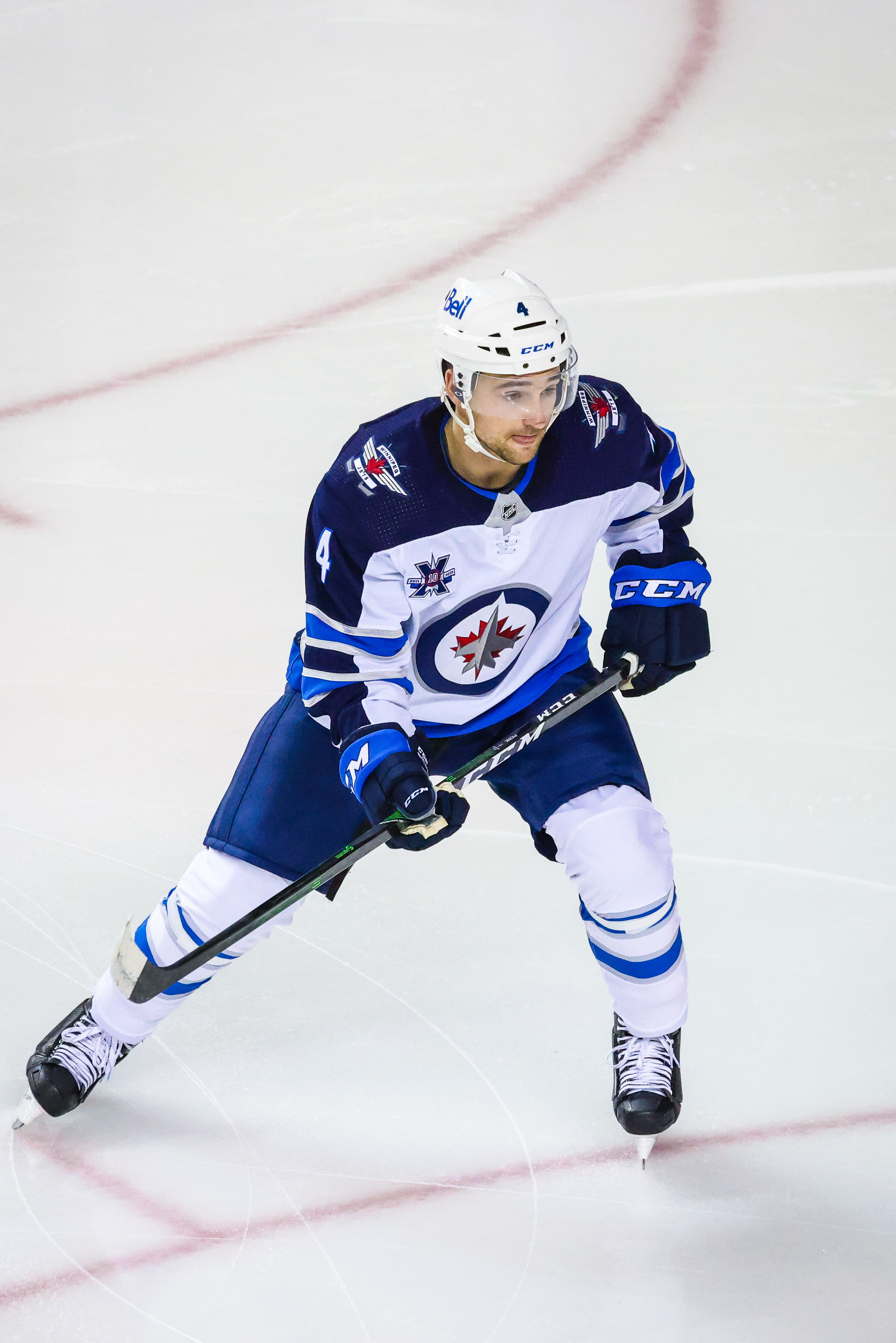 The biggest one is Pionk. He really took off following the trade from the Rangers and got better when pressed into a bigger role. Going back to his USHL and college days, there has always been some offensive upside for Pionk and he has shown that since joining the Jets, collecting 77 points in 125 games. The timing couldn’t have been better as he now becomes eligible for a hearing for the first time. With two years away from UFA eligibility, the time has come for a long-term contract. Considering how much they’ve lost from their back end in recent years and how important Pionk has become, it’s likely that Cheveldayoff will push for a deal that buys out several UFA years. That could push his price tag close to double the $3MM AAV on his bridge contract but it’d be a price well worth paying to give them some stability.
The other is Andrew Copp who is basically Winnipeg’s Swiss army knife. He can play in a checking role and has shown that for several years. He has been called upon to play higher in the lineup at times as well and responded to that request by setting new career highs offensively across the board despite the pandemic-shortened season. He’s a natural center but spent a lot of time in 2020-21 on the wing. Role and positional flexibility is an ideal combination to have combined with the uptick in offense. He’s well-positioned to earn well over his $2.3MM qualifying offer and since he’s only a year from UFA eligibility, Copp could simply elect arbitration and go to a hearing which is what he did last time. They locked up Adam Lowry before the deadline on a long-term deal and will try to do the same with his linemate now.
Rebuild The Bottom Six
Winnipeg’s top five forwards are all either signed or under team control for at least the next three years so they’re pretty well set there although Paul Stastny will be an unrestricted free agent at the end of the month. However, they have a trio of bottom-six forwards that are set to hit the open market in Mathieu Perreault, Nate Thompson, and Trevor Lewis. The latter two were added last summer to add some grit and penalty killing acumen but Perreault has been a versatile piece for the Jets for the last seven years.
This is another opportunity for Cheveldayoff to shore up the bottom of his roster. Kristian Vesalainen and David Gustafsson are internal candidates for a regular role and with both on entry-level contracts, they’d be cheap enough for Winnipeg to afford to take a run at another top-six piece and strengthen their attack. Alternatively, if they opt to replace all of those players with free agents, they’ll again benefit from the flat salary cap and an environment where teams will be trying to go cheaper with role players; they’ll be well-positioned to bid a bit higher on each one which should give them a leg up in those discussions.
Fill The Backup Goalie Spot
The decision to bring back Laurent Brossoit for this season was a little curious considering how much the 28-year-old struggled in 2019-20 but Winnipeg’s faith in him was rewarded as he bounced back with a 2.42 GAA and a .918 SV% this season, numbers that were actually slightly better than Connor Hellebuyck’s. That could have Brossoit primed for a bigger deal in free agency, a pricier one than they may want to pay.
With Hellebuyck in the fold for three more years and a proven ability to log a lot of minutes, the Jets can afford to shop on the less expensive side of free agency, freeing up some extra cap flexibility elsewhere. Brossoit made $1.5MM this season and that’s likely the price range that Cheveldayoff will want to keep his second netminder. If Brossoit isn’t open to that deal this time around, there will be a change made between the pipes this summer.
Photo courtesy of USA Today Sports Images. Contract information courtesy of CapFriendly.