
Jets Interested In Evgeny Svechnikov
The Jets will need to add some low-cost depth to their system in the hopes of giving themselves a little bit of salary cap flexibility by carrying some minimum-salary players and it appears that one of the players they’re eyeing is winger Evgeny Svechnikov. Sportsnet’s Ken Wiebe is among those to report (Twitter link) that there is mutual interest between Winnipeg and the 24-year-old though no agreement is in place yet.
Svechnikov was the 19th-overall pick by Detroit back in 2015 but has seen his stock drop steadily since his rookie professional season where he had 51 points in 74 games. He missed all of 2018-19 due to a knee injury and has had trouble staying in the lineup since then as well.
Last season, Svechnikov cleared waivers in training camp but wound up only playing in four games with AHL Grand Rapids where he had a goal and an assist. Instead, he split the season between the Red Wings and their taxi squad, getting into 21 NHL contests where he had a respectable five goals and three assists despite averaging less than 12 minutes a game in ice time. However, Detroit declined to tender him a qualifying offer last month, making him an unrestricted free agent.
With Winnipeg currently being very tight to the salary cap (even with Bryan Little’s LTIR room), the Jets will need to have some cheaper players to call upon in case of injury. Svechnikov would certainly fit the bill and with the flashes of upside he has periodically shown with Detroit, he’s someone that likely would get a long look in training camp if they can get an agreement in place.
Pacific Notes: Canucks, Koekkoek, Edler
While many teams have dealt with most of their restricted free agents already, that can’t be said for Vancouver who still has center Elias Pettersson and defenseman Quinn Hughes among their unsigned youngsters. Speaking with Postmedia’s Patrick Johnston, Pat Brisson – who represents both players – noted that there’s no holdup in talks between him and the Canucks. Part of the delay is that both short-term and long-term deals are being pondered for both players although it’s unlikely they will be able to afford to give each of them a contract that would buy out some UFA eligibility. It wouldn’t be surprising if talks pick up once they get a deal done with RFA center Jason Dickinson whose arbitration hearing is set for Friday. Once that’s in place, they’ll have a better idea of how much they’ll be able to spend on their two young stars.
More from the Pacific:
- David Staples of the Edmonton Journal examined the recent two-year deal that the Oilers handed to defenseman Slater Koekkoek. While his numbers were underwhelming last season – one goal in 18 games while averaging just 13:10 per contest – he was better than several Edmonton blueliners in terms of frequency of allowing scoring chances. Koekkoek’s numbers usually wouldn’t be good enough to yield a multi-year contract so there’s a good chance that the team was intrigued by that particular stat as well.
- Defenseman Alex Edler told Zach Dooley of LA Kings Insider that part of the reason that he signed with the Kings was how much interest they showed in him early along with the fit he’d have with the team. He added that he did field interest from other teams which likely helped push his price tag up to $3.5MM for next season, a somewhat high price tag for a player who had just eight assists in 52 games while logging his lowest ice time since 2007-08. The 35-year-old should have a prominent role with Los Angeles next season and could be used in a shutdown capacity similar to the role he had at times in Vancouver.
Central Notes: Fiala, Wallstedt, Coyotes Coaching Staff
The Wild have made some progress in discussions with RFA winger Kevin Fiala, reports Michael Russo of The Athletic (subscription link). While the 25-year-old didn’t file for arbitration, Minnesota opted to elect to take him to a hearing earlier this month, a move that teams don’t often make as it gives Fiala the right to elect an award that would walk him to unrestricted free agency if he wanted. However, it ensures that he’ll be signed long before training camp. Fiala is coming off a 20-goal, 40-point season that has him well-positioned to earn a sizable raise on the $3MM AAV he had on his bridge deal. Submissions to the arbitrator will be required on Sunday with the hearing scheduled for a week from today so they’ll need to work quickly to get something done.
More from the Central:
- Still with Minnesota, Wild prospect Jesper Wallstedt has opted to stay with Lulea of the SHL, notes Aftonbladet’s Jonathan Nilsson. The 18-year-old was the 20th-overall pick in last month’s draft which gives them the right to assign him elsewhere as entry-level deals for first-round picks supersede existing contracts overseas. However, some more time in the SHL certainly makes sense for Wallstedt, who posted a 2.23 GAA with a .908 SV% in Sweden’s top division last season.
- The Coyotes are expected to retain assistant coaches Phil Housley, Cory Stillman, and Corey Schwab, reports Craig Morgan of AZ Coyotes Insider (Twitter link). They will, however, reportedly add to their coaching staff as Morgan adds that Mario Duhamel will also be added. Duhamel, 46, had been an associate coach with OHL Ottawa previously working alongside new Arizona bench boss Andre Tourigny.
Free Agent Profile: Alex Chiasson
Two years ago, Alex Chiasson entered free agency in an ideal situation. He was coming off his first season with Edmonton and had a career year which gave him considerably more leverage than he had the year before when he hit the open market. That landed him a two-year deal to stay with the Oilers but things haven’t gone as well since then so the veteran has hit free agency in a different situation than he had last time.
 After his first season with the Oilers, it looked as if the 30-year-old was finally living up to the potential he had shown in flashes in his previous stops. 22 goals in 73 games is certainly decent for someone who had largely been a role player up to that point but unfortunately for him and the Oilers, Chiasson was only able to manage 20 goals over the last two seasons combined, spanning 110 contests.
Still, Chiasson stands 6’3 and has shown a bit of a scoring touch with the man advantage, tallying 19 goals over his three seasons with Edmonton. While he certainly wasn’t a play driver on their power play, he still filled a useful role on it. Between the size and power play ability, he’s an intriguing depth option for teams even if he doesn’t fill the prototypical style that many teams covet in their bottom six (physical with an ability to kill penalties).
Stats
2020-21: 45 GP, 9-7-16, -10 rating, 33 PIMS, 65 shots, 45.6 CF%, 12:29 ATOI
Career: 564 GP, 101-101-202, -40 rating, 329 PIMS, 798 shots, 48.1 CF%, 13:51 ATOI
Potential Suitors
How much Chiasson wants will largely dictate his market. If he’s willing to back to playing for close to the league minimum, he becomes an intriguing pickup for some cap-strapped teams that are looking for an incremental boost. Otherwise, his options will be limited to teams that project to have ample cap space that could also be open to taking a flyer on him rediscovering that scoring touch from two years ago. For this exercise, we’ll look at the teams with cap space and assume that a cheap deal isn’t on the table just yet.
In the East, the Devils have been quite active already this summer but someone like Chiasson would add some more offensive upside to their depth forwards and they still have plenty of cap space to bring him in. The Blue Jackets don’t have a lot of firepower in their bottom six and also have ample cap room for the winger. One of his former teams in the Senators could have a use for Chiasson if they want a younger forward to get some more development time with AHL Belleville as well.
Out West, the Wild should still have enough cap room by the time they re-sign their two big RFAs to add Chiasson in a depth role. The Predators are currently projected to have some inexperienced players in their bottom six and could use Chiasson as a piece to allow someone to spend more time in the minors. The Avalanche didn’t really replace Joonas Donskoi and while Chiasson is at a lower level than he is, he’s someone that can move up into the top six at times if needed and Colorado still has a bit of wiggle room with their cap.
Projected Contract
Chiasson ranked 47th on our Top 50 UFA list with a projected two-year, $3.2MM contract. At this point, landing that contract seems unlikely as at this point of free agency, teams are bargain shopping and won’t be swayed by that 22-goal campaign. A one-year pact that’s closer to $1MM may be more realistic now and considering his power play production with Edmonton, he could be an interesting pickup for several teams at that price point.
Photo courtesy of USA Today Sports Images.
Pacific Notes: Ducks, Kubicek, Dzierkals
While it has been a very quiet summer for Anaheim aside from the re-signing of Ryan Getzlaf to a one-year deal, it appears that the Ducks are trying to be active on the trade front. Elliott Teaford of the Orange County Register notes that GM Bob Murray is focusing on trades that would move out some veterans with an eye on netting younger players in return that fit their rebuilding window. The Ducks have certainly shifted towards a younger roster in recent years and could have as many as seven forwards 25 or younger in their opening lineup. Bringing in players in that age group certainly makes sense but with a lot of teams capped out, swapping an expensive veteran for a cost-controlled youngster is something that’s certainly going to be easier said than done.
Elsewhere in the Pacific:
- The Oilers may invite undrafted defenseman Simon Kubicek to training camp, suggests Postmedia’s Kurt Leavins. The 20-year-old’s WHL rights were recently acquired by the Oil Kings who play out of the same rink as their NHL counterpart. Kubicek spent most of the season with Ceske Budejovice of the Czech Extraliga and also suited up at the World Juniors (which also took place in Edmonton).
- Golden Knights prospect Martins Dzierkals has signed with Kunlun of the KHL, relays Sportacentrs’ Rolands Elins. The length of the contract was not disclosed. The 24-year-old was acquired by Vegas last year as part of the three-team Robin Lehner deal and spent last season with Dinamo Riga in the KHL where he had 10 goals and 14 assists in 52 games. Dzierkals spent some time in North America in Toronto’s system not long after they drafted him but since he didn’t play on an NHL contract, the Golden Knights will continue to hold his rights indefinitely.
Arbitration Breakdown: Jakub Vrana
While most of the players who had early arbitration dates have settled in recent days, that hasn’t been the case yet for the Red Wings and Jakub Vrana. They have until the start of the hearing on Wednesday to reach an agreement; once the hearing starts, they will have to go through the process and wait for the award.
Filings
Team: $3.65MM
Player: $5.7MM
Midpoint: $4.675MM
(via Sportsnet’s Elliotte Friedman)
The Numbers
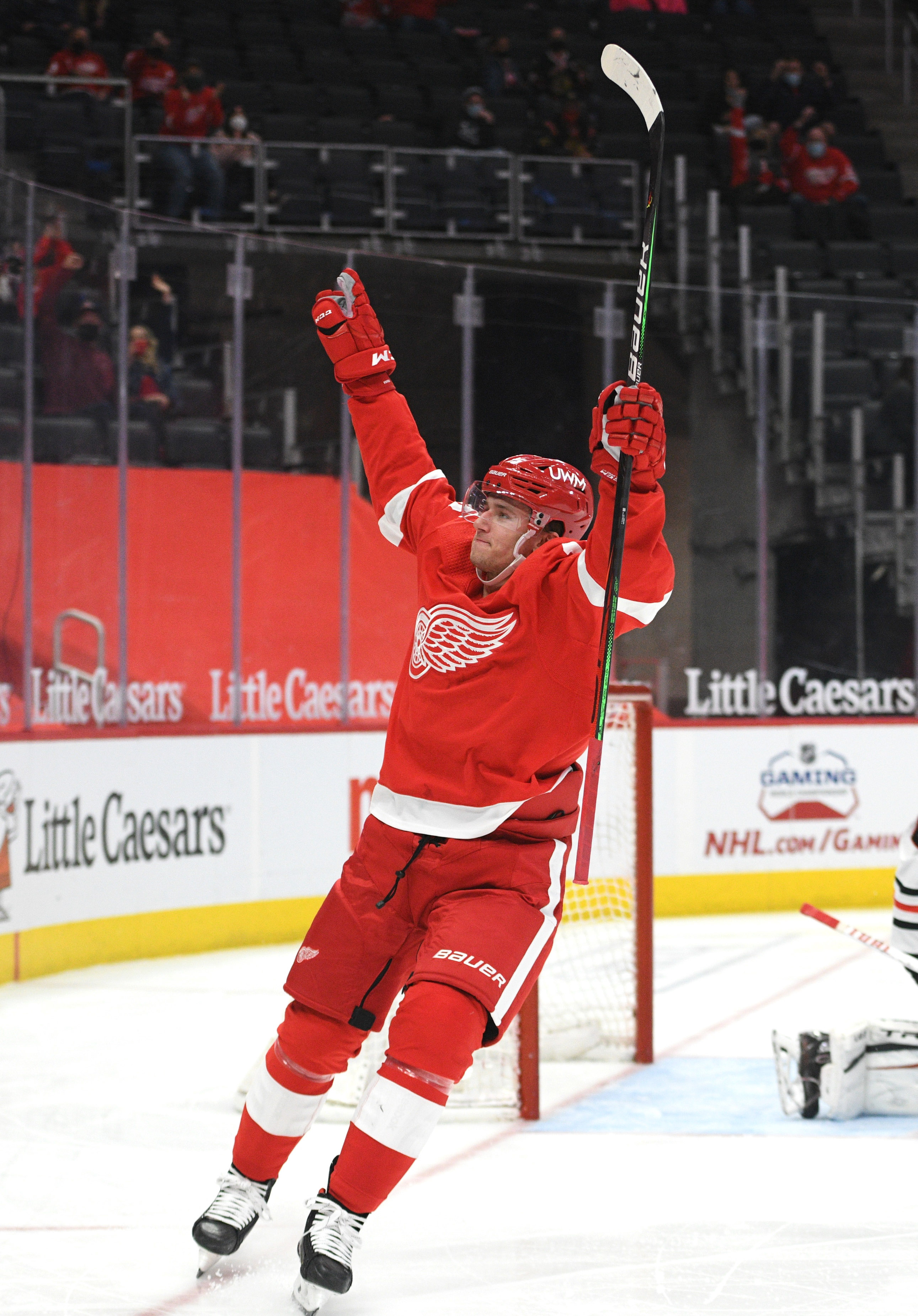 It was a tale of two seasons for Vrana. He spent the majority of the year with Washington and while his numbers weren’t underwhelming with them, he did take a step back from his career-best 52 points in 2019-20. But his fortunes changed upon being traded to Detroit. The 25-year-old took off, notching eight goals and three assists in 11 games and in the process, brought his per-game averages close to what they were the year before. Overall, the platform year was decent.
Of course, 11 games is a particularly small sample size which adds a wrinkle to these talks. Vrana logged considerably more minutes with the Red Wings than he ever had a chance to with the Capitals but it’s hard to make any substantive conclusions based on his performance over the span of a few weeks when they were playing out the stretch.
Vrana’s track record isn’t the deepest either as only his last three seasons have yielded above-average production and two of those came in shortened years. While that shouldn’t hurt him much in a hearing, it’s worth noting that over his five-year career, he has played in fewer than 300 regular season contests which is a bit on the low side for a fifth-year player in the top six.
2020-21 Stats: 50 GP, 19-17-36, +10 rating, 10 PIMS, 100 shots, 15:00 ATOI
Career Stats: 295 GP, 84-84-168, +37 rating, 69 PIMS, 613 shots, 13:49 ATOI
Potential Comparables
Comparable contracts are restricted to those signed within restricted free agency which means UFA deals and entry-level pacts are ineligible to be used. The contracts below fit within those parameters. Player salaries (or current-year equivalents) also fall within the parameters of the submitted numbers by both sides. Career stats listed are as of the time of signing.
Oliver Bjorkstrand (Blue Jackets) – Similar to Vrana, Bjorkstrand signed his contract after three seasons of top-six performance with a limited track record before that. The situation is a little different in that Bjorkstrand’s platform year was by far his best. That likely sets this one at the high end of what Vrana could realistically command in a hearing.
Contract (2021): Five years, $5.4MM AAV, 6.63 CH%
Platform Stats: 49 GP, 21-15-36, +8 rating, 12 PIMS, 162 shots, 17:56 ATOI
Career Stats: 246 GP, 65-68-133, +30 rating, 35 PIMS, 566 shots, 14:28 ATOI
Boone Jenner (Blue Jackets) – Now let’s look at the other end of the spectrum. While Jenner has settled into more of a checking role in recent years, his current four-year deal was signed post-bridge like Vrana is currently in. In terms of a role, both players were in and out of the middle six at times and the career point totals are similar although Vrana has played fewer games. This choice was a guess at what comparable Detroit was using for their number.
Contract (2018): Four years, $3.75MM AAV, 4.72 CH%
Platform Stats: 75 GP, 13-19-32, +1 rating, 39 PIMS, 187 shots, 16:28 ATOI
Career Stats: 342 GP, 86-75-161, +1 rating, 225 PIMS, 833 shots, 16:01 ATOI
Conor Garland (Canucks) – Let’s look at a recent deal handed out to a top-six winger post-bridge deal. Garland doesn’t have close to as long of a track record as Vrana but their production over the past two seasons is fairly close and the fact the platforms are directly comparable certainly helps. Recent performance counts for a lot in this process so this is one that Vrana’s camp will want to use.
Contract (2021): Five years, $4.95MM AAV, 6.07 CH%
Platform Stats: 49 GP, 12-27-39, -3 rating, 26 PIMS, 135 shots, 17:55 ATOI
Career Stats: 164 GP, 47-49-96, -1 rating, 58 PIMS, 411 shots, 14:53 ATOI
Kevin Labanc (Sharks) – One year after signing a highly team-friendly deal, Labanc inked a four-year deal that raised some eyebrows but there are some comparables here. The roles were largely the same (mostly top six but dropped down at times), three years of top-six production, and a contract signed post-bridge.
Contract (2020): Four years, $4.725MM AAV, 5.80 CH%
Platform Stats: 70 GP, 14-19-33, -33 rating, 38 PIMS, 176 shots, 16:04 ATOI
Career Stats: 284 GP, 50-99-149, -31 rating, 128 PIMS, 532 shots, 14:33 ATOI
Elias Lindholm (Flames) – While it took Lindholm a bit of time to become a legitimate top-six piece, the Flames signed him after acquiring him from Carolina to this current deal (one that has worked out quite well so far). Vrana’s best statistical seasons were better than Lindholm’s but the latter had the longer track record.
Contract (2018): Six years, $4.85MM AAV, 6.10 CH%
Platform Stats: 81 GP, 16-28-44, -8 rating, 18 PIMS, 153 shots, 17:54 ATOI
Career Stats: 374 GP, 64-124-188, -70 rating, 76 PIMS, 720 shots, 17:09 ATOI
Projection
Worth noting is that Detroit gets to elect the term of the contract since Vrana was the one to file. With the winger being two years from UFA eligibility, it stands to reason that the Red Wings will elect the one-year term while Vrana’s camp likely filed a two-year proposal.
The comparable contracts seem to be more in Vrana’s favor with the deals hovering around the $5MM and 6.0 CH% range. That should be the point where a long-term checks in which would put it a little below the $5.7MM AAV (6.99 CH%) of the player he was traded for in Anthony Mantha. I’d peg a long-term deal that buys out at least two UFA years a little above Garland’s deal which would put the AAV around $5.05MM (6.2 CH%) and a little above the midpoint of the two filings. If they wind up settling for a one-year pact that would keep Vrana RFA-eligible next summer, that could move the needle a little below the midpoint in the $4.6MM range. Either way, he’s looking at a nice raise for next season compared to the $3MM salary he had in 2020-21.
Photo courtesy of USA Today Sports Images. Contract information courtesy of CapFriendly.
Latest On Kirill Kaprizov
Earlier this offseason, there were reports that CSKA Moscow was interested in bringing back Wild winger Kirill Kaprizov to the KHL if things didn’t go well in terms of negotiating a new contract with Minnesota. While it was widely viewed as posturing, it appears the threat could be a real one as Daily Faceoff’s Frank Seravalli reports (Twitter link) that CSKA has an agreement in place with the 24-year-old that would be announced on September 1st if an NHL deal can’t be reached by then. He adds that the value of the one-year contract would be in the eight-figure ($USD) range.
It’s worth noting that the KHL threat is the only leverage that Kaprizov has in negotiations. He doesn’t have enough service time to be eligible for an offer sheet nor was he arbitration-eligible. This basically was the only card that his camp can play.
Minnesota’s long-stated intention has been to lock up the Calder Trophy winner to a max-term deal or close to it but that type of term isn’t necessarily ideal for Kaprizov’s camp. Even if the Upper Limit of the salary cap only rises marginally over the next few years, that’s still a bit more money available then than there is now with the potential for more years to be in a cap environment where the escrow owed to owners has been paid off. From his standpoint, then, a short-term contract that takes him to UFA eligibility would be preferable though that clearly wouldn’t work for the Wild.
The end result would appear to be something in the middle as Seravalli notes that a medium-term deal is something that Minnesota is open to working out. Such a contract would buy out a year or two of UFA eligibility while still giving Kaprizov a shot at hitting the open market with a shot at a max-term deal in a financial landscape that projects to be considerably better than it is now.
With more than $19MM in cap room per CapFriendly, Wild GM Bill Guerin can easily afford the substantial raise that is coming Kaprizov’s way and the decision to take Kevin Fiala to arbitration sets up the potential for a cheaper short-term agreement there which would give them even more flexibility heading into next season. Of course, that flexibility will be short-lived with the buyout penalties for Ryan Suter and Zach Parise increasing sharply for 2022-23 through 2024-25.
Free Agent Profile: Sami Vatanen
Few defensemen have seen their stock drop as significantly as Sami Vatanen’s has the last couple of years. Two seasons ago, he was a fixture in New Jersey’s top four. Even in 2020-21, he had plenty of playing time but had a soft free agent market to the point where he had to take more than a 50% pay cut to simply stick with the Devils.
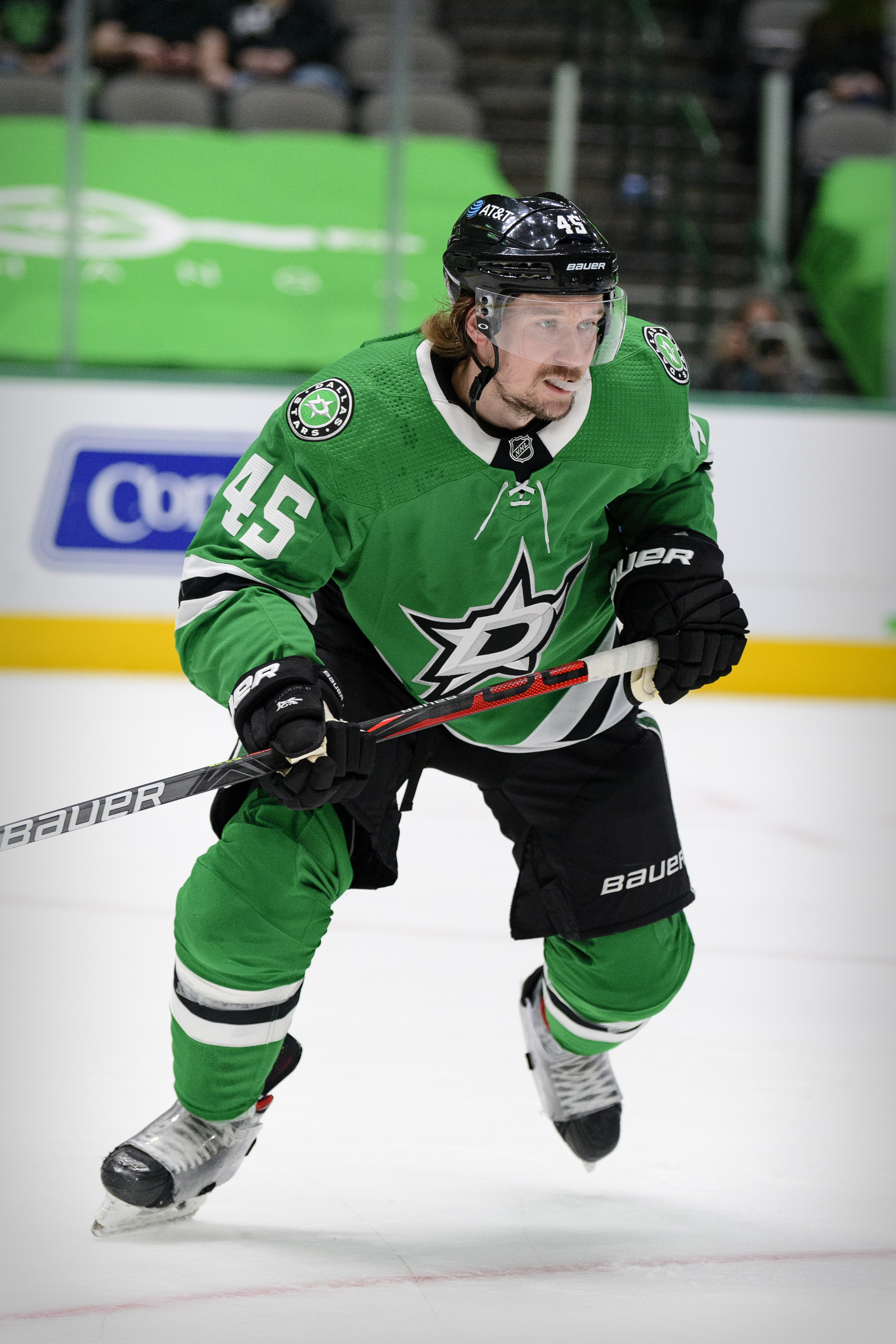 Last season certainly only made things worse. Vatanen was dropped to a spot on the third pairing for New Jersey and didn’t fare particularly well. Widely speculated as a surefire trade candidate at the deadline, the Devils couldn’t find a taker and simply wound up waiving him where Dallas scooped him up. His role didn’t really change and neither did his performance, sending him to the open market coming off the worst season of his career.
Nevertheless, there is still enough upside with Vatanen that landed him on our Top 50 UFA list for the second year in a row, albeit at a much lower spot this time around. The 30-year-old saw his production fall off a cliff last season but before that, he had averaged 28 points per game over the previous six seasons. Sure, his days of being a 30-plus-point blueliner are probably done but something in the high teens/early 20’s is still a possibility; he did that as recently as 2019-20.
Vatanen is also a right-shot defender which is something that many teams are often coveting, particularly at the trade deadline. He’s someone that can still play on the second power play unit if needed and log 15 or more minutes at five-on-five. That’s not an exciting profile compared to the player he was but he can still fill a useful role.
Stats
2020-21: 39 GP, 2-4-6, +3 rating, 20 PIMS, 55 shots, 52.3 CF%, 17:01 ATOI
Career: 473 GP, 47-153-200, -5 rating, 212 PIMS, 860 shots, 49.9 CF%, 20:48 ATOI
Potential Suitors
Given that he can’t be commanding a sizable salary based on the year he had, he’s someone that a contending team may be looking to add for cheap now. Conversely, a rebuilding team could view Vatanen as someone that can hold a spot to allow a prospect to develop a little longer in the minors before looking to move him down the stretch.
In the East, the Blue Jackets don’t have much in the way of proven right-shot defensive depth with long-time fixtures Seth Jones and David Savard departing over the last few months. They’re not looking to win now but Vatanen’s presence could allow someone like Andrew Peeke to spend a bit more time in the AHL. Savard’s new team in Montreal still could use a right-shot defender with Chris Wideman currently projecting to be on their third pairing despite not being in the NHL the last two seasons. Pittsburgh could use Vatanen in the role vacated by Cody Ceci who signed in Edmonton but Vatanen’s price tag would need to come pretty close to the minimum which he may not be willing to do at the moment.
Arizona’s defensive makeover still needs another couple of players and for all of the contracts the Coyotes have taken on, they still have plenty of cap space. Calgary only has two proven righties on the back end if they don’t want to shift one of Juuso Valimaki or Oliver Kylington to their off-side and could fit Vatanen in on the third pairing. Vatanen’s original team in Anaheim added some low-cost depth blueliners to contend for a roster spot but he’d still represent an upgrade on those players if they wanted to try to rebuild his value and flip him later on.
Projected Contract
Vatanen ranked 43rd on our Top 50 UFA list with a projected one-year, $1.5MM deal. At this point, it stands to reason that he’d have taken an offer like that had it been there so he may have to take a further pay cut once again. If he can bounce back offensively, his next contract, whatever it winds up being, has the potential to be a team-friendly one.
Photo courtesy of USA Today Sports Images.
PHR Mailbag: Tarasenko, Eichel, Getzlaf, Islanders
There were several questions about Vladimir Tarasenko and Jack Eichel so they get the focus in this edition of the PHR Mailbag which also features a question about Anaheim’s captain and the Islanders’ summer strategy of keeping as much secret as possible. If your question doesn’t appear here, watch for it in next weekend’s mailbag.
Gmm8811: My thoughts on the Tarasenko situation in St. Louis compared to when Brett Hull was a Blue. Both were great goal scorers that didn’t contribute much to their defensive game when needed. When Hull left, he became a much better all-around player. Obviously, Hull was more productive, but it was a different era. If Vlad leaves the Blues, do you think he can elevate that part of his game? If he stays in St. Louis, can he get over the issues he’s brought up? Is he hard-headed enough to say the heck with it and go back to Russia if he doesn’t get his way? Does he have it in him to be a “team” player?
I’m going to go out of order here and go with the last one first. Anything is possible when it comes to a player changing in a new environment but I wouldn’t suggest that’s a likely outcome here. It’s not as if Tarasenko is a youngster that’s still developing – he’s 29 with 531 career regular season games under his belt. Can he improve his play away from the puck? Sure, especially depending on the system he’s in (assuming he’s moved). But will it be to the point where it’s a demonstrable performance? Probably not.
There is no mechanism for him to go back to Russia unless he wants to retire from the NHL and do what Ilya Kovalchuk did where he walked away from his contract (eventually coming back when he was declared a free agent). Tarasenko is owed $15MM in salary over the next two years. That’s a lot of money to walk away from if he’s unhappy. He doesn’t necessarily have to get over his concerns if he stays, he just has to play, collect his money, and hope for a trade down the road.
sam i am: First time on here. Thx for the chats. What are your thoughts/ideas about Tarasenko? It’s past time to take a draft pick and eat some salary, isn’t it? Is there a d-man you think they can acquire AFTER Army knows how much cap space is left? Maybe sign Bozak with it? Thx again for your insight.
There’s a part of me that agrees with you. At some point, is an exit the best for everyone even if it’s a minimal return? A move with retention probably does allow them to re-sign Tyler Bozak and at this point, I suspect that’s why he remains unsigned at this point as he’s waiting to see if they can free up some money to re-sign him. Accordingly, Bozak would basically be part of the return for Tarasenko, not just the draft pick. I don’t see them looking to add an impact defenseman at this point either, they’ll give players like Niko Mikkola and Jake Walman longer looks while Scott Perunovich could be in the mix at some point as well.
On the other hand, at what point does a nominal return of a pick and Bozak’s return get outweighed by the potential of Tarasenko bouncing back? If they truly believe that the third time is the charm when it comes to his shoulder surgery (I’m a little leery about that), it then stands to reason that they think he can still play an impact role. And if that’s the case, the potential on-ice reward is better than what Bozak and a pick will bring, not to mention two years of carrying dead money on the books.
Yes, there’s a mutual desire to get a trade done but that doesn’t mean St. Louis should take whatever the best return is even if it’s a lousy one simply to get Tarasenko out of town. At some point, the potential upside of Tarasenko rebounding has to count for something and I suspect that’s what’s holding things up. GM Doug Armstrong doesn’t have to move him even though he wants to.
deeds: Where will Tarasenko end up? Are the Blues stuck with a disgruntled employee?
I think he stays with St. Louis, at least to start the season for the reasons mentioned above. If his trade value is really so low that all they can do is take a pick and have to eat some money to do it, they might as well keep him and see if he rebounds. Most teams have used up their cap space at this point so it’s not like it’s going to be considerably harder to trade him in-season if it comes to it; they’ll still have to retain money or take a high-priced contract back either way. If he bounces back, great. If he doesn’t, he still might be easier to move as an expiring deal a year from now and a buyout could definitely be in play at that point as well.
Coach Wall: Why all the fuss about Jack Eichel? Any team that pays him $10 million AAV for the next five or six years AND gives Buffalo their asking price is foolish. The guy has a very serious neck issue and may not last one year.
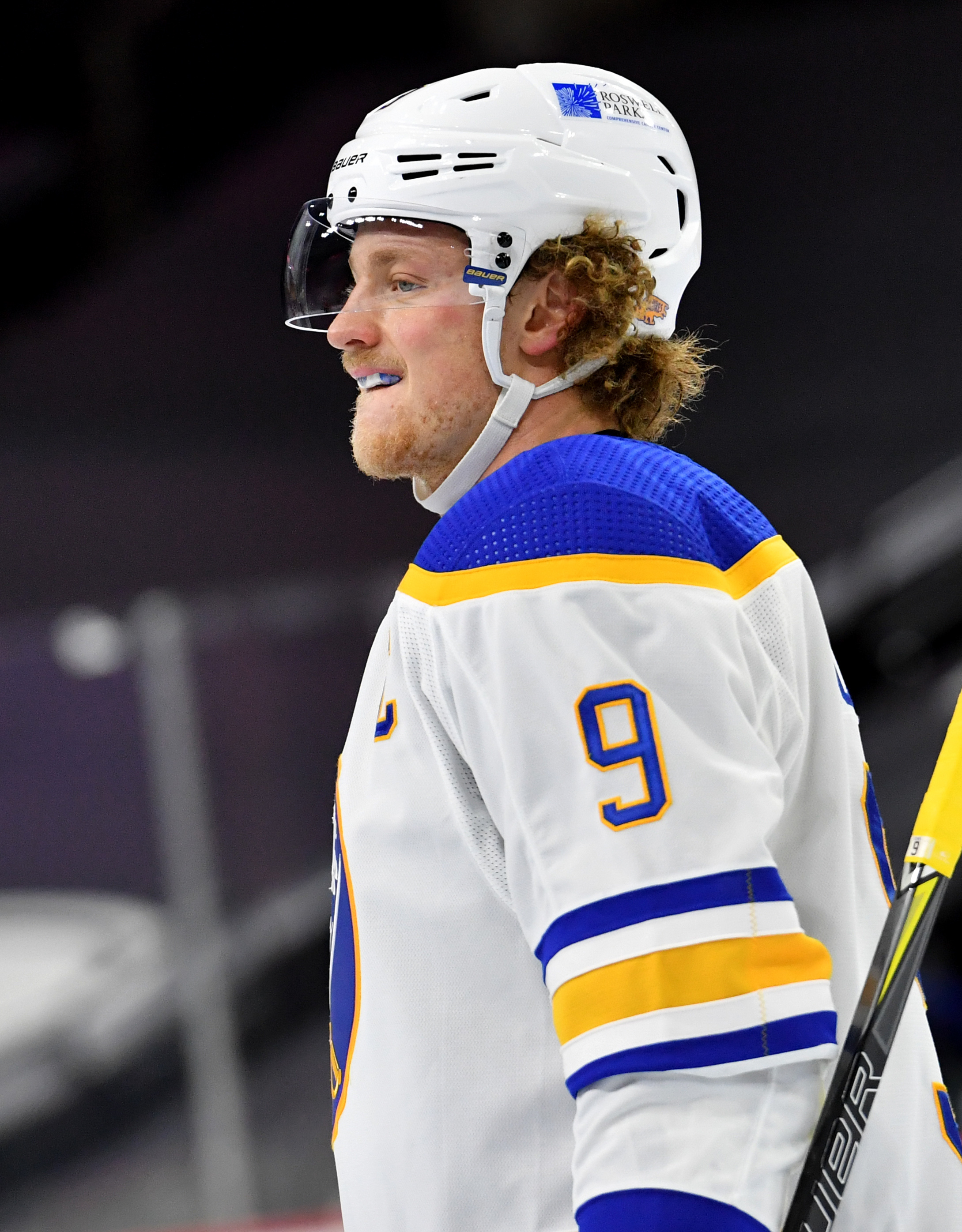 First, to clarify, it’s five years for Eichel before he becomes an unrestricted free agent. And yes, the neck issue is serious although the fusion surgery that the Sabres are pushing for is one that players have had and returned from. It’s serious but it shouldn’t a career-ender. The one that Eichel’s camp wants (artificial disc replacement) hasn’t been done on an NHL player before but carries a much shorter recovery time. When his agents released a statement last month, they claimed he could be ready to start the season. Even if that isn’t the case now, he might only miss a few games assuming everything goes well.
The reason why there is a lot of fuss is that top centers rarely become available in the prime of their career. Eichel is a top center in the prime of his career. He comes with a significant injury but the previous point still stands nonetheless. That’s why Buffalo GM Kevyn Adams is driving a hard bargain on the trade front. They don’t have to move him regardless of what the public sentiment is. The surgery they want would cost him a big chunk of next season but with what they’re planning to run out as a goalie tandem as things currently stand, they might actually view that as a good thing as it’s pretty clear they’re not looking to compete let alone contend.
Should a team pay the premium price tag which still seems to involve four significant young assets? It’s certainly fair to argue they shouldn’t considering the injury concerns and it’s hard to put conditions in a trade based on a successful operation (but I wouldn’t be shocked if that language is in there at some point). But Eichel, when healthy, plays at a level that would significantly impact almost every team in the league. That’s bound to generate plenty of hype.
Gbear: I heard one hockey writer say that Eichel should just get the surgery he wants regardless of what the Sabres recommend, but couldn’t that give the Sabres a legal avenue to try and void Eichel’s contract, let alone cover the costs of the surgery? And might that be the angle Pegula is playing here?
For clarification’s sake, before digging into this, here is the relevant portion of Section 34.4 of the CBA called Second Medical Opinions:
(e) Following the later of: (i) issuance of the Second Medical Opinion; or (ii) issuance of the recommendation on diagnosis or course of treatment by the Third Physician Expert, if any, the team physician shall determine the diagnosis and/or course of treatment (including the timing thereof) after consulting with the Second Medical Opinion Physician and the Third Physician Expert, if any, and giving due consideration to his/her/their recommendation(s).
The second medical opinion is the one that’s saying to do the artificial disc replacement but this rule clearly indicates that Buffalo gets to decide on the course of treatment and they’ve made their preference known.
There is a clause in a standard player’s contract (Section 6) that has a remedy for the team to void a deal if there is a material breach and I’m sure there’s an argument that could be made to say that getting a surgery that has never been performed on an NHL player before without consent from the team constitutes a material breach.
But I don’t think that’s Buffalo’s end game. If owner Terry Pegula simply wanted out of the contract, wouldn’t he just tell his GM to trade him for whatever the best deal available is and be done with it? I think Buffalo’s situation basically is they don’t want their star player being the guinea pig for a surgery that has never been performed on an NHL player before. It doesn’t matter that other athletes have had it; they just don’t want it done to their guy. They want Eichel to have what they feel is the safer procedure and that he comes back late in the season and resumes being their top forward right away.
Could Eichel force the issue? Sure, but the consequences could be dire. I have to think that if it was a more realistic scenario without the risk of his deal being voided, it might have been done already.
JerCanne: On a scale from 1-10 what are the chances Eichel is a Calgary Flame in October?
I’ll give it a two. Eichel makes a lot of sense for the Flames. Sean Monahan, Elias Lindholm, and Mikael Backlund are all quality centers but none of them have the top-level upside that a healthy Eichel would bring to the table. (It briefly appeared that Monahan could but that has waned over the last couple of seasons.)
But while those players are quality pieces, none are really young enough to entice Buffalo unless their main presence is as a salary offset. The Flames don’t have a particularly robust prospect pool that will make them willing to deal the types of youngsters that Adams and the Sabres are seeking. Eichel is a good fit on paper for Calgary but I don’t think they have the trade pieces that Buffalo is going to want unless their asking price dips sharply.
JustPete: What do you think of the Ducks new contract with Getzlaf – seems awfully rich to me. Follow up question – are the Ducks in such a position to warrant their lack of free agent activity or should they just fire Bob Murray?
I think it’s a little high but not overly excessive. A $3MM base salary for a third liner isn’t over the top and given their inactivity, he’s still probably in their top six in which case the price tag is reasonable. $1.5MM in games played bonuses makes it a little strange as Anaheim doesn’t exactly need the cap flexibility but it could come in handy if those bonuses are hit before the trade deadline if they wind up deciding to move him. I wouldn’t have given Ryan Getzlaf quite that much but with the cap space they have, if you’re going to overpay someone, it might as well be a franchise icon.
Let’s dig into the lack of free agent activity which starts and ends with Getzlaf. I have to admit, that surprised me. I thought they were going to try to add a piece or two to try get back into the mix in the Pacific Division but the lack of movement suggests that Murray is thinking about a longer-term rebuild. Frankly, that’s not a bad idea but if you’re going to do that, having a head coach in the final year of his contract (with their new AHL bench boss highlighting that as an attraction as Joel Bouchard did last month) seems a little strange as well.
Murray hasn’t had a great last few years, that much is for sure. But if he has been given the green light to go down this path, he has some job security to do so; ownership likely wouldn’t commit to this plan and then fire him partway through it. I think he sticks around.
The Mistake of Giving Eugene Melnyk a Liver Transplant: Why do the Islanders wait so long to make their contracts official? What benefit is there for the team, and even more perplexing, what benefit is there for the players?
By keeping as much cap space open as they have, it helped the Islanders hedge against an offer sheet. While they’re rarely handed out, enough teams are concerned about it to do things to deter against one being issued. For some of the contracts in place, are there side agreements to amend the term/money depending on what happens? Your guess is as good as mine on that front.
It also could give them a little bit of extra leverage in trade discussions. If they want to acquire someone, how much cap space do they have to clear to make that move happen? If no other teams know what the Isles’ cap situation is like, it can’t be used against them. For example, another team can’t come back and say that New York’s cap situation is so bad that they have to sell so and so for pennies on the dollar or demand additional compensation to take a player on. They can’t make that claim because they don’t know how much money the Islanders have or don’t have.
In terms of the benefit for the players, there is none. But GM Lou Lamoriello has been around long enough to be trusted. There are handshake deals in place and he’ll live up to them.
Largely, this is Lou just being Lou. He’s known to have a firm no-leak policy and has walked away from deals before if it became public before being officially announced. That’s enough to have multiple agents and players keeping quiet at a time where the majority of moves are leaked in advance of being made official. That’s really quite impressive even if it can be frustrating along the way.
Photo courtesy of USA Today Sports Images.
Atlantic Notes: Batherson, Del Zotto, Hinostroza
Two years ago, the Senators thought they were buying low on the prime years of Colin White’s career when they handed him a six-year, $28.5MM contract. That hasn’t panned out particularly well so far but even so, Ian Mendes of The Athletic suggests (subscription link) that Ottawa could look to go down that road again, this time with winger Drake Batherson. The restricted free agent had a 17-goal, 17-assist performance last season and is someone that they project as a future 20-goal player. Locking him up now at a bit of a discount – he has just 99 career NHL games played which limits his negotiating leverage – could come in handy down the road as some of their upcoming top youngsters move off their entry-level deals into pricier second contracts. That type of long-term cap planning will be needed for the Sens to keep as much of their future core together as possible.
Elsewhere in the Atlantic:
- Still with Ottawa, Michael Del Zotto’s two-year, $4MM contract with the Senators may have come as a surprise considering he had to earn a deal last season through the PTO route but the veteran told Postmedia’s Bruce Garrioch that there were four or five other offers on the table. The 31-year-old blueliner had 13 points in 53 games last season but is a bit of a curious fit in Ottawa with the acquisition of Nick Holden and the presence of young blueliners Erik Brannstrom and Victor Mete who are lefties like Del Zotto. Clearly, GM Pierre Dorion believes there’s a fit and with that many teams showing interest which certainly would have bolstered his market, Del Zotto got a bigger deal than expected.
- The Sabres have been quiet in free agency so far with the biggest contract handed out being a one-year, $1.05MM deal for winger Vinnie Hinostroza. The 27-year-old told Lance Lysowski of The Buffalo News that his history with Buffalo head coach Don Granato played a big role in his decision to sign there. Hinostroza had 25 points in 50 games with Chicago back in 2017-18 when Granato was an assistant coach before being moved in the 2018 summer to Arizona. He finished up on a high note last year after rejoining Chicago, notching a dozen points in 17 games.