
Trade Deadline Primer: Carolina Hurricanes
With the All-Star break approaching, the trade deadline looms large and is about a month and a half away. Where does each team stand, and what moves should they be looking to make? We continue our look around the league with the Carolina Hurricanes.
The Carolina Hurricanes have made their top status in the NHL undeniable this season. They’ve yet to have a losing record, despite facing injuries to top scorer Andrei Svechnikov and multiple goaltenders, including starter Frederik Andersen who is out indefinitely with a blood clotting issue. The Hurricanes have already iced five different goalies through the first half of the season, including waiver claim Spencer Martin and rookie Yaniv Perets. They even had veteran Jaroslav Halak on a professional try-out contract earlier in the season, though the 38-year-old wasn’t able to earn an NHL deal. But Carolina has persevered, fighting their way to ninth in the NHL and ranking in the league’s top 10 in goals for and against. They’ll be gearing up for another long playoff push when the Trade Deadline rolls around.
Record
28-15-5, 2nd in the Metropolitan
Deadline Status
Buyer
Deadline Cap Space
$8.73MM on deadline day, 0/3 retention slots used, 41/50 contracts used, per CapFriendly.
Upcoming Draft Picks
2024: CAR 1st, CAR 2nd, PHI 2nd, CAR 3rd, CAR 4th, CAR 5th, CAR 6th, CAR 7th
2025: CAR 1st, CAR 2nd, CAR 3rd, CAR 4th, CAR 6th, CAR 7th
Trade Chips
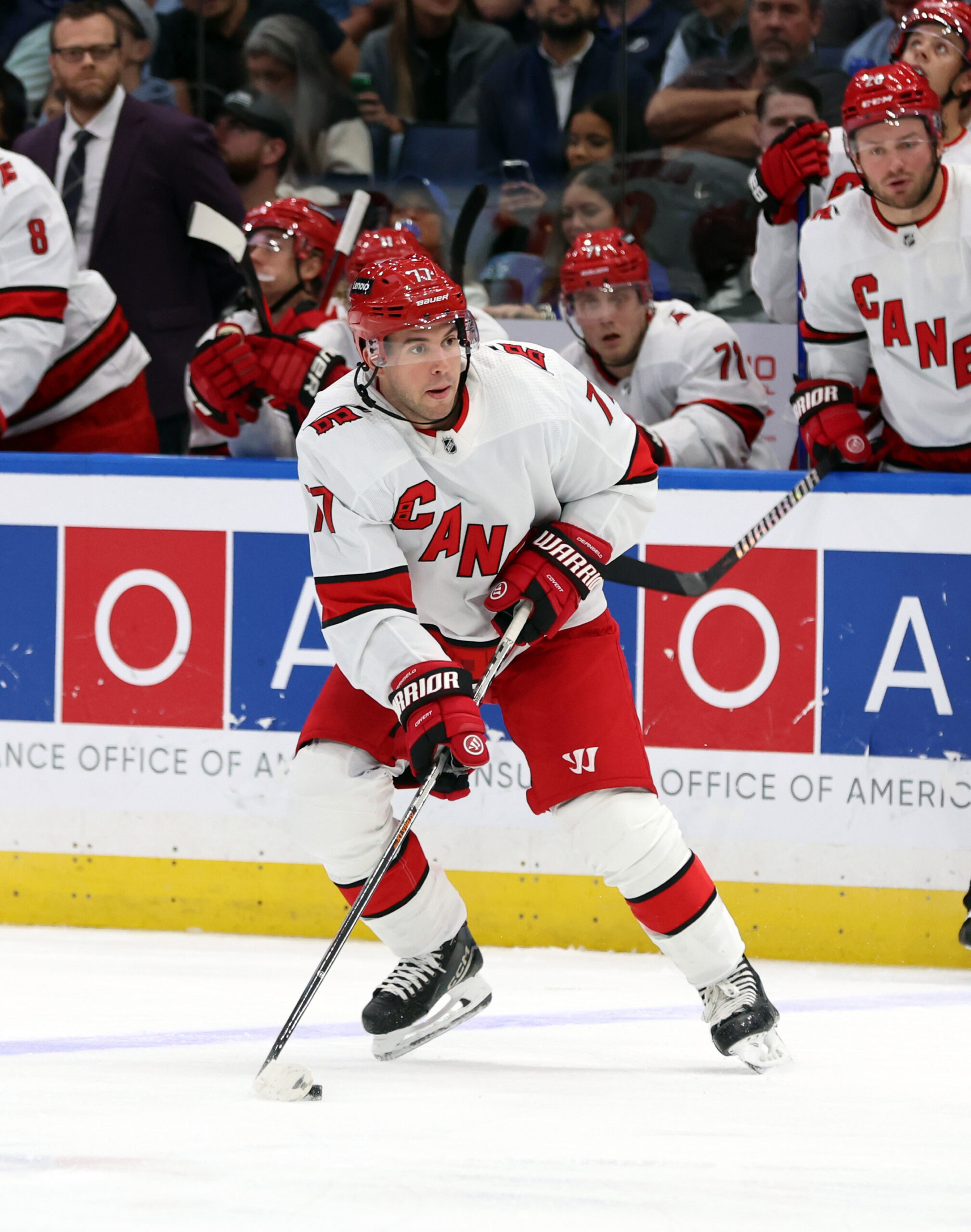 The Carolina Hurricanes have kept their roster fairly tight over the last few seasons and thus, don’t have much in the way of bargaining chips entering trade season. They are once again rumored to be shopping around Tony DeAngelo, who is in his second stint with the team after they traded him to the Philadelphia Flyers for a second, third, and fourth round pick in the 2022 summer. DeAngelo likely hasn’t done much to raise his value since that deal, seeing a decline in his production with 42 points in 70 games last season and just nine in 21 games this year. It’s been coupled with a decreased role, with the 28-year-old averaging just 14 minutes of ice time this season, significantly down from the 22 minutes he averaged with Philadelphia last season. Still, the hope of a revamped role leading to revamped scoring could be enough to convince a deadline seller.
The Hurricanes will otherwise likely be moving on from future assets. They’ve managed to hang on to almost all of their draft picks over the next three drafts and could be poised to cash them in with the wind behind them this season. They’ve also drafted well enough to manage parting with a few top prospects, like winger Noel Gunler who appeared in 42 AHL games and scored 23 points between 2021 and 2023, but is now on loan to the Liiga’s Karpat. Or they could move on from one of their two leading NCAA scorers in Bradly Nadeau – who ranks second on the University of Maine in scoring with 31 points in 22 games – or Cruz Lucius – who leads the University of Wisconsin with 22 points in 24 games.
With Carolina having reportedly taken Brett Pesce off the trade deadline, it’s hard to imagine many other names they’d be excited to move. They’ll be limited to a strict buyer status on deadline day, doomed to part with future capital if they want to build on this season. But they may have a silver lining financially, with CapFriendly estimating the Hurricanes will have roughly $8.7MM in deadline cap space. That could be enough to make bringing on cap feasible, likely cheapening any deal, or helping them contend for the more expensive players on the market.
Team Needs
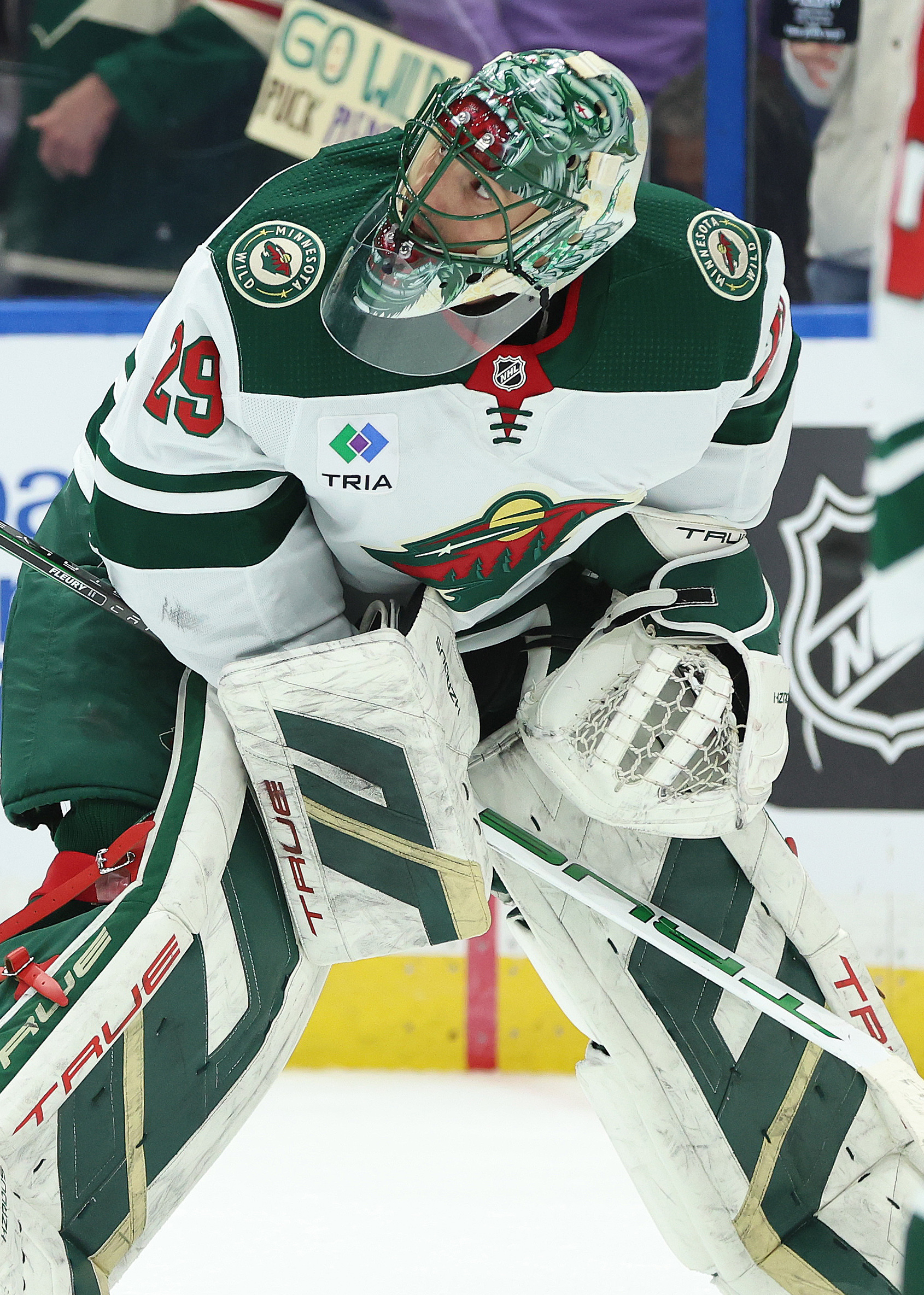 1) Consistency In Net: The Carolina Hurricanes don’t necessarily need a goaltender. Pyotr Kochetkov has manned the team’s net serviceably, when healthy, tallying 11 wins and a .900 save percentage through 23 games. The 24-year-old is currently in the AHL, looking to make his return from a concussion suffered on January 11th that earned him a stint on injured reserve. Kochetkov’s de facto backup, Antti Raanta, has also managed 12 games this season, though he’s tallied a much lower .870 save percentage. But neither goalie has been able to evade the minors, with Kochetkov not making the Hurricanes out of camp and playing in three AHL games this season, and Raanta getting placed on waivers earlier in the year and appearing in two AHL games.
Consistency in net has been Carolina’s missing piece this year. And while they could continue wishing for better health, this could be the best year to bring in a new name. There’s a long list of quality goaltenders on the trade block, including backups Jake Allen and Marc-Andre Fleury. Both options could come at a cheaper price than top names like Jacob Markstrom or Kaapo Kahkonen, while still providing Carolina with an upgrade over Raanta. With Kochetkov hoping to return from injury soon, the Hurricanes don’t need to sell the lot for a new name. But anyone capable of staying active would provide massive value, especially as the team aims its sights on a deep playoff run.
2) A Big Splash: Carolina hasn’t had much to complain about this season. They’re getting plenty of scoring, with 11 players boasting 20 or more points, including three defensemen. They’re even poised to add a major scoring talent back into the lineup when Andrei Svechnikov returns from an upper-body injury that’s held him out of Carolina’s last three games. But there are plenty of big names on the open market that could put an already-strong Hurricanes team over the top. They could pull off a blockbuster deal to bring in Ottawa’s Jakob Chychrun or Vladimir Tarasenko, Philadelphia’s Sean Walker, or Pittsburgh’s Jake Guentzel. All four players would provide formidable depth to Carolina, without locking the team into lengthy contracts. It’d be a surefire boost to a Hurricanes lineup that’s pitted up against a strong divisional opponent in the New York Rangers. Carolina doesn’t typically jump for big-name Spring trades, but a rich market could sway them to upgrade while they still can.
Photo courtesy of USA Today Sports.
Trade Deadline Primer: Calgary Flames
With the All-Star break approaching, the trade deadline looms large and is about a month and a half away. Where does each team stand, and what moves should they be looking to make? We continue our look around the league with the Calgary Flames.
The Flames came into this season with some major decisions to make on several key pending free agents. Now with the season over halfway done Calgary has only signed Mikael Backlund to an extension and has made the bold move of trading center Elias Lindholm to the Vancouver Canucks for several future pieces. The Flames will likely move any pending free agents that they can’t sign to an extension over the next few weeks but probably aren’t looking to go into a full-scale rebuild as they have multiple veterans signed to long-term deals. General manager Craig Conroy is likely looking to retool his group and leave his mark on the club he took over last summer, and given their position in the standings and the players that can be made available, Calgary is sure to be a team to keep your eye on as we head into the deadline season.
Record
22-22-5, 6th in the Pacific
Deadline Status
Conservative Seller
Deadline Cap Space
$6.85MM on deadline day, 0/3 retention slots used, 43/50 contracts used, per CapFriendly.
Upcoming Draft Picks
2024: CAL 1st*, VAN 1st, CAL 2nd, CAL 3rd, CAL 4th, VAN 4th*, CHI 5th*, CAL 6th,
2025: FLA 1st*, CAL 2nd, CAL 3rd*, CAL 5th, CAL 6th, CAL 7th,
*Conditions on 2024 1st round pick, 2025 1st round pick, 2025 3rd round pick: (CapFriendly)
If CGY’s 2024 1st round pick is between 20 and 32, MTL can take that pick instead.
In the event CGY receives FLA’s 2025 1st-round pick:
If both CGY AND FLA’s picks are NOT top 10, MTL will receive the better of the CGY and FLA 2025 1st-round picks. Result: TBD.
If CGY’s pick is top 10, AND FLA’s pick is NOT top 10, MTL receives FLA’s pick. Result: TBD
*Conditions 2024 4th round pick:
1.) The 4th round pick becomes a 3rd round pick (VAN) if Vancouver makes it to the conference finals.
2. If the pick remains a 4th, Calgary will receive the better of the two picks that Vancouver currently owns (VAN & NJD).
* Conditions 2024 5th round pick:
Calgary will receive the best of the 5th-round picks that Chicago owns.
Trade Chips
As mentioned earlier, the Flames have some big decisions to make in the next few weeks on the futures of pending free agents Noah Hanifin and Christopher Tanev. There have been whispers of trade rumors regarding Hanifin dating back to last summer when he was lukewarm to the idea of signing a long-term extension with the Flames. Fast forward to today and no traction has been made on a deal which increases the likelihood that the 27-year-old gets dealt. Hanifin will be looking at a lucrative max-term deal with any suitor and could fetch a sizable haul for Calgary which would give them a lot of assets to use in a retool or a rebuild.

Tanev is in the same spot as Hanifin, albeit he is seven years older and has a few more miles on his body. Tanev won’t be seeking the same term as Hanifin but comes with a lot more risk given that he is on the back nine of his career. Tanev has been connected to several teams through trade rumors and will be looking to cash in on what could be the last lucrative extension of his career. He will also fetch a good haul for the Flames should they choose to move on and trade him. Of course, any players they deal will need to be replaced in the summer if the Flames have any plans to retool and go for it again next year.
The Flames look to be a seller this trade deadline and have already made a bold move trading Lindholm. If they can get full value for Hanifin and Tanev, they could position themselves nicely for the future and whichever direction they choose to take the franchise.
Team Needs
The Flames have some sizable long-term commitments on the books and could find it difficult to replace their departing players via free agency this summer. They are currently slated to have $25.5MM in cap space heading into the summer which will go quickly given the holes in the lineup they would be looking to fill. If they are looking to win with the group they have, which has been the stated goal of management, they may look to acquire roster players in exchange for pending free agents at the deadline.
1) A Top Center: The Flames had a top center until yesterday, although Lindholm was probably better suited as a second-line center. This leaves Calgary with Nazim Kadri and Backlund as their one and two centers which probably has both men playing above their skillset. Top-line centers are one of the hardest players to acquire, which means Craig Conroy will have to get creative if he wants to retool. Conroy has expressed belief that the team can win with their current group, but in order to do so he will have to find a way to fill a big hole with minimal cap space and other pressing lineup issues that will need to be addressed. Conroy probably won’t find a top-line center before the deadline, but if he is looking for one this summer he could acquire pieces at the trade deadline that he could flip later in the year for immediate help.
2) Two Top-Four Defensemen: Last summer, the Flames tried to re-sign Hanifin and then re-engaged the defenseman this past November and nearly agreed to an eight-year extension. However, since that time not much information has come out about where the negotiations stand leading pundits to believe that Calgary will trade the Boston, Massachusetts native. The same talks have swirled around Tanev which would open up two massive holes on Calgary’s defense should they both be moved. Calgary could explore upgrades this offseason in free agency but would find it difficult to replace Hanifin and Tanev. The other option could come via trade, which would be possible if they continue adding to the futures cupboard heading into the trade deadline. Calgary could also explore a player like Jakob Chychrun, who has a year left on his deal with the Ottawa Senators. However, it would leave Calgary in the same position this summer that they were in with Hanifin and Tanev.
Photo courtesy of USA Today Sports.
Trade Deadline Primer: Buffalo Sabres
With the All-Star break approaching, the trade deadline looms large and is about a month and a half away. Where does each team stand, and what moves should they be looking to make? We continue our look around the league with the Buffalo Sabres.
On the tail of a 91-point finish in the 2022-23 regular season, the Sabres looked ready to break their 13-year postseason drought this year. Even after some offseason acquisitions to improve areas of weakness in the organization, Buffalo has appeared to have taken a step back. As things currently stand, the Sabres are on pace for a 37-38-7 record on the season, which would once again put them in a strong lottery position in the 2024 NHL Draft. With the hope of competing this year and plenty of talent to do so, Buffalo is one of the more interesting teams leading into the deadline season.
Record
22-23-4, 6th in the Atlantic
Deadline Status
Conservative Seller
Deadline Cap Space
$36.8MM on deadline day, 0/3 retention slots used, 44/50 contracts used, per CapFriendly.
Upcoming Draft Picks
2024: BUF 1st, BUF 2nd, BUF 3rd, BUF 4th, BUF 6th, BUF 7th
2025: BUF 1st, BUF 2nd, BUF 3rd, BUF 4th, MIN 4th, BUF 5th, BUF 6th, BUF 7th, NSH 7th*
*If Eric Robinson plays 45 games for the Sabres over the regular season, Buffalo will send Nashville’s seventh-round draft pick in the 2025 NHL Draft to the Columbus Blue Jackets.
Trade Chips
Even with sizeable long-term extensions kicking in next season for defensemen Rasmus Dahlin and Owen Power, the Sabres still have quite a bit of cap flexibility to use, currently projecting around $26.14MM next summer if the cap does rise to the reported $87.7MM. With only Casey Mittelstadt and Ukko-Pekka Luukkonen set to receive notable raises over their current deals, Buffalo may look to acquire a player with term this March, even through a sign-and-trade. 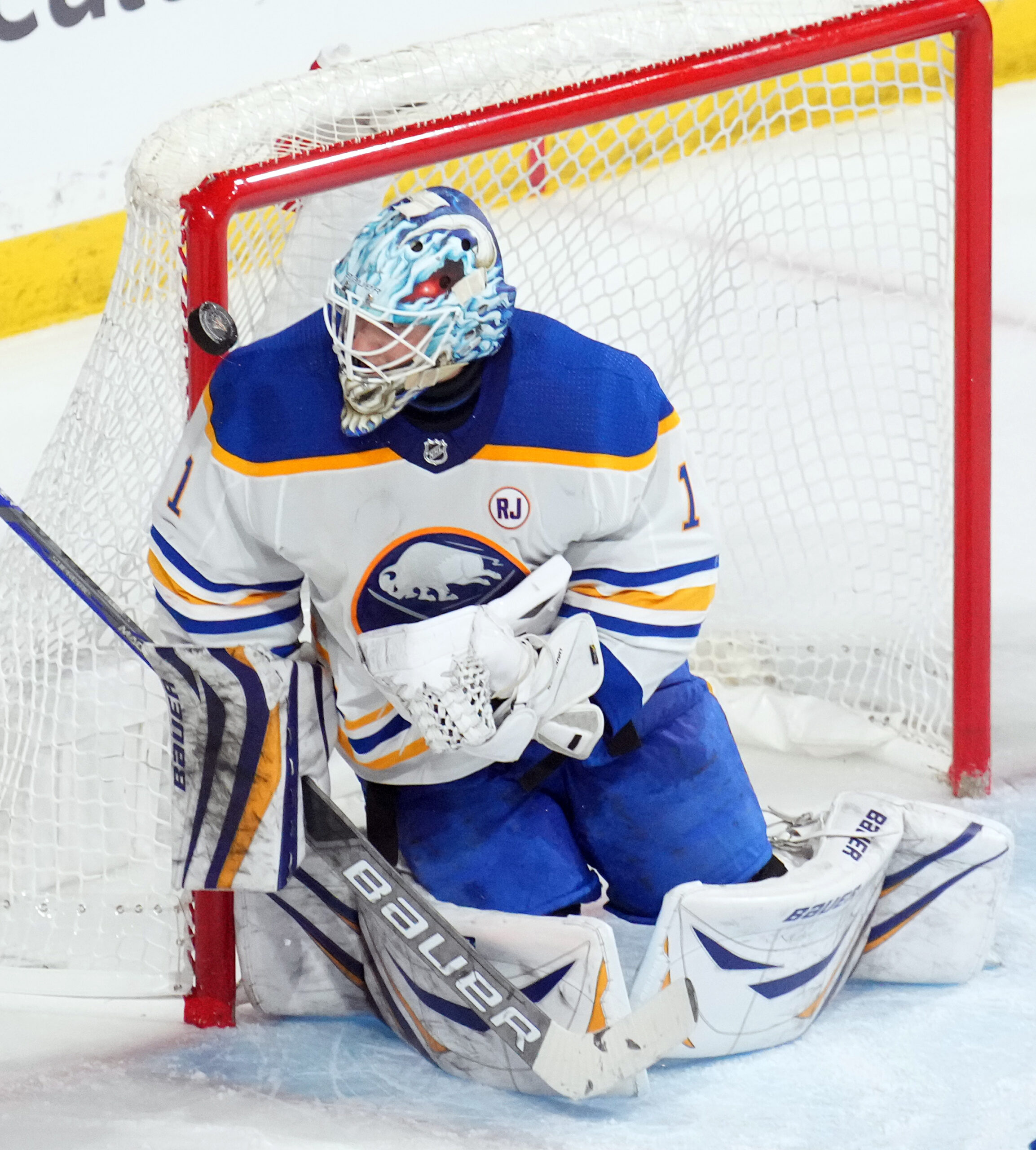
With where their record currently stands, the Sabres certainly have the makings of a seller at this year’s trade deadline. However, even if they were to involve themselves in the rental market this spring, the return value on players such as Zemgus Girgensons, Kyle Okposo, Victor Olofsson, and Erik Johnson may not make it worthwhile.
Assuming that Buffalo already has their sights set on next season, they could dangle their 2025 first-round selection to acquire a long-term piece, as it would take a surprise star player to enter the market for the Sabres to part with their lottery-projected 2024 first-round pick. Without much to sell, and in a position to only acquire long-term pieces, it would not be a surprise to see Buffalo be one of the more quiet teams at this year’s deadline.
Team Needs
1) Right-Shot Defenseman: Last summer, the Sabres brought in Johnson and Connor Clifton to help improve the right side of their defensive core. As things played out, neither addition has worked out as Buffalo may have hoped, as out of 29 total players, Clifton ranks 21st on the team in Corsi-For %, and Johnson ranks 24th. Desperately needing to find a serviceable option next to Power on their second defensive line, the Sabres could get aggressive and try to pry David Jiricek from the Blue Jackets, who has reportedly expressed frustration over his situation in Columbus.
2) A Definitive Solution In The Crease: An answer in the net has been one of the primary questions following Buffalo around for the last several years. Without a lot of game-changing answers on the market, it appears this question will take another year to figure out. Now, Buffalo’s goaltender prayers may be answered by either Luukkonen or Devon Levi, but neither has suggested they can fully assume that mantle. Of the two, Luukkonen has been the better option by far this season but has been extremely streaky which leads to concern. In his first eight games of the year, Luukonen produced a serviceable 3-3-1 record with a .910 SV% but followed it up with a 3-5-1 record and .876 SV% in his next nine games. Once again on a hot streak, Luukonen looks nearly unbeatable with a 6-3-0 in his last nine games coupled with a .940 SV%.
Photo courtesy of USA Today Sports.
Trade Deadline Primer: Boston Bruins
With the All-Star break approaching, the trade deadline looms large and is about a month and a half away. Where does each team stand, and what moves should they be looking to make? We continue our look around the league with the Boston Bruins.
Not quite as dominant as last season, the Bruins are still looking like one of the best regular season teams in the NHL, currently knocking on the door of back-to-back President’s Trophy victories, an accomplishment that has not been done since the 2016-17 Washington Capitals. Unfortunately, even though Boston has been one of the best regular season teams over the last several years, they have failed to move past the semi-finals in the postseason since their 2018-19 Stanley Cup Final loss to the St.Louis Blues. Nevertheless, with some long-term cap flexibility created this past summer, the Bruins could look to acquire players with term; something they have been unable to do for the last several years.
Record
31-9-9, 1st in the Atlantic
Deadline Status
Buyer
Deadline Cap Space
$862.5K on deadline day, 0/3 retention slots used, 47/50 contracts used, per CapFriendly.
Upcoming Draft Picks
2024: BOS 1st*, BOS 4th, BOS 5th, BOS 6th
2025: BOS 1st*, BOS 3rd, BOS 5th, BOS 6th, BOS 7th
*On March 2, 2023, Boston traded their 2024 first-round pick to the Detroit Red Wings with a top-10 protection placed on it. If the pick falls within the top 10 of the 2024 NHL Draft, the Bruins would then send the Red Wings an unprotected 2025 first-round pick instead. On July 9, 2023, Detroit conditionally traded the draft pick to the Ottawa Senators, with the Red Wings having the option of trading Ottawa their own 2024 first-round pick, or the Bruins’ 2024 first-round pick, with the original top-10 protections still in place.
Trade Chips
Having only eight draft picks over the next two years, it is unlikely that the Bruins will use their draft capital to make any major additions to their roster come the trade deadline. With Boston more than likely not picking until the fourth round of the 2024 NHL Draft, it would not be a surprise to see the Bruins acquire an obscure fourth- or fifth-round pick in any trade over the next few weeks, even as a buyer.
Furthermore, with a need for young and cheap talent, it would be unlikely to see the Bruins part with any of Matthew Poitras, Mason Lohrei, Georgii Merkulov, or John Beecher, given their long-term importance to the continuing success of the organization. The one asset that Boston does have, however, is long-term cap space beyond this season. If they were to pursue a player with term on their contract, the Bruins may be able to dangle pieces off of their active roster, without sacrificing too much of their future.
With many teams in desperate need of goaltending, Boston is in the envious position of having two All-Star goalies able to start for them every game, and the Bruins could certainly dangle one of them to improve other weak spots on their roster. Signed for this season and next at $5MM a year, Linus Ullmark has put together another quality season, securing a 15-6-2 record in 24 games, holding a .913 save percentage and 2.78 GAA. On the flip side, Jeremy Swayman will once again be arbitration-eligible next summer and has been one of the best goaltenders in the league with a 16-3-7 record in 27 games played on the year, also achieving a .924 SV% and 2.30 GAA.
Outside of their excess between the pipes, the Bruins may also be willing to listen to offers on Jake DeBrusk, who becomes an unrestricted free agent at season’s end. Once again being an effective goal-scorer for Boston, DeBrusk has scored 12 goals and 25 points in 47 games this season. It would not be a major surprise to work out a deal to improve their roster with DeBrusk as the centerpiece going the other way, especially if DeBrusk is willing to sign an extension with the acquiring team.
Team Needs
1) Center Help: Ever since the retirements of Patrice Bergeron and David Krejci, it was a foregone conclusion that the Bruins would need to improve their center depth if there was any hope of a serious playoff run. The team has played well with the combination of Pavel Zacha and Charlie Coyle centering the top-two lines, but with a team faceoff percentage of 49.3% (19th in the NHL), Boston will need to improve down the middle to win big draws in the playoffs at the very least. All three of Elias Lindholm, Sean Monahan, and Adam Henrique would allow the Bruins to add more punch down the middle, as well as strengthen their ability in the dot.
2) Stay The Course: Losing in the first round of the 2023 Stanley Cup playoffs after breaking the record for wins in a regular season will be a blight on the Bruins’ history for years to come. However, it is important to remember that Boston was only two shots away from reaching the second round, losing in overtime in Game 5 as well as Game 7 to the Florida Panthers. Outside of the need for help down the middle, it is tough to point out any point of the game that the Bruins are truly lacking. Rather than deal out any of their remaining draft capital, or move on from young prospects ready to make an impact, Boston should trust in his team to get over the hump, as they have shown they can beat nearly any team they play against over the last several years.
Photo courtesy of USA Today Sports.
Trade Deadline Primer: Arizona Coyotes
With the All-Star break approaching, the trade deadline looms large and is about a month and a half away. Where does each team stand, and what moves should they be looking to make? We continue our look around the league with the Arizona Coyotes.
The Coyotes are in a small rut, going 4-5-1 in their past 10 games. That shouldn’t take too much away from what’s been a drastic improvement in play around a developing core that seems to have most of the pieces in place. GM Bill Armstrong has made it quite clear that the team’s rebuilding days are over, and he’s hinted at being willing to start moving the needle on the trade market. Of course, a quick turnaround in play after the All-Star break could make that decision easy. Arizona is still within shouting distance of making their second playoff appearance in the last 12 years, and as such, they’ll be a bit of a wild card come March 8.
Record
23-22-3, 6th in the Central
Deadline Status
Conservative Buyer
Deadline Cap Space
$13.44MM on deadline day, 1/3 retention slots used, 48/50 contracts used, per CapFriendly.
Upcoming Draft Picks
2024: ARI 1st, ARI 2nd, FLA 2nd, WSH 2nd, ARI 3rd, COL 3rd, EDM 3rd, ARI 4th, SJS 4th, ARI 5th, ARI 6th, ARI 7th, BOS 7th
2025: ARI 1st, ARI 2nd, TOR 2nd, EDM 2nd, NYR 2nd, ARI 3rd, NYR/DAL 3rd (cond.), ARI 4th, ARI 5th, ARI 6th, ARI 7th
Trade Chips
A quick look at the list of draft picks above reveals an abundance of second-round selections over the next two years. With the Coyotes likely averting true seller status, this bag of picks will be the first thing Armstrong reaches for if he’s looking to make some small adds to help push this squad into the playoff picture.
Of course, if the Coyotes are going to make a larger swing (they’ve been connected to Flames defenseman Noah Hanifin), it’ll take more than that. It doesn’t seem likely that Armstrong would consider moving out a first-round selection before this Clayton Keller-led core has made a postseason appearance in a non-shortened season, which could open the door to some of their quickly developing prospect pool being shown the door.
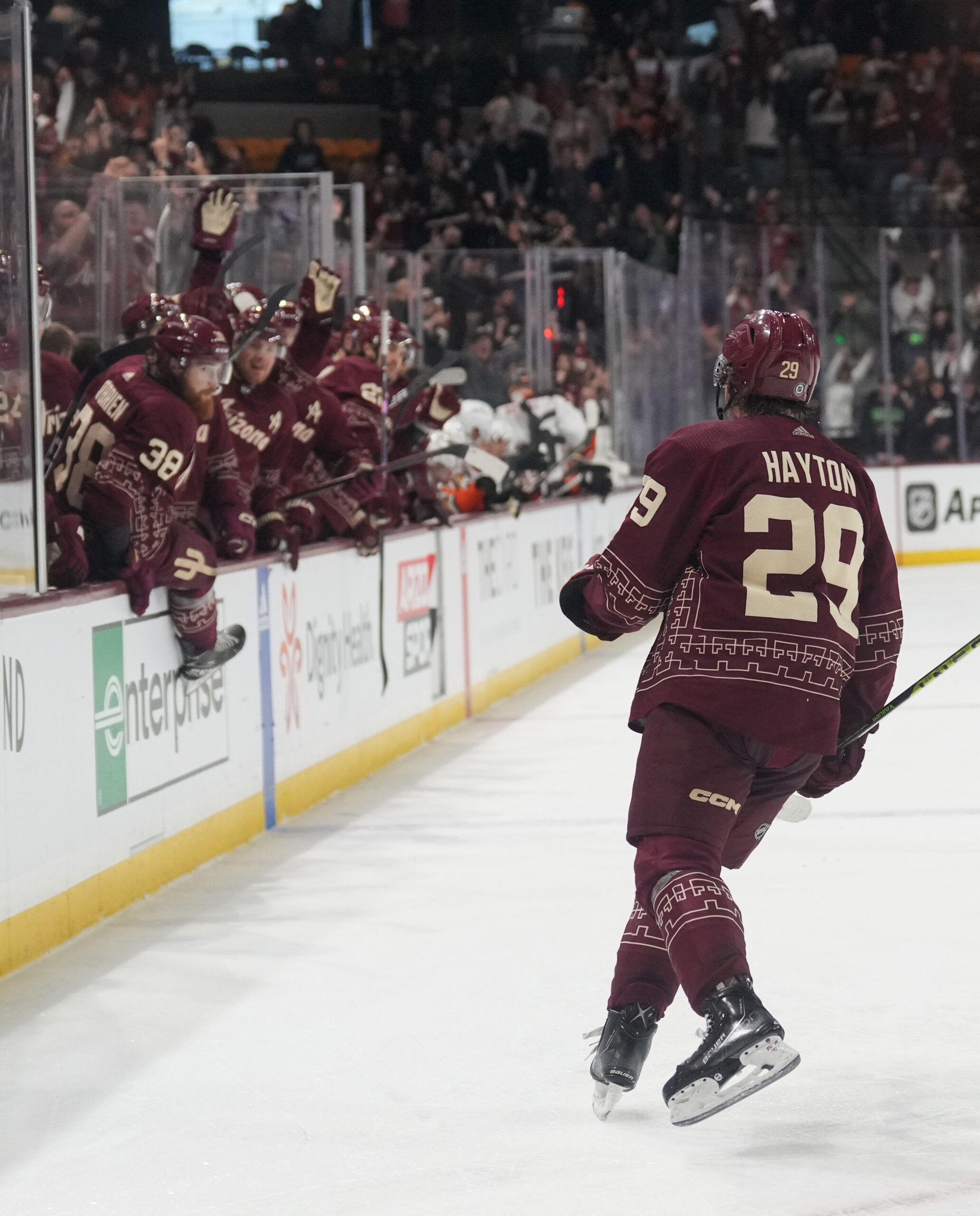 Most Coyotes fans were impressed with 23-year-old Barrett Hayton‘s play this season before a hand injury sustained in November shut him down long-term. He’s yet to return from the injury, which was only supposed to sideline him until Christmas, but a setback sustained last month has lengthened his recovery. He had put up decent possession numbers and passed the eye test in a first-line role between Keller and Nick Schmaltz, but the production wasn’t there, posting only two goals and two assists in 16 games. Could that stretch be enough for Armstrong to consider moving the 2018 fifth-overall pick in a deal for a more pressing need? Jack McBain, only a year older than Hayton, has recently stepped into the first-line job and has three points in his last five games. He’s had positive possession impacts in the role, but not as strong as Hayton’s, who posted a 58.9% expected goals share when on the ice with Keller and Schmaltz compared to McBain’s 51.4% (per MoneyPuck).
Short-term UFA pickups Alexander Kerfoot and Jason Zucker have been important in middle-six roles for Arizona this year, especially Kerfoot – his 0.58 points per game are the most among the Coyotes’ centers. They likely won’t be on their way out unless Armstrong receives an offer he can’t refuse.
If Armstrong does look to move out one of Arizona’s recent veteran pickups, look for it to be defenseman Mathew Dumba. While defense is likely the area the Coyotes are looking to fortify with deadline additions, Dumba has struggled in the desert and could help them swing a deal for an upgrade. The 29-year-old has five points in 44 games with a 45% Corsi share at even strength that ranks near the bottom of the team. With a retention slot open, they could absorb half of his $3.9MM cap hit on a one-year deal and make him a palatable deadline add for a contending team looking to bring in a veteran for their third pairing.
Team Needs
1) Left-Shot Defenseman: The Coyotes may lack strength at center ice, but their winger group is deep enough to quell any scoring concerns for now. There’s a far more pressing need on the back end, which has largely struggled outside of the J.J. Moser–Sean Durzi pairing. Dumba’s flamed out in the desert, Travis Dermott and Juuso Välimäki are having down seasons, and penalty-kill specialist Josh Brown isn’t suited for an everyday NHL role. Inserting a top-four threat such as Hanifin gives head coach André Tourigny much more flexibility with his pairings and would allow for more puck-moving support outside of Durzi and Moser. 24-year-old call-up Michael Kesselring has done well in his 31 games this year and is inching toward cracking the team’s second pairing on a full-time basis, but he’ll need a better partner than what they have to offer him now if that will convert into a playoff berth.
2) Don’t Sell The Farm Early: While one splash is likely feasible for Armstrong, especially on the blue line given their current roster construction and lack of bona fide top-four prospects, multiple big swings are unwise for a team whose best years are still ahead of them. Their first-round picks are likely more valuable in their hands on draft day than used as fodder in a deadline deal, especially considering help at center ice will come soon with the growth of Logan Cooley and the incoming NHL debut of 2022 11th overall pick Conor Geekie. Things are looking up for the Coyotes (at least on the ice), but there’s still more growth to come.
Photo courtesy of USA Today Sports.
PHR Mailbag: Kings, Biggest Underachiever, Ersson, Calder Trophy, Red Wings, Hockey Canada
Topics in this edition of the mailbag include players who have overachieved and underachieved relative to expected production, an updated look at the Calder Trophy race, and more. If your question doesn’t appear here, check back in next weekend’s column.
rpoabr: How do you solve the Kings?
This is a hard one. I’m a proponent of roster shakeups over coaching changes but doing anything of consequence with this group is going to be difficult. Of their current healthy top six forwards in terms of cap hit, they probably aren’t moving any of them (or can’t, in Pierre-Luc Dubois’ case with his struggles; they wouldn’t get full value if they moved him now). Viktor Arvidsson’s value is down since he hasn’t played this season so he’s not being traded. They only have two other ones making more than $1MM and both of them are under $2MM. That makes it hard to salary match and they’re in a spot where they need to do so.
On the back end, maybe there’s a shakeup move with Vladislav Gavrikov whose shorter-term deal could make a player-for-player swap more palatable. With the right team, perhaps that frees up a bit of money to take a run at another upgrade. But Drew Doughty and Michael Anderson are on long-term pacts and moving the underappreciated Matt Roy probably isn’t going to help. From there, the options make $1MM or less so again, money matching is difficult. Meanwhile, I’m not going to pick on the goaltending, it’s doing well enough under the circumstances.
So, if a Gavrikov trade isn’t palatable, there are three options. Tweak the depth players (try some different fourth liners, for example, to see if one provides a spark as they did with Alex Turcotte yesterday), do nothing, or make a coaching change. Option one doesn’t move the needle much so that isn’t going to solve anything. Anyone who reads these knows how much I don’t enjoy speculating about a coaching change but if you’re of the mindset that this roster needs a shakeup, that’s the one card they can play right now. Until Arvidsson gets back, it might be the only card they can play.
Personally, I don’t think the Kings were as good as they were early nor do I think they’re as bad as they are now. They’re somewhere in the middle as a mid-tier playoff team. That’s basically where I pegged them heading into the season so I’m not really inclined to say they should make a change but if GM Rob Blake decides that something needs to change, that might be the move to make.
PyramidHeadcrab: Who would you say is the most snake-bit player of the season thus far? That is to say, whose underlying stats suggest they should be putting up more points, but are struggling to do so? Inversely, who is the biggest over-performer?
Florida’s Matthew Tkachuk has been at or near the top of this leaderboard all season long but he’s a point-per-game player so it’s hard to call him truly snake-bit. I’m instead going to go with John Tavares in Toronto. Even with his goal yesterday (which snapped a long pointless streak), he’s marked at -13.8 goals above shooting talent, per MoneyPuck. If we pick the simpler stat, his expected goals mark is 27 and he has 13. Shooting percentage-wise, he’s at 7.5% this year versus nearly 13% for his career. If he’s at his expected goals mark, he’s over a point per game and Toronto is probably battling Florida for second in the division over being in a dogfight for a Wild Card spot. The recent struggles have led some to think Tavares is in a steep decline but I’m not sure that’s truly the case.
On the flip side, if we look at the player with the most goals above shooting talent, it’s Sam Reinhart (+8.8). But even if you took those from his goal total, he’s still a point-per-game player so it’s not fair to call him the biggest overachiever. Instead, I’ll go with the one who’s fourth on that list, Chicago’s Jason Dickinson. He’s +8.3 in that category. He has 15 goals on the season. You don’t need to be a math major to see that he’s basically scoring twice as much as the numbers suggest he should. If we look at shooting percentage, he’s at 19%, well beyond anything he has put up before. Considering that he came into the season without a single doubt-digit goal total to his name, I think it’s fair to suggest that he has been an over-performer.
Emoney123: Is Samuel Ersson in the ROY conversation?
Schwa: Would also be interested in a larger look at Calder for this year. With Bedard’s injury – is he still the favorite? Or how do you assess the race at this point?
 When this question was first posted, I didn’t think he’d have any sort of chance of being in the discussion. However, with Carter Hart being among those to take an indefinite leave of absence in recent days, it’s Ersson’s net to run with for the second half. If he goes on a hot streak and the Flyers hang onto a top-three spot in the Metropolitan and complete the improbable playoff run, that might get him onto a few writers’ ballots toward the back. But in terms of being a contender for Rookie of the Year? I think that will be a stretch unless he single-handedly wins them a bunch of games and drags them into the playoffs.
Right now, I’d still peg Connor Bedard as the favorite for the Calder Trophy. He’s expected to miss about another four weeks so he still has a chance of getting 60-plus games in. I think that will be enough to stay on the top of most ballots since he should come away with the most points despite playing with a pretty weak group of wingers.
Bedard also benefits from the big market effect, something that isn’t the case for Minnesota’s Brock Faber. There’s an increasingly viable argument to make that the blueliner should be the Calder winner; first-year blueliners aren’t supposed to take over as a team’s top rearguard and play 25 minutes a night but that’s what he’s doing. I think it has largely gone under the radar which will hurt him at voting time.
In a previous mailbag, I had Adam Fantilli as the potential third-place finisher. That still wouldn’t shock me but I’d give Luke Hughes the edge now. Dougie Hamilton’s long-term injury has given Hughes a chance to play a bigger (more offensive role) and the production and confidence are both on an upward trajectory. That said, there’s still a big gap between him and Faber.
HockeyBoz: Did the Red Wings get it right with Lalonde instead of Lambert? Detroit had them one and two, I believe, on their hiring list.
Shocked to see Lambert axed so soon. Islanders have always been a defense-first-type team.
I’m going to respond to the second part first. I was also surprised to see Lane Lambert go that quickly. I know they haven’t been playing particularly well lately but in Lambert’s defense, the Isles don’t exactly have a high-end lineup and they’ve been banged up on the back end. GM Lou Lamoriello might think that’s the case based on the long-term contracts he handed out over the summer but in my book, this is a bubble team playing like a bubble team and they’re on the bubble in the playoff picture. We’ll see if Patrick Roy (another surprising hire) can change their fortunes around but I still expect to see them either just in or just out of a Wild Card spot.
From Detroit’s perspective, if Derek Lalonde and Lambert were the top two choices, then yes, I think GM Steve Yzerman got it right. They’re another bubble team but some of their youngsters have progressed nicely under Lalonde’s tutelage which bodes well for the long term. With some steady goaltending, they could be a playoff team and that’s an outcome I wasn’t expecting heading into the season. Lalonde should get some credit if that happens. Would Lambert have gotten more from this group? It’s hard to say but given that he couldn’t elevate the Isles beyond a bubble team, I can’t sit here and say he’d have done better with Detroit. In that case, I’ll say Lalonde was the right choice.
Gmm8811: Seems like the Hockey Canada sex scandal has been swept under the rug. Has there been any current news?
wreckage: Repercussions of players involved in the TC scandal? I believe in second chances and believe these young men should be given a second chance on their careers, but does the NHL try and set a precedent and ban their eligibility? I think if they’re found guilty, in a court of law, they most definitely should pay the consequences and if rehabilitated should be given the opportunity to re-establish their careers in the league. Will any be given a chance to resume their careers in your opinion, or are they all likely KHL-bound at best?
Since this question came out, there certainly has been some news on this front. The London Police Service announced they anticipate that they will hold a press conference on February 5th and will share further details at that time. Previous reporting has indicated that five players have been told to surrender to the police in London by an unspecified time. In terms of what is 100% certain, that’s about all that can be said. More will be known and can safely be discussed after the anticipated announcement.
As for the possible repercussions, it’s still a bit early to speculate. Will it actually get to court? Will there be a settlement beforehand where they plead to a lesser charge to avoid going to court? Will some players do one option and some do the other? That will go a long way toward determining if the player will have another NHL opportunity or when it may come, not to mention the potential suspension coming from the league that would take the decision out of the teams’ hands in the short term. I want to see what the end result is before making any sort of prediction on whether there will be another NHL opportunity (and when it might come) or if the league attempts to set a new precedent from a disciplinary standpoint.
Photo courtesy of USA Today Sports Images.
Trade Deadline Primer: Anaheim Ducks
With the All-Star break approaching, the trade deadline looms large and is about a month and a half away. Where does each team stand, and what moves should they be looking to make? We start our look around the league with the Anaheim Ducks.
At this point of the season, there aren’t many teams that are going to be sure-fire sellers. The Ducks are one of the exceptions. GM Pat Verbeek’s squad is right in the heart of a full rebuild and after a surprisingly good start, they’ve fallen off as of late and are well out of the playoff picture. Of course, they at least have some strong core pieces to build around and while they likely won’t be able to add any of those in the coming weeks, they should be able to add to their prospect cupboard and pick up an extra draft pick or two.
Record
16-30-2, 7th in the Pacific
Deadline Status
Seller
Deadline Cap Space
$35.446MM on deadline day, 0/3 retention slots used, 47/50 contracts used, per CapFriendly.
Upcoming Draft Picks
2024: ANA 1st, ANA 2nd, BOS 2nd, ANA 3rd, PIT 3rd, SJ 3rd, ANA 4th, ANA 5th, ANA 6th, ANA 7th
2025: ANA 1st, ANA 3rd, ANA 4th, ANA 5th, ANA 6th, ANA 7th
Trade Chips
 The likeliest Duck to move is Adam Henrique. It wouldn’t have been surprising to see him be dealt last season but an injury put an end to that fairly quickly. The 33-year-old is believed to be drawing strong interest already, understandably so in a center market that isn’t particularly deep at the moment. Henrique has been one of the top scorers for Anaheim this season with 15 goals and 15 assists in 45 games while being an all-situations player who also is winning over 53% of his faceoffs. This is the type of player who ticks off a lot of boxes for what a contender is typically looking to add at this time of season. At $5.825MM, the cap hit is going to be somewhat prohibitive, even with 50% retention so some creativity might be needed but there will be a strong market for the veteran that should net Verbeek a solid return.
When Frank Vatrano signed a three-year, $10.95MM contract with Anaheim back in 2022, it raised some eyebrows as he had only reached the 20-goal mark once. However, it proved to be a worthwhile move as he had a career year last season and should beat those numbers in the coming weeks to set new benchmarks. His value might not get any higher while whoever gets Vatrano would also have him for next year so if the opportunity is there to cash in, Verbeek could look to take it. Trevor Zegras was in trade speculation before he broke his ankle and while a move could be the eventual outcome, it feels like that might be more of a summer swap over trying to move him as he’s just coming back.
One possible under-the-radar candidate to move could be Isac Lundestrom. The center just came back from a torn Achilles tendon and has been quiet, producing at a similar level to last year, one that was a big step back. With Anaheim’s depth down the middle and a $1.8MM qualifying offer with arbitration rights looming, it’s fair to wonder if the Ducks might consider going in a different direction. If that happens, he could be moved for another young player in a change of scenery type of move.
On the back end, Ilya Lyubushkin might be the only one to move (with Jamie Drysdale having already been dealt). The 29-year-old was added as a rental player two years ago by Toronto and fit in well on their third pairing and it’s fair to think teams will be looking to add some grit once more. The return might not be the highest as he’s on an above-market deal but they should be able to pick up a draft pick and perhaps even beat the fourth-rounder they gave up to get him.
 Then there’s John Gibson. The netminder has been in trade speculation going back a few years now and frankly, until one happens, he’s going to likely continue to be in that speculation moving forward. The 30-year-old has shaved nearly a full goal off his GAA this season while a .900 SV% on a rebuilding squad isn’t bad the way that stat is trending. However, a $6.4MM cap hit through 2026-27 will be an issue. Sure, the Ducks can retain 50% but in terms of real money, that’s more than $10MM in salary they’d owe to someone not playing for them. How much is that worth in a return? Couple that with a goalie market that has teams mostly bargain-hunting and it would be a bit of a surprise if a deal gets done although teams will certainly call.
Other Potential Trade Chips: F Sam Carrick, F Jakob Silfverberg (a $5.25MM AAV will limit his market though), G Alex Stalock
Team Needs
1) Young Wingers: With Mason McTavish, Leo Carlsson, and Zegras in the mix, Anaheim is set down the middle for a while. They have a young core group of defensemen and while odds are all won’t pan out, they should have a good core group. On the wing, however, it’s a bit thinner, even with the Cutter Gauthier acquisition. If there’s an opportunity to get a young winger in any of these moves, it would certainly help to shore up that portion of the prospect pool.
2) Draft Picks: While Anaheim has ten picks so far this season, they only have six for 2025 and between the two years, they don’t have any extras in the first or second round. Some rebuilding squads have a multi-year surplus of selections and the Ducks aren’t there yet. They can at least take a step in that direction before March 8th.
Photo courtesy of USA Today Sports Images.
Salary Cap Deep Dive: New York Rangers
Navigating the salary cap is one of the more important tasks for any GM. Teams that can avoid total cap chaos by walking the tightrope of inking players to deals that match their value (or compensate for future value without breaking the bank) remain successful. Those that don’t see struggles and front office changes.
PHR will look at every NHL team and give a thorough look at their cap situation for the 2023-24 season. This will focus more on players who are regulars on the roster versus those who may find themselves shuttling between the AHL and NHL. All cap figures are courtesy of CapFriendly.
New York Rangers
Current Cap Hit: $83,603,531 (over the $83.5MM Upper Limit)
Entry-Level Contracts
F William Cuylle (two years, $828.3K)
D Braden Schneider (one year, $925K)
Potential Bonuses
Cuylle: $82.5K
Schneider: $400K
Total: $482.5K
Cuylle has done a nice job in a full-time bottom six role in his first taste of NHL duty. His offensive numbers aren’t going to stand out by any stretch but it’s a nice way to ease him in. This will certainly limit his earnings upside on his next contract, however; a bridge deal in the $1.5MM to $2MM range might be his best-case scenario. Bonus-wise, his are based on games played so right now, he’s trending to reach that full amount.
Schneider has been a regular on New York’s back end dating back to last season but his role has been rather limited so far as basically a permanent third-pairing piece. That should have his next contract around the $1.5MM mark as well. For him, his bonuses are ‘A’ ones and the only ones he might have a shot at are blocked shots (needs to finish in the top two for defensemen) and plus/minus (top three among Ranger blueliners). At the moment, he doesn’t qualify to reach either of them.
Signed Through 2023-24, Non-Entry-Level
F Nick Bonino ($800K, UFA)
F Jonny Brodzinski ($762.5K, UFA)
D Erik Gustafsson ($825K, UFA)
F Kaapo Kakko ($2.1MM, RFA)
D Ryan Lindgren ($3MM, RFA)
F Tyler Pitlick ($787.5K, UFA)
G Jonathan Quick ($825K, UFA)
F Blake Wheeler ($800K, UFA)
Potential Bonuses
Quick: $100K
Wheeler: $300K
Total: $400K
After getting 40 points last season, it looked like Kakko was heading in the right direction but he has struggled this year. Still, it’s unlikely New York will give up on the 2019 second-overall pick. However, they might want to go much higher than his $2.4MM qualifying offer. Wheeler took a well below-market contract to go to the Rangers and while his numbers are down compared to his time in Winnipeg, he’s also playing lower in the lineup. He’s worth more on the open market if he wants to max his money out next summer or he could stick with this route on a potential contender. His bonuses are based on games played and have already been achieved.
Bonino made sense as a low-cost depth option with what should have been some offensive upside although he hasn’t been able to display that this season. This close to the league minimum, he could land a similar deal on the open market next summer but could also be a PTO candidate. Pitlick has been on near-minimum deals over the last couple of seasons and as a depth player this season, that’s unlikely to change. He could get a contract at a similar price point in the summer or might have to go the PTO route as he did the year before. Brodzinski, meanwhile, has been a dominant AHL scorer but hasn’t produced much in the NHL. While he’s also likely going to stay around the league minimum, he should be able to at least land a one-way contract for next season.
Lindgren is one of New York’s more interesting expiring deals this summer. He’s a very effective defensive defenseman but simply doesn’t put up many points to help drive his price tag up. His qualifying offer is $3.6MM and he should get more than that but his ceiling might be closer to the $4.5MM range even with arbitration rights. Notably, he’s a year away from UFA eligibility. Gustafsson, meanwhile, is the exact opposite. He is a productive offensive defender but struggles considerably in his own end. Settling for this contract after a 42-point campaign suggests that teams aren’t willing to pay a premium for the points knowing his defensive struggles and the need to shelter him at five-on-five. A small raise past the $1MM mark wouldn’t be shocking but it’s hard to project a big increase.
Expectations weren’t high for Quick after a rough 2022-23 campaign but he has been a difference-maker for the Rangers this season. However, he just turned 38 so it’s unlikely there will be teams looking at him as a starter or a strong-side platoon option. If he wants to go for the money, he could do better than this on the open market but it wouldn’t be surprising to see him stay or take a similar deal to this one with a contender for next season. The details of his bonuses aren’t known.
Signed Through 2024-25
D Zachary Jones ($812.5K, RFA)
F Alexis Lafreniere ($2.325MM, RFA)
D K’Andre Miller ($3.82MM, RFA)
G Igor Shesterkin ($5.667MM, UFA)
F Jimmy Vesey ($800K, UFA)
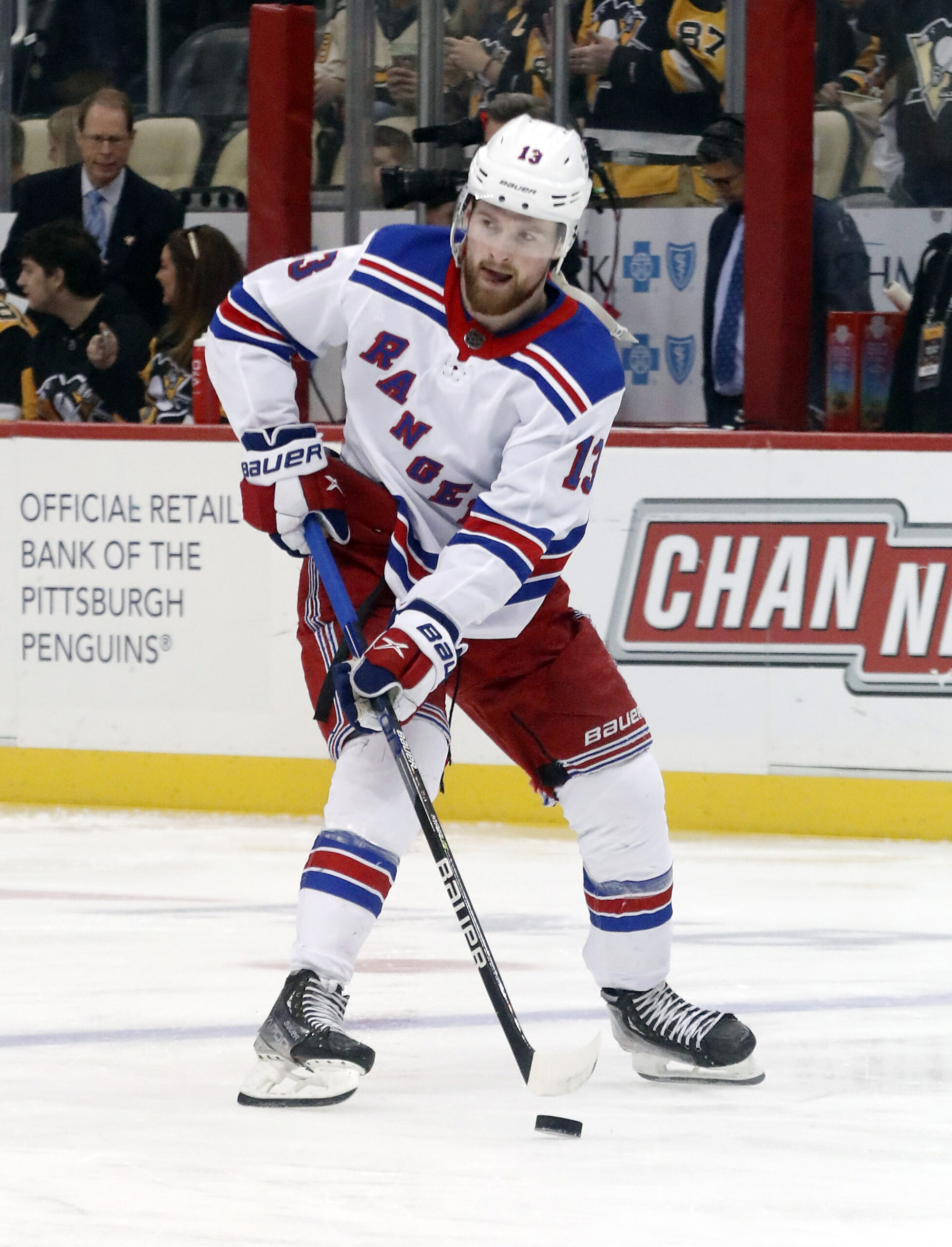 With Lafreniere scuffling through his first few NHL seasons, it came as no surprise that he followed Kakko in signing a bridge deal. He’s fared a bit better in his first year under Peter Laviolette although he hasn’t yet become that consistent top threat that they hoped he’d be when they picked him first overall in 2020. If he keeps at his current pace and then takes another small step forward next year, he’ll certainly do enough to beat his $2.65MM qualifying offer. But will New York be convinced that he’s worthy of that long-term big-money contract in the $7MM range if that happens? Or might they try one more bridge deal (likely a one-year pact) worth closer to half that? It’s still early but there is a wide range of outcomes when it comes to his next deal.
Vesey opted to avoid going through free agency, instead choosing to sign this contract in-season last year. It gives him some stability while he has outperformed the deal so far as a capable depth scorer. Having bounced around in his career will hurt him a bit if he gets to free agency next time as teams will wonder if he’s turned a late corner or if he’s just a fit for how the Rangers play. Still, a small raise at a minimum should be doable.
Miller had no choice but to take a bridge deal over the summer as well given New York’s limited cap space. He continues to be a valuable two-way piece on their back end despite not seeing much power play time. Miller will be owed a $4.646MM qualifying offer in 2025 but his next contract could check in closer to double his current one if a long-term agreement is worked out. Jones, on the other hand, has had a very limited role so far. He’ll need to lock down a full-time spot if he wants to reach the seven-figure mark on his next deal.
Shesterkin has been one of the top goalies since coming over for the 2019-20 campaign although his first half of this season has been more pedestrian. Still, the 28-year-old is regarded as one of the top netminders league-wide and he’ll be well-positioned to capitalize on that reputation on this next contract. He’ll likely look to Winnipeg’s Connor Hellebuyck (seven years, $8.5MM on his recent extension) as a starting point for discussions.
Signed Through 2025-26
F Artemi Panarin ($11.643MM, UFA)
D Jacob Trouba ($8MM, UFA)
No one will ever call Panarin’s contract – the richest for a winger in NHL history – a bargain but at the same time, it’s fair to say that he has lived up to it so far, producing at a 105-point per 82-game rate to put him among the top-scoring forwards in the league. There’s little reason to think a big collapse is on the horizon but that concern should come into play on his next deal, one that’s likely to be more of a medium-term agreement at a small discount on his current rate given the age risk.
Trouba hasn’t been able to get back to the offensive highs he reached in his final season with Winnipeg but for the tough minutes he logs, the captain is still providing some value on this deal. Having said that, if he wants to land any sort of sizable raise, he’ll need to rediscover at least some of that scoring touch. Otherwise, his next deal should check in close to this one.

Salary Cap Deep Dive: New York Islanders
Navigating the salary cap is one of the more important tasks for any GM. Teams that can avoid total cap chaos by walking the tightrope of inking players to deals that match their value (or compensate for future value without breaking the bank) remain successful. Those that don’t see struggles and front office changes.
PHR will look at every NHL team and give a thorough look at their cap situation for the 2023-24 season. This will focus more on players who are regulars on the roster versus those who may find themselves shuttling between the AHL and NHL. All cap figures are courtesy of CapFriendly.
New York Islanders
Current Cap Hit: $84,906,199 (over the $83.5MM Upper Limit)
Entry-Level Contracts
F Simon Holmstrom (one year, $863K)
After a quiet rookie year, Holmstrom has become a shorthanded scoring specialist this season, being among the league leaders in that department. Even so, he is primarily deployed in a bottom-six role which will limit his earnings upside. A bridge deal seems quite likely although he could push his way toward the $1.5MM mark if he can keep up his current pace.
Signed Through 2023-24, Non-Entry-Level
D Sebastian Aho ($825K, UFA)
D Robert Bortuzzo ($950K, UFA)
F Cal Clutterbuck ($1.75MM, UFA)
F Matt Martin ($1.5MM, UFA)
D Mike Reilly ($1MM, UFA)
After an injury-riddled 2022-23 campaign, Clutterbuck has managed to stay healthy this season and play a bigger role than many expected. Still, he’s 36 with a lot of physical games under his belt. In theory, he should be looking at a dip in pay but GM Lou Lamoriello has gone to painstaking lengths to keep his fourth line together so it’s hard to rule out the possibility of another deal like this one. Martin’s injury issues should limit his mark but again, a lower-cost extension heading into his age-35 year is likely an option at least being considered.
Reilly has fared pretty well since coming over on a waiver claim from Florida. Given his limited NHL time the last couple of seasons though, it’s hard to foresee a big raise coming his way. Perhaps something closer to $1.5MM if he keeps up his current production in the second half but for him, securing a multi-year agreement might be more of a priority. Bortuzzo was brought in to cover some minutes in the wake of the injuries on the back end but is likely looking at something near the minimum if he wants to play a 14th NHL season. Aho has established himself as a regular over the last couple of seasons and showed a bit of offensive upside last year. That should push him into the $1.5MM range on a multi-year deal; he should have a few suitors on the open market.
Signed Through 2024-25
D Noah Dobson ($4MM, RFA)
F Hudson Fasching ($775K, UFA)
F Julien Gauthier ($787.5K, UFA)
F Brock Nelson ($6MM, UFA)
F Kyle Palmieri ($5MM, UFA)
D Alexander Romanov ($2.5MM, RFA)
Nelson has had somewhat of a career resurgence in recent years, putting up his best two years in the last two seasons and is hovering near a 70-point pace again this season. That makes him a bit of a bargain, a thought that didn’t seem as likely when this contract was first signed. If he can hold this pace over the next year and a half, another small jump could be doable on a shorter-term agreement.
Adding Palmieri made sense to try to add to New York’s offense in 2021 but it’s fair to say that he has underwhelmed on that front since being acquired. He’s getting paid more at the level of a 45-point player and injuries have stopped him from getting more than 33 in a single season yet. It’s not a crippling overpayment but he’s going to need to do more if he wants to get this much on the open market in 2025. Gauthier and Fasching are end-of-roster players that, at this point, appear likely to remain around the minimum salary moving forward.
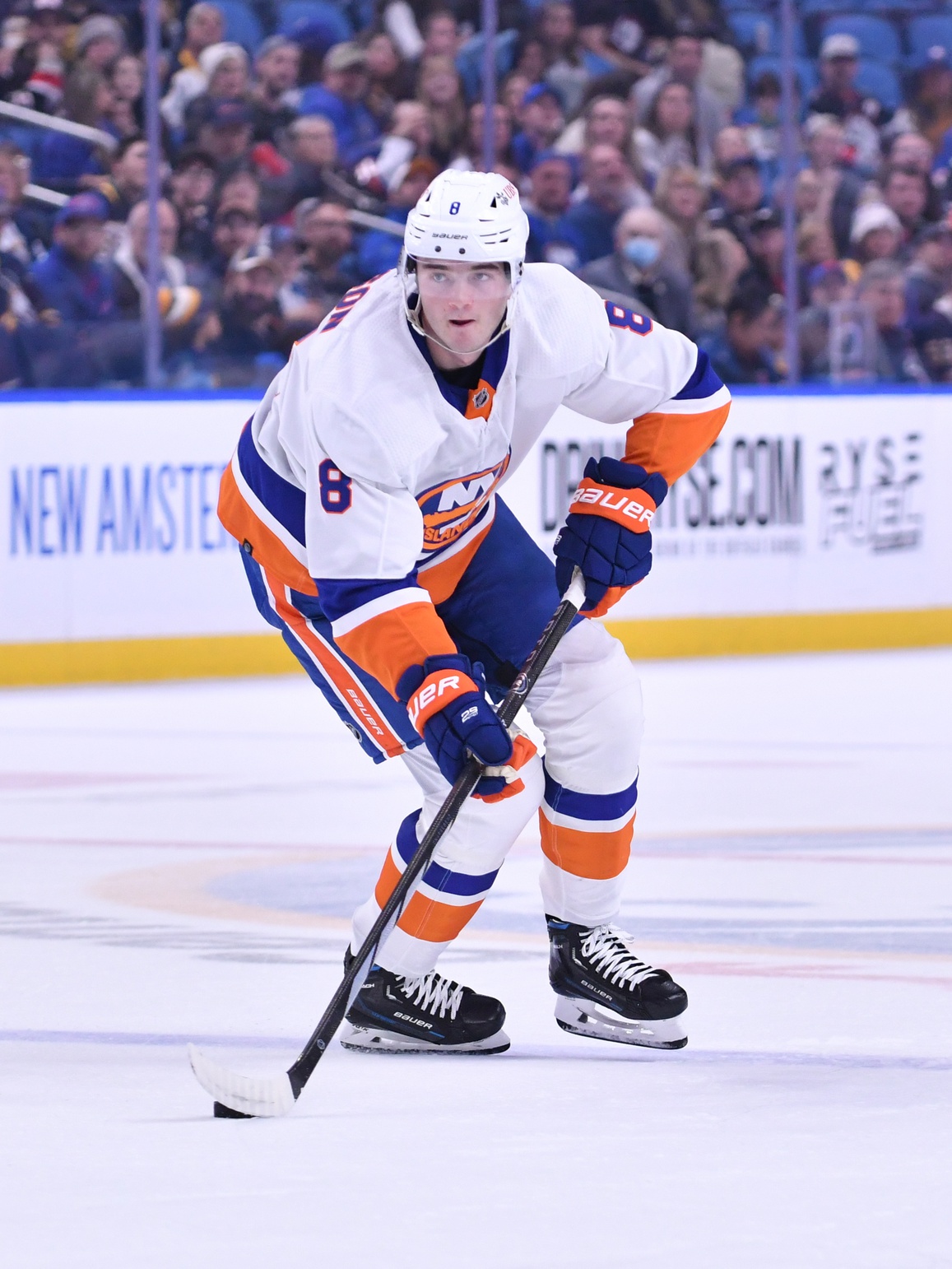 When the Islanders opted to use their leverage to get Dobson to take a bridge deal, it was one that it looked like he’d outperform fairly quickly. It’s safe to say that has happened and then some. After putting up 100 points over the last two seasons, the 24-year-old is now around the point-per-game mark, making him one of the top-scoring blueliners in the NHL. We know point producers get paid but add his strong two-way play to his output and New York has a player primed for a hefty increase in salary. At this point, with Dobson having arbitration rights, it’s looking like the question won’t be if he’ll double his current AAV but rather by how much more it’ll go up beyond that.
Romanov was another player who was more or less forced into a bridge contract with their cap situation at the time. The 24-year-old has been a consistent presence on the second pairing over the last few years but doesn’t have the offensive numbers to push him into the higher-paid tier of defenders. Still, a long-term agreement that buys out some UFA eligibility should go past the $4MM mark.
Signed Through 2025-26
F Jean-Gabriel Pageau ($5MM, UFA)
F Anders Lee ($7MM, UFA)
Lee has been an impactful power forward for most of his time with the Isles but is starting to show signs of slowing down. He’ll be 36 when this deal is up and his next contract, if there is one, will likely be half of this one or less. Pageau, meanwhile, has been a steady middle-six center over the past several years although his production has dipped this season as well. If he’s trending toward being more of a true third liner at this point, this deal will become an overpayment fairly quickly. He’ll be 34 when this contract is up and he’ll likely be heading for a fair-sized dip in pay as well.
Free Agent Stock Watch: Left Wingers
The new year is here and the NHL season is in full swing. Teams are jockeying for playoff position, and many players with expiring contracts across the NHL are playing games that could ultimately determine what type of payday they might receive in the summer.
In a multi-part series, we’ll take a look at each position group of the upcoming free agent class, and do a rundown on how those upcoming unrestricted free agents have performed this year. Which players have increased their odds of landing a massive contract? Which players have potentially hurt their earning potential with their play? We’ll break it all down here.
The Marquee Names
Jake Guentzel, Pittsburgh Penguins
Although the Penguins as a team haven’t had as strong of a first half of the season as they’d likely hoped to have, Guentzel is having an incredible individual season. Still just 29 years old, Guentzel is currently on pace to score 37 goals and 92 points if he keeps up his current pace across a full 82-game schedule. That would mark a career-high for the player, whose previous best season came when he scored 40 goals and 84 points.
Guentzel has long meshed with all-time talent Sidney Crosby on the Penguins’ first line, ever since he was a rookie and scored an otherworldly 42 points in his first 37 playoff contests. The Stanley Cup champion and two-time All-Star has been the most talented winger in Pittsburgh for quite a while now, and his elite form this season is setting him up nicely for a massive payday. Pittsburgh will undoubtedly make a strong effort to keep him, but with William Nylander earning $11.5MM on his own contract extension, one wonders if Pittsburgh will be able to stomach making Guentzel its highest-paid player.
With Erik Karlsson already making $10MM against the Penguins’ cap and significant dollars already committed to Crosby ($8.7MM), Kris Letang ($6.1MM), Evgeni Malkin ($6.1MM), and over $15MM to the trio of Bryan Rust, Reilly Smith, and Rickard Rakell, it could take some creativity to find a way to fit in a Guentzel megadeal. If they can’t manage that or otherwise elect to part ways with their leading scorer, expect him to potentially be the top available name on most free agent rankings.
Steven Stamkos, Tampa Bay Lightning
It’s relatively surprising to see Stamkos, who one could argue is the greatest forward in Lightning history, still without a contract extension beyond this season. If he does end up hitting the open market, though, he’s likely to be one of, if not the biggest name available in free agency. Set to turn 34 in February, Stamkos has in recent seasons moved away from the center position he’s long occupied.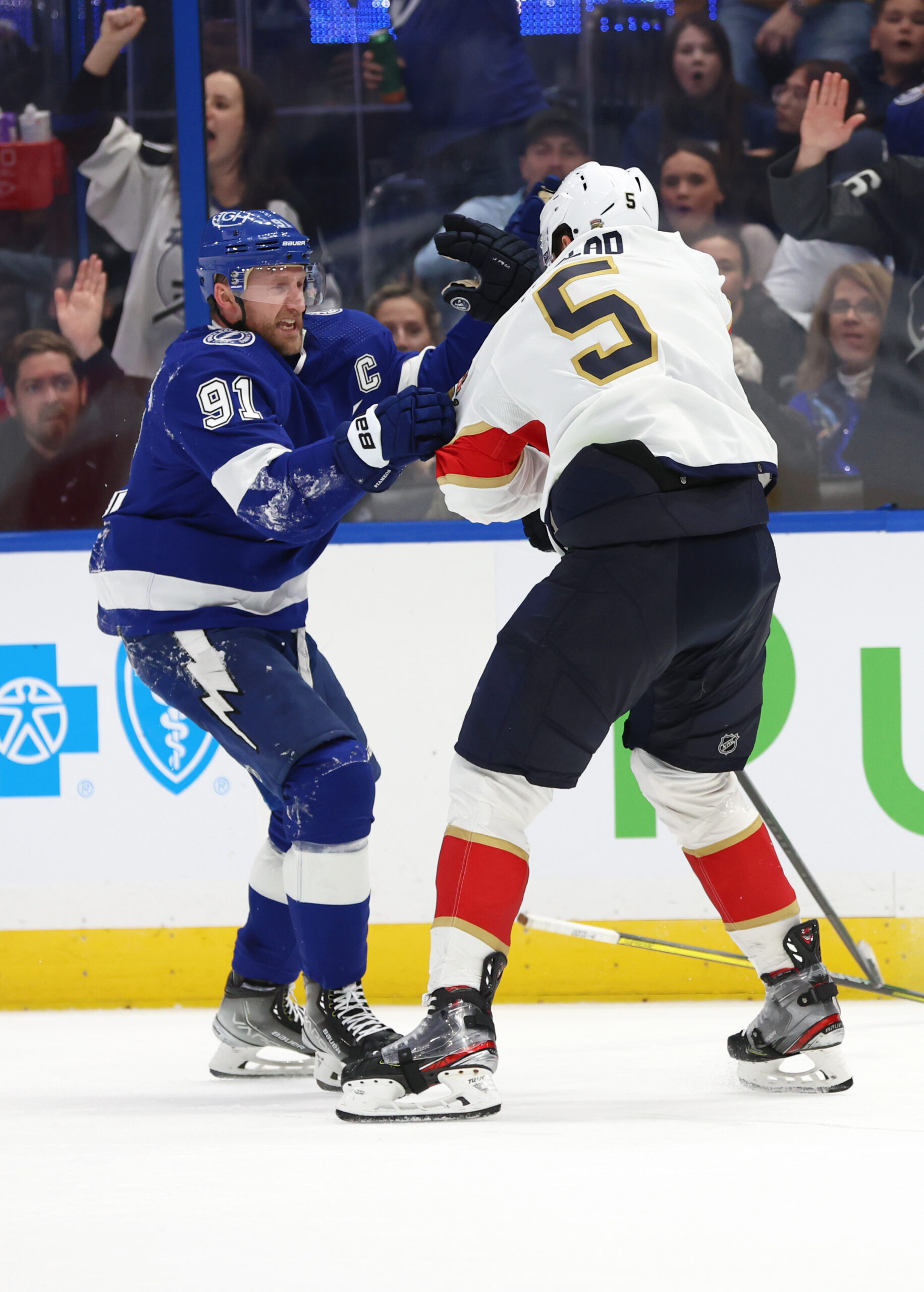
As the team’s focus down the middle has shifted to Brayden Point and Anthony Cirelli, Stamkos’ production has remained rock-solid. The Lightning captain is hovering around a point-per-game mark once again, and is scoring at above a 30-goal pace as everyone has come to expect of him.
The fact that he’s no longer playing center will surely eat into his earning power somewhat, though it’s important to note that he nonetheless is an extremely experienced center who could very well shift back to the position on a new team.
In any case, what Stamkos offers to teams in free agency is clear: he’s one of the defining talents of this most recent era in the NHL, combining lethal scoring ability with widely respected leadership and playoff experience.
It’s not often that a two-time Stanley Cup winning captain hits free agency, and it’s even less frequent for that player to hit free agency coming off of an eighth consecutive season scoring at around a point-per-game. His age might mean that he won’t receive the largest full guarantee in free agency, but make no mistake, Stamkos is likely to be one of the most in-demand players if he hits the open market and his strong 2023-24 is a reason why.
The Solid Contributors
Teuvo Teräväinen, Carolina Hurricanes
Currently slotted in as the Hurricanes’ first-line right winger alongside Sebastian Aho and Andrei Svechnikov, Teräväinen is set to be one of the bigger names available on the open market this summer. But is his recent form befitting of someone of that high of a profile? That’s a different question. The 29-year-old scored 65 points in 2021-22 but dealt with some injury issues last season and has generally underperformed relative to expectations since.
Teravainen followed up his 65-point campaign with just 37 points in 68 games, and this season is on pace for 48 points in a full 82-game slate. He’s scored just four points in his last 10 games, and as we inch further and further away from Teräväinen’s days as a reliable 60-plus point scorer, it becomes harder and harder to avoid the feeling that this decline could be a permanent one. Teräväinen won’t turn 30 until next season, of course, and it’s still possible that he’s just been unlucky. It’s not as though his role in Carolina has declined, after all.
Teräväinen has a 76-point season on his resume and will likely be among the most gifted playmakers available to teams on the free agent market. The package of tools he provides is rare across the NHL, and typically scoring forwards like him earn contracts that reflect their scarcity. Teräväinen’s stock is undoubtedly down given his declining numbers, but he has all the talent in the world to author a big second half of the season and push his way back to the forefront of the free agent market.
Adam Henrique, Anaheim Ducks
A model of consistency throughout his nearly 900 games in the NHL, Henrique is the kind of player just about every team would like to add to its roster. He’s versatile, playing both along the wings and at the center position. (he’s currently slotted in as the Ducks’ second-line center.) He’s defensively responsible and offensively capable, scoring around 20 goals and 40 points per season with the potential for more while also enduring hefty short-handed ice time. And he’s a valued leader who has worn a letter on his sweater for six total seasons combined across his time with the Ducks and Devils.
He’s making $5.825MM against the cap on his current deal, and with his offense down a touch (he is scoring at a 44-point pace compared to his 50-point pace last season) it’s not a significant enough decline to really be all that notable. What is more notable, however, is the fact that he’ll turn 34 in February. That makes it a significantly more challenging prospect for Henrique to earn a long-term deal, but he could potentially command a large one-year guarantee if that’s what he so chooses.
What Henrique fetches at the trade deadline, assuming the rebuilding Ducks opt to send him to a contender, will go a long way in helping project Henrique’s leaguewide standing. At this point, his stock appears to be holding steady.
Tyler Bertuzzi, Toronto Maple Leafs
After a strong finish to his 2022-23 season with the Boston Bruins, Bertuzzi signed a one-year, $5.5MM contract in Toronto likely with the hope that a season there would be a launching pad to a more lucrative free agent trip in a year’s time.
So far, Bertuzzi’s season has not quite gone as hoped. While he has thankfully remained healthy, Bertuzzi hasn’t had the impact in Toronto that he likely envisioned. He’s playing on a line with two elite scorers in John Tavares and William Nylander, but has only managed 18 points in 39 games. That’s not up to the standard he set in Boston, or the production he showed he was capable of at times in Detroit.
As a result of his slow start to the year, Bertuzzi’s free agent stock is undoubtedly down from where it was last season, and it raises questions as to whether choosing a one-year deal on a high-scoring team to bet on himself was the right option in his previous trip to free agency, compared to just signing the largest possible long-term deal he could get. Because right now, it’s unlikely Bertuzzi’s long-term offers match what he likely received the year before.
Jason Zucker, Arizona Coyotes
Despite scoring 27 goals and 48 points last season, Zucker did not receive a long-term contract in free agency last season. That was somewhat understandable given Zucker’s struggles with injuries and inconsistency as a Penguin, but it was still somewhat surprising to see a five-time 20-goal scorer settle for a one-year deal.
The hope was likely that playing in a relatively low-pressure environment as a Coyote alongside some talented offensive players such as Matias Maccelli, Nick Schmaltz, and Clayton Keller could lead to a career year. That hasn’t happened yet, as he’s scored just six goals and 12 points so far this season.
With the Coyotes still in striking distance of a playoff spot, there is certainly room for Zucker to raise his stock in the rest of the campaign. But at this current moment, Zucker’s unlikely to receive the same kind of $5.3MM AAV guarantee he did last summer.
The Role Players
Stefan Noesen, Carolina Hurricanes
Despite receiving the second-lowest average ice time of any regular Hurricane, Noesen is on pace for a career year offensively. This comes just after Noesen already set career highs last season by scoring 13 goals and 36 points.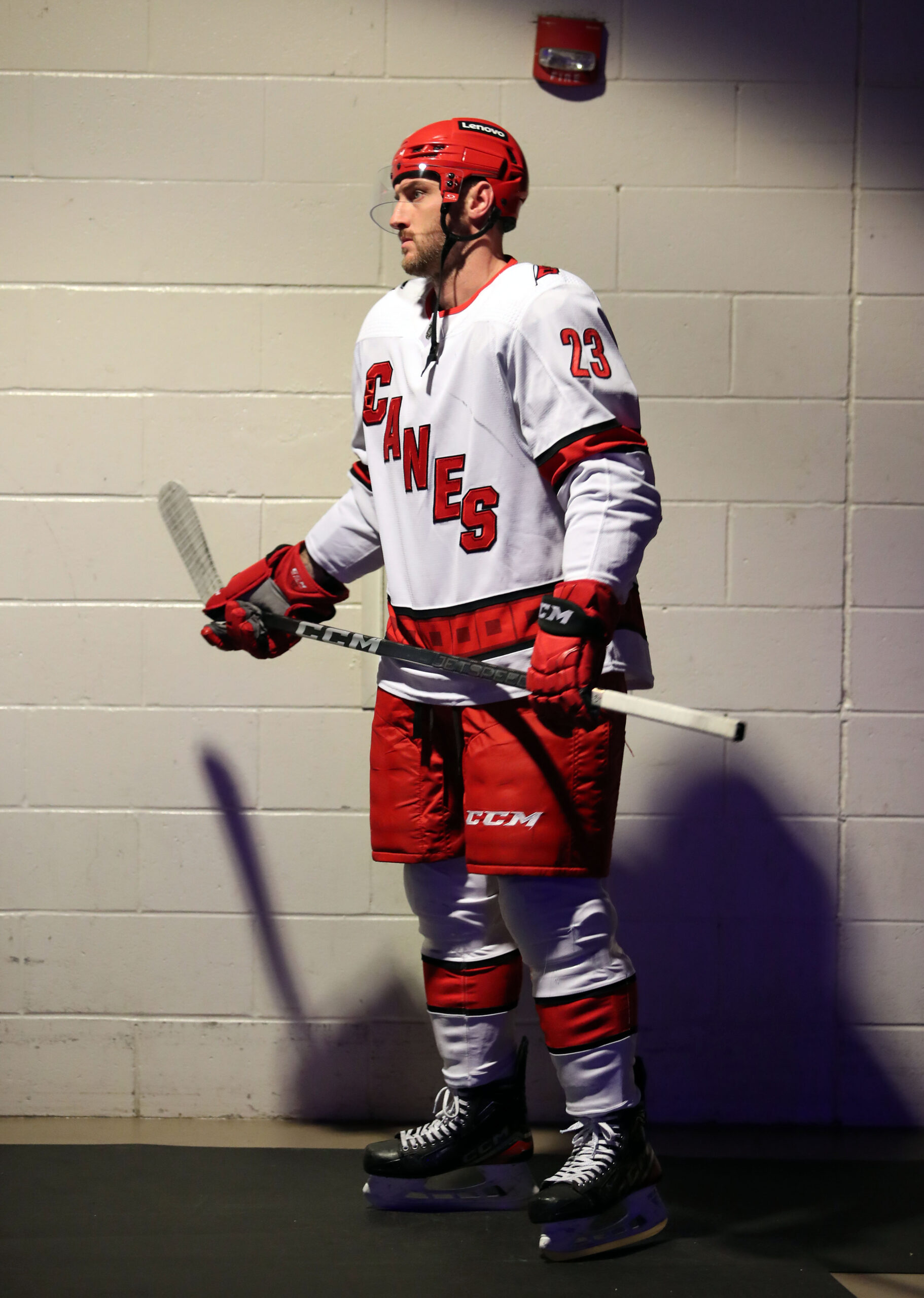
Playing on just a $762.5k cap hit, Noesen’s current play makes him one of the most valuable players on a cost-per-point basis, not including players such as Connor Bedard who are locked into entry-level deals.
Noesen has received a regular dose of power play time alongside his 10 minutes or so of even-strength ice time per game, and he’s made the most of it. It’s not entirely common for players to experience breakout years in quick succession once they’ve reached their late twenties, but that’s exactly what Noesen has done.
Ever since he led the AHL in goals in 2021-22, Noesen has been on a steep upward trend. So far this season he’s sustained that upward trend and has lined himself up to potentially receive a significant pay raise in the free agent market.
James van Riemsdyk, Boston Bruins
Now 34 years old, “JVR” is in the midst of a resurgent campaign with the Bruins. Although he receives just a shade over 13 minutes of ice time per game, he’s made the most of it. He’s on pace to score 53 points this season, which would be his highest total since he was a 36-goal scorer on the Toronto Maple Leafs.
It’s not been Van Riemsdyk’s prolific goal-scoring that’s led the way for his resurgence, instead, it’s been how well he’s meshed with the other offensive talents in Boston. Playing in a down-low net-front role on the Bruins’ power play, van Riemsdyk’s been a conduit for quite a bit of high-danger scoring chance creation around the net.
He’s elevated his teammates through doing that and is on pace for his best offensive season in a half-decade. He’s making $1MM against the cap this season, but he could get a raise from that number if he can manage to keep up how he’s played so far this year.
Dominik Kubalík, Ottawa Senators
It’s been something of an odd season for Kubalík. His ice time has remained relatively steady at a little over 14 minutes per game, he’s playing alongside talented linemates such as Vladimir Tarasenko, and his shooting percentage is up to 15.8% all the way from the 11.5% he shot last season.
But he scored 45 points last season. This year, he’s on pace to score just 27 points. The former 30-goal scorer was expected to soften the blow of the Senators’ loss of Alex DeBrincat via trade, but so far he hasn’t done so and his slow start has contributed to the Senators’ significant early-season struggles.
With Tarasenko, Claude Giroux Brady Tkachuk, Mathieu Joseph, and Drake Batherson standing in his way for offensive opportunities along the wings, it doesn’t look as though Kubalík has a clear path toward raising his stock in advance of a likely trip to the UFA market.
Warren Foegele, Edmonton Oilers
A 27-year-old career bottom-six winger, Foegele does a little bit of everything. He brings size, he brings defensive ability, and he has been a consistent offensive contributor with at least 10 goals and 20 points in each of the last four seasons.
Foegele has also shown some flashes of increased offensive potential, and under head coach Kris Knoblauch (his former OHL coach with the Erie Otters) he’s been placed in prime position to deliver increased offense. He’s currently playing alongside all-world center Leon Draisaitl on Edmonton’s second line, and has already scored seven goals and 20 points in 38 games
At one point, it looked as though Foegele might struggle to match his current $2.75MM cap hit on his next deal. Now, that looks to be almost a certainty. If he can continue at this scoring pace and the Oilers make the playoffs, he’ll be in prime position to supercharge his earning potential. The former OHL Playoff MVP has come up big in the postseason at the junior level, so if he does the same at the NHL level this spring he could find himself a massively in-demand free agent.
Jakub Vrána, St. Louis Blues
A tantalizing offensive talent who scored 25 goals and 52 points in just 69 games in his age-23 season, Vrána has had an extremely difficult time since he was traded by the Washington Capitals to Detroit. He’s struggled with injuries to a significant degree, and also missed time after entering the NHL/NHLPA Player Assistance Program. He eventually found himself traded to the Blues, and even cleared waivers on multiple occasions.
His waiver clearances are likely more about his $5.25MM cap hit than his talent, though, and with Vrána’s offensive pedigree, there is likely to still be interest in him on the free agent market. He’s scored six points in 21 games this season for the Blues, but is now a healthy scratch.
Vrána is so skilled that better points production could very well come if he can find a way to climb the depth chart of new head coach Drew Bannister. A particularly hot stretch to close out the year could give more confidence to Vrána’s potential free agent suitors that he remains the same player who put together back-to-back 20-plus goal seasons in his early twenties.
Tomáš Tatar, Seattle Kraken
Tatar has been a remarkably consistent offensive player throughout his NHL career, with a generally agreed-upon floor of around 20 goals and 45 points and the ability to score as many as 61 points in just 68 games in the right circumstances. Unfortunately for Tatar, what has also been consistent throughout his NHL career is how his normally solid offensive production absolutely craters in the postseason. While Tatar scores at a 0.57 points-per-game rate in the regular season, his points-per-game in playoff action is just 0.25.
Now 33 years old, teams are less likely to view Tatar’s playoff struggles as a matter of poor luck and a trend that can be broken, and as a result Tatar had weaker-than-expected free agent interest this past offseason. In addition, he struggled to make his mark in Colorado and was eventually traded to Seattle for a conditional fifth-round pick. He’s scored a bit better in Seattle and is now placed on the team’s first line alongside Jordan Eberle and Matthew Beniers, which is a massive opportunity for him.
His stock is undoubtedly down at this point, but if he can remain on that top line and help guide the Kraken back to the playoffs, he’d therefore have the opportunity to dramatically change the narrative surrounding him with the first productive playoff run of his career
Mike Hoffman, San Jose Sharks
With each day that passes, it looks increasingly likely that the $4.5MM AAV contract Hoffman signed with the Montreal Canadiens in the summer of 2021 will end up Hoffman’s last significant free agent cash-in. That’s not to say there won’t be a market for the five-time 25-goal scorer in the summer, it’s just that Hoffman’s performance since leaving the offensively-supercharged Florida Panthers has diminished his stock leaguewide.
A natural sniper, Hoffman floundered in the Canadiens’ offensive environment, putting together back-to-back seasons of about 15 goals and 35 points. Those are hardly poor totals, but they’re also not ideal ones for a player making Hoffman’s cap hit and playing Hoffman’s dose of minutes. In other words, a team is likely to expect a little more when they invest the way the Canadiens invested in Hoffman, both in terms of dollars and in terms of offensive opportunities.
So far this season, being on such a poor San Jose team has not helped him very much. While he’s still on pace to score 17 goals in a full season, he’s built the reputation over the last few years as something of an “empty calorie” scorer, meaning his box score numbers are there, but his overall on-ice impact isn’t translating to meaningful team success. He’ll be hard-pressed to shed that tag as a Shark, but if he can land on a playoff contender in need of scoring at the deadline (which could be difficult due to his cap hit) he could very well raise his stock significantly with some big goals down the stretch.
Michael Amadio, Vegas Golden Knights
After spending most of his pro career as a depth forward, one might have thought that 2022-23 would be the maximum type of breakout campaign Amadio could author. After all, he scored 16 goals, a career-high 27 points, and added 10 points in 16 games en route to a Stanley Cup championship in his very first playoff run.
But this season, Amadio is scoring at an even higher rate. He’s on pace to score 35 points in the full season, and is now even showing some positional versatility as he’s had games slotted in as the Golden Knights’ fourth-line center. Set to hit the open market at the age of 28, Amadio has been a developmental success story for the Golden Knights, and other teams are in position to benefit from their work by signing Amadio this summer. His stock soared last season, and it’s even higher 39 games into this campaign.
Yakov Trenin, Nashville Predators
Trenin will turn 27 on Saturday, and will likely be one of the more interesting left wingers to monitor on the free agent market not considered a top-six talent. The passionate Russian power forward had a breakout season in 2021-22, scoring 17 goals. He followed that up with 12 goals last season, and is now on pace for 15 goals this year.
He brings a ton of physicality and energy to a fourth-line role alongside his goal-scoring ability, and he has even become a reliable penalty killer to boot. He’s currently making $1.7MM against the cap, but he earned that as a restricted free agent exclusively negotiating with the Predators. On the open market, the unique offering Trenin brings to the table could generate quite a bit of interest.
Jordan Martinook, Carolina Hurricanes
Like some other players on this list, Martinook is coming off of a season that looks increasingly like it would have been the ideal time for him to hit free agency. In 2022-23, Martinook scored a career-high 34 points, averaged a career-high 15:38 time-on-ice per game, landed on a Selke Trophy ballot for the first time in his career, and helped the Hurricanes on a run to the Eastern Conference Final.
This season, his ice time average has declined almost a full minute, and his work on the team’s penalty kill is no longer resulting in an elite unit: they were second-ranked last season and rank ninth this season. Additionally, Martinook is on pace to score six goals and 24 points, which is a far cry from 13 goals and 34 points. He’ll want to have a strong, increasingly productive second half to raise his stock back up.
Tanner Pearson, Montreal Canadiens
Before an injury sidelined him, the 31-year-old Pearson was putting together a decent bounce-back year with the Canadiens. As a key veteran voice on an exceedingly young roster, Pearson is in a position to showcase his off-ice value as an experienced, Stanley Cup-winning veteran alongside his rediscovered on-ice value.
It’s too early to determine whether his production will fall in line with where it was when he was last healthy (34 points in 68 games in 2021-22) but early indications are that he’s not quite there yet. He’s scored eight points in 27 games for the Canadiens, although he’s playing on a team not exactly known for setting the world on fire offensively. More than anything else, the best thing Pearson can do for his free agent stock is get healthy and remain reasonably productive in a bottom-six role in Montreal.
William Carrier, Vegas Golden Knights
Although Carrier has played around his career standard in 2023-24, it’s looking increasingly like last summer would have been the ideal time for Carrier to hit free agency. The speedy, physical bottom-six left winger had just contributed to the Golden Knights’ first-ever Stanley Cup championship, and he had set a career-high in goals with 16 along the way.
The market for players who combine speed, size, and goal-scoring ability is often robust, and Carrier would have likely had an exceedingly active market waiting for him had he hit free agency last summer. This season, while still strong, has not had the same momentum for Carrier. A big playoff run can change things, but so far Carrier’s stock is back to where it has been for much of his career rather than at a peak position.
Dakota Joshua, Vancouver Canucks
The big Ohio Sate product was a savvy signing by the Canucks in the summer of 2022, as they bet Joshua’s playoff breakout of 15 points in 18 games was a sign of an NHL future. He rewarded their gamble last season by showing he could hang at the NHL level. He played in 79 games and scored 11 goals and 23 points. For the first time since leaving the Buckeyes and college hockey, Joshua went an entire season without playing in a minor league.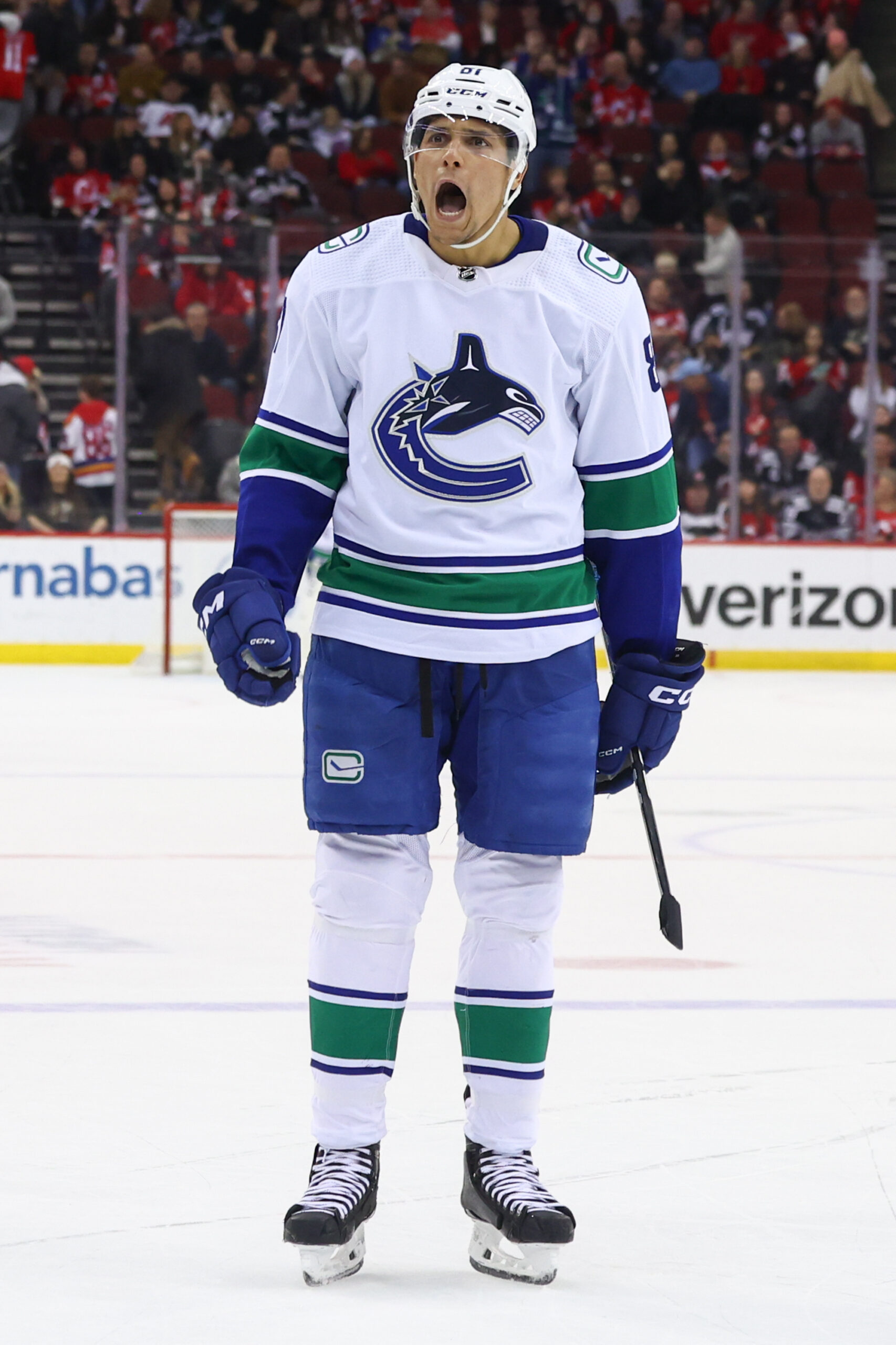
So far this season, just as the Canucks have soared to the top of the Pacific Division Joshua has soared to even greater NHL heights. He’s already registered 11 goals and 20 points this season, which puts him on pace to score 22 goals and 40 points in a full 82-game schedule.
That would be an incredible return on investment for Vancouver, who owe him just a $825k cap hit for the season. It would also be an incredible rise in standing for Joshua, who would enter the free agent market on an extremely strong footing.
If he hits the open market, Joshua will be a 28-year-old forward who can play both center and left wing. If he keeps up his current pace, he’ll be someone who has just scored 22 goals, and 40 points, and could conceivably be just scratching the surface of his NHL prime.
If he can keep this up and go on a solid playoff run on the massive stage a success-starved playoff market provides, Joshua could end up one of the biggest winners in the 2024 free agent class.
Zemgus Girgensons, Buffalo Sabres
Now 30 years old with nearly 650 NHL games under his belt, Girgensons has clearly established himself as a known quantity in the NHL. He’s a long way from scoring 15 goals and representing the Sabres at the All-Star game, but he’s nonetheless a useful bottom-six defensive specialist with some penalty-killing utility.
That’s the role he’s played with the Sabres for much of his career, and although the Sabres have not had team success at all during his career, Girgensons has remained consistent.
The owner of a $2.5MM AAV contract, Girgensons’ current scoring pace makes it unlikely he’ll match that number in free agency. After scoring 10 goals and 18 points in two consecutive seasons, Girgensons has yet to register a single assist this year. His three points in 25 games put him on pace for a career-low offensive output, and the injury that kept him out for almost the entire month of December hurt his momentum.
Tyler Motte, Tampa Bay Lightning
As a capable, hard-working bottom-six winger on some strong New York Rangers teams, Motte had reportedly expected stronger free agent interest than he ended up receiving in back-to-back offseasons. While he hasn’t scored much at the NHL level, Motte’s hope was likely that his exemplary work on some playoff-contending teams would make him a premium option for a team looking to add to their bottom-six forward group. We’ve seen light-scoring bottom-sixers get hefty long-term contracts in the past, and Motte saw an example of this firsthand playing alongside Barclay Goodrow with the Rangers.
Goodrow was signed to a long-term $3.64MM AAV deal after scoring just 20 points for the Tampa Bay Lightning, in large part due to how effectively he played his bottom-six role on a team that won back-to-back Stanley Cups. Motte was likely hoping to follow that blueprint in New York, and this past season he took that comparable a step forward by signing with the team Goodrow earned his contract on: Tampa Bay. Motte’s role in Tampa is similar to what it has been in New York and Ottawa: he’s a fourth-liner trusted to play defense-first minutes with a steady diet of penalty-killing ice time as well.
Currently, Motte is slotting in as a center on Tampa’s third line next to rookie Gage Goncalves and veteran Conor Sheary. Motte has been a left winger first and foremost in prior trips to free agency, so showing the versatility to play center certainly helps his stock entering another free-agent foray. But seeing as the Lightning have struggled as a team this season compared to prior years, Motte may not end up playing in the deep playoff run that is so crucial for bottom-sixers hoping to maximize their free agent earnings.
Ryan Lomberg, Florida Panthers
A 29-year-old undrafted player, Lomberg presents an interesting free agent case. Although he stands just five-foot-nine, 185 pounds, Lomberg is one of the Panthers’ more physical players. He’s a genuine agitator, someone who is expected to get in his opponents’ faces and attempt to get under his opponents’ skin. A hard-working, relentless bottom-sixer who clawed his way up from the ECHL to the NHL, Lomberg’s ice time has declined from where it was last season. That’s come alongside an offensive decline, as Lomberg scored 12 goals and 20 points last year but only has two goals and three points this year.
If Lomberg can’t get his offense back on track, he faces a tough task attempting to earn a major pay raise over his current $800k cap hit. That being said, even with his stock down a little he seems to have at least done enough to earn himself another one-way contract, especially if his popularity among many Panthers fans is considered.
Andrew Cogliano, Colorado Avalanche
Now with over 1,250 games of NHL experience, Cogliano’s NHL value is quite clear. Beyond age-related decline setting in to a severe degree, there doesn’t appear to be much that Cogliano could do to materially impact his free agent stock. He’s still a key penalty killer on a contending Avalanche team, and while their penalty kill was only average last season it’s been notably stronger so far in 2023-24.
Cogliano’s ice time has remained steady, his role is relatively unchanged as a bottom-six penalty killer, and his offense has remained almost exactly in line with the last two years of his career. Cogliano earned a one-way $825k contract extension last year, and he’s well on his way to earning a repeat deal for 2024-25 should he decide to continue his career.
Others Of Note
Pat Maroon, Minnesota Wild
Set to turn 36 in April, Maroon looked to be in serious decline just one year ago. The three-time Stanley Cup champion had gone from 11 goals and 27 points in 2021-22 to just five goals and 14 points in 2022-23. As a result, the Lightning dealt Maroon to the Minnesota Wild, and the Wild have reaped the benefits of Maroon’s strong start to his platform year. He’s already matched his point total from last season in just 40 games, and Maroon’s long-respected locker-room value has been a big help for a Wild team that has gone through some serious early-season adversity.
If Maroon’s 2022-23 campaign at one point looked to be a clear sign that his time in the NHL was coming to an end, 2023-24 has served as proof that Maroon still has gas left in the tank to contribute at the game’s highest level.
Matt Martin, New York Islanders
A veteran grinder inching ever closer to his 1,000th game, it’s relatively difficult for Martin’s free agent stock to fluctuate heavily. He fills a highly specific role at the NHL level: a fourth-line grinder who specializes in racking up hits. Now 34 years old, Martin isn’t as quick as he once was and his role in New York has declined slightly. He’s still playing in his same spot on the team’s fourth line alongside Casey Cizikas and Cal Clutterbuck, it’s just the fourth line as a whole plays a few less minutes per game than they have in the past.
Martin is making $1.5MM against the cap this season, and it’s difficult to see him matching that number in free agency once again outside of highly specific circumstances, the same type of circumstances that exist for him in New York.
Mattias Janmark, Edmonton Oilers
Now in his second season with the Edmonton Oilers, Janmark has settled into a pretty clear role. Standing six-foot-two, 205 pounds the 31-year-old brings size, a little bit of physicality, and sporadic scoring to a team’s third or fourth line. He scored 25 points in back-to-back seasons, though his production is down a bit this season. He has only one goal and five points in 28 games, and his 3.3% shooting percentage so far this season is certainly not helping him.
That being said, Janmark’s ice time has remained relatively steady in the low teens of minutes, and he’s still a regular penalty killer on a league-average unit. There’s value in a player who can capably handle that sort of role, especially in one who does it with 66 games of postseason experience. With the Oilers now looking likelier and likelier to make the playoffs after a brutal start, Janmark’s stock can only rise from here.
Eric Robinson, Buffalo Sabres
Robinson has had some good luck so far this season. The six-foot-two undrafted grinder was playing in his first AHL games since 2019-20 before a trade landed him with the Sabres, and handed him a clearer path to regular NHL ice time as a result. Robinson’s role in Buffalo has been right in line with the role he’s played throughout his NHL career: he skates on a fourth line and contributes as a secondary penalty killer, although he does get healthy scratched at times, which is not something that happened with a lot of frequency as recently as last season.
With a career-best total of 12 goals last season, Robinson proved to some degree that he has what it takes to stick in the NHL as a fourth-line winger. The fact that Robinson was traded for a conditional seventh-round pick likely has more to do with his $1.6MM cap hit than his true on-ice value, and his five points in 11 games with the Sabres so far suggests he can still play. But in order to have the best chance of earning a solid one-way contract to play on an NHL fourth line next season, Robinson will want to re-enter Sabres head coach Don Granato’s regular lineup picture and avoid as much time in the press box as possible.
Kiefer Sherwood, Nashville Predators
Playing on a one-year, league-minimum deal, Sherwood has been offered every chance to have a platform year to remember in Nashville. The former AHL star has played in 35 of the Predators’ 41 total games, and he is just two points off his offensive career highs, already having scored five goals and 11 points.
That being said, while the 28-year-old is nearing some personal bests, it’s not as though he’s setting the world on fire.
As an offense-first player who receives only sporadic special teams usage, it’s a little difficult to parse out where Sherwood’s long-term NHL future lies.
Is he capable of producing enough to stick on a scoring line? Does he bring enough defensively to be worth signing for a role on a shutdown line? Sherwood is hard-working, energetic, and has the offensive skill to at the very least put together extremely productive seasons in the AHL.
Players like that are typically in the high-end two-way deal / relatively cheap one-way deal territory. Sherwood is playing this year on a one-year league minimum contract, and he could very well earn another contract in that range. Although he’ll definitely want to snap his streak of eight consecutive games without a point sooner rather than later, something that could be a challenge since he’s currently outside Nashville’s regular lineup looking in.
Oskar Lindblom, San Jose Sharks
There’s no sugarcoating it: Lindblom’s 2023-24 has been a struggle. He’s now in the AHL for the first time since 2017-18, he’s battled injuries, and has only produced three points in 10 AHL games. At the moment, it would take a dramatic uptick in form in order for Lindblom to earn a one-way contract for next season, let alone a deal that matches the $2.5MM AAV he’s owed on his expiring contract.
The 2020-21 Bill Masterton Trophy winner is still just 27 years old and was once an intriguing power forward prospect, someone who put up 17 goals and 33 points in his rookie season. But since his well-documented health issues sprung up, Lindblom has struggled to regain that form, and as a result, Lindblom’s free agency next summer is difficult to predict.
It would be no surprise to see him earn another shot in the NHL, just as it would also not be a massive shock to see Lindblom return to his native Sweden to play in the SHL if his current struggles continue. When Lindblom was last in the SHL he starred for Brynäs IF, scoring 61 points in 72 combined regular-season and playoff games.
Max Willman, New Jersey Devils
The 28-year-old former Boston University Terrier has had a positive season for his career trajectory so far. After working his way up from the ECHL to the NHL in the Philadelphia Flyers organization, Willman signed with the Devils this past summer to serve as some high-level depth for the team’s forward corps.
Willman’s career-high in scoring at the AHL level is 23 points, and although he managed 19 points in 34 AHL contests in 2021-22, his form last season indicated that he could be the type of player who would play a primarily defensive role and struggle to produce offense regardless of what level he played. So far, Willman’s 2023-24 has eliminated any thought that Willman would end up that sort of forward. He’s already up to 16 points in 20 AHL games, and his form there has earned him five contests in the NHL with the Devils.
If Willman continues his current level of play over the course of a full season, it will likely meaningfully advance him in the eyes of other teams. He’s on pace to fly past his career highs in AHL offensive production, and the NHL games he receives would reinforce the impression that he’s a high-end AHLer/reliable depth NHL forward. Most players who have reached that leaguewide reputation earn more than the $135k AHL salary Willman is owed this season, so his 2023-24 form could very well earn Willman a bump up to a higher AHL pay bracket.
Radim Zohorna, Pittsburgh Penguins
Standing six-foot-six, 220 pounds, Zohorna possesses the exact kind of physical traits NHL teams covet. Unfortunately for him, though, he hasn’t been able to make the most of those athletic tools in North America. As a result, he nears the mid-way point of his free agency platform year on uneven ground.
On one hand, this season has been a positive for Zohorna. He’s back in the NHL after spending all but eight games of 2022-23 in the AHL, and he’s already scored four goals and seven points for the Penguins. When he’s not in the press box as a healthy scratch, Zohorna receives more than 10 minutes of ice time per night and has even gotten looks on the power play.
But on the other hand, Zohorna’s 2023-24 has served as further confirmation of his limits as an NHLer. Zohorna is currently a healthy scratch after seeing his role in head coach Mike Sullivan’s lineup steadily decline, and it’s unclear when he’ll get the chance to dress again for the Penguins. As a result, it’s difficult to at the moment classify Zohorna’s stock as anything but down, at least until he can return to the regular lineup fold in Pittsburgh.
Liam O’Brien, Arizona Coyotes
O’Brien, 29, fills a very specific niche on this upcoming summer’s free agent market. If a team needs grit, toughness, and someone who can stick up for teammates by dropping the gloves, that team should be interested in O’Brien. He’s on pace to register a whopping 187 penalty minutes for the Coyotes this season, alongside his 16-point 82-game scoring pace. O’Brien notched 114 penalty minutes in just 56 games last season, and is one of the more ferocious fighters in the entire NHL.
This season, O’Brien’s ice time has declined a full minute on average per game, but on the flip side of that, he’s not been healthy scratched on nearly as regular a basis. Seeing as teams place significant value on every last available roster spot and cap dollar available to them, it’s fair to wonder whether signing a player such as O’Brien would be a worthy use of your team’s resources. There are teams out there that are looking for exactly what O’Brien offers, though, and it’s with those clubs that he has the highest upside on the open market in the summer.
Brendan Lemieux, Carolina Hurricanes
Now 27 years old, it’s clear Lemieux isn’t going to be the kind of NHL player the Buffalo Sabres were originally hoping he’d become when they selected him 31st overall at the 2014 draft. He’s still carved out an NHL career for himself, though, even if it’s not the one many might have originally imagined for the former Barrie Colts star. Lemieux has played in nearly 300 career NHL games, and has racked up over 500 penalty minutes, with a career-high of 111 in a single season.
Lemieux is what he is, which is an effective agitator. He plays hard, physical hockey and attempts to get under the skin of opposing players. His style has landed him in hot water with the NHL’s Department of Player Safety in the past, though it’s also landed him an NHL contract each and every year of his pro career. So far in Carolina, it’s been more of the same for Lemieux. He was a reserve player for both the Los Angeles Kings and Philadelphia Flyers last season, and is playing in a similar role for Carolina this year. He spent most of November as a healthy scratch and is averaging just over seven minutes of ice time per night, entirely at even strength.
The margins for Lemieux to provide positive on-ice value to an NHL team are relatively small, and Lemieux’s usage and his performance in Carolina so far in 2023-24 has thus far confirmed that fact. At this point, it’s an open question as to whether there will be a market for Lemieux’s services on a one-year deal this upcoming summer.
Photos courtesy of USA Today Sports Images