
Projecting Patrik Laine’s Future After This Season
Canadiens forward Patrik Laine is headed for free agency this summer. Despite a limited free agent market, he isn’t expected to attract much interest after another season marred by injuries.
Laine has only played five games this season, with just one assist, and until the trade deadline, he was a frequent topic of trade rumors as Montreal hoped to clear salary. Reports indicate he was mentioned in discussions with both the Maple Leafs and Flyers.
Laine hasn’t been a good fit with the Canadiens, and as summer approaches, it’s almost certain he will be wearing a different NHL jersey next season, likely at a cap hit significantly lower than his current $8.7MM salary. The question remains whether NHL teams will be interested and whether a good fit exists for the 2016 second overall pick.
Despite the injuries and inconsistencies that have challenged Laine’s career over the past half-decade, his shot remains among the best in the NHL, especially from long range, where he continues to be an elite scorer even if he hasn’t displayed his full skill set this year. Last season, Laine scored 20 goals in just 52 games, and he still likely projects as a 20- to 25-goal scorer despite limitations in nearly every other aspect of his game.
But that is the core issue with Laine: he is limited in what he can do, and his analytics away from the puck are appalling. This will cause many NHL teams to hesitate before considering him a viable free-agent target.
Laine has long been a liability in puck possession, and it wasn’t any better last season, when he was mainly used in an offensive role but still hindered his teammates’ possession. Given his health concerns, especially regarding his skating and agility, it’s unlikely these metrics will improve. This means any team that acquires Laine will need to isolate and shelter him, which is acceptable if he is earning close to the league minimum on a one-year deal.
When considering comparables, there aren’t many. In fact, this year, AFP Analytics can’t even project Laine’s potential contract for the 2026-27 season because there isn’t enough information available on Laine, which makes sense given that he’s only played five games this season.
A potential comparison who is by no means an exact match would be Anthony Mantha of the Penguins, who is currently earning $2.5MM on a one-year “prove it” deal he signed last summer. Mantha had a consistent track record of scoring 20 goals before last season, but he suffered a season-ending ACL injury and missed most of the year with the Calgary Flames. After posting just seven points in 13 games with Calgary, the 31-year-old bet on himself last summer, and it appears to be paying off as he looks set to be one of the top UFAs available this summer, which should give him a chance at a long-term contract in the coming years.
Although Mantha and Laine are very different players, there aren’t many better comparisons, but Jeff Skinner provides another example of what free agency could mean for Laine. Skinner has spent the last two seasons signing one-year, $3MM contracts as a UFA. However, like Mantha, he is over 30, at 33. Similar to Laine, Skinner is a fairly one-dimensional offensive player who can score goals but does little else, especially away from the puck, where he’s not exactly a Selke Trophy candidate.
Looking at Mantha and Skinner as reasonable comparables, since both are wingers, have notable flaws in their games, and can score, what can Laine expect in free agency? Mantha received a one-year, $2.5MM deal last summer, while Skinner signed a one-year, $3MM contract with San Jose.
Laine has several factors that position him above Mantha and Skinner. Laine was the second overall pick; he’s three years younger than Mantha was during his recent free agency and five years younger than Skinner. There’s a solid argument that Laine is a purer goal scorer than both Mantha and Skinner, which is mainly shown by his NHL career goal numbers. All these points suggest that Laine deserves a larger payday than both Mantha and Skinner.
But Mantha is arguably a more complete player than Laine, and Skinner has a longer track record of scoring goals than Laine. Those factors will work against Laine, but overall, he probably deserves a more substantial one-year contract than Mantha or Skinner received last summer. That said, this is a very thin free-agent crop, and teams will be desperate on July 1st to add scoring, which could make Laine appealing to more than one team despite the warts on his resume.
Where Laine ends up remains uncertain, but some contending teams facing the salary cap hurdle would likely be interested in acquiring a motivated, scoring forward at a low cost. Colorado and Dallas come to mind as possible destinations, as do the Penguins, who may lose Mantha to free agency unless they can negotiate a deal. In any case, Laine desperately needs to find a suitable fit if he wants to secure another lucrative NHL contract.
PHR Mailbag: Kings, Rangers, Raddysh, Lightning, Sabres, Red Wings, CBA
Topics in this edition of the PHR Mailbag include forecasting the next contract for the top-scoring pending UFA, Buffalo’s turnaround, and more. If your question doesn’t appear here, check back in last weekend’s column while we have one more mailbag to come from our latest call for questions.
bigalval: Does Ken Holland have any clue what he’s doing? Rob Blake was bad and Holland’s moves have been puzzling at best.
Holland has been around long enough that I’m confident in saying he knows what he’s doing; there is a plan in place. His moves over the offseason clearly signaled that he was leaning into the team playing a slower, more deliberate game and that after being unable to land a big fish, he leaned into building up their depth. You can quibble with some of the moves made (and I’d say you’re probably right to do so) but I understand the method to the madness.
Then there’s the Artemi Panarin move. If you’re thinking that moving a first-round prospect in Liam Greentree to get him with a two-year extension doesn’t make sense for a bubble team, I get that. The rebuild is probably coming at some point; it can only be stalled so long. And with Los Angeles struggling mightily offensively, this might not have been the right time to take a big swing. Clearly, Holland believes that this group could do some damage in a Pacific Division that’s up for grabs; they just have to get there first.
That belief I suspect also shaped the decision to make a coaching change, even if it came a lot later than most would have expected. The results have been middling since D.J. Smith took over (not unlike how they were before) but there’s still time to win a few and really lock down a playoff spot. I like the approach to go with an interim coach in case they want to pivot to a different option over the summer and perhaps change their system a little more drastically.
So far, things have largely looked like more of the same under Holland despite a much higher volume of moves. But there’s a plan in place; I’m just not sure it’s necessarily the right one as again, that rebuild is bound to happen at some point and it wouldn’t shock me if it’s sooner than later.
lgr34561: Do you think this recent hot streak with Gabriel Perreault and more specifically Alexis Lafreniere is legit and something Rangers fans should be seriously optimistic about or just assume it’s Lafreniere just going on a short streak then back to his old ways?
Generally speaking, I try not to read too much into how players perform down the stretch when they’re on teams playing for nothing but pride. However, there’s still room for some optimism with how those two have performed as of late.
This month, Perreault has four goals and eight assists in 10 games. Perhaps more notably, he’s averaging over 18 minutes per game in March. Those are legitimate top-level reps that are going to help him beyond this season. The Rangers drafted Perreault with the hope that he can be an impactful top-six forward for them. I’m not sure he’s going to be fully ready to be that next season (a lot will depend on offseason moves as well) but this stretch suggests that he’s trending in the right direction to have that role.
As for Lafreniere, he has done this before, where he has a good stretch. However, he hasn’t followed that up by continuing it for an extended amount of time. He’s not going to have that chance here either with the season almost over. Don’t get me wrong, 14 points in 10 March games is nice to see but I’m not ready to think that this is the beginning of the long-awaited breakout. I think this But if GM Chris Drury is pondering trading the 24-year-old this summer, this performance certainly can’t hurt from a value standpoint.
FeeltheThunder: I already asked about Nikita Kucherov’s extension. Now, I must ask about Darren Raddysh. How do you think Tampa will approach the intriguing Raddysh conundrum? GM Julien BriseBois had recently stated he wants to keep Raddysh wearing a Bolts’ jersey after this season and Tampa will have an admirable amount of cap space this offseason ranging around $15 to $16 million. I feel Tampa will keep him, it’s just what is the final price and term going to be?
Also, Tampa didn’t get an extra RD at the trade deadline, so do you think they’ll search for an additional RD in the offseason of FA even with Raddysh, Cernak, and Crozier and if so, who might those prospects potentially be?
This might be the most fascinating contract of the offseason. Heading into the season, Raddysh looked like he was heading for a nice raise after back-to-back 30-plus-point years. Making $975K this season, if he landed in the $3.5MM range or so with his limited usage, that would have made sense for both sides.
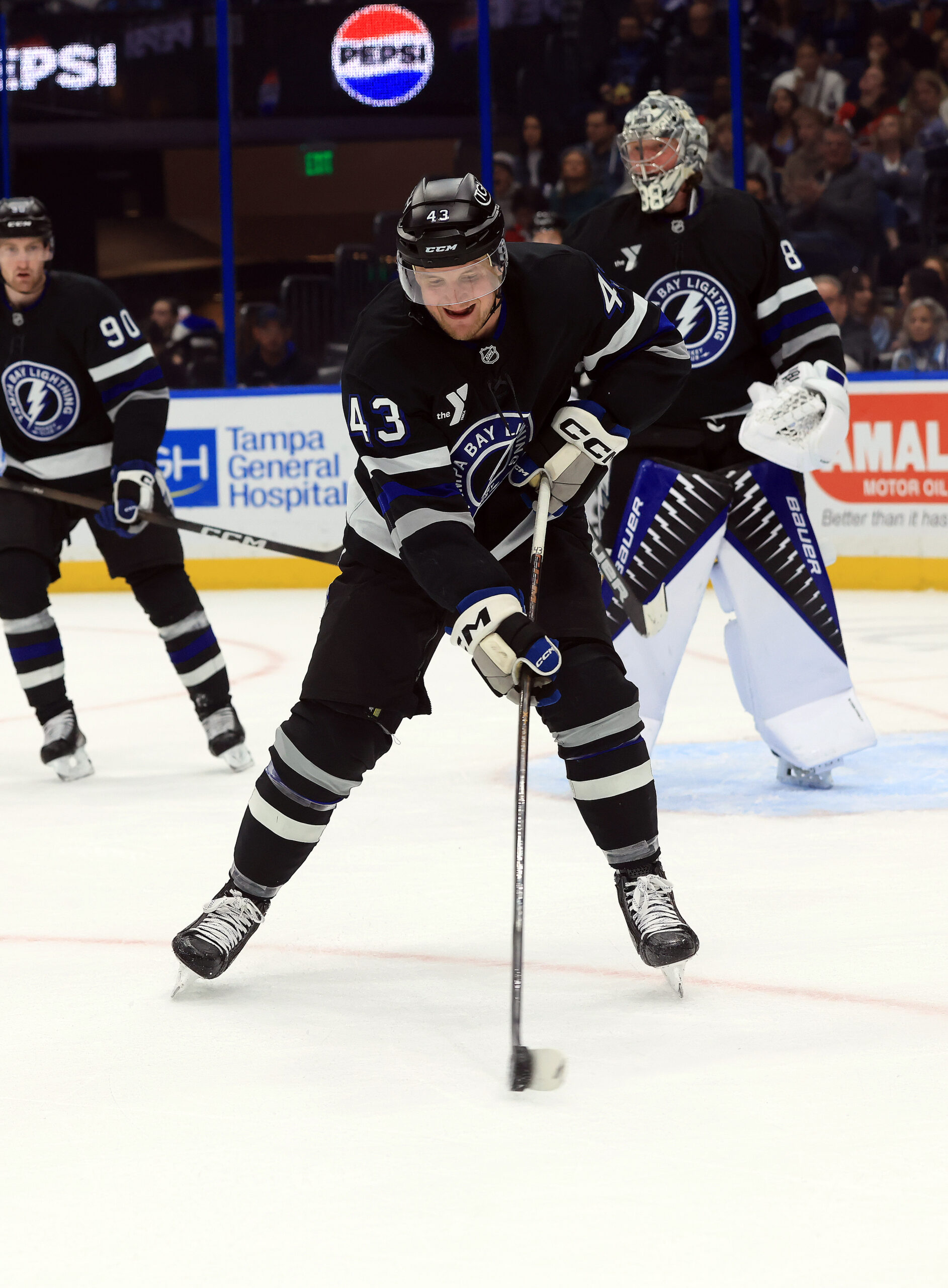 But then this season happened. Raddysh doesn’t just lead all pending UFA defensemen in points but rather pending unrestricted free agents, period. He’s up to 60 points in as many games. And it’s not as if he’s still getting limited minutes either; he’s averaging close to 23 minutes per night and even seeing light penalty killing playing time. Being a right-shot defender with this type of output in a market where cap space exceeds the quality of players available and you have the perfect storm for a huge offer.
Given where things are, I could see a team, perhaps begrudgingly, offering $7.5MM per season for Raddysh, rationalizing that even if he winds up in the 45-50-point range next year, it could still age well. I don’t think Tampa Bay would be willing to go quite that high, even with their cap space and right-side situation. GM Julien BriseBois isn’t known for paying top dollar. I could see a long-term pact (six years or so) around $6MM or so being where the two sides ultimately settle where he leaves a bit on the table to stay but still gets life-changing money.
Assuming that they get Raddysh re-signed, I think they’ll be content enough with him and Cernak as their top two right-shot rearguards. I could see them looking for a third-pairing player that keeps Maxwell Crozier in a reserve role, however. Nick Jensen coming off an injury-riddled season is eligible for a one-year, bonus-laden deal. That feels like a good fit, giving him a soft landing spot to try to rebuild some value while possibly giving Tampa Bay some value for the role. A reunion with Luke Schenn could be a viable option as well.
FeeltheThunder: I want to add one more question here. I think Tampa should look for a new backup goaltender this offseason as Jonas Johansson is just way too hot and cold. I think if they bring in competition this offseason like a UFA in Matt Murray, for example, would be an improvement. Also, Tampa may need an AHL goaltender for Syracuse if they don’t bring back Brandon Halverson (which would be surprising) but they could have Johansson for that if so. What do you think of the whole situation?
For years now, the Lightning have been in a spot where they haven’t had a choice but to go with low-cost options. Some of that has been self-inflicted with their other moves but now, as you noted with your first question, they have a lot more cap flexibility this summer. I think they would benefit from upgrading on Johansson, it just comes down to how much more money they want to spend on the position. Murray is one who isn’t exactly the most consistent either but if they just wanted to bring in someone for competition (and waive the one who doesn’t make it), I could see that happening. And if so, that might push Halverson out.
Otherwise, I’d hope they’d aim a little higher and try to get someone who can maybe cover 25-30 games a season. With the increased minimum salary next season, they’d clear all but $25K of Johansson’s salary off the books with an AHL assignment so I think it’d be worth their while to explore it.
As for the AHL side, it feels like about a third of the veteran goalies bounce around from year to year. If Halverson leaves, there will be plenty of other AHL veterans to choose from so I wouldn’t worry too much about that situation. It actually wouldn’t surprise me if they look to an international goalie in free agency, a younger one that could see some time with the Crunch while trying to see if they can develop a future backup for a couple of years from now.
Jake Guentzel Is One Of The Best UFA Signings Of This Era
Building a team through free agency is rarely a recipe for success in the NHL. Just ask the Predators, who are only two years removed from “winning” the 2024 UFA sweepstakes but have yet to see any on-ice success from their spending spree (Steven Stamkos, Brady Skjei, and Jonathan Marchessault).
However, some teams do find success in the free agent market by acquiring players on the fringes. Last summer is a good example, as the Penguins struck gold by signing Justin Brazeau and Parker Wotherspoon to two-year contracts that have given them some of the best value in the NHL.
All of that being said, it’s rare to see a high-end UFA sign for big money and provide substantial extra value on their long-term deal, which is why the Lightning’s Jake Guentzel stands out as one of the best free agent signings of the last 10-15 years.
When Guentzel signed his seven-year, $63MM contract, he was brought to Tampa Bay to step into the lineup for former captain and long-time star Stamkos. Those were big shoes to fill, as Stamkos was a first-overall pick who had captained Tampa Bay to multiple Cups and was beloved by the city and the organization.
But the Lightning saw an opportunity to get younger and refresh the top of their lineup. It’s paid off in spades. However, it didn’t come without significant risk.
No one knew whether Guentzel would thrive outside of Pittsburgh after spending the first eight seasons of his NHL career with the Penguins, skating alongside Sidney Crosby on the top line. Many believed that Guentzel might have been a product of playing with Crosby and not a player who could excel elsewhere.
Since being traded by Pittsburgh in March 2024, all Guentzel has done is improve his impressive offensive numbers. In 503 games with the Penguins, Guentzel scored 219 goals and 247 assists, averaging 0.93 points per game. However, since the trade, Guentzel has tallied 78 goals and 97 assists in 163 games, averaging 1.07 points per game. While the increase is slight, it is still surprising — and quite welcome for the Lightning.
This season, the 31-year-old has 29 goals and 41 assists in 66 games and is on track for his third 80-point season. If he achieves that, it will mark the seventh time in eight seasons that he has surpassed a point-per-game, a remarkable streak of consistency for a player whose on-ice ability is often questioned.
Guentzel isn’t the flashiest player, nor is he the biggest or fastest. But he has a high hockey IQ and a rare ability to anticipate plays. That’s what made him the best player Crosby has ever played with long-term (an argument can be made that Marián Hossa was the best winger Crosby ever had), and it’s why he’s fit in with Tampa Bay so seamlessly.
There have been other UFA success stories over the past twenty years. Artemi Panarin had an outstanding run with the New York Rangers; the previously mentioned Hossa in Chicago won three Stanley Cups and played a key role in all of them, while Joe Pavelski left San Jose for the Dallas Stars and was a major contributor to their success from 2019 to 2024.
An argument could be made that John Tavares‘ signing with the Toronto Maple Leafs in 2018 was also a success, and in a vacuum, that is probably true. Tavares signed a seven-year, $77MM contract on the first day of free agency in 2018, and the deal itself worked out well for both Tavares and the Maple Leafs, as he remained an important contributor throughout the term and is currently playing on a bargain extension he signed last year. While Matthews was the captain of Toronto and a key piece of one of their better eras of regular-season success, the Maple Leafs had almost no playoff success, and the acquisition of Tavares led to one of the worst trades in recent memory.
Without Tavares signing, the Maple Leafs likely wouldn’t have traded Nazem Kadri to the Colorado Avalanche, a move that eventually helped Colorado win a Stanley Cup and left the Maple Leafs with a significant gap down the middle of the ice. In theory, the trade made sense; Kadri was destined to be a third-line center, and Toronto believed it was best to swap him for defensive help in Tyson Barrie and another center in Alexander Kerfoot. The move didn’t work out and ultimately contributed to Toronto’s decline.
And that parallel from Toronto highlights how impressive Guentzel’s run in Tampa Bay really is. He was brought in to replace arguably the best player in franchise history, and all Guentzel has done is put up better numbers than ever before in his career. There are still five years remaining on his contract, so it’s not guaranteed that Guentzel’s deal won’t become a problem later on, but for now, it’s one of the best UFA signings in recent memory.
Prospects Whose Signing Rights Expire This Year
Every year, there are two pivotal dates for draft picks who are still on teams’ reserve lists and haven’t signed their entry-level deals. If they’re not signed by then, their exclusive draft rights expire, and they become free agents or, in some rare cases, can re-enter the draft if they’re young enough.
The first date circled on the calendar is June 1. This is the decision date for players who were drafted out of the Canadian Hockey League and most European countries’ programs, Russia and Switzerland (players drafted from there have their signing rights held indefinitely). For CHLers, it’s two years from their draft date, and for Euro players, it’s four years from their draft-eligible date, with a minimum of two years if they were selected as overagers.
Aug. 15 is when NCAA-bound players who wrapped up their senior or final collegiate season in 2025-26 become UFAs if they’re not signed.
Just because a team loses its exclusive signing rights to a player doesn’t mean they can’t still join the organization. It’s commonplace to see a good chunk of names on this list opt to stay with the organization that drafted them on an AHL or ECHL contract.
Here’s who each club risks losing this year if they don’t get a deal done:
Anaheim Ducks
June 1 – F Ethan Procyszyn (2024, 3-68), D Tarin Smith (2024, 3-79)
Aug. 15 – F Kyle Kukkonen (2021, 6-162)
Boston Bruins
Aug. 15 – F Andre Gasseau (2021, 7-213), F Oskar Jellvik (2021, 5-149), D Mason Langenbrunner (2020, 5-151), G Philip Svedebäck (2021, 4-117)
Buffalo Sabres
June 1 – F Gustav Karlsson (2022, 6-187), G Ryerson Leenders (2024, 7-219), F Joel Ratkovic Berndtsson (2022, 7-202)
Aug. 15 – F Stiven Sardaryan (2021, 3-88)
Calgary Flames
June 1 – F Hunter Laing (2024, 6-170)
Carolina Hurricanes
June 1 – D Simon Forsmark (2022, 4-101), F Nils Juntorp (2022, 6-188), G Jakub Vondras (2022, 6-171)
Chicago Blackhawks
June 1 – F Riku Tohila (2022, 7-199)
Colorado Avalanche
none
Columbus Blue Jackets
none
Dallas Stars
none
Detroit Red Wings
June 1 – F Maximilian Kilpinen (2022, 4-129), G Landon Miller (2024, 4-126)
Aug. 15 – F Kienan Draper (2020, 7-187), F Dylan James (2022, 2-40)
Edmonton Oilers
June 1 – F Petr Hauser (2022, 5-141), F William Nicholl (2024, 7-196), D Albin Sundin (2024, 6-183)
Florida Panthers
Aug. 15 – G Tyler Muszelik (2022, 6-189)
Los Angeles Kings
none
Minnesota Wild
Aug. 15 – D Ryan Healey (2022, 4-121), F Rieger Lorenz (2022, 2-56), F Charlie Stramel (2023, 1-21)
Montreal Canadiens
June 1 – D Owen Protz (2024, 4-102)
Aug. 15 – F Jack Smith (2020, 4-102)
Nashville Predators
June 1 – D Kasper Kulonummi (2022, 3-84), G Jakub Milota (2024, 4-99)
Aug. 15 – F Adam Ingram (2022, 3-82), F Sutter Muzzatti (2023, 5-143), F Ben Strinden (2022, 7-210)
New Jersey Devils
Aug. 15 – D Charlie Leddy (2022, 4-126), F Samu Salminen (2021, 3-68)
New York Islanders
none
New York Rangers
none
Ottawa Senators
June 1 – D Filip Nordberg (2022, 2-64)
Aug. 15 – F Tyson Dyck (2022, 7-206)
Philadelphia Flyers
June 1 – F Santeri Sulku (2022, 7-197)
Aug. 15 – F Owen McLaughlin (2021, 7-206)
Pittsburgh Penguins
June 1 – F Max Graham (2024, 5-139)
Aug. 15 – F Cruz Lucius (2022, 4-124)
San Jose Sharks
June 1 – F Carson Wetsch (2024, 3-82)
Seattle Kraken
June 1 – D Alexis Bernier (2024, 3-73)
St. Louis Blues
June 1 – F Antoine Dorion (2024, 7-209), D William McIsaac (2024, 5-145)
Tampa Bay Lightning
June 1 – D Jan Golicic (2024, 4-118), F Kaden Pitre (2024, 6-181), F Noah Steen (2024, 7-199)
Toronto Maple Leafs
June 1 – D Nathan Mayes (2024, 7-225)
Aug. 15 – F Joe Miller (2020, 6-180)
Utah Mammoth
June 1 – D Ales Cech (2024, 5-153)
Aug. 15 – D Cal Thomas (2021, 6-171)
Vancouver Canucks
none
Vegas Golden Knights
Aug. 15 – D Noah Ellis (2020, 6-184)
Washington Capitals
Aug. 15 – G Chase Clark (2021, 6-183), D Joaquim Lemay (2021, 4-119)
Winnipeg Jets
none
Free Agent Stock Watch: Left Wing
With the trade deadline behind us, player movement between teams is severely restricted. Teams are jockeying for playoff position, and many players with expiring contracts across the NHL are playing games that could ultimately determine what magnitude of contract they might receive in the summer.
In a multi-part series, we’ll take a look at each position group of the upcoming free agent class, and do a rundown on how those upcoming unrestricted free agents have performed this year. Which players have increased their odds of scoring a jackpot on the open market? Which players have potentially hurt their earning potential with their play? What are the stakes for these free agents in the games that remain this season? We’ll break it all down here.
The Marquee Names
Alex Ovechkin, Washington Capitals
While he is technically a pending unrestricted free agent, Ovechkin’s situation is not one of a typical pending UFA. The league’s all-time goal scoring leader is, barring some great surprise, a one-team player. He will either re-sign with the Capitals, or end his time in the NHL. The odds of another outcome are extremely remote.
While the 40-year-old doesn’t fly around the ice in a manner even close to how he did earlier in his career, his offensive instincts, and his trademark shot, are still there – making him still a productive NHL top-six winger. He has 51 points in 68 games this season, so the question for Ovechkin heading into the expiry of his deal isn’t about whether he can still play in the NHL, it’s about whether he still wants to.
Jamie Benn, Dallas Stars
Benn is in a similar position to Ovechkin. The one-time Art Ross Trophy winner is set to turn 37 years old this summer, and is not your typical pending UFA. Like Ovechkin, one would have to imagine that Benn will either be playing in Dallas, or nowhere at all. That he took a $1MM base salary on a one-year deal last summer (albeit with $3MM total in performance bonuses) suggests Benn is willing to be flexible in how he structures his contracts in order to remain with the Stars. As a result, it’d be tough to imagine him having a true free agency – so while he technically belongs on this list, the free agent class truly begins in the category below.
The Solid Contributors
Patrik Laine, Montreal Canadiens
Just a few years ago, there would be no debate about whether or not Laine belonged in the “marquee names” section of this list. He was at the center of a blockbuster trade involving Pierre-Luc Dubois, earned an $8.7MM AAV contract, and was regularly scoring at around a point-per-game rate. But even when his league wide stock was far higher, some cracks were showing in Laine’s game, specifically in terms of his ability to stay on the ice.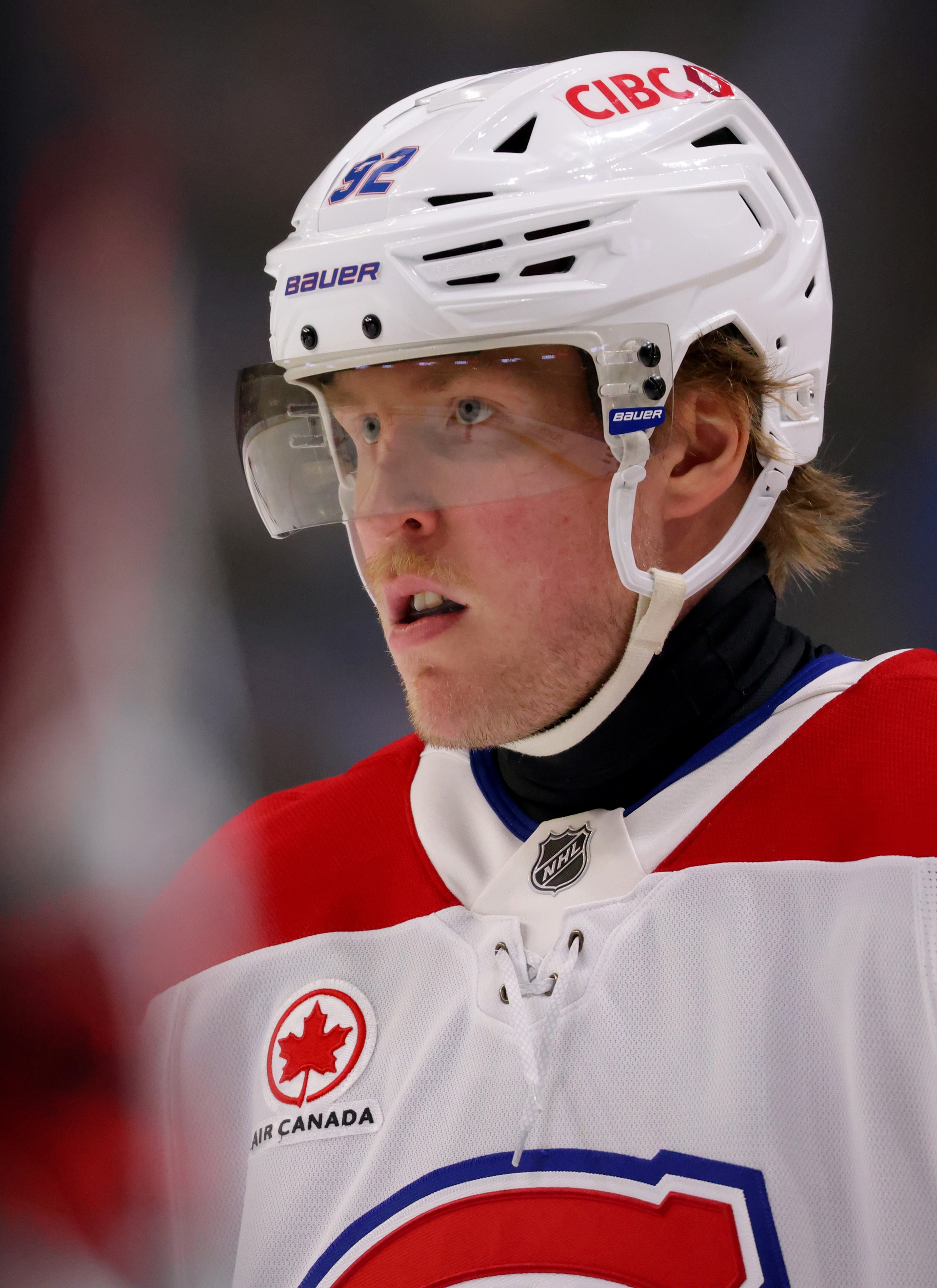
While much of this has been, unfortunately, out of Laine’s control, and therefore it isn’t exactly fair to count it as a factor working against his earning potential, the reality is Laine hasn’t played in enough games over the last few years for teams to feel comfortable investing significant money in him.
He’s played in just five games this season after undergoing core muscle surgery in October. Last season, he was limited to just 52 games, with his season only beginning in December due to a left knee sprain.
When Laine is healthy and playing at his peak, he can be one of the game’s more purely talented offensive players.
His goal-scoring ability has never been in question, and even in his uneven days as a Columbus Blue Jacket, he still managed 108 points in 111 games between 2021-22 and 2022-23. But the issue for Laine, especially as it relates to his upcoming free agency, is that he simply has not been healthy, or playing at his peak, on anything close to a consistent basis, throughout his pro career.
With all of that said, Laine is just 27 years old. He has many years of his career still ahead of him. Even with all of his struggles, he remains an intriguing option as the player with the most pure upside as a scorer set to be available on the open market.
The Athletic’s Pierre LeBrun noted that Laine’s IR placement for most of this season will make him eligible for a unique type of contract: one laden with performance bonuses. Those bonuses are typically reserved for players above 35 or on their entry-level contract, so Laine and his representatives will be able to structure a creative contract to find Laine the right landing spot to maximize his chances of a career renaissance.
A team with a clear need for an elite shot for their power play would be an ideal fit for Laine.
Mason Marchment, Columbus Blue Jackets
Early in the season, it looked as though Marchment would be heading into free agency on somewhat shaky ground. The 30-year-old was traded to the Kraken over the summer, and hadn’t quite found his footing there. Through 29 games in Seattle, he’d managed just four goals and 13 points, well below the scoring pace (22 goals, 47 points in 62 games) he set the year before.
The Kraken elected to deal Marchment to Columbus, removing a quality middle-six forward from their roster despite having every intention of competing for a playoff spot. Both the Blue Jackets, and Marchment, have reaped the benefits of the mid-season deal.
Columbus has surged back into legitimate playoff contention. Although a hyper-competitive Eastern Conference means their playoff chances are up in the air, it’s worth noting that the team holds enough points to be No. 1 (with a four-point cushion) in the Pacific Division. But while geography and league alignment might keep Columbus out of the postseason, it won’t keep Marchment from capitalizing on his current run of form in the summer.
Since arriving in Ohio, Marchment has scored 12 goals and 21 points in 25 games. He is shooting 25.5% right now, so puck luck is definitely playing a role – but even still, Marchment is playing far closer to his career standard than what he put forward as a Kraken.
Given his substantial track record of middle-six (or better) production since his 2021-22 breakout year with the Florida Panthers, Marchment is likely positioned well to receive a raise over the $4.5MM AAV he earned on his last deal.
Michael Bunting, Dallas Stars
Another middle-six forward who was the recipient of a mid-season trade, Bunting’s season has moved along well within what most would have reasonably expected of him.
In Nashville, he was not surrounded by the kind of offensive talent he had next to him as a member of the Toronto Maple Leafs, so he wasn’t able to score quite at the rate he managed at his peak. At the same time, he still carved out a role as a respectable secondary producer with the Predators, registering 13 goals and 31 points in 61 games. That’s a 42-point scoring pace over 82 games.
That Bunting was able to keep up his standard of steady secondary scoring helped earn him a trade to the Stars, giving him the chance to join one of the league’s marquee Stanley Cup contenders. Now 30, Bunting is entering a crucial free agency as the contract he receives could be the most financially substantial of his career.
He’s got two points in five games with the Stars so far, but is currently on their third line, skating alongside Justin Hryckowian and Colin Blackwell. If Bunting can manage to find a way onto one of Dallas’ top two scoring lines, he could further improve his earning potential in the summer with a strong conclusion to his 2025-26 campaign.
Anders Lee, New York Islanders
Lee is, in many ways, in a similar boat to Ovechkin and Benn, even if he doesn’t have the same level of star power as those two names. Now 35, he’s his team’s captain and has been a fixture on Long Island for most of his professional career, save for a brief stint in the AHL.
He was a core Islander during the height of the team’s most recent competitive era, when they made two deep playoff runs under head coach Barry Trotz. His leadership helped stabilize and elevate the Islanders in the aftermath of the stunning departure of franchise face John Tavares.
Put simply: one would have to imagine both Lee and the Islanders have every intention of working out a contract extension. The odds are considerable that New York and Lee come to some sort of agreement on a new deal.
With that said, there still remains the remote possibility he tests free agency, and in that case, he’d be an attractive short-term veteran option.
Lee has reached the 20-goal plateau nine times over the course of his career, and with 15 in 68 games this season, he stands a real chance of making it ten. He’s one of the league’s more effective goal-scorers when placed directly in front of the net, and it’s his prowess around the crease that helped him become a 40-goal scorer earlier in his career.
While his age means he might have a tough time matching his current $7MM AAV on his next deal, he’s had a solid season and has earned more than just a smaller base contract stuffed with performance bonuses.
Evander Kane, Vancouver Canucks
Where Kane stands at this point is not the easiest to pin down. He was expected to be traded before the deadline earlier this month, with numerous reports indicating that the Canucks were not only aggressively shopping Kane, but that they’d even given his agent, Dan Milstein of Gold Star Hockey, permission to speak with other teams to facilitate a Kane trade.
He did not end up getting dealt, which naturally opens up questions related to how he’s viewed as a player across the league. On the ice, he’s still a reasonably productive player. On a Canucks team that has struggled mightily this season, Kane has 12 goals and 29 points in 64 games. That’s a 15-goal, 37-point pace over 82 games, which is a decline, but not a massive one, from where he was in 2023-24, his most recent full healthy NHL campaign.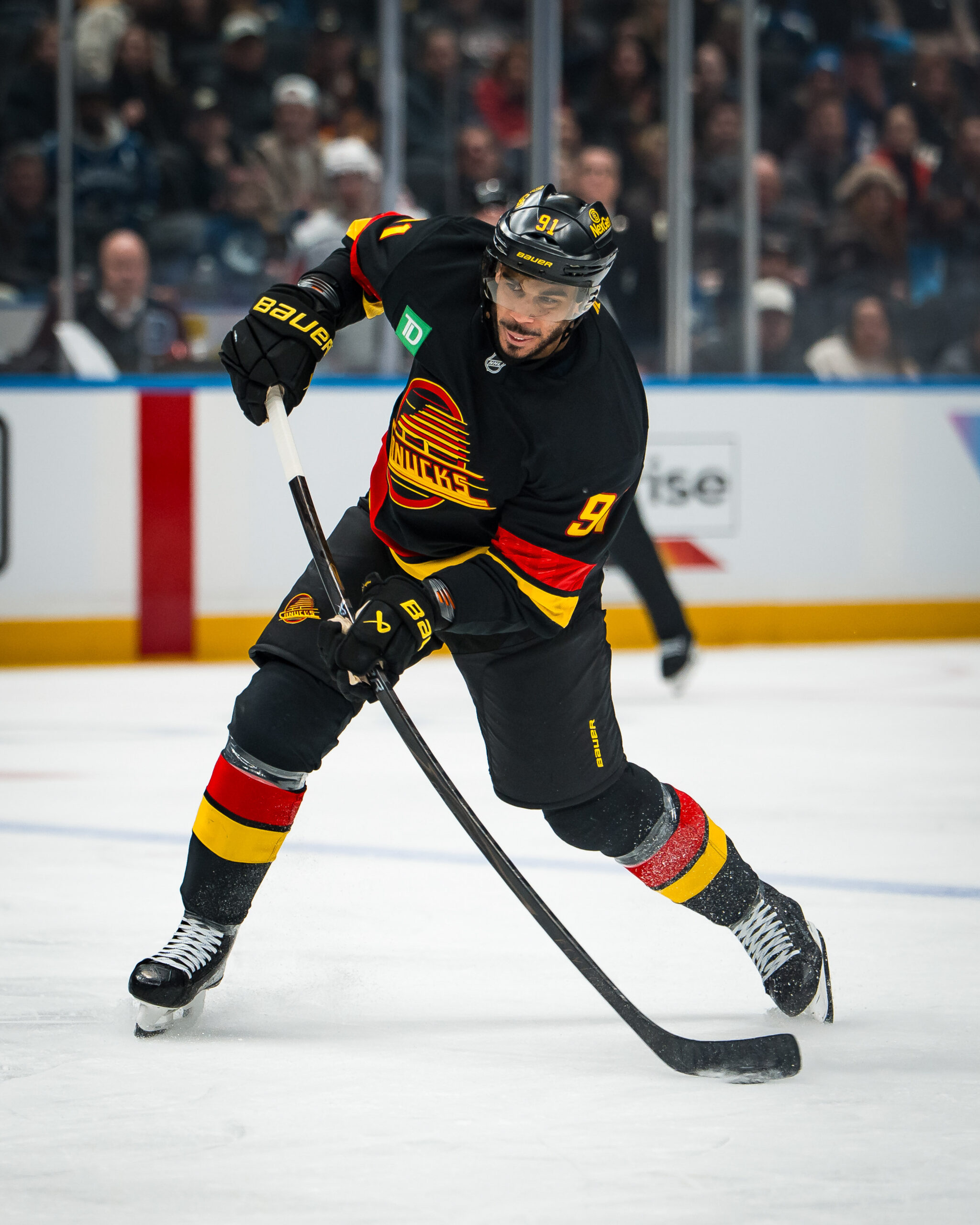
Kane also showcased his talents during the Oilers’ back-to-back runs to the Stanley Cup Final, showing how he could be a valuable contributor to a team just a few wins away from multiple titles. He’s always been a complicated player, someone with high peaks and low valleys in terms of performance.
That’s been evident throughout Kane’s career, such as in 2020-21, when he led his team in scoring with 49 points in 56 games (72 point pace) but ended the season with less-than-stellar reports emerging about his off-ice value.
The Athletic’s Kevin Kurz reported at the time that “several key players informed team brass that if Kane was going to be a part of the Sharks going forward, they didn’t want to be.”
Those factors that complicate a player’s league wide standing are often extremely difficult, if not impossible, for outside observers to take into account. It’s entirely possible, perhaps even likely, that the Kane that was the subject of those reports no longer exists. His time in Edmonton certainly would support that argument, as he was a key veteran on one of the league’s top teams. But without being able to know for sure where Kane stands, it’s difficult to predict the level of interest he’ll will receive in the summer, or what level of investment those interested teams will be willing to make in him.
PHR Mailbag: Blackhawks, Mammoth, Oilers, Blackhawks, MacKinnon, CBA
Topics in this edition of the PHR Mailbag include thoughts on what Utah did and didn’t do at the trade deadline, the rescinding of Nathan MacKinnon’s major penalty, and more. If your question doesn’t appear here, watch for it in our next two mailbag columns.
SpeakOfTheDevils: I know what he said in his after-deadline presser but what are the odds that Tom Fitzgerald is fired as the GM of the NJ Devils this offseason? Second part, who would be the top three choices to replace him???
General managers typically get a longer leash than coaches but he’s had the role since January 2020 when he took over in an interim capacity, getting the tag lifted soon after. He’s had five full seasons in charge and the Devils have won just one playoff round in that span. Barring a miracle comeback over the final month, they won’t get a chance to add to that number this spring. Yes, they’ve had some injuries, but they can’t use that as a crutch again. Based on that, you might be inclined to think the odds are rather high that he’d be fired.
But he’s also the team president, a role he has only held since January 2024. His contract terms weren’t disclosed but there are probably a couple of years left on it. And if ownership still believes in his vision, maybe he stays.
Maybe there’s an in-between option, one we’ve seen more frequently in recent years. What if Fitzgerald is moved to just president duties and cedes the GM role? Is that viewed as a possible compromise? I could see that happening, so maybe the odds of him not being GM could be in the 50-60% range and the odds of him leaving the organization outright more in the 30-40% territory.
As for part two, if Fitzgerald is out as GM, a lot depends on if he’s out altogether or just as GM. If they remove the GM title but keep him as president, Dan MacKinnon, their assistant GM, would be the logical choice to move up and take on a bigger role. If he’s gone altogether, I think Marc Bergevin would get consideration. He has been up for a couple of jobs lately and it feels like a matter of when, not if, he gets another crack. Brendan Shanahan is believed to be looking to get back into things. That one might be more of a president role but I think he’d be on the list. I also expect Ryan Martin to land one of the GM jobs soon. A veteran of 20 years in various front offices, he’s second in command with the Rangers at the moment and a chance to steal someone from a key rival might be appealing.
bottlesup: With the addition of Weegar, could you see the Mammoth possibly upsetting whoever the Pacific Division champ is in the 1st round? Assuming Utah continues to hold a firm grip on the WC1.
I’ll preface this by saying that I like the MacKenzie Weegar pickup for Utah. Yes, he’s having a down year but the track record is solid and if he’s in more of a second-pairing role for the Mammoth which he’s better suited to, I think he’ll bounce back a bit. So far, the early returns have been decent. But is he a big needle-mover? I’m not sure he materially affects their odds of winning a series. He helps get them there, but I don’t think his addition necessarily gives them a big leg up against a Pacific team.
Having said that, I think Utah has a legitimate chance to pull off an upset, simply because the Pacific Division just isn’t that great. Anaheim is playing well but like Utah, they’re very inexperienced in the playoffs so that could be a toss-up. Vegas isn’t turning things around like many expected them to. However, they have a good enough track record in the playoffs that they’d probably be the favorite in a hypothetical series. The same can be said about Edmonton. The Kings and Sharks aren’t entirely out of it but probably aren’t getting into first place so I won’t cover them here. Utah has a shot at making it through the first round if they can hold onto that top Wild Card spot.
Gbear: Feels to me that Utah missed a chance at the deadline to add a top-six winger (the whole Thomas thing from the Blues was a non-starter) and really give themselves a chance to win a round or two. Keller deserved that chance. Thoughts?
After they picked up Weegar without moving any of their top assets, I thought Utah GM Bill Armstrong was well-positioned to make a splash up front but it obviously didn’t happen. I don’t know how much of a chance was missed, though. Which top-six wingers actually moved? Bobby Brink has been one before, Conor Garland (who the team is familiar with from their days in Arizona), and, well, that’s about it. Centers and defensemen were the currency and that’s something Utah didn’t need to dabble in, especially knowing they were nearing an extension with Nick Schmaltz that has since been finalized and that they had already acquired Weegar.
It’s not a bad thing either that they didn’t push in a bunch of chips. There’s something to be said for getting some playoff experience and then using that to shape their next aggressive swing over the summer. And, as noted above, they’re in a spot where they could very well get through the first round if they wind up in the Pacific bracket. I expect there will be more opportunities to add a top-six winger over the offseason than there were at the trade deadline so in the end, they might wind up being better off for having waited, assuming they get something across the finish line a few months from now.
sovietcanuckistanian: I don’t know about you, but did Edmonton miss the boat by not significantly upgrading either/both of its defense corps and goalie at the trade deadline? With Florida almost assuredly not making the playoffs (injury bug), it seems like a missed opportunity – especially since McDavid is on that only two-year extension.
I’m going to flip the order of these so I can pick up on the theme from the last question about how realistic a move for a goalie upgrade there was. There wasn’t a single NHL goaltender moved at or leading up to the deadline. I know there was speculation about Sergei Bobrovsky but I don’t think trade talks got far considering Florida is trying to re-sign him. Jordan Binnington’s name was out there but the Oilers can’t afford to take on the contract and I don’t think St. Louis would have retained salary. Was anyone else out there really an upgrade? There were rumblings about a Toronto goalie but that feels more like an offseason decision. Samuel Montembeault’s name was thought to be in play but is he an improvement given how his season has gone? It’s hard to be too critical in that sense since there wasn’t much out there that they could do.
Granted, some of that is self-inflicted. GM Stan Bowman traded for Tristan Jarry’s contract in full, cutting into their financial flexibility. He also signed Andrew Mangiapane to a contract that they wound up having to pay a high price to get out of, also cutting into that flexibility. That Jarry trade was risky at the time it was made and hasn’t aged well since then.
That financial situation also limited what they could do defensively, although I think they did well enough with what they had to work with. Connor Murphy isn’t a top-four player anymore but he should stabilize things defensively and help on the penalty kill. They didn’t have the cap space to do much more than a depth deal, nor did they have the prospect or draft assets to get into the bidding on some of the more prominent blueliners to move.
It’s a missed opportunity in the sense that Florida isn’t in the playoffs and the division is up for grabs. Edmonton could very well have bolstered their chances to take the division and give them a chance to make the Conference Final once again. But in terms of their limitations (asset and cap-wise), I don’t think they did terribly. It wasn’t an ‘A’ deadline but a ‘B-‘ or ‘C+’ one.
tucsontoro: The Hawks lead the league in blown leads. It’s great that they have Boisvert and Frondell on the verge of joining the big club. But if they don’t find a way to keep the puck out of their own net, they won’t be going anywhere for a long time. Where does the defense come from?
In a nutshell, time and external acquisitions. Unfortunately for rebuilding teams, there is no fast-forward button when it comes to defensive development. While young forwards can sometimes make a big impact right away, it doesn’t generally happen as often with defensemen. Generally, the thought is a blueliner needs at least 200 to 250 NHL games before they’re truly ready and might not hit their prime for a little while after that. Chicago only has two players in that range and one of them (Matt Grzelcyk) is on an expiring deal; Alex Vlasic is the other at 243.
Sam Rinzel will get there. So will Artyom Levshunov. But they’re a couple more years away at least from getting to a baseline level of reliability defensively and likely longer before they’re consistently counted on as shutdown players.
In the meantime, GM Kyle Davidson will need to look outside the organization to bring in some help. They have a boatload of draft assets and prospects to deal from, particularly down the middle; with centers being in high demand, they can take advantage of it. An external add or two like that over the next few seasons will help in those late-game situations but it’s going to take some time before Chicago is much more reliable when it comes to holding the lead. It’s something that a lot of young teams go through and the process can rarely be sped up.
Making Sense Of The Maple Leafs’ Downfall
Much has been said about the Maple Leafs’ decline this season, and rightly so. The team has shifted from a serious Stanley Cup contender just three years ago to a potential lottery pick this year.
Along the way, several targets have drawn criticism from Leafs fans and the media alike. From former head coach Mike Babcock to ex-GM Kyle Dubas and current captain Auston Matthews, no one has escaped the fans’ wrath or the media glare.
Still, amid all the turmoil, it’s unclear what specific factors brought about the end of an era that started with great promise and finished with a whimper this season.
Noticeably missing from the paragraph above is the name Brendan Shanahan, the man who sparked this entire era from the moment he was hired in April 2014. Shanahan was appointed president and alternate governor at the time and oversaw all Maple Leafs operations.
Some may forget, but back then, questions arose about whether Shanahan had the experience for such a role. Fair or unfair, those questions were valid since he was only five years removed from his last NHL game and lacked prior executive experience with an NHL team.
Shanahan did have executive experience, working at the NHL’s head office after his playing career. He was hired in December 2009 as the league’s vice president of hockey and business development and served in that role for just over a year before succeeding Colin Campbell as the senior vice president in June 2011.
Much of Shanahan’s role involved issuing suspensions for illegal hits and plays, and Shanahan modernized this system by introducing videos in which he narrated the plays in question. While this was relevant experience for an executive role in an NHL club, it is fair to question whether Shanahan had the appropriate experience to make management, coaching, and player personnel decisions and oversee the entire operation.
Ultimately, Shanahan was responsible for many of the key figures involved in this era of Maple Leafs hockey. Shanahan brought in figures like Babcock, Dubas, Lou Lamoriello, and eventually Brad Treliving. These men played major roles in shaping the team, from the coaching staff to the backup goaltender.
It’s impossible to know who made the final decisions on every move, but since Babcock, Dubas, and Lamoriello all exited at different times, it’s fair to say Shanahan held the overall authority and was accountable for nearly everything that occurred under his leadership.
So, what actions did Shanahan take when Lamoriello was in charge? There were certainly some good and bad decisions, but overall, they didn’t lead to the downfall this piece suggests.
Lamoriello attached the Maple Leafs to some problematic contracts during his time as general manager. Nikita Zaitsev received a seven-year, $31.5MM extension that proved disastrous and led to his trade, along with forward Connor Brown.
Patrick Marleau was signed as a free agent to a three-year deal worth $6.25MM per year. Toronto had to trade Marleau’s contract along with a first-round pick in 2019 because of salary-cap pressure.
There was also a four-year deal for veteran forward Matt Martin at $2.5MM per season, another far-from-ideal contract that took up valuable cap space. Although these contracts weren’t great and cost assets to unload, none of this was catastrophic, and Lou was out of Toronto before any serious damage was done.
Moving on from Lamoriello to Dubas, much of his work has been criticized as the downfall of the Maple Leafs. Dubas became a popular target for Maple Leafs fans, blamed for the decline of this era of hockey in Toronto.
It’s hard to judge if these criticisms are fair, considering we don’t know how much power Dubas actually held or how much veto power Shanahan exercised. It’s also fair to look at Dubas’ record in Pittsburgh and wonder if he learned from his mistakes in Toronto or if he is now benefiting from full autonomy in his new role with the Penguins.
But was the Dubas era in Toronto really that bad?
Dubas was responsible for the large contracts awarded to the Big Three after their entry-level deals expired. He signed William Nylander to a six-year deal, Auston Matthews to a five-year contract, and Mitch Marner to a six-year agreement. He also signed UFA John Tavares to a seven-year, $77MM deal, which many felt was unnecessary because it led to the departure of fellow center Nazem Kadri, who was traded to the Colorado Avalanche in a move that didn’t work out for Tyson Barrie.
The Kadri trade is probably the biggest blemish on Dubas’s resume, although some fans might argue that other moves by Dubas, such as the Morgan Rielly extension, the Petr Mrazek signing, and the subsequent trade that saw Toronto give up a first-round pick to rid itself of his contract, are also questionable.
Signing the big four essentially meant the Maple Leafs had to spend nearly $40MM of their cap space on four players, and there is a fair argument that this forced Dubas to tighten the budget elsewhere on the roster. While that’s true, Dubas managed to find affordable depth over the years, with Michael Bunting being a good example.
There was also significant criticism of Dubas’ handling of several trade deadlines, during which he traded away many assets for short-term rentals. Despite these additions late in the season (such as Ryan O’Reilly, for example), Toronto was never able to get past the second round, and in most cases, they couldn’t win a single series.
While this isn’t entirely Dubas’ fault, he bears most of the criticism, since it was technically his decision to go all-in at these deadlines. He also left the Maple Leafs with many assets missing when he was dismissed.
Without delving too much into the drama surrounding Dubas’s departure, it seemed to be something that wasn’t part of Shanahan’s plan and ultimately led to the hiring of Treliving as general manager. Despite some of the flaws on Dubas’ résumé, it was difficult to argue at the time that moving to Treliving was an upgrade for Toronto. Treliving had just left his role as GM in Calgary, leaving the Flames with an aging, costly core that wasn’t a playoff team and needed a rebuild.
Treliving arrived in Toronto and enjoyed a fairly good first summer with the Maple Leafs as he signed Max Domi and Tyler Bertuzzi to one-year contracts. These moves provided the Maple Leafs with some flexibility, but that suddenly diminished when Matthews signed a four-year extension in August 2023, making him the NHL’s highest-paid player at that time with a $13.25MM AAV.
A few months later, Treliving managed to sign Nylander to an eight-year deal worth $92MM. This was the first time the Maple Leafs had secured a member of the original Big Three with a maximum-length contract. Neither of the contracts for Matthews nor Nylander was particularly egregious; however, they fully committed Toronto to this core, a group that had not reached the third round of the playoffs.
Treliving didn’t do too badly in the UFA market, although signing Domi to a four-year extension after his first season in Toronto was a risky move that hasn’t worked out. Another tough contract to evaluate now is the six-year deal with defenseman Chris Tanev, which still has four years remaining after this season.
Those two deals essentially committed Toronto to $8.25MM in salary for two veteran players whose best years are behind them. This pattern reflects a tendency Treliving has often shown throughout his career as a GM.
Treliving’s first two seasons with Toronto were mostly decent, as the Maple Leafs made the playoffs and even won the Atlantic Division in 2025. The pivotal moment in his tenure occurred in the summer of 2025 when it became evident that Marner was planning to leave Toronto.
The star forward headed to Vegas, and although Treliving managed to acquire Nicolas Roy in a trade for Marner, what followed revealed a GM who was unprepared for the situation. Treliving’s moves after Marner’s departure didn’t make a significant difference and did little to replace the scoring loss.
Dakota Joshua, Matias Maccelli, and Roy were brought in, and it was assumed these three could fill Marner’s scoring gap. He couldn’t have been more wrong. Not only did they fail to replace Marner’s scoring, but they also left the Maple Leafs with a roster that was ineffective defensively.
Now, Treliving is left in Toronto as the de facto last man standing from a management regime that will likely be criticized for decades for squandering a golden opportunity to bring a Stanley Cup to Toronto. Folks will point fingers and blame the hierarchy from Shanahan to the backup goaltender, but the truth is this: The Maple Leafs’ downfall was not immediate; it was built on bad hires, bad trades, bad signings, and bad bets.
While it’s hard to narrow ten years down to one defining moment, there is a key two-month period that occurred in 2023.
The two moments that stand out as the beginning of Toronto’s decline are the firing of Dubas in May 2023 and Mitch Marner’s no-move clause kicking in on July 1, 2023. It’s long been speculated that Dubas wanted to reshape the Maple Leafs roster if he remained in the GM role, but he was fired before he could do so, and Toronto let Marner’s no-move condition trigger in his contract.
Dubas’ firing led to the hiring of Treliving and to the recent three seasons of moves in Toronto (including Marner’s departure). Now, most people will compare Treliving’s record to Dubas’s and claim Treliving has been more successful as a GM.
However, Dubas inherited a complete mess in Pittsburgh, as the Penguins were old, stagnant, in cap trouble, and lacked prospects. Treliving, on the other hand, inherited a top team in the Eastern Conference and kept it competitive for two seasons. It’s an apples-to-oranges comparison between Dubas and Treliving; however, one crucial fact remains: Dubas put the Penguins on the upswing, while Treliving has overseen the Maple Leafs’ decline.
Then there is Marner, who was never traded until the summer of 2025, and fetched only Roy in return for the Maple Leafs. Losing a top NHL player and failing to recoup the asset were major cases of disastrous asset management.
Sure, the Maple Leafs got two extra years of Marner, but not trading him in 2023 would have allowed them to acquire a haul of players back then and give Matthews, Tavares, and Nylander more depth.
That eight-week period in the spring of 2023 was a turning point, and for Maple Leafs fans, it’s hard not to look back and wonder what would have happened if Dubas had stayed in Toronto and Shanahan had been the one to depart.
We’ll never know, and for Maple Leafs fans, it doesn’t do any good to speculate; the era is over, and what comes next is unknown.
Photo by Nick Turchiaro-USA TODAY Sports
Kyle Dubas Deserves Praise For Retooling The Penguins
When the Pittsburgh Penguins dismissed GM Ron Hextall and president of hockey operations Brian Burke in April 2023, it created a vacancy that needed to be filled by an individual with a clear vision. The Penguins arguably had the least desirable job in the NHL, and there was no extensive list of candidates capable of stepping in and transforming a struggling franchise.
Pittsburgh had missed the playoffs for the first time in 16 seasons, had an aging, costly roster, lacked prospects in the pipeline, had very few draft picks, and had minimal cap space. Despite all the negatives linked to the role, Pittsburgh leveraged its considerable resources at the time to attract Kyle Dubas to lead the organization, offering him a lengthy, substantial financial commitment and full autonomy to run the team as he deemed fit.
It was a significant gamble, and one that appears to be paying off nearly three years later.
Make no mistake: during the first two months Dubas was in charge, he did almost nothing right. The Ryan Graves contract remains a complete disaster; the Tristan Jarry deal was a major failure; and the other contracts he signed that summer did little to benefit the Penguins the following season.
The only positive from that summer was acquiring three-time Norris Trophy winner Erik Karlsson, who hasn’t been his usual offensive self but has become a more complete defender this season.
But during the 2023-24 season, when it became clear the Penguins were out of contention, they shifted to a retooling approach that resembled a rebuild. At the deadline, Dubas traded pending UFA Jake Guentzel to the Carolina Hurricanes for forward Michael Bunting, a second-round pick that would become defenseman Harrison Brunicke, forward prospects Ville Koivunen, Vasiliy Ponomarev, and Cruz Lucius, along with a 2024 conditional fifth-round pick.
It was a significant haul for Dubas, although it lacked top-tier assets and was viewed as a move focused on quantity rather than quality. Nevertheless, the move sparked a run for Dubas that allowed him to avoid a full-scale rebuild, despite widespread belief that he was rebuilding the Penguins.
Dubas started dismantling the Penguins’ roster by trading away several veterans. At the same time, he added draft picks and young players who hadn’t panned out elsewhere, along with veterans on overpriced contracts that their former teams needed to shed for salary-cap reasons.
Dubas was happy to acquire these types of players in exchange for draft picks, as shown in his trades for Kevin Hayes and Cody Glass, in which he received second-, third-, and sixth-round picks for taking on their contracts. He also made short-term bets on players with potential upside, signing forward Anthony Beauvillier to a one-year deal and defenceman Matt Grzelcyk for just one year.
During the first part of the 2024-25 season, Dubas’ decisions seemed disastrous. The Penguins were out of playoff contention by January and began selling off pending UFAs, starting with Marcus Pettersson and Drew O’Connor, whom they traded to the Vancouver Canucks for a first-round pick and several other veterans who were eventually moved out.
Dubas kept retooling, moving on from Glass to acquire more assets, including Bunting, who eventually helped the Penguins land Thomas Novak and additional draft picks. He also traded Beauvillier for a second-round draft pick at the deadline and acquired Connor Dewar and Conor Timmins for a fifth-rounder.
It all seemed like a video game. Dubas was wheeling and dealing as if he had a controller in his hand, but on-ice results were underwhelming at best.
The Penguins missed the playoffs for a third straight year, and fans and media alike began questioning whether Sidney Crosby should remain in Pittsburgh, since Dubas wasn’t building a strong team around him. Despite missing postseason hockey, the Penguins weren’t building for the here and now, as Dubas was adding draft picks and younger assets – something many believed was impossible without a full rebuild.
Aside from the asset acquisition, another big story was brewing. Dubas had pulled the Penguins out of an awful cap situation, and they had flexibility on the horizon.
Pittsburgh has over $47MM in cap space available this summer (per PuckPedia) and won’t have a ton of holes to fill, as they finally have a youth movement coming.
Then there was the mastery Dubas showed during the summer of 2025, first drafting Benjamin Kindel with the 11th overall pick, which most people thought was a reach. He then traded down with his second pick and ultimately left the first round of the entry draft with Bill Zonnon and Will Horcoff.
Dubas then spent the rest of the summer acquiring castoffs and second-round picks, taking on Matt Dumba’s contract and the sweetener from the Stars, as well as Connor Clifton from Buffalo. By late summer, the Penguins had more draft capital for the next three NHL drafts than any other team, all without a full-scale rebuild.
Dubas also went bargain-hunting among free agents last summer and found great success, signing Anthony Mantha to a one-year deal that has been a significant bargain, as well as defensemen Parker Wotherspoon and Justin Brazeau, who fill top four and top six roles on the Penguins for just $2.5MM combined and are signed for another season.
But Dubas’s best work this season has been the Jarry for Stuart Skinner swap and the Egor Chinakhov trade with the Columbus Blue Jackets. Skinner has outperformed Jarry since the trade, playing exceptionally well and helping the Penguins re-enter playoff contention.
Pittsburgh also received a second-round pick and Brett Kulak from Edmonton, who was later traded for Samuel Girard and an additional second-round pick. The Chinakhov trade, on the other hand, has worked out splendidly, as he has fit seamlessly alongside Evgeni Malkin, and the Penguins have been red hot since the trade.
Pittsburgh is now firmly in a playoff race, even without Crosby and, more recently, Malkin. The team isn’t a Stanley Cup favourite, but Dubas has achieved the impossible with this roster in just a few short years.
He made the team younger and faster, overhauled the prospect system, accumulated draft picks, and gained cap flexibility. He managed all of this while keeping the team in playoff contention during the final years of Crosby, Malkin, and Kris Letang.
Dubas provided the Penguins with direction and made the tough decisions and bold moves that come with having a clear vision. Make no mistake, Dubas had the term and independence when he was hired; he could have torn down the roster and taken the easy route to rebuild.
But he chose the more challenging path of retooling on the fly, one of the toughest ways to build. Dubas took one of the league’s oldest rosters and revitalized it, and for that, he deserves a lot of credit.
Big Hype Prospects: Morozov, Ignatavicius, Klepov, Henriquez, Hrenak
Welcome to PHR’s Big Hype Prospects series. Like the MLB Trade Rumors series of the same name, we’re taking a look at the performances of top prospects from across the hockey world. We’ll look at rising prospects for the upcoming draft who are worth keeping in mind.
Five Big Hype Prospects
Ilia Morozov, C, Miami University Red Hawks (NCHC)
35 GP, 8 G – 12 A – 20 TP, 27 PIM, +2
Among the many climbing into a spot in this year’s top 15, it may be bulky center Ilia Morozov who has most caught the eye of pro teams. He has played with an overwhelming layer of grit and energy to his game despite starting the year out as college hockey’s youngest player – a title that now belongs to Oscar Hemming, highlighted in our last Big Hype Prospects piece. Morozov’s hard work has translated to more ice time and success in the standings. Miami improved by 15 wins this season, the biggest jump of any Division I team this century excluding the Covid season per ESPN’s John Buccigross. That is in no small part thanks to Morozov, whose tenacity and two-way responsibility helped fortify Miami’s top-six. His game took a major stride from last season in the USHL and Morozov is still among the youngest players in the draft class. That added development time, and his six-foot-three, 205-pound frame, could be enough to convince teams to spend an early pick on the Russian power-forward.
Simas Ignatavicius, LW, Geneve-Servette (National League)
51 GP, 7 G – 8 A – 15 TP, 43 PIM, +6
Another major riser is winger Simas Ignatavicius, who is looking to become the first Lithuanian to be drafted into the NHL since Dainius Zubrus was selected in the 1996 first-round. Coincidentally, Zubrus has made his mark on Ignatavicius’ development path, and helped him elevate his game to a pro level very early on. Ignatavicius shines as a responsible and poised shooter, who knows how to fill his role on the forecheck and wait for the right moments to strike. He has an athletic, six-foot-three frame and smooth skating that come in handy on the forecheck. From there, Ignatavicius can work the cycle and connect with his teammates to create sustained offense. He has been a responsible, bottom-six forward in Switzerland’s top league – but recently boomed on a loan to the country’s second-tier pro league, with seven goals and 11 points in eight games. It was a nice reminder of the scoring upside that Ignatavicius can bring – and an even better reminder that Lithuania seems set to go three-for-three on draft prospects selected in the first round.
Nikita Klepov, RW, Saginaw Spirit (OHL)
61 GP, 35 G – 52 A – 87 TP, 35 PIM, +7
Very few 2026 draft prospects have seen as much of a breakout this season as winger Nikita Klepov. He is hunting down the rare 100-point mark in his first OHL season. If he hits it, Klepov will become the first rookie to reach the century mark since Patrick Kane – though Kane had the benefit of two years with the U.S. National Team Development Program, while Klepov is only one season removed from playing 16U AAA. In between youth hockey and the CHL, he scored 31 points in 59 USHL games, after going completely undrafted in the league. Klepov has had a propensity for living above the moment – and shown off the toolkit to make it possible. He is explosive on the puck, capable of turning slow-moving breakouts into fast-moving offense that generates multiple scoring chances. Better yet, the 6-foot Klepov has shown no fear in crashing through opponents to force play in the slot. He has not caught the eye of every scout – but holds a big spot in the minds of those who favor him. Klepov will be one of many upside buys in this year’s draft, which could place him all over the board.
Roberto Leonardo Henriquez, G, Green Bay Gamblers (USHL)
29 GP, 17 W – 0.925 Sv% – 2.06 GAA, 2 SO, 1 A
The recent rise in goalie goals and goalie fights have opened the door to more ‘Goalie Gordie Howe Hat-Tricks’ – when a netminder records a goal, assist, and fight all in one season. Even then, the feat is hockey’s immaculate inning, maybe occurring once per season and always carrying a special air behind them (though, immaculate innings have become more popular as well). Roberto Leonardo Henriquez will have that rare feat on his resume as he enters the 2026 draft, to go along with the highest save percentage and lowest goals-against average in the USHL. He has been phenomenal after putting together a standout season in the NAHL that unfortunately did not result in a draft selection last season. The six-foot-two, Slovakia/Dominican Republic dual citizen, and University of New Hampshire commit has put together a year that should demand a draft selection in a quiet year for goalies.
Samuel Hrenak, G, Fargo Force (USHL)
4 GP, 3 W – 0.942 Sv% – 1.71 GAA, 0G, 1 SO, 0 A
There is a new challenger for Henriquez’s spot on top of USHL goaltending. Copatriot Samuel Hrenak has been stellar since joining the Fargo Force in February. He has allowed only seven goals through 13 periods of action, after posting a commendable .912 Sv% in 23 games in Slovakia’s U20 league to start the season. Hrenak also filled the dismal role of starting goalie for Team Slovakia’s U18 club, who compete in a handful of exhibition games in Slovakia’s second-tier pro league. That deployment meant a tough start to the year for Hrenak but he is now proving just how impactful he can be in games against his peers. He was ranked in the top-10 of European goalies in the NHL Central Scouting Service’s most recent update and should climb their final list if his dominant USHL start continues. He will be eyeing a mid-round pick, and an NCAA commitment, as the summer roles around – and should be a major addition wherever he ends up.
Post-Deadline Transaction Restrictions
While the trade deadline has come and gone, there will still be quite a few transactions made between now and the end of the season. However, many of those have new restrictions imposed on them, as follows.
Waivers
Teams can still waive players after the trade deadline. However, if they’re claimed, the player is automatically ineligible to play for the remainder of the season. We will likely still see some waiver activity closer to the end of the year if a player on recall and AHL playoff-eligible needs to clear waivers to return to the minors.
Trades
While the term ‘trade deadline’ would imply a hard cap on trades now, that’s not the case. However, similar to players claimed on waivers post-deadline, those players are ineligible to play down the stretch. Over the next week, we will likely see a player or two traded for future considerations to add someone for their AHL team; their trade deadline is exactly one week after the NHL deadline on March 13. Rights to unsigned players will also likely be moved in the coming weeks.
Signings
A player not on an NHL reserve list who signs can play down the stretch during the regular season, but is ineligible to play in the playoffs. We typically see this with college free-agent signings who get into a game or two for the stretch run, but technically, a player on an AHL contract can sign an NHL deal and play with that team until the playoffs.
AHL Eligibility
For a player to be assigned to the minors, that player must have been on an AHL roster at the trade deadline. Otherwise, even if the player is waiver-exempt, he is ineligible to play in the minors. An exception can be made for a player needing a conditioning loan due to a long-term injury. This rule is why there were so many ‘paper transactions’, moves to put a player in the minors before the deadline to keep them eligible to play there down the stretch.
Recalls
This is the one that comes into play the most after the deadline. Teams are limited to five non-emergency recalls between now and the end of the season. That’s a rule change from last summer’s CBA extension; the previous limit was four. Players recalled from deadline-day paper transactions count against the five, so several teams will have fewer than five to work with immediately.
An emergency situation is created when a team has fewer than 12 healthy forwards, six healthy defensemen, or two healthy goaltenders available. In those cases, a player can be recalled under emergency conditions if the team has cap space available. However, when that team gets the injured player(s) back, the recalled player must return to the minors. Otherwise, his recall is converted from an emergency one to a regular one and would count against the limit of four.
Pretty much every team will still be involved in transactions of some sort over the next few weeks, but they’ll need to be mindful of these restrictions when making them.