
Snapshots: Werenski, Kempny, Pominville
Despite all that has happened over the past few month, Columbus Blue Jackets GM Jarmo Kekalainen has no regrets. He tells ESPN’s Greg Wyshysnki that the team’s decision to go “all in” at the trade deadline, holding on to Artemi Panarin and Sergei Bobrovsky and acquiring Matt Duchene and Ryan Dzingel, was a “calculated risk”. Even though all four have departed this summer via free agency, Kekalainen made his best effort to retain them and isn’t doing to dwell on the players’ decisions not to return. Instead, the bold executive is focused only on the coming season. Kekalainen answered Wyshynski confidently about a number of issues facing his team entering 2019-20, but paid extra attention to the stalled contract talks with RFA defenseman Zach Werenski:
The real frustration for me [is when it] drags on into training camp, because that’s a time for ‘team’… They start preparing and jelling and building that chemistry that we need as a team. When it goes to training camp time, it takes away from that preparation. It takes away from the team. That’s what I’m concerned about. And that’s where we’ve drawn the hard line before: We don’t believe in taking that preparation time away from the team. We think it should be resolved before the team gets together and gets ready for the season.
It seems that the Blue Jackets and Werenski are no closer to a resolution in contract talks and it is starting to impact the GM. With so much talent leaving Columbus this off-season and very few new faces arriving, Columbus needs their leaders and core players in training camp to get ready for what will likely be a more challenging season. Werenski is one of those key players and Kekalainen is clearly doing all that he can to get the talented young blue liner back under contract as soon as possible. As training camp draws closer, the question will be whether the Blue Jackets cave to Werenski’s demands to ensure that their valuable “preparation” is not adversely affected.
- The division rival Washington Capitals may also be without a key defenseman in training camp and perhaps longer. Michal Kempny is still working his way back from a season-ending hamstring injury and The Athletic’s Tarik El-Bashir writes that there is no clear timeline for his return. Fortunately, after a summer spent rehabbing at home in the Czech Republic, Kempny has resumed skating back in D.C. and is working one-on-one with Capitals strength coach Mark Nemish. Kempny hopes to be ready for training camp, but truly has his sights set on simply being at full strength for the team’s regular season debut. “I’m getting there,” Kempny said, “I’m not 100 percent yet, for sure. I still need some time. If I’m going to make the (start of) training camp, that’s going to be great. But we’ll see… My goal is to be ready for the season.”
- At one point this off-season, veteran forward Jason Pominville was also hoping to see another opening night of NHL action, but as the summer has drawn on without much interest in the free agent, his mindset has shifted. Pominville explained to NHL.com that he is “fine with the way things ended” last season, if it was indeed the end of his playing career. The 36-year-old returned to the Buffalo Sabres two years ago, re-joining the team with which he spent the first nine years of his now 15-year NHL career, and proved that he could still be a contributor, posting back-to-back 30+ point seasons and taking on an important role in the locker room. Pominville hoped that he could return to Buffalo for another season, but since that seems like a longshot, he’s content to stay in the city and not move his family, even if that means hanging up his skates.
Free Agent Profile: Marc Methot
It doesn’t seem that long ago that Marc Methot was considered to be a high-end shutdown defenseman. Actually, it was just two years ago when the veteran was with the Ottawa Senators, that he averaged just short of 19 minutes per game for eight straight seasons. However, after signing a four-year, $19.6MM extension to remain in Ottawa in 2015, the Senators choose to expose his contract in the Vegas expansion draft and the defense-greedy Golden Knights opted to grab him, immediately flipping him to Dallas for a prospect and a 2020 second-round pick.
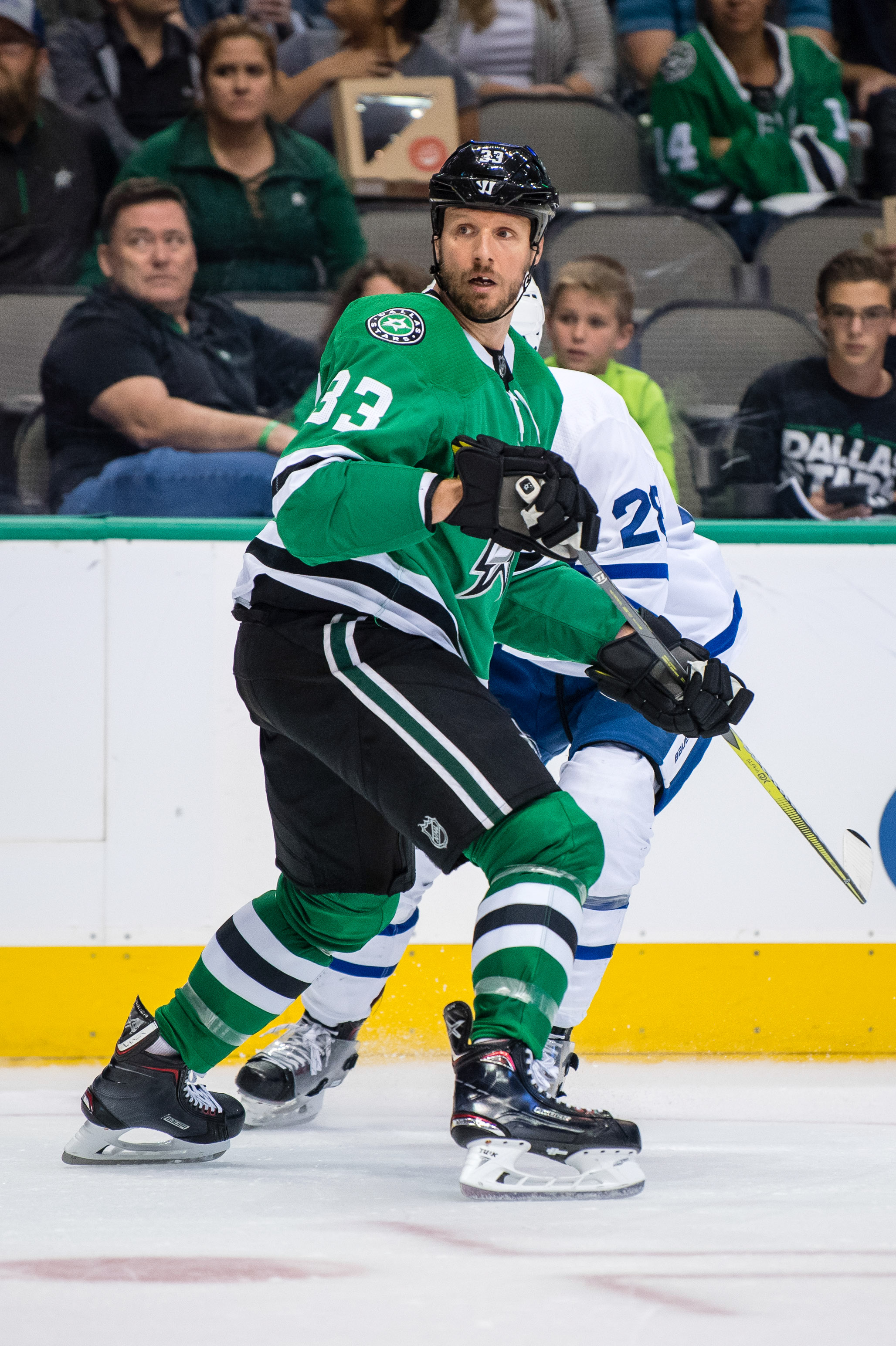 Unfortunately, the Stars didn’t capitalize on Methot’s impressive defensive play as he struggled with injuries in his two years in Dallas. In those two years, he has appeared in just 45 games and only nine of them came in the 2018-19 season. In fact, the knee injury that sidelined Methot for most of the season last year, could keep him out even longer than people had expected.
Having hit free agency this year at age 34, TSN reported in July that Methot might not be ready for the 2019-20 season at all due to the knee surgery that he underwent in January. However, despite the injuries, he still was a valuable commodity when he was on the ice with his defensive play and ability to play physically and provide key hits during the game.
Potential Suitors
The most obvious suitor could be retirement depending on how Methot’s knee responds from his surgery. TSN’s Shawn Simpson reported last month that Methot has started skating, which could increase his suitors if he can prove he is ready to return to the ice. If his knee can hold up, he could provide key depth on any team’s defense as a shutdown third-pairing defenseman, which plenty of teams would need.
A reunion in either Ottawa or Columbus might make sense, but Ottawa has already added a number of veterans to its defensive core, including Ron Hainsey and with a number of young blueliners waiting to get playing time, he might not be a good fit with his hometown. However, Methot could find a way there. In Columbus, the team is likely set on defense, but one injury could change that and a coach like John Tortorella would appreciate a defensive-minded veteran.
The New Jersey Devils are a team that could be interested in Methot as he might provide a good fit at the bottom of their lineup. There are plenty of other teams that might still need some depth on their defense such as the Anaheim Ducks, Winnipeg Jets and Washington Capitals. However, much of who might be interested in Methot, may be determined by team injuries and their needs.
Projected Contract
Methot’s situation might require him to wait to sign a contract until he can prove that he’s healthy and can really contribute to an NHL team, meaning he might have to wait until well into the 2019-20 season before signing a deal. Once he can prove he’s healthy, assuming he can and doesn’t opt to retire instead, Methot will likely have to settle for a minimum-salaried deal and prove his value to the team.
Photo courtesy of USA Today Sports Images.
Free Agent Profile: Riley Sheahan
It wasn’t all that long ago that Riley Sheahan was considered to be part of the next wave of young forwards in Detroit. However, since the Red Wings salary cap concerns forced them to trade the center two seasons ago, his value around the league has dipped considerably. Nonetheless, he could still be an intriguing option for teams looking for depth down the middle this summer.
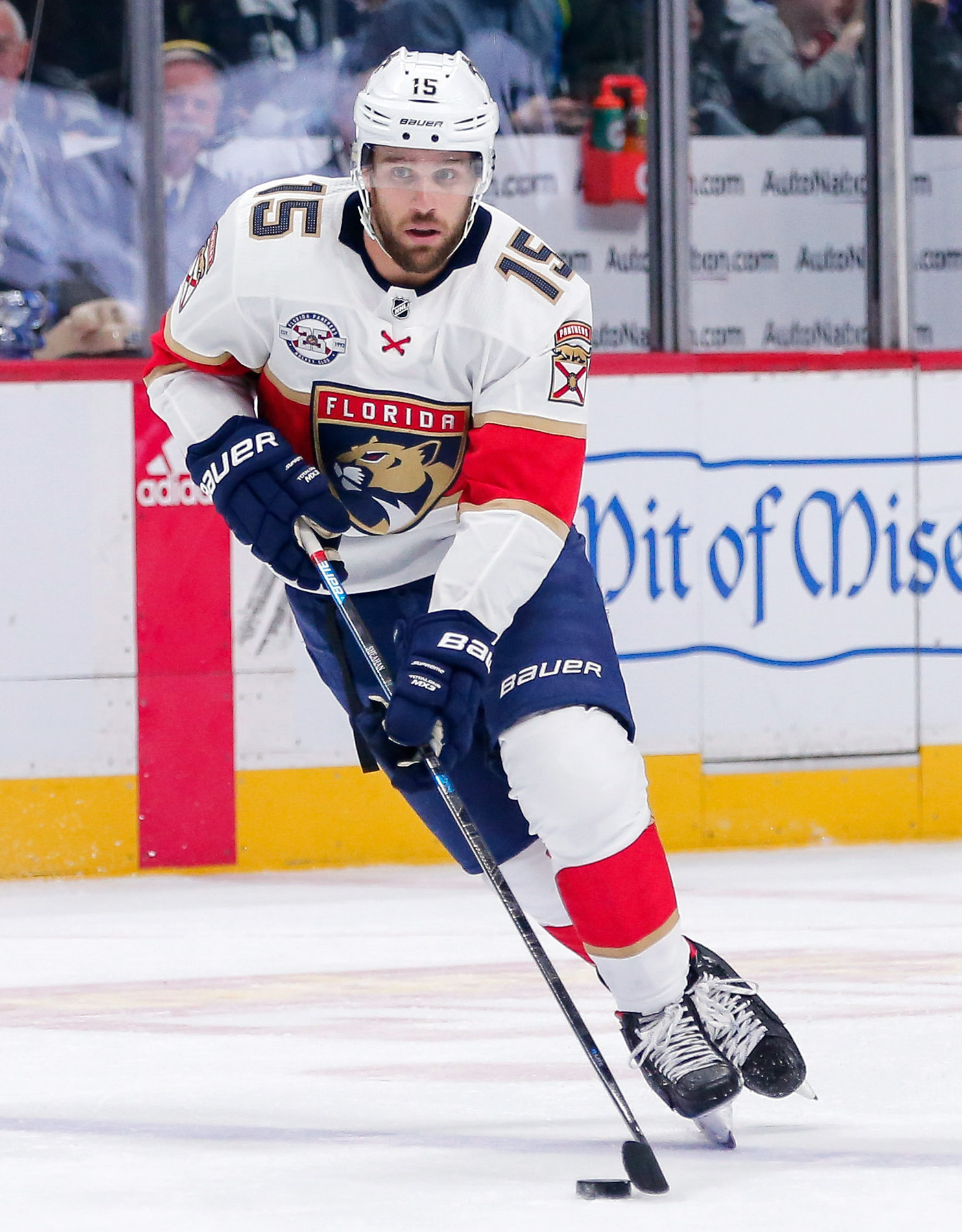 The 27-year-old was only briefly a UFA last summer as although Pittsburgh opted to non-tender him to avoid the risk of salary arbitration but quickly re-signed him to a one-year, $2.1MM deal. Unfortunately for Sheahan and the Penguins, he didn’t exactly live up to it.
After a rough start that saw him record just nine points in 49 games, the Pens dealt him to Florida as part of a four-player swap designed to shake up their roster. The change of scenery did Sheahan some good as his ice time jumped by two minutes per game and his offense also ticked up as he picked up 10 points in 33 games down the stretch. That’s still not a great return on that contract but it was at least a small step in the right direction.
However, it hasn’t been enough to get him a contract so far this summer. While he’s slightly above average at the faceoff dot, Sheahan isn’t the best penalty killer around which limits his effectiveness in a bottom-six role. That likely has played a big factor in his limited market through the first five weeks of free agency.
Potential Suitors
There are two types of teams that should have some interest in Sheahan. Teams that need more depth down the middle could view him as an affordable option. Also, rebuilding teams that believe their prospects need more development time in the minors could look at him as a capable stopgap option with an eye on trying to move him to a team looking for depth at the trade deadline.
In terms of teams looking for depth down the middle, the Oilers could have a spot for him depending on what the plans are for Ryan Nugent-Hopkins and Leon Draisaitl. If one of them plays on Connor McDavid’s wing, they’d be looking at depth pieces to fill the last two spots. Sheahan would provide them with an offensive complement to the more defensive-minded players that currently project to fill those roles. Winnipeg could have an opening if they opt to keep Jack Roslovic on the wing and they will need to add some players on the cheap to round out their roster once they re-sign their restricted free agents.
As for the second group, the Kings have largely been quiet this summer. Adding Sheahan would allow them to give someone like Blake Lizotte some extra development time while he should be able to beat out Mario Kempe for a spot. Minnesota likes what they have in Nico Sturm but he could certainly benefit from some time in the minors to start which would open up at least a short-term role for Sheahan.
Projected Contract
At this point, it’s hard to imagine Sheahan getting more than half of his previous deal and a one-year, $1MM pact wouldn’t be too surprising. Considering he’s still fairly young, there’s some potential for a deal like this to be a bit of a bargain as well. If he can’t get that, he’s a safe bet to land somewhere on a training camp PTO but that would be quite the fall from grace for someone that looked to be part of Detroit’s young core just a few years ago.
Photo courtesy of USA Today Sports Images.
Remaining Unsigned Restricted Free Agents
Originally published on August 9th
The NHL is extremely quiet today with just one transaction, the one-year two-way contract for Hunter Warner. That’s the way it has been on the restricted free agent market for some time, with very few non-arbitration deals coming down the pipe. In fact with just over a month before training camps open, 46 restricted free agents remain unsigned for the upcoming season. Among them are some of the most impressive young talents in the game and several others who are still promising prospects. Still more of the players are those who will play overseas in 2019-20 and were qualified in order for a team to retain their exclusive negotiating rights.
The full list of unsigned restricted free agents is as follows:
Anaheim Ducks:
(none)
Arizona Coyotes:
F Emil Pettersson – Will not sign, playing in SHL
Boston Bruins:
F Jakob Forsbacka Karlsson* – Will not sign, playing in SHL
D Charlie McAvoy*
D Brandon Carlo
Buffalo Sabres:
(none)
Calgary Flames:
F Matthew Tkachuk
F Andrew Mangiapane
F Spencer Foo – Will not sign, playing in KHL
Carolina Hurricanes:
F Saku Maenalanen
F Roland McKeown
Chicago Blackhawks:
F Brendan Perlini
F Victor Ejdsell – Will not sign, playing in SHL
Colorado Avalanche:
F Mikko Rantanen
D Sergei Boikov – Will not sign, playing in KHL
Columbus Blue Jackets:
F Lukas Sedlak – Will not sign, playing in KHL
D Zach Werenski
Dallas Stars:
D Julius Honka
D Niklas Hansson – Will not sign, playing in SHL
Detroit Red Wings:
G Patrik Rybar – Will not sign, playing in Liiga
Edmonton Oilers:
Florida Pantherss:
F Maxim Mamin – Will not sign, playing in KHL
F Juho Lammikko – Will not sign, playing in Liiga
F Denis Malgin
Los Angeles Kings:
Minnesota Wild:
F Kevin Fiala
F Joel Eriksson Ek – Signed for two years, $2.975MM
D Louie Belpedio
Montreal Canadiens:
(none)
Nashville Predators:
(none)
New Jersey Devils:
New York Islanders:
F Anthony Beauvillier
F Joshua Ho-Sang – Signed for two years, $1.4MM
F Michael Dal Colle – Signed for one year, two-way, $874K
New York Rangers:
F Brendan Lemieux
D Anthony DeAngelo
Ottawa Senators:
F Colin White* – Signed for six years, $28.5MM
Philadelphia Flyers:
F Travis Konecny
D Ivan Provorov
Pittsburgh Penguins:
San Jose Sharks:
(none)
St. Louis Blues:
Tampa Bay Lightning:
F Brayden Point
F Adam Erne – Traded to DET, signed for one year, $1.05MM
Toronto Maple Leafs:
Vancouver Canucks:
F Brock Boeser*
F Nikolay Goldobin
Vegas Golden Knights:
Washington Capitals:
(none)
Winnipeg Jets:
F Kyle Connor
F Patrik Laine
G Eric Comrie
*Not eligible for offer sheet
Stefan Matteau Signs AHL Contract
After failing to see any time in the NHL last season, Stefan Matteau has settled for an AHL deal this time around. The 25-year old forward has signed a one-year contract with the Cleveland Monsters. Matteau qualified for Group VI unrestricted free agency after playing last season with the Chicago Wolves.
Originally a first-round pick of the New Jersey Devils, Matteau actually jumped directly into the NHL as a teenager. Playing 17 games with the Devils before heading to junior during the 2012-13 season, the big forward seemed to be on track to quickly become a key part of their forward group. Even the next year playing with the Albany Devils things still seemed on the right track, as Matteau scored 26 points in 67 games as one of the youngest players in the AHL. Unfortunately he was unable to ever really take that next step, and found himself shipped to the Montreal Canadiens in exchange for Devante Smith-Pelly in 2016.
From there, the young forward has found himself in the minor leagues for entire seasons save for eight games with the Vegas Golden Knights in 2017-18. While he is still a decent AHL player he never became the dominant power forward that some believed he could be. Now with just 64 NHL games under his belt and an AHL contract in his pocket, he’ll have to really take another step forward if he’s ever to make it back to the best league in the world.
Beau Starrett Signs With Bakersfield Condors
With this year’s big fish of the college free agent market, Chase Priskie, off the board after signing with the Carolina Hurricanes, Cornell University forward Beau Starrett became arguably the top name remaining. Well, he is now under contract as well, albeit not in the NHL. The AHL’s Bakersfield Condors have announced a one-year deal with Starrett for the 2019-20 season. The former Chicago Blackhawks prospect is still available for an NHL team to sign, but the parent club Edmonton Oilers have the right of first refusal.
The signing has added meaning for the Oilers organization, as Starrett’s brother, Shane Starrett, is a goalie in the system. Shane was an undrafted product who played just two dominant seasons at the Air Force Academy before signing an entry-level contract with Edmonton in 2017. The 25-year-old was stellar in the AHL last season and looks to have a reasonable case for NHL opportunity sooner rather than later. Signing his brother could be added recognition of Edmonton’s commitment to the promising netminder.
Beau did not have as strong a college experience as his brother, though. Despite being the higher-rated prospect of the two, as evidenced by his selection by the Blackhawks in the third round in 2014, Starrett failed to live up to the hype at Cornell. In four seasons with the Big Red, Starrett failed to ever surpass 15 points in a season. Although his eight goals as a senior matched his first three seasons combined, Starrett’s offensive upside at the pro level remains unknown. It could be that the 23-year-old, who was once a star at the junior level in Massachusetts, simply has failed to pan out and will be more of a defensive forward at the next level, or perhaps Cornell was not the right place for his development and the Oilers see more to his game than the Blackhawks did. This season in Bakersfield will be telling as to what to expect from the younger Starrett moving forward, but it’s a risk-free addition to the Edmonton organization as, at worst, it will at least make their third-string goalie happy.
Free Agent Profile: Andrew MacDonald
The Philadelphia Flyers had to make a tough decision earlier this summer when it opted to buy out veteran defenseman Andrew MacDonald. The veteran has been a key piece in the Flyers’ locker room, but the team felt it had to make a change. Regardless of the buyout, there should still be a place for the 32-year-old defenseman in the NHL. He just needs to find it. The blueliner may not be putting up big numbers on offense, but he could easily provide depth as a bottom-line defender for plenty of teams
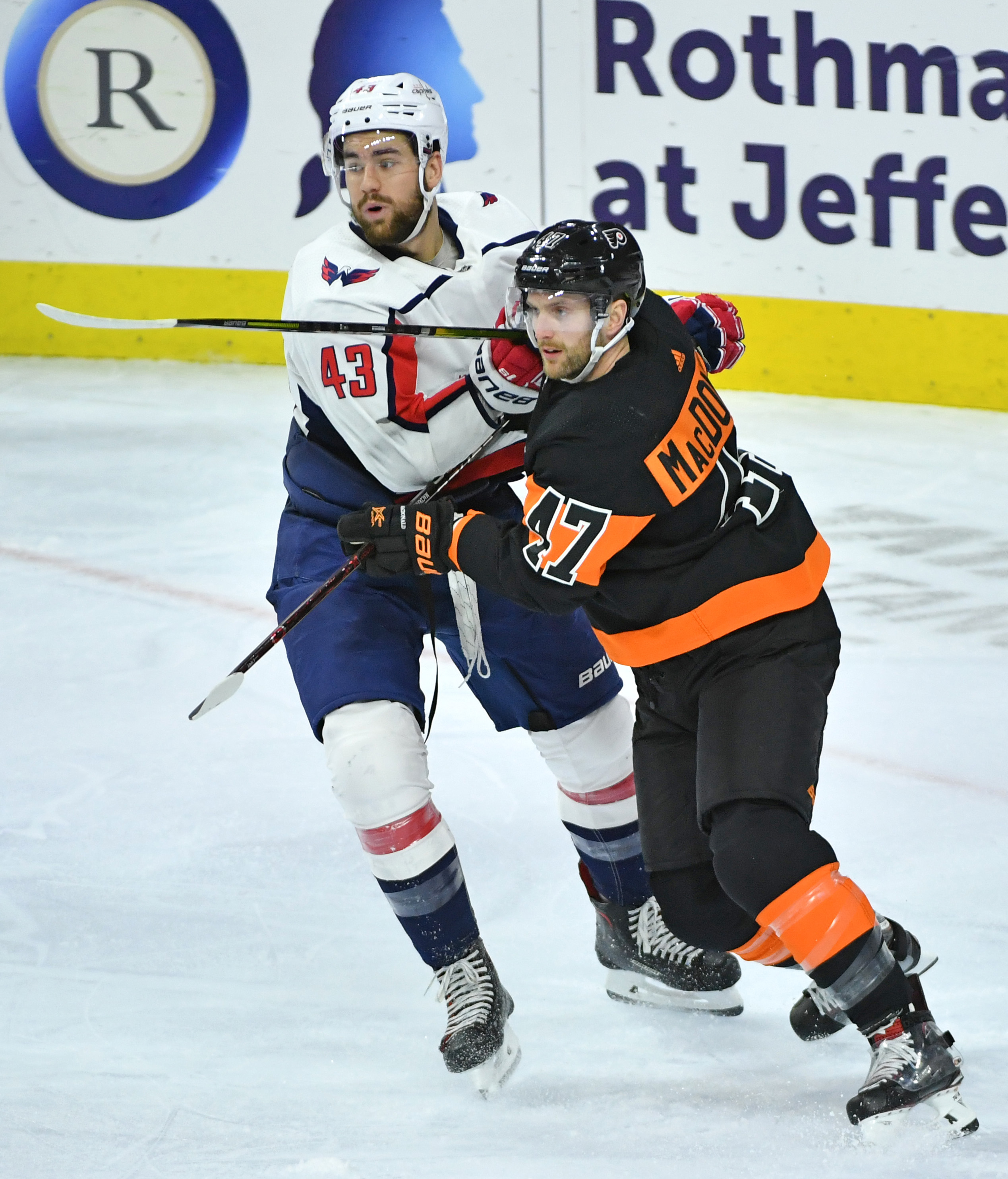 MacDonald was acquired by Philadelphia back in 2014 from the New York Islanders and was promptly signed to a long-term extension, signing a six-year, $30MM deal a month after the trade. While the defenseman provided solid defense when on the ice, the veteran was often injured and slowly has seen his play decline as his $5MM AAV became a target of criticism for fans. The buyout was largely expected, but many Flyers praised the veteran for his leadership skills.
That ability to lead could give MacDonald an advantage as teams with a young defense might gravitate towards a player who could help lead. Unfortunately, perhaps the main reason that he hasn’t been signed yet is the fact that he has dealt with injuries and has slowed down a bit and certainly wasn’t worth the $5MM AAV that he signed years ago.
Potential Suitors
A possible return to the New York Islanders could always be a possibility. MacDonald played his best years here and could serve as a veteran who could fill in as a 6/7th blueliner and another veteran who could help out with a bunch of up-and-coming defensive prospects such as Noah Dobson and Bode Wilde. However, the team does have several veterans already and likely wouldn’t show a significant interest unless some of those players went down with injuries.
Although they have been mentioned often in regards to blueline free-agents, the Winnipeg Jets will be expected to add a few blueliners to fill out its depth eventually after the team locks up restricted free agents Patrik Laine and Kyle Connor. The veteran could also look to return to Canada and find a home there, but again teams like Montreal, Toronto and Ottawa may not be in need of a veteran blueliner as they all have quite a bit of depth.
In the end, however, MacDonald will likely just have to wait until teams lose a player to injury.
Projected Contract
MacDonald will never get anything near $5MM and likely at this point will have to accept a minimum salaried deal. Considering that he is still getting quite a bit from Philadelphia, that money should make it easier to accept any deal that might come along for him.
Photo courtesy of USA Today Sports Images.
2019 List Of College Players Becoming Free Agents
Originally published on August 8th. The unsigned players are now unrestricted free agents and can sign with any team they choose.
In one week, 23 college players drafted by NHL teams are set to become unrestricted free agents if they fail to sign an entry-level contract. After August 15th, these players are eligible to sign with any team in the league. Several have already signed minor league deals but that does not technically retain their draft rights for the original club. None of the teams that drafted these players will receive any compensation for the expiring rights.
The full list:
Anaheim Ducks:
F Brent Gates, University of Minnesota (80th overall, 2015) – signed to AHL deal
D Steven Ruggiero, Lake Superior State University (178th overall, 2015) – signed to AHL deal
Buffalo Sabres:
F Christopher Brown, Boston University (151st overall, 2014) – signed to AHL deal
F Max Willman, Boston University (121st overall, 2014)
D Ivan Chukarov, University of Massachusetts (182nd overall, 2015) – signed to ECHL deal
Chicago Blackhawks:
F Beau Starrett, Cornell University (88th overall, 2014)
F Fredrik Olofsson, University of Nebraska-Omaha (98th overall, 2014) – signed in Sweden
F Liam Coughlin, University of Vermont (130th overall, 2014) – signed to AHL deal
F Jack Ramsey, University of Minnesota (208th overall, 2014) – signed to AHL deal
Detroit Red Wings:
G Chase Perry, Rensselaer Polytechnic Institute (136th overall, 2014)
Edmonton Oilers:
D Vincent Desharnais, Providence College (183rd overall, 2016) – signed to AHL deal
F J.D. Dudek, Boston College (152nd overall, 2014)
G Hayden Hawkey, Providence College (177th overall, 2014)
Florida Panthers:
F Joe Wegwerth, University of Notre Dame (92nd overall, 2014)
Minnesota Wild:
D Nick Boka, University of Michigan (171st overall, 2015) – signed to AHL deal
D Jack Sadek, University of Minnesota (204th overall, 2015) – signed to AHL deal
Montreal Canadiens:
D Nikolas Koberstein, University of Alaska-Fairbanks (125th overall, 2014)
Nashville Predators:
F Thomas Novak, University of Minnesota (85th overall, 2015) – signed to AHL deal
D Adam Smith, Bowling Green State University (198th overall, 2016) – signed to AHL deal
Ottawa Senators:
D Miles Gendron, University of Connecticut (70th overall, 2014) – signed to AHL deal
Philadelphia Flyers:
F Brendan Warren, University of Michigan (81st overall, 2015) – signed to ECHL deal
San Jose Sharks:
F Jacob Jackson, Michigan Tech University (201st overall, 2013)
G Jake Kupsky, Union College (193rd overall, 2015)
F Marcus Vela, University of New Hampshire (190th overall, 2015)
Washington Capitals:
D Chase Priskie, Quinnipiac University (177th overall, 2016)
F Steven Spinner, University of Nebraska-Omaha (159th overall, 2014)
The belle of the ball here is likely Priskie, who captained the Quinnipiac squad the last two seasons and was a Hobey Baker finalist in 2018-19. The right-handed defenseman scored 39 points in 36 games and was one of the most dynamic offensive defensemen in the country. Priskie is not expected to sign with the Capitals for a variety of reasons, but will be “highly sought after” according to Bob McKenzie of TSN earlier this year.
Other teams will be able to sign these players starting on August 16th, though it often takes a few days to become official.
Latest On Kyle Connor Contract Talks
While much of the ink this offseason has been spilled about Mitch Marner, there are plenty of other extremely talented restricted free agents still unsigned as we get closer to training camp. There is just a month left before the Winnipeg Jets will get together to prepare for the season but both Patrik Laine and Kyle Connor are still without contracts. In fact, the Jets only have seven forwards signed to one-way contracts for the upcoming campaign meaning any negotiations that leak into the regular season would put a lot of pressure on their already thin depth chart.
When asked by media including TSN whether he hopes to have a deal done before training camp starts, Connor was clear that would be his preference:
Yeah that’s definitely the plan. A player never wants to miss time in training camp, it’s tough always coming in and not getting that preparation, time with the teammates and practice. So that’s definitely a goal for sure.
I don’t think it’s anything to press the panic button on. It’s just kinda how these things do—take a little bit of time.
Connor wouldn’t comment on whether his representatives or the Jets are waiting on a player like Marner to set the market, something that has been speculated on for some time. The young forward also didn’t have much to say about any offer sheets coming his way, something that is still technically a possibility for many of the top names. After Sebastian Aho signed a sheet with the Montreal Canadiens on the first day of free agency—one that was quickly matched by the Carolina Hurricanes—the league seems to be back to normal concerning the RFA tactic (that is to say, there have been no others signed.)
While Laine has stolen many of the headlines the last several seasons in Winnipeg, it’s Connor who has established himself as a legitimate first line option at even-strength. The 22-year old former Michigan Wolverine has consecutive 30+ goal seasons in his first two full years in the NHL and put up 66 points in 2018-19. Laine meanwhile has continued his incredible goal scoring, but saw his overall performance drop to just 50 points in 82 games last season.
It’s that even-strength production for Connor that arguably makes him a more valuable player for the Jets moving forward, though both are obviously going to get huge raises coming off of their entry-level contracts. How exactly the team plans on fitting them into their current salary structure is unclear however, given they already have so much money tied up in a handful of other forwards. CapFriendly currently projects the Jets to have a little less than $17.6MM in cap space, but that is for a 17-man roster. That number starts to shrink as you add names from the minor leagues to fill out the forward ranks, and the pair of restricted free agents could easily eat up a combined chunk around $15MM depending on term. That financial crunch may end up forcing the Jets to go with a shorter contract for at least one of them, though nothing seems imminent at this point.
Free Agent Profile: Dion Phaneuf
For years, most people have associated defenseman Dion Phaneuf with the seven-year, $49MM contract he signed with the Toronto Maple Leafs back in 2013 when he was considered a top-pair defender. However, that contract didn’t even kick in until the 2014-15 season and suddenly by that point, Toronto was keen to move on from him, eventually moving his contract to Ottawa after just a year and a half. He was then sent to Los Angeles a few years later. Finally after struggling immensely last season, the Kings finally ended it this summer, buying out the now-34-year-old blueliner and putting him on the open market.
 Looking at his numbers from a season ago, it’s no wonder why the Kings chose to move on from him. He played 67 games last season, but was made a healthy scratch for the first time in his career and saw his ATOI go from averaging more than 20 minutes a game down to 15:00, a career-low. Offensively, he potted just one goal and six points, while struggling with a minus-21 rating.
However, despite those issues, the blueliner has said he has more to give and would be willing to take on a mentor role with teams that are rebuilding, hoping that teams might be interested in bringing him back to guide their younger players. While retirement is also an option for the veteran, he’s made it clear he wants another opportunity.
Potential Suitors
One team loaded with young defensemen is the Vancouver Canucks. The team has a number of young players, including Quinn Hughes, Troy Stecher and Olli Juolevi, but the team already added a pair of veterans in Tyler Myers and Jordie Benn in free agency, while re-signing Alexander Edler as well. Is there still a need for another veteran now in Vancouver?
Another team that was highly considered early on in free agency was the Dallas Stars, who might want a player like Phaneuf filling in a third-pairing role as the team is loaded with young defensive talent. However, the team opted instead for grabbing fellow buyout victim Andrej Sekera. It now would seem like an unlikely destination for a more crowded blueline.
The Winnipeg Jets, short on defenders after losing Myers, Jacob Trouba and Ben Chiarot on defense, could bring in someone like Phaneuf to fill in the holes until some of their younger defenseman are ready for a full-time NHL role. However, Phaneuf may also just wait until training camp approaches and keep an eye on teams that suffer some injuries.
Projected Contract
Phaneuf is still being paid by Los Angeles thanks to the buyout, so money is likely not that important to the 34-year-old. A minimum salaried deal is a likely outcome and likely the only option at this point in his career.
Photo courtesy of USA Today Sports Images.