
Salary Cap Deep Dive: St. Louis Blues
Navigating the salary cap is one of the more important tasks for any GM. Teams that can avoid total cap chaos by walking the tightrope of inking players to deals that match their value (or compensate for future value without breaking the bank) remain successful. Those that don’t see struggles and front office changes.
PHR will look at every NHL team and give a thorough look at their cap situation heading into the 2023-24 season. This will focus more on players who are regulars on the roster versus those who may find themselves shuttling between the AHL and NHL. All cap figures are courtesy of CapFriendly.
St. Louis Blues
Current Cap Hit: $83,206,429 (under the $83.5MM Upper Limit)
Entry-Level Contracts
F Nikita Alexandrov (one year, $817K)
F Jake Neighbours (two years, $835K)
In his first full professional season, Neighbours split the year between St. Louis and Springfield. While he was a scorer in the minors, he didn’t have much success in 43 NHL contests. He should push for a full-time spot this season but barring a big breakthrough in his offensive play, he’s a strong candidate for a short-term second contract. Alexandrov got his first taste of NHL action last season but, like Neighbours, didn’t produce much with the Blues despite being a quality scorer with the Thunderbirds. Playing almost exclusively on the fourth line tends to do that. Now waiver-eligible, Alexandrov should be able to lock down a full-time roster spot but if he’s back in a similar role this season, his second contract is going to check in pretty close to this one.
Signed Through 2023-24, Non-Entry-Level
F Sammy Blais ($1MM, UFA)
D Robert Bortuzzo ($950K, UFA)
F Kasperi Kapanen ($3.2MM, UFA)
D Scott Perunovich ($775K, RFA)
D Calle Rosen ($762.5K, UFA)
D Marco Scandella ($3.275MM, UFA)
F Oskar Sundqvist ($775K, UFA)
F Jakub Vrana ($2.625MM, UFA)*
*-Detroit is retaining an additional $2.625MM on Vrana’s contract
Kapanen was a somewhat surprising waiver claim from Pittsburgh late in the season as GM Doug Armstrong opted to take an extended look at him. After struggling with the Penguins, he finished up strong with the Blues but will need to carry that type of performance over for a full season if he wants a shot at beating this price tag on his next deal. Vrana was limited to just 25 NHL games last year between Detroit and St. Louis but was quite productive with the Blues, notching 10 goals in 20 games. He will need to stay healthy and keep up that scoring pace if he is going to have any chances of approaching the $5MM mark on his next deal.
Blais struggled last season with the Rangers and was basically a throw-in on the Vladimir Tarasenko trade to help make the money work. But his return to St. Louis rekindled his production. Blais opted to sign an early extension not long after the swap, a move that might have cost him a bit of money had he tested the market. If he remains a double-digit scorer while chipping in with his usual physicality, he’ll be in line for a raise next summer. Sundqvist didn’t get much traction on the open market this summer despite having the second-highest point total of his career. If he’s in a depth role this season, he’ll have a hard time significantly bolstering his market but a spot on the third line could at least get him a small boost.
Scandella did well when he first joined St. Louis, quickly earning this contract which was a four-year deal. Things haven’t gone well at all since then as he has battled injuries and struggled when healthy. Unless something changes, his market value will be closer to the $1MM range next summer than the $3MM range. Bortuzzo is a prototypical depth defender best used as a sixth or seventh option. Those players usually sign for close to the minimum which is what he’ll need to take again if he wants to stick around.
Rosen saw limited action last season but was pretty productive with eight goals and ten assists in 49 games. That should turn some heads around the league and if he’s able to stick on the roster full-time this year as well, he could at least get closer to the $1MM mark next summer. Perunovich will be looking to unseat Rosen (or someone else). A productive scorer in both college and the AHL, injuries have derailed his development so far. He’s on a one-year minimum contract and if he can stay healthy, he should be able to play his way into the mix.
Signed Through 2024-25
F Pavel Buchnevich ($5.8MM, UFA)
G Joel Hofer ($775K, RFA)
F Alexey Toropchenko ($1.25MM, RFA)
D Tyler Tucker ($800K, RFA)
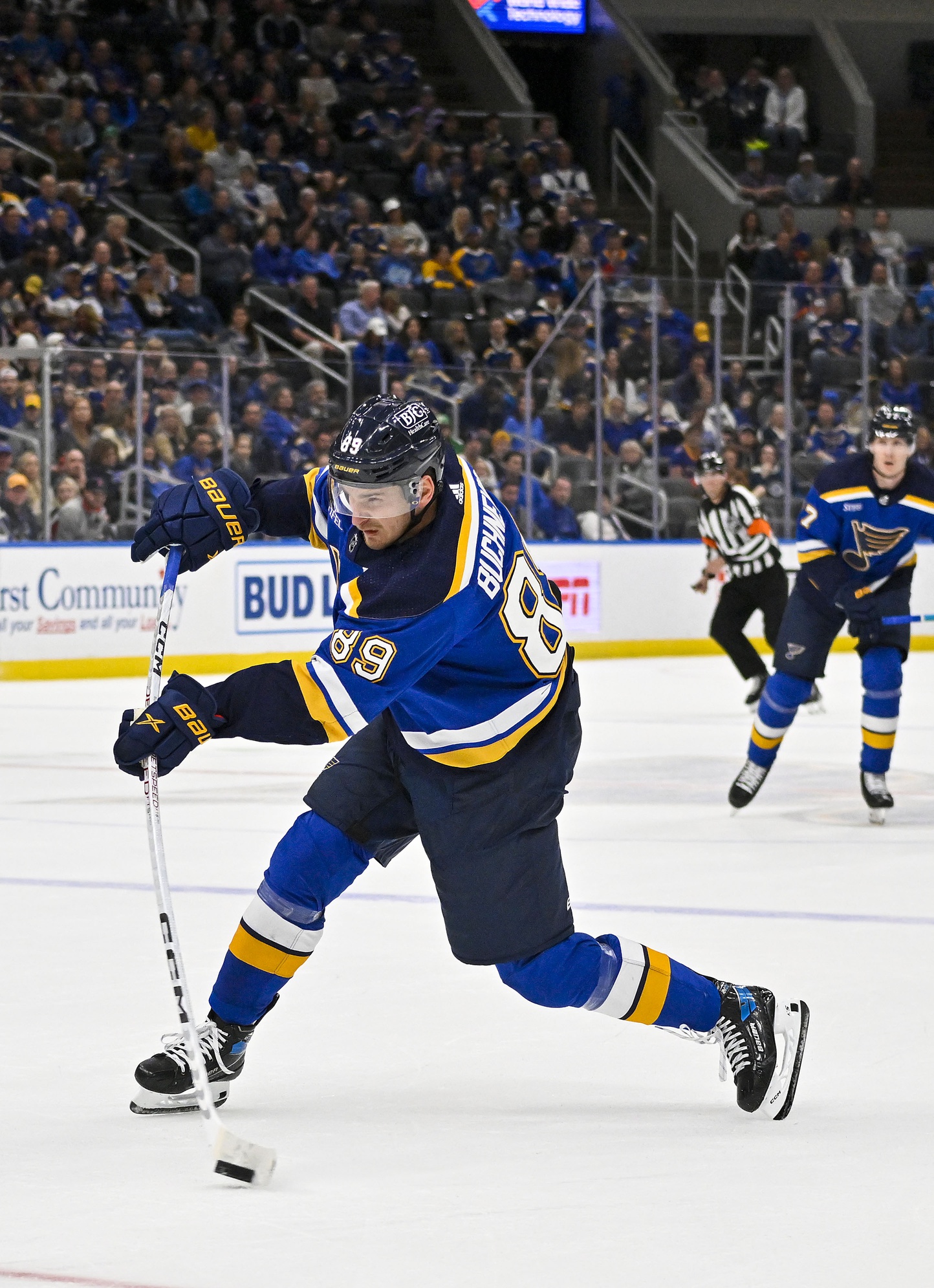 Buchnevich has found another level since joining St. Louis two years ago. While he did battle some injury trouble, last season was still by far his second-best season offensively and his second straight showing of over a point per game. After being more of a second liner with the Rangers in terms of production, he has become a legitimate top-line winger with the Blues while receiving second-line money, giving them a nice bang for their buck. Assuming he’s able to continue that over the next two seasons, Buchnevich could very well add a couple million per season to his next cap hit while pushing for close to a max-term deal; he’ll be 30 when his next contract kicks in.
The other three players in this group are the bridge brigade. Toropchenko held down a regular spot for most of last season, albeit in a limited role which made a short-term second contract an obvious outcome. Moving onto the third line with some regularity will help boost his next deal. Tucker spent the bulk of last season in the minors but did well in limited action when he was up. Now waiver-eligible, this deal should secure him at least the seventh spot on the depth chart; he’ll need to play his way into a regular role to get any sort of sizable raise. As for Hofer, he has primarily played in the minors so far which limited his earnings upside. If he fares well in the second-string role for two years, he should more than double this price tag.
Signed Through 2025-26
F Kevin Hayes ($3.571MM, UFA)*
D Nick Leddy ($4MM, UFA)
F Brandon Saad ($4.5MM, UFA)
*-Philadelphia is retaining an additional $3.571MM per season on Hayes’ deal
Saad hasn’t reached the 50-point mark since 2016-17 with Columbus but has settled in as a capable and somewhat consistent secondary scorer. This contract isn’t a bargain but they’ve received a decent return on it so far. Three more years around the 20-goal mark might give him a shot at a short-term deal close to this amount in 2026. Hayes comes over from Philadelphia who practically gave him away with retention. St. Louis should benefit nicely; while he’s not the $7MM-plus player his full contract is, he should easily be able to live up to half of that.
Leddy’s first full season with the Blues was a bit of a mixed bag. He logged some big minutes but didn’t provide a whole lot offensively while his possession numbers weren’t the strongest either. There were plenty of underachievers a year ago in St. Louis but they’ll be counting on more from him this season to get better bang for their buck.
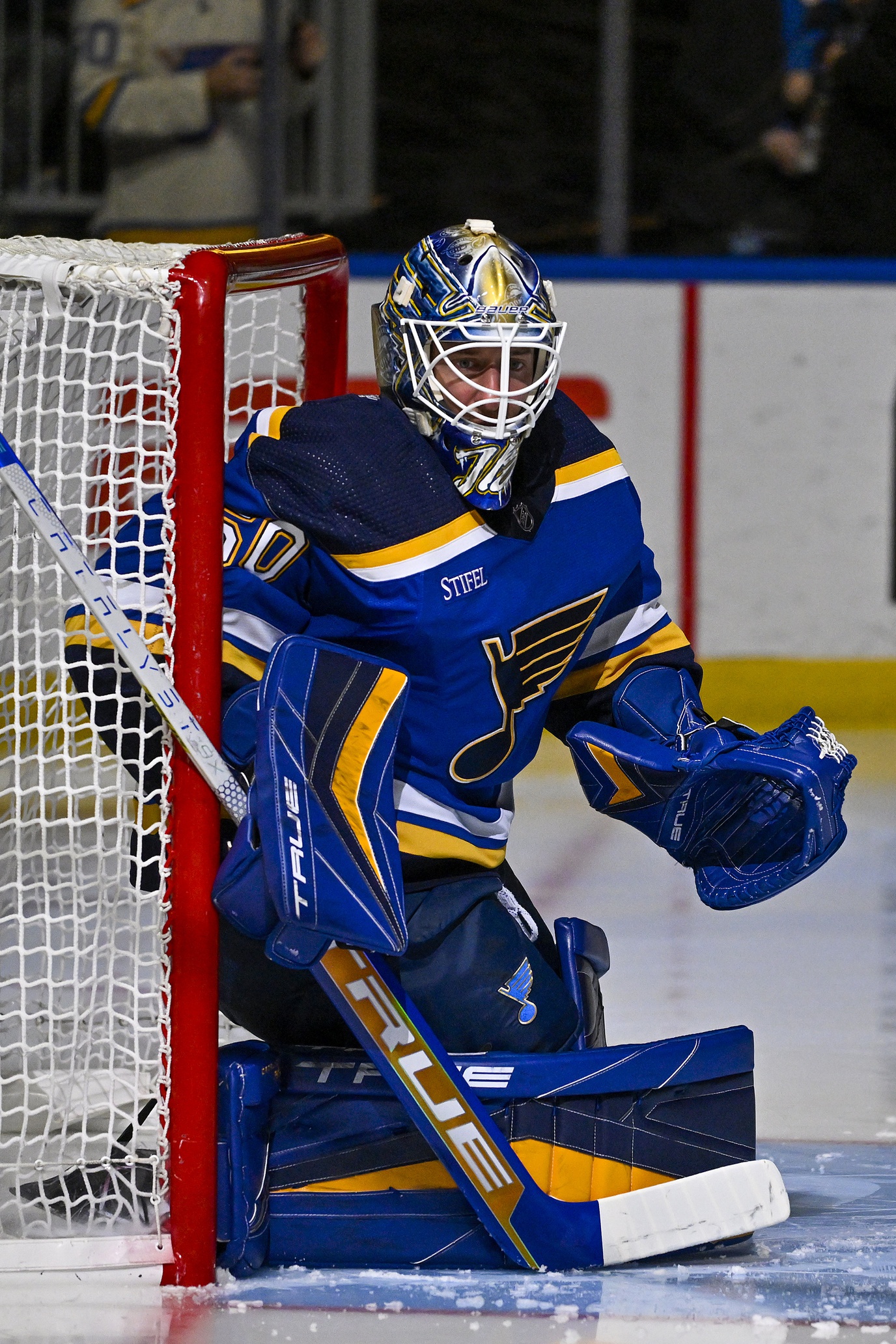
Canadiens Acquire Rights To Jakov Novak From Senators
The Canadiens have made a small addition to their prospect pool as CapFriendly reports (Twitter link) that they’ve acquired the rights to forward Jakov Novak from the Senators in exchange for future considerations.
The 24-year-old was a seventh-round pick by the Sens back in 2018 (188th overall) after a strong showing with Janesville of the NAHL. Novak went on to play three seasons at Bentley University before transferring to Northeastern for the final two years of his college career. Last season, he posted eight goals and four assists in 35 NCAA contests before turning pro, signing with Allen of the ECHL, Ottawa’s affiliate in that league. At that level, he got into 14 games and fared well, collecting seven goals and five helpers.
It was believed that Novak’s NHL rights would have lapsed back in mid-August but that wasn’t the case on a technicality since he had already signed an AHL contract with Laval, Montreal’s farm team. Now, the two sides have finalized the rights swap, giving the Canadiens the ability to sign him to an entry-level deal if they so desire.
Five Key Stories: 9/4/23 – 9/10/23
The first full week of September is in the books and with training camps fast approaching, there was some news of note around the hockey world which is recapped in our top stories.
More Tryouts: The month of September can be colloquially thought of as PTO season as unsigned players look to catch on before camps start. Last week, several veterans inked tryout deals and several more did so over the past seven days. Among those with recent NHL experience, Danton Heinen will look to have a second go-round with Boston while Ryan Dzingel will try to do the same with Arizona. Noah Gregor is hoping to catch on with Toronto, Saku Maenalanen is the latest to join Colorado’s camp, while Colin White will be heading to a very crowded forward battle in Pittsburgh. Quite a few more tryouts are expected to be coming over the next week or two.
Late Moves For Tampa Bay: The Lightning thought they had filled a spot on their fourth line early in free agency when they signed winger Josh Archibald to a two-year deal. However, after he informed the team that he no longer intends to play this season, Tampa Bay elected to terminate his contract. They quickly found a replacement though, inking Tyler Motte to a one-year deal worth the same $800K that they were set to pay Archibald. It could be argued that the moves work out to a net upgrade for the Lightning with Motte being a bit younger and having a slightly better track record of production.
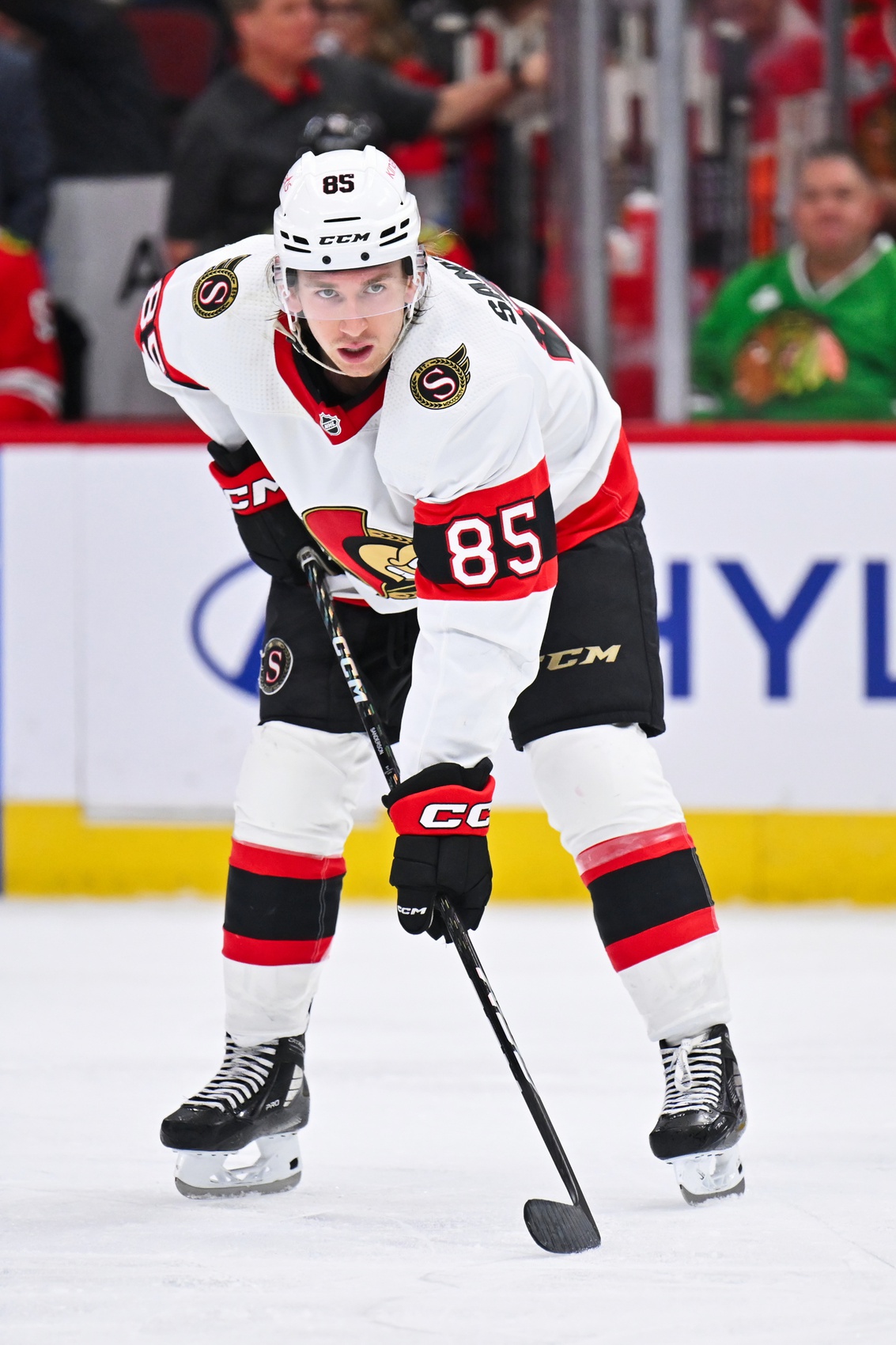 Eight For Sanderson: The Senators haven’t shied away from extending their core players early. They’ve elected to do so once more, signing defenseman Jake Sanderson to an eight-year, $64.4MM extension that will begin in the 2024-25 season. The deal buys out Sanderson’s five remaining RFA years plus three seasons of UFA eligibility. The 21-year-old had a strong rookie year last season, collecting 32 points in 77 games while logging nearly 22 minutes a night. This deal will make Sanderson, the fifth-overall pick in 2020, Ottawa’s highest-paid defenseman as it checks in just ahead of Thomas Chabot. Ottawa’s young core consisting of Sanderson, Chabot, Tim Stutzle, Brady Tkachuk, and Josh Norris, are all signed through at least the 2027-28 campaign.
Off-Ice Moves: After handing out extensions to Arizona’s coaching staff, it was GM Bill Armstrong’s turn to receive one as well as he inked an agreement that will keep him in charge of the Coyotes through the 2028-29 season. Armstrong has been at the helm for four seasons now, embarking on a full-scale rebuild. This deal means he’ll be the one to take them out of it down the road. Meanwhile, Bruce Boudreau has a new job but not with an NHL team. Instead, he has joined Niagara of the OHL as a Senior Advisor. Boudreau ranks 21st all-time in NHL games coached and wins and it remains to be seen if he’ll one day get a chance to add to those numbers. Lastly, after not being with a team last season, Doug Wilson is back in an NHL front office as he was hired by Pittsburgh as a Senior Advisor. He spent over 25 years on San Jose’s management team and will now serve as a member of Kyle Dubas’ new-look front office.
Second Bridge For Frost: With Philadelphia’s cap situation, the only way they could afford to re-sign Morgan Frost was with another short-term bridge contract. The two sides have now agreed on one as he signed a two-year, $4.2MM deal. The 24-year-old had a career year last season, notching 19 goals and 27 assists in 81 games, providing quite a nice return on a one-year, $800K deal. The move gives the Flyers a chance to evaluate if he’s indeed a long-term piece of the puzzle. If he is, they’ll owe him a $2.4MM qualifying offer in 2025.
Photo courtesy of USA Today Sports Images.
Salary Cap Deep Dive: Nashville Predators
Navigating the salary cap is one of the more important tasks for any GM. Teams that can avoid total cap chaos by walking the tightrope of inking players to deals that match their value (or compensate for future value without breaking the bank) remain successful. Those that don’t see struggles and front office changes.
PHR will look at every NHL team and give a thorough look at their cap situation heading into the 2023-24 season. This will focus more on players who are regulars on the roster versus those who may find themselves shuttling between the AHL and NHL. All cap figures are courtesy of CapFriendly.
Nashville Predators
Current Cap Hit: $75,593,365 (under the $83.5MM Upper Limit)
Entry-Level Contracts
F Luke Evangelista (two years, $797.5K)
F Juuso Parssinen (one year, $850.8K)
F Philip Tomasino (one year, $863K)
Potential Bonuses
Evangelista: $82.5K
Parssinen: $57.5K
Tomasino: $212.5K
Total: $352.5K
After being a full-time regular in his rookie year, Tomasino spent half of last season in the minors before being brought up in February where he was quite productive with 18 points in 31 games. If he can push through and reach 50 points, it’s possible that he’s a candidate to bypass a bridge contract but at this point, a two-year agreement just past the $2MM mark seems like a possible landing spot for him. His bonus is an ‘A’ one and as long as he’s up for the full season and stays healthy, he should be able to reach it.
Parssinen also started in the minors last season although he was recalled to stay much earlier back in November. The 45 games he played in 2022-23 were his first at the NHL level which, coupled with however many he plays this year, probably won’t be enough for a long-term agreement. Evangelista was up and down for most of last season but was quite productive in a limited role in Nashville with 15 points in just 24 games which should earn him a full-time look this year. How he fares will go a long way toward determining if he’s a candidate for a long-term second deal or not. Both he and Parssinen’s bonuses are games played-based.
Signed Through 2023-24, Non-Entry-Level
D Tyson Barrie ($4.5MM, UFA)
D Alexandre Carrier ($2.5MM, UFA)
D Dante Fabbro ($2.5MM, RFA)
F Denis Gurianov ($850K, UFA)
F Mark Jankowski ($775K, UFA)
G Kevin Lankinen ($2MM, UFA)
F Michael McCarron ($775K, UFA)
F Thomas Novak ($800K, UFA)
F Kiefer Sherwood ($775K, UFA)
F Cole Smith ($775K, UFA)
F Yakov Trenin ($1.7MM, UFA)
Trenin wasn’t quite able to get back to the 17-goal mark following a breakout 2021-22 campaign but he was able to reach 24 points again for the second straight year. However, as a physical winger, he’s still well-positioned to land a raise past the $2MM AAV should he make it to the open market next summer. Gurianov comes over after being non-tendered by Montreal following a rough year that saw him score just seven goals in 66 games. If he wants to get some stability and security on a contract, he’ll need to get back to pushing toward the 20-goal mark, not the 20-point plateau.
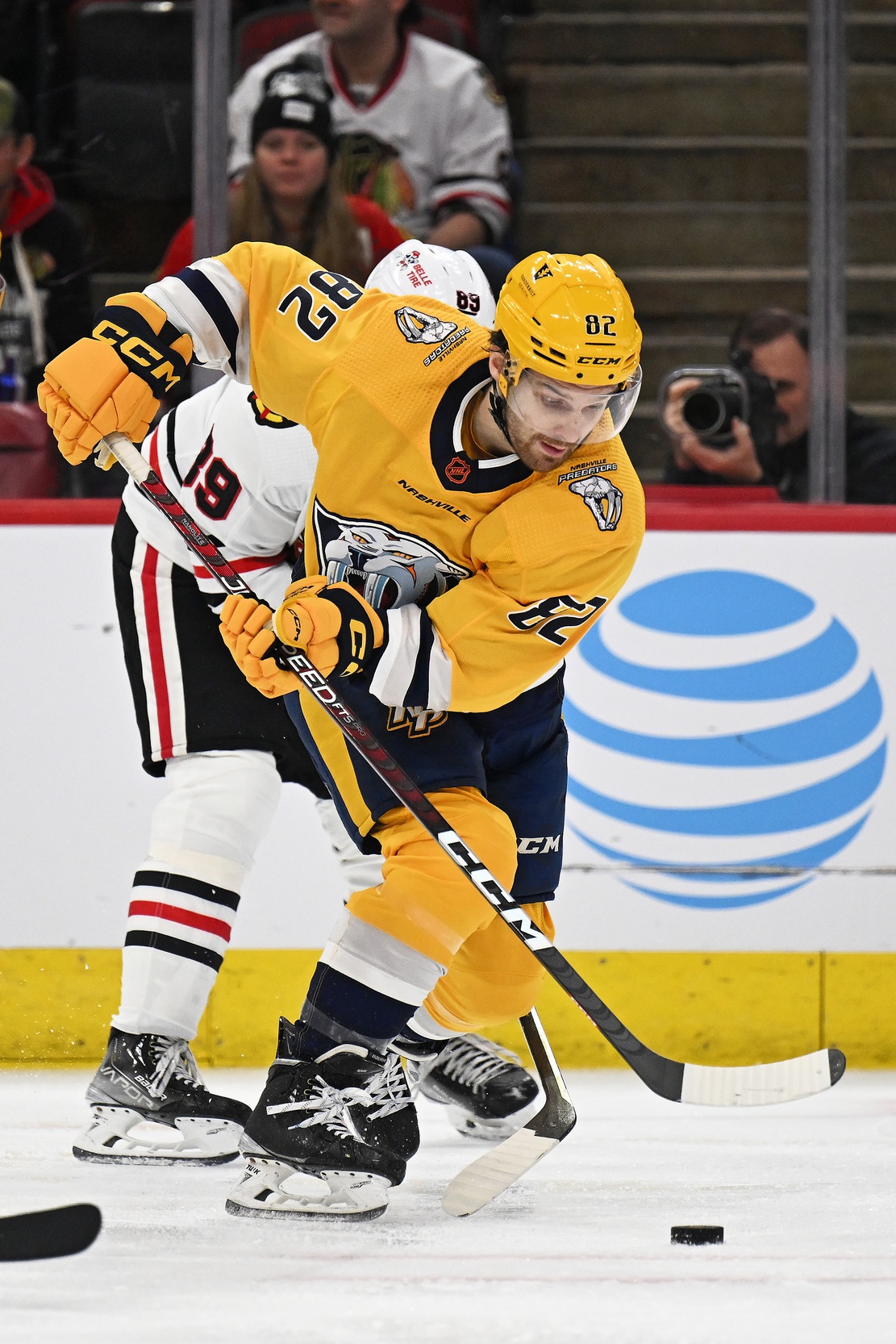 Novak is one of the more intriguing pending UFAs in this group. This time a year ago, he was a fringe NHL player and he even spent 25 games in the minors a year ago. However, he was extremely productive with Nashville, recording 17 goals and 26 assists in just 51 games. Considering his past and the fact he was up and down through the first half of last year, Novak opted to take a guaranteed one-way offer, a move that likely left money on the table considering how he finished the year. Even if he winds up with 43 points over a full season instead of 60% of one, he’s well-positioned to earn a sizable raise when he puts pen to paper on his next deal. There’s a good chance the starting salary on it will beat his career earnings.
Smith was a full-time NHLer for the first time last season after a productive campaign with AHL Milwaukee the year before. With nearly 200 hits in 69 games, he’s the type of energetic forward that teams often like on the fourth line. If he can lock down a regular role again this year, he could push for a seven-figure deal next summer. Jankowski, Sherwood, and McCarron will all be in the mix in training camp but even if they can secure a regular role, their respective histories suggest that they’re likely to continue to hover around the minimum salary moving forward.
Barrie had one of the best statistical seasons of his career last year with 55 points in 85 (yes, 85) games between Edmonton and Nashville. However, his defensive struggles have hampered him in his previous times through free agency and it seems likely that will happen again. A deal around this one is certainly possible but getting much more will be difficult. After a breakout year in 2021-22, Carrier struggled last season both in terms of performance and injury-wise. He was a top-four piece in 2021-22 but more of a third-pairing one last year. If he’s the former in 2023-24, he’ll be in line for at least a small raise. If he’s the latter, he should expect a drop closer to the $1MM range. Fabbro’s future in Nashville has been subject to speculation in recent years as he has stagnated from a development perspective. His ATOI went to a four-year low last season while his offensive production was cut in half. This deal feels like it could be a last-chance opportunity and if he doesn’t rebound under new head coach Andrew Brunette, he’s quite likely going to be in trade speculation once again.
Lankinen didn’t see a lot of action last season, making just 18 starts. However, his save percentage of .916 was well above the league average which earned him a small raise to stick around. Lankinen still only has 88 career NHL appearances under his belt which limits his earnings upside but another season like 2022-23 could put him in a spot where another small raise should be achievable.
Signed Through 2024-25
F Cody Glass ($2.5MM, RFA)
F Gustav Nyquist ($3.185MM, UFA)
G Juuse Saros ($5MM, UFA)
Last season saw Nyquist deal with a shoulder injury that ended his regular season early while he wasn’t able to produce at the level he was accustomed to before then. He did put forth a strong playoff showing with Minnesota but the market wasn’t kind to many wingers this summer. This price point is certainly reasonable for a middle-six winger and if he rebounds offensively, it will become a team-friendly deal. After struggling the previous few seasons, Glass made some big strides last season, setting career highs across the board while establishing himself as an every-game regular. He’s not at the level his original draft slot might suggest but now he looks like at least a capable part of Nashville’s secondary core moving forward. This deal amounts to a second bridge contract, giving both sides more time to assess things; he’ll have one year of arbitration eligibility remaining in 2025.
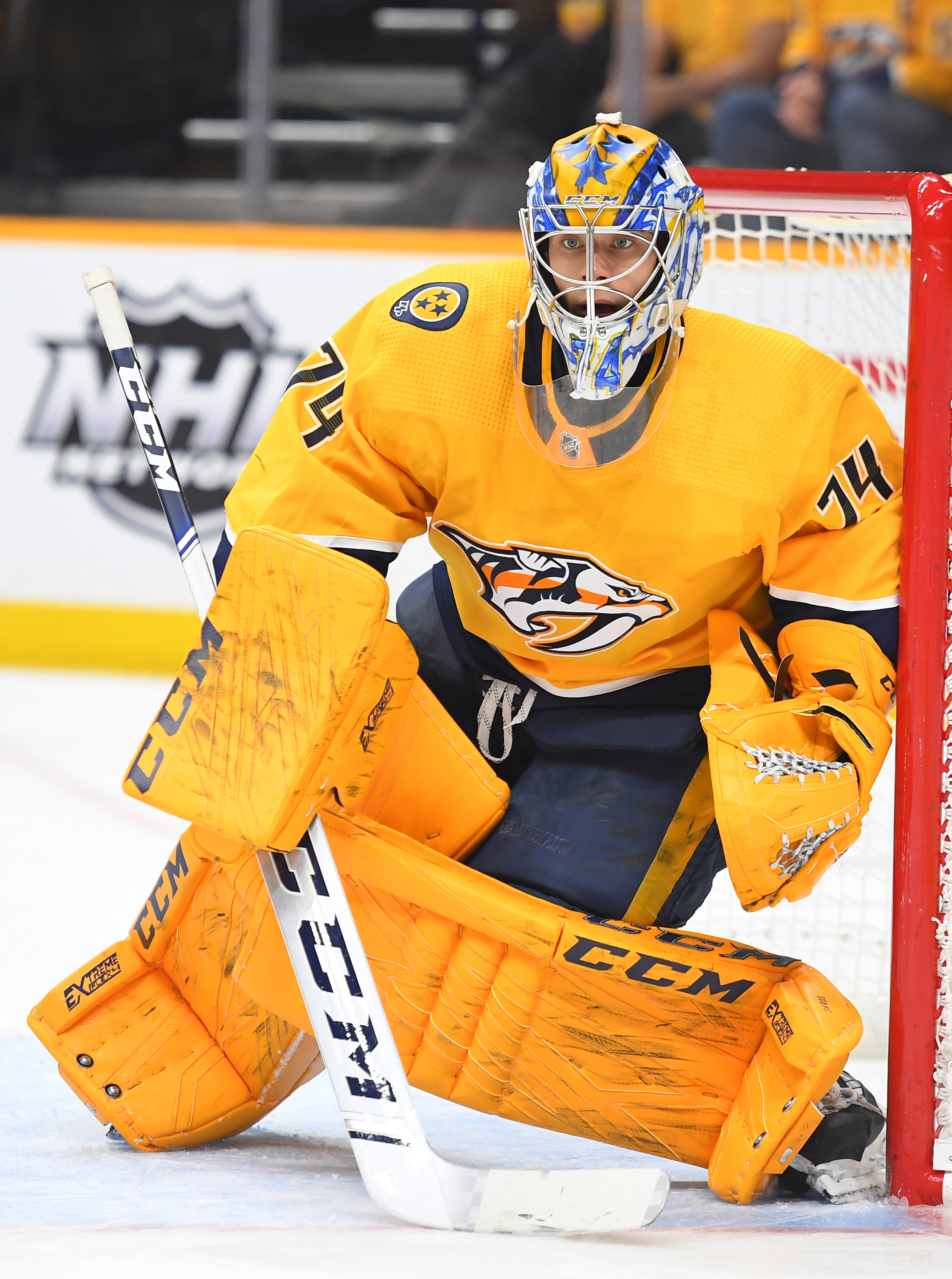 It wasn’t that long ago that there were questions about Saros’ ability to hold up as a starter. It’s safe to say those have long been dealt with as he was once again one of the top goalies league-wide last season while playing the most minutes for the second year in a row. Being undersized will scare some teams off if he makes it to the open market in 2025 but if he has two more years like this before getting there, Saros should find himself closer to the upper end of the salary scale for netminders. Probably not right at the top but an extra couple million per season (if not a bit more) should be achievable. That would put him in the top handful of goaltenders across the league which, based on his recent play, is exactly where he should be.
Signed Through 2025-26
D Jeremy Lauzon ($2MM, UFA)
D Ryan McDonagh ($6.75MM, UFA)
D Luke Schenn ($2.75MM, UFA)
F Colton Sissons ($2.875MM, UFA)
Sissons’ deal has always been a strange one as the Preds inked him to a seven-year deal back in 2019 hoping his offense would come around. It didn’t for a while but has been a bit better the last couple of seasons, hovering around the 30-point mark. That, coupled with his two-way game, has given Nashville a decent return the last couple of years.
McDonagh came over as a salary dump from Tampa Bay but is still capable of playing top-four minutes for now. Unfortunately for the Predators, his offensive output has fallen off the last few years which makes this a negative-value contract. They’re able to absorb it without too much issue right now, however. Schenn had a good showing with Vancouver and Toronto last season, making him one of the more sought-after blueliners this summer. He’s best used on the third pairing which makes this an overpay relative to his role but with their current cap space, they can afford it. Lauzon’s deal was an odd one as his play to that point wasn’t worth the cap hit. Poile was hoping the 26-year-old had another gear to get to. If he can over the next few years, this will hold up nicely but if he remains a third-pairing depth option, it’s another overpayment.
Snapshots: Hellebuyck, Oilers, Trade Deadline
When word surfaced this summer that Connor Hellebuyck was hoping for a long-term deal worth around $9.5MM per season, trade speculation cooled sharply. To that end, Murat Ates of The Athletic speculates (subscription link) that the Jets could shift focus and look to try to extend the netminder on a short-term contract. Since Winnipeg’s books are relatively clean for 2024-25, they could theoretically make an offer around that range in the hopes that they could entice him to stick around for at least another year or two. That would allow Hellebuyck to get the top dollar that he’s seeking while extending Winnipeg’s current window, one that GM Kevin Cheveldayoff believes his team can contend in. If a long-term deal at that price point can’t be done, this could be the next best option.
Elsewhere around the NHL:
- Kurt Leavins of the Edmonton Journal breaks down the various camp battles that will be coming at training camp. The most notable one is likely the battle for the 12th (and quite possibly final) forward spot on the roster. Veterans Sam Gagner and Brandon Sutter will be in camp on tryouts while internally, James Hamblin and Raphael Lavoie are candidates. Lavoie’s contract – he opted to take his qualifying offer instead of signing a two-way deal that traded some NHL pay for more guaranteed money – makes him hard to fit in on their books. Accordingly, Leavins gives Gagner the edge for now but wonders if Edmonton might be keeping an eye on the waiver wire as camp progresses to see if another option presents itself.
- The trade deadline has tentatively been set for March 8th, relays Pierre LeBrun of TSN and The Athletic (Twitter link). While that seems later than usual – it’s often in late February – there are games scheduled until April 18th; the deadline typically falls 40 days before the end of the regular season.
Josh Archibald Clears Unconditional Waivers; Contract Terminated
09/10/23: According to TSN’s Chris Johnston, Archibald has cleared unconditional waivers and has had his contract terminated.
09/09/23: After signing Josh Archibald back in July, his time with the Lightning has come to an end. The team announced today that they have placed the winger on waivers today for the purpose of terminating his contract. GM Julien BriseBois released the following statement:
Yesterday, I was informed by Josh’s agent, and by Josh himself in a subsequent conversation, that he was not planning on playing hockey for the time being and that he would not be reporting to training camp. Consequently, Josh was placed on unconditional waivers earlier today for the purpose of terminating his contract.
The 30-year-old spent last season with Pittsburgh, primarily playing on their fourth line. Archibald got into 62 games with the Penguins, picking up six goals and six assists while averaging just shy of ten minutes per night. Looking to add to their toughness, Tampa Bay signed Archibald to a two-year deal that carried a cap hit of $800K along with a 16-team no-trade clause. To create the cap room to fit him in, they flipped Pat Maroon with partial retention to Minnesota, a move that freed up precisely $800K.
However, it appears that Archibald had a change of heart and has now decided against playing this season altogether according to Eduardo A. Encina of the Tampa Bay Times (Twitter link). Tampa Bay could have elected to suspend Archibald without pay which would have kept him on their reserve list if he had a change of heart but instead, they’re parting ways altogether, a move that opens up a contract slot, one they quickly utilized to sign Tyler Motte to a one-year, $800K deal.
Archibald’s NHL career stands at 305 games played over eight seasons with Pittsburgh (two separate stints), Arizona, and Edmonton. He has 83 points and 855 hits in those appearances but for now, at least, those totals won’t be going any higher.
Prospect Notes: Sokolov, Penguins, Reichel
The issue for Senators restricted free agent Egor Sokolov is the AHL salary portion of what’s expected to be a two-way deal, notes Postmedia’s Bruce Garrioch. The 23-year-old spent most of last year with AHL Belleville where he impressed with 21 goals and 39 assists in 70 games. Sokolov also got into five games with Ottawa, picking up a goal and an assist. Sokolov is now waiver-eligible so if he wants a chance to prove his worth to 31 other teams out there, this is a deal that will need to get worked out sooner rather than later. If he can earn an NHL spot somewhere, the AHL portion of the deal won’t matter but if Sokolov clears waivers, that will be a key part of the contract which is why it’s being haggled over. He is one of just eight remaining unsigned RFAs league-wide.
Other prospect news around the NHL:
- A trio of Penguins prospects are dealing with injuries and aren’t expected to play at their upcoming rookie tournament, relays Seth Rorabaugh of the Pittsburgh Tribune-Review. Those players are defensemen Owen Pickering, Nolan Collins, and winger Raivis Ansons. Pickering is the most notable of the group as Pittsburgh’s first-round pick in 2022 and in theory could have an outside shot at cracking their lineup in camp. He and Collins are ticketed to return to junior otherwise while Ansons should once again suit up in AHL Wilkes-Barre/Scranton. There is no word about the nature of the injuries or how long each player might be out for.
- Jets prospect Kristian Reichel has changed agencies, joining Octagon per an announcement on Twitter from agent Allan Walsh. The 25-year-old is entering the final season of a two-year, two-way contract and will be a restricted free agent this summer. Last season, Reichel spent most of the season in the minors, picking up 24 points in 61 games. He did get into a pair of games with Winnipeg, however, and has 15 career appearances at the top level over the past two seasons.
Penguins Sign Colin White To PTO Agreement
4:50 PM: The PTO signing of White has now been officially announced by the Penguins.
2:07 PM: The training camp roster continues to grow for Pittsburgh as TVA Sports’ Renaud Lavoie reports (Twitter link) that center Colin White has agreed to a PTO agreement with the Penguins.
The 26-year-old was bought out by Ottawa last spring despite having three years and $15.75MM left on his contract. He quickly landed with Florida, inking a one-year, $1.2MM deal on the opening day of free agency. White wound up playing a very limited role with the Panthers last season, getting into 65 regular season games where he played pretty much exclusively on the fourth line. He was relatively productive in that role, notching eight goals and seven assists despite logging less than 10 minutes a night.
White was a regular in Florida’s lineup for their run to the Stanley Cup Final, playing in all 21 games. However, his playing time was even more limited at less than eight minutes a night while his production dipped to just two assists without scoring a goal. While Florida could have retained White’s rights by issuing a $1.2MM qualifying offer in June, they opted not to do so, sending him back into the open market.
White joins winger Austin Wagner plus defensemen Mark Pysyk and Libor Hajek as those entering Pittsburgh’s training camp on tryout agreements. Having been an NHL regular (when healthy) for the past five years would seemingly give him a leg up but GM Kyle Dubas has already added some extra depth this summer with the likes of Andreas Johnsson, Vinnie Hinostroza, and Rem Pitlick. One thing is for certain, there is going to be quite a battle for the final few spots with the Penguins and White is the latest to become a part of it.
Salary Cap Deep Dive: Minnesota Wild
Navigating the salary cap is one of the more important tasks for any GM. Teams that can avoid total cap chaos by walking the tightrope of inking players to deals that match their value (or compensate for future value without breaking the bank) remain successful. Those that don’t see struggles and front office changes.
PHR will look at every NHL team and give a thorough look at their cap situation heading into the 2023-24 season. This will focus more on players who are regulars on the roster versus those who may find themselves shuttling between the AHL and NHL. All cap figures are courtesy of CapFriendly.
Minnesota Wild
Current Cap Hit: $81,856,921 (under the $83.5MM Upper Limit)
Entry-Level Contracts
D Brock Faber (two years, $925K)
F Marco Rossi (two years, $863K)
Potential Bonuses
Rossi: $850K
Rossi was viewed as a long-term option down the middle when they drafted him ninth overall in 2020 but it hasn’t happened just yet. His post-draft season saw him battle through a life-threatening heart scare while his first two seasons in Minnesota’s system have been spent primarily in the minors. He averaged close to a point per game in Iowa so the skills are certainly there. If he can translate that to the NHL (he struggled in that regard last season), he could be a fixture in their lineup for a long time and as we’ve seen, productive centers can get paid quickly.
Faber joined the Wild late in the season and made an early mark, skating as a regular for them in the playoffs. He should have a leg up on a roster spot for this year. However, unless he sees a fair bit of power play time, it seems unlikely that Faber will be in a spot to command a long-term extension and bypass a bridge deal altogether.
Signed Through 2023-24, Non-Entry-Level
F Connor Dewar ($800K, RFA)
F Brandon Duhaime ($1.1MM, UFA)
G Marc-Andre Fleury ($3.5MM, UFA)
D Alex Goligoski ($2MM, UFA)
F Marcus Foligno ($3.1MM, UFA)
F Ryan Hartman ($1.7MM, UFA)
F Pat Maroon ($800K, UFA)*
F Mats Zuccarello ($6MM, UFA)
*-Tampa Bay is retaining an additional $200K on Maroon’s contract
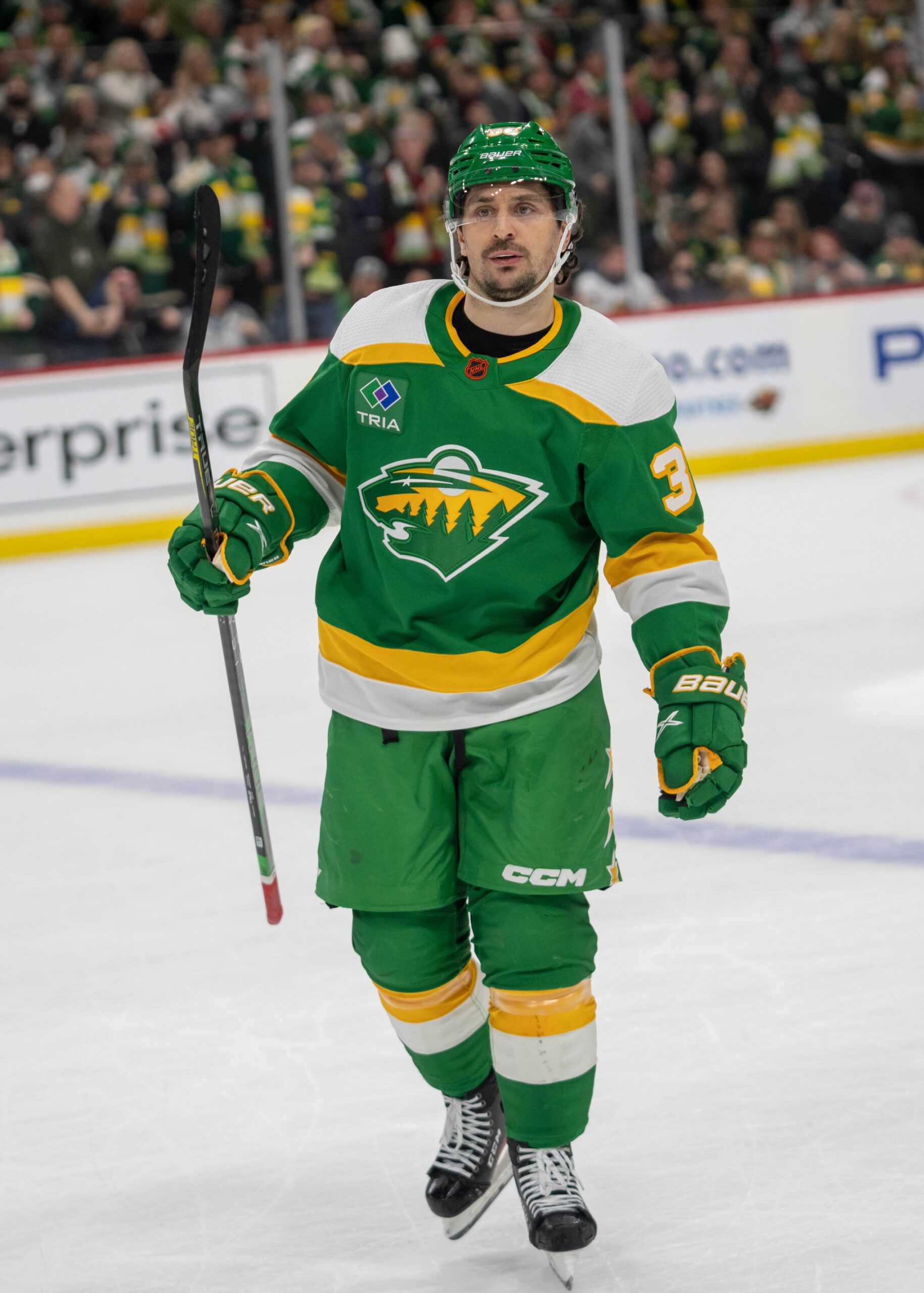 Zuccarello is a rare example of a player becoming more productive the older he gets. After seeing his output dip at the end of his tenure with the Rangers and hover near that level in his first two years with Minnesota, the 36-year-old has had his two best offensive showings over the past two seasons. Yes, some of that is attributable to the player lining up on his opposite wing but it would be hard to walk away from entirely who produces that much in the hopes that someone cheaper could produce as much as that same winger. Independently, a player with Zuccarello’s recent production could make a case for a raise but with his age, that could be tough. At this point, a one-year deal worth around $5MM could work for both sides with the AAV dropping on a two-year agreement.
Foligno looked to have turned the corner in 2021-22, posting a career year offensively but came up well short of that last season. If he stays around the 25-30-point mark, he could command a deal similar in size to this one but as teams look to make their bottom six cheaper, he could also feel the squeeze a little bit. Hartman wasn’t quite able to put the same numbers as his breakout 2021-22 campaign either but produced at better than a 50-point pace which is still a fantastic return on his current contract. That’s second-line production and a second-line middleman can command more than $5MM per season on the open market.
Duhaime is a capable fourth liner who plays with plenty of physicality and chips in a bit offensively but the market for those players is starting to flat-line. A small raise isn’t impossible – especially if he can crack the double-digit mark in goals but the AAV should still start with a one. Maroon comes over from the Lightning to help fill the void created by the departure of Ryan Reaves to Toronto. He fits on the fourth line but his market value shouldn’t be much higher than his current deal. As for Dewar, the 24-year-old spent plenty of time on the fourth line as well but plays center and kills penalties, giving him a bit more earnings upside. A small bump on the 18 points he had last season could give him a shot at coming close to doubling this contract, especially with arbitration eligibility.
Goligoski’s homecoming has been up and down, to say the least. His first season (2021-22) saw him play an important role and when he signed this deal, it looked like a team-friendly one. However, he struggled to crack the lineup last season and didn’t play well when he was in. Now, it’s a deal they’d almost certainly like to move if they could but with his struggles and trade protection, that will be easier said than done and another contract is far from a guarantee.
Fleury’s first full season with Minnesota was decent. He’s no longer a top starter but his numbers were better than the NHL average and getting that performance for the cost of a good backup is fine. He turns 39 in November so it’s possible he’s entering his final NHL campaign.
Signed Through 2024-25
F Marcus Johansson ($2MM, UFA)
D Jon Merrill ($1.2MM, UFA)
D Jacob Middleton ($2.45MM, UFA)
The first time Minnesota acquired Johansson, things didn’t go very well. He battled injuries and struggled when he was in the lineup. When GM Bill Guerin brought him back at the trade deadline, it was a different story as he averaged nearly a point per game down the stretch. That’s unsustainable for him but at this price point, they don’t need that level of production. If he can hover around the 30-35-point mark, they’ll do well with this contract.
Middleton isn’t going to light up the scoresheet but he’s a capable stay-at-home defender who’s best suited for a fourth or fifth role on the depth chart. That’s basically where he stands with the Wild and if he wants to push himself into a higher salary tier, his production will need to come around. Otherwise, his market value in 2025 might be around the $3.5MM range. Merrill is a capable depth piece that gives Minnesota some value when he’s a regular in the lineup but is overpaid when he’s in the reserve role. If they need to open up some cap space, waiving and assigning him to the minors and calling up a cheaper defender would give them a few hundred thousand to work with.
Signed Through 2025-26
G Filip Gustavsson ($3.75MM, UFA)
F Kirill Kaprizov ($9MM, UFA)
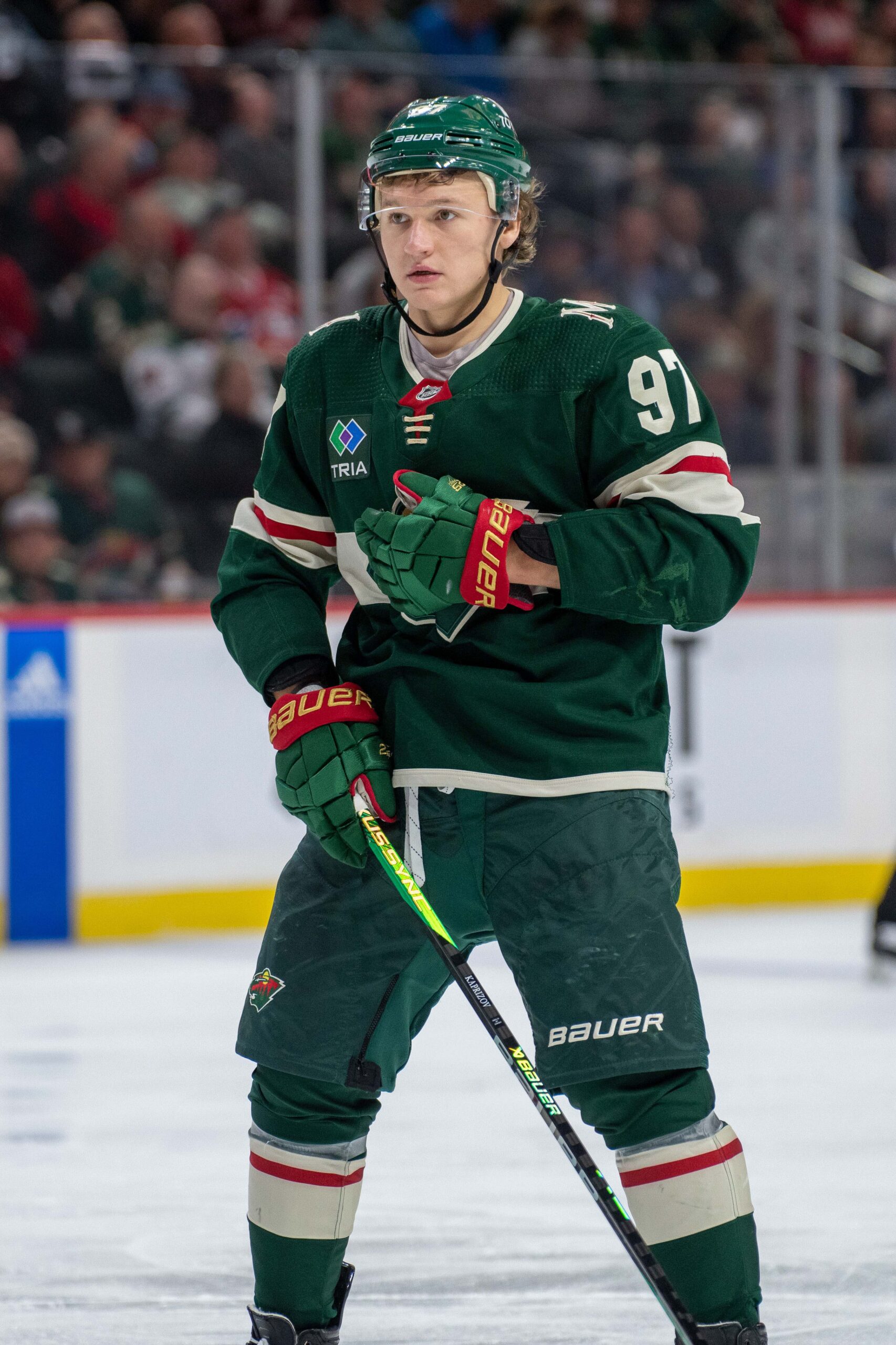 Minnesota wanted a max-term deal for Kaprizov when his entry-level deal was up back in 2021 but the winger wasn’t particularly interested in one so they settled on this one instead, an agreement that bought a little more team control but positioned him to land a significant max-term contract in 2029 if he wants one at that point. His numbers dipped a bit last season but he still played at a 92-point pace on the heels of a 105-point showing the year before. A continuation of that level of production coupled with a projected jump in the salary cap between now and then should give Kaprizov a serious chance at pushing for a contract that would break the current record for a winger ($11.643MM).
A year ago, the thought of Gustavsson having this contract would have been shocking. After all, he failed to establish himself as even a regular backup in Ottawa. However, he was second in the league in GAA and SV% last season, albeit in just 37 starts. As a result, this deal is somewhat of a compromise by paying him at the top end for a platoon option which is reflective of the role he might still have this season. If he becomes a true number one, however, this will be a steal quickly.
East Notes: Dahlin, Necas, Keane
There has been recent speculation that the Sabres and defenseman Rasmus Dahlin are nearing an agreement on a contract extension. On the latest 32 Thoughts podcast (audio link), Sportsnet’s Elliotte Friedman reports that there is a bit of work still to be done but that all sides involved think that there is a deal to be done with a belief that it could be done by the opening of training camp. The 23-year-old is coming off a breakout year that saw him record 15 goals and 58 assists in 78 games while averaging just shy of 26 minutes a night. He has one year left on his current deal at a $6MM cap hit and coming off the year he just had, it seems likely that Dahlin could approach the $10MM mark (if not a bit more) to lock in a max-term eight-year extension now.
Elsewhere in the Eastern Conference:
- Hurricanes forward Martin Necas is entering the final year of his contract this season and thus is eligible to sign a contract extension. However, he recently told NHL.com’s Tom Gulitti that there have been no discussions yet about a possible new deal. The 24-year-old took a significant step forward last season, posting career highs across the board with 28 goals, 43 assists, 71 points, 240 shots, and an ATOI of 18:25 per night. Signed for a $3MM AAV this season, Necas’ next deal could very well double that amount or more if he’s able to have a similar offensive showing in 2023-24.
- Still with Carolina, prospect defenseman Joey Keane has signed a one-year deal with Spartak of the KHL, per a team announcement. The 24-year-old had a good first season in Russia, picking up 24 points in 64 games last year. Keane has a pair of NHL games under his belt with the Hurricanes who retain his RFA rights through the 2026-27 campaign. If he takes a step forward this year, he could play his way back into the mix for a spot in North America.