
Wild Sign Michael McCarron To Six-Year Extension
Last month, it was noted that the Wild and Michael McCarron had mutual interest on extending the forward’s stay in Minnesota. But one of the key sticking points in talks was McCarron’s understandable desire to get some term on his next deal, a luxury he has yet to have in the NHL; his longest contract was his entry-level deal back in 2013.
The centerman has now gotten his wish. McCarron has signed a six-year, $20MM extension with the Wild per Sportsnet’s Elliotte Friedman. The deal will carry an annual average value of $3.33MM. Michael Russo and Joe Smith of The Athletic were the first to report (subscription link) that McCarron was closing in on signing a long-term deal to remain with the Wild.
The team over at PuckPedia provided the year-by-year breakdown of McCarron’s new contract:
| Year | NHL Salary | Trade Protection |
| 2026-27 | $4.5MM | NMC |
| 2027-28 | $4MM | NMC |
| 2028-29 | $3.4MM | NMC |
| 2029-30 | $2.7MM | NMC+15 NTC |
| 2030-31 | $2.7MM | NMC+15 NTC |
| 2031-32 | $2.7MM | NMC+15 NTC |
The 31-year-old came over from Nashville a little before the trade deadline with Minnesota flipping a 2028 second-round pick to get him. Considering that he has largely been a bottom-six forward (at times playing on the fourth line with the Preds), the price tag seemed a little steep on the surface but reflected the shift towards a sellers’ market.
McCarron played in 20 games following the swap, picking up three goals and two assists along with 40 hits, while averaging 12:40 per night, nearly two minutes below his ATOI in Nashville. However, he was counted on more in the postseason, as his playing time jumped to just under 15 minutes per night while he chipped in with two goals and two helpers in 11 outings.
Offensively, McCarron managed 17 points during the regular season between the two teams, the second-highest total of his career. Overall, over parts of nine NHL seasons between Montreal, Nashville, and Minnesota, he has 36 goals and 43 assists in 381 games. Generally speaking, forwards with that type of offensive production aren’t the types of players that teams typically try to lock up on long-term agreements.
However, there are some intangibles that McCarron brings that makes him stand out, literally in a sense. His six-foot-six frame makes him one of the bigger players in the league while he plays with plenty of physicality. He can shift between both center and the wing, versatility that came in handy for the Wild down the stretch. He can also take a regular role on the penalty kill where, again, that positional versatility comes in handy. It appears GM Bill Guerin is valuing these intangibles by doling out a long-term agreement here to ensure their top priority among their pending free agents is sticking around.
Offseason Checklist: Edmonton Oilers
The offseason has arrived for half of the league’s teams that aren’t taking part in the playoffs plus those who have already been eliminated. Accordingly, it’s now time to examine what they will need to accomplish over the coming months. Next up is a look at Edmonton.
After a pair of appearances in the Stanley Cup Final, expectations were justifiably high in Edmonton. However, the season didn’t go according to plan and they wound up being ousted by Anaheim in the opening round. GM Stan Bowman made a few moves in-season to try to shore things up, now he’ll have to make several more to try to help get the team back into contention.
Hire A Head Coach
With the Kings being set to hire Peter Laviolette as their next head coach, there are just two vacancies remaining with the Oilers being one of them. How the opening came about was a little unusual, as word leaked that they were hoping to speak to former Vegas bench boss Bruce Cassidy while Kris Knoblauch was still employed. It was only a few days after that report that Bowman decided to make it official that he was looking for a new head coach.
As of yet, Edmonton hasn’t received permission to speak to Cassidy yet, resulting in them continuing their search without his name in the mix. They’ve spoken to several veteran candidates and it appears there is a bit of a surprising front-runner, with the team doing some extra due diligence on Mike Babcock. More specifically, they’re trying to work through any potential concerns about hiring him with the NHLPA, signaling that they’re quite serious about the idea.
With Connor McDavid beginning his new two-year extension, it’s fair to say that there is a sense of urgency for the Oilers. With that in mind, it’s not surprising that they’re looking for someone with a proven track record although Babcock’s recent history makes his consideration stand out that much more. At this point, the risks are well-known and if they’re still willing to hire him, they’re banking on his success back with Detroit and Anaheim carrying the day to try to get Edmonton back to contention.
With the draft now less than three weeks away and offseason planning well underway, a hire needs to be in place in the near future.
Land A Goalie Upgrade
Last offseason, the thought was that they could once again get away with a Stuart Skinner–Calvin Pickard tandem. After all, while the day-to-day was consistently inconsistent, overall, it was good enough to get them to the Stanley Cup Final in two straight years. It was a cheap tandem and that would allow them to spend on filling other holes. Bowman then took advantage of Utah’s desire to move Connor Ingram, adding him for future considerations to give them a third netminder with experience.
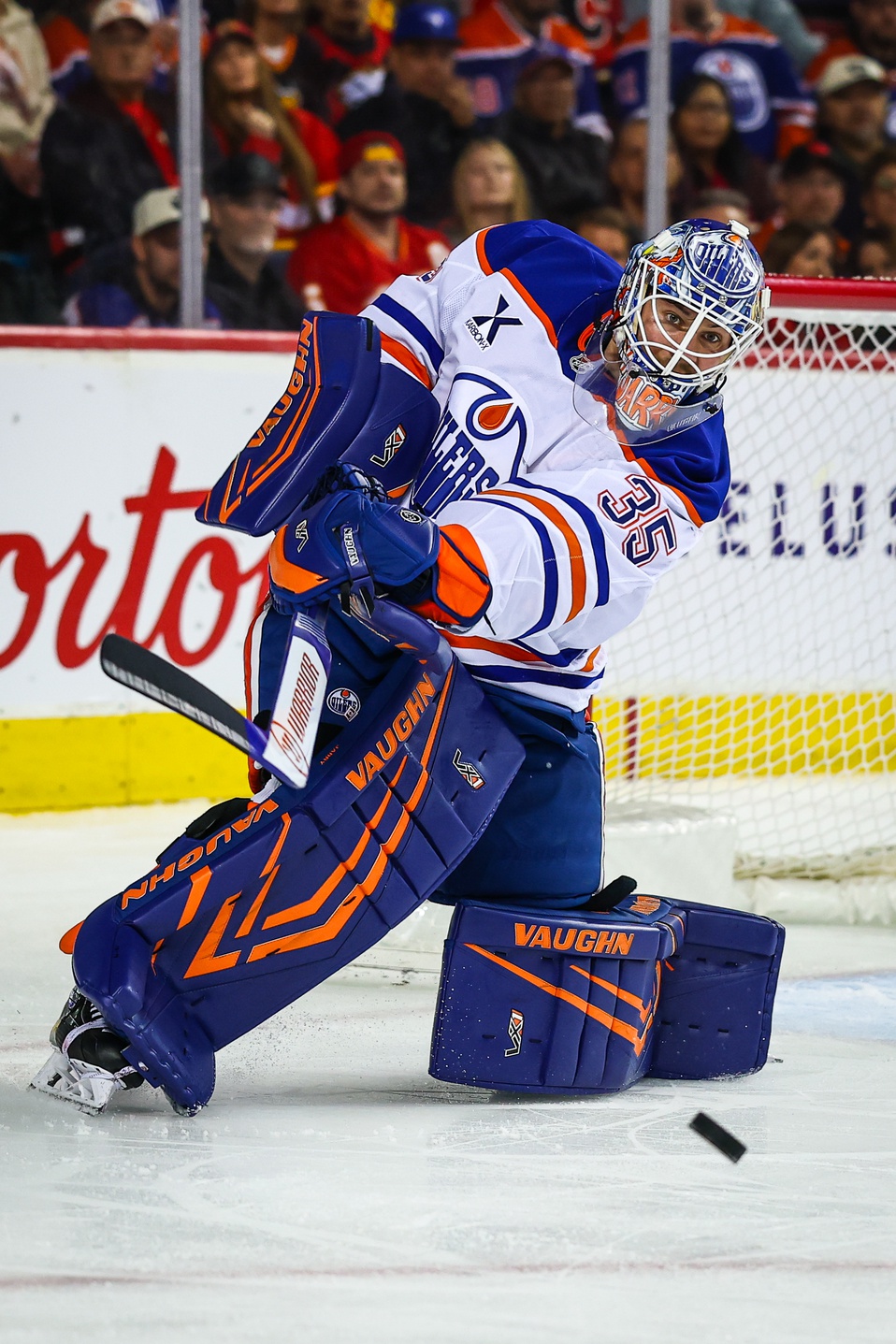 That move proved to be a shrewd one as he ultimately took over the backup role when Pickard struggled, then moved onto the starting job later in the season. But while that trade worked, the other one didn’t. Skinner was eventually moved with Brett Kulak and a second-round pick to get Tristan Jarry, thinking that Jarry would help stabilize things between the pipes. Instead, Jarry was worse, much worse, which eventually pressed Ingram into the starting role.
Jarry has two years left on his contract at a $5.375MM price tag. Between that and his performance, it’s safe to say that he’s not going to be traded. Meanwhile, Ingram is a pending unrestricted free agent. He can’t be brought back to be the starter as that’s a role he isn’t really suited for. But Jarry can’t be the starter either given how poorly he performed.
As a result, just months after trading for what he thought was a goalie upgrade, Bowman is going to have to make a move to upgrade on the upgrade. The free agent market has Sergei Bobrovsky who would be a short-term solution but he’s also coming off a rough year. Not many starters are available either so they may have to look at a bit of a short-term gamble, hoping that a netminder playing behind their defense could rebound. Buffalo has a surplus while Montreal will likely look to move Sam Montembeault but Bowman surely will be looking to see what other options are out there. But after how badly things went between the pipes this season, last summer’s history can’t repeat itself here.
Keep A Rental
The Oilers made a pair of moves with Chicago to shore up their roster before the trade deadline, adding center Jason Dickinson to strengthen the bottom six and Connor Murphy to add a stabilizing defensive presence on the back end. They’d undoubtedly like to keep both around. However, they only have around $14.5MM in cap space per PuckPedia and several roster spots to fill, including a goalie. While keeping both would be nice, they may be limited to just keeping one.
At this point, it’s evident that Edmonton’s preference is to have Ryan Nugent-Hopkins on the wing, allowing him to play higher up the depth chart. However, they’ve had some challenges filling the third-line center role, often resulting in their plans for Nugent-Hopkins being scrapped. While Dickinson is unlikely to repeat the 22-goal, 35-point effort from 2023-24, he’s a solid option to fill that spot if he stays. He’s reliable defensively, can kill penalties, and play with a bit of an edge. However, given the overall dearth of options available down the middle in free agency, his market may be strong enough to beat the $4.25MM he made the last two years while getting a considerably longer-term deal as well.
Murphy, meanwhile, logged big minutes after being acquired, logging over 20 minutes a night which was well above his average with the Blackhawks before the swap. He served as an anchor on the penalty kill while stabilizing the second pairing. A right-shot defender, he’ll certainly be in high demand if he makes it to the open market but at 33 years old, he won’t be in a position to command the type of longer-term deal that Dickinson should be able to. On the other hand, the Oilers already have more than $32MM in commitments on the back end; re-signing Murphy would give them the most expensive defense corps in the NHL, barring other moves made around the league, of course.
Keeping both players would be great, but would make accomplishing their other objectives much more difficult. Accordingly, re-signing one out of two might have to suffice.
Add A Top-Six Forward
Given the firepower this team possesses, this might seem a little strange. However, they only had four forwards reach the 40-point mark in 2025-26 and they did try to fill this spot last summer when they signed Andrew Mangiapane in a move that simply didn’t work out. Meanwhile, Jack Roslovic, who quietly put up 21 goals this season, seems likely to move on in free agency. Needless to say, there’s a spot to be filled here.
In an ideal world, Vasily Podkolzin and Matthew Savoie continue their development while Isaac Howard makes a legitimate push for a spot as well. If all of those things happened, they’d probably be fine. But this is a veteran-laden team with a win-now mentality; they’re probably not going to want to leave this to chance. While there aren’t many top-line forwards in free agency this summer, there are more second-liners available. A chance to line up alongside one of McDavid or Leon Draisaitl should be enough of a selling point to give Bowman some options, if they’re still able to afford this after addressing their other areas.
There’s a case to make that the defense needs to be shored up as well but it’s possible Murphy re-signs which would probably suffice. Failing that, it could also be rejigged depending on what Darnell Nurse wants to do, something that’s entirely in his hands now. While they’re waiting to see if he’s amenable to move, they should be setting their sights on lengthening their offense to take some of the pressure off their top players up front.
Photo courtesy of Sergei Belski-Imagn Images.
Snapshots: Brodzinski, Blackhawks, Gallagher, Golden Knights
Over the past few years, forward Jonny Brodzinski has worked his way from being an AHL recall to a regular on the roster for the Rangers. However, it appears his time with the franchise is coming to an end. The 32-year-old is set to be an unrestricted free agent this summer and The Athletic’s Peter Baugh relays (subscription link) that the expectation is that Brodzinski will sign elsewhere this summer. Brodzinski has spent the last six years in New York, moving from a productive minor leaguer to a capable bottom-six piece who has put up 54 points in 163 games over the past three seasons. But with the Rangers likely wanting to give some of their younger players a look in the lineup, it would make sense for Brodzinski’s roster spot to go to one of those.
Elsewhere around the NHL:
- The buyout window is a week away so teams are starting to make their plans on that front. It appears that the Blackhawks won’t be among the teams executing one as GM Kyle Davidson told reporters including Ben Pope of the Chicago Sun-Times that he doesn’t plan to use one. Veteran winger Andre Burakovsky seemed like a potentially viable candidate with one year left at $5.5MM and only managed one goal and three assists in the final 37 games of the season. Instead, he’ll either be moved as salary ballast over the offseason or be back with Chicago in the fall.
- In an appearance on Donnie and Dhali (video link), Gerry Johansson, the agent for Canadiens winger Brendan Gallagher, confirmed he had spoken with the Canucks about being a landing spot for his client. He acknowledged that Vancouver does have interest in the 34-year-old but also noted that there are a lot of moving parts. Gallagher, who indicated last week that he expects to be moved this offseason, has one year left on his contract with a $6.5MM AAV. Speculatively, the moving parts could be the team trying to move out some money either as part of the swap or in a separate move. While they have ample cap space for next season, their status as a rebuilding team will likely see them operating with a budget well below the Upper Limit of the salary cap, making Gallagher’s price tag a little harder to fit in.
- The Golden Knights were without a pair of defensemen at practice today. com’s Dan Rosen noted that Noah Hanifin and Brayden McNabb didn’t take part in today’s skate. McNabb’s absence is certainly understandable given that he’s only a few days removed from being taken to the hospital after taking a shot to the face but Hanifin’s absence is a little less certain, though likely for maintenance. At this point, there’s no reason to think that either player won’t be an option for Tuesday’s fourth game of the Stanley Cup Final.
Alexander Alexeyev Receiving KHL Interest
A fresh start for defenseman Alexander Alexeyev didn’t yield the NHL opportunity he was looking for this season. As a result, it appears as if he’s looking for a different type of fresh start this summer. Rustam Sharafutdinov of TASS reports that the blueliner is receiving KHL interest. His agent, Sergey Isakov, indicated that he has spoken with several KHL clubs about Alexeyev for next season, including Salavat Yulaev, the team he played for back in 2020-21.
The 26-year-old came up in Washington’s system after they drafted him 31st overall back in 2018. However, he was never able to establish himself in the NHL with the Capitals as he only suited up in 80 games over parts of four seasons, where he had a goal and seven assists in 15 minutes of playing time per game.
Washington decided to non-tender Alexeyev last summer, likely thanks in large part to his arbitration eligibility. The blueliner quickly signed a one-year, one-way deal worth $775K with the Penguins, hoping to be in the mix for a roster spot in training camp. Instead, he passed through waivers unclaimed in training camp and aside from a brief recall in mid-March, he was exclusively in the minors with AHL Wilkes-Barre/Scranton. Alexeyev had a dozen points in 38 games in the minors during the regular season while adding five more in 11 postseason contests.
Alexeyev is technically still eligible for restricted free agency this summer, although he remains arbitration-eligible. With that in mind, he’s likely heading for a non-tender once move. But this time, instead of waiting to see what offers might be available in July, Alexeyev appears to be eyeing an opportunity to play back home instead.
Five Key Stories: 6/1/26 – 6/7/26
The beginning of June certainly brought some exciting games on the ice as Carolina and Vegas began the Stanley Cup Final. Meanwhile, it also brought some news of note off the ice, which is recapped in our key stories.
Trotz’s Replacement Found: After a nearly four-month search to find Nashville’s next top executive, the Predators have one in place. They lured away now-former Colorado GM Chris MacFarland and named him their President of Hockey Operations and General Manager, handing him a six-year contract in the process. MacFarland had spent the previous 11 years in Colorado, the last four as GM and also worked with Columbus for 15 seasons as well. He’ll now be tasked with trying to get the team out of the middle where they either just make or just miss the playoffs each season. Joining him to aid those efforts will be former Kings GM Rob Blake, who was quickly brought in as Executive Vice President of Hockey Operations. He spent eight years running the show in Los Angeles before being replaced by Ken Holland last offseason.
One Less Coaching Vacancy: While it ultimately took a little longer than most expected, the Canucks indeed went the route many thought they would with their head coach. As they embark on a rebuilding phase, new GM Ryan Johnson is sticking with someone he knows as he promoted Manny Malhotra to take over behind the bench. The two had worked together previously with AHL Abbotsford. It’s Malhotra’s first NHL head coaching opportunity but he has seven years of NHL experience as an assistant to go along with a 16-year career at the top level. Now, he’ll be tasked with maximizing the development of some of Vancouver’s younger players as they begin what seems likely to be a multi-year rebuilding process.
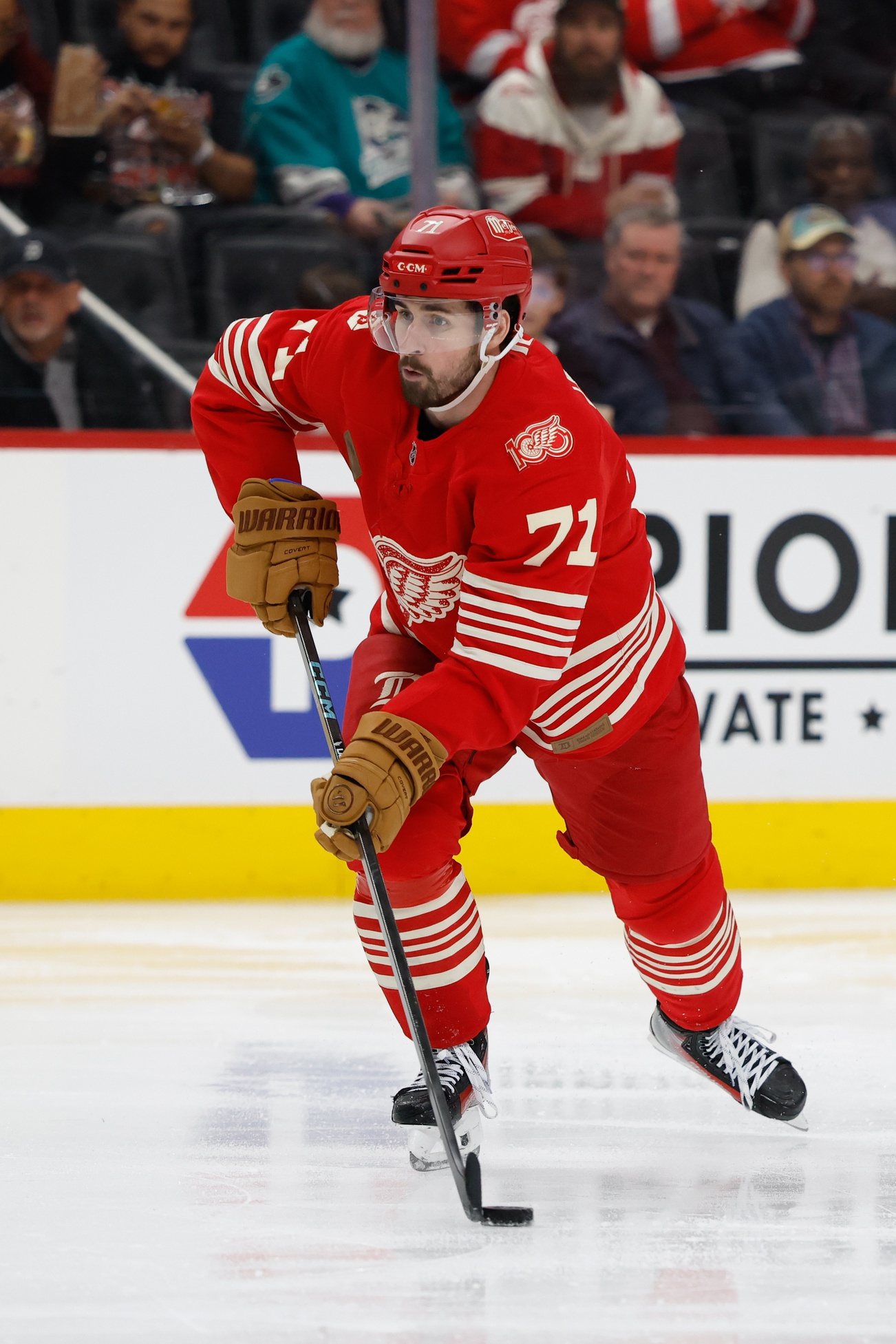 Larkin Wants Out: It has been a rough go for Detroit as of late as they have missed the playoffs in 10 straight years. That has led to some frustration from captain Dylan Larkin being vocalized in the past and now it appears it has reached a boiling point after multiple reports indicate that he has asked to be traded. The 29-year-old has spent his entire 11-year career with the Red Wings and is their captain while locking down the top center spot for a significant chunk of that time. He has five years left on his contract with an $8.7MM AAV to go along with full trade protection. If Larkin gives GM Steve Yzerman a fair-sized list of teams to work with and Yzerman is willing to move him, he’d instantly become one of the top players available on the trade front in a market that has many more buyers than sellers.
Done For Good? After missing more than two full seasons due to Chronic Immune Response Syndrome, Jonathan Toews returned to the NHL in 2025-26, signing a one-year deal with his hometown Winnipeg Jets. However, it appears the comeback will be one-and-done as the veteran is expected to retire. Toews had 29 points in 82 games this season but struggled when deployed in the top-six role he was expected to fill. He wasn’t rusty at the faceoff dot, however, winning over 62% of his draws. Toews likely would have drawn interest in a bottom-six role if he decided to keep playing but it appears his 16-year career is now over.
Oilers Seeking Defensive Shakeup: As the Oilers look to pick up the pieces after a first-round elimination, it appears they’re looking to shake things up. One of the casualties could come on the back end following a report that says the team is ready and willing to move veteran Darnell Nurse as soon as they are able. That last bit matters as Nurse has full trade protection for next season so if he wants to stay, he’s going to stay for at least one more year. Nurse has four years left on his deal at a $9.25MM AAV, a price tag that’s on the high side for someone who is likely best utilized as a second-pairing option. But if Nurse is open to move, he could be a candidate to move for another veteran blueliner in need of a change of scenery in the hopes that the move yields a player who better fits their system.
Photo courtesy of Rick Osentoski-Imagn Images.
Free Agent Focus: Montreal Canadiens
Free agency is now less than a month away, and teams are looking ahead to when it opens. Even with the UFA crop being thinned out in recent months, there will be some quality veterans set to hit the open market in July, while many teams also have key restricted free agents to re-sign. We continue our look around the NHL with an overview of the free agent situation for the Canadiens.
Key Restricted Free Agents
F Zachary Bolduc – Montreal’s only move of significance on the opening day of free agency last summer came on the trade front when they acquired Bolduc for defenseman Logan Mailloux. He got off to a strong start but faltered after that, ultimately coming up short of his rookie-season production after recording 12 goals and 18 assists while being healthy scratched a handful of times as well. With that in mind, a bridge contract likely makes more sense for both sides. That price tag should wind up in the high-$2MM or low-$3MM range.
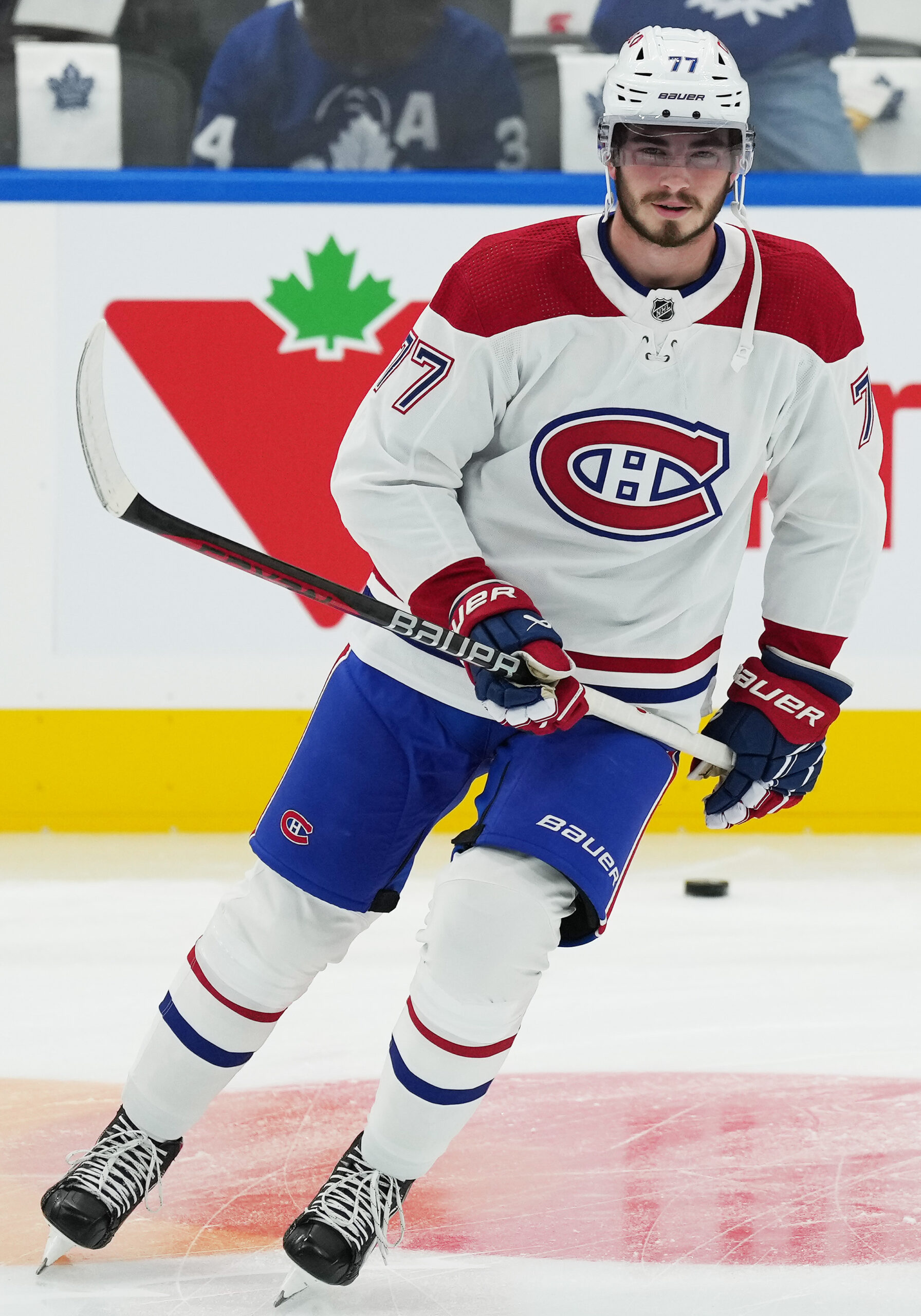 F Kirby Dach – The Canadiens acquired Dach four years ago in a three-way swap on draft night with the hopes that they had found the elusive second-line center they’ve needed. Today, they still have that need and there remain plenty of question marks with the 2019 third-overall selection. Over his time in Montreal, he has missed more games (174) than he has played (154) and the results have been inconsistent when he has played. Notably, he’s owed a $4MM qualifying offer with arbitration rights this summer. It’s hard to think that they’re ready to give him that but working something out before the June 29th tender deadline that’s a little cheaper could still be doable. Otherwise, it’s fair to wonder if his time with the team will be coming to an end. He is a wild card to keep an eye on.
D Arber Xhekaj – Xhekaj showed some potential four seasons ago in his rookie year but things have largely plateaued since then if not gone in the opposite direction. His playing time dropped to just 11:25 per night during the regular season and only 8:06 in the playoffs when he was in the lineup. With just four points in 65 outings as basically an even-strength-only player, he should be in line for only a nominal raise on his $1.3MM qualifying offer. However, with arbitration rights and 246 career NHL games (regular season and playoffs under his belt), he might be able to make a reasonable case to push past $2MM in a hearing if it gets to that point.
F Joe Veleno – Veleno came over last summer via unrestricted free agency after his contract was bought out by Seattle and played a limited role when he was in the lineup. He’s owed a $945K qualifying offer which is certainly reasonable for a fourth liner but it would come with arbitration eligibility. With 367 regular season games over his career, he’d have a fairly strong case in a hearing for a hefty raise, one that the Canadiens won’t want to give him. Either he signs a deal before June 29th or he’ll be non-tendered.
Other RFAs: F Jake Chiasson, F Jared Davidson, F Sean Farrell, D Gannon Laroque, F Joshua Roy, F Luke Tuch, D William Trudeau
Key Unrestricted Free Agents
F Samuel Blais – Blais was up in the NHL for around half the season after bouncing around on waivers, going to Toronto first and then back to Montreal. He was reasonably productive in limited minutes, notching eight points in 21 games along with 78 hits. He’ll likely be hoping to land somewhere with a shot to stick at the back of the roster. Failing that, his AHL production (38 points in 35 games) should be good enough to secure another one-way contract at a minimum.
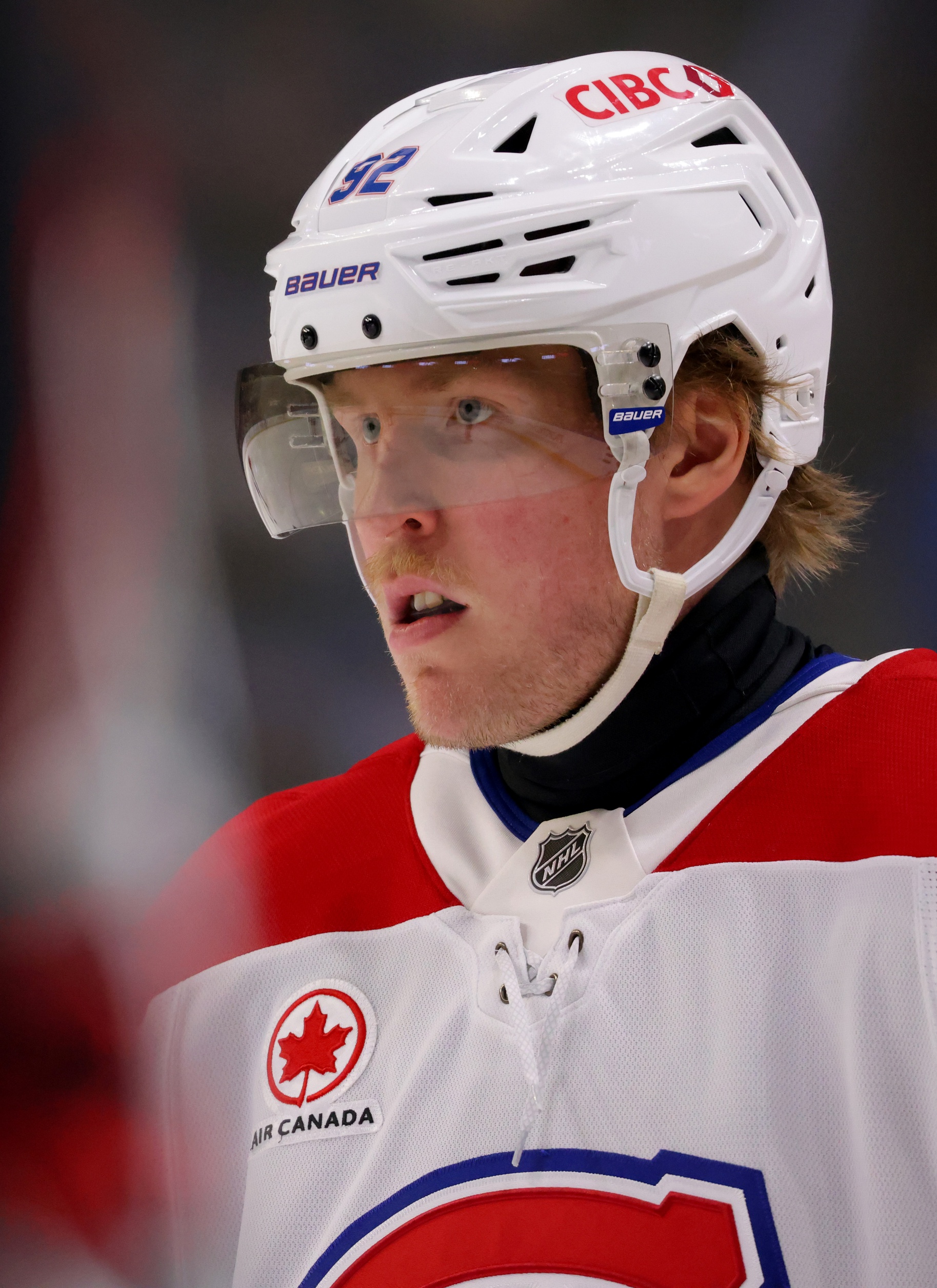 F Patrik Laine – It’s safe to say that Laine’s addition didn’t work out how Montreal hoped when they added him in the 2024 offseason. After an injury-limited first season with the team (where he still managed 15 power play goals in 52 games), a core muscle injury limited him to just five games this season and plenty of questions. Laine suggested that he was ready to return but GM Kent Hughes indicated Laine had settled into a mindset that he wouldn’t. Either way, the injuries make him eligible to receive performance incentives on a one-year contract. That might be the best option for both sides. If Laine is healthy and productive, he could provide plenty of short-term value in the hopes of landing a richer deal next summer. There’s enough upside that several teams should be willing to make an offer like that with a lower base salary and a few million in incentives.
Other UFAs: F Alex Belzile, D Nathan Clurman, D Marc Del Gaizo, G Kaapo Kahkonen, G Hunter Shepard
Projected Cap Space
At the moment, the Canadiens project to have a little under $11MM of cap space to work with, enough to re-sign Bolduc and Dach if they want to but not do much else. If they’re able to move the final year and $6.5MM of Brendan Gallagher’s contract and deal Samuel Montembeault ($3.15MM), they could be able to become more aggressive on the trade and free agent front in the coming weeks.
Photos courtesy of Nick Turchiaro-USA TODAY Sports (Dach) and Timothy T. Ludwig-Imagn Images (Laine). Contract information courtesy of PuckPedia.
Blackhawks Hoping To Add Veteran Defenseman
Down the stretch last season, the Blackhawks found themselves without a key veteran when Connor Murphy was moved to Edmonton before the trade deadline. That left them with just one veteran blueliner, Matt Grzelcyk, while the rest of the back end was 24 or younger.
Speaking with reporters at the NHL Draft Combine including Ben Pope of the Chicago Sun-Times, GM Kyle Davidson acknowledged that they wanted to see how things would go without the veteran safety valve in Murphy. They didn’t get any sort of late-season boost and evidently, Davidson is hoping to not see that recent history repeat itself next season as he acknowledged that he wants to explore options to add a veteran this summer.
As things stand, Grzelcyk is set to become an unrestricted free agent this summer. As a result, if he leaves, the oldest blueliner on Chicago’s roster would be Louis Crevier, who just turned 25 last month and completed his first full NHL season in 2025-26.
The Blackhawks have been rebuilding for a while now with just one playoff appearance in the past nine years, that being the expanded 2020 postseason. That has allowed them to amass an impressive crop of youngsters, including on the back end. Sam Rinzel and Artyom Levshunov are well on their way to becoming impact players. Alex Vlasic already is one. Crevier and Wyatt Kaiser both took steps forward this season while Kevin Korchinski showed some flashes in the past. That’s the makings of what could be a solid back end in the future.
But even rebuilding teams need veterans to help lead them through some rough times, something Davidson has recognized in recent years with some of the overpayments he made up front to get some into the system. Now, this certainly feels like one of those times where he may need to try the same thing, but this time on the back end.
Fortunately for Chicago, the side they need might be the easier one to get. Assuming Rinzel, Levshunov, and Crevier are the top three (in some order) on the right side, they should be set there. Vlasic and Kaiser are currently the top options on the left, with a now waiver-eligible Korchinski also in the mix. Someone who could hold down a second-pairing spot on the left side and log around 20 minutes per night would be a big addition, especially with the team hoping to take a step or two forward in the standings next season.
Cap space certainly shouldn’t be an issue in Davidson’s efforts to add a veteran defender. They presently have around $40MM in room, per PuckPedia, and while Connor Bedard’s next contract will be pricey, they’ll have more than enough space to get into (and try to win) the bidding for a blueliner.
Offseason Checklist: Dallas Stars
The offseason has arrived for half of the league’s teams that aren’t taking part in the playoffs plus those who have already been eliminated. Accordingly, it’s now time to examine what they will need to accomplish over the coming months. Next up is a look at Dallas.
Coming into the season, the Stars were viewed as a legitimate Stanley Cup contender with one of the more well-rounded groups, albeit with a new head coach in Glen Gulutzan, back for a second stint with the team. However, while they finished third overall in the standings, their reward was a first-round battle with Minnesota (the seventh-best team) thanks to the gauntlet that is the Central Division. After coming up short in that round, GM Jim Nill is in for a busy summer. Here’s what should be on his checklist.
Guard Against A Bourque Offer Sheet
While there is a prominent pending restricted free agent to re-sign (which we’ll get to shortly), there is another one whose timing is perhaps more urgent. That would be forward Mavrik Bourque. This had the potential to be a problem last year but Dallas got ahead of it, signing him early. But it came at a cost. In exchange for taking a below-market $950K contract, Bourque only received a one-year deal. That means he’s a pending RFA this summer and this time, he has salary arbitration eligibility.
Bourque’s sophomore season saw him improve from 25 points to 41, thanks to 20 goals and 21 assists while his playing time jumped up by nearly three minutes per contest. He went from being more of a depth player to a relied-on second liner along the way and top-six players tend to be rewarded handsomely should things get to a hearing.
That’s where things get difficult. Dallas doesn’t want to take Bourque to arbitration and run the risk of a higher award than they can afford with their current salary cap structure. On the other hand, if they wait to sign him and focus on Jason Robertson, he becomes a threat for an offer sheet given that Dallas only has $10MM in cap room, per PuckPedia.
Using this summer’s offer sheet thresholds, a team could plausibly try to sign Bourque to a short-term deal worth $4.77MM per season and only be required to surrender a second-round pick in return. That’s plausibly higher than he could receive in arbitration and much higher than the Stars could conceivably match with Robertson’s contract looming as well.
Accordingly, that sets an artificial deadline for Dallas to try to get something done. Basically, June 30th becomes the last date for ‘safe talks’. After that, an offer sheet could be in play, or salary arbitration if either side decides to file. That gives them about three weeks to figure something out and protect themselves from a potentially undesirable situation later on.
Re-Sign Robertson
Let’s move on to the big one now, that being Robertson’s contract. Back in 2022, Dallas didn’t have a ton of cap flexibility (it’s somewhat of an ongoing theme for them) and opted for a rare four-year bridge deal, one that gave Robertson a huge raise off his entry-level deal but kept his salary below market value for a little while longer. But it was structured in such a way to land him a pricier deal at its expiration with a $9.3MM qualifying offer that carries arbitration rights.
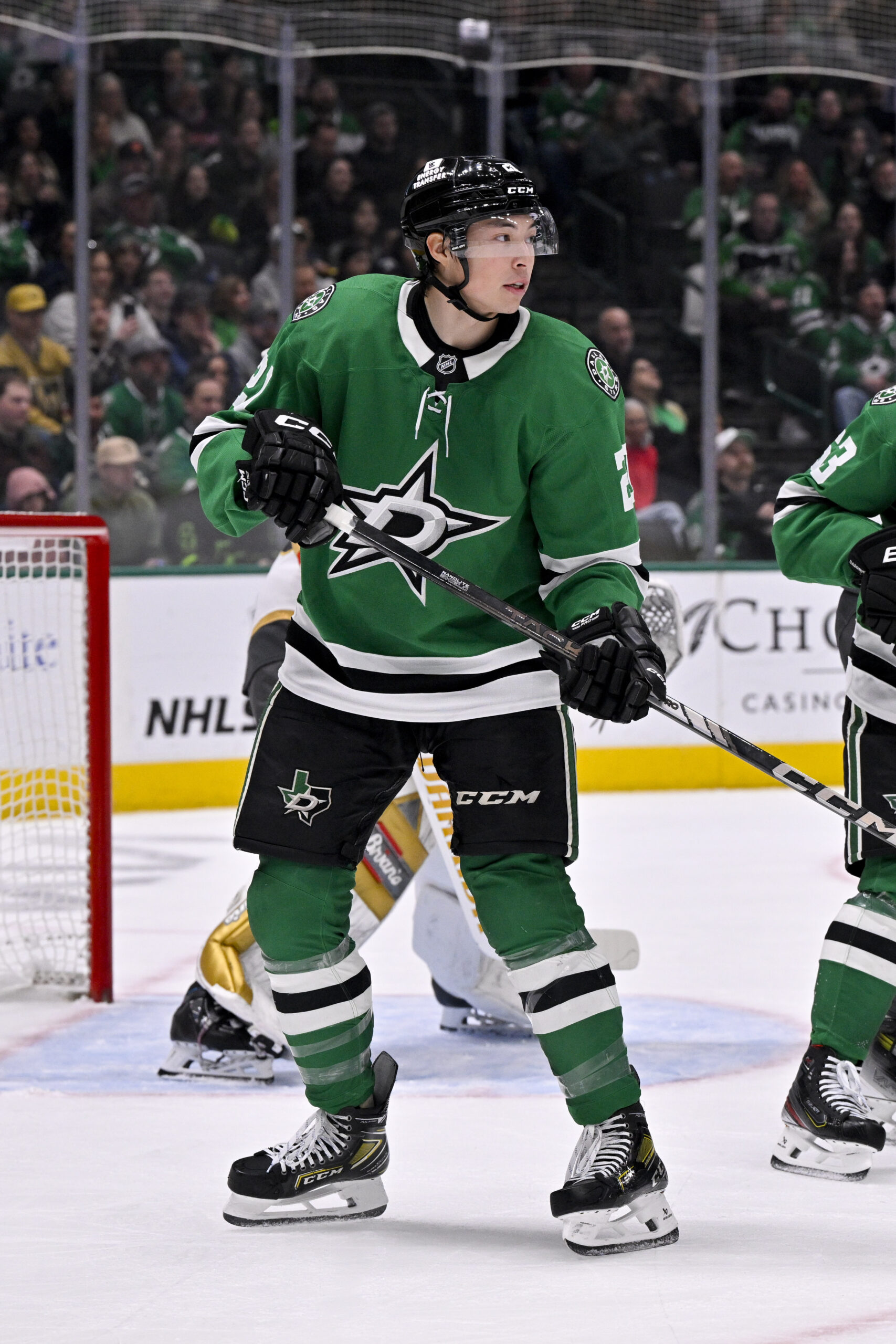 The 26-year-old provided fantastic value on the contract. Robertson hit the 80-point mark in all four seasons with the first and last years being his best. In the former, he finished sixth in NHL scoring with 109 points thanks to 46 goals and 63 assists. Then, after putting up two straight 80-point campaigns, he bounced back offensively this season, tallying 45 goals along with 51 helpers before adding eight points in their opening-round exit to Colorado. Over the last four years, only eight players have recorded more points. Only one of those, Nikita Kucherov, has an AAV below $11MM (and that might change before much longer). With only one RFA year left, this next contract will almost exclusively feature the full-priced UFA-eligible seasons, making an $11MM AAV look like an absolute minimum. AFP Analytics projects he could come close to the $12MM mark on a seven-year pact. As a reminder, they don’t have that much cap space to work with.
There’s also an arbitration risk here. Because he’s only a year away from being eligible to test the open market, he’s only eligible for a one-year award regardless of who files. Accordingly, if contract talks (which are almost certainly ongoing now) don’t go well, Robertson could opt to just go through the hearing, get what he gets, and then have even more leverage a year from now as a high-end pending UFA. That puts a bit of a pressure point on talks now, even though they don’t have enough cap space to re-sign Robertson at this point. But it’s a file they have to close with a long-term agreement, keeping a star winger in the fold for the long haul.
Clear Cap Space
Now that we’ve looked at who needs to be signed, let’s get the obvious out of the way. If Robertson is going to cost more than their current cap room, and Bourque needs to be signed, then something has to give. Someone (or more than just one) will need to move. Arttu Hyry also needs a new deal while it wouldn’t be shocking if they want to bring Jamie Benn back on what would probably have to be another bonus-laden agreement.
The problem is that there aren’t a lot of obvious candidates. Tyler Seguin is entering the final year of his deal at $9.85MM but he’s coming off ACL surgery which doesn’t help his value, nor does his full no-move clause. Even if he was open to being dealt, the list might not be too long, and the fact he hasn’t played since December will make the acquiring team more hesitant. The potential saving grace is that once his $5.75MM signing bonus paid, he’s only owed $1MM in salary. At that point, if the acquiring team is just eating the contract, any lingering concerns about his availability to start the season would go out the window. Dallas would likely have to incentivize a team to take him but if it keeps Robertson and Bourque in the fold (and allow them to re-sign Benn at the same time), they’d probably do it.
The problem is that this might be the end of the list. Their other top-paid players aren’t ones they’d want to move. Matt Duchene has a full no-move clause and probably isn’t going to want to move. Esa Lindell has a full no-trade clause and, frankly, is too valuable on the back end to consider moving. Basically, anyone else making more than $4MM isn’t a viable trade candidate. Considering they need more than that in cap space, that makes things tricky.
Moving Ilya Lyubushkin at $3.25MM for the limited role he fills would save some money although they’d need a replacement body so the net savings might be closer to $2MM. Radek Faksa’s $2MM AAV could be too expensive of a luxury but, again, with a replacement body needed, the actual savings might barely be half of that. Those two moves would help a bit but probably aren’t enough to accomplish everything that they need to.
Nill knows what needs to be done in terms of cutting down their cap charge. Despite few viable options, he needs to find a way to get it done.
Look For A Defensive Upgrade
Considering their financial circumstances, this one probably falls under the wishful thinking category. But defensive improvements have been on the wish list for a while now and while they took a swing at the deadline this past season when they added Tyler Myers from Vancouver, that didn’t quite go as planned. His playing dropped by more than three minutes a night following the swap while he was scratched at one point in the postseason.
A full training camp could help, sure, but if he’s not a fit, his contract is favorable enough to move. With the Canucks paying half of it, his cost to the Stars (or an acquiring team) is only $1.5MM. That’s an affordable price for a lot of teams for a potential upgrade on the third pairing if Nill decides he wants to try a different type of blueliner.
If Seguin ultimately moves to open up cap space, then Lyubushkin could be moved in a player-player swap to change up the defense corps as well.
In an ideal world, they’d find a way to upgrade in their top four but that’s rather unrealistic given the circumstances. But if there’s a way to make an affordable upgrade on the third pairing or shuffle up the personnel to fit Gulutzan’s system better, that would still be a useful approach to take. But until they deal with the two forwards, they won’t be able to do much on this end.
Photo courtesy of Jerome Miron-Imagn Images.
Flyers Notes: Vladar, Michkov, Tippett, Zavragin
It’s fair to say that Daniel Vladar’s first season with the Flyers was a success. He became their undisputed number one netminder by the end of the year and helped lead them to a playoff spot that not many would have been realistically expecting, then helped take them to the second round.
When he signed with Philadelphia last summer, he only signed a two-year deal, one that pays him $3.35MM per season. Last summer, the agreement looked like it might carry some risk and now, it’s a bargain. He’ll be in line for much more on his next contract and it appears that the Flyers are ready to give it to him. Speaking with NHL.com’s Adam Kimelman at the Combine, GM Daniel Briere called getting an extension done with the 28-year-old a priority.
Vladar posted a 2.42 GAA with a .906 SV% in a career-high 52 games this season, being called on to shoulder more of the workload than expected due to Samuel Ersson’s struggles. Now, with that performance under his belt, Daily Faceoff’s Anthony DiMarco suggested last month that the organization might be comfortable extending him a five-year deal in the $6MM range. That’s still on the lower end for a starter and one more year like this one would push the price tag higher. On the other hand, after being a backup for most of his career, it would certainly be understandable if Vladar wanted to lock in a guaranteed role and raise now.
It appears another extension-eligible player won’t be receiving one this summer, however. Matvei Michkov will also be eligible to sign in July as he enters the final season of his entry-level contract. However, his sophomore campaign saw his point total dip from 63 to 51 while he was called out for not arriving at training camp with a proper fitness level. Meanwhile, he was scratched twice in the playoffs while only recording one assist in the eight games he played. Accordingly, Briere indicated that they will take a wait-and-see approach with the youngster while suggesting that Michkov seems to prefer the idea of waiting to sign instead of trying to work something out now.
The GM also shared some positive news on the injury front. Winger Owen Tippett missed the second-round series against Carolina due to an internal bleeding issue but Briere noted that everything has been cleared on that front now, setting Tippett up for a full offseason of training. The 27-year-old led the Flyers in goals this season with 28, hitting the 20-goal mark for the fourth straight year.
Meanwhile, there is some news on the prospect front. Goalie prospect Yegor Zavragin is on the move in the KHL as the league announced that the netminder has been traded from SKA St. Petersburg to Metallurg Magnitogorsk. Zavragin split the season between the KHL and VHL and was particularly strong in the latter league, posting a 1.44 GAA and a .949 SV% in 18 appearances. Briere spoke of some of Philadelphia’s goalie prospects needing more development time and that likely applies to the 20-year-old, who could benefit from a full season in the KHL as a result of this swap.
Offseason Checklist: Los Angeles Kings
The offseason has arrived for half of the league’s teams that aren’t taking part in the playoffs plus those who have already been eliminated. Accordingly, it’s now time to examine what they will need to accomplish over the coming months. Next up is a look at Los Angeles.
The Kings have been in the mushy middle, so to speak, for the last few seasons and 2025-26 was no exception. While they were able to pick up enough points down the stretch after making a coaching change to squeak into the playoffs, they once again went out in the first round, although not to Edmonton this time, at least. Instead, they were swept by Colorado. Now with a full year under his belt with the team, GM Ken Holland has some work to do this summer if he wants the Kings to take a step forward.
Hire A Head Coach
When Jim Hiller was let go late in the season, D.J. Smith moved up to the top role but only on an interim basis. They were respectable down the stretch, picking up points in 17 of 23 games. On the flip side, they lost more games than they actually won with an 11-6-6 record. But while they were swept by the Avs, the series was more competitive than a lot of people likely expected.
Their season has been over for more than a month and a half now but no decision has been made on the head coach. Will Smith be the full-time bench boss next season? If not, will he even be on the staff, or will the new head coach want a clean slate when it comes to filling out the rest of the group? At some point, a decision will need to be made.
Clearly, the Kings would like to speak to Bruce Cassidy about the role; they’ve been linked as one of the two teams that were denied permission to talk to the former Vegas bench boss. The line has been that they don’t want any distractions during the playoffs and if that’s the case and Holland is willing to wait things out, it might be a couple more weeks before he’ll get that opportunity.
Failing that, it appears the rest of the shortlist is, well, pretty short. Sportsnet’s Elliotte Friedman reported on the latest 32 Thoughts podcast (audio link) that Holland is believed to be down to two candidates, Smith and Jay Woodcroft. Holland has plenty of familiarity with Woodcroft from their days in Edmonton together and if he’s looking for more firepower from his group (more on that later), the former Oilers bench boss could get an edge.
Either way, with the draft only a few weeks away and free agency coming soon after, this search will need to wrap up before too much longer.
Re-Sign Clarke
One of the more intriguing players coming off their entry-level contract this summer is defenseman Brandt Clarke. His numbers, though certainly improved, don’t necessarily stand out. But that’s what makes his case a little more intriguing. Thus far, he has shown flashes of the offensive upside that made him a top-10 pick back in 2021. However, the playing time hasn’t been all that high for the most part. That makes trying to find the right price point a little tougher.
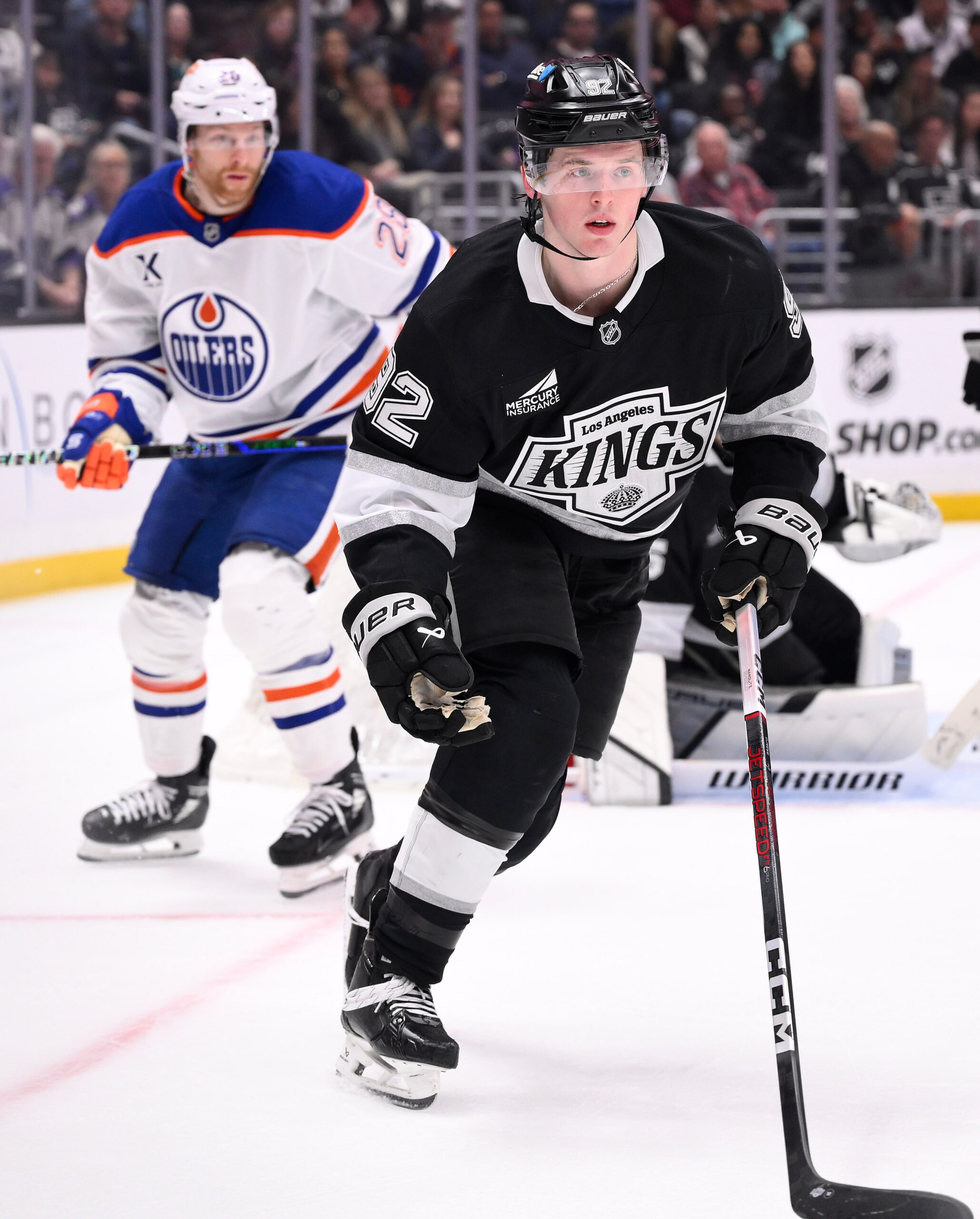 Clarke’s first two seasons saw him play sparingly. One yielded a return to the OHL, the other saw him in the minors for the bulk of the campaign. In 2024-25, he played a regular role, albeit on the third pairing but still managed a respectable 33 points in 78 games. This season, he was able to up his point total to 40 to lead all Los Angeles defenders. While his ice time jumped up by over three minutes per night, he was still under 20 minutes per game. Notably, his ice time on the power play was largely split with Drew Doughty despite Doughty managing just one power play point all season. Had Clarke played more like a true top-unit option, he likely would have had a few more points.
On the surface, this appears like one of those cases where the team would probably want to do a long-term deal while Clarke’s camp might prefer a short-term one. A long-term agreement would involve a lot of projecting as Clarke wouldn’t be signing a contract that views him as a 40-point player; he’d need more incentive than that to sign. Holland would need to be confident that Clarke has another level to get to, perhaps the 50-point plateau. That’s when the bigger money would start to come in, potentially in the $8MM to $9MM range.
On the other hand, going with a short-term deal would provide some more certainty in the long run (which is probably more appealing to Clarke if he things he has another gear offensively and can handle a bigger role) with a bit more cap flexibility in the short term as well. AFP Analytics projects a two-year pact to run somewhere in the $5MM range. Clarke would be giving up some short-term earnings with the hopes of a bigger payday a couple of years from now but the potential reward could outweigh the risk. Holland may be trying to convince him otherwise in the coming weeks.
Add A Top Center
For a while now, one of the bigger weaknesses the Kings have had is finding a high-end second center to play behind Anze Kopitar. Now, the need is intensified. Not only do they not have the second pivot still, but now they don’t have Kopitar either after the Slovenian announced his retirement after 20 seasons with the franchise. Now, instead of needing one impact center, they arguably need two in a market that doesn’t have a lot available.
I say arguably as Quinton Byfield has spent a lot of time down the middle in recent year. It stands to reason that they’ll be counting on him to take a step forward next season and be entrenched as one of those two while hoping that he can get better at the faceoff dot to become more reliable. That’s the easy one.
Replacing Kopitar, a legitimate two-way presence, isn’t going to be anywhere near as easy. The UFA market doesn’t have any middlemen of that caliber and there aren’t many top centers available for trade. Dylan Larkin is someone Holland is quite familiar with but while he may want out, there’s no guarantee Detroit will deal him. Robert Thomas was in play at the deadline but the asking price was too steep for anyone to meet. If he doesn’t sign an extension, perhaps Nico Hischier would be in play but again, the price tag (acquisition and extension) would be hefty.
One of the challenges Holland will face on that front is that they don’t have a ton of notable trade chips. They moved one of their top trade chips in Liam Greentree to the Rangers as part of the Artemi Panarin trade, weakening an already weaker prospect pool. They at least have all of their first-rounders available but there’s a very good chance that teams with deeper systems get into the bidding, ones that can probably put together better packages than the Kings can.
If they aren’t able to land an impact center, the next best option would probably be to try to re-sign Scott Laughton. Acquired at the trade deadline from Toronto, he impressed down the stretch in a bigger role, picking up eight points in 21 games while logging over 15 minutes per night. Laughton isn’t a big scoring threat but would give them a stable third-line pivot and essentially fill most of the role they brought in Phillip Danault to do several years ago before moving him earlier this season. AFP Analytics projects that Laughton could land a three-year pact worth around $4.1MM per season. If Holland thinks Laughton can be the solution on the third line, shoring up the depth isn’t a terrible backup plan if they can’t trade for a key center.
Bring In More Firepower
As much as their record was nothing to get overly excited about, the Kings allowed the seventh-fewest goals in the league this season. Their goaltending was quite sharp, to say the least. But while there is certainly a case to make that they need to upgrade on the back end, the biggest priority is to add more scoring. They didn’t score under Hiller and didn’t score much more under Smith. The end result was a 29th-place finish in goals scored with the lowest 82-game total they’ve had since 2018-19.
A full season with Panarin should certainly help things, no doubt. But among players to spend the full year with the Kings, they had just one player reach the 50-point mark, Adrian Kempe (who was rewarded with an eight-year, $85MM deal for his efforts). Needless to say, that’s not good enough for a team that views itself as one that should be able to do a bit of damage in the playoffs instead of being first-round fodder.
Andrei Kuzmenko was supposed to help in that regard but wound up underachieving, getting injured, and then being scratched in the playoffs. A third of their double-digit goal-scorers are now out of the organization. Basically, they need top-six scoring help and bottom-six offensive upgrades as well.
Getting into the playoffs on the back of 20 overtime or shootout losses probably isn’t going to be sustainable as a long-term strategy. But the fact they lost a lot of close games means that some extra firepower could swing some of those losses the other way. Perhaps a coaching change (or Smith changing their system somewhat) brings more offense around but some boosts up front will also be needed.
Photo courtesy of Robert Hanashiro-Imagn Images.