
Topics in this edition of the PHR Mailbag include how much (or little) the Rangers might be selling, potential defense targets for the Bruins, and much more. If your question doesn’t appear here, check back in last weekend’s mailbag while we’ll have one more next weekend as well.
lgr34561: Hi Rangers fan here. A few things. First of all, if you were in the GMs shoes (which you would probably do a much better job than Chris Drury), what direction would you take from here as in what kind of moves would you make? Second of all, do you think that a retool is enough (like Drury says) to put this team back into contention or is he just sugarcoating a long rebuild? Thank you!
Schwa: To piggyback here:
Curious if you expect any of the NMCs under contract to waive? Would you expect Drury to inquire with JT, Mika, and/or Trocheck and consider a heavier rebuild?
I imagine Trocheck would return quite a sum, given what the Canadiens gave up for Danault.
Are Mika and JT high-value given the current center market, despite the length of their contracts?
I’ve been one of those people who look at the Rangers and go ‘they can’t be that bad’. That was me last season and heading into this year as well. I say that because I completely get why Drury might still think that way. With a high-end goalie, a solid group of forwards on paper, and a decent defense (when healthy), they shouldn’t be as bad as they have been. And it’s why I believe Drury’s intention legitimately is a short-term retool and not an actual rebuild.
I don’t think they’re planning to blow up the core. Instead, they’ll sell a bit at the deadline, get some future assets, then try to make a trade or free agent signing over the summer to get themselves back into the Wild Card picture at the very least. It can be done and done with some success as long as they realize that success isn’t going to be defined by a long playoff run but simply by getting back to the playoffs and ideally getting some shine back from a reputational standpoint.
To move quickly to the second question for a moment, I don’t expect the other veterans with trade protection to be in play. At most, maybe one if a team ponies up a better-than-expected return that Drury can’t refuse. I think it’s going to be more like move Artemi Panarin, see if there’s a lateral swap for Alexis Lafreniere, maybe look at a move on the back end, and call it a day. That’s based on my assumption that they’re still eyeing a playoff spot next season so they’re not going to want to give up a lot of talent.
Given how few sellers there are and the fact that a lot of the veteran Rangers could fill positions of need on other teams (particularly given the need for impact centers), I think New York could get big returns for several of their veterans. Knowing that, I might be more inclined to do more of a multi-year rebuild, assuming that the veterans would waive their trade protection. But, again, I think the plan is something pretty quick that technically doesn’t fill the definition of a rebuild.
Bigalval: I think the Kings need a full rebuild and changes on the administrative side also. Luc, Holland, and Hiller should all be fired. The game has passed Holland by; he had a brutal start when becoming the Kings’ general manager. Luc also has no clue and Hiller doesn’t know how to fix things. It was a horrible decision to let him coach this year. He should be fired soon, even with a rebuild. It’s probably gonna take four or five years to fix this mess. Thoughts?
Fundamentally, I agree that a shakeup is needed. I had Jim Hiller being the first coach fired a while back, something that’s clearly not happening since Columbus wound up being the first team to pull the trigger on that front. I’m not a big fan of speculating about people getting fired but that’s a card that still could get played at this point.
Given that Ken Holland is in his first season with the team, I don’t think he realistically would be in jeopardy of losing his job. General managers tend to get a relatively long shelf life and while Holland is closer to the end of his career than the beginning (or even the middle), he probably gets a couple more years in some role.
Then we come to Luc Robitaille, who has been in this role since 2007. He was a Hall of Fame player with his best days coming with the Kings, who have won two Stanley Cups with him in that role. That’s a hard person to let go, even if I agree that a change of direction and vision might ultimately be beneficial in the long run. Unless ownership decides they want to overhaul things, I’m not sure we’re at that point yet. And even if we were, it might very well be Holland who would take over.
Personally, I’d like to see what this group can do with a new coach and a vision of trying to add some skill and speed to the lineup. This is a playoff-caliber team, albeit more of a Wild Card team than a true contender. But an influx of some skill and a more aggressive offensive style might get them going. If that doesn’t happen, then using Anze Kopitar’s retirement as a springboard into a rebuild makes some sense. If this core has gone as far as it can, then a step back to take two steps forward might not be the worst idea. I’m not sure that will happen with the current administration in place, however.
rayk: Which pending UFA among Dickinson, Mikheyev, and Murphy has the most deadline trade value and which the least, assuming salary retention for all three?
Let’s start with Jason Dickinson ($2.125MM with maximum retention). As expected, his breakout showing in his first couple of seasons in Chicago that showed signs of being unsustainable proved to be unsustainable. Nonetheless, he’s a solid checking forward who can kill penalties and, perhaps most importantly, play center. Center depth is always in high demand at this time of year and Dickinson’s physicality lends itself well to playoff-type hockey. I expect he’ll get a lot of interest.
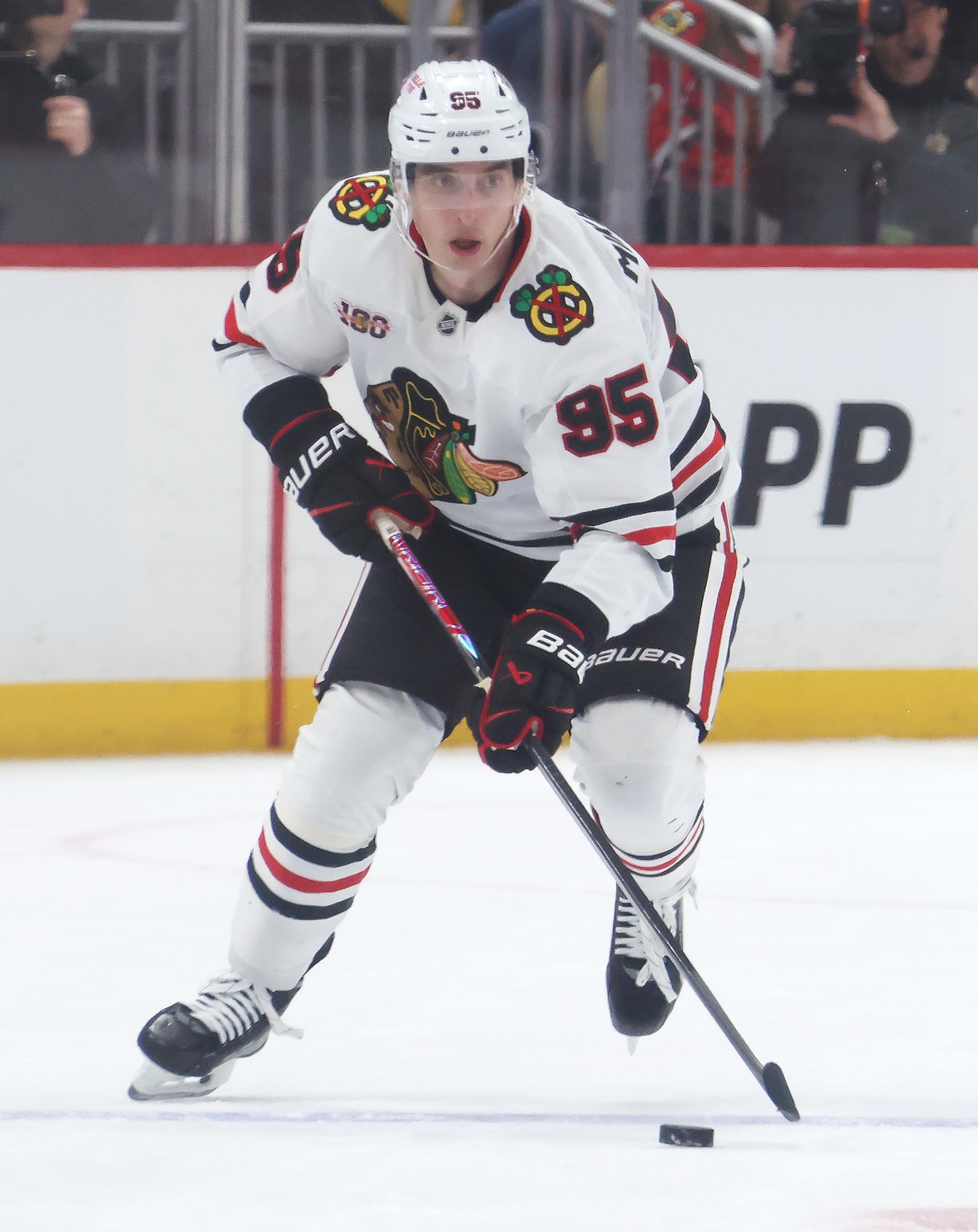 Ilya Mikheyev ($2.02MM with max retention) is having the best offensive season of the three and has also had some success killing penalties, particularly this season. I think his value now is higher than it was when Chicago was paid to take on his contract but his history suggests he won’t be as successful in the limited role he’d have with a contender. Where Dickinson is in the same type of role he’d have on a new team (just a little ice time), Mikheyev would be in line for a bigger drop so there are more question marks as to how impactful he’d be. He’s someone I could see teams viewing as an option further down their list but I don’t think he’ll be as sought after.
Connor Murphy ($2.2MM with full retention) isn’t having a good year. His best days are behind him but if you’re a playoff team looking for defensive depth, what are you typically looking for? Good size, experience, penalty killing abilities, good shot blocker, and being right-handed is a bonus. Technically, Murphy checks them all. I don’t see a contending team wanting him to be more than a number six but I expect several teams will want him for that role if the Blackhawks are eating half of the remaining contract.
In terms of who’d get the biggest return, I’d go with Dickinson, then Murphy, then Mikheyev. (I like Mikheyev but his profile is not the type that contenders typically seek out at this time of year.) One thing worth noting, while this scenario had Chicago retaining on all three, they only have two retention slots available since one is being used on Seth Jones.
Black Ace57: Is it finally time for the Flyers to follow the Rangers’ lead and give up on this season and sell at the deadline?
To add onto this, why not do what the Flyers did in the past with trades like the Carter and Richards ones and at least try to shake things up without strictly buying or selling? Examples I’m thinking of are Wright with the Kraken or Power with the Sabres as targets.
Going into today’s action, the Flyers are eight points out of a top-three seed in the Metropolitan Division and ten points out in the Wild Card chase. They have at least one game in hand on the teams holding those last playoff spots as well. That’s not an insurmountable gap. But it’s an improbable one. And realistically, if they got to the postseason, I don’t think they’d be a tough out. So yes, I’d say they should be in sell mode.
You note the old Jeff Carter and Mike Richards trades from a while back as a way to possibly reshape the roster without being a true seller. But those players were impact centers with strong track records of winning hockey. Who on Philadelphia’s roster has that type of history and reputation? Travis Konecny is a nice player, a legitimate top-line winger. Maybe he’s in that territory but swapping out your leading scorer for the sake of a change carries some big risks. Owen Tippett feels like a potential change-of-scenery candidate so maybe there’s an option there but he’s not at the level of Carter and Richards and they may not be selling at the peak of his value.
The problem with saying they should be sellers is that they don’t have a lot to realistically sell. Their pending UFAs are depth pieces that wouldn’t yield a return of consequence. Rasmus Ristolainen can’t stay healthy which hurts his market. I expect they’ll try to sign Trevor Zegras to a long-term pact. They’re not moving Christian Dvorak after extending him while Sean Couturier’s contract takes him off the table. On defense, Travis Sanheim isn’t moving, Cameron York probably isn’t in play, nor is Jamie Drysdale who they still have hopes for.
Maybe Bobby Brink is an option if the Flyers aren’t thrilled about what his next contract with arbitration rights might cost. I could see Nick Seeler attracting some interest; he might be their best trade chip. And while Samuel Ersson might be in play, how much value does he have in a down year? So yes, while selling makes sense in theory, Philadelphia might not have much to sell.
sovietcanuckistanian: By all accounts, the Bruins made a legit effort/offer for Rasmus Andersson. I get that didn’t get him (he wanted LV and I guess Calgary took a better deal since he hasn’t signed an extension yet), but he clearly filled a glaring need. Who do they pivot to in terms of finding someone to fill that hole – given that their internal options aren’t cutting it at the moment?
The next most prominent right-shot defender in play is Dougie Hamilton. I think it’s safe to say that option isn’t on the table. Assuming they’re looking for someone who has some of Andersson’s attributes and isn’t a rental player, the next best option to look at might be Blues blueliner Justin Faulk.
He’s someone who would give them some secondary offense behind Charlie McAvoy while he’s still enough of a minutes-eater to easily slot into a top-four role. While he’s not a defensive anchor, he’s still a capable penalty killer. And with one year left after this on his contract, he’s not a pure rental either which might be appealing to GM Don Sweeney. The $6.5MM cap charge will be a challenge to overcome though, given that it’s unlikely that St. Louis will retain on it whereas Calgary did on Andersson’s expiring deal. But fit-wise, he’d fit the bill.
Mario Ferraro would also help and he’s easier to fit in on the cap but there’s no guarantee that he’ll move with the Sharks hanging around the playoff mix and trying to re-sign him. Rasmus Ristolainen is also believed to be available but with his track record of injuries and Boston already having Nikita Zadorov, that might not be the best fit for them. But overall, Faulk feels like the right fit for them if they can make the cap elements work.
letsgonats: What the heck is happening with the Caps? If they sell, who could they offer and what would they net? (Lapierre, Duhaime, Sandin, van Riemsdyk, McMichael, Milano, Lindgren, prospects, etc.)
It’s a combination of there being natural regression after a season where everything went right for them last year and the fact that the Eastern Conference in general is a little wacky at the moment. Really, of the six teams holding down the divisional seeds, how many of those would you have expected to be there at this point? Carolina and Tampa Bay, sure, but the others felt like Wild Card at best fits. Them all being in means a bunch of teams are out and Washington is one of them.
I’ll note that I don’t expect them to be big sellers. This is Alex Ovechkin’s last guaranteed NHL season with his contract ending. They’re not going to throw in the towel unless things really go off the rails before the trade deadline. And if they did sell, it probably won’t be their younger core, taking Rasmus Sandin and Connor McMichael off your list.
There would be a market for Brandon Duhaime despite the down year. A second-round pick would be tough but a third (or equivalent prospect) should be doable with maybe a little something else coming back. Trevor van Riemsdyk as a rental blueliner is probably in that range as well. A rebuilding team probably would take a shot on Hendrix Lapierre but his value isn’t any higher than a mid-round pick or equivalent struggling youngster. I don’t think Sonny Milano would be attracting interest.
That leaves Charlie Lindgren as the biggest wild card of this group. He’s having a down year (and now is injured). But his recent track record is still decent and there are a lot of teams looking for goaltending. Generally, a $3MM deal for someone with a .884 SV% would scare teams off but someone might take a flyer on him. But given that it’d be a gamble, the return wouldn’t be all that significant either.
Long story short, this isn’t a good time for Washington to be sellers. They may not be big buyers (although a trade-and-extend deal for Panarin could make sense for them in the long term) but they’re not in a spot to replenish their prospect pool unless they’re moving out a core player which is something they’re probably not going to want to do.
SkidRowe: Should there be a cap penalty for teams in no-tax states? It seems like an unfair advantage.
In a perfect world, would it be nice to have a mechanism that balances things out? Sure. From a practicality standpoint though, I am honestly at a loss for how they’d try to do it. If you want something strictly along the lines of taxes, now the whims of politicians ultimately dictate teams’ spending ability. That doesn’t sound like a great situation for a professional sports league.
Maybe there’s something along the lines of a cap exception for teams in higher-tax markets but the league didn’t want to go there more than 20 years ago in CBA talks and I don’t think they want to go there. Nor do I think the league could get 22 of 32 teams onboard to vote for this or any other change.
That last part is a big one. While there are undoubtedly several teams that would want something like this in place, about as many wouldn’t. Could they really get a two-thirds majority on something with some teeth (that doesn’t have giant loopholes like some of their other seemingly ironclad fixes…remember how LTIR was supposed to solve plenty of problems?) to make a material difference? I don’t think there’s quite enough appetite for a change to make that happen.
Photo courtesy of Charles LeClaire-Imagn Images.
I think your LA Kings response needs a fact check. Robitaille was on the business side until 2017, and he became a hockey side exec when Dean Lombardi and Darryl Sutter got fired. Agree that they rushed the retool after the 2022 season, but gotta get the facts right.
Quit whining about your taxes and enjoy all the wonderful benefits those high taxes bring you.
If I was an owner my G.M traded for J.T miller. It is last thing He does . Fired immediately
Thank you for the detailed answer as depressing as it is as a Flyer fan to read it
Thank you for your NYR comments… but to follow up – what’s the point of getting back to a WC spot. Stay in the messy middle so Drury can keep his job a little longer? Or is the thought to get in and maybe Igor gets hot and carries them through some upsets?
If a couple of the Centers with Trade protection waive, does a larger rebuild make more sense? Or perhaps at least tearing down the core and flipping assets in another accelerated rebuild before Fox and Igor get too old?
Well, the playoff goal is called $10M/per in playoff home game revenue. That said, yes, they’re blowing up the core. Even if he’s lost a half-step, Panarin is still a 80-90 pt player and they’re not going to find one of those on the open market, and his dismissal will also have an effect on Zibanejad’s numbers. As for the rest of the forward group excluding Trocheck, they’re not worth much. They turned a #2 overall (Kakko) into a 5-6 defenseman in Borgen. Drury seems overly preoccupied with “right way” players, which pretty much leaves them with what you see everyday: a bunch of 12-16 goal scoring forwards, and another bunch of 12-pt defensemen, with long stretches of can’t score more than two goals in a game.
Dallas could be a fit for a reunion with Dickinson, Former Dallas Star, fits their heavy style of play
Rob Blake botched a few trades and tired to retool to apiece Kopitar and Doughty, when he should have torn it down for a rebuild, which prolonged the agony of the mushy middle. The Ken Holland hire was just a sign that the retool would continue. While the Kings will likely claim a wildcard spot, it will be at the expense of a higher draft pick and more post season agony