
Senators Undecided On Qualifying Erik Brannstrom
Back in 2019, the Senators thought they were adding a core piece of the future when they picked up defenseman Erik Brannstrom from Vegas as part of the Mark Stone trade. While he has worked his way into a regular role, he hasn’t been anywhere near as impactful as they were hoping for.
With the team looking to shake things up in Steve Staios’ first summer as GM, it appears as if Brannstrom is one of the players whose future with the team is in some question. Postmedia’s Bruce Garrioch reports that the Sens aren’t sure if they will tender him his required qualifying offer this summer.
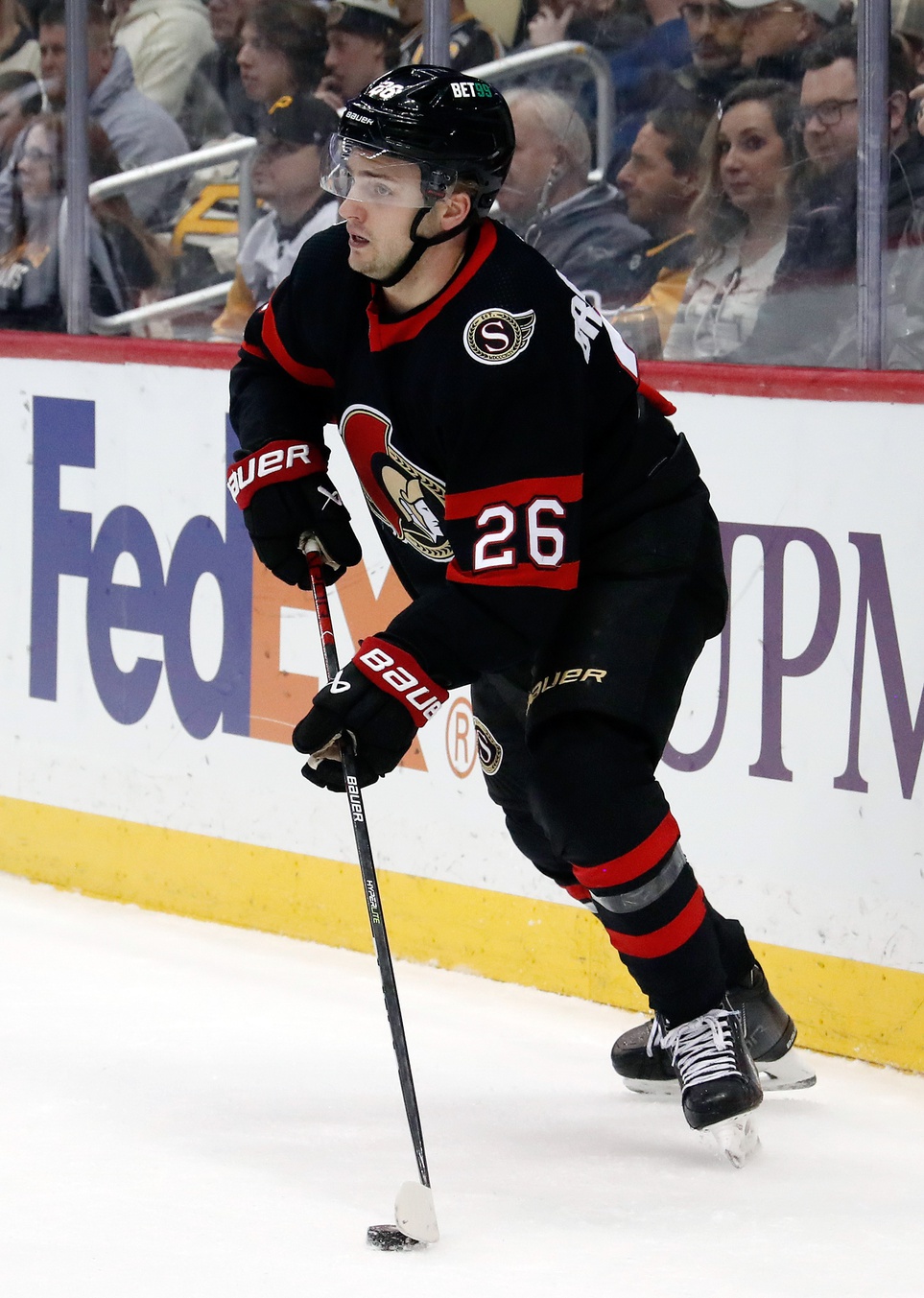 It’s a similar situation to the one they found themselves in a year ago, albeit with a higher price tag this time around. At that time, the qualifying offer was tendered with an agreement pretty much done in principle, finalized on July 1st with a contract that more than doubled his salary to $2MM for 2023-24. That figure is now the qualifying offer while he will have arbitration rights as well.
Brannstrom played in a career-best 76 games this season, picking up three goals and 17 assists. He was primarily limited to playing on the third pairing while interim head coach Jacques Martin elected to deploy him as a winger on the fourth line briefly as well. Those numbers alone might not look great for arbitration purposes but with 69 points in 266 career NHL contests, the longer track record would bolster his case in a hearing.
At the moment, Ottawa already has over $27MM committed to six defensemen for next season, per CapFriendly, with Jake Sanderson’s new contract kicking in this summer. Should they be allocating at least another $2MM (and likely more to avoid a hearing) to that position or would they be better off using that money elsewhere? Having said that, if they elect to move a blueliner – Jakob Chychrun has been in trade speculation dating back to the trade deadline – then it might be more justifiable to try to give Brannstrom one more chance.
As things stand, they have a little over $12MM in room for next season with a handful of roster spots to fill. Pending RFA center Shane Pinto figures to take a good chunk of that so if Staios wants to try to add an impact piece to his roster, it would be difficult to do so and keep Brannstrom on the roster without making some sort of other change first. Accordingly, this is a decision that could come down to the wire on the June 30th qualifying offer deadline.
Photo courtesy of USA Today Sports Images.
International Rumors: Ouellet, Heatherington, Lethemon
Defenseman Xavier Ouellet has played 178 career NHL games so far along with 441 career appearances in the AHL. However, it appears that he won’t be adding to those totals next season as Belarus Hockey relays that the blueliner is expected to sign with Dinamo Minsk of the KHL. The 30-year-old was a full-time NHLer for a couple of years with Detroit but since then, he has primarily played in the minors. Ouellet inked a two-year deal with the Penguins in 2022 and was expected to be a key veteran with AHL Wilkes-Barre/Scranton while being a capable recall when injuries arose. However, injuries limited the pending unrestricted free agent considerably in 2022-23 and while he was healthier this season, he didn’t get a recall to Pittsburgh and wound up posting two goals and 23 assists in 63 minor league appearances.
Other international rumblings pertaining to pending free agents:
- The Senators have already lost Lassi Thomson and Jacob Larsson to overseas contracts and a third blueliner might be joining them as Postmedia’s Bruce Garrioch reports that Dillon Heatherington is examining his international options. The 29-year-old played in a dozen games with Ottawa between 2021-22 and 2022-23 but didn’t see any NHL action this season. Instead, Heatherington skated in 60 games with AHL Belleville and was briefly loaned out to play for Canada at the Spengler Cup back in December.
- Red Wings pending UFA John Lethemon is expected to sign with Lukko in Finland, per a report from Satakunnan Kansa’s Kimmo Makelainen. The 27-year-old netminder has spent the last two years on an NHL deal with Detroit but has primarily played at the ECHL level in that span. This season, Lethemon had a 2.90 GAA and a .892 SV% in 37 games with Toledo although he improved those to 2.46 and .899 respectively in nine playoff contests. An NHL two-way deal likely wasn’t going to be on the table for Lethemon this summer so going overseas, assuming the contract gets finalized, makes some sense.
Jets Notes: Monahan, Coaching Staff, Schmidt
Ken Wiebe and Mike McIntyre of The Winnipeg Free Press write that the Winnipeg Jets are increasing their efforts to retain the services of center Sean Monahan whom they acquired ahead of the trade deadline. Monahan didn’t have a great playoff with Winnipeg tallying just a single assist in five playoff games but was solid in the regular season occupying their second-line center role and posting 13 goals and 11 assists in 34 games.
Monahan made just under $2MM last season on a one-year contract and could be in line to double that figure on a multi-year deal given that he is one of the best centers available in unrestricted free agency. The 29-year-old Monahan dressed in 83 games last season split between Winnipeg and Montreal and finished the year with 26 goals and 33 assists.
If Monahan reaches free agency the Jets may not have the cap space to replace him as they stand to have just over $13MM available at this time.
In other Winnipeg Jets notes:
- Wiebe and McIntyre write that the Jets have two remaining slots available on their coaching staff and are likely to hire a veteran associate coach to occupy one of those roles next to new head coach Scott Arniel. They speculate that former Seattle Kraken head coach Dave Hakstol could be a possibility as well as Western Hockey League head coach James Patrick who has ties to Arniel. It is expected that the Jets will decide on rounding out their coaching staff in the next few weeks.
- It’s possible that Jets defenseman Nate Schmidt may receive a buyout this summer as Winnipeg looks to clear cap space to address some of the holes in their lineup (as per Wiebe and McIntyre). Schmidt has one year remaining on his contract with a cap hit of $5.95MM and has struggled the last two seasons. Last year, the 32-year-old tallied just two goals and 12 assists in 63 games and saw his ice time dwindle to just 16:49 per game down from over 20 minutes a night in the 2021-22 season. A buyout would save Winnipeg $3.2MM in cap space next season but would create a $1.616MM cap hit for the 2025-26 season (as per CapFriendly).
Free Agent Focus: Toronto Maple Leafs
Free agency is now just a month away and teams are looking ahead to when it opens. There will be several impact players set to hit the open market in July while many teams have key restricted free agents to re-sign as well. We continue our look around the NHL with an overview of the free agent situation for the Maple Leafs.
Key Restricted Free Agents
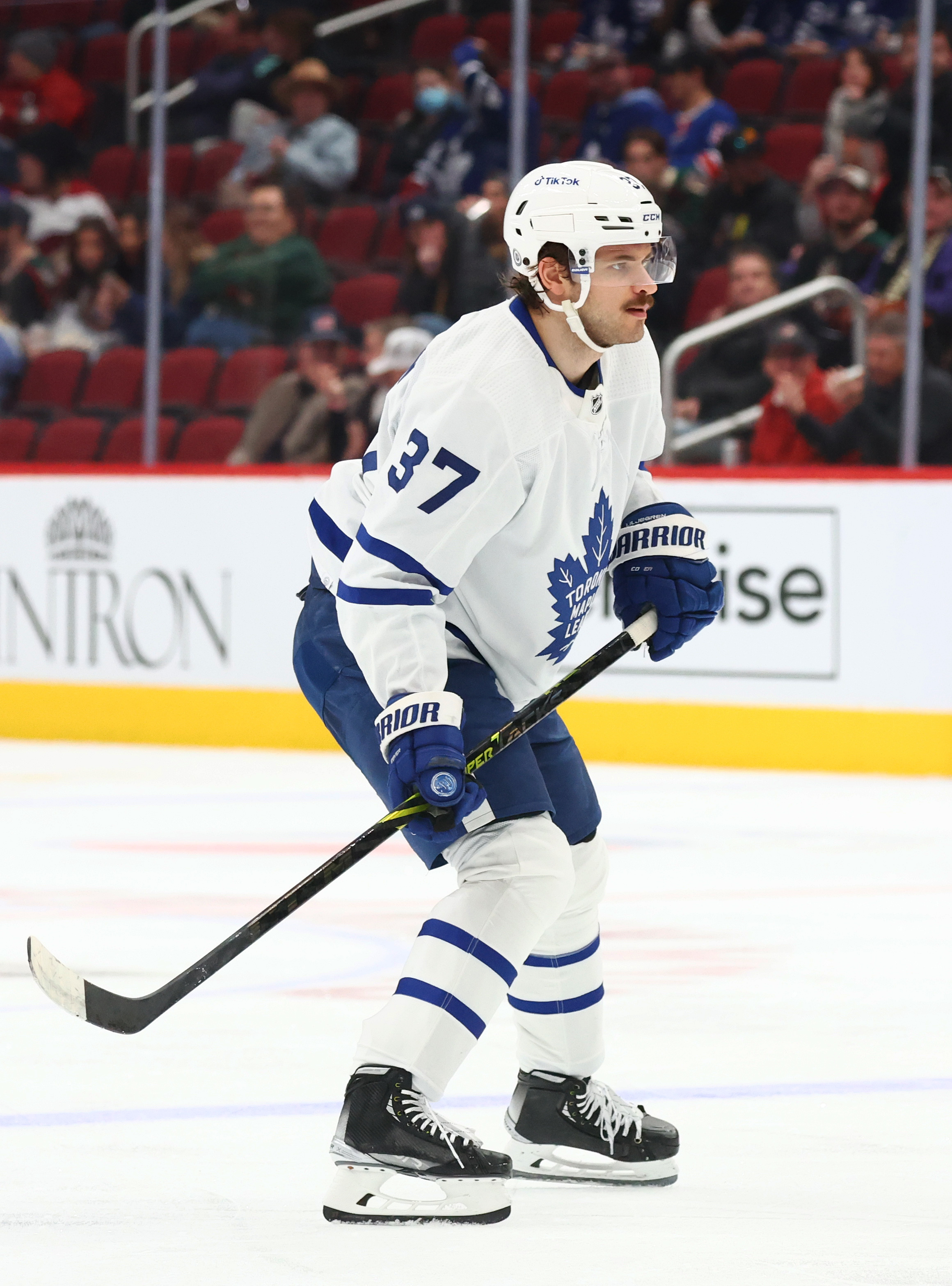 D Timothy Liljegren – Liljegren would best be served to play on a team’s third pairing but given the lack of right-handed defenseman for the Maple Leafs this season he was thrust into second-pairing duty quite often and averaged nearly 20 minutes of ice time per game. That number dwindled to just 17 minutes per game in the playoffs as Liljegren appeared to lose the trust of former Toronto head coach Sheldon Keefe. Liljegren draws a lot of criticism for his lack of detail with the puck on his stick as evidenced by his giveaway numbers (40 giveaways in 55 games), but he plays in all situations and is a good offensive producer on the powerplay. The 25-year-old will be looking for a sizeable raise on his previous $1.4MM AAV and should easily double that figure on a multi-year agreement.
F Nicholas Robertson – Robertson was a victim of Toronto’s cap crunch last season on more than one occasion and found himself playing in the AHL despite being one of the Maple Leafs’ better offensive producers in the bottom six. The 22-year-old registered 14 goals and 13 assists in 56 games despite playing just 11:23 a game and could be in line to see time in the top six next season if the Maple Leafs are unable to slide another high-priced forward into the lineup. Robertson is a good forechecker despite being on the small side at just 5’9” and 178 pounds, and he is also a strong play driver who can create scoring opportunities off the rush. Robertson will be looking at a bridge deal this summer and could come in at a figure around $1.5MM per season.
Other RFAs: F Connor Dewar, F Max Ellis, F Noah Gregor, D Maxime Lajoie, G Keith Petruzzelli, F Alex Steeves
Key Unrestricted Free Agents
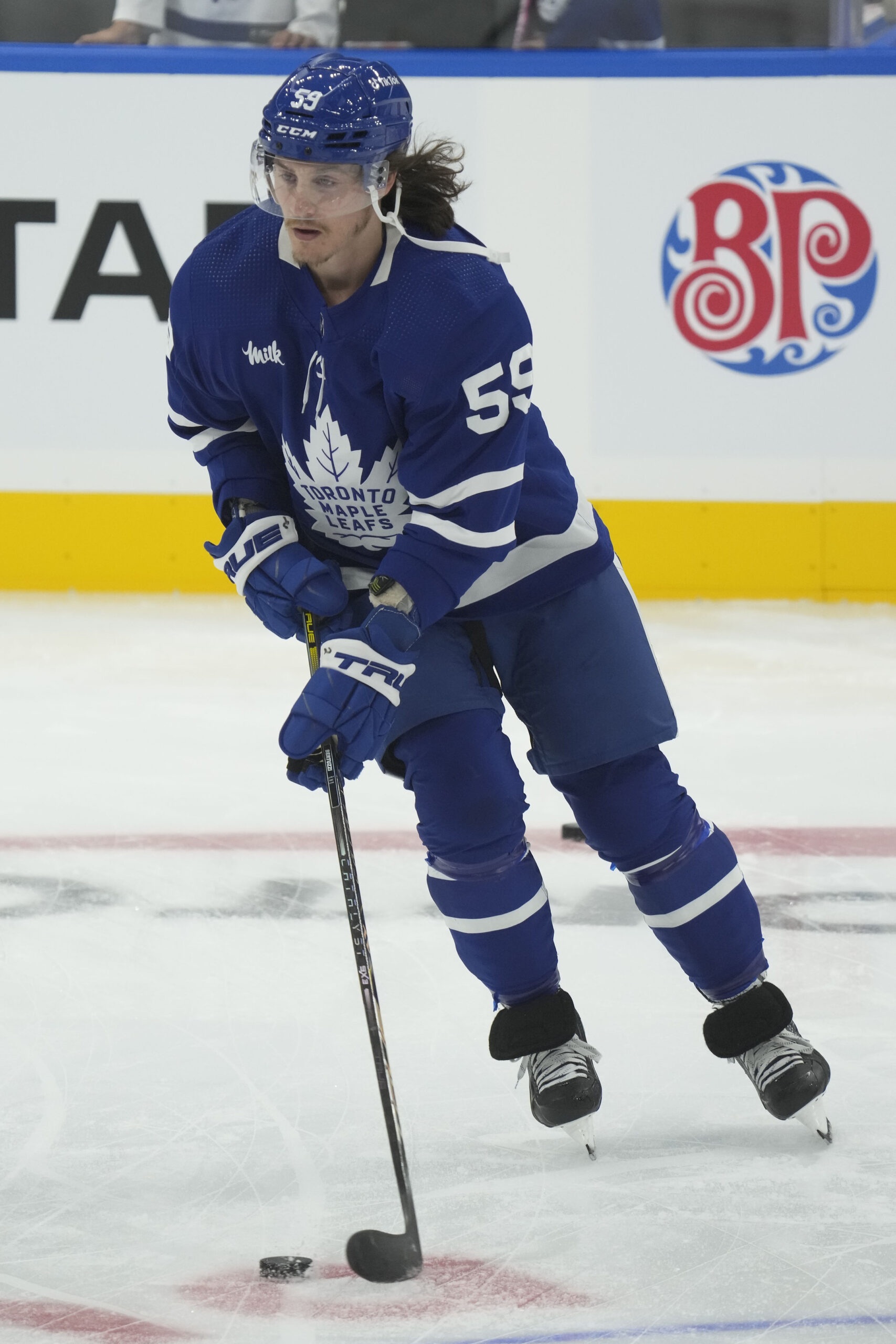
F Tyler Bertuzzi – Bertuzzi had some struggles adjusting to life with the Maple Leafs and was much better in the second half of the season. The Sudbury, Ontario native finished with 21 goals and 22 assists in 80 games while providing solid work in the dirty areas of the ice-extending shifts along the boards and going to the net for rebounds. The 29-year-old settled for a one-year $5.5MM contract last summer and will be looking for term this time around. While he has shown that he can provide better than secondary scoring and is a decent skater with a physical element to his game, it’s hard to imagine him receiving a raise on a multi-year deal, but he could receive a similar AAV on his next deal. It’s also difficult to see him re-signing in Toronto given their laundry list of needs and pending salary cap crunch.
D T.J. Brodie – It’s hard to project what T.J. Brodie’s next contract will look like given that last season was a tale of two wildly different trajectories. Brodie was very good in the first half of the season, but appeared to lose a step down the stretch and only found his way into one playoff game for the Maple Leafs. During the regular season, the 33-year-old tallied a goal and 25 assists in 80 games while playing almost 22 minutes a night, but his finish to the year mirrored the previous season where his play also dipped, largely due to injury. Given the fact that the Chatham, Ontario native has lost some foot speed and has shown signs of wearing down the last couple of years, it’s hard to envision him being back with Toronto or topping his previous $5MM AAV. Brodie is still a capable third-pairing NHL defenseman and will likely get a multi-year deal this summer.
F Max Domi – Domi was another new addition to the Maple Leafs who struggled to fit in this past season. He started the year on Toronto’s third line but worked his way into the top six as the season inched on and injuries began to pile up. The 29-year-old fit in well with the Maple Leafs’ elite scorers as his quick pace and ability to distribute the puck allowed him to give Toronto’s scorers some good looks. Domi seems like the likeliest to return to Toronto as he has expressed an interest in doing so and figures to fit in the Maple Leafs’ salary cap structure. Domi posted nine goals and 38 assists last season in 80 games while playing up and down the lineup and should be in line for a multi-year deal above $4MM per season.
G Ilya Samsonov – Samsonov did not provide the Maple Leafs with consistent NHL goaltending this season and was barely able to hold onto an NHL spot. However, he was a much different goaltender in the second half of the year and finished the season sporting a 23-7-8 record with a 3.13 goals-against average and an .890 save percentage. Despite his better results in the backend of the season, Samsonov was still prone to giving up bad goals and had a hard time tracking pucks in traffic. He is simply not a goaltender the Maple Leafs can count on as a number-one netminder and will find an NHL job elsewhere this summer on a short-term deal.
Other UFAs: F Kyle Clifford, D Joel Edmundson, C Dylan Gambrell, D Mark Giordano, G Martin Jones, D John Klingberg, D Ilya Lyubushkin, G Matt Murray
Projected Cap Space
The Maple Leafs project to enter the offseason with roughly $18.5MM in available cap space which looks like a sizeable amount on paper given that the team’s top stars are already locked into contracts for next season. However, Toronto has a big hole to fill in their top-6 forward group as well as two holes in the top-4 of their defensive unit (one of which could be filled by Liljegren). The Maple Leafs also need to address their goaltending situation which has been a letdown in many of their early playoff exits. All of that will take up most of the remaining cap space available and could make it difficult to add depth to the bottom of Toronto’s lineup, which has been another area of concern for a top-heavy lineup. The team will also have to factor in several pending extensions to forwards John Tavares and Mitch Marner as they are both a year away from unrestricted free agency and have to consider Matthew Knies and Joseph Woll who will be restricted free agents next summer as well.
Photos courtesy of USA Today Sports Images. Contract information courtesy of CapFriendly.
Free Agent Focus: NHL Utah
Free agency is now just a month away and teams are looking ahead to when it opens. There will be several impact players set to hit the open market in July while many teams have key restricted free agents to re-sign as well. We continue our look around the NHL with an overview of the free agent situation for the franchise formerly known as the Coyotes.
Key Restricted Free Agents
 D Sean Durzi – Arizona took advantage of Los Angeles needing some cap space, flipping a second-round pick to land Durzi. The move worked out extremely well for the then-Coyotes. Durzi was thrust into a much bigger role than he had with the Kings and acquitted himself rather well, setting new career highs in assists (32), points (41), blocks (160), and ATOI (22:43). He’s owed a qualifying offer of $2MM but stands to land considerably more than that, especially with salary arbitration rights. A one-year deal could push past the $4MM mark but if Utah GM Bill Armstrong wants to try to lock him up to a long-term agreement that buys multiple years of club control, Durzi’s next contract could surpass $6MM per year.
F Barrett Hayton – After a breakout 2022-23 campaign, expectations were high for Hayton coming into this season. However, things didn’t go as planned. The 23-year-old missed 49 games due to a pair of injuries (hand and lower body) and when he was in the lineup, he wasn’t producing anywhere near the level that he was the year before, scoring just three goals while adding seven assists in 33 appearances. His qualifying offer checks in at $2.13MM with arbitration rights which should allow him to get more than that based on his 2022-23 performance. However, the long-term agreement that seemed likely a year ago probably won’t be coming this summer.
D Michael Kesselring – After getting a taste of NHL action last season, Kesselring played his way into a more prominent role in 2023-24. He started the year in the minors but was recalled less than a month in and was up with Arizona the rest of the way. Kesselring recorded a respectable 21 points in 65 games while averaging less than 16 minutes a night of ice time. Although this is his first trip through restricted free agency, he’s already arbitration-eligible which could push his next contract higher than it might seem at first glance. Without arbitration, his bridge deal could have been pegged around the $1.3MM mark but it should push past $1.5MM with his eligibility to go to a hearing where his 2023-24 performance would make a big difference in the award.
D J.J. Moser – Moser wasn’t counted on to play quite as many minutes this season but he still logged more ice time than everyone but Durzi. A rare player to go from being drafted in the second round to being an NHL regular the following season, the 23-year-old is now entrenched as a key part of Utah’s back end for the foreseeable future. He still has three years of club control remaining so Armstrong could opt for a second bridge contract which could still quadruple his $874K qualifying offer. If they do look to work out a long-term agreement, it should check in closer to the $4.5MM mark.
D Juuso Valimaki – After being waived out of Calgary back in 2022, Valimaki has settled in as a quality regular on their back end. However, he wasn’t able to match the 34 points he put up in his first season with the Coyotes who claimed him off the waiver wire, seeing his output cut in half this year. Still, his qualifying offer checks in at only $1MM and while he has arbitration rights, the award shouldn’t be high enough to have Armstrong thinking about a non-tender. He should at least double his salary from this season over the summer.
Other RFAs: F Curtis Douglas, F Jan Jenik, F Milos Kelemen, D Vladislav Kolyachonok, F Ben McCartney, D Victor Soderstrom
Key Unrestricted Free Agents
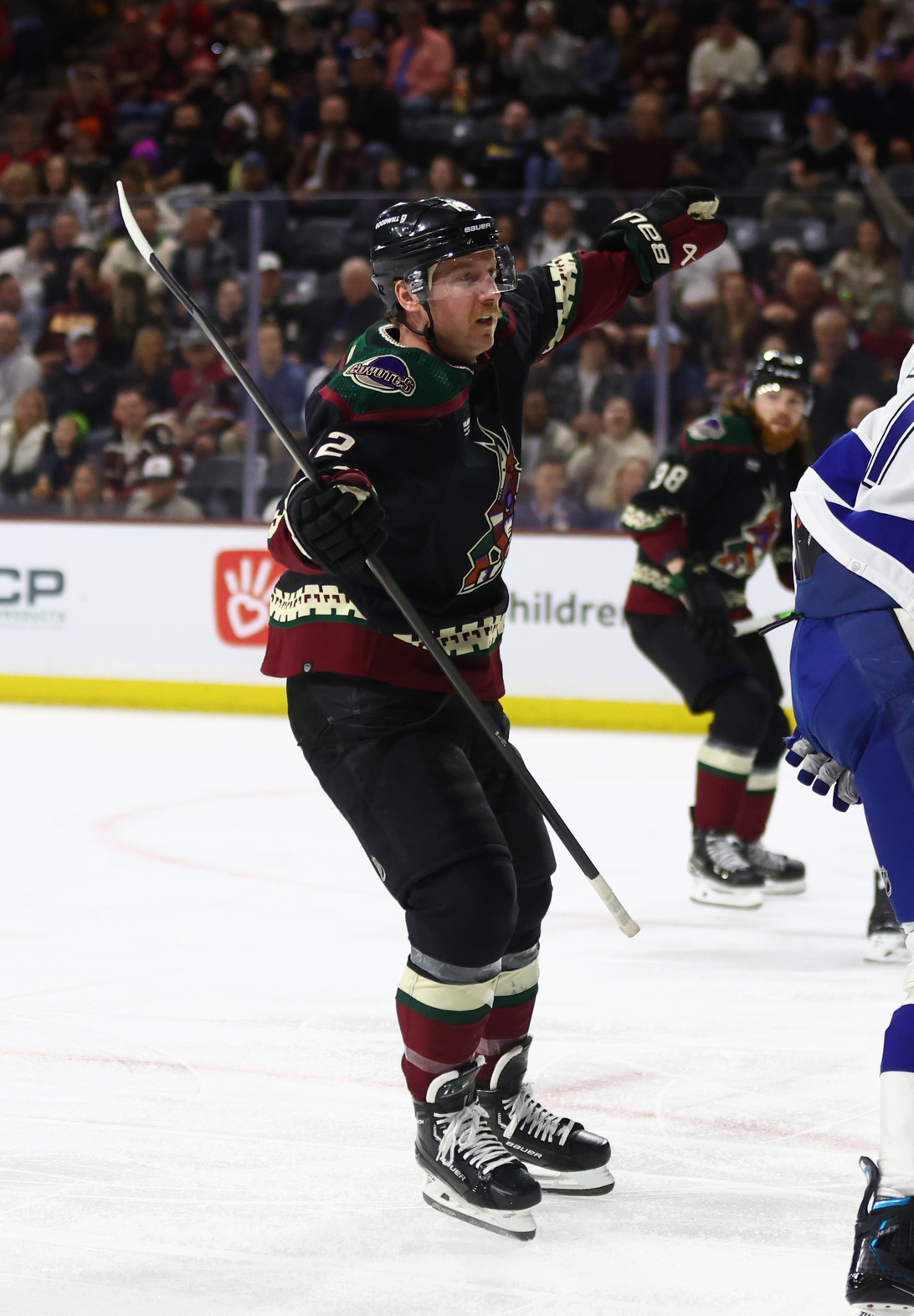 F Travis Boyd – When healthy, Boyd has been a decent secondary scorer. Heading into this season, he was coming off two straight years of 34 points but he wound up clearing waivers in training camp although he was never sent down. This year, he was limited to just 16 games due to a torn pectoral muscle although he still managed eight points despite averaging less than 10 minutes a night. He also has plenty of experience playing down the middle which should help his value in theory. That said, coming off a long-term injury, he’s likely heading for a contract around the league minimum. However, of the many players who will find themselves in that situation in the coming weeks, he’s one with a bit more upside than most.
D Josh Brown – After being in and out of the lineup at times, Brown signed with Arizona in 2022 with the hopes of establishing himself as a full-timer. While he played more than he sat both years, the 30-year-old was the seventh defender fairly frequently this season. He’s a capable shot-blocker and plays with some snarl which will get him some interest in the summer but it’s likely to be for a depth role. Those players will mostly be around the league minimum of $775K but Brown could check in slightly higher than that.
F Liam O’Brien – O’Brien led the NHL in penalty minutes this season while setting a new personal best in points (14) and hits (229). There is still a role for some fourth line fighters across the league and as someone who can produce a little bit while playing that role, he should be able to garner some interest if Armstrong doesn’t re-sign him. Having said that, this particular spot in the lineup is one that teams won’t want to spend much on so O’Brien might not be able to command too much more than the $800K salary he received this season.
Other UFAs: F Travis Barron, D Cameron Crotty, D Travis Dermott, D Steven Kampfer, F Justin Kirkland, D Patrik Koch, F John Leonard, F Bryan Little, F Ryan McGregor, F Nathan Smith, G Matt Villalta
Projected Cap Space
No team has more cap space than Utah this summer, checking in at over $43MM, an amount that could jump past $51MM if they were to fully utilized Shea Weber’s LTIR deal. That doesn’t seem likely to happen but the days of this franchise being at the bottom of spending in terms of salary should be over now. Their restricted free agents will take up a fair-sized chunk of this cap room but they’ll still have plenty of room to add multiple impact players this summer. They could be players in free agency and on the trade front as a result.
Photos courtesy of USA Today Sports Images. Contract information courtesy of CapFriendly.
Senators UFA Jacob Larsson Signs In Switzerland
Rather than see what a trip through unrestricted free agency in July would yield, defenseman Jacob Larsson has opted to head overseas. The Senators’ depth defender has signed a two-year contract with Rapperswil-Jona in Switzerland, per a team announcement.
The 27-year-old was a first-round pick by Anaheim back in 2015, going 25th overall but hasn’t been able to carve out a full-time NHL role just yet. He spent five years in their system, getting into 165 NHL games during that span. However, in 2022, the Ducks elected not to tender a $1.3MM qualifying offer with arbitration rights, making Larsson an unrestricted free agent.
Unable to secure a one-way deal on the open market, Larsson accepted a one-year, two-way deal with Ottawa that summer. While he got into seven games with the Sens, he spent the bulk of that year with AHL Belleville. This season, he only saw game action in the minors despite a pair of recalls in the first half of the season. With Belleville, Larsson played in 61 games, notching a career-best 33 points while adding five assists in seven playoff contests.
Considering the year he had in the minors, Larsson likely would have had strong interest on the open market from teams looking to make him a key defender in the AHL while being a serviceable recall if necessary. However, he instead will try his hand different where he’s likely to play a big role for the Lakers for the next two years. A good showing there could get him back on the NHL radar in 2026 if he decides to try his hand at playing in North America again.
Predators To Part Ways With Assistant Coach Dan Hinote
The Predators have elected to make a change behind the bench for next season. The team confirmed to Alex Daugherty of The Tennessean that they will not renew the contract of assistant coach Dan Hinote when it expires at the end of June.
Hinote was an energetic winger over his nine-year NHL career split between Colorado and St. Louis. He opted to play in Sweden for one final season in 2009-10 before hanging up his skates.
However, Hinote wasn’t out of a job for long as after retiring, he was named an assistant coach with Columbus. The 47-year-old spent four seasons in that role before moving into scouting where he spent four more years with the Blue Jackets. From there, he spent two seasons with the U.S. National Team Development Program before former Nashville GM David Poile brought Hinote onto their staff back in 2020. After four years in that job, Hinote will now be on the lookout for another job.
While Hinote won’t be returning, their other assistants will. Daugherty added that Nashville’s two other assistant coaches, Tom Richards and Derek MacKenzie, are expected to return next season so there will only be one new voice behind the bench on Andrew Brunette’s staff.
Notable Moves From The NCAA Transfer Window
The NCAA Transfer Window is nearing its June 4th closing date, after staying open for 45 days rather than 30 for the first time following an October rule change. Collegiate athletes across all sports pushed for the increased window, naturally leading to much more eagerness to move schools. That’s shined through in men’s hockey, where many top players have left their posts in favor of a new role somewhere else. We’ll walk through some of the most notable moves today, as well as their impact on both the 2024-25 collegiate season and long-term effects on the NHL.
Breaking Down the Top Moves of the NCAA Transfer Window
Eric Pohlkamp (RD): Bemidji State to University of Denver
If there were ever an equivalent to Boston College’s ‘Goalie U’ for defensemen, it’d be David Carle’s Denver Pioneers. They just stomped their way to a second National Championship in the last three years, largely thanks to a blue-line that featured top NHL prospects Shai Buium, Zeev Buium, and Sean Behrens. Shai and Behrens, both winners of the 2022 National Championship, have since signed their entry-level contracts in the NHL, leaving two massive holes atop the team’s depth chart. Zeev will likely assume his brother’s role atop the lineup – should he not be persuaded to turn pro by the team that drafts him – but Denver had to look externally to find the second half of their next top pair. And, true to the ‘Defender U’ persona, they’ve found an absolutely perfect fit in San Jose Sharks prospect Eric Pohlkamp.
Pohlkamp had a breakout season in his final year in the USHL, boasting 16 goals and 51 points through 59 games with the 2022-23 Cedar Rapids Roughriders. It was the most a RoughRiders defender has scored since 2010 and Pohlkamp certainly looked the part, combining powerful and smooth skating with his hefty frame to blow through opponents and support the offensive rush. The performance was enough to convince San Jose to draft him in the fifth round of the 2023 NHL Draft, after he went undrafted in his first year of eligibility. He’s vindicated their decision, posting 11 goals and 24 points in his first 32 collegiate games.
After facing skepticism in his first year of draft eligibility, Pohlkamp has since firmly planted his feet as a top NHL prospect. He’ll now move to a red-hot University of Denver with the wind behind his sails. Pohlkamp’s ability to battle for possession and carry the puck out of the zone should be very welcome in a Carle lineup that thrived in the neutral zone last season – while his heft will be a nice balance for the fleeter Buium. Pohlkamp should be set up for a big season with the Pioneers, who will be looking to challenge the National title once again.
William Whitelaw (LW/RW): University of Wisconsin to University of Michigan
The University of Michigan lost a lot of talent following the end of their season. Each of Frank Nazar, Gavin Brindley, Dylan Duke, and eventually Seamus Casey signed with their respective NHL club, leaving substantial holes throughout the lineup. Some of those will be filled in by Michigan’s impressive recruitment class, including 2024 first-round hopefuls Matvei Gridin and Michael Hage, who will join in 2025. But the Wolverines were still in need of added bite in their top six during the transfer window.
And while they didn’t find as ideal of a match as Denver found in Pohlkamp, they’ve embraced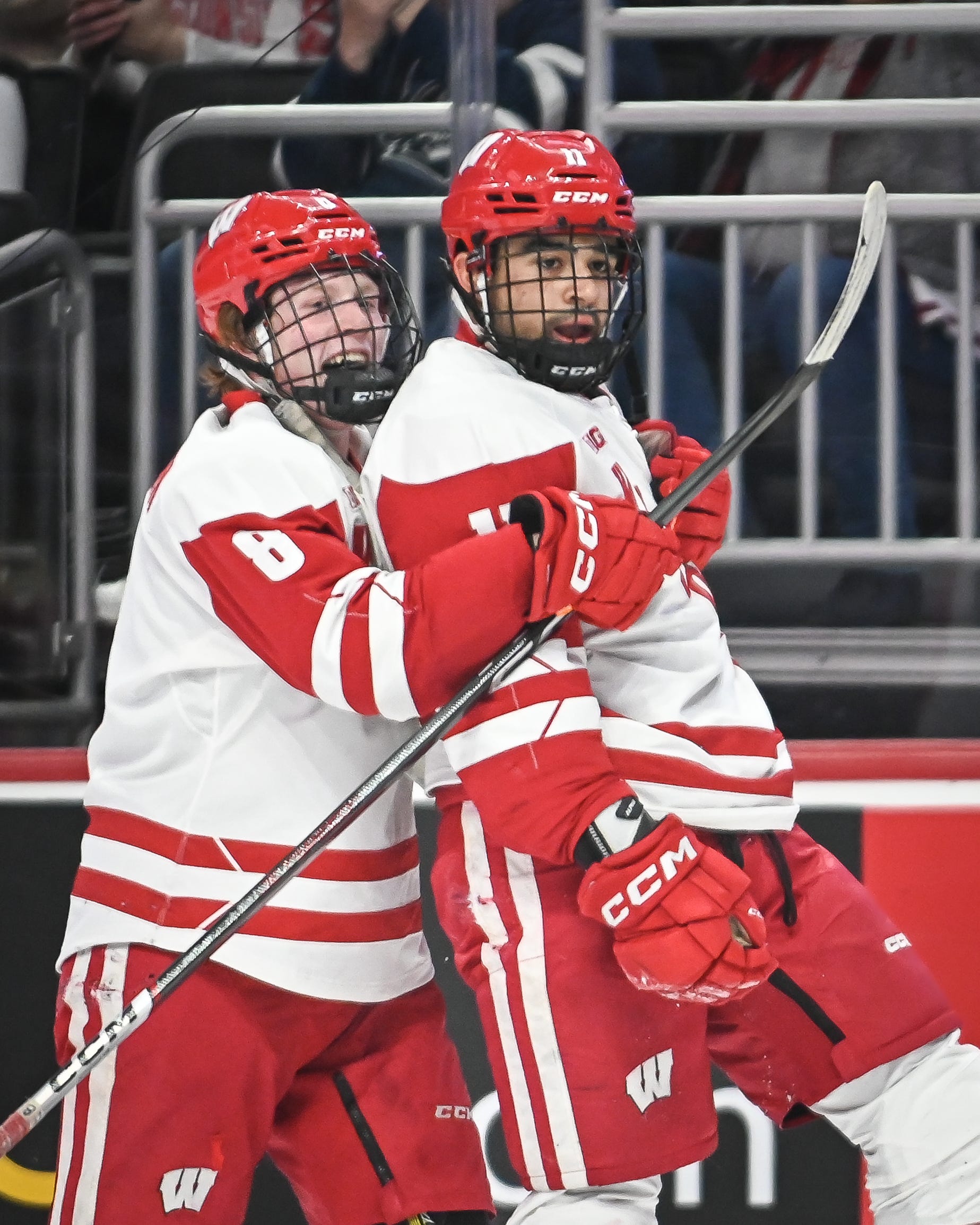 similar potential, bringing in Columbus Blue Jackets prospect William Whitelaw after a slow freshman season at the University of Wisconsin. Whitelaw was one of many young players to transfer away from Wisconsin this Spring, and now seems set for a top role on a much more explosive Michigan offense. Whitelaw was the star forward of the Clark Cup-winning Youngstown Phantoms in 2022-23, recording a combined 41 goals and 70 points across 71 regular season and playoff games that year. The performance earned him a third-round selection in the 2023 NHL Draft, though he was slow to follow it up, posting just 10 goals and 17 points in 37 games as a Wisconsin freshman.
Whitelaw’s game is rooted in his strong toolkit, boasting very sharp and aware stickhandling, agile skating, and a powerful shot that each make him a threat in the offensive zone. He’s certainly still working on how to use those skills cohesively with his teammates on the forecheck – growth that should be supported very well by the strong linemates Whitelaw will inherit in Michigan. Whether he play with McGroarty, Hage, or Gridin – any of the trio should help Whitelaw better find and maintain his tempo, while showing off how his raw skill can lead to goals. Whitelaw is a proven scorer when he’s in the right setting, but didn’t seem to have that setting in Wisconsin. He’ll look to remedy that on one of the most explosive offenses in college, in a what could be looked back on as a very lucrative move.
Matthew Wood (LW/C): University of Connecticut to University of Minnesota
The Pohlkamp and Whitelaw moves represent talented players moving to environments that should give their skillsets more room to shine. That’s not necessarily the case for Predators prospect Matthew Wood, who’s commanded a top-line role at UConn for each of the last two seasons. He’s been fantastic in his first two collegiate seasons, scoring 27 goals and 62 points over a combined 70 games and serving as the Huskies’ leading scorer in both years. Wood has been a dominant scorer since his days in youth hockey and even posted a combined 98 points in just 64 games during two seasons in the BCHL. He’s a tough and rugged winger who plays hard on the puck and puts plenty of power behind his shot. Many criticized his slow skating and lack of direction during his draft season, though his consistent scoring has always made him tough to doubt.
Wood will now move to a Minnesota lineup coming off the loss of top-line forward and team captain Jaxon Nelson, who signed an entry-level contract with the Boston Bruins. Wood should be set up to be Nelson’s direct fill-in, serving in tandem with Chicago Blackhawks prospect Oliver Moore. The duo seem perfectly matched, with Moore boasting very speedy playmaking while Wood brings power and grit. Moore posted 33 points in 39 games as a freshman this season, despite scoring just nine goals on the year. He’ll be the perfect pointman for Wood, who should only continue scoring at a high rate on a Minnesota team looking to take back the Big Ten.
Tim Lovell (LD): Arizona State University to University of Michigan
Michigan headlined what was a very active Transfer Window for the Big Ten. In a corresponding 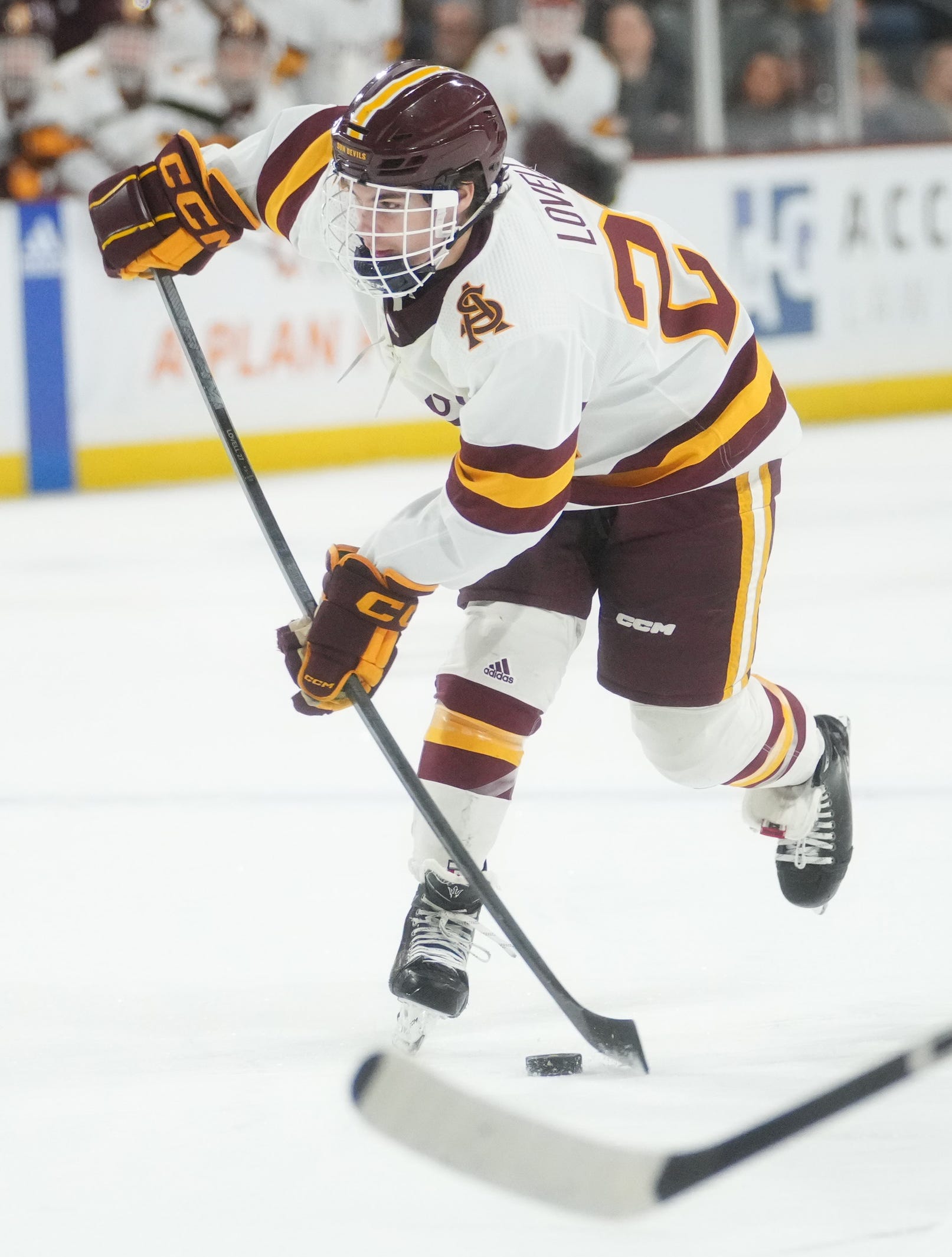 move to Whitelaw’s addition, the Wolverines also brought in top Arizona State defender Tim Lovell to try to fill the hole left by Seamus Casey’s move to the NHL. But while Whitelaw is supplemented by a strong offensive recruiting class, Lovell could be in line to take on the lion’s share of Casey’s minutes. He’ll be one of the most experienced, and certainly the highest-scoring, collegiate defenseman on Michigan’s lineup next season, and while he could cede some ice time to 2024 NHL Draft prospect Will Felicio, Lovell’s ability to drive the puck down the ice should give him a strong advantage. That’s the trait that made Casey so dominant in college and was likely exactly what the Wolverines were looking for on the open market.
They’ve certainly found it in Lovell, who’s shown no fear in carrying the puck through his first three seasons with Arizona State. He’s subsequently posted 12 goals and 79 points across 119 collegiate games, boasting an offensive awareness that should blend well with Michigan’s style. But Lovell has faced criticism for his ability to keep up with defending the rush and holding his position when his team is off of the puck. Casey – who certainly faced similar concerns – was much more stout at controlling both ends of the ice, especially towards the end of his collegiate career. Michigan has found a similar offensive style and skillset in Lovell, but they may need to balance out his aggression with strong defense elsewhere in the lineup. This move is high-risk, high-reward; particularly for a Wolverines team that faced challenges with controlling high-tempo offenses last season.
Photos courtesy of USA Today Sports.
Golden Knights Hoping To Re-Sign Jonathan Marchessault
The Vegas Golden Knights could find a way to re-sign hallmark winger Jonathan Marchessault, per David Pagnotta of The Fourth Period a recent NHL Now segment (Twitter link). Pagnotta shared that both sides have mutual interest in signing a new deal, though Vegas’ slim cap space has kept the team from engaging in any contract talks just yet. Marchessault spoke about these negotiations at the World Series of Poker, telling the Las Vegas Review, “They said they were interested to definitely re-sign me and we’ll see. Technically they have time until June 30, so we’ll see how it goes.”
Marchessault recently concluded a six-year, $30MM contract signed with Vegas in January of 2018. He earned the deal in the midst of a breakout season with the inagural Golden Knights, scoring 27 goals and 75 points in 77 games. The new extension marked Marchessault’s first time earning a salary north of $1.0MM and he’s only become more valuable, posting 165 goals and 342 points across the 437 games he played over the course of the deal. That includes Marchessault’s career-high 42 goals this season, making him just the second Golden Knight to hit the 40-goal mark alongside William Karlsson‘s breakout 2017-18 campaign.
Marchessault has managed the strong scoring while serving a stout role on Vegas’ second line – averaging roughly 17 minutes of ice time in six of his last seven seasons. His modest spot in the lineup has been supplemented by a commanding role on the team’s powerplay, with no other Golden Knight playing more power-play minutes than Marchessault since 2018. And he’s vindicated the minutes, scoring 36 power-play goals and 87 points in a collective 1121 minutes.
Marchessault’s ability to offer consistent goal-scoring from the second line has been a big factor in Vegas’ recent lineup creativity. He’s fully carved out his role in Vegas and will be hard to replace should he enter free agency. But that could be the ultimate outcome, as the Golden Knights currently boast just $897.5K in cap space. They could look into trimming their cap hit on the trade market or through LTIR relief, per Pagnotta, though they’ll likely need to make a series of to afford Marchessault’s next deal.
The same factors that’s led Vegas to their cap constraints are likely also what’s kept them from engaging Marchessault in talks of an extension up to this point. The veteran winger told the Las Vegas Review that he expressed interest to Vegas about signing an extension last summer – sharing, “I asked last summer. I was like, ‘You know what? I would rather do it in the summer before the season.’ And they said they’re not ready to do that…”
The Golden Knights instead spent the season getting as close to the salary cap as they could, even using lucrative trading to acquire Noah Hanifin‘s contract at just 25 percent of its original cap hit and even getting the San Jose Sharks to retain 17 percent of Tomas Hertl‘s cap hit. Timely LTIR relief helped them make the moves without exceeding the salary cap, though Vegas is now paying for the antics with a stressful summer ahead. Pagnotta added that pending free agents William Carrier, Michael Amadio, and Anthony Mantha are each expected to leave the Golden Knights for free agency.
Carrier is notably an original Golden Knight, with the Buffalo Sabres sending Vegas a sixth-round draft pick to ensure they’d select him in the 2017 Expansion Draft. He’s since played in 372 games across seven seasons with Vegas – totaling 53 goals, 99 points, and 183 penalty minutes while averaging just 10:32 in ice time.
Losing the trio of Carrier, Amadio, and Mantha will leave notable holes in the Golden Knights’ bottom-six. With such little money to go around – especially if they re-sign Marchessault – the Golden Knights are likely hoping those holes can be filled by top young players like Pavel Dorofeyev, Brendan Brisson, and Grigori Denisenko.
Offseason Checklist: Tampa Bay Lightning
The offseason has arrived for all but a handful of teams who are still taking part in the playoffs. Accordingly, it’s now time to examine what they will need to accomplish over the coming months. Next up is a look at Tampa Bay.
The Lightning managed to make the postseason for a seventh year in a row, but further confirmation that their contending window is coming to a close came swiftly via their cross-state rivals. The Panthers, now just one win away from advancing to the Stanley Cup Final, dispatched them in a quick five-game series, their first win in three playoff series against the Bolts. Now, with back-to-back non-elite regular seasons and a pair of first-round eliminations, general manager Julien BriseBois needs to pull off some tricks to keep the franchise from spiraling into mediocrity after its greatest stretch of success in franchise history.
Re-Sign Stamkos
BriseBois already checked one major item off his offseason checklist, acquiring some much-needed defensive help by acquiring former Bolt Ryan McDonagh from the Predators. Unfortunately, that’s created a temporary cap crunch that makes contract extension negotiations with captain Steven Stamkos much more difficult.
It isn’t the first time the future Hall-of-Famer has gotten dangerously close to becoming a UFA. Negotiations were testy after a five-year bridge deal expired in 2016, and he waited until 48 hours before the market opened to sign an eight-year, $68MM extension. With that deal now run out, Lightning fans will hope it doesn’t take that long again. It wouldn’t be a good sign for a player who, despite expressing a strong desire to remain in the only NHL market he’s ever known, was disappointed with the lack of extension talks last summer.
He’d likely take a discount on his market value, somewhere in the $8MM range annually, to stay in Tampa. But their current projected $5MM of cap space with a minimum of one other roster spot to fill likely won’t cut it, especially since he’s not eligible for performance bonuses.
They’ll need to free up space to get it done, something the rest of this checklist examines in more detail. But even as Stamkos’ even-strength numbers begin to dip, he’s a bonafide top-six winger that they don’t have the offensive depth to shoulder the loss of. He still managed to rack up over a point per game this season, recording yet another 40-goal campaign with 81 points in 79 contests. The 34-year-old was also their goal leader in the playoffs, lighting the lamp five times in five games.
Offload Bloated Forward Contracts
 The Lightning reached three straight Stanley Cup Finals largely because of their cost-effective depth scoring. BriseBois has failed to continue that trend in the past two years thanks to a pair of ill-advised acquisitions.
One was much more harmful than the other, and he’s already on the trade block. BriseBois gave up five draft picks, including a first-rounder, to pick up grinder Tanner Jeannot from Nashville in a trade last year. He’s managed just eight goals and 18 points in 75 games for the Bolts since the deal and spent a good portion of the 2023-24 campaign on the shelf. Averaging fringe third-line minutes, they can’t afford to keep him at his $2.67MM cap hit next season. There’s still optimism around the league that he can rebound to his 24-goal form with the Preds two years ago, but with a 16-team no-trade list kicking in on July 1, they’ll need to move on from him in short order.
There’s also the matter of Conor Sheary, who BriseBois inked to a three-year, $6MM deal with trade protection in free agency last summer. He managed only four goals and 15 points in 57 games this season and was a healthy scratch for most of the stretch run, including all five of their playoff games. His spot in the lineup was replaced by minor-league call-up Mitchell Chaffee, who’s already inked a cost-effective extension with an $800K cap hit. His $2MM cap hit can’t be afforded for a player who provided league-minimum value this season, and it wouldn’t be surprising to see BriseBois offload him in a pure cap-dump transaction. He has a full no-trade clause at the moment, although it downgrades to a 16-team no-trade list on July 1.
Combined, the moves would bring the Lightning’s cap space to nearly $10MM, enough to re-sign Stamkos and add a low-cost depth scoring forward on the free agent market to help replace Jeannot and Sheary.
Get Another LTIR Contract
Having retired defenseman Brent Seabrook‘s contract on the books for the past two seasons was beneficial to the Bolts. After confirming he wouldn’t play again due to injury, Tampa acquired the Cup-winning defenseman’s $6.875MM cap hit from Chicago, placing him on long-term injured reserve for the past three seasons to help give them in-season spending flexibility.
That contract has now run out, though, and they’re entering the summer without anybody available to help fudge their spending limit. That doesn’t mean they can’t pull off another trade to acquire a dead contract, though. As part of their purchase of the Coyotes’ hockey operations, NHL Utah is picking up the final two seasons of injured center Bryan Little‘s contract, which carries a $7.86MM cap hit. With Utah GM Bill Armstrong having full permission from ownership to spend to the salary cap, unlike years past in Arizona, Little’s deal becomes an inhibition for Utah rather than a benefit to help them hit the cap floor.
If they have interest in selling the final two seasons of Little’s contract, expect the Lightning to engage. It wouldn’t mean much for their off-season spending, but placing him on LTIR once the season starts could give them some slight in-season recall and trade flexibility. The few other LTIR-bound contracts around the league are proving advantageous to their current clubs, such as the Golden Knights’ Robin Lehner, so Little might be BriseBois’ only option if he wants to go that route.
Upgrade Backup Goaltending
Tampa struggled defensively, ranking below average in goals against, but it wasn’t all on their skaters. Star netminder Andrei Vasilevskiy had a remarkably pedestrian season after recovering from preseason back surgery, allowing more goals than expected based on the shot quality he faced for the first time since 2015-16, per MoneyPuck. His .900 SV% was also right in line with the league average.
The four-time Vezina finalist could easily return to form after a healthy offseason, but relying on him to carry elite numbers through 60-65 appearances as he enters his 30s will become unrealistic. Throwing league-minimum backup Jonas Johansson to the wolves to start the season didn’t have good results, and he finished the campaign with a poor .890 SV% (that was still above his career average) in 26 appearances.
Waiving Johansson and spending even just $500K more on a more proven backup option in free agency could make a major difference in the standings for Tampa next season in an increasingly competitive Atlantic Division.
Photo courtesy of USA Today Sports.