
Rangers’ Benoit Allaire To Retire After Free Agency
The 2025-26 season will be the last for longtime New York Rangers goalie coach Benoit Allaire, per a team announcement. Allaire will stick around the team through the NHL Draft and start of free agency, per Peter Baugh of The Athletic, before he calls a 29-year career in the NHL to a close.
Allaire has overseen some of the NHL’s top goaltenders as they rose to starting roles. His career began as a goaltending coach with the Montreal Canadiens in 1996. Right away, Allaire was involved in notable NHL careers, working with 20-year-olds Jose Theodore and Tomas Vokoun. Both were overshadowed by a 22-year-old Jocelyn Thibault, who played 61 games of the 1996-97 season.
Theodore and Vokoun went on to play in 647 and 700 games in their NHL careers, respectively, while Allaire jumped to the Phoenix Coyotes for their second season in 1997-98. He joined forces with Nikolai Khabibulin, who was in his third season as Phoenix’s starter. Khabibulin allowed the most goals in the NHL (184) in 1997-98, but, after a year with Allaire, reached a .923 save percentage in 63 games of the 1998-99 season. That mark would stand as the highest in Khabibulin’s 18-year NHL career, though he moved to the Tampa Bay Lightning for the 2000-01 season. Allaire stayed in Phoenix for five more seasons, leaning on Sean Burke to fill the Coyotes’ crease until Brian Boucher moved to Phoenix in 2002-03.
With the Coyotes goalie room stabilized by Boucher, Burke, and Brent Johnson, Allaire moved to the Rangers ahead of the 2005-06 season. It was on Broadway that Allaire would build his legacy. He took over goalie coach duties in Henrik Lundqvist‘s rookie season. Lundqvist finished the year as a Vezina Trophy finalist and fourth in Calder Trophy voting, after recording 30 wins and a .922 save percentage in 53 games.
He was an immediate star who would move through the 2010s as a perennial Vezina candidate with save percentages consistently north of .920. With Lundqvist’s career fading as 2020 approached, Allaire’s attention turned towards finding his next star. That successor would be Igor Shesterkin, who has seamlessly taken over Lundqvist’s spot on annual Vezina ballots. Shesterkin has a career .917 save percentage in 325 games, including a .912 in 51 games this season.
Allaire has molded countless goaltenders into long-term, NHL starters. He also worked with Kevin Weekes, Cam Talbot, Alexandar Georgiev, and Antti Raanta. His name rings loud in NHL circles, and the Rangers will feel the absence of their Director of Goaltending. New York promoted Allaire to a full-time director role in the 2024-25 season.
In the same year, they promoted Hartford Wolf Pack goalie coach Jeff Malcolm to the top flight. Malcolm is a veteran of the Hartford lineup as both a player and a coach – and has spent the last two seasons learning to make up for Allaire’s eventual retirement. He will take the reins moving forward, while the Rangers can rely on Shesterkin, who is signed through the 2032-33 season.
Rangers Fire Multiple AHL Coaches
After the AHL’s Hartford Wolf Pack finished last in the league this season, its parent club is making sweeping changes. The Rangers announced Sunday that head coach Grant Potulny, as well as assistants Paul Mara and Jamie Tardif, have been relieved of their duties.
Potulny’s run in charge of the Rangers’ next wave of prospects ends after just two years. A longtime assistant coach at the University of Minnesota before taking over Northern Michigan’s program, Hartford was Potulny’s first professional coaching job. The former Senators draft pick (fifth round, 2000) amassed a 56-71-17 record as Hartford missed out on the AHL’s 23-team playoffs on both occasions. Hartford’s 26 wins in 72 games this season gave them the league’s worst record.
It’s not as if Hartford’s roster is overflowing with high-end prospects, but their lack of scoring depth and defensive competency overall was striking. Only two players hit the 30-point mark: Trey Fix-Wolansky and Brendan Brisson. Not a single player with at least 25 games played for them logged a plus rating.
They’re now looking at a full minor-league coaching overhaul with both of Potulny’s assistants following him out the door. Mara, who played 156 games for the Rangers from 2007-09 as part of a 12-year NHL career, first joined the Blueshirts in a coaching capacity in 2023 on their development staff before being reassigned to the AHL staff later that year. All of his previous coaching experience had come in women’s hockey, winning a gold medal as an assistant on Team USA’s staff in 2018 while winning two NWHL/PHF titles with the Boston Pride in 2021 and 2022.
Tardif is the longest-tenured name among the group. The 41-year-old just wrapped up his fourth and final season as an assistant in Hartford. He’s yet to hold a head coaching gig at any level and was previously an assistant coach with the OHL’s Soo Greyhounds from 2018-22, as well as a player/coach with the ECHL’s Quad City Mallards in 2017-18.
Only former Coyotes draft pick Brendan Burke, son of longtime NHL netminder Sean Burke, remains among Hartford’s core coaching staff as their goalie coach. That makes sense given the success of Rangers third-stringer Dylan Garand there this season. Given Hartford’s struggles in front of him, Garand’s 16-15-2 record and .896 SV% in 36 outings stand out in a positive light.
Rangers Promote Tanner Glass To Director Of Player Development
The New York Rangers have made their first change of the summer. The club has released Jed Ortmeyer from his role as Director Of Player Development and promoted Tanner Glass in his spot per Vincent Z. Mercogliano of The Athletic. Glass has served as the Assistant Director since 2020. This decision is part of a complete assessment of New York’s departments, general manager Chris Drury told Mercogliano.
New York has now missed the playoffs in back-to-back seasons for the first time since 2018 and 2019. Their roster has failed to pull into a better form since those prior struggles, with Mika Zibanejad still leading the ship, now alongside Alexis Lafreniere and J.T. Miller rather than Mats Zuccarello and Pavel Buchnevich. The Rangers made the bold decision to trade star scorer Artemi Panarin partway through their losing season in an attempt to fortify their future assets, at the least.
Now the team will take another step to ensure they get more out of their draft capital. Glass played three seasons with the Rangers from 2014 to 2017, as part of an 11-year career in the NHL. He was a depth forward in every stop he made but found a way to stick in the lineup thanks to gritty and high-energy play away from the puck. Glass retired in 2018 and joined the Rangers as a development coach one year later. His presence has played a small role in the success of New York’s burgeoning youngsters, like Noah Laba and Gabriel Perreault, though Drury made sure to also praise Director of Amateur Scouting John Lilley for deciding to pick both players.
New York has value in the pipeline. They received high-scoring, OHL center Liam Greentree as part of a return for Panarin and recently watched 2025 second-round pick Malcolm Spence run to the Frozen Four semi-finals with the University of Michigan. Both players could one day secure roles in the lineup, as could shutdown defensemen E.J. Emery and Sean Barnhill or utility forwards Adam Sykora and Brody Lamb. Honing their development, as well as the development of future draft picks, will now be Glass’ top priority. New York has two first-round picks, one second-round pick, and four third-round picks as part of 11 total selections in the 2025 NHL Draft.
Offseason Checklist: New York Rangers
The offseason has arrived for half of the league’s teams that aren’t taking part in the playoffs. Accordingly, it’s now time to examine what they will need to accomplish over the coming months. Next up is a look at the Rangers.
It’s fair to say that this season didn’t go to plan for the Rangers. Sure, they were coming off missing the playoffs but the hiring of Mike Sullivan indicated that the expectation was a return to the postseason. Instead, they finished last in the Eastern Conference and released another letter to the fans before moving away Artemi Panarin for future assets. GM Chris Drury’s checklist this summer involves continuing in that direction although there remains a chance that they look for a quicker fix.
Re-Sign Or Move Schneider
When Braden Schneider was the 19th overall pick back in 2020, the Rangers were hoping that they had a core defender on their hands. But after some stagnation early in his career and a tight cap situation, the two sides worked out a bridge deal two summers ago. Since then, with their struggles, Schneider’s name has come up in trade speculation although they didn’t pull the trigger on a move.
Now, the time for kicking the can down the road should be over. Schneider’s contract is up this summer and he’ll be owed a $2.64MM qualifying offer with arbitration rights. They’ll tender the offer but what comes next is the harder decision.
If Drury feels that Schneider should be part of the post-rebuild core, this is the time to sign him. It’d take a long-term deal worth more than double that qualifying offer but if he’s one of the long-term building blocks, then that price tag is justifiable. If not, then this is likely the right time to move him. The acquiring team then works on the long-term pact and sends the Rangers what would likely be another young player of some significance (potentially a winger with some club control to help replace Panarin). Doing a short-term deal would allow them to kick the can down the road a little longer but at the risk of hurting his trade value.
There are multiple veterans for whom a trade makes more sense than keeping; we’ll get to one of those next. But Schneider is one of the few toss-ups. They need to pick a direction with him, either commit to him for the long haul or move him out for another piece who will be around for a while.
Make The Trocheck Move
Beyond Panarin whose exit from the team was telegraphed long before it happened, the Ranger whose name was in the rumor mill the most was center Vincent Trocheck. By all accounts, there were some big offers made before the trade deadline but Drury opted to hold him for now, presumably thinking better ones could be coming this summer when more teams are looking to buy. Frankly, there’s some logic to the idea.
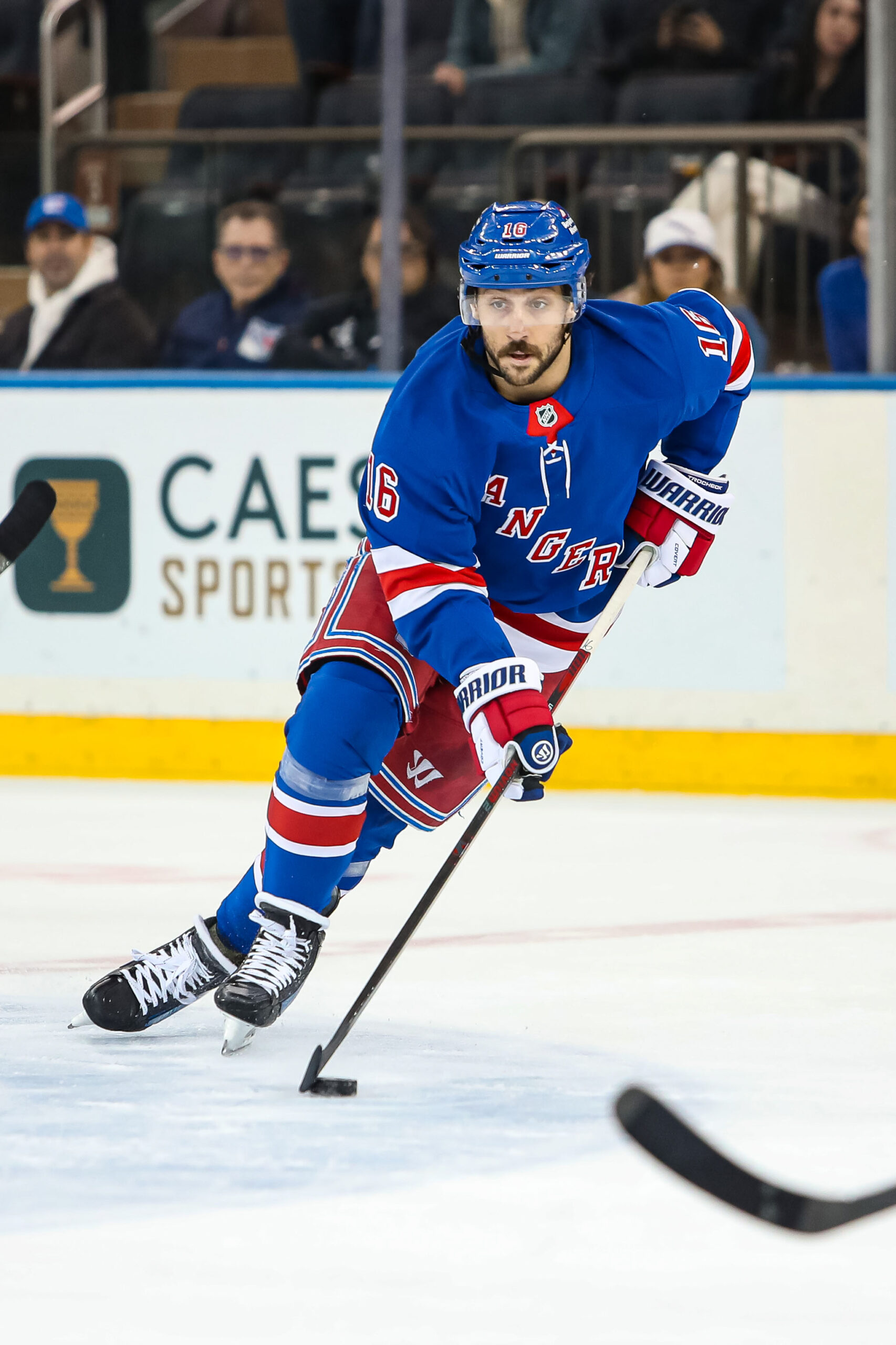 Now, it’s time to see if that bet was the right one. In theory, New York should be poised to capitalize here on the trade front. The list of top-six UFA centers is rather small this summer. It starts with Charlie and ends with Coyle. The list of teams looking for a top-six center? More than ten times as long. One team can ideally fill that spot by signing Charlie Coyle while the rest will have to try to do so on the trade front where supply is limited and demand is extremely high.
Trocheck could very well be the best center that gets made available this summer. (We’ll see what Alex Steen’s plans are for Robert Thomas, who could ultimately stick around.) Granted, there is a 12-team no-trade list that could affect things and Trocheck himself noted before the deadline that Western teams are on that list. However, there are still plenty of Eastern Conference teams who will be looking to upgrade down the middle, certainly enough to drum up a bidding war.
While the East Coast limitation increases the odds that Trocheck could be moved within the Metropolitan Division, this should be about getting the best return regardless of where it comes from. It’s a package that should include a first-round pick, a high-end prospect, and at least one other element, potentially a roster player to help offset some of the money (although Trocheck’s $5.625MM for three more years should be affordable for a lot of teams). It certainly feels like it’s time to cash in on that high demand.
Make Room For Youth
One thing that the Rangers did down the stretch was start to use their youngsters more. Gabe Perreault got a bigger role while young forwards Adam Sykora and Jaroslav Chmelar made strong first impressions. Drew Fortescue got his feet wet on the back end as well. And with that extra speed and hustle in the lineup, they were a lot more respectable down the stretch, winning six of ten games to close the season.
This isn’t a situation of reading too much into what amounts to garbage time performance. But it’s an acknowledgement that the Rangers need to see what some of their youngsters can do. With the belief that they’d like this to be more of a retool than a long-term rebuild, it’s critical that the team finds out which of these youngsters are going to be part of the core group at that time. The only way to do that is to give them a chance to play at the NHL level.
That means that this summer, the focus shouldn’t be on re-signing or replacing Jonny Brodzinski or Conor Sheary up front; those spots can be left for some of those youngsters. Is Matt Rempe (still just 23) or Adam Edstrom (now 25) still in the plans or are they movable? Would Taylor Raddysh’s or Urho Vaakanainen’s role be better served by more of a prospect?
This isn’t a case of bringing in half a dozen youngsters. That will cause a different set of challenges. But having a few spots available at the start of the year to use for evaluation would give the team a lot more information about the future. To do that, they may yet still need to move out a veteran or two.
Add Goaltending Insurance
There is one other roster spot that appears likely to be turned over to a youngster, that being between the pipes. With Jonathan Quick retiring, prospect Dylan Garand appears to be in line to get a shot at the full-time backup spot behind Igor Shesterkin. While it’s not ideal that a soon-to-be-24-year-old will be looking at limited minutes behind one of the NHL’s top netminders, Garand has to pass through waivers next season and it’s not a guarantee that he’d pass through unclaimed should they try to sneak him down.
But even if the plan ultimately is to re-sign Garand (a pending RFA) and have him in the number two role, they need a Plan B. If he struggles mightily in training camp, turning to midseason signing Spencer Martin isn’t exactly a viable option as he has struggled in his limited action at the top level.
Accordingly, this is the one position where a veteran addition could be useful. The ideal fit would be a veteran who could cover the backup role if Garand struggles or pass through waivers himself if Garand is ready for the job and serve as insurance with Hartford. Basically, the type of role they once envisioned for Louis Domingue but someone perhaps a little more proven. Buffalo signed James Reimer for that role for 2024-25 (though he never made it through waivers for their plan to work). Someone around that caliber of player would be a worthwhile addition, even if it goes against the rest of the goal of getting younger.
Photo courtesy of Danny Wild-Imagn Images.
Jed Ortmeyer Leaving Rangers Organization
- According to Vince Z. Mercogliano of The Athletic, the New York Rangers will not be retaining Jed Ortmeyer this offseason. Ortmeyer, 47, has been the Rangers’ Director of Player Development since the 2017-18 campaign. It’s a relatively obvious change as New York embarks on a retool, as the team has had a notoriously difficult time drafting and developing talent over the last several years.
[SOURCE LINK]
Rangers Prospect Ollas Signs In Sweden
- New York Rangers prospect goaltender Hugo Ollas has elected to return to his native Sweden for 2026-27. The 2020 seventh-rounder signed a deal with the Nybro Vikings of HockeyAllsvenskan, according to an official team release. Once considered a top-10 prospect in the team’s system by some outlets, Ollas’ upside as a massive 6’8″ netminder didn’t translate to success beyond the collegiate level. He was a strong three-year tandem goalie at Merrimack College but fizzled out in the Rangers’ system. He wasn’t able to get more than a single start at the AHL level and posted an .896 save percentage across two years and 51 total games played in the ECHL.
Latest On Matt Rempe, Adam Edstrom
New York Islanders top prospect Kashawn Aitcheson took home OHL Defenseman of the Year honors, shared by the league today. The 19-year-old joins fellow Barrie Colts Aaron Ekblad (2014) and Erik Reitz (2002) to earn the distinguished award.
Aitcheson has yet to make his professional debut, but he’s looking like a fantastic selection at 17th overall in last year’s draft. As part of their first round haul which brought Matthew Schaefer and Victor Eklund, the class has transformed New York’s outlook on the future.
Chosen with the pick acquired as part of the Noah Dobson trade to Montreal, Aitcheson took another step in the right direction with 70 points in 56 games. OHL scoring numbers sometimes not painting the whole picture, the lefty is a true #1 defenseman, standing out on both ends and showcasing a physical edge as a complete package.
The Toronto native inked his entry-level deal last month, but will have to wait to enter the professional circuit. New York’s AHL affiliate in Bridgeport would have loved to infuse their lineup with the lefty, but he is not eligible, turning 20 this summer. Even then, the 6’2” prospect has all the tools to jump right into the NHL next fall.
Elsewhere across the division:
- As the New York Rangers look to move on from a majorly disappointing 2025-26, questions were raised by Vince Z. Mergogliano of The Athletic on Matt Rempe and Adam Edstrom’s future with the team. Currently with a logjam in their bottom six, the emergence of Jaroslav Chmelar and Adam Sykora could push out Rempe and/or Edstrom, neither of which have waiver eligibility remaining. Edstrom, 25, had an injury riddled campaign where he recorded just five points in 35 games. At 6’7”, he could benefit from a fresh start after three years with the Rangers and limited production. Meanwhile, Rempe’s stats are no real improvement, but the 6’9” winger could have a trade market this summer thanks to his age (23) and mean streak, an asset to any young team with playoff aspirations. San Jose, for example, stands out as a club who values such a role, and could be looking for a Ryan Reaves replacement. Similar to enforcer trades in the past, Rempe could fetch a meaningful return for New York.
- The Columbus Blue Jackets might form a succession plan behind the bench with Trent Vogelhuber, written by The Athletic’s Aaron Portzline. After cleaning house last week, head coach Rick Bowness will assemble his own staff. The 71-year-old, who got started in the NHL with the first iteration of the Winnipeg Jets back in the 1980s, earned the opportunity to stick around in Ohio but still is not a long-term solution on age alone. Instead he figures to be more of a “culture changer”, fully evident by such harsh comments on his team closing the season. With this in mind, Portzline reports that Vogelhuber, head coach of the Cleveland Monsters, could make the jump to assistant on Bowness’ staff on his way to taking over in the future. Just 37, Vogelhuber is a native of Dublin, Ohio, and a former draft pick by the team (211th overall, 2007). Joining the Monsters in 2018 as an assistant, Vogelhuber has quickly risen up the ranks, becoming head coach in 2022 where he’s led the Monsters to another playoff berth in 2025-26. Whatever the case, with 12 head coaches in their 26 years of existence, Columbus would benefit from stability of a young home-grown coach.
Rangers Likely To Plan For Dylan Garand As Backup Goalie
The New York Rangers are likely to give young goaltender Dylan Garand the inside track to become the team’s backup netminder next season, reports Vincent Z. Mercogliano of The Athletic. Veteran Jonathan Quick has been the No. 2 on Broadway for the last three seasons, but has played his final NHL game. Garand, 23, has been waiting in the wings, and it appears he’ll be given a strong chance to win the role at training camp next fall. The former CHL Goalie of the Year has been the No. 1 goalie for the AHL’s Hartford Wolf Pack for the last three years, and went 2-0-1 with a .948 save percentage in his first three NHL games this year. Garand was an AHL All-Star in 2024-25 and his playoff performances have been especially impressive, as he has a .927 save percentage in 17 games across two runs.
While Garand does seem ready for the NHL, Mercogliano did also say that Rangers GM Chris Drury will most likely add “some level of veteran competition” for Garand. The Rangers already have veteran Spencer Martin (72 career NHL games played) under contract at a one-way, league-minimum rate for next season. But Martin struggled this season (.864 save percentage in six NHL games, .873 in 22 AHL games) and isn’t likely to be a part of their long-term plans. According to Mercogliano, Drury could add another veteran beyond just Martin, “either on a cheap, short-term deal or a professional tryout contract,” to compete with Garand.
Draft Pick Conditions Met In Panarin Trade
- There were ramifications to the Artemi Panarin trade now that the Los Angeles Kings have been eliminated from the postseason. According to Peter Baugh of The Athletic, since the Kings did not win a series, they will send their 2026 third-round pick to the New York Rangers. If they had miraculously ousted the Colorado Avalanche, the Rangers would have received Los Angeles’ second-round pick.
- The Rangers weren’t the only team affected by the Kings’ loss today. According to PuckPedia, since it is now confirmed that Los Angeles will finish lower than the Dallas Stars in the standings, the Senators will receive Dallas’ 2026 third-round pick in the Warren Foegele trade.
[SOURCE LINK]
Rangers Seeking Scoring Help This Offseason
Back in mid-January, the New York Rangers announced that the team would be undergoing another “retool”, specifically avoiding the word “rebuild”. Although more change is yet to come, the team is more inclined to contend sooner rather than later, rather than tearing the organization down to the studs.
Positing several questions about the franchise moving forward, Peter Baugh and Vince Z. Mercogliano of The Athletic opined that the Rangers should be active on the trade market this summer, particularly moving out defensemen for offensive help. The subject of trade rumors throughout the 2025-26 season, right-handed blue liner Braden Schneider, is the obvious candidate.
In their article, the pair wrote, “Drury is believed to be seeking a scoring forward, according to two league sources, with the San Jose Sharks among the forward-rich, defense-needy teams to watch.” Leading up to the trade deadline, the Sharks were one of the teams connected to Schneider.
As the Rangers have stated to the public, they are seeking a retool rather than a rebuild; however, it remains unclear what that really entails. If they want NHL-caliber players in a trade with San Jose, they’ll likely need to include more than just Schneider.
Schneider is a classic defensive defenseman, typically scoring in the upper teens for points each season while averaging over 100 blocked shots and hits per year. His possession metrics are subpar at best, but that could be attributed to New York’s play style over the last few years.
The Sharks could use a big-body defenseman in their top four, but it’s unlikely that they would be willing to part with the necessary assets. New York would likely target William Eklund or Collin Graf to increase scoring output. Still, there’s no indication that San Jose is ready to make those kinds of changes to their forward corps, especially with so many unproven assets moving their way up the depth chart.
An intriguing trade partner may be more north of the border. The Vancouver Canucks are in immediate need of young defensive help, and have a goal-scoring winger who wants out of town. Winger Jake DeBrusk, 29, has surpassed the 20-goal plateau in over half of his seasons at the NHL level, and has indicated he’d be willing to waive his no-trade clause for a move.
Depending on how the Rangers value Schneider, they may be able to make a few tweaks to the trade to increase the value, but DeBrusk may be one of the better options available on the trade market.
Still, there is always the possibility that the word “retool” was always meant to make their fans more content, and the Rangers were comfortable acquiring prospects instead of NHL-ready players. If that’s the case, the Rangers could dangle Schneider to a few more teams than just San Jose or Vancouver.