
Trade Review Poll: Which Off-Season Acquisition Will Have Greatest Impact?
As NHL teams have been forced to shuffle their rosters this off-season in response to the flat salary cap, this off-season has quietly been filled with meaningful trades. While free agent deals always seem to dominate the headlines, there have been at least 20 different trades that sent a notable player to a new locale. This started way back in August, even as the postseason was in full swing, as teams had to look ahead to next season as early as possible to get a jump on cap management. When 2020-21 kicks off, who will make the biggest impact on their new team?
August 25: In a trade that actually contained six players, the only name of immediate note was Kasperi Kapanen making his return to the Pittsburgh Penguins from the Toronto Maple Leafs. The Leafs had initially acquired Kapanen from Pittsburgh in the Phil Kessel trade, but clearly the Penguins maintained interest in the player. Back with the team that drafted him, Kapanen will very likely slot in on the Penguins’ top line with Sidney Crosby and Jake Guentzel after scoring at a 40+ point full season pace in each of the last two seasons.
September 2: After many years, the Montreal Canadiens finally landed a reliable backup to Carey Price. In what amounted to a salary cap dump for the St. Louis Blues, the Habs acquired former starter Jake Allen. Although Allen played second fiddle to Jordan Binnington again this past season, he returned to form and outplayed the starter with an impressive .927 save percentage and 2.15 GAA. After signing an extension, Allen also has some job security in Montreal and may even have the added incentive of playing well in order to land the starting job for the Seattle Kraken.
September 11: After acquiring Kapanen, the Pittsburgh Penguins knew they needed to shed salary. They turned to former front office exec Bill Guerin, now the GM of the Minnesota Wild. The Wild landed forward Nick Bjugstad at next to no cost and Pittsburgh retained some salary as well. Back in the state where he made his name as a high school and college star, Bjugstad looks ready for a fresh start. In a forward group that is week down the middle and lacking in size, the big center is almost guaranteed a meaningful role. Bjugstad has been streaky and injury prone in his NHL career, but has also shown on multiple occasions that he has 50+ point upside playing a full season on a scoring line.
September 16: The Wild were right back at it a few days later, adding another new face to the forward corps. This time it cost them though. Minnesota acquired Marcus Johansson from the Buffalo Sabres in exchange for Eric Staal. Johansson provides great versatility as a player who can effectively play any forward position and in any situation. He has also scored at a half-point per-game pace or better for nine straight years with four different teams. Johansson should be able to step in and make an immediate impact. On the flip side, Staal provides the Sabres with a bona fide second line center and veteran leader that they have been sorely lacking. The experienced pivot may not have the positional versatility of Johansson, but is still a superior scoring threat at 36 and knows how to grind out wins in the regular season and postseason.
September 24: The Penguins make their third different deal in less than a month, sending veteran forward Patric Hornqvist to the Florida Panthers for defenseman Michael Matheson and forward Colton Sceviour. While Matheson and Hornqvist are both overpaid, they each still bring value to their new team. Matheson, likely to play a bottom-pair role for Pittsburgh, is a huge upgrade to the players the Penguins rolled out on their final pairing last season. A perennial 20+ point producer and sound defensive player, Matheson will not be asked to play the same minutes as he did in Florida, but will still make the same impact in the minutes he does get from Pittsburgh. Hornqvist meanwhile has not played in more than 70 games in over four years, but is quietly still the same 50-point player that he always has been, just on a per-game basis. An expert net front presence and power play asset, Hornqvist will likely play a major role for a Panthers team that lost two of its top scorers to free agency.
September 26: In what was one of the more obvious salary cap dumps in recent memory, the New York Rangers traded away veteran defenseman Marc Staal and a second-round pick in exchange for “future considerations”. The lucky team on the other side was the Detroit Red Wings, who made out like bandits with a nice draft selection and a new veteran leader for their blue line. A young, rebuilding team who has seen countless veterans leave, many of whom just this off-season, Detroit adds a new face with years of experience and leadership in Staal. While he is definitely in decline at 33, Staal is still a strong defensive presence, a plus player, and a penalty kill asset. Even without much offensive upside, Staal seems locked in for at least a top-four role in Detroit.
October 5: It wasn’t the strategy that anyone expected, but the San Jose Sharks decided to try to solve their issues in net by bringing in another struggling veteran to compete with their current struggling veteran. Devan Dubnyk, who comes over from the Minnesota Wild, is just a few years removed from being one of the top keepers in the game. However, this past season he was not even close to that level of play, recording an .890 save percentage and 3.35 GAA, albeit in limited showings. He was one of the few goalies who performed worse was San Jose’s existing starter, Martin Jones. Dubnyk has more experience and his peaks are much higher than Jones’, but he is also four years older and may have less of an ability to return to form. Perhaps the goal is simply to elevate Jones’ game by giving him an established backup to compete with, but there is always the possibility that Dubnyk emerges the victor.
October 6: Two teams on the fringes of being contenders, each with specific needs up front, made a big swap that will have ramification far beyond this next season. The Montreal Canadiens and Columbus Blue Jackets exchanged restricted free agent forwards Max Domi and Josh Anderson, each of whom will look to rebound and play a major role for their new teams. Domi fills a need at center for Columbus and hopes to use his new two-year extension to finally earn a long-term home after bouncing around early in his NHL career. A player who has shown immense scoring potential, including a 72-point season in 2018-19, Domi could be a major difference-maker on the second line for the Blue Jackets, who desperately need scoring depth. Anderson was not able to provide that this past season, missing most of the year due to injury and underperforming when healthy. However, he too had a breakout 2018-19 campaign, recording 27 goals and 47 points. The Canadiens believe that this is his long-term yearly value, as they did not hesitate to sign Anderson to a seven-year deal. Montreal needs size up front and they hope the 6’3″, 220-lb. Anderson can be an impact power forward for years to come.
October 7: The Ottawa Senators have a deep pipeline of goaltenders, but did not have anyone ready to be a starter this coming season and perhaps for a couple seasons after that. As a result, they ignored that depth and landed a starter for the present who doubles as a starter of the future in young Matt Murray. A streaky, but accomplished keeper, Murray came over from the Pittsburgh Penguins at the price of a second-round pick and a prospect, but will be well worth it if he can solidify the net for the Senators. They certainly seem to think he will, signing him to a long-term deal. At just 26, Murray already has just under 200 regular season appearances and over 50 postseason appearances, with a pair of Stanley Cups backed up by stellar stats.
The same day, the Nashville Predators and Minnesota Wild swapped forwards, as the Wild continued to address the center position while the Predators got younger and faster. Minnesota acquired veteran center Nick Bonino to anchor the team’s third line, as he has for so many other teams. A two-way pivot who is good for 30-40 points and solid defensive play, Bonino is a useful addition for the Wild. Going the other way was 22-year-old Luke Kunin, who recorded 31 points in 63 games in just his third pro season this year. The 2016 first-round pick has found success at every level and on every team he has played for. Aiming for a top-six role in Nashville, Kunin could be an impact player right away and for years to come.
October 8: The Ottawa Senators continued to add via trade when they swung a deal for physical defenseman Erik Gudbranson from the Anaheim Ducks. A player who has now been traded three times in two years, Gudbranson is either in demand or expendable. He could be both for the Sens, who will give him a top-four role and let him be the defensively responsible counter to their other younger, more offensively-inclined defenseman, then could look to trade him away before his contract expires at year’s end.
Another defenseman was sold off for a late pick the same day and that was Ryan Murray. Though Murray has had immense struggles with health over the years, he had been a good player for the Columbus Blue Jackets when active. However, the team’s depth forced them to deal him away and the New Jersey Devils were the lucky recipients. While Murray is still remembered for his puck-moving pedigree as the No. 2 overall pick in 2012, he has taken on more of a two-way, defensive prowess in the pros and is very solid (again, when healthy). The Devils will almost certainly give Murray top-four and perhaps even top-pair opportunities and if they are fortunate enough to have him for a full season, they could be looking at one of the best value additions of the off-season.
October 9: As the Vegas Golden Knights cleared space for the off-season’s biggest free agent signing, it meant letting go of a proven veteran asset. The Knights traded center Paul Stastny to the Winnipeg Jets, letting go of a valuable two-way forward. While Stastny had an off year this past season, he is just one year removed from recording 42 points in 50 games, a 69-point full season pace. And he finished the season prior to that with none other than the Jets, with an incredible performance of 13 points in 19 regular season games followed by 15 points in 17 postseason games. Stastny has already shown that he can be an elite producer with Winnipeg’s talented forward group and has tremendous upside in the coming season. Even at 34, don’t be surprised to see the all-around forward return to form and potentially even rival the 70-point seasons of his early playing days.
October 10: If Chicago Blackhawks GM Stan Bowman knows one thing, it’s how to make a trade involving Brandon Saad. Saad was traded away to the Colorado Avalanche in a four-player deal, marking the third time in five years that has been traded away or to the Blackhawks. The key return for Chicago was young defenseman Nikita Zadorov. In Saad, the Avalanche add a legitimate top-six forward who will help their depth, especially in light of the injuries suffered by some of their top players last season. Saad has recorded 47+ points four times in seven full NHL seasons and would have hit 47 on the nose again this past season based on an 82-game pace. A consistent scorer with great finish and possession ability, Saad is a nice get for the Avs. Meanwhile, as Chicago begins a rebuild they have new cornerstone piece on defense in the 6’6″, 235-lb. Zadorov. A big, physical defenseman, Zadorov can sit back and be a reliable defensive presence, freeing up other members of the Blackhawks’ budding new defense corps, like Ian Mitchell and Adam Boqvist, to play their offensive game.
The same day, the New Jersey Devils made another buy-low addition, landing Andreas Johnsson from the Toronto Maple Leafs. A young player who has already shown signs of 50+ point upside, Johnsson will now find consistent top-six time and power play opportunity in New Jersey, which should get him closer to that mark. In need of impact wingers for Nico Hischier and Jack Hughes but not willing to derail the rebuild with high-priced trades or contracts, the Devils land a young player at next to no trade cost who is signed for several more years at an affordable price. It is the perfect fit and should pan out.
October 12: The Colorado Avalanche were back in the headlines a couple of days later when they dealt two second-round picks to the New York Islanders for RFA defenseman Devon Toews. The Islanders needed cap space and dealt from a position of immense depth and talent on defense. Yet, Toews was critically underrated in New York and the team gave up a very talented player. The rich get richer in Colorado, as Toews joins another strong blue line, but this time will be locked in for a top-four role and will get his due attention on one of the league’s top contenders. Even with only two NHL seasons under his belt, Toews has proven to be productive, defensively sound, an asset in puck possession, and overall capable of big minutes and an every-situation role. Toews may not be the biggest name traded this off-season, but could wind up as one of the best acquisitions.
Amazingly, the very last trade made in the NHL so far this season came nearly a month ago. In the final push needed for the Vegas Golden Knights to sign Alex Pietrangelo, the team dealt top pair defenseman Nate Schmidt to the Vancouver Canucks in order to clear the necessary space. It was quite a sacrifice and one the Canucks are happy about. At the cost of a third-round pick, a team who had had a disastrous off-season that point landed a bona fide top pair defenseman who is signed long-term. Schmidt did it all for Vegas: team-leading minutes, 30+ points, defensive awareness, shot blocking, possession, power play and penalty kill roles, and even locker room leadership. A player with a strong all-around game who is respected by teammates and opponents alike, Schmidt is a rare player to come across. Vancouver essentially lucked into him and it might just be the best trade of the off-season.
What do you think? Which trade acquisition will have the greatest impact in 2020-21 and beyond?
Which Off-Season Trade Acquisition Will Have The Greatest Impact?
-
Nate Schmidt, Vancouver Canucks 13% (268)
-
Matt Murray, Ottawa Senators 11% (214)
-
Kasperi Kapanen, Pittsburgh Penguins 11% (212)
-
Eric Staal, Buffalo Sabres 10% (195)
-
Devon Toews, Colorado Avalanche 10% (193)
-
Paul Stastny, Winnipeg Jets 8% (157)
-
Jake Allen, Montreal Canadiens 8% (151)
-
Brandon Saad, Colorado Avalanche 7% (149)
-
Marc Staal, Detroit Red Wings 5% (105)
-
Nikita Zadorov, Chicago Blackhawks 4% (80)
-
Andreas Johnsson, New Jersey Devils 3% (56)
-
Devan Dubnyk, San Jose Sharks 3% (54)
-
Nick Bjugstad, Minnesota Wild 2% (38)
-
Patric Hornqvist, Florida Panthers 2% (33)
-
Ryan Murray, New Jersey Devils 1% (28)
-
Luke Kunin, Nashville Predators 1% (26)
-
Nick Bonino, Minnesota Wild 1% (16)
-
Michael Matheson, Pittsburgh Penguins 1% (12)
-
Marcus Johansson, Minnesota Wild 0% (9)
-
Erik Gudbranson, Ottawa Senators 0% (6)
Total votes: 2,002
Mobile users, click here to vote.
Free Agent Profile: Travis Hamonic
It wasn’t that long ago that Travis Hamonic was viewed as a core defenseman. While things have changed a bit since then (especially with mobility and offensive skills becoming more important from the back end), he’s still a capable shutdown defender. That’s why he was ranked as the 13th-best UFA in this class, sixth among blueliners. The five in front of him signed relatively quickly but as we approach the first full month of this offseason, Hamonic remains unsigned.
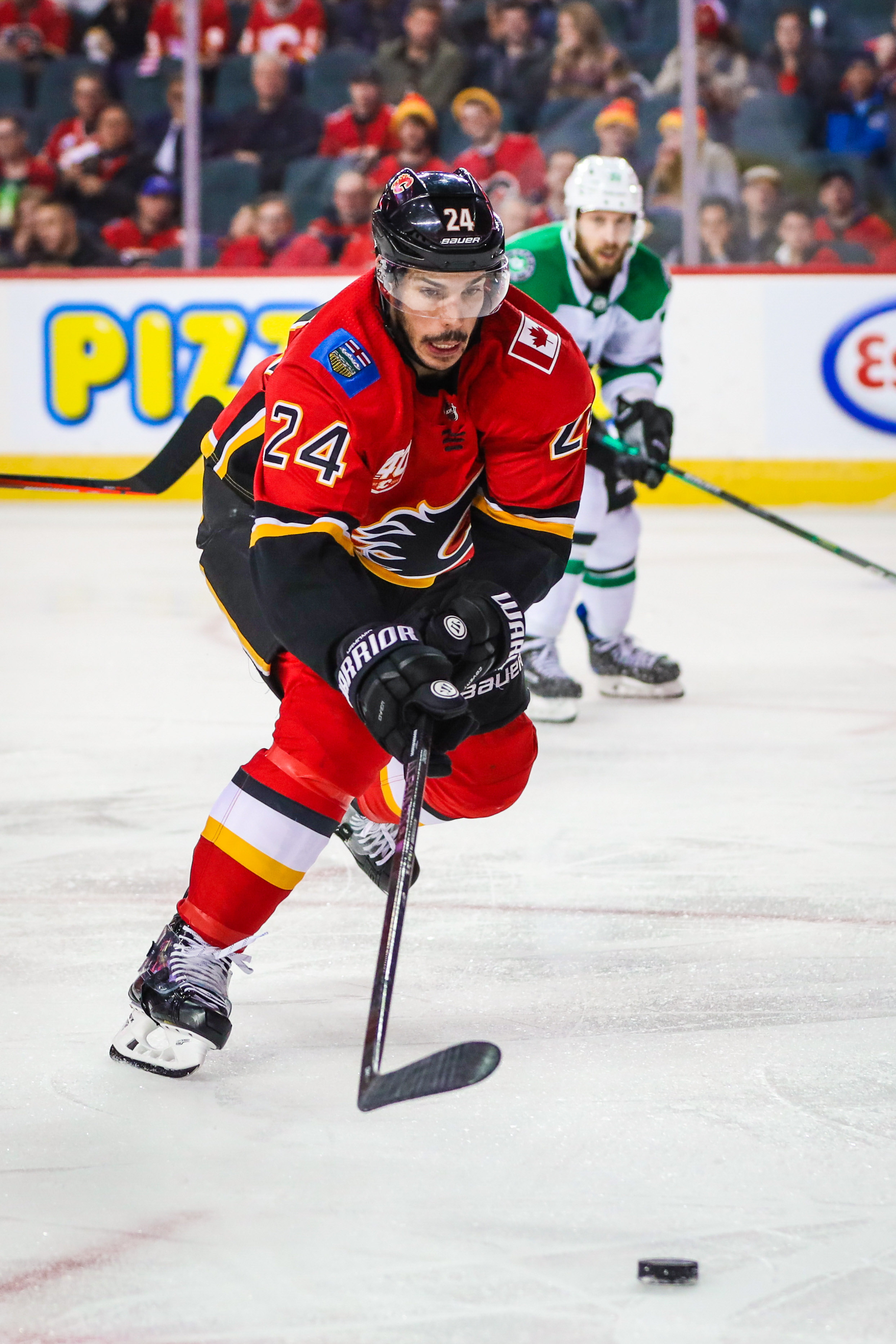 It’s not as if teams aren’t on the lookout for a right-shot defender that can play more than 20 minutes a night either. That’s something that just about every team in the league can use.
So why is Hamonic still unsigned? He didn’t help his cause during the regular season when he had just a dozen points in 50 games. Again, the 30-year-old is more of a stay-at-home player but that output is still pretty low for someone who played over 21 minutes a night. The fact that he opted out of the NHL’s Return to Play for family reasons also lingers, not in the sense that prospective suitors are holding that against him but that it may be affecting his willingness to commit somewhere at this time.
But while he’s never going to light up the scoresheet, Hamonic can still play solid defense, kill penalties, and block shots. That’s still a role that should be in considerable demand around the league but with the UFA market slowing to a crawl at the moment, it appears he may be waiting a little while yet before signing somewhere.
Potential Suitors
There are multiple situations where Hamonic could be a fit for teams. Quite a few will be hoping to add an impact defender over the next couple of months and he would fit the bill. If he wants to take a shot at a Stanley Cup, there are contending teams that would find a spot for him at the right price tag. And if he wants to take a one-year deal at the most money possible, as arguably the best defenseman still available, that type of contract should eventually become available as well.
In the Eastern Conference, the Flyers really haven’t completely filled the vacancy created by Matt Niskanen’s sudden retirement. They brought back Justin Braun but he’s better served in more of a depth role and while they also brought in Erik Gustafsson, he’s nowhere near as good of a defensive player as Niskanen was. Hamonic could step into that void. Detroit could certainly use him as someone on their second pair behind Filip Hronek which would shift Troy Stecher into a third-pairing role which may be his best spot and cap space won’t be an issue for them. Cap room also isn’t an issue for the Devils who could use a stabilizing defensive presence to help counter some of their more offensively-aggressive blueliners.
Out West, Hamonic’s hometown team in Winnipeg certainly should be a suitor. While they were able to retain deadline acquisition Dylan DeMelo, they still have a defense corps that’s in need of some improvement. With the announcement that Bryan Little has been told not to play this season, the Jets will have some LTIR space at their disposal which could be used to bring the blueliner in. The Kings have plenty of cap space and could certainly stand to improve their back end, even with its relative strength being on the right side. On a short-term deal, in particular, that might be a fit. Dallas has a question mark with regards to the health of Stephen Johns; if he is expected to be LTIR-bound once again, Hamonic would represent a potential short-term replacement and upgrade if the Stars opt to dip into that. (With their potential bonuses, it’s not a guarantee that they would.)
Of course, there are quite a few other teams where Hamonic would be a key player but would need to free up cap room in order to do so. Given how difficult that is proving to be this offseason, it’s difficult to classify any of them as possible suitors at this time.
Projected Contract
When our initial projections came out, we had Hamonic receiving a three-year, $12.5MM deal. That AAV wasn’t much higher than the deal he just finished while being lower than the salary he received in each of the last four seasons. Even in a deflated market, that price tag seemed doable.
That doesn’t appear to be the case now as while a few teams still have money they’re willing to spend, they can afford to look for bargains. Hamonic’s case is bolstered in that he is a top player at his position left on the open market which should help him a bit but a pay cut appears to definitely be on the horizon. If Hamonic takes a one-year deal, a $3.5MM salary may be his ceiling with the price tag dipping if he signs for longer. He should still wind up with a decent contract but he will eventually be added to the ever-growing list of players that will wind up with less than they expected.
Photo courtesy of USA Today Sports Images.
Red Wings Still Open To Further Off-Season Additions
The Detroit Red Wings are firmly in a rebuild following the worst season by an NHL team since the turn of the century in 2019-20. The club has accumulated a mass amount of talent in the pipeline over the past few years and still has an impressive array of future draft selections as well. They are committed to improving internally and grooming a new core to take over down the road.
With that said, savvy GM Steve Yzerman is not one to turn away from opportunity. With the flat salary cap impacting top teams far more than bottom feeders, the Red Wings have had the room to make a number of free agent additions so far this off-season. Following a recent call with the media, The Detroit News’ Ted Kulfan writes that Yzerman has expressed that he may not be done making deals either. Detroit still has more than $9.5MM in cap space based on CapFriendly’s current projection of a 22-man roster.
Already, the Red Wings have added considerable veteran talent ahead of next season. The team signed a new (starting?) goalie in Thomas Greiss, a pair of young defensemen in Troy Stecher and Jon Merrill, and experienced, versatile forwards Vladislav Namestnikov, Bobby Ryan, and Sam Gagner. They also acquired reliable blue line leader Marc Staal (and a second-round pick) at no cost from the New York Rangers. Not only is this a massive influx of talent for 2020-21, but expiring contracts like Ryan, Gagner, Staal, and Merrill could also turn into more draft capital at the trade deadline.
Not only have the Red Wings succeeded in adding a number of capable players, but most have come at a great value as well. So too have their RFA re-signings; Anthony Mantha signed a long-term deal well below what many were expecting, Robby Fabbri was handed an affordable extension, and the team took Tyler Bertuzzi to arbitration just to save more money. All of this value means that Detroit can keep adding if they want. There are still holes throughout the lineup currently slated for underwhelming veterans. While some of these will be kept open for prospects, at least one or two could be filled via free agency or trade if Yzerman can find the right fit:
There are a lot of players still on the free agent market. We have a lot of bodies right now. I do think there’s room potentially to add, and I would consider it as we go along, or when we get closer to knowing when we’re going to start. As far as the trade market… it’s pretty quiet around the league. Certainly we’d be open to listening.
Ryan Strome Signs With New York Rangers
The New York Rangers have reached an agreement with restricted free agent forward Ryan Strome ahead of his arbitration hearing, signing him to a two-year contract worth a total of $9MM according to Larry Brooks of the New York Post. Strome’s hearing had been scheduled for later today, with his camp filing for $5.7MM and the Rangers filing for $3.6MM. This deal’s AAV comes down in the middle of those two numbers, but also importantly buys out an extra year of unrestricted free agency.
Strome, 27, could only have received a one-year contract from the arbitration process as he was scheduled to become an unrestricted free agent after this season. The fifth-overall pick from 2011, he has already played in 491 NHL games in his career. Those haven’t all been successful outings, but Strome did seem to find his footing again after landing in New York in 2018. With 59 points in 70 games last season he was the team’s best offensive weapon behind the super-pair of Artemi Panarin and Mika Zibanejad, though that isn’t expected to continue. The Rangers have a number of blue-chip prospects ready to make an impact including 2020 first-overall pick Alexis Lafreniere.
What Strome does still represent is a solid middle-six center for a team that suddenly looks like they will compete for a playoff spot. Their offense is young, skilled, and deep, while the crease is safe in the hands of two young netminders. Tony DeAngelo was re-signed to a two-year deal, and Adam Fox looks like a future star.
Even if they decide that Strome isn’t the player they want to sign a long-term UFA deal with, the Rangers will have two cracks at it with him on this new deal, one that certainly doesn’t impede their ability to add even more. Only Brendan Lemieux remains unsigned and the team has more than $6.3MM in cap space.
Detroit Red Wings Sign Anthony Mantha
The Detroit Red Wings have reached an agreement with Anthony Mantha on a new four-year contract. Elliotte Friedman of Sportsnet reports that the deal is worth an average annual value of $5.7MM. Pierre LeBrun of The Athletic provides the full breakdown:
- 2020-21: $4.5MM
- 2021-22: $5.3MM
- 2022-23: $6.5MM
- 2023-24: $6.5MM
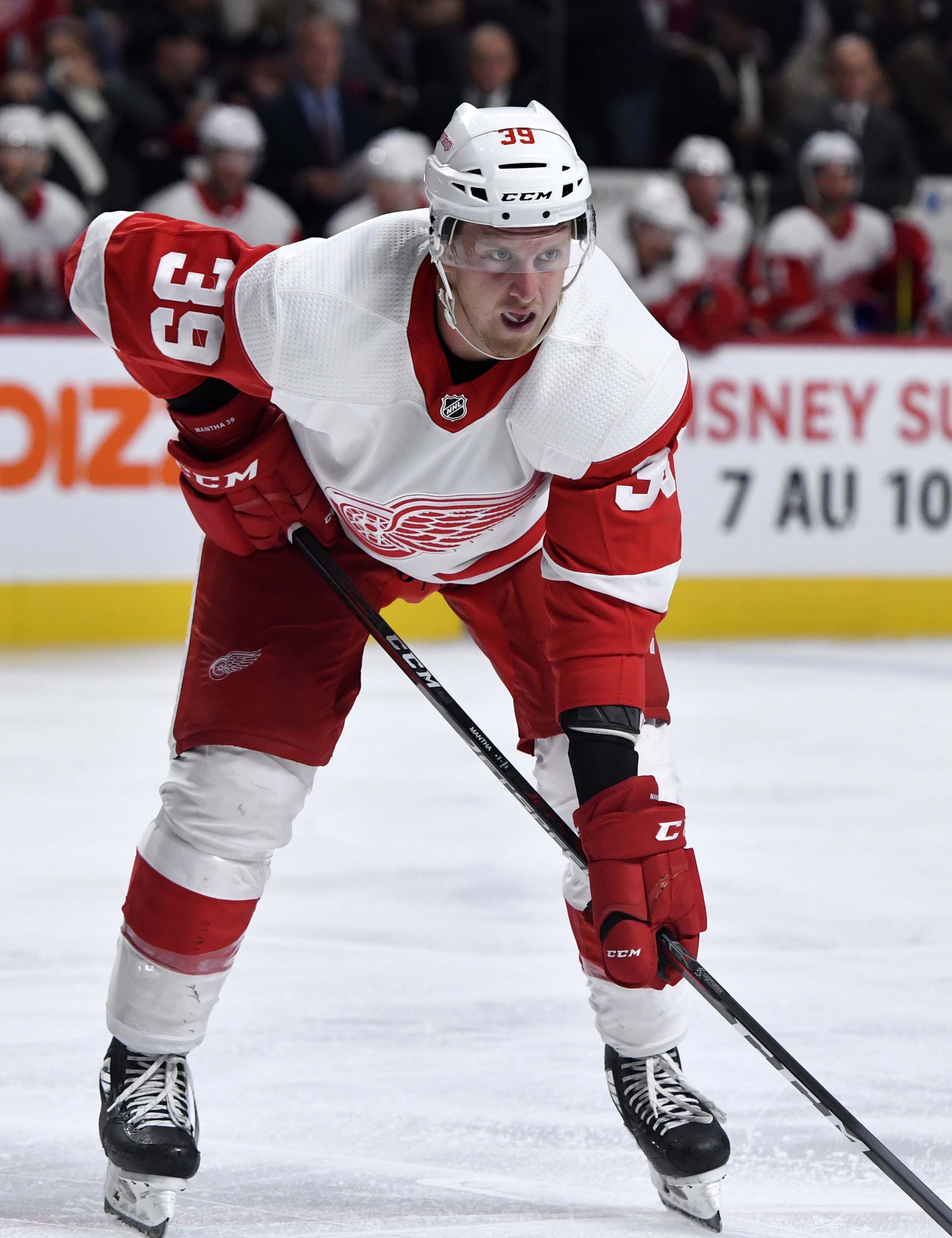 This multi-year contract locks up a core piece of the Red Wings forward group and actually becomes the longest deal on the books for GM Steve Yzerman. Mantha is the only player in the organization currently signed through the 2023-24 season, with even Dylan Larkin expiring a year earlier. That term and security likely bought Detroit some cap savings on the deal, given how effective Mantha has been in his last few seasons.
A first-round pick in 2013, it took a few years for the power forward to fill out and reach the NHL. When he did though, he brought the instant goal scoring that he had provided at every other step of the way, scoring 17 in his first full season in Detroit. Mantha followed that up with 24 goals in his sophomore campaign and 25 in just 67 games in 2018-19, showing how easily he would be able to reach the 30-goal threshold at some point.
Unfortunately, after scoring 12 goals and 24 points in his first 29 games of 2019-20, Mantha was injured when he was tossed to the ground by Toronto Maple Leafs defenseman Jake Muzzin. He would miss more than six weeks of the season, making his return to the lineup in mid-February. Perhaps even more effective down the stretch, Mantha put up 14 more points in 14 games before the season was halted, bringing his totals to 16 goals and 38 points in just 43 games this year.
That kind of per-game production, especially for a player that is still squarely in his prime, is usually rewarded with even more money than Detroit committed here. The deal buys out two years of unrestricted free agency and could look like a steal if Mantha can get healthy enough to play every night, finally reaching that 30-goal mark.
For the Red Wings, who are still in their rebuilding phase, this represents a relatively low-risk investment in a core player. Without any other long-term commitments, the team has ample cap space over the next few years to develop and sign their young talent. Names like Darren Helm, Valtteri Filppula, Luke Glendening, Marc Staal, Patrik Nemeth, and Jonathan Bernier are all on contracts that expire after this season, opening up the playbook for Yzerman to build the squad as he sees fit.
Photo courtesy of USA Today Sports Images
Ryan Strome, New York Rangers Exchange Arbitration Figures
The next arbitration hearing is set for Thursday, with Ryan Strome and the New York Rangers sitting down (virtually) to make their case for a new contract. Today, they exchanged filings. Strome has filed for $5.7MM, while the Rangers have filed for $3.6MM, according to Elliotte Friedman of Sportsnet.
 It is important to remember that in the NHL, the arbitrator does not need to choose one filing or the other and usually instead awards a contract somewhere in the middle. The two sides can also come to an agreement in the coming days, though this year once the hearing begins they must wait for the reward and cannot settle while the arbitrator deliberates.
In this case, the player’s ask is above the $4,538,938 “walk away” threshold, meaning that if the award comes in above that number the Rangers would have the option to release Strome to unrestricted free agency instead. If they choose to do that, Strome would actually have an opportunity to take the initial $3.6MM team filing instead of testing the market—a tougher decision in today’s flat-cap world.
Already 27, Strome is only eligible for a one-year contract and would become a UFA next offseason. The fifth-overall pick from 2011 has had a very up-and-down career, finding his footing early with the Islanders only to struggle for several years afterward. Following an unsuccessful stint with the Edmonton Oilers, Strome has found a new home in New York, recording 18 goals and 59 points last season.
The savvy, playmaking center still doesn’t have the greatest foot speed or elite raw skills but has proven he can be a capable middle-six pivot in the right situation. With the Rangers suddenly looking extremely dangerous at forward, perhaps they would be willing to pay up for a season of Strome to see what this group can do in the standings. A long-term deal is still obviously possible, if unlikely, especially if it would cost the Rangers upwards of $5MM per season. The team has several young players to get under contract in the coming years and may not be able to afford a contract like that for Strome.
Photo courtesy of USA Today Sports Images
Bruins’ Kevan Miller Expected To Start 2020-21 Healthy
It has been a rough couple of years for Kevan Miller. The Boston Bruins defenseman missed the entire 2019-20 season with a fractured kneecap, an injury that incurred setback after setback. The season prior, 2018-19, was when the kneecap injury initially occurred, causing Miller to miss the team’s regular season finale and all 24 postseason games as they reached Game Seven of the Stanley Cup Final. It was his fourth different injury of the season, as he was able to play in just 39 games. In that limited action, Miller’s play reflected someone who was never quite at 100% and paled in comparison to his previous seasons.
Miller can only hope that 2020-21 will be different and that obviously starts with his health. He tells Ty Anderson of The Sports Hub that things are trending in the right direction:
I’m doing really well. Knee is feeling great, body is feeling great. Obviously, had a lot of time to get things in order. I’m making really good progress. I’ve been skating two to three times a week. I’ve been training. I’m really, super excited to have the opportunity to play again. If we were playing right now, I wouldn’t be cleared. But come puck-drop, I definitely will be. I have no doubt in my mind I will be 100 percent by then.
If there is any reason to believe Miller’s hopeful statement, it’s because the Bruins did. Boston rushed to re-sign Miller on the first day of unrestricted free agency, despite not having seen him play since April 2019. They also didn’t just hand him a minimum-salary “show me” deal, either. Miller signed a one-year deal with incentives, yes, but it includes a $1MM base salary and a $250K roster bonus for spending just one day on the active roster. That’s essentially $1.25MM guaranteed with a maximum of $2MM with bonuses.
Boston’s other moves this off-season also reflect some faith in Miller’s comeback. Even after losing Torey Krug, the Bruins have refrained from adding to their defense corps. To this point, they have not even re-signed Zdeno Chara. On paper, this leaves the Bruins very thin on the blue line. Charlie McAvoy, Brandon Carlo, and Matt Grzelcyk are returning regulars who will play top-four roles, but the other starting jobs appeared to be up for grabs between another oft-injured veteran in John Moore and promising but unproven prospects Jeremy Lauzon, Connor Clifton, and Jakub Zboril. The team also has veteran Steven Kampfer, first-round prospect Urho Vaakanainen, and high profile college signing Jack Ahcan slated for AHL Providence. The group has some depth, but isn’t exactly loaded with the talent and experience that one would expect from a contender.
A healthy Miller would help with that. Although he has played almost exclusively in the NHL since 2013-14, Miller has just two seasons with 68+ games played, the most recent in 2017-18. Yet, in each of those seasons he averaged over 19 minutes of ice time per game, recorded nearly 20 points, logged over 150 hits and 100 blocked shots, played a key role on the penalty kill, and produced strong plus/minus and possession numbers. Granted, it has been a while since Miller has played a complete season, but his career numbers indicate that at full health he has the ceiling of a top-four shutdown defenseman, a possible Chara replacement even.
However, the caveat to any Miller excitement is that health is never guaranteed, even if he does begin the season at full strength. Miller’s resume reads like a list of all possible hockey injuries, and then some. He’s lost an even 200 regular season games to injury in his career, with ailments including the standard upper-body and lower-body injuries, concussions, and sickness but also multiple injuries to his shoulders and hands as well as a bruised larynx. Miller’s kneecap will be of most concern in the coming season, but the aggressive defenseman has shown a propensity for injury and cannot be trusted for a season-long role even if the knee holds up. A healthy Miller to begin the season is good news for the Bruins, but his presence and peak performance cannot be relied upon.
Buffalo Sabres Avoid Arbitration With Victor Olofsson
One of the most intriguing arbitration cases scheduled for the next few days was Victor Olofsson, the Buffalo Sabres sniper who has scored 22 goals and 46 points in his 60-game NHL career. Despite being a relative newcomer to the NHL, Olofsson is already 25 and is a lot closer to unrestricted free agency than some of his rookie counterparts. His hearing was scheduled for November 4, but it appears as though it will not be necessary. The Sabres have signed Olofsson to a two-year contract that carries an average annual value of $3.05MM. Pierre LeBrun of The Athletic reports that it will pay Olofsson $2.85MM in 2020-21 and $3.25MM in 2021-22.
 Not only does a two-year deal limit the cap hit and provides a very real chance for the Sabres to receive excess value out of the young forward, but it also leaves him a restricted free agent in 2022. While he has already turned 25, Olofsson’s birthday comes after the normal start of free agency meaning this deal does not walk him right to the UFA market. At its expiry, the two sides will have a chance to work out a long-term deal should his outstanding goal production continue.
Even though he has real 30-goal potential, there are some things to consider about Olofsson’s production so far. Only nine of his 22 career goals have come at even-strength, and this year he scored on 15.7% of his shots. If used properly he can be a game-changing presence on the powerplay, but he has still yet to prove that he can jump over the boards and produce at even-strength on a regular basis.
Still, there’s a lot to like about a deal that pays him about half of what the Sabres owe Kyle Okposo in each of the next three seasons, or what they could have found on the free agent market. Olofsson will join a top-six that suddenly looks quite impressive, after the offseason additions of Taylor Hall and Eric Staal. The team also has top prospect Dylan Cozens coming and still have Jack Eichel in the middle of it all, providing all-world production.
At the end of this deal, Olofsson will be arbitration-eligible once again and could potentially get himself to unrestricted free agency by taking that one-year award. He’ll also be owed a hefty qualifying offer of $3.25MM, something he could fall back on if his production dips but the Sabres still want to keep him around.
Because this was their final arbitration case, Buffalo will now receive a short buyout window starting two days from now.
Photo courtesy of USA Today Sports Images
Free Agent Profile: Erik Haula
Despite the excitement of the free-agent flurry that started off the 2020 offseason, things have calmed down now quite a bit and yet there remain a number of free agents out there for teams to pick up. Yet with little cap room remaining for most the playoff hopefuls, teams are being extra cautious about paying out too much to free agents. especially if they are coming off a down season. That perfectly explains the situation for free-agent center Erik Haula, who has now found himself looking for a fourth team in just two-plus seasons and is coming off a 12-goal campaign last year.
The 29-year-old will be hitting 30 during the 2020-21 season and has dealt with numerous injuries, including a gruesome leg injury that held him to just 15 games in 2018-19. However, that hasn’t stopped teams from showing interest in the center, one of the few potential impact centers remaining on the free-agent market, who was ranked 16th in our PHR Top-50 Free Agents. If healthy, he has the potential to fill a second-line center role or be a top third-line option in the middle. He has the potential to put up goals, scoring 29 goals in Vegas’ inaugural season in 2017-18.
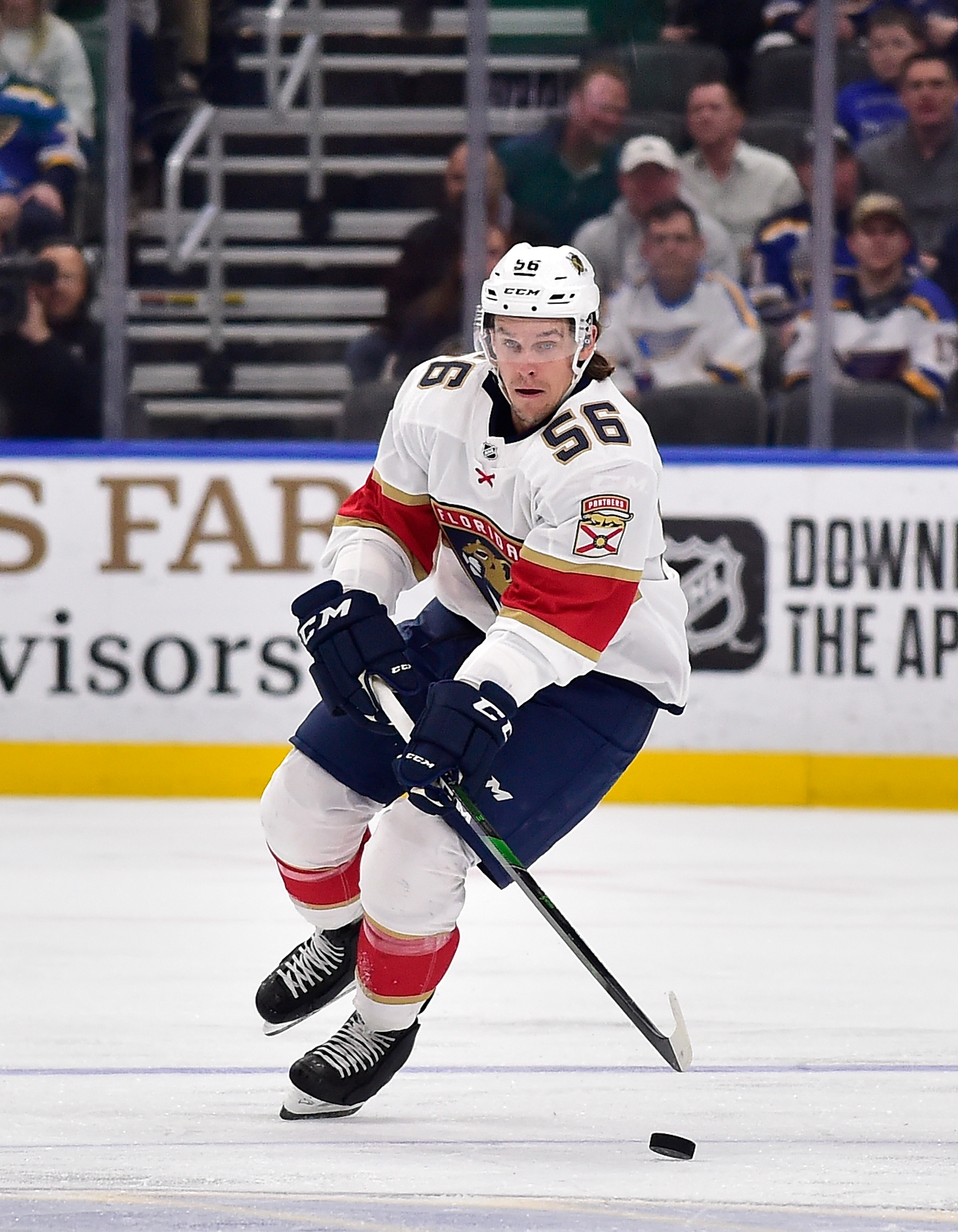 Despite Vegas’ love for Haula, the team even had cap issues after their second season and were forced to send Haula to the Carolina Hurricanes to free up some cap room. Haula signed a three-year, $8.25MM contract ($2.75MM AAV) with Vegas as part of a deal for the Golden Knights to select him in the expansion draft from Minnesota and looked like a significant find after the first year. The injury held up that outlook for the next season and Carolina was hoping to recapture some of that offensive magic last season. Instead, he struggled through more knee injuries on and off and only appeared in 41 games with 12 goals before the Hurricanes packaged him to Florida for Vincent Trocheck. Haula scored no goals in seven games for the Panthers before the team’s season ended.
However in the right system and with plenty of extra time to allow his knee to fully mend, Haula could fill a significant hole in a team’s middle and if everything goes right, could thrive there.
Potential Suitors
Not surprisingly, Haula has received significant interest from at least 10-12 teams, yet no deal has been struck. The forward is likely looking for a potential long-term deal, deals that aren’t really offered to players right now as several free agents have had to ink one-year deals in hopes that the 2021 offseason may prove to be more lucrative and hopes that COVID-19 may settle down in a year.
Perhaps one of the most obvious suitors would be returning to the one team where he had the most success. The Golden Knights might be a perfect fit for Haula as the team was forced to send off center Paul Stastny to Winnipeg to save cap room and with Cody Glass‘ rookie season having also been interrupted by injury, there is a clear opening for a No. 2 center in the system. Of course, the team is so tight against the cap that the team doesn’t even have the money for a minimum-salaried deal without clearing more cap room, which will be difficult. The team has already made it clear they will not be moving now back-up goaltender Marc-Andre Fleury, which means they will be spending $12MM on their goalies this coming year.
Rumors that the Pittsburgh Penguins could be looking for a third-line center to fill in some depth for another Stanley Cup run with their veteran squad. Pittsburgh doesn’t have a clear-cut third or fourth-line center, so Haula would be a big addition to a team that needs to get more scoring from their bottom-six. Of course, the team must look at their cap issues as well. Other teams such as the New Jersey Devils and the Vancouver Canucks have come up although there are likely many others, but only the Devils have the cap room to easily bring him in.
Projected Contract
PHR initially projected Haula to receive a three-year, $11.25MM deal, although that number now looks quite high considering some of the contracts that other players have received in the last week or so. Players ranked much higher, such as Evgenii Dadonov and Tyler Toffoli each had to settle for less than they were hoping for. Dadonov received three years and $15MM from Ottawa, while Toffoli signed a four-year deal at $17MM with the Montreal Canadiens.
Considering that Haula is coming off two injury-plagued and disappointing offensive seasons, it doesn’t seem likely that he can easily pry a long-term deal away from any team and may have to sign a one-year “prove it deal,” except for the fact that his services as a center could give him slightly more leverage than most free agents remaining on the market.
Photo courtesy of USA Today Sports Images.
NHL’s Free Agent Interview Period Could Return
As if the 2020 off-season wasn’t already going to be strange, what with the October start date and flat salary cap, it also marked a new age in free agency negotiations with the removal of the free agent interview period. Well, it seems this new age may be short-lived. TSN’s Frank Seravalli reports that the NHL’s general managers have already discussed bringing back the interview period, with 48- and 72-hour periods being considered. Such a reinstatement would need to be approved by the NHLPA as well, as it is a collectively-bargained policy.
The interview period, also known as “legal tampering”, occurs just prior to the new league year beginning and the opening of free agency (which until this year has been July 1). It is a period of time in which teams can contact unrestricted free agents and their representation to discuss potential contract terms before the market officially opens. This policy, agreed upon in the previous CBA, led to a rush of contracts when the market opened, implying that teams and UFA’s had not only discussed contract terms, but agreed in principle. Upset that the interview period was being abused, the two sides eliminated the construct when the new CBA was ratified back in July.
Just a few months later, the teams want it back. This off-season has been much slower than usual, going all the way back to the first day the market opened. Being unable to discuss contract terms has undoubtedly impacted GM’s abilities to read market value and plan accordingly. The result has been a number of notable free agents – including two top-10 and 14 top-50 UFA’s per PHR – remaining unsigned several weeks into free agency.
Especially while dealing with the flat cap, this unpredictable market has helped no one. It is understandable why the teams would like it back and it is safe to assume that the players will agree. The interview period structure could certainly stand to be a bit stricter and perhaps a more limited time frame would also help avoid abuse, but a cold opening to free agency seems unsustainable moving forward.