
Assessing The Senators’ Center Situation
The Senators addressed a significant internal matter this week by securing a four-year contract extension for center Shane Pinto worth $30MM. The deal guarantees Ottawa’s center depth until at least 2030, as Tim Stützle and Dylan Cozens are already signed until then with cap hits similar to Pinto’s new deal ($8.35MM for Stützle and $7.1MM for Cozens). With the middle of the ice locked in Ottawa for the foreseeable future, it’s fair to wonder how the centers will line up moving forward.
Pinto’s $7.5MM cap hit certainly caught some attention across the league. Still, with the salary cap expected to rise significantly over the coming years, it’s clear that the NHL’s economic landscape will look very different soon. AFP Analytics had projected Pinto to earn nearly $6MM annually on a five-year extension; however, that estimate was made before Pinto started this season with seven goals in six games – although he has just two in 13 contests since. Ottawa’s current line combinations have Pinto centering the third line, although it’s given almost identical ice time to Cozens’ second line.
With Pinto’s increase in usage, it’s fair to wonder how Cozens would respond to being moved down the lineup. When he is playing well, Cozens is a terrific transition player who does a lot of damage off the rush and can tuck away garbage goals. However, when he is off his game, he doesn’t do enough away from the puck to justify a top-six job, and his defensive work is subpar. The same can’t be said for Pinto, who, granted, doesn’t have the same offensive track record as Cozens, but plays a better two-way game and can still get to the dirty areas of the ice to clean up rebounds.
The dynamic down the middle for Ottawa will be fascinating to watch in the coming year or two, particularly if Pinto can maintain his current offensive pace. Pinto’s career high in points is 37 from last year, while Cozens’ career high came in 2022-23 when he had 31 goals and 37 assists for 68 in 81 games. Since that season, Cozens has regressed offensively, tallying just 47 points in each of the last two seasons. However, since being acquired in the trade from the Sabres last March, Cozens has registered 12 goals and 18 assists in 39 games, which translates to a 63-point pace over an 82-game season. If Cozens can maintain his offensive production going forward, it would likely solidify him as the Senators’ second-line center, unless Pinto takes a massive step offensively.
Pinto’s overall game is probably the best suited for third-line duties out of all the Senators’ pivots. Pinto has been in the role for a few years now and has excelled with his terrific two-way play. He takes on tough matchups, kills penalties, and takes the bulk of the defensive zone starts. Examining this raises the question of whether Ottawa would be best served by maintaining the status quo in the future, as it best suits the players’ skill sets.
Then, there’s the morale factor. It’s tough to say what was promised behind closed doors, but a safe bet is that Pinto knows his role with Ottawa for the foreseeable future, and clearly, whatever that role is, it suits him just fine. Otherwise, he wouldn’t have signed for another four seasons. Hypothetically, even if signing in Ottawa wasn’t Pinto’s first choice, he did give up two UFA seasons to do so, which suggests he probably doesn’t dislike the current setup or his assigned role. There’s also the possibility that Ottawa had to overpay Pinto to keep him in a lesser role. Pinto is aware of the situation; he can see the depth at the center position and likely understands that not everyone gets to make flashy plays or be on the top power play and in the top six. Pinto knows his role and signed up for it, which makes it easier to keep him in the 3C position.
The same can’t be said for Cozens, who didn’t sign up for a demotion with the Senators, nor did he sign with the Senators at all. Cozens agreed to a seven-year deal in Buffalo before he was traded to Ottawa, meaning he didn’t choose the team or the role he’d play there and was thrown into both. Now, Cozens probably isn’t too upset about being moved from a perennial losing team to one that is finding its identity and developing as a group. But, from an outsider’s perspective, the chance of him being demoralized with a third-line role is much higher than with Pinto, who has already been in that role and signed up for another four years of it.
Will The Penguins Contend For The Playoffs?
The Penguins entered the season with modest playoff hopes, at best. After 17 games, they sit sixth in the Eastern Conference with a 9-5-3 record. Although they’ve cooled off recently, they remain competitive and are dealing with numerous injuries to Rickard Rakell, Justin Brazeau, Filip Hallander, Tristan Jarry, Joel Blomqvist, Caleb Jones, and Noel Acciari.
Some might look at that list and dismiss the talent of those players, but it means they are without four regular forwards, one of their top six defensemen, and half their goaltending tandem. That’s a significant hurdle early in the season, especially for a team whose depth isn’t particularly strong. It raises the question: Can Pittsburgh weather this storm and realistically compete for a playoff spot this year?
The simple answer is yes. The talent level is aging, but it remains. The Penguins continue to rely on Sidney Crosby (11 goals and 20 points in 17 GP) and Evgeni Malkin (21 points in 17 GP) at forward, both of whom have been excellent early in the year, as has Erik Karlsson on the back end. The main question facing the Penguins, aside from dealing with injuries, is whether a team this old can maintain this level of play over a full 82-game schedule.
In Malkin’s case, it’s less apparent because he started last season strong as well, especially in October, when he went on a tear with a 3-11–14 scoring line in 12 games. His numbers then declined significantly as the season progressed. Crosby, however, usually improves as the season progresses, which suggests he might reach another level this year – an impressive feat considering he’s 38 years old.
Karlsson also appears to be a different player this season, and it will be interesting to see how his season unfolds. He seems more committed defensively and has been much more responsible with the puck this year, while demonstrating his elite skill and skating ability. His possession numbers back that up – only Parker Wotherspoon, his partner, has a higher shot-attempt share at even strength among Penguins defenders than Karlsson’s 50.7%. If he can keep this level of play throughout the year, alongside Malkin and Crosby, the Penguins have a strong chance of making the playoffs.
Then there is the wild card: Pittsburgh’s goaltending. Jarry remains an unpredictable performer. He’s been a two-time All-Star before, but he’s also shown inconsistency when the pressure ramps up. In any other year, you might see Pittsburgh’s goaltending as a weakness that could push them out of the playoffs, as has been the case in recent seasons. However, this year feels different for the Penguins, with Arturs Silovs, who has played very well early on, and rookie sensation Sergei Murashov, who just made his NHL debut earlier this week. These two young players, along with Jarry and even Blomqvist, form a very respectable rotation, even if they are largely unproven at the NHL level. Together, their .911 SV% ranks second in the league behind only the Blackhawks.
The cynic might examine Pittsburgh’s goaltending and argue that it is unproven, therefore unreliable, and perhaps (in the case of Jarry) a potential obstacle to their postseason chances. In most years, that might be true, but considering Jarry’s recent track record, it’s tough to see Pittsburgh giving him much leniency regarding his performance, and they probably wouldn’t hesitate to send him to the AHL if he doesn’t meet expectations. Pittsburgh did that several times last year, and since they’ve already sent high-priced defenseman Ryan Graves to the minors, they have no qualms about hurting the feelings of their veteran players.
Speaking of Graves, his signing on July 1, 2023, was supposed to mark the start of a lengthy stint on Pittsburgh’s defense, where he’d be in the Penguins’ top four. That hasn’t come to pass, and Graves was sent to the AHL to begin the season. Graves accepted the demotion professionally and went down to Wilkes-Barre/Scranton, where he dominated the AHL, recording a goal and six assists in 10 games along with a +9 rating. However, the reality remains that his play in Pittsburgh has been poor for two seasons, and if he can’t put together a solid stretch of performance at the NHL level, he’ll find himself back in the AHL.
Graves’ inability to remain an NHL player has created uncertainty on the left side of the Penguins’ defense. Up to this point in the season, Ryan Shea, Wotherspoon, Caleb Jones, and, to a lesser extent, Graves have held the fort and been steady enough to support a surging Karlsson and a struggling Letang. Shea, Wotherspoon, Jones, and Graves all deserve credit for their efforts, as they are all asked to play above their typical roles and are doing a decent job, especially considering what they are paid (outside of Graves, who is making $4.5MM this year).
Shea and Wotherspoon, in particular, have been a surprise, as neither man was expected to be more than a fifth or sixth defenseman. There is a fair argument that they are both currently top-four defenders on the Penguins. Shea is a real surprise, and granted, his success thus far is somewhat predicated on luck with a 103.7 PDO. But he’s already set a career high in points in just 17 games and hasn’t been a liability in the top four.
The same can be said for Wotherspoon with a 103.6 PDO, but his play has been less about luck and more about playing a responsible, sound defensive game. There is nothing flashy about Wotherspoon, and he isn’t going to put up much offense, but he does have a bit of a track record of success from last year in Boston, although that was playing 18 minutes a night in a third-pairing role. In Pittsburgh, Wotherspoon has been a terrific top-pairing partner for Karlsson and has replicated what Marc Methot used to offer Karlsson a decade ago in Ottawa, without all the physicality. Wotherspoon has been able to support Karlsson’s play in a way that has allowed the three-time Norris Trophy winner to play his game without the fear of the puck always ending up in the back of the Penguins’ net. Wotherspoon has been one of several pleasant surprises for the Penguins this season, and perhaps the most important given the lack of depth on the left side of their defense.
Many pundits believed the Penguins were a few years away from competing and saw some of their free agency signings this year as patchwork moves to fill out the lineup, but they have proved to be much more than that. Penguins general manager Kyle Dubas entered free agency knowing the team wouldn’t be big spenders; instead of spending a lot, Dubas chose short-term, low-risk bets on players who had either dealt with injuries (Anthony Mantha) or lacked opportunity (Brazeau and Wotherspoon). Whether by design or luck, Dubas has rebuilt the Penguins’ farm system and NHL roster, and it looks likely they will be in the playoff hunt as the season continues, barring a collapse or multiple injuries.
Summer Synopsis: Anaheim Ducks
With the regular season now upon us, the bulk of the heavy lifting has been done from a roster perspective. Most unrestricted free agents have found new homes, the arbitration period has come and gone, and the trade market has cooled. Accordingly, it’s a good time to take a look at what each team accomplished over the offseason. Next up is a look at the Anaheim Ducks.
The Ducks have been rebuilding for several years and have built one of the top prospect systems in the NHL. They’ve done this by drafting high for several years, with many of those players becoming NHL regulars, and more on the way. The team has supported these young players with veterans, but it has yet to show tangible results in the NHL. However, with plenty of young talent coming up, the Ducks are ready to finally move out of the rebuild and compete for a playoff spot.
Draft
1-10 – C Roger McQueen, Brandon (WHL)
2-45 – C Eric Nilson, Djurgårdens Jr. (J20 Nationell)
2-60 – D Lasse Boelius, Ässät Jr (U20 SM-sarja)
3-72 – F Noah Read, London (OHL)
4-101 – D Drew Schock, U.S. National U18 (NTDP)
4-104 – G Elijah Neuenschwander, HC Fribourg-Gottéron U20 (U20-Elit)
5-136 – D Alexis Mathieu, Baie-Comeau (QMJHL)
5-159 – LW Émile Guité, Chicoutimi (QMJHL)
6-168 – D Anthony Allain-Samaké, Sioux City (USHL)
7-200 – F Brady Turko, Brandon (WHL)
The Ducks chose a lanky center with the tenth overall pick, hoping that his skating, size, and playmaking abilities would translate to the NHL and elevate McQueen to a top-six center. McQueen plays a two-way game and has good hockey sense. He has a strong wrist shot and can deliver accurate passes through traffic to find teammates. He does need to improve his skating, but projects as a reliable NHL center.
With the 45th overall pick, the Ducks selected another center. Nilson sees the ice very well and can play at a good pace, but he also knows when to slow things down to draw in defenders and set up teammates in open space. He’s also a responsible defender and rarely finds himself out of position, paying close attention to the details at both ends of the rink. While he doesn’t possess a lot of speed and isn’t overly flashy, Nilson should be able to develop into a middle-six forward given how high his floor is.
With the latter second-round pick, the Ducks drafted Boelius from Finland. The mobile defenseman has an excellent first pass, is patient with the puck, and works well from the offensive blueline, directing pucks to the net through traffic. Boelius also plays a physical game and isn’t afraid to battle in the corners and in front of the net. His offensive game still needs development to reach the NHL level, but given his all-around play, he could potentially become a top-four defenseman.
In the third round, the Ducks selected London Knights forward Read, a north-south winger who skates with a lot of pace and is a superb forechecker. He is an excellent skater, which helps him in transition—a key strength in his game. Read produces most of his offensive output on the rush and is more of a depth scorer than a top-tier option. Since he is responsible and plays a quick game, he should be able to contribute at the NHL level in a depth role at least.
Trade Acquisitions
F Chris Kreider (from New York)
G Petr Mrazek (from Detroit)
F Ryan Poehling (from Philadelphia)
The Ducks have been bringing in veterans for the past few years and continued to do so this summer, adding veteran forward Kreider to their young forward group. Kreider is coming off a tough final season in New York, as the 34-year-old tallied just 22 goals and eight assists in 68 games. Those numbers represented a steep drop for the former 50-goal scorer and eventually led to him being moved west to Anaheim.
Kreider remains a highly productive NHL player who can be a net-front presence and often scores in close. He still plays a strong transition game despite losing some speed; he remains a threat to score many goals, using his speed and size to reach prime scoring positions. He likely won’t hit 50 again, but he’s still a threat to pot 30 goals, which would be an excellent return for Anaheim over the next two seasons.
Poehling was acquired in the Zegras trade and contributed to an underwhelming return for the young forward. Poehling, a former first-round pick (25th overall in 2017), has moved around the league with Anaheim being his fourth NHL team. The 26-year-old enjoyed two productive seasons in Philadelphia, setting career highs in points in consecutive years. His speed is expected to suit Anaheim well, and he can be a threat in transition, leveraging his underrated passing and subtle skills to create plays and set up teammates.
UFA Signings
F Mikael Granlund (three years, $21MM)
G Ville Husso (two years, $4.4MM)
*-denotes two-way contract
^-denotes re-signing
The Ducks dipped their toes into the free agent market, securing one of the top offensive talents with a three-year deal worth $7MM annually. The contract caused sticker shock, especially since just two summers ago, Granlund was considered a salary-cap dump when the Pittsburgh Penguins traded him as part of a package to the San Jose Sharks for Erik Karlsson. Granlund struggled in Pittsburgh but found his form in San Jose, tallying 105 points in 121 games before being traded to Dallas this past February.
Granlund didn’t put up the same numbers in Dallas, but he was still productive, recording seven goals and 14 assists in 31 games before adding five goals and five assists in 18 playoff games. That was enough for Anaheim to pay a hefty price for the 33-year-old on a contract that might not look great in a year or two, considering Granlund’s age.
The Husso contract was another puzzling move, as the Ducks signed a goaltender for multiple years who hasn’t looked like an NHL goalie in quite some time. Husso played well in St. Louis during 2021-22, earning Vezina Trophy consideration. However, he has been average or worse since then, including last year when he was demoted to the AHL at one point and ultimately traded from Detroit to Anaheim. Husso has started the season strong in the AHL with the San Diego Gulls, and it will be interesting to see how much NHL time he gets over the next two years.
RFA Re-Signings
G Calle Clang (one year, $775K)
RW Sam Colangelo (two years, $1.7MM)*
G Lukas Dostal (five years, $6.5MM)
D Drew Helleson (two years, $2.2MM)
D Jackson LaCombe (eight years, $72MM)
C Mason McTavish (six years, $42MM)
F Jan Mysak (one year, $775K)
F Nikita Nesterenko (two years, $1.575MM)
C Tim Washe (two years, $1.625MM)*
*-denotes two-way contract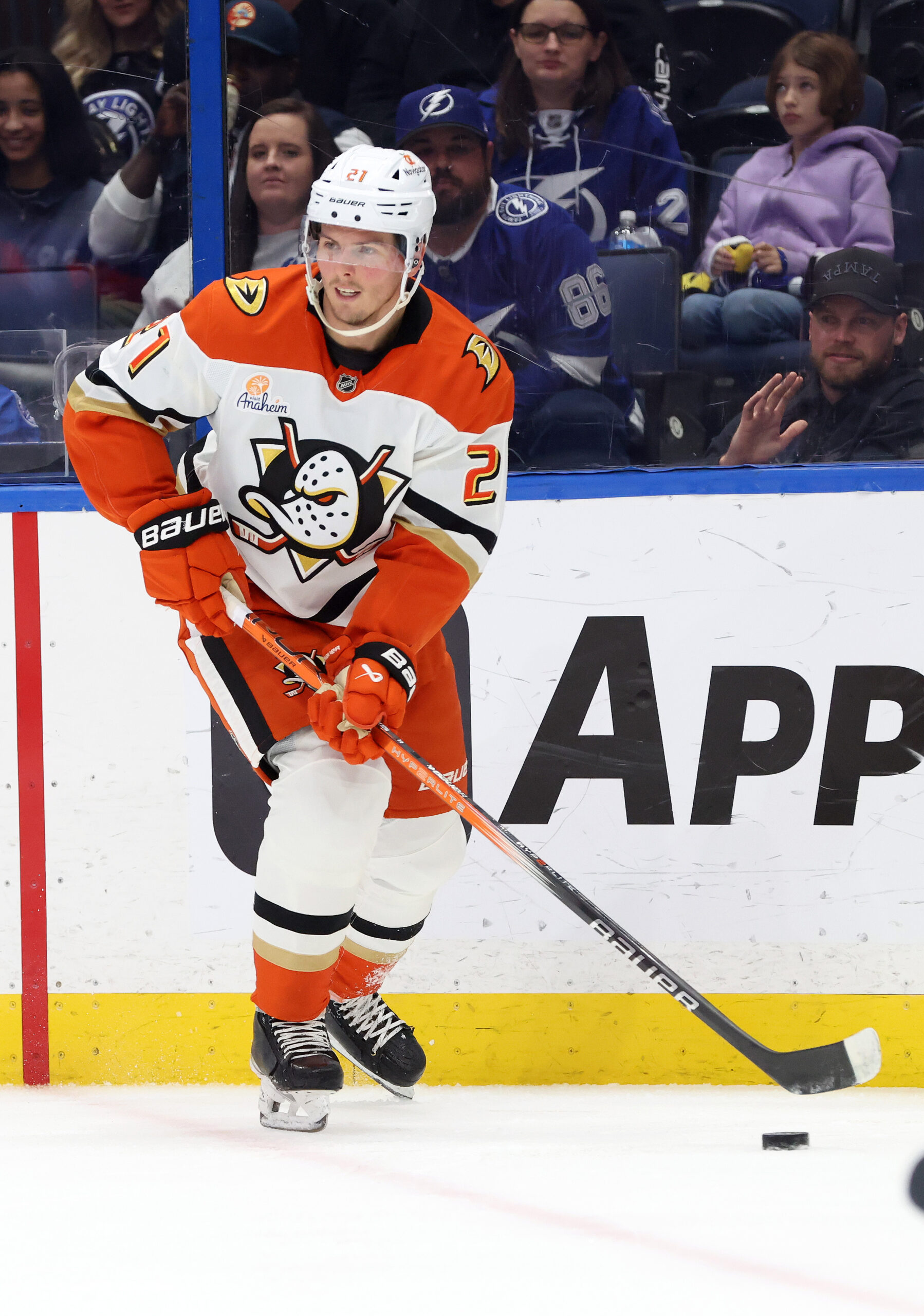
Anaheim was busy this summer as it continued trying to lock down its future stars with long-term contract extensions. They still have a lot of work to do next summer, but this past offseason helped solidify much of their future. The most significant contract extension went to defenseman LaCombe, who signed an eight-year deal worth $9MM annually. While that price tag may raise some eyebrows, LaCombe tends to fly under the radar in Anaheim, but as their top defenseman last season, he excelled in nearly every aspect of the game, finishing the year with 14 goals and 29 assists in 75 games. Although those offensive numbers don’t scream $9MM defenseman, the NHL’s economic climate has shifted, and LaCombe is a complete two-way defenseman. Nearly every statistic saw a significant jump last season, making it understandable why the Ducks felt they had to lock down the 24-year-old before that $9MM AAV started to push north of $10MM if he had another strong season. It’s a gamble for the Ducks, but one they hope will pay off in the coming years with a rising salary cap.
The Ducks also signed McTavish to a new six-year contract. The 22-year-old made a significant leap last year, scoring 22 goals and 30 assists in 76 games. McTavish is evolving into a top-tier offensive player and could very well become the Ducks’ leader in that area if he improves his skating and attention to detail. But even if his skating stays the same, he’s smart enough to play through it and remain effective in the offensive zone; however, his defensive play needs improvement and is an area of concern for both the Ducks and McTavish.
In the crease, the Ducks exchanged Gibson to Detroit and signed their goalie of the future, Dostal, to a five-year extension. The 25-year-old posted relatively modest numbers by traditional standards, with a 3.10 GAA and a .903 SV%, but a closer look at his stats reveals that Dostal’s numbers were dragged down by playing behind a very weak defense. His stats improve when you analyze more advanced metrics, as he finished 17th in goals saved above expected per 60, which is quite impressive considering how poor the Ducks’ defense was last year. The Ducks are betting on Dostal’s ongoing development, and he could become a bargain if the team’s defense improves and he can play behind an average or better unit in their own zone.
Departures
F Justin Bailey (signed in AHL)
G Oscar Dansk (signed in Czechia)
F Robby Fabbri (remains unsigned)
G John Gibson (traded to Detroit)
D Oliver Kylington (signed in Sweden)
RW Brett Leason (signed with Washington, one year $775K)
C Josh Lopina (signed in ECHL)
C Isac Lundeström (signed with Columbus, two years $2.6MM)
F Brock McGinn (remains unsigned)
F Carson Meyer (signed with Buffalo, two years $1.55MM)
F Carey Terrance (traded to New York Rangers)
F Trevor Zegras (traded to Philadelphia)
*-denotes two-way contract
The Ducks finally made a move with Gibson, trading him to the Detroit Red Wings for Mrazek and a couple of draft picks. It was a move fans had been waiting for a while, but Gibson’s poor play in recent years made it seem almost impossible to move him. Thanks to a bounce-back season last year, Anaheim was able to capitalize and send Gibson and his $6.4MM cap hit to Detroit, clearing one of the last remaining players from Anaheim’s previous contention window. With Dostal already the heir apparent, trading Gibson was an easy decision for general manager Pat Verbeek.
Zegras was the second Ducks player traded out who had been with the team long-term. The enigmatic forward remains an incredibly talented, though underperforming, player who needed a fresh start after some injury troubles in recent seasons. The return for Zegras from Philadelphia was underwhelming, to say the least; however, Zegras hadn’t done the Ducks any favors with his play last year. The 24-year-old had just 12 goals and 20 assists in 57 games last season and posted some of the lowest underlying numbers of his career. There are certainly deficits in his game, as he isn’t overly fast or physical, and he turns the puck over way too much, but his skill is high-end, and if he puts it together in his prime, he could be special.
Salary Cap Outlook
The Ducks currently have just under $14.5MM in available cap space, with projects extending to $54.8MM at the NHL Trade Deadline. That’s a substantial amount of room for the rest of the season, which basically means they can add anyone during the season. However, they probably won’t do that because they’ll have some significant extensions to give out next summer to players like Cutter Gauthier and Leo Carlsson. They also need to account for LaCombe’s new contract next season, which means that a large portion of cap space will quickly be used up.
Key Questions
Can they finally compete for a playoff spot?
The Ducks have been a very entertaining team to watch and have started the season strongly. Now, nearly a quarter of the way through the year, it’s clear they’re vying for a playoff spot. They probably can’t maintain their current pace, but even if they finish the rest of the year with a .500 record, they’ll still be in the hunt for a postseason spot.
Which young players will take a step forward?
The Ducks have a bottomless prospect pool with a lot more help on the way. They’ve locked up several young players, and it’s fair to wonder who else will position themselves for a long-term deal. Carlsson, Gauthier, and Beckett Sennecke all seem to be on track to become top-six forwards for Anaheim, with each player looking to take the next step in their development as they aim to establish themselves as offensive NHL forwards.
Can the defense actually defend?
Anaheim’s defense has been a significant liability over the last few seasons, allowing high shot volumes, struggling to kill penalties, and being inconsistent in every aspect of the game. With a new coaching staff in place, all eyes will be on the defensive core to see if they can actually tighten things up and support their goaltenders. Anaheim has many issues to address at the back end, and even something as straightforward as reducing high-danger scoring chances would go a long way towards becoming a playoff team.
Photo by Kim Klement Neitzel-Imagn Images
Summer Synopsis: Boston Bruins
With the regular season now upon us, the bulk of the heavy lifting has been done from a roster perspective. Most unrestricted free agents have found new homes, the arbitration period has come and gone, and the trade market has cooled. Accordingly, it’s a good time to take a look at what each team accomplished over the offseason. Next up is a look at the Boston Bruins.
The Bruins took a massive step back last season after being a powerhouse regular team in recent seasons. They moved on from several tenured veterans at the NHL Trade Deadline, and it showed as they fell down the Eastern Conference standings. This season, the team entered the regular season with their lowest expectations they’ve had in at least a decade. That being said, they do still have plenty of capable veterans on the team and should be able to compete on most nights, but likely don’t have the roster to make a significant push in the Eastern Conference.
Draft
1-7 – C James Hagens, Boston College (NCAA)
2-51 – C William Moore, U.S. National U18 Team (NTDP)
2-61 – D Liam Pettersson, Växjö Lakers J20 (J20 Nationell)
3-79 – F Cooper Simpson, Shakopee High (USHS-MN)
4-100 – D Vashek Blanár, Troja-Ljungby J18 (J18 Region)
5-133 – F Cole Chandler, Shawinigan (QMJHL)
6-165 – C Kirill Yemelyanov, Loko Yaroslavl (MHL)
With the seventh overall pick, the Bruins chose Hagens from Boston College. The Hauppauge, New York native is a highly elusive center who uses his agility to vary speeds, change directions, create space, evade defenders, and generate scoring chances for himself and his teammates. Hagens will contribute offensively and should be able to use his dynamic skating to lead a line and operate on the power play.
Physically, Hagens is undersized, and concerns have been raised about his size and strength. Some people wonder if his lack of size could limit his potential, but given his skating ability and game sense, he should be able to compensate for any skill deficiencies.
Moore is another center who will come up through Boston College and is more of an in-your-face type of player than Hagens. Moore prefers a straight-line game and will crash the net, acting as both a shooter and a setup man. Unlike Hagens, concerns exist about Moore’s skating and his ability to play the north-south game due to his lack of acceleration. Moore has a long way to go to reach his potential and will likely spend at least a few seasons at Boston College, but he represents a gamble—a draft pick with a very high ceiling given his size and offensive skills. His path to the NHL depends on his improving his skating and speed.
Later in the second round, the Bruins selected Pettersson, a puck-moving defenseman out of Sweden. Pettersson transitions the puck well and can skate or pass it out of the defensive zone to create a switchover from defense to offense. There are concerns about his defensive work and his ability to handle the physicality of the NHL game. Pettersson is 6’2” but just 170 lbs, which means he will likely need to fill out quite a bit to handle the rigours of the NHL forecheck.
The Bruins rolled the dice with their third-round pick, picking a risky prospect with a high ceiling in Simpson. The Shakopee, Minnesota, native has all the tools of a raw goalscorer, using his puck-handling in traffic to create deception, along with a quick release that can give goaltenders fits. His production at the high school level has been off the charts (49 goals and 34 assists in 31 games), but there are question marks about whether it will translate to higher levels of hockey. Simpson will need to improve his play away from the puck if he hopes to ascend to the NHL, as well as his overall conditioning. However, he represents a pick that could develop into a top-nine winger, and as a third-round pick, it would be a win for the Bruins.
Trade Acquisitions
F Viktor Arvidsson (from Edmonton)
D Victor Soderstrom (from Chicago)
The Bruins grabbed Arvidsson at a low cost after his struggles last season in Edmonton. The 32-year-old has a strong history as a productive offensive player, but he struggled last year after his usage decreased. Arvidsson is only two seasons removed from scoring 26 goals and 33 assists in 77 games, which would be excellent production at his current price of $4MM for this season. However, if he repeats last year’s pace, it won’t be a good deal, but since he’s only signed for this year, it’s not the end of the world. At worst, Arvidsson can be a trade asset at the deadline for the Bruins, or if he really struggles, they can let him go at the end of the season after only having invested a fifth-round pick. But if Arvidsson regains his form, he could help them push for a playoff spot or recover some assets if the team isn’t in contention.
UFA Signings
D Jonathan Aspirot (one year, $775K)*
RW Matej Blumel (one year, $875K)
C Patrick Brown (one year, $775K)*^
D Michael Callahan (one year, $775K)*^
G Michael Dipietro (two years, $1.625MM)^
F Michael Eyssimont (two years, $2.9MM)
D Jordan Harris (one year, $825K)
LW Tanner Jeannot (five years, $17MM)
D Henri Jokiharju (three years, $9MM)^
F Sean Kuraly (two years, $3.7MM)
C Alex Steeves (one year, $850K)
LW Riley Tufte (one year, $775K)*
*-denotes two-way contract
^-denotes re-signing
The Bruins spent heavily in free agency during the summer of 2024, signing forward Elias Lindholm and defenseman Nikita Zadorov to costly long-term deals. Both of these contracts are now over a year old, and it’s fair to say they haven’t panned out as hoped. This offseason, Boston opted for a more cautious approach, adding a few bottom-six forwards and a couple of defensemen.
The Bruins’ significant addition was Jeannot, who has garnered a lot of mileage out of one decent season, signing a lucrative long-term deal worth $3.4MM per year. The 28-year-old had 24 goals and 41 points in 2021-22 but hasn’t topped seven goals or 18 points in any season since. Jeannot plays a fairly simple game, doesn’t do much with the puck, and hits a lot. His forechecking is solid, as is his work in front of the net, battling for position to create deflections, but beyond that, he doesn’t do much and probably won’t live up to his five-year deal.
Kuraly was a low-profile signing in Boston who plays a similar game to Jeannot but with much less physicality. Kuraly takes a low-event approach and doesn’t generate much offense or lead the play, but he is a reliable fourth-line defensive center who can contribute 20-30 points. Boston may actually be a good fit for Kuraly, as he is a solid penalty killer, has no problem throwing his body around, and should endear himself to Bruins fans with his play.
RFA Re-Signings
C John Beecher (one year, $900K)
C John Farinacci (one year, $775K)*
C Morgan Geekie (six years, $33MM)
C Marat Khusnutdinov (two years, $1.85MM)
D Mason Lohrei (two years, $6.4MM)
C Georgii Merkulov (one year, $775K)*
D Victor Soderstrom (one year, $775K)*
*-denotes two-way contract
Locking up Geekie was a significant move for the Bruins this summer, especially since the 27-year-old was coming off a 33-goal season. Geekie had never scored more than 17 goals before last year, and he probably won’t shoot 22% regularly. However, given his track record as a middle-six forward, he should still provide value at $5.5MM annually. The risk for Boston is that if he reverts to an 11-13% shooter, which wouldn’t be an ideal value for his contract.
Lohrei plays a high-motor game, jumping into transition and moving the puck around the ice easily. He isn’t as talented as Bowen Byram of the Buffalo Sabres, but, like Byram, Lohrei’s skills are very noticeable. However, his on-ice results don’t quite match the eye test. As mentioned earlier, Lohrei moves around the ice with ease, is very active in transition, and can pass well, but none of that has yet translated into positive results, which is puzzling. It could also mean that Lohrei is ready for a breakout, which would be great news for Bruins’ management.
Departures
G Brandon Bussi (signed in Florida, one year $775K)*
F Cole Koepke (signed in Winnipeg, one year $1MM)
F Jakub Lauko (signed in Czechia)
F Vinni Lettieri (signed in Toronto, one year $775K)
D Ian Mitchell (signed in Detroit, one year $775K)
F Tyler Pitlick (signed in Minnesota, two years, $1.55MM)*
D Parker Wotherspoon (signed in Pittsburgh, two years, $2MM)
*-denotes two-way contract
The Bruins’ significant roster losses occurred before the NHL Trade Deadline, as the team shipped out players like Brad Marchand, Charlie Coyle, Brandon Carlo, and a few others. It was a clear signal that they were punting on the season, leaving very few players to depart in the off-season.
Wotherspoon arguably represents the most significant loss off the roster for Boston and has been a great fit in Pittsburgh so far, playing quite a bit on the Penguins’ second pairing alongside Erik Karlsson. The 28-year-old has been excellent so far, surpassing expectations even as he’s been asked to take on more heavy lifting. Wotherspoon has never played more than 55 NHL games in a season, which should make his usage going forward worth watching in Pittsburgh. Wotherspoon could be a case of a player not getting opportunities in Boston and finding a fit elsewhere, but it’s hard to assess given this season’s small sample size.
Koepke might be another player who thrives elsewhere after signing a one-year deal in Winnipeg. He isn’t known for his analytics and won’t put up many points, but he plays a low-event game and is dependable defensively. He brought a physical presence that the Bruins will miss in their bottom six, but given the lack of scoring from their bottom two lines, they didn’t really need to keep another forward who struggles to produce points.
Salary Cap Outlook
The Bruins currently have just over $1.7MM in cap space this season. There is no denying they have some very bloated contracts on the books right now, most of which are untradable at the moment. The Bruins are heavily relying on some of these overpriced veterans to bounce back and meet their hefty contracts. If they don’t, things could get ugly for Boston as they lack the long-term cap space to cover potential gaps. Next summer, Boston has 18 players signed and just shy of $20MM available in cap space, which could give them a chance to make one or two key additions. However, considering their recent struggles in free agency, they might be cautious about overpaying again.
Key Questions
Can Jeremy Swayman get back to form?
Swayman’s play last year fell short of expectations for him and the Bruins after signing a significant contract extension. It was his first season in Boston without Linus Ullmark, who was traded to Ottawa in the summer of 2024. Swayman missed the start of the season due to a contract holdout and only signed his eight-year, $66MM deal in early October, missing just one game. However, he missed all of training camp, and it showed in his performance last season, as he posted the worst stats of his career. Now, as he approaches 27, he’s hoping to rebound, along with the Bruins, whose season could depend on Swayman’s play.
Do they have enough depth scoring?
Boston is very fortunate to have David Pastrňák on their roster, especially last year when he scored 106 points, accounting for roughly 47% of the Bruins’ offense. The Bruins lack depth offensively, and while Pastrňák can carry a large share of the scoring, he can’t do it all alone. Boston has capable forwards in their top six, but their bottom two lines aren’t exactly overflowing with offensive talent, which could become a problem if they don’t have enough scoring to compete.
Can they compete for a playoff spot?
If Boston played in a weaker division, this answer could potentially be yes, but competing in the Atlantic Division makes it a struggle just to qualify as a wild-card team. Boston isn’t a terrible team, but it’s hard to imagine them finishing ahead of Florida, Toronto, Montreal, Tampa Bay, or Ottawa. That would place them sixth at best, and it’s fair to wonder if the Bruins are even better than Detroit, with whom they also compete in their division. Given the intense competition this season, it’s unlikely Boston makes the playoffs, but that’s why they play the games.
Summer Synopsis: Calgary Flames
With the regular season now upon us, the bulk of the heavy lifting has been done from a roster perspective. Most unrestricted free agents have found new homes, the arbitration period has come and gone, and the trade market has cooled. Accordingly, it’s a good time to take a look at what each team accomplished over the offseason. Next up is a look at the Calgary Flames.
The Flames remain in a rebuilding phase and have seen early signs of progress through young, rising players making an NHL impact. Their prospect pool is mid-ranked due to several players graduating, but they still have some promising prospects likely to impact the NHL very soon. Calgary finds itself in a peculiar position: it isn’t tearing everything down completely, but as its competitive window begins to open, it lacks the depth of prospects to support its NHL roster fully. General manager Craig Conroy faces a challenging task, but the Flames have some skilled young players to develop around.
Draft
1-18 – C Cole Reschny, Victoria (WHL)
1-32 – C Cullen Potter, U.S. National U18 Team (NTDP)
2-54 – C Theo Stockselius, Djurgårdens IF J20 (J20 Nationell)
3-80 – D Mace’o Phillips, U.S. National U18 Team (NTDP)
5-144 – LW Ethan Wyttenbach, Sioux Falls (USHL)
6-176 – RW Aidan Lane, St. Andrew’s College (U18 AAA)
7-208 – D Jakob Leander, HV71 J20 (J20 Nationell)
7-211 – LW Yan Matveiko, CSKA Jr. (MHL)
With their first pick in the NHL Entry Draft, the Flames chose a two-way center in Reschny, who is considered comparable to Winnipeg Jets forward Cole Perfetti. Reschny isn’t very tall, but he’s an explosive skater who isn’t afraid to stickhandle through traffic, even if bigger players might bump him off the puck. He’s creative with the puck and possesses a high hockey IQ. The Flames hope Reschny develops into a top-six playmaker, capable of playing a responsible defensive game as well.
With their second first-round pick, the Flames chose another center in Potter, who has a similar build to Reschny and is also a two-way player. That’s where many of the similarities between Potter and Reschny end, as Potter is more of a blue-collar guy and tends to outwork his opponents. He’s a skilled faceoff guy, can kill penalties, and is reportedly a good team guy in the dressing room. The Flames are probably hoping Potter develops into a top-nine center, which makes sense since he’s not a high-end scorer and has a ceiling in the middle six.
With their second-round pick, Calgary chose Stockselius from Sweden. Once again, the Flames selected a center, and in Stockselius’s case, he was picked primarily for his skill and passing ability. His skating isn’t exceptional, and he isn’t huge, but he’s a clever player who can work through traffic and make passes in tight spaces.
For their third-round pick, Calgary selected defenseman Phillips, a mobile two-way defender who already appears NHL-ready. Phillips isn’t outstanding with the puck and often makes too many turnovers under pressure, which can lead him to force breakout passes or dump pucks into areas where his teammates can’t retrieve them. Despite struggles with puck handling, Phillips is an excellent defender who can close gaps quickly with his strong skating and isn’t shy about battling in the corners and in front of his net.
Trade Acquisitions
None
UFA Signings
F Mikael Backlund (two years, $6.5MM)^ (extension)
C Clark Bishop (one year, $775K)*^
D Nick Cicek (one year, $775K)*
D Joel Hanley (two years, $3.5MM)^
D Dryden Hunt (two years, $1.65MM)*^
C Justin Kirkland (one year, $900K)^
G Ivan Prosvetov (one year, $950K)
*-denotes two-way contract
^-denotes re-signing
The Flames had a quiet summer on the UFA market, opting to sign a few veterans on short-term deals. The most notable move was signing Backlund to a two-year contract worth $3.25MM per season. The 36-year-old doesn’t score many goals and isn’t the playmaker he once was, but he remains a reliable depth scorer who can play solid defense, create plays, and handle tough deployments. He is also a strong leader, having served as the Flames’ captain since September 2023, and appears happy to finish his career in Alberta, having signed for two more seasons that will see him through to the end of a 20-year tenure in Calgary.
The Flames also signed veteran defenseman Hanley to a two-year deal. The 34-year-old joined Calgary via a waiver claim in March 2024 after six seasons with Dallas, and he performed well in 53 games this past year to earn an extension. The $1.75MM AAV is the biggest payday of Hanley’s career by a wide margin and was a fitting reward for the best season of his career last year. Hanley isn’t flashy and is limited with the puck on his stick, but he protects the front of the net, battles hard for every puck, and is a reliable penalty killer. The Flames could do much worse than Hanley on their bottom pairing, as he offers a dependable, steady presence and should serve as a good leader for the team’s young players. However, given the state of the team’s defense, they may play him higher in the lineup for long stretches of the season.
Apart from retaining some veterans, the Flames didn’t do much to bring in new talent, mainly opting for AHL and depth players. Kirkland was their most significant signing, and given that he is 28 and has played only 30 NHL games before this season, he is unlikely to have a significant impact this year. Late bloomers do exist, and it’s possible Kirkland is one of them, but the most likely scenario is that Kirkland becomes a fringe player for the Flames and makes little impact at the NHL level.
RFA Re-Signings
D Kevin Bahl (six years, $32.1MM)
RW Matt Coronato (seven years, $45.5MM)
C Morgan Frost (two years, $8.75MM)
C Rory Kerins (one year, $775K)*
RW Adam Klapka (two years, $2.5MM)
D Yan Kuznetsov (two years, $1.625MM)*
C Sam Morton (one year, $775K)*
D Jeremie Poirier (one year, $775K)*
C Martin Pospisil (three years, $7.5MM)
G Dustin Wolf (seven years, $52.5MM)
C Connor Zary (three years, $11.325MM)
*-denotes two-way contract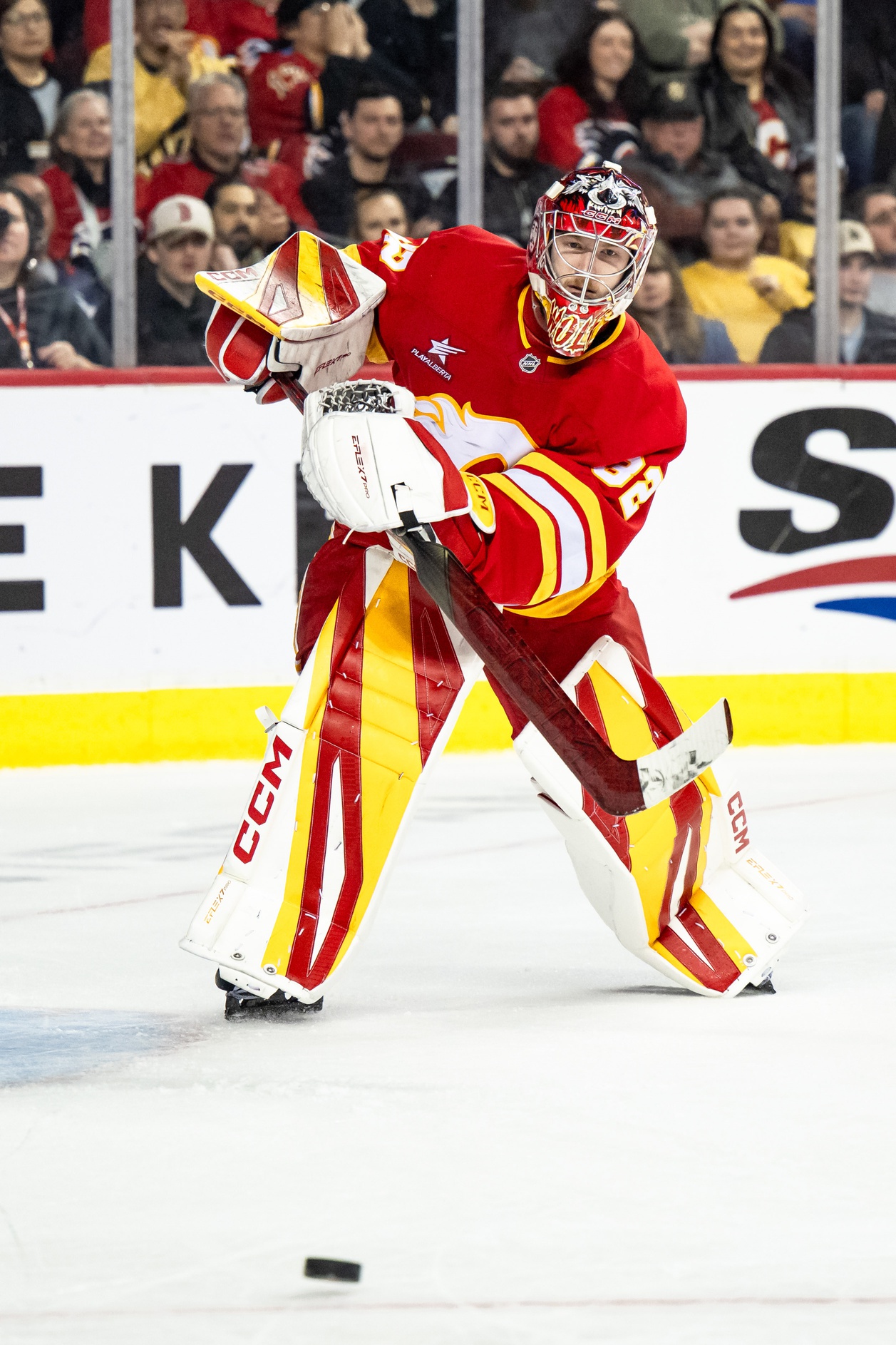
The Flames made significant moves this summer to secure their core young players. Securing goaltender Wolf was a top priority, and the Flames managed to sign the 24-year-old to a deal that will keep him into his 30s. Wolf was outstanding last season, playing in 53 games with a .910 save percentage and a 2.64 goals-against average. He was a strong Calder Trophy contender, finishing second in voting, and lived up to the expectations that came with his NHL debut. Wolf’s numbers in the AHL were exceptional, so his NHL start isn’t surprising to anyone. While the Flames believe they have their franchise goalie locked in, there’s always concern about goaltenders given their unpredictable performance. There’s no reason to think Wolf’s play will suddenly decline, but he is undersized, and due to the volatility of the position, nothing is guaranteed. On the bright side, Wolf’s $7.5MM extension could age very well if he continues to reach his potential, especially with the increase in the NHL salary cap.
Bahl was another defenseman signed long-term, agreeing to a six-year deal worth $5.35MM per season. Given the current state of the Flames’ roster and the fact that they haven’t drafted any left-handed defensemen at the top of the draft in a while, it seems likely that Bahl will be at the top of the Flames’ defensive core for the foreseeable future. Bahl brings very little offensively, but on the defensive side, he is highly effective, ranking in the 94th percentile in denying entries into Calgary’s defensive zone (as per JFresh). He was also in the 76th percentile for even-strength wins above replacement on defense. Bahl is an effective player, and should continue to be throughout the duration of his deal.
Coronato was another piece that the Flames extended long term, this time for seven years. The 22-year-old made a significant leap in his development last season, scoring 24 goals and providing 23 assists in 77 games. His 47 points marked a 38-point increase from the previous season, in which he had three goals and six assists in 34 games. There are no guarantees that Coronato becomes an elite sniper, but he at least appears to be a reliable secondary scorer who can be a nuisance on the forecheck. If he can do that, then the contract will be reasonable; if he evolves into a first-line sniper who scores 30-40 goals annually, it will be an incredible bargain in the long run.
With Zary, the Flames chose a more cautious approach, signing a three-year bridge deal. Zary took a step back last year after scoring 34 points as a rookie, finishing with just 27 points (13 goals and 14 assists) in 54 games this past season. The 24-year-old didn’t showcase the same puck-handling ability last season as he did the year before and sometimes struggled with turnovers. Like Coronato, Zary applies pressure on the forecheck and isn’t afraid to crash the net for rebounds, which should benefit him if he can build more strength. His bridge deal gives Zary the chance to prove to the Flames he is part of their core moving forward, and it could lead to a big payday if he develops into a consistent 25-30 goal scorer.
Departures
D Jonathan Aspirot (signed with Boston, one year $775K)*
D Tyson Barrie (retired)
F Anthony Mantha (signed with Pittsburgh, one year $2.5MM)
F Kevin Rooney (signed with Utah, one year, $775K)*
D Ilya Solovyov (claimed off waivers by Colorado)
G Dan Vladar (signed with Philadelphia, two years $6.7MM)
*-denotes two-way contract
Calgary didn’t suffer any significant losses this summer, only losing a few depth veterans to unrestricted free agency. Arguably, their most crucial loss is Mantha, a player who barely dressed last season because of injury. The 31-year-old forward played just 13 games last season, scoring four goals and three assists in what was his only season with the Flames, and it seemed he could have been a good fit if it hadn’t been for an injury that kept him out for most of the year. Mantha signed with the Penguins in the off-season and has looked very good alongside Evgeni Malkin and Justin Brazeau, recording six goals and five assists in 12 games. If Mantha can maintain this pace, he could be looking at a healthy raise next summer.
The Flames also lost goaltender Vladar to the Philadelphia Flyers in free agency. With Wolf’s emergence, the Flyers probably saw a $3.35MM backup goalie as a luxury they couldn’t afford. Vladar’s stats were quite average during his four-year stint with Calgary, though his underlying numbers were less flattering as he tended to have a negative goals saved above expected. His size was always interesting, but considering his stats, Calgary probably made the right decision by letting the 28-year-old move on.
Barrie had a solid career as an offensive defenseman but hasn’t been effective in the NHL for quite some time. Last year with the Flames. Barrie struggled and recorded just a goal and two assists in 13 games. It wasn’t that long ago that the Toronto Maple Leafs traded Flames center Kadri for Barrie, hoping he would be a catalyst from their back end. However, he never lived up to those expectations and moved on to the Oilers before finishing with Nashville and finally Calgary. The Flames won’t miss the veteran, given his limited production, and are better suited to let a youngster fill in Barrie’s spot on the depth chart.
Salary Cap Outlook
Despite arguably possessing the worst contract in the NHL (Jonathan Huberdeau at $10.5MM annually), the Flames are currently $13.38MM under the salary cap (according to PuckPedia). This provides them with plenty of flexibility during the season and could keep them active, depending on how their campaign unfolds. If Calgary is in the hunt for a playoff spot, they might be cautious buyers or even aggressive ones, depending on their standings position. However, given the state of their roster, that seems unlikely. Still, if they decide to move out a pending UFA like Rasmus Andersson, they could retain salary since they have two retention spots remaining and ample cap space to facilitate a move.
Key Questions
Will the Flames trade Nazem Kadri?
Kadri remains a highly productive center in a league full of teams needing help down the middle. He has three years remaining on his contract at a reasonable $7MM per season and posted 67 points in 82 games last season. At 35, some teams may be deterred by his age, but his strong start to the year suggests his production is unlikely to decline soon. However, paying a player $7MM annually until he’s 39 is a significant gamble, even with the rising salary cap. Kadri probably doesn’t fit the Flames’ contention window, and the best time to get maximum value for him is likely over the next nine months.
Are they rebuilding or retooling?
I don’t have the answer here, and it’s not clear if the Flames do either. Calgary underwent a clear teardown just a few years ago when it traded away Noah Hanifin, Jacob Markstrom, and several other veterans. However, they still kept many of their older players, and this could be the season where they make their direction clear. With Andersson, Ryan Lomberg, and Jake Bean heading for free agency next summer, the plan should become evident before the season ends.
Are their young players good enough to build around?
The short answer is no —at least not yet. Calgary has some promising young players, but outside of Wolf, no one appears destined to become an elite-level talent, and there are reasons to doubt Wolf will be either. Obviously, the young players on the roster are very talented. Still, if the plan is to rebuild, there are many young teams ahead of them, and Calgary will need to embrace a complete teardown or find a way to accelerate the process quickly.
Photo by Brett Holmes-Imagn Images
Summer Synopsis: Carolina Hurricanes
With the regular season now upon us, the bulk of the heavy lifting has been done from a roster perspective. Most unrestricted free agents have found new homes, the arbitration period has come and gone, and the trade market has cooled. Accordingly, it’s a good time to take a look at what each team accomplished over the offseason. Next up is a look at the Carolina Hurricanes.
The Hurricanes have been a Stanley Cup contender for a long time. While they’ve been knocking on the door for a while, they have remained on the periphery, never advancing to a Stanley Cup Final. The Hurricanes have never been afraid to be aggressive in their pursuit of winning, but have never put it all together despite excellent coaching, a terrific NHL roster and a standout prospect system. The Hurricanes were busy this summer, making some impact moves in pursuit of a Stanley Cup, but was it enough to push them just a little bit extra they need to reach their goal?
Draft
2-41 – G Semyon Frolov, MHK Spartak Moskva Jr. (MHL)
2-49 – C Charlie Cerrato, Penn State (NCAA)
2-62 – C Ivan Ryabkin, Muskegon (USHL)
3-67 – D Kurban Limatov, Dynamo Moscow Jr. (MHL)
3-87 – D Roman Bausov, Dynamo St. Petersburg Jr. (MHL)
6-183 – LW Viggo Nordlund, Skellefteå AIK J20 (Sweden Jr.)
7-221 – RW Filip Ekberg, Ottawa (OHL)
The Hurricanes didn’t pick in the first round this year but did have three selections in the second round, taking a goalie with the 41st overall pick. Frolov moves well laterally, has good size, and tracks the puck well. He is very composed in the crease and doesn’t deviate much from his structure, even when he is making a ten bell save. On the development side, there are some concerns about consistency, and he isn’t an excellent puck handler. He also gets beaten high sometimes, the result of moving into his butterfly too early. He projects to be an NHL goaltender, with a ceiling as a potential starter.
With their second pick in the second round of the draft, Carolina chose Cerrato, a two-way NCAA center with a high hockey IQ. Besides being a skilled passer with excellent playreading, Cerrato is also a good forechecker who can kill penalties and shut things down in the defensive zone. He isn’t much of a shooter and will likely need to add some muscle if he wants to compete at the NHL level.
With their final second-round pick, Carolina chose Ryabkin from the USHL. He has good size, plays with an edge, and has goal-scoring ability. He isn’t the smoothest skater and will need to improve his agility and mobility before progressing further. That said, he plays a pro-style game and can handle physical matchups. He could eventually become a second or third-line center, but he needs refinement in certain aspects of his game, which Carolina’s coaching staff has traditionally managed well.
In the third round, the Hurricanes selected a defenseman named Limatov. Standing 6’4” and weighing 190 lbs, Limatov will likely need to add some muscle, but he isn’t afraid to play physically and skates exceptionally well, especially for his size. He moves the puck confidently and isn’t hesitant to join transition plays. He also demonstrates decent defensive skills, but must boost his consistency in the defensive zone to make the jump to the NHL. Scouts are concerned that his defensive reads reveal a poor understanding of positioning, and he relies on stick checks too often.
Trade Acquisitions
D K’Andre Miller (from New York Rangers)
G Cayden Primeau (from Montreal)
People were quite divided over the Miller trade, with many arguing that the Hurricanes gave up too many assets for him and signed him to a vibrant contract extension. There is a valid point here, considering Miller’s decline in performance last season, which raises concerns about the hefty assets and dollars Carolina invested to secure his long-term commitment.
Miller is clearly very talented offensively and is arguably one of the best skaters in the NHL. He has size and reach, highly valued traits for any team. However, his defensive game isn’t strong; at times, it’s pretty poor, and it didn’t improve during his time with the Rangers, reflecting on both Miller and the team. In Carolina, Miller will have a real opportunity to play within a structure that complements his skills. There’s no guarantee it will work, but Carolina believed he was worth taking a chance on.
From the Rangers’ perspective, the trade made complete sense after they signed Vladislav Gavrikov as a free agent. They were able to unload a young, but flawed, defenseman who was due for a massive payday, while also recouping two high draft picks and a top defensive prospect in Scott Morrow.
The jury will be out for a while on who won this trade, but it’s one to watch, especially as Morrow develops in the Rangers system.
UFA Signings
G Frederik Andersen (one year, $2.75MM)^
D Gavin Bayreuther (one year, $775K)*
LW Nikolaj Ehlers (six years, $51MM)
F Juha Jaaska (two years, $1.55MM)*^
C Tyson Jost (one year, $775K)*
D Mike Reilly (one year, $1.1MM)
LW Eric Robinson (four years, $6.8MM)^
RW Givani Smith (one year, $775K)*
*-denotes two-way contract
^-denotes re-signing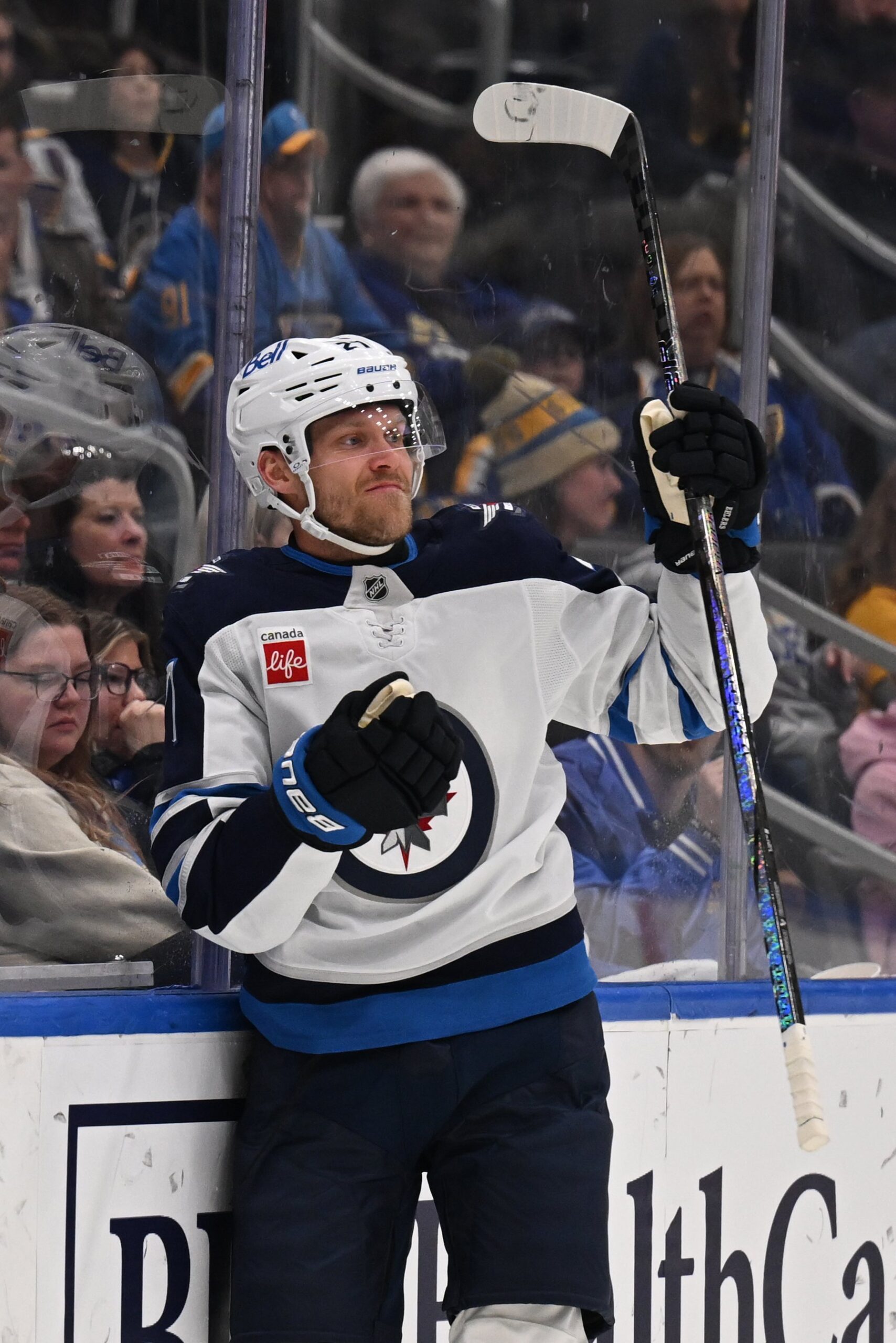
Signing Ehlers was a significant victory for the Hurricanes after they missed out on Rantanen and Guentzel long-term in previous summers. Ehlers isn’t quite at the same level as those two players, but he’s a strong top-six option who has consistently put up around 60 points for much of his career.
The six-year term shouldn’t be too restrictive for Carolina, as Ehlers will only be 35 when the deal expires, meaning he could remain reasonably productive throughout its duration. The $8.5MM AAV isn’t high either, and it should look more attractive as the deal goes on and the salary cap rises. The deal also comes at a time when Carolina has plenty of room under the salary cap, which means this probably won’t be an overpay for a free agent, assuming Ehlers stays healthy, which remains a concern.
Aside from Ehlers, Carolina remained quiet during free agency, focusing on depth and minor signings. They did, however, re-sign veteran netminder Andersen, who will once again form a tandem with the much younger Pyotr Kochetkov. Andersen is still a capable goaltender when healthy, though durability is often a concern for the 36-year-old. He appeared in just 22 games last season, but was solid in the regular season, posting a +9.0 goals saved above expected (according to MoneyPuck), and was outstanding in the playoffs with a +8.6 goals saved above expected in 13 games. While he can’t be a full-time starter, he’s an excellent option for 30-40 games.
RFA Re-Signings
RW Jackson Blake (eight years, $40,936,016)
C Skyler Brind’Amour (one year, $775K)*
D Domenick Fensore (one year, $775K)*
RW Noel Gunler (one year, $813,750)*
G Amir Miftakhov (one year, $775K)*
G Cayden Primeau (one year, $775K)
D Ronan Seeley (one year, $813,750)*
C Logan Stankoven (eight years, $48MM)
C Ryan Suzuki (one year, $775K)*
*-denotes two-way contract
The Hurricanes secured some of their key young players this summer by signing Blake and Stankoven to eight-year contract extensions. Carolina saw enough from Blake in just one season to commit long-term, and while it’s always risky to pay a player based on one year of production, they believed his potential was too significant to overlook. Blake is a skilled playmaker and an effective forechecker, but he is also somewhat small and not particularly quick. How he will develop remains uncertain, but even if his ceiling is only slightly above last year’s output, Carolina should still gain value from the deal.
The Stankoven deal was another eight-year agreement, reflecting a pattern this summer for the Hurricanes as they bet heavily on their young talent and chose to extend them the maximum term before it drops to seven years in the near future. These deals also come ahead of potential massive salary-cap increases, meaning that if Miller, Blake, and Stankoven all develop as Carolina expects, they could position themselves to be competitive for a long time. However, with Blake and Stankoven on the smaller side, injuries are always a possibility, so the risk is significant.
Stankoven’s skill is evident in the eye test, and while he struggled to score last year, he is a good transition player and an excellent playmaker who won’t shy away from contact or a battle, even if he is undersized. He posted 14 goals and 24 assists in 78 games last year, split between Dallas and Carolina, which was good enough for 7th in the Calder Trophy voting. At 22 years old, Stankoven is just scratching the surface, and the Hurricanes have taken a big bet that he has a lot more to offer.
Departures
D Brent Burns (signed by Colorado, one year, $1MM)
G Spencer Martin (signed in KHL)
D Scott Morrow (traded to New York Rangers)
D Dmitry Orlov (signed by San Jose, two years $13MM)
G Yaniv Perets (signed in AHL)
F Jack Roslovic (signed by Edmonton, one year $1.5MM)
D Riley Stillman (signed by Edmonton, two-year $1.55MM)*
C Tyson Yost (claimed on waivers by Nashville)
*-denotes two-way contract
The Hurricanes experienced quite a bit of key depth movement this summer. Up front, the only notable loss was Roslovic, who became a free agent amid expectations of securing a lucrative multi-year deal. However, that contract never materialized, and Roslovic had to settle for another one-year prove-it deal. The Hurricanes might have shown interest in Roslovic’s $1.5MM asking price, but considering their depth at center, the 22-goal scorer from last season wasn’t a priority.
On the backend, Carolina saw the majority of their departures, with Burns, Morrow, Orlov, and Stillman no longer part of the team. Burns left as a UFA and signed a one-year deal slightly above the league minimum. He could have likely stayed with the Hurricanes and served as a third-pairing defenseman, but it’s fair to wonder if the Hurricanes were hoping to go a bit younger in that spot. Burns isn’t the Norris Trophy candidate he once was, but he is still an NHL player and can serve a purpose as he tries to chase his first career Stanley Cup.
Sticking with the defense, Orlov left after two years in Carolina. The 34-year-old had a rough playoff run last year but played reasonably well in the regular season, aside from some careless puck handling as he set a career high in turnovers. With Miller coming into the picture, it made sense for the Hurricanes to let Orlov go, as they opted to go younger and maybe tried to get bigger on the backend.
Salary Cap Outlook
The Hurricanes are in good shape regarding the salary cap, sitting about $8.8MM below the threshold (according to PuckPedia). That figure translates to $36.335MM at the NHL Trade Deadline, making Carolina a team to watch as the season progresses. The Hurricanes have made significant moves during the season over the past two years, neither of which turned out very well (Jake Guentzel in 2023, Mikko Rantanen in 2024), so they might avoid going big game hunting again. However, time will tell — they have the space and the cap room to make just about any move they want.
Key Questions
Can the goaltending steal playoff games for them?
Andersen and Kochetkov have been a solid pairing for the Hurricanes for several years, but they have never been able to steal a series late in the playoffs. It’s not the reason that Carolina has never advanced to the Stanley Cup Finals, but if one of them were to stand on their head in the Conference Finals, it would go a long way to the Hurricanes finally getting over the hump. Goaltending certainly isn’t the problem in Carolina, but
Can they finally reach the Stanley Cup Finals?
It’s been a long time since Carolina was in the Stanley Cup Finals. It’ll be 20 years this spring, and they have come close to reaching the Finals in terms of the playoff bracket; however, they haven’t been competitive in any of the recent Eastern Conference Finals they’ve participated in, dating back to a 2009 sweep by the Pittsburgh Penguins. Overall, they are 1-16 in those four series and were never a threat in any of them. Teams like this have existed before—strong regular-season performers for over a decade—that ultimately fall short of winning a Stanley Cup. The Hurricanes hope they don’t become yet another cautionary tale.
Is Andrei Svechnikov going to rebound?
Svechnikov has faced a lot over the past few years, including an upper-body injury last season, which was a very inconsistent year. Coming into this season, the hopes were that the 25-year-old would bounce back, but so far, that hasn’t happened. In fact, Svechnikov is scoreless thus far and looks like a shell of his former self. Carolina is definitely concerned, but there’s plenty of season left, and maybe it’s just taking him some time to find his feet and get back up to game speed. Svechnikov is a key part of the Hurricanes’ quest to win another Stanley Cup, and if he becomes more of a liability than an asset, it could cause serious problems.
Photo by Connor Hamilton-Imagn Images
Summer Synopsis: Buffalo Sabres
With the regular season now upon us, the bulk of the heavy lifting has been done from a roster perspective. Most unrestricted free agents have found new homes, the arbitration period has come and gone, and the trade market has cooled. Accordingly, it’s a good time to take a look at what each team accomplished over the offseason. Next up is a look at the Buffalo Sabres
The Sabres haven’t made the playoffs since 201o-11 and went into this season expecting to miss the postseason once again. It’s tough to be a Sabres fan right now, and it’s easy to feel indifferent about the future of this roster. That said, there are talented players in Buffalo, but management hasn’t been able to support them or find middle-tier players who can play alongside them. The Sabres have again started the season slowly, and if this keeps up into 2026, there could likely be significant changes in Buffalo.
Draft
1-9 – D Radim Mrtka, Seattle (WHL)
3-71 – D David Bedkowski, Owen Sound (OHL)
4-103 – C Matouš Jan Kucharcik, Slavia Praha Jr. (Czechia U20)
4-116 – G Samuel Meloche, Rouyn‑Noranda (QMJHL)
5-135 – D Noah Laberge, Acadie‑Bathurst (QMJHL)
6-167 – C Ashton Schultz, Chicago (USHL)
7-195 – LW Melvin Novotny, Leksands IF J20 (J20 Nationell)
7-199 – G Yevgeni Prokhorov, Dinamo‑Shinnik Bobruysk (MHL)
7-219 – C Ryan Rucinski, Youngstown (USHL)
The Sabres drafted in the top 10 once again, and it’s starting to feel like an annual tradition. This time, they picked a defenseman with excellent size, standing 6’6” and weighing 218 lbs. Mrtka moves well for such a big guy, skating smoothly and closing gaps easily, while showing a talent for moving the puck and making solid offensive reads. Despite his size advantage, Mrtka is still working on his strength and might have some way to go; he isn’t an overly aggressive defenseman in the corners and may take some time to develop that mean streak that could turn him into a real force.
The Sabres clearly targeted a specific type in this draft, selecting another big, right-shot defenseman with their third-round pick. Bedkowski is slightly shorter than Mrtka but has a mean streak, enjoying physical play and battling for pucks with high aggression. He hits to punish opponents, both along the boards and in open ice, and isn’t afraid to show some flair with his passing and skating. He can also shoot the puck, unleashing a heavy one-timer from the blue line that is sure to turn heads.
The issue with Bedkowski —and probably why he remained in the third round —is that he needs significant work on his mobility, and his decision-making is often lacking. He also has some injury history, which has limited his sample size and makes him somewhat an unknown commodity.
The Sabres kept their focus on drafting big players by selecting Kucharcik in the fourth round. The 6’4” center will need to bulk up if he wants to make it in the NHL, but he sees the ice well and is solid defensively. His ability to read plays as they happen could make him a dependable two-way center, although his scoring isn’t high, which might limit his ceiling. His potential as a top-end player could be as a middle six forward who can kill penalties and provide consistent play at both ends of the ice.
The Sabres have faced challenges in developing goaltenders and added to their pipeline in the fourth round by selecting Meloche, a goaltender who is slightly smaller than current NHL goalies but still has solid size at 6’3’’. He has good fundamentals, a calm net style, and the ability to stay composed and read plays well are probably his top assets. It still needs to be tested against more formidable opponents, which will give a clearer idea of whether he’ll be an NHL netminder. Goalies are notoriously difficult to project, but based on Meloche’s athleticism, reflexes, and demeanour, he has a solid shot at making the NHL.
Trade Acquisitions
D Isaac Belliveau (from Pittsburgh)
F Josh Doan (from Utah)
D Michael Kesselring (from Utah)
D Conor Timmins (from Pittsburgh)
Trading JJ Peterka was never expected to improve the Sabres more than the 23-year-old, but they did manage to add two roster players in Doan and Kesselring. The trade highlights a broader issue in Buffalo: their long, documented decade and a half of misery that has eroded the spirit of a once-proud NHL franchise.
Doan is the son of former NHL star Shane Doan and plays a very similar game to his dad, using his high motor to stay in motion and hope to unleash his heavy shot. Doan is also an underrated passer and a consistent pest on the forecheck, forcing turnovers or stripping pucks away for himself. Doan could benefit from working on his footspeed, but even as it is, he remains a solid NHL player.
Kesselring fits the profile of what the Sabres aimed for this summer, as he is a big right-shot defender who can keep the puck away from danger zones and does a decent job moving the puck. He isn’t a skilled playmaker, but he skates well and can chip in some offense from the back end. He played significant third-pairing minutes last year in Utah and is worth thinking about as a potential second-pairing option on the right side.
UFA Signings
F Justin Danforth (two years, $3.6MM)
D Mason Geertsen (two years, $1.55MM)*
G Alexandar Georgiev (one year, $825K)
D Zachary Jones (one year, $900K)*
C Jake Leschyshyn (one year, $775K)*
G Alex Lyon (two years, $3MM)
RW Carson Meyer (two years, $1.55MM)*
D Jack Rathbone (two years, $1.6MM)
*-denotes two-way contract
^-denotes re-signing
The Sabres didn’t make any significant moves in the UFA market this summer, and it’s reasonable to believe that their long history of missing the postseason played a role in their quiet free agency period. Even when Buffalo was a playoff team, it was never a top choice for many reasons largely beyond their control. However, given their record over the past 14 years, no top free agent is likely to choose Buffalo over numerous other offers, which is reflected in their efforts this year in the market.
No disrespect to the signed players, but the Sabres’ list of UFAs is underwhelming and raises questions about whether the Sabres truly believe they’ve finished rebuilding. Danforth was their most significant signing; he’s a high-energy player and hard to contain on the forecheck, but he isn’t considered an impact player and can best be described as a bottom-six option. Danforth’s speed will be an asset, and he might be the only player on the list of UFAs the Sabres signed who will make an NHL impact this season.
Lyon could have an impact in the NHL depending on how the Sabres’ goaltending develops early on. He was slightly above average over the last two seasons with Detroit and is definitely a capable NHL goalie and a decent backup option. It’s likely he’ll fill that role over the next two seasons with the Sabres, and at 32 years old, that’s probably his NHL ceiling.
RFA Re-Signings
D Bowen Byram (two years, $12.5MM)
D Ryan Johnson (three years, $2.325MM)*
C Tyson Kozak (three years, $2.325MM)*
G Devon Levi (two years, $1.625MM)
C Ryan McLeod (four years, $20MM)
D Conor Timmins (two years, $4.4MM)
RW Jack Quinn (two years, $6.75MM)
*-denotes two-way contract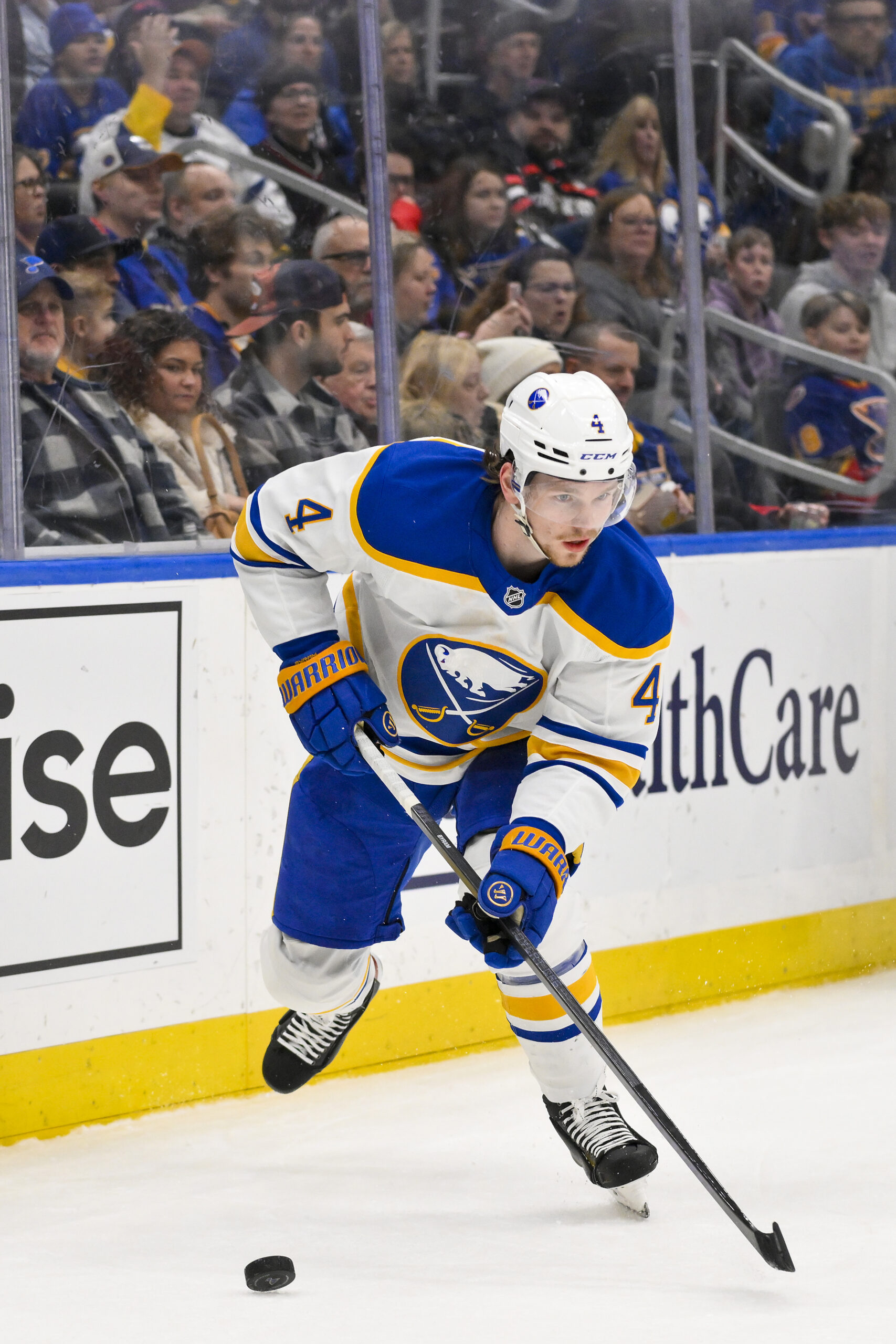
The Sabres made several short-term signings this summer, with one medium-term deal given to McLeod, who had a career year last season with 20 goals and 33 assists in 79 games. It was McLeod’s first year with Buffalo, and he translated his previously efficient production into tangible results, earning him a four-year extension. McLeod remains one of the fastest players in the NHL and is strong on both sides of the puck, serving as a penalty killer and a two-way center. His offensive skills are also very evident as he continues to be a good puck distributor and a solid transition player. The deal takes McLeod into his late twenties and offers him some security as he continues to develop his game.
The Sabres postponed a significant decision by signing Byram to a two-year deal. They might still choose to sign the defenseman to a long-term contract, but they could also decide to move him before this deal expires. Byram is a talented player who skates well, handles the puck, and sets up scoring opportunities for his teammates. He exemplifies the typical offensive defenseman. However, despite these skills, he hasn’t consistently produced strong results on the ice in recent years, having difficulty controlling play for both Buffalo and his former team, Colorado. His advanced analytics don’t reflect his perceived impact, highlighting a discrepancy between his skill and results. Byram continues to rack up points and likely will attract interest if he becomes available via trade. Still, the Sabres may not receive the offers they anticipate, and they may also be cautious about the long-term cost.
The Sabres chose a short-term deal with forward Quinn, signing him to a two-year bridge contract for a player who is clearly talented but has experienced injuries. Quinn had a productive final season in the OHL with the Ottawa 67s; however, his junior career was interrupted by the pandemic, which may have impacted his development along with those injuries. Quinn is a highly creative player capable of generating offense from nearly anywhere on the ice. His stats from last season seem solid at first glance, but a closer look shows he struggled to control play and also had issues with turnovers.
Departures
D Jacob Bernard-Docker (signed with Detroit, one year $875K)
D Connor Clifton (traded to Pittsburgh)
F Mason Jobst (remains unsigned)
F Sam Lafferty (traded to Chicago)
F JJ Peterka (traded to Utah)
G James Reimer (remains unsigned)
*-denotes two-way contract
The Sabres lost several players from their roster, most of whom were at the bottom of their lineup. However, Peterka was at the top of the lineup and was one of the better young players in the NHL last season, recording 21 goals and 37 assists in 77 games. Some might wonder why Buffalo would trade an offensive young player, but Elliotte Friedman reported in the summer that Peterka was unhappy in Buffalo, which probably prompted the move. Despite his talent, Peterka has his flaws. He mainly scores on the rush and needs to improve his overall offensive game, despite his high skill. His defensive efforts in Buffalo left much to be desired, and it will be interesting to see if he can elevate his play in Utah.
Clifton and Lafferty were both salary dumps for Buffalo, with Lafferty moving to Chicago and Clifton heading to Pittsburgh, along with a draft pick to facilitate the deal. Clifton is an eight-year NHL veteran who has never been an analytics favourite but plays a brutal and honest game. Although considered a defensive defenseman, Clifton did have some skill with the puck, even if it didn’t always show on the scoresheet. He faced some very tough assignments last year, which likely affected his metrics and probably contributed to his trade to the Penguins.
Lafferty was never a good fit in Buffalo and was sent back to Chicago. His speed and forechecking ability were expected to boost the Sabres’ bottom six, but his overall play left a lot to be desired, so he was moved on. Lafferty has always felt like he had more to offer an NHL team, which is maybe why Buffalo signed him to his current contract. Once they realized their situation, the Sabres opted to cut ties and move on to other players.
Salary Cap Outlook
The Sabres are in a surprisingly poor position regarding the salary cap, considering they have built a roster that is average at best and among the bottom 10 in the league at worst. The Sabres currently have only $2.45MM available under the salary cap, which is projected to be $9.57MM at the NHL Trade Deadline (as per PuckPedia). Their long-term cap situation isn’t dire, as they have 18 players signed for 2026-27 and nearly $22MM in available cap space. However, they will need to address forward Alex Tuch’s next contract and Kesselring’s new deal. Tuch is expected to earn just over $8.5MM annually on a seven-year deal, while Kesselring is projected to sign a three-year extension at $4.27MM per season (as per AFP Analytics). Combined, that would total $12.77MM annually, leaving Buffalo with less than $10MM to sign three more players, which opens the possibility of adding one impact player.
Key Questions
Can they finally make the playoffs?
It’s fair to say that when it comes to making the playoffs, the Sabres are long overdue. They have been in a constant state of rebuilding for the last 14 years, and while they came close to making the playoffs a few years back, they have mostly stayed at the bottom of the Eastern Conference. The team has some talented young players signed long-term, and eventually you have to believe they will make the postseason. However, considering the competition in the Atlantic Division, this doesn’t seem like the year they will end the streak.
Will they trade Owen Power?
Much of the trade chatter regarding Power has been precisely that, chatter. That being said, nothing feels more Buffalo than the idea of trading Power and then using the financial savings to lock up Byram long-term. That’s not to say that Byram is a terrible option, but to keep him as a mainstay over Power would be a disastrous decision. No one is saying that they will, but given the track record of the Sabres, I wouldn’t call it impossible either. Neither is trading Power, and while it would be a mistake to move the former first overall pick, you have to think that nothing is off the table in Buffalo.
Can Josh Norris stay healthy?
Norris is a terrific player when he’s healthy enough to play. However, so far in his career, that hasn’t been the case. Buffalo took a lot of risk when they acquired him from Ottawa at last year’s NHL Trade Deadline, giving up Dylan Cozens and a second-round pick in the process. They also received Bernard-Docker in the trade, but saying the results favour Ottawa is an understatement. The Sabres need Norris to be healthy and productive if they want to compete for a playoff spot, and so far, things don’t look promising.
Photo by Jeff Curry-Imagn Images
Summer Synopsis: Chicago Blackhawks
With the regular season now upon us, the bulk of the heavy lifting has been done from a roster perspective. Most unrestricted free agents have found new homes, the arbitration period has come and gone, and the trade market has cooled. Accordingly, it’s a good time to take a look at what each team accomplished over the offseason. Next up is a look at the Chicago Blackhawks.
The Blackhawks rebuild continues to chug along with Connor Bedard leading the charge. At this point, the Blackhawks’ deep prospect pool hasn’t yielded much NHL success, but given the depth of the system, it’s not unrealistic to think that upwards of 12-15 of their current prospects become NHL players in the next couple of years. That won’t do much for their fortunes this season, as the team may not be ready to compete for a playoff spot just yet, but make no mistake, they are trending in the right direction.
Draft
1-3 – F Anton Frondell, Djurgårdens IF J20 (J20 Nationell)
1-25 – RW Václav Nestrašil, Muskegon (USHL)
1-29 – F Mason West, Fargo (USHL)
3-66 – F Nathan Behm, Kamloops (WHL)
4-98 – C Julius Sumpf, Moncton (QMJHL)
4-107 – LW Parker Holmes, Brantford (OHL)
6-162 – D Ashton Cumby, Seattle (WHL)
7-194 – G Ilya Kanarsky, AKM Tula (MHL)
The Blackhawks made a total of eight draft picks this offseason, three of which came in the first round. Frondell was the third overall pick and projects as a top-line player with a floor of being a second liner. He is an explosive skater with an excellent shot and terrific offensive instincts. He has the build of a power forward, and while this is undoubtedly an advantage, it can slow him down when he is trying to get back to the defensive zone to defend the transition game. There are also concerns about his agility, which might affect his ability to defend.
Nestrašil was the Blackhawks’ second first-round pick and also projects as a potential power forward with a tremendous reach. Despite his size and reach, he can work effectively around the net and has soft hands, using them to create chances for himself and his teammates. He projects as a power winger and likely a second-line scorer who will need development to reach his full potential, particularly with his skating, which requires improvement in acceleration and agility. At the very least, he should be an NHL player given his skill set at this stage of his career.
With their final third first-round pick, the Blackhawks pick another potential power forward in West, who moves very well for a big man and has an exceptional skating stride. He has a fantastic shot and sees the ice exceptionally well. His ability to create open looks for his teammates should translate well to the NHL, particularly if he is paired up with scorers. While he has a lot of upside and could be a massive steal if he fully develops, he is seen as somewhat of a project, as his consistency and puck handling have some question marks.
Behm was a third-round selection and is also a forward on the bigger side. He, too, can get around the ice effectively but is more of a pure shooter. He could be a solid value pick in the middle of the draft if he can get better at playing a two-way game. His work away from the puck leaves a lot to be desired and could be what prevents him from becoming a complete player. There is a small contingent of scouts who see Behm as more of an offensive specialist rather than a two-way forward, which means he will need to display consistency in the scoring department to justify his regular spot in an NHL lineup. Niche offensive players can find roles in the NHL and certainly have significant value. Victor Olofsson of the Colorado Avalanche is a good example of that; however, when they go cold, it is pronounced and can be problematic.
Trade Acquisitions
LW Andre Burakovsky (from Seattle)
F Sam Lafferty (from Buffalo)
D Ryan Mast (from Boston)
The Blackhawks added some pace to their lineup by reacquiring Lafferty from the Sabres. The 30-year-old was signed as a free agent last summer by Buffalo, but he scored just four goals and three assists in 60 games during a disappointing season. The seven-year pro has never been much of an offensive producer, but he is a reliable fourth-line player who plays with energy, hits, and can kill penalties. Lafferty has often shown glimpses of being more of an impact player, but has never been able to break through and become a consistent contributor.
Chicago also acquired Burakovsky from the Kraken in exchange for Joe Veleno. The deal brought an underperforming forward to the Blackhawks, but one with a strong track record of scoring. The two-time Stanley Cup champion hasn’t lived up to his $5.5MM cap hit on the free agent contract he signed back in 2022, but he remains an effective player who should carve out a role in Chicago and generate points.
UFA Signings
C Ryan Donato (four years, $16MM)
D Matt Grzelcyk (one year, $1MM)
C Dominic Toninato (two years, $1.7MM)*
*-denotes two-way contract
^-denotes re-signing
The Blackhawks didn’t do much business in the free agent market this offseason, but they secured a key player before he could hit the market by signing Donato. The 29-year-old chose to stay in Chicago, passing up what could have been a more lucrative opportunity on the open market. However, considering the market’s unpredictability, Donato probably made the right decision by playing it safe and accepting a guaranteed payday. He doubled his most productive season, tallying 62 points in 80 games last year (31 goals and 31 assists), and even if he reverts to his career norms around 30-35 points, the contract wouldn’t be an overpay. Nonetheless, if he produces 50-60 points annually in the coming years, the $4MM AAV will be an absolute bargain.
Now, speaking of the market’s unpredictability, we have Grzelcyk, who was expected to get a multi-year contract this summer that would top $3MM per season. He didn’t come close to that figure, instead signing a PTO with Chicago before converting it to a one-year deal. It was a surprising outcome for a player who had a career-high in points last season and seemed destined for a decent-sized payday. His size and defensive play likely contributed to the lack of a market for his services, and Chicago was more than happy to step in and scoop him up at a bargain.
RFA Re-Signings
D Louis Crevier (two years, $1.8MM)
D Wyatt Kaiser (two years, $3.4MM)
G Spencer Knight (three years, $17,499,999)
F Frank Nazar (seven years, $46,199,937)
G Arvid Soderblom (two years, $5.5MM)
*-denotes two-way contract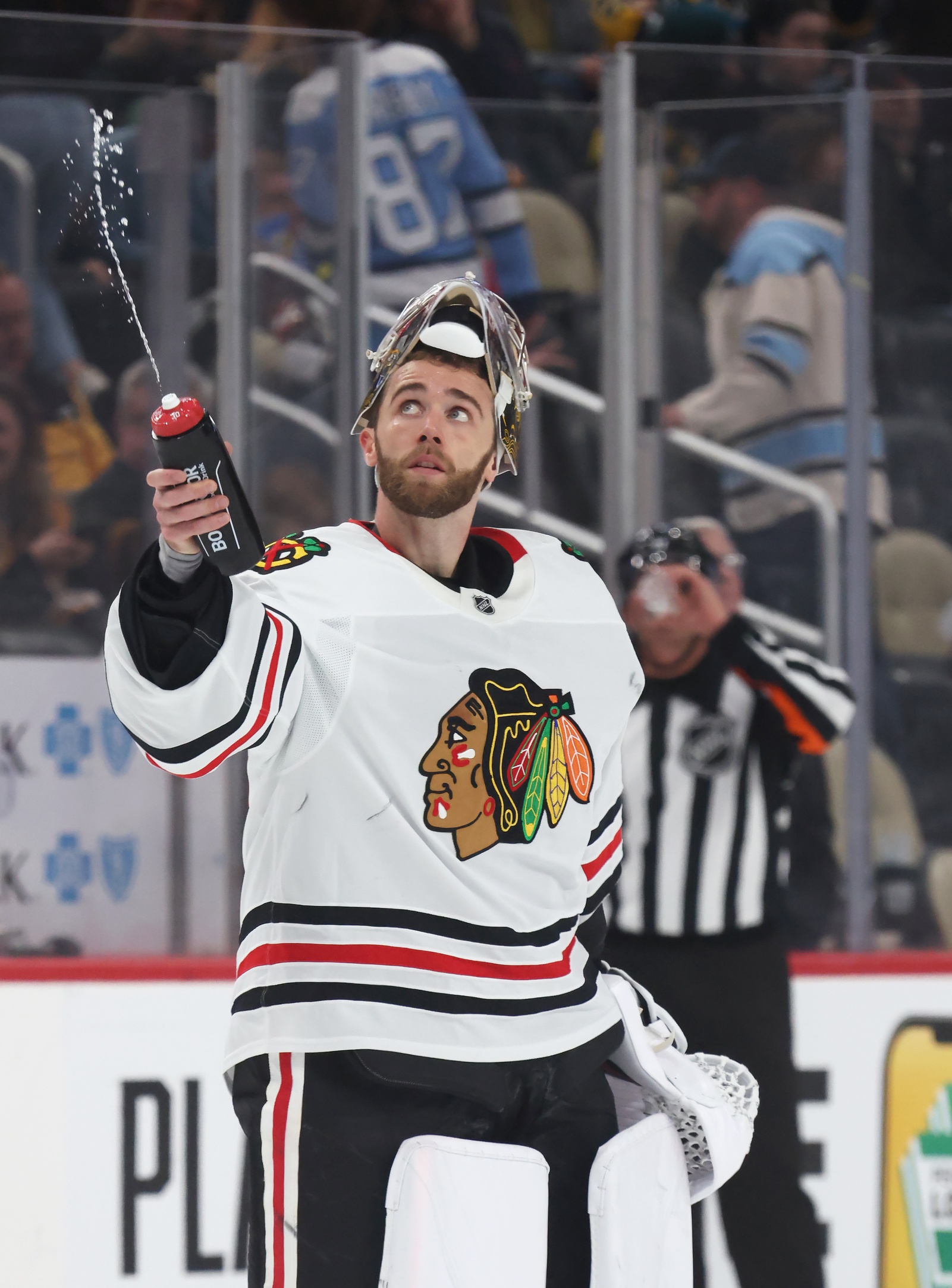
The Blackhawks chose to lock in a couple of players early, including Nazar and Knight. The Nazar contract was a risk, considering the 21-year-old had only played 56 NHL games before signing and hadn’t been a prolific scorer. Picked 13th overall in 2022, Nazar had a solid first full NHL season, posting 12 goals and 14 assists in 53 games. Although some of his underlying stats weren’t ideal, it was enough to persuade the Blackhawks to sign him long-term. There is significant risk on the Chicago side with this deal, but if he develops as they hope, it could be a massive win for the Blackhawks, especially with a rising salary cap.
Knight was also a 13th overall pick, and like Nazar, the Blackhawks re-signed him before he reached restricted free agency. The 24-year-old faced some setbacks early in his career but settled in last year after a midseason trade to Chicago and has been hot to start this year. Knight has good size and all the tools to be a star NHL netminder, and the Blackhawks are hopeful that the same is true so that they can see value in his three-year extension.
Departures
F Andreas Athanasiou (remains unsigned)
F Cole Guttman (signed with Los Angeles, two years, $1.55MM)*
F Philipp Kurashev (signed with San Jose, one year, $1.2MM)
F Pat Maroon (retired)
D Alec Martinez (retired)
F Aku Raty (signed in Finland)
LW Zach Sanford (signed in Switzerland)
*-denotes two-way contract
The Blackhawks didn’t add much this summer, but they didn’t really suffer many losses either, and most of the players who left will be replaced by young prospects moving up to the NHL. Maroon’s retirement was somewhat unexpected at the time. Still, his last two seasons showed a significant decline in his overall performance, so it wasn’t surprising that he decided to hang up his skates. He was a solid pro for many years, often taking well below market value to stay in advantageous positions, especially with the Tampa Bay Lightning. The sacrifice paid off, though; he won three Stanley Cups and leaves behind a career to be proud of. In the NHL, Chicago will miss his veteran leadership and the physicality he brought to the bottom of the lineup.
Martinez was another three-time Stanley Cup champion who retired at the end of last season. It wasn’t all that surprising, considering he was 37 at the time and had struggled to stay healthy in the later stages of his career. Martinez didn’t play an easy game, blocking numerous shots, killing penalties, and taking on complex defensive assignments throughout his career. He had a knack for playing alongside really good defensemen, finding chemistry with Alex Pietrangelo and Shea Theodore in Vegas, which might seem straightforward, but playing with offensively skilled defensemen can be pretty challenging due to the many odd-man situations that arise. Martinez had a terrific NHL career and left a veteran void in the Blackhawks dressing room similar to Maroon’s, but he didn’t leave much of a defensive void thanks to his level of play towards the end of his career.
Athanasiou, Raty, and Sanford weren’t significant losses to the Blackhawks’ depth since none of them managed to secure NHL jobs or stay in North America. Athanasiou remains unsigned, and there isn’t much news on him, so his future is unclear. However, he hasn’t looked like an NHL player for quite some time. Given the current NHL landscape and teams’ preference for developing younger players, Athanasiou might need to look overseas to continue his playing career.
Kurashev’s meteoric rise and fall were compelling to watch in Chicago, as the Blackhawks chose not to tender him, leading to his move to the Sharks. After scoring 54 points in 2023-24, his numbers plummeted last season, tallying just 14 points in 51 games. His underlying stats have never been impressive, and when he isn’t scoring on the rush or drawing penalties, his game is somewhat limited, which is why Chicago was comfortable moving on. Depending on his role, Kurashev could rise again, but his 54-point season now seems like an outlier—possibly the exception, as he hasn’t been a great fit in San Jose so far this season.
Salary Cap Outlook
The Blackhawks have just over $17.3MM in available cap space (as per PuckPedia), giving them the flexibility to make moves during the season if they choose to add or subtract from their roster as their season unfolds. The figure moves north of $71MM at the NHL Trade Deadline, which would be a remarkable sum if Chicago decided to go on a buying spree. Even if they don’t, that cap space could be used to take on bad contracts if other teams are eager to offload salary, potentially allowing Chicago to acquire more assets.
Key Questions
What will Connor Bedard’s contract extension look like?
Bedard’s contract talks will be interesting to follow. Many fans expected he would sign an extension this past summer, but nothing materialized. There are a few reasons why Bedard hasn’t signed yet; the most likely is that he and the team are weighing their options before finalizing an agreement. Bedard might be waiting to see the team’s direction and what he would be playing with in the long term, while the Blackhawks could be assessing their comfort level with terms and dollars. It’s challenging to know what both sides are thinking, but the deal will eventually be completed.
Will any young players step up?
As mentioned above, Chicago has an excellent prospect pipeline, but most of their key pieces have yet to reach the NHL. Make no mistake, reinforcements are coming to the Windy City, but the question is whether they will make that trip this season. Bedard and Nazar are already NHL players, supported by defensemen Artyom Levshunov and Sam Rinzel, both of whom are former first-round picks, with Levshunov being the second overall in 2024. Oliver Moore is another player making the jump, but the question remains: Who else is coming this year?
How will Knight perform full-time?
Knight’s talent is clear to anyone who watches him or evaluates his numbers. The skill is there, so the question becomes, how will he perform as a full-time NHL starter? Knight seems ready to seize the opportunity, and with a new extension signed, the Blackhawks are betting that he is prepared as well. Goaltending has been a concern in Chicago for some time, and they’ve had a revolving door of goalies for a decade. Knight securing the position and holding it would go a long way toward helping Chicago become a contender again.
Photo by Charles LeClaire-Imagn Images
Summer Synopsis: Colorado Avalanche
With the regular season now upon us, the bulk of the heavy lifting has been done from a roster perspective. Most unrestricted free agents have found new homes, the arbitration period has come and gone, and the trade market has cooled. Accordingly, it’s a good time to take a look at what each team accomplished over the offseason. Next up is a look at the Colorado Avalanche.
The Avalanche had a shocking end to their season this past spring and are looking to put it behind them and resume their quest for another Stanley Cup. The Avalanche aren’t mentioned in the upper echelon of NHL teams like they were a few years ago, but on paper, they are very much in the conversation. They don’t boast the depth that they used to, but their top six remains one of the strongest in the league, and they still have a top defensive pairing in Devon Toews and Cale Makar.
Draft
3-77 – D Francesco Dell’Elce, UMass (NCAA)
4-118 – D Linus Funck, Luleå HF J20 (J20 Nationell)
7-214 – F Nolan Roed, Tri-City (USHL)
The Avalanche didn’t have many picks this year, which is the result of doing business when you’re in the Stanley Cup window. With their third-round pick, Colorado chose an offensive defenseman who already moves like a pro and stays very calm under pressure. He has an excellent first pass and can lead the transition game with his skating and passing. You might wonder why he was drafted in the third round after reading that. Firstly, he’s an older prospect at 20. He’s also better with the puck than without it, suggesting that his defensive game could improve.
With their fourth-round pick, the Avalanche selected Funck from Sweden. The mobile defenseman is another good transition player, with a strong first pass and good ice awareness. He’s a solid defender and appears to transition smoothly from offense to defense, which might explain his significant jump of 36 spots in the spring rankings. While he has considerable potential, he may face some challenges. Funck is lean and will likely need to add strength to handle net-front battles and NHL forecheckers.
Expectations are rarely high for seventh-round picks, but there is a lot to like about Roed’s game. He can move around the ice with speed and plays a north-south style of hockey. He creates separation with his skating and remains poised under pressure when carrying the puck. While he performs well in open spaces, the biggest critique of Roed is that he struggles with physical contact and is easily knocked off the puck in board battles and net-front confrontations.
Trade Acquisitions
RW Gavin Brindley (from Columbus)
LW Danil Gushchin (from San Jose)
The Avalanche made a few trades this summer, with the Brindley acquisition aimed mainly at shedding the contracts of Coyle and Wood rather than Brindley, the player. The 21-year-old Brindley is a former second-round pick (34th overall) and is expected to see NHL action this season, even though he is undersized at just 5’8” and 173 lbs. The Avalanche lack a well-established bottom six, so they are open to giving young players in that role opportunities if they believe they can be long-term solutions.
Gushchin is another small player Colorado was willing to take a chance on. The 23-year-old, a former third-round pick (76th overall) in 2020, has been a consistent scorer in the AHL over the past three seasons. Gushchin had a lengthy stint in the NHL with San Jose, but he managed only one point in 12 games and wasn’t a significant presence. At 165 lbs, there are concerns that he might get pushed around in battles and easily be knocked off the puck. However, given his skill level, Colorado was willing to take the gamble on him.
UFA Signings
D Jack Ahcan (one year, $775K)*
D Ronald Attard (one year, $775K)*
C Alex Barre-Boulet (one year, $775K)
D Brent Burns (one year, $1MM)
C Parker Kelly (four years, $6.8MM)^
F Joel Kiviranta (one year, $1.25MM)
D Josh Manson (two years, $7.9MM)^
C Brock Nelson (three years, $22.5MM)^
F Victor Olofsson (one year, $1.575MM)
C TJ Tynan (one year, $775K)*
*-denotes two-way contract
^-denotes re-signing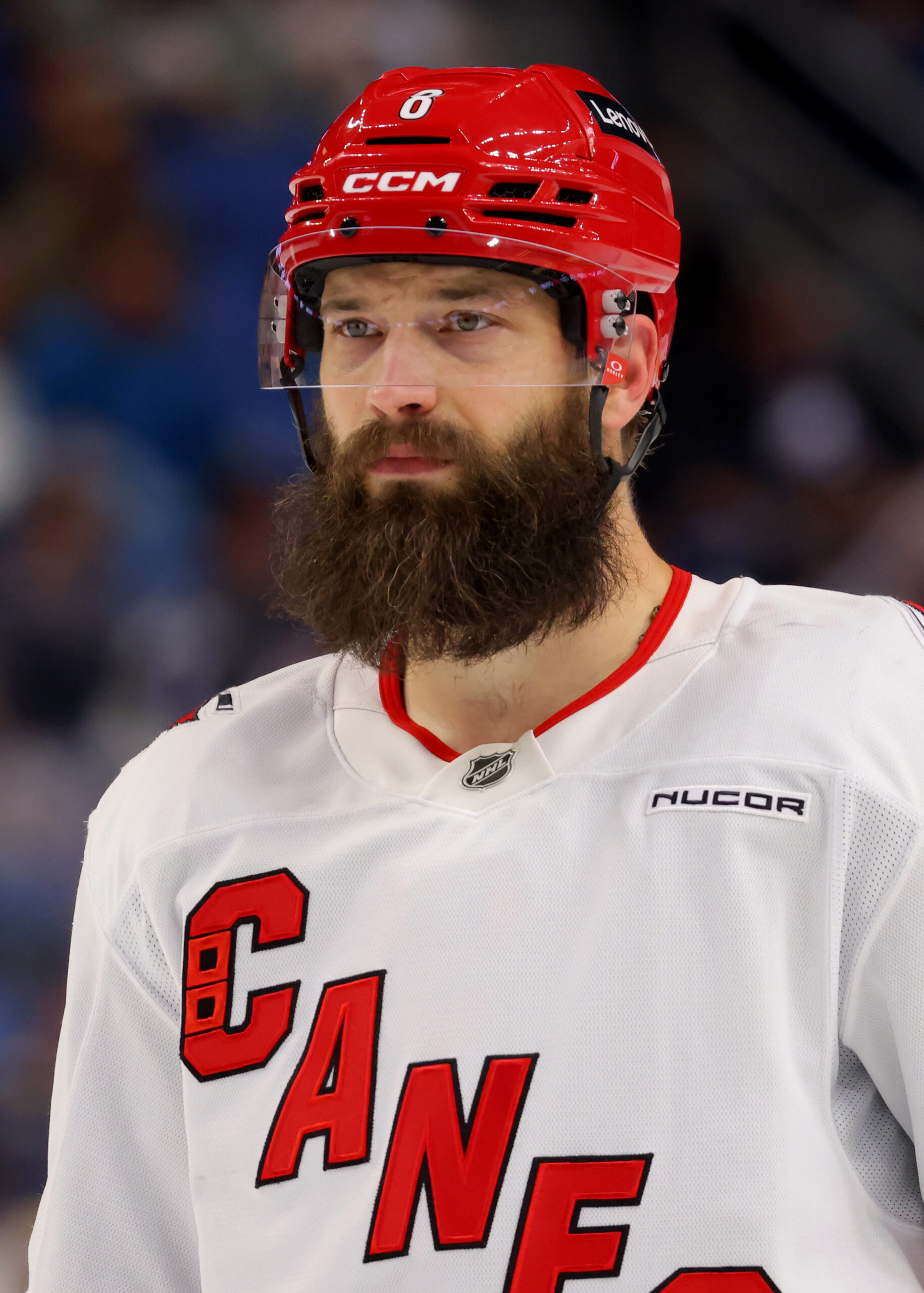
The most significant move for the Avalanche in free agency was re-signing veteran center Nelson, who fit well after joining from the New York Islanders at the NHL Trade Deadline. Spending $7.5MM annually on a 34-year-old is definitely a gamble, but given their position in the contention window, the signing makes sense for the Avalanche. It provided them with a second-line center and a reliable player driver, which they’ve been looking for since winning the Stanley Cup in 2022.
In terms of new faces, signing Burns to a one-year deal was a smart gamble even though he’s 40 years old. The former Norris Trophy winner remains a very effective offensive defenseman with his shot and passing still quite good, even if his skating isn’t what it used to be. Burns can’t log 26 minutes a night anymore, but he can probably handle around 20 minutes and still be effective, which is a steal for $1MM. It’ll be interesting to see how he performs in the later stages of the season, but it wouldn’t be shocking to see him finish with 30-40 points.
Olofsson is another intriguing addition who could have some upside in Colorado. The 30-year-old is a three-time 20-goal scorer who could reasonably reach a 40-point pace over an 82-game season. The problem with Olofsson has always been that if he hits a slump, he doesn’t do enough without the puck to secure a spot in an NHL lineup; however, last season, he disproved that notion by significantly improving his defensive play and posting excellent defensive numbers. It’s uncertain if he can keep this up, but only time will tell.
Finally, the Avalanche decided to re-sign veteran defenseman Manson for another two years. The 34-year-old is in his fifth season with the Avalanche and continues to be a defense-first defenseman who isn’t afraid to hit. Manson missed half of last season but reduced his penalties when he did play. His puck control was poor last year, as he was responsible for many turnovers in limited ice time. Right-shot defensemen are hard to find, and at the very least, Manson remains a third-pair defender.
RFA Re-Signings
F Danil Gushchin (one year, $775K)*
D Sam Malinski (one year, $1.4MM)
G Trent Miner (two years, $1.55MM)*
RW Jason Polin (one year, $775K)
C Matthew Steinburg (one year, $775K)*
*-denotes two-way contract
There isn’t much to comment on regarding the Avalanche’s RFA list from this past offseason. Malinski is essentially the only RFA who could make an impact at the NHL level this season. The 27-year-old is a bit small, but he’s swift and isn’t afraid to use his skills to create plays with the puck. Malinski is clearly talented with the puck on his stick, and he’s willing to jump into the play from the point or lead the team in transition. This upcoming season is crucial for Malinski as he aims to break into Colorado’s top four.
Outside of Malinski, the remaining RFAs re-signed and will spend most of their time in the AHL. Gushchin might get a look at the NHL level given his skill set, but with his size, it’s hard to see him getting an extended opportunity.
Departures
F Charlie Coyle (traded to Columbus)
F Jonathan Drouin (signed with Islanders, two years $8MM)
D Erik Johnson (retired)
D Ryan Lindgren (signed with Seattle, four years $18MM)
D John Ludvig (signed in Czechia)
D Calle Rosen (signed with Washington, one year $775K)*
D Devante Stephens (signed in Austria)
F Miles Wood (traded to Columbus)
*-denotes two-way contract
The Avalanche’s forward group suffered significant losses this offseason as Coyle, Wood, and Drouin moved on. This causes pressure on the team’s bottom six, which will look quite different this year. Whether that turns out to be a good thing remains to be seen, but currently, several questions surround the team’s fourth line, specifically regarding Zakhar Bardakov and Brindley. Parker Kelly is an established player on that fourth line and is likely to serve as a mentor to the other two as they work towards becoming regular NHL players.
Bardakov has good size and could bring a bit of a power-forward feel to the fourth line. He doesn’t have a long history of scoring, but last season he was a solid depth scorer in the KHL, recording 17 goals and 18 assists in 53 games. The 24-year-old was a seventh-round draft pick and isn’t highly touted, but if he can competently fill the fourth line role for Colorado, it would check off one of their shopping list items and provide a solid return on that late-round pick.
On the defensive end, the most notable loss was Lindgren, who bolted to Seattle on what can best be described as an overpayment. Lindgren has traditionally been a decent middle-pair option, but he was a disaster last year in New York with the Rangers and damaged many of his partner, Adam Fox’s, numbers. He was moved at the deadline to Colorado, where he posted arguably the worst results of their entire defense core. Colorado could have probably received better results from the player they traded for Lindgren (Calvin de Haan) and correctly moved on during the off-season. That’s not to say Lindgren is a bad player by any means, but for $4.5MM annually, Colorado could find a better fit.
Former first overall pick Johnson also retired after playing 1023 NHL games. The 37-year-old split his time between Philadelphia and Colorado, performing respectably with the Avalanche, though a 101.3 PDO helped him. It seemed like he might continue his career this season, but ultimately, he chose to hang up his skates. For Colorado, Johnson isn’t a significant loss, as they have plenty of options to fill the role he played last season in his limited time.
Salary Cap Outlook
The Avalanche are close to the salary cap, but isn’t in the worst position with just over $1.1MM available currently (as per PuckPedia). That figure multiplies to $4.665MM at the NHL Trade Deadline, meaning the Avalanche can add an impact player without needing to shed salary and could even acquire a player with a cap hit above $8MM if the other team is willing to retain. Next summer, the Avalanche will once again face a cap crunch with just under $27MM available and 14 players signed. One of their free agents is forward Martin Necas, who could consume more than one-third of that remaining cap space, indicating a summer squeeze once again in Colorado.
Key Questions
Do the Avalanche have another deep playoff run in them?
The Avalanche don’t have a perfect roster, and no NHL team does in a salary cap world. As mentioned earlier, there are question marks on the lower tiers of their roster, but the top end remains elite, giving them a chance for a deep playoff run unless significant injuries occur. A concern for the Avalanche in the Central Division is that they could face either the Dallas Stars or Winnipeg Jets in one of, if not both, of the first two rounds of the playoffs, and those teams are also top-tier NHL clubs.
How will Mackenzie Blackwood perform for a whole season?
Blackwood performed exceptionally well after joining the Sharks in a midseason trade. His performance was so impressive that it prompted the Avalanche to sign him to a long-term extension. It was somewhat risky, considering the early struggles Blackwood faced in his career, but the Avalanche are betting that last year’s version of Blackwood is the one they’ll see moving forward. It’s a significant gamble; some might say they are staking their Stanley Cup hopes on him because if he falters, they won’t have much cap space left to find a suitable replacement. While that might be a bit of hyperbole, Blackwood’s play could indeed be a key factor in where the Avalanche finish the season.
How will Gabriel Landeskog perform full-time?
It’s been four years since Landeskog began the regular season in October, having missed three full seasons before returning last year for the playoffs. The 32-year-old played well in five games, scoring a goal and adding three assists before the Dallas Stars eliminated the Avalanche in the first round. It was an incredible comeback, one that seemed impossible at one point. Now, with the calendar turned back to the regular season, it will be interesting to see how many games Landeskog plays this year and how effective he will be as the season goes on. He’s off to a slow start this season, but if Landeskog has taught us anything, it’s not to underestimate his grit.
Photo by Timothy T. Ludwig-Imagn Images
Summer Synopsis: Columbus Blue Jackets
With the regular season now upon us, the bulk of the heavy lifting has been done from a roster perspective. Most unrestricted free agents have found new homes, the arbitration period has come and gone, and the trade market has cooled. Accordingly, it’s a good time to take a look at what each team accomplished over the offseason. Next up is a look at the Columbus Blue Jackets.
The Blue Jackets were a heartwarming story last year after being underestimated, as they made a playoff push before narrowly missing out. The team improved by 23 points from the previous year, and while they likely won’t see that same jump again, only a slight improvement is needed to make the playoffs. Such progress boosts internal confidence, but it also raises expectations for the group, which could add pressure for the young players to handle.
Draft
1-14 – D Jackson Smith, Tri-City (WHL)
1-20 – G Pyotr Andreyanov, Krasnaya Armiya Moskva (MHL)
3-76 – D Malte Vass, Färjestad BK J20 (J20 Nationell)
5-160 – F Owen Griffin, Oshawa (OHL)
6-173 – D Victor Hedin Raftheim, Brynas (SHL)
7-198 – F Jeremy Loranger, Sherwood Park (BCHL)
The Blue Jackets drafted Smith with the 14th overall pick and are hoping that he fills out and can continue to develop on the defensive side of his game to become a top-four defenseman. Smith is a natural athlete and a very talented skater who could become a two-way defender at the NHL level. He has good patience with the puck and shows a lot of good instincts on the offensive side of the game. Defensively, his gap control and defensive instincts need some work, but if the Blue Jackets are patient in his development, he should be an NHL defenseman.
With their second first-round pick, the Blue Jackets drafted a goaltender. There’s a lot to like about Andreyanov, who has been dominant in the MHL thanks to his athleticism and tracking skills. Andreyanov is aggressive in the crease but stays calm under pressure, making tough saves look easy. He’s not very tall at 6’1″, which could limit his potential, but it’s not completely disqualifying. Goaltenders are hard to predict, which makes taking one in the first round a gamble, but for a team that has struggled to develop goalies, it’s a worthwhile risk for Columbus.
The Blue Jackets selected another defenceman in the third round, choosing Vass from Sweden. The stay-at-home defender isn’t flashy, but he plays with high energy, can hit, block shots, and kill penalties. He has solid instincts in the defensive zone and effectively defends in front of the net, which should make him a favorite among his goales. His skating might be an issue in the NHL, but if he can improve there, he could become an NHL regular.
Trade Acquisitions
F Charlie Coyle (from Colorado)
G Ivan Fedotov (from Philadelphia)
F Brendan Gaunce (from Minnesota)
F Miles Wood (from Colorado)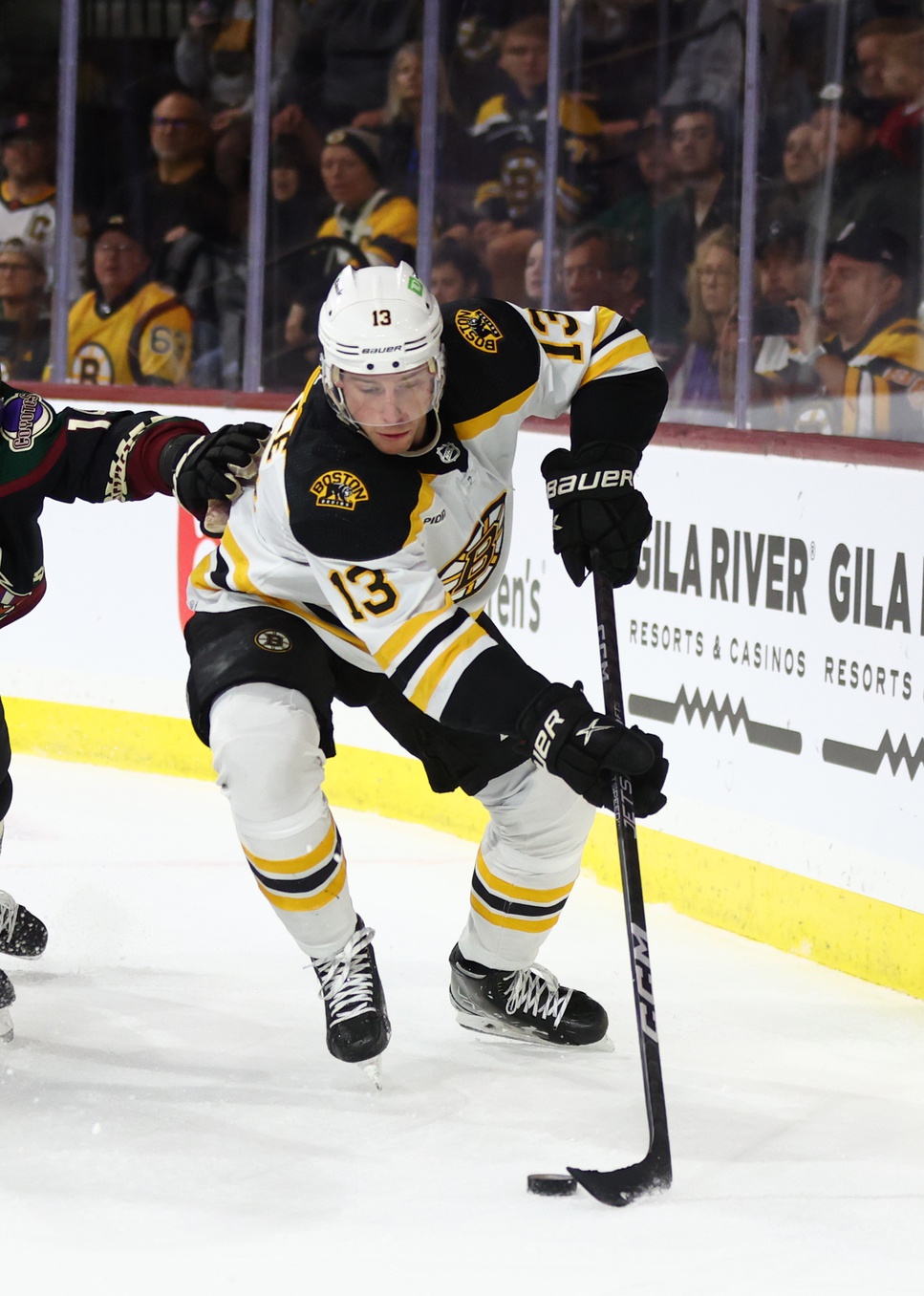
The Blue Jackets acquired both Coyle and Wood from the Colorado Avalanche in what was essentially a cap dump. Columbus was more than happy to add the two veterans to their roster and can now slot them in alongside their young up-and-comers. Coyle is a solid middle-six forward who isn’t afraid to go to the net or get physical. While his defensive impact isn’t significant, he possesses good offensive instincts and some skill to back it up. He is in the final year of a six-year contract and is counting $5.25MM against the salary cap. Based on his level of play, Coyle is expected to get a slight raise in free agency next summer, with AFP Analytics projecting him to earn a three-year deal worth $5.28MM.
Wood was a more long-term acquisition since he still has three years remaining on his contract after this season at $2.5MM annually. Wood is a bottom-six player and won’t score many goals; he’s also not exactly an analytics darling, but he has endured pretty tough deployments for much of his career. On the positive side, the 30-year-old skates with a lot of pace and is a strong forechecker. The length of his original contract (six years) that he signed with Colorado was a bit of a head-scratcher, and it was no surprise to see the Avalanche cut ties this summer.
Columbus acquired Fedotov to serve as backup for Jet Greaves and Elvis Merzlikins. The Blue Jackets clearly had worries about their goaltending entering this season, and although Fedotov has some flaws, he provides Columbus with a third option.
UFA Signings
F Hudson Fasching (one year, $775K)*
D Dysin Mayo (one year, $775K)*
D Christian Jaros (one year, $775K)*
F Isac Lundestrom (two years, $2.6MM)
F Owen Sillinger (one year, $775K)*
*-denotes two-way contract
The Blue Jackets didn’t make much noise in free agency, opting to sign depth players and make trades for players like Coyle and Wood. Fasching faced a lot of bad luck last year and is a reasonable gamble on a two-way contract. He probably won’t score much and may not see much NHL ice time, but since the risk with his contract is minimal, Columbus thought it was worth taking a chance. He’s 30 years old, so at this point in his career, he’s unlikely to surprise anyone, but he makes a decent, versatile option in Columbus and will likely be used as such.
Lundestrom is another worthwhile gamble given the low cost to acquire. He isn’t likely to make a significant impact offensively, which is a generous way to describe his scoring contributions. He has one season with 16 goals, but it’s unfair to expect him to post more than 20 points a season. He plays with a lot of pace and can play center, but his faceoff skills aren’t great, and his underlying numbers are an eyesore. Columbus hopes that a change of scenery can help the 25-year-old unlock more in his game, but it seems like wishful thinking at this point. Again, the cost is low, and having speedsters in the bottom six never hurts, so we’ll see if this works out for the Blue Jackets.
RFA Re-Signings
D Daemon Hunt (one year, $775K)*
D Mikael Pyyhtia (one year, $775K)*
F Dmitri Voronkov (two years, $8.35MM)
F Hunter McKown (one year, $800K)*
*-denotes two-way contract
The Blue Jackets only signed one notable RFA in Voronkov, who is still developing towards his NHL potential after a solid season last year that saw him score 23 goals and 24 assists in 73 NHL games. The 25-year-old is under contract for two more years, and if he continues to improve, he might cash in during the summer of 2027. Voronkov is big and skilled, with pretty good hands for a player who can play a remarkably rugged style. He certainly looks the part of a top-six forward, and if he can work a bit on his mobility and consistency, he could become a regular 60-point player.
It seems Voronkov will see plenty of first-line minutes this season, including significant time on the top-unit power play, which should help him continue to build his value in the first year of his new contract. If all goes well this year, Voronkov could very likely sign a big multi-year deal next summer.
Departures
F Justin Danforth (signed with Buffalo, two years $1.8MM)
F Christian Fischer (retired)
D Jordan Harris (signed with Boston, one year $825)
D Jack Johnson (unsigned free agent)
F Luke Kunin (signed with Florida, one year $775K)
D Sean Kuraly (signed with Boston, two years $3.7MM)
F Kevin Labanc (signed in KHL)
F James van Riemsdyk (signed with Detroit, one year $1MM)
G Daniil Tarasov (traded to Florida)
F Trey Fix-Wolansky (signed with New York Rangers, one year $775)*
*-denotes two-way contract
The Blue Jackets didn’t experience any significant losses this past summer, mostly losing depth players through free agency. One of the more effective players Columbus lost was van Riemsdyk. His exit was a bit surprising since he was a good fit and was very valuable in limited minutes last season, recording 16 goals and 20 assists in 71 games. While no one will mistake JVR for a speedy skater, he remains an effective net-front presence and is expected to score around 0.5 points per game while playing about 12 minutes each night.
Kuraly was another more well known player who left Columbus. The 32-year-old won’t put up many points, with just six goals and 11 assists in 82 games last season, but he will make an impact and often faces tough zone starts. Kuraly has only surpassed 30 points once in his career, but in Boston, he will probably play fourth-line minutes most of the season unless the team suffers major injuries. He isn’t a significant loss for the Blue Jackets and was one of several low-scoring forwards Columbus let go this offseason.
Speaking of low-scoring forwards, Kunin left the Blue Jackets this summer and found that the demand for his services as a free agent was tepid at best. The Blue Jackets acquired the 27-year-old at the NHL Trade Deadline, sending a fourth-round pick to the San Jose Sharks in the deal, which, in hindsight, was an overpay. Kunin’s contributions were relatively limited in 12 games with the Blue Jackets; he registered no points and was a -4. He did throw 24 hits during that time, but didn’t leave enough of an impression to warrant a longer look. With Florida, Kunin won’t be asked to do too much and should settle into a fourth-line role where he can play to his strengths.
Goaltender Tarasov will join Kunin in Florida after being traded to the Panthers for a fifth-round pick. The Blue Jackets did well to get anything for the goalie, as they were likely to non-tender the 26-year-old. Tarasov has been below league average during his brief NHL career, but has shown signs of being a dependable backup, which is what the Panthers are counting on. He will back up Sergei Bobrovsky, whom he idolized growing up, creating an interesting dynamic this season and offering Tarasov some comfort and motivation. He has good size and mechanics, and now he has a chance to put everything together behind a much stronger team.
Salary Cap Outlook
The Blue Jackets enter the season with just under $15MM in available cap space, which roughly amounts to $65MM at the NHL Trade Deadline. While it’s unlikely they’ll use all of that, they will certainly retain flexibility whether they’re in contention or not. Columbus is positioned well for the long term, as it’ll have plenty of room to re-sign Cole Sillinger next summer.
Key Questions
How will the goaltending perform?
Jet Greaves seems to be on the verge of becoming a solid NHL starter, and the Blue Jackets need that. Columbus hasn’t had reliable goaltending since 2021-22, and although Greaves has shown above-average performance in the last three seasons, his sample size is small. Heading into this season, Greaves has appeared in 21 NHL games, with a .924 SV% and a 2.62 GAA, along with a 10-9-2 record. The limited sample size makes it hard to judge, but it will be interesting to see how he performs over a full NHL season. If he can keep up these numbers in 40-50 games, the Jackets could stay in the playoff hunt for much of the year.
Will the young core step up?
Columbus has a group of talented young players on the verge of NHL stardom. Kirill Marchenko, a sizable forward, has consistently improved over his three NHL seasons and nearly reached a point-per-game pace last year with 74 points in 79 games. If he continues to develop this season, he could become an 80–90-point scorer.
Besides Marchenko, the Jackets have Kent Johnson, Adam Fantilli, and Voronkov, who all scored around or over 50 points last season. If each of those players takes another step, the Blue Jackets could improve on their seventh-ranked offense from last season.
Is the defense good enough?
The Blue Jackets know what they have in Zach Werenski and Ivan Provorov, but beyond that, they face many questions. Damon Severson has been a disappointment since signing a big deal in the summer of 2023, Jake Christiansen and Denton Mateychuk are still figuring out how to be regular NHL players, and Dante Fabbro was a waiver wire pickup less than a year ago. It’s a strange mix, and one that could leave many questions that will be answered over the next six months.
Photo by Mark J. Rebilas-USA TODAY Sports