
Much has been said about the Maple Leafs’ decline this season, and rightly so. The team has shifted from a serious Stanley Cup contender just three years ago to a potential lottery pick this year.
Along the way, several targets have drawn criticism from Leafs fans and the media alike. From former head coach Mike Babcock to ex-GM Kyle Dubas and current captain Auston Matthews, no one has escaped the fans’ wrath or the media glare.
Still, amid all the turmoil, it’s unclear what specific factors brought about the end of an era that started with great promise and finished with a whimper this season.
Noticeably missing from the paragraph above is the name Brendan Shanahan, the man who sparked this entire era from the moment he was hired in April 2014. Shanahan was appointed president and alternate governor at the time and oversaw all Maple Leafs operations.
Some may forget, but back then, questions arose about whether Shanahan had the experience for such a role. Fair or unfair, those questions were valid since he was only five years removed from his last NHL game and lacked prior executive experience with an NHL team.
Shanahan did have executive experience, working at the NHL’s head office after his playing career. He was hired in December 2009 as the league’s vice president of hockey and business development and served in that role for just over a year before succeeding Colin Campbell as the senior vice president in June 2011.
Much of Shanahan’s role involved issuing suspensions for illegal hits and plays, and Shanahan modernized this system by introducing videos in which he narrated the plays in question. While this was relevant experience for an executive role in an NHL club, it is fair to question whether Shanahan had the appropriate experience to make management, coaching, and player personnel decisions and oversee the entire operation.
Ultimately, Shanahan was responsible for many of the key figures involved in this era of Maple Leafs hockey. Shanahan brought in figures like Babcock, Dubas, Lou Lamoriello, and eventually Brad Treliving. These men played major roles in shaping the team, from the coaching staff to the backup goaltender.
It’s impossible to know who made the final decisions on every move, but since Babcock, Dubas, and Lamoriello all exited at different times, it’s fair to say Shanahan held the overall authority and was accountable for nearly everything that occurred under his leadership.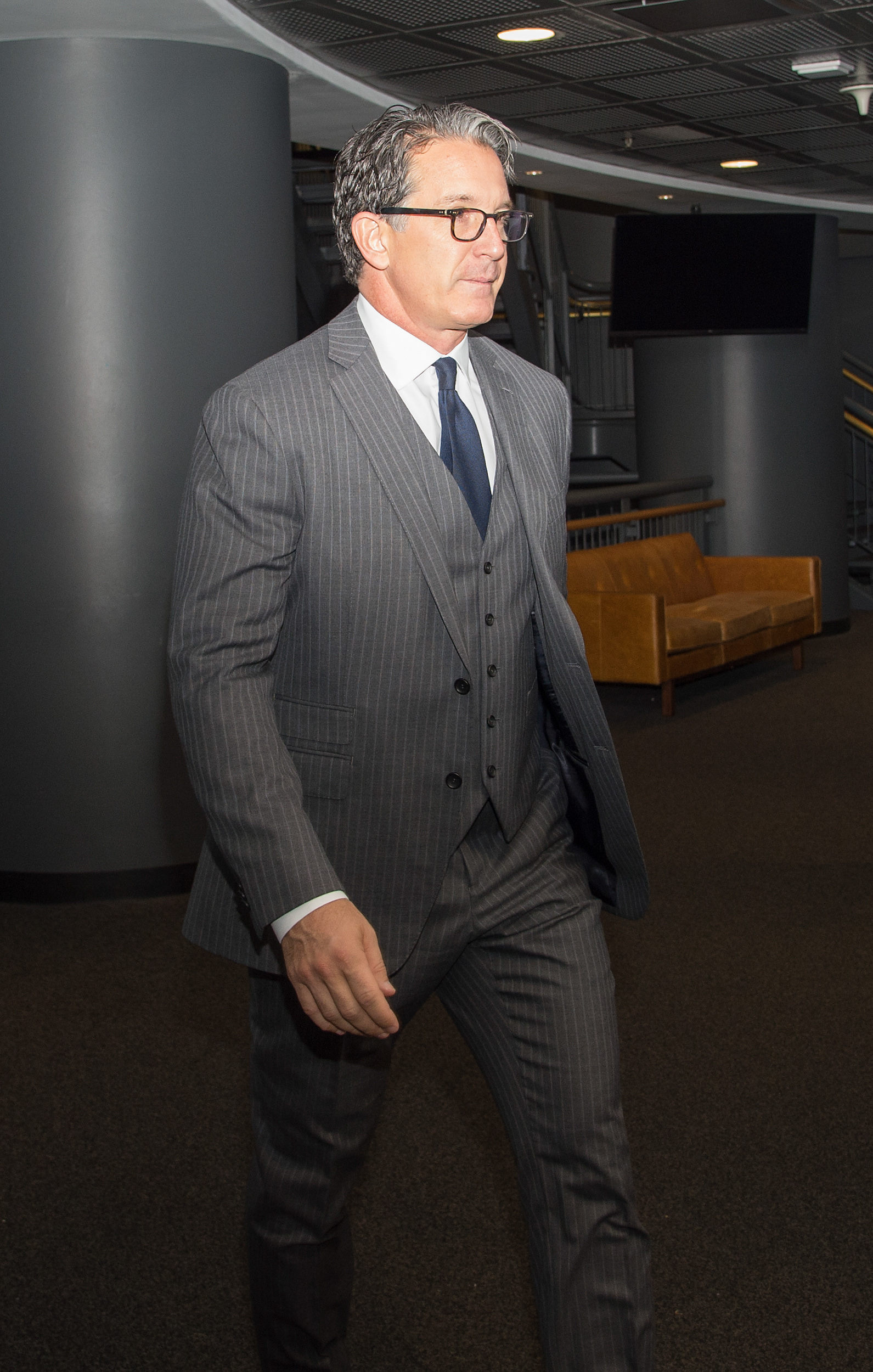
So, what actions did Shanahan take when Lamoriello was in charge? There were certainly some good and bad decisions, but overall, they didn’t lead to the downfall this piece suggests.
Lamoriello attached the Maple Leafs to some problematic contracts during his time as general manager. Nikita Zaitsev received a seven-year, $31.5MM extension that proved disastrous and led to his trade, along with forward Connor Brown.
Patrick Marleau was signed as a free agent to a three-year deal worth $6.25MM per year. Toronto had to trade Marleau’s contract along with a first-round pick in 2019 because of salary-cap pressure.
There was also a four-year deal for veteran forward Matt Martin at $2.5MM per season, another far-from-ideal contract that took up valuable cap space. Although these contracts weren’t great and cost assets to unload, none of this was catastrophic, and Lou was out of Toronto before any serious damage was done.
Moving on from Lamoriello to Dubas, much of his work has been criticized as the downfall of the Maple Leafs. Dubas became a popular target for Maple Leafs fans, blamed for the decline of this era of hockey in Toronto.
It’s hard to judge if these criticisms are fair, considering we don’t know how much power Dubas actually held or how much veto power Shanahan exercised. It’s also fair to look at Dubas’ record in Pittsburgh and wonder if he learned from his mistakes in Toronto or if he is now benefiting from full autonomy in his new role with the Penguins.
But was the Dubas era in Toronto really that bad?
Dubas was responsible for the large contracts awarded to the Big Three after their entry-level deals expired. He signed William Nylander to a six-year deal, Auston Matthews to a five-year contract, and Mitch Marner to a six-year agreement. He also signed UFA John Tavares to a seven-year, $77MM deal, which many felt was unnecessary because it led to the departure of fellow center Nazem Kadri, who was traded to the Colorado Avalanche in a move that didn’t work out for Tyson Barrie.
The Kadri trade is probably the biggest blemish on Dubas’s resume, although some fans might argue that other moves by Dubas, such as the Morgan Rielly extension, the Petr Mrazek signing, and the subsequent trade that saw Toronto give up a first-round pick to rid itself of his contract, are also questionable.
Signing the big four essentially meant the Maple Leafs had to spend nearly $40MM of their cap space on four players, and there is a fair argument that this forced Dubas to tighten the budget elsewhere on the roster. While that’s true, Dubas managed to find affordable depth over the years, with Michael Bunting being a good example.
There was also significant criticism of Dubas’ handling of several trade deadlines, during which he traded away many assets for short-term rentals. Despite these additions late in the season (such as Ryan O’Reilly, for example), Toronto was never able to get past the second round, and in most cases, they couldn’t win a single series.
While this isn’t entirely Dubas’ fault, he bears most of the criticism, since it was technically his decision to go all-in at these deadlines. He also left the Maple Leafs with many assets missing when he was dismissed.
Without delving too much into the drama surrounding Dubas’s departure, it seemed to be something that wasn’t part of Shanahan’s plan and ultimately led to the hiring of Treliving as general manager. Despite some of the flaws on Dubas’ résumé, it was difficult to argue at the time that moving to Treliving was an upgrade for Toronto. Treliving had just left his role as GM in Calgary, leaving the Flames with an aging, costly core that wasn’t a playoff team and needed a rebuild.
Treliving arrived in Toronto and enjoyed a fairly good first summer with the Maple Leafs as he signed Max Domi and Tyler Bertuzzi to one-year contracts. These moves provided the Maple Leafs with some flexibility, but that suddenly diminished when Matthews signed a four-year extension in August 2023, making him the NHL’s highest-paid player at that time with a $13.25MM AAV.
A few months later, Treliving managed to sign Nylander to an eight-year deal worth $92MM. This was the first time the Maple Leafs had secured a member of the original Big Three with a maximum-length contract. Neither of the contracts for Matthews nor Nylander was particularly egregious; however, they fully committed Toronto to this core, a group that had not reached the third round of the playoffs.
Treliving didn’t do too badly in the UFA market, although signing Domi to a four-year extension after his first season in Toronto was a risky move that hasn’t worked out. Another tough contract to evaluate now is the six-year deal with defenseman Chris Tanev, which still has four years remaining after this season.
Those two deals essentially committed Toronto to $8.25MM in salary for two veteran players whose best years are behind them. This pattern reflects a tendency Treliving has often shown throughout his career as a GM.
Treliving’s first two seasons with Toronto were mostly decent, as the Maple Leafs made the playoffs and even won the Atlantic Division in 2025. The pivotal moment in his tenure occurred in the summer of 2025 when it became evident that Marner was planning to leave Toronto.
The star forward headed to Vegas, and although Treliving managed to acquire Nicolas Roy in a trade for Marner, what followed revealed a GM who was unprepared for the situation. Treliving’s moves after Marner’s departure didn’t make a significant difference and did little to replace the scoring loss.
Dakota Joshua, Matias Maccelli, and Roy were brought in, and it was assumed these three could fill Marner’s scoring gap. He couldn’t have been more wrong. Not only did they fail to replace Marner’s scoring, but they also left the Maple Leafs with a roster that was ineffective defensively.
Now, Treliving is left in Toronto as the de facto last man standing from a management regime that will likely be criticized for decades for squandering a golden opportunity to bring a Stanley Cup to Toronto. Folks will point fingers and blame the hierarchy from Shanahan to the backup goaltender, but the truth is this: The Maple Leafs’ downfall was not immediate; it was built on bad hires, bad trades, bad signings, and bad bets.
While it’s hard to narrow ten years down to one defining moment, there is a key two-month period that occurred in 2023.
The two moments that stand out as the beginning of Toronto’s decline are the firing of Dubas in May 2023 and Mitch Marner’s no-move clause kicking in on July 1, 2023. It’s long been speculated that Dubas wanted to reshape the Maple Leafs roster if he remained in the GM role, but he was fired before he could do so, and Toronto let Marner’s no-move condition trigger in his contract.
Dubas’ firing led to the hiring of Treliving and to the recent three seasons of moves in Toronto (including Marner’s departure). Now, most people will compare Treliving’s record to Dubas’s and claim Treliving has been more successful as a GM.
However, Dubas inherited a complete mess in Pittsburgh, as the Penguins were old, stagnant, in cap trouble, and lacked prospects. Treliving, on the other hand, inherited a top team in the Eastern Conference and kept it competitive for two seasons. It’s an apples-to-oranges comparison between Dubas and Treliving; however, one crucial fact remains: Dubas put the Penguins on the upswing, while Treliving has overseen the Maple Leafs’ decline.
Then there is Marner, who was never traded until the summer of 2025, and fetched only Roy in return for the Maple Leafs. Losing a top NHL player and failing to recoup the asset were major cases of disastrous asset management.
Sure, the Maple Leafs got two extra years of Marner, but not trading him in 2023 would have allowed them to acquire a haul of players back then and give Matthews, Tavares, and Nylander more depth.
That eight-week period in the spring of 2023 was a turning point, and for Maple Leafs fans, it’s hard not to look back and wonder what would have happened if Dubas had stayed in Toronto and Shanahan had been the one to depart.
We’ll never know, and for Maple Leafs fans, it doesn’t do any good to speculate; the era is over, and what comes next is unknown.
Photo by Nick Turchiaro-USA TODAY Sports
“ We’ll never know, and for Maple Leafs fans, it doesn’t do any good to speculate; the era is over, and what comes next is unknown.” And yet the writer just speculated with no clear opinion…
Leafs fall stems from the lack of leadership both on the ice and off. Mainly on. Further once they took the C from Tavares and gave it to AM, the end was nigh. AM couldn’t lead a horse to water.
Agreed on Matthews being a poor fit as captain. In a pressure-cooker media environment like Toronto they really need an ice general with an iron spine & ability to motivate the troops. It’s obvious they don’t have that guy right now.
Well, he was the C for Gold Medal Team USA. 🤷♂️
Now all Toronto has to do is trade for Hellebuyck
Gbear
You keep beating that drum but that is a misinformed take.
ANYONE can be Captain of a TEAM of Captains.
Matthews wore the C. He didn’t lead that team!
@kodion that is quite the take- it could’ve been anyone? But it wasn’t.
So the coaches and players on Team USA who wanted Matthews to be Captain were all foolish?
Now that’s a misinformed take.
@gbear. Being a captain of a team made up of all stars in a short tournament is far different than dealing with an 82 game + season with all its ups and downs.
He wasn’t a bad, or incorrect, choice. And certainly a sign of respect that he deserves …when he plays for the U.S.A. It is just that, on that team, playing for their country, the C was much more symbolic than it (usually) is in League play.
He wears the Leaf C but he doesn’t play up to it the way he does in the international game.
@Mtog – Don’t you think a guy like Berube would make a switch for captain if he thought AM wasn’t up for the position? And do you think if Taveras were still wearing the C that the Leafs would be playing better hockey?
@gbear. No he wouldn’t. That decision, as
much as they’d say it wasn’t, came from the higher ups. Also how would AM feel having been given the C and then taken away and given back to the guy who had it previously? That would be an even bigger slap in the face. Although of it caused AM to demand a trade out of town, I’d do it tomorrow and give the C to Benoit LOL.
And I can’t say if they would or wouldn’t be better if JT had the C. I do know the did play better when he had it….
The captaincy is an old, And tired narrative, Every player in the locker room carries themselves in a way that reflects leadership, On, And off the ice, The captaincy is WAY overrated, And, Not really necessary.
Mtog – You know for a fact that decision came from the higher ups? Maybe the reason is that it wouldn’t make a difference either way.
@gbear. You think the players voted to take it away from JT and give it to AM? Really? You think Berube would’ve done that? This was another dumb move by Treliving.
When were the Maple Leafs serious contenders?
I think that depends on how you define contender. They had a few fine years where they just bounced out in the 1st or 2nd round. They probably could have kept going if they just had better luck. I find Maple Leafs fans to be like NY Yankees, both horrible and unrealistic with expectations
How is it an unrealistic ask that for the near 10 years they had the core 4 to go beyond the 1st round more than 1 time
Marner not waiving his NTC set this in motion. Getting Rantanen instead of a throw in Roy would have made them look A LOT different.
Wouldn’t giving Marner the NTC set this in motion?
If he wanted to leave, he could have done us a solid instead of leaving high and dry.
He should’ve waived it to do the Leafs a favour? What a joke. His wife was 7-8 pregnant at the time.
Maybe Dubas shouldn’t have handed out NTCs to everyone.
The joke is Marner pretending Toronto fans were too “meany weeny” to him. Cry me a river. He said it wasn’t safe for his family. So he moves to a country and state with rampant gun violence and a city rife with crime and prostitution.
Marner can walk down the strip in Vegas and people won’t recognize him. He can’t do that in Toronto.
Some fans targeted him by posting his address online, throwing trash on his yard, and a death threat. You think any of that is happening to a hockey player in Vegas?
Marner was also carjacked in Etobicoke. This wasn’t because of who Marner is but carjackings have been a huge problem in southern Ontario.
At the end of the day Marner did what he thought was best for himself and his family. Too many Leaf fans take hockey too seriously.
Oh brother. How soft are hockey players? You think it’s easy to play on Philly or Dallas for football? Or LA Lakers for NBA? I don’t hear anybody crying or leaving because the fans hurt their feelings. Marner is a prissy little millennial who is soft as charmin.
I won’t debate that Marner is soft. He obviously is based on his play in pressure situations. However that doesn’t give fans the right to harass him outside of the game. Also he didn’t owe the Leafs any favours.
Some of your are unhinged and should step away from the game. It’s not that important.
But if he’s in danger, shouldn’t he flee the city ASAP? So take the trade and get out of the dangerous slums of Etobicoke.
Maybe he should’ve but only he can make that decision.
Maybe the Leafs should’ve traded him before the NTC kicked in. You know when they had control of the situation.
U.S. hockey fans are not unhinged like they are in socialist Canada, The taxes are also out of control in Canada as opposed to Nevada, And clearly Toronto sucks even more without Marner.
@smartin. Canada is ranked higher in pretty much every metric in global surveys. Also in health, life expectancy, happiness, etc. Higher than the USA. Yes taxes suck here I agree. But I wouldn’t want the USA corruption and clown show you currently have.
Always fun to read about how terrible the Leaves are
Its pretty clear how much Marner meant to that team. Their fans literally ran him out of town.
That’s what the money is for. Record breaking money at the time.
The biggest problem the Leafs face is a system that favours US states with low taxes. When a player signs in Toronto, they are (rightfully) taxed… In an anti-worker state like Florida or Tennessee, they pay next to no taxes. The NHL is woefully overdue for regulations to rebalance this.
Agreed about tax-dodging, but another factor is Toronto used to be some level of a marquee destination for players who wanted fame/limelight. Now Toronto has a rep of being a toxic fishbowl where the only recognition will be negative until the day you deliver the long-awaited Cup.
Anti worker states???? Then why are they more productive and the wages are nearly the same? LOL 🙄
More productive? How
They are required to work!
Those so-called “anti-worker” states have people flocking to them while fleeing high tax states. Wonder why that is? 🤔
Toronto’s sports media might be some of the absolute worst in the world. I distinctly remember the Toronto Sun posting a picture of Phil Kessel at his backyard pool ON THE FRONT PAGE, criticizing the fact that a 30-something man had a bit of a gut.
The Leafs downfall began the second they signed John Tavares.
The Leafs downfall began when Ballard bought the team.
Surprised you aren’t a better judge of poor teams, given where the Wings have been since their last celebration.
Hmmmm, Toronto’s last cup was nearly 60 long years ago!!!! And the Wings have 4 cups in that time, not to mention that they made the playoffs 25 years in a row recently. 😎
ROTFL JZ!!!
What does that have to do with Detroit’s most-recent 9 year stumble?
And, because you missed the reference, Ballard being the original bumbling boss of the Leafs dates back to him becoming principal owner in 1972.
No need to take things so personal. The Leafs have won just as many cups as the Red Wings these past 9 years lol. They haven’t even really gotten closer.
Leafs downfall will always be no guts or heart wimps in a big city.
The Leafs downfall began when they allowed mouth breathers to be the biggest representation of their franchise. By June 28th they’ll be running their mouths again about how they’re the favorites to win it all again.
Oh and dont forget that Marner, McDavid, and every other player born in Ontario will want to sign or be traded there in the next 6 months too.
Yup, something like: nephew of Mrs McDavids Avon lady lives in Toronto, which has garnered speculation of a move.
*
It is a measure of the character of the Leafs that NO ONE stepped up when Gudas did his dirty on Matthews. To be fair, the other four guys on the ice at the time could have gang-rushed him and come out on the short end.
It is a measure of the character of the League that Gudas doesn’t get an in-person meeting, limiting any suspension to 5 games max.
No mention of being unable to resign Hyman?
Jack Campbell fiasco? These also set us back.
I think without a doubt the Jack Campbell fiasco turned into a win for the leafs. Zach should never been allowed to leave but feel like that was a shabby thing
The cap staying stagnant for years after COVID also crippled Dubas.
Every team fell victim to the Covid cap.
Not every team. Half the teams barely spend to the cap and we just signed ALL of our best players to market level deals that had no room to breathe with increasing cap space
Dubas crippled Dubas with his inferior negotiating skills, mortgaging the future every trade deadline and committing half his cap space to four forwards.
Oh well at the end of the day the Leafs are going to be bad for a while and lots of fans are laughing about it.
They failed to manage their organizational environment; sharing of salary cap and responsibilities. This is the kind of thing you need to implement before even drafting a player. If you want to win you have to leave room for other good players, and Mathews their leader did nothing to help. It was certain that they would not succeed, just as the Oilers will not succeed either.
Poor asset management led them to where they are now.
They traded their first round picks every year. None of those trades helped the future of the team and they didn’t win anything. The prospect cupboard is bare.
Giving everyone NTCs. Good luck moving Reilly (who was never a #1 Dman). Not moving Marner before his NTC kicked in.
Signing Tavares. They didn’t need to allocate cap space to him. That money should’ve been spent on the D.
Their D is slow and aging fast. Injury prone too.
It’s going to be some time before the Leafs get out of this.
Dubas “succeeding” in Pittsburgh is entirely unintentional. For 3 years he tried to make the playoffs and failed. This year, the plan was to tank and win the lottery. That plan has failed completely. It’s not guaranteed that they’ll make the playoffs either. And if they don’t, he’ll end up just like in the prior 3 years, with no playoffs and a low draft pick.
The ironing is delicious 😂
FREE AUSTON MATTHEWS! Sounds like Leafs fans are ready to move on. Feeling might be mutual with Captain America. How about Martone & 2 1st rd picks (1 being Toronto’s from Laughton trade)? Had to get a lil trolling in lol. Just having some fun.