
PHR Mailbag: Flyers, Canadiens, Knight, Blues, Summer Acquisitions, 4 Nations, Scouting
Topics in this edition of the PHR Mailbag include Philadelphia’s sluggish start, the top offseason acquisitions, and much more. If your question doesn’t appear here, check back in our last mailbag.
Emoney123: The Flyers rebuild has stalled… how does it begin again? Ersson, Fedotov, and Kolosov seem like a circus in goal; scoring and defense are horrible… will the 2025 draft offer hope since they hold their own, Colorado, and potentially Edmonton’s [top-12 protected] first-round pick plus three second-round picks? Is Tortorella the right coach or Briere as GM? One playoff appearance in seven years, and that was six years ago.
I feel like the Flyers are a victim of misplaced expectations. Going into last season, pretty much everyone thought they’d be one of the bottom feeders in the East. But they proved to be more competitive early on and while they fell off the proverbial cliff down the stretch, they didn’t miss the playoffs by much. That led to higher expectations for this season which was a mistake.
This is still a team that, on paper, isn’t all that good. Yes, they added Matvei Michkov. But this team wasn’t a rookie-season Michkov away from being a legitimate playoff threat.
So, has the rebuild really stalled? Or is it actually back where it was supposed to be last season where they were expected to bottom out?
Will the draft provide some hope? It should as their own selection should be relatively high and while the other two first-rounders are likely to be closer to the back, they still should get players who project to be NHL-quality pieces. Three second-rounders give them a chance to deepen the prospect pool or to try to trade up from those late firsts to get a few spots higher. The rebuild will be in better shape when the draft is completed.
I’ll hold off on the Tortorella part of your question (it comes up in the next one) but as for Daniel Briere, this is his second full season on the job. Rebuilds take a lot longer than that to try to assess and as much as they didn’t have much success before then, they weren’t really in a full-scale rebuild either. Realistically, it’s probably two years too early to really sit down and evaluate if they’re going in the right direction or not. I think they’re in the right direction though and while the goaltending isn’t pretty right now, this is what they need to learn. Will one of the three find another gear and show he’s part of the future plans? They need to find that out but the process of getting to that answer isn’t always pretty.
Black Ace57: How do you think the season will go with Torts and Michkov? I don’t think it’s a bad thing at all to hold him accountable and bench him at times if he’s making mistakes or not putting in effort. Saying that, sometimes Torts goes too far with the Couturier benching last year being a good example. Do you think Torts will manage Michkov well or do you think he will be fired before the season is over?
I’m a bit old-school by nature and still think there’s a place for Tortorella-type coaches in the NHL. I actually think he’s a good fit for Michkov in the youngsters’ early career. Tortorella is generally viewed as firm but fair with his players; there isn’t much favoritism. That means there shouldn’t be any thought that when Tortorella sits Michkov down that he’s going out of his way to pick on the youngster; he’s doing what he’d do with just about anyone.
I’ve always thought of Tortorella as someone who really wants to focus on the fundamentals and good work habits. Isn’t that exactly what Michkov needs? Learning to best weaponize his offensive skills will come over time but having someone really drill home the other stuff in the early stages of his career should only pay dividends down the road.
Going back to the Tortorella part of the last question, I think he’s a good fit for this group (including Michkov) for now. But he generally doesn’t have a long shelf life with his teams and he’s probably not the coach who will lead them out of the rebuild. I think he lasts the rest of this season but an offseason change wouldn’t shock me if they stay on this trajectory for the rest of the season.
Jaysen: Jake Evans is attracting a lot of interest right now. Personally, I don’t want my beloved Habitants to trade him. Really like the player. I hope they re-sign him. 3 yrs/3.5aav would be the max in terms of yrs and AAV.
The Habs are also looking for a forward with edge. What would be your top three targets that would fit with our rebuild/progression?
Let’s talk about Evans. He’s off to a decent start to his season but he only has reached eight goals or more once and is on pace for 17 this year so this is probably an outlier of a start. Going to that high of a price tag for someone with a track record of very limited production might not be the wisest move, especially with Owen Beck and Oliver Kapanen waiting in the wings. I believe Montreal would like to keep him at the right price as an insurance policy and a capable defensive player but I’d be surprised if that number starts with a three.
On the other side of the coin, knowing that this is his first trip through unrestricted free agency, why would Evans limit himself to a three-year deal at this point? Chances are he can get longer than that on the open market so if Montreal does want to lock him up, it’s probably going to take more years than three to get him.
As for the forward with edge, I’ve seen that report as well, coupled with the notion that it needs to be someone who fits their rebuild timeline. In essence, they’re looking for a 23-year-old power forward (or someone around that age). Those are in short supply and I’m not sure there’s a single one who realistically would be available. This feels like the type of thing a front office leaks to make it look like they’re trying to add while knowing they’re basically looking for a unicorn so I can’t give you three suggestions there unfortunately; I can’t even come up with one that might plausibly be had.
Having said that, I think they might be open to a Denis Gurianov type of pickup like they did a couple of years ago for someone that’s a bit older than their prospect pool. He was a younger player who had a bit of success in the past and they felt he could be a possible reclamation project. And if that player happens to play with a bit of bite, even better. We’re still a bit early in the season to know which younger players will be in this situation. Frankly, my first inclinations of who could be in that spot in the coming weeks/months (Pontus Holmberg and Rasmus Kupari) don’t play with much jam. If Buffalo decides to move on from Peyton Krebs though, he might be one they look at but generally speaking, players in this type of category are sell-low and I’m doubtful the Sabres are at that point with him yet.
Schwa: How is Spencer Knight viewed relative to other top young goalies at this point?
It wasn’t that long ago that Knight was viewed as one of the top young goalies in the league. After a strong college career, he impressed in his first taste of action in the pros and was rightfully seen as Florida’s goalie of the future. The three-year, $13.5MM contract he signed back in 2022 hasn’t aged well, however, and that deal might be influencing his perception a little bit.
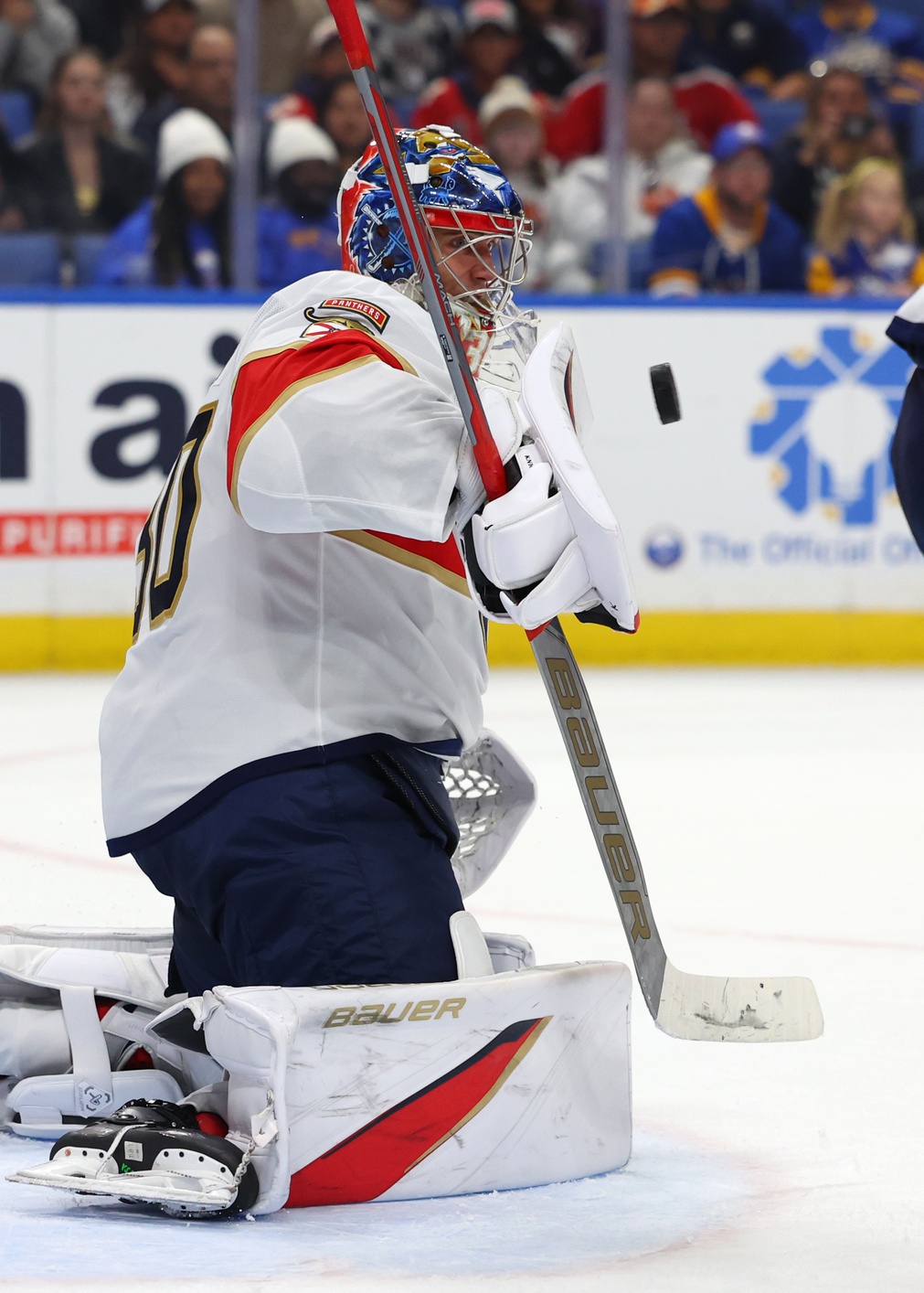 For those who haven’t followed him, Knight missed a big chunk of the 2022-23 campaign after enrolling in the NHL/NHLPA Player Assistance Program. Ken Campbell of The Hockey News interviewed him if you want to learn more about why he was in there. Then the following year, Florida opted to bring in Anthony Stolarz as the backup to Sergei Bobrovsky (a move that worked out quite well) to allow Knight to get a bigger workload in the minors. He had a 2.41 GAA with a .905 SV% in 41 games with AHL Charlotte last season, numbers that were decent but not at the level of a top prospect either.
This year, Knight has been around NHL average in his first six outings with a 2.85 GAA and a .897 SV%. Again, those numbers are decent (the average save percentage is hovering around .900 league-wide) but that’s not great bang for their buck. Frankly, if he stays around that level, I wonder if Florida considers a buyout next summer, a move that would save them $3.75MM on the cap next season while adding $750K for 2026-27. I don’t know if they’d do it but I think it’d be considered.
If I’m musing about a buyout, it’s fair to say he isn’t in the tier of other top young goalies anymore. But with only 63 career NHL appearances, he’s not that far removed from prospect status either. I expect Knight will get a little better as the season goes on and while he won’t get back to that top tier (where Yaroslav Askarov and Jesper Wallstedt are, for example), he’ll show enough to stay in Florida’s plans.
Gmm8811: I think the Blues have proved to be exactly what everyone thought they would be this year. How much further do they sink before Army starts showcasing youth and moving older vets for draft picks?
I don’t expect they’re going to sink much lower than they are, to be honest. They’re 12th in the West which feels about where they should be and I agree, they’ve played up to a reasonable level of expectation so far.
But I don’t expect a sell-off to come anytime soon. For starters, it’s too early in the year. Teams with cap space don’t want to blow it this early unless it’s a highly impactful piece and St. Louis probably isn’t moving any of those. The second is that the Blues don’t exactly have a whole lot to offer up veteran-wise.
Their most prominent rental up front is Radek Faksa and Dallas gave him away for free four months ago; it’s not as if he carries a lot of trade value. With retention, maybe they get a late-round pick but that’s someone’s Plan C or D at the trade deadline, not now. On the back end, Ryan Suter will be a solid trade chip but teams will want more of his games played bonuses to be reached before acquiring him which pushes him closer to a deadline move as well.
Among non-rentals, Brandon Saad has some value but at $4.5MM, that’s a hard salary to fit on the books this early in the season. I could see him fetching a good return in late February/early March though when his remaining salary for this season is a lot lower. Jordan Binnington at $6MM through 2026-27 could be a trade candidate but he might be easier to move in the summer than now.
I just don’t see a big sell-off from this team. They’re going to want to keep most of their core guys and avoid a longer-scale rebuild which means most of what they have to offer are supporting pieces. In the meantime, if they want to open up a spot for a youngster, it might come through someone landing on waivers (much like Kasperi Kapanen) and the prospect coming up into that vacated position.
DevilShark: Sample size is getting reasonable now… I’m curious who you think have been the best acquisitions at each position this season (FA or trade) in terms of driving their teams’ success.
Goalie: It’s hard not to pick Jacob Markstrom here. Last season, injuries and bad goaltending were costly on a team that talent-wise should have been in the playoff mix. Markstrom has come in and given them that stable goaltending and they’re first in the division. And yet, he’s not my pick. Instead, it’s Anthony Stolarz in Toronto. With Joseph Woll injured to start the year, Stolarz took the starting job and has run with it and is once again among the league leaders in GAA and SV%. If he wasn’t up to the task, they could easily be on the outside looking in at the playoffs right now.
Defense: Considering the Kraken are a .500 team, it’s hard to pick Brandon Montour here but I’m going to anyway. His addition raised some eyebrows as he was coming off a tough year by recent standards in Florida. But with Seattle, he is an all-situations impactful player which is exactly what they needed. With Vince Dunn on LTIR, he absorbed even more responsibility. I’d say his play is a big reason why they are where they are right now and not even lower in the standings.
Forward: This one’s a bit harder as some of the top performers statistically with new teams (such as Sean Monahan) are on teams who have struggled so far while others (someone like Stefan Noesen) are doing well but are in supporting roles. So I’m going to use a different definition of success than you probably intended with this pick of Tyler Toffoli in San Jose. The Sharks wanted to be more competitive this season and they have been; they’re far from the easy win they were a year ago. They brought him in to be a leader on a young group and help take some offensive pressure off of them. He checks both of those boxes and sits second on the team in scoring. For what their goals are for this season, Toffoli is doing exactly what San Jose wants from him.
Salary Cap Deep Dive: Los Angeles Kings
Navigating the salary cap is one of the most important tasks for a front office. Teams that can avoid total cap chaos by walking the tightrope of inking players to deals that match their value (or compensate for future value without breaking the bank) remain successful. Those that don’t often see struggles and front office changes.
PHR will look at every NHL team and give a thorough look at their cap situation for the 2024-25 season. This will focus more on players who are regulars on the roster versus those who may find themselves shuttling between the AHL and NHL. All cap figures are courtesy of PuckPedia. We’re currently covering the Pacific Division, next up is the Kings.
Los Angeles Kings
Current Cap Hit: $90,180,114 (above the $88MM Upper Limit)
Entry-Level Contracts
D Brandt Clarke (two years, $863K)
F Alex Laferriere (one year, $875K)
Potential Bonuses
Clarke: $850K
Laferriere had a solid rookie season last year while spending a lot of time in the bottom six. This year, he’s playing a little higher in the lineup and has responded by being one of their leading point-getters. If that holds, his bridge deal (a long-term pact would be surprising) should run past $3MM per season at a minimum, potentially higher if he stays at his current pace.
After spending most of last season in the minors, Clarke is now a regular and an important part of the back end in Los Angeles. He’s already putting up solid offensive numbers and that should continue which will only push his next contract higher. A bridge agreement could be trending toward starting with a four if this holds while a longer-term pact could climb closer to $7MM. Bonus-wise, Clarke has four ‘A’ bonuses in his deal at $212.5K apiece and at his current pace, he could have a shot at all four of them (assists, points, ATOI, and blocks).
Signed Through 2024-25, Non-Entry-Level
D Andreas Englund ($1MM, UFA)
D Vladislav Gavrikov ($5.875MM, UFA)
F Tanner Jeannot ($2.65MM, UFA)
D Caleb Jones ($775K, UFA)
F Arthur Kaliyev ($825K, RFA)
F Andre Lee ($775K, RFA)
F Trevor Lewis ($800K, UFA)
G David Rittich ($1MM, UFA)
Jeannot was acquired from Tampa Bay over the offseason with the hope a change of scenery could re-spark his offensive game. That hasn’t happened early on as he has spent some time on the fourth line. At this point, there’s a possibility that he’s heading for a pay cut; while his 24-goal, 41-point season was only a few years ago, that looks like the outlier and teams might not want to pay up for that. Kaliyev wanted a trade over the summer but one never materialized so he settled for a low-cost one-year deal and then was injured in training camp. If there isn’t a trade to be found once he returns, Kaliyev could be a non-tender candidate in the summer where he’d likely have to settle for another low-cost deal in this range.
Lewis has been on a one-year deal around this price tag for five straight years now and remains a capable fourth liner. If he wants to keep playing (he turns 38 in January), he should be able to continue that streak. Lee is holding his own on the fourth line in his first taste of NHL action. It’s likely that his next contract should be around the minimum but he could have a shot at a one-way agreement.
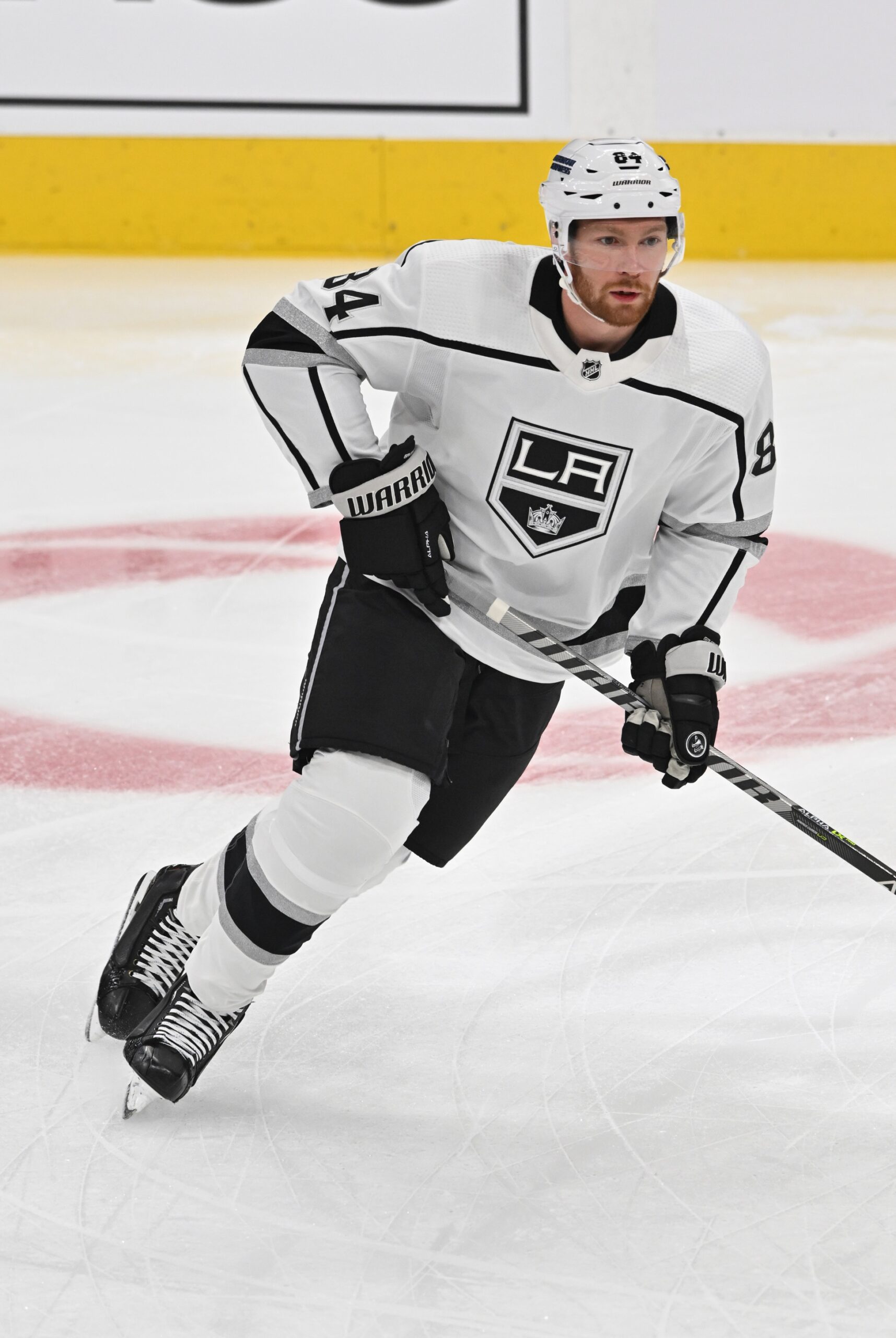 Gavrikov took an interesting approach in free agency two years ago, electing to sign an early extension to remain with Los Angeles but opting for a short-term agreement to allow him to hit the open market in a more favorable environment. His offensive production hasn’t returned to the peak level he had in Columbus which will limit his upside to a point. That said, he could make a case to land this much or slightly more on a long-term agreement, if not even a max-term one. With several blueliners from this class already off the market, it wouldn’t be surprising to see Gavrikov wait this out a little longer to see if a dwindling market could help up his asking price.
Englund played a regular role on the third pairing last season but playing time has been harder to come by this time around. He’s someone who might best fit in a seventh role so while another one-way contract could come his way, it might have to come in slightly lower than this one. Jones spent time in the minors last season, leading to a two-way deal this time around. With very limited playing time so far, he doesn’t seem to be trending toward beating that by much next summer.
Rittich did rather well after being recalled early last season but opted to take this deal in May over testing the open market. He hasn’t fared as well early on this year, however. Even so, he’s likely still in the higher-end third-string option or lower-end backup tier which should get him another deal in this range.
Signed Through 2025-26
D Kyle Burroughs ($1.1MM, UFA)
F Adrian Kempe ($5.5MM, UFA)
F Anze Kopitar ($7MM, UFA)
D Jordan Spence ($1.5MM, RFA)
F Akil Thomas ($775K, RFA)
This is the first season of Kopitar’s cheaper deal after making $10MM per season on the last agreement. It’s supposed to reflect what should be a smaller role but that hasn’t been the case early in 2024-25 as he’s still an all-situations top-line center. Now 37, there’s some risk in terms of his age but the early returns on this contract demonstrate this could wind up as a team-friendly agreement. Another deal, if there is one, will likely reflect the expected lighter workload as well at that time.
Kempe turned the corner offensively in 2021-22 and hasn’t looked back since then, becoming a legitimate top-line threat. While his days of playing center are numbered which won’t help his case on the open market, he’s still positioning himself for a new deal that starts with a seven or possibly even an eight on a long-term pact. Thomas, meanwhile, is still getting his feet wet at the NHL level. He has some runway to develop and if all goes well, he should push past $1MM at least next time out.
Spence is playing on his bridge deal, one that’s slightly back-loaded and carries a $1.7MM qualifying offer. With Clarke taking on a bigger role offensively, that’s going to cut into Spence’s numbers potentially but as a right-shot player with some offensive upside, doubling the qualifying offer could still be possible. As for Burroughs, he’s in a similar situation as Englund, someone who may be best served in a reserve role. Accordingly, a small cut might be needed here as well.
Signed Through 2026-27
F Phillip Danault ($5.5MM, UFA)
D Drew Doughty ($11MM, UFA)
F Warren Foegele ($3.5MM, UFA)
G Darcy Kuemper ($5.25MM, UFA)
F Alex Turcotte ($775K, RFA)
Danault has shown a bit more offensively since coming to the Kings and has played with more consistency on that front, making him a quality second-line option for them thus far. If he can stay around the 50-point range, he could beat this price tag by a bit in 2027 but if his production slows, his next deal could look a fair bit like this one.
Foegele picked the right time for a career year last season as that helped him land this contract in free agency. If he can stay around 20 goals consistently, they’ll do alright with this one while he’d be in line for a small raise. That said, 20 goals is the outlier at this point of his career (though he’s off to a good start this season on that front). Turcotte took a rare three-year deal at the minimum, guaranteeing himself a one-way salary in the last two seasons. That gives him and the Kings plenty of time to see if he’s just a late-bloomer or a lottery selection likely to be viewed in the bust category. At the moment, when healthy, he’s primarily in a bottom-six role. If that kept up over the course of the deal, he could plausibly command a seven-figure salary next time out.
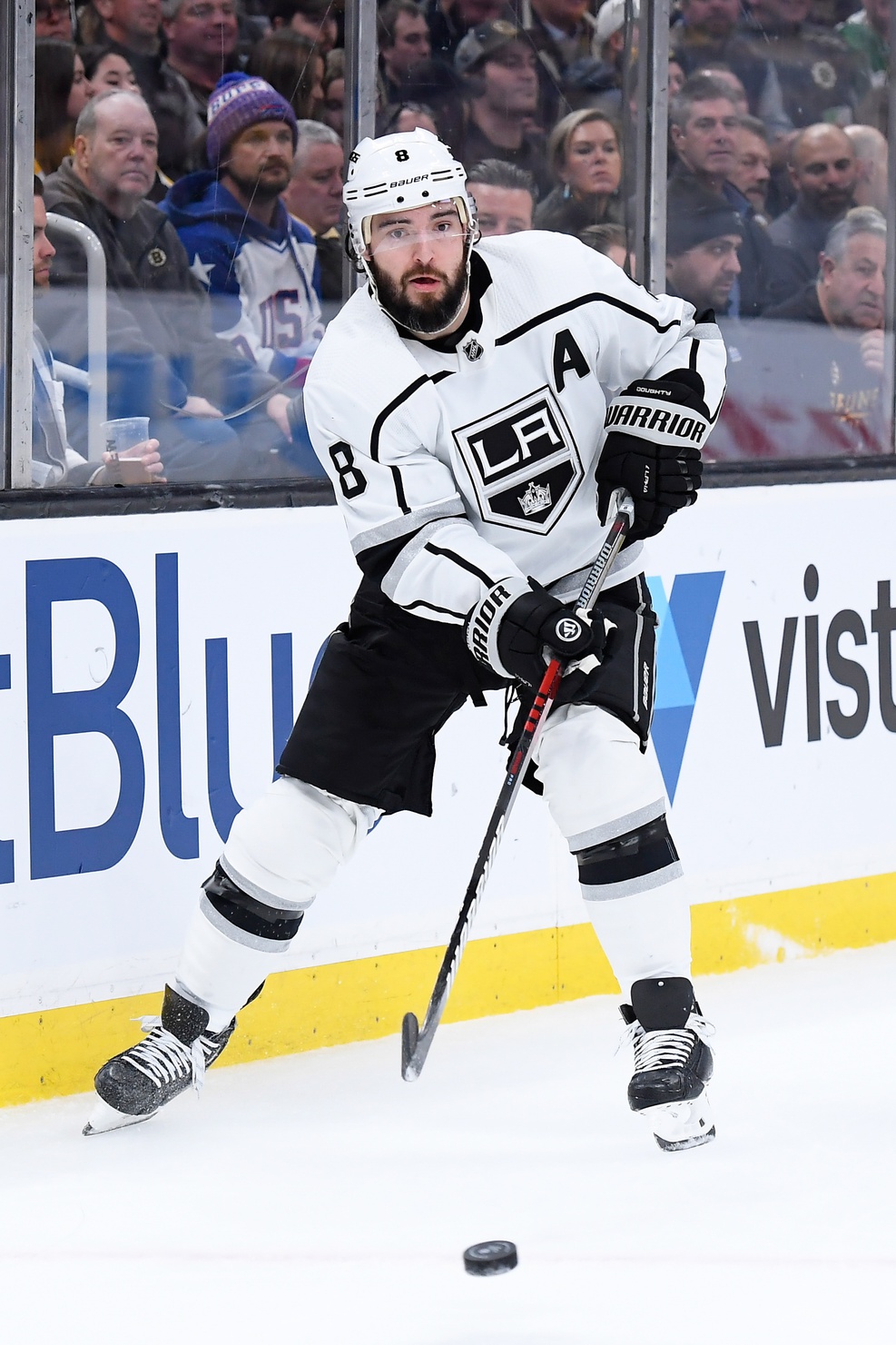 When healthy, Doughty is still a legitimate all-situations number one defenseman. Price-wise, the deal holds up a little better now compared to when it was first signed as a record-breaker. Having said that, this is still on the high side, especially for a player with a lot of hard minutes under his belt and now two significant injuries in recent years. That swings the valuation of this deal back into negative territory (although his current injury has given them short-term LTIR flexibility if nothing else). Doughty will be entering his age-38 year on his next contract. Like Kopitar, there’s a very good chance the price tag at that time will be lowered by a few million per season to reflect his age and the possibility for a sharper decline at that time.
Kuemper was brought in as their new starter while shedding the Pierre-Luc Dubois contract that didn’t go well in its first year. Factoring in what they paid to get Dubois, the sequence of trades isn’t the prettiest but he gives them some stability between the pipes they haven’t had lately. He’ll be 37 when his next contract starts so this price tag might be as high as it gets.
Diagnosing Nashville’s Underwhelming Start To The Season
To say the start of the 2024-25 campaign has been disappointing for the Nashville Predators is somewhat of an understatement. Nashville finished last year as the top wild-card team in the Western Conference with 99 points and handed out nearly $140MM in contracts this past offseason keeping around some old faces and bringing in some new ones.
The aggressive offseason led to skyrocketing expectations for the Predators organization, which have gone unrealized through the first month of the regular season. The team has a 5-9-2 record through 16 games, putting them dead last in the league.
This leads to the question, why exactly are the Predators not only underperforming but wholly noncompetitive?
Nashville’s special teams have been quite good to start the regular season. The team sits 11th in powerplay percentage thanks to a 22.22% conversion rate and has the league’s second-ranked penalty kill with a 90.91% success rate. Both percentages are better than Nashville’s playoff-clinching roster from a year ago with a 20-team jump in the latter category.
If the special teams are not the issue and have even improved year-on-year, reductive reasoning would indicate that the Predators’ 5-on-5 play is the culprit for the poor start. Unfortunately, although Nashville’s 5-on-5 play from last year has depressed, it doesn’t explain the discrepancy in success.
According to Hockey Reference, the Predators have managed a 51.3% CorsiFor% to start the year, which puts them around the league average. It’s a slight downturn from the team’s 51.8% output from last season, but it’s still better than six playoff-bound teams from a year ago. Outside of controlling the puck and looking primarily at offensive generation, Nashville is 15th in the league with a 31.2 xGF which is two expected goals better than the 10-2-3 Minnesota Wild.
Still, after looking further under the hood, two major areas of Nashville’s game need some work. There have been 222 high-danger chances (shots from approximately in the slot, or rebounds) generated in the Predators’ 16 matchups this year with the team earning 116 of those chances. However, they are only converting on those chances at a 7.2% rate putting them 29th in the league. On the flip side, Nashville’s opponents are converting 11.9% of the time, also 29th in the league.
The other discrepancy is the Predators’ -20 axDiff (actual goal differential minus expected goal differential) which is the worst in the league. This indicates that Nashville is generating an adequate number of good scoring chances but isn’t converting at the expected rate.
A diagnosis of the issue isn’t good enough for a team still looking to make the playoffs this season. The Predators will want a prescription to resolve the problems on the ice and there are a few different pathways they can go.
First, to put it bluntly, a playoff-caliber team can’t compete with a combination of Colton Sissons and Juuso Parssinen centering the team’s second line. The two have combined for seven points this season with a -13 rating and an E +/- of -4.6. When taking a look at high-danger conversion or prevention, there are a couple of names that could help out Nashville.
Kyle Palmieri, a veteran forward for the New York Islanders, immediately jumps off the page as an offense-generating candidate. Palmieri has accrued a 14.0 xGF this season which would be good for second on the Predators behind Roman Josi. According to Natural Stat Trick, Palmieri sits 20th in the league in high-danger scoring conversions. This would allow Nashville to move Stamkos to center the team’s second-line opening a spot on the right wing for Palmieri.
Given that Mathew Barzal and Anthony Duclair are currently on the injured reserve it’s unlikely the Islanders would agree to this trade now. Still, with a desperate need for cap space New York may be willing to entertain offers on any expiring contract. Unfortunately, Palmieri doesn’t project as a long-term answer for Nashville given that he’s 33 years old, but he would at least allow them to kick the can down the road for now.
If the Predators seek out a player who limits opposing teams from converting on high-danger chances look no further than the Detroit Red Wings. Andrew Copp has averaged an ‘on-ice high danger shot attempts against per 60 minutes’ of 1.34 during 5-on-5 play which would put him second on Nashville just above Ryan O’Reilly. He’s also formidable enough in the faceoff dot to give the Predators the confidence to leave Stamkos on the right wing.
The downside of acquiring Copp is the contractual complications. Copp is earning $5.625MM for the next three years and has a 10-team no-trade list in his contract. This isn’t to say that Nashville is one of the 10 teams on Copp’s no-trade last but it’s still a hurdle to clear. The Predators could gauge Detroit’s interest in retaining some of the remaining salary of Copp’s deal and even include Sissons in the return package who’s making $2.86MM this year and next.
The hypothetical trade wouldn’t project as a ‘season-punting’ move by the Red Wings either. They’ve already shown a willingness to trade legitimate NHL talent (i.e. Olli Maatta) to create room for some of their up-and-coming players. Detroit, a team that has struggled to produce offense this season, could strike two birds with one stone in this move by clearing a spot for Vladimir Tarasenko or Marco Kasper on the team’s second line while opening up additional cap space.
One defensive pairing sticking out like a sore thumb in Nashville is the combination of Jeremy Lauzon and Alexandre Carrier. The two have played the most minutes together compared to any other combination on Nashville’s blue line (188.2) and have combined for a team-worst 40.2% xGoals % according to MoneyPuck.
Marcus Pettersson of the Pittsburgh Penguins immediately comes to mind as a viable trade candidate to replace one of Lauzon or Carrier on the team’s second defensive pairing. Petterson currently leads the Penguins in blocked shots (27) and carries a contextually impressive E +/- of -0.8 while playing next to one of the league’s worst blue-liners on the defensive side of the puck. He’s in the last year of his contract and should find himself on the trade block further down the season if Pittsburgh continues at their current pace.
This list of solutions for Nashville isn’t exhaustive as there are plenty of directions they could ultimately take. The organization could wait things out and hope the gap between expected and actual goals narrows over the next few weeks. Still, given the nature of their aggressive approach to this past offseason, the Predators may want to make a move sooner rather than later before the bottom completely falls out on their 2024-25 aspirations.
PHR Mailbag: Pricey Contracts, Blues, Stars, Landeskog, Lightning, Paper Moves, Blackhawks, Injury Disclosures
Topics in this edition of the PHR Mailbag include why the time might not be right for Dallas to look into defensive help, speculating on possible trade targets for Tampa Bay, and much more. If your question doesn’t appear here, watch for it in next weekend’s mailbag.
PyramidHeadcrab: With Columbus potentially looking to take on a big contract and San Jose actively improving by adding some talented misfits from other teams, who are some players you could see bound for each team as the season progresses?
And if Columbus does take on a big contract, do you think it will be another team paying to unload an overpayment contract, or a team like the Leafs offloading a decent contract as a result of their cap crunch?
I think Columbus is open to both options, as long as the contract they take on is a short-term one (see Dante Fabbro). Knowing that they’ve typically been more of a budget team, they’re probably not going to want to spend some of their financial capital on a long-term pickup whose primary purpose is to add a draft pick or two. But something for a year or two could be manageable.
In terms of who that could be, one of the names that comes to mind is Oliver Bjorkstrand who was healthy scratched recently. Moved to Seattle as a cap-clearing move originally, he’s someone who should be comfortable in the market and it wouldn’t shock me if the Kraken try to move out a pricey contract to give themselves some cap flexibility as they’re really tight when everyone’s healthy. I could see them being open to taking the final years of Ryan Ellis’ LTIR contract if Philadelphia wants to bank more cap space (or Ryan Johansen wins his grievance later on and gets at least part of his deal back on the books). With that deal being insured, the actual cost outlay would be minimal in that sense.
I suspect they’d be open to taking a more reasonable deal off a cap-strapped team like Toronto but the Maple Leafs will be looking to move those pieces for some value while the Blue Jackets are probably looking to get a player plus a sweetener for taking a contract on. With that in mind, I’m not sure that lines up at this point trade-wise for those teams.
Frankly, there aren’t a ton of pricey contracts out there that fit the bill. When I wrote the piece about them last weekend talking about their willingness to do this, I didn’t bother getting into speculation as I don’t see a lot of fits for them. Unless they’re willing to take on a longer-term agreement, I don’t necessarily see them accomplishing this in the coming months.
I don’t see the Sharks actively trying to add any other veteran players for a while. They’re also a budget team and right now, they’re going to want to see how some of their younger pieces fare. If some of them falter too much, then perhaps they look to see if there’s a rental veteran to bridge the gap but there are a lot of rental veterans out there. At the trade deadline, perhaps they take on an expiring contract from a team that needs to move money to make a bigger splash but again, that could be a lot of players. If another Timothy Liljegren-type trade comes around where they can get a mid-20s player with some control for a low cost, that might be their preferred route. Before the season, I’d have said someone like Kaapo Kakko who was in trade speculation but that’s probably not an option at the moment.
vincent k. mcmahon: With the recent injury to Broberg and Leddy still out, do the Blues call up another d-man if they can or do they hold out until Leddy returns? Also, do you think this might cause an issue with the chemistry of the d-pairings?
I’m a little surprised St. Louis hasn’t brought up a blueliner at this point, to be honest. They’re already into LTIR so there isn’t a cap-related element to them electing not to do so. Tyler Tucker is quite familiar with the systems already and would be a safe option to have as a seventh/reserve option while Corey Schueneman has experience in that role as well with Montreal and Colorado (to a lesser extent). One of them easily could be up as insurance.
I wouldn’t be too worried about the chemistry of the defense pairings. When Nick Leddy returns – which should be relatively soon – he will go back into the lineup and play a prominent role, deservedly so. There will be injuries throughout the year or players struggling that will necessitate changes so it’s unlikely the defense pairings will stay together for any sort of extended stretch over the course of the season.
That’s a league-wide observation too, not a Blues-specific one. Even teams with a proven defensive group will mix things up from time to time as you never know when you might be forced into making a change when injuries strike so St. Louis, a team whose back end is much less secure, shouldn’t have any concerns about needing to mix up their pairings.
bottlesup: Dallas making any calls on defenders? Fowler, Provorov, or even maybe Arber Xhekaj? Which would require the most in return then the one that would require the least?
I’m sure they’re making calls on defensemen but I doubt they’re seriously pursuing any at this time. At the moment, per PuckPedia, Dallas can only add someone making around $1.7MM. If their roster remains relatively unchanged, they could have the ability to add someone making more than $6MM. Those are two very different pools to shop in. In the first price range, maybe there’s a third-pairing upgrade. That’s useful but doesn’t move the needle too much. But at the deadline, being able to pick up $6MM opens up a lot more options, especially at a time when more teams are open to retaining salary.
I don’t see Cam Fowler being a viable option for the Stars solely because of the extra year on his contract. Dallas can’t afford a $6.5MM player on the books for next season when Jake Oettinger’s big raise kicks in while Wyatt Johnston and Jamie Benn are among their free agents. Unless Anaheim paid down half the contract (which would probably up the asking price to a first-round pick and then some), it’s probably not a great fit.
I don’t mind the Ivan Provorov option though. While he’s a left-shot defender, he’s playing on the right in Columbus and that’s the side the Stars need an upgrade on. Could he go in and cover 20-plus minutes a night and kill penalties? I think so and that’s the type of player they need to take some pressure off the top options. The Blue Jackets will likely be seeking a first-round pick and something else but should be willing to pay down half of their portion of his contract ($4.725MM) which should give them a long list of suitors.
Xhekaj is an odd fit. He’s also a left-shot blueliner and hasn’t fared great when moved to his off-side. He’s certainly cheaper ($1.3MM through next season) and has more club control but at most, he might crack the third pairing. He’s also a hard player to peg value-wise. I think there are teams who don’t view him as an NHL player and others who would pay a fairly high price tag given his physicality and a decent track record of offense at the lower levels. It probably doesn’t get to the level of Provorov’s likely price tag but I don’t feel he’s the type of blueliner they should be going after.
mikeyziggy: With the latest update on Landeskog it certainly sounds like if it doesn’t happen this season it doesn’t happen at all. What team is going to take on his contract to free the Avs from the cap hit in the event he can’t play? That $7mil could go a long way in helping fix some of the problems up front.
For those who didn’t see the news earlier this week, the latest update on Gabriel Landeskog certainly wasn’t an ideal one. Head coach Jared Bednar indicated that Landeskog had a setback as he continues to try to work his way back from a knee injury that has kept him out for the last couple of years. However, Landeskog is still hoping to suit up at some point this season which doesn’t help the Avalanche in terms of the cap as they can’t spend that money on other players if they think he’s going to play before the playoffs begin.
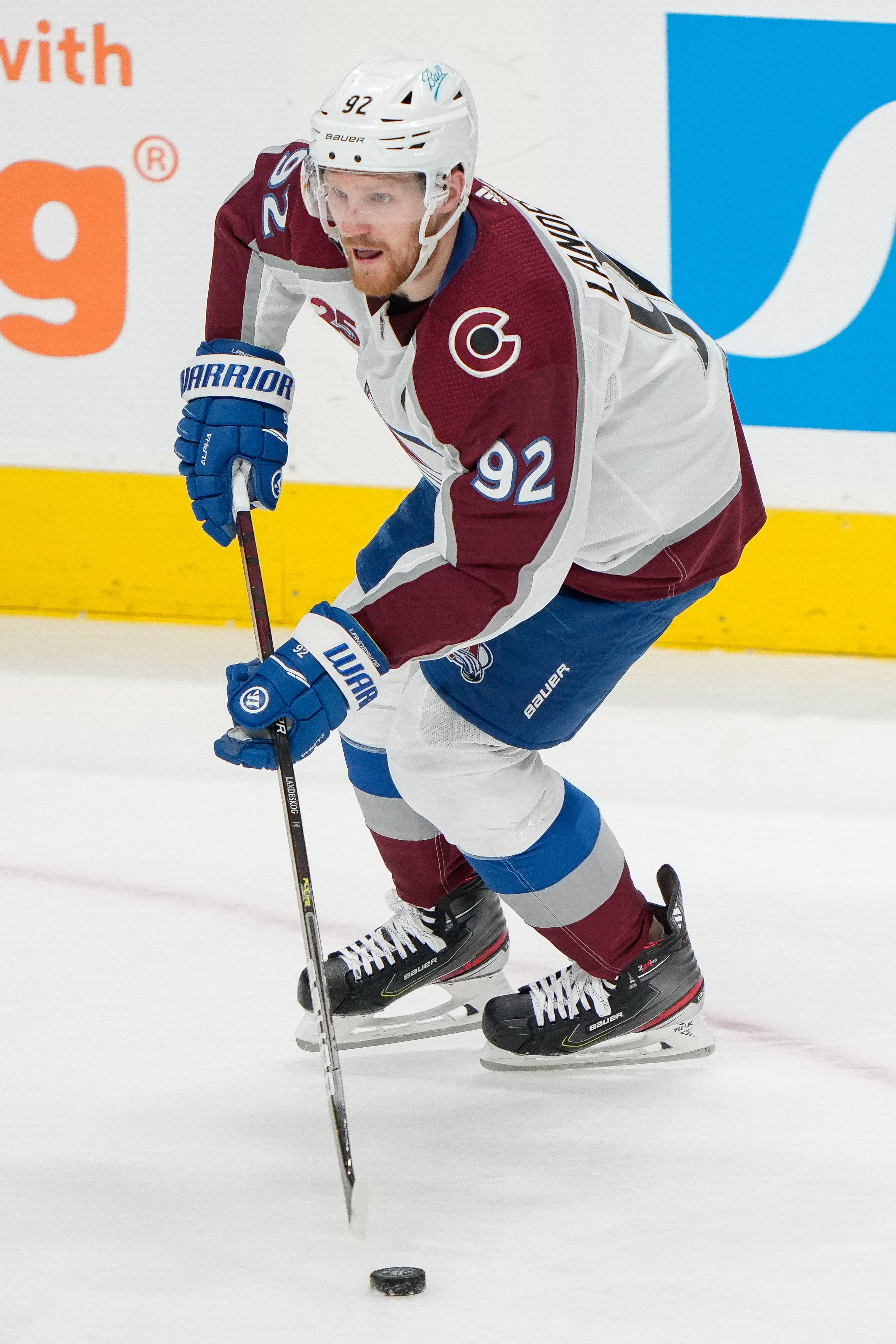 Let’s use the scenario that says he can’t come back. Frankly, that feels more and more like the probable scenario. The Avs don’t necessarily have to trade him as they can just put him on LTIR and spend up to $7MM over the cap on their roster. (It’s not quite that simplistic and involves optimal timing of placements and whatnot but that’s the gist of it.) That’s not an ideal scenario to be in as it prevents them from banking in-season space and means any bonuses earned get charged the following season but it’s not as if that $7MM is unusable.
But the other option of trading the contract probably isn’t a great one either. Landeskog still has four years left on his contract after this one. That’s a long time for a team to willingly carry a permanent LTIR deal and the one team that was willing to do so (Arizona) is now in Utah with an owner willing to spend so they won’t be doing that anymore. Is there a team that knows they’re going to be well below the cap through at least the 2028-29 season so that taking on Landeskog’s contract is a low-risk proposition? I’m not sure there is, to be honest. Maybe when there are two years left it’s an option but I don’t see the Avs shedding that deal anytime soon if his playing days are numbered.
FeeltheThunder: In Tampa, Nick Paul was on the second line with Hagel and Cirelli, the line was very successful at controlling puck possession at 5-on-5 and was one of the most dominant lines in the NHL over the first couple of games of the season. However, since Paul was put back on the third line at center, his possession numbers at 5-on-5 are starting to look like last year. Over the two-game span against the Wild and the Jets, Paul had an 18.58 on-ice expected goals for percentage share (xGF%) at 5-on-5, ranked lowest on the roster. Furthermore, his 33.62 on-ice shots for percentage (SF%) ranked last on the team. In other words, with Paul on the ice, the Lightning gave up two shots for one they produced. As management starts to think about in-season acquisitions, a third-line scoring forward should be at the top of the list for Tampa especially since Mikey Eyssimont isn’t producing (he’s a better fourth line guy) though Mitchell Chaffee is playing solid; who would you think be some valid options for that third line to help Paul and Chaffee?
I wouldn’t be too concerned about a rough couple of games on a different trio (though admittedly, things didn’t get much better in their last outing). When you’re shifting to a different role on a different line at a different position, you get a bit of leeway. That said, there needs to be improvement on that front relatively soon.
As for potential pickups, I think Tampa Bay would prefer to shop on the rental market given that they already have nearly $82MM on the books for next season, per PuckPedia. I suspect GM Julien BriseBois would like to leave himself some flexibility to try to make a splash again next summer so a one-and-done acquisition would help make that happen. With that in mind, I’ll limit my picks here to the rental market.
The first name that comes to mind isn’t necessarily a scorer. I could see Luke Kunin making sense for them. He could plausibly play the role Paul has now, allowing Paul to move back to the second line. Kunin also plays with an edge physically, an element they lost when they moved Tanner Jeannot to Los Angeles over the summer. Assuming they don’t have too many injuries between now and the deadline, the Lightning should be able to absorb his $2.75MM AAV in full as the Sharks don’t have any retention slots remaining. If they have ample cap space, perhaps they aim higher in San Jose and try for Mikael Granlund ($5MM) which would add some offensive upside to the bottom six and again, probably allow Paul to move up.
As for other options, if Nashville can’t get out of its tailspin and winds up selling, Gustav Nyquist would add some pop on the wing if the plan is to keep Paul down the middle. If Buffalo finds itself selling again, Jordan Greenway would add some size and scoring potential on that trio as well. Meanwhile, if they want to pivot the third line into more of an outright checking line, someone like Joel Armia could be a low-cost flyer with some playoff experience.
@SakariL89761: When teams ‘paper’ down players to the AHL or ‘bank’ cap space, does it affect the players financially and if so, can the union stop it in the next CBA?
If the player is on a two-way contract, yes, it affects them financially as they’d receive their AHL salary for the day over their NHL salary, a difference of several thousand dollars. If they’re on a one-way deal, the player actually saves a bit of money as there is no escrow taken off when the player is in the minors.
I’m not sure there’s a great way to stop it. Frankly, I’m not certain the NHLPA would necessarily want to stop it. If you put a cap on the number of assignments to the minors (like MLB did to try to cut down on the roster churning for optionable pitchers a couple of years ago), you could wind up taking away opportunities from deserving players later in the year if they’re ‘out of options’ so to speak as a team won’t want to call up a player they can’t send down anymore.
Meanwhile, some of the opportunities created for the players on the fringes of the roster are because teams can do the paper transactions. In essence, their final roster spot only costs part of the $775K minimum salary. But if you can’t shuffle the players, how many of those teams just won’t bother to carry the extra body? (Or how many might not be able to afford it?) Now you might be taking away opportunities for players in the minors, even if they’re only on the NHL roster part-time.
In a cap system that’s pretty restrictive, I can’t see there being any desire from teams to put any restrictions on this and with the NHLPA likely realizing that changing the system will negatively affect some members as well, I can’t see it being a high-priority item for them in CBA talks when they potentially get underway next year.
2024-25 NHL Salary Retention Slots Available
Nearly every NHL team has some money tied up in players no longer playing for the club or penalties for exceeding the salary cap the prior season, usually due to clubs not having ample space in their performance bonus cushion. Buyouts are generally the most common form of money tied up in players not on the active roster or injured reserve. However, they also don’t come into play much during the regular season, as teams can only execute them during specific windows over the summer.
Retained salary transactions, though, do matter year-round. They’re also occurring more frequently as the number of multi-team trades increases, allowing playoff contenders and big spenders to accumulate more talent at lesser cap hits while rebuilding squads accumulate assets for taking on a portion of a player’s contract who will never play for them.
While teams could theoretically have unlimited buyouts on the books year-over-year, they can only retain salary on three contracts simultaneously. Those three slots are quite valuable for rebuilding clubs near the trade deadline, which is why they’ll normally stray away from eating money on contracts with more than two or three years left. There are some notable exceptions to that in this list, though.
Teams cannot retain more than 50% of a player’s salary, and a contract cannot be involved in more than two retained salary transactions. Here are the NHL’s current retained salary slots available for 2024-25, which we’ll continue to update through the rest of the regular season and the first part of the offseason:
Updated 11/10/24 (10:35am CT)
Anaheim Ducks
3/3 available
Boston Bruins
3/3 available
Buffalo Sabres
3/3 available
Calgary Flames
2/3 available
- G Jacob Markström ($1.875MM through 2025-26)
Carolina Hurricanes
3/3 available
Chicago Blackhawks
2/3 available
- D Jake McCabe ($2MM through 2024-25)
Colorado Avalanche
3/3 available
Columbus Blue Jackets
3/3 available
Dallas Stars
3/3 available
Detroit Red Wings
3/3 available
Edmonton Oilers
3/3 available
Florida Panthers
3/3 available
Los Angeles Kings
2/3 available
- D Ivan Provorov ($2.025MM through 2024-25)
Minnesota Wild
3/3 available
Montreal Canadiens
1/3 available
- D Jeff Petry ($2.344MM through 2024-25)
- G Jake Allen ($1.925MM through 2024-25)
Nashville Predators
2/3 available
- D Mattias Ekholm ($250K through 2025-26)
New Jersey Devils
3/3 available
New York Islanders
3/3 available
New York Rangers
3/3 available
Ottawa Senators
2/3 available
- G Joonas Korpisalo ($1MM through 2027-28)
Philadelphia Flyers
2/3 available
- F Kevin Hayes ($3.571MM through 2025-26)
Pittsburgh Penguins
1/3 available
- D Jeff Petry ($1.563MM through 2024-25)
- F Reilly Smith ($1.25MM through 2024-25)
San Jose Sharks
0/3 available
- D Brent Burns ($2.72MM through 2024-25)
- D Erik Karlsson ($1.5MM through 2026-27)
- F Tomáš Hertl ($1.388MM through 2029-30)
Seattle Kraken
3/3 available
St. Louis Blues
3/3 available
Tampa Bay Lightning
3/3 available
Toronto Maple Leafs
3/3 available
Utah Hockey Club
2/3 available
- D Oliver Ekman-Larsson (cost fluctuates due to buyout through 2030-31, costs $320K this season)
Vancouver Canucks
1/3 available
- F Ilya Mikheyev ($712.5K through 2025-26)
- D Tucker Poolman ($500K through 2024-25)
Vegas Golden Knights
3/3 available
Washington Capitals
3/3 available
Winnipeg Jets
3/3 available
Stefan Noesen Providing Devils With Thriving Depth
The New Jersey Devils have begun righting their ship after finishing second-to-last in the Metropolitan Division last year. They’re now second from the top, boasting a stout 8-5-2 through the early season. That resurgence has largely been inspired by Jack Hughes and Dougie Hamilton returning to full health, and Jacob Markstrom finally bringing legitimacy to the Devils’ crease – but New Jersey has pulled one more ace from up their sleeves. Through the addition of Stefan Noesen and Paul Cotter, New Jersey has transformed a muddied bottom-six into one of the league’s best.
The impact of Noesen’s hot start can’t be understated. The Devils’ success has always been rooted in strong bottom-six glue guys – but the team has struggled to find a suitable boost after the departures of the likes of Pavel Zacha, Michael McLeod, and Yegor Sharangovich. Hot-and-cold performances from Erik Haula and Alexander Holtz spurred the team last year, but it was little momentum in the face of multiple key injuries.
Enter now Noesen, who’s had the wind behind his sails for three seasons, kicked off by a starring role with the 2021-22 Chicago Wolves. In what was the 10th season of an otherwise lackluster minor-league career, Noesen posted 48 goals and 85 points in 70 games in the regular season, then added 25 points in 18 playoff games to push Chicago all the way to the Calder Cup Championship. That championship-winning leadership earned Noesen a promotion to Chicago’s on-again-off-again affiliate the Carolina Hurricanes for 2022-23.
Noesen continued to thrive at the top flight, potting 36 points and 37 points – both career-highs – respectively across the last two seasons with the Canes. He earned nearly all of those points through hard-nosed and high-tempo drives into the low-slot, where he was able to routinely win space and bury loose pucks. That crash-the-net style is now excelling on Sheldon Keefe’s Devils, where Noesen is flanked by the gritty Cotter and the shoot-first Haula – giving him space to operate as a strong second-man-in. While Cotter – who’s own hot start is also a main factor in New Jersey’s success – fights for the puck in the corner, Noesen is able to set up camp in the slot while Haula provides high-zone coverage.
It’s a chemistry that simply makes sense. But the effects of such a well-matched line are working to peak effect while the likes of Hughes, Timo Meier, and Dawson Mercer each find their top-notch scoring once again. Noesen has 13 points through 15 games in New Jersey. Nine of those points have come at even-strength. And while that production (a 71-point pace across 82 games) likely isn’t sustainable, it’ll serve as the underpinning of New Jersey’s success this season. The Devils are still waiting for all of their engines to fire, but the third line is working to full effect – and Noesen and Cotter are quickly proving two of the most impactful new additions across the league.
Noesen signed a three-year, $8.25MM contract with New Jersey on July 1st. The deal will take him through his age-34 season – and is already looking like a steal just 15 games in. After a journeyman career that started with a first-round selection in 2011 and proceeded with trips with seven NHL teams and six AHL teams – Noesen has finally found his footing at the pro level. He’s proven a capable scorer and an even better forechecker – both traits the Devils’ depth chart was sorely lacking. Sometimes it’s best not to mess with a good thing, and New Jersey is now faced with a chance to embrace a well-constructed and ever-efficient third-line. If it holds, the trio could be the piece that propels New Jersey into a long run next summer.
Salary Cap Deep Dive: Edmonton Oilers
Navigating the salary cap is one of the most important tasks for a front office. Teams that can avoid total cap chaos by walking the tightrope of inking players to deals that match their value (or compensate for future value without breaking the bank) remain successful. Those that don’t often see struggles and front office changes.
PHR will look at every NHL team and give a thorough look at their cap situation for the 2024-25 season. This will focus more on players who are regulars on the roster versus those who may find themselves shuttling between the AHL and NHL. All cap figures are courtesy of PuckPedia. We’re currently covering the Pacific Division, next up is the Flames.
Edmonton Oilers
Current Cap Hit: $88,224,659 (above the $88MM Upper Limit)
Entry-Level Contracts
None on the active roster.
Signed Through 2024-25, Non-Entry-Level
D Evan Bouchard ($3.9MM, RFA)
F Connor Brown ($1MM, UFA)
D Travis Dermott ($775K, UFA)
D Ty Emberson ($950K, RFA)
F Corey Perry ($1.15MM, UFA)
F Derek Ryan ($900K, UFA)
F Jeff Skinner ($3MM, UFA)
Potential Bonuses
Perry: $250K
Skinner was somewhat of a surprising late entrant to the market after Buffalo elected to buy him out. He found what should be a good landing spot for a pillow deal, as long as he can stay in the top six. If he does, he could push past $4MM on a multi-year deal, closer to $5MM if he’s able to reach the 50-point mark. Perry fit in well after joining the team midseason, earning this agreement to stick around. At 39, it’s safe to say he’ll be going year-to-year from here on out. Bonus-wise, he’ll make $150K at the 15-game mark while $50K depends on Edmonton winning at least two playoff rounds and playing at least half the playoff games. The other $50K is if Edmonton makes it to the Stanley Cup Final while playing in half the games.
Brown’s cost this season is a bit misleading as the Oilers are also eating the $3.225MM in bonuses he earned last year. But for what he’s making in salary this year, he provides good value as a depth player who showed in the playoffs that he can be a key piece. Ryan has seen his role and production decline in recent years and he’ll be 38 before the end of 2024. This is a roster spot they’ll need to keep cheap so it’s possible they ask him to stay on a small cut in pay. If not, he could be a candidate for a PTO next summer.
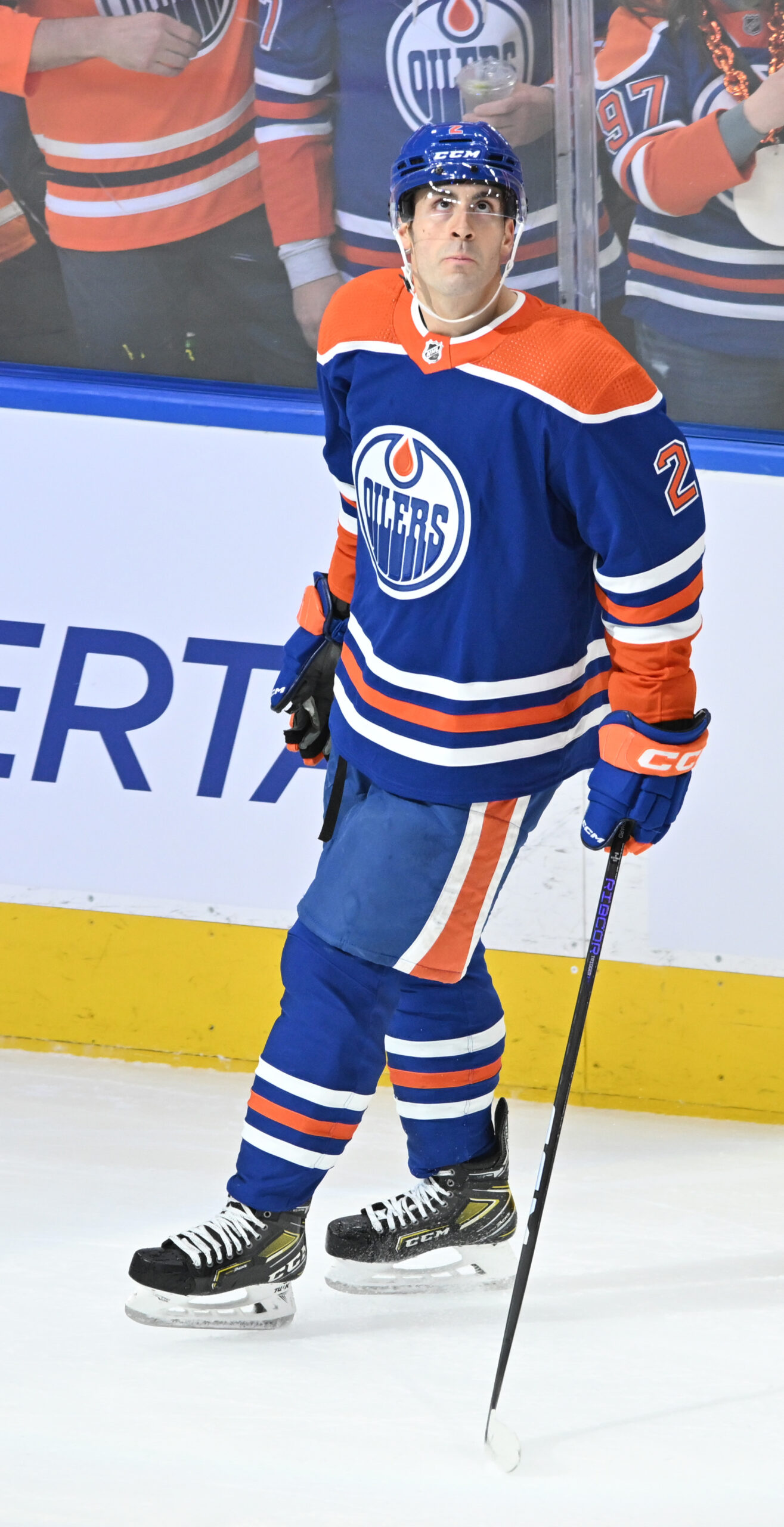 Former GM Ken Holland really only had one option with Bouchard last summer, they had to do a bridge deal to fit within their cap structure at the time and no offer sheet materialized while he wasn’t arbitration-eligible. The result is that Bouchard spent last season on a below-market deal and it’s the same thing this season. However, the pendulum is about to swing the other way in a big way. Bouchard had a breakout effort last season, averaging just over a point per game and did even better in the playoffs. His qualifying offer will be $4.3MM next summer but it’s widely expected he’ll double that and then some, especially if the sides are able to work out a long-term deal.
Emberson was picked up from San Jose as part of the Cody Ceci deal, one that netted Edmonton some cap savings and an intriguing blueliner. Now 24, he only made his NHL debut last season and he’ll need to get into 50 games this year for the Oilers to retain his RFA rights. It’s possible arbitration eligibility makes him a non-tender option but failing that, a small raise into the $1.3MM range could be doable. Dermott had to go the PTO route this year and if he stays in a reserve role, it’s quite likely he’ll stay at the minimum moving forward.
Signed Through 2025-26
F Viktor Arvidsson ($4MM, UFA)
D Mattias Ekholm ($6MM, UFA)*
F Adam Henrique ($3MM, UFA)
F Evander Kane ($5.125MM, UFA)
D Brett Kulak ($2.75MM, UFA)
F Connor McDavid ($12.5MM, UFA)
G Calvin Pickard ($1MM, UFA)
F Vasily Podkolzin ($1MM, UFA)
G Stuart Skinner ($2.6MM, UFA)
D Troy Stecher ($787.5K, UFA)
*-Nashville is retaining an additional $250K of Ekholm’s contract.
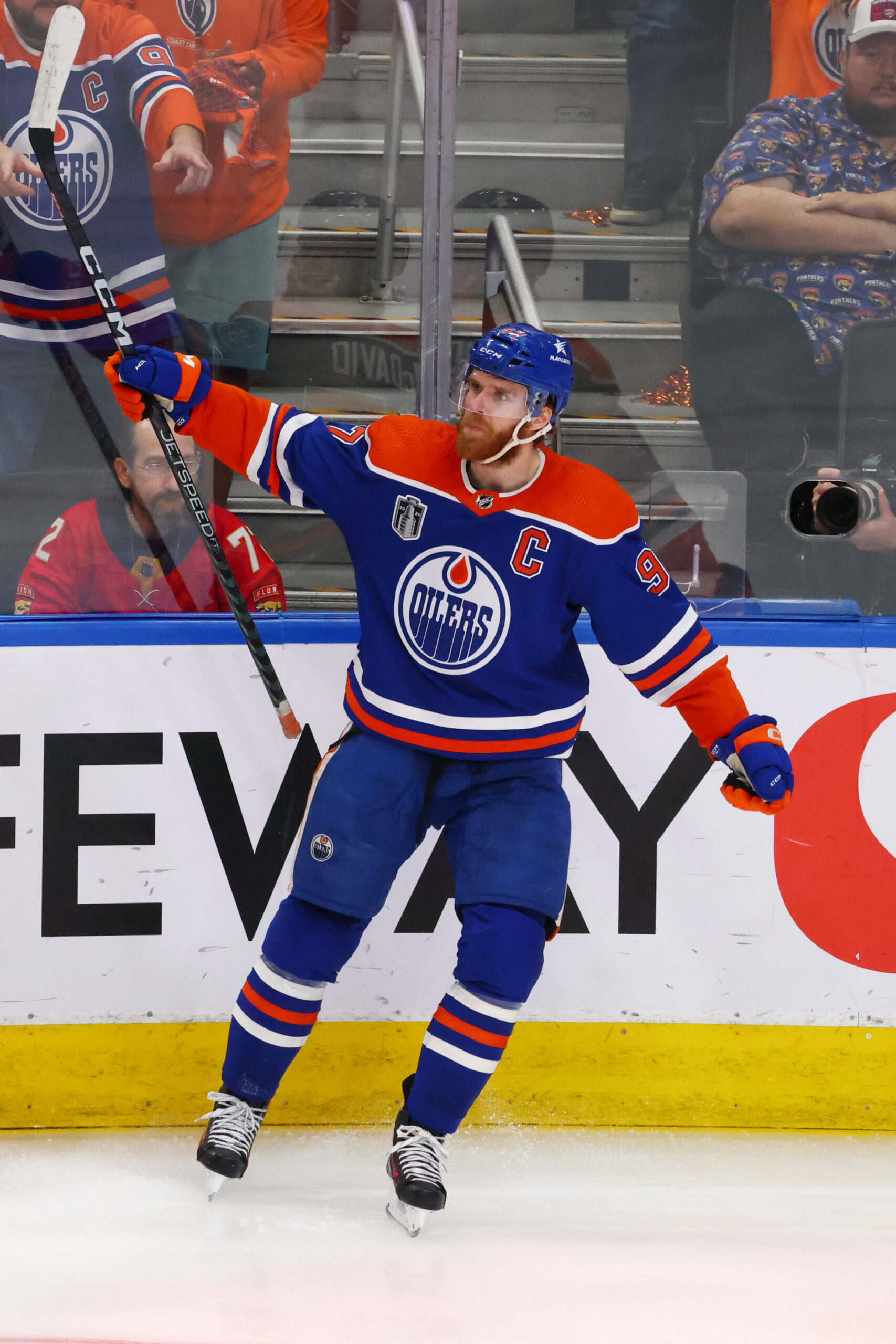 McDavid’s next contract is one that has been speculated about for several years now and discussion on that front will only pick up with him becoming extension-eligible this summer. His current contract was a record-breaker at the time for the highest AAV. His next one will set a new benchmark on that front and possibly could overtake Alex Ovechkin for the richest deal in league history ($124MM total over 13 years) despite the maximum length now only being eight seasons. That would bring the cap hit to $15.5MM and while that’s a very high price tag, McDavid has led the NHL in scoring in five of the last eight years. If Edmonton doesn’t give that type of money to him, someone will.
Kane has been effective when healthy since joining the Oilers, playing a legitimate top-six role. Considering he’s a power forward (those players often cost a premium), the cap charge is reasonable, as long as he’s in the lineup. He’s on LTIR right now, allowing Edmonton to exceed the cap for the time being. Arvidsson was Edmonton’s biggest commitment in free agency, a move that came as a bit of a surprise as the veteran was a candidate for a one-year pillow deal to try to rebuild his value after an injury-riddled 2023-24 campaign. Instead, the Oilers got him at a bit of a below-market rate assuming he’s able to produce at the second-line level he has before. He hasn’t done that early on but they’re probably not worried about that at this point.
Henrique was expected to just be a rental pickup for Edmonton but they were able to get him to take less than he was being offered elsewhere to stick around. Given his track record, it’s a good value contract as long as he can at least hold down a spot on the third line. That said, that role will also hinder his open-market value two years from now. Podkolzin was brought in to essentially fill Dylan Holloway’s roster spot following his offer sheet in St. Louis. At this point of his career, he’s unlikely to live up to his draft billing (tenth overall in 2019) but if he can emerge as a regular in the bottom six, Edmonton will get good value from the contract and acquisition if nothing else. He’ll be arbitration-eligible when this deal expires and depth pieces with that eligibility tend to be non-tender candidates. On a cap-strapped team like the Oilers, they’ll need to keep this roster spot around this price tag whether it’s Podkolzin or someone else.
Ekholm has been a terrific addition to their back end since being acquired near the 2022 trade deadline. He has helped stabilize things defensively while also showing more in the offensive zone than he did with Nashville. That said, he’ll be 36 when his current deal expires; players that age don’t tend to get significant raises. Instead, it wouldn’t be surprising if a three or four-year deal around this price point was the end result.
Kulak has seemingly been on speculative thin ice for a couple of years now with their cap crunch but he has remained each time. As a third-pairing blueliner, this contract is a bit on the expensive side but with them being comfortable moving him into the top four when injuries arise, it has held up okay so far. It wouldn’t be shocking to see him land another deal in this range (both term and price) in 2026. Stecher has been a serviceable depth defender for several years now but as long as he’s still in more of a limited role, his price tag should continue to be around the league minimum.
It would be fair to say that Skinner has been hit or miss while on this contract with not a lot in between. Nevertheless, at the price point of a decent backup, his overall success rate has been better than that despite a slow start this season so they’ve received good value so far. If he can improve and play more consistently, it’s possible that he could double this price point but if he continues to be on the extreme ends of hot or cold, it’d be hard to see enough of a market emerge for him to get starter money. Pickard had primarily been a third-string option until partway through last year which is why his contract was still quite low for a backup. If he holds that down and is somewhat consistent, he could also possibly double this price point although Edmonton would be hard-pressed to pay that much for their second goalie.
Signed Through 2026-27
F Mattias Janmark ($1.45MM, UFA)
Janmark struggled considerably during the regular season and it looked as if they’d be moving on from him. However, he wound up playing a key supporting role during their playoff run, giving him a boost in value heading to the open market which allowed him to get a small raise, some job security, and even some trade protection. Assuming he stays in the same role as he has been lately, it’s hard to foresee him getting much more than this three years from now.
John Carlson’s Resurgence Driving Capitals’ Hot Start
The Capitals have been in no man’s land for the past few seasons. Their record has steadily regressed as Alex Ovechkin continues to chase Wayne Gretzky‘s all-time goal-scoring record, a mark he’ll likely hit this season. In 2023, they missed the playoffs entirely for the first time in nine years, and they’ve yet to win a postseason series since lifting the Stanley Cup in 2018.
Washington got back into the playoff picture last season, but most viewed it as a mirage – and rightfully so. The team’s 40-31-11 record translated to 91 points, which would have kept them seven out of a berth in the Western Conference. They also squeaked in with an astonishing -37 goal differential, a bottom-five offense, and below-league-average 5-on-5 analytics and special teams. Put nicely, it was a fluke. Unsurprisingly, they were outscored 15-7 by the Rangers in the first round and exited without a win.
But entering Saturday’s games, the Caps had a 7-2-0 record and a .778 points percentage, tied with the Hurricanes for the best in the East. Last year’s sputtering offense has suddenly come alive, averaging 4.11 goals per game. At the time of writing, they’re set to improve that total after a six-goal effort in the first half of their game against the Blue Jackets.
Nearly every red flag from last season’s showing has been erased as they enter their second season with Spencer Carbery as head coach. They’ve been a legitimately dominant force at even strength. Heading into the weekend, the Caps’ 54.6 CF% at 5-on-5 was fourth in the league, as was their 55.4 SCF%. Their 55.3% share of high-danger chances at 5-on-5 was seventh.
Ovechkin (5 G, 5 A) and center Dylan Strome, who leads the club with 10 assists and 13 points, have the flashiest point totals. However, chugging along on the back end is John Carlson, who, despite turning 35 in a couple of months, is arguably having the best start of his career in terms of two-way play.
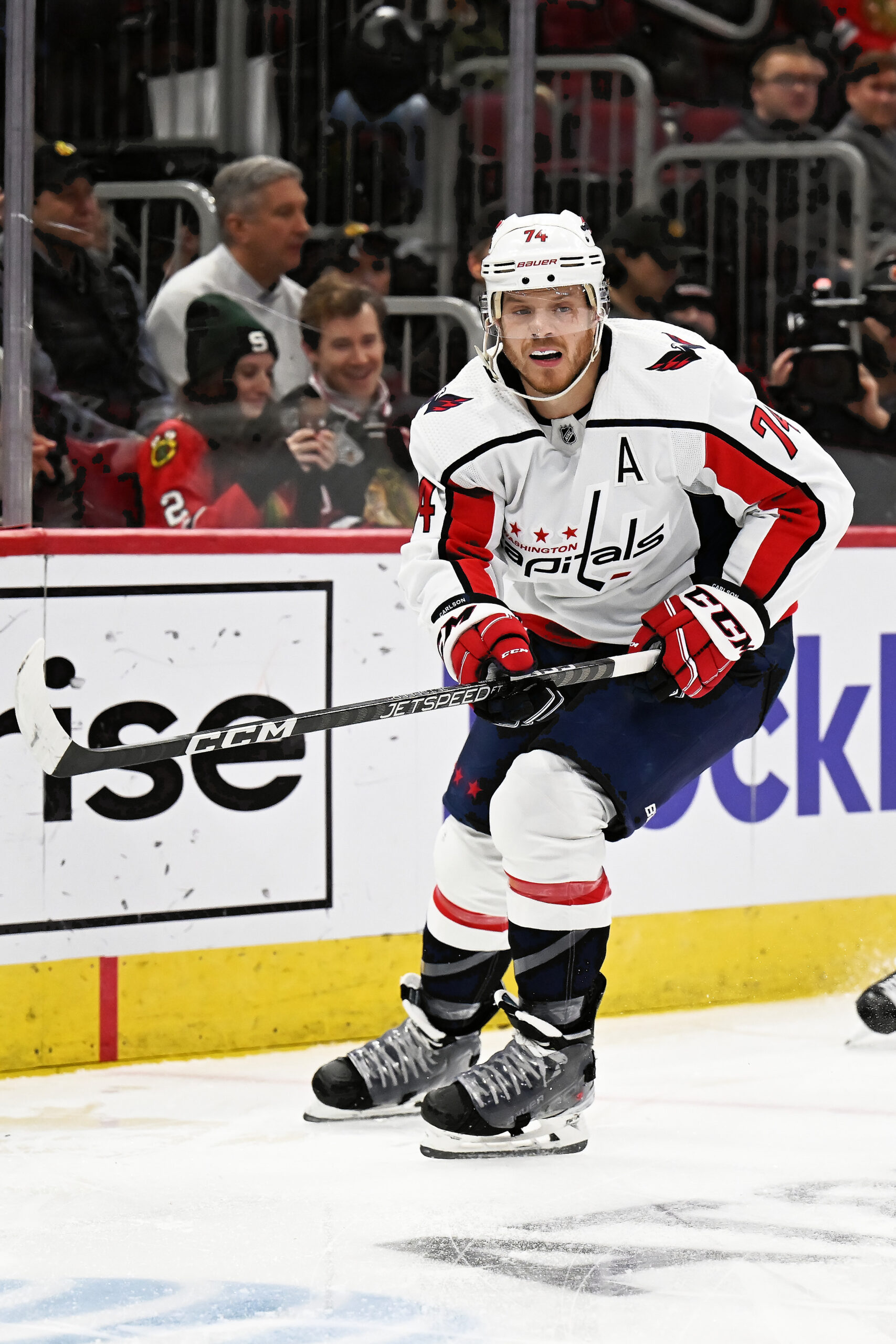 Carlson has remained a minute muncher in his twilight years. Last year, he led the league in average time on ice at 25:54 per game. Washington made a concerted effort to get him more help this offseason, swapping Nick Jensen for Jakob Chychrun and inking top-four fixture Matt Roy in free agency. Roy’s acquisition was mainly targeted to relieve Carlson’s workload as a much-improved No. 2 right-shot option, but he’s been out since the season opener with a lower-body injury.
That hasn’t affected Carlson in the slightest. He’s averaging a whopping 26:25 per game, still leading the league while posting the best possession metrics of his life. His newfound ability to control possession at even strength is arguably the most significant impetus behind Washington’s early-season success. The Caps control 57% of shot attempts at even strength with Carlson on the ice compared to 51.5% without him. The Capitals lifer has never had that much of an impact on Washington’s even-strength possession control in his 16-year career. He’s had a fair amount of seasons, especially early in his career, where he was a drain on their 5-on-5 possession play. Overall, his numbers have been about in line with the Capitals’ team averages.
He’s also turned back the clock offensively with a pair of goals and six assists for eight points in nine games. After continuing to hover near a point per game in the early days of the post-COVID era, he was limited to 0.66 points per game over the 2022-23 and 2023-24 campaigns. That’s led to him not receiving even any outside Norris Trophy consideration after finishing no lower than 12th in five straight years from 2018 to 2022. His +11 rating is also tied with the Golden Knights’ Brayden McNabb and the Lightning’s J.J. Moser for the league lead. Most of that point production has come at even strength, too, with only one each of those goals and assists coming on the power play.
At least so far, all those advanced numbers point to Carlson’s resurgence as sustainable, at least for this season. He also ranks fourth on the team in blocks (14), seventh in hits (14), and is tied with Chychrun for the team lead with seven takeaways.
His re-emergence as a top-flight defenseman also leads to a rarity for Washington – the last couple of years of a max-term extension being worth face value. Carlson is still locked in at $8MM against the cap through the 2025-26 season. It was a contract that gave Washington great value through the first couple of years but started to look dicey at the midway point, a commonality with long-term pacts. But his early-season showing suggests he’s still worth that money, if not more, in terms of market value.
While the Capitals’ roster has been rejuvenated with some newly drafted and developed talent, it’s still an excellent story for a member of the old guard to be a legitimate factor in the team’s on-ice success as the franchise turns the page. Carlson owns nearly every franchise record among defenders. He’s the only D-man to play over 1,000 career games in a Capitals uniform, and he also owns team records for career goals (153), assists (529), points (682), and shots (2,375) among defenders.
Image courtesy of USA Today Sports.
2024-25 NHL In-Season Trades
As with 2024’s offseason trades, we’ll keep track of all the NHL trades completed this season and update this article with each transaction. This post can be found anytime throughout the season on our desktop sidebar under “Pro Hockey Rumors Features” or our mobile menu under the Flame icon.
Trades are listed here in reverse chronological order, with the latest on top. So, if a player has been dealt multiple times, the first team listed as having acquired him is the one that ended up with him. Trades listed in italics have been agreed upon but are not yet official. For more details on each trade, click the date above it.
Here’s the full list of trades completed during the 2024-25 NHL season:
- Maple Leafs acquire F Reese Johnson
- Wild acquire future considerations
- Bruins acquire D Daniil Misyul.
- Devils acquire F Marc McLaughlin.
- Bruins acquire D Henri Jokiharju.
- Sabres acquire the Oilers’ 2026 fourth-round pick.
- Panthers acquire F Brad Marchand.
- Bruins acquire the Panthers’ 2027 second-round pick.
- Condition: the Panthers’ pick will upgrade to their 2028 first-rounder if certain conditions are met.
- Maple Leafs acquire D Brandon Carlo (15% retained) and a Penguins late-round draft pick.
- Bruins acquire F Fraser Minten and the Maple Leafs’ 2026 first-round pick.
- Penguins acquire F Connor Dewar and D Conor Timmins.
- Senators acquire F Fabian Zetterlund, F Tristen Robins, and the Sharks’ 2025 fourth-round pick.
- Sharks acquire F Zack Ostapchuk, F Noah Gregor, and the Senators’ 2025 second-round pick.
- Devils acquire F Daniel Sprong.
- Kraken acquire the Devils’ 2026 seventh-round pick.
- Devils acquire F Cody Glass and F Jonathan Gruden.
- Penguins acquire F Chase Stillman, the signing rights F Max Graham, and the Devils’ 2027 third-round pick.
- Hurricanes acquire F Mark Jankowski.
- Predators acquire the Hurricanes’ 2026 fifth-round pick.
- Islanders acquire D Dennis Cholowski.
- Devils acquire F Adam Beckman.
- Sabres acquire D Erik Brännström.
- Rangers acquire F Nicolas Aubé-Kubel.
- Avalanche acquire D Erik Johnson.
- Flyers acquire F Givani Smith.
- Blackhawks acquire the contract of D Shea Weber, the signing rights to D Victor Söderström, and F Aku Raty.
- Utah acquires the Blackhawks’ 2026 fifth-round pick.
- Blue Jackets acquire F Luke Kunin.
- Sharks acquire the Blues’ 2025 fourth-round pick.
- Avalanche acquire F Charlie Coyle and the Bruins’ 2026 fifth-round pick.
- Bruins acquire F Casey Mittelstadt, the Hurricanes’ 2025 second-round pick, and the signing rights to F Will Zellers.
- Red Wings acquire G Petr Mrázek and F Craig Smith.
- Blackhawks acquire F Joe Veleno.
- Jets acquire F Brandon Tanev.
- Kraken acquire the Jets’ 2027 second-round pick.
- Maple Leafs acquire F Scott Laughton (50% retained), the Flyers’ 2025 fourth-round pick, and the Flyers’ 2027 sixth-round pick.
- Flyers acquire F Nikita Grebenkin and the Maple Leafs’ 2027 first-round pick.
- Condition: the Maple Leafs’ 2027 first-rounder is top 10 protected and will slide to 2028 if it falls within that range.
- Stars acquire F Mikko Rantanen.
- Hurricanes acquire F Logan Stankoven, the Stars’ 2026 first-round pick, the Stars’ 2028 first-round pick, the Stars’ 2026 third-round pick, and the Stars’ 2027 third-round pick.
- Conditions: the Stars’ first-round picks are top 10 protected.
- Jets acquire D Luke Schenn.
- Penguins acquire the Jets’ 2026 second-round pick and the Jets’ 2027 fourth-round pick.
- Kings acquire F Andrei Kuzmenko (50% retained) and the Flyers’ 2025 seventh-round pick.
- Flyers acquire the Kings’ 2027 third-round pick.
- Senators acquire F Dylan Cozens, D Dennis Gilbert, and the Sabres’ 2026 second-round pick.
- Sabres acquire F Joshua Norris and D Jacob Bernard-Docker.
- Capitals acquire F Anthony Beauvillier.
- Penguins acquire the Capitals’ 2025 second-round pick.
- Oilers acquire D Jake Walman.
- Sharks acquire the Oilers’ 2026 first-round pick and F Carl Berglund.
- Condition: If the Oilers’ pick falls in the top 12, they can elect to transfer their 2027 first-rounder to San Jose instead. If Edmonton trades their 2027 first prior to the 2026 trade deadline, their 2026 first transfers to the Sharks unprotected.
- Avalanche acquire F Brock Nelson (50% retained) and F William Dufour.
- Islanders acquire F Calum Ritchie, the Avalanche’s 2026 first-round pick, and the Avalanche’s 2028 third-round pick.
- Condition I: If the Avalanche’s 2026 first-rounder transfers to the Flyers – they owe Philly a 2025 first but it’s top-ten protected – or if it’s top 10 in 2026, the Islanders receive the Avs’ 2027 first-round pick instead.
- Condition II: The 2028 third-rounder transfers only if the Avalanche win the Stanley Cup in 2025 and Nelson plays in 50% of their playoff games.
- Ducks acquire D Oliver Kylington.
- Wild acquire F Justin Brazeau.
- Bruins acquire F Marat Khusnutdinov, F Jakub Lauko, and their own 2026 sixth-round pick.
- Rangers acquire D Carson Soucy.
- Canucks acquire the Sharks’ 2025 third-round pick.
- Panthers acquire G Kaapo Kähkönen.
- Jets acquire G Chris Driedger.
- Golden Knights acquire F Reilly Smith.
- Rangers acquire F Brendan Brisson and the Sharks’ 2025 third-round pick.
- Panthers acquire F Nico Sturm and the Sharks’ 2027 seventh-round pick.
- Sharks acquire the Panthers’ 2026 fourth-round pick.
- Devils acquire D Brian Dumoulin (50% retained).
- Ducks acquire a conditional 2025 second-round pick and the signing rights to F Herman Träff.
- Condition: the Ducks will receive the better of the Oilers’ or Jets’ 2025 second-round pick.
- Predators acquire F Michael Bunting and the Penguins’ 2026 fourth-round pick.
- Penguins acquire D Luke Schenn and F Thomas Novak.
- Sharks acquire D Vincent Desharnais.
- Penguins acquire the Sharks’ 2028 fifth-round pick.
- Lightning acquire F Yanni Gourde (75% retained), F Oliver Bjorkstrand, the signing rights to D Kyle Aucoin, and the Kraken’s 2025 fifth-round pick.
- Kraken acquire F Michael Eyssimont, a conditional 2026 first-round pick, a conditional 2027 first-round pick, the Maple Leafs’ 2025 second-round pick, and retain 50% of Gourde’s contract.
- Red Wings acquire a conditional 2025 fourth-round pick and retain 25% of Gourde’s contract.
- Note I: The Kraken retain 50% of Gourde’s initial $5.166MM cap hit before trading him to the Red Wings as the intermediary. Detroit retained the maximum 50% of the remaining balance before trading him to Tampa Bay. Gourde will cost $1.29MM against Tampa Bay’s cap for the remainder of the season while costing $2.58MM for Seattle and $1.29MM for Detroit.
- Note II: Both first-round picks headed to Seattle are top-10 protected. If either picks fall in the top-10, they slide back one year. If that happens to either draft selection, the Lightning will send a third-round pick to the Kraken for any year it happens.
- Note III: Detroit will acquire the higher of Tampa Bay or Edmonton’s 2025 fourth-round pick.
- Panthers acquire G Vítek Vaněček.
- Sharks acquire F Patrick Giles.
- Oilers acquire F Trent Frederic (75% retained), F Max Jones, and the signing rights to F Petr Hauser.
- Devils acquire the signing rights to F Shane Lachance and retain 25% of Frederic’s contract.
- Bruins acquire D Maximus Wanner, the Blues’ 2025 second-round pick, and the Oilers’ 2026 fourth-round pick.
- Note: the Bruins retained 50% of Frederic’s initial $2.3MM cap hit before trading him to the Devils as the intermediary. New Jersey retained the maximum 50% of the remaining balance before trading him to Edmonton. Frederic will cost $1.15MM against Boston’s cap for the remainder of the season while costing $575K for Edmonton and New Jersey.
- Panthers acquire D Seth Jones (26.3% retained) and the Blackhawks’ 2026 fourth-round pick.
- Blackhawks acquire G Spencer Knight and the Panthers’ 2026 first-round pick.
- Condition: the Blackhawks will receive the Panthers’ 2027 first-round pick if they trade away their 2026 selection.
- Wild acquire F Gustav Nyquist (50% retained).
- Predators acquire the Wild’s 2026 second-round pick.
- Avalanche acquire D Ryan Lindgren (50% retained), F Jimmy Vesey, and the signing rights to D Hank Kempf.
- Rangers acquire F Juuso Pärssinen, D Calvin de Haan, a conditional 2025 second-round pick, and a conditional 2025 fourth-round pick.
- Note: the Rangers will receive the better of their own or the Hurricanes’ 2025 second-rounder and the better of the Avalanche’s or Canucks’ 2025 fourth-rounder.
- Wild acquire F Tyler Madden.
- Kings acquire D Joseph Cecconi.
- Predators acquire F Jesse Ylönen
- Lightning acquire F Anthony Angello
- Ducks acquire G Ville Husso.
- Red Wings acquire future considerations.
- Predators acquire F Grigori Denisenko.
- Golden Knights acquire future considerations.
- Penguins acquire F Mathias Laferrière.
- Blues acquire F Corey Andonovski.
- Predators acquire D Mark Friedman.
- Canucks acquire future considerations.
- Utah acquires F Samuel Walker.
- Wild acquire future considerations.
- Stars acquire F Mikael Granlund and D Cody Ceci.
- Sharks acquire the Stars’ 2025 first-round pick and the Jets’ 2025 fourth-round pick.
- Condition: If the Stars make the 2025 Stanley Cup Final, the 2025 fourth-rounder upgrades to a third.
- Canucks acquire D Marcus Pettersson and F Drew O’Connor.
- Penguins acquire F Danton Heinen, D Vincent Desharnais, F Melvin Fernström, and the Rangers’ 2025 first-round pick (conditional).
- Condition: If the Rangers’ 2025 first-round pick falls within the top 13, it slides to 2026.
- Rangers acquire F J.T. Miller, D Erik Brännström, D Jackson Dorrington.
- Canucks acquire F Filip Chytil, D Victor Mancini, and the Rangers’ 2025 first-round pick (conditional).
- Condition: If the Rangers’ 2025 first-round pick falls within the top 13, it slides to 2026.
- Flames acquire F Joel Farabee and F Morgan Frost.
- Flyers acquire F Andrei Kuzmenko, F Jakob Pelletier, the Flames’ 2025 second-round pick and the Flames’ 2028 seventh-round pick.
- Islanders acquire D Scott Perunovich.
- Blues acquire the Islanders’ 2026 fifth-round pick (conditional).
- Lightning acquire F Ryder Korczak.
- Rangers acquire F Lucas Edmonds.
- Hurricanes acquire F Mikko Rantanen (50% retained), F Taylor Hall, and signing rights to F Nils Juntorp.
- Avalanche acquire F Martin Nečas, F Jack Drury, the Hurricanes’ 2025 second-round pick, and the Hurricanes’ 2026 fourth-round pick.
- Blackhawks acquire their own 2025 third-round pick and retain 50% of Rantanen’s salary.
- Ducks acquire F Justin Bailey.
- Sharks acquire F Pavol Regenda.
- Jets acquire D Isaak Phillips.
- Blackhawks acquire D Dmitri Kuzmin.
- Penguins acquire D Colton Poolman.
- Sabres acquire F Bennett MacArthur.
- Avalanche acquire F Juuso Pärssinen and the Rangers’ 2026 seventh-round pick.
- Predators acquire F Ondrej Pavel and the Avalanche’s 2027 third-round pick.
- Canadiens acquire D Alexandre Carrier.
- Predators acquire D Justin Barron.
- Penguins acquire D Pierre-Olivier Joseph.
- Blues acquire future considerations.
- Kraken acquire F Kaapo Kakko.
- Rangers acquire D William Borgen, the Kraken’s 2025 third-round pick and the Kraken’s 2025 sixth-round pick.
- Blues acquire D Cam Fowler (38.5% retained) and the Ducks’ 2027 fourth-round pick.
- Ducks acquire D Jérémie Biakabutuka and the Blues’ 2027 second-round pick.
- Avalanche acquire G Mackenzie Blackwood, F Givani Smith, and Sharks’ 2027 fifth-round pick.
- Sharks acquire G Alexandar Georgiev (14% retained), F Nikolai Kovalenko, Avalanche’s 2026 second-round pick, and Avalanche’s 2025 fifth-round pick.
- Oilers acquire F Jacob Perreault.
- Canadiens acquire D Noel Hoefenmayer.
- Ducks acquire D Jacob Trouba.
- Rangers acquire D Urho Vaakanainen and the Ducks’ 2025 fourth-round pick (conditional).
- Condition: The Rangers will receive the lowest of the Ducks’ 2025 fourth-round pick or the Red Wings’ 2025 fourth-round pick.
- Wild acquire D David Jiříček and the Blue Jackets’ 2025 fifth-round pick.
- Blue Jackets acquire D Daemon Hunt, the Wild’s 2025 first-round pick (conditional), the Avalanche’s 2026 third-round pick, the Maple Leafs’ 2026 fourth-round pick, and the Wild’s 2027 second-round pick.
- Condition: If the Wild’s 2025 first-round pick falls within the top five, it slides to 2026.
- Predators acquire G Justus Annunen and the Avalanche’s 2025 sixth-round pick.
- Avalanche acquire G Scott Wedgewood.
- Predators acquire F Ryder Rolston.
- Blackhawks acquire future considerations.
- Penguins acquire F Philip Tomasino.
- Predators acquire the Rangers’ 2027 fourth-round pick.
- Capitals acquire F Lars Eller.
- Penguins acquire the Capitals’ 2027 third-round pick and the Blackhawks’ 2025 fifth-round pick.
- Kraken acquire F Daniel Sprong.
- Canucks acquire future considerations.
- Oilers acquire D Ronald Attard.
- Flyers acquire D Ben Gleason.
- Sharks acquire D Timothy Liljegren.
- Maple Leafs acquire D Matt Benning, a 2025 third-round pick and the Sharks’ 2026 sixth-round pick.
- Condition: The Maple Leafs will receive the higher of the Avalanche’s or Oilers’ 2025 third-round pick, both of which the Sharks previously acquired.
- Utah acquires D Olli Määttä.
- Red Wings acquire the Rangers’ 2025 third-round pick.
- Canucks acquire D Erik Brännström.
- Avalanche acquire D Tucker Poolman (20% retained) and the Canucks’ 2025 fourth-round pick.
Salary Cap Deep Dive: Calgary Flames
Navigating the salary cap is one of the most important tasks for a front office. Teams that can avoid total cap chaos by walking the tightrope of inking players to deals that match their value (or compensate for future value without breaking the bank) remain successful. Those that don’t often see struggles and front office changes.
PHR will look at every NHL team and give a thorough look at their cap situation for the 2024-25 season. This will focus more on players who are regulars on the roster versus those who may find themselves shuttling between the AHL and NHL. All cap figures are courtesy of PuckPedia. We’re currently covering the Pacific Division, next up is the Flames.
Calgary Flames
Current Cap Hit: $69,288,958 (below the $88MM Upper Limit)
Entry-Level Contracts
F Matthew Coronato (one year, $925K)
F Samuel Honzek (three years, $918K)
F Connor Zary (one year, $863K)
Potential Bonuses
Coronato: $850K
Honzek: $500K
Zary: $212.5K
Total: $1.5625MM
When he was with the Flames, Coronato’s role and production were limited and he was deployed the same way early on this year before being demoted earlier this week. With that in mind, a short-term bridge deal is likely coming his way, one that shouldn’t cost much more than his current deal. Meanwhile, his bonuses are unlikely to be met. Honzek made the team out of camp, playing his first four NHL games but has already landed on IR. It’s too early to forecast what his next deal will be while his bonuses aren’t likely to be reached unless there is a portion split off for games played.
Zary, meanwhile, is a bit more established after getting into 63 games last season where he averaged over half a point per game. He’s at a better rate in the early going this year while ranking in the top five for ATOI. Someone with this type of profile could land a longer-term agreement which would likely push past the $5MM mark. The safer bet here would be a bridge deal, however, one starting with a three. If he stays at his current pace, he should easily reach his one ‘A’ bonus.
Signed Through 2024-25, Non-Entry-Level
D Kevin Bahl ($1.05MM, RFA)
D Tyson Barrie ($1.25MM, UFA)
D Joel Hanley ($787.5K, UFA)
F Adam Klapka ($775K, RFA)
F Andrei Kuzmenko ($5.5MM, UFA)
F Anthony Mantha ($3.5MM, UFA)
D Brayden Pachal ($775K, UFA)
F Kevin Rooney ($1.3MM, UFA)
G Dan Vladar ($2.2MM, UFA)
 Kuzmenko is one of the more intriguing potential unrestricted free agents this coming summer. His first year was quite impressive with 39 goals and 74 points but there was still some uncertainty about his repeatability, leading to this contract. That wound up being wise for Vancouver as Kuzmenko struggled last season to the point of being a cap dump to the Flames. To his credit, he played better after the swap and is off to a good start this season. If he gets back to that 30-goal mark and shows that last year was the outlier, he could still land a contract around this price point with a bit more term this time around heading into his age-29 year. But if he struggles again, something closer to $4MM might be where he lands.
Mantha didn’t have a strong market this past summer, leading to this contract where he’s hoping to play a big role and show that he’s worth a pricey long-term agreement. He’s off to a decent start early on and the perceived upside might still be there. If he rebounds, something in the $5MM range could happen; otherwise, he could stay around this price tag. Rooney has had a very limited role with the Flames over his first two-plus seasons with them. Accordingly, he should be closer to the league minimum moving forward. Klapka has seen fourth-line action in his limited NHL minutes. Accordingly, while his qualifying offer is for just under $814K, it wouldn’t be shocking to see Calgary offer a deal for the minimum with a higher AHL salary next time.
Barrie had a rough year last season and despite a track record of being a solid offensive producer from the back end, his market basically cratered to the point of needing to take a PTO. With a limited role early on, it’s hard to project much of a raise at this point unless he can secure a full-time spot. Bahl is more of a throwback stay-at-home defender and the lack of offensive numbers will hurt him. Still, he’s viewed as part of their longer-term plans so it wouldn’t be surprising to see a four or five-year deal come his way with a price tag starting with a three.
Hanley hasn’t played much in the NHL in recent years but he has also been a full-time NHL player since the 2020-21 campaign, albeit primarily in a seventh role. That’s likely to keep him around the minimum next time out, probably again on a one-way price tag. Pachal has also spent a lot of time in the sixth or seventh role and while he’s getting a chance to play more regularly in Calgary, it’s still on the third pairing. Accordingly, it’s hard to see him landing much more than $1MM next summer.
Vladar struggled considerably last season before undergoing hip surgery. If he were to repeat the same type of performance this year, he’d be looking at closer to half of this price point. However, indications are that he’s now healthier than he was the last couple of years and is off to a good start in limited action. Given the ups and downs, he’s probably not going to be able to command top dollar for a backup option but the two-year, $6.6MM deal Laurent Brossoit received from Chicago this summer might be doable if Vladar has a bounce-back year.
Signed Through 2025-26
D Rasmus Andersson ($4.55MM, UFA)
F Mikael Backlund ($4.5MM, UFA)
D Jake Bean ($1.75MM, UFA)
F Ryan Lomberg ($2MM, UFA)
D Daniil Miromanov ($1.25MM, UFA)
F Martin Pospisil ($1MM, RFA)
G Dustin Wolf ($850K, RFA)
At 35, Backlund is nearing the end of his playing days but he still played top-line minutes last season and is averaging even more early on this year. As long as he can hold down a regular spot in the top six and be his usually strong self defensively, Calgary will do well with this deal. If that holds up through next season, another short-term contract in this price range could happen.
Lomberg was brought over from Florida in free agency on a deal that will be tough to justify from a value perspective as this contract for a player coming off a seven-point season isn’t much bang for the buck. However, GM Craig Conroy identified that he wanted to add some grit and the fact it cost this much to get him suggests he had a relatively strong market. Pospisil wound up on a bridge deal after only securing a regular NHL spot last season. Even so, it’s a team-friendly agreement and if he shows he’s capable of more offensively, it will be a significant bargain. If he can move into a top-six role – something they’ve already experimented with – he could triple this (or more) in 2026.
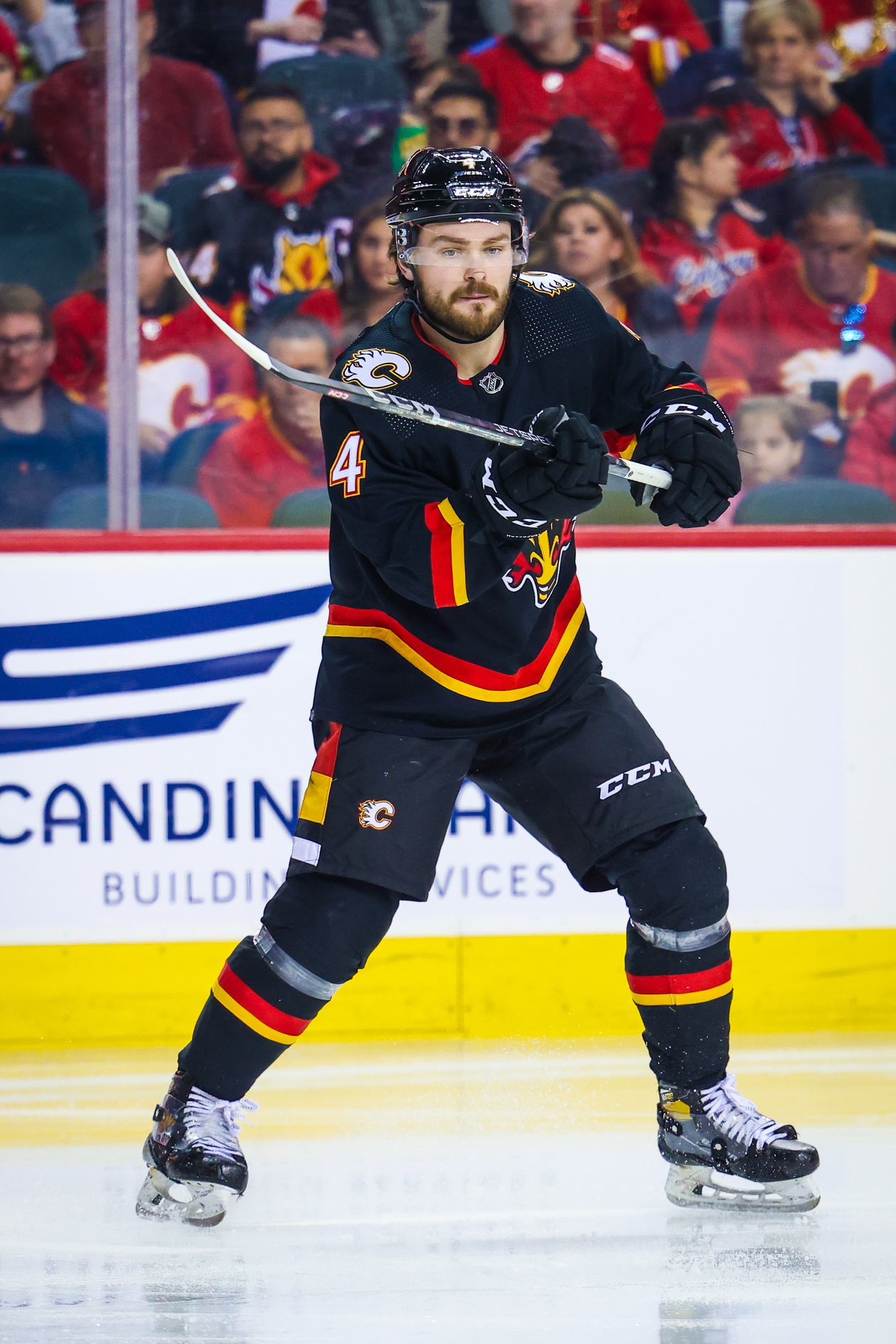 At the time Andersson’s deal was signed, it looked a bit risky. He hadn’t recorded more than 22 points in a season and had yet to average 20 minutes a game. However, it has worked out arguably better than Calgary could have hoped for. His offensive production has improved considerably, topped by a 50-point effort in 2021-22. He has become an all-situations player who has played on the top pairing for the last few years. That alone will help give him a very strong market in free agency before even considering the fact he’s a right-shot player, the side that is always in premium demand. A max-term deal with an AAV starting with a seven looks like a given at this point, if not more.
Bean came to his hometown team after being non-tendered by Columbus, taking a pay cut in the process to do so. Once touted as a high-end prospect, he has settled in more as a depth defender to this point in his career. This price tag for a regular on the third pairing is manageable but he’ll need to find a way to at least get into a number five slot if he wants to beat $2MM again next time out. Miromanov was acquired and quickly extended last season, giving him some security and Calgary a low-cost two-year look at a player who had shown flashes of upside in his limited action with Vegas. At this point, establishing himself as a full-timer is the first goal, one that would allow him to stay around this price tag. If he works his way into a fourth or fifth role between now and then, doubling this (or a bit more) could be doable.
Wolf already looks like quite a bargain given some of the other contracts promising but unproven goalies have signed recently (with an AAV higher than Wolf’s total contract value). He’s their goalie of the future and if he locks down the starting role by then, his next deal should vault past the $5MM mark at a minimum.
Signed Through 2026-27
F Blake Coleman ($4.9MM, UFA)
Coleman had a breakout performance last season, notching 30 goals while passing the 40-point mark for the first time of his career. From a value perspective, this price tag would be a bargain if he could maintain that type of output. Of course, his point total is usually in the 30s and at that level, this is an above-market contract. That said, with the role he fills and Calgary’s cap space, it’s not an overpayment they’re probably too concerned about at this point.