
Salary Cap Deep Dive: Anaheim Ducks
Navigating the salary cap is one of the most important tasks for a front office. Teams that can avoid total cap chaos by walking the tightrope of inking players to deals that match their value (or compensate for future value without breaking the bank) remain successful. Those that don’t often see struggles and front office changes.
PHR will look at every NHL team and give a thorough look at their cap situation for the 2024-25 season. This will focus more on players who are regulars on the roster versus those who may find themselves shuttling between the AHL and NHL. All cap figures are courtesy of PuckPedia. We’re currently covering the Pacific Division, first up is the Ducks.
Anaheim Ducks
Current Cap Hit: $68,314.167 (below the $88MM Upper Limit)
Entry-Level Contracts
F Leo Carlsson (two years, $950K)
G Lukas Dostal (one year, $812.5K)
F Cutter Gauthier (two years, $950K)
D Tristan Luneau (three years, $865K)
F Mason McTavish (one year, $894K)
D Pavel Mintyukov (two years, $918K)
D Olen Zellweger (two years, $844K)
Potential Bonuses:
Carlsson: $3.225MM
Gauthier: $950K
Luneau: $80K
McTavish: $2.5MM
Mintyukov: $800K
Total: $7.555MM (exceeds the 7.5% cap by $955K; that amount counts as a direct charge against the salary cap)
Anaheim took things slow with Carlsson last season, limiting him to just 55 games. However, he played big minutes in those appearances and is seeing similar ice time early on this year. That gives him a good chance to meet $1MM of his ‘A’ bonuses while the rest are unlikely. We’ve seen the price tag for top young centers approach the $8MM mark post-entry-level and at this point, there’s little reason to think Carlsson shouldn’t be in that range as well. Gauthier is in his first full NHL season after turning pro late last year. Anaheim has high hopes for him as well although he’s obviously less proven at this point, making a second contract much harder to forecast. His bonuses are also of the ‘A’ variety and could be achievable depending on the role he carves out for himself.
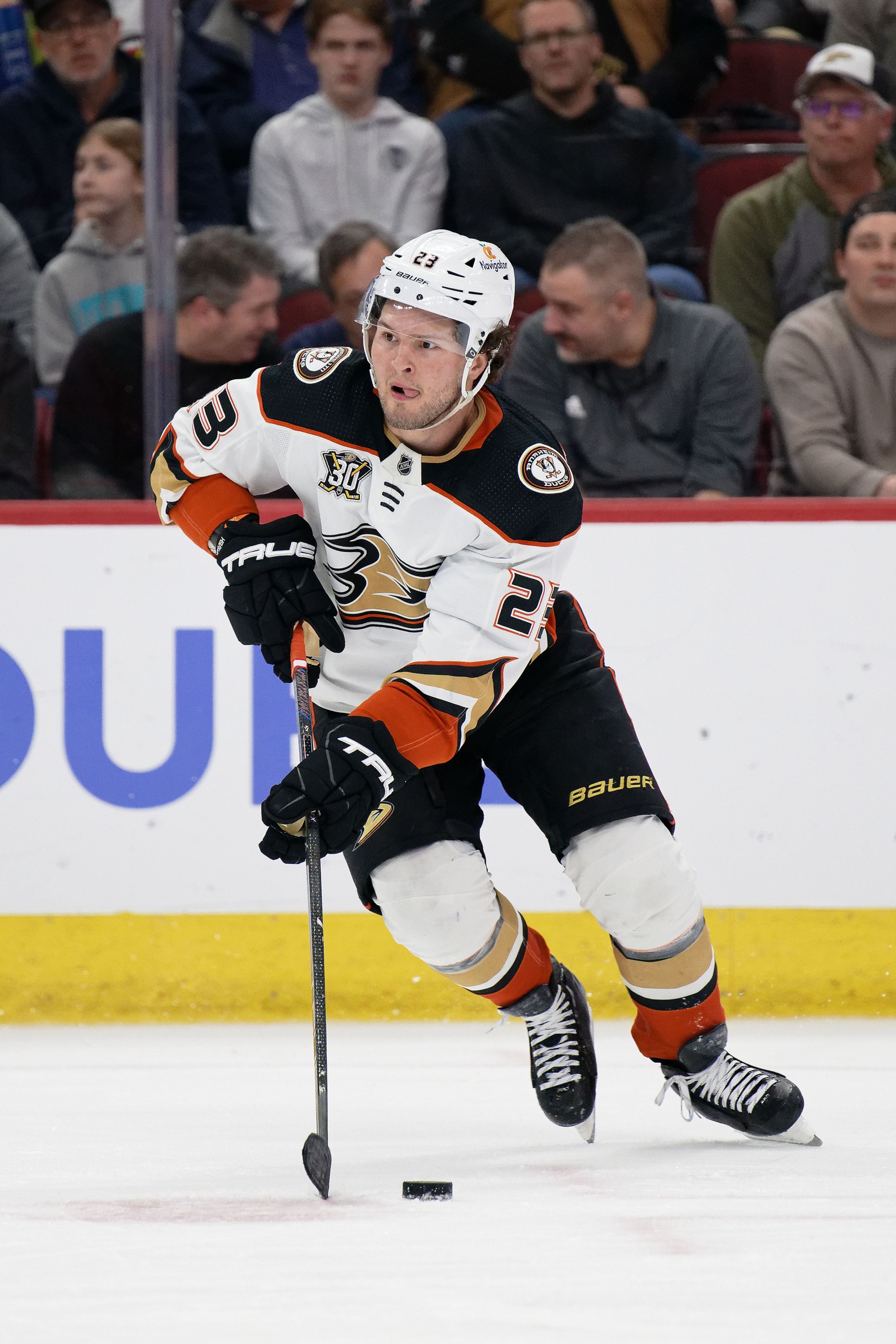 McTavish is the other young middleman that GM Pat Verbeek will be looking to sign in the relatively near future. His first two full NHL seasons saw him just surpass the 40-point mark but being the third-overall selection, it’s fair to say that he’s still envisioned as being part of their long-term core. His numbers at this point come in a bit below Matthew Beniers (who signed for seven years and $50MM on an extension that begins next season). That would peg a long-term price tag at or just below $7MM (closer to $7.5MM on an eight-year agreement). Alternatively, if they go with a bridge contract, that type of deal would be closer to $4MM on a two-year pact, $4.5MM or so on a three-year agreement. He has $850K of ‘A’ bonuses in his deal and reasonably could max out on those with a strong showing this season.
On the back end, Mintyukov is someone they have high hopes for as another high draft pick. He had a solid rookie campaign and is logging heavy minutes early on this year. The market for some top blueliners coming off their entry-level deals who aren’t elite offensively has pushed past $8MM recently. It’s not unfathomable that Mintyukov gets to that level over the next two seasons. He has a good chance of reaching his ‘A’ bonuses based on his early-season usage.
Luneau missed almost all of last season which doesn’t help from a development perspective but he didn’t burn the first year of his deal either. For this year, the priority will be simply getting regular game reps which makes projecting his next deal all but impossible at this point. His bonuses are games-played based so staying healthy will allow him to reach at least most of those. As for Zellweger, he was dominant at the AHL level last year and held his own in limited minutes. A bridge agreement is likely for him and with what’s likely to be decent offensive numbers, it should push past at least $2MM.
Dostal has been thrown to the wolves at times but has put up more than respectable numbers over his first couple of NHL seasons. Is he their starter of the future though? That’s not a given so it wouldn’t be surprising to see him land a bridge deal. Given the contracts handed out recently to Yaroslav Askarov ($2MM AAV) and Jesper Wallstedt ($2.2MM AAV), Dostal’s contract should come in at a higher rate than that.
Signed Through 2024-25, Non-Entry-Level
D Brian Dumoulin ($3.15MM, UFA)
F Robby Fabbri ($4MM, UFA)
F Brett Leason ($1.05MM, RFA)
F Isac Lundestrom ($1.5MM, RFA)
F Brock McGinn ($2.75MM, UFA)
D Urho Vaakanainen ($1.1MM, RFA)
G James Reimer ($1MM, UFA)
F Frank Vatrano ($3.65MM, UFA)
Fabbri was picked up from Detroit in a cap-clearing move over the summer which wasn’t necessarily the worst outcome for him as he’ll play a bigger role with the Ducks than he otherwise would have. Even so, given his long injury history, his next deal should check in closer to the $2.75MM range even though he consistently averages over half a point per game when he’s in the lineup. Vatrano found another gear offensively last season with 37 goals, positioning himself nicely for the type of long-term deal that has eluded him thus far in his career. He’ll be in his age-31 year next season so a max-term pact is off the table but five or six years could be doable. If he can produce at a similar rate this year, that contract should push well past the $6MM mark.
McGinn is a serviceable fourth liner whose contract pays him more than that. That’s likely to be corrected next summer when his deal should come in around half of this amount. Lundestrom might be at the end of his rope with Anaheim if things don’t go well this year. He took a pay cut to avoid being non-tendered this summer and until he can establish himself as a consistent top-nine center, he’ll be hard-pressed to land a sizable increase. Leason, meanwhile, was non-tendered this summer to avoid arbitration eligibility but returned with a $250K raise in salary. Another double-digit goal performance this season would help his value and push it closer to the $1.5MM range but he remains a non-tender risk nonetheless.
Dumoulin was also brought in with Seattle needing to clear salary. His first year away from Pittsburgh wasn’t the greatest although he’ll at least benefit from likely a slightly bigger role in Anaheim. Even so, his market wasn’t strong last time out and probably isn’t going to be much better barring an improved performance this year. He could still land something around this price tag but a big raise is unlikely. Vaakanainen has been more of a depth defender at this point of his career and has already been scratched this season. He was non-tendered last summer to avoid arbitration rights and probably is heading for a similar outcome this time around, even if he’s worth something around this price point on the open market.
Reimer was picked up off waivers as injury insurance, sparing him from the third-string role he was heading for in Buffalo (at least for the time being). At 36, he’s going to be going year-to-year moving forward, likely in the lower-end backup or third-string role so this price point is where his next deal should land as well.
Signed Through 2025-26
D Cam Fowler ($6.5MM, UFA)
D Radko Gudas ($4MM, UFA)
F Ross Johnston ($1.1MM, UFA)
D Jackson LaCombe ($925K, RFA)
F Trevor Zegras ($5.75MM, RFA)
Zegras and the Ducks couldn’t work out a long-term deal, settling on this bridge agreement last year. The first season didn’t go well, to put it lightly as he battled injuries and ineffectiveness. At this point, it’s hard to project a significant increase for his next contract unless he’s able to get back to his previous 60-point form. Johnston is a fourth-line enforcer and with a lot of teams not carrying those, that limits his long-term value. Still, as long as there are at least some teams open to deploying one, another contract around this price should be doable.
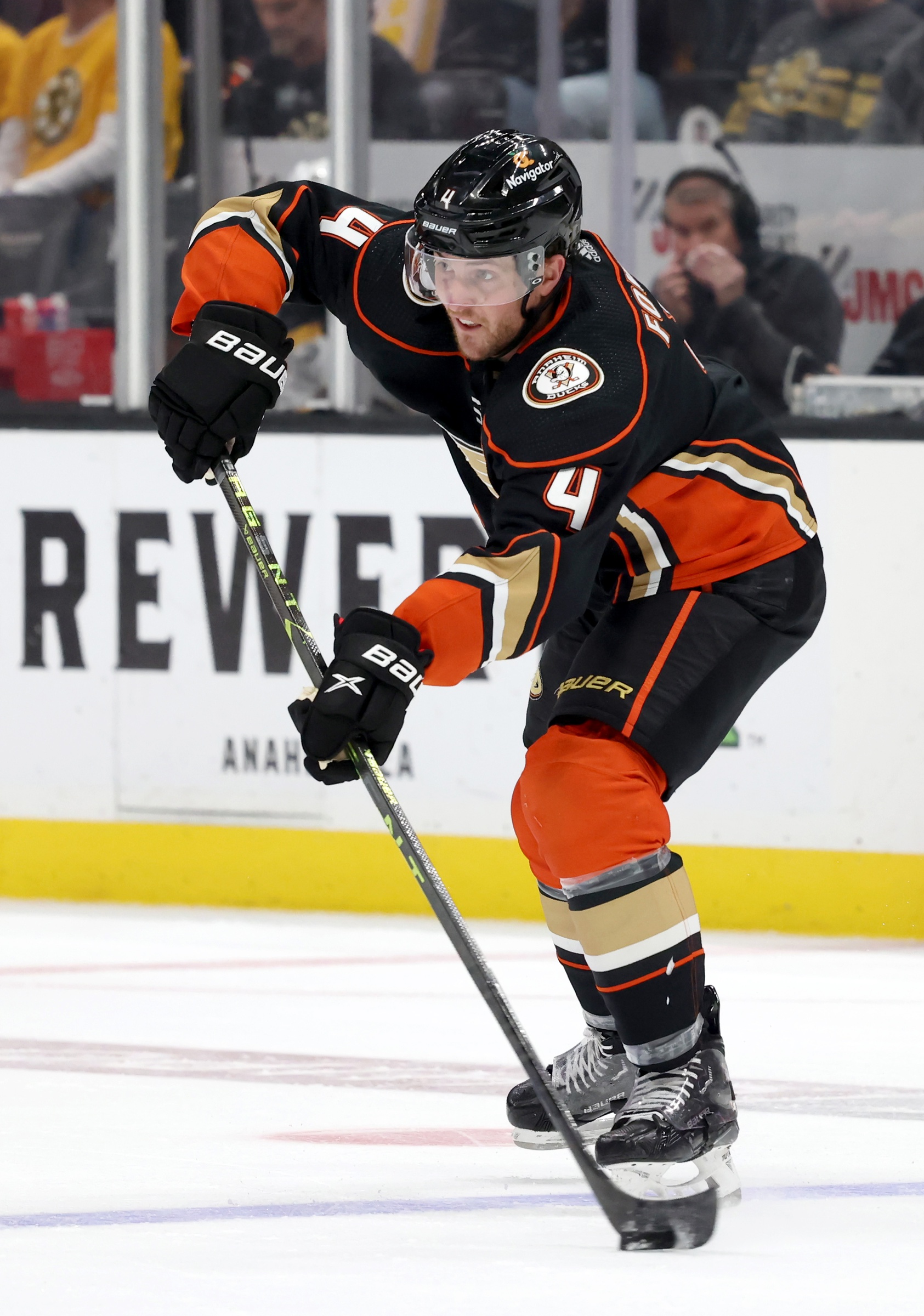 Fowler’s value depends on the eye of the beholder. He’s certainly not a true number one defenseman but he has held that role for Anaheim for several years now and has done relatively well with it. Given the minutes he covers, his price tag is solid value relative to others in that situation. But if he was deployed in a more optimal spot (either second or third on the depth chart which is where he’d land on a lot of other teams), the contract moves somewhere between market value and a slight overpayment. Fowler will be 34 when his next deal starts and if he’s elsewhere in a lesser role at that time, it’s hard to see a raise coming his way. Instead, another multi-year deal around this price tag (in a higher cap environment) might be where he lands.
The fact that Gudas landed four years at this price point after primarily playing on the third pairing raised some eyebrows but it has worked so far for Anaheim. The new captain has moved into the top four and handled it relatively well. Having said that, he’ll be 36 when this deal expires so again, a raise isn’t overly likely. A two-year deal around this price point could be, however. LaCombe signed what’s frankly a below-market bridge contract for someone who averaged over 19 minutes a game the year before. However, he at least secured a one-way salary (which is notable given that he’s still waiver-exempt) while he’ll have arbitration rights next time out. If he can shoulder a similar workload for the next two years, tripling this price tag could be doable.
Signed Through 2026-27
G John Gibson ($6.4MM, UFA)
F Alex Killorn ($6.25MM, UFA)
F Ryan Strome ($5MM, UFA)
Killorn was a surprise signing in free agency last summer, both in terms of Anaheim getting him and the contract he received. The idea was to add a quality veteran who could play in the top six and work with the young forward group. But things didn’t go quite as planned in year one and, already 35, it’s hard to forecast a sharp improvement. And considering he’ll be entering his age-38 year in 2027-28, this might be his last contract. Strome hasn’t been able to match the output he had with the Rangers but now has five straight seasons of more than 40 points under his belt. Given the annual high demand for centers, he could land a similar contract if he was on the open market now so thus far, the Ducks are getting a fair return on his agreement.
It wasn’t that long ago that Gibson was viewed as one of the top goalies in the league with his contract looking like a bargain relative to other top-paid starters. But that has flipped in recent years. His save percentage in the past five seasons combined is just .900, a mark that’s below league average. Having someone below average in that mark making top-ten money isn’t ideal. It’s possible that a change of scenery could allow him to bounce back to a point but it’s unlikely he’d rebound to a level of play that would make this a team-friendly pact.
How Do Recent Extensions Impact Igor Shesterkin’s Market?
Since October 1st, Boston Bruins’ Jeremy Swayman, Dallas Stars’ Jake Oettinger, Ottawa Senators’ Linus Ullmark, and Seattle Kraken’s Joey Daccord have all signed sizeable multi-year contracts with their respective teams. The ‘white whale’ of them all, Igor Shesterkin, is looking to become the highest-paid goaltender of all time and it will be interesting to see the impacts of the recent deals on his market.
Shesterkin recently rejected an eight-year, $88MM contract offer from the New York Rangers and is reportedly seeking a higher salary than teammate Artemi Panarin‘s $11.643MM AAV. It’s clear that he’s seeking a $96MM deal but could go as low as $94MM just to ensure he becomes the highest-paid member of the organization.
The recent comparables to Shesterkin are that of Swayman, Oettinger, and Ullmark’s contracts although many would argue he is in a league of his own. Each netminder signed for an $8.25MM salary with the first two garnering max term. There is a very reasonable argument that Shesterkin is better than each netminder listed but is he that much better to justify a nearly 50% raise on some of the better goaltenders in the league?
An eight-year contract for Shesterkin would take him to his age-37 season while the contracts given to Swayman and Oettinger will take them to 33 and 34, respectively. Shesterkin debuted in the 2019-20 season while Oettinger and Swayman debuted a year later. He leads the trio in wins, save percentage, and hardware while Swayman holds the lead in goals-against average.
He’s failed to backstop the Rangers to a Stanley Cup Final to this point but he has made two Conference Final appearances while the combination of Swayman and Oettinger have only reached one. His case for being the best goaltender in the game is a solid one but it’s going to be difficult for the Rangers to give him a $12MM salary despite the accomplishments. New York’s contention window begins and ends with Shesterkin between the pipes but they’ll still need financial flexibility to put complimentary pieces around him.
Shesterkin’s main argument, especially concerning Oettinger, is the ever-growing issue of income tax-free states. Doing some low-stakes math, David Pagnotta of The Fourth Period asserted earlier that Oettinger’s take-home pay in Dallas, TX would be approximately $5.22MM after taxes while a $12MM salary for Shesterkin in New York City, NY would net him around $5.29MM. Factoring in the cost of living in New York compared to Dallas one could reasonably ascertain Shesterkin’s justification for his asking price.
At the end of the day, because Shesterkin is such a needle-mover between the pipes, one team will likely step up and give him $12MM a year on a max-term contract. There are few present concerns that the contract won’t be with the Rangers but the recent goaltender contracts may drive a further wedge between the two parties.
PHR Mailbag: Impact Youngsters, Record-Breaking Contract, Fowler, Goalies, Struggling Contender, Minors
Topics in this edition of the PHR Mailbag include a discussion about a Cam Fowler trade scenario, plenty of goalie talk, and much more. If your question doesn’t appear here, check back in last weekend’s mailbag.
wreckage: Do you expect Michkov or Bedard to be more impactful going forward? Bedard may have more skill, slightly. Michkov likely has a deeper team behind him at the moment. For the next three years… who has more impact in the NHL?
I’ll go with Connor Bedard for this one. Yes, Chicago has a weaker team on paper right now but Philadelphia is still rebuilding as well, despite them nearly making the playoffs last season. Both teams are probably on the outside looking in for at least the first two of those three years. The good news is that Matvei Michkov should get a lot of runway to play big minutes quickly like Bedard did last season but there’s only so much impact he can have on a non-playoff team.
Generally speaking, I’m going to lean toward a high-end center having more of an impact than a high-end winger on a year-to-year basis. Bedard will be a year further ahead in his development, entering what should be a very pricey second contract at a time when Chicago should be starting to take some steps forward in the Central. He’s going to be a big part of that. Not to say Michkov shouldn’t be an impactful piece by any stretch but I expect most players won’t be quite as impactful as Bedard should be in a few years.
riverrat55: Who is the 1st player with the upcoming increase in the Salary Cap to ask for $20MM?
Before tackling this, we need to figure out our target cap percentage that will cost $20MM. Teams, players and agents use this percentage as a direct comparable in negotiations. (For anyone wondering, 20% is the maximum, a rate we haven’t seen reached in quite some time. I remember some when the first cap came out but that’s about it.) Auston Matthews’ contract is 15.06% of the cap while Leon Draisaitl’s recent one checks in at 15.91%. Connor McDavid’s current one is 15.72% and I could see it eclipsing the 16% mark (which, on a $92MM-plus cap, puts the AAV in the $15MM range). For the sake of this hypothetical, let’s put a target cap percentage at 16.5%.
Let’s do some quick math here. $20MM divided by 16.5% = $121.212MM. Why does this matter? We need to project when the Upper Limit of the salary cap might get to this amount to see who will need a contract at this time.
This year, the cap is $88MM with a 5% capped increase next season and the year after that. That would make the ceiling $92.4MM in 2025-26 and $97.02MM in 2026-27 before the CBA expires. (The league did make this year’s cap a bit higher than the 5% increase so this isn’t a perfect scenario but close.) It wouldn’t shock me to see a bit more of a jump after that, assuming revenues stay on their current trajectory. Let’s say it’s a 10% boost post-CBA. That makes the cap $106.72MM in 2027-28. Let’s forecast 7% increases on average after that. In 2028-29, it would be $114.19MM and in 2029-30, it’d be $122.19MM. So, the 2029-30 season is the earliest we could see that price point.
Assuming that most core players will continue to sign max-term deals, that probably takes McDavid off the table. Cale Makar is up in 2027 so he’s off the table. Matthews’ deal expires in 2028 so he’s not going to get there either. The rest of the established elite will either be signed through that time or on the backswing of their careers in 2030.
With that in mind, my guess would be Bedard if I’m picking a current player. He’d have a shot at that in 2034 if he signs a max-term contract coming off his entry-level deal. If he goes shorter-term, he could get there sooner. We’re going to see a bigger jump in the cap coming sooner than later but even with that, it’s probably going to take a while to see someone reach $20MM unless there’s a material jump in the Upper Limit in the new CBA or some sort of other drastic change.
jminn: The Ducks want to trade Fowler. Kings could have a need, even though Cam is a lefty. Is there any chance Fowler moves up the freeway?
I’m going to be a little picky on the phrasing as it’s not necessarily that they’re looking to trade Fowler but rather that they’re willing to work with him on finding a new home. If he winds up staying there for most or all of the season, I think that’s an outcome they’re okay with.
But semantics aside, I don’t think this is a good fit for Los Angeles and not because of the handedness. Drew Doughty is expected to be back this season so while the Kings have around $10MM in cap room right now per PuckPedia, that money isn’t really spendable as they’ll need to get back to compliance before they can activate him. That’s easy to do with a replacement from the minors but Fowler has a $6.5MM cap hit. That means that barring further long-term injuries, the Kings would need to clear around $6.5MM off the books when the time comes to activate Doughty. That’s going to be extremely difficult to do midseason.
Would Fowler help the Kings? He certainly would. But this isn’t the right move for them to make at this time. Los Angeles needs to exhaust their internal options and see if Brandt Clarke and Jordan Spence can take on bigger workloads. Then, if that doesn’t go well, they can re-assess but even then, it’d have to be for a much cheaper option than Fowler.
Frozenaquatic: There’s an interesting conversation happening right now about goalie salaries. Obviously, the argument for lower salaries is that aside from Hellebuyck, even top goalies play about 60 – 65 games (even though starting pitchers command high salaries despite only playing 30 out of 162 games). And how much does a goalie matter for a championship (or was Darcy Kuemper the Trent Dilfer of the NHL–just an anomaly in a rare system that usually favors Tom Bradys/Vasilevskys)?
Another argument is that they are only as good as the system–how much will Ullmark regress behind a much worse Sens system and would Swayman regress that same amount? They’re also mercurial–Shesterkin could sign an eight-year, $104MM contract and begin an eight-year slump.
The argument for higher salaries is that they may affect those games more than the other players. Great goalies sometimes open a championship window. They can represent a winning culture that other players want to play for.
Where do you fall on the goalie salary spectrum?
Second question is: Do you know if players take playing with goalies into consideration when they sign UFA contracts with new teams?
Third question: if you were in a legacy fantasy league, would you take Askarov, Cossa, or Wallstedt?
1) In general, I’d say goalies have felt the squeeze in recent years. With a lot of teams shifting closer to a platoon, there has certainly been a concerted effort to try to spend less at that position. It also should be noted that the number of true higher-end starters has gone down which is part of the reason teams are looking for goalies to be closer to splitting the duties.
What has been interesting to me lately is that teams with a legitimate number one have largely managed to get that player locked up on what looks like a team-friendly agreement. Part of me wonders if the fact a lot of teams are looking to cut costs between the pipes actually has deflated the marketability for some of those players. While supply is low, it’s getting offset by perceived lower demand.
That’s what made the Jeremy Swayman saga particularly interesting as here’s a player trying to reach that upper tier (some would say he’s there already while others might want to see him play more first) that seemingly held out for top dollar. It seems like Igor Shesterkin is hoping to do the same as well although, again, if he got to the open market, how many teams would realistically go after him? How many would have the cap space and of those, how many would pay up that much for a goalie? I’m intrigued to see how that one’s going to play out.
2) I can’t say this for certain either way but it would surprise me if more than a handful of skaters would put too much weight on who the goalie is when signing in free agency. I’d say that’s too position-specific. Free agents probably assess rosters on a more macro level – does the player want to go to a contender? Does he want to go to a team that is thinner at a specific position in the hopes of securing a bigger role (and ideally a bigger contract)? A UFA goalie would pay attention to who the incumbent player is for obvious reasons but I doubt a lot of skaters put a high emphasis on who the goalies are specifically when they’re pondering teams.
3) Long-term, it’s hard to pick against Yaroslav Askarov. There’s a reason why he was considered by some as the best goalie outside North America a couple of years ago. He’s now on a team that could be positioning itself to contend in a few years. If it’s a long-term play you’d be going for, he’s it. If you need someone who might get you more points in the short term, it’s Jesper Wallstedt. Like Askarov, he’ll see some NHL action this season but he’s on a team that I expect will be more competitive. Next season, he should be a full-timer on a team that has some cap space to make some noise next summer.
Salary Cap Deep Dive: Washington Capitals
Navigating the salary cap is one of the most important tasks for a front office. Teams that can avoid total cap chaos by walking the tightrope of inking players to deals that match their value (or compensate for future value without breaking the bank) remain successful. Those that don’t often see struggles and front office changes.
PHR will look at every NHL team and give a thorough look at their cap situation heading into the 2024-25 season. This will focus more on players who are regulars on the roster versus those who may find themselves shuttling between the AHL and NHL. All cap figures are courtesy of PuckPedia. We’re currently covering the Metropolitan Division, next up is the Capitals.
Washington Capitals
Current Cap Hit: $98,665,965 (above the $88MM Upper Limit)
Entry-Level Contracts
F Hendrix Lapierre (one year, $863K)
Potential Bonuses
Lapierre: $445K
Lapierre spent the bulk of last season with Washington with some short stints with AHL Hershey mixed in. Most of that time was in a bottom-six role, one he’s likely to have this season as well which means his bonuses are unlikely to be met, aside from possibly any games-played ones. A bridge agreement should be the outcome for Lapierre who, if he stays in the bottom six for most of this season, could possibly double his current price tag next summer.
Signed Through 2024-25, Non-Entry-Level
D Alexander Alexeyev ($825K, RFA)
F Nicklas Backstrom ($9.2MM, UFA)
D Ethan Bear ($2.0625MM, UFA)
D Jakob Chychrun ($4.6MM, UFA)
F Nic Dowd ($1.3MM, UFA)
G Charlie Lindgren ($1.1MM, UFA)
F Andrew Mangiapane ($5.8MM, UFA)
D Dylan McIlrath ($775K, UFA)
F T.J. Oshie ($5.75MM, UFA)
F Taylor Raddysh ($1MM, UFA)
G Logan Thompson ($766.7K, UFA)
F Jakub Vrana ($775K, UFA)
Let’s get Backstrom and Oshie out of the way together as they’re in the same situation. Backstrom remains on LTIR where he was for most of last season while it’s unlikely that Oshie will be able to suit up this season either. GM Chris Patrick’s early-offseason spending was a strong indicator that the team doesn’t believe Oshie will be cleared to play.
Mangiapane was one of the additions through that early spending. After scoring 35 goals in 2021-22 (yielding this contract), he has just 31 in the two years since then although he has reached at least 40 points each time. At this point, a small pay cut could be coming but if he can even get back to 30 goals with his new team, Mangiapane could push past $6MM next summer.
Dowd has gone from being a regular fourth liner a few years ago to a regular third liner, pushing past 20 points in three straight years now. A center who can kill penalties, he’s in line to potentially add another million per season or so to that number, albeit on a short-term deal as he’ll be 35 next summer. Raddysh was non-tendered this summer, resulting in him looking for a short-term rebound deal. Only a year removed from a 20-goal campaign, he could double this next summer if he can get back to the 15-goal mark or so. Vrana had to earn a deal the hard way through a PTO but landed one earlier this week. After bouncing around a bit in recent years, it’s hard to see him commanding much more than the minimum unless he has a big season offensively.
Chychrun was brought in via an early July trade to help bolster the back end. He doesn’t produce enough to be a high-end threat offensively but he has reached the double-digit goal mark in three of the last five years and reached the 40-point plateau last season as well. If he stays in that range while continuing to play heavy minutes, his next deal could surpass $7MM on a long-term agreement.
Bear was a midseason signing last year that hasn’t panned out yet. After exiting the Player Assistance Program over the offseason, he wound up not making the team and cleared waivers earlier this month. He’ll carry a pro-rated $912.5K cap charge while with AHL Hershey and if he’s there all season, he’ll be looking at something closer to the minimum next summer. Alexeyev has had a limited role so far in his NHL action, primarily playing part-time on the third pairing. His qualifying offer checks in just below $920K with arbitration rights next summer but Washington won’t be able to afford that roster spot costing much more than that. McIlrath, meanwhile, has primarily been in the minors in recent years and accordingly, his next deal should come in at or near the minimum salary again.
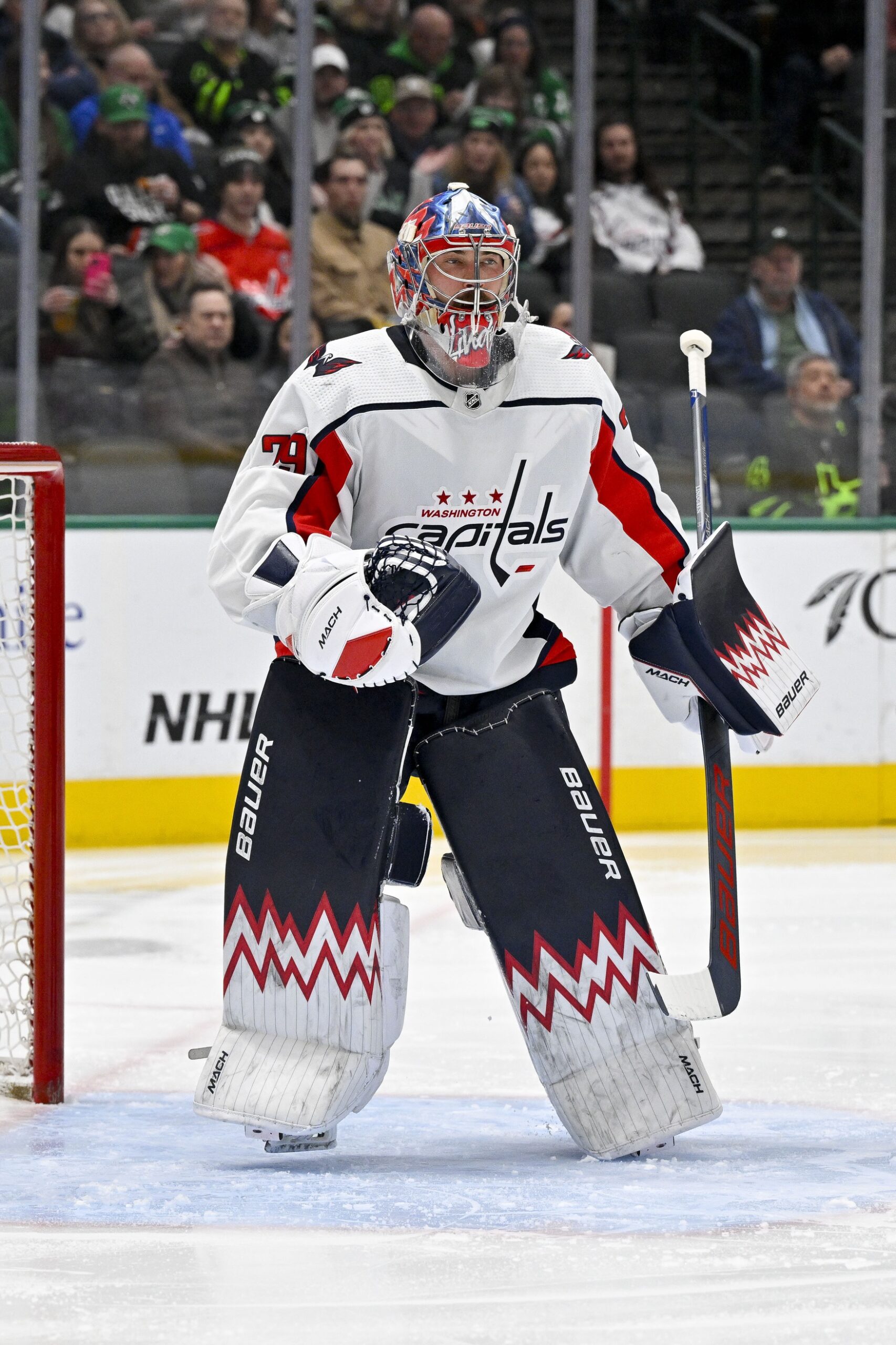 Lindgren was a late bloomer but since joining Washington two years ago, he has established himself as at least a capable NHL netminder. Last season, he wrestled away the number one job from Darcy Kuemper which will only help his cause in negotiations. Still, with a limited track record (just 110 career NHL appearances heading into the season), an early extension isn’t likely – both sides probably want to wait and see what happens – but if he has a similar year to this one, he should earn at least $3MM on a multi-year agreement next summer. If it’s another year as a true starter, the recent five-year, $25MM contract given to Joey Daccord could come up in talks.
Thompson also has somewhat of a limited track record in terms of experience but is also a few years younger with better career numbers after three strong seasons in Vegas. Accordingly, it wouldn’t be shocking if his camp is already eyeing something close to Daccord’s new deal if and when extension talks get underway. The cheapest goalie in the NHL, Thompson’s next deal will certainly change that soon enough.
Signed Through 2025-26
D John Carlson ($8MM, UFA)
F Brandon Duhaime ($1.85MM, UFA)
D Martin Fehervary ($2.675MM, RFA)
F Connor McMichael ($2.1MM, RFA)
F Sonny Milano ($1.9MM, UFA)
F Alex Ovechkin ($9.5MM, UFA)
D Trevor van Riemsdyk ($3MM, UFA)
Ovechkin is one of the top scorers in NHL history and even with a very high AAV for most of his career, he has lived up to it. That might be ending soon strictly from a bang-for-buck perspective. The 39-year-old had the lowest full-season production of his career and players generally don’t have a resurgent year at that age. That said, with all he has done for them and the chase for the all-time record, the Capitals won’t be too concerned if they’re not getting top value here.
McMichael received a bridge deal which was a pretty obvious outcome considering he spent most of 2022-23 in the minors. But if he can stay in the top six regularly, he could double that next time out with arbitration eligibility and if it looks like he’s a core piece for the future by then, a long-term deal could push past $5MM. Milano managed 15 goals in 49 games last season which isn’t bad production for that price tag but the book on him in recent years is that he can be effective only in a limited role. That has hindered his market before and probably will next time out unless something changes over the next couple of years. Duhaime is a crash-and-bang winger who only managed five goals last season, making this price tag seemingly a bit high for that role but perhaps a change of scenery will allow him to contribute a bit more offensively which would set him up to pass $2MM next time out.
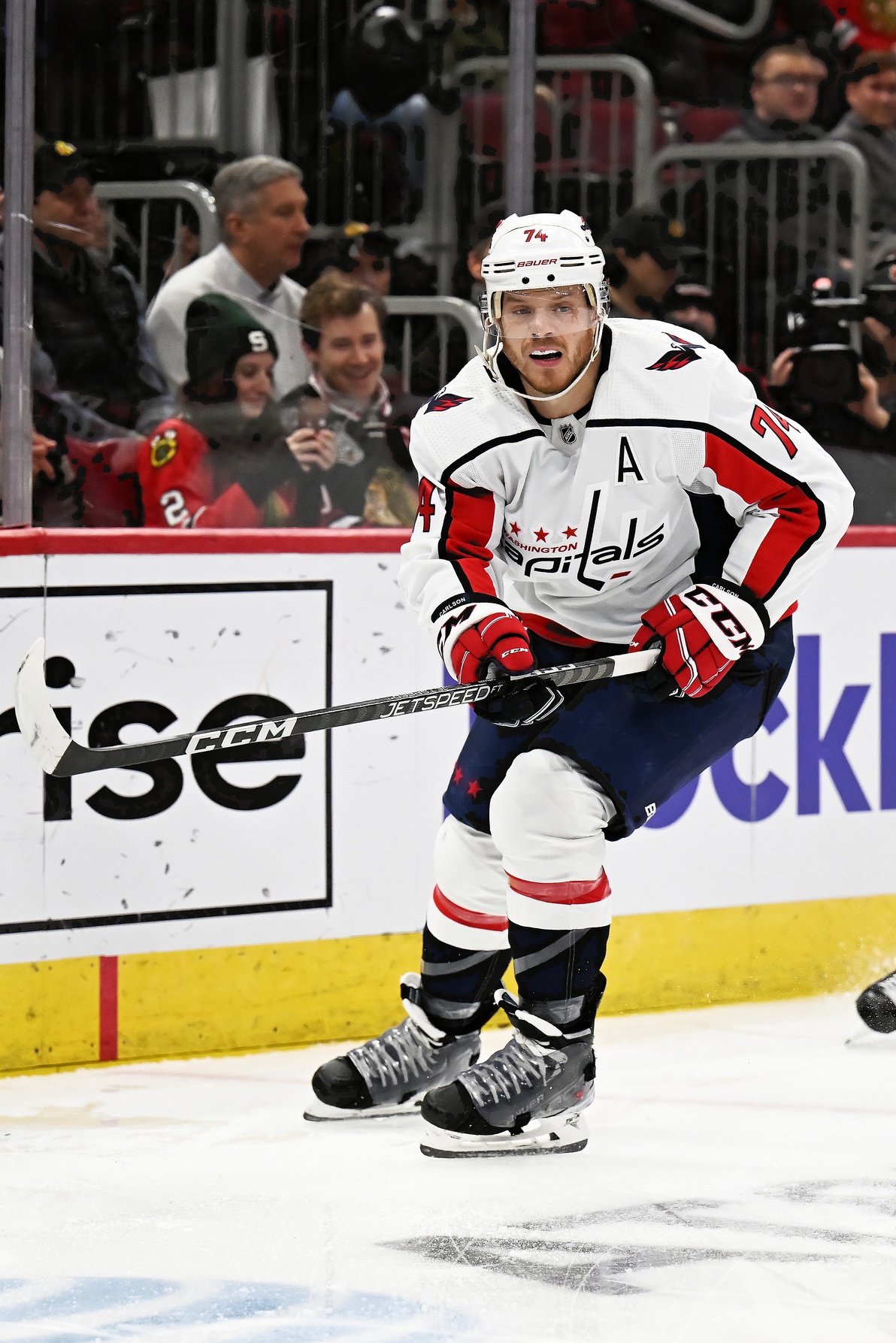 While Carlson didn’t light up the scoresheet as much as he has in the past, he did reach the double-digit goal mark for the sixth time in the last seven years last season and logged a career high in ice time at nearly 26 minutes a night. That type of playing time is unsustainable for a 34-year-old but he doesn’t need to play that much to justify this deal. He remains an all-situations type of player which should give this contract a good chance to hold up value-wise over the final two seasons. It’s not inconceivable that he lands a small raise next time out although the likelier outcome is more of a medium-term agreement that would allow the AAV to be a bit lower.
As for van Riemsdyk, he has found a home in Washington, going from being a player toward the end of the depth chart to spending a lot of time on the second pairing. This price tag for someone in that role is good value. He’ll be entering his age-35 year on his next contract so he might be hard-pressed to get much more than this in 2026. Fehervary, meanwhile, is on his bridge deal and has similarly played a lot on the second pairing. Given that he’s still 25, he could push past the $4MM mark if things go well, perhaps $5MM on a long-term pact. His current deal is front-loaded, carrying just a $1.075MM qualifying offer two years from now.
Signed Through 2026-27
None
Active Roster Tracker
For the first time in our site’s history, Pro Hockey Rumors will keep a full listing of teams’ active rosters that will be updated as all moves, minor and major, come in each day.
If you have any questions, comments, or corrections, please send us a message through the Contact Us tab.
Anaheim Ducks
Last updated April 17, 7:30 p.m.
Roster size: 24
Forwards (13): Leo Carlsson, Cutter Gauthier, Jansen Harkins, Ross Johnston, Alex Killorn, Brett Leason, Isac Lundeström, Mason McTavish, Ryan Strome, Troy Terry, Frank Vatrano, Tim Washe, Trevor Zegras
Defensemen (8): Radko Gudas, Drew Helleson, Oliver Kylington, Jackson LaCombe, Pavel Mintyukov, Ian Moore, Jacob Trouba, Olen Zellweger
Goaltenders (3): Lukáš Dostál, John Gibson, Ville Husso
IR: F Robby Fabbri (upper body, week-to-week), F Brock McGinn (ACL surgery, out for season)
Boston Bruins
Last updated April 17, 5:50 p.m.
Roster size: 17
Forwards (10): John Beecher, Morgan Geekie, Mark Kastelic, Marat Khusnutdinov, Cole Koepke, Jakub Lauko, Elias Lindholm, Casey Mittelstadt, David Pastrňák, Pavel Zacha
Defensemen (5): Henri Jokiharju, Mason Lohrei, Andrew Peeke, Parker Wotherspoon, Nikita Zadorov
Goaltenders (2): Joonas Korpisalo, Jeremy Swayman
LTIR: D Hampus Lindholm (lower body, day-to-day), D Charlie McAvoy (shoulder, week-to-week)
Buffalo Sabres
Last updated June 27, 5:00 p.m.
Roster size: 26
Forwards (16): Zach Benson, Josh Doan, Jordan Greenway, Tyson Kozak, Peyton Krebs, Jiri Kulich, Sam Lafferty, Beck Malenstyn, Ryan McLeod, Joshua Norris, Noah Östlund, Jack Quinn, Isak Rosen, Tage Thompson, Alex Tuch, Jason Zucker
Defensemen (8): Jacob Bernard-Docker, Jacob Bryson, Bowen Byram, Connor Clifton, Rasmus Dahlin, Michael Kesselring, Owen Power, Mattias Samuelsson
Goaltenders (2): Ukko-Pekka Luukkonen, James Reimer
Calgary Flames
Last updated April 24, 8:00 p.m.
Roster size: 22
Forwards (12): Mikael Backlund, Blake Coleman, Matthew Coronato, Joel Farabee, Morgan Frost, Jonathan Huberdeau, Nazem Kadri, Ryan Lomberg, Martin Pospisil, Kevin Rooney, Yegor Sharangovich, Connor Zary
Defensemen (8): Rasmus Andersson, Kevin Bahl, Jake Bean, Joel Hanley, Daniil Miromanov, Brayden Pachal, Zayne Parekh, MacKenzie Weegar
Goaltenders (2): Daniel Vladař, Dustin Wolf
IR: F Justin Kirkland (ACL, out for season), F Anthony Mantha (ACL, out for season)
Carolina Hurricanes
Last updated April 19, 12:00 p.m.
Roster size: 25
Forwards (14): Sebastian Aho, Jackson Blake, William Carrier, Taylor Hall, Mark Jankowski, Seth Jarvis, Tyson Jost, Jesperi Kotkaniemi, Jordan Martinook, Eric Robinson, Jack Roslovic, Jordan Staal, Logan Stankoven, Andrei Svechnikov
Defensemen (8): Brent Burns, Jalen Chatfield, Shayne Gostisbehere, Alexander Nikishin, Dmitry Orlov, Jaccob Slavin, Riley Stillman, Sean Walker
Goaltenders (3): Frederik Andersen, Ruslan Khazheyev, Pyotr Kochetkov
LTIR: F Jesper Fast (neck, out for season)
Chicago Blackhawks
Last updated April 24, 5:50 p.m.
Roster size: 24
Forwards (15): Connor Bedard, Tyler Bertuzzi, Jason Dickinson, Ryan Donato, Nick Foligno, Ryan Greene, Philipp Kurashev, Pat Maroon, Ilya Mikheyev, Oliver Moore, Frank Nazar, Lukas Reichel, Landon Slaggert, Teuvo Teräväinen, Joe Veleno
Defensemen (7): T.J. Brodie, Louis Crevier, Wyatt Kaiser, Alec Martinez, Connor Murphy, Sam Rinzel, Alex Vlasic
Goaltenders (2): Spencer Knight, Arvid Söderblom
IR: G Laurent Brossoit (knee, indefinite), D Shea Weber (lower body, out for season)
Colorado Avalanche
Last updated June 27, 5:00 p.m.
Roster size: 24
Forwards (13): Ross Colton, Jonathan Drouin, Jack Drury, Parker Kelly, Joel Kiviranta, Gabriel Landeskog, Artturi Lehkonen, Nathan MacKinnon, Martin Nečas, Brock Nelson, Valeri Nichushkin, Logan O’Connor, Jimmy Vesey
Defensemen (8): Samuel Girard, Erik Johnson, Ryan Lindgren, Cale Makar, Sam Malinski, Josh Manson, Keaton Middleton, Devon Toews
Goaltenders (3): Mackenzie Blackwood, Kevin Mandolese, Scott Wedgewood
LTIR: D Tucker Poolman (head, out for season)
Columbus Blue Jackets
Last updated June 27, 5:00 p.m.
Roster size: 27
Forwards (16): Zach Aston-Reese, Yegor Chinakhov, Charlie Coyle, Justin Danforth, Adam Fantilli, Christian Fischer, Boone Jenner, Kent Johnson, Luke Kunin, Sean Kuraly, Kirill Marchenko, Sean Monahan, Mathieu Olivier, Cole Sillinger, James van Riemsdyk, Dmitri Voronkov, Jack Williams, Miles Wood
Defensemen (9): Jake Christiansen, Dante Fabbro, Erik Gudbranson, Jordan Harris, Jack Johnson, Denton Mateychuk, Ivan Provorov, Damon Severson, Zach Werenski
Goaltenders (2): Jet Greaves, Elvis Merzļikins
IR: F Kevin Labanc (shoulder, out for season)
Dallas Stars
Last updated April 18, 2:29 p.m.
Roster size: 25
Forwards (14): Oskar Bäck, Jamie Benn, Colin Blackwell, Mavrik Bourque, Evgenii Dadonov, Matt Duchene, Mikael Granlund, Roope Hintz, Wyatt Johnston, Mason Marchment, Mikko Rantanen, Jason Robertson, Tyler Seguin, Sam Steel
Defensemen (8): Lian Bichsel, Cody Ceci, Mathew Dumba, Thomas Harley, Esa Lindell, Ilya Lyubushkin, Alexander Petrovic, Brendan Smith
Goaltenders (3): Casey DeSmith, Ben Kraws, Jake Oettinger
LTIR: D Miro Heiskanen (knee, week-to-week), D Nils Lundkvist (shoulder, out for season)
Detroit Red Wings
Last updated April 4, 11:06 a.m.
Roster size: 24
Forwards (13): Jonatan Berggren, J.T. Compher, Alex DeBrincat, Patrick Kane, Marco Kasper, Dylan Larkin, Tyler Motte, Michael Rasmussen, Lucas Raymond, Craig Smith, Elmer Söderblom, Vladimir Tarasenko, Austin Watson
Defensemen (8): Ben Chiarot, Simon Edvinsson, Erik Gustafsson, Justin Holl, Albert Johansson, William Lagesson, Jeff Petry, Moritz Seider
Goaltenders (3): Alex Lyon, Petr Mrázek, Cam Talbot
IR: F Andrew Copp (left pectoral tendon, out for season), F Carter Mazur (upper body, day-to-day)
Edmonton Oilers
Last updated April 15, 7:05 p.m.
Roster size: 28
Forwards (16): Viktor Arvidsson, Connor Brown, Leon Draisaitl, Adam Henrique, Quinn Hutson, Zach Hyman, Mattias Janmark, Max Jones, Kasperi Kapanen, Connor McDavid, Ryan Nugent-Hopkins, Corey Perry, Noah Philp, Vasily Podkolzin, Derek Ryan, Jeff Skinner
Defensemen (10): Evan Bouchard, Connor Carrick, Cam Dineen, Mattias Ekholm, Ty Emberson, John Klingberg, Brett Kulak, Darnell Nurse, Troy Stecher, Jake Walman
Goalies (2): Calvin Pickard, Stuart Skinner
IR: F Trent Frederic (lower body, week to week)
LTIR: F Evander Kane (hernia/hip/knee, proj. return Feb. 19 – Mar. 19)
Florida Panthers
Last updated June 27, 5:00 p.m.
Roster size: 25
Forwards (14): Aleksander Barkov, Sam Bennett, Jesper Boqvist, Jonah Gadjovich, A.J. Greer, Anton Lundell, Eetu Luostarinen, Brad Marchand, Tomáš Nosek, Sam Reinhart, Evan Rodrigues, Mackie Samoskevich, Nico Sturm, Carter Verhaeghe
Defensemen (7): Uvis Balinskis, Gustav Forsling, Seth Jones, Dmitry Kulikov, Jaycob Megna, Niko Mikkola, Nate Schmidt
Goaltenders (4): Sergei Bobrovsky, Evan Cormier, Vítek Vaněček, Daniil Tarasov
LTIR: F Matthew Tkachuk (groin, week-to-week)
Suspended: D Aaron Ekblad (20 games, eligible to return Game 3 of Round One)
Los Angeles Kings
Last updated April 21, 2:18 p.m.
Roster size: 27
Forwards (16): Quinton Byfield, Phillip Danault, Kevin Fiala, Warren Foegele, Samuel Helenius, Tanner Jeannot, Adrian Kempe, Anže Kopitar, Andrei Kuzmenko, Alex Laferriere, Trevor Lewis, Jeff Malott, Trevor Moore, Akil Thomas, Alex Turcotte, Taylor Ward
Defensemen (8): Michael Anderson, Kyle Burroughs, Brandt Clarke, Drew Doughty, Joel Edmundson, Vladislav Gavrikov, Jacob Moverare, Jordan Spence
Goaltenders (3): Pheonix Copley, Darcy Kuemper, David Rittich
Minnesota Wild
Last updated April 21, 7:54 p.m.
Roster size: 31
Forwards (18): Matt Boldy, Travis Boyd, Justin Brazeau, Joel Eriksson Ek, Marcus Foligno, Frédérick Gaudreau, Brendan Gaunce, Hunter Haight, Ryan Hartman, Vinnie Hinostroza, Marcus Johansson, Ben Jones, Kirill Kaprizov, Gustav Nyquist, Liam Ohgren, Marco Rossi, Yakov Trenin, Mats Zuccarello
Defensemen (10): Zach Bogosian, Jonas Brodin, Zeev Buium, Declan Chisholm, Cameron Crotty, Brock Faber, Carson Lambos, Jonathon Merrill, Jacob Middleton, Jared Spurgeon
Goaltenders (3): Marc-André Fleury, Filip Gustavsson, Samuel Hlavaj
SOIR: G Troy Grosenick (ACL, out for season)
Montreal Canadiens
Last updated June 27, 5:00 p.m.
Roster size: 22
Forwards (12): Josh Anderson, Joel Armia, Cole Caufield, Ivan Demidov, Christian Dvorak, Jake Evans, Brendan Gallagher, Patrik Laine, Alex Newhook, Michael Pezzetta, Juraj Slafkovský, Nick Suzuki
Defensemen (8): Alexandre Carrier, Noah Dobson, Kaiden Guhle, Lane Hutson, Mike Matheson, David Savard, Jayden Struble, Arber Xhekaj
Goaltenders (2): Jakub Dobes, Sam Montembeault
IR: F Kirby Dach (knee, out for season)
LTIR: G Carey Price (knee, out for season)
Nashville Predators
Last updated April 21, 10:19 a.m.
Roster size: 19
Forwards (12): Michael Bunting, Luke Evangelista, Filip Forsberg, Zachary L’Heureux, Jonathan Marchessault, Michael McCarron, Ryan O’Reilly, Colton Sissons, Cole Smith, Steven Stamkos, Jakub Vrána, Matthew Wood
Defensemen (5): Justin Barron, Nick Blankenburg, Andreas Englund, Jordan Oesterle, Brady Skjei
Goaltenders (2): Justus Annunen, Juuse Saros
IR: D Roman Josi (upper body, week to week), D Jeremy Lauzon (lower body, out for season), D Adam Wilsby (upper body, out for season)
New Jersey Devils
Last updated April 24, 7:05 p.m.
Roster size: 35
Forwards (20): Nathan Bastian, Jesper Bratt, Paul Cotter, Justin Dowling, Nolan Foote, Cody Glass, Brian Halonen, Mike Hardman, Erik Haula, Nico Hischier, Curtis Lazar, Nathan Legare, Kurtis MacDermid, Marc McLaughlin, Timo Meier, Dawson Mercer, Stefan Noesen, Ondřej Palát, Daniel Sprong, Tomáš Tatar
Defensemen (11): Seamus Casey, Dennis Cholowski, Brenden Dillon, Brian Dumoulin, Dougie Hamilton, Luke Hughes, Johnathan Kovacevic, Simon Nemec, Brett Pesce, Topias Vilen, Colton White
Goaltenders (4): Jake Allen, Nico Daws, Jacob Markström, Isaac Poulter
LTIR: F Jack Hughes (shoulder surgery, out for season), D Jonas Siegenthaler (lower body, out for season)
New York Islanders
Last updated June 27, 5:00 p.m.
Roster size: 24
Forwards (14): Casey Cizikas, Anthony Duclair, Pierre Engvall, Hudson Fasching, Marc Gatcomb, Simon Holmström, Emil Heineman, Bo Horvat, Anders Lee, Kyle MacLean, Matt Martin, Jean-Gabriel Pageau, Kyle Palmieri, Maxim Tsyplakov
Defensemen (8): Adam Boqvist, Tony DeAngelo, Scott Mayfield, Adam Pelech, Scott Perunovich, Ryan Pulock, Mike Reilly, Alexander Romanov
Goaltenders (2): Marcus Högberg, Ilya Sorokin
LTIR: F Mathew Barzal (kneecap, proj. return March 20), G Semyon Varlamov (lower body, indefinite)
New York Rangers
Last updated April 1, 8:01 p.m.
Roster size: 26
Forwards (16): Nicolas Aubé-Kubel, Brett Berard, Jonny Brodzinski, Sam Carrick, William Cuylle, Arthur Kaliyev, Chris Kreider, Alexis Lafrenière, J.T. Miller, Brennan Othmann, Artemi Panarin, Juuso Pärssinen, Gabe Perreault, Matt Rempe, Vincent Trocheck, Mika Zibanejad
Defensemen (8): William Borgen, Calvin de Haan, Adam Fox, Zachary Jones, K’Andre Miller, Braden Schneider, Carson Soucy, Urho Vaakanainen
Goaltenders (2): Jonathan Quick, Igor Shesterkin
IR: F Adam Edstrom (lower body, proj. return April 17 – May 17)
Ottawa Senators
Last updated April 19, 12:00 p.m.
Roster size: 25
Forwards (14): Michael Amadio, Drake Batherson, Nick Cousins, Dylan Cozens, Adam Gaudette, Claude Giroux, Ridly Greig, Matthew Highmore, Hayden Hodgson, David Perron, Shane Pinto, Tim Stützle, Brady Tkachuk, Fabian Zetterlund
Defensemen (8): Thomas Chabot, Dennis Gilbert, Travis Hamonic, Nick Jensen, Tyler Kleven, Nikolas Matinpalo, Jake Sanderson, Artem Zub
Goaltenders (3): Anton Forsberg, Leevi Merilainen, Linus Ullmark
Philadelphia Flyers
Last updated April 15, 11:40 a.m.
Roster size: 23
Forwards (13): Bobby Brink, Noah Cates, Sean Couturier, Nicolas Deslauriers, Karsen Dorwart, Tyson Foerster, Garnet Hathaway, Devin Kaplan, Travis Konecny, Matvei Michkov, Jakob Pelletier, Ryan Poehling, Owen Tippett
Defensemen (7): Emil Andrae, Jamie Drysdale, Rasmus Ristolainen, Travis Sanheim, Nick Seeler, Cameron York, Yegor Zamula
Goaltenders (3): Samuel Ersson, Ivan Fedotov, Aleksei Kolosov
IR: D Ryan Ellis (pelvis, out for season)
Pittsburgh Penguins
Last updated April 18, 2:31 p.m.
Roster size: 23
Forwards (14): Noel Acciari, Sidney Crosby, Connor Dewar, Kevin Hayes, Danton Heinen, Bokondji Imama, Blake Lizotte, Evgeni Malkin, Rutger McGroarty, Matthew Nieto, Thomas Novak, Rickard Rakell, Bryan Rust, Philip Tomasino
Defensemen (7): Ryan Graves, Matt Grzelcyk, Erik Karlsson, Vladislav Kolyachonok, Kris Letang, Ryan Shea, Conor Timmins
Goaltenders (2): Tristan Jarry, Alex Nedeljkovic
IR: D Pierre-Olivier Joseph (upper body, week-to-week)
San Jose Sharks
Last updated April 17, 7:30 p.m.
Roster size: 22
Forwards (14): Thomas Bordeleau, Macklin Celebrini, Ty Dellandrea, William Eklund, Barclay Goodrow, Noah Gregor, Carl Grundström, Klim Kostin, Nikolai Kovalenko, Cameron Lund, Zack Ostapchuk, Will Smith, Tyler Toffoli, Alexander Wennberg
Defensemen (7): Vincent Desharnais, Mario Ferraro, Timothy Liljegren, Shakir Mukhamadullin, Jack Thompson, Henry Thrun
Goaltenders (2): Alexandar Georgiev, Georgi Romanov
IR: F Logan Couture (groin, indefinite), D Jan Rutta (lower body, week-to-week)
Seattle Kraken
Last updated April 13, 7:45 p.m.
Roster size: 23
Forwards (13): Matthew Beniers, André Burakovsky, Jordan Eberle, Michael Eyssimont, John Hayden, Kaapo Kakko, Tye Kartye, Jared McCann, Jani Nyman, Jaden Schwartz, Chandler Stephenson, Eeli Tolvanen, Shane Wright
Defensemen (7): Vince Dunn, Ryker Evans, Cale Fleury, Adam Larsson, Josh Mahura, Brandon Montour, Jamie Oleksiak
Goaltenders (3): Joey Daccord, Philipp Grubauer, Victor Ostman
St. Louis Blues
Last updated April 18, 2:29 p.m.
Roster size: 24
Forwards (14): Zachary Bolduc, Pavel Buchnevich, Radek Faksa, Dylan Holloway, Mathieu Joseph, Jordan Kyrou, Jake Neighbours, Brayden Schenn, Jimmy Snuggerud, Oskar Sundqvist, Alexandre Texier, Robert Thomas, Alexey Toropchenko, Nathan Walker
Defensemen (8): Philip Broberg, Justin Faulk, Cam Fowler, Matthew Kessel, Nick Leddy, Colton Parayko, Ryan Suter, Tyler Tucker
Goaltenders (3): Jordan Binnington, Will Cranley, Joel Hofer
LTIR: D Torey Krug (ankle, out for season)
Tampa Bay Lightning
Last updated May 1, 7:57 p.m.
Roster size: 22
Forwards (13): Cam Atkinson, Oliver Bjorkstrand, Mitchell Chaffee, Anthony Cirelli, Zemgus Girgensons, Luke Glendening, Gage Goncalves, Yanni Gourde, Jake Guentzel, Brandon Hagel, Nikita Kucherov, Nick Paul, Brayden Point
Defensemen (7): Erik Černák, Victor Hedman, Emil Martinsen Lilleberg, Ryan McDonagh, J.J. Moser, Nicklaus Perbix, Darren Raddysh
Goaltenders (2): Jonas Johansson, Andrei Vasilevskiy
Toronto Maple Leafs
Last updated April 20, 6:45 p.m.
Roster size: 24
Forwards (13): Max Domi, Pontus Holmberg, Calle Järnkrok, David Kämpf, Matthew Knies, Scott Laughton, Steven Lorentz, Mitch Marner, Auston Matthews, Bobby McMann, William Nylander, Nicholas Robertson, John Tavares
Defensemen (8): Simon Benoit, Brandon Carlo, Oliver Ekman-Larsson, Jake McCabe, Dakota Mermis, Philippe Myers, Morgan Rielly, Chris Tanev
Goaltenders (3): Artur Akhtyamov, Anthony Stolarz, Joseph Woll
IR: F Max Pacioretty (undisclosed, day-to-day)
LTIR: D Jani Hakanpää (knee, indefinite)
Utah Mammoth
Last updated June 27, 5:00 p.m.
Roster size: 25
Forwards (14): Nick Bjugstad, Michael Carcone, Logan Cooley, Lawson Crouse, Dylan Guenther, Barrett Hayton, Clayton Keller, Alexander Kerfoot, Matias Maccelli, Jack McBain, Liam O’Brien, JJ Peterka, Nick Schmaltz, Kevin Stenlund
Defensemen (7): Robert Bortuzzo, Ian Cole, Nick DeSimone, Sean Durzi, Olli Määttä, John Marino, Mikhail Sergachev
Goalies (1): Karel Vejmelka
IR: G Connor Ingram (upper body, indefinite)
Vancouver Canucks
Last updated April 17, 7:30 p.m.
Roster size: 20
Forwards (12): Nils Åman, Teddy Blueger, Brock Boeser, Filip Chytil, Jake DeBrusk, Conor Garland, Nils Höglander, Dakota Joshua, Drew O’Connor, Elias Pettersson, Kiefer Sherwood, Pius Suter
Defensemen (6): Derek Forbort, Filip Hronek, Quinn Hughes, Tyler Myers, Elias Pettersson, Marcus Pettersson
Goalies (2): Thatcher Demko, Kevin Lankinen
IR: D Noah Juulsen (hernia surgery, out for season)
Vegas Golden Knights
Last updated April 24, 7:05 p.m.
Roster size: 34
Forwards (20): Ivan Barbashev, Callahan Burke, Pavel Dorofeyev, Jack Eichel, Tomáš Hertl, Alexander Holtz, Brett Howden, William Karlsson, Keegan Kolesar, Tanner Laczynski, Raphael Lavoie, Victor Olofsson, Tanner Pearson, Jonas Rondbjerg, Nicolas Roy, Brandon Saad, Matyas Sapovaliv, Cole Schwindt, Reilly Smith, Mark Stone
Defensemen (10): Nicolas Hague, Robert Hagg, Noah Hanifin, Ben Hutton, Kaedan Korczak, Dysin Mayo, Brayden McNabb, Alex Pietrangelo, Shea Theodore, Zach Whitecloud
Goaltenders (4): Adin Hill, Carl Lindbom, Ilya Samsonov, Akira Schmid
Washington Capitals
Last updated: May 1, 7:40 p.m.
Roster size: 26
Forwards (14): Anthony Beauvillier, Nic Dowd, Pierre-Luc Dubois, Brandon Duhaime, Lars Eller, Ethen Frank, Ryan Leonard, Andrew Mangiapane, Connor McMichael, Alex Ovechkin, Aliaksei Protas, Taylor Raddysh, Dylan Strome, Tom Wilson
Defensemen (9): Alexander Alexeyev, Ethan Bear, John Carlson, Jakob Chychrun, Martin Fehérváry, Dylan McIlrath, Matt Roy, Rasmus Sandin, Trevor van Riemsdyk
Goaltenders (3): Mitchell Gibson, Charlie Lindgren, Logan Thompson
LTIR: F Nicklas Bäckström (hip, out for season), F Sonny Milano (upper body, indefinite), F T.J. Oshie (back, indefinite)
Winnipeg Jets
Last updated: April 13, 7:45 p.m.
Roster size: 27
Forwards (16): Jaret Anderson-Dolan, Mason Appleton, Morgan Barron, Kyle Connor, Nikolaj Ehlers, David Gustafsson, Alex Iafallo, Rasmus Kupari, Adam Lowry, Vladislav Namestnikov, Nino Niederreiter, Cole Perfetti, Mark Scheifele, Brandon Tanev, Dominic Toninato, Gabriel Vilardi
Defensemen (9): Dylan DeMelo, Haydn Fleury, Ville Heinola, Colin Miller, Josh Morrissey, Neal Pionk, Dylan Samberg, Luke Schenn, Logan Stanley
Goaltenders (2): Eric Comrie, Connor Hellebuyck
Salary Cap Deep Dive: Pittsburgh Penguins
Navigating the salary cap is one of the most important tasks for a front office. Teams that can avoid total cap chaos by walking the tightrope of inking players to deals that match their value (or compensate for future value without breaking the bank) remain successful. Those that don’t often see struggles and front office changes.
PHR will look at every NHL team and give a thorough look at their cap situation heading into the 2024-25 season. This will focus more on players who are regulars on the roster versus those who may find themselves shuttling between the AHL and NHL. All cap figures are courtesy of PuckPedia. We’re currently covering the Metropolitan Division, next up is the Penguins.
Pittsburgh Penguins
Current Cap Hit: $88,037,434 (above the $88MM Upper Limit)
Entry-Level Contracts
F Rutger McGroarty (three years, $950K)
Potential Bonuses
McGroarty: $500K
McGroarty was recently acquired from Winnipeg after the winger told the Jets he wouldn’t sign with them. He should have an opportunity to push for a roster spot right away (or at least be the first recall from the minors). Bonus-wise, the exact structure of the $500K isn’t publicized but it’s likely two ‘A’ bonuses ($425K in total) and $75K in games played. If he’s a regular, he should get the games played one at a minimum while his role will go a long way toward determining if he has a shot at one of the ‘A’ bonuses.
Signed Through 2024-25, Non-Entry-Level
F Anthony Beauvillier ($1.25MM, UFA)
F Lars Eller ($2.45MM, UFA)
F Cody Glass ($2.5MM, RFA)
F Matthew Nieto ($900K, UFA)
F Drew O’Connor ($925K, UFA)
D Marcus Pettersson ($4.025MM, UFA)
F Jesse Puljujarvi ($800K, UFA)
D Matt Grzelcyk ($2.75MM, UFA)
Glass was acquired from Nashville in a cap-clearing move from them this summer. He’s only one season removed from a 35-point effort but struggled last year. He’ll need to get back to his 2022-23 level if he has a shot at getting a qualifying offer, one that would carry arbitration rights. As things stand, he’s a non-tender candidate. Eller remains a serviceable third-line center most nights, a role he has held for most of his career. However, he’ll be 36 when this deal is up and with offensive production usually under 35 points, he’s probably going to be going year-to-year moving forward at or slightly below this price tag. Beauvillier is also coming off a rough year between three separate teams, resulting in a $2.75MM pay cut. There’s room for him to rebound and it wouldn’t be shocking to see him land a multi-year deal next summer with a price tag above $2MM at a minimum.
O’Connor is coming off of his best season offensively by far after notching 33 points in 2023-24. While both sides will want to see if this is repeatable before approaching extension talks, if he can maintain those numbers, he could triple that price tag heading into next season. Nieto missed most of last season due to injury and is month-to-month heading into the start of the season, meaning he could land on LTIR to get the Penguins cap compliant. Given the injuries, he’ll probably be looking at a contract close to this price tag again next summer. Puljujarvi was a later-season signing last year and at this point, is simply looking to establish himself as a full-time NHL player once again. A small raise could be doable if he does that.
Pettersson is now the most notable pending UFA on the roster. He logged over 22 minutes a game last season while reaching 30 points for the first time, certainly a positive heading into early negotiations. He’ll be entering his age-29 year next season so his next deal could push past the $5MM mark on a longer-term agreement. Grzelcyk is looking to rebuild some value after a tough season in Boston. If he does, he could get back to the near-$3.7MM AAV from his past deal.
Signed Through 2025-26
F Noel Acciari ($2MM, UFA)
D Sebastian Aho ($775K, UFA)
F Michael Bunting ($4.5MM, UFA)
F Kevin Hayes ($3.571MM, UFA)*
F Blake Lizotte ($1.85MM, UFA)
F Evgeni Malkin ($6.1MM, UFA)
G Alex Nedeljkovic ($2.5MM, UFA)
*-Philadelphia is retaining an additional $3.571MM on Hayes’ contract.
Malkin’s contract went to the wire two years ago and it wound up being a case of term being used to keep the cap hit down. So far, he has provided a very strong return on the deal but he’s now 38 and showing signs of slowing down. That could make the final couple of seasons a bit tougher to deal with from a value perspective.
Bunting was acquired at the trade deadline as part of the Jake Guentzel trade and seemed to fit in better with the Penguins than he did in Carolina, coming close to averaging a point per game following the swap. Part of the challenge last summer for him was trying to argue that he could produce away from Toronto’s top line where he had spent the bulk of his still-limited NHL career (his first two full seasons at the top level). But Bunting managed to produce at a similar rate last year and if he has a couple more seasons around that level of production (he had 55 points in 2023-24), he should have a case at a longer-term deal next time out at a price tag closer to the $6MM mark.
Hayes was a faceoff ace for St. Louis last season but saw his point total nearly cut in half compared to 2022-23, resulting in the Blues parting with a second-round pick to shed the rest of the contract. Assuming he stays in a bottom-six role, his Pittsburgh portion of the contract is about what his market value might be in 2026. Acciari had a quiet first season with the Penguins on their fourth line. He’ll need a bounce-back effort to have a shot at matching this price tag even though he’s above average at the faceoff dot. Lizotte, meanwhile, was non-tendered by the Kings after a quiet season but his track record as an effective bottom-six piece helped earn this agreement. He’ll need to get back to scoring double-digit goals per season if he wants to cross the $2MM mark.
Aho came over from the Islanders in free agency, getting a one-way salary for the fourth and fifth straight seasons. Until he locks down a full-time top-six spot, however, he’s likely to stay close to the league minimum moving forward.
Nedeljkovic took over the starting job down the stretch last season, helping him earn this deal to avoid testing free agency. He has been hit or miss throughout his still relatively brief NHL career and will need two more seasons like last year to have a shot at getting back to that upper echelon of platoon options.
Signed Through 2026-27
F Sidney Crosby ($8.7MM, UFA)
D Erik Karlsson ($9.999MM, UFA)*
*-San Jose is retaining an additional $1.5MM on Karlsson’s contract.
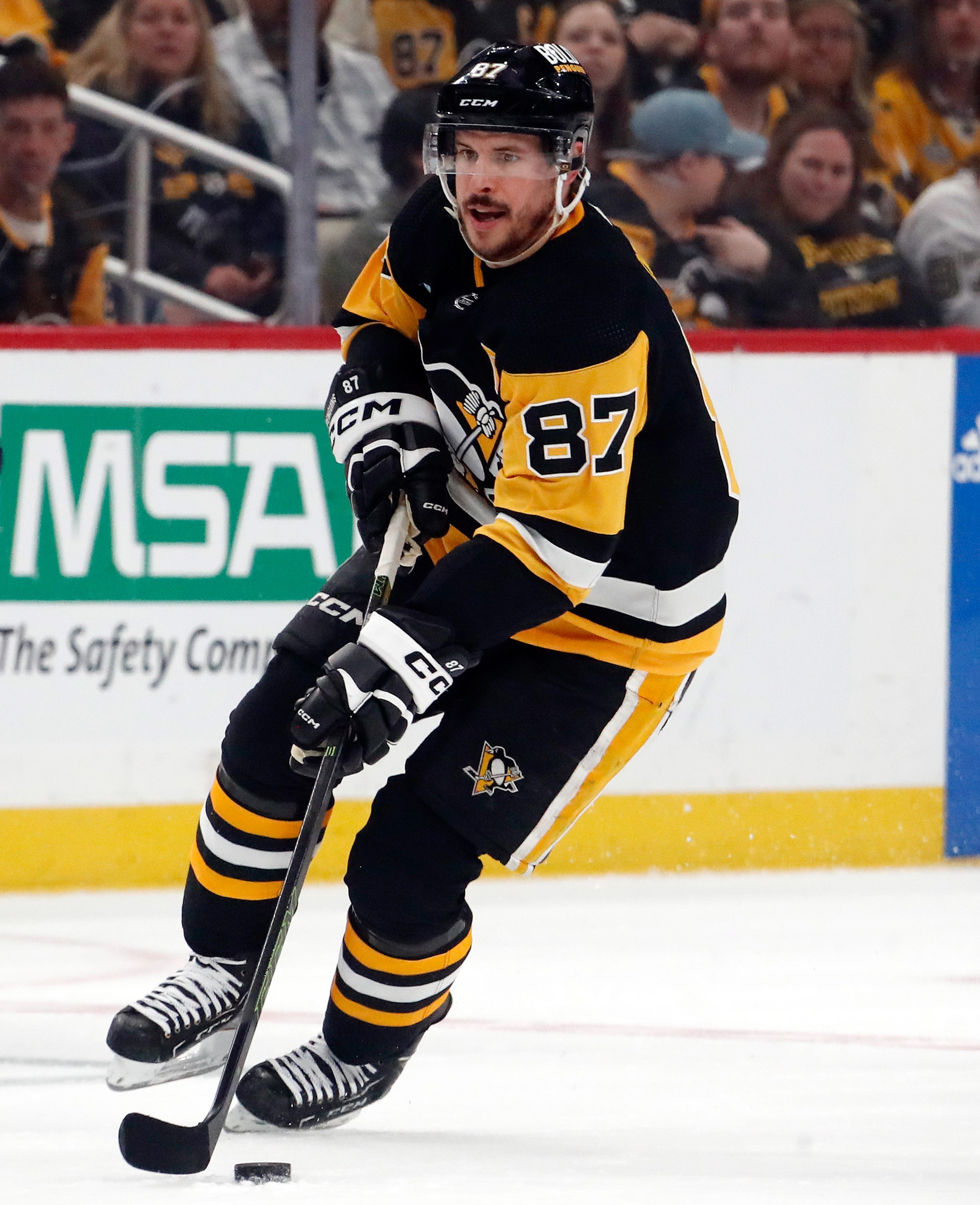 Many expected Crosby to sign a contract extension on July 1st but it wound up taking more than two full months before he put pen to paper on this deal, maintaining the same cap hit he has had since 2008. He’s entering the final season of a now-illegal 12-year contract and at the time it was signed, some wondered if those last couple of years could be tough from a value perspective given that he’s entering his age-37 season. Considering he’s coming off yet another season of averaging more than a point per game (something he’s done in all 19 years), those concerns were unfounded, helping him earn this extension.
Karlsson, as expected, wasn’t able to match the 101 points he put up in his final season with San Jose. However, with 56, he was still well above average in that regard. It’s going to be next to impossible for the 34-year-old to provide surplus value on his cap hit but as long as he’s still one of the higher-end offensive players among NHL blueliners, they’ll do okay value-wise. He’s not a $10MM player at this point but he’s not necessarily too far off that mark either.
PHR Mailbag: Nurse, Maple Leafs, Swayman, LTIR, Preseason, Metropolitan Division
Topics in this edition of the PHR Mailbag include the Jeremy Swayman contract drama, handicapping the Metropolitan Division, and much more. If your question doesn’t appear here, check back next weekend for part two.
wreckage: Everyone knows and even Edmonton fans admit, they need to upgrade on Nurse as their 3D but it’s impossible at his contract, especially with his NMC. And now some certain ESPN guy is saying Seth Jones to EDM makes sense, despite the fact the time Caleb was there was tumultuous with their mother’s claims on the old Twitterverse. Does any of that rumor make sense? Even in the slightest?
First, let me say that I’m blissfully unaware of those claims from the Twitterverse which allows me to actually ponder the idea on its merits. Before getting into that, I’ll note that only six players remain from Caleb’s tenure with Edmonton with a different head coach, GM, president, and much more. The culture is different, the team is mostly different; if there were concerns before, those same concerns might not be around anymore.
On the surface, the idea of a swap with Darnell Nurse and Jones makes a lot of sense in theory if there’s a desire to make a change there. Nurse’s contract ($9.25MM through 2029-30) makes it incredibly difficult to swap him for an upgrade as a lot of teams will view the price tag as a negative. With Jones making similar money ($9.5MM through 2029-30), the cap charge isn’t the issue. It’s one overpaid blueliner for another. If both teams think that they’re better off with the other overpaid player, a swap would make sense. I don’t think it’ll happen though. I’d say Chicago says no given the left-defense organizational depth they have, making Nurse a bit redundant compared to the right side where they’re much thinner. But value-wise, it’s not a bad framework for a swap.
gowings2008: Is it crazy to think the Leafs are primed for a step back this year? There are so many question marks. Can Matthews, Nylander, and Marner repeat career years? Will Tavares continue to decline and how fast? Will Chris Tanev’s body hold up? Are they getting Florida OEL or Vancouver OEL? Are Knies and McMann legit? Do they even have an NHL fourth line? Is Woll really the answer with just 34 career starts? I really think if just a couple of these things don’t bounce in the Leafs’ direction, they’ll be on the outside looking in come playoff time. The Atlantic is no walk in the park, especially this year.
It’s not crazy to think that Toronto could take a significant step back this season. We know of them being a top regular season team under former coach Sheldon Keefe but will things be different under Craig Berube? They’re now built with an eye on being more effective in the playoffs. Will the uncertainty around Mitch Marner’s final year of his contract turn into a distraction? I don’t think so but it could. I’m not as worried about the defense and some of the other forwards that you mentioned but there is one giant wild card.
The goaltending isn’t just a question about Joseph Woll but also Anthony Stolarz. Neither player has even been a 1B option in the NHL. They each made career highs in starts last season, making 23 and 24 combined. There are 82 games in the regular season. How will they hold up under the bigger workload? And with oft-injured Matt Murray and Dennis Hildeby as the in-house options to turn to if injuries or general fatigue arise, they’re taking a risk.
Don’t get me wrong, I don’t mind the approach they’re taking. There’s upside to both Woll and Stolarz and if they even provide average goaltending, they’ll be fine. But if they falter, they could very well be in trouble.
But that said, I don’t see much reason to think they won’t be a top-three team in the Atlantic this season. While they have questions, no doubt, so do a lot of other teams not named Florida. In that case, I’d back the team with the track record of winning a lot of regular season games to continue doing so.
Johnny Z: So did Neely make the $64M contract offer to Jeremy Swayman and his agent sat on it and did not tell his client? Does Swayman take this offer and fires his agent? Will Neely take the offer off the table? Will Swayman end up on the trade block? What a mess!
First, let me say that this has turned into a bit of a bizarre situation. With the various reporting that’s out there, I get the sense that the $64MM might not have been offered but $62MM or $63MM might have been. So while Swayman’s agent is technically correct from a semantics perspective, the last offer compared to Cam Neely’s stated number is pretty close and probably wasn’t going to be the difference-maker in getting something done or not.
 Enough time has passed since this was revealed so if the offer was going to be taken, it would have been taken by now. It sure seems like there’s still a pretty sizable gap to bridge which, evidently, is going to take some time. I don’t think we’re at the point of a more ‘nuclear option’ being an agent change, an offer revocation, or a trade demand. By all accounts, Swayman’s desire is to be in Boston and the Bruins clearly want him as their long-term starter which is why shorter-term agreements haven’t been discussed in much detail yet.
There are various pressure points that help to spur things, be it a trade (the deadline) or a contract (arbitration hearing, training camp, etc). The next one is the start of the regular season early next week where things get more complicated cap-wise as his cap charge for 2024-25 would be higher than his overall AAV (as long as it’s a multi-year deal). Daily Faceoff’s Frank Seravalli explains that more in detail if you’re interested. Assuming something isn’t done by then, then there might be a waiting game to see if the leverage shifts. If Boston starts strong without him, that might lower Swayman’s price while if they falter, the Bruins might decide they have to go a bit higher to close a contract. Things took a turn for the worse this week with the public comments but I expect a deal will still get done…eventually.
rule78.1: How long do you think it will take for the NHL/NHLPA to address LTIR? Because someone within the Vegas organization has found all the holes and is taking full advantage of them.
For those who haven’t seen it, the latest LTIR situation saw Vegas remove the cap hit of Robin Lehner. Technically, Vegas was within their rights to attempt to terminate his contract because he didn’t (or couldn’t) report for his physical. I think in the end, the Golden Knights were prepared to do so, the NHLPA fully intended to grieve and this time, instead of just doing it and waiting to see the outcome of the hearing (like the Flyers are doing with Ryan Johansen, for example), they just worked out the compromise here.
One of the few things we know about this is that there’s a lot we don’t know. As ESPN’s Emily Kaplan relayed earlier this week, there was a specific reason why Lehner was unable to attend, one of a sensitive nature. Due to that, the NHL and NHLPA agreed that this is an “unprecedented and highly unique” case. So is this circumvention? I can definitely see the argument that it is but given how rarely in-season grievances involve restoring a cap charge, I think they might have just done the settlement early instead of reaching it in November or December or whenever the hearing would have happened.
As to your question, it’s a CBA matter since it’s related to salary cap accounting. It’s not something that can unilaterally be changed beforehand. The NHL has been doing its due diligence in terms of speaking to owners, presidents, and GMs to get a sense of the appetite for change. How many want to make a change and how big of one do they want? I think more want to change something than don’t but the extent of the change is up in the air.
The next CBA starts in 2026-27 and while both the NHL and NHLPA would probably like to have an agreement done before then, it’s unlikely any significant cap changes (including LTIR) would come into play until the new document is in effect. So for the next two years, the status quo is probably going to continue to be in place.
Salary Cap Deep Dive: Philadelphia Flyers
Navigating the salary cap is one of the most important tasks for a front office. Teams that can avoid total cap chaos by walking the tightrope of inking players to deals that match their value (or compensate for future value without breaking the bank) remain successful. Those that don’t often see struggles and front office changes.
PHR will look at every NHL team and give a thorough look at their cap situation heading into the 2024-25 season. This will focus more on players who are regulars on the roster versus those who may find themselves shuttling between the AHL and NHL. All cap figures are courtesy of PuckPedia. We’re currently covering the Metropolitan Division, next up is the Flyers.
Philadelphia Flyers
Current Cap Hit: $84,829,763 (below the $88MM Upper Limit)
Entry-Level Contracts
F Tyson Foerster (one year, $863K)
F Matvei Michkov (three years, $950K)
Potential Bonuses
Michkov: $3.3MM
Michkov was able to get out of his contract two years early to the surprise of many, enabling him to come to North America this season. Projected to be a key cog of their rebuild, he’s likely someone they’ll want to sign long-term by the time this deal is up. From a bonus perspective, he has $1MM in ‘A’ bonuses, four at $250K apiece. If he plays the prominent role it looks like he will this season, those could be reachable although the ‘B’ bonus is highly unlikely to be met. Foerster’s first full NHL campaign was a solid one with 20 goals. That said, he’d need a significant breakout to bypass a bridge deal, especially with this management group generally leaning toward using those. In that case, something around the $3MM mark is where his next contract might land.
Signed Through 2024-25, Non-Entry-Level
F Noah Cates ($2.625MM, RFA)
F Morgan Frost ($2.1MM, RFA)
D Erik Johnson ($1MM, UFA)
G Cal Petersen ($5MM, UFA)
D Cam York ($1.6MM, RFA)
Cates was someone who received a recent bridge contract, a move that looks wise on Philadelphia’s part given his struggles last season. He’ll need to get back to at least his rookie-season numbers (38 points in 82 games) to have a shot at a qualifying offer when he’ll have arbitration rights as well. Frost was no stranger to the rumor mill last season but still wound up with his second straight season of more than 40 points. If he hangs around that number again, he could double his $2.4MM qualifying offer on his next deal, one that likely will buy out some UFA-eligible years.
York finished off last season on a high note, providing plenty of optimism heading into this season. Yet another player who is on a bridge agreement, if he plays at the level that he finished at last year, tripling this price tag wouldn’t be out of the question while quadrupling it on a long-term deal could be doable as well. Johnson was picked up at the deadline to give them a serviceable veteran at the back of their lineup and was extended to fill that role for this season. He’ll be going year to year from here and considering he’s best served as a sixth defender, it’s unlikely he could command much more than this next time around.
Petersen has already cleared waivers and he’ll once again play in Lehigh Valley where he’ll carry a slightly reduced cap hit of $3.85MM. It’s safe to say he won’t come anywhere near that next time around; a six-figure deal is more likely.
Signed Through 2025-26
F Bobby Brink ($1.5MM, RFA)
F Nicolas Deslauriers ($1.75MM, UFA)
D Jamie Drysdale ($2.3MM, RFA)
G Samuel Ersson ($1.45MM, RFA)
G Ivan Fedotov ($3.25MM, UFA)
F Scott Laughton ($3MM, UFA)
F Ryan Poehling ($1.9MM, UFA)
D Yegor Zamula ($1.7MM, RFA)
When Laughton signed this contract at the 2021 trade deadline (taking himself out of trade talks in the process), it seemed like somewhat of a team-friendly deal at the time. It still is today. The 30-year-old isn’t the biggest offensive threat (only reaching 40 points once in his career) but is a solid defensive player. He should be able to add at least $1MM to this next time out on another multi-year agreement. Poehling accepted this deal as a midseason extension back in January, giving him a bit of stability after starting the year on his third team in as many seasons. He’s coming off his best offensive output (28 points) but will need to show that’s repeatable if he wants to get into that next tier of money.
Deslauriers got more money and term than many expected for an enforcer but his track record of scoring a bit more than a typical tough guy helped his marketability. That’s a harder sell now at this point of his career coming off a one-goal, four-point campaign. He still can fill that role but with the decline in production and the fact he’ll be 35 when this contract expires, it’s hard to see him getting this on his next deal. Brink is yet another player on a bridge deal after a season that saw him establish himself as a regular. He’ll have arbitration rights next time out and between that and ideally two more years of being a full-timer, he should at least get past $2MM, obviously more if he becomes more of a contributor offensively.
Drysdale was the key piece coming to Philadelphia in the Cutter Gauthier trade but as was the case at times in Anaheim, injuries limited him. He’s someone who has shown flashes of being an above-average player at the NHL level and if he puts it together and stays healthy, pushing past $6MM isn’t out of the question. But, if injuries continue to be an issue, a second one-year bridge agreement might be the safest play, one that would eclipse $3MM with arbitration rights. Zamula inked this bridge deal in early July after locking down a regular role last season. He’ll need to at least move past being more of a fifth or sixth defender over the next two seasons since his offensive game is somewhat limited (which will hurt him in an arbitration hearing). Notably, his qualifying offer in 2026 is only $1.4MM since signing bonus money doesn’t count in calculating those offers.
After a long battle to get him to North America, Fedotov debuted late in the season (although he struggled in limited action) and quickly received this two-year agreement, a sign of the faith the team has in him. He’ll need to establish himself as at least a 1B type of goaltender to hang around this price tag but if he plays up to expectations, this deal will be a team-friendly one for Philadelphia. The early extension to Ersson raised some eyebrows but after becoming their starter, it’s a move that looks great for the Flyers already. He will have one RFA-eligible season remaining once this deal expires and if he’s still in the starting role, it stands to reason that his next contract should be at least three times this one.
Signed Through 2026-27
D Ryan Ellis ($6.25MM, UFA)
F Garnet Hathaway ($2.375MM in 2024-25, $2.4MM in 2025-26 and 2026-27, UFA)
D Rasmus Ristolainen ($5.1MM, UFA)
Hathaway had a good first season for the Flyers while splitting time between the third and fourth lines. Rather than see what his market value would be this coming summer, he accepted an early extension at pretty much the same money. That gets him under contract through his age-35 season and at that point, it would be tough predicting that he’d get more than that if he’s still in that role. Ellis, meanwhile, will remain on LTIR, giving the Flyers the ability to spend above the cap if needed.
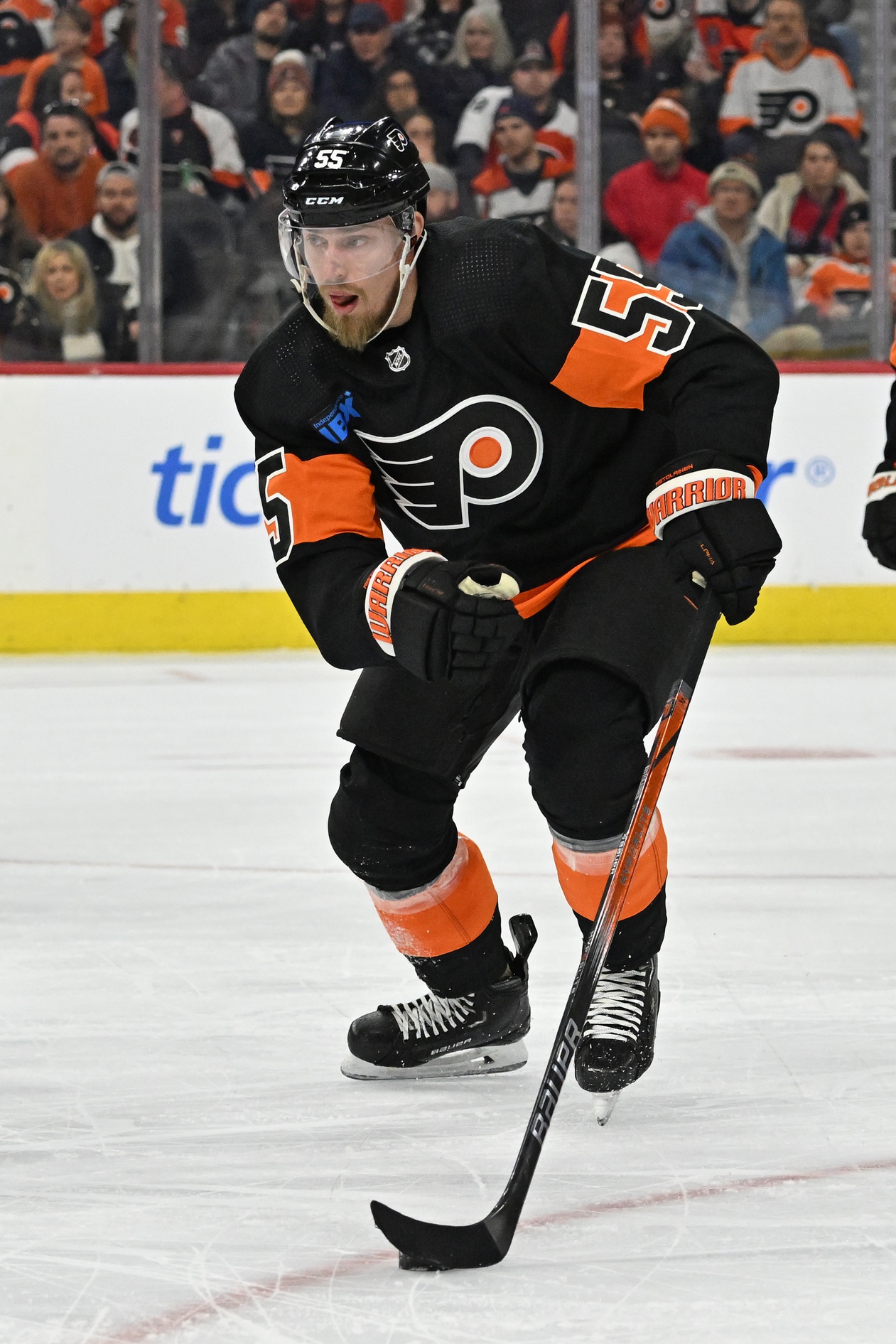 Ristolainen remains one of the more polarizing defensemen in the league. He’s someone who has played big minutes in all situations in the past and his contract is one where the price tag suggests that he should be in a second or third role. However, that wasn’t the case last year. His ice time – when healthy – was much more limited than usual and he responded with a decent performance in that role. It’s probably not enough to give him any standalone trade value but if it’s a case where less is more for Ristolainen, the Flyers could still get at least a bit of value on this contract, albeit on an above-market price point relative to last season’s ice time.
Salary Cap Deep Dive: New York Rangers
Navigating the salary cap is one of the most important tasks for a front office. Teams that can avoid total cap chaos by walking the tightrope of inking players to deals that match their value (or compensate for future value without breaking the bank) remain successful. Those that don’t often see struggles and front office changes.
PHR will look at every NHL team and give a thorough look at their cap situation heading into the 2024-25 season. This will focus more on players who are regulars on the roster versus those who may find themselves shuttling between the AHL and NHL. All cap figures are courtesy of PuckPedia. We’re currently covering the Metropolitan Division, next up is the Rangers.
New York Rangers
Current Cap Hit: $87,376,524 (below the $88MM Upper Limit)
Entry-Level Contracts
F William Cuylle (one year, $828K)
F Adam Edstrom (one year, $847K)
F Matt Rempe (one year, $820K)
Potential Bonuses
Cuylle: $57.5K (games played)
Cuylle’s first full NHL season was a solid one for someone who primarily played on the fourth line. It’s unlikely that he’ll play much higher up this year and with New York’s long-term cap situation, it’s safe to say they’ll be looking for a bridge deal, one that should check in around the $1.4MM mark. Edstrom is someone who could bounce back and forth this season and in that case, New York will probably ask him to accept closer to the $775K minimum in exchange for a one-way contract. Rempe quickly became a fan favorite for his pugilistic skills but will need to be trusted to play more than six minutes a night if he’s to push for any sort of pricey second contract. As things stand, he’s likely to land around $1MM on a bridge agreement if he stays up full-time in 2024-25.
Signed Through 2024-25, Non-Entry-Level
D Zachary Jones (813K, RFA)
F Kaapo Kakko ($2.4MM, RFA)
F Alexis Lafreniere ($2.325MM, RFA)
D Ryan Lindgren ($4.5MM, UFA)
D K’Andre Miller ($3.872MM, RFA)
G Jonathan Quick ($1.275MM, UFA)
D Chad Ruhwedel ($775K, UFA)
G Igor Shesterkin ($5.67MM, UFA)
F Reilly Smith ($3.75MM, UFA)*
F Jimmy Vesey ($800K, UFA)
*-Pittsburgh is retaining an additional $1.25MM of Smith’s contract.
Potential Bonuses
Quick: $25K (20 starts plus a save percentage of .915 or more)
Smith was acquired on the opening day of free agency as New York’s free agent plans seemingly didn’t pan out. On the surface, they probably only wanted someone on a one-year deal so the pivot to this made sense. Smith is coming off a down year with Pittsburgh but is only a year removed from a 56-point effort. If he can get back to that, he could maintain his full $5MM salary for a few more years but the likelier scenario is something in the $4MM range. Kakko accepted his qualifying offer early to take one more run at things in New York. Until he can become more than a third liner, however, it’s hard to foresee him getting much more than this. Vesey, meanwhile, had one of his best years last season and a repeat performance could allow him to potentially double his price tag but the Rangers will need to keep that salary slot closer to where it is now.
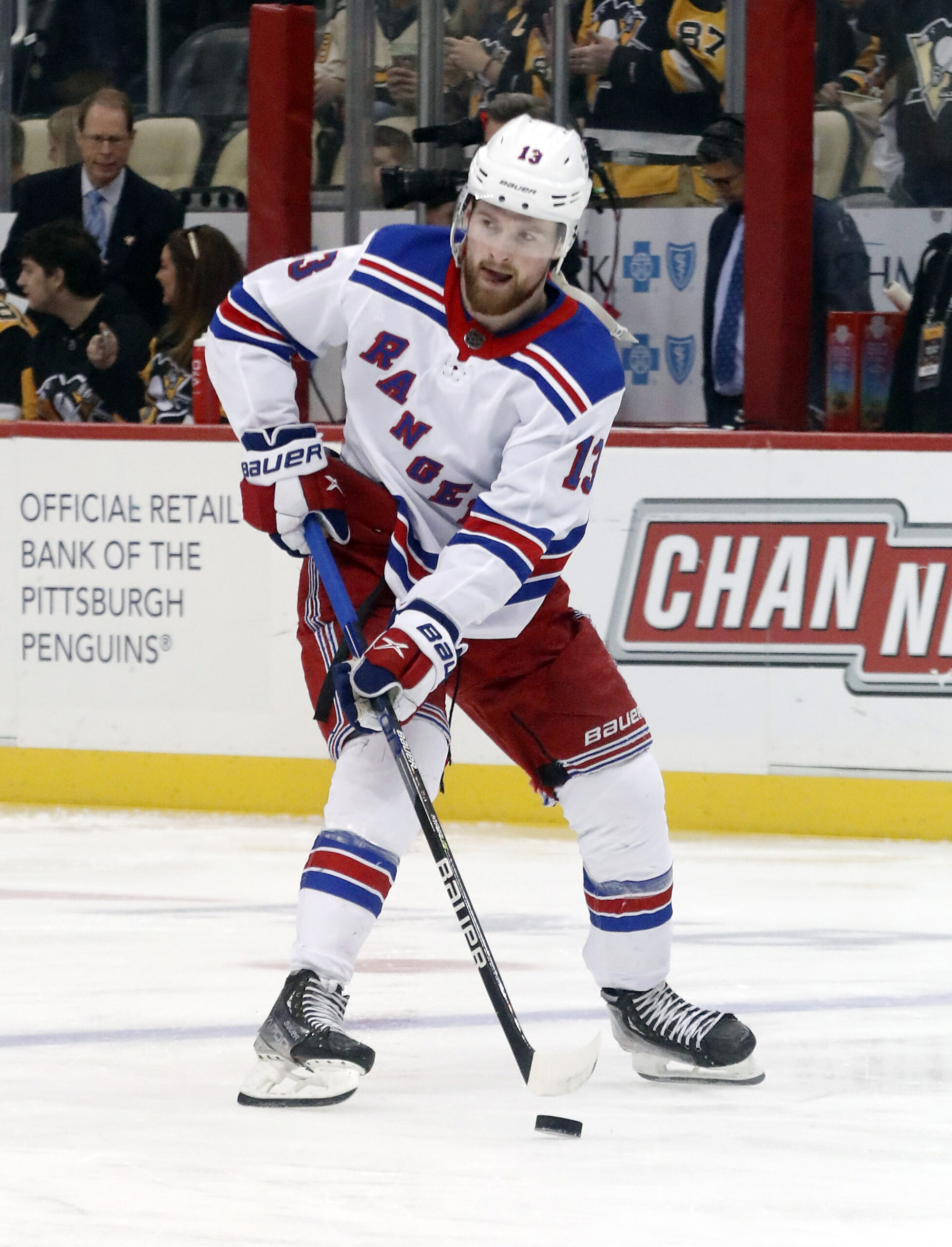 Lafreniere is one of the more intriguing pending restricted free agents from the 2025 class. After struggling through his entry-level contract (resulting in this bridge deal), he was much more impactful last season, showing the skill that made him a top pick before following it up with a strong playoff run. Still just 22, there’s cause for optimism that Lafreniere could still beat his numbers from a year ago which will only send the price tag up even more. Assuming that he can at least maintain his 2023-24 output, Lafreniere’s next contract should push past the $6MM mark at a minimum; it wouldn’t be surprising to see it go to a seven.
Lindgren settled for a one-year deal earlier this summer, one that will grant him unrestricted free agency at 27. However, his offensive numbers are rather limited; he has yet to reach the 20-point mark. That should limit him on the open market although a small raise from this price tag could be doable. Miller is another player who had to settle for a bridge deal given New York’s cap situation at the time. He wasn’t quite as impactful statistically last season but still played top-pairing minutes, putting him on track for a fair-sized raise. His qualifying offer checks in at $4.546MM, already a sizable jump but he could also command $6MM or more on a long-term agreement.
Jones hasn’t been able to lock down a full-time spot in the lineup which won’t help his case in contract talks. His qualifying offer goes up to just over $866K next summer and if he’s not more established by then, he could be a non-tender candidate with an eye on filling that spot with someone making the minimum. Ruhwedel has been a capable seventh defender for several years now but isn’t likely to make much more than the league minimum moving forward.
While Shesterkin is coming off a quieter year by his standards, he still was one of the top netminders in the league last season and has been for the past four seasons. Accordingly, he is believed to be looking for what would be a record-breaking contract; Carey Price ($10.5MM) is the holder of the priciest deal given to a goalie in NHL history. Doubling his current AAV could be doable in the process. Quick had a bounce-back year after a tough 2022-23 showing, earning himself a small raise in the process. With Shesterkin being more of a workhorse, they will only need Quick to play 25-30 games which he should be capable of doing. Given his age (38), it’s fair to suggest he’ll be on one-year deals from here on out.
Signed Through 2025-26
F Jonny Brodzinski ($788K, UFA)
F Artemi Panarin ($11.643MM, UFA)
D Braden Schneider ($2.2MM, RFA)
D Jacob Trouba ($8MM, UFA)
Panarin set and still holds (for now, at least) the record for the highest cap hit for a winger. It’s hard to say the contract has been a bargain but it’s fair to say he has lived up to it so far. Panarin has the fourth-most points of any player over the past five seasons (since he signed in New York) so they’ve gotten a solid return so far. That said, he’ll be entering his age-35 year when his next contract starts so it’s reasonable to think the cap hit will be coming down and it will be a question of how long the deal becomes with the longer the term, the lower the AAV. Brodzinski started last season off strong in the minors to earn a recall and never went back, earning this contract in the process. If he stays in a depth or reserve role, it’s unlikely he’d command a big raise but even securing more one-way deals at this point of his career (he’s 31) would be a nice outcome for him.
Trouba was shopped around over the summer although no trade came to fruition. He’s on an expensive contract for the role he fills (a third defender) but he’s still a more than capable player in that role. Still, even if he rebounds over the next two seasons, he’ll be looking at a multi-million dollar pay cut although a multi-year pact should still be doable. Schneider was the latest player to take a bridge contract this summer. He has been held under 16 minutes a game in each of his first three seasons; it’s safe to say they’ll be expecting him to take a step forward in that regard. His qualifying offer checks in at $2.64MM with arbitration rights in 2026 so if he’s still on the third pairing by then, that could be a problem.
Signed Through 2026-27
F Sam Carrick ($1MM, UFA)
F Filip Chytil ($4.438MM, UFA)
F Chris Kreider ($6.5MM, UFA)
Kreider didn’t produce much in the first season of this contract but since then, he has 127 goals over the last three years, putting him seventh among all NHL players over that span. Given his physical playing style, it’s possible that injuries could be an issue toward the end of the deal when he’ll be 36 and potentially going year to year after that.
Chytil has battled concussion issues at times, including missing most of last season which makes him a bit of a wild card. This is a high price tag for someone projected to play on the third line although if he’s healthy, he should be more productive than a typical third liner. But with the injury history, it’s hard to foresee him getting this type of commitment unless he has three seasons of good health. Carrick came over in free agency to anchor the fourth line after a good showing between Anaheim and Edmonton last season. If he can maintain that for the next three years, a late-career raise could come his way even though he’ll be 35 on his next contract.
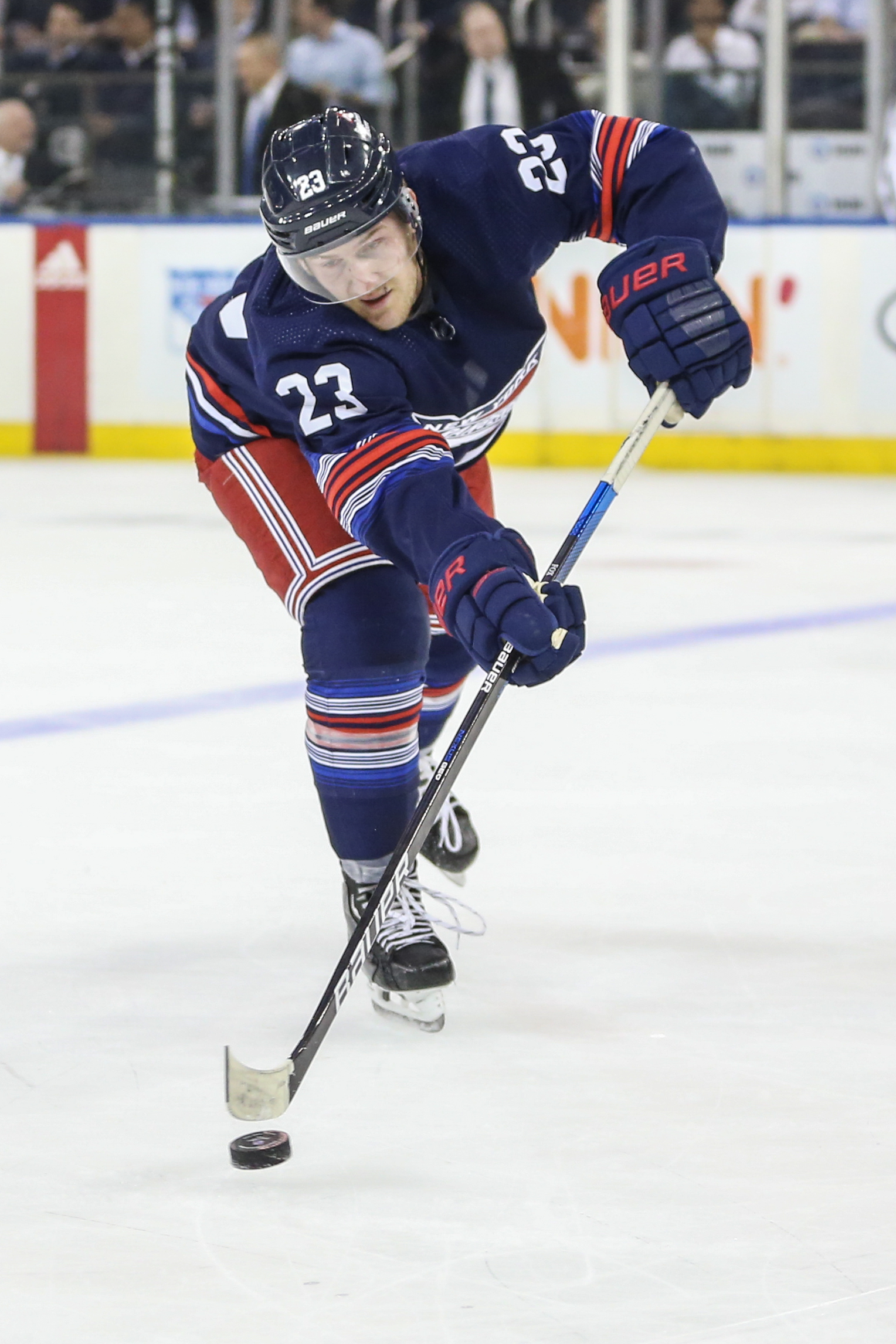
Poll: Who Will Win The Central Division In 2024-25?
The top of the Central Division has been among the league’s toughest gauntlets over the past few seasons, and there’s little reason to expect that to change this year. There could be some new faces atop the list, however.
The Stars line up for this season with much of the same forward group that’s taken them to back-to-back Western Conference Finals. Yes, veteran top-line fixture Joe Pavelski announced his retirement, but his role alongside Roope Hintz and Jason Robertson is set to be filled by 21-year-old Wyatt Johnston, who’s coming off a 32-goal, 65-point sophomore season. 2024 AHL MVP Mavrik Bourque is projected to replace Johnston’s vacant middle-six spot, so there are no worries there.
Some will raise their eyebrows at Dallas’ defensive depth after losing Jani Hakanpää, Ryan Suter, and Chris Tanev, though. And rightfully so – their right defense depth chart is now headed off by free-agent signings Mathew Dumba and Ilya Lyubushkin, both of whom are likely safe bets for bottom-pairing roles on a lot of other contending teams. They’re hoping a three-headed monster of Miro Heiskanen, Thomas Harley, and Esa Lindell on the left side is enough to keep them atop the Central Division’s regular season pecking order.
The Jets were a solid possession team last year, but make no mistake – the franchise’s second-ever 110-point season can be attributed almost entirely to goaltender Connor Hellebuyck, who posted a .921 SV% in 60 games en route to his second Vezina Trophy win. Aside from losing mid-season pickup Sean Monahan to the Blue Jackets in free agency, their forward corps remains identical and will likely finish near the middle of the pack again after finishing 15th in goals last season.
Like Dallas, defensive depth is where Winnipeg’s alarm bells begin to sound. They managed to keep Dylan DeMelo off the free agent market, signing him to a four-year, $19.6MM extension to keep one of the league’s better top pairings last season with Josh Morrissey intact. However, they bought out Nate Schmidt, who, while overpaid, was one of their best even-strength possession players last year. Losing top-four fixture Brenden Dillon on the open market also stings and leaves a struggling Neal Pionk, arguably the Jets’ worst defensive player last season, with more responsibility than they’d like.
The Avalanche will again begin the season with a notable list of absences. Captain Gabriel Landeskog won’t be in the opening night lineup for the third season in a row as he continues to recover from multiple knee surgeries, but unlike in the past two years, they’re expecting him back at some point. That’ll be a huge boon to an offense that still managed to lead the league in goals last season despite pre-deadline depth concerns, as will be the return of Valeri Nichushkin from a six-month suspension and stint in the NHL/NHLPA Player Assistance Program in November. Their wing depth looks dicey to start, but last year’s acquisition of Casey Mittelstadt at the deadline gives them the best center depth they’ve had since winning it all in 2022.
Their defense is also improved with a new-look third-pairing of low-cost free agent pickups Erik Brännström and Oliver Kylington, both of whom should thrive in an up-tempo Colorado system. Goaltending remains a concern, with Alexandar Georgiev coming off a subpar season, but backup Justus Annunen is pushing for more responsibility after logging a spectacular .928 SV% in 14 games. All indications point to the Avs replicating last year’s 107-point performance, if not improving on it.
The Predators’ offseason needs no introduction. They enter 2024-25 with their most star-studded forward corps since the mid-2000s (remember Peter Forsberg and Paul Kariya‘s days in Tennessee?) after adding 2023 Conn Smythe winner Jonathan Marchessault and future Hall of Famer Steven Stamkos to their ranks. They’ll give much-needed depth to an offense that miraculously managed to finish 10th in scoring last season thanks to resurgences from Ryan O’Reilly and Gustav Nyquist, the latter of whom erupted for a career-high 75 points at age 34 in top-line minutes.
Their defense lost Ryan McDonagh after he was traded to the Lightning but gained one of the better left-shot options on the UFA market in Brady Skjei. With those moves largely canceling each other out and Juuse Saros still manning the pipes, Nashville’s team defense should still finish above average but doesn’t look like it’ll be among the league’s best, with players like Jeremy Lauzon and Luke Schenn still projected to be a bit over-taxed. Still, there’s an opening for them to climb back into a divisional playoff spot and potentially win their first Central title since 2019.
For last year’s playoff misses in the Central, this season’s aspirations are conservative. That’s especially true for the Blues, who missed out on a playoff spot by six points and proceeded to have one of the league’s most eventful offseasons. Their offer sheets of Philip Broberg and Dylan Holloway completed a summer that saw St. Louis have some of the largest roster turnover league-wide. Their bottom six has more new faces than returnees – only prospect Zach Dean and Alexey Toropchenko were on the team’s roster last season among their current projected opening-night third and fourth lines. They’re hoping some more offensively-inclined talent like Holloway, Mathieu Joseph, and Alexandre Texier can add a little bit of juice to last year’s 24th-ranked offense.
Their defense will feature Broberg starring in the role of veteran Torey Krug, who’ll miss the entire season after undergoing left ankle surgery. If they have any hope of closing the gap for a postseason berth, they’ll also need more of the same from Jordan Binnington between the pipes. His .913 SV% in 55 showings last year was his best since guiding the Blues to a Cup in his rookie season in 2019.
The Wild’s biggest offseason addition comes from inside the house. Captain Jared Spurgeon‘s presence on the blue line will be their biggest X factor after back and hip surgeries ended his 2023-24 season in January. The rest of the roster is mostly familiar faces, but they are projected to carry three goalies, with top netminding prospect Jesper Wallstedt showing he’s ready for full-time NHL minutes. He could churn out numbers that exceed those of Marc-André Fleury and Filip Gustavsson, who are back for a third season in Minnesota as a tandem after struggling to a combined .897 SV% last year.
Then there’s perhaps the conference’s biggest dark horse in its new garb – the Utah Hockey Club. The continuation of the defunct Arizona Coyotes franchise picked up right where they left off at the end of the dark days of their rebuild. With greater financial resources, general manager Bill Armstrong showed extreme confidence that Utah is ready to contend for a postseason spot, reshaping their blue line by acquiring John Marino and Mikhail Sergachev in a pair of trades around the draft. A full season of emerging youngsters Josh Doan and Dylan Guenther, the latter of whom scored at a 64-point pace in last season’s 45-game call-up, will help boost a promising offense squarely into the league’s upper half. But whether the pickup of Marino and Sergachev (who’s not necessarily known for his stay-at-home presence) can help get the league’s eighth-worst defense up where it needs to be for playoff contention remains to be seen.
The Blackhawks, meanwhile, are just looking to be relevant once again. After four straight seasons below 70 points, that demarcation is likely the goal for Chicago, with Connor Bedard beginning his sophomore season. They have a decent shot at doing so after being one of the league’s bigger players in free agency, reshaping their top-six forward group with the pickups of Tyler Bertuzzi and Teuvo Teräväinen. The additions of veterans T.J. Brodie and Alec Martinez on defense won’t likely have a ton of impact on their record but should give their younger defenders more runway for growth, and they shored up their goaltending by adding one of the league’s premier backups in Laurent Brossoit.
So, we ask you, PHR readers: after an offseason of significant changes, who do you think is best primed to take home the Central Division title? Tell us by voting in the poll below:
Who will win the Central Division in 2024-25?
-
Dallas Stars 40% (345)
-
Colorado Avalanche 21% (181)
-
Nashville Predators 13% (112)
-
St. Louis Blues 8% (73)
-
Winnipeg Jets 6% (53)
-
Chicago Blackhawks 5% (41)
-
Minnesota Wild 4% (37)
-
Utah Hockey Club 3% (23)
Total votes: 865