
Salary Cap Deep Dive: Carolina Hurricanes
Navigating the salary cap is one of the most important tasks for a front office. Teams that can avoid total cap chaos by walking the tightrope of inking players to deals that match their value (or compensate for future value without breaking the bank) remain successful. Those who don’t often see struggles and front office changes.
PHR will look at every NHL team and give a thorough look at their cap situation for the 2025-26 season. This will focus more on players who are regulars on the roster versus those who may find themselves shuttling between the AHL and NHL. All cap figures are courtesy of PuckPedia. We’re currently covering the Metropolitan Division, first up are the Hurricanes.
Carolina Hurricanes
Current Cap Hit: $84,855,709 (below the $95.5MM Upper Limit)
Entry-Level Contracts
F Jackson Blake (one year, $905.8K)
D Alexander Nikishin (one year, $925K)
F Logan Stankoven (one year, $814.1K)
Potential Bonuses
Nikishin: $3MM
Stankoven: $32.5K
Total: $3.0325MM
Blake and Stankoven will be on very team-friendly contracts for one more season before their long-term agreements kick in. We’ll cover them in more detail at that time while noting that Stankoven’s bonus is tied to games played; as long as he stays healthy, that should easily be met.
Nikishin’s long-awaited NHL debut wound up taking longer than expected as he didn’t suit up for Carolina right away after joining the team, leading to some brief concern that a formal agreement wouldn’t be finalized. But he ultimately signed and projects to be a regular for the Hurricanes this season. Some of the $1MM of ‘A’ bonuses might be reachable but the $2MM of ‘B’ bonuses are highly unlikely.
Signed Through 2025-26, Non-Entry-Level
G Frederik Andersen ($2MM, UFA)
F Mark Jankowski ($800K, UFA)
F Tyson Jost ($775K, UFA)
D Mike Reilly ($1.1MM, UFA)
Potential Bonuses
Andersen: $750K
Jankowski was a late-season pickup from Nashville and fared well with eight goals down the stretch. However, he has largely been a depth piece in his career so while a small raise is coming his way no matter what thanks to the pending increase in minimum salary, his next deal might not land too much higher than that. Jost was up and down last season and had a very limited role when he was in the lineup for the Hurricanes. As things stand, he’s someone who’s likely to remain around the minimum salary.
Reilly missed most of the season while recovering from a procedure on his heart to correct an issue discovered while he was out with a concussion. He has been more of a sixth or seventh defender in recent years and projects to land in that same range with the Hurricanes. That should keep him around this range moving forward.
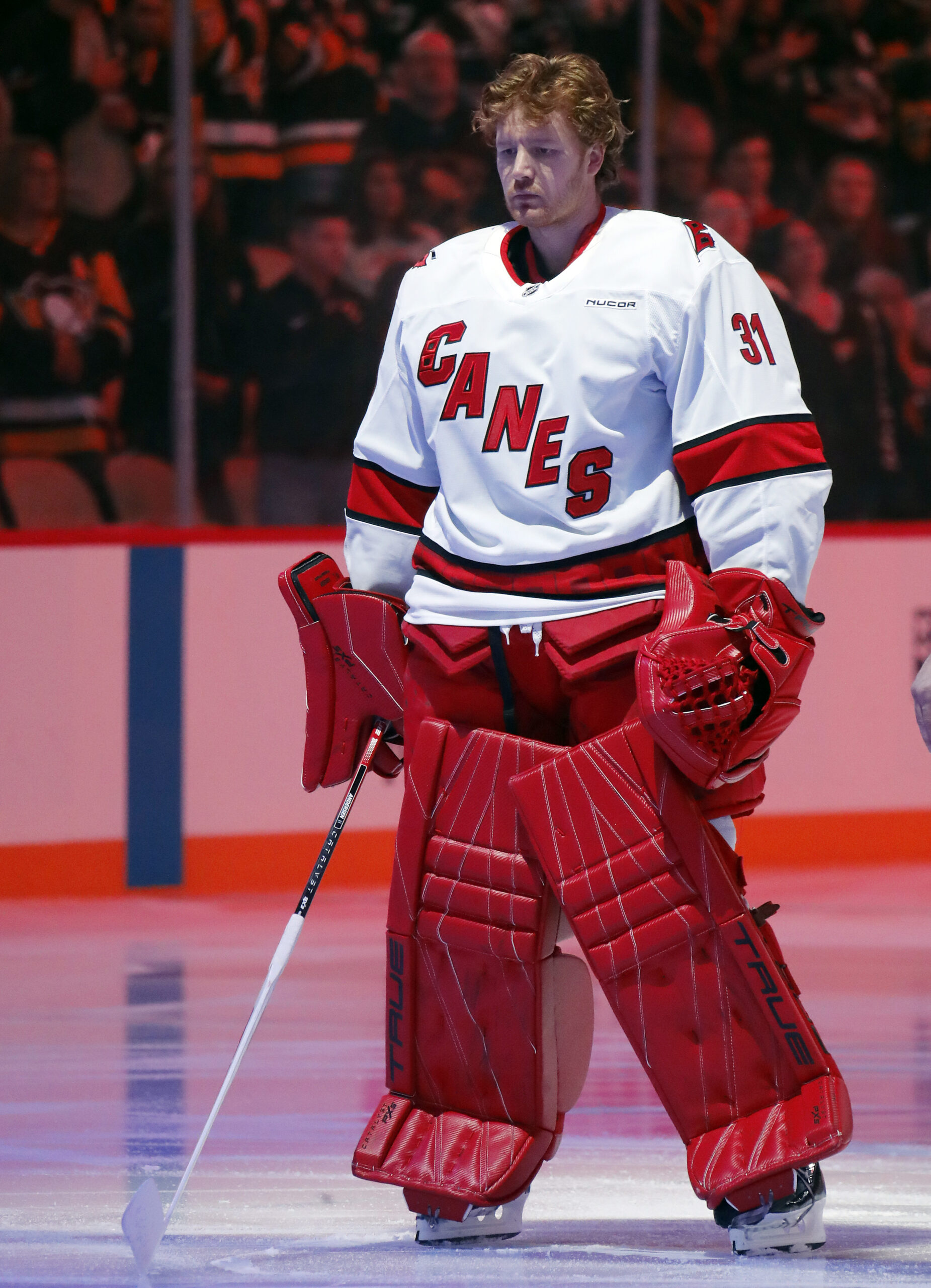 When healthy, Andersen has been a decent starter but staying healthy has been a big challenge. He has failed to reach 35 games in three straight years and four of the last five. That particular games played mark is notable as that’s the first threshold of his bonuses for $250K with another $250K coming at 40 games (plus $250K if Carolina makes it back to the East Final and he plays in half the games or more). There isn’t much risk with this contract as if the injury issues return, he’s still a lower-cost second option while if he’s healthy and meets those bonuses, he’s probably going to provide a lot of value at that price. Because of the injuries, it wouldn’t be surprising to see him going year-to-year from here on out with structures similar to this.
Signed Through 2026-27
D Jalen Chatfield ($3MM, UFA)
D Shayne Gostisbehere ($3.2MM, UFA)
G Pyotr Kochetkov ($2MM, UFA)
F Jordan Martinook ($3.05MM, UFA)
F Jordan Staal ($2.9MM, UFA)
Martinook was more of a depth player over his first few seasons with the Hurricanes but has become one of their more versatile forwards and is often deployed in the middle six. The end result has been three straight seasons over 30 points. But even with the cap set to jump, it’s hard to forecast a sizable raise on his next contract. A few more years with a small raise might be doable though. Staal, on the other hand, took a big pay cut on this deal to stick around. He’ll be heading for his age-39 year in 2027-28 so a one-year deal with incentives is likely if he decides to keep playing with the combined value coming in around his current price tag.
Gostisbehere was brought back last summer for a second stint with the team to be a depth player at even strength but a power play specialist. He was exactly that, notching 27 of his 45 points with the man advantage. The even strength limitations and his smaller stature limit his earnings upside but this is a niche role he can fill for a few more years. If he has a couple more years of 40-plus points, an AAV starting with a four next time is doable on a short-term deal. Chatfield had largely been a third-pairing player until last season when he was trusted with a bigger role. He isn’t a big point producer but if he gets through these next two seasons around the 18-19-minute mark at the level he played last season, he could push past $4MM as well in 2027 on a longer-term agreement than the three-year pact he inked last summer.
Kochetkov’s contract was a curious one. Signed back in late 2022 with hardly any NHL time under his belt, it has aged pretty well so far as he has carried the bulk of the work for the first two seasons of the agreement. While his overall consistency is a bit spotty compared to some netminders, the good outweighs the bad and if you have a strong-side platoon goalie at this price, you’re doing well. If Kochetkov continues on this trajectory, his next deal could land around the $5MM mark.
Signed Through 2027-28
F Taylor Hall ($3.167MM, UFA)
Hall was the other part of the original Mikko Rantanen deal but unlike Rantanen, he decided he wanted to stick around. The former Hart Trophy winner certainly isn’t that caliber of player anymore although he’s still a decent secondary scorer. Even if he’s on the third line, if he stays around the 42 points he had last season, Carolina should do fine with this deal. He’ll be almost 38 heading into 2028-29, however, so one-year contracts are likely beyond this one.
Signed Through 2028-29
F Eric Robinson ($1.7MM, UFA)
F Andrei Svechnikov ($7.75MM, UFA)
D Sean Walker ($3.6MM, UFA)
Svechnikov bypassed the bridge contract to sign a max-term agreement four years ago with the hope that he’d be providing surplus value in the back half. He’s not quite there yet especially coming off a down year but his performance the previous two seasons suggests he can get to that level still. At a minimum, he’s a second liner with good size and physicality and with the forecasted jumps coming to the cap, he could beat this deal four years from now, even if he stays at his 2024-25 form. Robinson had a career year last season, fitting in extremely well in Carolina’s system for the first time, earning a four-year agreement in the process. For someone who has reached double digits in goals in three of the last four years, there’s a good chance this deal works out well in the long run.
Walker’s career year in 2023-24 landed him a five-year deal last summer and it looked like he had established himself as a second-pairing blueliner. His usage last season was a step back, however, ranking last out of their six regular defenders. This price tag is on the high side for a sixth option but right now, it’s a luxury they can easily afford.
Free Agent Profile: Luke Glendening
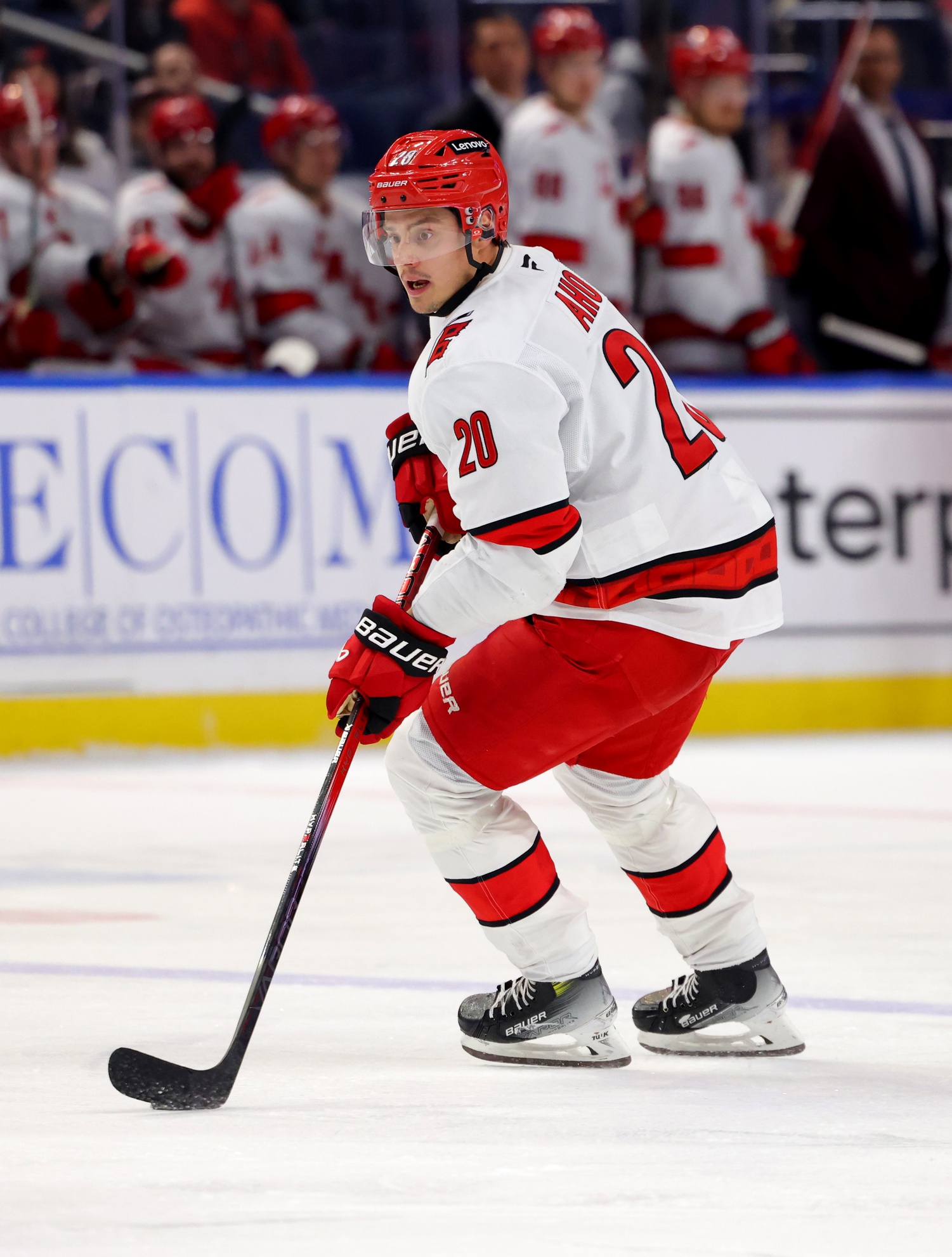
While a 36-year-old forward coming off a seven-point season may not seem like much of an asset, veteran center Luke Glendening could still bring meaningful value in the right situation. Glendening suited up in 77 games last season for the Tampa Bay Lightning, posting just four goals and three assists while centering the team’s fourth line.
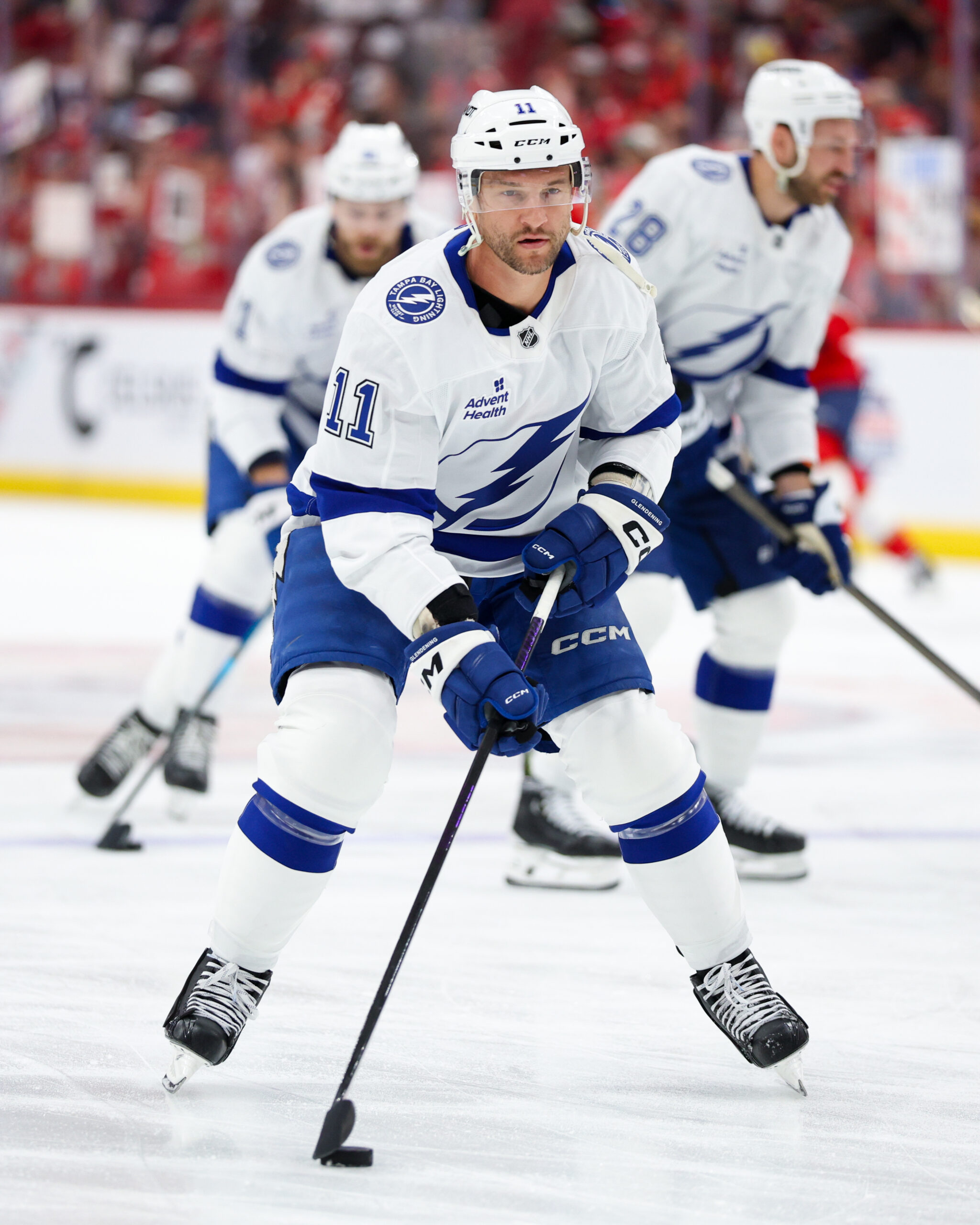 Despite limited offensive production, he remained defensively reliable, tallying 105 hits, 58 blocked shots, and a 57 percent faceoff win rate — impressively in line with his 55.8 percent career average. It marked the eighth consecutive season that Glendening posted a faceoff win rate of at least 55 percent, which could be a valuable asset for any team looking to win key draws in the defensive zone.
While he’s never been an asset in the offensive zone (as told by his 166 points in 864 games), Glendening has carved out an impressive 12-year career thanks to his grit, physicality, and defensive prowess. Over the course of his career — which began in Detroit and includes stops in Dallas and Tampa — Glendening has logged 10 seasons with at least 100 hits and 11 seasons with 50 or more blocked shots. He has also received Selke votes on three separate occasions, a testament to his defensive reliability.
2024-25: 77 GP, 4 G, 3 A, 7 PTS, -9, 10 PIMS, 51 shots, 10:47 ATOI, 57.0 FO%, 38.3 CF%
Career: 864 GP, 83 G, 83 A, 166 PTS, -84, 308 PIMS, 944 shots, 13:37 ATOI, 55.8 FO%, 36.4 CF%
Potential Suitors
While many teams could benefit from a veteran fourth-line center with faceoff expertise, it appears Glendening’s most recent club isn’t one of them. Despite being a nightly fixture in the Lightning’s lineup, it was reported prior to the start of free agency that the Bolts were going to let Glendening hit the open market, where he remains today.
As mentioned earlier, Glendening could fit with a number of teams, whether it’s a contender in need of bottom-six experience or a rebuilding squad seeking veteran leadership and a few niche skills.
Projected Contract
At this stage of his career, any contract offer Glendening receives is likely to be a one-year deal in the $775,000 to $800,000 range. While his defensive reliability and faceoff expertise still offer value, his limited offensive upside and advancing age significantly narrow his market. Glendening may also have to settle for a PTO and attempt to earn a roster spot by outperforming younger competition in training camp.
Photo credit: Nathan Ray Seebeck-Imagn Images
Arbitration Breakdown: Nicholas Robertson
Every player to file for arbitration so far this offseason has avoided a hearing, and only one case even got remotely close. That likely won’t be the case for the Maple Leafs and Nicholas Robertson, who have until their hearing starts on Sunday to settle before an arbitrator’s award will decide their fate.
Filings
Team: $1.2MM
Player: $2.25MM
Midpoint: $1.725MM
(via Elliotte Friedman of Sportsnet)
The Numbers
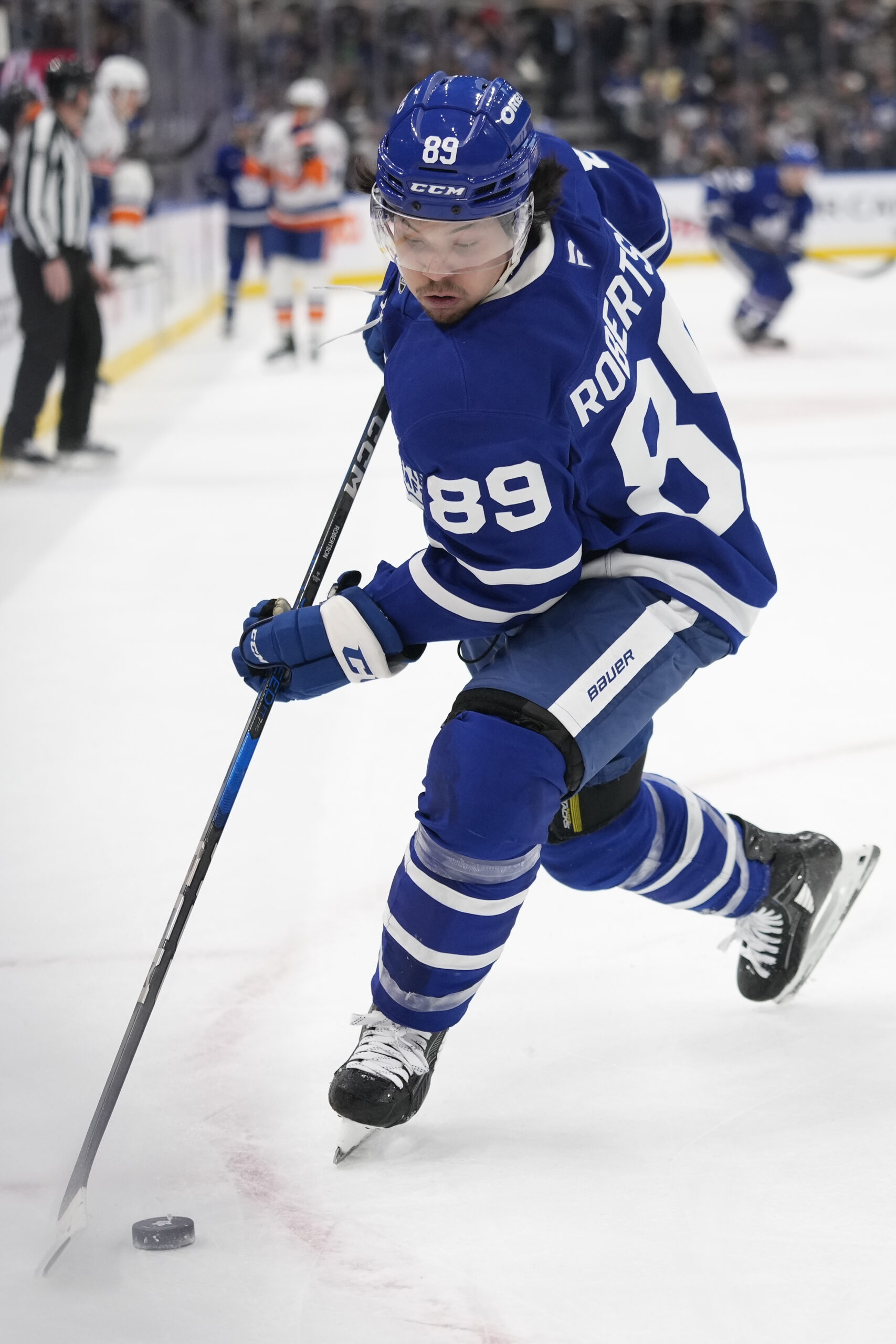 Nothing much really changed last season for Robertson. After a trade request last summer didn’t come to fruition, he ended up inking a one-year, $875K deal to return to Toronto in hopes of landing a more consistent role in their top-nine forward group. That didn’t happen. While he did make a career-high 69 appearances, the 23-year-old’s usage remained conservative at 12 minutes per game, and his point pace dropped off from his 2023-24 performance. He finished the year with 15 goals – seventh on the team – but only seven assists for 22 points, a rate of 0.32 per game after he recorded 0.48 per game the year before in lesser minutes.
The younger brother of Stars centerpiece Jason Robertson has always been viewed as one of the higher-ceiling young offensive options in Toronto’s system. He’s shown it in flashes, but it’s clear at this stage he needs a longer leash and more minutes to truly be effective without many other elements to his game (although he did manage a career-high 79 hits last year).
Whether he’ll receive that in Toronto remains to be seen. In any event, the Leafs’ seven-figure filing is significantly higher than his $775K cap hit from 2024-25, so it’s clear they’re anticipating on him playing a slightly more regular role in 2025-26 and will presumably count on him for more depth scoring in the wake of Mitch Marner‘s departure. But for a player with just over 150 career appearances, it’s going to be a tad difficult to project how a potential hearing may shake out.
2024-25 Stats: 69 GP, 15-7–22, -1 rating, 16 PIMs, 112 shots, 12:00 ATOI
Career Stats: 156 GP, 32-24–56, +2 rating, 24 PIMs, 258 shots, 11:28 ATOI
Potential Comparables
Comparable contracts are restricted to those signed within restricted free agency, which means UFA deals and entry-level pacts are ineligible to be used. The contracts below fit within those parameters. Player salaries (or current-year equivalents) also fall within the parameters of the submitted numbers by both sides. Career stats listed are as of the time of signing.
Jonatan Berggren (Red Wings) – Berggren is a year older than Robertson and has fewer seasons of NHL experience, but they’ve both clicked at around a 30-point pace for their career in similar deployment. Like Robertson, Berggren’s platform year saw him play the most games of his career, but not with the best per-game production rate. While an imperfect science, there’s good evidence for both sides here to argue for a deal closer to the midpoint rather than an extreme swing toward either Toronto’s or the player’s filing.
Contract (2025): One year, $1.825MM AAV, 1.9 CH%
Platform Stats: 75 GP, 12-12–24, -13 rating, 14 PIMs, 88 shots, 12:59 ATOI
Career Stats: 154 GP, 29-29–58, -28 rating, 32 PIMs, 200 shots, 13:01 ATOI
Sonny Milano (Ducks) – This may be the best comparable available aside from its outdatedness. Milano was also coming off his age-23 season and, like Robertson, had five years of NHL experience despite the lower games-played total. Note the higher cap hit percentage since the deal was signed five years ago – that might be something Robertson’s camp puts on the table to get him closer to or at the $2MM mark for his award (a 2.1 CH% with a $95.5MM cap ceiling is almost exactly $2MM on the dot).
Contract (2020): Two years, $1.7MM AAV, 2.1 CH%
Platform Stats: 55 GP, 7-16–23, -7 rating, 26 PIMs, 75 shots, 13:06 ATOI
Career Stats: 125 GP, 22-25–47, -17 rating, 36 PIMs, 153 shots, 12:07 ATOI
Jack Quinn (Sabres) – Quinn comes across near the higher end of these comparables. While the perception around Quinn having a down year last season may have some truth to it, the numbers still point to him being at least a tier above Robertson in terms of what he’s actually produced. Add in Quinn’s draft pedigree as a No. 9 overall pick, and it’s easier to see why Robertson’s filing wasn’t higher than it was, although his camp may still attempt to draw comparisons to convince the arbitrator to side with them outright.
Contract (2025): Two years, $3.375MM AAV, 3.5 CH%
Platform Stats: 74 GP, 15-24–39, -18 rating, 18 PIMs, 123 shots, 14:52 ATOI
Career Stats: 178 GP, 39-58–97, -26 rating, 41 PIMs, 311 shots, 14:33 ATOI
Filip Zadina (Red Wings) – Aside from the draft pedigree, Zadina’s comparable here is also a pretty direct one. He was only one year younger than Robertson was at the time of their contract signings, but had seen more deployment to the tune of similar career offensive results with worse defensive impacts. Given the cap percentage, this would come across as a more advantageous comparable for Robertson.
Contract (2022): Three years, $1.825MM AAV, 2.2 CH%
Platform Stats: 74 GP, 10-14–24, -24 rating, 10 PIMs, 154 shots, 14:11 ATOI
Career Stats: 160 GP, 25-36–61, -46 rating, 12 PIMs, 329 shots, 15:13 ATOI
Projection
Since Robertson was the one to file and has multiple years of team control remaining, the Maple Leafs can pick a one or two-year term for his next contract after the arbitrator awards the AAV. Considering his inconsistent year-to-year pace, it stands to reason they’d pick a one-year deal to make him a more attractive trade chip if he doesn’t pan out this year (or give themselves the option to walk away entirely next summer).
The comparable contracts advocate for a deal near the midpoint but slightly in Robertson’s favor, likely in the $1.8MM-$2MM range. It may not be as much as he wanted, but it still doubles last year’s salary and will give him a seven-figure salary for the first time in his career.
Image courtesy of John E. Sokolowski-Imagn Images.
Free Agent Profile: Max Pacioretty
Despite registering multi-goal seasons (six of those being 30-goal campaigns) for the bulk of his NHL career, veteran winger Max Pacioretty can no longer be relied upon as a primary scorer, nor a secondary one. Essentially, since his second Achilles tendon tear in mid-January of the 2022-23 season with the Carolina Hurricanes, Pacioretty has been a shell of the player he once was.
Still, despite a down season (for his standards) with the Washington Capitals throughout the 2023-24 campaign, Pacioretty turned a professional tryout agreement into a bonus-laden deal with the Maple Leafs last summer. Unfortunately for his earning power, Pacioretty spent much of his year on the injured reserve, scoring five goals and 13 points in 37 contests, averaging 13:30 of ice time.
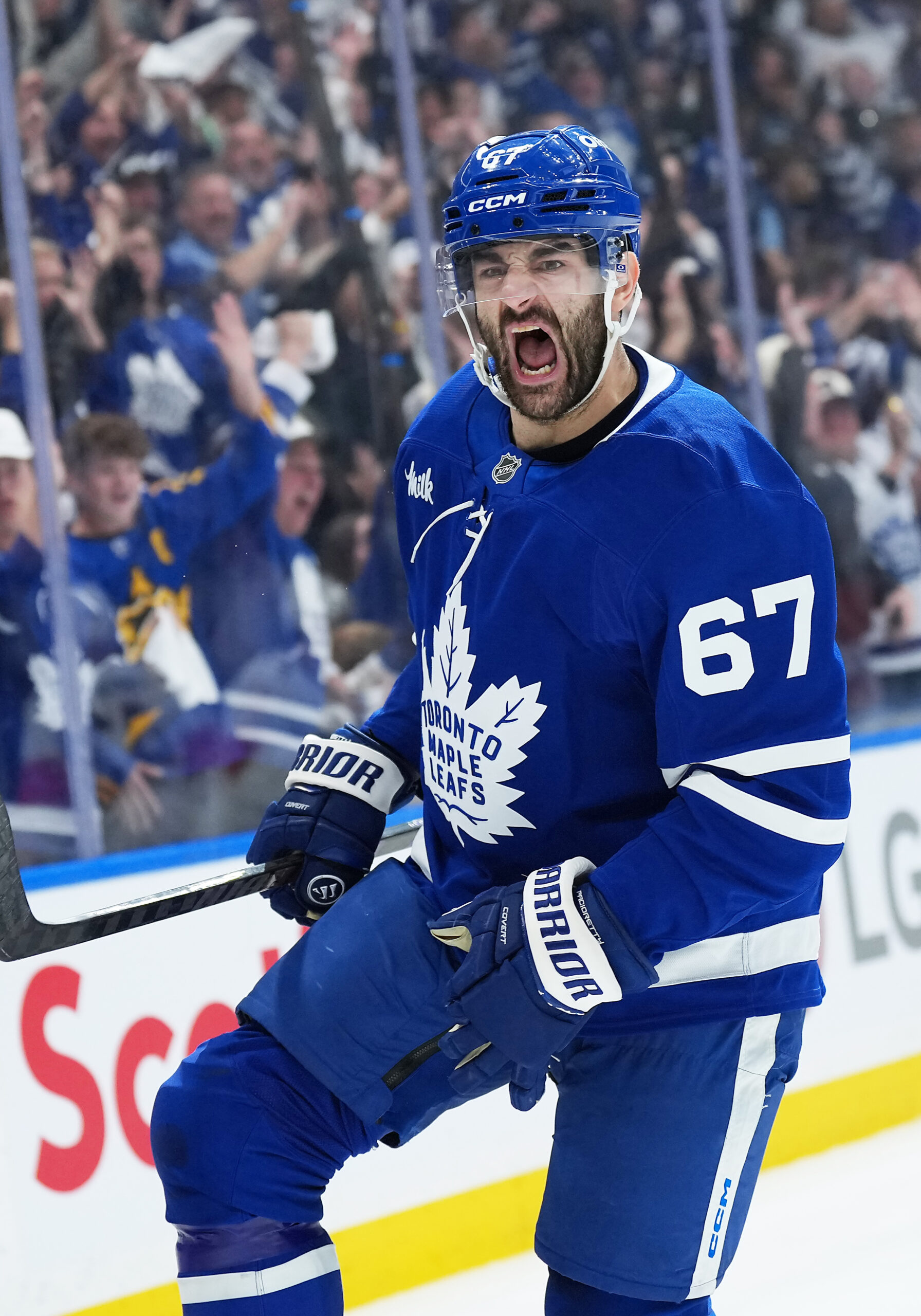 He turned things around during a brief playoff stretch, scoring three goals and eight points in 11 games while averaging 12:51 of ice time. Hindsight being 20/20, Pacioretty’s strong postseason performance wasn’t good enough to earn him a guaranteed contract early on this summer, but he did finish fourth on the Maple Leafs in playoff scoring ahead of John Tavares and Matthew Knies. Pacioretty hasn’t given any indication this summer that he’s ready to hang up his skates, as he believes he has a little more left in the tank to offer a contending team.
Stats
2024-25: 37 GP, 5 G, 8 A, 13 PTS, -2, 16 PIMS, 70 shots, 13:30 ATOI, 48.4 CF%
Career: 939 GP, 335 G, 346 A, 681 PTS, +53, 80 PIMS, 3,048 shots, 17:16 ATOI, 53.4 CF%
Potential Suitors
It’s already public information that Pacioretty would like to be close to southeastern Michigan, where he spent his collegiate hockey days with the University of Michigan Wolverines, and where he and his family reside in the off-season (the latter lives there year-round). Assuming Toronto is no longer interested in retaining Pacioretty, only two options remain.
The Columbus Blue Jackets would be the next closest option outside of the Detroit Red Wings, being approximately 80 miles closer to his family than the Maple Leafs offered. There is a pending trade request from Columbus’s Yegor Chinakhov, making Pacioretty a potential stopgap if they don’t get another winger in a hypothetical trade.
While the Red Wings have seemingly addressed their need for a veteran winger this offseason by signing James van Riemsdyk, they have also realized that they cannot rely on consistent offensive production from anyone other than Lucas Raymond. Even as a veteran with postseason experience, Pacioretty may even resign to a plug-and-play role, being a healthy scratch most nights unless needed for additional offense, if only for a chance to play closer to his family.
Projected Contract
Although he doesn’t know where he’s playing yet, Pacioretty should know exactly what kind of contract he’s getting. Due to the consistent injury concern, Pacioretty should only receive a one-year deal with a salary between $775K and $850K. The signing team could include a handful of games played bonuses, as did the Maple Leafs, but those may not even be required to give Pacioretty another chance to close out his career on a positive note.
Photo courtesy of Nick Turchiaro-Imagn Images.
Have The Oilers Improved This Summer?
Few teams have experienced as much movement this summer as the Edmonton Oilers. After two consecutive Stanley Cup Finals losses, it was expected that management would make some adjustments, but most fans probably hoped those changes would focus on the goaltending. That didn’t happen, and most of the team’s overhaul has taken place with the forwards, where many veterans left in free agency. Edmonton did what it could to find suitable replacements, but it still feels like their forward group isn’t as strong as the one that skated off the ice after a game six loss to the Florida Panthers in June.
The Oilers started their offseason by trading forward Evander Kane to the Vancouver Canucks for a fourth-round pick this year. The Oilers needed to clear cap space urgently and managed to do so before the start of free agency on July 1st. Kane was expected to count $5.125MM against the Oilers’ cap on the final year of his four-year deal and was considered expendable by management. Kane isn’t the player he once was, but he could still skate, check, and shoot, and he was effective in the first three rounds of the playoffs. Edmonton probably didn’t want to move Kane, but given their situation this summer, they didn’t have many options.
Nearly a week after the Kane trade, Edmonton made another move, sending Viktor Arvidsson to the Boston Bruins for a 2027 fifth-round draft pick. The deal cleared $4MM in cap space for Edmonton and allowed them to re-sign top defenseman Evan Bouchard. Arvidsson never gained much traction with the Oilers, recording 15 goals and 12 assists in 67 games, but he was only a couple of years removed from posting 26 goals in a season with the Los Angeles Kings. Trading away Arvidsson and the final season of his two-year contract probably won’t make a big difference for the Oilers. Still, like Kane, it was a case of Edmonton selling low on a forward with a mid-tier deal and hoping to find a replacement with a lower salary.
Arvidsson wasn’t the only Oilers player to find a new home on July 1st; Connor Brown signed with the New Jersey Devils on a four-year, $12MM deal, Corey Perry signed a one-year contract with Los Angeles, and defenseman John Klingberg signed with San Jose. These moves certainly reduced the Oilers’ depth, but Edmonton did what it could to retain other potential UFAs on its roster while also finding buy-low options in free agency.
Edmonton secured Trent Frederic with an eight-year extension at $3.85MM annually and also re-signed Kasperi Kapanen on a one-year deal worth $1.3MM. Both Frederic and Kapanen are solid pros capable of playing in Edmonton’s bottom six, but their signings raise some concerns. The length of Frederic’s contract is excessive, especially for a player who scored eight goals and seven assists in 58 games last season. Meanwhile, Kapanen can go long stretches without producing, as he fluctuates offensively and offers limited defensive value. He’s not suited for the bottom six, but he’ll likely end up there because he’s not consistent enough for the top six.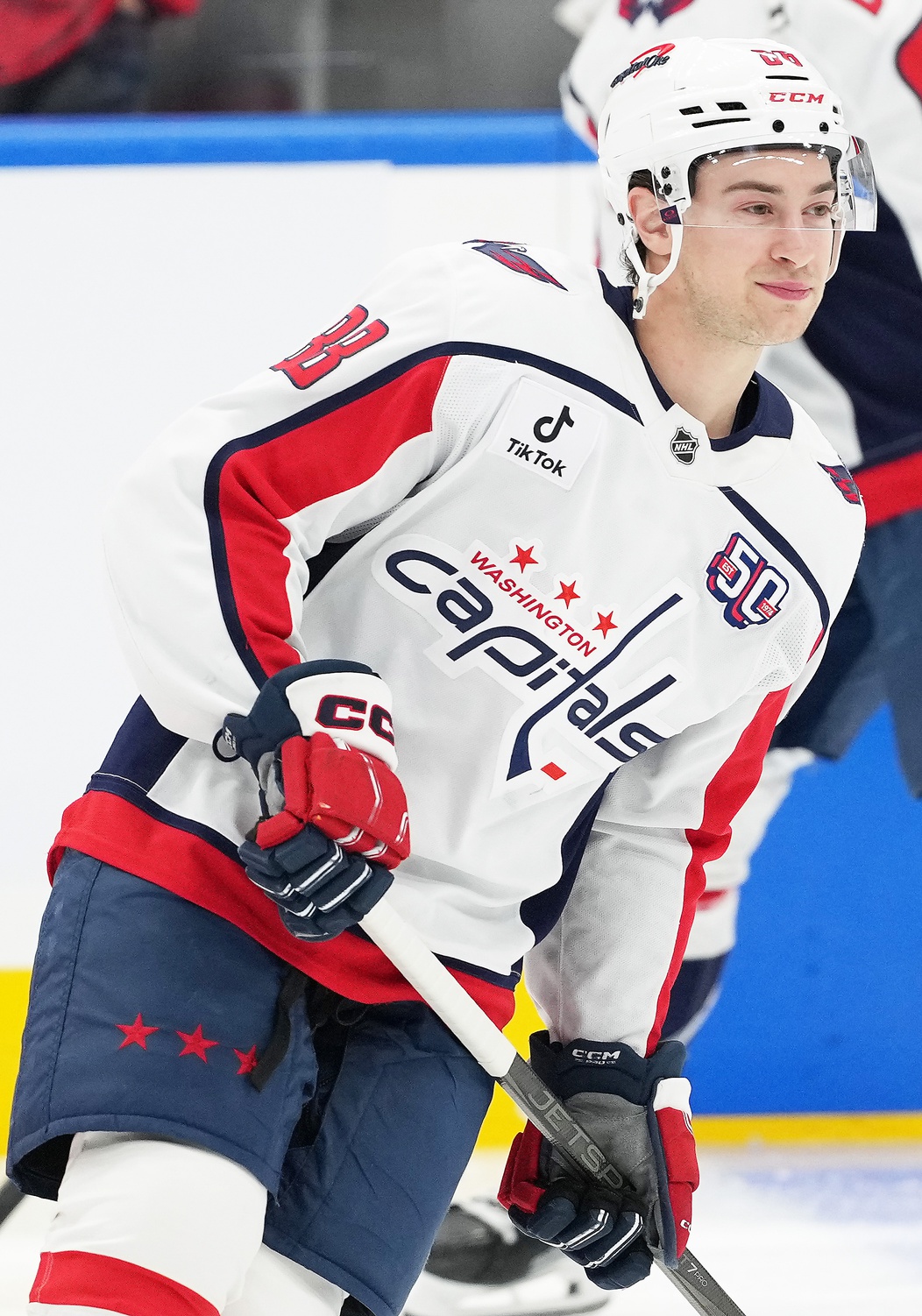
On the same day as re-signing Kapanen, the Oilers also secured Bouchard with a four-year extension worth $42MM. The deal utilized most of the savings from trading Kane and Arvidsson, but it resolved one of the Oilers’ most pressing tasks this summer. Although the salary is eye-popping at $10.5MM per year, Bouchard has shown himself to be a top offensive defenseman in the NHL, even if he occasionally makes critical errors.
Once Edmonton had secured Bouchard, they had a clear idea of their available cap space for free agency. They proceeded to sign Andrew Mangiapane to a two-year deal and also added Curtis Lazar. Mangiapane’s contract was for two years at $7.2MM and could prove valuable for Edmonton if the 29-year-old can regain his scoring touch. The undersized forward played 81 games last season for the Washington Capitals and had a disappointing year, posting just 14 goals and 14 assists. The Toronto, Ontario native is three years removed from a 35-goal season and has been a reasonably consistent .5 PPG player throughout his career. He could be an option in the top six for the Oilers and possesses the skill set to fit that role.
Lazar, on the other hand, returns to Edmonton, a city where he played junior hockey in the WHL from 2011 to 2014. Lazar has moved around the NHL during his 11-year career, now playing for his seventh team, the Edmonton Oilers. Drafted 17th overall in the 2013 NHL Entry Draft, he is primarily known as a solid penalty killer, capable of forechecking, but not producing much offense. He will effectively replace veteran Derek Ryan, who was not re-signed and remains a free agent. Lazar could see some time in the AHL this season, given that he is earning league minimum, and could very well be a 13th forward for the Oilers.
Finally, the Oilers’ last move of the summer was acquiring forward Isaac Howard from the Tampa Bay Lightning in exchange for forward Sam O’Reilly. Howard was a first-round pick of the Lightning in 2022 (31st overall). He was dominant last season in the NCAA, posting 26 goals and 26 assists in 37 games for Michigan State University. There is a lot of hope in Edmonton that Howard can jump into the top six and contribute, but there are no guarantees he will, and those expectations might be unrealistic, even though he is a talented prospect.
Considering the overall body of work so far this summer, the Oilers’ changes have been underwhelming. Losing Perry will no doubt hurt, as his net-front presence was crucial, especially in the playoffs, while Kane was a solid contributor in the first three rounds and helped Edmonton reach the finals. Overall, they’ve filled some of the gaps created by player departures, but it does seem like Edmonton lost some toughness and key veterans this summer, which could put them in a tough spot if they face the Florida Panthers for the third straight year.
The biggest miss so far is probably that Edmonton hasn’t addressed its goaltending issues, and it likely won’t be able to do much about it. Stuart Skinner seems to be the main guy between the pipes again, with Calvin Pickard backing him up. If the Oilers want to make a big boost this season, that’s where they’d get the most value, but because of their limited cap space, any move will likely need to be a lateral one financially, which could be tricky to pull off during the season.
Photo by Nick Turchiaro-Imagn Images
Poll: Will The Penguins Be Able To Trade Erik Karlsson?
Before the offseason began, it became clear that the Penguins were uniquely positioned as one of the league’s true few sellers who had no plans of contending for a playoff spot in 2026. Even with an understaffed roster, particularly on the blue line, they do still have some valuable trade chips to leverage in order to recoup additional future assets for their ongoing rebuild while also giving them a greater chance at a high-end pick in a stacked 2026 draft class.
While wingers Rickard Rakell and Bryan Rust will likely yield the most calls and have rather movable contracts, defenseman Erik Karlsson has also been on the shopping block since last season’s trade deadline. Aside from the declining veteran’s $10MM cap hit being virtually immovable without at least an additional 20% worth of retention, he has a no-movement clause through the remainder of his deal, which expires following the 2026-27 season.
Moving him, even with retention, is a sensible goal for the Penguins if they can yield a significant return. The 35-year-old obviously doesn’t fit into their long-term plans, and shedding some of his salary opens up more flexibility to take on more shorter-term undesirable contracts in the near future in exchange for additional futures, similar to their pickup of Matt Dumba from the Stars earlier this month.
That no-movement clause, which Karlsson waived to facilitate a trade to Pittsburgh from San Jose following his Norris-winning campaign in 2023, makes generating that significant return a difficult feat. He’s produced at a decent 55-point pace over his two seasons with the Pens and hasn’t missed a game since his acquisition, but a look under the hood reveals declining possession impacts to pair with his already solidified one-dimensional reputation as an offensive-minded rearguard.
While he usually helps his team generate significantly more shot attempts to help offset those poor defensive impacts, his +2.0% relative Corsi at even strength last year was among the worst of his career, as was his 48.4 xGF%. Entering his age-35 season, it’s not exactly as if there’s hope for a rebound there unless he’s deployed in an extremely insulated possession system.
Even if the Penguins are able to make Karlsson a $7MM-$8MM player for the next two seasons, the Venn diagram of teams that can afford him and those he’d be willing to waive his NMC for isn’t favorable. He’s willing to move but is only considering waiving his clause for a select few Stanley Cup contenders, according to reports earlier this month. That’s both foreseeable and reasonable – Karlsson has yet to reach a Stanley Cup Final in his 16-year NHL career.
That makes it hard to see many speculative fits outside of a potential move to the Hurricanes, who have something of a hole on the right side of their blue line after losing Karlsson’s former teammate, Brent Burns, to Colorado in free agency. They’ve got the space ($10.64MM) to burn and the high-end possession system to insulate his defensive shortcomings, particularly if he’s given license to play top-pairing minutes with one of the league’s top pure shutdown rearguards in Jaccob Slavin.
He’s not an extremely pressing need for Carolina with some other skilled puck-movers on their back end and a potential game-breaker in Russian rookie Alexander Nikishin, though. There will be questions, both from the public and likely within the Canes’ front office, of whether it’s wise to spend their remaining cap space on an area of strength rather than trying to pursue options to address their hole at second-line center.
PHR readers – how do you think things will shake out? Will the Penguins be able to get a Karlsson deal done? If so, how much money will they need to retain to make it happen? Vote in our poll below:
Will The Penguins Deal Erik Karlsson?
-
Karlsson will remain a Penguin at the beginning of the 2025-26 season. 45% (438)
-
They'll trade Karlsson while retaining more than $2.5MM of his salary. 45% (435)
-
They'll trade Karlsson while retaining less than $2.5MM of his salary. 10% (99)
Total votes: 972
If you can’t see the poll, click here to vote.
Current NHL Free Agents
The following players are currently free agents. Each player’s 2025 age is in parentheses. Only players who saw NHL action last season and ended the year on the active roster are listed here. Players who have announced their retirement or signed overseas are not included.
Updated Sep. 12, 2025
Unrestricted Free Agents
Centers
Luke Glendening (36)
Kevin Rooney (32)
Jack Roslovic (28)
Left Wingers
Robby Fabbri (29)
Noah Gregor (26) – non-tender
Brock McGinn (31)
Tyler Motte (30)
Matthew Nieto (32)
Max Pacioretty (36)
Right Wingers
Cam Atkinson (36)
Klim Kostin (26) – non-tender
Kevin Labanc (29)
Brett Leason (26) – non-tender
Trevor Lewis (38)
Craig Smith (35)
Left-Shot Defensemen
T.J. Brodie (35)
Calvin de Haan (34)
Matt Grzelcyk (31)
Jack Johnson (38)
Oliver Kylington (28)
Jonathon Merrill (33)
Brendan Smith (36)
Ryan Suter (40)
Marc-Édouard Vlasic (38)
Right-Shot Defensemen
Robert Bortuzzo (36)
Jani Hakanpää (33)
Erik Johnson (37)
Goaltenders
James Reimer (37)
Georgi Romanov (25) – non-tender
Ilya Samsonov (28)
Restricted Free Agents
Centers
Mason McTavish (22)
Left Wingers
none
Right Wingers
Luke Evangelista (23)
Alexander Holtz (23)
Left-Shot Defensemen
Luke Hughes (21)
Wyatt Kaiser (23)
Right-Shot Defensemen
none
Goaltenders
none
Poll: Will Marco Rossi Return To The Wild?
The trade market has been slower than predicted since draft day. There have been some notable RFA names changing hands, K’Andre Miller and Nicolas Hague among them, but others who were tabbed as likely candidates to move amid a gap in contract talks ended up staying put.
One of them is Wild center Marco Rossi, who remains unsigned and is beginning to see his name brought back to the forefront with most other summer business now settled. Multiple reports in the last few days have indicated there’s been no contract dialogue between Rossi’s camp and the Minnesota front office since June. That was something Rossi was okay with as he waited for a competitive offer sheet to come in and speed the sign (or trade) process along, but no deal ever came.
While there was considerable trade interest in Rossi’s signing rights earlier in the offseason, teams were reportedly put off by Rossi’s desire for a long-term deal in the $7MM range annually. Wild general manager Bill Guerin, staunchly unwilling to dole out that money, has since had his value assessment of Rossi backed up by loads of other teams, as Rossi can’t find the contract he desires.
In most cases, this would lead a player to acquiesce to a bridge deal and try to meet their financial hopes again in a year or two. But if Rossi signs a short-term contract with the Wild, there are two significant risks he’s opening himself up to that have been discussed at length in the last couple of months. Not only could a bridge deal facilitate a trade for Rossi, who’s ineligible for any protection, to a team he doesn’t want to go to, it could also damage his future earning potential if he feels he doesn’t get advantageous deployment.
The latter is a legitimate concern after how the 2024-25 season ended. The diminutive but skilled 23-year-old center looked at home in a top-six role in the regular season, averaging 18:15 per game and notching 60 points in 82 appearances as Minnesota’s top-line anchor for most of the year. His minutes were slashed in the Wild’s first-round loss to the Golden Knights, though, seeing fourth-line deployment in just over 11 minutes per game. He still managed a pair of goals and an assist in the six-game defeat, with both tallies coming at even strength.
Understandably, that left a sour taste in Rossi’s mouth after a regular season in which he proved he can be a capable top-six producer. The 2020 No. 9 overall pick has next to no leverage in his current situation, though. With Guerin content to continue holding pat in the Wild’s position, there’s no incentive for him to trade Rossi unless someone offers a piece he feels improves their roster composition immediately. Since those offers haven’t come so far, there’s little reason to believe they will now, especially with reporting on that front remaining quiet.
That leaves the Austrian forward completely at the mercy of someone tendering an offer sheet. It’s still a legitimate possibility, even if it’s not an overwhelmingly likely one. The Blues’ dual offer sheets to Oilers RFAs Philip Broberg and Dylan Holloway last year didn’t come until mid-August. Doing so would also permit a team to surrender only draft picks to bring in Rossi, a package the Wild wouldn’t be thrilled to accept in a trade as they look to remain playoff contenders and help their case to convince superstar pending UFA Kirill Kaprizov not to test the open market next summer.
Minnesota could still match that offer sheet, though, leaving Rossi in a position where he’ll likely only sign one if it’s reasonably close to his initial ask. Since those offers haven’t been there in trade talks, why would they be there now?
With no resolution in sight, we’re asking PHR readers how they think things will play out between the two sides. Vote in our poll below:
Will Marco Rossi Be With The Wild In 2025-26?
-
Yes, he'll re-sign with the Wild. 60% (787)
-
No, he'll be traded or sign an offer sheet. 40% (517)
Total votes: 1,304
PHR Mailbag: Trade Market, Johansen, Canadiens, Offseason Moves, Palat, Centers, Red Wings, McKenna
Topics in this edition of the mailbag include good and bad moves from this summer’s spending spree, possible contenders for the Gavin McKenna sweepstakes, and more. If your question doesn’t appear here, check back in our last two mailbag columns.
RPIsFinest: Teams like the Leafs and Rangers seemed pretty open about the need for big changes this summer. Is this what they had in mind? Or are bigger moves coming? Or has the fact that a lot of the top UFAs opted to stay put hampered their plans?
Now that the FA market has come and gone, do we see teams making some big trades to revamp their rosters or stand pat?
I think the lack of impact talent to actually reach the open market really limited some planning. I suspect Toronto might have preferred to add a top-six piece to replace Mitch Marner but flipped to adding better depth to their roster which I suspect was their Plan B all along. For the Rangers, they moved out two key pieces in Chris Kreider and K’Andre Miller while adding Vladislav Gavrikov. Coupled with some of the trades from last season including bringing in J.T. Miller, I think they’ve done the bulk of their big changes. In general though, I suspect more teams had bigger things in mind than they were able to do.
I’ve seen speculation saying that the trade market is going to be more robust than normal in the next few weeks and some saying that the bigger moves might come in-season but earlier than the market typically heats up. I agree more with the latter. We’re at the point of summer where the big player-for-player swap usually doesn’t happen as teams tend to lean more toward keeping the one that they’re familiar with. But if things don’t get off to a great start 20 games in or so, they might be more inclined to try the shakeup.
Da Hammerer: What has come of the situation between the Flyers and Ryan Johansen? A friend implied he read an article or tweet the grievance was squashed, but I’ve been unsuccessful in finding anything beyond the announcement of the grievance hearing that was scheduled. Of all the articles I’ve read about their cap and dead cap hits, none mentioned any impact from Johansen’s contract situation.
There’s not much out there about this situation. They’ve gone ahead and held the hearing but the results were never revealed. Whether that means there was a settlement reached or the outcome is still pending remains to be seen. I suspect there’s a good chance we won’t hear about it either.
As for the cap implications, let’s start with the easy one first. Nashville also received cap relief from the Johansen contract termination but they operated so far below the salary cap all season long that even if the cap hit got retroactively reapplied, they’d still be under last year’s $88MM ceiling. So, for the Predators, they’re fine.
The Flyers are a little harder to pin down given that some of the daily tracking is done behind paywalls so I don’t have a precise end-of-season number for them. And what is available has a bit of variance. CapWages had their finishing space at $8.99MM but that included the LTIR pool for Ryan Ellis ($6.25MM); back that out and they’re at $2.74MM. PuckPedia had them around $2.65M in mid-March so there’s a rough range to work with. But Matvei Michkov’s $1MM in earned ‘A’ bonuses need to be deducted from that pool. Accordingly, if Johansen’s cap charge was retroactively applied to last season, there would be around a $2.4MM overage or so applied to the upcoming season. That would push the Flyers into using LTIR as things stand, meaning that any earned bonuses in 2025-26 would then hit the cap in 2026-27. So, there’s some murkiness about their situation but given how quiet things have been in this case, I don’t expect it will come to that.
KS Habs: Any further moves by Kent Hughes and the Canadiens? I know they have looked into a 2nd Line wing or center but there is not a lot on the market. Is there a chance Rossi, McTavish head back to the Habs or do they like try with Kirby Dach at center again? A second question is what do you think a Lane Hutson contract extension would look like? 8 x $10? Thanks!
By all accounts, the Canadiens don’t appear to be seriously pursuing Marco Rossi at this time which, given their need and desire to upgrade down the middle, is a little telling. As for Mason McTavish, I’m sure they’re interested in him but I’m not sure why Anaheim would look into moving him. The absence of a contract for him isn’t really an indication that he’s available, it’s just what happens with a lot of younger talents coming off entry-level deals without arbitration rights; these situations can often drag on. But if he were to become available, I’m sure Montreal would make a serious push. But at this point, I expect they will head to training camp with the centers they have which means Dach getting another look down the middle.
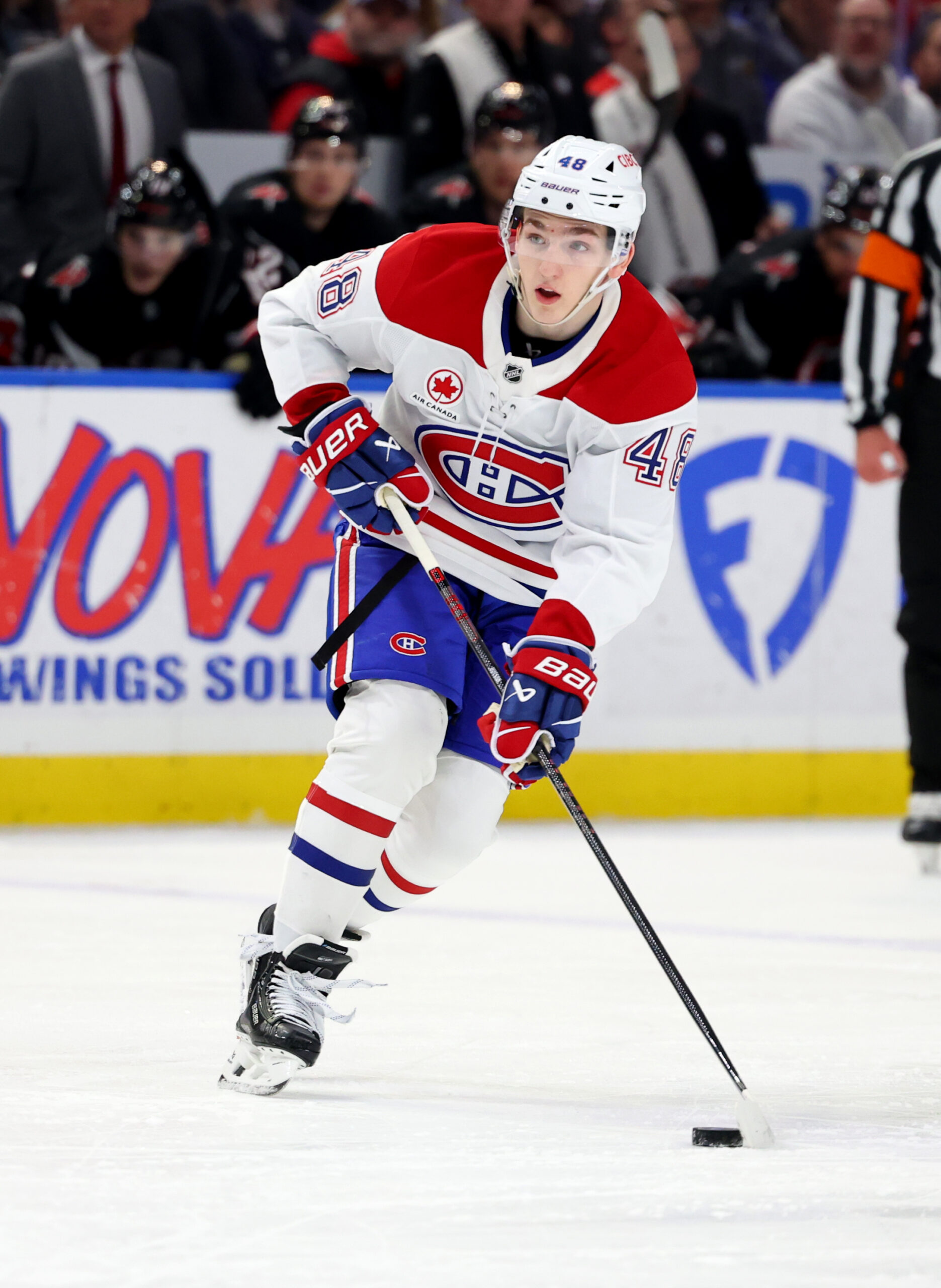 As for Hutson, I took a look at some comparables for him a couple of months back and not much has changed since then with only one more to add to that range, his new teammate. Your proposal falls within the range of those comparable players and in this marketplace with the salary cap set to jump a couple more times, it’s not crazy even though it’s a sky-high number for someone who has all of one season under his belt. But I don’t think Montreal would make that offer right now. When they just gave Noah Dobson, a player with a 70-point season under his belt and a longer track record, $9.5MM per season for eight years, it feels like they wouldn’t go higher for that on Hutson. It’s notable that only two seasons of Dobson’s deal were UFA years while Hutson has five in his. So, right now, I think their internal cap for a Hutson contract comes in below that.
Schwa: When we look back in a couple of years, who will we look at as being the best/worst deals (for signings and/or trades)?
You haven’t specified which period to cover for these signings and trades so I’m going to operate as if you’re asking about the recent dealings and contracts from this offseason.
For the best moves, I have some that might be surprising. Giving Jake Allen five years when he’s about to turn 35 is crazy in theory but they got him so far below market value (he likely would have landed more than double his $1.8MM AAV) on the open market that the risk is mitigated. Yes, there’s a chance that he might have to be waived and buried in the minors by the end (at which point, the dead cap charge would be less than $500K) but there’s so much surplus value in the first few years that it should work out well. I also liked the Aaron Ekblad contract with Florida. Again, it might be problematic at the end but he’s still a solid number two option and should be for several more years and that’s a price that’s well below current market value. He left a good chunk of money on the table to stay with the Panthers. As for a trade, I’ll pick Matias Maccelli to Toronto for a conditional third-round pick. If he goes back to being a legitimate top-six piece as he was in the final year in Arizona, that’s a small price to pay (even if it’s elevated to a second rounder) for a top-six piece with some team control.
On the flip side, I have another Florida contract on the worst list, that being Brad Marchand’s six-year deal worth $5.25MM per season. If he’s a top-six player, $5.25MM is fine. But he wasn’t a top-six player with the Panthers and that isn’t going to change unless injuries arise. So now, you have a high-priced third-liner signed until he’s 43. I get trying to keep the band together but that could be a problem contract early and often. The other one that comes to mind covers a signing and trade, that being Nashville sending Jeremy Lauzon and Colton Sissons (with 50% salary retention) to Vegas for Nicolas Hague. From a value perspective, that wasn’t a great deal for the Predators on its face but add in four years at $5.5MM to a player who has largely been on the third pairing and it goes from bad to worse. I think Hague is a useful defender but to overpay in cost and contract on a team that doesn’t seem particularly close to a playoff spot seemed largely unnecessary.
DevilShark: Would the Sharks (or Hawks) do a solid to the Devils and pick up Palat like they did with Goodrow? Depth wing, good mentor. They still have issues with the cap floor too… I’m surprised a solution hasn’t materialized here for NJD.
There are a few things that make an Ondrej Palat trade to those teams less likely. The first is the two years remaining on his contract. Both San Jose and Chicago have taken on more than a one-year deal but I don’t think it’s something they want to do a lot of. Also, both teams are already comfortably above the cap ceiling for next season so that’s not a factor as well.
The second is Palat’s 10-team no-trade clause. It’s quite possible (if not probable) that he has those two teams and some other lower teams in the standings on his list to prevent the type of trade you’re hoping for from actually happening. Most top teams won’t accept a multi-year cap dump so stack the no-trade list with the teams at the bottom of the standings and he should be protected. And if you’re thinking about merely waiving him as the Rangers did with Barclay Goodrow, his no-move protection is basically a no-waivers clause so that’s not on the table.
The third is the money. Goodrow carries a $3.64MM cap charge. Andre Burakovsky is at $5.5MM for two years but Chicago got to offload the final year of Joe Veleno’s contract which has to be factored in. Palat’s older than both of them and at $6MM, he costs more too. That also means he’ll cost more to be offloaded as in New Jersey will need to attach an asset or burn a retention slot to move him, something they probably don’t want to do. I’m not shocked a move hasn’t materialized for the Devils as this is a harder sell given the cost of the contract.
SkidRowe: Could you please compare and contrast Connor Bedard and James Hagens?
I can try but as I’ve noted before, scouting is not necessarily my strong suit.
Offensively, both are strong skaters but their main skill is different. For Bedard, he’s an elite shooter and while he’s not a bad playmaker by any stretch (over time, with better linemates, I think we’ll see that part of his game improve), his shot is his high-end threat. With Hagens, his passing is his standout skill. If you’re looking for the more cerebral player, it’s Hagens with Bedard being the bigger game-breaker.
Defensively, it’s a little harder to compare, largely because Bedard hasn’t been in a spot to evaluate that. In junior, he was the go-to player who had the green light to cheat a bit defensively while in the NHL, he’s basically had that same role with Chicago more focused on lottery odds than winning games. Over time as they get more competitive, it’ll be interesting to see how that side of his game evolves. With Hagens, while he’s more of an offense-first player (most top forward prospects are), he has adapted well enough to the college game at that end and showed improvement with his defensive reads. He might not be a true two-way threat but Hagens showed that he shouldn’t be a big liability at that end of the ice.
The other element to compare is positional. Bedard is undersized for a center and while he has been force-fed big minutes down the middle early in his career, the early returns of handling the position haven’t been great. Again, part of that is the sink-or-swim approach and a bad surrounding cast but there’s a case to be made that he might be better off on the wing. Hagens is similarly undersized but profiles better as a center with his more cerebral game and at least some defensive conscientiousness. He should stay at that position long-term while the more I see Bedard, the more I think the wing may make more sense for him.
Arbitration Breakdown: Dylan Samberg
Entering the arbitration season, the Winnipeg Jets had the most pending cases. They’ve already settled with Morgan Barron on a two-year, $3.7MM agreement and Gabriel Vilardi on a long-term six-year, $45MM contract. They have one outstanding case remaining with defenseman Dylan Samberg, whom Sportsnet’s Elliotte Friedman revealed filing details for this morning.
Filings
Team: $2.5MM
Player: $6MM
Midpoint: $4.25MM
The Numbers
Samberg is coming off the best season of his NHL career. Although he was limited to 60 games, he scored six goals and 20 points, both of which are career highs. He also averaged the highest ice time of his career (21:08), which was good for fourth on the Presidents’ Trophy-winning Jets.
He did finish with the highest +/- rating on the team, although it’s somewhat of an outlier. His 51.2% CorsiFor% was second on the team among defenseman behind Josh Morrissey, but his 91.7% on-ice save percentage at even strength was fourth among defensemen with 20 or more games played. This means that although Samberg was an above-average defenseman for Winnipeg this past season, some of his rating can be explained by the superb work of Connor Hellebuyck behind him.
Still, all of Samberg’s possession and defensive metrics point to him being one of the better defensive defensemen options on the Jets. The team already relies on Morrissey and Neal Pionk for point production from the blue line, giving Samberg more responsibility to shut down the opposing team’s top forward units. Winnipeg feels comfortable putting Samberg in difficult situations, as he started 58.6% of his shifts in the defensive zone last year.
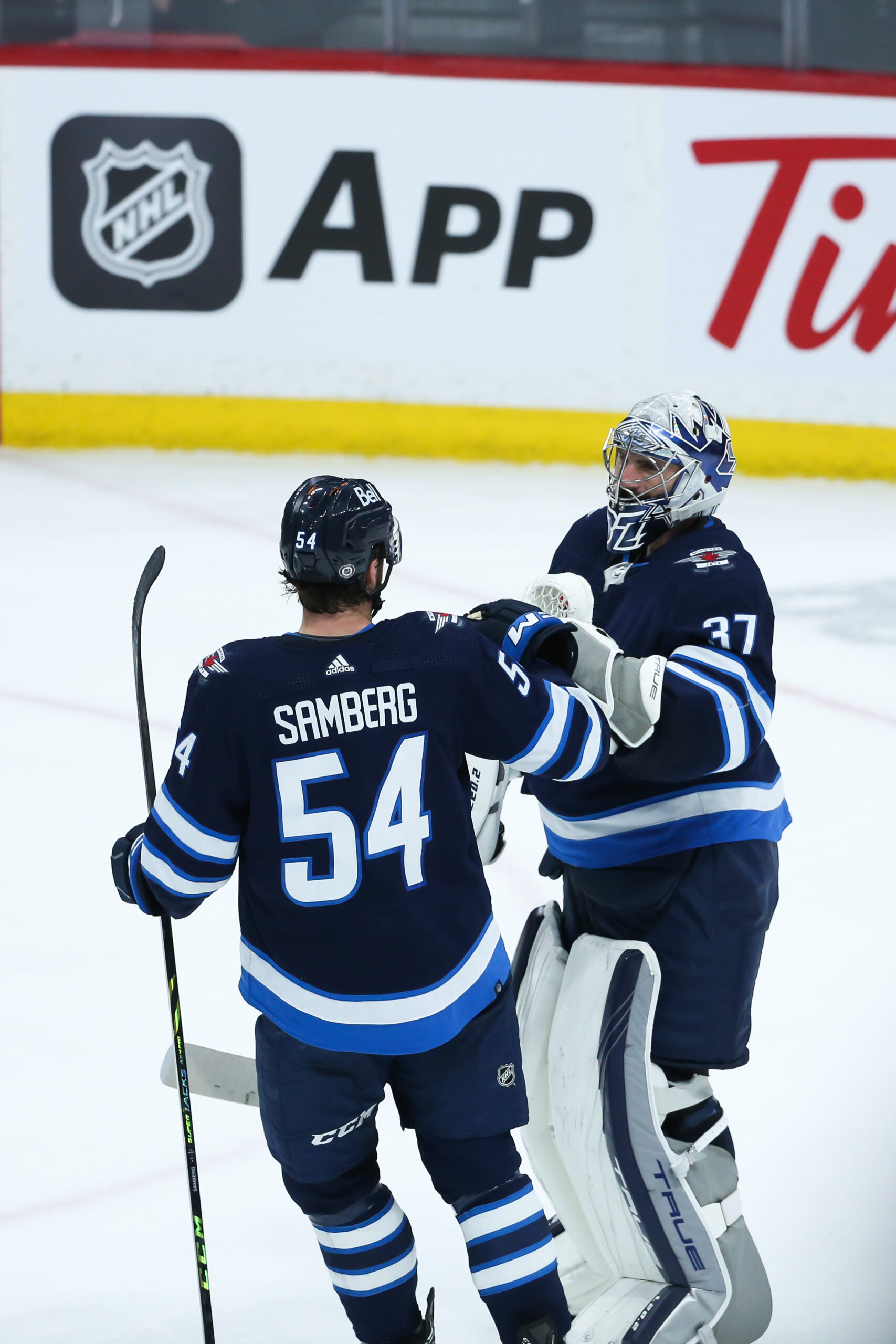 2022-23 Stats: 60 GP, 6-14-20, +34 rating, 26 PIMs, 95 shots, 21:08 ATOI, 51.2 CF%
Career Stats: 216 GP, 9-42-51, +63 rating, 98 PIMs, 235 shots, 16:54 ATOI, 52.1 CF%
Potential Comparable
Comparable contracts are restricted to those signed within restricted free agency, which means UFA deals and entry-level pacts are ineligible to be used. The contract below fits within those parameters. Player salaries also fall within the parameters of the submitted numbers by both sides of Samberg’s negotiation.
The best potential comparison to Samberg this summer would be Nicolas Hague, who signed a four-year, $22MM ($5.5MM AAV) contract with the Nashville Predators after being acquired from the Vegas Golden Knights. The two are separated by 70 days in age, although Hague has played in 148 more games and has a Stanley Cup ring to his name.
Hague has reached a peak of 17 points in a season, which he has accomplished twice in his career. On average, he has logged about 30 seconds more ice time than Samberg and has started most of his shifts in the defensive zone over the past two years. In contrast, Samberg holds an advantage in possession and defensive metrics.
However, Hague has not had the opportunity to play in front of a goaltender of Hellebuyck’s caliber at any point in his career. Furthermore, despite having a similar frame, Hague is much more physical than Samberg and brings valuable championship experience to the table.
Projection
Given that there are only a few days before Samberg’s arbitration case, it’s unlikely that the two sides will agree on a long-term deal. The Saginaw, MN native is only a year removed from becoming an unrestricted free agent, and there’s been no indication one way or another if he’d like to extend in Winnipeg.
Ultimately, this case will likely play out as they normally do, with the arbitrator falling closer to the middle ground, which would be $4.5MM in this instance. There could be some wiggle room, depending on each side’s arguments, but it’s unlikely to differ far from that.
Photo courtesy of Terrence Lee-Imagn Images.