
Salary Cap Deep Dive: Boston Bruins
Navigating the Salary Cap is probably one of the more important tasks for any general manager to have. Teams that can avert total cap chaos by walking the tightrope of inking players to deals that match their value (or compensate for future value without breaking the bank) remain successful. Those that don’t see struggles and front office changes.
PHR will look at every NHL team and give a thorough look at their cap situation heading into the 2017-18 season. This will focus more on those players who are integral parts of the roster versus those who may find themselves shuttling between the AHL and NHL. All cap figures are courtesy of CapFriendly.
Boston Bruins
Current Cap Hit: $64,848,335 (under the $75MM Upper Limit)
Entry Level Contracts
D Charlie McAvoy (two years remaining, $917K)
D Brandon Carlo (two years remaining, $789K)
F Frank Vatrano (one year remaining, $792.5K)
F Jakob Forsbacka Karlsson (two years remaining, $917K)
F Anders Bjork (three years remaining, $925K)
Boston has one of the deeper prospect pipelines in the NHL with upwards of a dozen players in the system on entry-level deals who could earn a call-up before that deal expires. However, this group of five stands the best chance of having a major impact on the Bruins right away in 2017-18.
Carlo, of course, already has a full year under his belt in which he skated in all 82 regular season games and played in over 20 minutes per night, all under the tutelage of one of the best defensive players of his generation: Zdeno Chara. Carlo has already made his #37 overall draft slot look like a steal, but with two more years at under $800K as he develops into a shutdown NHL defender, he could be one of the best blue line bargains in the league.
McAvoy is certainly ready to give Carlo a run for that title though. One of the Calder Trophy favorites for the upcoming season, McAvoy was thrown into the fire last season, making his NHL debut in the Bruins opening round playoff series. McAvoy performed admirably among a ragtag group of replacement players on Boston’s battered blue line and showed that he is more than ready for NHL action. Burning a season off of McAvoy’s ELC was a tough call for GM Don Sweeney and company, but giving McAvoy a taste last year could pay off this year. The former Boston University star and 2016 first-rounder will have all eyes on him in 2017-18.
Burning a year off of Forsbacka Karlsson’s entry-level deal for just one late-season game may have been ill-advised however. The Bruins love “JFK” and his two-way ability and cerebral play at center, with some in the organization and outside observers comparing him to Boston’s own Patrice Bergeron, widely considered the best two-way forward in the game. Those are big expectations to meet, but the Bruins will give Forsbacka Karlsson every chance to earn a regular role this season as they work to develop him into a well-rounded pro. JFK may not have the immediate impact, and expected pay day, of Carlo or McAvoy, but in two years he will certainly be worth more than $917K.
Vatrano has been a revelation for Boston since he was signed as an undrafted free agent, leaving UMass Amherst early in 2015. Vatrano led the AHL in goal scoring in 2015-16 with a stunning 36 goals in 36 games, while tallying 29 points in 83 NHL games along the way as well. Injury and inconsistency slowed down Vatrano’s rapid ascension last season, making 2017-18, his final ELC season, a major year in his career.
Finally, the Bruins were able to convince Bjork, a superstar at Notre Dame and the team’s 2014 fifth-round pick, to leave school early and sign on in Boston. The maximum three-year, $925K per ELC was nice motivation, but the team likely had to promise some play time as well. While Bjork’s spot on the team this season is not set in stone, with fellow high-end prospects Jake DeBrusk, Zach Senyshyn, Peter Cehlarik, and Danton Heinen clamoring for NHL play time, it seems that he’ll certainly get a chance. If the 2016-17 Hobey Baker candidate can find even remotely similar success in the big leagues compared to his past two NCAA seasons, his three-years of production at under $1MM will look mighty nice on the Bruins’ payroll.
One Year Remaining
D Zdeno Chara ($4MM, UFA)
F Ryan Spooner ($2.825MM, RFA)
F Riley Nash ($900K, UFA)
G Anton Khudobin ($1.2MM, UFA)
While it is a relatively painless 2018 free agency class for Boston, the end of Chara’s contract does loom large. The NHL’s tallest man has been the Bruins top defenseman since he signed with the team originally back in 2006 and very well could continue to be next season. It is possible that the Bruins re-sign Chara, whose cap hit drops from nearly $7MM to just $4MM this year, to a more affordable, short-term contract, but the more likely scenario is that the 40-year-old simply retires. He’ll leave the Boston blue line in much better condition than he found it back in ’06, with Torey Krug ready to lead the next wave of McAvoy, Carlo, and prospects like Jakub Zboril, Jeremy Lauzon, Ryan Lindgren, and Uhro Vaakanainen, but his size, strength, experience, and most of all, leadership, will not be easy to replace. The captain’s absence will be felt before the team even takes the ice for 2018-19 and could lead to the Bruins using the cap space Chara leaves behind to explore the free agent market.
Spooner and the Bruins nearly went to salary arbitration this summer, agreeing to terms on a one-year extension the morning of the hearing. Next year could be a very similar situation, whether Spooner performs or not. If Spooner can bounce back from a down 2016-17 season and prove that he is more than just a one-dimensional power play asset, then the Bruins will have to give him a raise on his new $2.825MM deal. If Spooner yet again struggles with the two-way and positional aspects of the game and is overshadowed by the Bruins’ younger talent, Sweeney will have to decide between bringing Spooner back again at a similar price and using up a roster spot or instead trading him away.
Nash and Khudobin, both signed on July 1st, 2016 to affordable two-year deals, also had incredibly similar seasons last year. Both were very disappointing for much of the year before their play picked up toward the end of the season. Going into 2017-18, Nash faces more pressure as he could take on the full responsibility of being the veteran presence on the checking line with Dominic Moore now gone. If Nash rises to the occasion, the Bruins have shown a fondness and loyalty toward their veteran fourth-liners and could reward Nash with an extension and a raise. If not, he’ll be gone. Khudobin also needs to have a big year, with starter Tuukka Rask in need of more rest than he got last season, but if Khudobin flops or if 24-year-old Zane McIntyre continues to light up the AHL, it seems very unlikely that he will re-sign.
Early Look At Some 2017-18 Impact Rookies: Part II
Last week we took a look at some of the most interesting rookie names around the league, profiling Clayton Keller, Dylan Strome, Tyson Jost, Brock Boeser, Charlie McAvoy and Julius Honka. Each of those names have a chance at making a real impact for their respective clubs in 2017-18, and at least a few could be in the running for a Calder trophy as Rookie of the Year. Again, this series is avoiding the 2017 draftees as they’ll be profiled individually as we get closer to camp and have a better idea of who will be staying in the NHL right away.
For this part, we’ll take a look at some other young players who may not have the same draft pedigree of Strome, or early impact that Boeser, McAvoy and Honka have shown.
Josh Ho-Sang – New York Islanders
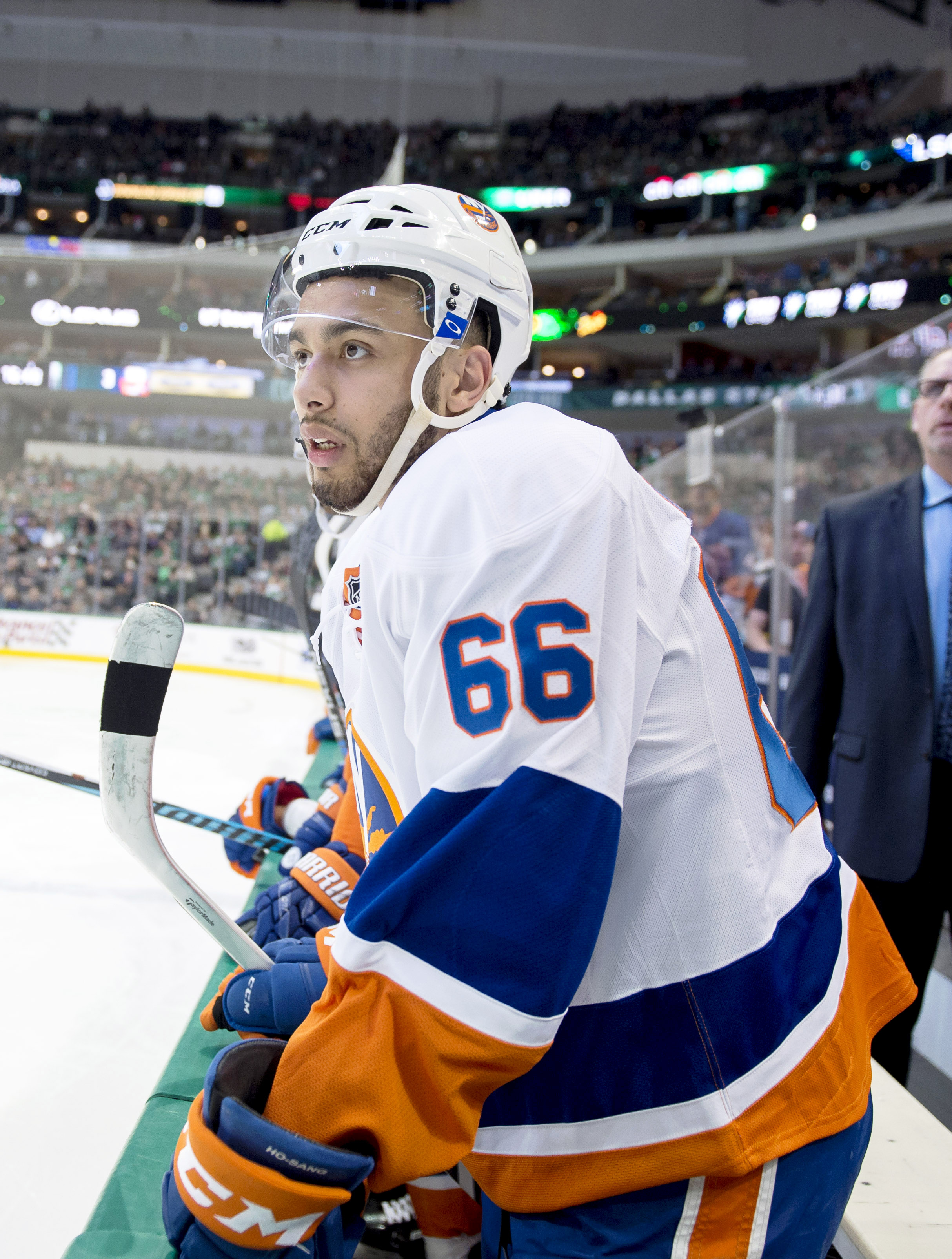 One of the most mentioned names in comments after releasing the first group of players was Ho-Sang (along with Mathew Barzal). While part one was certainly not meant to rank any of the upcoming young players, Ho-Sang’s exclusion was certainly noticeable. After making his NHL debut this season under some (silly) controversy, Ho-Sang is ready to take the next step and be a full-time contributor to the Islanders this year. Regardless of the number on his back, he showed during his 21 game stint that he can compete at the highest level and registered 10 points. No one would be shocked by a 40-point season from the young forward, and if given a full-time opportunity in New York’s top six he could push even higher than that.
Thomas Chabot – Ottawa Senators
One of the most impressive players in junior hockey last year, Chabot spent a single game with the Senators and is just about ready to take the NHL by storm. It’s hard for a defenseman to step right into a big role in the NHL, but with Erik Karlsson and Cody Ceci still around Chabot can easily be sheltered to start his career. It’s unclear where exactly he’d fit though as the team still has Chris Wideman, but if given the opportunity Chabot could provide a dynamic option on the right side. The Senators also brought in Johnny Oduya and have at least eight names that could take up six spots, so that opportunity may have to wait for an injury.
Anders Bjork – Boston Bruins
The Bruins team bus will be a rowdy place this year given how many rookies and young players could be on the roster, and Bjork isn’t one to overlook. The fifth-round pick dominated for Notre Dame as a junior before signing this spring, and looks ready to jump right into a top-six role with the NHL club. There seems to be a natural fit for him across from David Pastrnak to make a dynamic second unit for the Bruins, but how it all shakes out still isn’t clear. It’s not even set that he’ll start the year in the NHL, but after 52 points on a Fighting Irish club that relied almost solely on his production and Cal Petersen’s outstanding goaltending he sure seemed ready to take the next step.
 Zach Aston-Reese – Pittsburgh Penguins
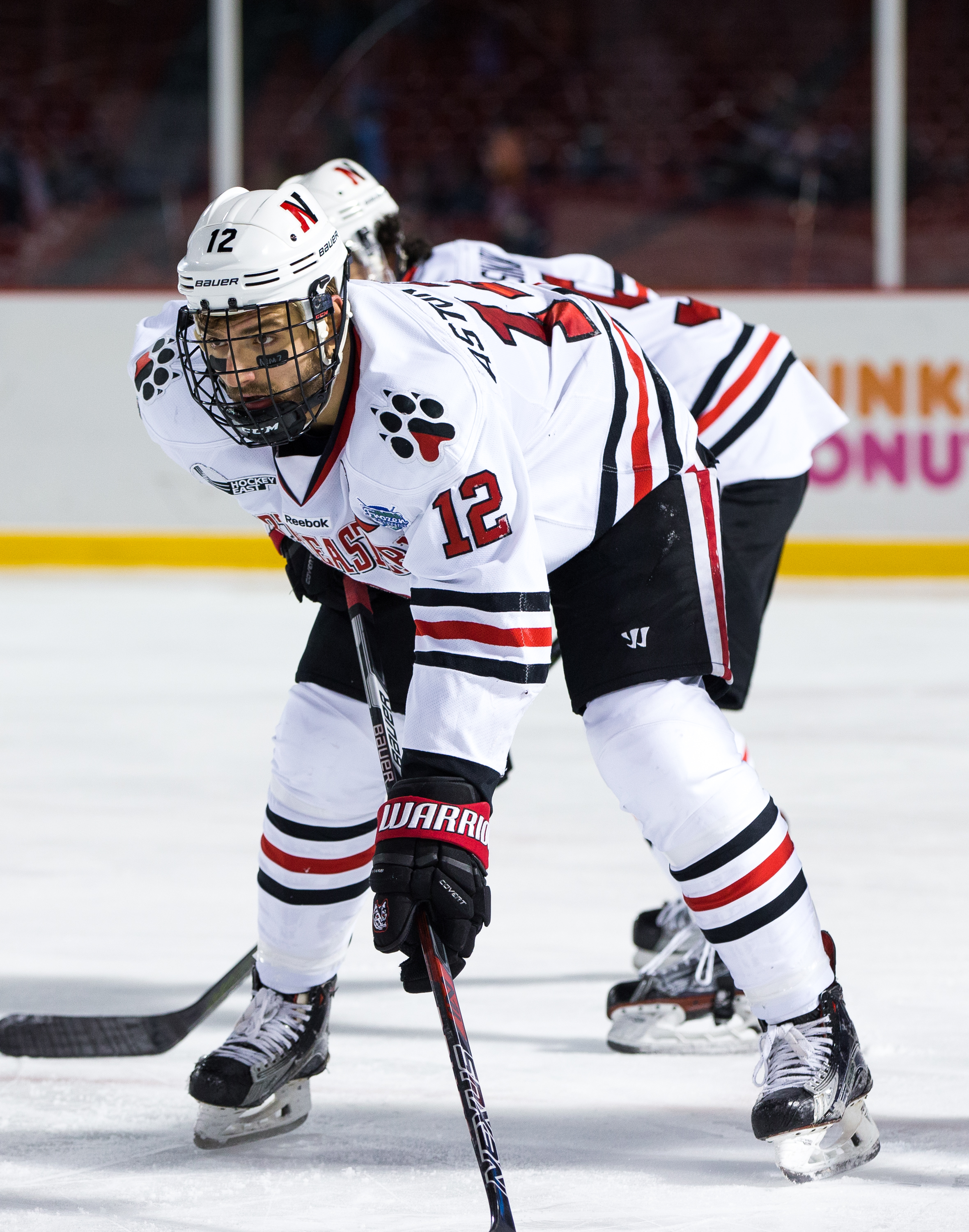
Another college name, this time of the free agent variety continues to impress in Aston-Reese. A finalist for the Hobey Baker trophy, Aston-Reese has done nothing but score since being passed over in the draft several times. The 22-year old put up 63 points in 38 games for Northeastern, before jumping right into the AHL and showing off with eight points in 10 games. He’s big enough to play in Pittsburgh’s bottom-six right away, and there is a glaring hole at center that the team still needs to address. Pittsburgh is notorious for turning college players into immediate producers, and it could be no different for the bang-and-crash two-way player in Aston-Reese. The forward depth of the Penguins could lead to big minutes with players like Phil Kessel or Patric Hornqvist, a situation no young player would pass up.
Alex DeBrincat – Chicago Blackhawks
78 goals, 165 points and the disappointment of being cut from the US World Junior team and losing the Memorial Cup should be more than enough motivation for DeBrincat coming into Blackhawks camp, who will try to crack the squad at 19 and show that his small stature doesn’t hold him back on the ice. In junior he was almost always the most skilled player in the game and has showed it by scoring more than 100 points in three straight years. There are doubts about his durability and even some about his top-end speed—though his first-step acceleration and quickness was among the best in the OHL—but it’s clear that he knows how to score. For a team desperate for cheap forward options that can play up with their top names, DeBrincat could come into a perfect scenario and compete for the rookie scoring title.
*Note: There are many other rookies that have impact potential that will be profiled throughout the summer as we approach the season. These are in no particular order or ranking.
Photos courtesy of USA Today Sports Images