
Penguins Not Expected To Re-Sign Kevin Hayes
The Penguins are not expected to offer pending unrestricted free agent forward Kevin Hayes a contract extension before July 1, Josh Yohe of The Athletic wrote last week.
Hayes, 34, arrived in Pittsburgh from St. Louis two summers ago in a cap-dump deal, with the Blues tossing in a second-round pick. That left the Pens taking on the final two years of the seven-year, $50MM anchor he landed from the Flyers in 2019 as a pending free agent. Philly was already on the hook for half his cap hit after retaining it in the trade that sent him to St. Louis in 2023.
Even for a reduced cap cost of $3.57MM, Hayes wasn’t providing great value. He was at least a semi-regular last season, offering some occasional secondary scoring and versatility as a bottom-six pivot, notching a 13-10–13 scoring line in 63 games.
Injuries became an increasing problem for Hayes this year, missing the first month of the season with an upper-body issue and missing a good chunk of March with one as well. In between them, though, he was still mostly a healthy scratch. He only suited up 28 times this year, with only seven of those coming after the Christmas break. Scoring four goals and eight points, his 0.29 points per game rate was the lowest of his 12 NHL seasons. His faceoff success took a nosedive, too, winning 40.3% of his draws after taking home a good 52.2% mark last year.
Hayes, once something of a trusted penalty-killer, has seen his defensive game decline for quite some time. That was the impetus for Philly shedding his contract three years ago. He still had 54 points in that final season as a Flyer, though, a mark he hasn’t come close to hitting since. With his impact as a scorer drying up, there’s little use for him left in any NHL lineup above a fourth-line role.
Beyond that, Pittsburgh has plenty of internal candidates looking to land bottom-six jobs (and even some press-box roles for a potential long-term depth candidate like Avery Hayes) in the fall. They’ve already moved to bring back fourth-line piece Connor Dewar and have restricted free agent Egor Chinakhov to re-sign as well, leaving them with 10 roster spots accounted for on one-way deals with entry-level players Benjamin Kindel and Rutger McGroarty being relative locks to take up two more. Tristan Broz, Ville Koivunen, and 2025 first-rounder Bill Zonnon will also be in the mix in camp.
Hayes’ limited showing this season was enough to help him clear the 800-game mark for his career. A first-rounder by the Blackhawks in 2010, he’s got a career 185-261–446 scoring line with the Rangers, Jets, Flyers, Blues, and Penguins. His positional versatility and experience might make him a fit somewhere for a league-minimum contract this summer, but a professional tryout or a deal overseas wouldn’t be surprising outcomes either.
Penguins Assign Bill Zonnon To AHL
One of Pittsburgh’s top prospects is set to get his first taste of the pros. Their AHL affiliate in Wilkes-Barre/Scranton announced that they’ve signed forward Bill Zonnon to a tryout agreement; despite the tryout designation, he will be permitted to play for them in the playoffs.
The 19-year-old was the 22nd overall selection last June out of QMJHL Rouyn-Noranda. In his draft year, Zonnon put up 28 goals and 55 assists in 64 games for the Huskies during the regular season and added 16 points in 13 playoff contests. Rated as a late first-rounder by many scouting lists, he wound up being selected a little higher than that with the first of two selections the Penguins acquired when they traded down from the 12th selection in a swap with Philadelphia.
Over the offseason, Zonnon was moved to Blainville-Boisbriand where he endured an injury-riddled campaign. That limited him to just 35 games during the regular season where he was quite productive, notching 14 goals and 32 helpers. That performance earned him an entry-level deal with Pittsburgh which begins next season.
In the playoffs, he put up just under a point per game with 15 in 17 appearances. Now, with the Armada eliminated, he’s eligible to go to the minors and join a Wilkes-Barre/Scranton team that’s on the verge of moving on as they look to close out their series against Hershey tonight.
Poll: Which Active Players Will Become An NHL GM?
The connection between NHL playing careers and front office roles has existed for nearly as long as the league itself. Some of the most highly-regarded executives – from Glen Sather in the 1980s to Jim Nill today – began their journeys with a decade-or-more in NHL lineups. Looking at the league in 2025-26, there seems to be no shortage of potential NHL executives currently putting on the pads. The question is, which of them will make it to the big chair first?
A clear top candidate would be Pittsburgh Penguins captain Sidney Crosby – the face of the NHL for much of the last 20 years. Crosby has become synonymous with North American hockey through his historical playing career, while learning from player-turned-owner and fellow all-time-great Mario Lemieux. That leadership could soon be invaluable. Crosby will face the question of if he should play on, or if now is the time to call it quits, in the second half of next season. If he wants to prolong his time on an NHL payroll beyond his time in the lineup, he could have a great chance to learn under Kyle Dubas and alongside Jason Spezza in the Penguins front office.
Another strong candidate for a GM role will be Colorado Avalanche captain Gabriel Landeskog. Former NHL GM Brian Burke recently said as much on The Sheet With Jeff Marek while speaking to how much he admires Landeskog’s professionalism. There is no doubt about the Avalanche star’s commitment to the game, most notably highlighted by his triumphant return from a severe knee injury. Landeskog played through that injury during Colorado’s run to the 2022 Stanley Cup. On the other side of his return, he continues to serve as a versatile and effective playmaker who can shine off without top-line minutes. He is currently part of a three-way tie for second on the Avalanche in playoff scoring with seven points in six games. With that kind of impact, there will be plenty of hockey ahead for the 33 year old, who is signed through the 2028-29 season. But when his career nears its end, a door to team management could quickly open.
Prior playing experience could also open the door for more European representation in front office roles. Landeskog would become the second Swedish GM in NHL history, while a player like Anze Kopitar could shoot to become the first from central Europe should he choose that path. Kopitar is hanging up his skates after the Los Angeles Kings’ exit from the 2026 Stanley Cup Playoffs. He had the third-most games played of any active NHL player this season. Every single one of those games came in a Kings’ jersey, with Kopitar captaining the team through the final 10 seasons of his career. All-time goals record holder Alex Ovechkin has also spent the entirety of his career with one team and could wield the experience needed to become the league’s first Russian GM.
Of course, playing success does not create a top exec – and many of the league’s top leaders could also have a chance. Longtime pros Jaccob Slavin, Nathan MacKinnon, Ryan O’Reilly, and Aleksander Barkov have all been recognized for their sportsmanship with the Lady Byng Memorial Trophy. The trophy was also handed out to former Avalanche GM Joe Sakic and soon-to-be-former Seattle Kraken GM Ron Francis. Its recognition of on-and-off-ice impact would stand out on any resume, especially next to the Stanley Cup precedent that MacKinnon, O’Reilly, and Barkov boast. It is also a feat managed multiple times by Kopitar, who could win the trophy again this season.
Many players around the league could put together a strong case for a managerial role. Who will do it first? Who will find another long career in the role? Vote for your choice below and use the comments to make a case for other players!
Which Active Players Will Become An NHL GM?
-
PIT - Sidney Crosby 35% (217)
-
COL - Gabriel Landeskog 33% (204)
-
LAK - Anze Kopitar 14% (84)
-
Other (Comment below) 12% (75)
-
COL - Nathan MacKinnon 5% (33)
Total votes: 613
Penguins Sign Ilya Solovyov To One-Year Extension
The Pittsburgh Penguins have signed defenseman Ilya Solovyov to a one‑year contract extension carrying a cap hit of $850K for the 2026–27 season. The deal keeps the 25‑year‑old in the organization for another year after he split the 2025–26 campaign between the Colorado Avalanche and the Penguins.
Solovyov appeared in 30 NHL games this season, the most of his young career. He opened the year with the Avalanche, recording three points (1G–2A) in 16 games before being acquired by Pittsburgh, where he added five assists in 14 contests while averaging 14:06 ATOI.
The extension comes after Solovyov set career highs across the board in games played (30), goals (1), assists (7), and points (8). He also made his Stanley Cup Playoffs debut, appearing in three postseason games for Pittsburgh and giving the coaching staff a first look at how his game translates in higher‑leverage situations.
Originally drafted by Calgary in the seventh round of the 2020 NHL Draft, Solovyov has taken a gradual development path through the AHL. He has logged 232 career AHL games with the Calgary Wranglers and Colorado Eagles, producing 69 points (18G–51A) and establishing himself as a reliable, physical defender capable of handling heavy minutes. He has also appeared in 22 Calder Cup Playoff games, adding four points.
Before arriving in North America, Solovyov spent the 2020–21 season in the KHL with Dinamo Minsk, posting nine points in 41 games.
For Pittsburgh, the extension provides organizational stability and a cost‑effective depth option as the club continues to reshape its blue line. Solovyov’s size (6‑foot‑3, 208 pounds), defensive play, and ability to play either at the NHL level or anchor minutes in the AHL make him a useful, cost-effective piece for a team that relied heavily on call‑ups throughout the 2025–26 season.
Penguins Sign Connor Dewar To Two-Year Extension
The Pittsburgh Penguins are getting a head start on returning some of their depth players from this past season. According to a team announcement, the Penguins have signed forward Connor Dewar to a two-year, $4.5MM ($2.25MM AAV) extension.
There’s little argument that he doesn’t deserve the raise. Pittsburgh acquired Dewar from the Toronto Maple Leafs at last year’s deadline, and the team signed him to a one-year, $1.1MM contract last summer.
He took that opportunity and ran with it. Much like the rest of his peers, Dewar played a role in the Penguins’ rejuvination this season, finishing with the best individual performance of his career. In 78 games, Dewar scored 14 goals and 30 points with a +16 rating, averaging just under 14 minutes of ice time per game.
The closest he had ever come to that production was during the 2023-24 season with the Minnesota Wild and the Maple Leafs. In 74 games that season, Dewar tallied 11 goals and 19 points in 74 contests, though much of that production came in Minnesota. Typically in a bottom-six role throughout his career, Dewar proved that he could be a key tertiary contributor in a middle-six role this season.
Despite being eliminated by their intra-state rivals in Round One of the 2026 Stanley Cup playoffs, Dewar kept up his solid play in the postseason. In six games, the Manitoba native scored two goals with 19 hits, averaging 13:49 of ice time.
It’ll be interesting to see if the Penguins can afford Dewar similar ice time next season. Pittsburgh already has 10 forwards signed through the 2026-27 campaign, and will likely attempt to promote more prospects to the NHL for a further injection of youth. The Penguins need to focus on reducing the number of bubble forwards on their roster. However, it’s already evident that they are pleased to keep players like Dewar, who displays a strong work ethic and can make valuable contributions to the lower lines of the forward group.
Latest On Evgeni Malkin
- One player whose future has come under immense scrutiny in the aftermath of his team’s playoff exit has been Pittsburgh Penguins forward Evgeni Malkin. It’s unclear whether the future Hall of Fame pivot will continue his career in Pittsburgh. The Athletic’s Josh Yohe reported this morning that Malkin’s representatives will reach out to Penguins GM Kyle Dubas to set up more substantial talks on Malkin’s future. Malkin’s camp, led by J.P. Barry of CAA, will no doubt be hoping to secure an agreement to keep Malkin in Pittsburgh for what is most likely going to be his final campaign in the NHL.
Penguins' Filip Hallander Returns To Sweden Following Blood Clots
Pittsburgh Penguins winger Filip Hallander has returned to his home country of Sweden for training after recovering from a blood clot per Seth Rorabaugh of Trib Live. Hallander only played in 16 games this season – 13 in the NHL and three in the AHL – due to the blood clot.
Hallander is a confident puck-mover who uses his skill to beat defenders and rack up points. He has yet to prove that talent at the top flight, though he does have 62 points in 107 career AHL games. He will be evaluated by the Penguins for availability at 2026-27 training camp upon returning from Sweden. If he is cleared by doctors, next season could be Hallander’s first chance to dig his feet into an NHL role.
Sidney Crosby Hasn't Thought About New Extension
- Eligible for a contract extension this summer, Pittsburgh Penguins captain Sidney Crosby was fairly non-committal on a new deal when asked today. According to Seth Rorabaugh of the Tribune-Review, Crosby stated that he is taking a “wait and see” approach regarding a new deal and has not given it much thought. In the midst of their rebuild, Crosby signed a new extension with the Penguins after being followed by extensive trade rumors. At this point, it doesn’t appear there’s much possibility of “The Kid” playing for a new team, and he will continue his career in Pittsburgh as long as he wants.
[SOURCE LINK]
Evgeni Malkin Speaks On Future
Pittsburgh Penguins center and future Hall of Fame inductee Evgeni Malkin addressed his future with the team today, expressing to the media (including NHL.com’s Wes Crosby) that his desire is to remain with the only franchise he’s ever played for. He also confirmed that he would be willing to play for another team if the Penguins decide not to extend him an offer of a new contract. Malkin, who turns 40 this summer, had a strong campaign when healthy, scoring 61 points in 56 games. While the pace of the game got away from him during the team’s first-round series loss to the Philadelphia Flyers, he still spent most of 2025-26 producing at a star level.
Whether the Penguins want to keep Malkin beyond this season is a complicated question. For as well as he played for most of 2025-26, Malkin isn’t part of the Penguins’ long-term future, something the team has become increasingly focused on building towards. If Malkin were to be re-signed, the minutes he would play would be minutes that couldn’t be devoted to developing a younger center. If the Penguins take a player development mindset towards their roster-building this summer, there is an argument to be made that they should not keep Malkin. On the other hand, this is a player who is a franchise icon, someone who captain Sidney Crosby no doubt still wants to play with, and someone who has proven he can still be a valuable NHLer in most cases. The Athletic’s Josh Yohe reported in January that the Penguins “are not expected to offer him another contract with the franchise,” but it’s unclear if anything has changed in the months since. For as long as he remains unsigned, Malkin’s status will be one of the more compelling storylines to track this offseason.
- Penguins netminder Arturs Silovs, who nearly became the story of the first round with his heroics to extend Pittsburgh’s comeback effort against the Flyers, told the media today that he was playing through a knee injury. It’s unclear what the full extent of the injury is, but at the very least it was minor enough for Silovs to play through. It didn’t seem to impact his form too greatly, as he posted a .939 save percentage in three starts in the postseason. Regardless of the injury, Silovs appears poised to take on a bigger role for the Penguins next season.
Jon Cooper, Dan Muse, Lindy Ruff Named Jack Adams Finalists
Tampa Bay Lightning head coach Jon Cooper, Pittsburgh Penguins head coach Dan Muse, and Buffalo Sabres head coach Lindy Ruff were named the finalists for the Jack Adams award, which is presented annually “to the NHL coach adjudged to have contributed the most to his team’s success.”
In a year flush with options for the award, each member of this trio still stands out. Cooper, who is the NHL’s longest-tenured head coach, led the Lightning to a 50-26-6 record. 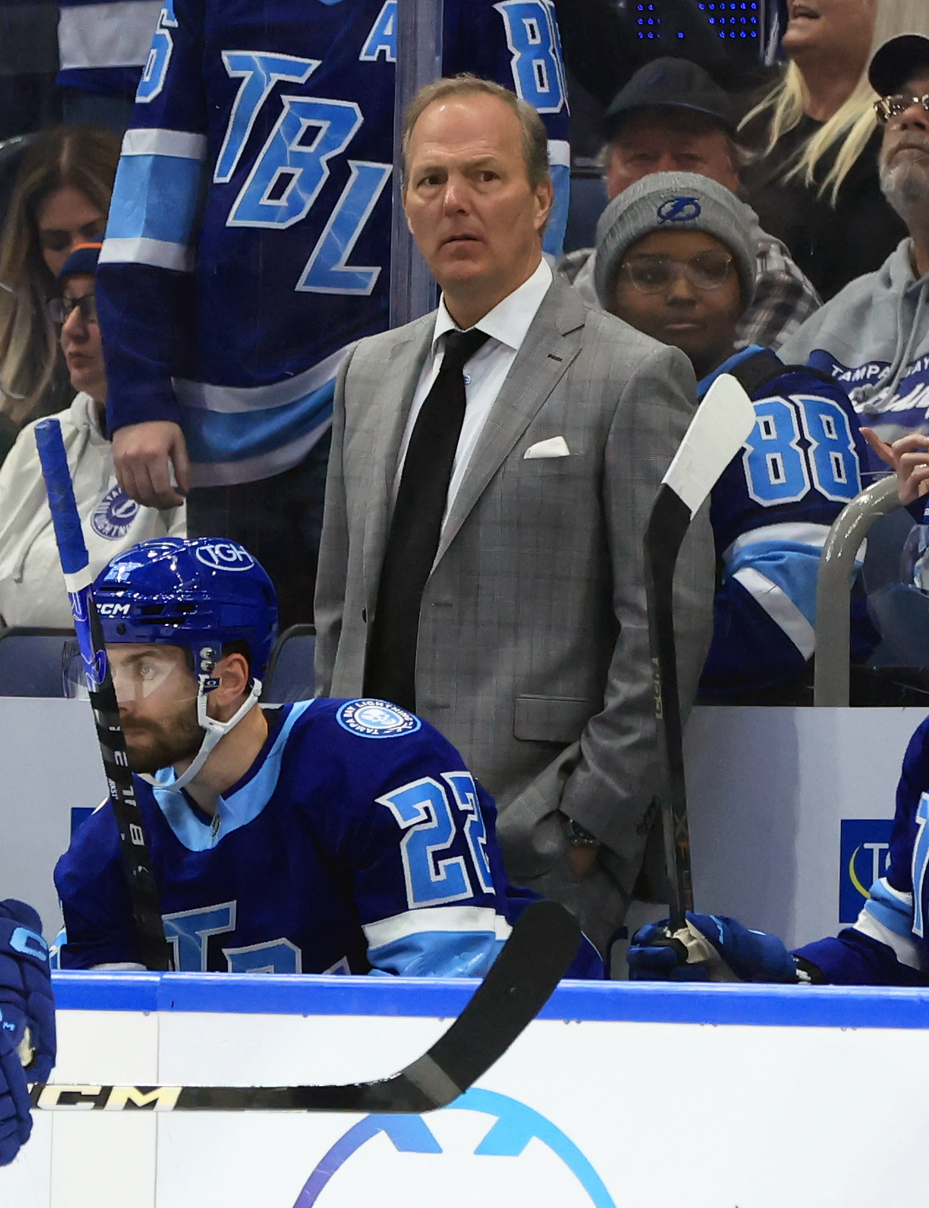
He was able to deftly manage significant injuries on his team’s blueline, with veteran stalwarts Victor Hedman and Ryan McDonagh limited to 33 and 48 games played, respectively.
In the face of those injuries, Cooper’s Lightning didn’t miss a beat, and he was able to get the most out of previously unheralded blueliners.
Cooper trusted undrafted 30-year-old Darren Raddysh as one of his team’s top defensemen in the absence of Hedman, and Raddysh rewarded his coach with a breakout 22-goal, 70-point campaign. He became just the second Lightning blueliner in franchise history to hit 70 points in a season.
Raddysh wasn’t the only undrafted blueliner to emerge for the Lightning. 28-year-old Charle-Edouard D’Astous, an elite blueliner in various leagues from the ECHL to SHL, was seamlessly integrated into Tampa’s lineup and put into positions to succeed. By the end of the season, D’Astous finished his rookie campaign with 29 points in 70 games, firmly establishing himself as an NHL defenseman.
For other coaches, dealing with so many injuries to key players can be a fatal blow to their team’s Stanley Cup hopes. For Tampa Bay, it served as an opportunity to integrate new faces into the lineup, and give new players a chance to have career-best campaigns. That, more than anything else, is why Cooper (and the rest of his staff) have been nominated for this award.
But Cooper isn’t the only deserving candidate. First-year head coach Dan Muse is another worthy option, as he guided the Penguins to a 41-25-16 record, good for second place in the Metropolitan Division. The Penguins entered the season considered by most to be a rebuilding club, a franchise with next to no hope of playing meaningful games in the spring. The Penguins not only beat those expectations, but they cruised into the playoffs.
The former New York Rangers and Nashville Predators assistant oversaw numerous players in his lineup who had career-best years, or campaigns that revitalized previously sagging career trajectories.
The Penguins made a bet that they could get the most out of struggling Blue Jackets first-rounder Egor Chinakhov, and that bet paid off as he scored 18 goals and 36 points in 43 games after his trade to the Steel City. He had six points in 29 games before the trade. Muse was able to manage an 18-year-old rookie’s transition to the NHL, guiding Benjamin Kindel to a successful 17-goal, 35-point debut campaign.
Numerous other players put up significantly improved performances under Muse’s watch, including veteran blueliner Erik Karlsson (66 points,) forward Anthony Mantha (64 points,) forward Tommy Novak (42 points,) defenseman Ryan Shea (35 points,) defenseman Parker Wotherspoon (30 points,) and forward Justin Brazeau (17 goals, 34 points.)
The formerly rebuilding Penguins took a risk to hire Muse, a first-time NHL head coach, in large part due to his exceptional reputation as a developer of players. For a team increasingly focused on youth, his track record in player development was seen as extremely valuable.
What most didn’t expect was for Muse’s leadership and player development acumen to pay dividends so quickly, and materialize in growth for players of all different ages and at varying stages of their careers. While the Penguins improved considerably as a team, it’s the widespread improvement Muse oversaw, player to player, that has gotten him nominated for this award.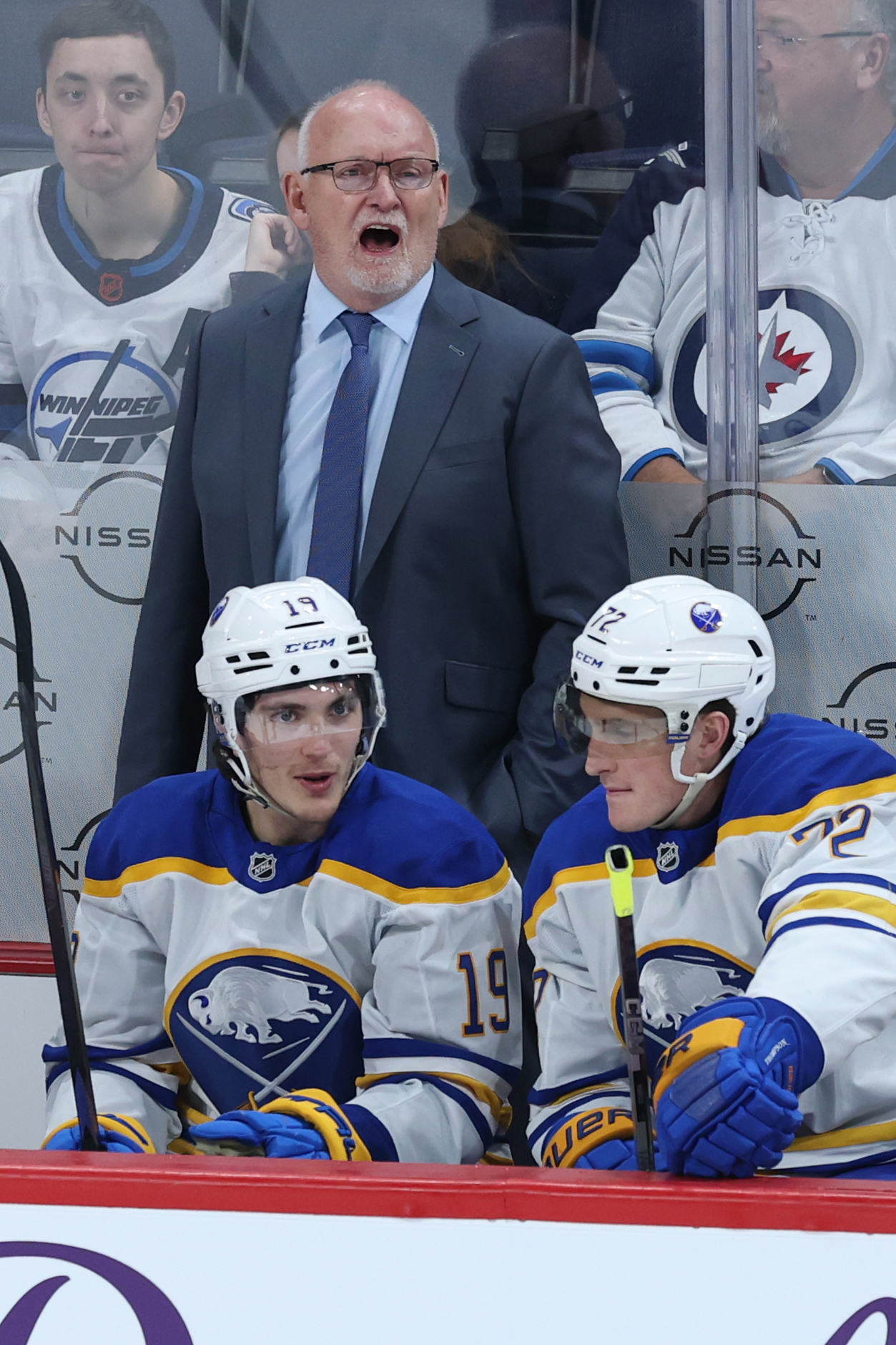
Finally, the third nominee is Ruff, who achieved what for so many coaches seemed impossible and ended the Sabres’ league-leading playoff drought.
In his second stint in Western New York, Ruff has turned the Sabres into a sensation. Buffalo went 50-23-9 this season.
For the first time since 2010, the Sabres will be able to add a banner to the rafters of KeyBank Center as division champions.
Battling against the weight of the Sabres’ recent history, Ruff guided his team through significant early pressure, pressure that ended up costing GM Kevyn Adams his job. By the time the calendar flipped to the new year, Ruff’s Sabres had the makings of a juggernaut. They ended up storming to the top of the Atlantic Division, and have entirely reversed the league-wide conversation about the franchise.
The enormity of the achievement of returning the Sabres to the playoffs after so many failed attempts by the franchise is enough to qualify Ruff for the Jack Adams, and in a year where so many coaches have proven their quality, Ruff may very well be the favorite.
Photos courtesy of Kim Klement Neitzel-Imagn Images, James Carey Lauder-Imagn Images