
Zack Smith Announces Retirement
It’s been more than 18 months since Zack Smith last laced up his skates for an NHL game, and it turns out that match against the Vancouver Canucks on February 12, 2020 will be his last. The veteran forward announced his retirement today, speaking with Ian Mendes of The Athletic.
Smith, who played parts of 11 seasons with the Ottawa Senators before spending the 2019-20 season with the Chicago Blackhawks, admitted that though he obviously loves the game, his “heart wasn’t into it the last couple of years.” He points to the moment in 2018 when he was placed on waivers by the Senators as one when he learned the “business side” of the game.
In 2020-21, Smith was still under contract with the Blackhawks but did not play after having back surgery the season prior. He is still dealing with pain and is now focused on his post-hockey health and life.
It was quite a career for the third-round pick, racking up 204 points in 662 regular season games. His most impressive season came in 2015-16 when he scored 25 goals and even received votes for the Selke Trophy as one of the league’s best defensive forwards. Though he did not ever lift the Stanley Cup, he did suit up 45 times in the postseason.
Montreal To Host 2022 NHL Draft
The 2022 NHL Draft will be held in Montreal at the Bell Centre, home of the Montreal Canadiens. The event will be held over two days, starting on July 7. NHL commissioner Gary Bettman released a statement:
We are proud to announce that, once again, we are conducting our Draft in front of the great fans of the Montreal Canadiens. Montreal, the site of the first NHL Draft in 1963, is a wonderful place to bring the NHL family together and to focus on the future of our game as our Clubs call the names of top prospects from around the world. We also thank Geoff Molson and the entire Canadiens organization for their cooperation and support while we needed to conduct the Draft remotely the past two years.
The Canadiens had been set to host the 2020 draft before the COVID-19 pandemic forced it to be held virtually. The expectation since has always been that the league would return to Montreal as soon as it could, and now that is official.
The most interesting part about this announcement is that NHL free agency will not open on July 1, as it did prior to the COVID-shifted calendars. Agent Allan Walsh of Octagon Hockey tweets that the frenzy will be pushed back to mid-July, meaning once again it will be a condensed offseason. This is likely in part due to the extended season, as this year’s schedule is made up of 200 days thanks to an Olympic break in February.
It also means as PuckPedia points out, that the majority of players with signing bonuses will have them paid before the draft and free agency. That could drastically affect teams’ plans and player movement heading into the draft, as huge chunks of salary will have already been paid out.
RFA Profile: Elias Pettersson
Elias Pettersson burst onto the scene in 2018-19, immediately becoming a top-line player on the Canucks. He has been a fixture in that role since then, putting him in line for a substantial raise once he signs his second contract which should be at some point over the next few weeks with training camps fast approaching.
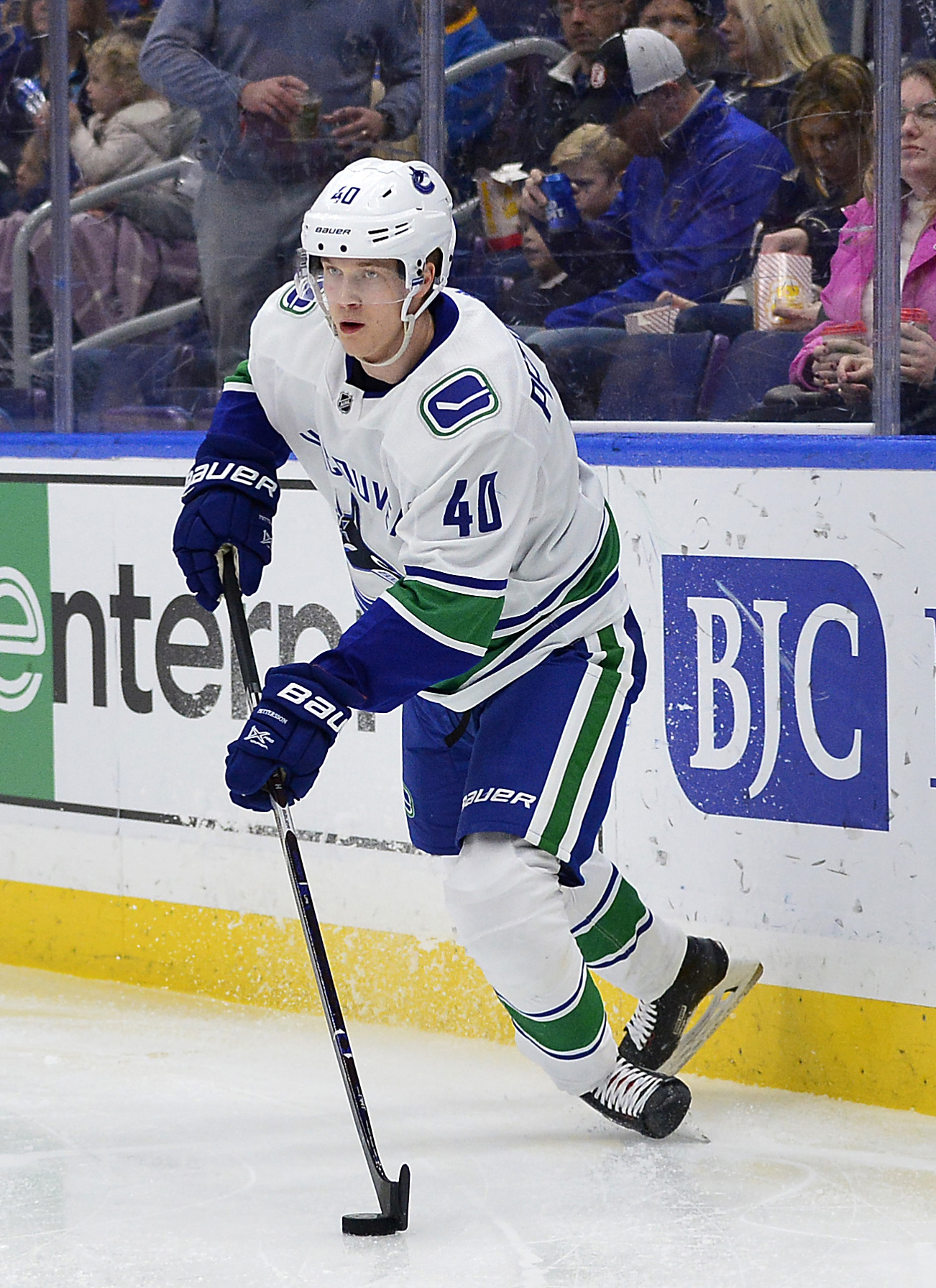 Drafted as a center, the 22-year-old has split time between playing down the middle and on the wing which expands the pool of comparable players to work from. Either way, Pettersson is going to be staying on the top trio.
There are a couple of elements that are going to be at play in these talks. One is that he missed the last 30 games with a wrist injury and while no one is saying he had something to prove there, he’s basically working off of two years worth of NHL games played whereas many of his comparables had three full years under their belt. It’s not going to drastically affect his value but it’s going to be something to keep in mind.
The other is Vancouver’s cap situation. By the time they whittle their roster down and place Micheal Ferland on LTIR, they’re going to have around $15MM to spend. That’s plenty for Pettersson but there’s also Quinn Hughes that needs to be signed. They can’t both get long-term deals; at least one of them is getting a bridge. How talks go with one will play a big role in negotiations for the other. (Both happen to be represented by CAA’s Pat Brisson as well.)
Statistics
2020-21: 26 GP, 10-11-21, even, 66 PIMS, 63 shots, 18:34 ATOI
Career: 165 GP, 65-88-153 (0.93 points per game), +19, 36 PIMS, 369 shots, 18:24 ATOI
Comparables
Brayden Point (Tampa Bay, 2019) – Let’s look at a couple of bridge options first. Point was basically stuck signing one due to Tampa’s cap situation, a situation that Pettersson could be in as well depending on what happens with Hughes. Point’s trajectory is different than Pettersson’s in that he started slower but had a dominant platform year which wasn’t an option for Pettersson but the per-game average numbers are somewhat close overall.
Platform Year Stats: 79 GP, 41-51-92, +27, 28 PIMS, 191 shots, 18:55 ATOI
Career Stats at ELC Expiration: 229 GP, 91-107-198 (0.86 points per game), +49, 66 PIMS, 530 shots, 18:38 ATOI
Contract: Three years, $20.25MM
Cap Hit Percentage: 8.28%
Current Equivalent: Same as above
Mathew Barzal (NY Islanders, 2021) – Barzal wasn’t able to repeat his rookie-season performance over his second and third years but still notched at least 60 points each time, a level of production Pettersson hit in his first two years, albeit with fewer games played. Like Point, this deal was basically forced by New York’s cap situation and as it was signed earlier this year, it also stands as the most recent comparable out there.
Platform Year Stats: 68 GP, 19-41-60, +5, 44 PIMS, 171 shots, 20:03 ATOI
Career Stats at ELC Expiration: 234 GP, 59-148-207 (0.88 points per game), -1, 126 PIMS, 520 shots, 18:25 ATOI
Contract: Three years, $21MM
Cap Hit Percentage: 8.59%
Current Equivalent: Same as above
Those are basically the only two comparable players in the price range that it’s going to cost on a short-term contract so let’s look at a few longer-term deals. The cost gets a lot higher with some UFA years being bought out as a result.
Jack Eichel (Buffalo, 2017) – Yes, this is a big contract but the offensive output between the two at the end of their entry-level deals is pretty close. Eichel had the strength of a higher draft seed (second) and the fact he was basically Buffalo’s franchise player from the moment he was drafted. Those gave him a bit of a boost that Pettersson might not be able to get but the numbers – which matter the most in contract talks – arguably have Pettersson in this range. This contract was also viewed as a reach at the time but it’s still usable as a comparable.
Platform Year Stats: 67 GP, 25-39-64, -25, 32 PIMS, 246 shots, 20:09 ATOI (deal was signed pre-platform)
Career Stats at ELC Expiration: 209 GP, 73-104-177 (0.85 points per game), -54, 76 PIMS, 733 shots, 19:41 ATOI
Contract: Eight years, $80MM
Cap Hit Percentage: 13.33%
Current Equivalent: Eight years, $86.91MM ($10.864MM AAV)
Mikko Rantanen (Colorado, 2019) – The two players had very different trajectories – Rantanen started slow and then became a high-end performer while Pettersson has been more consistent – but again, the totals at the end of their respective entry-level deals are certainly comparable. It’s fair to question if Pettersson has the offensive ceiling that Rantanen does which is an argument GM Jim Benning would certainly use in talks when this comes up as a possible comparable deal.
Platform Year Stats: 74 GP, 31-56-87, +13, 54 PIMS, 193 shots, 20:51 ATOI
Career Stats at ELC Expiration: 239 GP, 80-129-209 (0.87 points per game), -19, 112 PIMS, 513 shots, 18:53 ATOI
Contract: Six years, $55.5MM
Cap Hit Percentage: 11.35%
Current Equivalent: Same as above
Mitch Marner (Toronto, 2019) – This one would certainly represent the high end of the scale but it’s important to get one player on here whose point per game average at the end of his entry-level deal is at the same mark as Pettersson’s. The only ones with a higher average that were recent high picks to sign long-term deals were Auston Matthews and Connor McDavid and Pettersson certainly isn’t in that range although that’s impressive company to be in. Again, Marner’s offensive trajectory was higher at this point than Pettersson’s is now which is why this basically represents a bar he won’t clear but he could come close.
Platform Year Stats: 82 GP, 26-68-94, +22, 22 PIMS, 233 shots, 19:49 ATOI
Career Stats at ELC Expiration: 241 GP, 67-157-224 (0.93 points per game), +21, 86 PIMS, 603 shots, 17:41 ATOI
Contract: Six years, $65.408MM
Cap Hit Percentage: 13.38%
Current Equivalent: Same as above
Projected Contract
If you were looking at those last few comparables and thinking that Pettersson isn’t in that range, it’d certainly be understandable. The fact is that he hasn’t played anywhere as many games as those players have thanks to the wrist injury and the last two years being shortened. But the point per game average is there and Brisson is going to hammer that home in talks and not settle for considerably less than that. Accordingly, a long-term deal that buys out at least a couple of UFA-eligible seasons could very well have an AAV starting with a nine.
That’s why the short-term contract is the easier play here. If they’re able to work out a long-term deal with Hughes, they should still be able to afford a two-year or three-year bridge around the high $6MM/low $7MM range without creating any significant cap casualties. Either way, while they don’t necessarily have to have a deal done with Hughes beforehand, the two basically need to get their deals done pretty much around the same time. At this point, it may make more sense for Pettersson to get the short-term deal.
Photo courtesy of USA Today Sports Images. Contract information via CapFriendly.
Teams Will Receive Cap Relief For COVID-Related Suspensions
One of the changes to the COVID protocols in the NHL for the upcoming season is the ability for teams to suspend players without pay who are “unable to participate in club activities” due to being unvaccinated. Deputy Commissioner Bill Daly confirmed to Postmedia’s Patrick Johnston that Section 50.10(c) of the CBA will apply in this scenario which means that teams who suspend an unvaccinated player under these protocols will receive corresponding cap relief for the day(s) the players are suspended for.
Among the scenarios where unvaccinated players could be suspended are government-imposed quarantine after crossing the border or the requirement of having the vaccine to be allowed to enter an arena which has popped up in a few states with NHL teams in recent weeks.
It has been suggested that the stricter protocols including the potential for suspension without pay have played a role in the high percentage of NHL players who have currently received the vaccine – a number that’s estimated to be at roughly 98%. With that in mind, the number of regular NHL players who aren’t vaccinated is quite low; Daly suggested to Ryan S. Clark, Mark Lazerus, and Joshua Kloke of The Athletic (subscription link) that they expect that 15 or fewer players fall under this category which means that they would be the only ones subject to this scenario.
It’s worth noting that while it could create an opportunity for teams to bank space during the season, it’d be an unwanted one as it would take a regular player out of the lineup and potentially force a recall from the AHL. Meanwhile, teams in LTIR would be able to bring a replacement up but wouldn’t be able to bank any cap space unless they were to dip under their respective Accruable Cap Space Limit as a result of the suspension. We’ll see over the coming months if this scenario winds up coming into play and whether it winds up having any sort of tangible salary cap impact for teams with an unvaccinated player.
Salary Cap Deep Dive: Seattle Kraken
Navigating the salary cap is one of the more important tasks for any GM. Teams that can avoid total cap chaos by walking the tightrope of inking players to deals that match their value (or compensate for future value without breaking the bank) remain successful. Those that don’t see struggles and front office changes.
PHR will look at every NHL team and give a thorough look at their cap situation heading into the 2021-22 season. This will focus more on players who are regulars on the roster versus those who may find themselves shuttling between the AHL and NHL. All cap figures are courtesy of CapFriendly.
Seattle Kraken
Current Cap Hit: $73,106,666 (under the $81.5MM Upper Limit)
Entry-Level Contracts
None projected to play a full-time role in the NHL this coming season.
One Year Remaining, Non-Entry-Level
F Mason Appleton ($900K, RFA)
F Colin Blackwell ($725K, UFA)
D Dennis Cholowski ($900K, RFA)
F Ryan Donato ($750K, RFA)
D Cale Fleury ($750K, RFA)
D Haydn Fleury ($1.4MM, UFA)
F Morgan Geekie ($750K, RFA)
D Mark Giordano ($6.75MM, UFA)
D Jeremy Lauzon ($825K, RFA)
F Kole Lind ($874K, RFA)
F Calle Jarnkrok ($2MM, UFA)
F Marcus Johansson ($1.5MM, UFA)
F Jared McCann ($2.94MM, RFA)
F Riley Sheahan ($850K, UFA)
F Carsen Twarynski ($750K, RFA)
McCann has shown flashes of being an above-average contributor in the past but hasn’t been able to do so consistently. He’ll get the chance to play a bigger role with Seattle and if it all comes together, he could be in line for a sizable pay bump next year. Jarnkrok has been on a bargain deal for the last five years and will also get to play a bigger role with a shot at bumping up his numbers before hitting the open market. Johansson and Sheahan are both coming off quiet years and have seen their value dip lately and will need stronger seasons to land guaranteed deals next summer. Appleton is coming off a strong season with Winnipeg and is already looking like a candidate to more than double his AAV next summer. A similar performance this season could triple it. Donato had to settle for a minimum contract after a tough year in San Jose but should be able to rebuild his value with the Kraken somewhat. Blackwell had a breakout year with the Rangers and is a candidate for a big jump in salary next summer. Geekie, Lind, and Twarynski will also be battling for depth roles but if they land a roster spot, it’s unlikely they’ll be able to land a big raise as they’d be in a limited role.
Giordano – who turns 38 next month – is nearing the end of his career but is still a capable top-four blueliner. He’s going to get an opportunity to play a bigger role than he probably should and he’s a candidate to be moved at the trade deadline to a contender who can cut his ice time. He’ll be going year to year from here on out and while his next deal will be cheaper than this, he could still command an AAV in the $5MM range. The Fleury brothers are at different stages of their careers. Haydn played close to the full season in 2020-21 and should be able to land a small raise a year from now while Cale was in the minors last season and is merely looking to stick on the roster. A limited role is likely which will yield a cheap deal next summer. Lauzon did well in Boston last year in his first stint of regular duty and with arbitration rights, he could double his current AAV next summer. Cholowski’s AAV is a little high for someone who may be on the fringes of making the roster but that may be by design in order to try to help sneak him through waivers next month.
Two Years Remaining
F Nathan Bastian ($825K, RFA)
D William Borgen ($900K, RFA)
F Joonas Donskoi ($3.9MM, UFA)
D Vince Dunn ($4MM, RFA)
D Carson Soucy ($2.75MM, UFA)
Donskoi hasn’t had a lot of consistent top-six opportunities but has surpassed the 30-point mark in each of the last four seasons. His price tag is a little high for his level of production but with a bigger role in Seattle, that could change. Bastian has basically just been an energy player in the early stages of his career and as long as he can hold down a spot on the roster, they won’t have any issues with his price tag. Gritty energy players can still land a pretty good payday as long as they can put up some production which is something Bastian will have to work on.
Dunn’s offensive production landed him a big raise this summer and it’s telling that Seattle opted for basically a second bridge contract to get one more opportunity to work out a long-term deal before he becomes UFA-eligible. He’s going to get the opportunity for a bigger role than he had with the Blues and if he can establish himself as a top-pairing player, that next deal could be quite a pricey one. Soucy is a serviceable third-pairing defenseman making a bit much for that role but Seattle has ample cap space to afford the small overpayment in the short term. Borgen is merely looking to establish himself as a regular NHL player so his next contract shouldn’t be much higher than this one unless he winds up in a big role fairly quickly.
Three Years Remaining
G Chris Driedger ($3.5MM, UFA)
F Jordan Eberle ($5.5MM, UFA)
F Alexander Wennberg ($4.5MM, UFA)
Eberle isn’t the top-line winger that he was in his prime but he’s still a fairly consistent secondary scorer. He’s going to be asked to do more than that in Seattle which could give him a chance to crack the 20-goal mark again, something he was on pace to do the last two shortened seasons. If he gets there, it may not be a bargain contract but they’ll get a reasonable return. Wennberg’s contract showed how difficult it is to land impact centers in free agency. He did well with Florida last season but was bought out by Columbus the year before after struggling in a top-six role and has only reached double-digit goals twice in his career. He’s going to have a big role with the Kraken and this is a contract that certainly carries some risk.
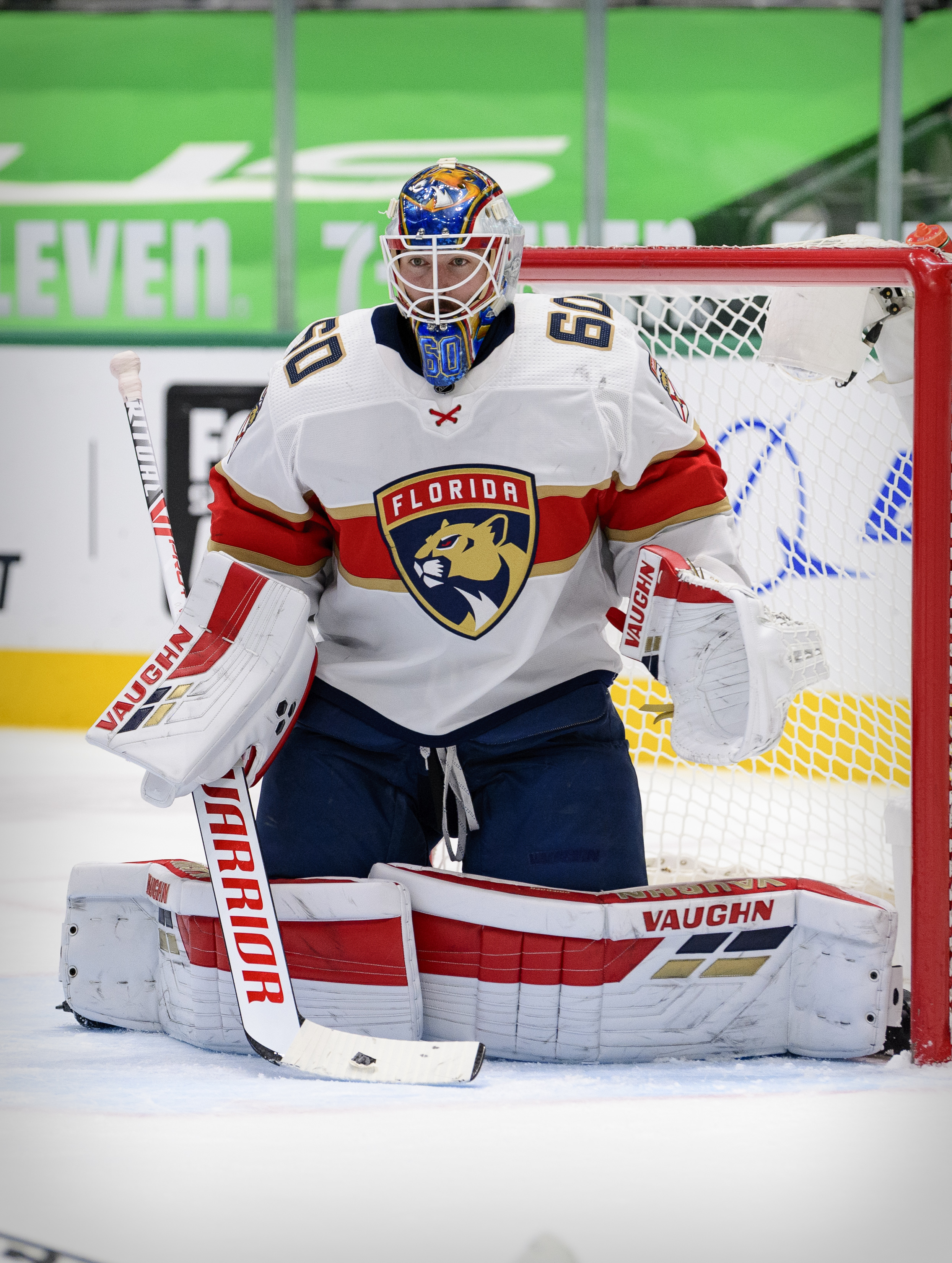 Driedger is one of the more impressive success stories in recent years. After bouncing around the minors, he finally got an opportunity with the Panthers and quickly became one of the better backups in the league. But with the late start, his track record is minimal – just 41 career NHL appearances and that includes playoff action. Landing a three-year commitment towards the upper echelon of price tags for a backup goaltender was pretty good, especially when it looked like he might be the starter. Of course, that changed early in free agency but Driedger should be able to still play enough games to justify the small premium for a backup netminder.
Chicago Blackhawks Sign Nolan Allan
The Chicago Blackhawks have signed first-round pick Nolan Allan to his three-year, entry-level contract. The deal will come with a cap hit of $870K and an AAV of $925K. Allan was the very last player off the board in the first round this year, selected with the Tampa Bay Lightning pick that Chicago received in the Seth Jones trade. PuckPedia provides the full breakdown of the deal:
2021-22: $750K salary, $92.5K signing bonus, $25K bonus at 5 NHL GP, $57.5K at 10 NHL GP
2022-23: $750K salary, $92.5K signing bonus, $25K bonus at 5 NHL GP, $57.5K at 10 NHL GP
2023-24: $832.5K salary, $92.5K signing bonus, no games played bonuses
Allan, 18, is a very interesting pick for the simple reason that he has basically shown no offensive upside to this point. The 6’2″ defenseman has just 11 points in his 81 WHL games to this point and is known almost entirely for his contributions in his own end. That’s why it was a surprise to some when the Blackhawks picked him at the end of the first round, but there’s certainly a lot to like about his defensive game.
He very well may cap out at a third-pairing defenseman in the NHL and some will critique the Blackhawks for not shooting higher with their selection, but the team obviously believes he can be a valuable piece of the puzzle. That certainly won’t be this season, though Allan will be taking part in the team’s rookie tournament that starts later this week. In all likelihood, he’ll go back to the WHL for another season to continue his development, which will also allow his contract to slide forward a year, not burning the first season of the entry-level deal.
PHR Live Chat Transcript: 09/16/21
Click here to read a transcript of this week’s live chat with PHR’s Gavin Lee.
New York Islanders Expected To Sign Paul LaDue
Sep 16: CapFriendly reports that the deal will be a one-year, two-way contract worth $750K at the NHL level, $275K in the AHL and includes a $325K minor league guarantee.
Sep 10: Free agent signings by the New York Islanders are difficult to officially pin down, given how the team refuses to announce them, but at least one more player is expected to end up there. Brad Elliott Schlossman of the Grand Forks Herald reports that Paul LaDue will sign with the Islanders, though does not give any contract details.
LaDue, 29, signed a one-way contract with the Washington Capitals for last season, but ended up spending the entire year on the practice squad or in the minor leagues. He didn’t suit up for a single NHL game, the first time that has happened since turning pro in 2016. Originally a sixth-round pick by the Los Angeles Kings in 2012, LaDue played three years for the University of North Dakota, winning a national championship in 2016.
At the NHL level, he’s played in 71 total games, all with the Kings and registered 19 points. The 6’2″ defenseman is a valuable depth piece, even if he has yet to prove he can handle a full-time role. With the Islanders, it’s unclear where LaDue fits in exactly, given how uncertain their depth chart is at this point. The team could very well have other players who have agreed to contracts that will be battling for those last few spots, or perhaps things are setting up for LaDue to secure a roster spot out of camp.
Even if he doesn’t secure that roster spot, LaDue represents solid injury insurance as the team attempts to go on another long playoff run.
Andy Andreoff, Dmytro Timashov Sign With Islanders
Official confirmation on anything New York Islanders-related is difficult to come by these days, but it appears as though two more players can be added to the unofficial organizational depth chart. Arthur Staple of The Athletic tweets that the team has signed Andy Andreoff and notes that Dmytro Timashov may also be back. CapFriendly reports that the Andreoff deal is a two-way contract worth $750K at the NHL level, $275K in the AHL and includes a $325K minor league guarantee. They add that Timashov’s deal is a two-way contract worth $750K at the NHL level, $160K in the AHL and includes a $205K minor league guarantee. Both are for just one year.
The 30-year-old Andreoff actually has 179 games under his belt to this point in his NHL career, though just 20 of those have come since the end of the 2017-18 season. A former full-time member of the Los Angeles Kings, he’s been forced to spend most of the last few years in the minor leagues. In 2020-21, he played in six games with the Philadelphia Flyers, going scoreless and registering nine penalty minutes.
Timashov, 24, is perhaps more exciting, given his relative youth and offensive upside. The former Toronto Maple Leafs forward spent last season with the Islanders organization on a one-year, two-way deal, but was not extended a qualifying offer this summer. Timashov would have been arbitration-eligible but became an unrestricted free agent when he failed to receive a QO. Though he played in just one game at the NHL level and has just 45 under his belt to this point, the fifth-round pick is still a somewhat intriguing option because of the scoring numbers he has put up at the minor league level.
He had 11 points in 22 games for the Bridgeport Sound Tigers this season but scored 49 in 72 the last time he played a full season in the minor leagues. A Calder Cup winner with the Toronto Marlies, he could provide some interesting bottom-six depth for the Islanders this season.
Andrew Ladd Healthy, Ready To Resume NHL Career
You may have thought Andrew Ladd was retired. You wouldn’t be alone, but you’d be wrong. The veteran forward confirmed exactly that to Eric Duhatschek of The Athletic, explaining that not only is he still active, but he’s healthy and ready to contribute for the Arizona Coyotes this season. Ladd was acquired by the Coyotes in July as part of a salary dump by the New York Islanders, heading to the desert along with a package of draft picks in exchange for future considerations.
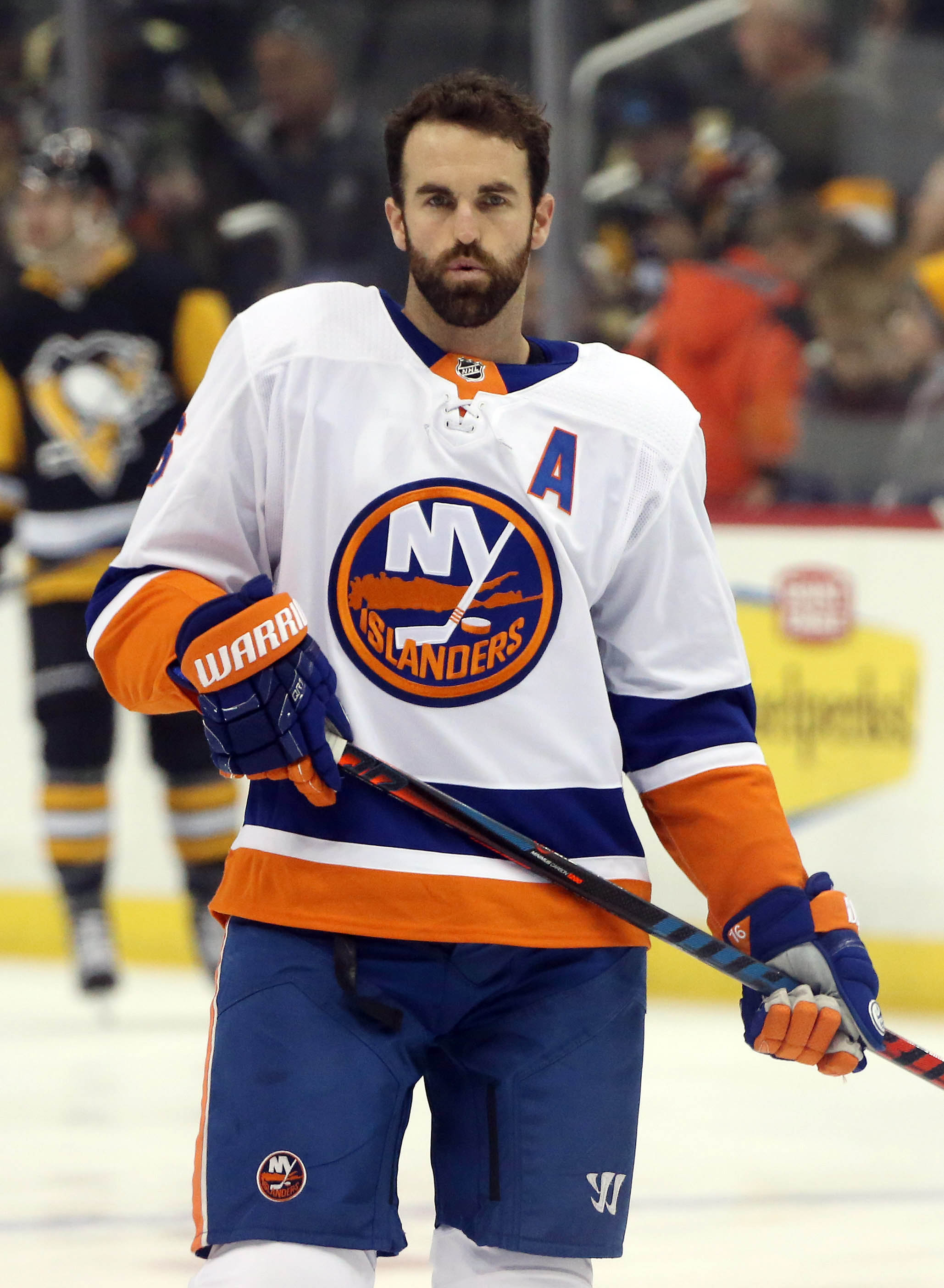 Even though he intends on playing, there still appears to be some doubt on how long his career can last. The conditions on the final pick included in that trade are that it only goes to Arizona if Ladd fails to play in a single professional game during the 2022-23 season or retires prior to that campaign. Yes, the 35-year-old is not only under contract for this season but also next, on the seven-year, $38.5MM deal he signed with the Islanders in 2016. He’ll carry a $5.5MM cap hit through 2022-23, though his actual salary is a bit less than that.
It’s hard to remember now, but Ladd was actually active during the 2019-20 season for the Islanders, playing 34 games for the Bridgeport Sound Tigers before a call-up in March. Unfortunately, that call-up was cut short when the league shut down due to the rising COVID-19 situation, but Ladd also dressed for a postseason game for the Islanders that summer. In 2020-21, he played just a single game for the Sound Tigers, but he’s ready to resume his career and go for that 1,000 regular season games played mark that so few are able to achieve.
For the Coyotes, who are clearly in a rebuild, Ladd represents lots of positive opportunities. Not only did they receive draft picks to take on his contract, but it helps them get to the cap floor and the veteran forward can provide some leadership on the ice in what will likely be a difficult season. He joins fellow 35+ players like Loui Eriksson, Jay Beagle, Anton Stralman, and Carter Hutton on the roster, a group that will help guide the younger players in the roster along the way. Ladd, who served as captain with the Atlanta Thrashers/Winnipeg Jets before his time in New York, has always been considered a well-respected leader in the league. He’ll have a brand new challenge this season as he looks to play out his final few years, reaching personal milestones along the way.
Photo courtesy of USA Today Sports Images