
New York Islanders May Retain Patrick Roy
Even after firing him as the head coach a few days ago, the relationship between the New York Islanders and Patrick Roy may not be fully severed. According to Stefen Rosner of The Hockey News (and first reported by ESPN’s Emily Kaplan), there is a growing likelihood that the Islanders will retain Roy in a scouting capacity.
Although General Manager Mathieu Darche was discontent with Roy leading the Islanders from the bench, he never grew discontent with Roy personally or professionally. In the report, Rosner said, “Darche & Roy became incredibly close over this season. Roy has great respect & admiration for the org, the players here, so it wouldn’t shock me if he stayed onboard in some capacity.”
If the Islanders do retain Roy as a scout, it would be the first time he’s been employed in the role in his post-playing career. Still, even as a “rookie” scout, Roy has as much professional experience as you could want.
Even without factoring in his illustrious 19-year playing career, Roy has been involved in the game at various levels since. After retiring following the 2002-03 season, Roy became the Vice President of Hockey Operations for the QMJHL’s Québec Remparts, where he also owned the franchise.
Until becoming the head coach of the Colorado Avalanche, Roy also served as the Remparts General Manager and head coach. Following his departure from the Avalanche in 2016, Roy returned to his role with the Remparts, where he stayed until taking the job with the Islanders.
Given his experience at various levels of the game, Roy should have no issues being a productive scout at the amateur or professional setting. Still, it takes two to tango, and no reports indicate that Roy would be interested in a scouting role. The NHL offseason is only a few months away, and Roy will likely make a firm decision over the summer.
Senators’ Thomas Chabot Returning To Lineup
Senators defenseman Thomas Chabot will dress tonight against the Panthers, just two weeks after having surgery to repair a fracture in his right forearm, he told reporters this morning (including Bruce Garrioch of Postmedia). He practiced in a regular jersey today for the first time since the injury, so it’s obviously a rushed return, one that comes at least two weeks ahead of schedule.
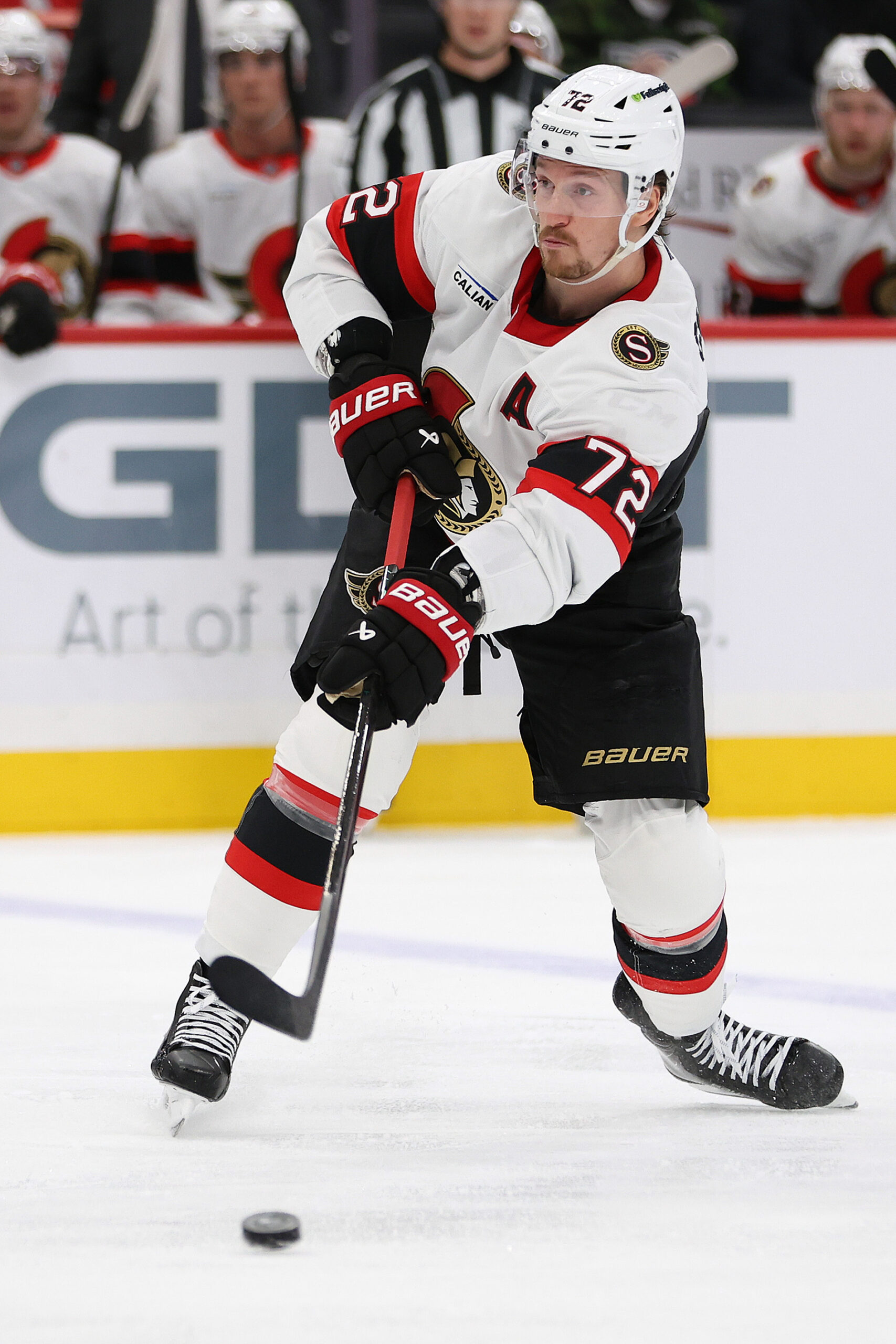 Chabot last played on March 23 against the Rangers. He took a cross-check from New York captain J.T. Miller that knocked him out of the game late in the first period and, within a couple of days, was expected to end his regular season. At the time, the Senators were two points out of a playoff spot with a game in hand and had won three in a row. Without Chabot and multiple other defenders, they’ve gone 4-3-1 in their last eight.
That’s been enough to keep pace in the race as their competitors have largely cooled off as well. Entering play tonight, they sit two points clear of the ninth-place Blue Jackets for the second wild-card spot, and none of the teams chasing them have games in hand. They’ve also already clinched tiebreakers over the Jackets, Islanders, and Red Wings, so Ottawa is now in full control of its destiny.
There will be no bigger emotional boost over their final four games than a rather shocking return from Chabot, the team’s longest-tenured skater. The 29-year-old is now in his second decade in the organization, initially brought in with the 18th overall pick in 2015. He served as the team’s #1 for several seasons and, although he’s now dropped to the second pairing on the left side behind Jake Sanderson, is still playing at a high level despite a relative lack of power play time. Through 55 games this season, he’s tallied a 7-24–31 scoring line with a +6 rating while averaging 22:34 per night.
Ottawa’s defense, which boasted righties Jordan Spence and Artem Zub as its only two regulars for a brief stretch just last week, is now much closer to full health. After Sanderson returned from his upper-body injury last weekend, their top four is now essentially intact. They’re without Nick Jensen due to a meniscus tear for the rest of the regular season, but Spence had leapfrogged him on the depth chart anyway by the time Jensen went under the knife.
They’re also missing third-pairing lefty Tyler Kleven – a big depth loss, no doubt. However, their makeshift third pairing of Nikolas Matinpalo and Lassi Thomson has produced spectacular results in their small sample, controlling 70.4% of expected goals in 28 minutes together at 5-on-5. With three of Ottawa’s remaining four games against teams already eliminated from the playoffs, their postseason chances have climbed up to nearly 85%, per MoneyPuck.
Image courtesy of Daniel Kucin Jr.-Imagn Images.
Devils Shut Luke Hughes Down For Season
The Devils have shut down defenseman Luke Hughes for their final four games so he can undergo an undisclosed surgery, the team announced Thursday.
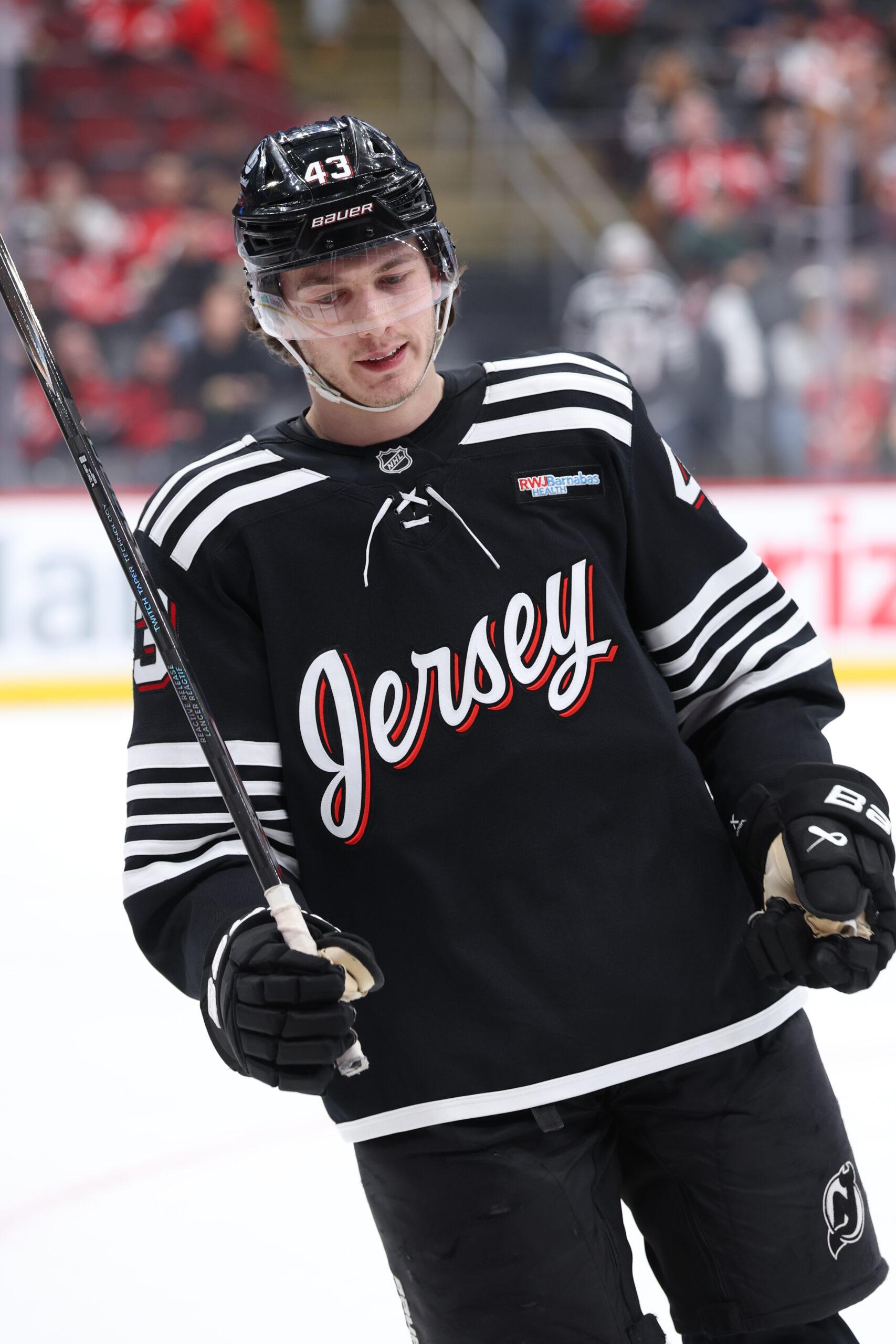 Hughes has dealt with a variety of shoulder issues over the past two seasons. It wouldn’t be surprising in the slightest if the corresponding wear and tear required some clean-up work. The team didn’t issue a timeline for his recovery but said the reason for having the surgery now was to “get a head start on rehab for the off-season,” so it doesn’t appear his availability for next season’s training camp is in jeopardy.
Per James Nichols of New Jersey Hockey Now, the procedure is related to the most recent of those shoulder injuries, a dislocation he suffered back on Jan. 19 against the Flames. He missed the next 10 games but was back in the lineup shortly after the Olympic break without undergoing surgery. Despite that, he played some solid hockey down the stretch. Across his last 19 games, the Devils have improved, going 12-6-1. That’s been accompanied by a 1-8–9 scoring line and a +4 rating from Hughes while averaging nearly 24 minutes per night, seeing clear-cut deployment now ahead of Dougie Hamilton as their #1.
Hughes, 22, concludes the first season of the seven-year, $63MM deal he signed with the Devils near the end of training camp after spending most of last summer as a restricted free agent. Considering the $9MM price tag he held out for, New Jersey likely hoped for more production out of their new top offensive weapon on the blue line this season. He finishes his campaign with six goals, 29 assists, 35 points, and a -4 rating in 68 outings. That was good enough to lead the Devils’ defensemen but was the worst point-per-game output (0.51) of his three full NHL seasons.
The fourth overall pick in 2021, the younger brother of teammate Jack Hughes and Wild star Quinn Hughes quietly had a good run in the possession department this season. He’s prone to some high-visibility turnovers but has otherwise been a consistent playdriver from the drop, notching a 53.8% shot attempt share and 49.7% expected goals share at 5-on-5 this season, per Natural Stat Trick. That’s indicative of the quantity-over-quality approach he takes defensively, but it’s worth noting Hamilton was the only Devils defender better at controlling shot share and expected goals across the board this season.
Hughes should be able to hit the ground running again in the fall as New Jersey’s #1 lefty. For now, it will be veteran tweener Dennis Cholowski stepping into the lineup as the Devils finish out their season. They’re mathematically eliminated from playoff contention, missing the postseason for the sixth time in eight years. Cholowski was recalled at the trade deadline after Brett Pesce sustained a lower-body injury, but has been a healthy scratch in 16 consecutive games. That streak tonight will end against the Penguins. He had one assist and a -5 rating in 15 outings for the Devils in the front half of the year.
Image courtesy of Thomas Salus-Imagn Images.
Seeking Writers For Pro Hockey Rumors
PHR is looking to hire a part-time writer with strong weekday availability. The position pays on an hourly basis, with a workload ranging from 15 to 25 hours per week.
Applicants must meet all of the following criteria:
- Exceptional knowledge of all 32 NHL teams, with no discernible bias.
- Knowledge of the salary cap, CBA, and transaction-related concepts.
- At least some college education.
- Extensive writing experience, with professional experience and a background in journalism, is strongly preferred.
- Keen understanding of journalistic principles, ethics, and procedures. Completion of basic college-level journalism classes is strongly preferred, not required.
- Experience in an editing role is strongly preferred, not required.
- Attention to detail — absolutely no spelling errors, especially for player and journalist names.
- Ability to follow the site’s style and tone.
- Ability to analyze articles and craft intelligent, well-written posts summing up the news in a few paragraphs. We need someone who can balance quick copy with thoughtful analysis. You must be able to add value to breaking news with your own insight, numbers, or links to other relevant articles.
- Familiarity with Twitter/X, X Pro, and other relevant platforms. In general, you must be able to multitask.
- Flexibility. You must be available to work on week-to-week notice.
If you’re interested, email prohockeyrumorshelp@
We understand that many of those who read this have applied in the past. If you have previously submitted an application for PHR and are still interested, please submit it again. Many will apply, so unfortunately, we cannot respond to every applicant.
Ron Francis Leaving Seattle Kraken
The front office changes will continue around the NHL. This time, it’s with the Seattle Kraken, as Sportsnet’s Elliotte Friedman reports that the President of Hockey Operations, Ron Francis, will be stepping down from his role. The Kraken organization later confirmed Friedman’s report, noting that Francis will step aside at the end of the regular season.
Technically, Francis has only been the Kraken’s President of Hockey Operations for one season. Before this year, he was the team’s General Manager for six seasons, even before they began playing in the league. Jason Botterill took over General Manager duties ahead of the 2025-26 campaign.
Although Francis crafted the team that qualified for the 2023 Stanley Cup playoffs and subsequently knocked out the defending Stanley Cup champion Colorado Avalanche, it’s been tough going in Seattle ever since. In their five seasons, the Kraken own a 174-187-44 record, without a clear pathway out.
There are several reasons for this. First, Francis invested a lot of money in questionable free agent signings. Philipp Grubauer, Andre Burakovsky, Alexander Wennberg, and Chandler Stephenson were all signed for relatively top dollar at the time, and the Kraken haven’t gotten a solid return on investment on any of those players.
Secondly, Francis built too safe a roster. As previously mentioned, while there could be some game-changing prospects on the way, Seattle’s forward corps is entirely built of middle-six pieces, save a few. The team attempted to acquire Artemi Panarin from the New York Rangers before the Olympic break, but the star Russian player was not interested in moving to the Pacific Northwest.
The fact that Panarin didn’t want to come is evidence of another issue entirely. Despite reasonable complaints about teams in no-income tax states, the Kraken have not been able to take advantage of this benefit like other teams. That’s been an important factor in how this team has become so directionless so quickly.
Regardless, this move will enable Botterill to take full control of the front office’s decision-making process going forward, or it may help Seattle adopt a more aggressive strategy. There should be multiple options available to them, and they’ll have plenty of time to make a concrete decision.
As for Francis’ future, there’s a strong likelihood he’ll be linked to the open position with the Toronto Maple Leafs. At the end of his playing career, the Sault Ste. Marie, ON native, waived his no-trade clause to facilitate a trade to the Maple Leafs, where he finished his 23-year career.
Bruins Sign James Hagens To Entry-Level Contract
5:00 p.m.: The team over at PuckPedia revealed the details of Hagens’ three-year, entry-level contract:
| Year | NHL Salary | Signing bonus | Potential performance bonuses | Minors salary |
| 2025-26 | $877.5K | $97.5K | $12.5K | $85K |
| 2026-27 | $877.5K | $97.5K | $1MM | $85K |
| 2027-28 | $877.5K | $97.5K | $1MM | $85K |
3:00 p.m.: The Bruins signed top center prospect James Hagens to a three-year, entry-level contract on Wednesday, per a team press release. The contract begins immediately and carries a prorated cap hit of $975K.
 Hagens, last year’s seventh overall pick out of Boston College, made the decision to turn pro weeks ago. The B’s didn’t want him to jump straight to the NHL roster, though, so they opted to sign him to an amateur tryout instead so he could report to AHL Providence. If he had signed his entry-level deal with immediate effect at that time, he wouldn’t have been eligible for an AHL assignment. Signing him to the ATO first allowed Boston to give him a run-up period in Providence before joining the NHL squad.
Now that he’s signed, Hagens will remain on the NHL roster for the rest of the season and will be a playoff option for the Bruins if they choose to use him. He didn’t look too out of place with Providence, recording a goal and three assists for four points with a -1 rating through his first six professional games.
Hagens, the Bruins’ consensus #1 prospect by a wide margin and the #8 prospect in the league entering the year according to Steven Ellis of Daily Faceoff, wrapped up his second and final season at Boston College last month when the Eagles failed to make the national tournament. That wasn’t for a lack of trying on Hagens’ part. Once viewed as the likely first overall selection in the 2025 class, he slipped several slots because of concerns about his 5’11”, 193-lb frame and his point-per-game freshman season at BC that left a little to be desired offensively. Most of those concerns have been quieted now as Hagens led the Hockey East conference in scoring with a 23-24–47 scoring line in 37 games, also leading the conference with six game-winners and 133 shots on goal.
While Hagens didn’t finish as a top-three finalist for the Hobey Baker Award, given to the best player in college hockey, he was one of the top 10 names in voting. He was also one of the offensive nexuses of the United States team that took home gold at the 2025 World Juniors back in his draft year, recording five goals and nine points in seven games there.
The Bruins have essentially locked themselves into the first wild-card spot in the East. They haven’t mathematically clinched a playoff berth yet, but only have a 20% chance of dropping to the second wild-card slot and only a 1.2% chance of falling out of the playoff picture entirely, per MoneyPuck. Boston hasn’t won a game this month and is 0-2-2 in its last four, though. They got an offensive burst last night, scoring five in an overtime loss to the Hurricanes, but had only scored one goal each in their prior three contests.
Many of the team’s top support pieces to the ever-reliable David Pastrňák have been on cold streaks. Morgan Geekie‘s hat trick last night was his first goals in 18 games and his first points of the month. Elias Lindholm only has nine points in 18 games dating back to the trade deadline. There was a clear need for a bit of a spark in Boston’s middle six, where Hagens will presumably get a few trials over the team’s final three games to determine whether they should use him in their playoff lineup.
Image courtesy of Kirby Lee-Imagn Images.
Alex Ovechkin Won’t Make Retirement Decision Until Offseason
Capitals legend Alex Ovechkin has continually kicked the can down the road on the concept of retirement over the past several months. The pending unrestricted free agent did so again today, telling John Walton of Monumental Sports Network that he won’t make a call on his future until this summer.
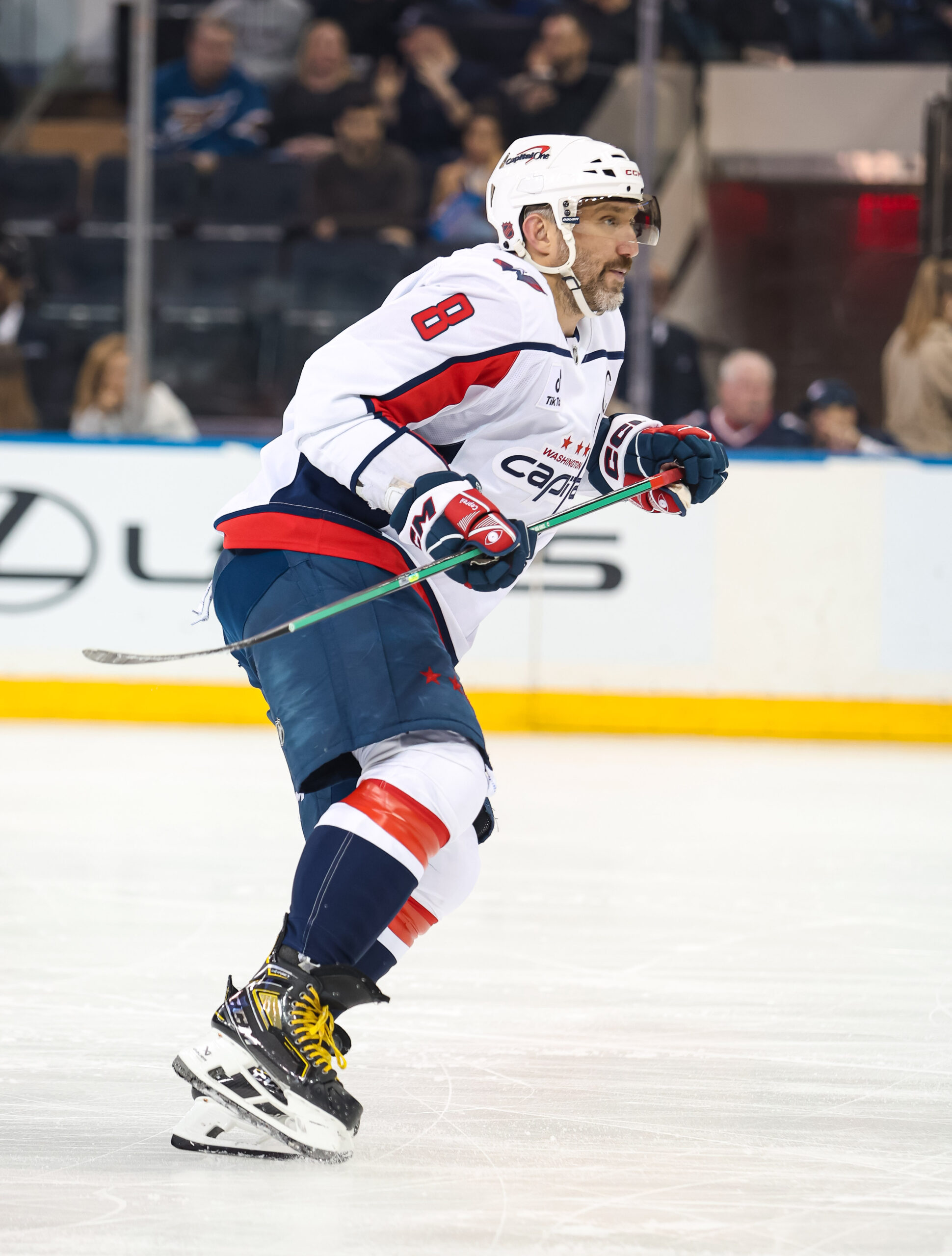 “Not yet,” Ovechkin said when prompted directly about retirement. “We’re going to make a decision in the summer. I have to talk to my family, with Ted [Leonsis, Capitals owner], with [GM Chris Patrick and POHO Brian MacLellan].”
When asked about the most important factor in his decision, Ovechkin said it would be his health. “I’m going to be 41 years old in September, so you just have to be smart about it.”
Of course, Ovechkin’s age-40 season has included his hallmark durability. He’s played in all 78 games for the Caps, albeit averaging a more conservative 17:29 per game, while maintaining his usual position as the team’s scoring leader with 31 goals and 61 points. While it’s the lowest points-per-game figure of his 21-year career, that’s perhaps more indicative of Washington’s offensive struggles as a whole: the team is only scoring 3.15 goals per game after reaching 3.49 last season.
Ovechkin’s decline has been remarkably slow, but it is still evident. He’s only averaging 2.91 shots on goal per game this season, a career low by a wide margin. His physicality isn’t there either, hovering at a career-low 1.64 hits per game.
That’s all to be expected. The fact that he’s still a clear-cut top-six contributor at this stage of his career is remarkable in its own right. He’s in the final year of the five-year, $47.5MM deal he inked in 2021 and will presumably only sign a one-year deal if he does opt to return, likely at a reduced cap hit from his current $9.5MM impact. Defensive warts notwithstanding, he’d still be an effective top-nine piece at worst next year if he stays on his current trajectory.
The question isn’t whether he can, it’s whether he believes it’s a good idea. Ovechkin has long maintained the wish to play at least one full season back home in Russia’s Kontinental Hockey League before hanging up the skates for good. Doing so while he could still conceivably be an All-Star level threat there is no doubt of interest to him.
Image courtesy of Danny Wild-Imagn Images.
Maple Leafs Hire PBI Sports & Entertainment To Support GM Search
The Toronto Maple Leafs face a pivotal decision as the off-season approaches. They are in the midst of searching for their first general manager hire since 2023. To help make sure their decision works out, the Maple Leafs have hired Neil Glasberg’s PBI Sports & Entertainment to support their search per Sportsnet’s Luke Fox. The firm represents many coaches and executives in the NHL – including Edmonton Oilers GM Stan Bowman, New Jersey Devils senior advisor Chuck Fletcher, and Florida Panthers assistant GM Sunny Mehta as pointed out by Chris Johnston of The Athletic.
Toronto will move forward targeting mid-May as when they’d like to have a decision made per Johnston. Some have expressed concerns about Glaser’s involvement in the search as he represents potential candidates for the role – but PBI Sports & Entertainment’s involvement does not violate any league rules and the firm has previously been used by the Vancouver Canucks, Philadelphia Flyers, and Seattle Kraken.
Still, Mehta could be a top candidate for the Leafs’ key role. MLSE President and CEO Keith Pelley stated that the next Leafs GM will need to be data-centric, with an understanding of the importance of analytics in building a roster. Mehta served as an analytical consultant in the NHL and MLB prior to his role with the Panthers. He even spearheaded the first full-time analytics department in NHL history with the 2014-15 New Jersey Devils. Mehta was hired as the Panthers’ Vice President of Hockey Strategy and Intelligence in 2020 and promoted to the assistant GM chair, in addition to his role as Director of Analytics, in 2023. Florida won back-to-back Stanley Cups on the heels of that promotion. In addition to his track record in hockey and baseball, Mehta was also once a professional poker player and co-authored a top-selling gambling book.
Mehta will be one of many names considered for the Leafs GM chair. Other names who could be involved includes former NHL GMs John Chayka, Peter Chiarelli, and Kevyn Adams per Johnston.
Minnesota Wild Sign Charlie Stramel
According to Michael Russo of The Athletic, the Minnesota Wild have signed collegiate prospect Charlie Stramel to his entry-level contract. The Wild later confirmed the news.
In Russo’s report, he indicated that it would be a three-year, $3.225MM ($1.075MM AAV) deal for Stramel, including schedule ‘A’ bonuses. Expectedly, Stramel’s deal won’t start until the 2026-27 season, and he’s not expected to play for the rest of this season.
The reason he isn’t expected to play is that Stramel broke his ankle in Michigan State University’s last game of the season against the University of Wisconsin. He blocked a shot early in the postseason contest and was removed from the game entirely before Wisconsin made its magical run at the end of the contest.
Still, it was clear that the Wild would want to sign him regardless. Stramel was scheduled to become a collegiate free agent this summer if he hadn’t signed his entry-level contract with Minnesota. Given his emergence as a legitimate top-six forward this season, it became highly unlikely that Minnesota was going to let him go for nothing.
Few would have expected this breakout just a few years ago. Throughout Stramel’s first two seasons in the NCAA, then with Wisconsin, he amassed eight goals and 20 points in 67 contests. Since transferring to Michigan State ahead of his junior season, Stramel has registered 28 goals and 71 points in 74 games.
It became clear quickly that Stramel responded well to Adam Nightingale‘s system, and the two-time Big Ten Coach of the Year was able to extract the most out of him. Given that the Wild are expecting several forwards to leave this summer via free agency, it wouldn’t be at all surprising to see Stramel crack the opening night roster next season.
Outside of his raw production, Stramel plays a very mature game. He excels in tight quarters with a knack for winning battles in the small areas. He’s a very efficient give-and-go player, which should only help him excel next to some of Minnesota’s other top forwards.
Devils Fire General Manager Tom Fitzgerald
The New Jersey Devils announced that they’ve parted ways with President of Hockey Operations and General Manager, Tom Fitzgerald. He joins Brad Treliving, formerly with the Toronto Maple Leafs, as the second General Manager fired in the last week.
In the announcement, New Jersey’s Managing Partner, David Blitzer, said, “Tom and I had a thoughtful conversation today and agreed it was time to move in a new direction. Tom changed the trajectory of our team here, including setting a franchise record for points in a season and helping make New Jersey a hockey destination. He is a well-respected leader across the Devils’ organization and NHL, and I am grateful for our friendship. I wish Tom and his family all the best. As we prepare to move forward, it is important I acknowledge our fans. I recognize we have not delivered in the way you expect and deserve and I understand and share in your frustration. This is a critical offseason for our franchise, and we will explore all avenues that best position the Devils to compete for a Stanley Cup once again.”
Furthermore, Fitzgerald provided a quote, saying, “After talking with David Blitzer, it was apparent to everyone that the best course of action is to move on for the benefit of the team. I am incredibly appreciative to David, Josh Harris, and the entire New Jersey Devils organization for being a part of my life for the past decade. The Devils are fortunate to have a core of great players, vocal and passionate fans, but most importantly, tremendous people who worked with me toward a common goal. I’ve always said that New Jersey is a hidden gem and I’m proud of the effort that we put in to raise the standard and make it a destination. I look forward to the next step in my hockey career and will always look back fondly on my time with the Devils.”
Fitzgerald became the Devils’ General Manager ahead of the 2020-21 campaign after serving in the interim toward the end of the 2019-20 season. Since then, New Jersey has qualified for the playoffs only twice, reaching Round Two in the 2023 Stanley Cup playoffs. Each time, they were ousted by Metropolitan Division rival, the Carolina Hurricanes.
Although some of Fitzgerald’s trades deserve scrutiny, such as trading Pavel Zacha to the Boston Bruins and including Yegor Sharangovich in the trade for Tyler Toffoli, his tenure with the Devils will be more remembered for the moves he didn’t make, rather than the ones he did.
Unlike most teams, New Jersey has legitimate top-six talent like Jack Hughes, Timo Meier, Nico Hischier, Jesper Bratt, and Dawson Mercer. However, whether it be through a hyper-conservative approach or something different, Fitzgerald never addressed New Jersey’s depth-scoring issues.
The team has been highly affected by injuries over the last several years, none of which is Fitzgerald’s fault. Still, by not adding additional scoring help toward the bottom of the forward corps, the Devils’ offense would completely disappear when their better players succumbed to injuries.
Last season was a perfect example. New Jersey entered the deadline without Hughes and was slowly falling down the standings. Instead of spending a little more to acquire a short-term stopgap that can move up and down the lineup like Ryan O’Reilly, Brayden Schenn, or Nazem Kadri, the Devils acquired Cody Glass, Daniel Sprong, Brian Dumoulin, and Dennis Cholowski. In his defense, Glass has been a nice find this season, but there was never an expectation that they could replace Hughes’ value by committee, and New Jersey was quickly bounced in the playoffs.
Additionally, Fitzgerald has raised a few eyebrows with the extensions given to Jacob Markstrom and Jake Allen, although the latter has worked out rather well. Plainly put, Fitzgerald had six years to turn the team into a consistent contender, had the pieces to do so, and didn’t get the job done.
Fortunately, for Fitzgerald, there are already a few openings available to him, even before the end of the regular season. As previously mentioned, the Maple Leafs fired Treliving a few days ago and may seek another experienced mind to get the franchise back on track. Furthermore, the Nashville Predators, with whom Fitzgerald spent four years during his playing career, have an opening as well.
Regardless, the announcement reads as if both parties knew the writing was on the wall for some time. The next General Manager will face significant challenges, particularly in creating salary cap space in the short term and negotiating Hischier’s extension this summer. However, the Devils aren’t the worst situation in the league, and have solid forwards up front. Acquiring depth around them will be the initial focus.