
Predators’ Steven Stamkos Pushes Back On Trade Interest
Feb. 27th: Stamkos himself poured cold water on the idea of him being traded before next week’s deadline. According to Alex Daugherty of The Tennessean, Stamkos said, “I haven’t talked to (GM Barry Trotz) at all about that.” Stamkos later added that there was “zero” chance he’d be willing to waive his no-movement clause. Although things could change, Stamkos’ strong rebuttal against LeBrun’s report indicates he’ll finish the season in Nashville. There was no added reporting on whether Stamkos would reassess his view this offseason.
Feb. 26th: The Nashville Predators could soon part with their biggest free agency signing in recent memory. Centerman Steven Stamkos has emerged in trade rumors, though Nashville will have to work around the future Hall-of-Famers’ full no-movement clause. As things stand, Stamkos is only prepared to accept a trade to one of three clubs – the Tampa Bay Lightning, Minnesota Wild, or Dallas Stars – per Pierre LeBrun of The Athletic.
A reunion in Tampa Bay would certainly be the most welcome outcome. Stamkos spent 16 years with the Lightning after being drafted first overall by the club in 2008. He debuted with a 46-point season in the following season, then jumped to 51 goals and 95 points in the 2009-10 season. The season was, at the time, the third-highest scoring season from a teenager in the NHL since 2000, behind Sidney Crosby’s first two seasons in the league.
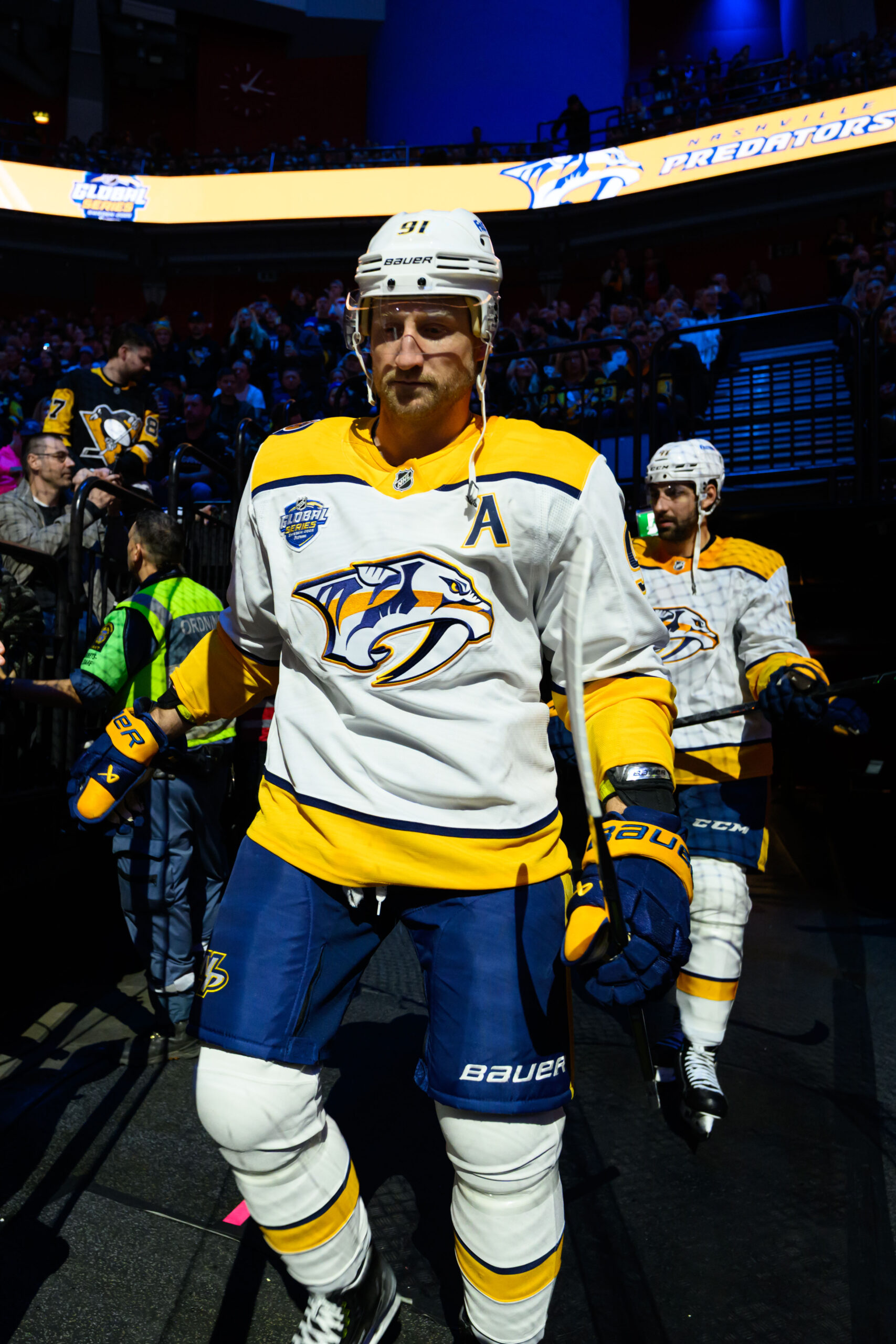
Stamkos found another gear with 60 goals and 97 points two seasons later. With that, he locked in a star’s role on top of the lineup that – with sustained scoring and an exemplary supporting cast – would lead Stamkos to back-to-back Stanley Cup wins in 2020 and 2021.
Stamkos left Tampa Bay three seasons later, in one of the most coveted free agency signings of the 2000s. The move hasn’t gone to plan though, with Stamkos dwindling from 81 points in his final year in Tampa Bay to only 53 points in his first season in Nashville. Meanwhile, the Lightning have yet to fill the hole left at the center position, even deploying winger Jake Guentzel in the center role amid injury troubles. A reunion would mean a return to the top role for Stamkos, and allow Brayden Point to take a step back amid a down year.
But while Tampa Bay has stayed a top offense despite their missing piece, the Wild seem a star center shy of emerging as a super-team after trading de facto top center Marco Rossi in a package for top defender Quinn Hughes. The Wild offense could offer the mix of speed and skill to elevate a 36-year-old Stamkos, who is already scoring at a 40-goal and 63-point pace this season. Stamkos would offer a heavy shot to go with playmakers Kirill Kaprizov, Matt Boldy, and Mats Zuccarello.
Alternatively, Stamkos could become the next star addition to a Dallas club that acquired Mikko Rantanen ahead of the 2025 Trade Deadline. Dallas has scored the seventh-most goals in the league with Wyatt Johnston and Matt Duchene taking on top center duties. Adding another star hand to that mix could be enough to will Dallas back to the Stanley Cup, after three consecutive losses in the Western Conference Finals.
The Predators will need to be handsomely rewarded for departing with the player who was meant to surge the club back to the top of the standings. Future capital will be the focus of any deal, as Nashville looks to expedite a rebuild of their lineup on the back of a strong prospect pool. Teams will also need $8MM in available cap space to take on Stamkos’ deal with no retention. Of the three potential landing spots, only Minnesota could afford that price tag on the day of the Trade Deadline. Tampa Bay would need to clear out $5MM in cap space, while Dallas would need nearly $7MM in space.
The teams will have a bit of time to pull together the necessary funds, with LeBrun reporting that a deal is most likely to occur around the summer. Stamkos has two years remaining on his current contract. Still, those markers will set a tense market around Nashville’s star, veteran forward. That could leave a Stamkos trade as the top agenda item for whoever replaces current general manager Barry Trotz who will step down from his post at the end of the season.
Image courtesy of Haljestam-Imagn Images.
Wild Emerging As Frontrunner In Vincent Trocheck Trade Talks
As the Wild gear up for an all-in trade deadline following their earlier acquisition of Quinn Hughes, they’re now the league-wide favorite to acquire center Vincent Trocheck from the Rangers, according to Vince Z. Mercogliano of The Athletic and David Pagnotta of The Fourth Period.
Minnesota’s interest in Trocheck dates back several weeks but was surely fueled by Chris Johnston of TSN and The Athletic’s report earlier this month that the Rangers had essentially resigned themselves to moving him by the deadline, as compared to making it a summer deal. For a team that lost a top-six center in Marco Rossi in the Hughes deal, adding another one – a clear-cut upgrade, no less – is a natural next step for general manager Bill Guerin as he aims to guide the Wild out of a cutthroat Central Division picture in the playoffs.
While salary cap considerations have kept the Wild out of major trade conversations in recent years, that’s no longer the case. Even after the Hughes deal, they project to have $12.3MM in cap space on deadline day, per PuckPedia. That’s more than enough to take on Trocheck’s deal, which runs at a cap hit of $5.625MM through 2028-29, with no retention and without subtracting a roster player from the mix.
Minnesota has depleted a good portion of its valuable young talent, shipping off Liam Ohgren and Zeev Buium alongside Rossi in the Hughes trade, but has more to spare. As Mercogliano writes, 2022 first-rounder Danila Yurov is likely a non-starter. The rookie has eight goals and 22 points in 52 outings this season and is now Minnesota’s clear-cut top “prospect,” depending on your definition of the word. Mercogliano relays word from his Minnesota-based colleague, Michael Russo, that he “would be very difficult to pry away,” even for a talent like Trocheck with 37 points in 44 games on an offensively stagnant Rangers club.
Aside from that roadblock, there are still plenty of other names the Wild could leverage for the Rangers to consider. Center Charlie Stramel, the Wild’s first-rounder in 2023, has recovered nicely from a tough start to his college career and is now a standout 21-year-old senior at Michigan State, posting a 19-21–40 scoring line in 30 games with a +30 rating that leads forwards nationally. Right-shot defenseman David Jiricek, drafted sixth overall by the Blue Jackets in 2022, hasn’t demonstrated much forward progress since his acquisition last season, and it stands to reason they’d be comfortable flipping him as a result.
Trocheck does have some say in where he ends up with a 12-team no-trade list. The 32-year-old is reportedly open to a move to the Twin Cities but would otherwise prefer to stay in the Eastern Conference. Pagnotta reports that the Kings, Jets, Mammoth, and Avalanche have expressed some level of interest as well, but those could all end up being non-starters based on his M-NTC.
Avalanche Interested In Nazem Kadri Reunion
The Avalanche have already been busy opening cap space ahead of the trade deadline, taking a slight hit to their blue line depth to swap out Samuel Girard for Brett Kulak in Tuesday’s deal with the Penguins. They’re now projected to have close to $11MM in cap space on deadline day. That leaves them wide-open to acquire a big-name target to bolster their chase for the Presidents’ Trophy and the Stanley Cup.
One of those targets is coming into view: Flames pivot Nazem Kadri, whose career year for the Avs in 2021-22 helped guide them to their only Cup win of the Nathan MacKinnon era, David Pagnotta of The Fourth Period reports. That comes amid Kadri’s name rocketing up trade lists following reports that he’s had a change of heart on his willingness to stay in Calgary long-term, plus Pagnotta indicating today that the Flames are open to retaining a portion of Kadri’s $7MM cap hit.
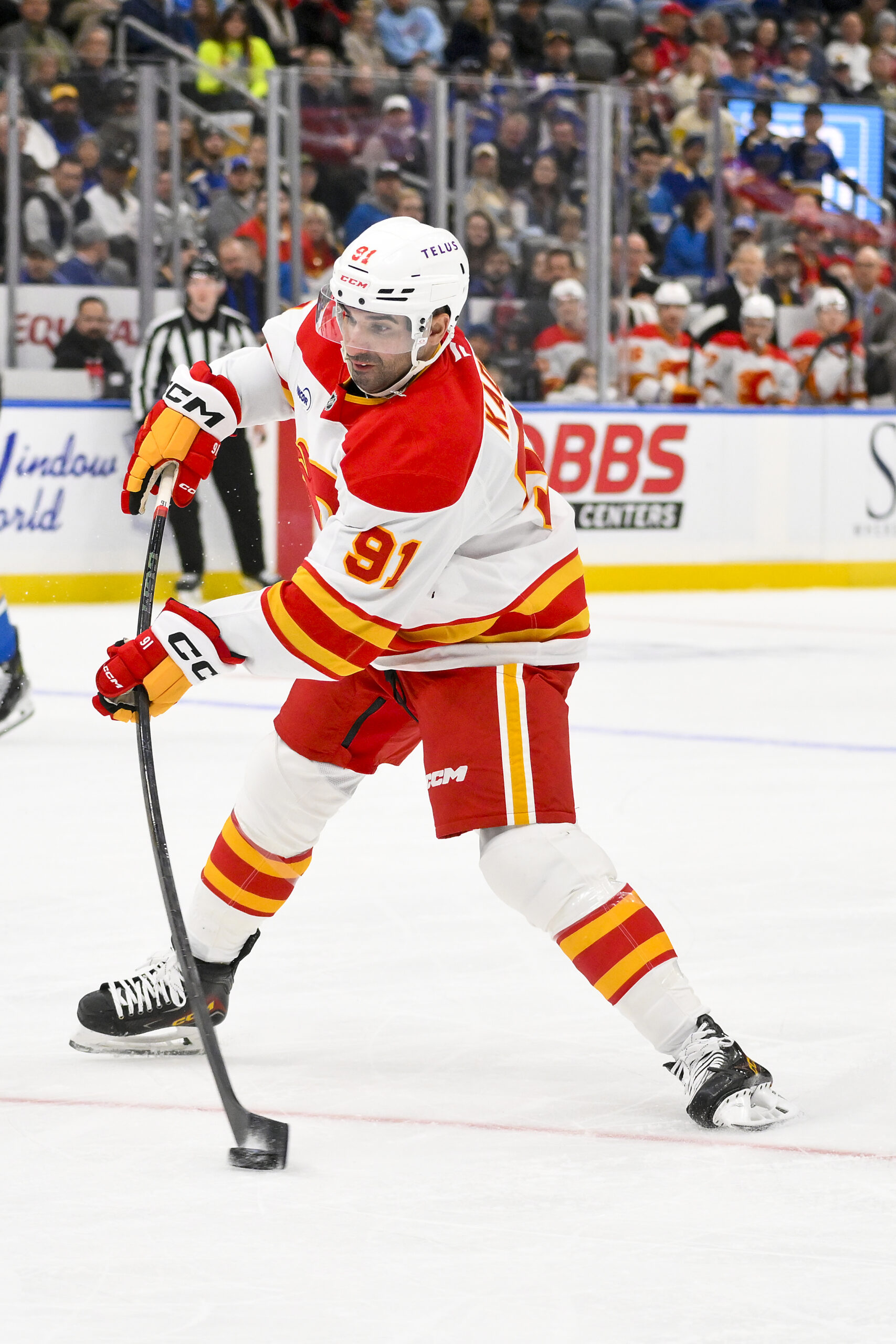 With a 13-team no-trade list, Kadri can block a move to several contenders. The Hurricanes, who were purported to have interest in him earlier this season, were reportedly on that list. It’s a relative certainty, though, that Kadri wouldn’t welcome a return to the destination where he had his greatest offensive success, which he then parlayed into his seven-year, $49MM free agency cash-in with Calgary in 2022.
Now 35, Kadri’s deal still has another three seasons left on it. He’ll be 38 when it’s up. For a cap-strapped team like the Avs, that makes a deal a non-starter without retention because of its long-term impact, even if they have the space to pull it off this season. If Calgary is willing to make him closer to a $5MM or $4MM player through 2028-29, though, that suddenly makes it a workable addition for Colorado. They’re up to $13MM in flexibility for next season after the Girard-for-Kulak trade with seven roster spots to fill. Bringing that figure back under $10MM with a Kadri pickup, assuming they don’t send a significantly-paid roster player the other way, would preclude them from making any major additions this summer as things stand, but it would still allow them to fill out a full roster with depth signings.
The presumption that the Avs wouldn’t send a roster player back may be hasty, though. They’re one of the deepest clubs in the league at every position, their prospect pool notwithstanding, and could easily stand to leverage a third-line name like Jack Drury or an even pricier one like Ross Colton in talks if the Flames have an interest in either.
If there’s a relative weakness on Colorado’s roster, it’s having Drury in the third-line slot down the middle. His eight goals and 19 points in 56 games this season are somewhat underwhelming on a team that scores as much as the Avs for a player averaging nearly 15 minutes per night. He’s nonetheless been incredibly valuable in the faceoff dot, winning 58.6% of his draws.
What Kadri lacks in faceoff acumen, he more than makes up for in what would likely give the Avs one of the best one-two-three punches down the middle in the modern era with MacKinnon, Brock Nelson, and himself. Even in a relatively down year for the late bloomer (at least in terms of him being a true top-six piece), he’s put up 39 points in 56 games to lead Calgary in scoring. That’s a 57-point pace over 82 games, and his recent history remains exceptional, with 35 goals last year and 75 points the year before.
It’s fair to question if a Kadri acquisition would cause the Avs to invest too much into aging assets for too long, though. While Nelson has exploded for 30 goals and 50 points in 56 games, he’s 34 years old and signed for two more years at a $7.5MM cap charge. With Cale Makar‘s next big payday scheduled for 2027, loading up too much past next season could leave them with too little flexibility to get a deal done.
Among the other teams that have expressed some level of interest are the Canadiens, as previously reported, plus Colorado’s Central Division challengers, the Stars and Wild, Pagnotta reports. He also added the Panthers as a team that’s kicked the tires, but that likely hinges on their decision to enter the deadline as buyers at all – something that’s looking less and less likely with a playoff spot now eight points out of reach.
Image courtesy of Jeff Curry-Imagn Images.
Rangers Activate Adam Fox, Igor Shesterkin, Conor Sheary
12:26 p.m.: Fox, Shesterkin, and Sheary are off LTIR/IR with winger Brett Berard heading to AHL Hartford and goaltender Hugo Ollas heading to ECHL Bloomington in the corresponding moves, the team announced. Both had been recalled as practice players over the Olympic break.
11:03 a.m.: The Rangers will activate defenseman Adam Fox and winger Conor Sheary from long-term injured reserve and goaltender Igor Shesterkin from standard IR before tonight’s game against the Flyers, head coach Mike Sullivan told reporters (including Vince Z. Mercogliano of The Athletic). New York has one open roster spot, but will need to open two more before formalizing the moves.
While there will be plenty of starpower re-entering the Blueshirts’ lineup after the Olympic break, it will likely impact the outcome of their season very little. A 2-8-0 slide in their last 10 heading into the pause left them with a 22-29-6 record, leaving them as the only Eastern Conference team below .500 and in an eight-point hole for last place. They have virtually no chance of making the playoffs, but do currently boast 10.4% odds of locking up the first overall pick for the second time in seven years, per MoneyPuck.
Still, getting a pair of household names back in the lineup will make the stretch run far more tolerable for an offensively woeful Rangers team, especially after they offloaded leading point-getter Artemi Panarin in a blockbuster with the Kings at the beginning of the month. Without him, the Rangers have just six names who have crossed the 25-point mark this season with 25 games remaining on the schedule.
One of them is Fox, who’s bounced back in a big way this season after an underwhelming 2024-25 campaign. Of course, underwhelming by the 28-year-old’s standards still meant finishing 12th in Norris Trophy voting, but the 5’11” righty has now reclaimed his place among the few most impactful rearguards in the league – despite what his pre-injury snub from Team USA’s Olympic roster may otherwise indicate.
Various upper-body and lower-body issues have limited Fox to 30 appearances this year, with the latter one costing him 12 games before the break. He’s still managed four goals and 24 assists for 28 points, ranking eighth among NHL defenders with 0.93 points per game. That’s been complemented by Fox having the most offensively-involved season of his seven-year career, averaging 5.30 shot attempts per game, while also recording career-highs in actual (56.4) and relative (11.7) Corsi For percentage at 5-on-5.
Behind him, the Rangers’ right-shot depth is uninspiring. William Borgen is a fine bottom-four shutdown piece, but can’t handle top-pair minutes. Youngster Vincent Iorio was claimed off waivers from the Sharks prior to the break to ease the strain, but he only managed to get into one contest before the schedule paused. They’ve elevated Braden Schneider into top-pairing duties with Vladislav Gavrikov in Fox’s absence this year, but that pairing has controlled just 42.5% of expected goals at 5-on-5 compared to Gavrikov and Fox’s 57.9% mark. That all makes Fox the Rangers’ most valuable skater, at least after Panarin’s departure, by a rather significant margin.
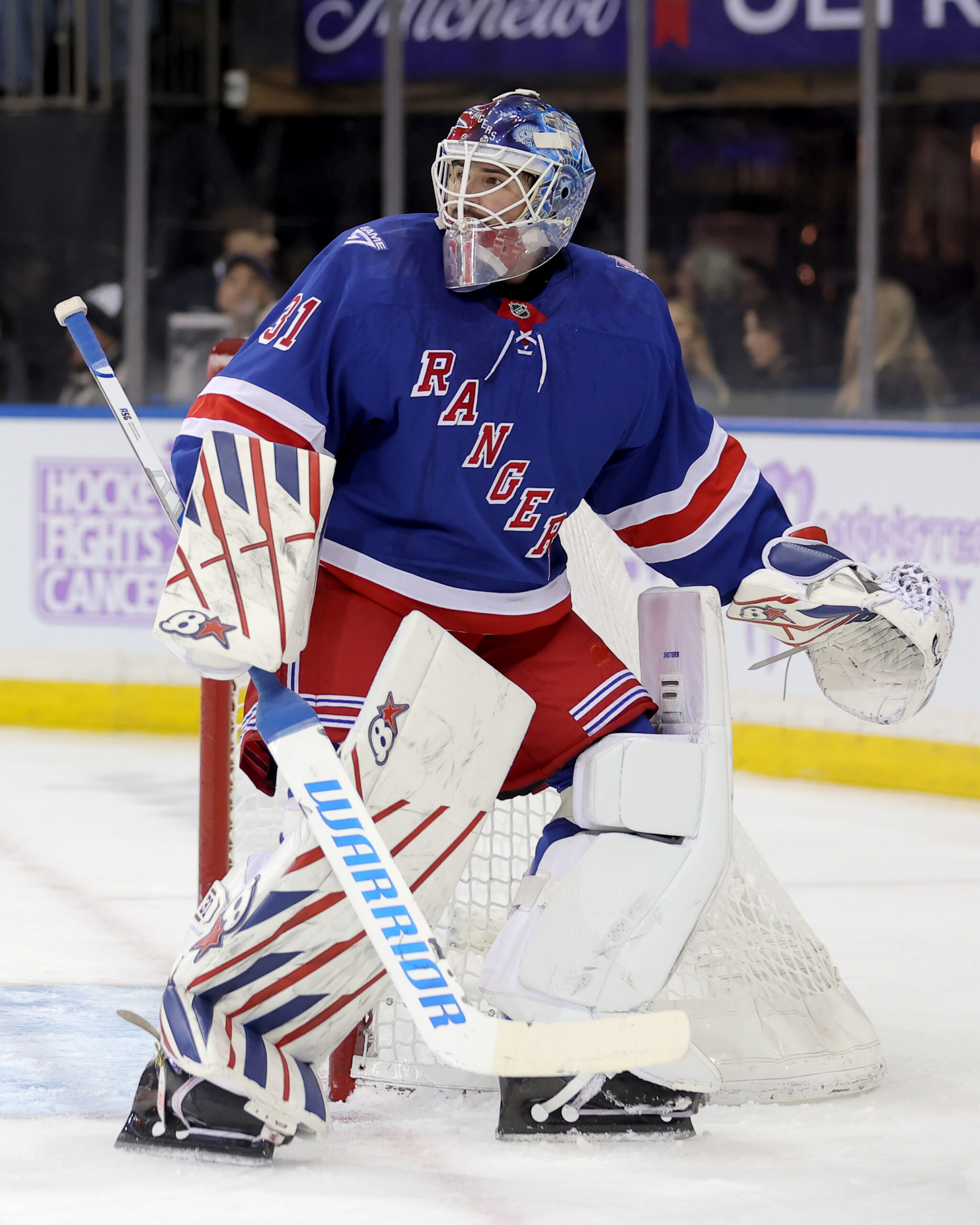 No single player is more tied to the Rangers’ success than Shesterkin, though, as it has been virtually since he entered the league. The 2022 Vezina Trophy winner and Hart Trophy finalist steps back into the starter’s crease after sustaining a lower-body injury against the Mammoth on Jan. 5.
Last season, the 30-year-old didn’t receive any Vezina votes for the first time since his rookie season. That correlated with the Blueshirts missing the postseason for the first time in four years. It’s unclear how his more limited playing time this season due to injuries will impact his standing, but like Fox, he’s had a bounce-back year when healthy.
The 6’1″ Russian is no longer putting up the electric .930+ save percentages we saw early in his career – no one is anymore, for that matter – but his .913 mark and 2.45 GAA are both considerable steps up from last year. He owns a 17-12-4 record through 34 starts and still ranks fifth in the league with 15.5 goals saved above expected, according to MoneyPuck. On a per 60 basis, his 0.464 mark ranks fourth among goalies with at least 30 appearances.
Without Shesterkin, the Rangers have fallen apart with a 5-17-2 record. Aging backup Jonathan Quick has only managed a .890 SV% in 19 starts and one relief appearance, while third-stringer Spencer Martin has a .863 SV% and 4.13 GAA in four starts and two relief appearances. In their 13 games without Shesterkin heading into the break, they only won twice and allowed 4.62 goals per game.
As for Sheary, the 33-year-old winger has had a negligible impact in a bottom-six role after converting a professional tryout in training camp into a two-way deal. Despite averaging 14:35 of ice time per game, his highest deployment in three years, he’s scored just once while adding eight assists for nine points in 37 games.
Dating back to the 2023-24 campaign with the Lightning, the two-time Stanley Cup champion now has just five goals in his last 99 games. After spending most of last season in the AHL, he seems destined to return to a minor-league role next season after failing to make a positive impression in New York. Nonetheless, the Rangers’ dearth of bottom-six forwards and continued injuries to Adam Edstrom and Matt Rempe will mean he returns in a third-line role tonight with Noah Laba and Brendan Brisson. He hasn’t played since sustaining a lower-body injury against the Capitals on New Year’s Eve.
Image courtesy of Brad Penner-Imagn Images.
Canucks Scratching Tyler Myers For Trade-Related Reasons
Feb. 26th: Although early speculation linked Myers to the Edmonton Oilers, TSN’s Ryan Rishaug reported that the Oilers are not one of the teams that are interested in acquiring Myers.
Feb. 25th: With the trade deadline now just a week and a half away, we will soon be seeing an uptick in players being held out of the lineup to avoid any injury risk before a potential trade. The Rangers did it with Artemi Panarin before the Olympic break and now the Canucks will be doing so with a veteran as well. Rick Dhaliwal of CHEK and The Athletic reports (Twitter link) that blueliner Tyler Myers will be scratched tonight against Winnipeg for trade-related reasons. This comes on the heels of a report from ESPN’s Kevin Weekes (Twitter link) that Vancouver is fielding plenty of calls on the veteran and that he could be on the move soon.
TSN’s Darren Dreger adds (Twitter link) that the Canucks went to Myers with this trade option a couple of days ago. With a full no-move clause, Myers has full control over his situation and he and his camp are still pondering the potential change of scenery. Clearly, even though a deal might not be imminent, the team isn’t taking any chances and is holding him out just in case.
 The 36-year-old came into the NHL with plenty of fanfare in 2009 after being the 12th overall pick by Buffalo the year before. With Myers jumping into a top-pairing role right away, expectations were quite high that he could be a legitimate franchise defender.
While he hasn’t been able to live up to that hype and ultimately struggled in a prominent role over the years, Myers has still been a steady second-pairing defender for the better part of the last decade. He’s in the middle of his seventh season in Vancouver, one that has seen his offensive production basically dry up altogether as he has been limited to just a goal and seven assists in 57 games. However, he remains a key defensive defender for them and sits second on the team in blocked shots and third in shorthanded playing time.
Myers is in the second season of a three-year, $9MM contract that runs through the 2026-27 season. With a $3MM cap charge that is certainly affordable for the role he plays (he’s averaging over 20 minutes per game once again), that and the fact he’s not a rental player should certainly have Vancouver well-positioned to command a quality return, especially with a lack of quality right-shot options available.
A move shouldn’t necessarily be considered an automatic, however. Myers has made it known over the years that his desire has been to remain with the Canucks no matter what, which played a role in his below-market contract with them. Assuming the other suitor is a legitimate playoff contender, it will be interesting to see if the allure of making a push for a Stanley Cup is enough to make him agree to be moved.
Photo courtesy of Timothy T. Ludwig-Imagn Images.
Penguins Place Sidney Crosby On IR, Activate Kris Letang
The lower-body injury Sidney Crosby sustained at the Olympics will significantly impact the rest of his season. According to a team announcement, the Pittsburgh Penguins have placed their captain on the injured reserve. Additionally, the team has activated veteran defenseman Kris Letang in a corresponding roster move.
Although Team Canada, largely out of respect for the Penguins, failed to clarify the extent of Crosby’s injury; Pittsburgh did. The team shared that Crosby is expected to miss the next four weeks at a minimum, putting his projected return toward the end of March in a best case scenario.
Obviously, Crosby’s absence will have a significant impact on Pittsburgh’s competitiveness to close out the regular season. Despite their strong performance this season, largely led by Crosby offensively, the team is only one point up on the New York Islanders and five points up on the Columbus Blue Jackets and Washington Capitals. Still, the Penguins have a few games in hand on the Islanders and Capitals, respectively.
Even if the Penguins commit to buying at the deadline, there are few options to fill the void left by Crosby, both on and off the ice. In his age-38 campaign, he’s remained a point-per-game player, registering 27 goals and 59 points in 56 games, averaging 19:35 of ice time per night. There’s a 15-point gap between Crosby and fellow veteran Evgeni Malkin for the team-lead in scoring.
If there’s any consolation, Pittsburgh will be able to move Malkin to the first-line center, where he’s filled in on occassion throughout Crosby’s career. Also incumbered by injuries throughout the season, Malkin has had a quality year when healthy, scoring 13 goals and 44 points in 41 games.
It’ll be interesting to see if Crosby’s injury will have any impact on the Penguins’ plans for the trade deadline. Given that they’re surprisingly competitive this season, General Manager Kyle Dubas has been able to add a few NHL pieces in a flurry of trades while also improving the team’s draft capital moving forward.
Meanwhile, Letang returns from injury after a month, though much of that was from the Olympic break. He had been recovering from a broken foot. The 20-year veteran has scored three goals and 25 points in 50 games for the Penguins this season. It’s expected that he’ll resume his role on Pittsburgh’s second defensive-pairing, alongside recent acquisition, Samuel Girard.
Dallas Stars Place Mikko Rantanen On IR
Feb. 24: Rantanen will be out for at least two weeks and possibly longer, head coach Glen Gulutzan told reporters today, although he doesn’t expect the injury to end his regular season (via Lia Assimakopoulos of the Dallas Morning News). That will nonetheless put him out through the trade deadline and keep him out of at least Dallas’ next seven games.
Feb. 23: The Dallas Stars announced today that they have placed star forward Mikko Rantanen on injured reserve, retroactive to Feb. 20, the date of Finland’s loss to Canada in the quarterfinals of the recent Winter Olympic tournament.
Stars head coach Glen Gulutzan told the media today, including Stars Thoughts’ Robert Tiffin, that Rantanen is doubtful to play in the Stars’ first game back from the break, and is questionable beyond that point. According to Tiffin, Gulutzan “didn’t want to speculate” on Rantanen’s status beyond this week.
The team’s roster move suggests Rantanen isn’t set for an extended absence. Since his IR placement was made retroactive to Feb. 20, he will be eligible for activation as early as Feb. 27. If the team held a firm expectation that Rantanen would miss well over a week, it is less likely that they would have directly clarified the retroactive nature of his IR placement in their announcement post.
Rantanen’s injury didn’t end up costing Finland, as they cruised past Slovakia to earn a bronze medal. His injury, while seemingly minor in the grand scheme of the Stars’ season, threatens to seriously impact their odds of winning the games he’s set to miss. Rantanen is arguably Dallas’ most talented forward, currently leading the team in scoring with 69 points in 54 games.
Rantanen leads all Stars forwards in time-on-ice per game and is widely considered one of the game’s top wingers. Missing him, even for a handful of games, will hurt the Stars. With that said, Gulutzan’s comments combined with how the Stars have announced Rantanen’s IR placement suggest the star winger won’t be sidelined for too long, which is certainly good news for Dallas.
Penguins Acquire Samuel Girard From Avalanche
The Penguins acquired left-shot blue-liner Samuel Girard and a 2028 second-round pick from the Avalanche in exchange for defenseman Brett Kulak, both teams announced Tuesday.
Girard has been in the rumor mill for what seems like years. Colorado hoped to make him a future top-four anchor behind Cale Makar and Devon Toews – he actually predates both of them and was the Avs’ longest-tenured defenseman – when they acquired him from the Predators in 2017. After the puck-mover impressed and sniffed 20 minutes per game of ice time in his first full season in Colorado, the Avs inked him to a seven-year, $35MM extension.
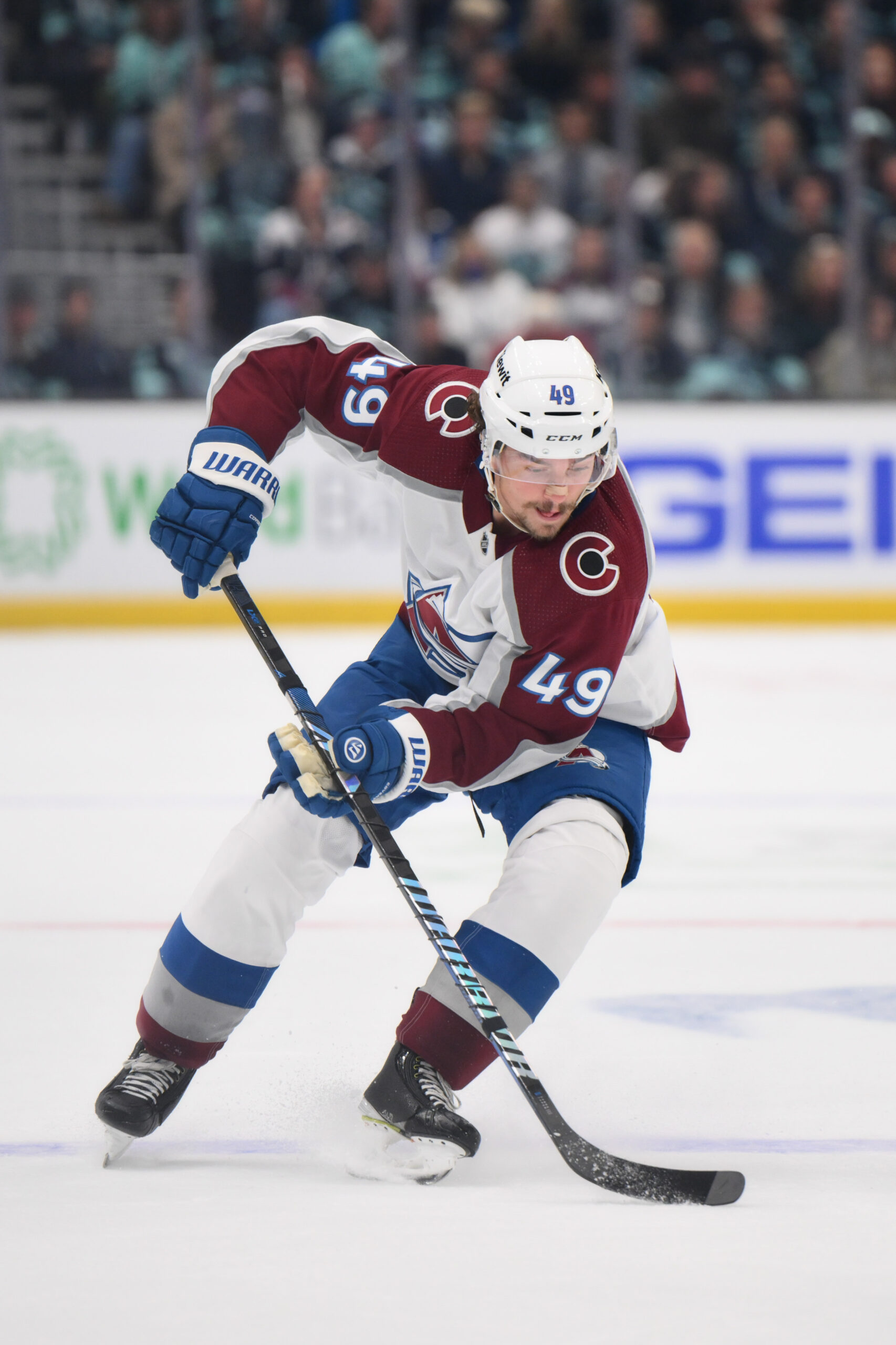 Some warned the commitment was premature. Now, in the penultimate season of the contract, they’d be right, at least based on his recent play. Girard’s performance back in the pandemic-shortened 2021 campaign made it look like he’d be the final piece of a true three-headed monster behind Makar and Toews, rattling off 32 points and a +15 rating in 58 games. His trajectory has been largely downhill from there. His minutes were steadily reduced from the 23-plus minutes he logged that year, his playoff performances were negligible, and he never churned out the same level of two-way play. He’s topped 30 points just once since then and has had negative relative Corsi impacts three times in the last five seasons at 5-on-5.
Still, Girard remained Colorado’s clear-cut No. 2 left-shot option behind Toews, especially after the Avs jettisoned Bowen Byram at the 2024 trade deadline. Then came this season. Girard sustained an upper-body injury in Colorado’s second game of the season that left him on the shelf for a month. During that time, veteran righty Brent Burns got the bump up to second-pairing minutes with Josh Manson moving to his offside in lieu of Girard. That duo, with over 2,200 combined games of NHL experience, has put up fantastic results – even posting better possession numbers than Makar and Toews have with a 56.8 xGF%, per MoneyPuck.
That pushed Girard down to a third-pairing role along with Sam Malinski, averaging only 17:41 of ice time per game. Even there, Malinski’s 25-point, +30 breakout through 55 games had rendered Girard as something of an expensive depth redundancy, especially with Malinski now extended through 2029-30 and Girard costing $5MM against the cap.
That cap impact, in a season where the Avs are the top Cup favorites by a significant margin, is why general manager Chris McFarland was willing to offload a second-round pick to get out of the last year and a half of his deal – especially if they’re receiving a much cheaper third-pairing option in Kulak in return, who’s having a strong season. Swapping out Girard for the pending UFA Kulak, who costs only $2.75MM, now leaves the Avs with a projected $10.82MM in cap space on deadline day, per PuckPedia. They’ve also given themselves $13MM even in cap space for next season, up from just $8MM to fill seven spots before the deal.
Kulak’s time in Pittsburgh ends after 25 games. It’s his second time being traded this season, having been acquired from the Oilers in December as part of the Tristan Jarry/Stuart Skinner swap. During that time, he’d gotten a bump in minutes alongside Kris Letang in top-four deployment and showed he was up to the task. He’s having a tough season offensively, even by his limited standards as a shutdown bottom-four piece, but managed seven points with a +2 rating while playing almost exclusively with Letang. That duo controlled 52.2% of expected goals as well, per MoneyPuck.
Given how both players grade out this season, it’s likely a lateral move at worst for both clubs. It’s a bit more of a long-term focused move for the Pens, though. They have little to no long-term security in their top four. Parker Wotherspoon has impressed this season, elevated as a top-pairing shutdown partner for Erik Karlsson, although he’s been a career third-pairing option and, at age 28, the prospects for regression next season are bright. Ryan Shea is, like Kulak, a pending UFA. Their veteran depth options are uninspiring, and it’s questionable if 2022 first-rounder Owen Pickering will be ready to log NHL minutes next season.
They now have a year and change of a 27-year-old Girard, plus the ability to discuss an extension with him starting July 1. He immediately becomes their most offensively dynamic threat on the left side and becomes the youngest name in Pittsburgh’s aging top-four group. They’re banking on Girard, who has 12 points in 40 outings this season, to return to his 30-plus point form back in expanded minutes, but considering he’s averaged over 20 minutes per game for his career, it’ll be a familiar situation for him.
Elliotte Friedman of Sportsnet was first to report the trade.
Image courtesy of Steven Bisig-Imagn Images.
Latest On Josh Morrissey
Winnipeg Jets star Josh Morrissey suffered an upper-body injury at the recently-concluded men’s hockey tournament at the Winter Olympics, the full extent of which has yet to be revealed. Morrissey was unable to get back onto the ice for Canada after suffering the injury, and TSN insider Darren Dreger said today that Morrissey is expected to miss “a good chunk of time” as a result of the injury.
Jets head coach Scott Arniel didn’t go as far when asked about Morrissey after Jets practice today. As relayed by Ken Wiebe of the Winnipeg Free Press, Arniel confirmed that the defenseman won’t play on Wednesday when the team resumes its schedule against the Vancouver Canucks, but added that he could meet the team on its upcoming road trip after he is evaluated by team doctors.
It goes without saying that the Jets hope their evaluation of Morrissey’s injury ends up in a more positive prognosis. The blueliner, who has finished inside the top-10 of Norris Trophy voting in each of the last three seasons, is easily Winnipeg’s most important defenseman.
He’s a true No. 1 in every sense, averaging 24:37 time on ice per game, which is the most on the Jets by a wide margin. That level of usage per game places him No. 11 in time on ice per game among all defensemen in the NHL. Morrissey is also Winnipeg’s top power play quarterback, averaging 3:09 time on ice per game on the man advantage, and has scored 10 goals and 42 points in 56 games.
Losing Morrissey for an extended period would not only take the Jets’ most important blueliner out of their lineup, the trickle-down effect of losing him would also be felt by the rest of the defense, who would have to play increased roles as a result of his absence.
Of course, even if Morrissey does miss some time and the Jets suffer as a result, their overall direction for the season is unlikely to change dramatically. Even with a healthy Morrissey, the Jets entered the Olympic break No. 28 in the NHL with a 22-26-8 record. Their playoff odds sit at just 5.5% according to Moneypuck, so Morrissey’s injury and its exact timeline is unlikely to make or break their season.
But in any case, the team is still likely hoping to get Morrissey back as soon as possible, so that they can at least put up a fight down the stretch and hope to potentially shock the hockey world and make a push upwards in the standings.
United States Wins Gold Medal At 2026 Winter Olympics
The United States have won the gold medal at the 2026 Winter Olympics in Milano Cortina, capturing their first gold medal since the legendary “Miracle on Ice” team of 1980.
The golden goal, coming from New Jersey Devils star Jack Hughes, came early in the game’s three-on-three overtime period. It ended what was an iconic game between two hockey heavyweights. An early goal from Minnesota Wild forward Matt Boldy gave the Americans a 1-0 lead, but the ice began to tilt in the second period. A goal from Colorado Avalanche defender Cale Makar tied the game in the second period.
Canadian pressure was relentless for the rest of regulation time. The Canadians piled up quality scoring chances, but reigning Hart Trophy winner Connor Hellebuyck made save after save to keep the game tied. Hellebuyck’s paddle save on Canadian defenseman Devon Toews, breaking up a prime scoring opportunity, will likely now go down as one of the most iconic saves in the history of USA Hockey.
Minnesota Wild GM Bill Guerin, who constructed this American roster, came under significant criticism during the lead-up to the tournament for some of his roster decisions. His choice to include a pair of New York Rangers veterans, J.T. Miller and Vincent Trocheck, rather than lethal goal scorers Jason Robertson and Cole Caufield, was one that drew considerable fire. But Guerin maintained all along that he was looking to build not the “best” team, one that would have as many all-stars as possible, but instead the “right” team, one capable of handling all of the adversity a short best-on-best tournament typically provides.
The Americans went through the tournament without a significant amount of adversity, though, at least compared to the Canadians. Sweden gave them a scare during the quarterfinals when Mika Zibanejad tied the game late, but superstar Quinn Hughes pushed the Americans forward with a fast overtime marker. The Americans flew past the Slovaks in the semifinals, and the United States’ games in the knockout round felt very different from Canada’s games, which were marked by late deficits and dramatic comebacks.
In the end, the margin between the United States and Canada was razor thin. While Canada dominated much of the final two periods of the game, the nature of three-on-three overtime is that it provides a clean slate for every team – it is a distinctly different form of hockey than five-on-five. Hellebuyck kept the Americans in the game, and gave them a chance to win it by delivering them to the overtime period. While Canada had a few chances in overtime, Hughes was the first to convert his, and in doing so, he etched his name into international hockey history.