
Latest On Martin Necas
The focal point of the Colorado Avalanche’s return package in the blockbuster trade that sent Mikko Rantanen to the Carolina Hurricanes was forward Martin Necas, and although he enjoyed a solid start to his tenure in Colorado, his situation is far from settled. The 26-year-old scored 28 points in 30 games in Denver, but his future with the club is cloudy due to the fact that he is set to hit unrestricted free agency after the 2025-26 season. The Denver Post’s Corey Masisiak called Necas’ contract situation “a tricky negotiation for both sides,” and provided some detail as to why.
First and foremost, Masisiak cited Minnesota Wild forward Kirill Kaprizov‘s contract situation as a factor that could hold up progress – Necas may not want to sign his deal until his camp, led by Eclipse Sports Management’s Michael Deutsch, gets to see what Kaprizov’s deal is valued at. From the Avalanche’s side of the equation, the team needs to find a way to figure out if they can fit Necas’ next contract onto their books, which currently feature Nathan MacKinnon at a $12.6MM cap hit and are set to feature Cale Makar‘s likely record-setting extension in two years’ time. Necas is an extremely talented hockey player and has proven to be a quality fit for the Avalanche, but retaining him, for the reasons Masisiak detailed, could prove challenging.
Mackenzie Blackwood And Samuel Girard Dealing With Injuries
The Avalanche knew that they wouldn’t have their full roster available to start the season with winger Logan O’Connor still working his way back from hip surgery. It appears he’s not the only one dealing with injury concerns though. Brennan Vogt of Hockey Mountain High reports that goaltender Mackenzie Blackwood and defenseman Samuel Girard are also banged up heading into training camp.
Blackwood didn’t skate with the team during captain’s skates all week and on Friday, worked with goalie coach Jussi Parkilla but voiced some pain when pushing off his right leg during one of the drills. Notably, he wasn’t taking shots either; combined, those suggest he’s not fully healthy heading into camp. Blackwood is beginning a five-year, $26.25MM contract signed soon after being acquired in an early-season trade from San Jose. Scott Wedgewood enters camp as the backup and could be in line for a bit more work early on. If Blackwood were to miss time to start the season, Trent Miner would likely break camp as the interim backup.
As for Girard, Vogt relays that the blueliner didn’t take part in any of the optional skates since August 17th until yesterday and was skating gingerly in a non-contact sweater, suggesting he could be dealing with a lower-body issue. The 27-year-old has had some injury trouble for several consecutive seasons now but when healthy, has been a capable top-four blueliner while also being only one of two left-hand shots in their projected top-six.
Colorado currently has around $1.325MM in cap space as things stand, per PuckPedia, meaning that they don’t have to place O’Connor on LTIR. However, if Blackwood and Girard’s injuries drag into the regular season, operating below the cap ceiling without needing LTIR could become a little trickier, a small subplot to keep an eye on over the next few weeks.
Taylor Makar Continues To Recover From Offseason Upper-Body Surgery
- Earlier today, Meghan Angley provided a brief injury update regarding Taylor Makar, the younger brother of Colorado Avalanche defenseman Cale Makar. Makar is recovering from offseason upper-body surgery, and Angley asserts that he’ll be ready in the next few weeks. In the meantime, he’ll continue skating with the team in a non-contact jersey.
[SOURCE LINK]
Afternoon Notes: Trenton, Bruins, Senators, Flames
The Utah Grizzlies will relocate to Trenton, New Jersey for the 2026-27 season, with an announcement set for tomorrow, per hockey insider Frank Seravalli. If true, the Grizzlies will be set to move right after celebrating their 20th season in Utah. In doing so, they will bring ECHL hockey back to Trenton for the first time since 2013. The city previously hosted the Trenton Titans – briefly the Trenton Devils – for 24 years beginning in 1999. The club was red-hot at the turn of the century, reaching the Kelly Cup Finals in 2001 and taking the Cup home in 2005. They featured some incredible hockey names in their history. Stanley Cup winner and Vegas Golden Knights head coach Bruce Cassidy presided over Trenton’s inaugural season, and current Utah Mammoth general manager Bill Armstrong coached the team from 2002 to 2004.
The Utah Grizzlies are currently affiliated with the Colorado Avalanche and Colorado Eagles, the latter an ironic twist given the Eagles’ rivalry with the Grizzlies when they were a part of the ECHL. This move would break that tension, and return pro hockey to an upgraded CURE Insurance Arena.
Other notes from around the hockey world:
- Sticking in the ECHL, the Boston Bruins have announced a three-year extension of their affiliation with the Maine Mariners. The affiliation began in 2021, and marked the first NHL partnership in Maine’s brief history. It was a continuation of a long history of work between the two teams. The Mariners served as Boston’s AHL affiliate from 1987 to 1992, before being relocated to form the Providence Bruins. The ECHL Mariners haven’t found their stride under Boston just yet – losing in the first round of the postseason three times, then missing the postseason last year. They’ll face a very interesting turnaround next season, after losing former player and head coach/general manager Terrence Wallin this summer. Maine hired Rick Kowalsky – aptly, a member of the Kelly Cup-winning Trenton Devils in 2005 – to fill the vacancy. Kowalsky has previously spent four years an ECHL head coach, 10 years as an AHL head coach, and six years as an assistant coach with the New Jersey Devils.
- Shifting to looming NHL training camps – the Ottawa Senators are expected to bring multiple professional try-outs to the start of their camp, general manager Steve Staios told Bruce Garrioch of the Ottawa Sun. Ottawa could use a bit of padding to their depth at all three positions, setting them up nicely to bring in some of the top remaining free agents. The likeliest paths to the lineup will be on the fourth-line wing, where Michael Amadio and Nick Cousins currently reside on the depth chart. Some options for UFA candidates could include 36-year-old wing Max Pacioretty, 30-year-old centerman Tyler Motte, or 31-year-old defenseman Matt Grzelcyk.
- While Ottawa pursues the PTO market, the Calgary Flames are expected to stay away, per Ryan Pike of Flames Nation. While the Senators will look to vindicate a push to the playoffs last season, Calgary is likely much more geared towards keeping spots open for their emerging youngsters. Players like Rory Kerins, Dryden Hunt, William Stromgren, and Aydar Suniev could all make valiant pushes for bottom-six minutes next season.
A Case For Necas To Wait On An Extension; Could Bardakov Be A Camp Wild Card?
- Still with the Avalanche, Corey Masisak of The Denver Post suggests that prospect winger Zakhar Bardakov could be one of the biggest wild cards heading into training camp later this month. The 24-year-old is in his first season in North America after signing his entry-level deal back in April. Bardakov had 17 goals and 18 assists in 53 games with SKA St. Petersburg in the KHL last season and GM Chris MacFarland has brought him up unprompted twice when discussing their roster. Colorado churned through many different bottom-six options last season and if Bardakov can come in and even hold down a regular spot on the fourth line right away, that would certainly help deepen their lineup.
Avalanche’s Jacob MacDonald Undergoes Hip Surgery, Out 5-6 Months
The Colorado Avalanche have already lost one of their defenseman for a decent chunk of the 2025-26 season. The team announced that Jacob MacDonald underwent hip surgery on Tuesday and isn’t expected back until February or March.
In his second stint with the Avalanche organization, MacDonald spent all of last season with the team’s AHL affiliate, the Colorado Eagles. Achieving his best professional offensive season to date, the Eagles’ assistant captain scored 31 goals and 55 points in 63 games with a +24 rating. MacDonald’s 2024-25 performance was so impressive that he won the Eddie Shore Award as the league’s top defenseman, the President’s Award for displaying excellence in all areas of the ice, and a First All-Star Team nod.
Unfortunately, he will not be able to make such an impact this season. Before re-joining the Avalanche last summer, MacDonald spent a year and a half with the San Jose Sharks after the Avalanche included him in a 2022-23 trade alongside Martin Kaut. Throughout that stint, MacDonald scored eight goals and 15 points in 59 games for the Sharks, averaging 13:55 of ice time per night, and four assists in six games for their AHL affiliate, the San Jose Barracuda.
With respect to MacDonald, it’s not a severe loss for the Avalanche, but it does have negative implications on their defensive depth throughout the regular season. MacDonald’s surgery leaves Ronald Attard and Jack Ahcan as the most experienced depth defensemen for Colorado to call upon, should injury concerns arise on the blue line.
Given this, it would be unsurprising for the Avalanche to tap into the remainder of the unrestricted free agent market for defenseman in the waning days of the summer months. Although they likely won’t pursue the top name available, Matt Grzelcyk, it wouldn’t be surprising to see Colorado offer T.J. Brodie or Jonathon Merrill a tryout opportunity at the very least.
Brandon Yip Announces Retirement
Former Colorado Avalanche forward Brandon Yip has announced his retirement from professional hockey via a social media post from his team, the KHL’s Shanghai Red Dragons. This news confirms recent speculation. Yip spent seven of his final eight seasons with the Kunlun Red Stars, who relocated to Shanghai this summer. His sole year away from Kunlun in that span came with the Liiga’s Mikkelin Jukurit during the pandemic season in 2020-21.
Yip became a beacon of Chinese hockey in the second-half of his career. He joined Kunlun in 2017, after three years in Germany’s DEL, and earned the captaincy for the top Chinese club after just one season. He would carry the Red Stars’ ‘C’ for six more seasons. Residency in China also helped Yip – a Chinese-Canadian – join Team China at the 2022 Winter Olympic Qualifiers. He posted one assist in four tournament games, and six points in four games at the Division-II-A World Championship, that season. His performance was a major part of China’s promotion to the Division-I-B World Championship in 2023, where he scored four points in five games. Yip served as China’s captain in all 13 games he played with the club.
Yip’s career took him across the hockey world before settling in China. He earned an eighth-round selection in the 2004 NHL Draft after scoring 131 points in 99 BCHL games, through two seasons in the league. He followed his draft selection with a four-year tenure at Boston University, where he scored 108 points in 138 games. Colorado promoted Yip to the NHL the year after his collegiate career ended, and he managed a hardy 11 goals and 19 points in 32 games.
That was enough to earn Yip a nightly lineup role for the 2010-11 season – but he wasn’t able to keep the high-tempo offense rolling. He scored just 22 points in 71 games that year, kicking off a slide of underwhelming play that’d carry through the next four seasons. Yip moved to the Nashville Predators in 2012, and Phoenix Coyotes in 2013, but ultimately found himself in a full-time AHL role by 2014. He chose to move away from North America two years later, ending his NHL career at 56 points in 174 games.
Now taking the first step beyond his playing career, it wouldn’t be a surprise to see Yip take on a new role with Team China. He boasts the most NHL experience of any player in the country’s brief international hockey history. Currently, 74-year-old Perry Pearn – once a journeyman NHL assistant coach – serves as the head coach of China’s Men’s team and junior team.
Salary Cap Deep Dive: Colorado Avalanche
Navigating the salary cap is one of the most important tasks for a front office. Teams that can avoid total cap chaos by walking the tightrope of inking players to deals that match their value (or compensate for future value without breaking the bank) remain successful. Those who don’t often see struggles and front office changes.
PHR will look at every NHL team and give a thorough look at their cap situation for the 2025-26 season. This will focus more on players who are regulars on the roster versus those who may find themselves shuttling between the AHL and NHL. All cap figures are courtesy of PuckPedia. We’re currently covering the Central Division, next up are the Avalanche.
Colorado Avalanche
Current Cap Hit: $94,170,000 (below the $95.5MM Upper Limit)
Entry-Level Contracts
F Ivan Ivan (one year, $835K)
There was no shortage of entry-level players trotted out on the fourth line at times last season and chances are that some of them will be back and forth once again. But Ivan got into 40 games with the Avs in 2024-25 and projects to have a similar role this season. Given his limited output, he’s someone who shouldn’t be able to command much more than this on his next deal, especially if he lands a one-way pact.
Signed Through 2025-26, Non-Entry-Level
D Brent Burns ($1MM, UFA)
F Jack Drury ($1.725MM, RFA)
F Daniil Gushchin ($775K, RFA)
F Joel Kiviranta ($1.25MM, UFA)
D Sam Malinski ($1.4MM, UFA)
F Martin Necas ($6.5MM, UFA)
F Victor Olofsson ($1.575MM, UFA)
G Scott Wedgewood ($1.5MM, UFA)
Potential Bonuses
Burns: $4MM
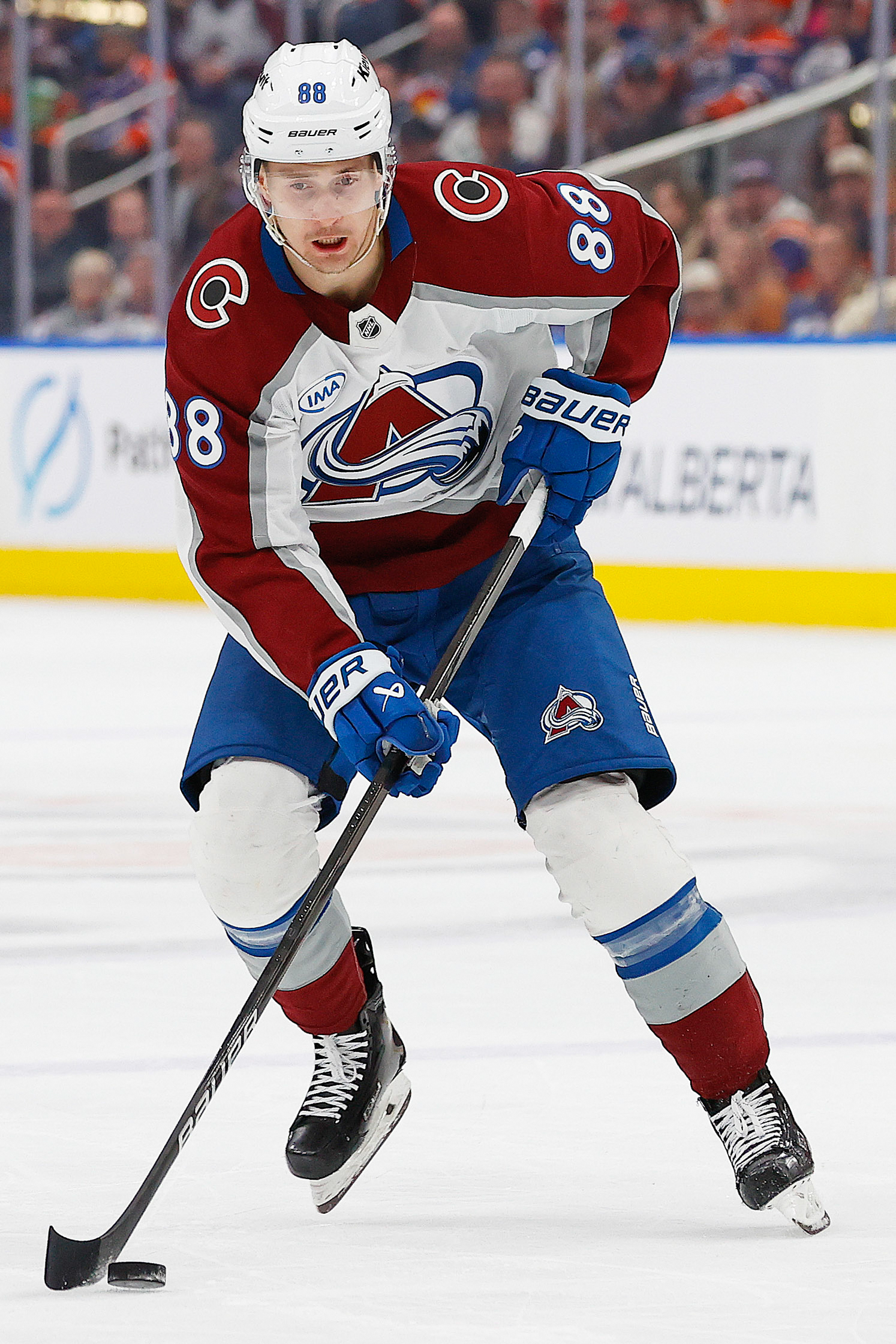 After being unable to agree to terms with Mikko Rantanen on an extension and not wanting to run the risk of losing him for nothing in free agency, GM Chris MacFarland opted to move him for Necas (and Drury). A year later, they might be in the same situation. Necas is coming off a career year and couldn’t agree to terms on a long-term pact last summer in Carolina with the belief that he wanted to test the open market. Now, that price tag has only gone higher given the year he had and the pending changes to the cap. It wouldn’t be shocking to see a long-term contract creep close to the $10MM mark now and if Colorado doesn’t want to pay that, they might have to look into moving him during the season.
Drury wasn’t as impactful of an acquisition as Necas but he certainly gave them some needed extra depth down the middle. He wasn’t able to repeat his 2023-24 performance offensively, however, which could limit his earnings upside. His qualifying offer checks in at $1.675MM with arbitration rights and while he should be able to beat that on another short-term deal, it won’t be a significant increase barring a breakout year. Olofsson had a decent season with Vegas in a supporting role and should have a similar type of role this season. He has had to settle for one-year deals in his first two trips through unrestricted free agency. Barring an uptick in production, he’ll either stay on that path or have to settle for a multi-year pact at a lower price tag than the $4.75MM he was making at the end of his time with Buffalo.
Kiviranta had a career year last season, notching 16 goals. By comparison, his previous personal best in points was 11. Not surprisingly, teams weren’t willing to pay him much more than his usual contract, being unconvinced that this improvement is repeatable. If he can match that this season, he might be able to land closer to $2MM. If he goes back to normal, he’ll be back in league minimum territory for 2026-27. Gushchin is one of many players who will be fighting for a back-of-the-lineup spot but given his production in the minors last year with AHL San Jose and the fact he’s now waiver-eligible, he might have a small leg up on the competition for a spot. Given his limited NHL opportunities so far and the likelihood of limited playing time given how Jared Bednar deploys his fourth line, Gushchin should stay around the minimum salary for next season even if he locks down a roster spot.
Burns comes over from Carolina in a deal that was set up to work within Colorado’s limited cap flexibility. Of the $4MM in bonuses, he’ll each $3MM with his tenth game of the season while the other million will be harder to reach (70 GP with over 23 minutes per contest). While he’s 40, he has shown himself to be capable of still playing in the top four which should make his base salary quite a bargain; they’ll be paying off the bonuses next season though. This type of contract structure could come his way again if he plays beyond this season. Malinski held his own in his first taste of full-time NHL action last season on the third pairing. If he has that same role this year, he should push past the $2MM mark if he remains as effective as he was in 2024-25.
Wedgewood signed this contract with Nashville last summer but he wasn’t there for long, being moved to Colorado not even two months into the season. He thrived in limited action with the Avs and while that probably isn’t repeatable, he’s establishing himself as a late-bloomer in terms of being a legitimate backup option. That should be enough to push him past $2MM per season on his next deal if he can give them even an adequate level of goaltending this year.
Signed Through 2026-27
F Ross Colton ($4MM, UFA)
D Samuel Girard ($5MM, UFA)
F Artturi Lehkonen ($4.5MM, UFA)
D Cale Makar ($9MM, UFA)
D Keaton Middleton ($775K, UFA)
Lehkonen has found another level offensively since being acquired from Montreal while still being a strong defensive player. Now producing as a top-six forward (and playing top-line minutes), his price tag should shoot up on his next deal. Given his quality of linemates though (a quality that few teams can match), that could be a limiter on a new contract, especially if he makes it to the open market. If Colorado re-signs him, a cap charge starting with a six should be doable. Colton wasn’t able to sustain the hot start he had last season but stayed within a similar goal and point-per-game range as he had the previous three years. At this point, that starts to become the trend, not the outlier. He didn’t play much at center last season but his ability to do so will also be a boost to his value. As long as he stays around the half-point-per-game range, Colton should be able to land closer to $5MM on his next contract knowing the demand that will be out there for help down the middle.
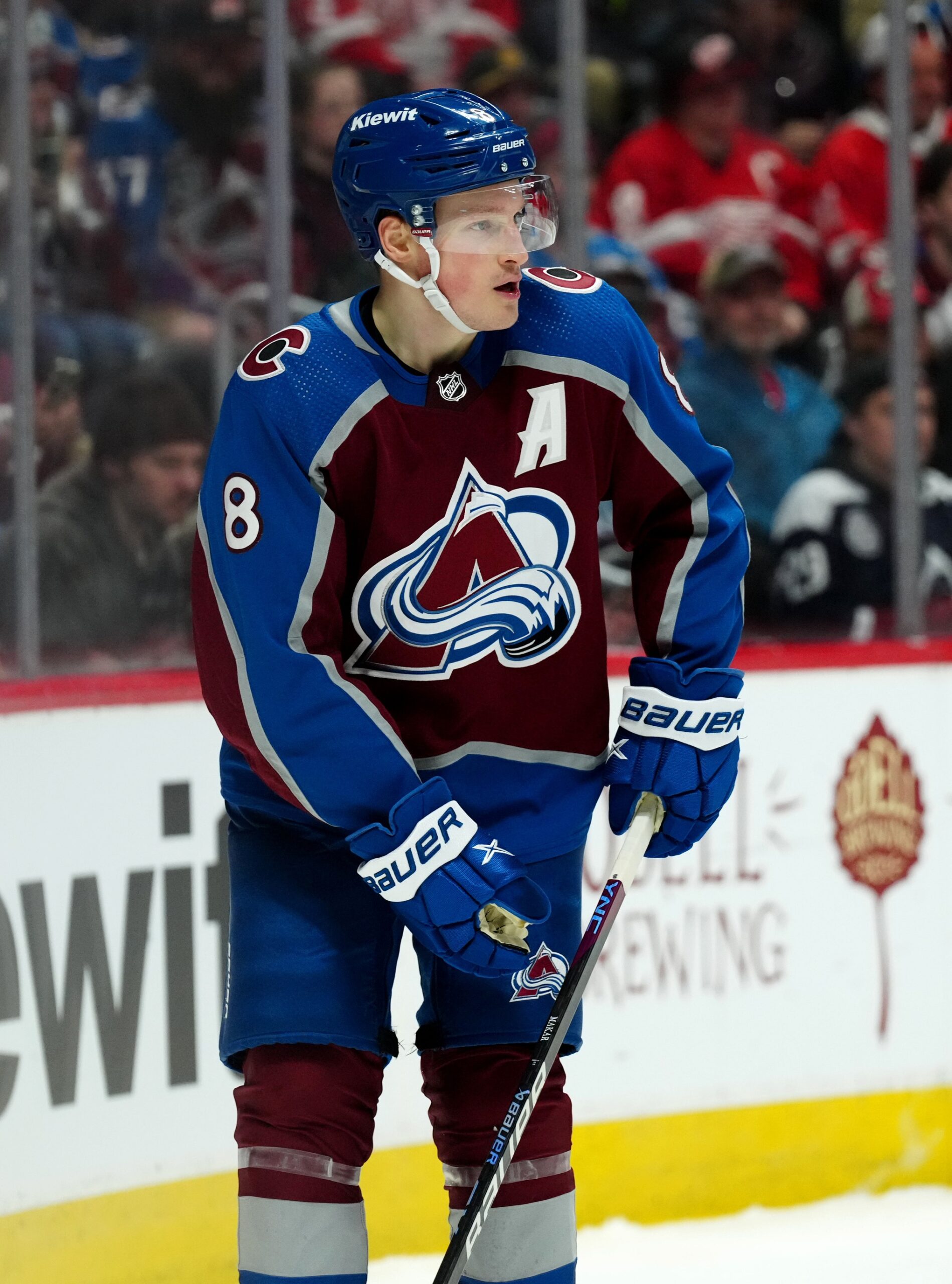 It’s hard for a $9MM contract to be a bargain but Makar more than fits the bill. At a time when older top blueliners landed $11MM or more several years ago, Makar has outproduced them since then and has a couple of Norris Trophies under his belt, putting his contract several million below market value already. He will be in line to sign a record-setting contract for a defenseman and while the Avs might prefer to operate on an internal cap and not have him make more than their top forward, that could be a tough sell knowing where the Upper Limit of the cap will be in 2027 (around $113.5MM). $14MM or $15MM on a max-term agreement certainly feels achievable at this point, especially as new benchmarks get set over the next couple of years.
Girard has been a steady second-pairing defender for the bulk of his eight-year career at a time when consistency is highly valued. However, given that he is one of the smallest blueliners in the NHL, his name has been speculated as a possible trade candidate for a while now. Meanwhile, with a lot of teams currently aiming for their back ends to get bigger, that could limit Girard’s earnings potential. Based on his performance, a raise past $6MM should be doable but if his market cools because of his size, that could make reaching that a challenge. Middleton is a depth defender who projects to be the seventh option more often than not. Those players tend to stay close to the minimum salary and that should be the case for him as well on his next contract.
Signed Through 2027-28
D Josh Manson ($4.5MM in 2025-26, $3.95MM in 2026-27 and 2027-28)
F Brock Nelson ($7.5MM, UFA)
Nelson didn’t exactly play great after being acquired but with the Avalanche looking to shore up a second center position that has been in flux as of late, they paid a high price to keep him from hitting the open market. Frankly, given the dearth of impact centers in this year’s class, he likely would have received this or more had he tested free agency. He’ll be 36 (nearing 37) when this deal is up and assuming his production starts to decline by then, he might be more in the $4MM to $5MM range on his next contract which could still be a multi-year pact.
Manson is still a capable physical defensive defender when healthy. But staying healthy has been an issue as he hasn’t made it to 70 games in a season since 2018-19 and that’s factored into the cost of the extension, a small pay cut. It’s on the high side for someone who should be more of a fifth option by then but if they can afford it, it’s not a bad luxury to have.
Avalanche’s Mikhail Gulyayev Aiming For NHL Debut This Season
Avalanche 2023 first-round pick Mikhail Gulyayev has spent his entire career in his native Russia to date. He’s looking to change that by making his NHL debut at the tail end of the 2025-26 campaign, he told Sergey Demidov of RG.
Now 20, Gulyayev was always one of the most high-ceiling offensive options among blueliners in the 2023 class. The lefty has to work to overcome his sub-ideal frame – 5’10” and 172 lbs – but his projection hasn’t really changed.
He’s struggled to gain premier ice time in the KHL but enters 2025-26 with two full-time seasons at the pro level under his belt. He’s developed almost entirely in Avangard Omsk’s system and has played exclusively for the top club in the regular season since his post-draft year. He now has an 11-17–28 scoring line in 144 career KHL games with an even rating.
His coach in Omsk is ex-NHL bench boss Guy Boucher, who told Demidov to throw caution regarding any playing-style comparisons to Avs star Cale Makar. “This is a kid who has good potential to be himself,” Boucher said. “Over the years, this is what I realized kills players, kills youngsters, when they are compared to other people. He needs to grow his pace to be himself. Makar is a completely different type. You can compare it to football. They have a quarterback and running backs. Makar is more of a quarterback. Guly is more of a running back, it’s not the same style at all.”
As things stand, the Avs have a bit of a hole on their left side and could benefit from Gulyayev being an option come playoff time if his development this season dictates he’s ready to make the jump to the NHL. They’re likely to need to run two righties on their third pairing in Brent Burns and Sam Malinski, and there are no legitimate everyday lefties in the organization outside of top-four fixtures Samuel Girard and Devon Toews.
Even if he’s not able to make the jump this season, Girard only has one year remaining on his deal after this one. There’s plenty of organizational room long-term for Gulyayev to grow into the impact piece Colorado hopes he can be after having a rather iffy recent track record with first-round selections.
Prospect Notes: Behrens, Wassilyn, Bourque
The Colorado Avalanche have received a bit of good news in the quietest days of summer. Defense prospect Sean Behrens shared that he’s been fully cleared to participate in the team’s rookie tournament with Meghan Angley of Guerilla Sports. Behrens missed all but two games of last season after sustaining a knee injury in an October practice scrimmage. The first-year pro only suited up for the very first, and very final, game of the Colorado Eagles’ season.
Hopes were high for Behrens prior to his season-ending injury. He seemed well set for a strong push into pros after finishing a three-year stay at the University of Denver with 31 points in 44 games, and a National Championship win, in the 2023-24 season. Behrens was a core part of the title-winning Pioneers, where he often found himself playing alongside or directly behind top prospect Zeev Buium. He showed off all of the sharp stickhandling and quick skating needed to keep the Pioneers offense running with Buium off the ice, and earned the NCHC’s ‘Defenseman Of The Year’ award as a result. Behrens now faces an uphill battle adjusting his slight, 5-foot-10 frame to the pro level. He’s made strong impacts in both junior and college hockey, and could earn a top role with the Eagles with a quick return.. He’ll be a name for fans to watch – though likely one that the Avalanche take their time with – as he looks forward to a healthy season.
Other notes from around the prospect world:
- Top 2026 NHL Draft prospect Braidy Wassilyn will indeed return to the OHL’s Niagara Ice Dogs next season, then attend Boston University in the 2026-27 season, shares Ryan Kennedy of The Hockey News. Kennedy mentions that Wassilyn’s return to juniors wasn’t previously guaranteed. This news puts the cherry on top of a productive summer for Niagara. Wassilyn scored 39 points in 62 games of his rookie OHL season last year. He rivaled the team’s top-six by the end of the season, profiling as a sharp and mobile playmaker with a heavy, 200-pound frame. He’ll return to great company in Niagara – set to play alongside fellow top 2026 draft prospect Ryan Roobroeck, Winnipeg Jets prospect Kevin He, and Tampa Bay Lightning prospect Ethan Czata.
- Dallas Stars forward Mavrik Bourque will now be represented by agent Olivier Fortier, Vice President of Wasserman Hockey, per PuckPedia. Borque just wrapped up his rookie season in the NHL with 11 goals and 25 points in 73 games. It was a relatively calm performance, after Bourque won the AHL’s MVP award with 77 points in 71 games of the 2023-24 season. He did maintain a positive plus-minus and consistent lineup role through his first NHL season, even playing second-line minutes through certain points in the year. He’ll face the task of now cementing a spot up the lineup, and discovering his scoring prowess, ahead of restricted-free agency next summer.