
Trade Deadline Primer: Anaheim Ducks
With the Olympic break now over, the trade deadline is less than a week away. Where does each team stand, and what moves should they be looking to make? Next up is the Ducks.
The Ducks currently hold a playoff spot in the Western Conference and have been a pleasant surprise this season. The team is in a very advantageous position heading into the trade deadline, with a ton of trade capital and plenty of space under the salary cap. If GM Pat Verbeek wanted to get aggressive, he certainly could, but given that it is a buyer’s market, it feels as though this club might not be ready to make a splash just yet. Verbeek has seen mixed results making trades in recent years, but there is no doubt he has put together a good blend of youth and veteran experience in Anaheim.
Record
33-23-3, 2nd in the Pacific (93.6% playoff probability)
Deadline Status
Conservative Buyer
Deadline Cap Space
$52.61MM on deadline day, 1/3 retention slots used, 44/50 contracts used, per PuckPedia.
Upcoming Draft Picks
2026: ANA 1st, ANA 2nd, ANA 3rd, DET 4th, ANA 5th, ANA 6th, ANA 7th
2027: ANA 1st, ANA 2nd, STL 2nd, DET 3rd, ANA 3rd, ANA 5th, ANA 6th, ANA 7th
Trade Chips
 Pavel Mintyukov isn’t necessarily the Ducks’ best trade chip, but he’s the most likely to be used before the deadline if the Ducks are to make a significant move. It was just a few years ago that the former 10th-overall pick (in 2022) was a standout OHL defenseman with a lot of shine to his game. In 2023-24, the then 20-year-old had a terrific rookie season, tallying four goals and 24 assists in 63 games, finishing 14th in the Calder Trophy conversation. The versatile defenseman hasn’t been able to match that level of production since and has been squeezed quite a bit by the Ducks’ packed left side of their defense.
This depth has led to Mintyukov being a healthy scratch at times and to his playing time being reduced, something he clearly isn’t happy with. If the Ducks decide the youngster isn’t a fit with the team, he still has enough value to be a solid trade chip if the Ducks want to grab a bigger asset to improve their lineup in the here and now. The issue for the Ducks on their back end is that they need defensive defenders on the right side, which is what Jacob Trouba and Radko Gudas were supposed to be. With both of those men likely gone in the offseason, Verbeek may hang on to Mintyukov.
Among other top young players, the Ducks aren’t moving forward Beckett Sennecke, the third overall pick in 2024, who has been a rookie sensation this year, scoring 19 goals and 29 assists in 58 games. Beyond Sennecke, the Ducks have a few prospects they could look to move if they wanted to go big-game hunting.
The Ducks have strong depth on the left side of their defensive core, which could make Stian Solberg expendable. The 2024 first-round pick (23rd overall) has been toiling in the AHL in his first full season in North America. At just 20 years old, Solberg has shown he is very difficult to play against, thanks to a mean streak a mile long and an ability to keep opponents away from the front of his team’s net. Solberg doesn’t have the offensive instincts to contribute much on the scoresheet, but he does have a heavy shot and is an efficient skater.
Moving up to forward, there is little chance the Ducks move Roger McQueen, whom they drafted last summer, but Lucas Pettersson, a 2024 second-round pick (35th overall), could interest teams looking for a player whose NHL trajectory is about two years away. Pettersson is a bit on the small side, but he makes up for it with a two-way game that leans offensively. The 19-year-old is a creative playmaker who can play in any situation and possesses terrific offensive skills, including a sneaky-accurate wrist shot and great passing. Pettersson could be of interest to teams seeking a plug-and-play forward who is potentially a second- or third-line NHL center in the making.
Team Needs
A Right Shot Defenseman: The Ducks continue to deploy Trouba and Gudas in roles that are beyond their skill set, but that shouldn’t be the case beyond this season. Right-handed defensemen are always in demand and among the hardest assets to acquire. The Ducks may opt to wait until the summer to try to sign or trade for one, but the free-agent market for defense is barren, and the Ducks may not be inclined to get into a bidding war. GM Pat Verbeek has shown a tendency to overpay in free agency to acquire assets (Alex Killorn, for example), but with Cutter Gauthier and Leo Karlsson both due raises as RFAs this summer, he might not want to spend so liberally. Rasmus Andersson of the Vegas Golden Knights could be the best available defender if he reaches the market, while Tampa Bay’s Darren Raddyish is having a monster year with the Lightning. A veteran like John Carlson could also test the market, but at 36, he might be too late in his career for the Ducks to consider him an option.
Bottom Six Depth: The Ducks’ bottom six isn’t great right now, as injuries have forced Ryan Poehling to center the third line and Jansen Harkins to take regular shifts in the NHL lineup. No disrespect to either man, but they are both currently playing in roles beyond their skill sets. Poehling is a capable fourth-line center but is often overmatched when playing in the top nine, while Harkins is best served as a tweener with limited offensive capabilities. Both men’s spots in the lineup clearly indicate a need for the Ducks to get deeper on their bottom two lines. The Ducks could acquire top-six help and push players down the hierarchy, or they could look for bargain options that could slide onto the third or fourth line to fill out a bottom six that is currently quite weak.
Image courtesy of Darren Yamashita-Imagn Images.
Trade Deadline Primer: New York Islanders
With the Olympic break over, the trade deadline is under a week away. Where does each team stand, and what moves should they be looking to make? Next up is the Islanders.
The Islanders made some big moves last summer, sending defenseman Noah Dobson to the Montreal Canadiens and drafting Matthew Schaefer with the first overall pick. Many pundits weren’t sure what the Islanders would be this season, but they have surprised some folks by becoming a playoff contender with a roster that doesn’t have much flash but is solid enough to compete in the Eastern Conference. The Islanders have won on the back of strong team defense and goaltending this season, and despite the lack of skill in their lineup, they’ve managed to score enough to win games.
Record
33-21-5, 3rd in the Metropolitan
Deadline Status
Buyer
Deadline Cap Space
$6.02MM on deadline day, 0/3 retention slots used, 49/50 contracts used, per PuckPedia.
Upcoming Draft Picks
2026: NYI 1st, COL 1st, NJD 3rd, NYI 4th, NYI 5th, NYI 6th, NYI 7th
2027: NYI 1st, NYI 2nd, NYI 3rd, NYI 4th, NYI 5th, NYI 6th, NJD 6th, NYI 7th
Trade Chips
The Islanders have built up their prospect pool in recent seasons thanks to several successful first-round picks. The team likely has a top ten pipeline and the assets to be aggressive on the trade front if the money works. That ranking doesn’t include defenseman Schaefer, who went straight to the NHL, but there is no chance New York moves him anytime soon.
Setting aside the Islanders’ lottery win, they have done some good business in the trade market, moving on from Dobson and Brock Nelson for very strong returns. From these two trades, the team ended up with Victor Eklund, Kashawn Aitcheson and Calum Ritchie. Those three are all arguably among the top 100 NHL prospects at the moment and are a big reason the Islanders now have one of the best prospect systems in the NHL.
If the Islanders moved any of those three players, they would have one of the better trade chips available in terms of future value. Eklund’s skill is among his strongest assets, along with his top-notch skating. Those traits would make him appealing to every team in the league, but his ability to battle could be the best feature of his game. Eklund battles from whistle to whistle and isn’t afraid to play with reckless abandon.
Aitcheson is a physical defender who plays an old-school game that should resonate with the Long Island crowd. Aitcheson could one day be a top-pairing, bruising defenseman who plays a stay-at-home game alongside a more offensively minded partner. Aitcheson’s game isn’t flashy, but he is safe and responsible in his own end, bringing an intensity to the ice that few could match. His ability to give the opponent absolutely nothing to work with could eventually earn him a reputation as the NHL’s ultimate shutdown man, provided he improves his average skating and harnesses his intimidating presence.
Ritchie saw his draft stock slide a few years ago as he focused more on becoming a 200-foot player rather than simply being a point producer. It paid off in terms of his overall game, but he did slide in the NHL draft rankings before being scooped up by the Avalanche late in the first round (27th overall) of the 2023 draft. Ritchie possesses a mean shot that should translate well to the NHL, particularly on the power play. He also has elite hockey sense, anticipating plays before they happen and hunting down soft areas of the ice to get himself open or in the right spot at the right time.
Finally, we come to another first-round pick, forward Cole Eiserman. The 20-year-old isn’t an imposing presence, but he loves to throw his body around and doesn’t mind taking a hit to make a play. Eiserman will cruise to the front of the net in the offensive zone to stir up some disruption, but he does most of his scoring from a distance with his shot, which was considered one of the best during his draft eligibility.
Team Needs
A Top Six Forward: The Islanders gambled this summer when they signed forward Jonathan Drouin to a two-year deal, hoping he could fill an offensive role in the top six. While he hasn’t produced what GM Mathieu Darche hoped, he has chipped in with some offense and remains a good gamble. That being said, New York needs more from its top two lines, and bringing in a Jordan Kyrou-type from St. Louis would go a long way toward adding to an offense that is currently 22nd in the league. The Islanders could also look at Kyrou’s teammate, Robert Thomas, if the Blues were open to it, or take a long look at some of the forwards the Vancouver Canucks have made available, such as Elias Pettersson.
Depth Scoring: The Islanders need more offense from the bottom of their lineup and could look at a player like Michael Bunting of Nashville, who has a long history of providing depth offense on good hockey teams. Bunting is a UFA at the end of the season and has been effective as a depth scorer in Toronto, Pittsburgh and Nashville. If Bunting isn’t an option and the Islanders want to look at a pure shooter, Patrik Laine of the Montreal Canadiens would be a player who could fit simply as a triggerman. Laine doesn’t play much of a two-way game, but on a team like the Islanders, where he would be defensively insulated, it might be a great fit for a once-great goalscorer who has fallen on hard times in Montreal. Laine isn’t a prototypical depth player, but at this point, there isn’t much to his game away from the puck, and with all of his injury concerns, he could likely be acquired for very little.
Trade Deadline Primer: San Jose Sharks
With the Olympic break now over, the trade deadline is almost a week away. Where does each team stand, and what moves should they be looking to make? We continue our look around the league with teams in the fight for a playoff spot, next up with the Sharks.
The Sharks spent much of last summer bolstering their lineup to protect some of their young stars. So far this season, the additions have worked out well, and the Sharks remain in playoff contention with a third of the season remaining. San Jose management likely didn’t expect this team to be in playoff contention, but second-year superstar Macklin Celebrini has taken massive steps forward in his development, putting the team ahead of schedule in its rebuild. It should be fascinating to see how Sharks general manager Mike Grier responds to a team that wasn’t expected to be in playoff contention.
Record
27-24-4, 6th in the Pacific
Deadline Status
Conservative Buyer
Deadline Cap Space
$641K on deadline day, 2/3 retention slots used, 48/50 contracts used, per PuckPedia.
Upcoming Draft Picks
2026: SJ 1st, EDM 1st, COL 2nd, FLA 4th, MTL 5th, PHI 6th, SJ 7th
2027: SJ 1st, SJ 4th, CHI 5th, SJ 6th,
Trade Chips
For a team just emerging from a rebuild, the Sharks don’t have many draft picks in the next two drafts. That said, they have arguably the best prospect pool in the NHL, though it will likely fall down the list as prospects are traded and others graduate into full-time NHLers. The Sharks are in an interesting spot heading into the deadline, as they could do some buying, but also move out one or more of their pending UFA defensemen who don’t fit management’s long-term plans.
Veteran defenseman Mario Ferraro is a good place to start, as he is a UFA at the end of the season. While the Sharks likely aren’t interested in being sellers this season, Ferraro will have significant value at the deadline and could give the Sharks more future pieces to add to their already deep cupboard of future assets. There is an outside chance that San Jose locks him up, as they reportedly have interest in a shorter-term deal with Ferraro, which would make sense given that he is just 27 years old, is one of the team’s leaders, and should have some good years in front of him. Ferraro isn’t overly skilled, but he has a high hockey IQ and is solid in the defensive zone as well as on the penalty kill. Ferraro isn’t a top-pairing presence on the blue line, but he does throw the body around and is a very quick skater, which helps with puck retrieval and getting the puck out of the defensive zone. Ferraro won’t net a top-end asset in a trade, but he is the kind of player teams covet for bottom-pairing and penalty-killing roles come playoff time.
John Klingberg and Vincent Desharnais are two other veteran defensemen on expiring deals who could be moved if the Sharks fall out of playoff contention or acquire younger defensemen and have a surplus. Klingberg has had a resurgence this season in San Jose, playing over 21 minutes a night and scoring at a 40-point pace for the first time in years. The 33-year-old signed a one-year deal with the Sharks this season, and the plan at the time was likely to move him to a playoff contender once San Jose fell out of playoff contention. However, that time hasn’t come yet, and the Sharks remain within striking distance, which could complicate matters. The allure for San Jose to move Klingberg will be a market that should heavily favor sellers, as so few teams have punted on this season and are selling off.
When it comes to moving young players, it doesn’t seem San Jose is in a position to move the likes of Michael Misa, Will Smith, Sam Dickinson, or any of their top young prospects. Further down the depth chart, the Sharks could move a prospect such as goaltender Joshua Ravensbergen, whom they selected late in the first round of the 2025 NHL Entry Draft (30th overall). Ravensbergen has great size at 6’5” and moves very well, though he will look to fill out more in the coming years. He is positionally sound and reads the play extremely well for a young goaltender.
It was surprising to see San Jose draft Ravensbergen last year, given that they already have Yaroslav Askarov in the fold. However, given the unpredictability of the goaltending position, the Sharks felt it was a worthwhile bet to add another highly touted goaltending prospect. GM Mike Grier probably isn’t in a hurry to deal Ravensbergen, given that his junior numbers haven’t been great and he has significant untapped potential. If the right move comes along to acquire more developed young players, Grier might feel inclined to pull the trigger on a trade.
Team Needs
A Right Shot Defenseman: The Sharks were reportedly in on New Jersey defenseman Dougie Hamilton last summer, but didn’t work out a deal. It’s unclear whether they would still have interest, but if they did, a deal for Hamilton would instantly make him their best puck-moving defenseman. That’s less a credit to Hamilton and more a reflection of the offensive capabilities of the Sharks’ current defensive unit. San Jose badly needs a defenseman, ideally on the right side, who can contribute to the offense. It’s hard to gauge whether Grier is desperate enough to go back to Hamilton, but it seems likely he would prefer to acquire a younger player who can grow with the team’s young core and be part of what could be a very special run in San Jose.
A Middle Six Forward: The Sharks were also reportedly interested in forward Artemi Panarin before he was dealt to the Los Angeles Kings, underscoring that the Sharks recognize they need more depth at forward. San Jose could use help in its middle six, and it has already addressed this issue to a degree by acquiring Kiefer Sherwood from the Vancouver Canucks. Despite the Sherwood addition, the Sharks are still regularly deploying Collin Graf and Philipp Kurashev in their top nine, which is less than ideal for a team with playoff aspirations. No disrespect to Graf or Kurashev, who are both having a great year as younger players, but their spots in the forward group highlight a lack of depth at the position. San Jose could make a top-nine pickup to give their forward group more balance and ultimately a better chance to win on a nightly basis.
Trade Deadline Primer: Washington Capitals
With the Olympic break over, the trade deadline is just over a week away. Where does each team stand, and what moves should they be looking to make? After looking at teams at the ends of the standings, we shift our focus to teams fighting for a playoff spot. Next up are the Capitals.
The Capitals have a roster that is too deep and too talented to be sitting where they are in the standings, but that is why teams play the games. Last season, Washington outperformed expectations, and this year, under the weight of those heightened expectations, the team has been inconsistent and has played below its talent level. Despite the struggles, Washington remains in the hunt for a playoff spot, and a strong push out of the Olympic break would go a long way toward reaching the postseason. There is no guarantee they will do it, but at this point, they seem likely to add to their roster rather than remove from it, as they should, given how unlucky they’ve been this season. Their record doesn’t reflect the team in Washington, and it will be interesting to see how they navigate the deadline.
Record
29-23-7, 5th in the Metropolitan
Deadline Status
Conservative Buyer
Deadline Cap Space
$12.66MM on deadline day, 0/3 retention slots used, 46/50 contracts used, per PuckPedia.
Upcoming Draft Picks
2026: WSH 1st, WSH 4th, WSH 4th, WSH 5th, WSH 6th, WSH 7th
2027: WSH 1st, WSH 2nd, WSH 4th, WSH 5th, WSH 7th, OTT 7th
Trade Chips
The Capitals have already borrowed a bit from the future, shipping out their second- and third-round picks this season and their third- and sixth-round picks next season. Those trades have yielded mixed results, but they are the kinds of moves teams make when competing for a playoff spot.
Outside their draft-pick catalogue, the Capitals have a healthy stable of prospects who should continue to make an NHL impact in the coming years. Washington’s system is slightly above average, which is saying a lot for a team that mortgaged its future repeatedly for a decade or more. The Capitals have drafted well recently and have prospects in their system who would make solid trade chips.
As Tom Gulitti of NHL.com reports, if Washington wants to go big and make a splash, it might cost them one of their top prospects, either center Ilya Protas or defenseman Cole Hutson. Capitals general manager Chris Patrick has already said he isn’t interested in moving Hutson, and it’s hard to blame him given the player’s profile. Washington has to think about a future without superstar Alex Ovechkin while also trying to give him a potential final season to remember.
Protas would be an excellent trade chip if the Capitals chose to go that route. Protas is having a solid first pro season in the AHL with the Hershey Bears, tallying 18 goals and 20 assists in 47 games. The 6’5”, 201-lb pivot won’t burn you with speed and doesn’t separate with his legs, but he is quick with the puck and has a good ability to anticipate the play before moving the puck to teammates. His size will be an attractive quality for teams looking to size up down the middle, and he could be a central piece of a package to acquire a top winger.
With Ryan Leonard now fully graduated to the NHL, the Capitals’ top prospect is likely Andrew Cristall, who put up awe-inspiring numbers in the WHL last season, with 48 goals and 84 assists in 57 games. While his transition to the AHL hasn’t been perfect, he is still putting up points in his first professional season, with nine goals and 28 assists in 47 games. Cristall is the definition of dynamic, using his terrific skating to deceive opponents and operate as a setup man for his teammates. Cristall is a bit on the small side by NHL standards at 5’10”, but given his work with the puck on his stick, there would be many teams willing to facilitate a trade if Cristall is part of the return.
Team Needs
A Top Six Winger: The Capitals were reportedly interested in forward Artemi Panarin, which makes sense given their need for top-six help on the wings. Ethen Frank has seen regular shifts in the top six, suggesting that, as currently constructed, Washington is not a serious contender in the Eastern Conference. Gone are the days when Ovechkin, John Carlson and a lethal power play could carry the Capitals’ offense. The stars need help. Nashville Predators forwards Steven Stamkos and Jonathan Marchessault are likely available, but do the Capitals want to trade away futures for a couple of aging veterans on expensive deals? Hard to say.
Jordan Kyrou is a name that could make sense, as the St. Louis Blues appear ready to dive deeper into a rebuild. Robert Thomas is also a potential option. Both would require significant commitments in the form of trade assets and cap space, but the Capitals are in a position to make both work if they wanted to.
Depth Forward: Last trade deadline, Washington acquired forward Anthony Beauvillier from the Pittsburgh Penguins for a second-round draft pick. That type of deal was likely an overpay, but Beauvillier is the kind of player Washington could target as they look for help in their middle six. The Capitals have dealt with injuries this season, and some of their depth players haven’t contributed much offensively. In a perfect world, the Capitals could have found a player such as Egor Chinakhov, who is young enough to be part of the future but ready to contribute NHL minutes now. Unfortunately for Washington, he was traded to Pittsburgh earlier this season. The Capitals should have plenty of options should they try to add another depth forward. They could acquire a top-end forward and hope that pushing everyone down the lineup solves the problem, or they could look to a team like Vancouver and perhaps pry away a player like Teddy Blueger, who wouldn’t cost a lot but has looked great in limited action this season.
Trade Deadline Primer: Boston Bruins
With the Olympic break upon us, the trade deadline is under a month away. Where does each team stand, and what moves should they be looking to make? After looking at teams at the ends of the standings, we shift our focus to teams fighting for a playoff spot. Next up are the Bruins.
The Bruins remain in contention despite many having them pegged to miss the playoffs this year by a fairly significant margin. The Bruins were sellers at last year’s trade deadline but have shifted toward a more promising retool. Boston still has a solid core to build around in David Pastrnak, Charlie McAvoy, and Jeremy Swayman, so they will be incentivized to continue adding to their lineup while that core is in the prime of their careers. General manager Don Sweeney has been criticized in the past for some of his moves, particularly in the wake of the Bruins’ record-setting 2022-23 season. Still, he has done solid work over the last year, steering the Bruins through a tough time and back into playoff contention.

Record
32-20-5, 5th in the Atlantic (61% playoff probability)
Deadline Status
Conservative Buyer
Deadline Cap Space
$3.98MM on deadline day, 1/3 retention slots used, 44/50 contracts used, per PuckPedia.
Upcoming Draft Picks
2026: BOS 1st, TOR 1st, BOS 2nd, BOS 3rd, BOS 4th, PHI 4th, TB 4th, BOS 6th, BOS 7th
2027: BOS 1st, FLA 1st, BOS 2nd, BOS 4th, BOS 6th, BOS 7th
Trade Chips
The Bruins’ best trade chips at the moment are the four first-round picks they hold in the next two entry drafts. Those picks, should Boston opt to move any of them, would be a significant piece of a package for an impact player at the deadline. It remains to be seen whether Sweeney has the stomach to do that this year, but the option is available.
Aside from the picks, Boston doesn’t have a deep prospect system, and they are unlikely to move their best prospect, James Hagens, whom they drafted last June with the seventh overall pick. The 19-year-old profiles as a center, and the Bruins have a good amount of long-term depth down the middle, so it’s possible they could consider a move. However, Hagens has seen a good amount of usage on the wing this year at Boston College, which means the Bruins have options when it comes to their top prospect.
Beyond Hagens, there is a major drop-off in talent throughout the Bruins’ prospect system, with some of their top players already having graduated to the NHL. Fraser Minten is one of those former prospects who is now a full-time NHLer at 21, and another young player Boston probably has no interest in trading. Minten has posted 14 goals and 15 assists in 57 games this season while providing a steady physical presence. The Bruins have decent center depth throughout the system, but it’s hard to imagine them trading a young center who is just scratching the surface of his potential.
Sticking with young forwards, Fabian Lysell is the Bruins’ 2021 first-round pick (21st overall). He had a cup of coffee in the NHL last season, playing 12 games and recording one goal and two assists. The winger returned to the AHL this season, where he is having the most productive offensive season of his career, with 15 goals and 21 assists in 42 games. At 23, Lysell is on the older side for a prospect, but he’s shown enough offense in the AHL to be viewed as a decent trade piece. Lysell is an excellent skater with good vision through traffic, which should help him when he gets to the NHL full-time and is looking to provide support and opportunities for his teammates. Lysell won’t net the Bruins a top piece via trade, but he could be packaged with other picks and prospects to acquire top-end talent.
Dans Locmelis was a fourth-round pick in 2022 (119th overall) and is another center in the Bruins system, though he doesn’t have the same shine as some of his more well-known peers. Locmelis began his pro career last year, appearing in six AHL games and recording three goals and nine assists. While he hasn’t maintained the same scoring pace this season, Locmelis has remained productive with 28 points in 43 games and an appearance at the Olympics, where he played for Latvia and scored a couple of goals in four games. The Bruins are high on the 22-year-old, and there is a possibility he breaks the NHL roster this season. The Bruins could dangle Locmelis as a potential trade candidate, but given that he isn’t a well-known name and his play has been largely understated, they might not get enough value to entice them to move on from him.
Team Needs
A Right Shot Defenseman: The Bruins made a great move last year, trading defenseman Brandon Carlo to the Toronto Maple Leafs. The move has turned out to be a huge win; however, the Bruins have never actually replaced Carlo, leaving a big hole on the right side of their defense. There are plenty of options available in Boston that should meet just about any price point, and it will be interesting to see whether they go the rental route or make a move for a player with some term remaining on their contract, such as Justin Faulk of the St. Louis Blues. While Faulk has been a solid pro for a long time, he would be a downgrade from some other options the Bruins were considering, such as Rasmus Andersson, who was traded a few weeks ago to the Vegas Golden Knights. Boston was reportedly in on the Andersson sweepstakes and went as far as negotiating an extension with the soon-to-be UFA (as per Elliotte Friedman).
Top Six Forward Help: The Bruins are dealing with a few injuries at the moment, which isn’t the worst timing, given the extended break for the Olympics. Centers Elias Lindholm and Pavel Zacha should be back in the lineup when NHL play resumes, and their injuries have pushed other forwards in Boston into other roles in the team’s hierarchy. Despite the team getting healthy in time for a playoff push, it is clear that Boston needs to add to its top six if it wants any chance of a playoff run. This would allow a player such as Casey Mittelstadt to push down the depth chart and play in a role that better suits his skill set. The Bruins might not want to pay premium prices for a forward, but given that they didn’t send any assets out the door for Andersson, they likely have some options to facilitate a trade for forward help.
Photo by Sergei Belski-Imagn Images
Trade Deadline Primer: Ottawa Senators
With the Olympic break upon us, the trade deadline is under a month away. Where does each team stand, and what moves should they be looking to make? After looking at teams at the ends of the standings, we shift our focus to teams fighting for a playoff spot. Next up are the Senators.
The Senators are in a very tough spot as we approach the trade deadline. The team was built to compete this season, but it has failed to build on last season’s playoff appearance and risks regressing. Ottawa has a small competitive window left to win something of substance and isn’t likely to punt on this season, especially given that they don’t currently have a first-round pick in this year’s NHL Entry Draft. Postmedia’s Bruce Garrioch has hinted that Ottawa would rather add than subtract from its roster, which makes sense given that Ottawa was heating up in the weeks leading up to the Olympics. If the Senators can get some goaltending down the stretch, they will be in the hunt for a wild-card spot. That being said, should they add to their lineup, stand pat, or sell off their pending UFAs?
Record
28-22-7, 6th in the Atlantic (42.2% playoff probability)
Deadline Status
Conservative Buyer
Deadline Cap Space
$13.95MM on deadline day, 1/3 retention slots used, 45/50 contracts used, per PuckPedia.
Upcoming Draft Picks
2026: BUF 2nd, OTT 3rd, FLA 3rd, WSH 3rd, OTT 5th, OTT 6th,
2027: OTT 1st, OTT 2nd, OTT 3rd, OTT 4th, OTT 5th, OTT 6th,
Trade Chips
If the Senators opted to sell off this season, they would have no shortage of pieces to move, including forwards David Perron, Lars Eller, Nick Cousins, and Claude Giroux, as well as defenseman Nick Jensen. PHR covered that angle a month ago, when it looked as though the Senators were headed for a sell-off, but now they may have positioned themselves to be buyers if they can keep rolling. But do they have any assets that could be moved to acquire talent that can help this season?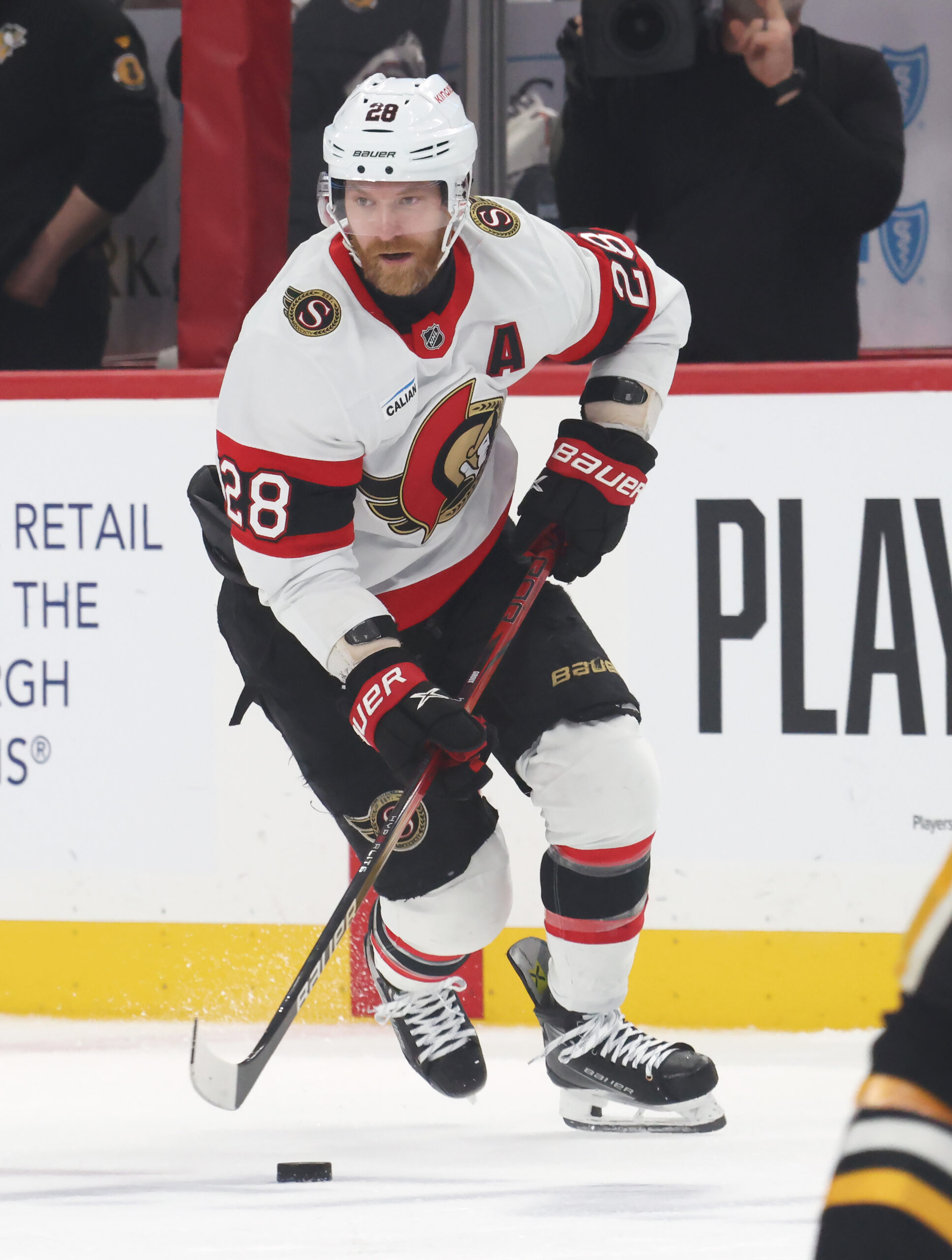
Ottawa doesn’t have much, but they have a few pieces that could be moved to acquire more talent. The first name that comes to mind for anyone familiar with Ottawa’s prospect system is Carter Yakemchuk. The 20-year-old defenseman is the Senators’ top prospect and currently plays for their AHL affiliate in Belleville, where he is having a solid first professional season. To put it bluntly, Ottawa isn’t moving Yakemchuk for any short-term gains and may not be inclined to move him at all. If they had a move available to address both their short- and long-term futures, they might be open to it, but for now, he is likely staying put.
Outside of Yakemchuk, the Senators have a few other prospects they might be more willing to move, including another defenseman, Logan Hensler. The Senators’ 2025 first-round pick (23rd overall) is currently in his second season in the NCAA with the University of Wisconsin. He has already matched his point total from all of last season (12) in just 23 games. Hensler’s game is quite different from that of Yakemchuk in that he plays a safe, steady game focused on gap control, an active stick, and using his explosiveness to make defensive recoveries. Hensler is well-suited to play alongside a defenseman like Yakemchuk, who is more offensively minded and gifted. Should Ottawa make Hensler available in a trade, he is the kind of player who could be the big piece in a package that includes draft picks and other players.
In the crease, the Senators have run the course with goaltender Mads Sogaard, and it certainly feels like his time with Ottawa needs to end soon. The former second-round pick has not shown much in his last two professional seasons, after a stellar start to his AHL career from 2020 to 2023. Sogaard is now 25, and although the Senators don’t exactly have a deep prospect pool in the crease, it seems likely they will non-tender him this summer. Given that trajectory, it makes sense for Ottawa to move him before the deadline (hopefully) for a late-round pick or let him walk in the summer for nothing. Sogaard isn’t going to fetch much of a return, but Ottawa could pair the pick with other assets to facilitate a bigger move elsewhere.
Shifting up front to the forwards, Stephen Halliday has been a nice story this season for the Senators. The 2022 fourth-round pick (104th overall) was an overage draft pick when Ottawa selected him, and he has had a terrific start to his professional career. The Senators have rewarded his progression by giving him 25 NHL games this year, and Halliday, in turn, has rewarded the Senators’ trust in him by tallying four goals and seven assists while averaging just over eight minutes per game. Halliday’s skating isn’t great, but his size and offensive skill set would be desirable to a team looking to add good young talent to its prospect pool.
Team Needs
A Top Six Center: Ottawa had hoped that last year’s trade-deadline acquisition, Fabian Zetterlund, could slide into a role in the Senators’ top six. However, that hasn’t been the case, as Zetterlund has struggled this season and has been relegated to fourth-line duties alongside Eller. The 26-year-old isn’t much of a play driver, but he has fared better in this department this season despite his demotion. Zetterlund can skate well and could likely play in Ottawa’s top six if needed, but at the moment, he’s been a disappointment this year. With his play moving him down the lineup, it’s become clear that Ottawa could use a top-six forward to bump some of their other players back to a more suitable role. Some fans might point to a veteran like Perron as a potential candidate for the top two lines, but given his age and recent injury history, that is not a safe bet. Ottawa doesn’t need to sell the farm to make an addition, and it probably wouldn’t be in on any of the trio of St. Louis Blues who are available (Jordan Kyrou, Robert Thomas, or Brayden Schenn). However, Ottawa could afford to target a player like Michael Bunting of the Nashville Predators or Andrew Mangiapane of the Edmonton Oilers. Both of those players are having down years, but perhaps an opportunity in Ottawa’s top six might reignite their play this year.
A 1B Goaltender: Linus Ullmark is a terrific NHL goaltender who has had a great career. He’s dealt with a lot this season, and unfortunately, it has affected his play on the ice. Had Ottawa received league-average goaltending this season, it would be comfortably in a playoff position at the moment, instead of sixth in its division. The Senators don’t have the assets to acquire another starting goaltender. Still, they could find a more consistent backup, or ideally, a 1B goaltender who can take more starts and allow Ullmark to work through his game without the pressure of shouldering the bulk of the goaltending load. The name Jesper Wallstedt of the Minnesota Wild has been thrown around quite often in online forums. Still, the Senators probably don’t have the trade capital to make that move, particularly given that the Wild are looking for center help and Ottawa likely doesn’t want to part with any of their young, cost-controlled centers (nor should they).
Photo by Charles LeClaire-Imagn Images
Trade Deadline Primer: Los Angeles Kings
With the Olympic break upon us, the trade deadline is under a month away. Where does each team stand, and what moves should they be looking to make? After looking at teams at the ends of the standings, we shift our focus to teams fighting for a playoff spot. Next up are the Kings.
The Kings made a splash recently by acquiring Artemi Panarin from the Rangers for a minimal return. The trade surprised some in the hockey world and showed the Kings are serious about winning this season. Los Angeles has meandered through the first two-thirds of the season and hasn’t looked like a serious contender, but with Panarin in the mix, it’s clear they plan to add to their lineup and make a push. Whether they make that push remains to be seen, but management’s mindset is fairly clear as we approach the trade deadline.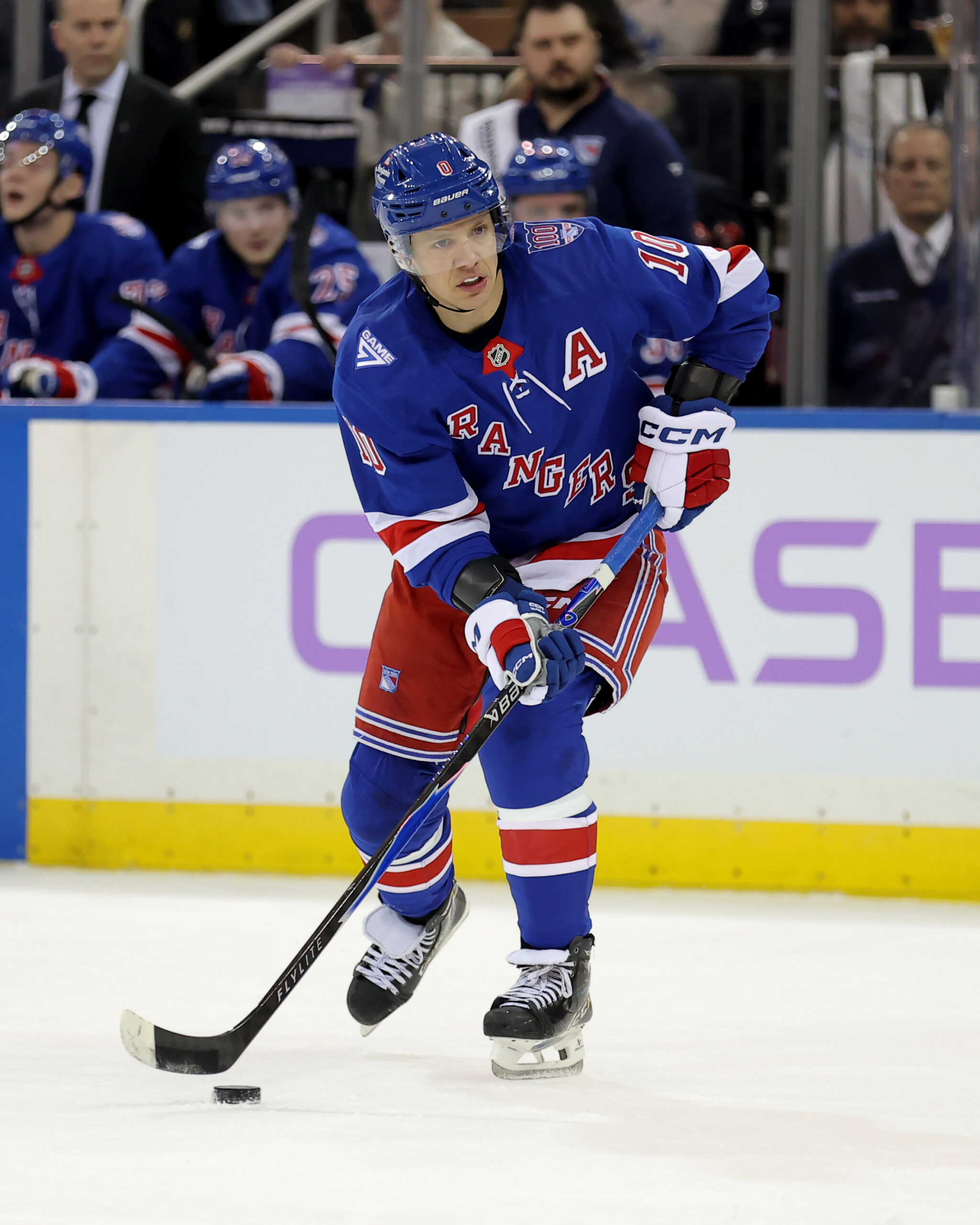
Record
23-19-14, 5th in the Pacific (55.3% playoff probabilty)
Deadline Status
Buyer
Deadline Cap Space
$15.71MM on deadline day, 0/3 retention slots used, 45/50 contracts used, per PuckPedia.
Upcoming Draft Picks
2026: LAK 1st, LAK 2nd, CBJ 2nd, DAL 3rd, LAK 4th, LAK 5th, LAK 6th, COL 6th, LAK 7th
2027: LAK 1st, LAK 2nd, LAK 4th, LAK 6th, COL 6th, LAK 7th
Trade Chips
The Kings have plenty of draft picks they could move in any deadline deal, but they aren’t exactly stocked with quality prospects and have a farm system that would rank in the bottom third of the league in terms of quality and quantity. The team already dealt their top prospect, Liam Greentree, for Panarin, but they do have other pieces if they want to make another splash.
Francesco Pinelli was a second-round selection in the 2021 draft (42nd overall) and has not had a smooth transition to the professional ranks, struggling early in the AHL. He had 15 goals and 14 assists in 70 AHL games last season, and likely needs to size up if he hopes to break through to the NHL. Pinelli is a smart player who identifies open space for himself and teammates to create offensive opportunities. On the defensive side of the game, his instincts aren’t as strong, and it is something he is working to round out in the AHL.
Another potential trade piece for the Kings is defenseman Henry Brzustewicz. The 2025 first-round pick (31st overall) plays a safe, simple game and relies on moving the puck to a teammate rather than creating offensive plays himself. His defensive game is steady and effective, as he is adept at forcing opponents to the perimeter, protecting the slot, and containing them. Brzustewicz does have some offensive capabilities, but he isn’t a play driver and likely won’t be running a team’s power play if/when he makes it to the NHL. Brzustewicz could be a good piece of a bigger package if the Kings are looking to make another splash before the trade deadline.
Finally, we come to goaltender Carter George, who might be the Kings’ best prospect after the Greentree trade. George has had a decorated international career, representing Canada at the last two World Junior Championships, and he has also been terrific during his tenure in the OHL with the Sault Ste. Marie Greyhounds. The Thunder Bay, ON, native isn’t overly big, but his puck-handling makes him a third defenseman, which can facilitate quick breakouts and transition play. In terms of his goaltending, he is technically sound and doesn’t appear to wilt under pressure. If the Kings wanted to move a prospect whose value is inflated at the moment, George is probably the piece.
Team Needs
A Top Six Center: Los Angeles desperately needs a center going forward. It’s gotten to the point this season that winger Alex Laferriere has slotted in at center in the top six, which is less than ideal. They have Anze Kopitar for the rest of the season until he retires, and Quinton Byfield is likely fine as the second-line center, although he’s had a rough stretch this year. Beyond that, Alex Turcotte has not reached the levels many expected, putting the Kings in a predicament this season and beyond. The Kings have cap space to acquire a center this year, but it’s hard to say how strong the internal pressure is to acquire a pivot before the deadline. Los Angeles could let this year play out and chase a Nick Schmaltz-type player in free agency, or they could look to the current available options, which would likely be Elias Pettersson of the Vancouver Canucks, Shane Wright of the Seattle Kraken, or Robert Thomas out of St. Louis. There is always Vincent Trocheck of the New York Rangers available as well, and given the ties to Panarin, there could be something to that one.
A Depth Forward: No disrespect to Taylor Ward or Jeff Malott, but if Los Angeles enters the playoffs with those two taking regular shifts on the fourth line, that would be a problem against a team like the Edmonton Oilers. The Kings have dealt with some injuries, and the Kevin Fiala injury is another obstacle to overcome, especially since the Kings don’t have a ton of reinforcements who can play at a high level long term. Malott has been a fine replacement this season, but Ward has just 16 NHL games of experience and is a late bloomer, much like Malott. The Kings could likely find a reasonably priced depth forward on the trade market to insulate themselves against future injuries, which will no doubt happen as the NHL plays a compressed schedule down the stretch. A player like Erik Haula might make sense coming out of Nashville, as the Predators aren’t a playoff team, and Haula has an expiring deal. His market could be limited due to his $3.15MM cap hit, which the Kings could easily absorb at this time with any retention from Nashville.
Photo by Brad Penner-Imagn Images
Trade Deadline Primer: Pittsburgh Penguins
With the Olympic break upon us, the trade deadline is under a month away. Where does each team stand, and what moves should they be looking to make? We continue our look around the league at teams on the playoff bubble; next up are the Penguins.
The Penguins spent the summer collecting what appeared to be spare parts, and many expected them to be a top contender for the first overall pick in this summer’s NHL Entry Draft. That has not been the case, however, as the Penguins have defied projections and their own uneven play to find themselves not only in the hunt for a playoff spot but also in a position to earn home-ice advantage in the first round of the NHL Playoffs. It’s been a fun, feel-good story thus far, but it has certainly changed the calculus for Penguins GM Kyle Dubas as he heads into the trade deadline. What once appeared to be a surefire sell-off now feels as though it could turn into a conservative shopping spree for the Penguins.
Record
29-15-12, 2nd in the Metropolitan
Deadline Status
Conservative Buyer
Deadline Cap Space
$53.52MM on deadline day, 0/3 retention slots used, 46/50 contracts used, per PuckPedia.
Upcoming Draft Picks
2026: PIT 1st, PIT 2nd, WPG 2nd, PIT 3rd, SJ 3rd, NSH 6th
2027: PIT 1st, PIT 2nd, NYR 2nd, PIT 3rd, NJ 3rd, WPG 4th, PIT 5th, PIT 6th, PIT 7th
Trade Chips
The Penguins have no lack of trade chips heading into this deadline, which is something they haven’t been able to say all that often in recent years. Pittsburgh has built a healthy backlog of prospects and a robust stockpile of draft picks for the coming years. That said, GM Kyle Dubas has shown a willingness to pivot from the plan slightly if it makes sense to bring in young, controllable talent. In some cases, Dubas has brought in talent along with futures, but the deadline may be an opportunity for Pittsburgh to move some pieces out for a bigger piece.
So, who could Pittsburgh trade? Well, last summer’s trade chips are probably not on the table, given their playoff positioning. That list includes Bryan Rust, Erik Karlsson and Rickard Rakell, and unless Pittsburgh is blown away, it feels like all three will remain with the Penguins. In fact, it feels like most of Pittsburgh’s current NHL roster is safe for this season, because it is a tight-knit group, and it would be hard to tell the veterans that they need to subtract talent.
But what about in the minors? One potential chip is 2022 first-round pick (21st overall) Owen Pickering. The hulking defenseman hasn’t progressed as Penguins management would have hoped, but he shows signs of being an NHL defenseman, possibly even in the team’s top four. Pickering has long been viewed as a defenseman with a very high ceiling. He is mobile, has good size, and is reasonably skilled with the puck on his stick. That said, Pickering remains a project, and there is work to do on the defensive side of his game. Pittsburgh has been patient with his development, but you have to wonder if the Penguins might see him as another potential Samuel Poulin, a former first-round pick who ran out of chances and watched his trade value fall to nothing. Pittsburgh has to make a call on Pickering soon, and they could leverage him as trade bait before that decision is made.
Another prospect who has fallen out of favour this season is Ville Koivunen. The forward was a key piece in the Jake Guentzel trade two years ago and showed enough last season to have people thinking he would be part of Pittsburgh’s top six this year. He had chances this season, but his play was uninspired, and he was quickly returned to the AHL, where he has been fantastic, posting 25 points in 20 games. Koivunen has a ton of skill and hockey IQ, but he isn’t overly big or strong, nor is he fleet of foot. He will rely on his smarts to score, but there is an adjustment to the NHL game Koivunen hasn’t made yet. Given that Koivunen is probably Pittsburgh’s highest-skilled prospect, it’s hard to imagine them dumping him in a deadline move, but anything is possible.
Finally, we return to the NHL roster and the possibility of moving a player off it. While it seems unlikely that Pittsburgh makes any major changes with the big club, there is always the possibility that a team blows them away with an offer for one of their veterans. Rust, Rakell, and Karlsson aren’t likely to be moved, but a player like Noel Acciari probably wouldn’t be off limits. Acciari has formed a formidable fourth line with Blake Lizotte and Connor Dewar and is a free agent this summer. Pittsburgh isn’t likely to re-sign the 34-year-old, but Acciari has played well enough to get paid this summer. If a team made a strong enough offer, one would have to believe Pittsburgh could be persuaded to move him if it improved their long-term future.
Team Needs
A Right Shot Defenseman: It’s easy to look at the Penguins’ defensive core and think their bigger issue might be on the left side, but Pittsburgh is banged up on the right side. Kris Letang is out, as is Jack St. Ivany, and with those two hurt, the right side looks very thin. Ryan Shea has been filling in recently, but his performance has declined, and he looks uncomfortable in his current role. Right-handed defensemen are historically hard to acquire, and given that Dubas has been stockpiling assets, he probably isn’t interested in turning a bunch back to acquire a stopgap. An under-the-radar trade feels likely here rather than a big addition, but Dubas is nothing if not unpredictable, so it wouldn’t be a shock to see him look for a longer-term solution if it fits the bigger plan.
Top Nine Forward Help: The Penguins look set up front and able to roll four consistent lines. However, they lack depth beyond their top 12 forwards and struggled when several forwards were sidelined by injury in December. Pittsburgh lost 9 of 10 games during that stretch as the loss of Evgeni Malkin, Anthony Mantha, and Justin Brazeau eroded the team’s depth. Given the Penguins’ history of injuries, adding an extra top-nine forward might be a wise move to prepare for such an unfortunate series of events. The Penguins don’t need to break the bank to acquire an additional body and could certainly shop the bargain bins to add a bit of depth just in case they run into injury troubles in the final weeks of the season.
Trade Deadline Primer: Winnipeg Jets
With the Olympic break upon us, the trade deadline is under a month away. Where does each team stand, and what moves should they be looking to make? We continue our look around the league at teams on the playoff bubble, next up: the Jets.
The Jets entered this season with the loftiest expectations after capturing the Presidents’ Trophy last year. Unfortunately, injuries and inconsistency have set the club back, and it is well below .500, struggling to climb the Western Conference standings. The playoffs look unlikely at this point, but with most of their stars signed long term, the Jets aren’t likely to push the button on a rebuild. A small retool in the offseason seems probable, and the Jets do have the personnel to turn around their fortunes in a hurry. The deadline feels like a good time to begin the retooling, and it seems likely they will move on from their pending UFAs.
Record
22-26-8, 7th in the Central (5.5% playoff probability)
Deadline Status
Seller
Deadline Cap Space
$17.44MM on deadline day, 0/3 retention slots used, 45/50 contracts used, per PuckPedia.
Upcoming Draft Picks
2026: WPG 1st, WPG 3rd, WPG 5th, WPG 6th, WPG 7th
2027: WPG 1st, WPG 3rd, WPG 5th, WPG 6th, WPG 7th
Trade Chips
Winnipeg has yet to define itself as a seller, but it will need to pivot to that mindset, barring a miraculous short-term turnaround. The Jets want to win and were presumably built to win this season, but things haven’t panned out. If the team does begin a mini selloff, it has some desirable veteran pieces, particularly on the backend.
Big Logan Stanley is a pending UFA and would surely draw interest from any team looking to beef up their blueline. The 27-year-old couldn’t have picked a better time to have a career year, and he is sure to get paid when he hits the open market. He and the Jets haven’t engaged in contract talks, which is a strong sign he is done in Winnipeg after this year. If the Jets do indeed punt on the season, Stanley could net them some decent assets. At 6’7” and 230 lbs, Stanley will have multiple suitors, which could create a bidding war for Winnipeg to cash in on.
Another defenseman who could net some assets is Luke Schenn. The 18-year NHL veteran isn’t having a great year, but that doesn’t mean he won’t have suitors. Schenn still blocks shots and hits a ton, both desirable traits in the eyes of most NHL GMs. A year ago, the Jets acquired Schenn from the Pittsburgh Penguins for a second-round pick, but it’s hard to envision them getting the same return this time around. That being said, the Jets should be able to nab a similar pick if Schenn is made available, as right-shot defenseman almost always go for a premium.
Up front, Winnipeg has a couple of forwards who would be in demand despite their own poor seasons. Jonathan Toews was brought in to potentially serve as Winnipeg’s second-line center, but he hasn’t been close to the player he once was. He has just 19 points in 56 games this year, but could still serve as a fourth-line center on a solid playoff team. Toews remains elite in the faceoff circle, winning 61% of his draws, and he hasn’t been a drain on possession, even though he’s clearly not the skater he once was. He would need to waive his no-movement clause to facilitate a deal, but if he wants one more shot at a Stanley Cup, it could be possible for him to do so.
Another forward who could fetch a draft pick for the Jets is veteran Gustav Nyquist. The 36-year-old has had a dreadful season with the Jets, tallying just nine assists in 35 games while averaging almost 13 minutes per game of ice time. It’s a sharp drop from two seasons ago, when Nyquist had 23 goals and 52 assists in 81 games and was a key contributor for the Nashville Predators. Nyquist has been fairly inconsistent offensively since crossing the 30-year-old mark, and it looks as though he is a 20-30-point player at this stage of his career. Given the teams that are looking for help offensively, there should be a small, lukewarm market for Nyquist, but if the Jets are selling, there is really no reason to hang onto Nyquist past the trade deadline.
The Jets also have veterans Tanner Pearson, Cole Koepke, and Colin Miller on their roster, but none of those three are likely to fetch much at the deadline other than a low-level prospect or a very late draft pick. Miller is currently dealing with a knee injury, but if he can return to health, he could command the highest return given the robust market for right-handed defensemen.
Team Needs
A Second Line Center: The Jets hoped Toews could recapture the magic from his early Chicago days and fill the void at second-line center. However, Toews’s limited playing time over the last few years has been a glaring issue, and he is no longer a top-six fixture, likely best suited to fourth-line duties. It was a worthy gamble for Winnipeg, given that the market for second-line centers wasn’t exactly a buyer’s market. The Jets need to fill that role going forward, and it likely won’t be easy. Top-six centers don’t grow on trees, and the cost in both the trade market and free agency will be high.
The Jets don’t need to address the issue before the deadline, but if they can trade pending UFAs and stack draft capital and prospects, they could use those assets to try to be buyers in the trade market this summer. There will be options available, likely for veteran players such as Nazem Kadri or Tyler Seguin. While these players have had great careers, the Jets would be better served by targeting a younger player, though it will certainly cost more.
More Depth Scoring: The Jets have relied heavily on their stars this year, which has put a lot of pressure on the likes of Kyle Connor and Mark Scheifele. If those players don’t score, the Jets generally don’t produce offense, since their bottom-six forwards haven’t been able to provide consistent point production. It’s not something Winnipeg is likely to address before the trade deadline. Still, it could be something they target if the right move presents itself, similar to how the Penguins brought in Thomas Novak at last year’s deadline, even though they weren’t a playoff team. Winnipeg needs another playmaker in its middle-six group, and given that playoff teams will be vying for exactly that kind of player, Winnipeg might find better prices in the summer.
If they can find someone to fill that void, particularly on the second forward unit, it could push everyone else down in the lineup, which might allow for better balance and team play five-on-five, something that is lagging well behind other playoff teams.
Photo by Perry Nelson-USA TODAY Sports
The Danger Of Signing Goalies To Lucrative Contracts
The New York Rangers and Vancouver Canucks are two of the NHL’s worst teams this season and are both on the verge of massive roster changes. While both teams face unique challenges, one parallel is that they’ve made a mess of their goaltending finances with pricey extensions that were miscalculations.
The Rangers and Canucks are far from alone in this predicament. High-priced extensions have also burned several other teams at the bottom of the standings, leaving them with goaltenders who had been performing well but whose play fell off a cliff after signing their new deals.
That isn’t necessarily the case for Shesterkin, however, it is the case for Linus Ullmark of the Ottawa Senators, Juuse Saros of the Nashville Predators, and Jacob Markstrom of the New Jersey Devils, who are all making big money on recent contract extensions, with no guarantees their play will turn around. This has left three teams with win-now rosters featuring goaltenders who are vastly overpaid.
It’s become a trend over the past five-plus years that teams signing goaltenders to expensive deals must be seriously concerned about their performance throughout the term of the agreement.
There is concern about every player’s performance after they sign a lucrative long-term deal. However, goaltenders have become a unique cause for concern lately, and it’s hard to say why.
In the late 1990s and throughout the 2000s, many veteran goaltenders on the wrong side of 30 would sign expensive long-term deals without so much as a second thought from their new teams. In July 2002, for example, goalie Curtis Joseph signed a three-year, $24MM contract with the Detroit Red Wings, even though it wasn’t the best offer on the table.
Joseph had a three-year $26MM offer from the Toronto Maple Leafs but opted to move to Detroit. Toronto then pivoted and signed Ed Belfour to a two-year, $13.5MM deal.
By today’s standards, those contracts aren’t eye-popping, and the term is relatively short. But Belfour and Joseph were 37 and 35, respectively, and there was a chance their play would drop off significantly during the brief time they were signed.
Nowadays, it’s hard to imagine a team giving $8MM a season to a 35-year-old goaltender, and Joseph’s deal was inked 23 and a half years ago. The Senators gave Ullmark four years and $8.25MM annually just last year, but he had just turned 32 and was two seasons removed from a Vezina Trophy as the league’s top goaltender.
It was a pricey gamble for Ottawa and hasn’t looked like good value this season, but Ullmark has been dealing with personal issues, so it’s hard to project how the deal will work out long-term.
Circling back to the Rangers and Canucks, they are a tale of two teams whose expensive goaltending has led to team-wide issues, but for wildly different reasons. In Vancouver, Thatcher Demko was signed to a lucrative three-year deal at the start of free agency, worth $8.5MM annually.
It was a gamble by Vancouver, as they hoped the former Vezina Trophy finalist could bounce back from a poor showing last season. Had Demko had a good year, he would have been a candidate to get $9MM or more on a new contract, but Vancouver thought it was wise to jump the queue. It has not turned out well.
If Demko had played well, Vancouver likely would have paid him an AAV slightly higher than the $8.5MM they gave him, but would’ve been on the hook for more term, which would’ve been riskier. Instead, Vancouver made a different bet and is now on the hook for more term than Demko would’ve received in free agency. But hindsight is 20/20, and for the Canucks, they are stuck with the Demko deal, one they’d love to have back.
In New York, it was a different calculation. Rangers’ general manager Chris Drury believed he had a Stanley Cup contender on his hands, which meant doing everything he could to retain his Vezina Trophy-winning goaltender, Igor Shesterkin. Drury moved out his captain, Jacob Trouba, to open up space to sign Shesterkin to a record-breaking eight-year, $92MM contract.
While it was the right on-ice move given Trouba’s cap hit relative to his play, the Rangers have never been the same since the trade. New York fell off a cliff last season and has remained at the bottom of the league this year, despite Shesterkin being good.
But that is the issue: Shesterkin has only been good. In the years leading up to his extension, Shesterkin was elite.
His play in those seasons masked many of the Rangers’ problems and led Drury and New York management to think the team was much better than it actually was. Shesterkin’s goaltending was a mask, hiding the fact that Drury had built a fatally flawed roster that relied too much on out-of-this-world netminding, which was clearly unsustainable.
While the Rangers, Canucks, Devils and Predators aren’t the only teams with pricey goaltending, they are the most apparent examples of paying a premium for goaltending. But even middle-of-the-pack teams can run into issues where their extensions turn into disasters.
There are good examples in Washington: a few years ago, with Darcy Kuemper, who had just won a Stanley Cup, and Philipp Grubauer, who had been solid for years before signing as a free agent with Seattle and becoming unplayable in the NHL. Matt Murray in Ottawa was the same story, but none is more egregious and obvious than Tristan Jarry in Pittsburgh, who was recently dealt.
Pittsburgh is a relevant example because of Stuart Skinner, who has been a revelation with the Penguins but is a UFA at the end of the season. Pittsburgh already has its goalie of the future in tow in Sergey Murashov, and the Penguins would be wise to ride Skinner into the playoffs and then let him walk in the offseason if his salary demands exceed $5MM annually, which they surely will. It should be interesting to see the Skinner story unfold, but there is plenty of evidence that the Penguins would be wise to avoid giving term to a netminder who is unpredictable.