
San Jose Sharks Reassign Laurent Brossoit
The San Jose Sharks announced today that veteran goalie Laurent Brossoit has been reassigned to the team’s AHL affiliate, the San Jose Barracuda.
Brossoit was originally recalled on March 13, and he ended up serving as a backup for four of the five games the team played while he was on the roster. He got one start, a tough 7-4 road loss to the Ottawa Senators on March 15, in which he made 23 saves on 29 shots and was tagged with the loss.
Yaroslav Askarov, who is a full-time NHL goalie for the Sharks, had been sidelined for a little over a week with a lower-body injury. That’s what prompted Brossoit’s recall. Today, Askarov returned to practice in full. As Brossoit is San Jose’s organizational No. 3 goalie, Askarov’s return from injury has cost him his spot on the team’s NHL roster.
A tough start in Ottawa shouldn’t distract from what has been a solid campaign for Brossoit. He missed all of the 2024-25 season recovering from knee surgery and other lower-body issues, and ended up dealt from the team he originally signed with, the Chicago Blackhawks, earlier this year.
Chicago originally signed Brossoit to a $3.3MM AAV deal after he posted a stellar .927 save percentage in 23 games as a backup for the Winnipeg Jets, and at that point, he was a year removed from playing eight playoff games en route to a Stanley Cup Championship with the Vegas Golden Knights.
Injuries kept Brossoit from ever suiting up with the Blackhawks, but he’s earned his way back to the NHL with the Sharks. He’s had a strong season at the AHL level, going 11-2-1 in 14 games for the Barracuda, posting a .915 save percentage along the way.
Pittsburgh Penguins Reassign Ville Koivunen
The Pittsburgh Penguins announced today that forward Ville Koivunen has been reassigned to the team’s AHL affiliate, the Wilkes-Barre/Scranton Penguins.
Koivunen, 22, was a healthy scratch for Pittsburgh’s last two games. The trickle-down effect of Sidney Crosby‘s return from injury on the rest of the lineup appears to have pushed Koivunen out of head coach Dan Muse’s regular set of forwards. Since the young forward is still a developing player, the Penguins likely prefer he play a regular top-line role in the AHL rather than serve as a regular healthy scratch at the NHL level – hence today’s transaction.
A 2021 second-round pick, Koivunen was acquired by the Penguins as part of the Jake Guentzel deal at the 2024 trade deadline. The Penguins acquired him as he was in the midst of a stellar season with Kärpät in Liiga, one where he scored 56 points in 59 games. Since then, he crossed the Atlantic to join the North American pro ranks full-time, and has been an instant high-end AHL scorer. In 91 career games with the AHL Penguins, Koivunen has scored 32 goals and 89 points.
Koivunen got a taste of NHL action last season and acquitted himself well, scoring seven points in eight games. He looked promising enough for the team at Elite Prospects to rank him the No. 2 prospect in the Penguins’ system entering the season, projected as a likely top-nine forward with top-six upside if things break right in his development.
This season, Koivunen has improved upon his already-stellar track record in the AHL, but found more difficulty than last season’s limited sample at the NHL level. Through 33 games, Koivunen has just seven points, and is averaging 12:38 time on ice per game. That’s not entirely out of the ordinary for a young forward, though, as translating AHL scoring to the NHL level is a difficult task posed to just about every premier AHL scorer whenever they’re called up.
With today’s reassignment, Koivunen will get the chance to string together some productive games at the AHL level, likely with the hope of earning another NHL recall this season. With Pittsburgh likely playoff-bound this year, though, it’s possible Muse may prefer a more experienced player in the NHL role once occupied by Koivunen.
Stefan Noesen Ruled Out For Season, Brett Pesce Questionable To Return
New Jersey Devils head coach Sheldon Keefe announced today that injured forward Stefan Noesen has been ruled out for the remainder of the 2025-26 season, while defenseman Brett Pesce is “questionable” to return this year as well.
Noesen, 33, underwent knee surgery in January. From that point, he was considered out indefinitely, and now the Devils have confirmed that the surgery has ended his 2025-26 campaign.
It was a difficult season even before the injury for the veteran forward. He had a strong debut campaign in Newark last season, scoring a career-high 22 goals and 41 points in 78 games. He provided New Jersey with an instant return-on-investment after they paid him $2.75MM on a three-year deal to sign with them as an unrestricted free agent.
This season, Noesen’s numbers declined sharply. He scored just three goals and seven points in 38 contests, also seeing his average ice time decline from 15:55 per game to just 11:45 per game. Today’s news confirms that Noesen’s immediate priority will not be getting his scoring back on the right track, but instead will be about recovery and getting himself back into full health in time for next season.
Since New Jersey would need a miracle run to reach the playoffs at this point in the season, the confirmation of Noesen’s extended absence also allows the Devils to more fully shift their focus to developing younger players in the NHL, with an eye toward next season. It’s possible a younger winger such as Lenni Hameenaho pushes Noesen for minutes when both arrive at training camp later this year.
The loss of Pesce is arguably the more significant one for New Jersey, as he’s not only one of the team’s top defenseman, but he’s also a player the club has a major financial investment in. The 31-year-old costs $5.5MM against the cap through the end of the decade, meaning New Jersey has a pressing interest in ensuring he’s healthy and able to provide them with as much on-ice value over the course of his contract as possible. Pesce has been out since March 3 with a lower-body injury, and is considered week-to-week.
Seeing as the Devils, as previously mentioned, aren’t bound for the playoffs next month, the team is unlikely to have much interest in pushing the timeline to get Pesce back on the ice as soon as possible. Instead, a silver lining to the team’s uneven performance this season is that they will be able to afford Pesce as much time as possible to recover without any on-ice pressures.
Pesce has fit in well since arriving in New Jersey, bringing along his trademark steady, reliable defensive style. He was New Jersey’s No. 1 defenseman in terms of raw time on ice per game last season, averaging 21:19 per game, including a heavy penalty-killing role. This season, he ranks No. 3 as Luke Hughes has taken on a more commanding role on the team’s defense.
Gabriel Landeskog To Return To Avalanche Lineup
Colorado Avalanche captain Gabriel Landeskog will return to the ice against the Washington Capitals, head coach Jared Bednar told the media (including NHL.com’s Tom Gulitti) today. Landeskog has been out since March 6 with a lower-body injury, and has missed seven consecutive games.
Landeskog’s return will give the Avalanche a boost as they ready for what the team hopes (or even expects) is to be a deep playoff run starting next month. Landeskog, who missed nearly three full years of hockey recovering from arthroscopic knee surgery he underwent after winning the Stanley Cup in 2022, has returned to being a top-six player for the Avalanche.
While he hasn’t produced at the same level he was at when he was last a healthy NHL player (he scored 30 goals and 59 points in just 51 games in 2021-22), he’s still been a productive member of an Avalanche team that has been the class of the league in 2025-26. Through 47 games, he’s scored nine goals and 29 points, which is a 16-goal, 51-point 82-game scoring pace. He’s scored at that rate despite no longer being a staple on the team’s first power play unit.
With Landeskog injured, the Avalanche elevated veteran Valeri Nichushkin to Landeskog’s previous role, which was as the first-line left wing alongside Nathan MacKinnon and Martin Necas.
Nichushkin is coming off of a game two days ago in which he scored a goal and added an assist in the team’s win over the Chicago Blackhawks, so it’s possible Bednar won’t want to separate that first line even with Landeskog returning. If that’s the case, he could find a landing spot on Colorado’s second line, which is currently a trio of three centers (Nazem Kadri, Brock Nelson, Nicolas Roy).
If anything, Landeskog’s return could provide better balance to the Avalanche lineup, as the team is currently staffing its bottom-six with players relatively short on NHL experience. In the team’s most recent game, their fourth line combined for 41 games of total NHL experience from before 2025-26.
NHL, CHL Nearing New AHL Loan Agreement
Last week, we covered reporting that indicated that the NHL was set to meet with the CHL to discuss potential changes to the league’s transfer agreement with the CHL, one that currently prevents NHL teams from, in most circumstances, loaning 19-year-old CHL players to their AHL affiliate. At the time, it appeared unclear what the exact nature of the rule change would be.
Yesterday, Sportsnet’s Elliotte Friedman provided some clarity in that area, reporting on the Saturday Headlines segment of the Hockey Night In Canada broadcast that the NHL, AHL, and CHL are nearing an agreement that would pave the way for 19-year-old CHLers to be eligible for the AHL, under specific circumstances.
Per Friedman, previously-ineligible 19-year-old CHLers drafted in the first round will be eligible to be loaned to the AHL, as soon as next season. There is no limit on how many players an organization can loan, the key stipulation is just that the player must be drafted in the first round. The agreement still needs to be approved by the NHLPA before it can be made official.
Ryan Pike of Flames Nation laid out a list of the 2007-born first-round picks who would be impacted by this rule, players who could be eligible for an AHL assignment if the rule is implemented before the 2026-27 season. There are thirteen players in total who would be impacted by this rule for next season, although some, such as Matthew Schaefer, Michael Misa, and Ben Kindel, figure to play next season in the NHL.
Where the rule change could have the most impact is with players who are not locks to be full-time NHLers next season. Two top centers drafted last year, Brady Martin and Caleb Desnoyers, could be prime candidates to benefit from an AHL assignment.
For organizations that have a strong track record of player development at the AHL level, this pending rule change will allow them to further lean into that competitive advantage. The Nashville Predators, for example, have a lengthy history of developing NHL players who first play with the Milwaukee Admirals. They have two players (Martin and No. 21 pick Cam Reid) who would be eligible to play in Milwaukee on a full-time basis under the new rule.
There are numerous players who, in the past, could have benefited from this rule change. 2022 No. 7 pick Kevin Korchinski is an example, as a young defenseman who played in 76 NHL games the year after he was drafted. The Blackhawks were unable to assign Korchinski to the AHL, and had to choose between the NHL and CHL.
The Blackhawks reportedly believed Korchinski did not stand to benefit much (developmentally) from a return to the CHL, given that he had won the WHL title the year prior and had already developed into an elite point-producing defenseman at that level. So, they kept him in the NHL for all of 2023-24, as they were not allowed to assign him to their AHL affiliate, the Rockford IceHogs.
Korchinski struggled to keep his head above water as a rookie, and has played in just 20 NHL games since that year. He is, undoubtedly, an example of a top prospect who likely would have benefited from being able to start off his pro career in the AHL, rather than needing to start in the NHL because his options were limited by transfer restrictions.
With the rule change set to be implemented, it seems those days will be a thing of the past for first-round prospects. It’s also worth wondering whether teams targeting a specific CHL talent near the top of the second round of upcoming drafts might attempt to trade into the final few picks of the first round, just to make that player eligible for AHL assignment under this new rule.
There is a precedent for teams maneuvering in the draft in such a way – albeit in other professional sports leagues. Such a strategy would be similar to draft maneuvering that sometimes occurs in the NFL, where teams have traded for a late first-round pick in an effort to secure a fifth-year option on a targeted prospect’s rookie contract. The Baltimore Ravens famously did this in 2018 to secure a fifth year-option on the rookie deal of future MVP quarterback Lamar Jackson.
While it’s too early to tell the full impact of this NHL/AHL/CHL rule change, it’s possible the implications of this change could stretch into the draft process itself.
Morning Notes: Gilbert, Ersson, Reedy
Ottawa Senators defenseman Dennis Gilbert was forced out of last night’s contest with an apparent injury, one he suffered after being on the receiving end of a big hit by Toronto Maple Leafs defenseman Oliver Ekman-Larsson. Gilbert ended up down on the ice after Ekman-Larsson’s hit, and left the game shortly afterward without returning.
After the game, Senators head coach Travis Green told the media, including Postmedia’s Bruce Garrioch, that Gilbert is set to miss some time as a result of the injury he suffered. His exact return timeline and status are still being evaluated. It’s an undoubtedly unfortunate break for Gilbert, a 29-year-old journeyman depth blueliner. He had played in five consecutive NHL games including last night, representing five of his six total NHL games played this season. As a result of the injury, it’s possible the pending UFA has already played in his final NHL game of the 2025-26 season.
Other notes from around the NHL:
- Late last month, we covered reports coming out of Philadelphia that indicated that Flyers netminder Samuel Ersson was entering a critical stretch of his season where his future in the organization would likely be finalized. While The Athletic’s Kevin Kurz wrote today that it “seems unlikely” Ersson will be back with the Flyers next season, it’s not for a lack of trying. Ersson has won his last three starts and has a .920 save percentage and 1.74 goals-against average in his last four games played. But despite that notable uptick in recent form, it’s worth noting Ersson’s season-long numbers are still weak, including an .864 save percentage across 28 games that remains the league’s worst among goalies with at least 20 starts.
- The New York Islanders’ AHL affiliate, the Bridgeport Islanders, released veteran forward Scott Reedy from his PTO, per Kenny Kaminsky of Isles In The Sound. Reedy, 26, got a tryout from the Islanders back in February but went scoreless in six games played for Bridgeport. It’s been a tough few years for Reedy as he’s tried to work his way back into NHL consideration after a strong 2021-22 campaign that saw him score 18 goals in the AHL and earn 35 NHL games with the San Jose Sharks, where he would score seven goals. Last season, Reedy scored nine points in 25 games for the Milwaukee Admirals.
Free Agent Stock Watch: Left Wing
With the trade deadline behind us, player movement between teams is severely restricted. Teams are jockeying for playoff position, and many players with expiring contracts across the NHL are playing games that could ultimately determine what magnitude of contract they might receive in the summer.
In a multi-part series, we’ll take a look at each position group of the upcoming free agent class, and do a rundown on how those upcoming unrestricted free agents have performed this year. Which players have increased their odds of scoring a jackpot on the open market? Which players have potentially hurt their earning potential with their play? What are the stakes for these free agents in the games that remain this season? We’ll break it all down here.
The Marquee Names
Alex Ovechkin, Washington Capitals
While he is technically a pending unrestricted free agent, Ovechkin’s situation is not one of a typical pending UFA. The league’s all-time goal scoring leader is, barring some great surprise, a one-team player. He will either re-sign with the Capitals, or end his time in the NHL. The odds of another outcome are extremely remote.
While the 40-year-old doesn’t fly around the ice in a manner even close to how he did earlier in his career, his offensive instincts, and his trademark shot, are still there – making him still a productive NHL top-six winger. He has 51 points in 68 games this season, so the question for Ovechkin heading into the expiry of his deal isn’t about whether he can still play in the NHL, it’s about whether he still wants to.
Jamie Benn, Dallas Stars
Benn is in a similar position to Ovechkin. The one-time Art Ross Trophy winner is set to turn 37 years old this summer, and is not your typical pending UFA. Like Ovechkin, one would have to imagine that Benn will either be playing in Dallas, or nowhere at all. That he took a $1MM base salary on a one-year deal last summer (albeit with $3MM total in performance bonuses) suggests Benn is willing to be flexible in how he structures his contracts in order to remain with the Stars. As a result, it’d be tough to imagine him having a true free agency – so while he technically belongs on this list, the free agent class truly begins in the category below.
The Solid Contributors
Patrik Laine, Montreal Canadiens
Just a few years ago, there would be no debate about whether or not Laine belonged in the “marquee names” section of this list. He was at the center of a blockbuster trade involving Pierre-Luc Dubois, earned an $8.7MM AAV contract, and was regularly scoring at around a point-per-game rate. But even when his league wide stock was far higher, some cracks were showing in Laine’s game, specifically in terms of his ability to stay on the ice.
While much of this has been, unfortunately, out of Laine’s control, and therefore it isn’t exactly fair to count it as a factor working against his earning potential, the reality is Laine hasn’t played in enough games over the last few years for teams to feel comfortable investing significant money in him.
He’s played in just five games this season after undergoing core muscle surgery in October. Last season, he was limited to just 52 games, with his season only beginning in December due to a left knee sprain.
When Laine is healthy and playing at his peak, he can be one of the game’s more purely talented offensive players.
His goal-scoring ability has never been in question, and even in his uneven days as a Columbus Blue Jacket, he still managed 108 points in 111 games between 2021-22 and 2022-23. But the issue for Laine, especially as it relates to his upcoming free agency, is that he simply has not been healthy, or playing at his peak, on anything close to a consistent basis, throughout his pro career.
With all of that said, Laine is just 27 years old. He has many years of his career still ahead of him. Even with all of his struggles, he remains an intriguing option as the player with the most pure upside as a scorer set to be available on the open market.
The Athletic’s Pierre LeBrun noted that Laine’s IR placement for most of this season will make him eligible for a unique type of contract: one laden with performance bonuses. Those bonuses are typically reserved for players above 35 or on their entry-level contract, so Laine and his representatives will be able to structure a creative contract to find Laine the right landing spot to maximize his chances of a career renaissance.
A team with a clear need for an elite shot for their power play would be an ideal fit for Laine.
Mason Marchment, Columbus Blue Jackets
Early in the season, it looked as though Marchment would be heading into free agency on somewhat shaky ground. The 30-year-old was traded to the Kraken over the summer, and hadn’t quite found his footing there. Through 29 games in Seattle, he’d managed just four goals and 13 points, well below the scoring pace (22 goals, 47 points in 62 games) he set the year before.
The Kraken elected to deal Marchment to Columbus, removing a quality middle-six forward from their roster despite having every intention of competing for a playoff spot. Both the Blue Jackets, and Marchment, have reaped the benefits of the mid-season deal.
Columbus has surged back into legitimate playoff contention. Although a hyper-competitive Eastern Conference means their playoff chances are up in the air, it’s worth noting that the team holds enough points to be No. 1 (with a four-point cushion) in the Pacific Division. But while geography and league alignment might keep Columbus out of the postseason, it won’t keep Marchment from capitalizing on his current run of form in the summer.
Since arriving in Ohio, Marchment has scored 12 goals and 21 points in 25 games. He is shooting 25.5% right now, so puck luck is definitely playing a role – but even still, Marchment is playing far closer to his career standard than what he put forward as a Kraken.
Given his substantial track record of middle-six (or better) production since his 2021-22 breakout year with the Florida Panthers, Marchment is likely positioned well to receive a raise over the $4.5MM AAV he earned on his last deal.
Michael Bunting, Dallas Stars
Another middle-six forward who was the recipient of a mid-season trade, Bunting’s season has moved along well within what most would have reasonably expected of him.
In Nashville, he was not surrounded by the kind of offensive talent he had next to him as a member of the Toronto Maple Leafs, so he wasn’t able to score quite at the rate he managed at his peak. At the same time, he still carved out a role as a respectable secondary producer with the Predators, registering 13 goals and 31 points in 61 games. That’s a 42-point scoring pace over 82 games.
That Bunting was able to keep up his standard of steady secondary scoring helped earn him a trade to the Stars, giving him the chance to join one of the league’s marquee Stanley Cup contenders. Now 30, Bunting is entering a crucial free agency as the contract he receives could be the most financially substantial of his career.
He’s got two points in five games with the Stars so far, but is currently on their third line, skating alongside Justin Hryckowian and Colin Blackwell. If Bunting can manage to find a way onto one of Dallas’ top two scoring lines, he could further improve his earning potential in the summer with a strong conclusion to his 2025-26 campaign.
Anders Lee, New York Islanders
Lee is, in many ways, in a similar boat to Ovechkin and Benn, even if he doesn’t have the same level of star power as those two names. Now 35, he’s his team’s captain and has been a fixture on Long Island for most of his professional career, save for a brief stint in the AHL.
He was a core Islander during the height of the team’s most recent competitive era, when they made two deep playoff runs under head coach Barry Trotz. His leadership helped stabilize and elevate the Islanders in the aftermath of the stunning departure of franchise face John Tavares.
Put simply: one would have to imagine both Lee and the Islanders have every intention of working out a contract extension. The odds are considerable that New York and Lee come to some sort of agreement on a new deal.
With that said, there still remains the remote possibility he tests free agency, and in that case, he’d be an attractive short-term veteran option.
Lee has reached the 20-goal plateau nine times over the course of his career, and with 15 in 68 games this season, he stands a real chance of making it ten. He’s one of the league’s more effective goal-scorers when placed directly in front of the net, and it’s his prowess around the crease that helped him become a 40-goal scorer earlier in his career.
While his age means he might have a tough time matching his current $7MM AAV on his next deal, he’s had a solid season and has earned more than just a smaller base contract stuffed with performance bonuses.
Evander Kane, Vancouver Canucks
Where Kane stands at this point is not the easiest to pin down. He was expected to be traded before the deadline earlier this month, with numerous reports indicating that the Canucks were not only aggressively shopping Kane, but that they’d even given his agent, Dan Milstein of Gold Star Hockey, permission to speak with other teams to facilitate a Kane trade.
He did not end up getting dealt, which naturally opens up questions related to how he’s viewed as a player across the league. On the ice, he’s still a reasonably productive player. On a Canucks team that has struggled mightily this season, Kane has 12 goals and 29 points in 64 games. That’s a 15-goal, 37-point pace over 82 games, which is a decline, but not a massive one, from where he was in 2023-24, his most recent full healthy NHL campaign.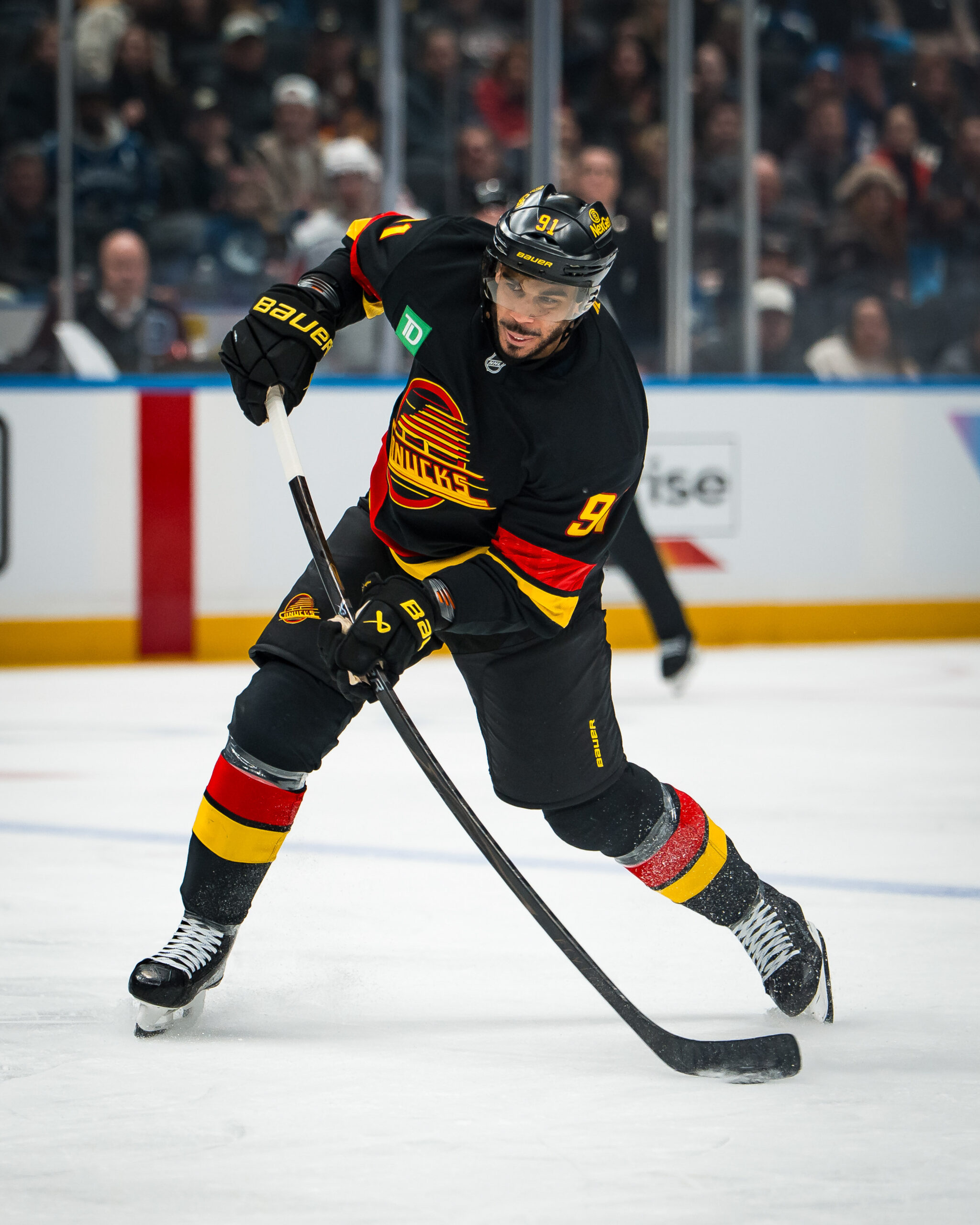
Kane also showcased his talents during the Oilers’ back-to-back runs to the Stanley Cup Final, showing how he could be a valuable contributor to a team just a few wins away from multiple titles. He’s always been a complicated player, someone with high peaks and low valleys in terms of performance.
That’s been evident throughout Kane’s career, such as in 2020-21, when he led his team in scoring with 49 points in 56 games (72 point pace) but ended the season with less-than-stellar reports emerging about his off-ice value.
The Athletic’s Kevin Kurz reported at the time that “several key players informed team brass that if Kane was going to be a part of the Sharks going forward, they didn’t want to be.”
Those factors that complicate a player’s league wide standing are often extremely difficult, if not impossible, for outside observers to take into account. It’s entirely possible, perhaps even likely, that the Kane that was the subject of those reports no longer exists. His time in Edmonton certainly would support that argument, as he was a key veteran on one of the league’s top teams. But without being able to know for sure where Kane stands, it’s difficult to predict the level of interest he’ll will receive in the summer, or what level of investment those interested teams will be willing to make in him.

Snapshots: CHL, Vaakanainen, Laba
In November, we covered reports indicating that the NHL was seeking to come to an agreement with the CHL on allowing 19-year-old CHL players to play in the AHL under specific circumstances. At the time, it appeared the league was seeking a deal that would allow each club to select one player, who would have previously been ineligible to play in the AHL, to be loaned to that league. The Athletic’s Michael Russo and Pierre LeBrun reported today that NHL Deputy Commissioner Bill Daly had a meeting scheduled for today with the CHL’s President, alongside the three commissioners of the CHL’s leagues. Per Russo and LeBrun, “there will be some type of change” to the rule, and the negotiations are reportedly more about determining “the number of 19-year-olds that could be assigned” and “the criteria” of who would be allowed to be assigned.
Russo and LeBrun indicated that with the flow of CHL players to the NCAA, now that the NCAA’s rules permit CHLers to join the college ranks, NHL teams “want to maintain control of their drafted players.” Providing a player with the flexibility to turn pro might keep a player from playing college hockey, something that would accomplish that goal for teams. Recent history is littered with players who teams would likely have preferred to turn pro rather than return to the CHL, perhaps none more high-profile than 2022 No. 4 pick Shane Wright. The year after he was drafted, Wright got into eight NHL games, a handful of AHL games (on a conditioning loan), and was reassigned to the OHL after the World Juniors. It’s likely that Wright would have simply spent the year in the AHL had the rules been different, and with today’s reporting, it appears the next Wright might very well get the chance to do just that.
Other notes from around the NHL:
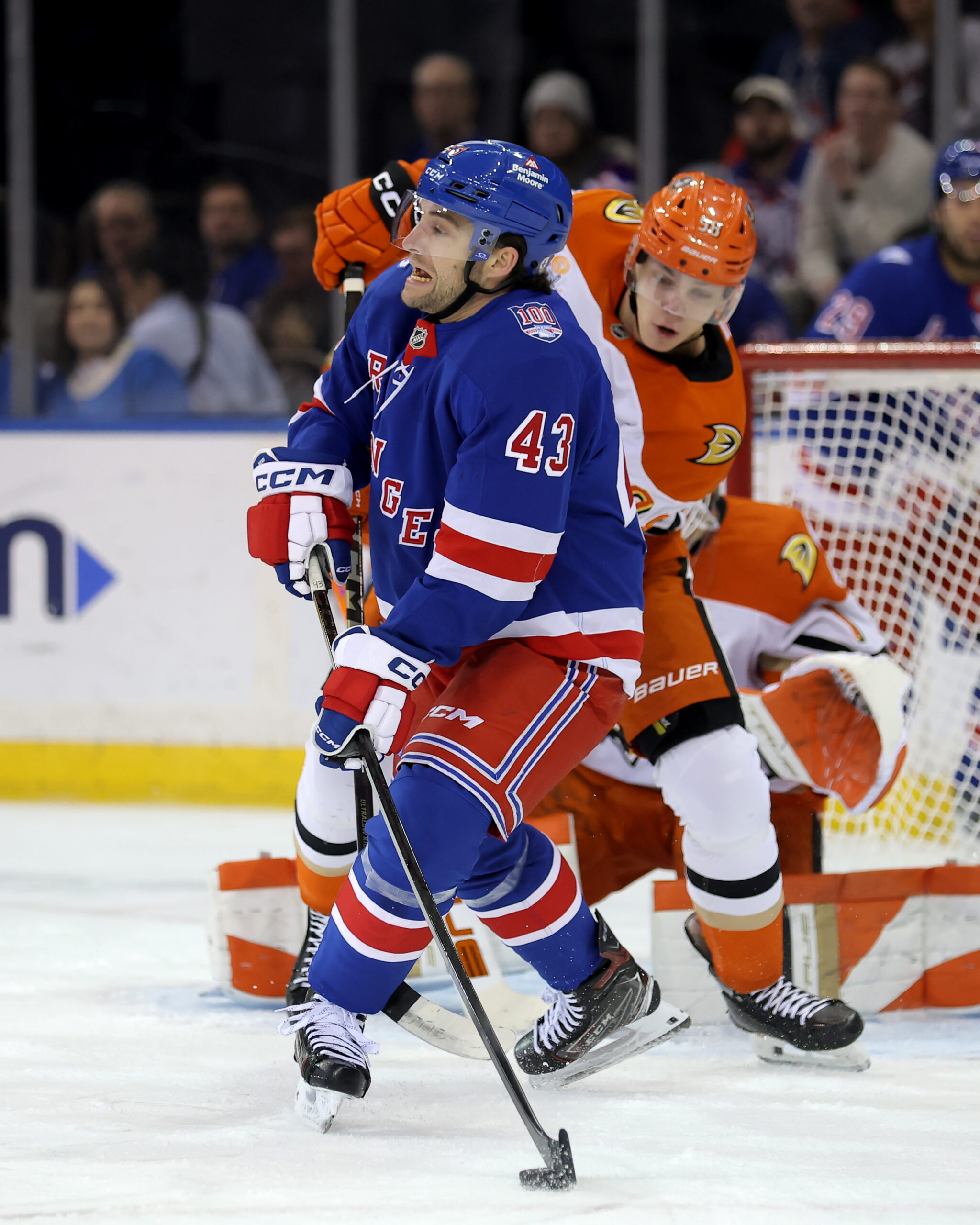
- The New York Rangers announced tonight that defenseman Urho Vaakanainen left the team’s contest against the New Jersey Devils after suffering an upper-body injury. The full extent of Vaakanainen’s injury is, of course, unclear at this time. The 27-year-old, who is under contract through next season at a $1.55MM AAV, has served as a seventh defenseman for the Rangers this season. He’s gotten into 32 games, scoring six points and averaging 14:08 time on ice per game.
- Vaakanainen isn’t the only Rangers player who left their game against the Devils with an injury: the team also announced that rookie center Noah Laba has been sidelined with a lower-body injury. Laba’s emergence has been one of the more positive storylines for the Rangers this season, as the 2022 fourth-round pick has been a developmental bright spot for a team whose track record in that area has come under scrutiny. The 22-year-old has 21 points in 64 games this season and has been operating as the team’s No. 3 center, averaging 13:33 time on ice per game including a secondary role on the penalty kill.
Free Agent Stock Watch: Centers
With the trade deadline behind us, player movement between teams is severely restricted. Teams are jockeying for playoff position, and many players with expiring contracts across the NHL are playing games that could ultimately determine what magnitude of contract they might receive in the summer.
In a multi-part series, we’ll take a look at each position group of the upcoming free agent class, and do a rundown on how those upcoming unrestricted free agents have performed this year. Which players have increased their odds of scoring a jackpot on the open market? Which players have potentially hurt their earning potential with their play? What are the stakes for these free agents in the games that remain this season? We’ll break it all down here.
The Marquee Names
Charlie Coyle, Columbus Blue Jackets
That Coyle is arguably the top name set to be available at the center position in the upcoming UFA class speaks to two realities the NHL is dealing with: first, true top-six centers are an exceedingly rare commodity. Second, it’s especially uncommon to find them available on the free agent market.
Of course, that doesn’t mean Coyle isn’t a strong player in his own right. The Massachusetts native has enjoyed a resurgent year with the Blue Jackets.
He’s been the club’s No. 3 center this season, behind veteran Sean Monahan and 2023 No. 3 overall pick Adam Fantilli, but has outscored both of the pivots ahead of him on the depth chart.
Through 66 games, Coyle has managed 16 goals and 51 points, which is a 20-goal, 63-point 82-game pace.
If he can keep up this pace, he’ll set a new career-high in points production at the age of 34. In a league where the demand for quality centers often outpaces the supply, Coyle is well-positioned, despite his age, to cash in on the open market.
Beyond his offensive production, he offers a well-regarded two-way game. He’s been the top penalty-killing center for Columbus this season, and once received a fourth-place Selke Trophy vote as a member of the Boston Bruins.
As a free agent, Coyle represents a safer bet to provide steady, immediate contributions on both ends of the ice than perhaps any other free agent center available. While teams are likely to have some wariness to invest in him due to his age, the way he’s bounced back after an uneven 2024-25 season has demonstrably elevated his stock entering his free agency. AFP Analytics projects Coyle to receive a three-year, $5.8MM AAV deal.
Evgeni Malkin, Pittsburgh Penguins
Whether Malkin will actually remain on this list or instead sign an extension to remain in Pittsburgh figures to be one of the major storylines to track in Pittsburgh over the next few months. The Athletic’s Josh Yohe relayed word from Malkin’s agent, J.P. Barry of CAA, that Malkin would have a face-to-face meeting with Penguins GM Kyle Dubas to discuss his future.
Since that point, nothing concrete about Malkin’s status has been reported. Yohe reported that, “as of last summer,” the Penguins had decided Malkin would not be a part of the team’s plans past the expiration of his current contract.
The key question, then, is whether the Penguins’ team-wide resurgence this season, as well as notably improved play from Malkin, has changed the team’s mind in any way. There are undoubtedly key voices in Pittsburgh who would like to see Malkin return, the most likely of those being captain and franchise face Sidney Crosby.
While Crosby, as an active player, of course does not have any direct decision-making power within hockey operations, it has been widely reported that his input and influence is one Penguins management often considers. Additionally, Malkin himself has indicated that he would like to remain in Pittsburgh beyond this season, and feels he has earned another deal.
There is also public sentiment to consider. Malkin is a legendary figure in Pittsburgh, and the team risks deflating much of the positive momentum it has built over the last year if Malkin walks as a free agent. With that said, there is an argument in Pittsburgh to consider that the team’s future would be better-served turning over the valuable minutes Malkin plays to a younger player, such as breakout rookie Benjamin Kindel.
As far as Malkin is concerned, all he has done in 2025-26 (outside of a poor lapse in judgment that resulted in a five-game suspension) is improve his stock heading into free agency. The 40-year-old has 47 points in 46 games, his first season of point-per-game scoring since 2022-23. His ability to elevate his linemates, something that has defined his play throughout his career, is still intact. Nowhere has that been more evident than his chemistry with in-season trade addition Egor Chinakhov, who has 11 goals and 21 points in 28 games as a Penguin. He had six points in 29 games this season before joining with Malkin.
Given Malkin’s age, it’s extremely unlikely he’d receive much term on his next deal, and could very well be at the stage of his career where he’s only playing on one-year deals. AFP Analytics projects the value of his extension at $6.7MM, which would actually be a pay raise over the $6.1MM AAV he’s costing this season.
The Solid Contributors
Boone Jenner, Columbus Blue Jackets
In a thin center market, players such as Jenner enter free agency under extremely favorable conditions. While he’s never been a top scorer, the 32-year-old has long been one of the game’s most reliable two-way centers. He provides the Blue Jackets with strong work at the faceoff dot and valuable leadership qualities as their captain, as well as solid secondary scoring.
Jenner struggled with injuries over the last few years, but has found a way to remain productive. He scored 22 goals and 35 points in 58 games in 2023-24, and had 19 points in 26 games last season. He’s scored at least 20 goals on four occasions, and has hit at least 35 points five times.
This season, Jenner’s stock is trending in a neutral direction. He’s kept up his usual scoring rate, potting nine goals and 29 points in 51 games. That’s a 14-goal, 47-point 82-game scoring pace. He’s also kept up a role on Columbus’ penalty kill, though he’s not winning quite as many draws as he typically does.
The key storyline regarding Jenner this season has been how the Blue Jackets’ enviable depth at the center position has impacted his role. Where he once received middle-six or even top-six deployment in Columbus, he’s now been relegated to No. 4 center duty when all of Fantilli, Monahan, and Coyle are healthy.
Last season, Jenner averaged 18 minutes of time on ice per game, good for No. 3 among Blue Jackets forwards. The year before, he was Columbus’ most heavily-utilized forward. This season, he’s averaging 16:09 time on ice per game, which ranks No. 6 on the team.
While his points production does not appear to have been impacted, his declining role is something interested teams will have to interrogate when deciding whether to pursue him in free agency. Is it more of a matter of the Blue Jackets becoming uncharacteristically deep at the center position, something they were not known for for much of Jenner’s career? Or is it an early sign of age-related decline for the 32-year-old? That is the key question teams will have to answer when considering Jenner’s free agency case. AFP Analytics projects a $5.2MM AAV for Jenner on a three-year term.
Jonathan Toews, Winnipeg Jets
The legendary Chicago Blackhawks forward returned after a two-year absence to join his hometown Jets, but things have not gone according to plan in Manitoba. Last season’s Presidents’ Trophy winners have fallen down the league standings this season, and are more likely than not going to miss the upcoming playoffs.
While it’s essential to note that Toews is deserving of an immense amount of respect for returning to the NHL and occupying a regular role given the serious health challenges he faced, most would acknowledge he’s not the same player that starred in Chicago. If he elects to continue his career beyond this season, his free agent market is likely to reflect his current capabilities, rather than what he has achieved previously.
Some of what made Toews so effective previously remains intact. The Selke Trophy winner is still lethal at the faceoff dot, winning 61.6% of his draws this season. That’s the top rate in the NHL among regular centers. While he’s no longer a penalty killer, he still presents considerable value for key defensive-zone faceoffs, or in any case when winning a faceoff and establishing puck protection is crucial.
Toews’ offense hasn’t been at the level of prior years of his career. He has seven goals and 21 points in 65 games this season, despite averaging nearly two minutes of ice time on the power play per game. At this stage of his career, Toews’ value proposition to NHL teams is clear: he’s a trusted defensive center who presents an immense amount of value as a veteran leader, even if his on-ice production is now more muted. A one-year deal around his current cap hit of $2MM, perhaps laden with some bonuses, appears to be a fair expectation for Toews if he elects to continue his career.
Scott Laughton, Los Angeles Kings
If he had been able to hit the UFA market during his final few years as a member of the Flyers, it’s likely Laughton would have received interest from across the NHL. The 2012 first-round pick developed into one of the NHL’s better defensive centers over the course of his time in Philadelphia. By his late twenties, Laughton was scoring around 35 to 40 points per season, and even earned a Selke Trophy vote for his defensive play and contributions as a leading penalty killer.
It’s those on-ice qualities, as well as his reputation as a valuable veteran leader, that made the Toronto Maple Leafs interested enough to surrender a first-round pick along with prospect Nikita Grebenkin in order to acquire Laughton. On a team desperate to make a deep playoff run, Laughton reverted into being more of a defensive specialist, scoring just six points across 33 combined regular-season and playoff contests with the Maple Leafs.
Playing on a team more fully-stocked with offensive weapons compared to the Flyers made an impact on Laughton’s scoring. While he was once good for at least 30, and as many as 43, points in a season, he saw his production dry up in Toronto. Before his trade at the recent trade deadline to the Kings, Laughton managed just 12 points in 43 games for the Maple Leafs.
Since his trade to Los Angeles, Laughton has managed to score twice and register three points in five games. The fact that Laughton only netted the Maple Leafs a third-round pick just a year after he was worth a first-rounder suggests that his stock has declined somewhat.
With that said, he has a clear opportunity ahead of him in Los Angeles to re-write the book on him entering free agency, where he could be poised to sign a life-changing contract as a soon-to-be 32-year-old free agent. Laughton’s current contract carries a $3MM AAV, and his tenure with the Kings (and whether it contains a playoff run) will go a long way in determining what kind of raise, if any, he’ll receive over that cap hit on his next deal.
The Role Players
Jason Dickinson, Edmonton Oilers
Although he’s not the scorer anymore that he was very early in his tenure with the Chicago Blackhawks, Dickinson is valuable enough to be the centerpiece of a deal that netted Chicago a first-round pick at the recent trade deadline. His game fits the mold of many of the other names on this list: he’s a 30-year-old defensive specialist offering size, two-way responsibility, some moderate ability at the faceoff dot, and some Selke Trophy votes in his past.
The key for Dickinson, entering this summer’s free agent market, is his performance in what the Oilers hope will be a lengthy playoff run. If the Oilers’ past two playoff runs are any indication, Dickinson may yet get the chance to showcase his talents on some of the game’s biggest stages. As Connor McDavid chases that Stanley Cup championship that has thus far eluded him in his career, Dickinson could end up playing a high-profile reserve role. When the Oilers have to kill a penalty in a big moment in a game, or defend a narrow lead, it’s likely Dickinson’s skates will hit the ice.
While Edmonton could very well end up disappointing in the playoffs (they have been more uneven in 2025-26 than prior years), it’s clear what Dickinson has done this season for the Blackhawks is likely to be less relevant for his free agent case than what he could be set to do for the Oilers.
Colton Sissons, Vegas Golden Knights
With nearly 700 games played entirely for one team, the Nashville Predators, this season has been one of real change for Sissons. He’s playing for a new NHL organization for the first time in his professional career, and is also slated to hit unrestricted free agency for the first time in his career. Sissons’ last contract, signed by Hall of Fame GM David Poile, came all the way back in 2019, and locked Sissons into a $2.85MM AAV contract with a seven-year term.
For six of those seven years, Sissons was a key bottom-six piece for the Predators. He was a reliable defensive presence, regularly killing penalties. Later in his Predators tenure, he even developed real credibility as a secondary scorer, registering a career-high 15 goals and 35 points in 2023-24. 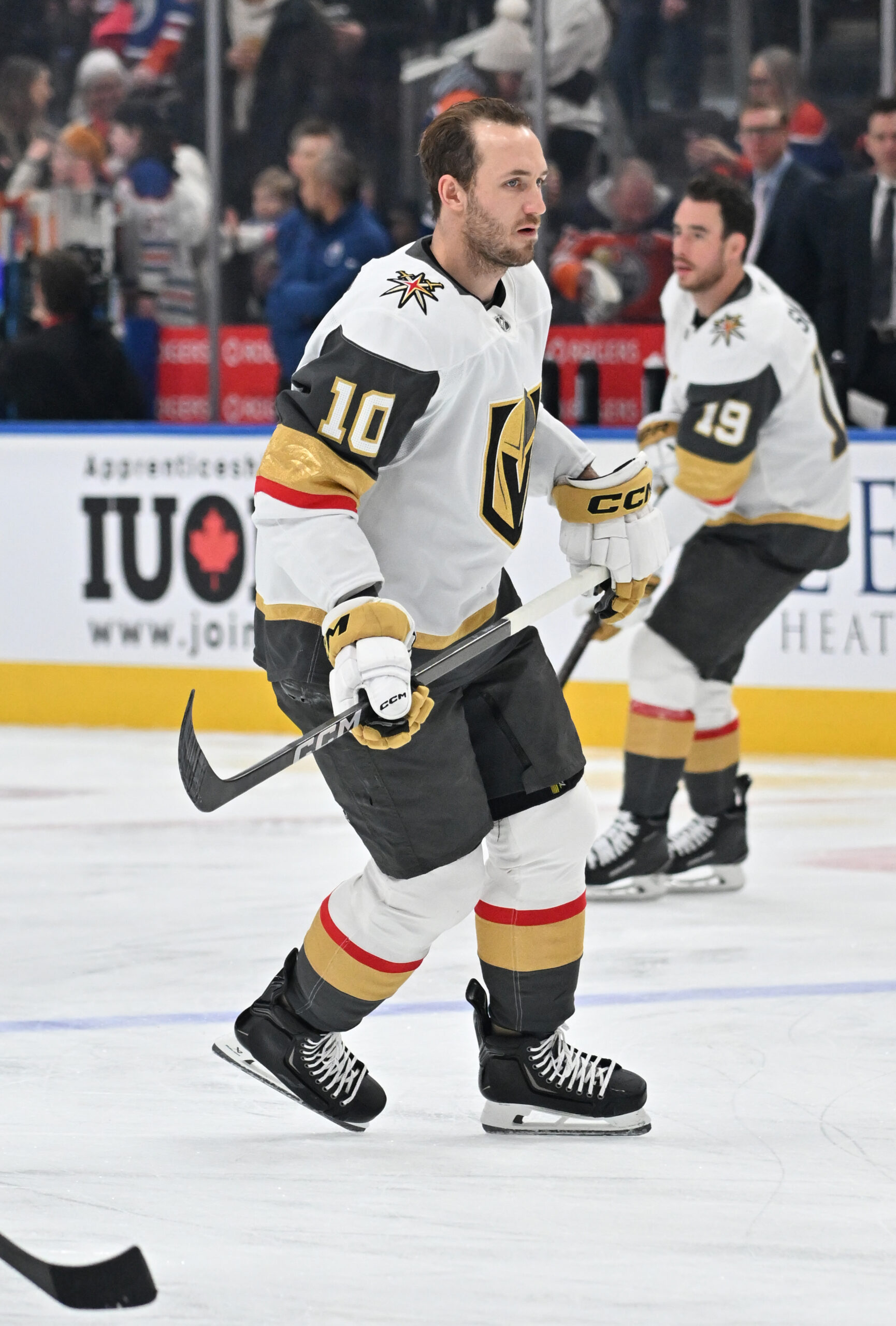
Sissons was not immune from Nashville’s team-wide struggles last season, and he also dealt with an injury.
He was then traded to Vegas, and while Sissons has maintained his status as a capable defensive fourth-line center, his offensive production has not rebounded to the level of earlier years in his career.
That Sissons will enter the market now two seasons removed from back-to-back years with at least 30 points is notable, as is the fact that he’s only scored nine points in 51 games as a Golden Knight.
He remains a key penalty killer in Vegas, but his offensive decline likely means his path towards earning a pay raise from his current $2.85MM AAV is considerably more narrow.
Alexander Kerfoot, Utah Mammoth
Heading into unrestricted free agency this summer, it’s clear the last two years have not been entirely kind to Kerfoot. During his one year with the since-relocated Arizona Coyotes, he scored a career-high 45 points, reminding the league of the player he was earlier in his tenure with the Toronto Maple Leafs and Colorado Avalanche.
He’s a player who has hit the 40-point plateau four times, but in Utah, that level of production has been nowhere to be found. Last season, he scored 11 goals and 28 points, his lowest result as a scorer, on a points-per-game basis, since entering the NHL. This season, Kerfoot has just four points in 19 games as he missed most of the first few months of the season with an injury.
In Utah, Kerfoot has morphed from being a steady middle-six two-way forward into more of a defensive specialist. He ranked second among all Utah forwards in short-handed time on ice per game last season, and has maintained a regular penalty-kill role this season. But his average ice time per game overall is down to just 11:13 per game, a steep decline from last season where he averaged 15:15 per game.
The injuries and inability to score on a consistent basis have likely damaged Kerfoot’s earning potential as a free agent. With that said, his stellar resume prior to arriving in Utah makes him an intriguing buy-low candidate for teams interested in strengthening their center position.
Kevin Stenlund, Utah Mammoth
Stenlund played 19 games in the AHL in 2022-23, and was viewed as somewhat on the NHL-AHL bubble. The Florida Panthers saw something in the 6’3″ Swede, though, and elected to sign the center with the plan of including him in their NHL plans. That move proved to be a great one for the Panthers, as Stenlund scored a career-high 11 goals and helped the franchise win its first-ever Stanley Cup championship.
He was able to cash in after that victory, earning a two-year, $2MM AAV deal with the Mammoth. He’s further elevated his stock in Utah, and at 29 years old, is poised to once again cash in as a free agent. Stenlund offers size, defensive ability, and some secondary goal-scoring qualities. Stenlund has been an excellent faceoff taker in Utah, winning 59.2% of his draws last season and 54.8% this season.
The key storyline to track for what remains of this season as far as Stenlund is concerned is his shooting. After scoring 14 goals and 28 points last season, Stenlund has managed only four goals this year. His shooting percentage has dropped from 13.7% to 7.3% year-over-year. If he can get some puck luck in what remains of the season, or at least help the Mammoth go on a real playoff run, he could enter this summer in very good shape.
Mark Jankowski, Carolina Hurricanes
Despite a trade sending him from Nashville to Carolina, Jankowski has maintained the traits in his game that have allowed him to carve out a nearly 500-game NHL career. The 6’4″ forward has the versatility to play both center and on the wings, can contribute as a secondary penalty killer, and offers the kind of size teams covet in fourth-line players.
Though he’s not an overly physical player, with just 33 hits to his name this season, he’s earned a regular role in head coach Rod Brind’Amour’s lineup, and is likely to add to his 23 games of career playoff experience later this season. While he’s likely to earn only a modest pay raise, perhaps in the $1MM to $1.25MM range at most, he could stand to earn even more depending on how the Hurricanes fare – perhaps experiencing something similar to what Stenlund experienced during his free agency after winning the Stanley Cup with the Panthers.
Teddy Blueger, Vancouver Canucks
Blueger, 31, has only played in 19 games this season, so he hasn’t amassed a huge sample of data points that could heavily impact his stock heading into free agency. With that said, his performance in those 19 games for the Canucks has been strong, scoring six goals and 11 points to go along with the defensive and penalty-killing contributions teams have grown to expect from Blueger at this stage of his career.
The development this season (or lack thereof) that is most likely to impact his upcoming free agency is the absence of a trade to a contending team. While playing out the string on a basement-dwelling Vancouver Canucks team likely means Blueger will receive more substantial minutes than he’d receive on a contender, it also means teams will approach any increased scoring he achieves this season with a clear caveat: he was producing within a workload he’d be unlikely to replicate in a playoff-bound lineup.
One could argue Blueger’s upcoming free agency would be better-served by him showcasing his talents in a fourth-line role for a contender, the kind of role most teams targeting him would pencil him into. But a trade didn’t materialize for him, and as a result, the best thing he can do is continue to take advantage of the opportunity in front of him in British Columbia.
Tyson Jost, Nashville Predators
The status of the No. 10 pick from the 2016 draft as an NHL player looked to be on shaky ground for the last few years, as Jost found himself on waivers repeatedly and lost his grip on a regular NHL role. He bounced between teams, and even saw time in the AHL in each of the last two seasons.
When the Predators signed Jost this past summer, the fact that the deal was of a two-way structure (albeit with a massive $600K guarantee) was notable – it was the first time in Jost’s NHL career, since his league-mandated entry-level contract, that he would play out a season on a two-way contract. That’s reflective of where his stock was at that point: in real decline.
While Jost hasn’t had an exceptional campaign by any means, his 2025-26 season has been a useful one as it has re-established him as a regular NHL player. He’s gotten into 52 games for the Predators, thus far avoiding any stints in the AHL. He’s playing a fourth-line role, but is getting some secondary penalty-killing time. His 11 points in 52 games aren’t on the high-end for a fourth-liner, but his ability to both earn, and hold, the trust of head coach Andrew Brunette is something that will help him return to one-way contracts this summer.
Adam Henrique, Edmonton Oilers
For much of his over 1,000 game NHL career, Henrique was a prototypical middle-six center, someone capable of producing secondary offense while holding down a staunch defensive role. Those days are in the past, as Henrique’s offensive production has fallen to the wayside. He scored 51 points in 2023-24, but has not been able to reach those heights as an Oiler. He scored 12 goals and 27 points last season, but has just two goals and 10 points in 50 games this year.
At 36 years old, Henrique is inching closer towards the end of his career. That’s not to say he doesn’t have gas left in the tank, of course, but teams will have to be measured in their approach to him this summer, given how much of an impact age appears to have had on him as an Oiler.
He’s still a valued veteran who has helped the Oilers win back-to-back Clarence S. Campbell bowls, and still regularly kills penalties in Edmonton. But at this stage, he’s a veteran fourth-line option, rather than the kind of middle-six two-way player he once was.
Lars Eller, Ottawa Senators
Eller is in many ways similar to Henrique, only he’s now playing his second consecutive year in the role Henrique now finds himself in. Eller, who turns 37 in May, is the Senators’ No. 4 center. He is a secondary penalty killer for the team, wins 57.5% of his draws, and costs just $1.25MM against the cap.
The offense he once showed, particularly as a third-line center on contending Washington Capitals teams, is no longer part of his game. But he’s shown this season that he can still hold down a role as a fourth-line center, and entering free agency, if he wants to continue his NHL career, he can expect to be compensated as one. The Senators’ late push for a chance to return to the playoffs will be a storyline to watch as it relates to Eller’s free agency.
Rodrigo Abols, Philadelphia Flyers
Abols, 30, has been a nice find for the Flyers’ scouting staff, turning into a legitimate NHL depth piece after four years as a solid SHL center. The 6’4″ pivot showed flashes of NHL potential in Europe and on the international stage, perhaps nowhere more than during Latvia’s historic bronze medal run at the 2023 IIHF Men’s World Championships.
2025-26 looked like it could be a big year for Abols. He split last season between the NHL and AHL, playing 47 games with AHL Lehigh Valley and 22 games with the Flyers.
This season, Abols has been able to carve out a regular role as the Flyers’ No. 4 center, and has thus far avoided reassignment to the AHL.
It’s unfortunate for Abols, then, that his momentum (especially from early in the season) was cut short by a lower-body injury.
He’s been out since January, and it’s unclear when, or if, he’ll be able to return this season. While the injury has cost him the chance to build an even stronger free agency case, the fact that he’s currently playing on a one-way $800K deal suggests he should at least be in a position to earn a one-way contract for next season.
David Kampf, Washington Capitals
Kampf, 31, found himself outside the Maple Leafs’ NHL plans early this season, and made the decision to terminate his contract in an effort to find an NHL role with a team. He latched on with the Canucks, and occupied his normal role as a fourth-line pivot and penalty-killer, something that earned him a trade to the Washington Capitals. He has yet to make his debut in Washington, and Washington faces long odds to return to the postseason.
But given the Capitals’ consistency as a regular in the Stanley Cup playoffs, it could be in Kampf’s best interest to sign an extension in Washington in order to potentially secure the fourth-line center role with the team. That’s a role Nic Dowd occupied to great success in recent years, and it’s one Kampf could find some stability in if he’s able to earn the trust of Washington’s coaches and management.
Curtis Lazar, Edmonton Oilers
Lazar took a pay cut last summer to sign with the Oilers, going from a $1MM AAV on his last deal to a league-minimum $775K this year. Injuries have stymied him over the last two seasons, as he managed just five points and 48 games for the Devils last season, and is currently out on a week-to-week basis this season.
He did score a healthy 25 points in 71 games for New Jersey in 2023-24, showing himself to be the kind of high-energy, physical fourth-liner teams often covet in those roles. This season with the Oilers has been more like his 2024-25 than his 2023-24, and as a result, Lazar isn’t heading into free agency in the strongest position. As with most players, though, a deep playoff run could always help change that.
Sam Lafferty, Chicago Blackhawks
When Lafferty was last with the Blackhawks, he proved himself to be a strong enough bottom-six center to be included in the Maple Leafs’ Jake McCabe trade, a deal that net Chicago first and second-round picks, among other assets. He was held in high enough regard to earn a $2MM AAV two-year contract in the summer of 2024, but he’s unlikely to receive that kind of deal this upcoming summer.
Lafferty averaged 13:15 time on ice per game, including sporadic usage on both sides of special teams, in 2022-23 with the Maple Leafs. The following year, he played a regular fourth-line role on a strong Canucks team, scoring a career-high 13 goals. Since signing his deal with the Sabres, Lafferty’s scoring has all but disappeared, and with it, his regular NHL role.
He managed just seven points in 60 games last season, and has just two points this year. He’s been a regular healthy scratch for the Blackhawks this season, and is averaging just 8:36 time on ice per game in contests he dresses for this season. On a per-game basis, he’s receiving a lighter workload than any other Blackhawks forward.
As a result, his stock is unquestionably trending in the wrong direction heading into free agency. In any case, he has accomplished enough as a bottom-six player over his nearly 400-game NHL career to suggest he will still receive a shot to earn an NHL role with a team for next season.
Others Of Note
Jonny Brodzinski, New York Rangers
Since he got into 35 NHL games with the 2017-18 Los Angeles Kings, Brodzinski has lived in one of the more volatile positions a pro hockey player can occupy: a place on the NHL-AHL bubble. He’s both captained AHL teams and played in NHL playoff games, but over the last two years, Brodzinski appears to have put his AHL days behind him.
After getting into the first playoff games of his career during the Rangers’ runs to the Eastern Conference Final, Brodzinski has carved out a full-time NHL role over the last two years as a versatile thirteenth forward option. He scored a career-high 12 goals in 2024-25, doing so in just 51 games. That’s a 19-goal 82-game scoring pace.
Had he been a free agent last summer, he could have earned a decent short-term guarantee. But he’s not been able to sustain his goal scoring this season, and as a result, the 32-year-old’s stock has to be considered to be down.
Kevin Hayes, Pittsburgh Penguins
A player who has hit at least 40 points in a season six times, Hayes was once a well-regarded middle-six offensive piece. He netted a first-round pick for the Rangers as a trade deadline asset in 2019, and signed a hefty free agent deal with the Philadelphia Flyers afterwards.
After scoring 54 points in 2022-23, Hayes was traded to the Blues, where he only managed 13 goals and 29 points in 2023-24. The Blues paid a second-round pick to the Penguins in order to rid themselves of Hayes’ cap hit, and he has been unable to restore his prior status as a middle-six scorer in Pennsylvania.
Hayes’ struggles as a Penguin (just five points in 25 games this season) leave him in a curious spot.
He’s an offensive player who built an entirely respectable NHL career as a scoring forward, but that scoring has since dried up. Is it realistic to expect him to rediscover his form as a secondary scorer? Or can he potentially reinvent himself to be more palatable as a bottom-six piece?
Those are the kinds of questions teams interested in Hayes might ask themselves this summer. In any case, he’s likely to have to settle for an inexpensive, prove-it contract wherever he signs.
Jansen Harkins, Anaheim Ducks
After playing in a career-high 77 NHL games for the Jets in 2021-22, it looked as though Harkins had secured a role as a full-time NHLer. The following season, though, Harkins only earned 22 NHL games, and by the end of 2023-24, he had changed NHL teams and gone 45 games without a goal.
The Ducks signed Harkins to an affordable two-year deal with a one-way structure for both years, and Harkins has been able to hold down a spot on the NHL roster on that deal. He scored 17 points in his 11 AHL games with the organization, and has played in 101 NHL games across the last two years in Orange County. At 28 years old, the fact that he’s solidified his grip on an NHL roster spot means he’s positioned himself to once again receive a one-way contract in the summer.
Luke Glendening, Philadelphia Flyers
At 36 years old, it’s clear the value proposition Glendening offers to NHL teams has become somewhat narrow: he’s still an adept face-off taker, but his impact as a defensive forward has waned, and his production is almost entirely gone.
With that said, his over 900 games of NHL experience and abilities as a faceoff taker were still intriguing enough to allow him to be claimed off waivers, and give him a chance to stick in the NHL beyond this season if he elects to continue his career.
Photos courtesy of Eric Hartline-USA TODAY Sport, Walter Tychnowicz-Imagn Images, Jerome Miron-Imagn Images and Charles LeClaire-Imagn Images
Florida Panthers To Recall Nolan Foote
The Florida Panthers have recalled forward Nolan Foote from their AHL affiliate, the Charlotte Checkers, per Five Reasons Sports’ Alex Baumgartner. The move has not yet been officially confirmed by the team.
Foote’s recall comes as the Panthers manage numerous injuries to their forward corps. Star Sam Reinhart is out for at least the team’s upcoming four-game road trip, and Sam Bennett is out on a day-to-day basis. The team is also dealing with older injuries to stars such as Aleksander Barkov and Brad Marchand.
While those injuries are undoubtedly unfortunate for the Panthers, and have greatly contributed to the team’s year-over-year decline, the injuries also present an opportunity for Foote. This recall gives the 2019 first-round pick the chance to play in his first NHL games of the season, and the chance to make his Panthers debut.
A 6’3″ winger, Foote has scored at a steady rate in the AHL over the last few years. He’s reached at least 32 points in each of the last four seasons he’s been healthy for, and last season scored a career-high 39 points in 53 games with the Utica Comets. While his star as a prospect has dimmed since his days in the New Jersey Devils organization, he’s still just 25 years old, and a lengthy NHL career could still be ahead of him.
For him to be able to have that kind of NHL career, the first step will be to seize on the opportunities he’s presented with. AHL players don’t get to pick and choose when their NHL opportunities arrive, and Foote is no different. NHL games are NHL games, and for Foote, any he’s able to dress for with the Panthers will be high-stakes contests.
As a pending RFA, he’s playing not only to prove he belongs in Florida’s plans moving forward, but perhaps also to earn a raise on his next contract. Foote’s current deal is a two-way pact with a league-minimum NHL salary and a $250K total guarantee. If he can string together some quality NHL performances, and perhaps find a way to stick in Sunrise for the rest of the season, he could make a serious push to earn a one-way contract – or at least an even greater guarantee – for next season.