Teams “Hungry” For Blue Jackets’ First-Round Picks
The Columbus Blue Jackets decided they were in need of a reset this season and decided to sell off their expiring assets. Rentals David Savard and Nick Foligno both brought back first-round picks (and more) through some savvy cap manipulation, while injured Riley Nash even landed them a sixth. Now, as the draft approaches and Columbus sit with three first-round selections, teams around the league are showing interest. At today’s press conference introducing new head coach Brad Larsen, Blue Jackets GM Jarmo Kekalainen spoke about the upcoming offseason:
As a management staff we’re going to have a busy summer. We have draft meetings coming up soon. We have three first-round picks, nine picks altogether that we can do a lot of different things with. I’ve already talked to several of the general managers in the league that have protection problems in the expansion draft, and they’re eyeing those picks like–they’re very hungry for our first-round picks I can tell you that. We could do a lot of things with them, if we think it makes sense for us now and into the future. We’re not going to trade them for a 35-year-old player that can help us next season, no matter how good that player would be.
The Blue Jackets’ own pick will be fifth overall, while the one they acquired from the Toronto Maple Leafs will be 25th (though it will be the 24th player selected since Arizona forfeited their first-round pick this season for scouting violations). The one they received from the Tampa Bay Lightning could be anywhere from 29-32 depending on how far they go from here.
It’s hard to know exactly why teams that face issues in the expansion draft would be after the Blue Jackets’ picks, but part of it could simply be because they will have to give their own up to the Seattle Kraken in order to protect extra players. That situation should be familiar to Kekalainen, given he traded a first (and a second) to the Vegas Golden Knights in 2017 along with David Clarkson‘s contract to protect Josh Anderson, Joonas Korpisalo, and Jack Johnson. The Golden Knights eventually picked William Karlsson from the Blue Jackets, who scored 43 goals in his first season in Vegas.
Not only will Kekalainen have learned from that mistake, but he also should have a good grasp on the desperation that will face some of the other managers around the league as the draft approaches. For instance, if a team believes a player is ripe for selection by Seattle and doesn’t want to lose them for nothing, why not flip them to the Blue Jackets for a relatively high pick instead? Columbus has some extra space to protect incoming players, especially if they were to move the likes of Seth Jones or Patrik Laine in the coming weeks.
One of the interesting questions when it comes to first-round picks this season however is how teams feel about the incoming draft class. Many of the players that will be selected this year haven’t been scouted in person since early 2020, with many others not even getting much game experience in the year since. How that will affect the value of a late-first is still to be determined, but Columbus and Kekalainen could be a test case to watch over the next little while.
Owen Power Leaning Toward Return To Michigan
One of the biggest questions when selecting a player from the college ranks in the NHL entry draft is whether you will be able to sign them. The draw to play for a top university is legitimate for many prospects, especially if they are going to have to wait several years for a chance at the NHL level anyway. But what about for a player that is supposed to go at the very top of the draft?
Owen Power, the projected first-overall pick in this year’s draft and a sophomore at the University of Michigan, was on NHL Network to discuss his plans for next season:
I think right now I’m leaning more toward going back to school. It’s something I’d like to do, try and get the true experience of playing college hockey. At the end of the day it obviously depends on what the team wants and what everyone around me thinks is best. I don’t think there is really a bad option, but I would say I’m probably leaning a bit more toward going back to school right now.
Power, 18, like all of the college freshman that started their NCAA athletic careers this season, has still not really gotten a chance to see what the atmosphere can be like thanks to COVID restrictions. In fact, the Michigan hockey team didn’t even get a chance to play in the NCAA championship tournament because of COVID protocols, removed just before they were set to take on Minnesota-Duluth. While Power had a chance to play at the IIHF World Championship for Canada, taking home the gold medal, he missed out on a lot of what likely drew him to Michigan in the first place.
The Wolverines are also set to be quite the squad next season, with several players expected to go in the top half of the first round and Luke Hughes set to join them as a freshman. Should Power return, he is coming back to a program that will be in contention for the national championship.
Of course, there is also the draw of the NHL. Should the Buffalo Sabres use the first-overall pick on the 6’5″ defenseman, there will almost certainly be an opportunity for him to step directly into their lineup for the 2021-22 season. Not only would that get him on a fast track to a bigger payday after his entry-level contract expires, but it would also give him a chance to test himself against the best players in the world every night. While the talent level in college hockey has improved dramatically over the past few decades, it is still nothing like the skill Power would face as a regular in the Buffalo lineup.
Though these comments may remind Sabres fans of players like Jimmy Vesey and Calvin Petersen, who decided not to sign with them and test the free agent market following their college careers, Power’s situation is much different. Even though he may be leaning to returning for his sophomore year, the chance that a player picked as high as him waits for his draft rights to expire is very low. There’s simply no reason for him to spend all four years at Michigan if he wants to continue his development, so it would likely mean waiting just a single year before he signs his entry-level deal. In fact, once the Wolverines season is complete, he could likely play in a few games at the end of 2021-22 for whichever NHL team drafts him anyway.
The question for the Sabres now is does that potential wait change his draft stock at all. Buffalo is desperately searching for a way out of the basement, but there’s really no rush beyond the ongoing frustration of the fan base. The team is not close to competing for the Stanley Cup, meaning if they believe Power is the best player in the draft, another year in Michigan shouldn’t stop them from picking him.
Josh Currie, Philippe Maillet Sign In KHL
Two more players that saw NHL action this season are headed overseas, as both Josh Currie and Philippe Maillet have signed with Mettalurg Magnitogorsk in the KHL. Each was scheduled for unrestricted free agency this summer and spent most of the 2020-21 season in the minor leagues.
Currie, 28, was on a one-year, two-way deal with the Pittsburgh Penguins and suited up just once for the NHL squad. A veteran minor league performer, he added 23 points in 24 games and served as captain for the Wilkes-Barre/Scranton Penguins. The former Edmonton Oilers prospect now has 22 NHL games to his name, but will continue his playing career overseas where a new opportunity is waiting.
Maillet, 29, has a very interesting hockey story to this point. Undrafted out of the QMJHL, he signed with the Ontario Reign in 2017 after spending several years at the University of New Brunswick and earned himself an NHL contract with the Capitals in 2019. That two-year, two-way deal is set to expire with just two NHL games played for the minor league forward. Another successful AHL scorer, Maillet recorded 21 points in 16 games for the Hershey Bears this season but failed to register an NHL point in his two appearances with Washington. He’ll also be headed overseas to continue a career that has already been one of determination and perseverance.
Taylor Hall, David Krejci Not Looking To Maximize Salary On Next Deals
When the Boston Bruins held their end-of-season media interviews today, a few things stood out. First, several players including Tuukka Rask were dealing with serious injuries, but perhaps, more importantly, was the idea that many pending free agents hope to return to Boston. Taylor Hall was asked about his future and was quite clear he’d like to stay a part of the Bruins organization:
I see a fit. Hopefully they feel the same…hopefully we can make that happen.
I don’t even know what my value is at this point, I feel like I had two different seasons. I’m not looking to absolutely maximize my value at this point in my career. I’ve been fortunate enough to make some good money in this league and at this point it’s about more of a fit for me than money or a long-term thing. We want to find a home for the next few years here.
Hall was an excellent pickup for the Bruins at the deadline, acquired from the Buffalo Sabres after his dreadful first half. In 16 games down the stretch in Boston he had eight goals and 14 points, while adding another five points in 11 playoff matches. Coming off a one-year, $8MM contract from last summer, Hall has been clear in all of his interviews that he sees Boston as a good fit for the next part of his career. Whether the two sides can come together on a deal is still to be seen, but he is obviously willing to hear them out.
During his interview, Hall noted that there are some other players on the Bruins that have been around the team longer and will have to be sorted out first. One of those is his linemate David Krejci, who is coming off a six-year, $43.5MM deal with the team and is also a pending free agent. The difference perhaps is that Krejci is now 35, meaning a long-term deal is certainly out of the question. Similar to Hall though, the veteran forward isn’t looking to maximize his salary, explaining that his next deal “is not going to be based on money.” Krejci said he can’t see himself playing for another team, but also admitted he hasn’t made a firm decision on his future at this point.
Even though he is now in his mid-thirties, Krejci’s offensive production hasn’t really slowed down. He registered 44 points in 51 games this season and added another nine in 11 playoff games. The 35-year-old’s hands are still as silky as ever, even though his skating may not be quite as powerful as it once was. There’s a milestone to be had in Boston should he return, as Krejci is just 38 games away from 1,000 in his career, to this point entirely spent in a Bruins uniform.
As much as Hall, Krejci and Rask have all indicated they would be open to a return, Bruins GM Don Sweeney has made difficult decisions before when it comes to an aging free agent. Just last season he parted ways with franchise icon and longtime captain Zdeno Chara when it was clear the big defenseman’s role would be drastically diminished. With Charlie McAvoy and Patrice Bergeron needing new contracts after next season and David Pastrnak scheduled for unrestricted free agency a year after that, Sweeney and the Bruins front office will have to delicately balance the transition from the current core to the new one. It might come with some difficult decisions.
Buffalo Sabres Sign J-J Peterka
The Buffalo Sabres have inked another one of their prospects, signing J-J Peterka to a three-year entry-level contract. The young forward split this season between the German and Austrian leagues, while also starring for Germany at the World Juniors.
Peterka, 19, was the 34th overall pick last year and certainly disappoint in his first post-draft season. The German forward scored 20 points in 30 games for Munich of the DEL, 16 points in 12 games for Salzburg in the Austrian league, and added ten points in five games for his country at the World Juniors. In September of last year, before that strong season, this is what Scott Wheeler of The Athletic had to say about the newest Sabres prospect:
Peterka’s one of those players that just screams “complementary third-line forward.” Early on this season, he was one of my favourite prospects in the draft for his ability to play with strength and pace all over the ice. He’s a middle-lane driver who shoots a lot and works to get to the front of the net to finish off plays. He’s just naturally athletic and it fits well with his up-tempo, north-south game. As the season progressed, though, he never really showed me he had the tools to be more than that. There are times when I want to see him slow down, or he needs to survey the ice and use his teammates better. His play, role and minutes all went cold late in the season. It can look like he’s playing on instinct out there. That works for some players. It works for J.J. too but it may limit his upside.
The idea of a complementary third-line player may not be very exciting for Sabres fans dying for some success, but this Peterka is exactly the kind of player that the team needs in order to build out the program. Without real tangible depth pieces behind star-level talent like Dylan Cozens, the team is always going to have a difficult time competing for the playoffs. That was the issue for several years behind Jack Eichel, as the Buffalo captain appeared to have to do everything himself.
If Paterka can become that third line, net-driving secondary scoring piece, he’ll be worth his high draft pick. That will still require some development though, and there is plenty of time. His three-year entry-level contract can still slide should he spend next season in Europe, or anywhere not in the Sabres lineup.
2021 Jack Adams Finalists Announced
The NHL continues to release the finalists for their major regular season award, this time naming the three men that are in contention for the Jack Adams Award, presented to the coach who has “contributed the most to his team’s success.” Last year’s winner was Bruce Cassidy of the Boston Bruins, but we’ll have a new name to engrave this time around.
The finalists for the 2020-21 season are Joel Quenneville of the Florida Panthers, Dean Evason of the Minnesota Wild and Rod Brind’Amour of the Carolina Hurricanes.
Quenneville, 62, certainly isn’t unfamiliar with the trophy but hasn’t held it in quite some time. The veteran NHL coach took home the award in 2000 with the St. Louis Blues and was the runner-up in 2013 with the Chicago Blackhawks. Just two finalist appearances is surprising for a man who is quickly closing in on 1,000 career wins. Quenneville sits second all-time behind only Scotty Bowman in the coaching ranks with 962 regular season wins and won the Stanley Cup three times in Chicago. He would be the Panthers’ first Jack Adams winner if he takes it home following the 37-14-5 season the team registered in 2020-21.
Evason will try to stand in his way despite having less than 82 games under his belt as an NHL head coach. The 56-year-old replaced Bruce Boudreau last season and now has a .669 winning percentage in his 68 games behind the Minnesota bench. While the addition of Kirill Kaprizov certainly helped, Evason turned the Wild into an exciting, competitive team that took the Vegas Golden Knights to seven games in the first round. Evason is only signed through next season but has quickly proven his worth as the answer in Minnesota.
Speaking of contracts, that’s all the buzz around Brind’Amour these days, even as he receives a nomination for the Jack Adams. The Hurricanes head coach isn’t signed for next season and this award is just another indication of how well he has done in his short tenure behind the Carolina bench. Since taking over in 2018, the Hurricanes have gone 120-66-20 in the regular season reached the playoffs all three years and the Conference Finals once. The 50-year-old is off to an outstanding start with his young group in Carolina and could be considered the favorite for this award.
Tuukka Rask Requires Surgery, Hopes To Return To Boston
The Boston Bruins met with the media today and several players explained that they were dealing with serious injuries as the playoffs wound down. Tuukka Rask in particular revealed that he has a torn labrum in his hip and will undergo surgery this month. The veteran goaltender will face a long recovery that is expected to keep him out until December or January, but that doesn’t mean his time in Boston is over if he has anything to say about it. Rask, an unrestricted free agent, hopes to return to play for the Bruins.
Even dealing with a hip injury all season–Rask said he first felt the injury during the playoff bubble last year–the 34-year-old netminder posted a .913 save percentage in 24 appearances. Those numbers actually improved in the playoffs, even if it was obvious that he was dealing with an injury of some sort in the Bruins second-round loss to the New York Islanders.
Both Rask and Jaroslav Halak are scheduled to become free agents this summer, but Rask explained that he only wants to play for the Bruins moving forward. What that means in terms of a contract extension isn’t clear, especially as the Boston front office considers a transition to young Jeremy Swayman as the team’s starting goaltender. Swayman had a .945 save percentage in ten games this season, but is obviously still an unproven commodity at the NHL level. The 22-year-old will be entering the second year of his entry-level contract in 2021-22, leaving plenty of cap room for the Bruins to insulate him with a veteran partner.
Though Rask’s season didn’t end the way he hoped, there’s no question how much he means to the Bruins franchise. Over a 14-year career he has posted a 306-163-66 record, registered a .921 save percentage, won the Vezina, the Jennings, and was even part of the team’s 2011 Stanley Cup team (though he did not play in the postseason). That .921 mark puts him third all-time behind only Dominik Hasek and Johnny Bower, while his win total ranks 32nd.
Coming off an eight-year, $56MM contract, Rask will obviously have to settle for a pay cut on his next deal. Still, if he can get healthy enough to contribute and wants to return to Boston, an extension makes sense for both sides.
Offseason Checklist: Chicago Blackhawks
The offseason has arrived with roughly half of the league missing the playoffs and several more having since been eliminated. It’s time to examine what those teams need to accomplish over the coming months. Next up is a look at Chicago.
The Blackhawks were one of the early-season surprises this season. Despite losing Jonathan Toews for the season (the hope is that he returns next year) and a very unproven goaltending trio (which appears likely to remain next season), they were in the playoff race for most of the year before falling out late. Considering they weren’t expected by many to be in postseason contention heading into the season, being in the race as long as they were is a small victory but GM Stan Bowman will need to take some more strides towards improving the roster for 2021-22. On top of that, some important decisions need to be made regarding a pair of players who are on the fringes of the core.
Utilize LTIR Flexibility
While there is some uncertainly with Toews’ availability for the start of next season, there isn’t any with Brent Seabrook ($6.875MM) and Andrew Shaw ($3.9MM). Both players have effectively retired, announcing they won’t be able to play again due to their respective injuries, a hip issue for Seabrook and lingering concussion trouble for Shaw. This past season, they were among several Blackhawks on LTIR and Bowman will have that option once again.
On the one hand, it’s possible that both go there in the summer, giving them some room to spend in free agency but Bowman has been hesitant to go that route in the past. Whether they do it early or closer to the start of the season though, they have the ability to add a player or two, either adding to their roster or adding a future asset or two for taking on a contract as they did with Brett Connolly near the trade deadline. With the team having to proceed as if Toews will be available, this will likely be their biggest source of cap space this summer.
Avoid Arbitration With Zadorov
The flat salary cap has already created some restrictions on the ‘middle-class’ earners in the league and that’s likely to be the case for a while. Accordingly, that has increased the pressure for teams to work out early contracts with some of their pending restricted free agents that have arbitration eligibility where they fear the award would be too low to walk away from but too high to fit in their salary structure. Chicago has one of those players in defenseman Nikita Zadorov.
The 26-year-old was acquired last fall from Colorado as part of the trade that saw Brandon Saad head to the Avalanche and provided his usual brand of physical play, albeit with some shaky play at times in his own end and limited offensive upside. However, he logged over 19 minutes a night and at 6’6, few blueliners can match his size. The 16th pick in 2013 has shown enough flashes to warrant keeping around but only at the right price tag. After signing a one-year, $3.2MM contract upon being acquired, that number now represents his qualifying offer. But he also has arbitration eligibility where his 411 career NHL contests could push an award higher than Chicago is willing to pay.
There have been mutual expressions of interest in getting something done between the Blackhawks and Zadorov but this also feels like a situation where the team isn’t going to give the blueliner a chance to get it to a hearing and risk a reward that they don’t want to pay; the minimum award to qualify for walkaway rights was $4.539MM and it’s unlikely Zadorov would go above that in a hearing. Accordingly, that makes July 26th the date to watch for as that’s the deadline to tender a qualifying offer.
Strome Decision
When the Blackhawks acquired Dylan Strome from Arizona back in 2018, he made an immediate impact and it looked like he was quickly becoming a core player for the future. His numbers dipped in 2019-20 but he did well enough to earn a two-year, $6MM bridge contract, getting a longer look in the process.
 Unfortunately, that longer look did not go well. Strome struggled offensively, did not adjust well to playing on the wing at times, and when it mattered most down the stretch when they were trying to stay alive in the playoff hunt, he was a healthy scratch. Forget about him being a core player for years to come. Is he even part of the plans for next season now?
Strome feels like a viable change of scenery candidate this summer. Toews could be back as will Kirby Dach and those two should reclaim their spots down the middle while Pius Suter held his own in his rookie season. Knowing that Strome isn’t particularly comfortable on the wing, he could be the odd man out. However, with a $3.6MM salary, that’s a bit pricey for someone that could be viewed as a potential reclamation project which will limit his market. Bowman will have to decide if taking a lesser return is worth it or if they’re better off holding on to him to see if he rebounds in a contract year.
Clear Forward Logjam
One thing that Bowman has done in recent years is improve their depth up front. He has hit on recent international additions in Suter, Dominik Kubalik, and Philipp Kurashev. Prospects Mackenzie Entwistle (trade), Brandon Hagel, Reese Johnson, and Mike Hardman (undrafted free agent signings) have shown some upside and all saw NHL action this season. Even if none of them turn into stars, cost-controllable depth is great to have.
But they seem to quickly be reaching the point where they may have a bit too much. Dach will be back next year, as will Alexander Nylander. Toews could be back. Trade deadline acquisitions Connolly (two years remaining) and Adam Gaudette (pending RFA) should still be around. Plus, for good measure, Henrik Borgstrom has a two-year, one-way deal while one of their top prospects Lukas Reichel just signed and could make the jump quickly.
A quick look at their depth chart yields around 20 forwards who could potentially be ready for NHL action to start next season without even factoring in who could potentially be brought in using their LTIR space. Yes, some of those are waiver-exempt and can start in the minors and there could be injuries in training camp but on the surface, it appears as if they have some expendable depth. With affordable NHL players being of increasing importance, Bowman may want to turn some of that depth into some future pieces in the form of draft picks or prospects to keep the system well-stocked.
Photo courtesy of USA Today Sports Images. Contract information courtesy of CapFriendly.
Oilers Forward Gaetan Haas Signs In Switzerland
Edmonton center Gaetan Haas has decided to head back home. After spending the last two years with the Oilers, EHC Biel-Bienne of the Swiss NLA announced that they’ve signed Haas to a five-year contract.
The 29-year-old decided to try his hand in North America in 2019 following a pair of strong offensive seasons with SC Bern in Switzerland. However, while Haas was a capable checker in Edmonton, he didn’t produce much offensively in his first NHL season, notching just five goals and five assists in 58 games. Still, he did enough to earn a second chance, inking a one-year, $915K one-way contract back in April.
But things didn’t go any better this past season. While he got to spend some time in Bern where his offensive production returned, it failed to carry over when he returned to Edmonton. As a result, he managed only two goals and one assist in 34 games in 2020-21 despite averaging over 11 minutes a game in ice time.
While Haas could have returned to the open market and tried his hand at catching on somewhere else, this seems like the wiser course of action for him as he now returns to his hometown team. In the meantime, the Oilers will be looking for cheap depth to round out their roster and could look to free agency to find a replacement although Ryan McLeod has certainly made a case for a full-time roster spot next season and could slide into Haas’ role to start with an eye on quickly moving up the depth chart.
Expansion Primer: Winnipeg Jets
Over the next few weeks, we will be breaking down each team’s situation as it pertains to the 2021 NHL Expansion Draft. Which players are eligible, who will likely warrant protection, and which ones may be on the block to avoid the risk of losing them for nothing? Each team is required to submit their protection lists by 4:00 PM CDT on July 17th. The full eligibility rules can be found here while CapFriendly has an expansion tool to make your own lists.
The Jets had a bit of an up-and-down season as they went from battling for the top spot in the North Division to backing into the playoffs. Then they went from sweeping Edmonton in the first round to being swept by Montreal in the second round. GM Kevin Cheveldayoff will have some decisions to make this summer as a result including a couple of calls to make in terms of their expansion planning. In the Vegas draft, they traded down 11 spots in the first round to secure the protections of Marko Dano and Toby Enstrom. Will they need to make another protection trade this time around?
Eligible Players (Non-UFA)
Forwards:
Mason Appleton, Kyle Connor, Andrew Copp, Marko Dano, Pierre-Luc Dubois, Nikolaj Ehlers, Jansen Harkins, Bryan Little, Adam Lowry, Skyler McKenzie, Mark Scheifele, Ivan Telegin, Blake Wheeler (NMC)
Defense:
Nathan Beaulieu, Dylan DeMelo, Luke Green, Josh Morrissey, Sami Niku, Nelson Nogier, Neal Pionk, Logan Stanley
Goalies:
Mikhail Berdin, Connor Hellebuyck, Cole Kehler
Notable Unrestricted Free Agents
D Jordie Benn, G Laurent Brossoit, D Derek Forbort, F Mathieu Perreault, D Tucker Poolman, F Paul Stastny, F Nate Thompson, F Dominic Toninato
Notable Exemptions
F David Gustafsson, D Ville Heinola, F Cole Perfetti, D Dylan Samberg, F Kristian Vesalainen
Key Decisions
There is some intrigue on the back end for Winnipeg. There are certainly more than three players worthy of protection but at the same time, there is no case to make to shift from the typical 7 F/3 D/1 G strategy to eight skaters and a goalie.
In terms of the obvious ones to protect, it’s Pionk and Morrissey. Those two logged heavy minutes all season while contributing a good chunk of their offensive production. Morrissey is already signed long-term through 2028 and it seems likely at this point that Cheveldayoff will try to get Pionk, who is arbitration-eligible for the first time, locked up to a long-term deal as well. That leaves one spot for everyone else.
DeMelo’s absence was certainly felt after exiting the series quickly against the Canadiens. While he doesn’t put up many points or even log a lot of minutes, he is a stabilizing defensive presence and penalty killer on a defense corps that is often shaky in their own zone. That’s why they handed him a four-year, $12MM contract last fall and it’s unlikely their opinion of him has changed much in the last nine months; he’s clearly someone that they want around for a while. But having said that, in this cap environment, would a $3MM AAV for someone who typically plays third-pairing minutes be enough to scare Seattle off to the point where not protecting him could be viable?
That question is what they will be considering when it comes to Stanley. The 23-year-old just made his NHL debut this season but he has been on an NHL contract for three years, making him eligible for selection. The 2016 first-round pick (16th overall) had a limited role but blueliners often develop slower than forwards and given his size, the learning curve was a bit steeper. If they believe he’s capable of playing himself into a more prominent role over the next couple of years, it would be tough to risk losing him for nothing. And from Kraken GM Ron Francis’ perspective, Stanley is exactly the type of young player to either take a flyer on to develop or to flip in another trade.
Beaulieu and Niku are also worth a mention. Beaulieu has been serviceable on the third pairing for the last few years and with a $1.25MM cap hit, he’s someone that could be picked and flipped. Niku dominated in the AHL in 2017-18 with 54 points in 76 games and was productive in shorter stints the last couple of years. However, he hasn’t had much of an NHL opportunity yet and is someone that has been a prime change of scenery candidate for a while. His $725K cap hit will also be below the NHL minimum salary next season ($750K) which could also be appealing.
Up front, Little looked like someone who would likely be protected just a couple of years ago but he hasn’t played since suffering a perforated eardrum back in November of 2019. While his injury hasn’t been confirmed to be career-ending, that could still change which could render him exempt from selection.
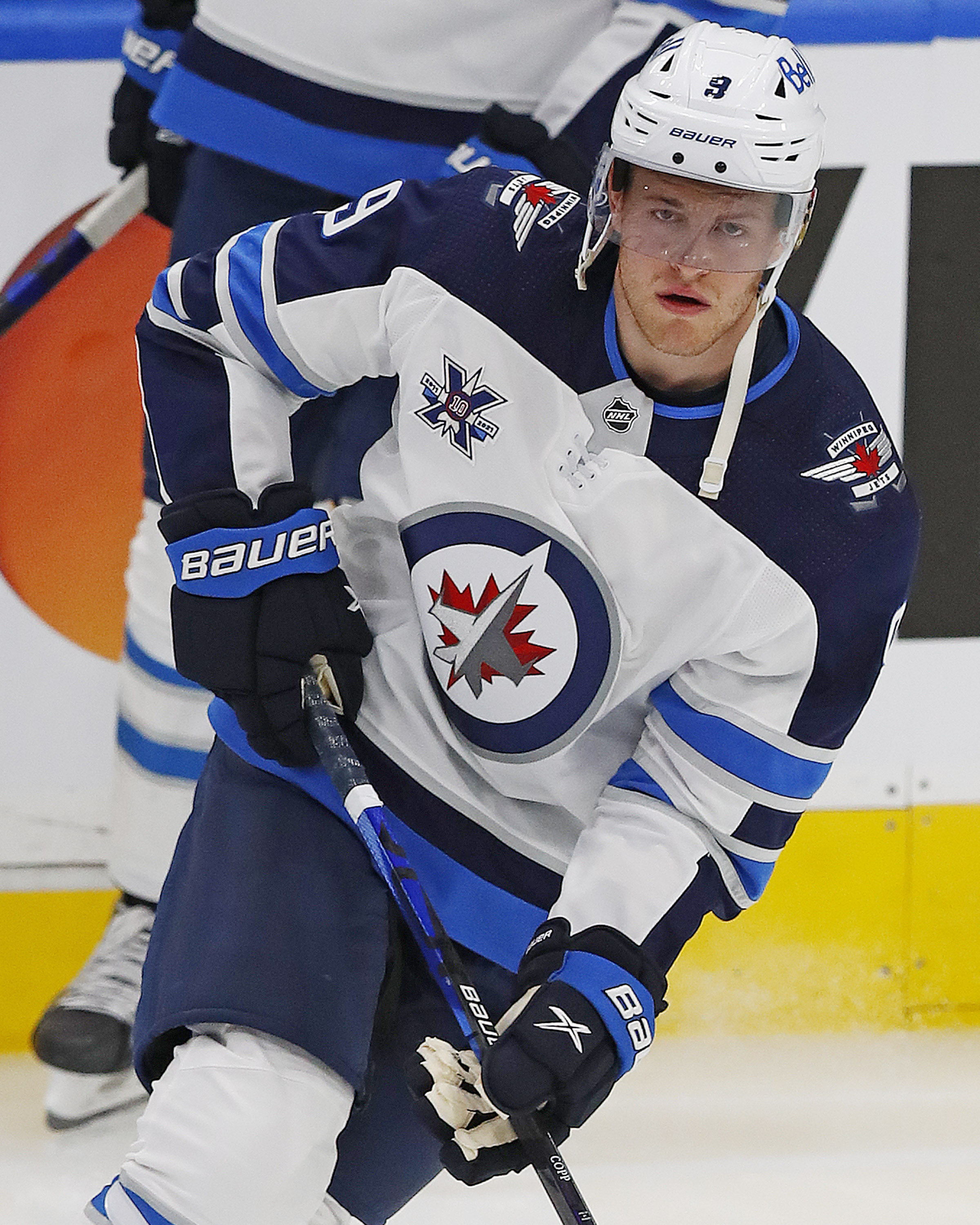 Their other top-six forwards that are under contract should be locks for protection and after Lowry inked a five-year, $16.25MM extension back in April, it’s a safe assumption that one of the remaining slots will be his. That leaves one spot left and a couple of viable options in Lowry’s linemates on Winnipeg’s third line.
Copp had shown flashes of offensive improvement over the previous few seasons but took that to another level this year, setting career highs in goals (15), assists (24), points (39), and ATOI (18:15). Whenever injuries struck, Copp was often the one to move up in the lineup while playing the wing or down the middle when needed. That type of versatile player is critical for teams to have and while he’s set to earn a raise from his $2.3MM qualifying offer in restricted free agency this summer in his final season of arbitration eligibility, it’s a price that Winnipeg (or Seattle, if he’s ultimately made available) would happily be willing to pay.
The other part of that third trio is Appleton whose track record isn’t quite as long. The 25-year-old was a full-time NHL player for the first time this season and he was fairly productive in a limited role, notching 12 goals and 13 assists in 56 games. Of those 25 points, all but one came at even strength (and the one special teams point was a power play assist). Five-on-five scoring is always highly coveted and the early indication is that Appleton is a capable contributor in that regard. He also only has a $900K cap hit through next season and productive low-cost depth is hard to come by. Being only able to protect one of Copp or Appleton will hurt.
Projected Protection List
F Kyle Connor
F Andrew Copp
F Pierre-Luc Dubois
F Nikolaj Ehlers
F Adam Lowry
F Mark Scheifele
F Blake Wheeler (NMC)
D Dylan DeMelo
D Josh Morrissey
D Neal Pionk
Skater Exposure Requirement Checklist
When Vegas had their expansion draft, a minimum of two forwards and one defenseman had to be exposed that were under contract and played either 40 games in the most recent season or 70 over the past two combined. Due to the pandemic, those thresholds have been changed to 27 games played in 2020-21 or 54 in 2019/20 and 2020-21 combined. In creating our expansion list for each team in this series, we will ensure that these criteria are met.
Forwards (2): Mason Appleton, Jansen Harkins
Defensemen (2): Nathan Beaulieu, Logan Stanley
While some teams will be losing veteran talent, it certainly feels like Winnipeg will be losing one of their younger regulars as their roster currently stands. Appleton looks like a promising late-bloomer and after being viewed as a potential bust, Stanley took an important step forward in his development this season and should be part of their future plans now. Is that enough for Cheveldayoff to make another side deal? He has roughly six weeks to make that decision.
Photo courtesy of USA Today Sports Images. Contract information courtesy of CapFriendly.