Salary Cap Deep Dive: Seattle Kraken
Navigating the salary cap is one of the most important tasks for a front office. Teams that can avoid total cap chaos by walking the tightrope of inking players to deals that match their value (or compensate for future value without breaking the bank) remain successful. Those that don’t often see struggles and front office changes.
PHR will look at every NHL team and give a thorough look at their cap situation for the 2024-25 season. This will focus more on players who are regulars on the roster versus those who may find themselves shuttling between the AHL and NHL. All cap figures are courtesy of PuckPedia. We’re currently covering the Pacific Division, next up is the Kraken.
Seattle Kraken
Current Cap Hit: $90,108,465 (above the $88MM Upper Limit)
Entry-Level Contracts
D Ryker Evans (one year, $898K)
F Tye Kartye (one year, $859K)
F Shane Wright (three years, $887K)
Potential Bonuses
Kartye: $57.5K
Wright: $3.0625MM
Total: $3.12MM
Seattle was slow-playing Wright’s development in his first couple of seasons and even into his first full NHL campaign, his ice time is being managed carefully. Accordingly, he’s not on track to reach any of his bonuses and is probably heading for a bridge contract barring a big offensive breakout over the next year or two. If he stays on the slower development path, that bridge agreement should come in around the $3.5MM range. Kartye had a solid rookie season in the bottom six and is in that same role this year. His bonuses are based on games played so that’s something he should be able to reach if he stays healthy. Given his role and limited offensive numbers, he’s also looking at a short-term second contract, one around the $1.5MM mark.
Evans is in his first full NHL season after impressing in partial duty last season. He has locked down a spot in Seattle’s top four and is tied for the team lead in scoring among blueliners. If that holds up, it wouldn’t be surprising to see GM Ron Francis try to work out a long-term deal, one that would check in a bit below their top veterans who are making a little over $7MM per season. A bridge agreement, meanwhile, would likely fall in the $4MM range. Either way, a big raise is coming his way this summer.
Signed Through 2024-25, Non-Entry-Level
D William Borgen ($2.7MM, UFA)
F Yanni Gourde ($5.167MM, UFA)
D Josh Mahura ($775K, UFA)
F Daniel Sprong ($975K, UFA)
F Brandon Tanev ($3.5MM, UFA)
For most of his contract, Gourde has been well worth the contract, generally producing above a 40-point pace. But he struggled last season and is off to a similar start offensively this year which will hurt his value. Now that he’s being deployed as more of a third-line option, it would be difficult to see him command a similar price tag at 33. But a multi-year deal around $4MM per season should still be within reach.
Tanev’s contract felt like a steep overpayment at the time for someone who had only reached 20 points once at the time it was signed. However, he has produced enough offensively (when healthy) on this deal to at least reasonably justify the cost while providing plenty of physicality and enough defensive acumen to make it a fair deal overall. While most teams want to cut salary from their bottom six, he could be an outlier and land another contract around this price point. Sprong didn’t have much luck on the open market last summer despite his second straight year of over 40 points and things haven’t gone well for him this year. Accordingly, another dip might be coming his way.
Borgen had two straight seasons of at least 20 points coming into this one but his production and playing time have slipped through the first quarter of this year. Heading into the year, a jump to the $3.75MM range seemed possible, especially as a right-hand shot but that might come down more toward the $3.5MM level on a multi-year deal now. Mahura was only able get a minimum contract after being non-tendered by Florida and with the limited role he has had so far, he’s unlikely to command more than that next summer.
Signed Through 2025-26
F Oliver Bjorkstrand ($5.4MM, UFA)
F Jordan Eberle ($4.75MM, UFA)
D Jamie Oleksiak ($4.6MM, UFA)
F Jaden Schwartz ($5.5MM, UFA)
F Eeli Tolvanen ($3.475MM, UFA)
Schwartz was one of Seattle’s first free agent additions, a move that hasn’t panned out as well as they hoped. When healthy, he’s a capable second-line forward but staying healthy has been a serious challenge thus far. He’ll be 34 when his next contract starts and it’d be surprising if he came in at this price tag next time. Something in the $4MM range on a medium-term deal might be more likely. Bjorkstrand was acquired as a cap dump from the Blue Jackets in 2022 and he has given Seattle two straight 20-goal seasons plus a 59-point effort last year. If he can keep near 60 points, he could land another million or so on his next deal. But if he reverts to a point total more in the 40s, Bjorkstrand might have to settle for a bit less than his current salary in 2026.
Eberle signed this deal last season, taking himself off the trade block in the process. He’s still a capable secondary scorer but considering he’ll be 36 on his next deal (subject to 35-plus provisions on a multi-year contract), it wouldn’t be surprising if he went year-to-year from here on out, allowing for the possibility for a lower base salary with reachable performance bonuses to allow the signing team more flexibility. Tolvanen has turned into one of the better waiver claims in recent memory, picking up 41 points last season while being on pace for 20 goals this year. Still, he’s a bit inconsistent which has kept him out of a full-time top-six role. If that continues and he settles in as more of a middle-six option, his open market value will take a hit although he could still get a small increase if he stays in that 40-point range.
 There was definitely some risk in the contract the Kraken gave Oleksiak after selecting him in expansion. He had been a third-pairing player up to that point with the exception of one year, the one that landed him this agreement. But Oleksiak has been able to maintain a top-four slot throughout his time with Seattle while even chipping in with a career year offensively in 2022-23. Of course, his offensive numbers don’t land him this role or this type of money but rather his defensive game (and being one of the tallest players in the league). The market isn’t as strong for the more stay-at-home type of players and Oleksiak will turn 34 early in the 26-27 season but even so, a small boost to the $5MM range on a medium-term pact could still be doable.
Signed Through 2026-27
F Andre Burakovsky ($5.5MM, UFA)
G Philipp Grubauer ($5.9MM, UFA)
D Vince Dunn ($7.35MM, UFA)
F Jared McCann ($5MM, UFA)
Burakovsky was another notable splash in free agency that hasn’t worked out particularly well thus far. Signed off a career year, he hasn’t been able to produce close to those numbers since then, nor has he stayed healthy. Lots can still change in the back half of the deal but he looks like someone heading for a cap hit closer to the $4MM range, if not less next time out. McCann, on the other hand, averaged 30 goals and 62 points over his first three seasons in Seattle, two of which were played on this contract. That’s a solid return for this price point and if those numbers continue, he could land closer to $7MM next time out, especially with the ability to play center.
Dunn is the other player who could challenge McCann as being the best of their original expansion picks. With a bigger role than he had with St. Louis, he has emerged as one of the better offensive blueliners league-wide while playing in all situations. In essence, he has the numbers of arguably a number one defender, if not a top-pairing piece. He’ll be turning 31 early in the 2027-28 season so a max-term contract is a very realistic possibility and if Dunn remains as impactful as he has been, he could add a couple million per season on that next deal.
 Grubauer was a free agent acquisition that carried some risk given that he was coming off a breakout year with a career-high in games played of 40. Paying him to be the undisputed starter for that long had the potential to bust. And bust it has. After putting up a .922 SV% in his best year with Colorado, he has yet to reach the .900 mark since then. Along the way, Grubauer has gone from being their number one goalie to a part-time backup and is off to a dreadful start this season. Barring a change in fortunes, Seattle will need to seriously consider buying out the remainder of this deal this summer, even with it carrying close to a $2MM dead cap charge next season, nearly $3.1MM the following year, and close to $1.7MM for two years after that.
Salary Cap Deep Dive: San Jose Sharks
Navigating the salary cap is one of the most important tasks for a front office. Teams that can avoid total cap chaos by walking the tightrope of inking players to deals that match their value (or compensate for future value without breaking the bank) remain successful. Those that don’t often see struggles and front office changes.
PHR will look at every NHL team and give a thorough look at their cap situation for the 2024-25 season. This will focus more on players who are regulars on the roster versus those who may find themselves shuttling between the AHL and NHL. All cap figures are courtesy of PuckPedia. We’re currently covering the Pacific Division, next up is the Sharks.
San Jose Sharks
Current Cap Hit: $81,214,232 (below the $88MM Upper Limit)
Entry-Level Contracts
G Yaroslav Askarov (one year, $925K)
F Macklin Celebrini (three years, $975K)
F William Eklund (two years, $863K)
F William Smith (three years, $950K)
D Jack Thompson (one year, $828K)
Potential Bonuses
Askarov: $850K
Celebrini: $3.5MM
Eklund: $850K
Smith: $850K
Total: $6.05MM
Celebrini is off to a good start to his career though injuries have cost him playing time already. While that won’t hurt in the long run, it could make a Calder Trophy push a little harder which is one of the potential ‘A’ bonuses, of which he has four of. While it’s still extremely early, the Sharks are hoping that he’s their top center of the future and we’ve seen the price tag for those players hover around $8MM per season, an amount that will probably need to go higher by the time this deal is up.
Smith has stayed healthy early on but has struggled in his first taste of the pros. While they’re probably unconcerned long-term and still view him as the second option behind Celebrini, this start likely takes him out of reaching most, if not all of his ‘A’ bonuses. If he lives up to his potential, it wouldn’t be shocking to see Smith in that $8MM range on his next deal. Eklund had an impressive first full NHL season last year and is on a higher pace this year. They’re hoping he has top-line potential which could get him in the $8MM range long-term as well although the fact he’s primarily being deployed on the wing could shave a little off his price tag.
Thompson was seeing regular action for the Sharks after an early-season recall before today’s demotion, albeit primarily on the third pairing. If he can reclaim that roster spot before too long, he could land in the $1.3MM range on a bridge contract in the summer.
Askarov has already signed his second contract and we’ll get to that later on. For this section, let’s focus on the bonuses. Given that he was just recalled this week and that they’re running a three-goalie rotation, it’s hard to see him playing enough to reach any of his four ‘A’ bonuses. He needs to get to 1,800 minutes (or 25 appearances with at least 30 minutes of playing time) to have a shot at qualifying for them.
Signed Through 2024-25, Non-Entry-Level
G Mackenzie Blackwood ($2.35MM, UFA)
D Cody Ceci ($3.25MM, UFA)
F Mikael Granlund ($5MM, UFA)
F Klim Kostin ($2MM, RFA)
F Luke Kunin ($2.75MM, UFA)
D Jan Rutta ($2.75MM, UFA)
F Givani Smith ($800K, UFA)
F Nico Sturm ($2MM, UFA)
G Vitek Vanecek ($3.4MM, UFA)
F Fabian Zetterlund ($1.45MM, RFA)
 Granlund opted to sign with the Sharks in 2023 on what amounted to a pillow deal to try to rebuild some value. He might have done just that. With an expanded role, he reached the 60-point mark last season and is producing more than a point per game in the first quarter of this season. As far as straight value goes, the Sharks have done pretty well with this deal. How things go on his next contract remains in some question, however. While Granlund is playing well in a top-line role, he’s not a top-line center on most teams and he has struggled with lesser roles at times in the past. With that in mind, it wouldn’t be surprising if his market wasn’t as strong as his numbers might indicate although another deal around this price point should be doable.
Kunin was a speculative non-tender candidate after a down showing last year but the two sides settled on this deal. He’s capable of being a versatile utility forward but hasn’t been able to produce with enough consistency thus far. Still, someone who can play all three forward positions, kill penalties, and play with an edge will be of interest on the open market and a contract around this price point on a multi-year agreement could happen. On the flip side, Kostin has not played well in either season of this contract and is more of a depth forward than a regular one. His 2021-22 efforts appear to be the outlier at this point and as a result, most of his offers in the summer are likely to be at the league minimum or very close to it.
Sturm was primarily a depth player before joining San Jose but became a capable middle-six option over his first two seasons which had him on track for a decent raise next summer. However, his early-season usage has him back in his old spot on the fourth line which won’t help his market. That said, given the demand for middlemen, he could still get a small increase on his next deal. Zetterlund wound up with a bridge deal after struggling upon being acquired in the Timo Meier deal. His first full season with the Sharks was a strong one with 24 goals and 20 assists and he’s on pace to eclipse those numbers this year. With arbitration rights, he’s on pace to triple this deal at a minimum if he can keep it up. Smith, meanwhile, has been more of a depth player over the years and is likely to stay around the league minimum again on his next deal.
Ceci was acquired from Edmonton in a cap-clearing move mid-offseason. He’s getting an opportunity to play a bigger role but most teams know his best role is in more of a fourth or fifth role. As someone who is a right-hand shot and can log 20-plus minutes a night, another deal in this range for a few years is a likely outcome. Rutta’s first season with San Jose last year wasn’t bad in a third-pairing role but he has struggled this season. If things stay as is, he probably won’t be able to land this much in the summer if he winds up playing a role on a team going deep into the playoffs, that could boost his value back up to around this price point.
Vanecek was brought in at the trade deadline last season to give them another veteran to try to help stabilize things to a point. He hasn’t fared too poorly all things considered but coming off a rocky year in New Jersey, his value has taken a hit. He could be a candidate for a one-year pillow deal but a two-year agreement at a price tag starting with a two is more likely. Considering how poorly San Jose’s back end has been at times, Blackwood has fared relatively well since joining the Sharks last summer. However, his overall numbers won’t be high enough to land him any sort of sizable raise. Something around this price tag should be doable though.
Signed Through 2025-26
F Ty Dellandrea ($1.3MM, RFA)
D Mario Ferraro ($3.25MM, UFA)
F Carl Grundstrom ($1.8MM, UFA)
D Timothy Liljegren ($3MM, UFA)
D Henry Thrun ($1MM, RFA)
D Jake Walman ($3.4MM, UFA)
F Alexander Wennberg ($5MM, UFA)
D Marc-Edouard Vlasic ($7MM, UFA)
Wennberg was a beneficiary of the Sharks wanting some veteran center depth and the demand for middlemen on the open market, yielding an above-market contract for a player who hasn’t eclipsed the 40-point mark since 2016-17. If he stays in the 30-plus-point range as he has since then, a more realistic price tag would be closer to $4MM in 2026.
Grundstrom was acquired over the summer after it looked like he might be non-tendered by Los Angeles. While he has shown a bit of a scoring touch in the past, he hasn’t been able to do so with enough consistency, resulting in him playing a lot on the fourth line. This price tag is on the high side for someone in that role; he’ll need to find a way to produce more if he wants any sort of notable raise. Dellandrea was acquired from Dallas in the hopes that a change of scenery would get him going. That hasn’t happened yet and he finds himself in the same limited role he had with the Stars. If that continues, a non-tender could be on the table.
 Vlasic has been a long-time core defender for the Sharks over his 18-year career, earning himself some Norris Trophy votes in the prime of his career. However, that prime was a long time ago. At his best, Vlasic was a key shutdown defender who could play on the top pairing and he signed this contract while being in that role. But for the most part since then, he has been more of a depth piece, either on the third pairing or as a healthy scratch. This season, he has yet to play due to a back injury but even when he returns, it’s likely to be in a limited role. He’s a buyout candidate next summer if San Jose decides to open up some cap space and if he was to hit the open market and consider going elsewhere, it’d be a minimum-salary agreement.
Walman was another cap casualty over the offseason, this time coming from Detroit. After being more of a fourth option with the Red Wings, he’s often on the top pairing and is doing well in that role. If that keeps up, he could make a case to push past the $5MM per season mark in 2026. Ferraro has been a speculative trade candidate for a while given his reasonable cap charge and his shutdown role. Limited offense will limit his earnings upside on the open market but we’ve seen players like that land around $4.5MM recently and that could be a reasonable price point for his next deal.
Liljegren was brought in from Toronto in yet another cap-clearing move (though this one came just recently). There was some risk had he made it to arbitration last summer, resulting in the two sides settling on this deal. Now, Liljegren needs to prove he can be a top-four player if he wants to beat this deal in his first trip through the open market. Thrun, meanwhile, is still looking to establish himself as a must-play top-six blueliner. Offensively, he can hold his own but he has scuffled in the defensive zone, resulting in him being more of a third-pairing player this season after being a top-four piece last year. He’s a safe bet to be qualified as things stand but he’ll need to show some improvement if he wants to get past the $2MM mark on his next deal when he’ll have arbitration rights.
Salary Cap Deep Dive: Los Angeles Kings
Navigating the salary cap is one of the most important tasks for a front office. Teams that can avoid total cap chaos by walking the tightrope of inking players to deals that match their value (or compensate for future value without breaking the bank) remain successful. Those that don’t often see struggles and front office changes.
PHR will look at every NHL team and give a thorough look at their cap situation for the 2024-25 season. This will focus more on players who are regulars on the roster versus those who may find themselves shuttling between the AHL and NHL. All cap figures are courtesy of PuckPedia. We’re currently covering the Pacific Division, next up is the Kings.
Los Angeles Kings
Current Cap Hit: $90,180,114 (above the $88MM Upper Limit)
Entry-Level Contracts
D Brandt Clarke (two years, $863K)
F Alex Laferriere (one year, $875K)
Potential Bonuses
Clarke: $850K
Laferriere had a solid rookie season last year while spending a lot of time in the bottom six. This year, he’s playing a little higher in the lineup and has responded by being one of their leading point-getters. If that holds, his bridge deal (a long-term pact would be surprising) should run past $3MM per season at a minimum, potentially higher if he stays at his current pace.
After spending most of last season in the minors, Clarke is now a regular and an important part of the back end in Los Angeles. He’s already putting up solid offensive numbers and that should continue which will only push his next contract higher. A bridge agreement could be trending toward starting with a four if this holds while a longer-term pact could climb closer to $7MM. Bonus-wise, Clarke has four ‘A’ bonuses in his deal at $212.5K apiece and at his current pace, he could have a shot at all four of them (assists, points, ATOI, and blocks).
Signed Through 2024-25, Non-Entry-Level
D Andreas Englund ($1MM, UFA)
D Vladislav Gavrikov ($5.875MM, UFA)
F Tanner Jeannot ($2.65MM, UFA)
D Caleb Jones ($775K, UFA)
F Arthur Kaliyev ($825K, RFA)
F Andre Lee ($775K, RFA)
F Trevor Lewis ($800K, UFA)
G David Rittich ($1MM, UFA)
Jeannot was acquired from Tampa Bay over the offseason with the hope a change of scenery could re-spark his offensive game. That hasn’t happened early on as he has spent some time on the fourth line. At this point, there’s a possibility that he’s heading for a pay cut; while his 24-goal, 41-point season was only a few years ago, that looks like the outlier and teams might not want to pay up for that. Kaliyev wanted a trade over the summer but one never materialized so he settled for a low-cost one-year deal and then was injured in training camp. If there isn’t a trade to be found once he returns, Kaliyev could be a non-tender candidate in the summer where he’d likely have to settle for another low-cost deal in this range.
Lewis has been on a one-year deal around this price tag for five straight years now and remains a capable fourth liner. If he wants to keep playing (he turns 38 in January), he should be able to continue that streak. Lee is holding his own on the fourth line in his first taste of NHL action. It’s likely that his next contract should be around the minimum but he could have a shot at a one-way agreement.
 Gavrikov took an interesting approach in free agency two years ago, electing to sign an early extension to remain with Los Angeles but opting for a short-term agreement to allow him to hit the open market in a more favorable environment. His offensive production hasn’t returned to the peak level he had in Columbus which will limit his upside to a point. That said, he could make a case to land this much or slightly more on a long-term agreement, if not even a max-term one. With several blueliners from this class already off the market, it wouldn’t be surprising to see Gavrikov wait this out a little longer to see if a dwindling market could help up his asking price.
Englund played a regular role on the third pairing last season but playing time has been harder to come by this time around. He’s someone who might best fit in a seventh role so while another one-way contract could come his way, it might have to come in slightly lower than this one. Jones spent time in the minors last season, leading to a two-way deal this time around. With very limited playing time so far, he doesn’t seem to be trending toward beating that by much next summer.
Rittich did rather well after being recalled early last season but opted to take this deal in May over testing the open market. He hasn’t fared as well early on this year, however. Even so, he’s likely still in the higher-end third-string option or lower-end backup tier which should get him another deal in this range.
Signed Through 2025-26
D Kyle Burroughs ($1.1MM, UFA)
F Adrian Kempe ($5.5MM, UFA)
F Anze Kopitar ($7MM, UFA)
D Jordan Spence ($1.5MM, RFA)
F Akil Thomas ($775K, RFA)
This is the first season of Kopitar’s cheaper deal after making $10MM per season on the last agreement. It’s supposed to reflect what should be a smaller role but that hasn’t been the case early in 2024-25 as he’s still an all-situations top-line center. Now 37, there’s some risk in terms of his age but the early returns on this contract demonstrate this could wind up as a team-friendly agreement. Another deal, if there is one, will likely reflect the expected lighter workload as well at that time.
Kempe turned the corner offensively in 2021-22 and hasn’t looked back since then, becoming a legitimate top-line threat. While his days of playing center are numbered which won’t help his case on the open market, he’s still positioning himself for a new deal that starts with a seven or possibly even an eight on a long-term pact. Thomas, meanwhile, is still getting his feet wet at the NHL level. He has some runway to develop and if all goes well, he should push past $1MM at least next time out.
Spence is playing on his bridge deal, one that’s slightly back-loaded and carries a $1.7MM qualifying offer. With Clarke taking on a bigger role offensively, that’s going to cut into Spence’s numbers potentially but as a right-shot player with some offensive upside, doubling the qualifying offer could still be possible. As for Burroughs, he’s in a similar situation as Englund, someone who may be best served in a reserve role. Accordingly, a small cut might be needed here as well.
Signed Through 2026-27
F Phillip Danault ($5.5MM, UFA)
D Drew Doughty ($11MM, UFA)
F Warren Foegele ($3.5MM, UFA)
G Darcy Kuemper ($5.25MM, UFA)
F Alex Turcotte ($775K, RFA)
Danault has shown a bit more offensively since coming to the Kings and has played with more consistency on that front, making him a quality second-line option for them thus far. If he can stay around the 50-point range, he could beat this price tag by a bit in 2027 but if his production slows, his next deal could look a fair bit like this one.
Foegele picked the right time for a career year last season as that helped him land this contract in free agency. If he can stay around 20 goals consistently, they’ll do alright with this one while he’d be in line for a small raise. That said, 20 goals is the outlier at this point of his career (though he’s off to a good start this season on that front). Turcotte took a rare three-year deal at the minimum, guaranteeing himself a one-way salary in the last two seasons. That gives him and the Kings plenty of time to see if he’s just a late-bloomer or a lottery selection likely to be viewed in the bust category. At the moment, when healthy, he’s primarily in a bottom-six role. If that kept up over the course of the deal, he could plausibly command a seven-figure salary next time out.
 When healthy, Doughty is still a legitimate all-situations number one defenseman. Price-wise, the deal holds up a little better now compared to when it was first signed as a record-breaker. Having said that, this is still on the high side, especially for a player with a lot of hard minutes under his belt and now two significant injuries in recent years. That swings the valuation of this deal back into negative territory (although his current injury has given them short-term LTIR flexibility if nothing else). Doughty will be entering his age-38 year on his next contract. Like Kopitar, there’s a very good chance the price tag at that time will be lowered by a few million per season to reflect his age and the possibility for a sharper decline at that time.
Kuemper was brought in as their new starter while shedding the Pierre-Luc Dubois contract that didn’t go well in its first year. Factoring in what they paid to get Dubois, the sequence of trades isn’t the prettiest but he gives them some stability between the pipes they haven’t had lately. He’ll be 37 when his next contract starts so this price tag might be as high as it gets.
Salary Cap Deep Dive: Edmonton Oilers
Navigating the salary cap is one of the most important tasks for a front office. Teams that can avoid total cap chaos by walking the tightrope of inking players to deals that match their value (or compensate for future value without breaking the bank) remain successful. Those that don’t often see struggles and front office changes.
PHR will look at every NHL team and give a thorough look at their cap situation for the 2024-25 season. This will focus more on players who are regulars on the roster versus those who may find themselves shuttling between the AHL and NHL. All cap figures are courtesy of PuckPedia. We’re currently covering the Pacific Division, next up is the Flames.
Edmonton Oilers
Current Cap Hit: $88,224,659 (above the $88MM Upper Limit)
Entry-Level Contracts
None on the active roster.
Signed Through 2024-25, Non-Entry-Level
D Evan Bouchard ($3.9MM, RFA)
F Connor Brown ($1MM, UFA)
D Travis Dermott ($775K, UFA)
D Ty Emberson ($950K, RFA)
F Corey Perry ($1.15MM, UFA)
F Derek Ryan ($900K, UFA)
F Jeff Skinner ($3MM, UFA)
Potential Bonuses
Perry: $250K
Skinner was somewhat of a surprising late entrant to the market after Buffalo elected to buy him out. He found what should be a good landing spot for a pillow deal, as long as he can stay in the top six. If he does, he could push past $4MM on a multi-year deal, closer to $5MM if he’s able to reach the 50-point mark. Perry fit in well after joining the team midseason, earning this agreement to stick around. At 39, it’s safe to say he’ll be going year-to-year from here on out. Bonus-wise, he’ll make $150K at the 15-game mark while $50K depends on Edmonton winning at least two playoff rounds and playing at least half the playoff games. The other $50K is if Edmonton makes it to the Stanley Cup Final while playing in half the games.
Brown’s cost this season is a bit misleading as the Oilers are also eating the $3.225MM in bonuses he earned last year. But for what he’s making in salary this year, he provides good value as a depth player who showed in the playoffs that he can be a key piece. Ryan has seen his role and production decline in recent years and he’ll be 38 before the end of 2024. This is a roster spot they’ll need to keep cheap so it’s possible they ask him to stay on a small cut in pay. If not, he could be a candidate for a PTO next summer.
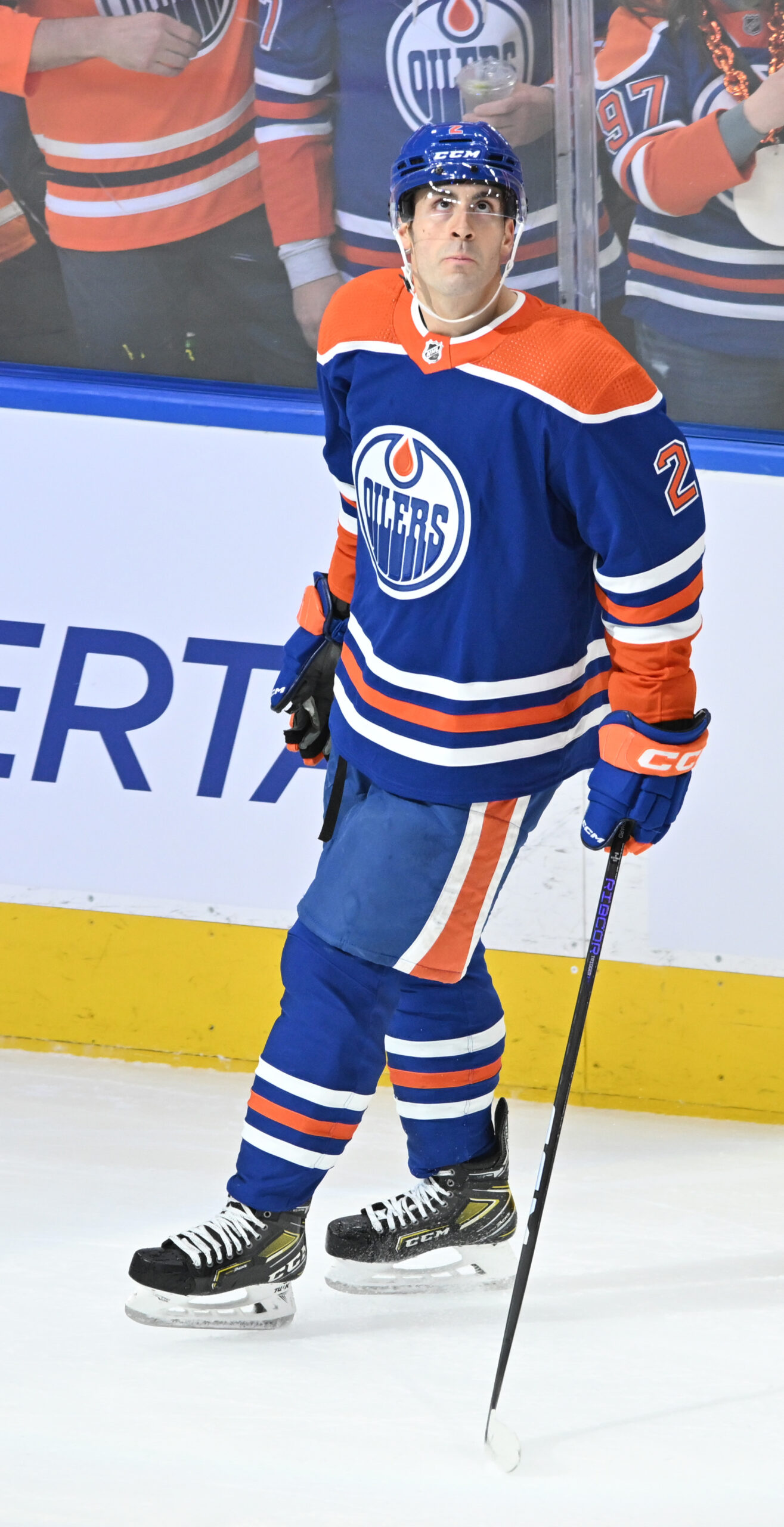 Former GM Ken Holland really only had one option with Bouchard last summer, they had to do a bridge deal to fit within their cap structure at the time and no offer sheet materialized while he wasn’t arbitration-eligible. The result is that Bouchard spent last season on a below-market deal and it’s the same thing this season. However, the pendulum is about to swing the other way in a big way. Bouchard had a breakout effort last season, averaging just over a point per game and did even better in the playoffs. His qualifying offer will be $4.3MM next summer but it’s widely expected he’ll double that and then some, especially if the sides are able to work out a long-term deal.
Emberson was picked up from San Jose as part of the Cody Ceci deal, one that netted Edmonton some cap savings and an intriguing blueliner. Now 24, he only made his NHL debut last season and he’ll need to get into 50 games this year for the Oilers to retain his RFA rights. It’s possible arbitration eligibility makes him a non-tender option but failing that, a small raise into the $1.3MM range could be doable. Dermott had to go the PTO route this year and if he stays in a reserve role, it’s quite likely he’ll stay at the minimum moving forward.
Signed Through 2025-26
F Viktor Arvidsson ($4MM, UFA)
D Mattias Ekholm ($6MM, UFA)*
F Adam Henrique ($3MM, UFA)
F Evander Kane ($5.125MM, UFA)
D Brett Kulak ($2.75MM, UFA)
F Connor McDavid ($12.5MM, UFA)
G Calvin Pickard ($1MM, UFA)
F Vasily Podkolzin ($1MM, UFA)
G Stuart Skinner ($2.6MM, UFA)
D Troy Stecher ($787.5K, UFA)
*-Nashville is retaining an additional $250K of Ekholm’s contract.
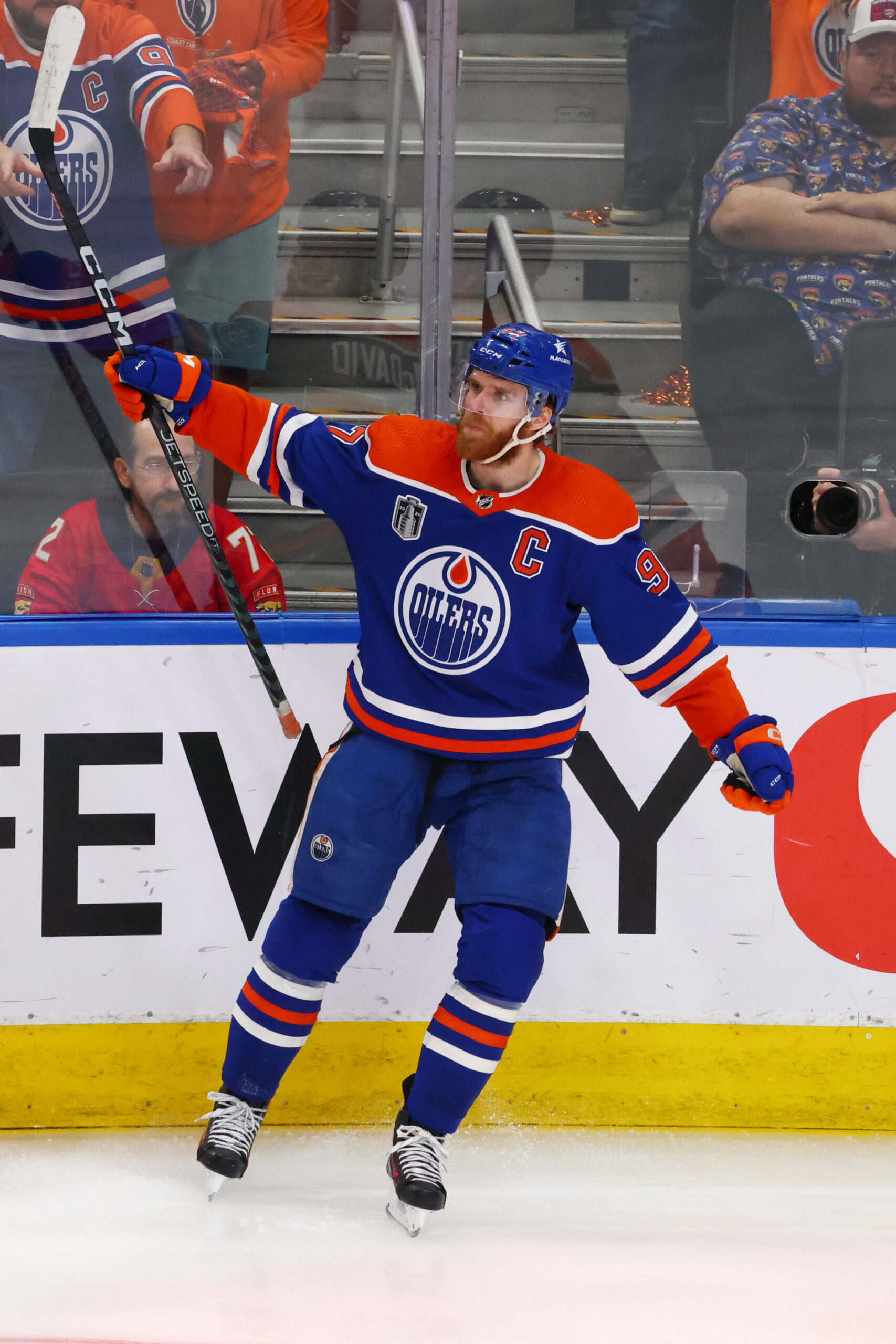 McDavid’s next contract is one that has been speculated about for several years now and discussion on that front will only pick up with him becoming extension-eligible this summer. His current contract was a record-breaker at the time for the highest AAV. His next one will set a new benchmark on that front and possibly could overtake Alex Ovechkin for the richest deal in league history ($124MM total over 13 years) despite the maximum length now only being eight seasons. That would bring the cap hit to $15.5MM and while that’s a very high price tag, McDavid has led the NHL in scoring in five of the last eight years. If Edmonton doesn’t give that type of money to him, someone will.
Kane has been effective when healthy since joining the Oilers, playing a legitimate top-six role. Considering he’s a power forward (those players often cost a premium), the cap charge is reasonable, as long as he’s in the lineup. He’s on LTIR right now, allowing Edmonton to exceed the cap for the time being. Arvidsson was Edmonton’s biggest commitment in free agency, a move that came as a bit of a surprise as the veteran was a candidate for a one-year pillow deal to try to rebuild his value after an injury-riddled 2023-24 campaign. Instead, the Oilers got him at a bit of a below-market rate assuming he’s able to produce at the second-line level he has before. He hasn’t done that early on but they’re probably not worried about that at this point.
Henrique was expected to just be a rental pickup for Edmonton but they were able to get him to take less than he was being offered elsewhere to stick around. Given his track record, it’s a good value contract as long as he can at least hold down a spot on the third line. That said, that role will also hinder his open-market value two years from now. Podkolzin was brought in to essentially fill Dylan Holloway’s roster spot following his offer sheet in St. Louis. At this point of his career, he’s unlikely to live up to his draft billing (tenth overall in 2019) but if he can emerge as a regular in the bottom six, Edmonton will get good value from the contract and acquisition if nothing else. He’ll be arbitration-eligible when this deal expires and depth pieces with that eligibility tend to be non-tender candidates. On a cap-strapped team like the Oilers, they’ll need to keep this roster spot around this price tag whether it’s Podkolzin or someone else.
Ekholm has been a terrific addition to their back end since being acquired near the 2022 trade deadline. He has helped stabilize things defensively while also showing more in the offensive zone than he did with Nashville. That said, he’ll be 36 when his current deal expires; players that age don’t tend to get significant raises. Instead, it wouldn’t be surprising if a three or four-year deal around this price point was the end result.
Kulak has seemingly been on speculative thin ice for a couple of years now with their cap crunch but he has remained each time. As a third-pairing blueliner, this contract is a bit on the expensive side but with them being comfortable moving him into the top four when injuries arise, it has held up okay so far. It wouldn’t be shocking to see him land another deal in this range (both term and price) in 2026. Stecher has been a serviceable depth defender for several years now but as long as he’s still in more of a limited role, his price tag should continue to be around the league minimum.
It would be fair to say that Skinner has been hit or miss while on this contract with not a lot in between. Nevertheless, at the price point of a decent backup, his overall success rate has been better than that despite a slow start this season so they’ve received good value so far. If he can improve and play more consistently, it’s possible that he could double this price point but if he continues to be on the extreme ends of hot or cold, it’d be hard to see enough of a market emerge for him to get starter money. Pickard had primarily been a third-string option until partway through last year which is why his contract was still quite low for a backup. If he holds that down and is somewhat consistent, he could also possibly double this price point although Edmonton would be hard-pressed to pay that much for their second goalie.
Signed Through 2026-27
F Mattias Janmark ($1.45MM, UFA)
Janmark struggled considerably during the regular season and it looked as if they’d be moving on from him. However, he wound up playing a key supporting role during their playoff run, giving him a boost in value heading to the open market which allowed him to get a small raise, some job security, and even some trade protection. Assuming he stays in the same role as he has been lately, it’s hard to foresee him getting much more than this three years from now.
Salary Cap Deep Dive: Calgary Flames
Navigating the salary cap is one of the most important tasks for a front office. Teams that can avoid total cap chaos by walking the tightrope of inking players to deals that match their value (or compensate for future value without breaking the bank) remain successful. Those that don’t often see struggles and front office changes.
PHR will look at every NHL team and give a thorough look at their cap situation for the 2024-25 season. This will focus more on players who are regulars on the roster versus those who may find themselves shuttling between the AHL and NHL. All cap figures are courtesy of PuckPedia. We’re currently covering the Pacific Division, next up is the Flames.
Calgary Flames
Current Cap Hit: $69,288,958 (below the $88MM Upper Limit)
Entry-Level Contracts
F Matthew Coronato (one year, $925K)
F Samuel Honzek (three years, $918K)
F Connor Zary (one year, $863K)
Potential Bonuses
Coronato: $850K
Honzek: $500K
Zary: $212.5K
Total: $1.5625MM
When he was with the Flames, Coronato’s role and production were limited and he was deployed the same way early on this year before being demoted earlier this week. With that in mind, a short-term bridge deal is likely coming his way, one that shouldn’t cost much more than his current deal. Meanwhile, his bonuses are unlikely to be met. Honzek made the team out of camp, playing his first four NHL games but has already landed on IR. It’s too early to forecast what his next deal will be while his bonuses aren’t likely to be reached unless there is a portion split off for games played.
Zary, meanwhile, is a bit more established after getting into 63 games last season where he averaged over half a point per game. He’s at a better rate in the early going this year while ranking in the top five for ATOI. Someone with this type of profile could land a longer-term agreement which would likely push past the $5MM mark. The safer bet here would be a bridge deal, however, one starting with a three. If he stays at his current pace, he should easily reach his one ‘A’ bonus.
Signed Through 2024-25, Non-Entry-Level
D Kevin Bahl ($1.05MM, RFA)
D Tyson Barrie ($1.25MM, UFA)
D Joel Hanley ($787.5K, UFA)
F Adam Klapka ($775K, RFA)
F Andrei Kuzmenko ($5.5MM, UFA)
F Anthony Mantha ($3.5MM, UFA)
D Brayden Pachal ($775K, UFA)
F Kevin Rooney ($1.3MM, UFA)
G Dan Vladar ($2.2MM, UFA)
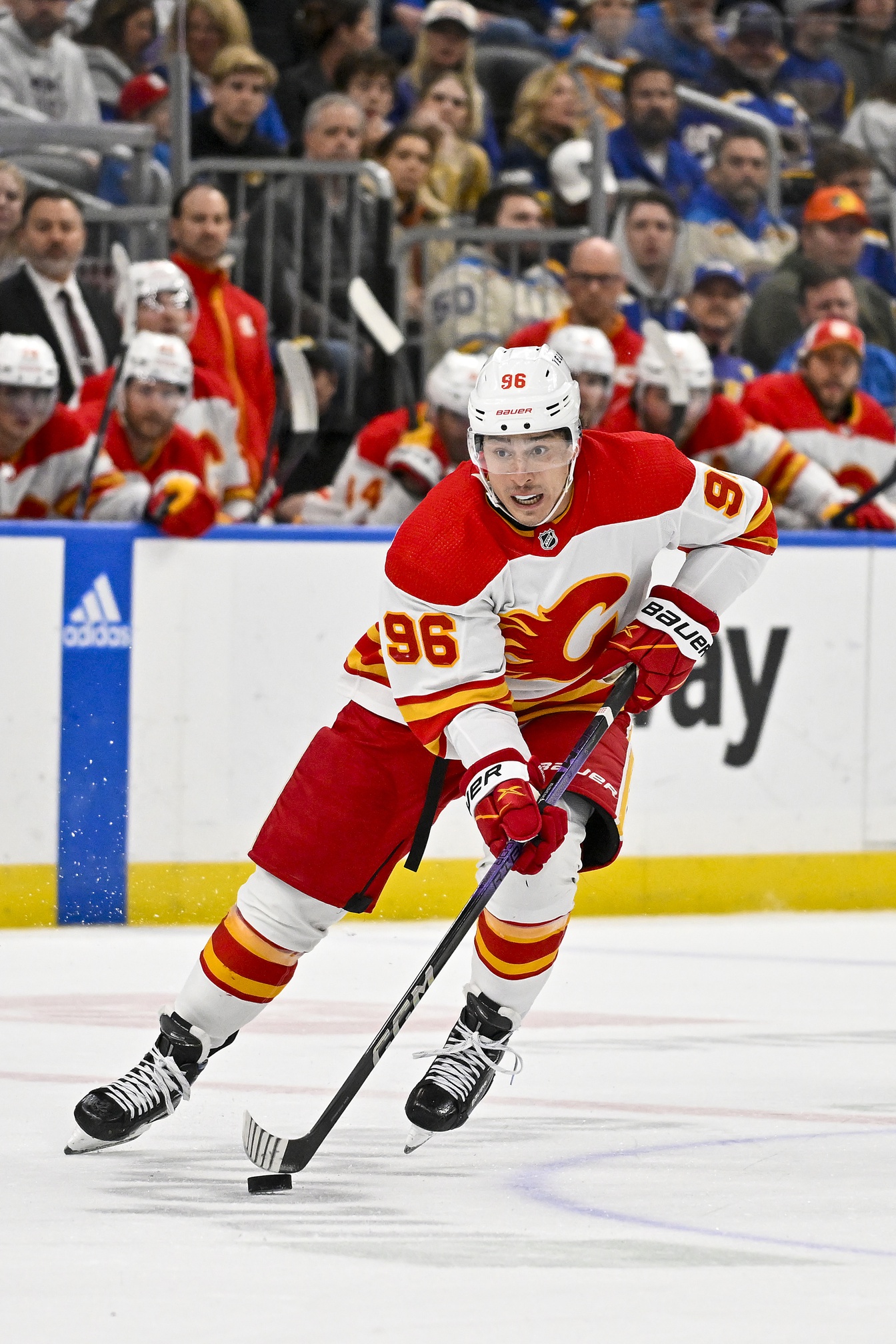 Kuzmenko is one of the more intriguing potential unrestricted free agents this coming summer. His first year was quite impressive with 39 goals and 74 points but there was still some uncertainty about his repeatability, leading to this contract. That wound up being wise for Vancouver as Kuzmenko struggled last season to the point of being a cap dump to the Flames. To his credit, he played better after the swap and is off to a good start this season. If he gets back to that 30-goal mark and shows that last year was the outlier, he could still land a contract around this price point with a bit more term this time around heading into his age-29 year. But if he struggles again, something closer to $4MM might be where he lands.
Mantha didn’t have a strong market this past summer, leading to this contract where he’s hoping to play a big role and show that he’s worth a pricey long-term agreement. He’s off to a decent start early on and the perceived upside might still be there. If he rebounds, something in the $5MM range could happen; otherwise, he could stay around this price tag. Rooney has had a very limited role with the Flames over his first two-plus seasons with them. Accordingly, he should be closer to the league minimum moving forward. Klapka has seen fourth-line action in his limited NHL minutes. Accordingly, while his qualifying offer is for just under $814K, it wouldn’t be shocking to see Calgary offer a deal for the minimum with a higher AHL salary next time.
Barrie had a rough year last season and despite a track record of being a solid offensive producer from the back end, his market basically cratered to the point of needing to take a PTO. With a limited role early on, it’s hard to project much of a raise at this point unless he can secure a full-time spot. Bahl is more of a throwback stay-at-home defender and the lack of offensive numbers will hurt him. Still, he’s viewed as part of their longer-term plans so it wouldn’t be surprising to see a four or five-year deal come his way with a price tag starting with a three.
Hanley hasn’t played much in the NHL in recent years but he has also been a full-time NHL player since the 2020-21 campaign, albeit primarily in a seventh role. That’s likely to keep him around the minimum next time out, probably again on a one-way price tag. Pachal has also spent a lot of time in the sixth or seventh role and while he’s getting a chance to play more regularly in Calgary, it’s still on the third pairing. Accordingly, it’s hard to see him landing much more than $1MM next summer.
Vladar struggled considerably last season before undergoing hip surgery. If he were to repeat the same type of performance this year, he’d be looking at closer to half of this price point. However, indications are that he’s now healthier than he was the last couple of years and is off to a good start in limited action. Given the ups and downs, he’s probably not going to be able to command top dollar for a backup option but the two-year, $6.6MM deal Laurent Brossoit received from Chicago this summer might be doable if Vladar has a bounce-back year.
Signed Through 2025-26
D Rasmus Andersson ($4.55MM, UFA)
F Mikael Backlund ($4.5MM, UFA)
D Jake Bean ($1.75MM, UFA)
F Ryan Lomberg ($2MM, UFA)
D Daniil Miromanov ($1.25MM, UFA)
F Martin Pospisil ($1MM, RFA)
G Dustin Wolf ($850K, RFA)
At 35, Backlund is nearing the end of his playing days but he still played top-line minutes last season and is averaging even more early on this year. As long as he can hold down a regular spot in the top six and be his usually strong self defensively, Calgary will do well with this deal. If that holds up through next season, another short-term contract in this price range could happen.
Lomberg was brought over from Florida in free agency on a deal that will be tough to justify from a value perspective as this contract for a player coming off a seven-point season isn’t much bang for the buck. However, GM Craig Conroy identified that he wanted to add some grit and the fact it cost this much to get him suggests he had a relatively strong market. Pospisil wound up on a bridge deal after only securing a regular NHL spot last season. Even so, it’s a team-friendly agreement and if he shows he’s capable of more offensively, it will be a significant bargain. If he can move into a top-six role – something they’ve already experimented with – he could triple this (or more) in 2026.
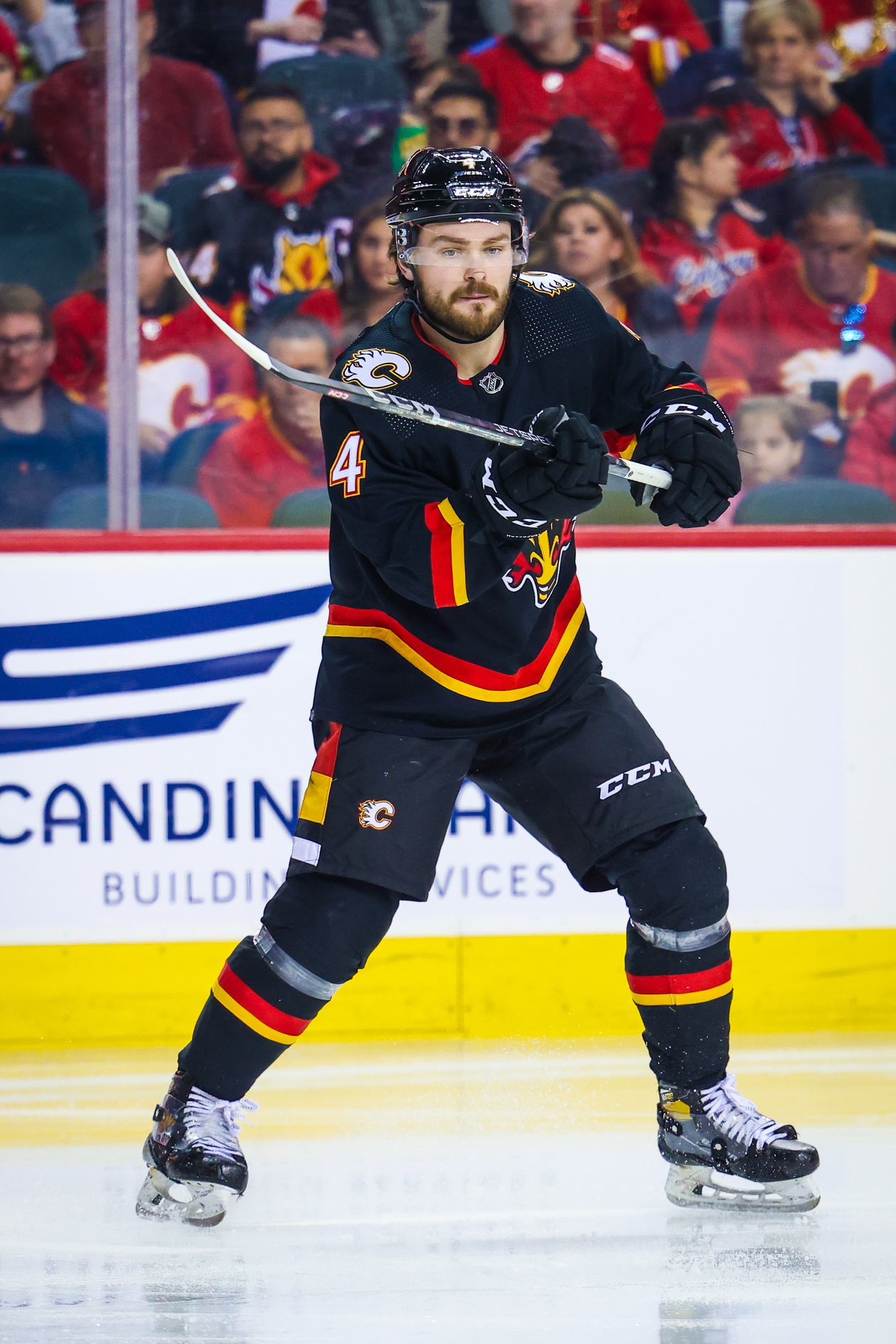 At the time Andersson’s deal was signed, it looked a bit risky. He hadn’t recorded more than 22 points in a season and had yet to average 20 minutes a game. However, it has worked out arguably better than Calgary could have hoped for. His offensive production has improved considerably, topped by a 50-point effort in 2021-22. He has become an all-situations player who has played on the top pairing for the last few years. That alone will help give him a very strong market in free agency before even considering the fact he’s a right-shot player, the side that is always in premium demand. A max-term deal with an AAV starting with a seven looks like a given at this point, if not more.
Bean came to his hometown team after being non-tendered by Columbus, taking a pay cut in the process to do so. Once touted as a high-end prospect, he has settled in more as a depth defender to this point in his career. This price tag for a regular on the third pairing is manageable but he’ll need to find a way to at least get into a number five slot if he wants to beat $2MM again next time out. Miromanov was acquired and quickly extended last season, giving him some security and Calgary a low-cost two-year look at a player who had shown flashes of upside in his limited action with Vegas. At this point, establishing himself as a full-timer is the first goal, one that would allow him to stay around this price tag. If he works his way into a fourth or fifth role between now and then, doubling this (or a bit more) could be doable.
Wolf already looks like quite a bargain given some of the other contracts promising but unproven goalies have signed recently (with an AAV higher than Wolf’s total contract value). He’s their goalie of the future and if he locks down the starting role by then, his next deal should vault past the $5MM mark at a minimum.
Signed Through 2026-27
F Blake Coleman ($4.9MM, UFA)
Coleman had a breakout performance last season, notching 30 goals while passing the 40-point mark for the first time of his career. From a value perspective, this price tag would be a bargain if he could maintain that type of output. Of course, his point total is usually in the 30s and at that level, this is an above-market contract. That said, with the role he fills and Calgary’s cap space, it’s not an overpayment they’re probably too concerned about at this point.

Salary Cap Deep Dive: Anaheim Ducks
Navigating the salary cap is one of the most important tasks for a front office. Teams that can avoid total cap chaos by walking the tightrope of inking players to deals that match their value (or compensate for future value without breaking the bank) remain successful. Those that don’t often see struggles and front office changes.
PHR will look at every NHL team and give a thorough look at their cap situation for the 2024-25 season. This will focus more on players who are regulars on the roster versus those who may find themselves shuttling between the AHL and NHL. All cap figures are courtesy of PuckPedia. We’re currently covering the Pacific Division, first up is the Ducks.
Anaheim Ducks
Current Cap Hit: $68,314.167 (below the $88MM Upper Limit)
Entry-Level Contracts
F Leo Carlsson (two years, $950K)
G Lukas Dostal (one year, $812.5K)
F Cutter Gauthier (two years, $950K)
D Tristan Luneau (three years, $865K)
F Mason McTavish (one year, $894K)
D Pavel Mintyukov (two years, $918K)
D Olen Zellweger (two years, $844K)
Potential Bonuses:
Carlsson: $3.225MM
Gauthier: $950K
Luneau: $80K
McTavish: $2.5MM
Mintyukov: $800K
Total: $7.555MM (exceeds the 7.5% cap by $955K; that amount counts as a direct charge against the salary cap)
Anaheim took things slow with Carlsson last season, limiting him to just 55 games. However, he played big minutes in those appearances and is seeing similar ice time early on this year. That gives him a good chance to meet $1MM of his ‘A’ bonuses while the rest are unlikely. We’ve seen the price tag for top young centers approach the $8MM mark post-entry-level and at this point, there’s little reason to think Carlsson shouldn’t be in that range as well. Gauthier is in his first full NHL season after turning pro late last year. Anaheim has high hopes for him as well although he’s obviously less proven at this point, making a second contract much harder to forecast. His bonuses are also of the ‘A’ variety and could be achievable depending on the role he carves out for himself.
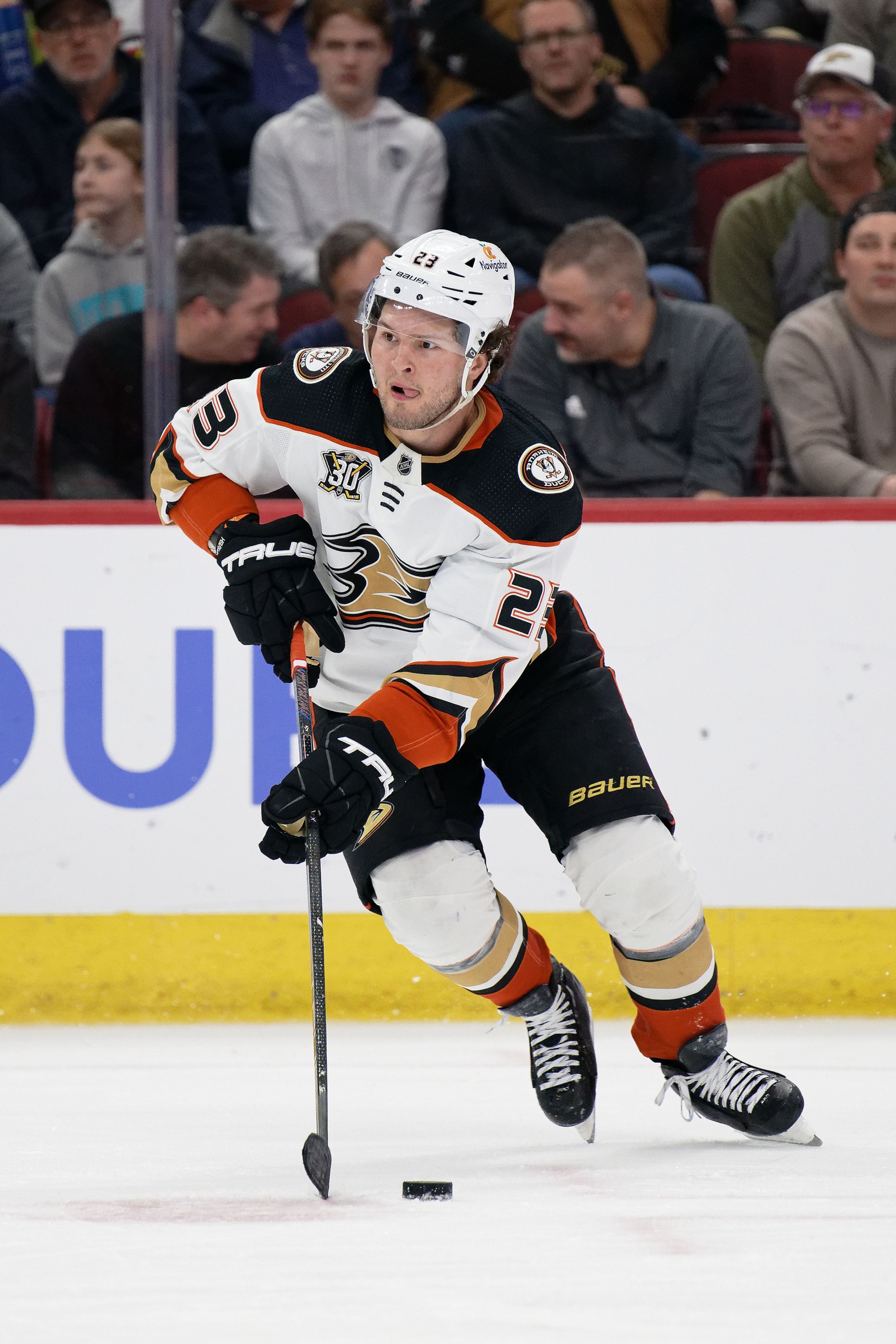 McTavish is the other young middleman that GM Pat Verbeek will be looking to sign in the relatively near future. His first two full NHL seasons saw him just surpass the 40-point mark but being the third-overall selection, it’s fair to say that he’s still envisioned as being part of their long-term core. His numbers at this point come in a bit below Matthew Beniers (who signed for seven years and $50MM on an extension that begins next season). That would peg a long-term price tag at or just below $7MM (closer to $7.5MM on an eight-year agreement). Alternatively, if they go with a bridge contract, that type of deal would be closer to $4MM on a two-year pact, $4.5MM or so on a three-year agreement. He has $850K of ‘A’ bonuses in his deal and reasonably could max out on those with a strong showing this season.
On the back end, Mintyukov is someone they have high hopes for as another high draft pick. He had a solid rookie campaign and is logging heavy minutes early on this year. The market for some top blueliners coming off their entry-level deals who aren’t elite offensively has pushed past $8MM recently. It’s not unfathomable that Mintyukov gets to that level over the next two seasons. He has a good chance of reaching his ‘A’ bonuses based on his early-season usage.
Luneau missed almost all of last season which doesn’t help from a development perspective but he didn’t burn the first year of his deal either. For this year, the priority will be simply getting regular game reps which makes projecting his next deal all but impossible at this point. His bonuses are games-played based so staying healthy will allow him to reach at least most of those. As for Zellweger, he was dominant at the AHL level last year and held his own in limited minutes. A bridge agreement is likely for him and with what’s likely to be decent offensive numbers, it should push past at least $2MM.
Dostal has been thrown to the wolves at times but has put up more than respectable numbers over his first couple of NHL seasons. Is he their starter of the future though? That’s not a given so it wouldn’t be surprising to see him land a bridge deal. Given the contracts handed out recently to Yaroslav Askarov ($2MM AAV) and Jesper Wallstedt ($2.2MM AAV), Dostal’s contract should come in at a higher rate than that.
Signed Through 2024-25, Non-Entry-Level
D Brian Dumoulin ($3.15MM, UFA)
F Robby Fabbri ($4MM, UFA)
F Brett Leason ($1.05MM, RFA)
F Isac Lundestrom ($1.5MM, RFA)
F Brock McGinn ($2.75MM, UFA)
D Urho Vaakanainen ($1.1MM, RFA)
G James Reimer ($1MM, UFA)
F Frank Vatrano ($3.65MM, UFA)
Fabbri was picked up from Detroit in a cap-clearing move over the summer which wasn’t necessarily the worst outcome for him as he’ll play a bigger role with the Ducks than he otherwise would have. Even so, given his long injury history, his next deal should check in closer to the $2.75MM range even though he consistently averages over half a point per game when he’s in the lineup. Vatrano found another gear offensively last season with 37 goals, positioning himself nicely for the type of long-term deal that has eluded him thus far in his career. He’ll be in his age-31 year next season so a max-term pact is off the table but five or six years could be doable. If he can produce at a similar rate this year, that contract should push well past the $6MM mark.
McGinn is a serviceable fourth liner whose contract pays him more than that. That’s likely to be corrected next summer when his deal should come in around half of this amount. Lundestrom might be at the end of his rope with Anaheim if things don’t go well this year. He took a pay cut to avoid being non-tendered this summer and until he can establish himself as a consistent top-nine center, he’ll be hard-pressed to land a sizable increase. Leason, meanwhile, was non-tendered this summer to avoid arbitration eligibility but returned with a $250K raise in salary. Another double-digit goal performance this season would help his value and push it closer to the $1.5MM range but he remains a non-tender risk nonetheless.
Dumoulin was also brought in with Seattle needing to clear salary. His first year away from Pittsburgh wasn’t the greatest although he’ll at least benefit from likely a slightly bigger role in Anaheim. Even so, his market wasn’t strong last time out and probably isn’t going to be much better barring an improved performance this year. He could still land something around this price tag but a big raise is unlikely. Vaakanainen has been more of a depth defender at this point of his career and has already been scratched this season. He was non-tendered last summer to avoid arbitration rights and probably is heading for a similar outcome this time around, even if he’s worth something around this price point on the open market.
Reimer was picked up off waivers as injury insurance, sparing him from the third-string role he was heading for in Buffalo (at least for the time being). At 36, he’s going to be going year-to-year moving forward, likely in the lower-end backup or third-string role so this price point is where his next deal should land as well.
Signed Through 2025-26
D Cam Fowler ($6.5MM, UFA)
D Radko Gudas ($4MM, UFA)
F Ross Johnston ($1.1MM, UFA)
D Jackson LaCombe ($925K, RFA)
F Trevor Zegras ($5.75MM, RFA)
Zegras and the Ducks couldn’t work out a long-term deal, settling on this bridge agreement last year. The first season didn’t go well, to put it lightly as he battled injuries and ineffectiveness. At this point, it’s hard to project a significant increase for his next contract unless he’s able to get back to his previous 60-point form. Johnston is a fourth-line enforcer and with a lot of teams not carrying those, that limits his long-term value. Still, as long as there are at least some teams open to deploying one, another contract around this price should be doable.
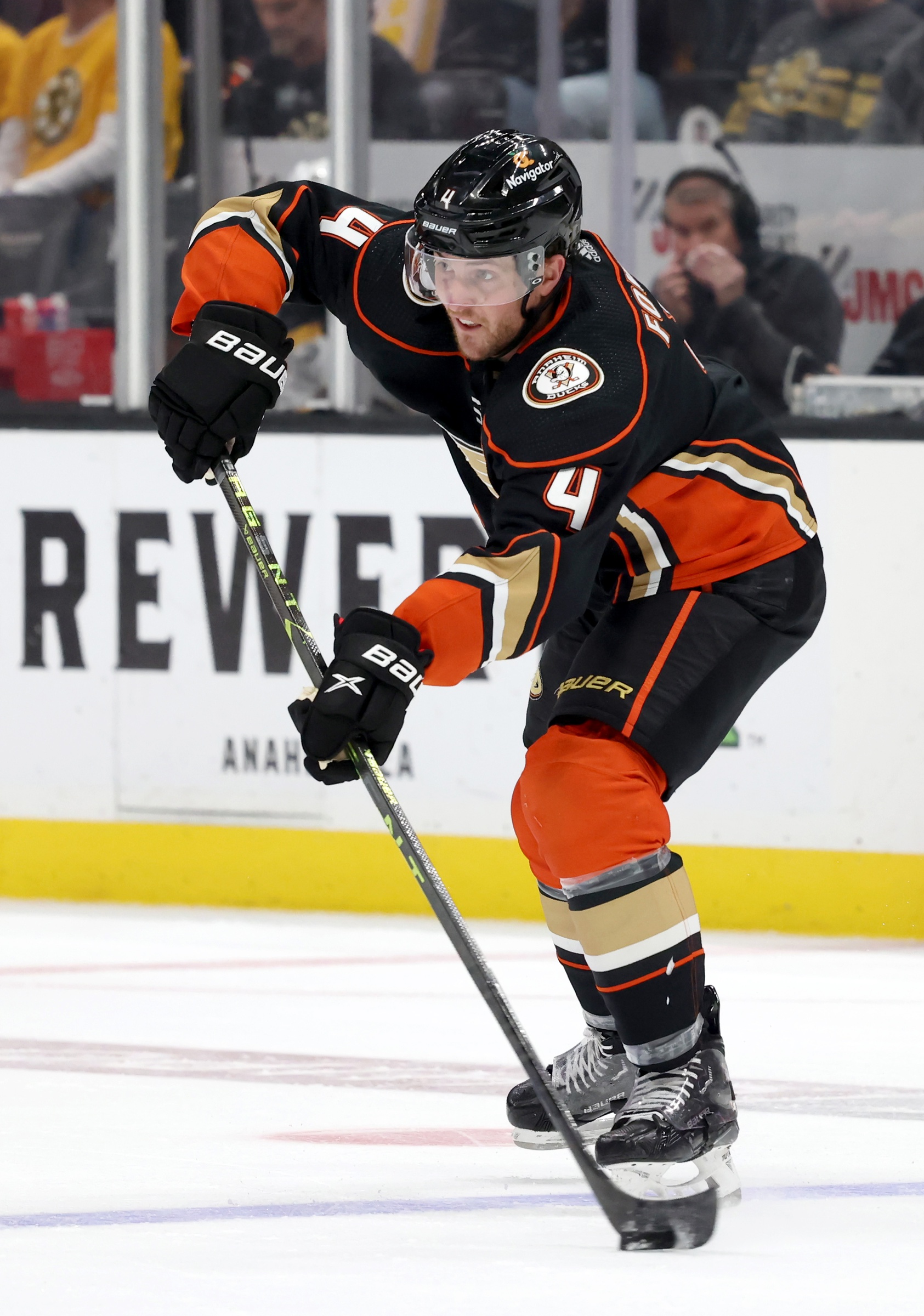 Fowler’s value depends on the eye of the beholder. He’s certainly not a true number one defenseman but he has held that role for Anaheim for several years now and has done relatively well with it. Given the minutes he covers, his price tag is solid value relative to others in that situation. But if he was deployed in a more optimal spot (either second or third on the depth chart which is where he’d land on a lot of other teams), the contract moves somewhere between market value and a slight overpayment. Fowler will be 34 when his next deal starts and if he’s elsewhere in a lesser role at that time, it’s hard to see a raise coming his way. Instead, another multi-year deal around this price tag (in a higher cap environment) might be where he lands.
The fact that Gudas landed four years at this price point after primarily playing on the third pairing raised some eyebrows but it has worked so far for Anaheim. The new captain has moved into the top four and handled it relatively well. Having said that, he’ll be 36 when this deal expires so again, a raise isn’t overly likely. A two-year deal around this price point could be, however. LaCombe signed what’s frankly a below-market bridge contract for someone who averaged over 19 minutes a game the year before. However, he at least secured a one-way salary (which is notable given that he’s still waiver-exempt) while he’ll have arbitration rights next time out. If he can shoulder a similar workload for the next two years, tripling this price tag could be doable.
Signed Through 2026-27
G John Gibson ($6.4MM, UFA)
F Alex Killorn ($6.25MM, UFA)
F Ryan Strome ($5MM, UFA)
Killorn was a surprise signing in free agency last summer, both in terms of Anaheim getting him and the contract he received. The idea was to add a quality veteran who could play in the top six and work with the young forward group. But things didn’t go quite as planned in year one and, already 35, it’s hard to forecast a sharp improvement. And considering he’ll be entering his age-38 year in 2027-28, this might be his last contract. Strome hasn’t been able to match the output he had with the Rangers but now has five straight seasons of more than 40 points under his belt. Given the annual high demand for centers, he could land a similar contract if he was on the open market now so thus far, the Ducks are getting a fair return on his agreement.
It wasn’t that long ago that Gibson was viewed as one of the top goalies in the league with his contract looking like a bargain relative to other top-paid starters. But that has flipped in recent years. His save percentage in the past five seasons combined is just .900, a mark that’s below league average. Having someone below average in that mark making top-ten money isn’t ideal. It’s possible that a change of scenery could allow him to bounce back to a point but it’s unlikely he’d rebound to a level of play that would make this a team-friendly pact.
Salary Cap Deep Dive: Washington Capitals
Navigating the salary cap is one of the most important tasks for a front office. Teams that can avoid total cap chaos by walking the tightrope of inking players to deals that match their value (or compensate for future value without breaking the bank) remain successful. Those that don’t often see struggles and front office changes.
PHR will look at every NHL team and give a thorough look at their cap situation heading into the 2024-25 season. This will focus more on players who are regulars on the roster versus those who may find themselves shuttling between the AHL and NHL. All cap figures are courtesy of PuckPedia. We’re currently covering the Metropolitan Division, next up is the Capitals.
Washington Capitals
Current Cap Hit: $98,665,965 (above the $88MM Upper Limit)
Entry-Level Contracts
F Hendrix Lapierre (one year, $863K)
Potential Bonuses
Lapierre: $445K
Lapierre spent the bulk of last season with Washington with some short stints with AHL Hershey mixed in. Most of that time was in a bottom-six role, one he’s likely to have this season as well which means his bonuses are unlikely to be met, aside from possibly any games-played ones. A bridge agreement should be the outcome for Lapierre who, if he stays in the bottom six for most of this season, could possibly double his current price tag next summer.
Signed Through 2024-25, Non-Entry-Level
D Alexander Alexeyev ($825K, RFA)
F Nicklas Backstrom ($9.2MM, UFA)
D Ethan Bear ($2.0625MM, UFA)
D Jakob Chychrun ($4.6MM, UFA)
F Nic Dowd ($1.3MM, UFA)
G Charlie Lindgren ($1.1MM, UFA)
F Andrew Mangiapane ($5.8MM, UFA)
D Dylan McIlrath ($775K, UFA)
F T.J. Oshie ($5.75MM, UFA)
F Taylor Raddysh ($1MM, UFA)
G Logan Thompson ($766.7K, UFA)
F Jakub Vrana ($775K, UFA)
Let’s get Backstrom and Oshie out of the way together as they’re in the same situation. Backstrom remains on LTIR where he was for most of last season while it’s unlikely that Oshie will be able to suit up this season either. GM Chris Patrick’s early-offseason spending was a strong indicator that the team doesn’t believe Oshie will be cleared to play.
Mangiapane was one of the additions through that early spending. After scoring 35 goals in 2021-22 (yielding this contract), he has just 31 in the two years since then although he has reached at least 40 points each time. At this point, a small pay cut could be coming but if he can even get back to 30 goals with his new team, Mangiapane could push past $6MM next summer.
Dowd has gone from being a regular fourth liner a few years ago to a regular third liner, pushing past 20 points in three straight years now. A center who can kill penalties, he’s in line to potentially add another million per season or so to that number, albeit on a short-term deal as he’ll be 35 next summer. Raddysh was non-tendered this summer, resulting in him looking for a short-term rebound deal. Only a year removed from a 20-goal campaign, he could double this next summer if he can get back to the 15-goal mark or so. Vrana had to earn a deal the hard way through a PTO but landed one earlier this week. After bouncing around a bit in recent years, it’s hard to see him commanding much more than the minimum unless he has a big season offensively.
Chychrun was brought in via an early July trade to help bolster the back end. He doesn’t produce enough to be a high-end threat offensively but he has reached the double-digit goal mark in three of the last five years and reached the 40-point plateau last season as well. If he stays in that range while continuing to play heavy minutes, his next deal could surpass $7MM on a long-term agreement.
Bear was a midseason signing last year that hasn’t panned out yet. After exiting the Player Assistance Program over the offseason, he wound up not making the team and cleared waivers earlier this month. He’ll carry a pro-rated $912.5K cap charge while with AHL Hershey and if he’s there all season, he’ll be looking at something closer to the minimum next summer. Alexeyev has had a limited role so far in his NHL action, primarily playing part-time on the third pairing. His qualifying offer checks in just below $920K with arbitration rights next summer but Washington won’t be able to afford that roster spot costing much more than that. McIlrath, meanwhile, has primarily been in the minors in recent years and accordingly, his next deal should come in at or near the minimum salary again.
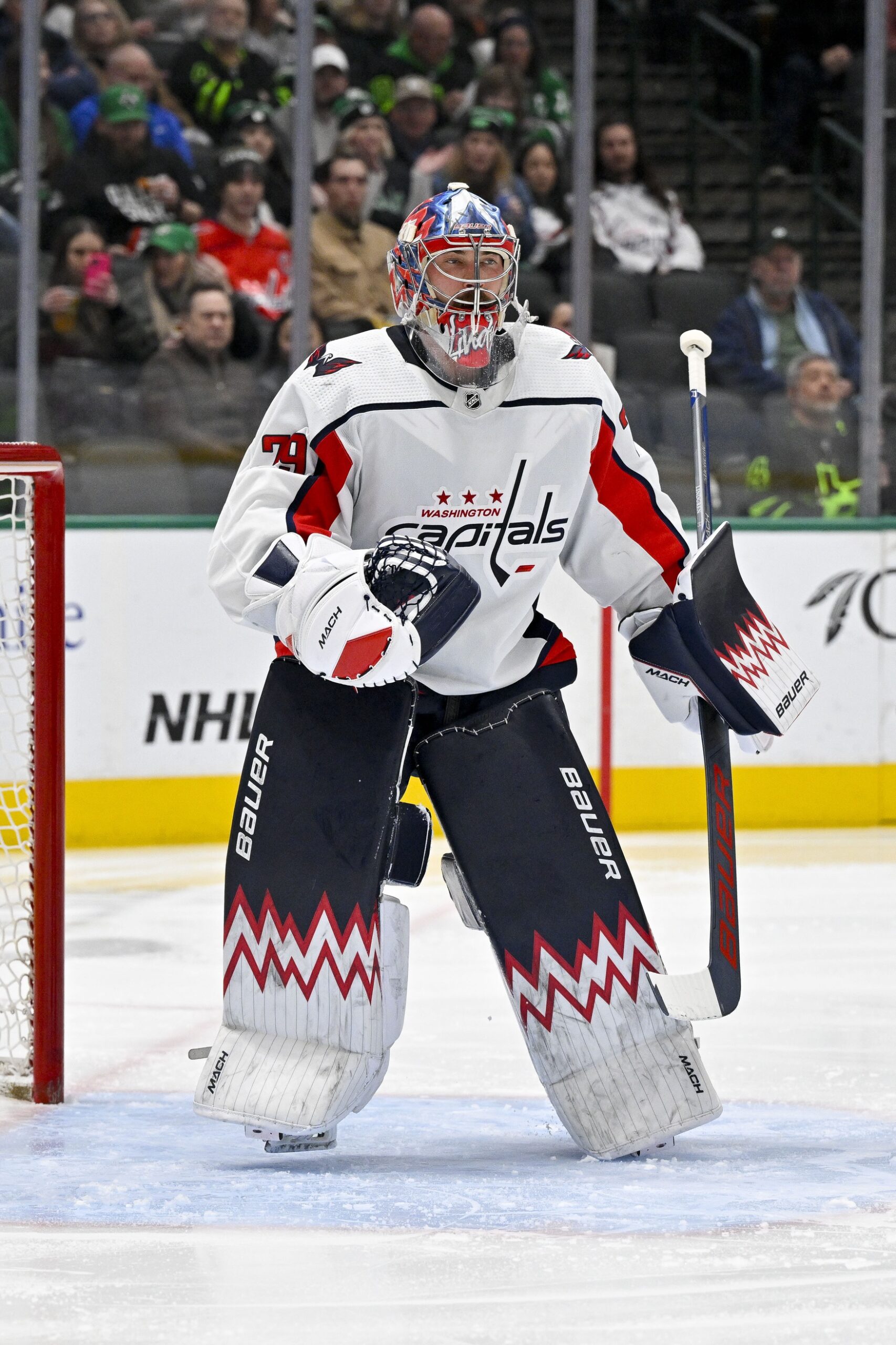 Lindgren was a late bloomer but since joining Washington two years ago, he has established himself as at least a capable NHL netminder. Last season, he wrestled away the number one job from Darcy Kuemper which will only help his cause in negotiations. Still, with a limited track record (just 110 career NHL appearances heading into the season), an early extension isn’t likely – both sides probably want to wait and see what happens – but if he has a similar year to this one, he should earn at least $3MM on a multi-year agreement next summer. If it’s another year as a true starter, the recent five-year, $25MM contract given to Joey Daccord could come up in talks.
Thompson also has somewhat of a limited track record in terms of experience but is also a few years younger with better career numbers after three strong seasons in Vegas. Accordingly, it wouldn’t be shocking if his camp is already eyeing something close to Daccord’s new deal if and when extension talks get underway. The cheapest goalie in the NHL, Thompson’s next deal will certainly change that soon enough.
Signed Through 2025-26
D John Carlson ($8MM, UFA)
F Brandon Duhaime ($1.85MM, UFA)
D Martin Fehervary ($2.675MM, RFA)
F Connor McMichael ($2.1MM, RFA)
F Sonny Milano ($1.9MM, UFA)
F Alex Ovechkin ($9.5MM, UFA)
D Trevor van Riemsdyk ($3MM, UFA)
Ovechkin is one of the top scorers in NHL history and even with a very high AAV for most of his career, he has lived up to it. That might be ending soon strictly from a bang-for-buck perspective. The 39-year-old had the lowest full-season production of his career and players generally don’t have a resurgent year at that age. That said, with all he has done for them and the chase for the all-time record, the Capitals won’t be too concerned if they’re not getting top value here.
McMichael received a bridge deal which was a pretty obvious outcome considering he spent most of 2022-23 in the minors. But if he can stay in the top six regularly, he could double that next time out with arbitration eligibility and if it looks like he’s a core piece for the future by then, a long-term deal could push past $5MM. Milano managed 15 goals in 49 games last season which isn’t bad production for that price tag but the book on him in recent years is that he can be effective only in a limited role. That has hindered his market before and probably will next time out unless something changes over the next couple of years. Duhaime is a crash-and-bang winger who only managed five goals last season, making this price tag seemingly a bit high for that role but perhaps a change of scenery will allow him to contribute a bit more offensively which would set him up to pass $2MM next time out.
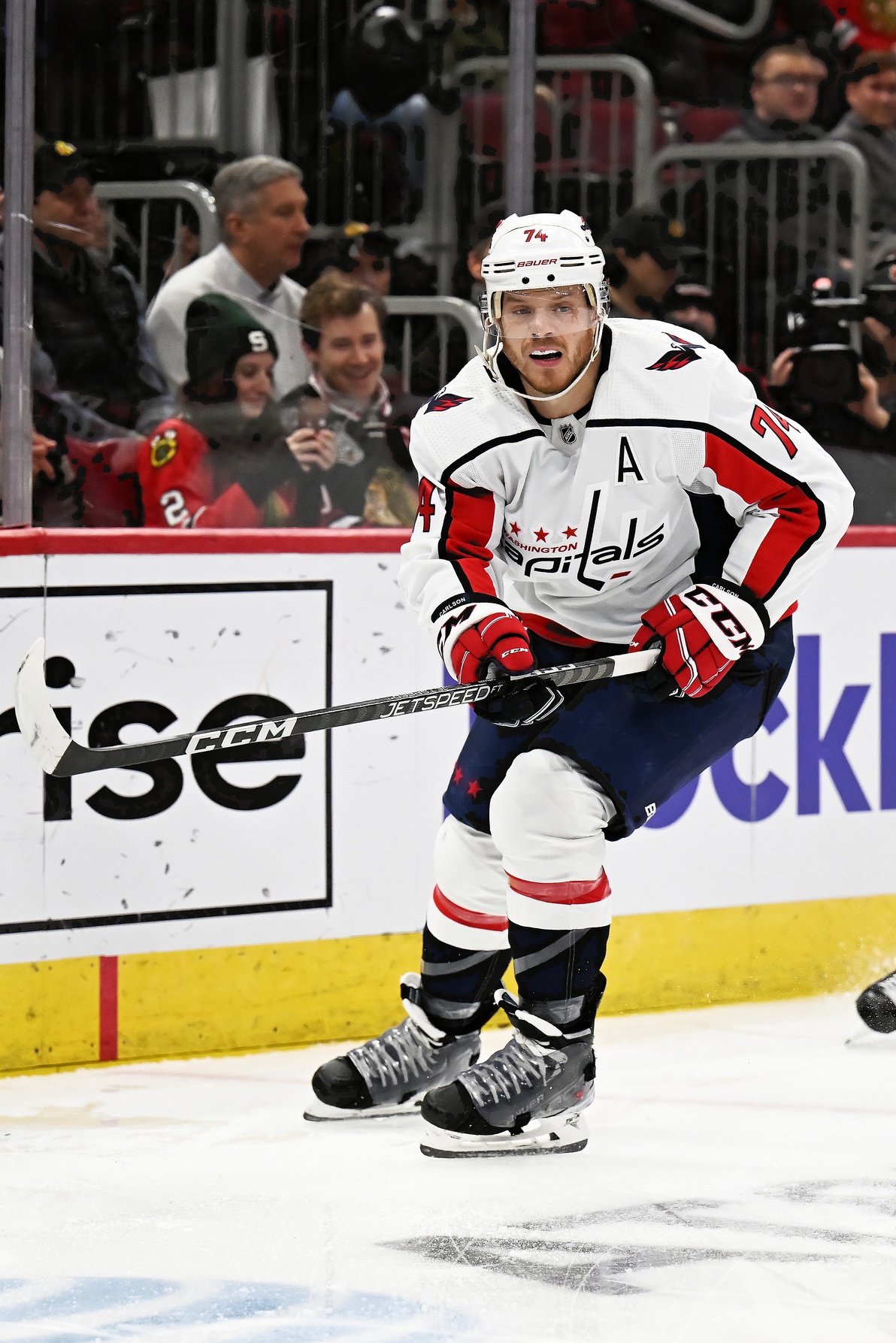 While Carlson didn’t light up the scoresheet as much as he has in the past, he did reach the double-digit goal mark for the sixth time in the last seven years last season and logged a career high in ice time at nearly 26 minutes a night. That type of playing time is unsustainable for a 34-year-old but he doesn’t need to play that much to justify this deal. He remains an all-situations type of player which should give this contract a good chance to hold up value-wise over the final two seasons. It’s not inconceivable that he lands a small raise next time out although the likelier outcome is more of a medium-term agreement that would allow the AAV to be a bit lower.
As for van Riemsdyk, he has found a home in Washington, going from being a player toward the end of the depth chart to spending a lot of time on the second pairing. This price tag for someone in that role is good value. He’ll be entering his age-35 year on his next contract so he might be hard-pressed to get much more than this in 2026. Fehervary, meanwhile, is on his bridge deal and has similarly played a lot on the second pairing. Given that he’s still 25, he could push past the $4MM mark if things go well, perhaps $5MM on a long-term pact. His current deal is front-loaded, carrying just a $1.075MM qualifying offer two years from now.
Signed Through 2026-27
None
Salary Cap Deep Dive: Pittsburgh Penguins
Navigating the salary cap is one of the most important tasks for a front office. Teams that can avoid total cap chaos by walking the tightrope of inking players to deals that match their value (or compensate for future value without breaking the bank) remain successful. Those that don’t often see struggles and front office changes.
PHR will look at every NHL team and give a thorough look at their cap situation heading into the 2024-25 season. This will focus more on players who are regulars on the roster versus those who may find themselves shuttling between the AHL and NHL. All cap figures are courtesy of PuckPedia. We’re currently covering the Metropolitan Division, next up is the Penguins.
Pittsburgh Penguins
Current Cap Hit: $88,037,434 (above the $88MM Upper Limit)
Entry-Level Contracts
F Rutger McGroarty (three years, $950K)
Potential Bonuses
McGroarty: $500K
McGroarty was recently acquired from Winnipeg after the winger told the Jets he wouldn’t sign with them. He should have an opportunity to push for a roster spot right away (or at least be the first recall from the minors). Bonus-wise, the exact structure of the $500K isn’t publicized but it’s likely two ‘A’ bonuses ($425K in total) and $75K in games played. If he’s a regular, he should get the games played one at a minimum while his role will go a long way toward determining if he has a shot at one of the ‘A’ bonuses.
Signed Through 2024-25, Non-Entry-Level
F Anthony Beauvillier ($1.25MM, UFA)
F Lars Eller ($2.45MM, UFA)
F Cody Glass ($2.5MM, RFA)
F Matthew Nieto ($900K, UFA)
F Drew O’Connor ($925K, UFA)
D Marcus Pettersson ($4.025MM, UFA)
F Jesse Puljujarvi ($800K, UFA)
D Matt Grzelcyk ($2.75MM, UFA)
Glass was acquired from Nashville in a cap-clearing move from them this summer. He’s only one season removed from a 35-point effort but struggled last year. He’ll need to get back to his 2022-23 level if he has a shot at getting a qualifying offer, one that would carry arbitration rights. As things stand, he’s a non-tender candidate. Eller remains a serviceable third-line center most nights, a role he has held for most of his career. However, he’ll be 36 when this deal is up and with offensive production usually under 35 points, he’s probably going to be going year-to-year moving forward at or slightly below this price tag. Beauvillier is also coming off a rough year between three separate teams, resulting in a $2.75MM pay cut. There’s room for him to rebound and it wouldn’t be shocking to see him land a multi-year deal next summer with a price tag above $2MM at a minimum.
O’Connor is coming off of his best season offensively by far after notching 33 points in 2023-24. While both sides will want to see if this is repeatable before approaching extension talks, if he can maintain those numbers, he could triple that price tag heading into next season. Nieto missed most of last season due to injury and is month-to-month heading into the start of the season, meaning he could land on LTIR to get the Penguins cap compliant. Given the injuries, he’ll probably be looking at a contract close to this price tag again next summer. Puljujarvi was a later-season signing last year and at this point, is simply looking to establish himself as a full-time NHL player once again. A small raise could be doable if he does that.
Pettersson is now the most notable pending UFA on the roster. He logged over 22 minutes a game last season while reaching 30 points for the first time, certainly a positive heading into early negotiations. He’ll be entering his age-29 year next season so his next deal could push past the $5MM mark on a longer-term agreement. Grzelcyk is looking to rebuild some value after a tough season in Boston. If he does, he could get back to the near-$3.7MM AAV from his past deal.
Signed Through 2025-26
F Noel Acciari ($2MM, UFA)
D Sebastian Aho ($775K, UFA)
F Michael Bunting ($4.5MM, UFA)
F Kevin Hayes ($3.571MM, UFA)*
F Blake Lizotte ($1.85MM, UFA)
F Evgeni Malkin ($6.1MM, UFA)
G Alex Nedeljkovic ($2.5MM, UFA)
*-Philadelphia is retaining an additional $3.571MM on Hayes’ contract.
Malkin’s contract went to the wire two years ago and it wound up being a case of term being used to keep the cap hit down. So far, he has provided a very strong return on the deal but he’s now 38 and showing signs of slowing down. That could make the final couple of seasons a bit tougher to deal with from a value perspective.
Bunting was acquired at the trade deadline as part of the Jake Guentzel trade and seemed to fit in better with the Penguins than he did in Carolina, coming close to averaging a point per game following the swap. Part of the challenge last summer for him was trying to argue that he could produce away from Toronto’s top line where he had spent the bulk of his still-limited NHL career (his first two full seasons at the top level). But Bunting managed to produce at a similar rate last year and if he has a couple more seasons around that level of production (he had 55 points in 2023-24), he should have a case at a longer-term deal next time out at a price tag closer to the $6MM mark.
Hayes was a faceoff ace for St. Louis last season but saw his point total nearly cut in half compared to 2022-23, resulting in the Blues parting with a second-round pick to shed the rest of the contract. Assuming he stays in a bottom-six role, his Pittsburgh portion of the contract is about what his market value might be in 2026. Acciari had a quiet first season with the Penguins on their fourth line. He’ll need a bounce-back effort to have a shot at matching this price tag even though he’s above average at the faceoff dot. Lizotte, meanwhile, was non-tendered by the Kings after a quiet season but his track record as an effective bottom-six piece helped earn this agreement. He’ll need to get back to scoring double-digit goals per season if he wants to cross the $2MM mark.
Aho came over from the Islanders in free agency, getting a one-way salary for the fourth and fifth straight seasons. Until he locks down a full-time top-six spot, however, he’s likely to stay close to the league minimum moving forward.
Nedeljkovic took over the starting job down the stretch last season, helping him earn this deal to avoid testing free agency. He has been hit or miss throughout his still relatively brief NHL career and will need two more seasons like last year to have a shot at getting back to that upper echelon of platoon options.
Signed Through 2026-27
F Sidney Crosby ($8.7MM, UFA)
D Erik Karlsson ($9.999MM, UFA)*
*-San Jose is retaining an additional $1.5MM on Karlsson’s contract.
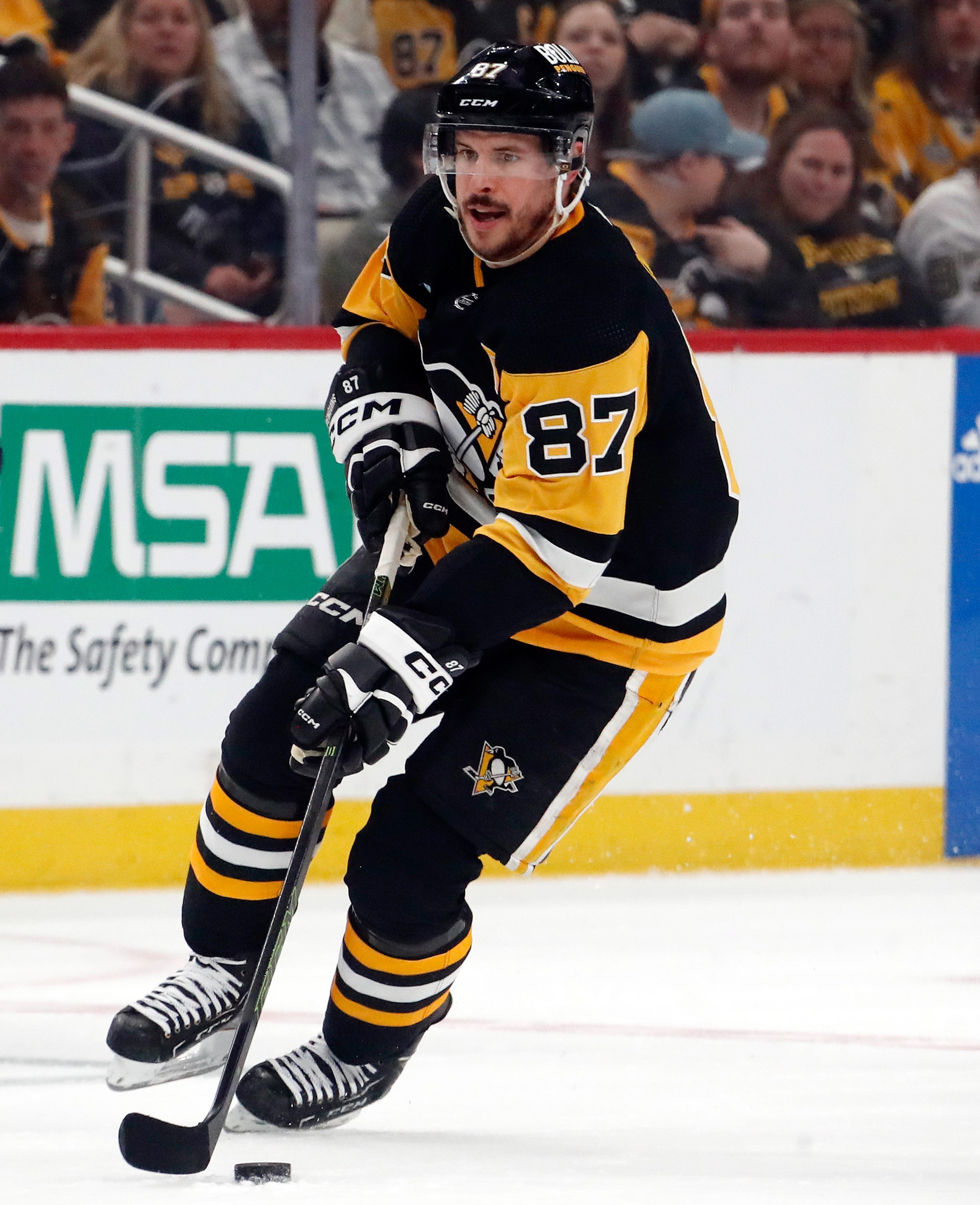 Many expected Crosby to sign a contract extension on July 1st but it wound up taking more than two full months before he put pen to paper on this deal, maintaining the same cap hit he has had since 2008. He’s entering the final season of a now-illegal 12-year contract and at the time it was signed, some wondered if those last couple of years could be tough from a value perspective given that he’s entering his age-37 season. Considering he’s coming off yet another season of averaging more than a point per game (something he’s done in all 19 years), those concerns were unfounded, helping him earn this extension.
Karlsson, as expected, wasn’t able to match the 101 points he put up in his final season with San Jose. However, with 56, he was still well above average in that regard. It’s going to be next to impossible for the 34-year-old to provide surplus value on his cap hit but as long as he’s still one of the higher-end offensive players among NHL blueliners, they’ll do okay value-wise. He’s not a $10MM player at this point but he’s not necessarily too far off that mark either.
Salary Cap Deep Dive: Philadelphia Flyers
Navigating the salary cap is one of the most important tasks for a front office. Teams that can avoid total cap chaos by walking the tightrope of inking players to deals that match their value (or compensate for future value without breaking the bank) remain successful. Those that don’t often see struggles and front office changes.
PHR will look at every NHL team and give a thorough look at their cap situation heading into the 2024-25 season. This will focus more on players who are regulars on the roster versus those who may find themselves shuttling between the AHL and NHL. All cap figures are courtesy of PuckPedia. We’re currently covering the Metropolitan Division, next up is the Flyers.
Philadelphia Flyers
Current Cap Hit: $84,829,763 (below the $88MM Upper Limit)
Entry-Level Contracts
F Tyson Foerster (one year, $863K)
F Matvei Michkov (three years, $950K)
Potential Bonuses
Michkov: $3.3MM
Michkov was able to get out of his contract two years early to the surprise of many, enabling him to come to North America this season. Projected to be a key cog of their rebuild, he’s likely someone they’ll want to sign long-term by the time this deal is up. From a bonus perspective, he has $1MM in ‘A’ bonuses, four at $250K apiece. If he plays the prominent role it looks like he will this season, those could be reachable although the ‘B’ bonus is highly unlikely to be met. Foerster’s first full NHL campaign was a solid one with 20 goals. That said, he’d need a significant breakout to bypass a bridge deal, especially with this management group generally leaning toward using those. In that case, something around the $3MM mark is where his next contract might land.
Signed Through 2024-25, Non-Entry-Level
F Noah Cates ($2.625MM, RFA)
F Morgan Frost ($2.1MM, RFA)
D Erik Johnson ($1MM, UFA)
G Cal Petersen ($5MM, UFA)
D Cam York ($1.6MM, RFA)
Cates was someone who received a recent bridge contract, a move that looks wise on Philadelphia’s part given his struggles last season. He’ll need to get back to at least his rookie-season numbers (38 points in 82 games) to have a shot at a qualifying offer when he’ll have arbitration rights as well. Frost was no stranger to the rumor mill last season but still wound up with his second straight season of more than 40 points. If he hangs around that number again, he could double his $2.4MM qualifying offer on his next deal, one that likely will buy out some UFA-eligible years.
York finished off last season on a high note, providing plenty of optimism heading into this season. Yet another player who is on a bridge agreement, if he plays at the level that he finished at last year, tripling this price tag wouldn’t be out of the question while quadrupling it on a long-term deal could be doable as well. Johnson was picked up at the deadline to give them a serviceable veteran at the back of their lineup and was extended to fill that role for this season. He’ll be going year to year from here and considering he’s best served as a sixth defender, it’s unlikely he could command much more than this next time around.
Petersen has already cleared waivers and he’ll once again play in Lehigh Valley where he’ll carry a slightly reduced cap hit of $3.85MM. It’s safe to say he won’t come anywhere near that next time around; a six-figure deal is more likely.
Signed Through 2025-26
F Bobby Brink ($1.5MM, RFA)
F Nicolas Deslauriers ($1.75MM, UFA)
D Jamie Drysdale ($2.3MM, RFA)
G Samuel Ersson ($1.45MM, RFA)
G Ivan Fedotov ($3.25MM, UFA)
F Scott Laughton ($3MM, UFA)
F Ryan Poehling ($1.9MM, UFA)
D Yegor Zamula ($1.7MM, RFA)
When Laughton signed this contract at the 2021 trade deadline (taking himself out of trade talks in the process), it seemed like somewhat of a team-friendly deal at the time. It still is today. The 30-year-old isn’t the biggest offensive threat (only reaching 40 points once in his career) but is a solid defensive player. He should be able to add at least $1MM to this next time out on another multi-year agreement. Poehling accepted this deal as a midseason extension back in January, giving him a bit of stability after starting the year on his third team in as many seasons. He’s coming off his best offensive output (28 points) but will need to show that’s repeatable if he wants to get into that next tier of money.
Deslauriers got more money and term than many expected for an enforcer but his track record of scoring a bit more than a typical tough guy helped his marketability. That’s a harder sell now at this point of his career coming off a one-goal, four-point campaign. He still can fill that role but with the decline in production and the fact he’ll be 35 when this contract expires, it’s hard to see him getting this on his next deal. Brink is yet another player on a bridge deal after a season that saw him establish himself as a regular. He’ll have arbitration rights next time out and between that and ideally two more years of being a full-timer, he should at least get past $2MM, obviously more if he becomes more of a contributor offensively.
Drysdale was the key piece coming to Philadelphia in the Cutter Gauthier trade but as was the case at times in Anaheim, injuries limited him. He’s someone who has shown flashes of being an above-average player at the NHL level and if he puts it together and stays healthy, pushing past $6MM isn’t out of the question. But, if injuries continue to be an issue, a second one-year bridge agreement might be the safest play, one that would eclipse $3MM with arbitration rights. Zamula inked this bridge deal in early July after locking down a regular role last season. He’ll need to at least move past being more of a fifth or sixth defender over the next two seasons since his offensive game is somewhat limited (which will hurt him in an arbitration hearing). Notably, his qualifying offer in 2026 is only $1.4MM since signing bonus money doesn’t count in calculating those offers.
After a long battle to get him to North America, Fedotov debuted late in the season (although he struggled in limited action) and quickly received this two-year agreement, a sign of the faith the team has in him. He’ll need to establish himself as at least a 1B type of goaltender to hang around this price tag but if he plays up to expectations, this deal will be a team-friendly one for Philadelphia. The early extension to Ersson raised some eyebrows but after becoming their starter, it’s a move that looks great for the Flyers already. He will have one RFA-eligible season remaining once this deal expires and if he’s still in the starting role, it stands to reason that his next contract should be at least three times this one.
Signed Through 2026-27
D Ryan Ellis ($6.25MM, UFA)
F Garnet Hathaway ($2.375MM in 2024-25, $2.4MM in 2025-26 and 2026-27, UFA)
D Rasmus Ristolainen ($5.1MM, UFA)
Hathaway had a good first season for the Flyers while splitting time between the third and fourth lines. Rather than see what his market value would be this coming summer, he accepted an early extension at pretty much the same money. That gets him under contract through his age-35 season and at that point, it would be tough predicting that he’d get more than that if he’s still in that role. Ellis, meanwhile, will remain on LTIR, giving the Flyers the ability to spend above the cap if needed.
 Ristolainen remains one of the more polarizing defensemen in the league. He’s someone who has played big minutes in all situations in the past and his contract is one where the price tag suggests that he should be in a second or third role. However, that wasn’t the case last year. His ice time – when healthy – was much more limited than usual and he responded with a decent performance in that role. It’s probably not enough to give him any standalone trade value but if it’s a case where less is more for Ristolainen, the Flyers could still get at least a bit of value on this contract, albeit on an above-market price point relative to last season’s ice time.
Salary Cap Deep Dive: New York Rangers
Navigating the salary cap is one of the most important tasks for a front office. Teams that can avoid total cap chaos by walking the tightrope of inking players to deals that match their value (or compensate for future value without breaking the bank) remain successful. Those that don’t often see struggles and front office changes.
PHR will look at every NHL team and give a thorough look at their cap situation heading into the 2024-25 season. This will focus more on players who are regulars on the roster versus those who may find themselves shuttling between the AHL and NHL. All cap figures are courtesy of PuckPedia. We’re currently covering the Metropolitan Division, next up is the Rangers.
New York Rangers
Current Cap Hit: $87,376,524 (below the $88MM Upper Limit)
Entry-Level Contracts
F William Cuylle (one year, $828K)
F Adam Edstrom (one year, $847K)
F Matt Rempe (one year, $820K)
Potential Bonuses
Cuylle: $57.5K (games played)
Cuylle’s first full NHL season was a solid one for someone who primarily played on the fourth line. It’s unlikely that he’ll play much higher up this year and with New York’s long-term cap situation, it’s safe to say they’ll be looking for a bridge deal, one that should check in around the $1.4MM mark. Edstrom is someone who could bounce back and forth this season and in that case, New York will probably ask him to accept closer to the $775K minimum in exchange for a one-way contract. Rempe quickly became a fan favorite for his pugilistic skills but will need to be trusted to play more than six minutes a night if he’s to push for any sort of pricey second contract. As things stand, he’s likely to land around $1MM on a bridge agreement if he stays up full-time in 2024-25.
Signed Through 2024-25, Non-Entry-Level
D Zachary Jones (813K, RFA)
F Kaapo Kakko ($2.4MM, RFA)
F Alexis Lafreniere ($2.325MM, RFA)
D Ryan Lindgren ($4.5MM, UFA)
D K’Andre Miller ($3.872MM, RFA)
G Jonathan Quick ($1.275MM, UFA)
D Chad Ruhwedel ($775K, UFA)
G Igor Shesterkin ($5.67MM, UFA)
F Reilly Smith ($3.75MM, UFA)*
F Jimmy Vesey ($800K, UFA)
*-Pittsburgh is retaining an additional $1.25MM of Smith’s contract.
Potential Bonuses
Quick: $25K (20 starts plus a save percentage of .915 or more)
Smith was acquired on the opening day of free agency as New York’s free agent plans seemingly didn’t pan out. On the surface, they probably only wanted someone on a one-year deal so the pivot to this made sense. Smith is coming off a down year with Pittsburgh but is only a year removed from a 56-point effort. If he can get back to that, he could maintain his full $5MM salary for a few more years but the likelier scenario is something in the $4MM range. Kakko accepted his qualifying offer early to take one more run at things in New York. Until he can become more than a third liner, however, it’s hard to foresee him getting much more than this. Vesey, meanwhile, had one of his best years last season and a repeat performance could allow him to potentially double his price tag but the Rangers will need to keep that salary slot closer to where it is now.
 Lafreniere is one of the more intriguing pending restricted free agents from the 2025 class. After struggling through his entry-level contract (resulting in this bridge deal), he was much more impactful last season, showing the skill that made him a top pick before following it up with a strong playoff run. Still just 22, there’s cause for optimism that Lafreniere could still beat his numbers from a year ago which will only send the price tag up even more. Assuming that he can at least maintain his 2023-24 output, Lafreniere’s next contract should push past the $6MM mark at a minimum; it wouldn’t be surprising to see it go to a seven.
Lindgren settled for a one-year deal earlier this summer, one that will grant him unrestricted free agency at 27. However, his offensive numbers are rather limited; he has yet to reach the 20-point mark. That should limit him on the open market although a small raise from this price tag could be doable. Miller is another player who had to settle for a bridge deal given New York’s cap situation at the time. He wasn’t quite as impactful statistically last season but still played top-pairing minutes, putting him on track for a fair-sized raise. His qualifying offer checks in at $4.546MM, already a sizable jump but he could also command $6MM or more on a long-term agreement.
Jones hasn’t been able to lock down a full-time spot in the lineup which won’t help his case in contract talks. His qualifying offer goes up to just over $866K next summer and if he’s not more established by then, he could be a non-tender candidate with an eye on filling that spot with someone making the minimum. Ruhwedel has been a capable seventh defender for several years now but isn’t likely to make much more than the league minimum moving forward.
While Shesterkin is coming off a quieter year by his standards, he still was one of the top netminders in the league last season and has been for the past four seasons. Accordingly, he is believed to be looking for what would be a record-breaking contract; Carey Price ($10.5MM) is the holder of the priciest deal given to a goalie in NHL history. Doubling his current AAV could be doable in the process. Quick had a bounce-back year after a tough 2022-23 showing, earning himself a small raise in the process. With Shesterkin being more of a workhorse, they will only need Quick to play 25-30 games which he should be capable of doing. Given his age (38), it’s fair to suggest he’ll be on one-year deals from here on out.
Signed Through 2025-26
F Jonny Brodzinski ($788K, UFA)
F Artemi Panarin ($11.643MM, UFA)
D Braden Schneider ($2.2MM, RFA)
D Jacob Trouba ($8MM, UFA)
Panarin set and still holds (for now, at least) the record for the highest cap hit for a winger. It’s hard to say the contract has been a bargain but it’s fair to say he has lived up to it so far. Panarin has the fourth-most points of any player over the past five seasons (since he signed in New York) so they’ve gotten a solid return so far. That said, he’ll be entering his age-35 year when his next contract starts so it’s reasonable to think the cap hit will be coming down and it will be a question of how long the deal becomes with the longer the term, the lower the AAV. Brodzinski started last season off strong in the minors to earn a recall and never went back, earning this contract in the process. If he stays in a depth or reserve role, it’s unlikely he’d command a big raise but even securing more one-way deals at this point of his career (he’s 31) would be a nice outcome for him.
Trouba was shopped around over the summer although no trade came to fruition. He’s on an expensive contract for the role he fills (a third defender) but he’s still a more than capable player in that role. Still, even if he rebounds over the next two seasons, he’ll be looking at a multi-million dollar pay cut although a multi-year pact should still be doable. Schneider was the latest player to take a bridge contract this summer. He has been held under 16 minutes a game in each of his first three seasons; it’s safe to say they’ll be expecting him to take a step forward in that regard. His qualifying offer checks in at $2.64MM with arbitration rights in 2026 so if he’s still on the third pairing by then, that could be a problem.
Signed Through 2026-27
F Sam Carrick ($1MM, UFA)
F Filip Chytil ($4.438MM, UFA)
F Chris Kreider ($6.5MM, UFA)
Kreider didn’t produce much in the first season of this contract but since then, he has 127 goals over the last three years, putting him seventh among all NHL players over that span. Given his physical playing style, it’s possible that injuries could be an issue toward the end of the deal when he’ll be 36 and potentially going year to year after that.
Chytil has battled concussion issues at times, including missing most of last season which makes him a bit of a wild card. This is a high price tag for someone projected to play on the third line although if he’s healthy, he should be more productive than a typical third liner. But with the injury history, it’s hard to foresee him getting this type of commitment unless he has three seasons of good health. Carrick came over in free agency to anchor the fourth line after a good showing between Anaheim and Edmonton last season. If he can maintain that for the next three years, a late-career raise could come his way even though he’ll be 35 on his next contract.