
Salary Cap Deep Dive: Nashville Predators
Navigating the salary cap is one of the more important tasks for any GM. Teams that can avert total cap chaos by walking the tightrope of inking players to deals that match their value (or compensate for future value without breaking the bank) remain successful. Those that don’t see struggles and front office changes.
PHR will look at every NHL team and give a thorough look at their cap situation heading into the 2020-21 season. This will focus more on players who are regulars on the roster versus those who may find themselves shuttling between the AHL and NHL. All cap figures are courtesy of CapFriendly.
Nashville Predators
Current Cap Hit: $74,057,810 (under the $81.5MM Upper Limit)
Entry-Level Contracts
D Dante Fabbro (one year, $925K)
F Eeli Tolvanen (one year, $894K)
Potential Bonuses
Tolvanen: $2.85MM
Fabbro: $850K
Tolvanen has received quite a bit of press over the past two years after posted 19 goals and 36 points in the KHL as an 18-year-old. However, now 21, Tolvanen might be ready for the NHL despite struggling since coming over to North America. The 2017 first-round pick struggled in his first year in the AHL, but looked better in his second year there. However, he was on loan with his old KHL team so far this season and hasn’t been as dominant as that 18-year-old season. So, the question is, will he be ready to take the next step into the NHL lineup? That’s a legitimate possibility or he could find himself on the taxi squad, easing into the league.
Fabbro was also highly-touted coming into last season after spending three years at Boston University. While he held onto the team’s fourth defenseman, he still issues acclimating himself to the NHL. The blueliner scored just five goals and 11 points in 64 games, while averaging 19:01 of ice time. He should continue to improve as the team’s fourth defenseman this year.
One Year Remaining, Non-Entry-Level
G Pekka Rinne ($5MM, UFA)
G Juuse Saros ($1.5MM, RFA)
F Mikael Granlund ($3.75MM, UFA)
F Erik Haula ($1.75MM, UFA)
F Brad Richardson ($1MM, UFA)
D Jarred Tinordi ($700K, UFA)
While the team is quite balanced in terms of contracts, it does have to figure out its goaltending situation next season. Rinne, who has been the team’s star netminder for years, will be 39 years old at the start of the 2021-22 season and could be done. His 2019-20 season wasn’t particularly impressive with a .895 save percentage in 36 games. Saros does look ready to take the No. 1 spot. The 25-year-old was much more impressive with a .914 save percentage in 40 appearances and should continue to take the bulk of the starts this coming season. Saros should get quite the pay raise for next year, while Rinne’s status is a question mark. Is he ready to retire or could he bounce back and hold on for a few more years?
With forward depth being a big need this season, the Predators brought back Granlund despite his struggles since being acquired from Minnesota at the trade deadline in 2019. He didn’t fare well in his short tenure with the team after the trade and while posting 17 goals last year, Granlund wasn’t the dominant forward that the team thought they traded for when they sent young Kevin Fiala off. With Fiala having an impressive season in Minnesota last year, the team has to hope they can get Granlund back to his 20-goal scoring ways. The team also brought in Haula to help out as a middle-six center. The injury-prone forward had one dominant season in Vegas, but since then is now on his third team, hoping to find his game.
Two Years Remaining
F Filip Forsberg ($6MM, UFA)
D Mattias Ekholm ($3.75MM, UFA)
F Rocco Grimaldi ($2MM, UFA)
F Calle Jarnkrok ($2MM, UFA)
D Mark Borowiecki ($2MM, UFA)
F Nick Cousins ($1.5MM, UFA)
F Matt Benning ($1MM, UFA)
F Yakov Trenin ($750K, RFA)
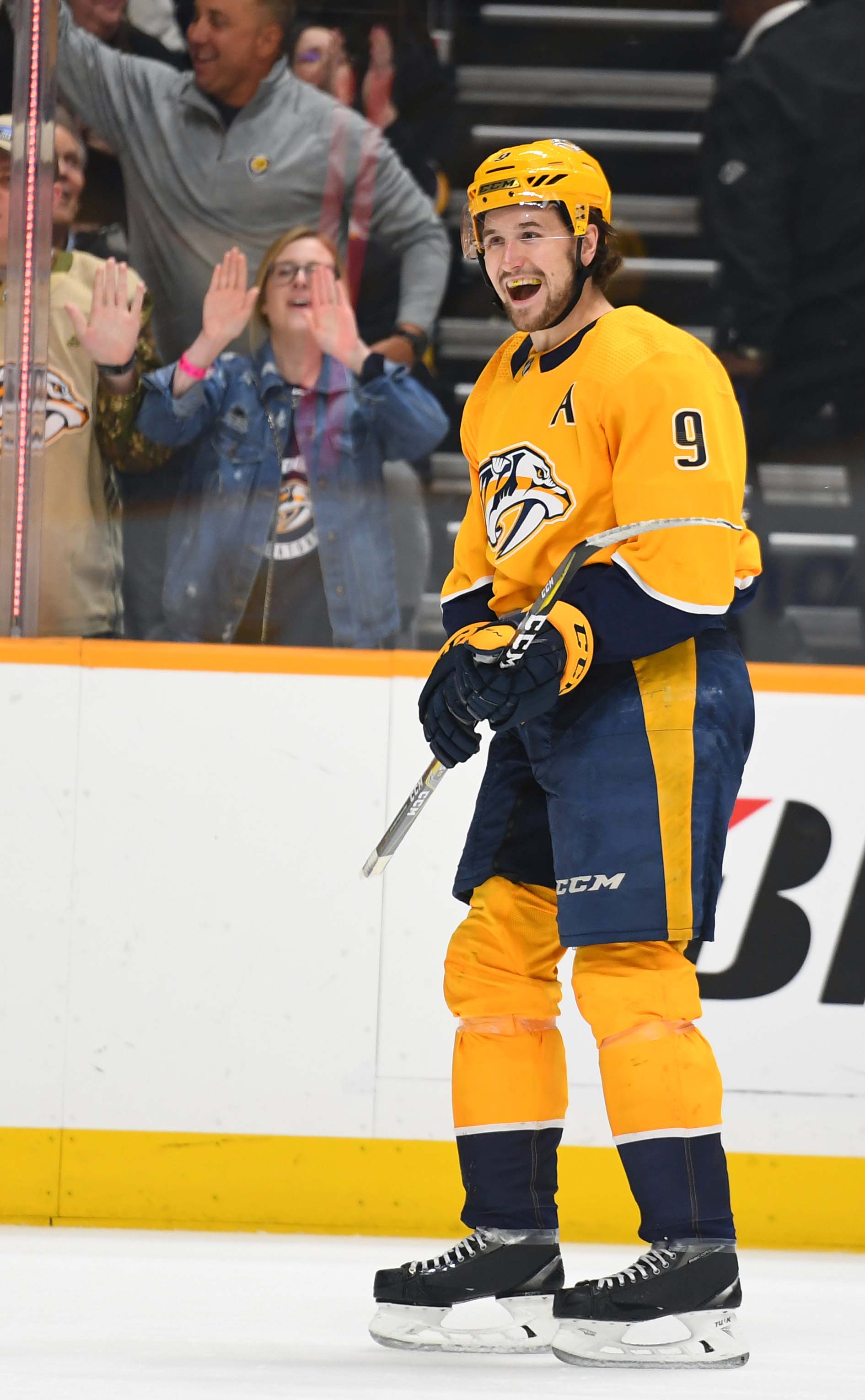 Many people believe that when Forsberg signed his six-year, $36MM contract back in 2016, that they had a superstar winger on their hands. He was coming off his first 30-goal season, scoring 33 goals and then followed that up with 31 goals the next year. However, those numbers have declined steadily the last few years although minor injuries have been part of that decline. Forsberg scored just 21 goals last season in 63 games and needs to find his game over the next two years if he wants to re-establish himself as one of the top wingers in the game, which at the moment, he isn’t.
Ekholm, on the other hand, continues to be one of the best deals for the next two years. The blueliner averaged more than 23 minutes of ATOI for the fourth straight years and has been a solid impact player for the team, even if his plus/minus dropped into the negative for the first time in years. He could be in line for a big extension similar to what Ellis received recently.
Jarnkrok continues to put up decent middle-six numbers after scoring 15 goals last season. He has two years left on the six-year, $12MM pact he signed in 2016. The Predators have quite a few depth players on two-year deals as well, including Grimaldi, Trenin and newly signed Cousins as well as defensemen Borowiecki and Benning. The hope is this depth should help solidify the team’s bottom-six, which struggled last season.
Three Years Remaining
None
Salary Cap Deep Dive: Minnesota Wild
Navigating the salary cap is one of the more important tasks for any GM. Teams that can avert total cap chaos by walking the tightrope of inking players to deals that match their value (or compensate for future value without breaking the bank) remain successful. Those that don’t see struggles and front office changes.
PHR will look at every NHL team and give a thorough look at their cap situation heading into the 2020-21 season. This will focus more on players who are regulars on the roster versus those who may find themselves shuttling between the AHL and NHL. All cap figures are courtesy of CapFriendly.
Minnesota Wild
Current Cap Hit: $78,799,421 (under the $81.5MM Upper Limit)
Entry-Level Contracts
F Kirill Kaprizov (one year, $925K)
Potential Bonuses
Kaprizov: $925K
After years of trying to get him to North America, Minnesota was finally successful in convincing Kaprizov to do so although they had to burn one of his two cheap entry-level years last season when he wasn’t eligible to play to get him to sign. Given his success in the KHL, he should jump into an impact role right away and if he’s able to produce as they expect he can, he should hit his bonuses without much trouble and position himself for a big-money deal next offseason.
One Year Remaining, Non-Entry-Level
F Nick Bjugstad ($2.05MM, UFA)*
F Nick Bonino ($4.1MM, UFA)
F Joel Eriksson Ek ($1.488MM, RFA)
F Kevin Fiala ($3MM, RFA)
F Marcus Foligno ($2.875MM, UFA)
F Ryan Hartman ($1.9MM, RFA)
D Brad Hunt ($700K, UFA)
F Marcus Johansson ($4.5MM, UFA)
D Greg Pateryn ($2.25MM, UFA)
*-Pittsburgh retained $2.05MM on Bjugstad’s deal in a trade this offseason.
Among the restricted free agent forwards, Fiala’s deal is the most pressing one. After struggling following his trade from Nashville, his first full season went much better while he led the team in scoring. If he’s able to pick up where he left off and show that he’s a capable front-line player, he’ll be well-positioned to at least double his current AAV. Hartman came to Minnesota by way of a non-tender as Nashville opted to avoid arbitration back when his price tag wasn’t half of this. Unless he can improve his offensive numbers and move into a more prominent role, another non-tender is certainly on the table, especially with bottom-six forwards feeling the squeeze more than usual in the current cap environment. Eriksson Ek had a career year offensively last season and could push for more top-six minutes this season. Unless his offensive production really spikes, he shouldn’t be able to command a huge raise but he could still double his current price tag.
As for the UFA forwards, it’s largely a collection of role players. Johansson may get an opportunity to play down the middle which would certainly help his cause in free agency but he didn’t have a huge market last time around and he’s coming off a tough year. It’d be surprising if he came close to $4.5MM on his next deal. Bonino was brought in from Nashville this offseason in a draft-day trade and with their lack of depth down the middle, he’ll get a bigger role than he would have had with the Predators. Having said that, even if he gets top-six minutes, he is more of a third liner at this stage of his career. Those centers can still carry some value but he’ll be facing a small dip at the very least. Bjugstad was a cap dump from Pittsburgh after an injury-riddled campaign and he should have an opportunity to restore some value. But even if he has a big season, it’d be hard to imagine that he’d get close to his $4.1MM combined current cost because of the injuries. Foligno is a popular player who plays an energy role but those players didn’t fare well in free agency last year and with the cap not expected to rise, they won’t do well next offseason so a decrease in salary for him seems like a near-certainty.
Pateryn’s time with the Wild hasn’t gone well. He was actively shopped last summer and then missed 44 games this season due to core muscle surgery and then had back surgery back in June. He’s likely going to battle for number six minutes on the back end and players in that role should be closer to half of his price tag. If he can stay healthy, that’s about what he’d be able to command next summer. Hunt isn’t the strongest in his own end but he is a threat with his point shot as well which has allowed him to hang around the last few years on minimum contracts. He played more of a regular role last season and if he can stay in that sixth spot this season, he could push for a bit more of a raise than the pending jump in the league minimum.
Two Years Remaining
F Jordan Greenway ($2.1MM, RFA)
G Kaapo Kahkonen ($725K, RFA)
F Victor Rask ($4MM, UFA)
G Alex Stalock ($785K, UFA)
F Nico Sturm ($725K, UFA)
Rask’s acquisition by then-GM Paul Fenton was a headscratcher and not much has changed in that regard as Rask has struggled mightily with his new team, spending a lot of time as a healthy scratch. In the right situation, he could still play but that’s with a cap hit of under $1MM, not $4MM. Greenway has put up decent numbers the last two seasons despite not seeking a lot of top-six minutes. He should get that opportunity during this deal which will dictate whether he’s a core piece that should get a long-term deal or someone who goes short term again. Sturm, an undrafted college free agent signing, is an option for the fourth line or taxi squad but will need to establish himself as a regular to have a chance to earn more on his next contract.
Stalock received his deal to give him some stability and Minnesota someone to expose in expansion. However, it’s proving to be quite the bargain after he vastly outperformed Devan Dubnyk last season. If he can repeat that performance moving forward, he could easily double that price tag. Unfortunately for him and Minnesota, he’s out indefinitely with an upper-body injury which means Kahkonen could break camp with the Wild. He’s their goalie of the future – it’s no coincidence that his contract expires at the same time as Stalock’s – but a one-year deal two summers from now is most likely as he won’t have the NHL track record to justify a long-term contract.
Three Years Remaining
D Mathew Dumba ($6MM, UFA)
D Carson Soucy ($2.75MM, UFA)
G Cam Talbot ($3.67MM, UFA)
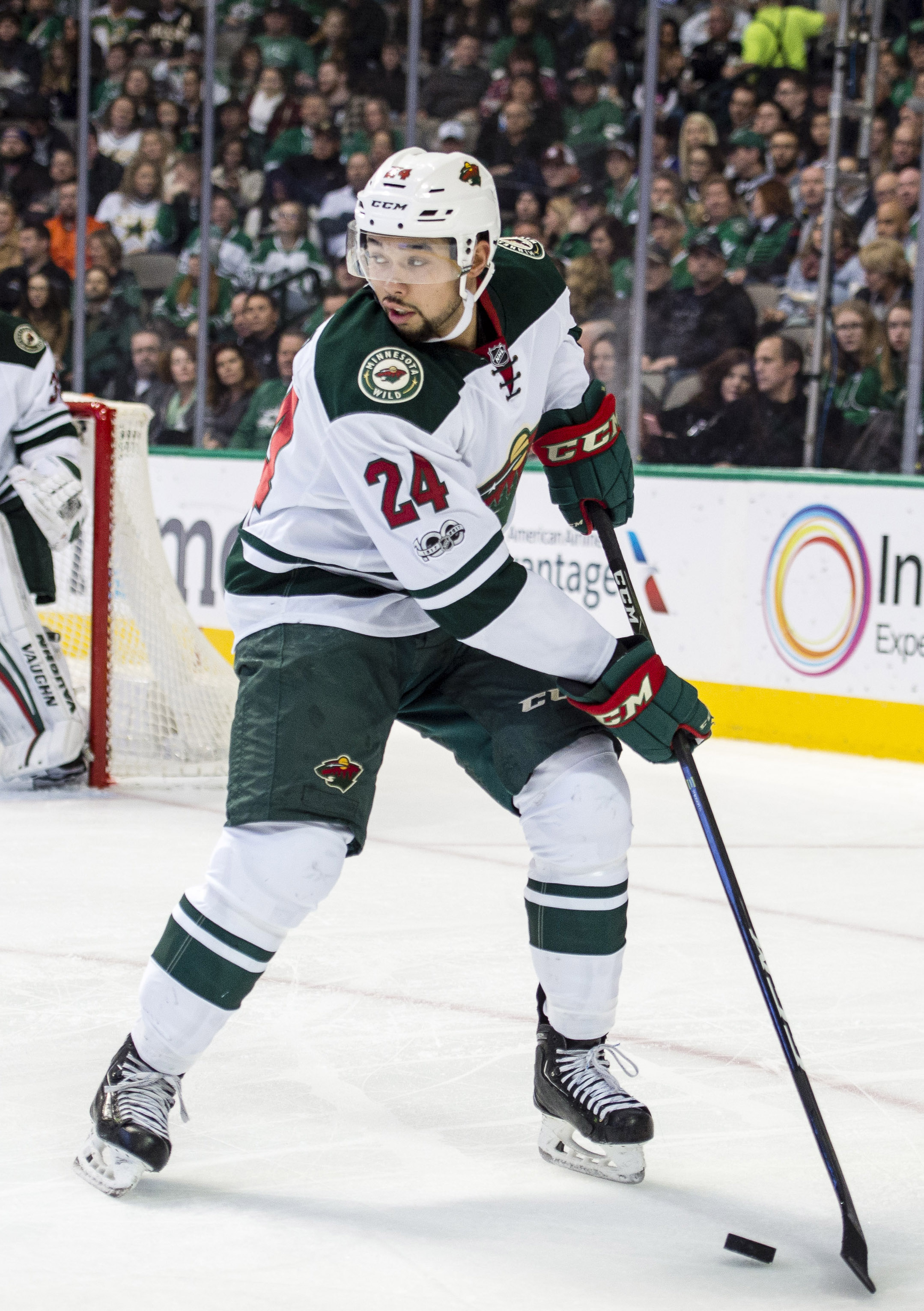 Dumba has long been the subject of trade speculation and that isn’t likely to change anytime soon, especially with expansion looming and three other blueliners on long-term deals carrying no-move clauses. Although he’s coming off a quiet year offensively compared to his previous few seasons, he’s still a right-shot defender that’s capable of logging heavy minutes. Those players still carry a lot of value and impact defensemen still got paid this offseason despite the cap constraints. Dumba will be 29 when he hits unrestricted free agency and if his production rebounds over the next few years, he should be able to command close to a max-term contract with a bit of a raise.
Soucy is one of the rare players that was able to get a sizable contract despite a limited track record this offseason. He was a regular for most of the year but still qualified for Group VI free agency, allowing him to hit the open market early and GM Bill Guerin paid a pretty penny given his role. Clearly, they think he can get to another level by the time the contract is up.
Talbot had a nice rebound season with Calgary which allowed him to fare much better in free agency this time around than a year ago. He enters as the undisputed starter for now but could very well be splitting time with Kakhonen by the end. He’ll also be over 35 for his next contract so Talbot will likely have to go year-to-year from here.
Salary Cap Deep Dive: Dallas Stars
Navigating the salary cap is one of the more important tasks for any GM. Teams that can avert total cap chaos by walking the tightrope of inking players to deals that match their value (or compensate for future value without breaking the bank) remain successful. Those that don’t see struggles and front office changes.
PHR will look at every NHL team and give a thorough look at their cap situation heading into the 2020-21 season. This will focus more on players who are regulars on the roster versus those who may find themselves shuttling between the AHL and NHL. All cap figures are courtesy of CapFriendly.
Dallas Stars
Current Cap Hit: $81,242,031 (under the $81.5MM Upper Limit)
Entry-Level Contracts
G Jake Oettinger (two years, $925K)
F Joel Kiviranta (one year, $925K)
D Miro Heiskanen (one year, $894K)
D Thomas Harley (three years, $894K)
F Jason Robertson (two years, $795K)
Potential Bonuses
Heiskanen: $2.5MM
Oettinger: $425K
Harley: $213K
Robertson: $83K
Total: $3.25MM
The Stars are loaded with top prospects coming through the system quickly now, but one name stands out in Heiskanen, who the team will likely want to lock up long-term. The 21-year-old has been an amazing addition to the team’s defense over the past two years and is a major reason for their appearance in the Stanley Cup Finals last season. The blueliner posted a solid 33 and 35 point over the first two seasons, but he took that up a notch in the playoffs, posting six goals and 26 points in 27 playoff games, suggesting he has the potential to become a high-scoring offensive defenseman to go with his shutdown skills.
Kiviranta also made his mark during the playoffs, scoring several key goals during the playoffs, while the team could quickly turn to youngsters Harley, Oettinger and Robertson to step in and contribute this coming season.
One Year Remaining, Non-Entry-Level
F Andrew Cogliano ($3.25MM, UFA)
F Blake Comeau ($2.4MM, UFA)
D Stephen Johns ($2.35MM, UFA)
D Jamie Oleksiak ($2.14MM, UFA)
F Jason Dickinson ($1.5MM, RFA)
F Justin Dowling ($750K, UFA)
D Mark Pysyk ($750K, UFA)
D Taylor Fedun ($738K, UFA)
D Julius Honka ($700K, RFA)
While the team has quite a bit of youth and veteran talent, the team has quite a few contracts coming off the books in one year and players like Cogliano and Comeau will have to prove their value to receive new contracts at potentially smaller contracts. The same goes on defense where a number of veterans come off the books including Johns and Oleksiak, both who give the Stars significant physicality. The team must determine if either can come back, especially Johns who returned from a long-standing concussion last season, but then sat out the playoffs due to concern over the same injury.
Dickinson, who has been a solid contributor in the bottom-six is another player expected to return, while Dallas will take long looks at their significant defensive depth in Pysyk and Fedun. Honka is another interesting situation after he spent last season overseas. The 2014 first rounder has struggled to establish himself in Dallas over the years and now will have to prove himself, likely in the AHL.
Two Years Remaining
F Joe Pavelski ($7MM, UFA)
F Alexander Radulov ($6.25MM, UFA)
D John Klingberg ($4.25MM, UFA)
F Denis Gurianov ($2.55MM, RFA)
D Andrej Sekera ($1.5MM, UFA)
Quite a bit of their money comes off the books in two years as the contracts of Pavelski, Radulov and Klingberg are up. That’s $17.5MM. That likely will end the tenures of Pavelski, who will be 38 years old then, while Radulov will be 36. The hope is that both players will be big contributors over the next two years as Dallas will do everything it can to return to the Stanley Cup Finals once again. While Pavelski struggled during the regular season with just 15 goals, he did step up when it counted, posting 13 goals and 19 points in the playoffs. Radulov also struggled with just 15 goals during the season, but fared much better in the playoffs with eight goals and 18 points in 27 games.
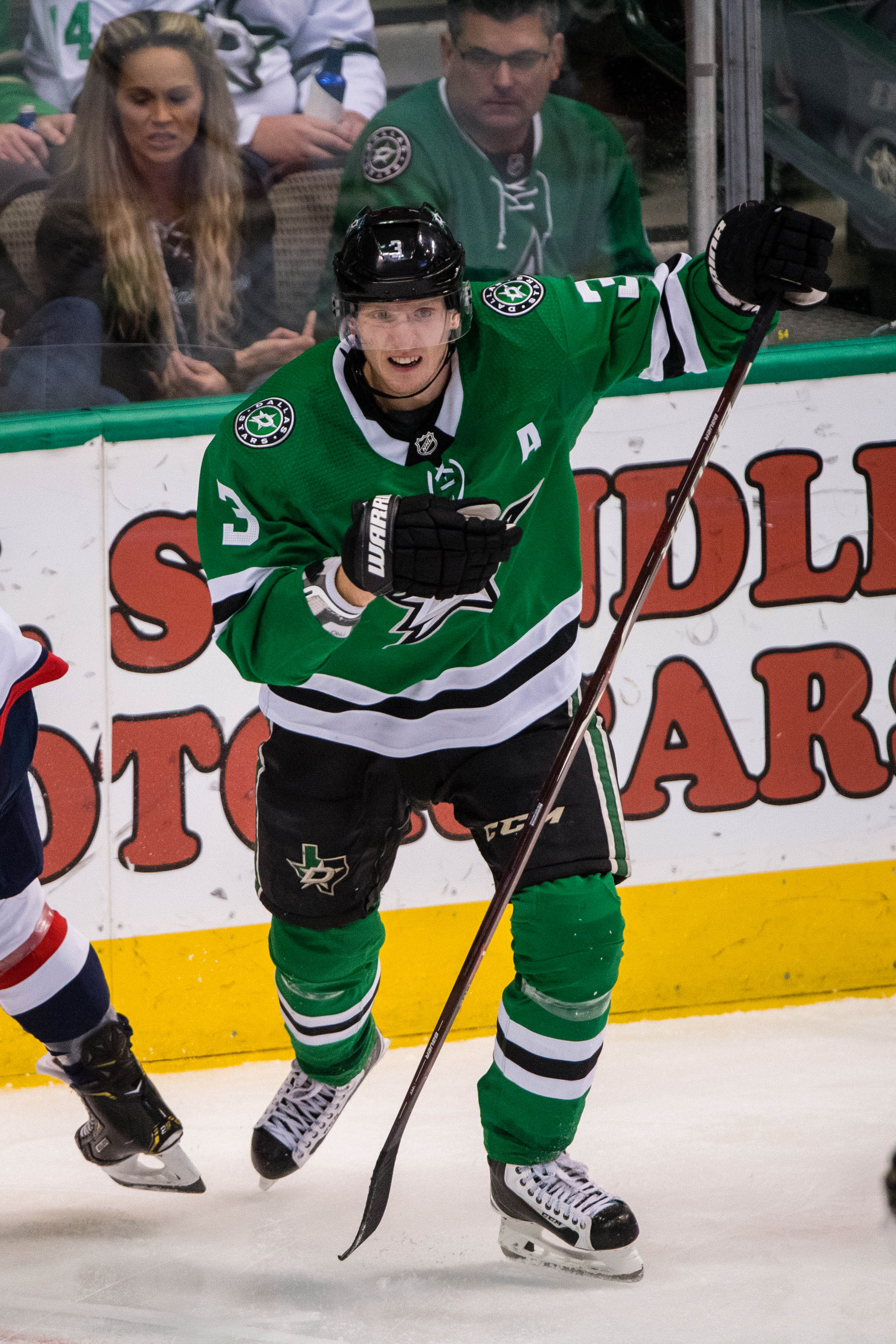 Klingberg is a different story. The team’s top defenseman just a year ago, Klingberg saw his offensive numbers slide during the regular season and in many ways seems to be overshadowed by the Stars’ young blueline. With Heiskanen likely to be granted a big contract soon, the status of Klingberg could be an interesting story, whether the team will overpay to lock him up or let him hit unrestricted free agency.
Gurianov has two years to prove that his numbers from last year are real. After having some issues a year ago in the AHL, Gurianov returned to North America last year and showed off his talent, scoring 20 goals in 64 games. If he can prove that he can be a consistent 20-goal scorer over these next two years, he also should get some of that freed up money.
Three Years Remaining
G Ben Bishop ($4.92MM, UFA)
G Anton Khudobin ($3.33MM, UFA)
F Roope Hintz ($3.15MM, RFA)
The team hope that Oettinger will have established himself as the goalie of the future in three years. That’s how long the team has to find someone as it seems unlikely that Dallas will keep Bishop and Khudobin since both will be 37 years old when their contracts expire. Both have been critical to the success of the team last year and Khudobin was rewarded with a three-year deal this offseason, especially considering that Bishop is expected to miss significant time this season due to injury.
Hintz, on the other hand, had a breakout season in his second year. The 24-year-old scored 19 goals and 33 points and looks like a future star for Dallas in the coming seasons, which suggests that his $3.15MM deal over the next three years could look like a significant bargain.Read more
Salary Cap Deep Dive: Colorado Avalanche
Navigating the salary cap is one of the more important tasks for any GM. Teams that can avert total cap chaos by walking the tightrope of inking players to deals that match their value (or compensate for future value without breaking the bank) remain successful. Those that don’t see struggles and front office changes.
PHR will look at every NHL team and give a thorough look at their cap situation heading into the 2020-21 season. This will focus more on players who are regulars on the roster versus those who may find themselves shuttling between the AHL and NHL. All cap figures are courtesy of CapFriendly.
Colorado Avalanche
Current Cap Hit: $79,676,386 (under the $81.5MM Upper Limit)
Entry-Level Contracts
D Cale Makar (one year, $880K)
Potential Bonuses
Makar: $2.5MM
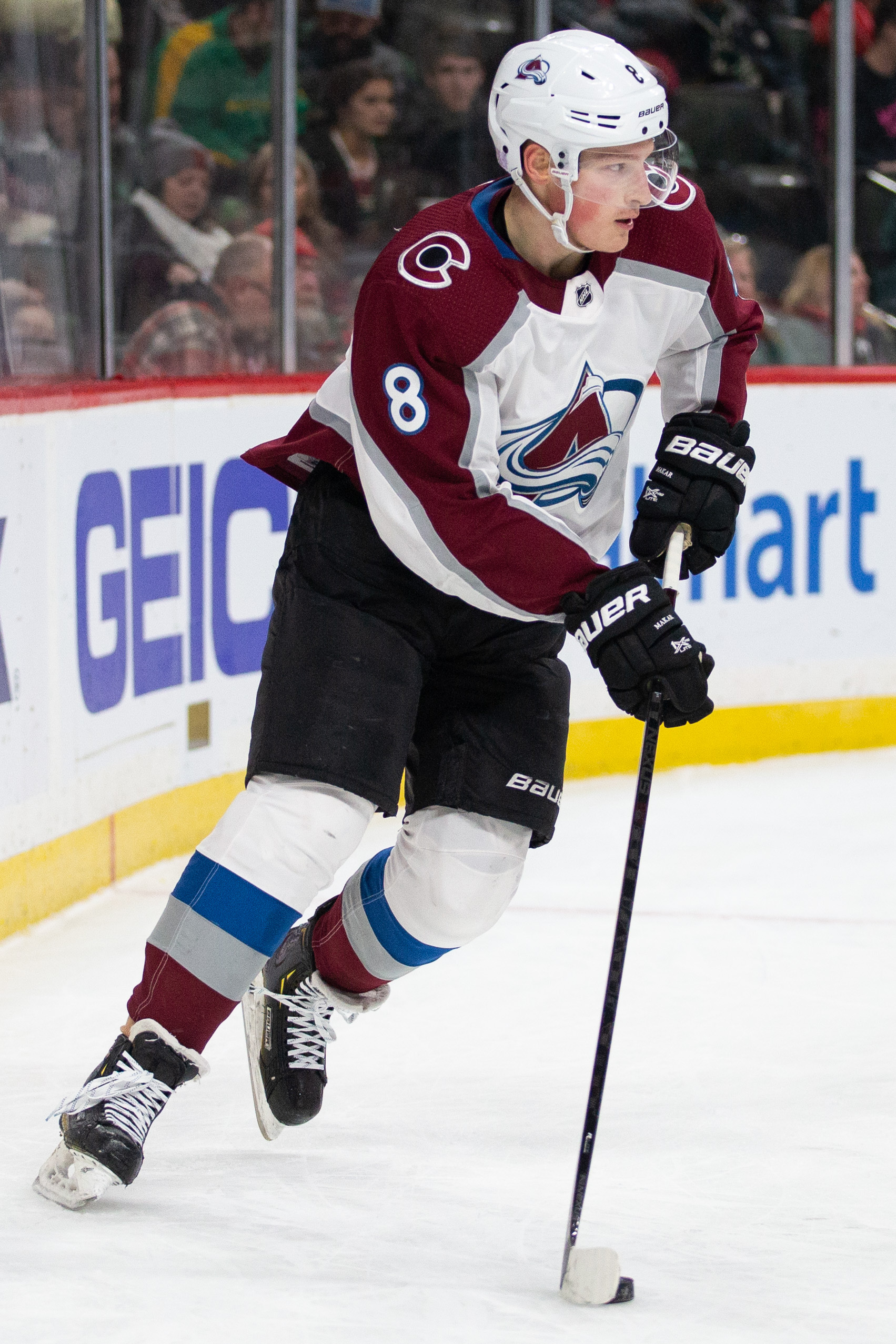 Makar’s rookie season was nothing short of dominant as he took home the Calder Trophy for the top rookie while finishing in the top-10 of Norris voting for the top defenseman in the league. He finished second on the team in scoring and logged over 21 minutes a night. Better still, he played even better in the playoffs. He looks like a franchise blueliner already and is going to command a substantial raise next offseason, even without arbitration eligibility. The fact they burned a year of his entry-level deal in the 2019 playoffs might help keep the AAV down slightly (he’ll have less than two full seasons of games under his belt) but if his sophomore campaign is anything like 2019-20, that shouldn’t make much of a difference. Makar may not get the top cap hit of $9.25MM but he should come fairly close to that mark.
One Year Remaining, Non-Entry-Level
F Pierre-Edouard Bellemare ($1.8MM, UFA)
F Matt Calvert ($2.85MM, UFA)
D Ian Cole ($4.25MM, UFA)
G Philipp Grubauer ($3.33MM, UFA)
F Tyson Jost ($874K, RFA)
F Gabriel Landeskog ($5.571MM, UFA)
F Brandon Saad* ($5MM, UFA)
*- Chicago is paying an additional $1MM on Saad’s contract.
Landeskog hasn’t been able to get to the lofty offensive levels of his linemates but the captain has nonetheless been an integral part of their forward group for the last nine years. He’s only 28 and should be able to get close to a max-term deal on the open market if he gets that far. Even with the UFA market being unkind to most wingers this year, Landeskog should be able to buck that trend and pick up a million or so on his AAV on his next contract. That may not be doable for Saad, however. His second go-around with Chicago was not as productive as his first and he is viewed as more of a middle-six player than a top liner. The latter are still going to get paid but the former will feel the squeeze so he has a lot at stake with his new team this season to restore some value. Calvert and Bellemare are useful role players but with the cap staying flat, they are in spots that will need to be replaced by cheaper options in Colorado and with other teams feeling the crunch as well, both will almost certainly have to take a less-expensive deal next summer. Jost accepted his qualifying offer after three relatively quiet seasons. He’s too young to write off but they’re expecting him to take a step forward and play his way into a bigger deal. A repeat performance may not be enough for a non-tender but his value around the league will take another dip if he doesn’t show some offensive improvement.
Cole has been an effective veteran on the third pairing and he’ll be asked to play that role again this season. It’s a premium price for the role but it’s one they can afford for now. That won’t be the case next year as he’ll almost certainly be replaced by Conor Timmins or Bowen Byram, players that likely won’t see much NHL action this season but should be ready for a full-time spot in 2021-22. Cole, meanwhile, could see his price tag cut in half if not more with teams looking to go cheaper on the third pairing.
Grubauer was brought in to be the goalie of the future but even after Semyon Varlamov left to join the Islanders, he wasn’t able to really step into that number one role. Injuries certainly played a role in that, including in the postseason as well. He certainly hasn’t been bad by any stretch in his two seasons with the Avs but he has yet to establish himself as a full-time starter either. If he can do that this year, he could add a couple million to his price tag but if not, he may not be able to command much more than he’s getting now.
Two Years Remaining
F Andre Burakovsky ($4.9MM, UFA)
G Pavel Francouz ($2MM, UFA)
F Nazem Kadri ($4.5MM, UFA)
F Valeri Nichushkin ($2.5MM, UFA)
Burakovsky struggled with consistency in Washington but things certainly came together in Colorado as he had a career year offensively by a significant margin despite the pandemic cutting things short plus missing another 13 games due to injury. The fact that he signed what amounted to another bridge contract coming off of that signifies that neither side is entirely convinced about what his offensive ceiling may be. If he reverts back to his previous level of production, he’ll be looking at a big pay cut two years from now but continuing at that pace should have him in line for at least a small raise and perhaps more importantly, a long-term deal. Kadri is another player that did well following his change of scenery. While his output didn’t jump like Burakovsky’s, he had a key role on the second line and played extremely well in the playoffs. Impact centers are always in high demand and low supply so even in a deflated marketplace, Kadri should be able to land a decent-sized raise two years from now. Nichushkin’s return to the NHL was a successful one as he was a capable secondary scorer as the change of scenery certainly worked for him as well. Given his relative inexperience, Colorado is certainly hoping that he can still take another step forward offensively. If he doesn’t, it’s hard to see him getting much more than this on his next deal.
Francouz’s first full NHL season was a strong one as he actually outperformed Grubauer from a statistical standpoint (2.41 GAA, .923 SV% compared to 2.63 and .916) with a similar workload. Things weren’t as good for him in the playoffs before injuries forced him out of the lineup as well. His inexperience didn’t give him much leverage in talks but if he performs even close to this level for the next two years, he’ll be well-positioned for another million or more on his next contract.
Three Years Remaining
F J.T. Compher ($3.5MM, UFA)
F Joonas Donskoi ($3.9MM, UFA)
D Ryan Graves ($3.167MM, UFA)
D Erik Johnson ($6MM, UFA)
F Nathan MacKinnon ($6.3MM, UFA)
MacKinnon’s contract has turned into one of the biggest bargains in the NHL in recent years with three straight seasons of more than 90 points under his belt. As things stand, he should be in a position to command more than $10MM per year on his next deal and considering he’ll still only be 28 at that time, he’s a near-lock for a max-term contract as well (eight years with Colorado, seven years if he goes elsewhere). GM Joe Sakic will certainly be planning around what this deal will cost as he continues to shape his roster. Donskoi’s contract seemed a bit pricey when he signed it although he hit a new career best in points per game last year. Nonetheless, it’s still a bit on the high side and it wouldn’t be too surprising if he would be a player that gets dangled if they want to free up some cap flexibility over the next three years. Compher’s offensive numbers have been relatively consistent over his three full NHL campaigns where he has produced like a third-line center. However, the fact he can play down the middle certainly boosts his value. He’ll need to get into the 40 or more point range to have a chance at landing a bigger deal on the open market.
Johnson’s contract held up better a few years ago than it does now. He once was their top defender but his ice time has been reduced the last couple of seasons while staying healthy has been a challenge. With a no-move clause and an 11-team no-trade clause, this could be a difficult deal to try to get out of, especially as their younger defenders move up the depth chart. Graves fit in well alongside Makar, earning him a big raise after spending the previous two seasons on one-year, two-way contracts. If he can hold down a top-four role, they’ll get a good return on this deal but given his relative inexperience, it does come with some risk as well.
Salary Cap Deep Dive: Chicago Blackhawks
Navigating the salary cap is one of the more important tasks for any GM. Teams that can avert total cap chaos by walking the tightrope of inking players to deals that match their value (or compensate for future value without breaking the bank) remain successful. Those that don’t see struggles and front office changes.
PHR will look at every NHL team and give a thorough look at their cap situation heading into the 2020-21 season. This will focus more on players who are regulars on the roster versus those who may find themselves shuttling between the AHL and NHL. All cap figures are courtesy of CapFriendly.
Chicago Blackhawks
Current Cap Hit: $74,286,313 (under the $81.5MM Upper Limit)
Entry-Level Contracts
D Ian Mitchell (three years, $925K)
F Kirby Dach (two years, $925K)
F Pius Suter (one year, $925K)
D Adam Boqvist (two years, $894K)
F Alexander Nylander (one year, $863K)
D Lucas Carlsson (one year, $792K)
Potential Bonuses
Dach: $2.5MM
Mitchell: $850K
Suter: $850K
Boqvist: $850K
Nylander: $850K
Carlson: $83K
One of the biggest positives is the Blackhawks have accumulated quite a bit of talent on entry-level deals and most of them will be on entry-level deals for at least two years, giving Chicago some cheap, but highly productive players on their roster, something they need with their core being both expensive and aging. Dach has been the biggest revelation as the forward was an afterthought after being drafted third-overall in the 2019 draft behind Jack Hughes and Kappo Kakko, but Dach put up identical numbers in his first NHL season to those two, scoring eight goals and 23 points last season. Hughes (21 points) and Kaako (23 points) did not play in the playoffs, but Dach established himself as a top-six center during that time, posting six points in nine playoff games and could be in for a big year.
With the defense in flux, the Blackhawks will have to hope that some of their young blueliners are ready to take that next step. Boqvist established himself last year with 13 points in 41 games and could be ready for a full-time role in the top four. Next is Mitchell, fresh from a dominant three-year stint at the University of Denver, who is expected to step right in and contribute. Carlsson is another blueliner who stepped in last year and could help out at the back end of the defensive lineup.
The team brought in Suter from Switzerland after a breakout season in the Swiss League where he posted 30 goals and 53 points in 50 games there. The 24-year-old is likely to earn a potential middle-six role in his first season in Chicago. Nylander will be one of the biggest question marks this season. The 22-year-old has struggled to establish himself as a top prospect after being the eighth-overall pick in 2016 by Buffalo and while he scored 10 goals in his first full season in the NHL with the Blackhawks, he went scoreless in eight playoff games and will have to prove he is an up-and-coming player.
One Year Remaining, Non-Entry-Level
F Zack Smith ($3.25MM, UFA)
D Nikita Zadorov ($3.2MM, RFA)
F Mattias Janmark ($2.25MM, UFA)
F David Kampf ($1MM, RFA)
F Lucas Wallmark ($950K, RFA)
D Nick Seeler ($725K, UFA)
The Blackhawks do have one decent-sized contract coming off the books in a year with Smith, who struggled putting up numbers in his first year in Chicago last year, scoring four goals and 11 points in 50 games and likely will be let go in a year. Janmark and Wallmark were given a one-year deal and will have to prove that they are worth bringing back on longer contracts. Kampf, who put up a career-high eight goals and provides solid defense, is another RFA who should earn a new contract.
Zadorov is an interesting addition. Acquired in a deal for Brandon Saad, the 6-foot-6 blueliner should add much needed size, grit and physicality to a defense that needs it, but will also need to be locked up in a year. After struggling to establish consistent playing time in Colorado, Zadorov could get quite a bit more playing time and could have a career season in Chicago.
Two Years Remaining
D Calvin de Haan ($4.55MM, UFA)
F Andrew Shaw ($3.9MM, UFA)
D Connor Murphy ($3.85MM, UFA)
F Dominik Kubalik ($3.7MM, RFA)
F Ryan Carpenter ($1MM, UFA)
G Collin Delia ($1MM, UFA)
G Malcolm Subban ($850K, UFA)
F Matthew Highmore ($725K, RFA)
De Haan and Murphy are two veteran blueliners who should fill in the top-four on defense, but if they can get something out of some of their young players, could be expendable and possibly moved at the trade deadline if either can produce. De Haan is coming off a 29-game season as he has been riddled with injuries, but is expected to be healthy and can be quite an impressive defenseman when healthy. The defensive-first Murphy posted a career-high 19 points last year and should be a fixture in their defense.
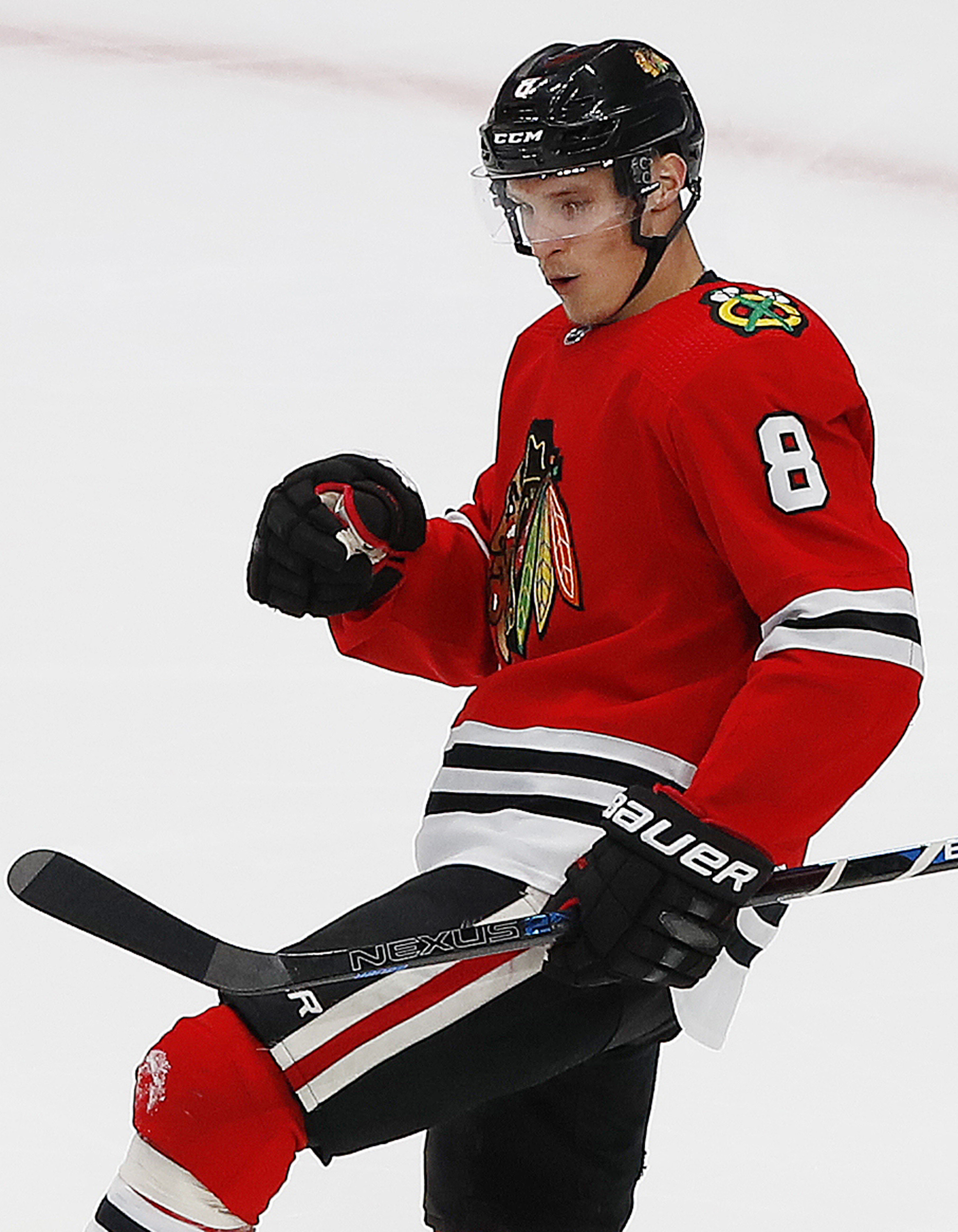 Kubalik was a big addition last year, putting up 30 goals and 46 points in his rookie campaign. The 25-year-old should continue to put up big numbers and is just another young player who has helped reshape the Blackhawks quick rebuild. If he continues his scoring ways, he will likely require an expensive long-term deal to retain him. Shaw is another player who must take his game to another level and prove his value.
The goaltending situation will also be interesting to watch. The team wants to see what it has in Delia and Subban. If one of the two succeeds, then they will be guaranteed a bigger deal, but neither has much experience at the NHL level and neither has ever been a starter in the NHL.
Three Years Remaining
F Patrick Kane ($10.5MM, UFA)
F Jonathan Toews ($10.5MM, UFA)
D Duncan Keith ($5.54MM, UFA)
F Alex DeBrincat ($6.4MM, RFA)
The huge overwhelming contracts of the former Stanley Cup core are suddenly down to a manageable three years and Kane, Toews and Keith (both 32) are aging reasonably well. Kane tallied 33 goals and 84 points in 70 games last year, making his contract quite palatable. Toews did see a decline in his production, going from 35 goals to just 18 goals last year. Yet Toews still posted 60 points in 70 games. The Blackhawks have to hope he can bounce back to his usual standards, otherwise the next three years will be challenging. Keith, on the other hand, is 37 years old now, meaning his contract won’t run out until he is 40 years old. However, the defenseman is still a solid player on the team’s blueline even if his offense is starting to decline.
The team also has high hopes for DeBrincat, who had a down year in 2019-20. He scored 28 goals in his rookie campaign, 40 goals in 2018-19, but struggled last year with just 18 goals and 45 points. Chicago will also have to hope that the five-foot-seven forward can find his scoring touch for this coming season.
Salary Cap Deep Dive: Washington Capitals
Navigating the salary cap is one of the more important tasks for any GM. Teams that can avert total cap chaos by walking the tightrope of inking players to deals that match their value (or compensate for future value without breaking the bank) remain successful. Those that don’t see struggles and front office changes.
PHR will look at every NHL team and give a thorough look at their cap situation heading into the 2020-21 season. This will focus more on players who are regulars on the roster versus those who may find themselves shuttling between the AHL and NHL. All cap figures are courtesy of CapFriendly.
Washington Capitals
Current Cap Hit: $82,524,877 (over the $81.5MM Upper Limit)
Entry-Level Contracts
G Ilya Samsonov (one year, $925K)
Potential Bonuses
Samsonov: $600K
Samsonov lived up to the hype relatively well in his rookie season although injuries and the early shutdown limited him to 26 games and he was unable to participate in the playoffs. A lot will be riding on him for the upcoming season where he stands as the likely starter despite the inexperience. With 2020-21 being another shortened year, he probably won’t have a long enough track record to command a long-term contract and given Washington’s salary cap situation anyway, a two-or-three-year second deal may be better for both sides.
One Year Remaining, Non-Entry-Level
G Henrik Lundqvist ($1.5MM, UFA)
F Alex Ovechkin ($9.538MM, UFA)
D Jonas Siegenthaler ($800K, UFA)
D Trevor van Riemsdyk ($800K, UFA)
F Jakub Vrana ($3.35MM, RFA)
Ovechkin’s situation is well-known at this point. He isn’t hiding the fact that he intends to stay with Washington and basically, the only questions are for how many years and how much? His next deal will have a 35-plus classification but that shouldn’t be much concern. While there is an expectation that his production will eventually decline, he still should be able to command a similar price tag to what he’s making now. Vrana continues to improve each season and has firmly established himself as a top-six fixture. He will have two RFA-eligible years remaining after 2020-21 and with his bridge deal expiring, he’ll be looking for a long-term pact. In a normal market, something in the $6MM range would make sense and there are enough comparables to make that case in arbitration.
Siegenthaler played a limited role last season but figures to be a part of their longer-term plans. However, he’ll still be line for third-pairing minutes so while he’ll be arbitration-eligible next offseason (something that wasn’t the case this time around), he still is only going to be able to command a small raise. As for van Riemsdyk, he’s looking to restore some value after taking a $1.7MM pay cut from his 2019-20 salary. If he can lock down a regular spot, this could be a nice situation for him to earn closer to double that amount next offseason.
As for Lundqvist, he was signed to be a veteran mentor to Samsonov but that is off the table now following today’s news that he will miss all of 2020-21 due to a heart condition. He will be eligible to be placed on LTIR as a result but with his low base salary, they won’t have much extra flexibility left by the time they replace him on the roster.
Two Years Remaining
G Pheonix Copley ($1.1MM, UFA)
F Nic Dowd ($750K, UFA)
D Michal Kempny ($2.5MM, UFA)
D Justin Schultz ($4MM, UFA)
G Vitek Vanecek ($717K, RFA)
Dowd saw his output dip slightly last season but for a player making close to the league minimum, expectations weren’t particularly high anyway. He’s a serviceable fourth center in a roster spot that will need to be kept at that minimum price point for the foreseeable future.
Kempny had emerged as a capable top-four option on the back end but it’s unlikely he’ll play this season after suffering a torn Achilles tendon while training in the days leading up to free agency. That injury carries a six-to-eight-month recovery timeline which means a lot will be riding on his 2021-22 performance to show that he can still play in that role and be worth a raise that offseason. His absence helped opened up a spot for Schultz who still landed a strong contract despite a tough season with Pittsburgh. Clearly, the expectation is that he will be able to get back to his previous offensive levels. If that doesn’t happen, he won’t be able to command this deal next time around.
Copley and Vanecek will now battle for the number two job behind Samsonov. The former has limited NHL experience as a backup in Washington and will carry a $25K cap hit if demoted to the AHL. Vanecek, meanwhile, was Braden Holtby’s backup in the bubble with Samsonov out and may be the early favorite for the role. Unless one gets into a platoon situation, neither will be able to command top backup money, especially if Samsonov winds up on a bridge deal of his own.
Three Years Remaining
F Lars Eller ($3.5MM, UFA)
F Carl Hagelin ($2.75MM, UFA)
F Garnet Hathaway ($1.5MM, UFA)
D Nick Jensen ($2.5MM, UFA)
D Dmitry Orlov ($5.1MM, UFA)
F Richard Panik ($2.75MM, UFA)
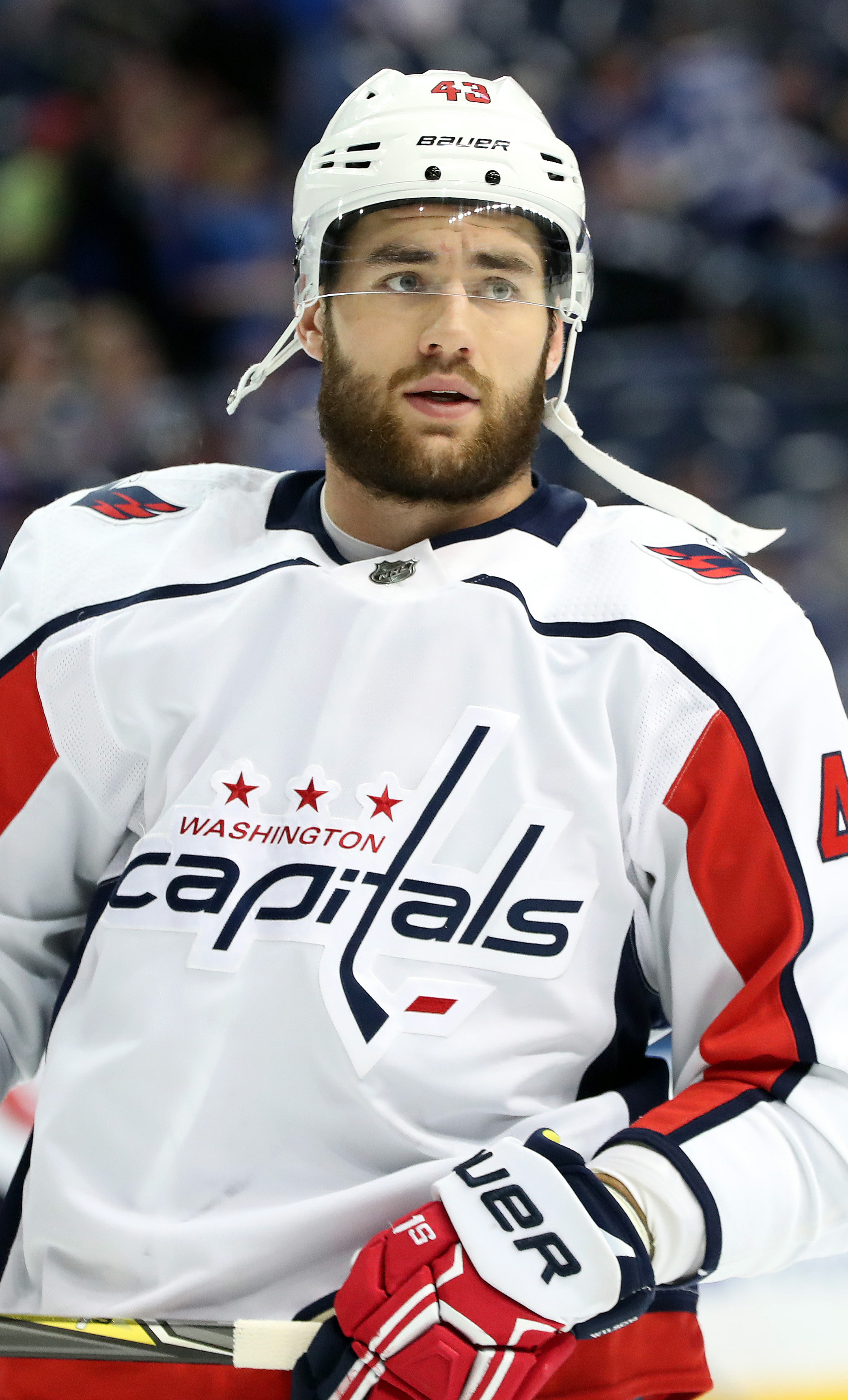
Eller has fit in quite well as Washington’s third center, one that can play up the lineup when need be. While bottom-six players could see their earnings upside limited due to the pandemic, this should still hold up as a decent value contract in the current marketplace. Hagelin isn’t able to put up consistent secondary production at this point of his career so while he’s an effective penalty killer and a speedster still, it’s a bit of an expensive deal for his role. Panik logged just 11 minutes a game last season as he didn’t fit in as well as anyone would have hoped in his first season with the Caps and it’s a deal that they’d probably like to get out of. Hathaway is a pure fourth liner most nights and this contract is an overpayment as well for someone in that role, though not as significant of one as Panik who was often his linemate down the stretch.
At one point, it looked like Orlov’s offensive production was going to find another level and that, coupled with his all-around play, would make his deal a major bargain. However, his goal total has dipped from ten goals in 2017-18 to just three and four over the past two years. But having said that, he’s still a big part of their back end and while the contract may not be the big bargain they had hoped for, they’ve still had a good return on it. That can’t be said for Jensen though. His extension that he signed upon being acquired hasn’t panned out well and is a contract they would certainly like to get out of, especially with a capable replacement in van Riemsdyk making a third of that amount. But with so many teams against the cap ceiling, moving him will be easier said than done.
Salary Cap Deep Dive: Pittsburgh Penguins
Navigating the salary cap is one of the more important tasks for any GM. Teams that can avert total cap chaos by walking the tightrope of inking players to deals that match their value (or compensate for future value without breaking the bank) remain successful. Those that don’t see struggles and front office changes.
PHR will look at every NHL team and give a thorough look at their cap situation heading into the 2020-21 season. This will focus more on players who are regulars on the roster versus those who may find themselves shuttling between the AHL and NHL. All cap figures are courtesy of CapFriendly.
Pittsburgh Penguins
Current Cap Hit: $80,181,842 (under the $81.5MM Upper Limit)
Entry-Level Contracts
D John Marino (one year, $925K)
Potential Bonuses
Marino: $850K
Marino’s rookie season was a strong one as he quickly worked his way into a spot in Pittsburgh’s top four, logging over 20 minutes a game while finishing second in team scoring among defensemen. If he even simply repeats that performance, he could easily double his base salary next offseason and if he takes a step forward, this deal could get pricey in a hurry.
One Year Remaining, Non-Entry-Level
F Zach Aston-Reese ($1MM, RFA)
F Teddy Blueger ($750K, RFA)
D Cody Ceci ($1.25MMMM, UFA)
F Mark Jankowski ($700K, RFA)
F Evan Rodrigues ($700K, UFA)
F Colton Sceviour ($1.2MM, UFA)
Sceviour was the secondary part of the trade that sent Patric Hornqvist to Florida this offseason. His output has dipped in recent years and while he’s an effective enough player to earn another deal beyond this one, he may have to take a small dip as the depth players get squeezed more and more in this cap environment. Aston-Reese had a quiet year despite an uptick in ice time. His role could be lessened this season and if that happens, his arbitration eligibility could wind up working against him if he doesn’t sign early. Blueger’s first full NHL season was a good one and he played his way into a role beyond the fourth line fairly quickly. Unless his offensive game improves significantly, he won’t be in a position to land a big raise but he could come close to doubling his current rate. Jankowski and Rodrigues both were non-tendered by Calgary and Toronto respectively and will look to rebuild some value after having limited interest on the open market. Both have earned bigger deals in the past but will need to find that form again if they want to get anything beyond a minimum contract or close to it a year from now.
Ceci is coming off of a tough season with Toronto which saw him take more than a $3MM pay cut. Expectations will be lower here and he’ll be in a role that’s a better fit for him. It wouldn’t be surprising to see him earn a bit of a raise on his next contract but it won’t come close to what he has made in recent years with AAV’s over $4MM.
Two Years Remaining
G Casey DeSmith ($1.25MM, UFA)
F Kasperi Kapanen ($3.2MM, RFA)
F Sam Lafferty ($750K, UFA)
D Kris Letang ($7.25MM, UFA)
F Evgeni Malkin ($9.5MM, UFA)
F Jared McCann ($2.94MM, RFA)
D Juuso Riikola ($1.15MM, UFA)
F Bryan Rust ($3.5MM, UFA)
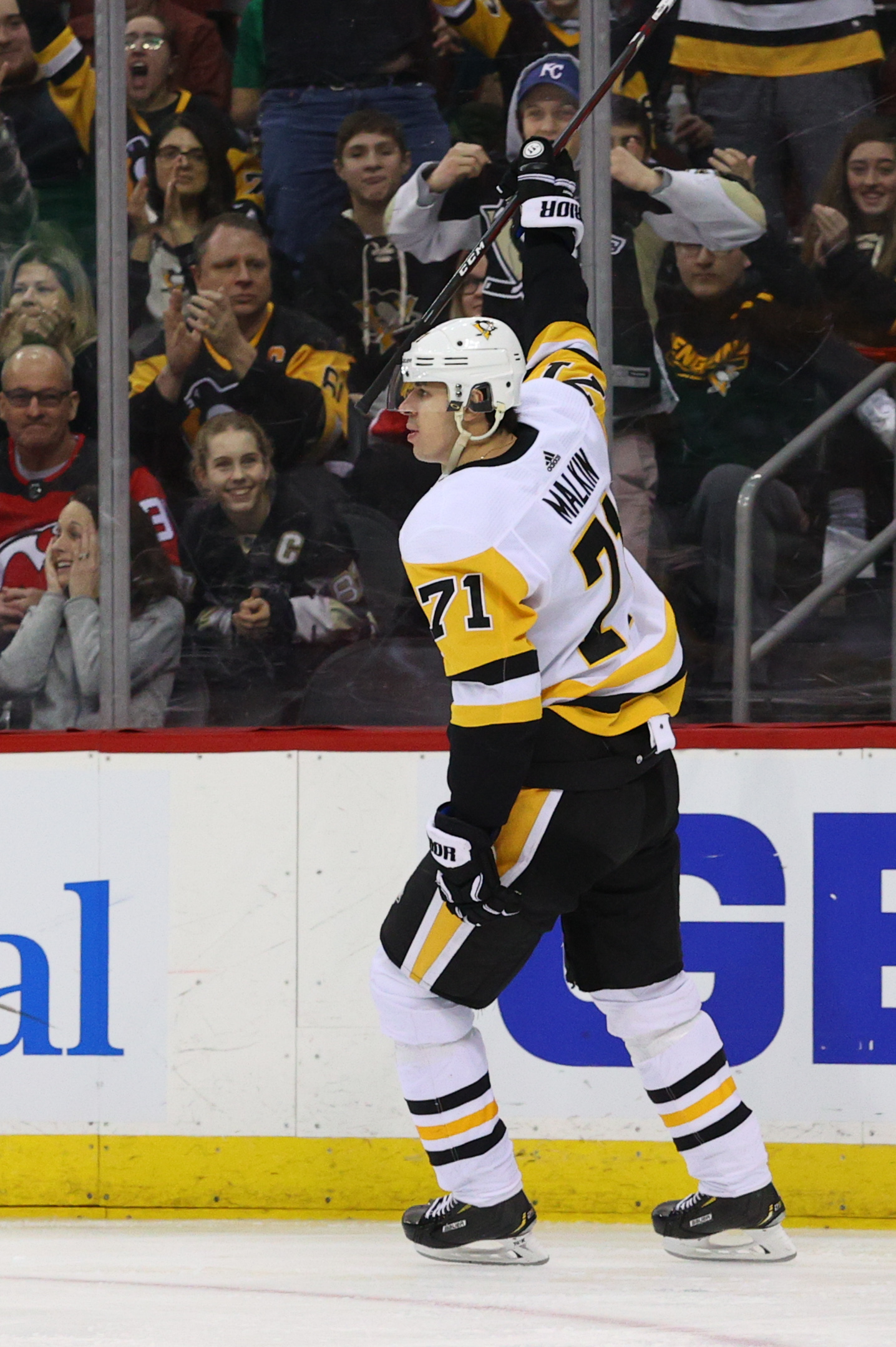 Malkin’s name is certainly the headliner among the forwards in this group. He has shown himself to be capable of being a number one center but hasn’t had the opportunity to play in that role very often for obvious reasons. If he wanted to go somewhere where he could have that role, he could probably get a multi-year deal close to his current rate, even with the 35-plus designation which carries some extra risks for teams. However, if he wants to remain with the Penguins (and at this point, that seems like a relatively safe bet), they will almost certainly ask him to take at least a small dip in pay in an effort to try to keep as much of their core together as possible.
GM Jim Rutherford paid a fairly steep price to bring Kapanen back into the fold and the early indication is that he will have a much bigger role than he did with Toronto. If he succeeds in that spot, he could push for a $5MM or more contract, especially being a year away from UFA eligibility at that time. Rust very quietly had a career year last season. After hovering around the 30-point mark the previous three seasons, he averaged more than a point per game and finished second on the team in scoring behind Malkin. If he reverts back to being the secondary scorer he had been, he’ll be in tough to match his current rate but if his 2019-20 production was a sign of things to come, then he’ll be adding a couple of million per season. McCann wound up being scratched at one point in the postseason which gives you an idea of how his year ended. If they wind up keeping Malkin around, his $3.38MM qualifying offer might be too rich for Pittsburgh. Lafferty figures to play a limited role and they’ll be looking to keep that roster spot close to the league minimum down the road.
Letang has been a fixture on their back end for 13 seasons and can still put up the points at a high-end rate. However, staying healthy has been an issue and he’ll also carry the 35-plus designation on his next deal. As a result, it’s hard to see him coming in higher than this rate on his next contract. If injuries are an issue between now and then, he’s a candidate to go year-to-year with bonuses but a multi-year pact at a slightly lower cap hit could also be appealing. Rikkola has been a depth option the last couple of years (even spending some time on the wing) and if he stays in that role for the next two, he won’t be in a spot to command a raise.
DeSmith was supposed to be the backup last season but plans changed quickly and instead he spent the year in the minors. With Matt Murray now gone, he’ll return to the number two role. As we’ve seen with backups in recent years, those that are above average can still land a pretty good contract and that will certainly be his target if he gets the opportunity to play more than a handful of games here and there.
Three Years Remaining
D Brian Dumoulin ($4.1MM, UFA)
G Tristan Jarry ($3.5MM, UFA)
F Jason Zucker ($5.5MM, UFA)
Zucker was brought in to add another scoring weapon on the wing although the pandemic and quick exit in the bubble means he hasn’t had much of a chance to establish himself. He did well in limited action and will need to be around the 25-30-goal mark to have a shot at a raise on his next deal.
Dumoulin has never been a big point-producer but has been a key anchor in the defensive end. However, the willingness to pay a high price for that type of player isn’t as high now in this environment so while he’s undoubtedly a big part of their back end, it’s hard to see him getting any significant boost on his next contract.
Jarry went from being available in a trade last year to their sure-fire starter this season after a strong 2019-20 campaign. He’s still inexperienced which is why they basically opted for a second bridge deal and by the time this contract is up, they’ll know if he’s their goalie of the long-term future that will earn a somewhat substantial raise closer to the $6MM mark or so or if he’s better off in a lesser (and lower-priced) spot.
Salary Cap Deep Dive: Philadelphia Flyers
Navigating the salary cap is one of the more important tasks for any GM. Teams that can avert total cap chaos by walking the tightrope of inking players to deals that match their value (or compensate for future value without breaking the bank) remain successful. Those that don’t see struggles and front office changes.
PHR will look at every NHL team and give a thorough look at their cap situation heading into the 2020-21 season. This will focus more on players who are regulars on the roster versus those who may find themselves shuttling between the AHL and NHL. All cap figures are courtesy of CapFriendly.
Philadelphia Flyers
Current Cap Hit: $79,238,852 (under the $81.5MM Upper Limit)
Entry-Level Contracts
F Joel Farabee (two years, $925K)
F German Rubtsov (one year, $894K)
F Morgan Frost (two years, $863K)
G Carter Hart (one year, $731K)
Potential Bonuses
Farabee: $500K
Rubtsov: $425K
Hart: 83K
Total: $1.1MM
One thing the Philadelphia Flyers have a lot of is balance, which includes quite a few impressive young players on entry-level deals. While he may not be paid the most of the entry-level players, the guy that is likely next to cash in is goaltender Carter Hart. Just 22, the young netminder has been impressive in two seasons. Perhaps the statistic that stands out the most is his numbers when at home. Hart posted a dominant 20-3-2 record at home with a 1.63 GAA and a .943 GAA. Unfortunately his road record wasn’t as good with a 3.04 GAA and a .896 save percentage — something he must work on. Regardless, he will likely command quite a bit when the Flyers try to lock him up to an extension.
Farabee and Frost are two young prospects who could make their impact known as soon as next season. Farabee played in 52 games last year for Philadelphia, scoring eight goals and 21 points, but he could be primed for a breakout season. Frost is the next prospect up. He appeared in 20 games last year, scoring two goals and seven points, but should see more regular time in Philadelphia’s lineup this season and could be a significant contributor down the road.
One Year Remaining, Non-Entry-Level
D Travis Sanheim ($3.25MM, RFA)
D Erik Gustafsson ($3MM, UFA)
F Scott Laughton ($2.3MM, UFA)
F Michael Raffl ($1.6MM, UFA)
G Brian Elliott ($1.5MM, UFA)
F Nolan Patrick ($874K, RFA)
D Samuel Morin ($700K, RFA)
Sanheim has established himself as a top-four defender on a very young defense and should continue to get better. With the loss of defenseman Matt Niskanen to retirement, Sanheim will be expected to take that next step and become a dominant defeneman for the Flyers. He scored eight goals and 25 points last season, but could be primed for a bigger year. Gustafsson was brought in to fill in the holes on the team’s defense. The 28-year-old was coming off a 60-point season in 2018-19, but failed to duplicate that with either with the Blackhawks or the Flames after he was traded at the deadline.
Laughton has been a useful bottom-six player over the last few years. The 26-year-old provides the team a combination of some offense and some physicality, something the team needs. Laughton finished last season with 13 goals and 27 points in 49 games last season as well as 109 hits, but more importantly stepped up in the playoffs, putting up five goals and nine points in 15 games. The 32-year-old Raffl is much the same, putting up eight goals and 20 points in 58 games with 96 hits.
The most interesting name might be Patrick, who missed the entire 2019-20 season with a migraine disorder. The Flyers hope that the No. 2 overall pick in 2017 can pick up where he left off and eventually become the dominant player he once was despite struggling through a myriad of injuries in the past. When healthy, Patrick can be a dominating, playmaking center. The team hopes to insert him into the lineup as the team’s third-line center to start and see where he goes from there.
Elliott, who has been mentoring Hart ever since Hart arrived, struggled last year and the team hopes the 35-year-old can find his game this season. If not, the team will likely move on from him in a year.
Two Years Remaining
F Claude Giroux ($8.25MM, UFA)
F Sean Couturier ($4.33MM, UFA)
D Justin Braun ($1.8MM, UFA)
D Robert Hagg ($1.6MM, UFA)
F Nicolas Aube-Kubel ($1.08MM, RFA)
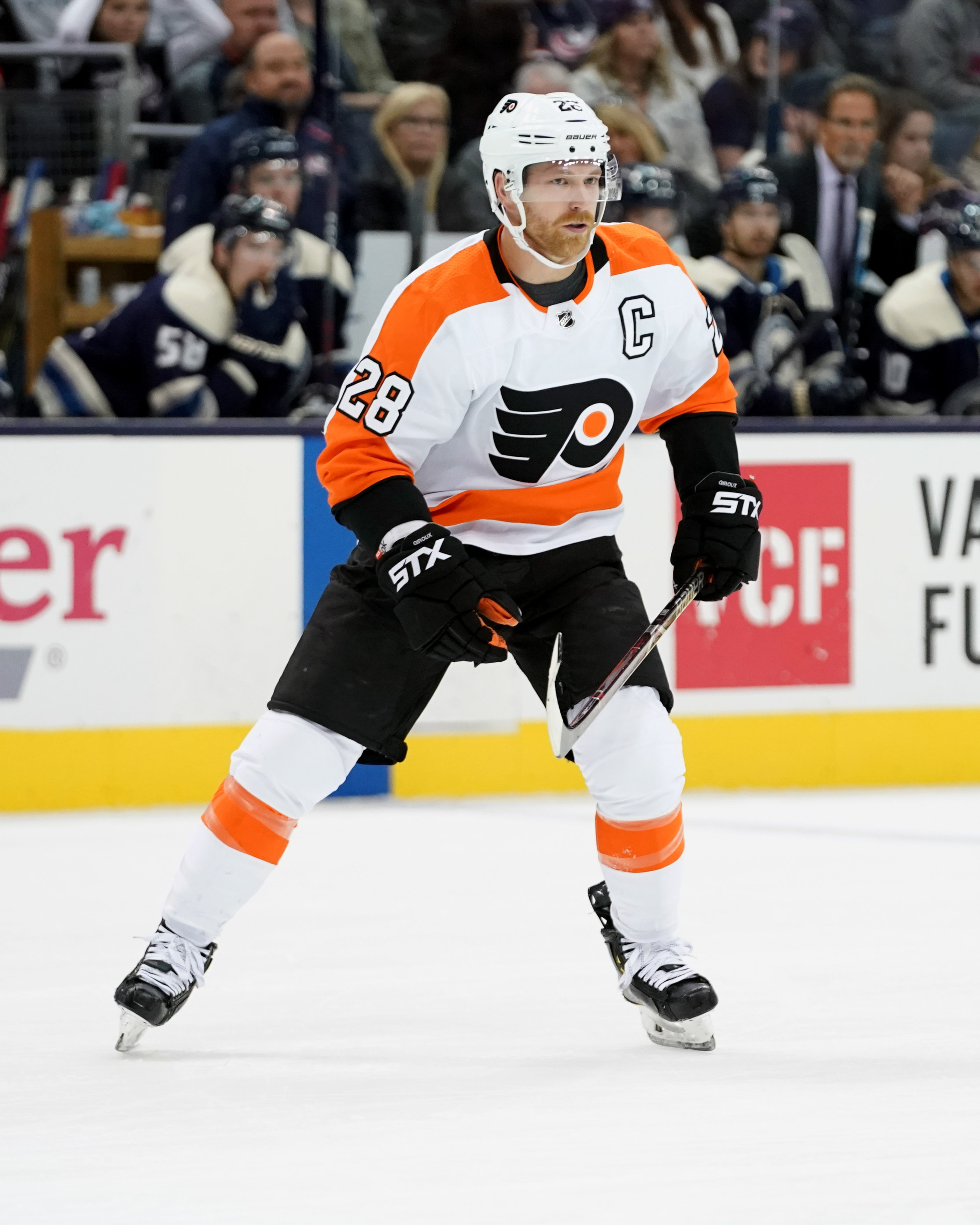 Giroux has been one of the most dominant Flyers players in their history with 257 goals and 810 points over his career. He put up 21 goals last year in just 69 games, but did see a decline in his overall points as his point totals went from 85 to 53. At 32 years of age, it’s likely that we’ll see the start of a decline in the next few years, but with two years remaining on his contract, the team does have some relief coming down the road. If Giroux can bounce back this year, he’ll remain a viable player for a few more years and can eventually be signed to a cheaper deal as he reaches his mid-30’s.
Couturier, on the other hand, is also coming off a disappointing season. After two straight 30-goal seasons, he struggled with just 22 goals in 69 games. Of course, had he played the entire 82 games, he may have come close to those goal-scoring numbers, but the 28-year-old should continue to post good numbers for the next few years and his contract looks like a value deal if he can get back to 30 goals once again.
Braun provides some much-needed veteran depth on the blueline after the Flyers traded a second and third-round pick to acquire him last offseason. They still get two more years out of him. Hagg also provides key depth despite an injury plagued 2019-20.
Salary Cap Deep Dive: New York Rangers
Navigating the salary cap is one of the more important tasks for any GM. Teams that can avert total cap chaos by walking the tightrope of inking players to deals that match their value (or compensate for future value without breaking the bank) remain successful. Those that don’t see struggles and front office changes.
PHR will look at every NHL team and give a thorough look at their cap situation heading into the 2020-21 season. This will focus more on players who are regulars on the roster versus those who may find themselves shuttling between the AHL and NHL. All cap figures are courtesy of CapFriendly.
New York Rangers
Current Cap Hit: $76,670,633 (under the $81.5MM Upper Limit)
Entry-Level Contracts
F Filip Chytil (one year, $894K)
D Adam Fox (two years, $925K)
F Julien Gauthier (one year, $863K)
F Brett Howden (one year, $863K)
F Kaapo Kakko (two years, $925K)
F Alexis Lafreniere (three years, $925K)
D Ryan Lindgren (one year, $925K)
G Igor Shesterkin (one year, $925K)
Potential Bonuses
Chytil: $350K
Fox: $850K
Gauthier: $300K
Kakko: $2.65MM
Lafreniere: $2.85MM
Lindgren: $212.5K
Shesterkin: $2.85MM
Total: $10.0625MM
It’s not very often that a team basically has more than a third of their roster on entry-level deals but that’s the case here. The total bonuses actually exceed the 7.5% bonus cushion so there is a dead cap charge of $3.95MM on the books as things stand and it’s extremely rare for a team to be in that situation but that just shows how many talented youngsters the Rangers have.
Lafreniere was the top pick of the draft back in October and is expected to step into a top-six role right away (or very soon after). As someone that should make a sizable impact right away, he could easily jump into the $7MM or more range on his next contract. Kakko, the second-overall pick in 2019, had a difficult rookie season. That could play a role in talks for his next deal depending on how 2020-21 goes. If he takes off, then like Lafreniere, he could bypass the bridge contract altogether and go straight to top money. If he doesn’t, then the likelihood of a short-term second deal becomes much stronger.
Chytil could be their second center of the future but it will take a couple more years for him to have a shot at jumping into that role. It’s difficult to envision them paying him top-six money before he really establishes himself so a bridge deal is likely. The same can be said for Howden who established himself as a regular in their bottom six but he’s unlikely to command a significant raise if his production is similar this year. Gauthier was brought in from Carolina in a late-season trade but has been a fourth liner almost exclusively in his limited NHL action. He’s in the type of situation where a small dip in pay to get a one-way deal or a higher AHL salary is the standard unless he plays himself into a more prominent role. Vitali Kravtsov (two years, $925K plus $850K in bonuses) will stay in the KHL through the end of their season but is an option to be recalled once that season comes to an end though their bonus situation may affect those plans.
Fox had an impressive rookie season and narrowly missed out on being a finalist for the Calder Trophy. 42 points from a defenseman is impressive in any year and even if he ‘only’ produces around that mark the next couple of years instead of increasing his point-per-game output, he’s a safe bet for a sizable raise already. Lindgren has a limited ceiling but fits in well on the third pairing. Another season in a regular role should give him a bit of a raise but without arbitration rights, he’ll be limited in what he can get next summer. K’Andre Miller (three years, $925K plus $300K in bonuses) could also play himself into the mix at some point.
Shesterkin still has very limited NHL experience (just a dozen games) but he enters 2020-21 as the presumptive starter. He made an immediate impact to help carry New York down the stretch last season and if he picks up where he left off, GM Jeff Gorton may try to work out a long-term pact. If not, a one or two-year deal that allows him to further establish himself before trying to command number one money makes sense.
One Year Remaining, Non-Entry-Level
F Pavel Buchnevich ($3.25MM, RFA)
D Jack Johnson ($1.15MM, UFA)
D Brendan Smith ($4.35MM, UFA)
Buchnevich has shown flashes of top-end offensive play throughout his career but inconsistency has been an issue although he did improve on that last year while setting a new benchmark in points with 46. Assuming he produces at a similar per-game rate this season, the Rangers shouldn’t have much issue tendering a $3MM qualifying offer although in this market, he may not be in great shape to get much more than that.
Smith’s contract has been burdensome for New York basically ever since he signed it as in the first year, he was sent to the minors. He has done well to carve out a small niche role as a blueliner that can also hold his own on the wing but while that might help him earn another contract, it would be for about a quarter of what he’s making now. Johnson was bought out by Pittsburgh this offseason and quickly signed with the Rangers. He’s likely to have a limited role and even if he does rebuild his value a little bit, he shouldn’t be able to command much more a year from now.
Two Years Remaining
D Anthony Bitetto ($737.5K, UFA)
D Anthony DeAngelo ($4.8MM, RFA)
G Alexandar Georgiev ($2.425MM, RFA)
F Brendan Lemieux ($1.55MM, RFA)
F Kevin Rooney ($750K, UFA)
F Ryan Strome ($4.5MM, UFA)
F Mika Zibanejad ($5.35MM, UFA)
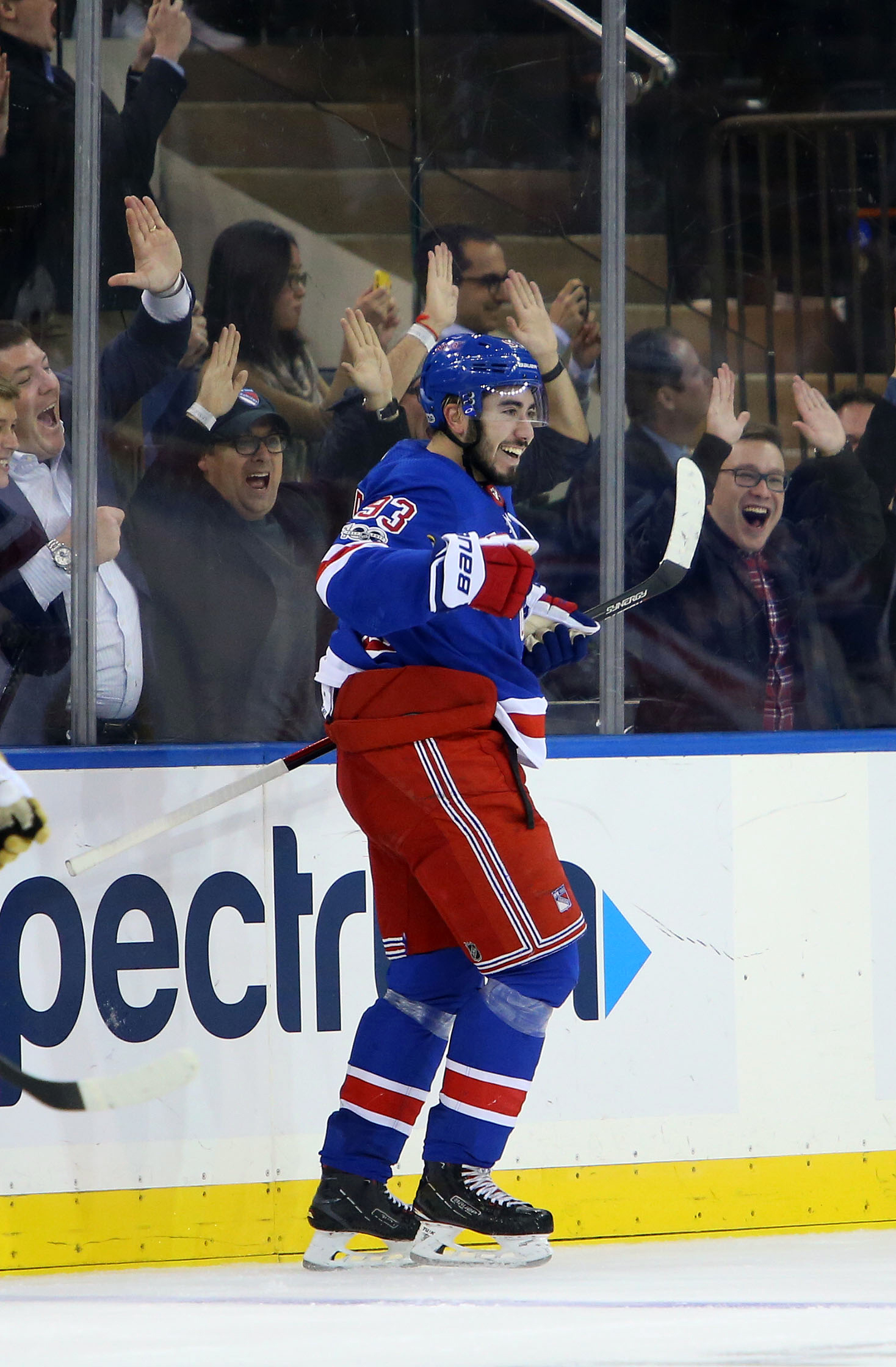 It took a bit of time but Zibanejad has emerged as a legitimate number one center and actually beat his 2018-19 point total (74) despite playing in 27 fewer games last season. While he has eight full NHL seasons under his belt already, he’s still just 27 and will hit the open market at 29 if the two sides can’t agree on an extension by then. The financial situation league-wide probably won’t have fully recovered by then but at the same time, top centers rarely become available. If Zibanejad, a top defensive forward on top of his newly-found offensive prowess, can hover around a 70-point pace for these next two years, he could add $3MM to $4MM to his AAV on his next deal. Without a top option in the system, this will be a priority case for Gorton when he’s eligible for an extension next season.
Strome is coming off of a career year but even that wasn’t enough to guarantee him a qualifying offer as a decision came down to the final few minutes before it was tendered. They settled on this contract to avoid arbitration and add a year of team control which gives Chytil more time to develop. Given that he has struggled offensively with two previous teams, he’ll need to show this was more than a one-time bump in output to have a shot at besting this contract two years from now. Lemieux doesn’t have the offensive upside to play in the top six but he has been an effective physical player which earned him a two-year deal this offseason. Until he produces more consistently though, his earnings upside will be limited to not much higher than this. Rooney was brought in from rival New Jersey in free agency and should battle for a spot on the fourth line. That’s a roster spot that will need to stay at or close to the minimum in future years.
DeAngelo didn’t have much leverage a year ago when he basically had to sign a one-year, show-me deal. He showed the Rangers and the rest of the league plenty as he was among the top offensive blueliners in the league, earning himself nearly a $4MM raise in the process. He has played his way into a core role on the team and should be well-positioned for another notable jump if he performs at a similar level the next two seasons as he’ll be a year out from UFA eligibility when his next contract begins. Bitetto is the favorite for the seventh spot on the back end and like Rooney’s situation, it’s a roster slot that will need to remain at a similar price tag whether it’s him or someone else in that role.
Georgiev has done enough to show that there’s still some upside but it’s fair to wonder if he is viewed as a number one goalie elsewhere. He’s going to have a hard time commanding number one money if he’s behind Shesterkin but the good news is that top backups can still push for a deal around $1MM higher than his current one. Assuming their goaltending situation goes according to plan, that’s what Georgiev’s next contract target should be.
Salary Cap Deep Dive: New York Islanders
Navigating the salary cap is one of the more important tasks for any GM. Teams that can avert total cap chaos by walking the tightrope of inking players to deals that match their value (or compensate for future value without breaking the bank) remain successful. Those that don’t see struggles and front office changes.
PHR will look at every NHL team and give a thorough look at their cap situation heading into the 2020-21 season. This will focus more on players who are regulars on the roster versus those who may find themselves shuttling between the AHL and NHL. All cap figures are courtesy of CapFriendly.
New York Islanders
Current Cap Hit: $77,594,163 (under the $81.5MM Upper Limit)
Entry-Level Contracts
D Noah Dobson (two years, $894K)
Potential Bonuses
Dobson: $537.5K
Dobson was a victim of the NHL-CHL agreement that prevented him from being eligible to play in the AHL. He clearly had done all he needed to at the major junior level but he also wasn’t quite ready for primetime duty in the top league either. That might actually help the Islanders when it comes to his second deal as while he burned the first season of his contract, he wasn’t an impact player by any stretch. He’s undoubtedly a big part of their future plans but he’s unlikely to break the bank with his next contract as things stand.
One Year Remaining, Non-Entry-Level
F Anthony Beauvillier ($2.1MM, RFA)
F Casey Cizikas ($3.35MM, UFA)
F Michael Dal Colle ($700K, RFA)
D Adam Pelech ($1.6MM, RFA)
G Ilya Sorokin ($2MM, RFA)
Cizikas has been a very effective energy player for several years. However, this is a hefty price tag for a player that still spends some time on the fourth line and rarely sees action in the top six. These types of players – while still effective – are going to feel the squeeze of the flattened Upper Limit so it’s hard to see him coming close to what he’s making now on his next deal let alone a raise. Beauvillier had a career year last season and has become a consistent secondary scorer. Between that and arbitration rights, he could have a shot at doubling that price tag if he takes another step forward in 2021-22. Dal Colle had a limited role last year which only earned him a one-way contract. He’ll be owed a minimum-salary raise at a minimum next offseason but unless he plays his way into a bigger role, he probably won’t get much more than that.
Pelech is coming off an injury-plagued year but emerged as an under-the-radar top-four defenseman. If he maintains that role, he’ll be well-positioned to earn a decent raise and with him being one year away from UFA eligibility, GM Lou Lamoriello will likely be looking to buy out a UFA-eligible season or two as well.
Sorokin has yet to play in the NHL but managed to get this high of a salary after burning his entry-level contract while being ineligible to play in the postseason bubble. He enters this season as the backup which may limit his short-term earnings upside but at the same time, he’s their goalie of the future and is only two years away from being eligible for unrestricted free agency. He could be one of the more interesting RFA cases next summer as a result.
Two Years Remaining
D Johnny Boychuk ($6MM, UFA)
F Cal Clutterbuck ($3.5MM, UFA)
D Thomas Hickey ($2.5MM, UFA)
F Ross Johnston ($1MM, UFA)
F Leo Komarov ($3MM, UFA)
D Nick Leddy ($5.5MM, UFA)
D Ryan Pulock ($5MM, UFA)
At one point, Clutterbuck was part of New York’s vaunted fourth line, a unit that is now more overpaid than it is vaunted. They’re still effective but this is another overpayment in their bottom six. So too is Komarov who isn’t able to hold his own in bigger minutes like he was while playing for Lamoriello in Toronto. Neither player should come close to matching their current contracts on the open market two years from now. Johnston isn’t an every-game player but his price tag is at least more appropriate for someone in that role.
While Boychuk’s playing days are over, he’ll remain on the books until his contract expires. He’s eligible for LTIR and the Islanders will need it to be cap-compliant once everyone is signed. Leddy’s deal seemed like a bargain early after he was acquired from Chicago but as his production has dipped the last couple of years, that isn’t the case as much now. It’s not a massive overpayment either as he’s still a top-four option but barring him rediscovering his offensive touch, he is another veteran eyeing a dip in pay. That will also be the case for Hickey who spent last year in the minors and only is being mentioned here since they’ll still face a sizable cap charge if he’s sent back down this season.
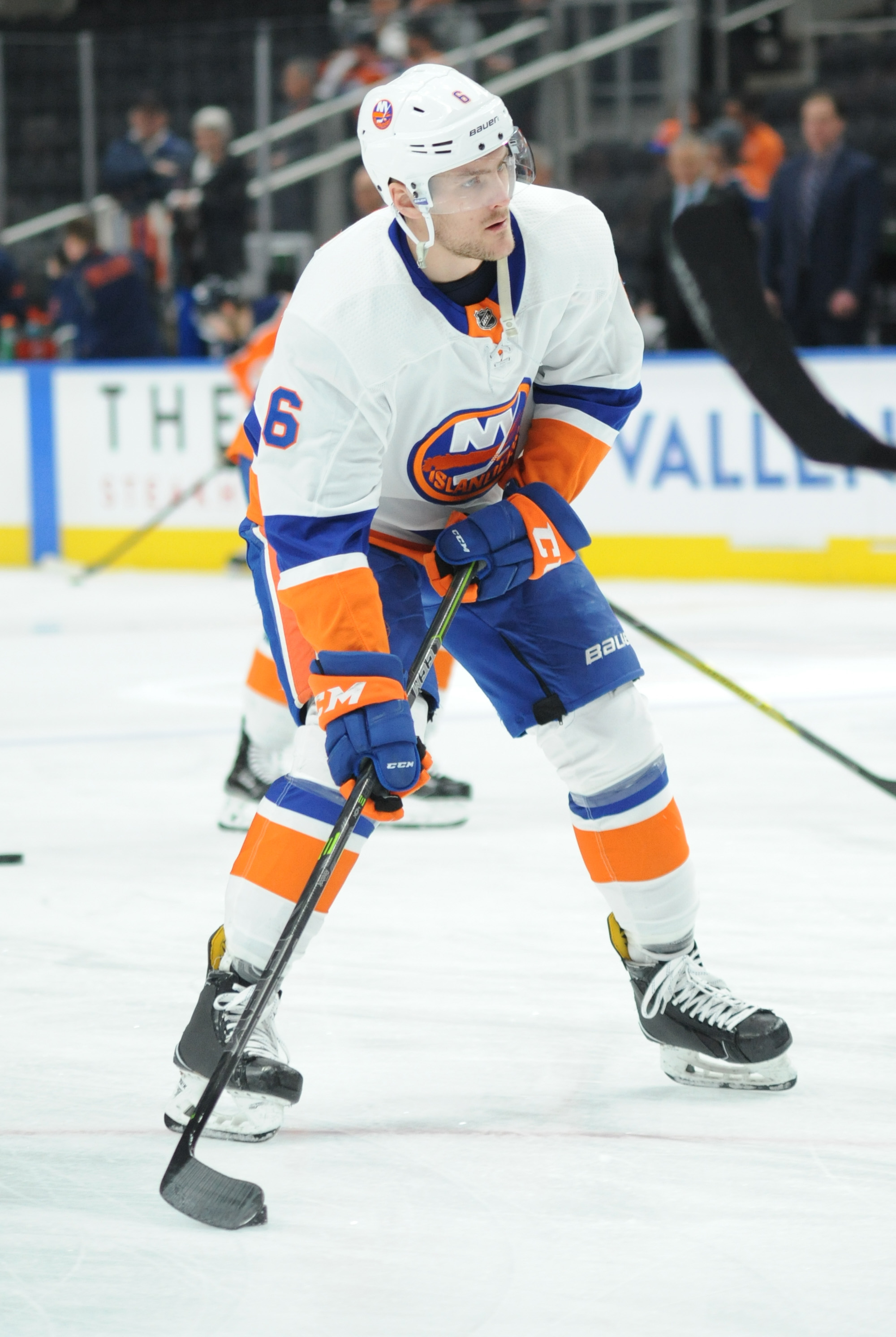 The same can’t be said for Pulock. The two-year term on his most recent deal certainly raised some eyebrows as it walks him straight to unrestricted free agency in the prime of his career. He very quietly has established himself as their top defenseman and assuming he continues on his current trajectory, it’s quite possible that he adds another couple of million per year to his next cap hit. That the Isles opted for this contract shouldn’t be perceived as an indictment on Pulock but rather a reality of who still needs a contract (more on him later). This was the cheapest way to get him signed and while they’ll benefit from it for the next two years, they’ll pay for it in 2022 when he’ll cost a fair bit more to re-sign.
Three Years Remaining
F Andrew Ladd ($5.5MM, UFA)
D Scott Mayfield ($1.45MM, UFA)
G Semyon Varlamov ($5MM, UFA)
Ladd is yet another of the terrible 2016 UFA contracts that were handed out. While he was a top-six forward when the deal was signed, he isn’t now and spent most of last season in the minors. That may be the case again next season and to make matters worse, the structure of the deal makes it virtually buyout-proof.
Mayfield’s five-year extension came with some risk considering he didn’t have even one year’s worth of NHL experience under his belt but it has proven to be a prudent move as he has since established himself as a capable regular. His offensive production (or lack of) will limit his earnings upside but he should still get a fair-sized raise in his first crack at the open market.
Varlamov had a good first season with the Islanders and eventually wrestled away the number one job. However, Sorokin is their goalie of the future and the expectation is that he’ll eventually take over the top role from Varlamov. As a result, it’s fair to wonder if he finishes this team with them; if he does, he’ll probably have a hard time commanding similar money from a 1B or backup role.