
Poll: Who Captures Final Eastern Conference Wild Card Spot?
A few weeks ago, when the standings were more fluid, we ran a poll inquiring about which teams would grab the final two wild-card spots in the Eastern Conference. Now, with the Tampa Bay Lightning already securing the top spot, there are still four teams fighting over the final spot with less than three games remaining.
The Washington Capitals, who now have the highest odds of capturing the spot with two games remaining, have only produced an 11-9-2 record since the start of March. However, they have picked up key wins in games with playoff implications, defeating the Detroit Red Wings twice, the Pittsburgh Penguins once, and the Philadelphia Flyers once. If the season ended today, the Capitals would line up against the New York Rangers in the first round of the playoffs, but will likely have to beat both the Boston Bruins and Flyers in their last two games.
Following the Capitals, the Red Wings kept their postseason dreams alive last night with an overtime win against the Toronto Maple Leafs. Now tied with Washington in both games played and points, Detroit ultimately loses the tiebreaker due to regulation wins. To get in, the Red Wings will need the Capitals to lose at least one of their final two games, while Detroit must sweep in their home-and-home against the Montreal Canadiens. So far this year, the Red Wings have split with the Canadiens in two games this season, with both games going to overtime.
Behind the Capitals and Red Wings, the Flyers and Penguins are still technically in the hunt but have some very difficult math to get in. The Flyers can only max out at 89 points, with a 7-10-4 since March 1st making their postseason aspirations more and more bleak. Technically earning better odds for a postseason spot than the Flyers, the Penguins can still max out at 90 points on the year, after a 7-1-2 record in their last 10 games has vaulted them into the playoff conversation.
Over their next two games, if the New York Islanders fail to capture a point and both the Capitals and Penguins win their final two, the Capitals would take the third spot in the Metropolitan Division, while the Penguins have the opportunity to capture the final wild-card spot in the Eastern Conference. With several possibilities still up in the air leading into the last few games of the regular season, the Eastern Conference wild-card race is bound to go down to the last minute.
Who Captures Final Eastern Conference Wild Card Spot?
-
Detroit Red Wings 46% (512)
-
Washington Capitals 25% (273)
-
Pittsburgh Penguins 21% (236)
-
Philadelphia Flyers 8% (91)
Total votes: 1,112
If you can’t see the poll embedded above this, click here to vote.
2024 Unrestricted Free Agency Preview: Goaltenders
Less than two weeks remain in the regular season, meaning a significant number of teams have already turned their main focus toward the draft and free agency. In the run-up to the playoffs for the other half of the league, PHR will join those front offices in identifying the top targets expected to be available on the open market in July.
Kicking off this year’s free agency preview is the goalie market, which looks to be quite underwhelming yet again. There are no bonafide starters available for teams looking for a major shakeup between the pipes – they’ll have to accomplish that by examining the trade block for players like the Flames’ Jacob Markström, the Predators’ Juuse Saros and the Bruins’ Linus Ullmark. It’s a considerably weaker class than even last year’s, whose major targets (Tristan Jarry, Frederik Andersen, Adin Hill) all ended up re-signing with their previous clubs.
This series will only cover players who have spent time on NHL rosters in 2023-24, not accounting for college, junior, overseas, or otherwise undrafted free agents. Players’ ages are as of July 1, reflecting their true signing age. With that in mind, let’s delve into the options that could be available for teams to add depth:
Fringe Starter/Tandem Options
 Cam Talbot, 36
2023-24 team: Los Angeles Kings
No slight to Talbot, but his name appearing first in this article should indicate how weak this UFA goalie class is. He’ll be viewed as the top option available based on 2023-24 play as the only one to play in over half of his team’s games. The journeyman veteran has largely washed away the stink of a forgettable 2022-23 campaign with the Senators, rebounding for a 25-18-6 record with a .915 SV%, 2.48 GAA, and three shutouts in 48 starts and two relief appearances. He’s arguably having his best season since his electric 2016-17 campaign with the Oilers when he led the league with 73 games played and 42 wins as he finished just short of a Vezina nomination and helped them end an 11-year streak of missing the playoffs. His career numbers are decently above average, too, logging a .914 SV%, 2.63 GAA, and 31 shutouts in 461 starts and 21 relief appearances since breaking into the league with the Rangers in 2013.
The aging curve will be a very real concern, however, and will certainly dampen Talbot’s market. He’ll be 37 just a few days into July and has only started more than 40 games twice since his last full season with the Oilers in 2018. As a result, the University of Alabama-Huntsville product will likely settle for a second straight one-year deal, a more palatable option for player and team as he remains eligible for a bonus-laden 35+ contract. This year’s gamble paid out well for Talbot, who perhaps bet on himself too little – his $1MM cap-hit deal with L.A. pays him $2MM in actual salary thanks to a $1MM performance bonus that kicked in once he played 10 games. After a decent workload, likely playoff starts, and top-ten numbers, even with a strong defense in front of him (13.3 goals saved above expected, per MoneyPuck, his highest since 2016-17), he could earn as much as double that on a one-year deal this summer.
Anthony Stolarz, 30
2023-24 team: Florida Panthers
Stolarz has put up the best numbers of any pending UFA, but a smaller sample size than Talbot will limit his market value. His .922 SV% and 2.12 GAA lead all qualified netminders this year, albeit in only 22 starts and three relief appearances while backing up all-world Sergei Bobrovsky in South Florida. A recent sputter in play from Bobrovsky actually gives Stolarz the slight edge in goals saved above expected on the season – exactly 16, per MoneyPuck, remarkably placing him fifth in the league behind Winnipeg’s Connor Hellebuyck, Vancouver’s Thatcher Demko, and the Bruins’ tandem of Jeremy Swayman and Linus Ullmark. He’s no stranger to strong numbers – he logged a strong .917 SV% in 28 appearances (23 starts) while backing up John Gibson behind a bottom-10 Ducks team two years ago. The New Jersey native is undoubtedly ready for a slightly larger role, but he’s unproven even in tandem capacity, never cracking the 25-start mark.
 Ilya Samsonov, 27
2023-24 team: Toronto Maple Leafs
It’s been a tale of two seasons for Samsonov, who had what can only be described as a horrid start after guiding the Maple Leafs to their first playoff series win in 19 years last April. He logged an unplayable .862 SV% through his first 15 starts. While the Leafs were able to sneak by with a 5-2-6 record in games where he was awarded the decision, solid play from veteran third-stringer Martin Jones (mentioned later on) allowed them to waive Samsonov and give him a mental reset.
After working with their minor league club’s development staff for the first week and a half of January, he ended up back in the NHL with much more positive results. He hasn’t been a world-beater, but he has put up starter-caliber numbers, recording a 17-4-1 record, .912 SV%, and two shutouts in 22 showings since the calendar flipped to 2024.
Consistency has plagued Samsonov throughout his five-year NHL career, never putting together back-to-back above-average seasons. He is still one of the youngest and highest-ceiling options on the market, though. A contender shouldn’t feel comfortable putting all their eggs in Samsonov’s basket to take them to the promised land, but he’s valuable as a 1A netminder with solid support – just like he’s had in Toronto with Jones and young backup Joseph Woll, both putting together solid campaigns.
David Rittich, 31
2023-24 team: Los Angeles Kings
Rittich actually started the season in the minors, but an early season-ending injury to Kings backup Pheonix Copley allowed him to get back to the top level. He hasn’t disappointed, putting an airtight seal on the number-two role behind Talbot and putting up the best numbers of his eight-year career. This year’s .919 SV% and 2.21 GAA are well above his career averages, and like Stolarz and Talbot, his 12.8 goals above expected (per MoneyPuck) are top 10 in the league. This is another case of small sample size limiting a player’s value, though, as 21 starts and two relief appearances aren’t enough for a team to bet on him suddenly being able to be a high-end 1A option after that experiment fizzling out a few years back with the Flames. However, he has restored his market value as a 1B option after a string of below-average seasons.
Laurent Brossoit, 31
2023-24 team: Winnipeg Jets
Brossoit returned to Winnipeg last summer for his second stint as Connor Hellebuyck‘s backup after capturing a Stanley Cup ring last year with the Golden Knights. His career numbers resemble that of a yo-yo, but he’s caught himself on the upswing for a second straight year and has excelled with a .925 SV%, 2.10 GAA, two shutouts, and 13-5-2 record in 20 starts and one relief appearance. His highs and lows have essentially made his numbers that of a garden-variety backup over his career, however, taking him out of consideration for any 1A roles. He could be in line for a slight increase in starts in a 1B slot if a team is willing to give him the chance.
Alex Nedeljkovic, 28
2023-24 team: Pittsburgh Penguins
Nedeljkovic has had a bounce-back campaign after being demoted to the AHL for an extended period last season, even wrangling away the starter’s crease from Tristan Jarry down the stretch as the Pens find themselves back in the playoff push. The two-year, $6MM deal he signed with Detroit in 2021 to be their starter after a breakout campaign as part of a three-goalie rotation with the Hurricanes didn’t pan out, but he’s back to putting up above-average numbers in a larger-than-expected role in Pittsburgh this season.
He has a .907 SV% and 2.82 GAA through 28 starts and five relief appearances, along with a 16-6-6 record, but his 1.8 goals saved above expected (MoneyPuck) are the lowest of anyone on this list so far outside of Samsonov. This year’s showing has confirmed that a 1B role with about 30-35 starts is likely what suits him best, and while he’s in line to earn a raise on his current $1.5MM cap hit, it likely won’t be much. He could be a solid value pickup for somebody, but like many others on this list, doesn’t appear to have a lot of upward mobility.
Kaapo Kähkönen, 27
2023-24 team: San Jose Sharks/New Jersey Devils
It’s hard to gauge any netminder who’s logged time behind the 2023-24 Sharks, one of the worst teams of the salary cap era. His numbers there weren’t all that catastrophic considering and even bordered on average, compiling a .895 SV% and 3.81 GAA despite winning only six of his 27 starts. In five starts with the Devils since a trade deadline swap for Vítek Vaněček, he’s been downright solid with a .918 SV% and 2.92 GAA, along with one shutout. The team in front of him hasn’t given him much help either way either, as that’s only translated into one win. There will likely be some teams interested in what he can do behind a more competent and healthy defense, and he could be one of the bigger wild cards on the market after spending the past few years toiling behind a rebuilding San Jose squad.
Backups/Depth
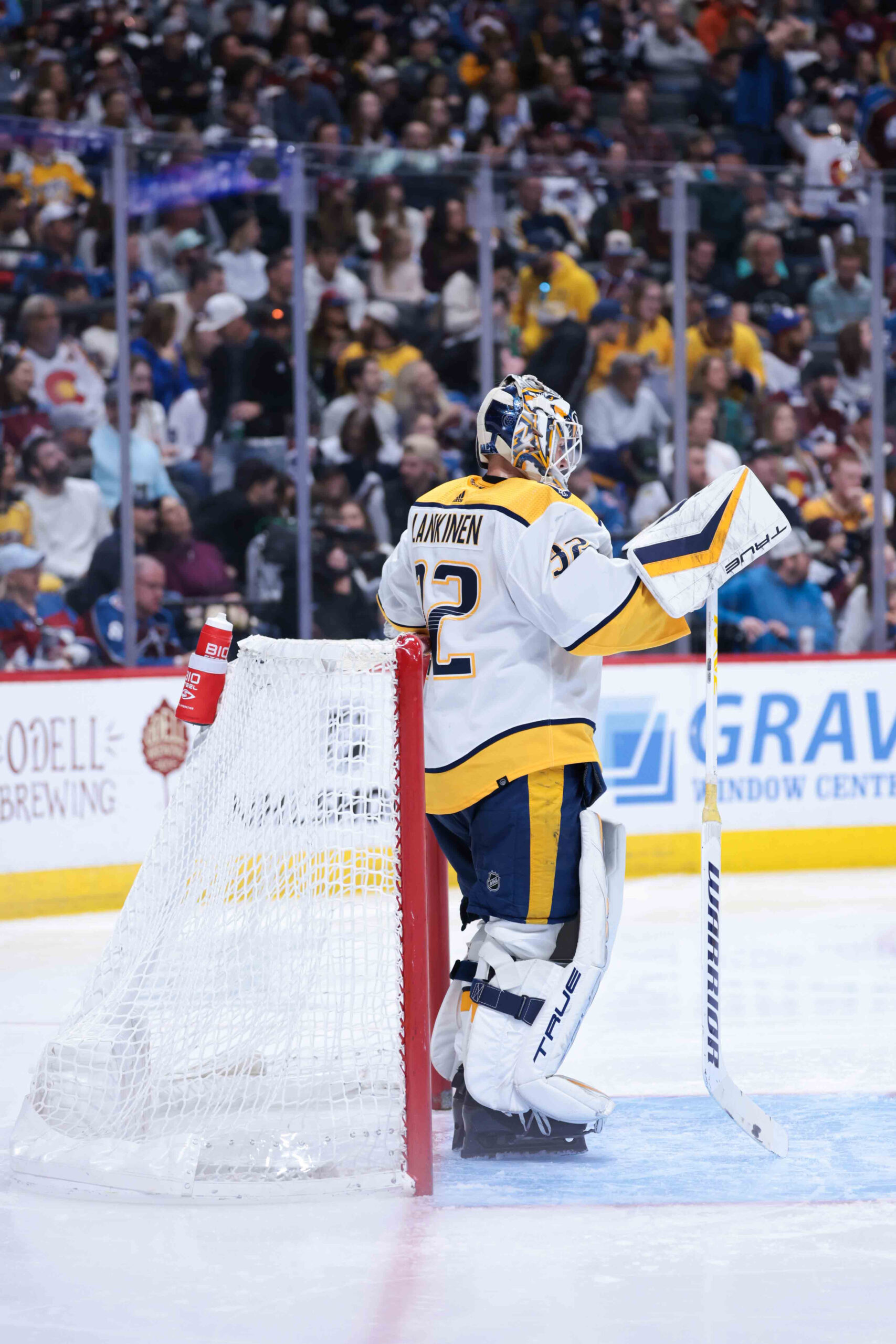
Kevin Lankinen, 29
2023-24 team: Nashville Predators
The 6’2″ Finn has only four years of NHL experience under his belt to differing results. An undrafted free agent pickup by the Blackhawks in 2018, he made his NHL debut three years later and earned himself some fringe Calder consideration after going 17-14-5 with a .909 SV% and 3.01 GAA in 37 starts in the starter’s net during the abbreviated 2020-21 season. His numbers nosedived the next season, however – his -28.6 goals saved above expected were the second-worst in the league behind Seattle’s Philipp Grubauer. That took him out of starter/tandem consideration upon reaching free agency in 2022, but he’s rebuilt his value with two above-average campaigns backing up Juuse Saros in Nashville. He has a .911 SV% and 2.84 GAA in that time but has started less than 20 games each season, likely dissuading teams from relying on him for a tandem workload.
Marc-André Fleury, 39
2023-24 team: Minnesota Wild
The second-winningest goalie of all-time is technically a pending UFA, but he won’t be on the open market. He’s already made it clear that retirement or re-upping with the Wild are his two options this summer. The three-time Stanley Cup winner has a 17-13-5 record, .899 SV% and 2.87 GAA in 34 starts and four relief appearances in Minnesota this year.
Martin Jones, 34
2023-24 team: Toronto Maple Leafs
Jones cleared waivers to begin the season and spent two months with AHL Toronto after losing the backup/1B job to Woll during training camp. He was recalled in early December after Woll sustained an ankle injury, though, and he’s remained in the majors since. It’s been an underwhelming past half-decade for the former All-Star starter with the Sharks, but he’s been quite solid this season with an 11-7-1 record, .908 SV%, 2.70 GAA, and two shutouts in 18 starts and three relief appearances. His 8.3 goals saved above expected are better than both Samsonov’s and Woll’s, putting up his first above-average season since 2018. That long track record of mediocrity will scare teams away from giving him a major role, but he has rebuilt his value as an NHL-caliber backup.
James Reimer, 36
2023-24 team: Detroit Red Wings
Reimer, who’s only started five of 15 games for the Wings since the trade deadline, has seen the least action of his 14-year career this season. The Manitoba native will be eligible for a bonus-laden 35+ contract but is solidly a veteran backup option at this stage of his NHL tenure. He’s put up a 9-8-2 record in Detroit this season, posting a .906 SV% and 3.03 GAA with two shutouts in 18 starts and five relief appearances. He’ll likely only be in line for one-year deals, similar to the $1.5MM agreement he inked in Hockeytown last offseason.
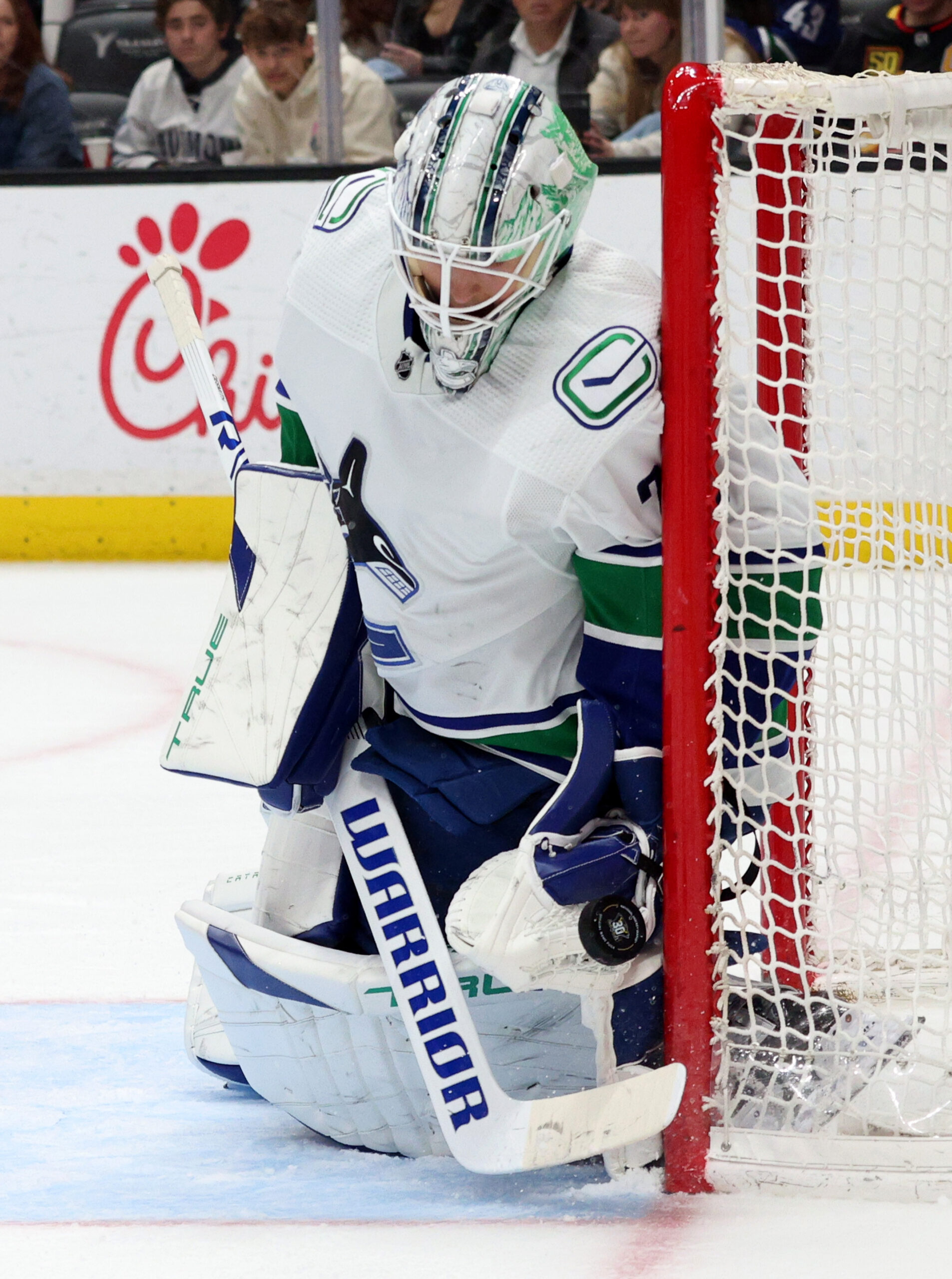
Casey DeSmith, 32
2023-24 team: Vancouver Canucks
DeSmith was part of the monster three-team Erik Karlsson trade last summer, heading from the Penguins to the Canadiens for cap management purposes. With Montreal having three other goalies ready for NHL time in the crease, they flipped him to the Canucks, who were happy to take his $1.8MM cap hit and deploy him as Demko’s backup. He’s put up passable but unimpressive results, which have nosedived lately, down to a .891 SV% and 2.96 GAA in 26 starts and two relief appearances. He’s received most of the workload over the past few weeks as Demko nears a return from a lower-body injury, but his late-season lack of success in pinch-starter duty keeps him firmly on the backup market this summer despite having started upwards of 30 games twice in his career.
Calvin Pickard, 32
2023-24 team: Edmonton Oilers
Pickard spent most of the past five seasons in the minors but got another NHL chance after Jack Campbell was demoted to AHL Bakersfield in November. He’s responded quite well, reaching 20 appearances for the first time since 2017 and recording a .913 SV% and 2.38 GAA with a 12-6-0 record. After spending the last three seasons on two-way deals, he’s likely in line for a one-way pact this summer and could be a cheap full-time backup for a cash-strapped team.
Scott Wedgewood, 31
2023-24 team: Dallas Stars
A minor-league option through most of his early-to-mid 20s, Wedgewood has since settled in as a solid backup/1B option for the Coyotes and Stars post-COVID. However, this season has disappointed after a three-year run of above-average play. He’s got a .899 SV% and 2.85 GAA in 28 starts and four relief appearances behind a strong defense, his worst numbers since his rookie campaign with Arizona in 2017-18. That’s quieted talks of relying on him for 30+ starts for now.
Antti Raanta, 35
2023-24 team: Carolina Hurricanes
Raanta has been with AHL Chicago since deadline day, actually posting worse numbers than his already disastrous NHL showing this season. A rock-steady tandem option who couldn’t stay healthy throughout his prime, Raanta hadn’t put up anything worse than a .905 SV% since his rookie season. He came crashing down in 2023-24, though, logging a .872 SV% and 2.99 GAA in 20 starts and four relief appearances before Carolina sent him to the minors for good to end the season. He’s failed to win a game in Chicago since this latest demotion, although he did log one win earlier in the campaign. He has only a .865 SV% in six games there, and while someone may give him a chance to see if he can recapture his previous form, the end appears near for Raanta’s NHL career.
Photos courtesy of USA Today Sports.
PHR Mailbag: Sharks, Predators Goaltending, Jets, Penguins, Expansion, Avalanche, Net Sizes
Topics in this edition of the PHR Mailbag include Nashville’s goaltending situation, ranking the NHL’s potential expansion sites, and much more. If your question doesn’t appear here, check in last weekend’s mailbag.
PyramidHeadcrab: With the Sharks having now cleared nearly all of their large (and arguably, overpriced) contracts off the book, what’s the next step? What actions lead to greener pastures?
The next step is patience. While it feels like San Jose has been rebuilding for a while, they’re still in the relative infancy of it when it comes to accumulating assets and future core pieces. They have a few in place headlined by Will Smith but there’s still some work to do on that front. Landing their goalie of the future will also need to happen.
Basically, they need another couple of years like this before slowly starting to build back up as their core youngsters get integrated into the lineup and become comfortable enough to take on bigger roles. As that happens, then they supplement with quality veterans and, ideally, impact ones over time. In other words, follow the model that Arizona is doing which is a long-winded rebuild but one that should eventually prove to be fruitful.
I assume you were hoping for something more concrete of an action, however. Here’s what I’d recommend.
San Jose needs to be the clearinghouse for teams to offload pricey short-term deals. They can’t retain any salary until 2025-26 as their three slots are all tied up so they can’t pick up picks that way. But they can add draft choices by taking on some contracts. It’s not as if they don’t want or need to spend either; they have nearly $39MM in cap space for next year, per CapFriendly, and their RFA class won’t eat up a huge chunk of that amount. Rather than shopping in free agency to get to the cap floor, why not take on a contract or two (or three) and add some more assets that way? I’m not saying that will expedite things but if it helps land them another quality prospect or two, it’d be well worth doing.
GBear: Does Trotz trade either Saros or Askarov this offseason, and if so, which of the two?
I’m going to answer these out of order. If one moves, I think it’s Juuse Saros. I say that knowing that Nashville was believed to be open to move Yaroslav Askarov to move up at the trade a year ago but it’s a different situation now than it was then.
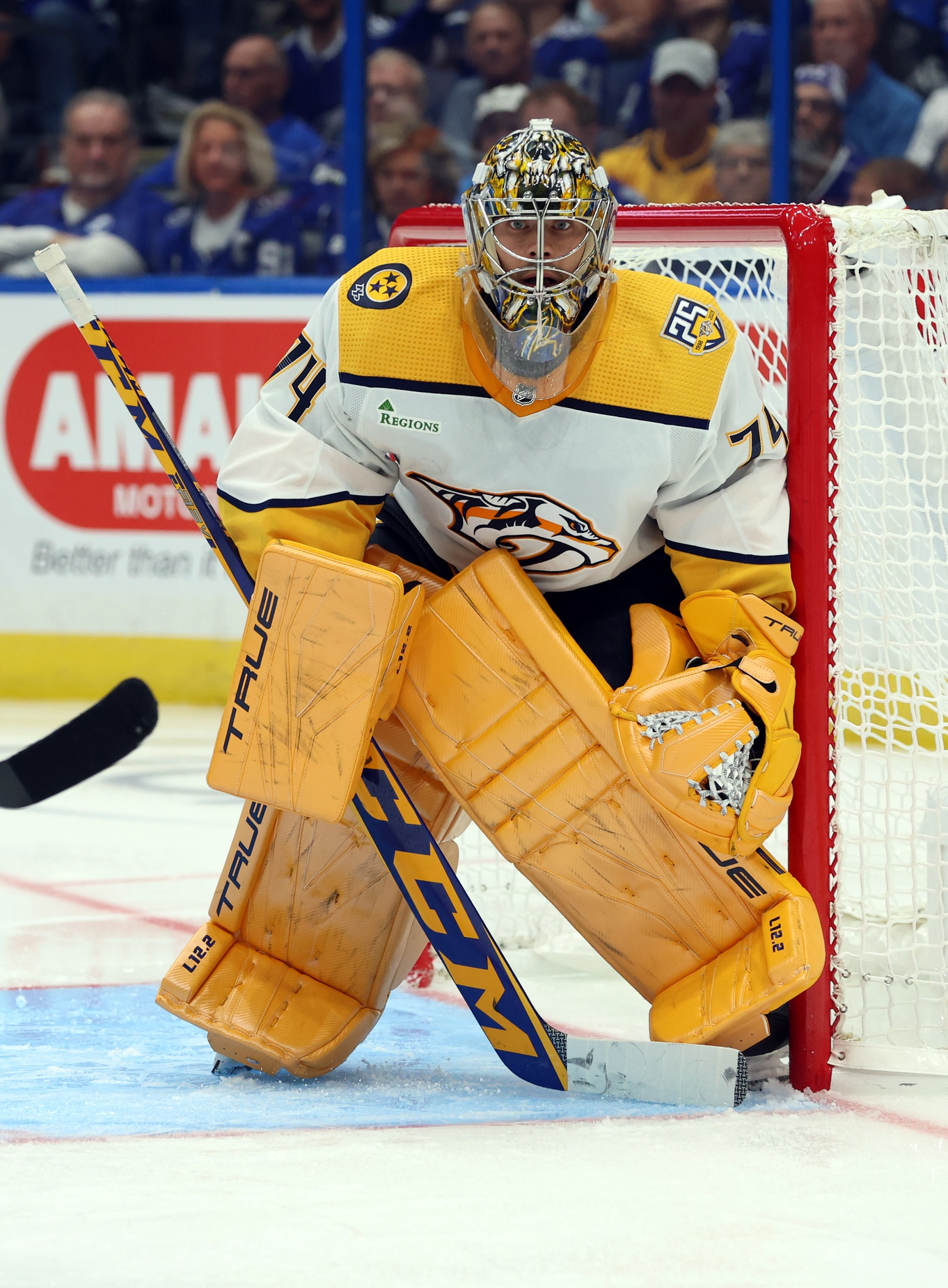 Connor Hellebuyck’s seven-year, $59.5MM extension with Winnipeg just gave Saros a legitimate benchmark to shoot for in his next negotiations. Should Nashville be willing to commit that type of contract to Saros two years from now? I’d say no, especially since they’re not exactly short-term contenders. This time a year ago, I think the team could have been aiming for an extension in the $7MM range based on how the goalie market had played out. But the Hellebuyck one really changed the math on that which I think then changes the outcome of who goes.
As to the question of when a move happens, in a perfect world, those two are the tandem to start the season, giving the Preds some insurance and Askarov a quality veteran to work with. The problem is getting full value for a legitimate number one goaltender in-season is something that probably just isn’t going to happen. Few teams have a need at that time and usually, some that would couldn’t afford Saros’ $5MM price tag.
Accordingly, I guess it’s going to need to happen in the offseason, likely leading up to the draft where some of the bigger moves get made. That would then give GM Barry Trotz time to find a veteran replacement to work with Askarov, either via trade or in free agency although it’s not a particularly strong UFA class for netminders.
Cla23: What are the chances of the Jets signing Monahan and Toffoli to extensions? What’s going to happen to Perfetti? Trade bait maybe?
I would say that the Jets have a reasonable chance of signing Sean Monahan and Tyler Toffoli to new deals. If I had to pick one of the two as to who was more likely to sign, I’d go with Toffoli. He was certainly open to re-signing in New Jersey and it came down to term and money; the two sides were just too far apart. If GM Kevin Cheveldayoff is willing to meet that asking price (which was speculated to be around the contract that Alex Killorn got last summer, four years and $25MM), then I don’t think Toffoli would have any issue eschewing a chance at testing the market, especially with the Jets being a team that is firmly in win-now mode.
Monahan’s a bit of a trickier case. The long injury history makes him a real wild card. I’m sure Monahan would like a long-term deal that set him up for the rest of his prime years but with that injury history, do the Jets want to give him that? Perhaps more importantly, does Monahan think he can get it? If so, he’ll probably go to market. But if he figures his best shot is a medium-term agreement, then I think it’s right in Winnipeg’s wheelhouse to get a deal done.
I don’t get the sense that Cheveldayoff will be looking at Cole Perfetti as trade bait this offseason. Yes, he was a healthy scratch recently but he still should be part of their longer-term plans. He’s having a quieter year than expected but Perfetti is still just 22. Now being deployed on the fourth line, he’s not exactly in a spot where he could be maximizing his trade value either. Perfetti will almost certainly wind up with a short-term bridge contract in his first trip through restricted free agency so they can easily afford to give him another year and see how things go before taking a longer look at assessing his long-term fit with the franchise.
MoneyBallJustWorks: What does the offseason look like for the Pens? Clearly, Kyle Dubas wants to change this roster makeup and get younger.
Is it possible we actually see one of Crosby, Letang, Malkin, or Karlsson moved in the offseason? They have most of the roster locked up for next year so I imagine trades are how they are going to have to address this roster primarily.
It definitely feels like there’s a goal of getting the Penguins to be a younger group. And, barring an improbable turnaround that propels them into a playoff spot, that should be the course of action to take. That said, it’s a concept that’s a lot easier said than done.
Let’s look at the four veterans you listed. I don’t think Kris Letang or Evgeni Malkin would entertain the possibility of leaving and waiving their no-move clauses. Erik Karlsson tried his best to pour cold water on the idea of him moving on although I think he’d consider it in the right situation. So maybe it’s him. But otherwise, Sidney Crosby might be the logical candidate. He, too, has a no-move clause but has suggested he’d want to do what’s in the best interest of the franchise. He’d certainly bring back the best return so if it comes to that and he’s amenable, it could be Crosby who moves on to help jumpstart the rebuild if they’ve decided the time is right to do that.
Having said that, I don’t think Plan A is moving any one of those. Instead, it’s more work around the edges of the roster. Reilly Smith will be on an expiring deal next season so there should be a viable trade market for him. I expect they’ll try to do something with Rickard Rakell in a player-player swap of underachievers. Marcus Pettersson could be in play on an expiring deal as well. Getting some younger pieces back will accomplish that same objective while giving their core yet another opportunity to try to get back to the postseason. It’s a fine line to balance but I suspect Dubas will be encouraged to attempt to pull this off.
I’m not convinced it’ll just be trades, however. If the cap goes up to $87.5MM as expected, they’ll have a little under $13MM to work with, per CapFriendly. As you noted, a lot of spots are filled so there is room for them to add a piece or two on the open market. If they aim for the younger options (27, 28, maybe 29 years old), they can make the team a bit younger while still potentially upgrading it. I don’t think the teardown to really cycle to a younger core is coming just yet but the average age will be a bit younger on opening night next season. All in all, I think it’ll be a busy summer for Pittsburgh but not quite at least year’s activity level.
Black Ace57: How would you rank the rumored expansion cities from most likely to least likely? Also, why is Cincy even in consideration when Columbus already has to contend with the Penguins over building a fan base? Can Ohio really support two teams like that?
There are believed to be five cities that have reached out to the NHL about potential expansion based on comments from NHL Commissioner Gary Bettman last month. Those five, with my rankings, are Salt Lake City, Houston, Atlanta, Omaha, and Cincinnati.
With Salt Lake City, it feels like a matter of when, not if, a franchise is there. About the only way it doesn’t happen through expansion is if the Coyotes wind up there. (Frankly, that’s a semi-realistic outcome.) It seems safe to say they’ll have a team soon enough.
Houston is the other one where it feels like a case of when, not if. They already have an arena and a potential owner in place. It’s also a major media market and as we’ve seen with the NHL’s attempts to keep the Coyotes in a bigger media market in Arizona, they’re going to try hard to stay in (or get to) the big markets.
Atlanta would be next. Yes, it has failed before but by the time a team was to come, basically an entire generation would have gone by. It’s a sizable market with at least a bit of a core base from the Thrashers days. I’m not overly confident that they’d have long-term success but with it being a bigger market as well, that will help their cause.
The other two I’m a bit skeptical about. Omaha is at least a new market but I’m not sure that alone is enough to get the NHL’s attention. And I share the same concern with Cincinnati. It’s not that they’re under consideration though, they’ve just submitted a letter of interest. But I don’t see that one happening either.
Poll: Who Was The Best Acquisition At The Deadline?
Now a little over two weeks removed from the NHL trade deadline, many of the players that changed hands have had enough time to play in a handful of games with their new clubs. While transitioning to a new system can be difficult for any player, several players have produced quite well with their new organizations.
In arguably the biggest trade of deadline season, the Pittsburgh Penguins decided to part ways with Jake Guentzel, who had spent the last seven and a half years in Pennsylvania. Now with Pittsburgh’s division rival in the Carolina Hurricanes, Guentzel has come as advertised. Playing on the top line with Sebastian Aho and Seth Jarvis, Guentzel has scored two goals and 11 points in seven games for the Hurricanes, with three of those assists coming on the powerplay. Furthermore, that top line has proven incredibly difficult to score against for opposing clubs, as Guentzel has already produced a rating of +11 in that short span.
Moving on to one of the more surprising deals from deadline season, the Buffalo Sabres decided to part ways with top center Casey Mittelstadt in exchange for Bowen Byram of the Colorado Avalanche. Struggling to find any consistency in Colorado, Byram has taken on a whole new life in Buffalo. Averaging nearly 24 minutes a night with his new team, Byram has already scored three goals and six points in only eight games. Playing on the top unit with Rasmus Dahlin, this combination could prove to be one of the best in the league over the next several years.
Lastly, in what is looking to be one of the sneakiest pickups of deadline week, the Tampa Bay Lightning acquired Anthony Duclair and a seventh-round pick from the San Jose Sharks in exchange for a third-round pick and prospect Jack Thompson. On the top line with Brayden Point and Nikita Kucherov, Duclair has put up four goals and eight points in six games, with two of those assists coming on the team’s second power-play unit. Even outside of his production, the Lightning are 5-0-1 since acquiring Duclair and have taken a commanding lead on the top wild-card spot in the Eastern Conference.
Now it’s time for a vote, was the best deadline pickup one of these players, or is there another player that has been more valuable to their new team? Vote below!
Who Was The Best Acquisition At The Deadline?
-
Jake Guentzel (CAR) 53% (519)
-
Bowen Byram (BUF) 19% (189)
-
Other (Comment Below!) 14% (139)
-
Anthony Duclair (TB) 13% (128)
Total votes: 975
PHR Mailbag: Red Wings, Blackhawks, Interim Coaches, College Free Agency, Capitals
Topics in this edition of the PHR Mailbag include the quiet deadline for the Red Wings, a look at the offseason head coaching market, and much more. If your question doesn’t appear here, watch for it in next weekend’s mailbag.
gowings2008: Why has Yzerman stood pat in terms of trades and call-ups? Follow up, do you think Yzerman sees the team’s window as Seider and Raymond’s primes and is using Larkin’s prime to give the younger prospects time to mature?
I was surprised to see Detroit largely stand pat at the trade deadline. I didn’t have them making a big splash but with the cap space they have, I thought they’d get in on the cheaper buys. The fact there were some low-cost additions for teams that were simply willing to take on the full freight of the contract only made me more surprised as that was the type of move for them to make.
It came out after the deadline that Yzerman was hesitant to move their top picks and prospects. I completely agree with that decision. But flipping a late-round pick for an upgrade up front was something they could have done. From a recall perspective, teams are capped at four non-emergency recalls from here to the end of the season. They’ve already used three (Jonatan Berggren after being papered down while Austin Czarnik and Simon Edvinsson were converted to regular recalls once emergency conditions on their promotions ended). They can’t do much more on that front.
I think Yzerman sees this team as being a couple of years away from contention which lines up with your follow-up question. I suspect he’s hoping Dylan Larkin is still in his prime at that time but the hope is that their prospects should be starting to become key contributors at that time. Those players will be on their entry-level deals, giving them ample cap space to take a big swing on the open market to upgrade as well.
rule78.1: What do the Red Wings do with the following UFA/RFA forwards this coming offseason now that weaknesses with them have been exposed?
Kane
Raymond
Perron
Veleno
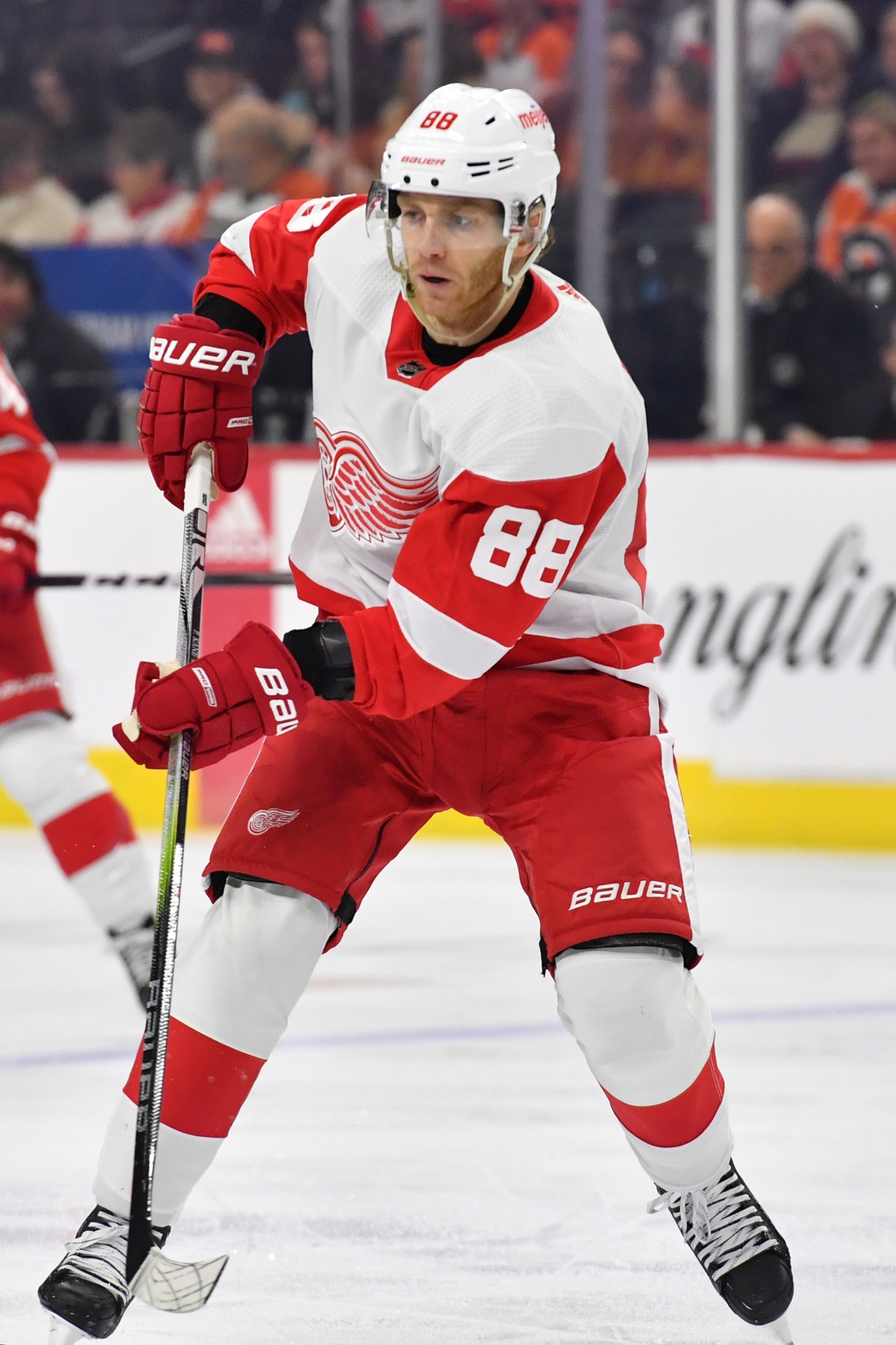 I fully expect them to take a run at re-signing Patrick Kane. 39 points in 39 games is quite impressive and frankly, better than I was expecting. There is going to be some risk here, however, with the track record of players coming back from his surgery not being the strongest. He was willing to take a one-year deal this time but that shouldn’t be the case in the summer. Anything over two years might make Yzerman hesitant. I think Perron is in a similar situation. At the right price point and term (again, probably a maximum of two years), I think they’d be interested in re-signing him. But right now, I think he’s likelier to move on with the team turning to the open market to replace him.
As for the RFAs, it’s a bit easier to forecast. Raymond is getting signed, it’s only a matter of bridge or long-term. I think Moritz Seider gets the long-term deal while Raymond gets a two-year bridge around Perron’s current price point of $4.75MM. Joe Veleno didn’t have much leverage last summer which is why he settled for just $825K. He hasn’t shown enough for a long-term contract just yet but another one-year agreement feels likely for him. With arbitration rights, he could more than double that AAV. He has been a bit underwhelming for a first-round pick but there’s still room for him in Detroit’s long-term core.
Unclemike1526: I hate to keep harping on the Hawks’ goaltending but they have to do something next year, right? Now that Mrazek is here for two more years and that’s cool, can we count on him to have another injury-free year? I think we’ve all seen that Soderblom isn’t any kind of answer. Is Commesso going to be ready next year? Gajan is the future but at least two years away. Basse might not even sign here. They need to get some kind of bridge guy to the young guys and the future. I mean if Mrazek goes down next year without that guy they might as well phone in the games. A decent vet on a one-year deal who can hold down the fort just in case. Right? Thanks as always.
Do they have to do something? Probably not. Mrazek is there and if they’re not ready to pull the plug on Arvid Soderblom, they could very well run with those two next season. They could then look to a veteran third-stringer to pair with Drew Commesso in the minors but that squeezes out Jaxson Stauber. If they don’t want to have Soderblom (or Stauber) in the backup role next year, then Soderblom pairs with Commesso and yes, then a veteran on a one-year deal makes a whole lot of sense. Frankly, a two-year deal would be more than defensible given Mrazek’s injury history; expecting Mrazek to be healthy would be risky.
Speaking of Commesso, I think you need to adjust your expectations for NHL readiness. Over the years, I’ve read plenty of interviews with team executives who say they’d like a young goalie to have between 100 and 150 AHL games before moving up; there’s a reason they typically are promoted a lot slower than skaters do. Commesso is currently at 30 games where he has been decent but not elite. I don’t think he’ll be ready next season and unless he’s flat-out dominating the league for an extended stretch next year, I don’t think he’ll be ready for 2025-26 either. That isn’t to say they couldn’t give him a few starts here and there when injuries strike on the NHL tandem but in terms of being a regular, he has a long way to go.
I’ll quickly comment on Adam Gajan as well who you have as at least two years away. I’d add several years to that timeline. He’s not having a great final season in the USHL which doesn’t help but most goalies play at least three years in college (like Commesso did). Goalies basically never make the jump from the NCAA to the NHL as, again, teams want lots of AHL action before promoting them full-time. Accordingly, I’d peg Gajan as five years away from being an NHL regular, possibly closer to six. There’s reason for optimism for the future in goal but patience will be required.
Gmm8811: There are currently four interim coaches behind the benches. In my opinion, none of them will be hired next season as the full-time bench boss. Odds of Quenneville being reinstated? Thoughts on new hires? Recycle former coaches or new blood coming aboard?
First, let’s list the four interim coaches – Jim Hiller (Los Angeles), Travis Green (New Jersey), Jacques Martin (Ottawa), and Drew Bannister (St. Louis). We know for sure that Martin won’t be back and I’d be surprised if Hiller was. I think there’s a chance that Green sticks around if the Devils do well down the stretch and sneak into that final playoff spot. As for Bannister, I think he will stay on in the full-time role. The Blues aren’t going to be contenders over the next few years so a developmental coach like Bannister might be the right fit. They’ve played well enough since he took over that I could see him getting a three-year deal.
I expect someone will take a real run at Joel Quenneville this offseason. By then, he’ll have been out of the game for nearly three years now. Will that be long enough for him to be reinstated? I wouldn’t call it a lock but if I had to handicap it, maybe 80/20 that he is.
As for the vacancies, it’ll be the usual mixture of some first-time hires and others getting a second (or third) opportunity. For first-time hires, Jon Gruden and Jay Leach I think will be strong candidates. Gruden has been speculatively linked to Ottawa’s opening for a while now and Leach had some interest last year. For the recycled options as you termed it, I wouldn’t be shocked if Craig Berube lands another opportunity. Dean Evason likely will get some inquiries as well and I wonder about Jay Woodcroft. I know the fact Edmonton took off after they let him go doesn’t help but he helped turn things around when he took over and is still a young coach. The chance to get a newer blood type of coach with some NHL experience could be appealing to some teams so I think he’ll have some interviews as well.
Schwa: Any predictions on where the top college free agents end up and who has the best chance of contributing early on? Is there a different format or process in this free agency than that of the summer FA? Thanks!
In terms of predicting where they end up, it’s a giant dart throw. This isn’t a situation where some teams have more cap space than others which would be a difference-maker in discussions. All teams are capped at offering entry-level deals so there will be little to no difference between them. For some players, it’ll be about playing close to home. For others, they’ll be targeting a team willing to burn a year of the contract now. Others will look at depth charts and try to find a team with thin depth to give them a better chance of being recalled. Meanwhile, some others will look for teams with better track records of prospect development. With each player having a different priority, it’s really hard to forecast who the top contenders will be.
As for who has the best chance of contributing early, I think defenseman Dylan Anhorn could be a candidate to burn a year right away and see a handful of games down the stretch. Winger Collin Graf will be highly sought after and should start his entry-level pact right away. Note that these players – or any undrafted college free agent signing – will only be eligible to play until the playoffs.
There isn’t necessarily a different process to college free agency (teams can speak to agents/family advisors to work out a contract) but how it plays out is a bit different. Unlike July 1st, not all players will be looking to sign right away as once they sign, they can’t play anymore in college. Accordingly, players will wait until their campaign comes to an end. For some, that has already happened while for others, that might not occur until closer to mid-April. As a result, the flow of players is more gradual instead of the typical free-for-all we see on July 1st.
The Matt Duchene Buyout Was A Win-Win
A year ago, the 2024 free agent class had the potential to be one of the most star-studded in a long time, especially compared to 2023’s unusually weak class that allowed players like Alex Killorn and Dmitry Orlov to receive well above standard market value. While superstars like Auston Matthews and William Nylander have signed extensions and are off the market, there are still multiple impact forwards with point-per-game upside slated to be available, namely longtime Lightning captain Steven Stamkos and Panthers breakout performer Sam Reinhart. The defense market is significantly less appealing, although Noah Hanifin will get a payday somewhere if he doesn’t extend with the Golden Knights, although Vegas will surely attempt to lock in the blue-liner after making a splash for him at the trade deadline.
 However, Stars forward Matt Duchene is also quietly producing among the top echelon of pending UFAs. Sitting in the top six in points-per-game alongside Reinhart, Stamkos, Jake Guentzel, Patrick Kane, and Jonathan Marchessault, the 33-year-old has proved to be the best value pickup of last season’s UFA period after the Predators executed a surprising last-minute buyout of the final three seasons of his seven-year, $56MM contract. The one-year, $3MM pact he signed to continue his NHL career in Texas was a mid-tier contract compared to others handed out on July 1. Yet, he’s second among all 2023 UFA signees in scoring, trailing Nashville’s Gustav Nyquist.
It’s been a remarkable return to form over the past few years for a player who, shortly after signing his big payday with the Preds in free agency in 2019, looked to be on one of the worst contracts in the league. An injury-plagued and COVID-laced 2020-21 campaign was easily Duchene’s most disappointing outing in just the second year of his megadeal, missing significant time with lower-body issues and recording career-lows across the board with six goals, seven assists and 13 points while averaging 15:50 per game over 34 contests. In 2019-20, the first season of his contract, he scored only 13 goals in 66 games after crossing the 30-goal mark with Ottawa and Columbus the year prior.
The next two seasons were much more fruitful for the 2009 third-overall pick, who broke out for a career-high 43 goals the following season and put up 142 points in 149 games between 2021 and 2023 while returning to first-line minutes. The stink of the first few seasons of Duchene’s deal had soured the reputation of his contract, though, and with incoming GM Barry Trotz looking to infuse a youth movement into a squad that was stuck in wild-card territory, the team unexpectedly made him one of the top UFAs on the market the day before free agency opened.
Despite Duchene’s success with a divisional rival this year, it’s hard to criticize the decision from Nashville’s perspective. They’ve replaced his production with a cheaper UFA pickup in Nyquist, and freeing up his roster spot has allowed players like Luke Evangelista and Thomas Novak to make more of an impact. That, plus a rebounding Juuse Saros after an unusually slow start, has the Predators cooking with a 14-0-2 record in their last 16 games and the first wild-card spot in the Western Conference all but guaranteed. Much-improved depth scoring has been the Predators’ calling card this year, something that decidedly wouldn’t have occurred without the Duchene buyout.
The buyout will carry some short-term pain, though. Duchene’s cap penalty is a reasonable $2.6MM this season, but it jumps to $5.6MM in 2024-25 and $6.6MM in 2025-26. It’ll coast at $1.6MM from 2026 to 2029, though, almost a non-factor with the salary cap’s projected increase over that period. A retooled prospect pool should allow the Preds to staff some important roles with entry-level contracts over the next few years, however, so the buyout shouldn’t be too severe of an obstacle.
In any event, the Preds are rolling into the playoffs at an incredible pace that routinely proves advantageous to wild-card or lower-seeded teams’ chances of a first-round upset (or further, if you ask last year’s Panthers). No regrets in Smashville, at least not yet.
And the Stars, a potential first-round opponent for the Predators, are thrilled Duchene fell into their lap. With the 15-year veteran set to earn a significant amount of money from his buyout as well, he was more incentivized to settle for a bargain deal on a contender. He’s played a crucial part in Dallas having one of the deepest forward groups in the league, flip-flopping between first- and second-line duties. He’s posted 23 goals and 59 points in 68 games, slightly up from last season’s pace in Nashville despite averaging almost 90 fewer seconds per game. His presence has also helped revitalize Mason Marchment, who, alongside Duchene, has rebounded for a career-high 19 goals and 50 points after a tough first season in the Lone Star State last year.
He’s also straight-up Dallas’ second-leading scorer, ranking second on the team in points per game at 0.87 behind the point-per-game Jason Robertson. After the induction of rookie Logan Stankoven into the major league ranks over the past few weeks, every player in the Stars’ top nine has produced over 0.65 points per game this season. Only one player – captain Jamie Benn – has produced under 0.70.
The only two teams that have scored more per game this season than the Stars are the Avalanche and Maple Leafs. Both have been buoyed by MVP-level seasons from their star first-line centers. Their depth attacks simply don’t compare – Colorado only has one player producing over half a point per game in its entire bottom six (Ross Colton), while the Maple Leafs have none.
With $18.3MM in projected cap space with a roster size of only 12 next season, per CapFriendly, it’s unlikely the Stars will be able to bring Duchene back without him taking a significant discount. Otherwise, Duchene is poised to be the third major beneficiary of the Predators’ decision to buy him out by landing a lucrative short-term deal on the open market this summer. This season, however, he’s helped give Dallas their best chance at a Stanley Cup since 1999’s victory.
Photo courtesy of USA Today Sports.
Thoughts On Sidney Crosby’s Future In Pittsburgh
When the Pittsburgh Penguins decided to part ways with forward Jake Guentzel last Friday, it was not only emblematic of a retooling period for the storied organization but could be a sign of things to come. Still the oldest team in the National Hockey League by over a year on average, the current iteration of this Penguins team is certainly going quietly into the night.
With the main core of Sidney Crosby, Evgeni Malkin, Kris Letang, and Erik Karlsson on the wrong side of 30, Pittsburgh is quickly encroaching upon a future where Bryan Rust, Rickard Rakell, and Marcus Pettersson lead the team. Not to be taken as a knock on either of those three players, but it will certainly not be good enough for the Penguins to be a competitive team in the Eastern Conference unless some major changes take place.
As difficult as it is to imagine Crosby wearing the sweater of any other team, it is becoming a disappointing end to one of the greatest careers in the history of the game. Last season, Pittsburgh failed to make the playoffs for the first time in Crosby’s career since his rookie season, and are headed for the same outcome again this year.
Having one year remaining on his 12-year, $104.4MM contract after this season, Crosby will have the option to leave the only team he has ever known in an attempt to finish his career on a high note. However, being one of the most humble athletes in the game today, there is little to no insight into which way Crosby is leaning.
In this week’s edition of 32 Thoughts, Elliotte Friedman shows a lot of empathy with Crosby’s current frustration with the Penguins organization but believes the organization should do everything in its power to retain their franchise player. Friedman believes that if Pittsburgh were to offer Crosby a three-year, $30MM contract; that should be enough to get Crosby to remain with the Penguins.
However, to push back, Friedman’s ideas appear to be an oversimplification of the factors that have driven Crosby in his career. Even when he signed his mega-contract with Pittsburgh back in 2012, paying Crosby an AAV of $8.7MM was a bargain contract for the Penguins.
Owning three Stanley Cup championship rings, two Conn Smythe Trophy victories, and three Olympic Gold Medals, it is more than clear what has driven Crosby throughout his career. Being one of the most competitive athletes in sports history, Crosby is first and foremost concerned about winning, which is something Pittsburgh is not built to do over the next few years.
Of the top-10 highest point scorers in NHL history; Steve Yzerman, Mario Lemieux, and Joe Sakic are the only three to have stayed with the same team throughout their careers, with the others not having the privilege of spending their entire career in one spot. Given that it is not irregular to see a generational player make a move like this, it would be inappropriate to think it would impact Crosby’s legacy in any way.
Nevertheless, if Pittsburgh pulls off some crafty moves this upcoming offseason, there is a legitimate chance they could turn things around. However, it is becoming increasingly likely that this organization is headed for a lengthy rebuild, which is something Crosby may not want to be a part of to finish off his incredible career.
Poll: Who Grabs Wild Card Spots In The East?
With the trade deadline in the rearview, and less than 20 games to go in the regular season for most teams, all eyes are now squarely on the 2024 Stanley Cup playoffs. Like most seasons, several teams are again going down to the wire to qualify for a postseason spot.
Although no teams have been eliminated quite yet, the Columbus Blue Jackets, Montreal Canadiens, and Ottawa Senators will all need record-breaking win streaks to come close to a playoff spot. The Buffalo Sabres, Pittsburgh Penguins, and New Jersey Devils are still well within the mix for the postseason, but it may be too little too late for all three organizations.
That whittles the list down to four: the Detroit Red Wings, New York Islanders, Tampa Bay Lightning, and Washington Capitals. Over the last two weeks, even though both the Red Wings and Lightning held comfortable positions in the wild card spots, the Islanders and Capitals have closed the gap considerably with solid 10-game stretches respectively.
Currently in the top spot, Tampa Bay has produced a 4-5-1 record in their last 10 games, while acquiring Anthony Duclair and Matt Dumba at the trade deadline. Holding a two-point advantage over Detroit and New York, the Lightning will face off against teams currently in a playoff position eight times over their last 17 games.
Moving north to Detroit, the Red Wings started the 2024 calendar year with a hot stretch, producing a 16-4-2 record after the New Year holiday. Over the last two weeks, however, a completely different hockey team has taken the ice. Currently riding a five game losing streak, Detroit is losing much of their footing in the Eastern Conference wild-card race, being outscored by their opponents by a margin of 17 over that stretch.
Now tied with the Red Wings for the last wild card spot in the Eastern Conference, the Islanders are willing themselves into a playoff position. Earning a 6-1-0 record in their last seven games, New York has been dominating their opponents in nearly all facets of the game. Not only are the Islanders making a considerable amount of noise in the wild card race, they are only two points removed from knocking off the Philadelphia Flyers as one of the top three teams in the Metropolitan Division.
Lastly, being one of the streakier teams all season, the Capitals find themselves only three points out of the last wild card spot in the Eastern Conference. Producing a 7-3-1 record in their last 11 games, Washington will be one of the few organizations vying for playoff candidacy after selling off a few pieces at the deadline. Life will not get any easier for the Capitals, however, as 13 of their last 19 games will come against opponents currently in a playoff position.
Now its time for you to take the crystal ball for the 2024 Stanley Cup playoff race, which two of these teams will qualify for the wild card spots in the Eastern Conference?
Who Grabs Wild Card Spots In The East?
-
Tampa Bay/New York 56% (491)
-
Tampa Bay/Detroit 25% (220)
-
Detroit/New York 7% (64)
-
Washington/Tampa Bay 5% (47)
-
New York/Washington 4% (33)
-
Detroit/Washington 3% (23)
Total votes: 878
PHR Mailbag: Flyers, Trade Deadline, Capitals, Panthers, Rule Change
In our final pre-deadline mailbag, topics include the upcoming trade deadline, Washington’s offensive struggles this season, and more. If your question doesn’t appear here, check back in our last two editions focusing on the Central Division and the Eastern Conference.
Emoney123: Can Briere make a move that balances the playoff drive and rebuilding goals?
Anyone else besides Laughton, Walker, and Seeler likely or could be traded?
Save the draft picks and prospects and look forward to making a splash in the offseason with a signing such as RFA Elias Pettersson?
Such an approach is doable in theory but is often hard to thread the needle on. To do it, they need to sell high on their rentals to get the future assets and then take on some high-priced players for a low cost (late-round pick or a lower-end unsigned prospect) that hopefully keeps them afloat for the final spot in the Metropolitan Division. How many teams will be looking to dump pricey expiring deals for just the value of getting the remaining money off the books? I’m sure there will be some players available but enough to offset the loss of their others who will be more impactful? I’m less sure about that one.
Beyond Scott Laughton, Sean Walker, and Nick Seeler, I don’t see too many more trade options. Someone might want Marc Staal for a late-round pick with the experience he has. If they’re still open to moving Morgan Frost, maybe the right deal comes around there. I’m not as sold on his potential availability as I was earlier in the season, however. If they make a move for a goalie, I could see Felix Sandstrom being part of a return going the other way so I suppose he’s in the mix to move as well.
While Pettersson has clearly now signed, I want to address the general idea of the question. If you wanted the Flyers to make an RFA signing of that level of significance, you’re talking about giving up four unprotected first-round picks for the right to pay someone a contract that will be well above market value. That’s not justifiable for pretty much any team at that level of a contract and certainly not for a team like the Flyers with where they are in their rebuild, a process that is still closer to the beginning than the end. This is still a longer-term process that they’re in so it’s not the right time for them to be moving picks and prospects for established pieces.
Schwa: Set of Deadline questions:
1) What teams do you expect to make a splash for bigger names versus teams who will focus on role players?
2) Who is the biggest name you expect to move?
3) Who is the biggest rumored name you suspect will stay put?
As always, thanks for your input!
1) I could see Vegas making a splash. They’re certainly no stranger to swinging big and with Mark Stone out for the rest of the regular season (and quite possibly longer), they now have the LTIR flexibility to make an impact of some significance. Florida and Colorado also come to mind as teams aiming high. The Panthers very quietly have ample regular cap space although they’re lacking top picks to trade. Colorado, meanwhile, doesn’t have the cap room but if they’re able to move out Ryan Johansen, I could see them making a big move as well.
At the other end of the spectrum, I could see Detroit shopping there. Here’s a team that has done well this season but is still not near the level that they need to be to have a deep playoff run. There’s value in giving their youngsters some playoff experience though so I could see them using their cap space to add. I also have Los Angeles here, not because they only want to do something small but because that’s about all they can do; with Viktor Arvidsson and Adrian Kempe expected back by the end of the season, they don’t have longer-term LTIR flexibility which means they’re pretty much money in, money out.
2) Two names come to mind, neither of which are particularly surprising. Since Noah Hanifin doesn’t appear to be interested in signing an extension with the Flames, they’re in a spot where they need to move him. I expect he’ll be the top blueliner off the board. I’m not of the belief that it’s going to be a big trade deadline with a bunch of notable names moved; it’ll be quieter than this year. So up front, Jake Guentzel is the biggest one I think gets moved. It certainly feels like the expectation around him has shifted from a maybe on the trade front to probable with Pittsburgh realizing that even if he stays, they’re aiming for a likely first-round exit. If they can’t re-sign him (and it stands to reason that if they were close, we’d be hearing about it), then he should be moved.
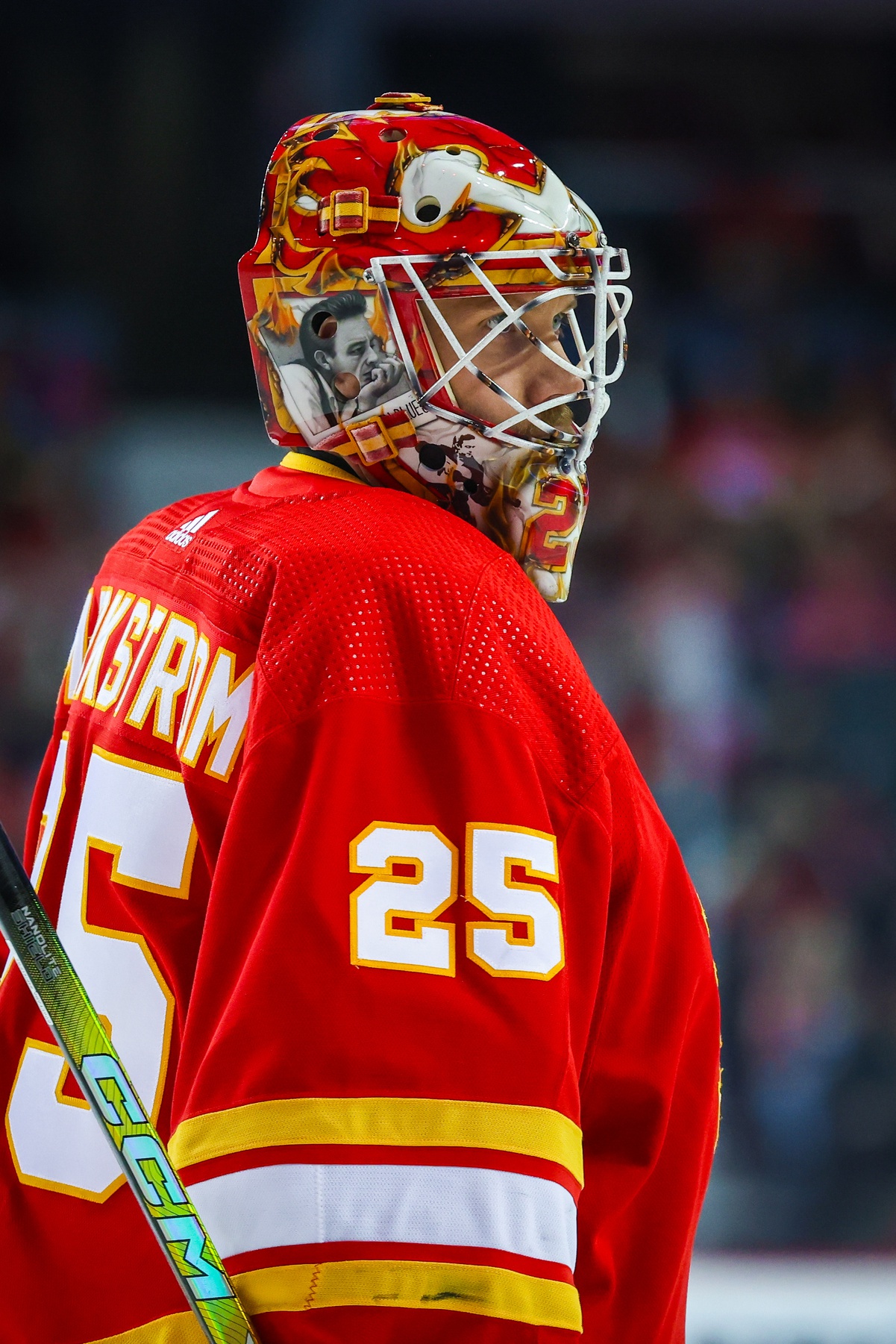 3) We’ve seen plenty of speculation surrounding Calgary’s Jacob Markstrom to the point where he has been featured prominently on some ‘trade bait’ boards. I’m not as bullish as they are on the idea of moving him right now. The Flames more or less have a one-team market for his services, New Jersey. While I acknowledge the Devils might be desperate for an impactful addition, how much can Calgary elicit from a one-team bidding war? In the summer, the Devils could still very well be looking for a goalie and perhaps some others too. If GM Craig Conroy thinks he can get a better deal then compared to now (and I suspect he will think that), then Markstrom likely stays put, at least for a few more months.
Dayvisferreras: Any chance the Caps change head coaches for next season? I can’t tell if it’s the roster underachieving on offense or Carbery’s coaching system.
I suppose it’s possible that GM Brian MacLellan feels a coaching change is needed but I wouldn’t be expecting it to happen. This is a coach who was well-known for getting lots of his groups offensively and while yes, the Capitals are struggling considerably on that front, I don’t think a whole lot can be pinned on him.
For me, this is more of a roster composition issue. They have plenty of high-priced talent but a lot of them are in the downswing of their careers. Going into the season, their top three centers were someone coming off major hip surgery, a veteran who had made it known he wanted to be traded, and one who was non-tendered in 2022. With due respect to those players who are all NHL talents, centers are play-drivers and going into this season with some big question marks in those spots is risky. That’s the fault of the GM, not the coach. Meanwhile, on the wing, it’s a pretty old group as well. Eventually, some fall-off was reasonably expected.
On the back end, how much firepower do they have? John Carlson isn’t a top-end point producer as he was before but he’s still above-average. Rasmus Sandin has some upside offensively but is still developing. That’s about it in terms of offensive ability; most of their other options are more defensive types. It’s hard to get much going in transition when you don’t necessarily have the defense that can kickstart that or some consistent options down the middle to drive that attack.
With their aging roster, they need an influx of speed and creativity. If they can get that, I think you’ll see a better offensive performance from the Capitals moving forward with Carbery still at the helm.
Sunshine swede: Any chance that Florida choose to trade Reinhart at the deadline if they get a good package in return and feel they can’t afford to extend him? Or Montour/Forsling?
From a long-term asset perspective, the idea of getting value for any of Sam Reinhart, Brandon Montour, or Gustav Forsling over losing them for nothing but the vacated cap space makes sense on paper. However, it would be shocking to see any of them moved over the next few days.
First, at this point, I don’t think the Panthers are at the point where they know they can’t bring back any of the players under any circumstances. Can they keep all three? That seems iffy but which one can’t they keep? That’s far from being determined. If they put pen to paper on long-term extensions with two of the three, then the idea of moving the other becomes a little more plausible as you’d be reasonably certain that you wouldn’t be able to keep the third one.
But even having said that, Florida’s a legitimate Stanley Cup contender. Can they justify taking a key player away from their group and weakening their chances in the name of asset management? That’s a tough sell to make. If they were a bubble team, even in the spot their state counterpart in Tampa Bay is, such a move is defensible. But when you’re battling for the top spot in the league and have eyes on playing into June, GM Bill Zito will be solely focused on adding to his core group, not hedging his bets about free agency in July.
RipperMagoo: To keep the game moving, what do you think of icing and offside resulting in loss of possession by the offending team? The defending team then gets the puck behind their net and the offending team has to clear the offensive zone.
This feels like a creative solution to a problem that I’m not sure many would necessarily agree exists. I don’t see too many complaints about pace of play or game lengths going wildly beyond the planned television block. I also think there are a lot of coaches who wouldn’t be fond of this rule as on icings, they’d lose the advantages of line matching against a tired group and choosing what side to take the draw on. We already see a good chunk of something like this on delayed offside calls and an increase in that isn’t necessarily the end of the world but if the defending team has to take the puck behind the net first, it might actually slow things down as they’ll want to regroup, maybe get a line change in, etc.
If you’re looking to shave a few minutes off the average game length, why not just bring back the old hurry-up faceoff rule? Instituted in 2002, teams had eight seconds to make a change after a whistle and then five seconds to line up for the draw before the puck was dropped. When actually followed, the amount of dead time between whistles went down while we even had the odd calamitous draw where one team wasn’t even at the dot when the puck was dropped. Of course, it wasn’t enforced too strictly and quietly went away. But even then, I could see broadcasters taking issue with that as it would reduce the opportunities for replays and between-whistle advertisements.
Maybe it’s just me but I find games are fairly fast-paced as it is with fairly frequent multi-minute stretches without a whistle. A period from start to finish generally doesn’t take much more than 40 minutes to complete and often comes in quite lower than that. Points for creativity but I can’t see this gaining a lot of traction.
Photo courtesy of USA Today Sports Images.
Trade Deadline Primer: Vancouver Canucks
The calendar has now flipped to March which means the trade deadline is now just days away. Where does each team stand, and what moves should they be looking to make? We continue our look around the league with the Vancouver Canucks.
The Vancouver Canucks have been the surprise of the season, battling for first in the league all year long on the back of fantastic performances from Quinn Hughes, Elias Pettersson, J.T. Miller, and Brock Boeser. Everything is clicking for the Canucks and they’re leaning into it, already making two major trades – both with the Calgary Flames. Vancouver acquired Nikita Zadorov for a pair of draft picks in late November and then sent Andrei Kuzmenko, Hunter Brzustewicz, a first-round pick, and more to the Flames for Elias Lindholm on January 31st. And their front office isn’t slowing down one bit, signing Elias Pettersson to a jaw-dropping, eight-year extension and emerging as candidates for some of the trade market’s biggest names. Vancouver will continue their exciting season at the Trade Deadline, entering with the wind behind their sails, success in the standings, and an eagerness for trades.
Record
38-17-7, 1st in the Pacific Division
Deadline Status
Eager Buyers
Deadline Cap Space
$2.6MM of cap space on deadline day, 0/3 retention slots used, 46/50 contracts used, per CapFriendly.
Upcoming Draft Picks
2024: VAN 3rd, VAN 4th, VAN 6th, SJS 6th, VAN 7th
2025: VAN 1st, VAN 2nd, VAN 4th, VAN 5th, VAN 6th, VAN 7th
Trade Chips
Conor Garland once again headlines Vancouver’s assets, with the team granting him permission to find a trade in October – though ESPN’s Kevin Weekes reported at the time that Vancouver would likely need to retain some of Garland’s $4.95MM cap hit in a deal. But Garland still had a trade market, with the Washington Capitals interested in acquiring him if they ever found a trade Anthony Mantha. The two are, in fact, quite comparable, with Mantha offering slightly more goal-scoring than Garland, but also sitting two years older and carrying a slightly pricier $5.7MM cap hit. Both players provide reasonable depth scoring, though their consistency can come into question. The Canucks will hope Garland can fetch Mantha’s level of return, or that they can reignite Washington’s interest, though Garland’s hefty salary through the 2025-26 season could prove to be tough to move out.
They could also add to the long list of highly-touted, but unproven, 22-year-olds with Vasily Podkolzin, who hasn’t played in the NHL this season but has managed 28 points in 44 AHL games. Podkolzin would likely come at a cheaper price than his trade-market peers – including Philip Broberg, Arthur Kaliyev, and Kaapo Kakko – but he was previously highly regarded, getting selected 10th-overall in the 2019 NHL Draft and scoring a modest 14 goals and 26 points in 79 games as a rookie in 2021-22. But he hasn’t found much of a groove since then, spending most of the last two seasons in the AHL. He’s still young, and may be victim to a mismatch with Vancouver’s system. Those facts, as well as his previous draft selection, could be enough to earn him high regard. At least, that’s what the Canucks will be hoping for, though it seems unlikely that Podkolzin serves as much more than an additional piece to a bigger offer.
Ultimately, there aren’t many areas of excess in the Canucks lineup – with their wealth of depth forwards being an important safety measure for the playoffs and their defensive depth being tested by injuries all season long. That makes it difficult for any lineup pieces to be moved out and, because of that, draft capital will have to be what Vancouver leans on. They managed to acquire Lindholm without sending away too many picks, still boasting their first and second round picks in the 2025 and 2026 drafts. A first-round pick has been the focus of much of the market this season, and Vancouver will need to be ready to sacrifice future capital if they want to get involved in more big-name acquisitions.
Team Needs
1) Add Depth On Defense – Injuries have plagued the Vancouver Canucks defense all season long, with both Tyler Myers and Carson Soucy currently out week-to-week. And they haven’t had a great answer for it, leaning on options like Noah Juulsen or Mark Friedman to slot into top-four roles. While it’s worked well enough through the season, Vancouver will certainly want more security in the postseason. Luckily, the Philadelphia Flyers are selling off maybe their best defensive pairing this season – Nick Seeler and Sean Walker. Walker signed with the Philadelphia Flyers this summer, moving to a new organization for the first time in his career after six seasons in Los Angeles. And he’s come into his own quickly, offering strong value in all three zones and recording 22 points in 62 games, just two shy of the career-high he set in 2019-20. He’s played over 600 minutes with Seeler this season, and the pair carry a combined $3.425MM cap hit. Better yet, they’re both set to become free agents this summer, giving Vancouver plenty of flexibility. Walker would provide a serious boost to the Canucks’ everyday lineup, while Seeler would be a great injury fill-in – and they offer the unique chance to buy already-established chemistry. A deal likely wouldn’t be cheap, with the Flyers reportedly hoping for a first-round pick for Walker, but reeling in one or both Flyers defenders could go a long way towards solidifying the Canucks lineup.
2) Take A Chance On Top-Line Wingers – Things are working plenty well for the Canucks offense, which boasts both the top-end scoring and bottom-end depth needed to win a lot of games. But enough is never enough, and if the Canucks can bring in top market names like Jake Guentzel or Pavel Buchnevich, they absolutely should. Both players will come at a hefty price – likely requiring multiple first-round picks or top prospects – but they each bring point-per-game scoring potential on the wing. The Canucks still have room for competition in their top-six, with Ilya Mikheyev and Nils Hoglander each falling a bit short of their linemates. Both Guentzel and Buchnevich would offer a major upgrade, likely bringing even more of a boost to Pettersson, Lindholm, and Miller – while giving Vancouver more options for their bottom-six. While the Canucks have been red-hot this season, it’s still not clear if they have enough to overcome titans like the Vegas Golden Knights or Boston Bruins. This could be the Trade Deadline, and the trade targets, to fix that – if Vancouver can stomach the inevitably high costs.