
Summer Synopsis: New York Rangers
A tight cap squeeze and minimal draft picks forced the New York Rangers into a quiet summer, focused largely around the extension of four pending RFAs and a looming deal for superstar goalie Igor Shesterkin. With those moves in mind, the Rangers were only able to bring in one notable new face, otherwise spending their summer rounding out depth and hoping to carve out meaningful roles for top prospects. They’ve seemingly done just that, though it’ll now be on their few stars and promoted depth pieces like William Cuylle and Alexis Lafreniere to carry New York back to Stanley Cup aspirations.
Draft
1-30: D EJ Emery / U.S. National U18 Team (NTDP)
4-119: F Raoul Boilard / Baie-Comeau Drakkar (QMJHL)
5-159: F Nathan Aspinall / Flint Firebirds (OHL)
6-191: F Rico Gredig / HC Davos (National League)
The Rangers clearly prioritized size in this year’s draft, selecting players at every height between six–foot-one and six-foot-three, then putting the cherry on top with six-foot-seven Nathan Aspinall. New York gets everything they could have wanted out of their newly-added giants, with Emery boasting plenty of upside as a mobile and effective defensive-defenseman, while Raoul Boilard and Rico Gredig have shown a clear ability to outperform opponents with size and skill. The latter is a particularly interesting draft pick, having established a bottom-line role in Switzerland’s top league last season – but only managing four points in 28 games. 2024 marked his second year of draft eligibility – part of the reason he fell so low despite pro experience – and Gredig will now use the pick as inspiration to find a stronger scoring streak this year.
None of the new additions seem set for pro roles in the next few seasons, but they each offer well-rounded skillsets and clear paths to a pro role. Aspinall will be the wariest of the bunch, largely thanks to a lanky frame, though even he could find success in a Rangers organization that’s made good worked of players like Matt Rempe and Adam Edstrom.
Trade Acquisitions
F Reilly Smith (acquired from Pittsburgh)
New York’s trade action was limited to a draft-day swap of late-round picks, and a July 1st acquisition of Reilly Smtih. The Rangers gave up a second and fifth round draft pick for the scoring-winger, but could find the answer to their missing piece in the top-six. Smith has continued to be effective in his minutes, recording 26 goals and 56 points on Vegas’ second-line two seasons ago, then notching 13 goals and 40 points in a mixed role with Pittsburgh last year. The step down in scoring may be sign of the 13-year pro’s age, though New York should offer better linemates than a declining Evgeni Malkin and Rickard Rakell, where Smith spent most of last season. When he wasn’t with that tandem, he was playing alongside Lars Eller and Valtteri Puustinen – again, weaker company than New York should provide. That could set Smith up for a bounce-back year as he gets ready to play for the sixth team of his career.
UFA Signings
F Sam Carrick (three-years, $3MM)
F Benoit-Olivier Groulx (one-year, $775K)*
D Casey Fitzgerald (two-years, $1.6MM)*
D Chad Ruhwedel (one-year, $775K)*
New York’s cap sinch forced them to be quiet in the free agent market, with their biggest splash coming through the multi-year signing of fourth-liner Sam Carrick. Carrick served dutifully in Anaheim for the last six seasons, though he stayed limited to a career-high of just 19 points recorded in 2021-22. He was traded to the Edmonton Oilers alongside Adam Henrique at this year’s Trade Deadline, where he continued to serve his responsible but unproductive role to the tune of six points across 26 games.
Carrick will step into competition for one of New York’s final roster spots, a situation shared by the rest of the team’s UFAs. That includes Chad Ruhwedel, who will return to competition for the Rangers’ seventh-defender role, after joining the team via trade at the 2024 deadline. Ruhwedel has only recorded nine points across his last 99 games, though he continues to offer stout, veteran depth.
RFA Re-Signings
F Kaapo Kakko (one-year, $2.4MM)
D Braden Schneider (two-years, $4.4MM)
D Matthew Robertson (one-year, $775K)
D Ryan Lindgren (one-year, $4.5MM)
The Rangers’ off-season was entirely focused around their RFA signings – none more important than the extension of Kaapo Kakko. It’s now been five years of disappointing play for the former second-overall pick, with 18 goals and 40 points in 2022-23 standing as his sole career-year. He failed to reach even half that scoring last season, and received a measly extension as a result. Kakko signed just a one-year deal, seemingly getting a message from New York that it’s time to show-up or shut-up. He recorded 22 goals and 38 points in 45 Liiga games in his draft season, and could be at risk of losing an NHL role if he can’t return to that production this season.
Luckily, New York found a silver lining by quickly solidifying their defense depth. Ryan Lindgren will return to the team on a big raise – set to be paid $1.5MM more than he did last season – though a one-year deal will give him the chance to earn even more. He’s emerged as the de facto partner to superstar Adam Fox, serving as a reliable physical presence and shutdown-defender that lets Fox jump into the rush. Braden Schneider – the partner of locked-in #2 defender K’Andre Miller – was placed in the same spot, receiving a notable raise but on a short-term deal that should help him earn more soon. He and Lindgren have their roles cut out for them, and now need to prove they can stay on their feet for a full 82-games.
Meanwhile, Matthew Robertson signs a deal that returns him to the mix of depth defenders fighting for time, after serving as a top option on the Hartford Wolf Pack blue-line last year. Robertson has yet to make his NHL debut, though he’s considered by many as one of New York’s next up and could even win out an opening-day spot, if he’s able to outperform competition like Ruhwedel and Zachary Jones.
Departures
F Oliver Tarnstrom (AIK, HockeyAllsvenskan)
F Karl Henriksson (Vaxjo, SHL)
G Olof Lindbom (Lahti, Liiga)
F Barclay Goodrow (claimed off waivers by San Jose)
F Bobby Trivigno (Brynas, SHL)
F Alexander Wennberg (San Jose, two-years, $10MM)
F Blake Wheeler (unsigned)
D Erik Gustafsson (Detroit, two-years, $4MM)
F Jack Roslovic (Carolina, one-year, $2.8MM)
D Mac Hollowell (Pittsburgh, one-year, $775K)*
F Nic Petan (Kazan, KHL)
D Nikolas Brouillard (Seattle, one-year, $775K)*
F Tyler Pitlick (unsigned)
A quiet summer often means teams lost more than they gained, but that may not be entirely true for New York – who’s biggest departures come through depth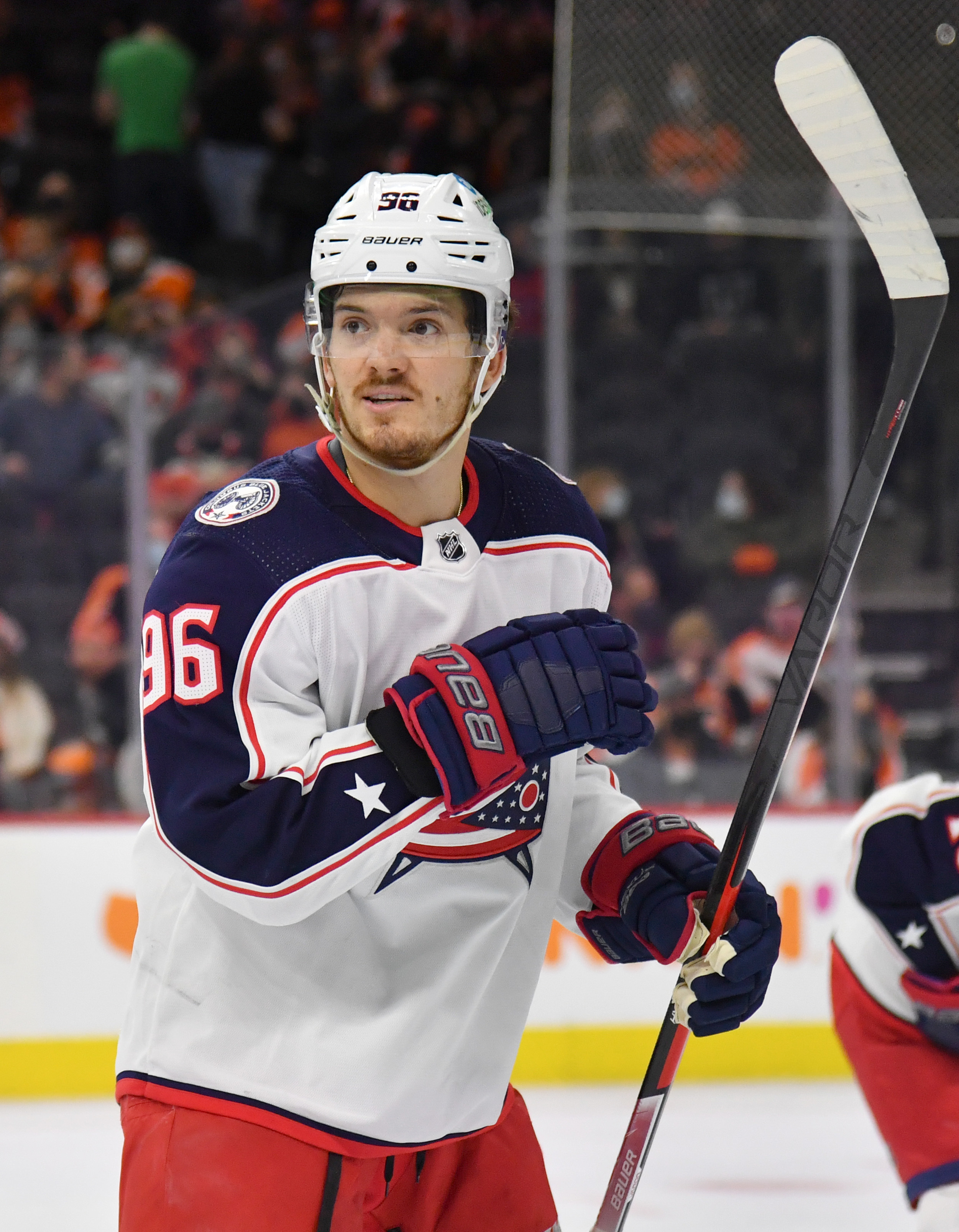 pieces like Roslovic, Wennberg, and Goodrow. The Rangers traded for the former two at the 2024 Trade Deadline, collectively giving up a second-round pick and two third-round picks. That’s a hefty price to spend for a duo that only spent half of a season in the lineup, though Roslovic provided some assurance with eight points across 16 playoff games. Wennberg couldn’t provide that same support, instead recording just two points in 16 postseason games and five points in 19 regular season games. Despite their feature in the rotating door that is New York’s middle-six, both Roslovic and Wennberg managed to earn confident deals this summer, and should continue to earn ice time with effective depth scoring.
Erik Gustafsson carries a similar story on the back-end, joining the Rangers for a brief 76 games last season but ultimately moving on this year. He was productive when he did play, recording six goals and 31 points – the third-highest scoring season of his career. He’s now headed for a Red Wings defense that should provide all of the ice time he needs, especially with his offensive upside.
Outside of that trio, New York’s departures largely feature moves to Europe, headlined by Nic Petan’s signing in the KHL. Petan is a veteran of nine NHL seasons, totaling 170 games and 35 points across four different clubs. He never managed any ice time in New York, instead spending all of his time in the Rangers organization in Hartford, where he scored eight points in 15 games. He stands alongside Goodrow, Pitlick, and Wheeler as notable departures from down New York’s depth chart, though none so big that they can’t be replaced.
Salary Cap Outlook
The Rangers have been bound by the cap all summer long, and will now enter the season with a stressful $623,476 remaining per PuckPedia. That’s narrowly enough to handle the day-to-day cost of running a team, though the Rangers could be forced into some cap gymnastics in the event of injury or call-up. That could quickly be tested, as Ryan Lindgren continues to struggle with an upper-body injury.
Key Questions
Did Enough Change? The Rangers have been stuck in a bit of perpetuity over the last few seasons, routinely cycling out pieces of their middle-six but yet to find an impact that’ll stick. That forced them to give up draft capital for Roslovic and Wennberg last Trade Deadline, but that tandem quickly walked out of the door they came in, only replaced by Reilly Smith. The return of Filip Chytil could be enough to support New York’s vacant roster spots, though it still seems one of Edstrom, Jimmy Vesey, William Cuylle, or prospect Brennan Othmann will need to step up to keep New York’s third-line dangerous. Both Vesey and Cuylle topped 20 points last season – scoring 26 and 21 respectively – though the latter seems much more likely to be the one to earn a bigger role. Their progress will be the focus of training camp, as New York asks the question of if they’ll need to beef up their depth at the Deadline once again.
Can Lafreniere’s Growth Continue? In a year headlined by Kaapo Kakko’s one-year contract, it will be Alexis Lafreniere under the most scrutiny. He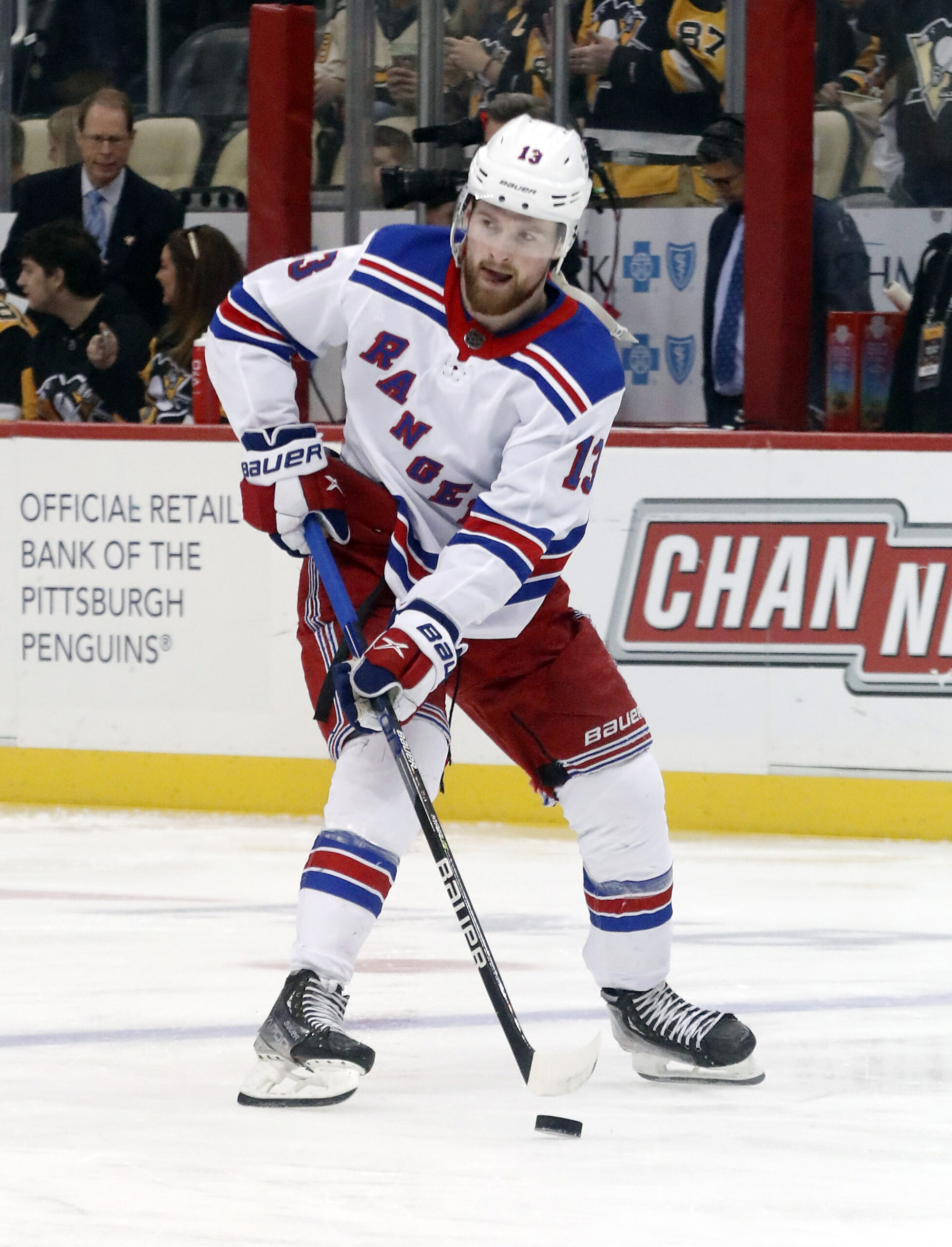 scored a career-high 28 goals, 29 assists, and 57 points last season – his first year playing in all 82 games. It was an impressive step up for the young winger – nearly 20 points more than his 2022-23 totals (39) – but he needs to keep going if New York wants to rival the top-end depth of teams like Carolina and Toronto. Lafreniere looked significantly more poised on the puck last year, and could finally vindicate his first-overall selection in 2020 with a breakout year this season. He’ll have every chance at ice time, ahead of a Rangers depth with plenty of question marks.
What Will Shesterkin Get Paid? The Rangers’ focus is undoubtedly on the postseason, but they also face the daunting task of finding a value for perhaps the top goaltender in the league. Igor Shesterkin has managed a save percentage above .910 in all five of his NHL seasons to date, including a .935 in 53 games during the 2021-22 season, which earned him both the Vezina Trophy and a finalist spot for the Hart Trophy. That’s an impressive statline, eerily close to the peak years of Montreal Canadiens star Carey Price, who currently stands as the most expensive goalie in the leauge with a $10.5MM cap hit. Price’s playing days are behind him, but his eight-year, $84MM extension will be the bare minimum for Shesterkin’s looming extension. He could even earn more, and will effectively set the precedent for players like Jake Oettinger and Linus Ullmark as they prepare for extensions of their own.
Photos courtesy of USA Today Sports Images.
Salary Cap Deep Dive: New York Islanders
Navigating the salary cap is one of the most important tasks for a front office. Teams that can avoid total cap chaos by walking the tightrope of inking players to deals that match their value (or compensate for future value without breaking the bank) remain successful. Those that don’t often see struggles and front office changes.
PHR will look at every NHL team and give a thorough look at their cap situation heading into the 2024-25 season. This will focus more on players who are regulars on the roster versus those who may find themselves shuttling between the AHL and NHL. All cap figures are courtesy of PuckPedia. We’re currently covering the Metropolitan Division, next up is the Islanders.
New York Islanders
Current Cap Hit: $88,000,000 (at the $88MM Upper Limit)
Entry-Level Contracts
F Maxim Tsyplakov (one year, $950K)
Potential Bonuses:
Tsyplakov: $1MM
The Isles beat out a long list of suitors to secure Tsyplakov’s services after a breakout year in the KHL that saw him score 31 goals. He projects to play in the bottom six, however, meaning he shouldn’t have a goal total anywhere near there. If Tsyplakov stays in that role, he likely won’t reach any of his ‘A’ bonuses either. Worth noting is that he will be arbitration-eligible next summer even though he’s exiting his entry-level deal.
Signed Through 2024-25, Non-Entry-Level
D Samuel Bolduc ($800K, RFA)
D Noah Dobson ($4MM, RFA)
F Hudson Fasching ($775K, UFA)
F Simon Holmstrom ($850K, RFA)
F Brock Nelson ($6MM, UFA)
F Kyle Palmieri ($5MM, UFA)
D Mike Reilly ($1.25MM, UFA)
D Alexander Romanov ($2.5MM, RFA)
F Oliver Wahlstrom ($1MM, RFA)
Nelson has been somewhat of a late bloomer. His last three seasons have been the best of his career, reaching at least 34 goals and 59 points in each of them. If he can extend that streak to four, he could land a small increase, an outcome that didn’t seem likely early on in this deal. Palmieri didn’t fare well over his first two seasons in New York but did return to form last season, matching his career-high in goals with 30. He’ll need to stay around that level to have a chance to stay around this price tag as three seasons between 21 and 33 points before 2023-24 will hurt him in negotiations.
Wahlstrom struggled considerably last season, leading to speculation about his future with the team (which hasn’t really changed heading into this year). Assuming he doesn’t take a big leap forward this season, he’s likely to stay around this price point and could be a non-tender candidate given his arbitration rights. Holmstrom’s first full NHL season was a good one with 15 goals, including five on the penalty kill but took a bit less than his qualifying offer to secure a one-way salary. A similar showing could get him closer to double that next summer. Fasching has had a limited role over the past couple of seasons and is likely to stay in that spot in 2024-25 which means he should stay around the league minimum mark next summer.
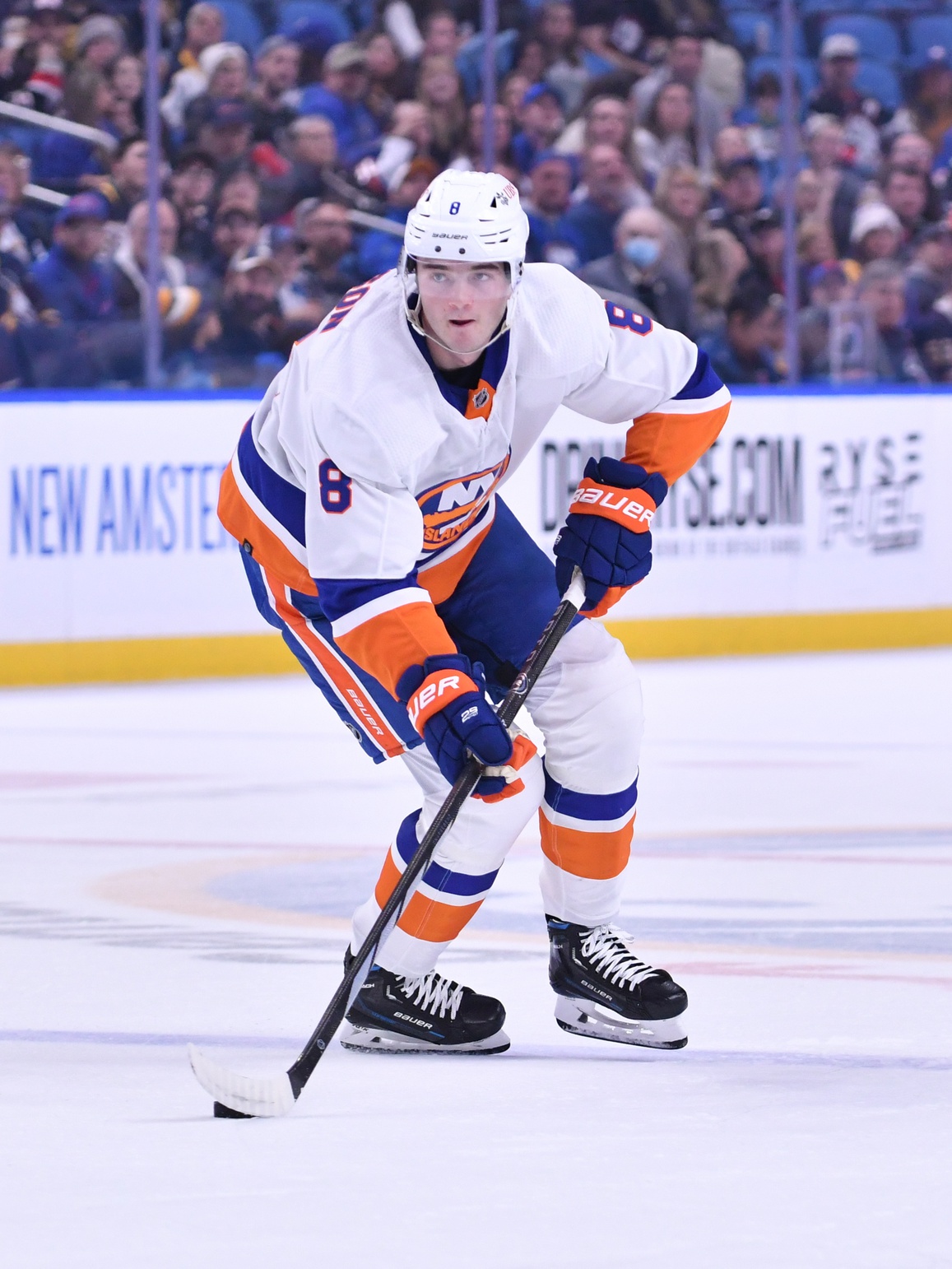 When Dobson signed his current deal, it was a situation where the Islanders had more of the leverage. That’s not the case anymore. He showed that his breakout 2021-22 performance wasn’t a fluke and built on it last season, recording 70 points and logging more than 24 minutes a night. Essentially, he performed like a true number one defender. With arbitration rights this time around, Dobson gets the leverage in that if early talks don’t go well, he could file for arbitration where he’d make a very strong case for a substantial raise. Assuming neither side wants it to get to that point, it wouldn’t be surprising to see Dobson’s camp pushing for $10MM or more on a long-term deal at this stage.
Romanov has emerged as a legitimate second-pairing option in his first two seasons with the Isles while producing a bit more offensively than he did with Montreal. Like Dobson, he’s also now arbitration-eligible and if he puts up a similar performance this season, Romanov could land closer to $4.5MM on his next contract.
Reilly re-signed after playing a regular role following his early-season waiver claim. What will hurt him in future talks is how much he has bounced around which will give some teams pause in free agency when it comes to offering him a contract. Accordingly, there’s a good chance he sticks around this price tag on more short-term deals over the next little while. Bolduc has been in the seventh defender role over the past two seasons and is likely to stay in that spot this season. Arbitration rights could give him a small raise but with the raises coming to Dobson and Romanov, they might need to keep this salary slot at the minimum.
Signed Through 2025-26
F Anders Lee ($7MM, UFA)
F Jean-Gabriel Pageau ($5MM, UFA)
Lee managed to reach the 20-goal mark for the seventh time in the last eight years last season but with just 37 points, that was his lowest full-season total since 2015-16. Now 34, the captain is showing signs of slowing down which means the last couple of years of this deal could be an issue from a value perspective. If that happens, his next deal will be closer to half of this amount. The same can be said for Pageau who is a luxury they can no longer afford on the third line which is where he’s best utilized. But with that type of playing time, he won’t put up the production to justify the price tag. It wouldn’t be surprising to see New York try to move him at some point but that won’t be easy.
Signed Through 2026-27
F Casey Cizikas ($2.5MM, UFA)
F Kyle MacLean ($775K, UFA)
G Semyon Varlamov ($2.75MM, UFA)
Cizikas is halfway through a six-year deal, a term rarely given to a player his age who plays exclusively in the bottom six. With an uptick in production the last two seasons, they’ve done alright with it so far but he’ll be 36 when this contract ends so things could change quickly. His next contract, if there is one, should come in below that. MacLean was a career minor leaguer until partway through last season. This deal was a nice one for both sides in that it gives him some financial stability while New York gets a player at the minimum for a few seasons which they’ll need given the pricey contracts they have (and will soon be adding to).
Varlamov is still an above-average second goaltender and getting that at this price point is good. What could be problematic down the road is that he’s already 36 with three years left on his contract. But goalies can still be serviceable into their late 30s so there’s a chance that this deal will work out well for New York.
Salary Cap Deep Dive: New Jersey Devils
Navigating the salary cap is one of the most important tasks for a front office. Teams that can avoid total cap chaos by walking the tightrope of inking players to deals that match their value (or compensate for future value without breaking the bank) remain successful. Those that don’t often see struggles and front office changes.
PHR will look at every NHL team and give a thorough look at their cap situation heading into the 2024-25 season. This will focus more on players who are regulars on the roster versus those who may find themselves shuttling between the AHL and NHL. All cap figures are courtesy of PuckPedia. We’re currently covering the Metropolitan Division, next up is New Jersey.
New Jersey Devils
Current Cap Hit: $87,023,897 (under the $88MM Upper Limit)
Entry-Level Contracts
D Luke Hughes (one year, $925K)
D Simon Nemec (two years, $918K)
Potential Bonuses
Hughes: $1.85MM
Nemec: $3.25MM
Total: $5.1MM
Hughes had a strong rookie season offensively, notching 47 points while maxing out his $850K of ‘A’ bonuses in the process. Even with that being his only full season of experience, with the way young blueliners have been locked up lately, a max-term agreement could be coming his way, one that could run past $8MM. However, an injury to start the season won’t help his cause. Nemec, meanwhile, spent most of last season in New Jersey, acquitting himself well to the NHL. He doesn’t have quite the offensive upside that Hughes does but he could be an all-situations player; that, coupled with his lofty draft status (second overall in 2022), could have him surpassing $8MM on his next contract if he progresses as expected.
Signed Through 2024-25, Non-Entry-Level
G Jake Allen ($1.925MM, UFA)*
F Nathan Bastian ($1.35MM, UFA)
D Nick DeSimone ($775K, UFA)
D Johnathan Kovacevic ($758K, UFA)
F Curtis Lazar ($1MM, UFA)
F Tomas Tatar ($1.8MM, UFA)
*-Montreal is retaining an additional $1.925MM on Allen’s contract.
Tatar returns to New Jersey after a particularly rough season between Colorado and Seattle but he’s only a year removed from putting up 48 points with the Devils. It’s possible that he’s on the decline but it’s reasonable to think he’ll produce enough to warrant this price tag. He hasn’t fared well lately in free agency so even if he rebounds, he probably won’t command a huge jump in salary. Bastian is a capable fourth liner who showed some offensive upside in 2021-22 but will need to get back to that level if he wants to match this deal next summer let alone beat it. Lazar is coming off a career year offensively which is an outlier relative to the rest of his career. If he can repeat the 25 points he had, he could double this price point or even more. However, if he goes more to his career averages, a small increase is about the best he could hope for.
DeSimone was a midseason waiver claim from Calgary and held his own in a depth role. It’d be surprising to see him advance past that this season so he’s likely to stay around the minimum salary moving forward. Kovacevic came over in a trade from Montreal over the summer after largely holding down a spot on the third pairing the last two years. While a lot will depend on if he can play a regular role this season, the fact he’s a right-shot defender with some experience under his belt could give him a shot at doubling his current rate next summer.
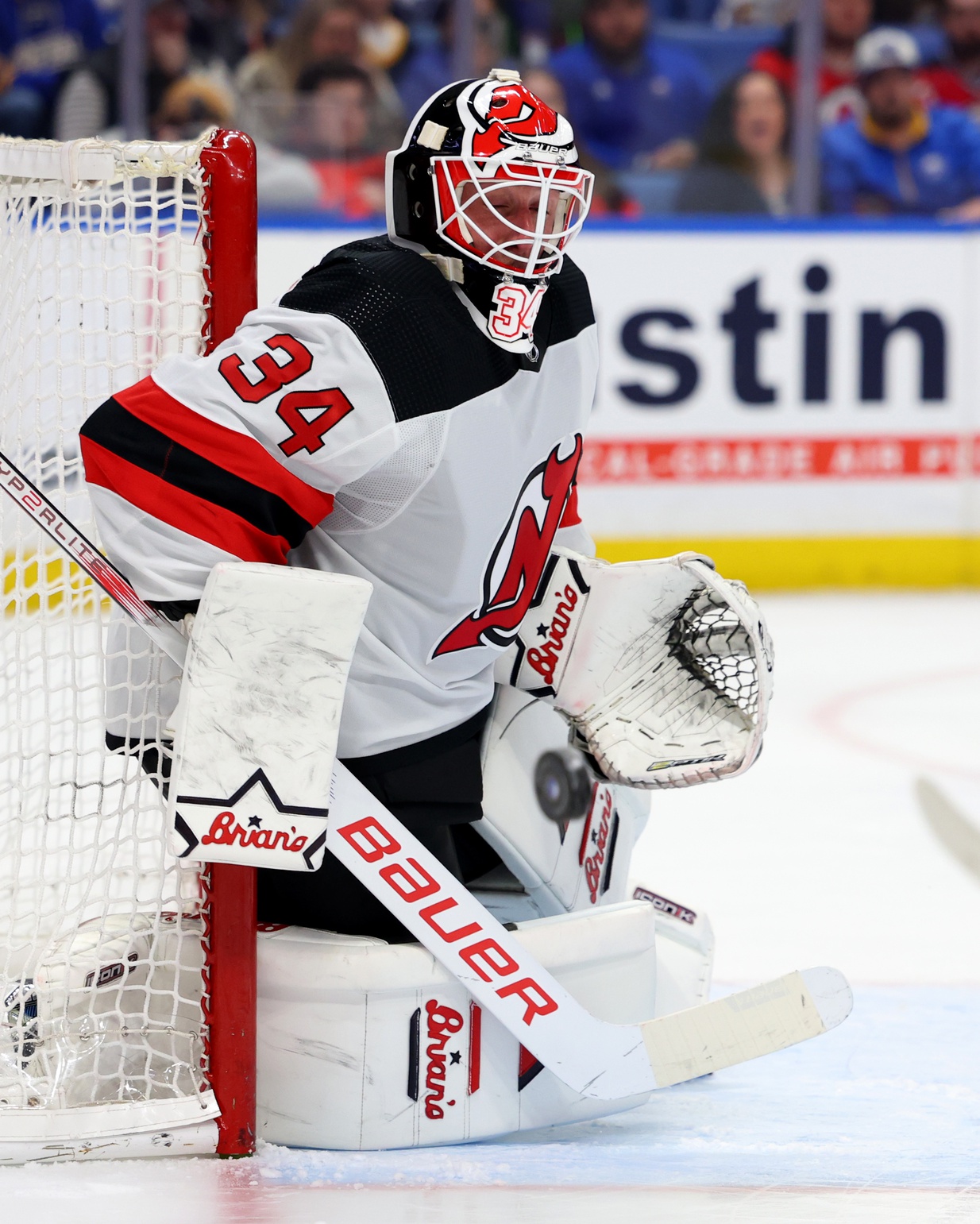 Allen also was acquired from Montreal, this time back at the trade deadline where he stabilized things between the pipes down the stretch. Stabilizing is a fitting description for what Allen’s best role is at this point of his career. He can handle a starting workload for brief stretches but is best utilized in a platoon type of role or as a high-end backup which is where he’ll be this season. The market for those types of netminders has flattened out somewhat in recent years, however, while the fact he’ll be 35 heading into 2025-26 will also hurt him. It’s possible that he can get a two-year deal but a possible comparable might be the two-year, $5MM pact that Cam Talbot received from Detroit this summer.
Signed Through 2025-26
F Paul Cotter ($775K, RFA)
F Erik Haula ($3.15MM, UFA)
G Jacob Markstrom ($4.125MM, UFA)*
*-Calgary is retaining an additional $1.85MM on Markstrom’s contract.
Haula hasn’t been able to get back to the level of production he had when he started with Vegas in 2017-18 but he has settled in nicely over the last three seasons as someone who will play around a 15-goal, 40-point pace. That price point for a center is solid value but he’ll also be 35 when this deal is up which could limit his shot at a raise in 2026. Cotter was acquired from Vegas this summer as a way for the Devils to add some more grit to their lineup. Part of the reason the price was relatively high (Alexander Holtz and Akira Schmid) is the fact he’s signed for two more years at the league minimum. Cotter could triple that or more on his next deal if he plays at a similar rate for the next two seasons.
It took a little longer than first expected to get Markstrom to New Jersey but they got the deal done before the draft. He’s a solid starter although he’s also getting closer to the end of his career as he’s already 34. Accordingly, even if the starting goalie market goes up (depending on what contracts Jeremy Swayman and Igor Shesterkin get), Markstrom is likelier to stay closer to his current price point if he can maintain his current level for two more seasons.
Signed Through 2026-27
D Brenden Dillon ($4MM, UFA)
F Nico Hischier ($7.25MM, UFA)
F Kurtis MacDermid ($1.15MM, UFA)
F Dawson Mercer ($4MM, RFA)
F Stefan Noesen ($2.75MM, UFA)
F Ondrej Palat ($6MM, UFA)
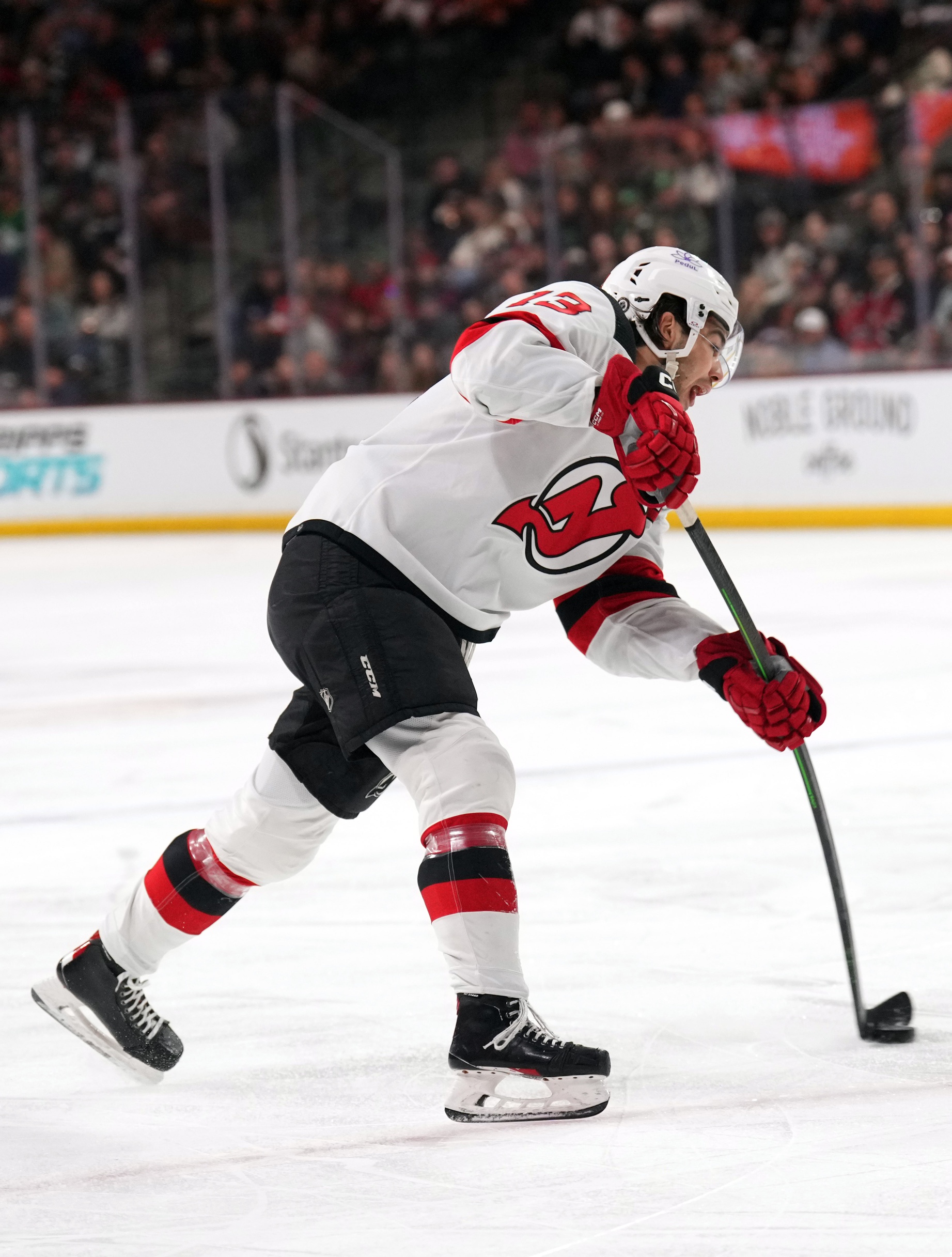 At the time that Hischier’s contract was signed, he had just two seasons under his belt so there was certainly some risk to a max-term commitment at the time. However, it has worked out rather well so far for the Devils as it is already below market value at the time he’s entering his prime years. (The success of this contract provided a road map for other teams to take similar approaches with their top youngsters as well as these types of contracts are much more prevalent now.) Hischier probably won’t produce enough to be viewed as a true number one center but his two-way game is strong enough that there will be teams that treat him as one. Accordingly, between that and the fact he’ll hit free agency at 28, Hischier could command a double-digit AAV on his next contract.
Palat hasn’t been able to produce at the levels he did with Tampa Bay over his first two seasons with New Jersey with injuries being an issue at times as well. Already 33, if he’s not able to turn things around, this is a deal that could be problematic for them as GM Tom Fitzgerald continues to try to add to his roster. Mercer was all but guaranteed to land a bridge contract given New Jersey’s current cap situation but the fact they got a third season at that price point will help. However, it takes him to within a year of UFA eligibility so it’s not without its risk. Mercer will be owed a $4.25MM qualifying offer with arbitration rights and if he can get back to his 2022-23 production (56 points), he could add a few million per year to that number.
Noesen proved to be quite a bargain for Carolina for the last two seasons, recording 36 and 37 points for a cap hit below the league minimum. That helped earn him this deal, well above the six-figure price tags he was accustomed to getting. Is this his new baseline performance? He’ll need it to be if he is going to stay around this price moving forward. MacDermid signed this deal back in May to avoid free agency. It’s a reasonable price tag for an enforcer and falls within the range of some of the more established options. It’s also fully buriable in the minors if they decide a tough guy is something they can no longer afford to carry.
Dillon was part of the defensive makeover this summer, coming over from Winnipeg. This will be seasons 11 through 13 that he makes more than $3MM with this price tag being the highest. He’ll be 36 when he tests the market again and if he’s still a fourth or fifth blueliner at that time, that streak could be extended though potentially on a year-to-year basis moving forward.
Summer Synopsis: New York Islanders
Last season was a rough one for the Islanders in the first half of the season. The team only won 19 of their first 45 games, leading to a coaching change with Patrick Roy taking over for Lane Lambert behind the bench. It took a bit of time for them to find their stride but they got hot a little before the trade deadline, ultimately pulling themselves from being out of the playoff picture to finishing third in the Metropolitan Division although they bowed out in the first round to Carolina. GM Lou Lamoriello didn’t have much flexibility this summer and largely elected to stay the course, hoping that New York’s finish to the season was a sign of things to come.
Draft
1-20: LW Cole Eiserman / U.S. National U18 Team (NTDP)
2-54: D Jesse Pulkkinen / JYP (Liiga)
2-61: C Kamil Bednarik / U.S. National U18 Team (NTDP)
4-115: G Dmitry Gamzin / Zvezda Moskva (VHL)
5-147: G Marcus Gidlof / Leksands IF J20 (J20 Nationell)
6-179: D Xavier Veilleux / Muskegon Lumberjacks (USHL)
Coming into the season, Eiserman was a popular pick to land in the top five. While a little undersized, being a high-end scorer is an attribute that teams were expected to covet. It didn’t happen that way. Even though he broke the US National Team Development Program’s record for most goals scored (passing Cole Caufield, Phil Kessel, and Patrick Kane), Eiserman slipped out of the lottery altogether. While Eiserman will likely spend a couple of years at Boston University, he projects as someone who should make an impact for the Isles sooner than a lot of others picked in that range.
Lamoriello didn’t waste any time signing Pulkkinen as the big blueliner inked his entry-level deal in mid-July. He has some offensive upside and isn’t afraid of mixing it up, elements that will endear him to his coaches. He will spend the upcoming season in Finland and is probably two or three years away from being NHL-ready. Bednarik was Eiserman’s teammate with the NTDP and will continue to be his teammate at BU. More of a two-way player than a raw gamebreaker like Eiserman, Bednarik is likely a few years away from turning pro.
With their other selections, the Islanders went with some longer-term options. With a goaltending prospect cupboard that wasn’t the deepest, they opted for two netminders that carry at least four years of club control; Gamzin’s rights will be held indefinitely. As for Veilleux, he’s committed to Harvard University but will spend another season in the USHL, meaning it could be five years before he signs.
Trade Acquisitions
The Isles were quiet on the trade front over the offseason. Their only swap came more than a month before the draft when they flipped the 18th and 50th picks to Chicago for picks 20, 54, and 61. Considering that they still wound up with Eiserman plus a pair of intriguing pieces in Pulkkinen and Bednarik, the move turned out pretty well for them as things stand.
UFA Signings
F Anthony Duclair (four years, $14MM)
F Liam Foudy (one year, $775K)*
F Mark Gatcomb (one year, $775K)*
G Marcus Hogberg (two years, $1.55MM)
F Fredrik Karlstrom (one year, $775K)*
D Mike Reilly (one year, $1.25MM)
F Maxim Tsyplakov (one year, $950K)*
*-denotes two-way contract
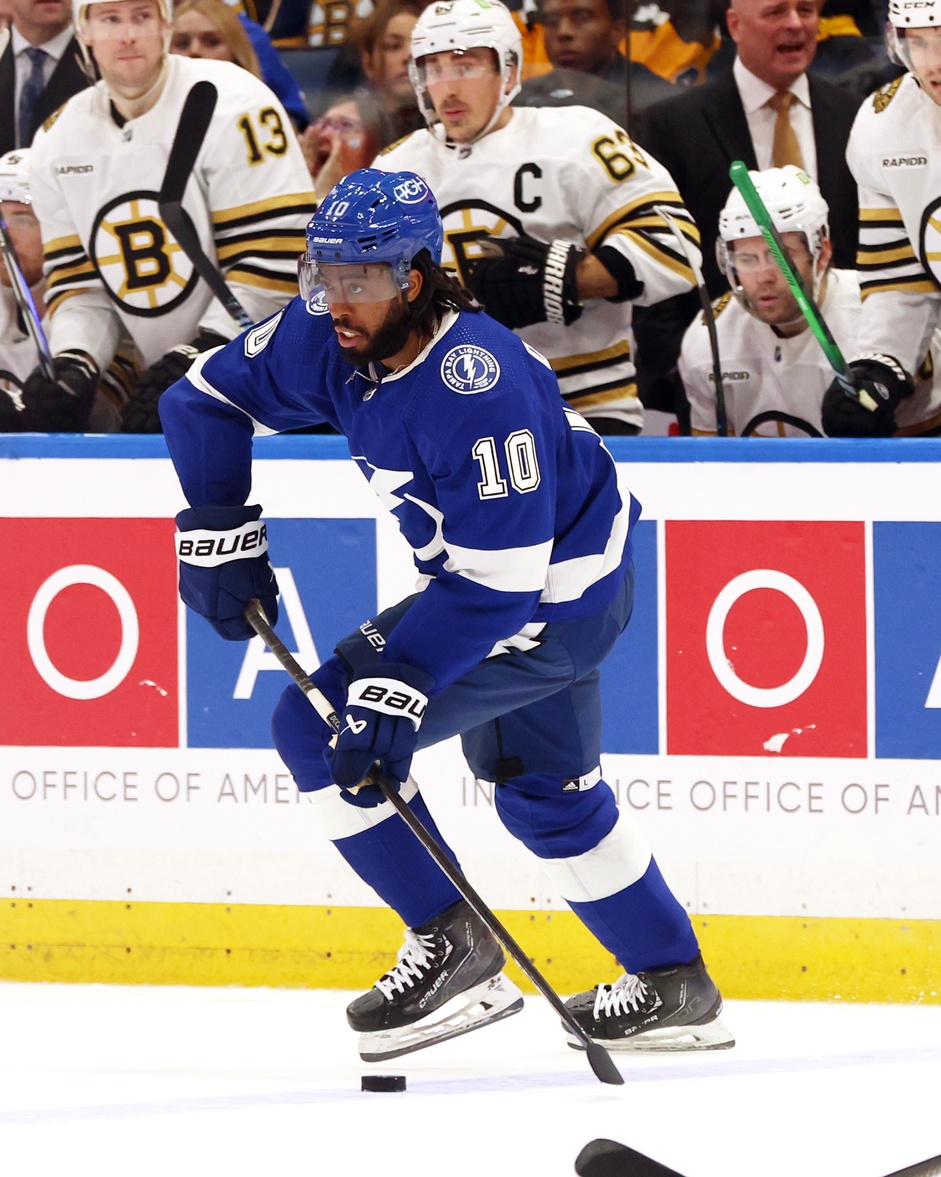 With limited cap space, Lamoriello used what he had primarily to try to upgrade the offense. Duclair is a particularly interesting acquisition. He struggled in San Jose but after Tampa Bay acquired him at the trade deadline, he came up just shy of being a point-per-game player down the stretch. The 29-year-old has potted at least 23 goals in three of the last four years and this is a team that has scuffled offensively at times over the years. Roy also has a comfort level with Duclair having coached him previously at the major junior level with QMJHL Quebec. New York doesn’t need Duclair to produce as he did for the Lightning late in the season but if he can be a consistent 20-goal player and do some damage with his speed, this contract should work out for them.
Tsyplakov was the other addition of intrigue. The 26-year-old had a breakout year in the KHL last season, notching 31 goals with Spartak Moscow; his previous career-high was 10. That showing got him on a lot of NHL radars with New York being out a lot of teams for his services. Capped at signing a one-year deal no matter who got him, Tsyplakov will be looking to land a full-time roster spot but will likely need to start in their bottom six, assuming they can create the cap room to keep him up – more on that later.
Reilly was picked up off waivers early in the season, a move that worked out quite well for both the team and the blueliner. He wound up securing a full-time spot in the lineup, even holding onto one as players came back from injuries while he chipped in with 24 points in 59 games. This is his fifth team since 2019 so it’s not surprising that Reilly decided to stay where he had some success; he should have a depth role on their back end this season.
RFA Re-Signings
D Dennis Cholowski (one year, $775K)*
F Simon Holmstrom (one year, $850K)
F Kyle MacLean (three years, $2.325MM)
F Tyce Thompson (one year, $775K)*
F Oliver Wahlstrom (one year, $1MM)
*-denotes two-way contract
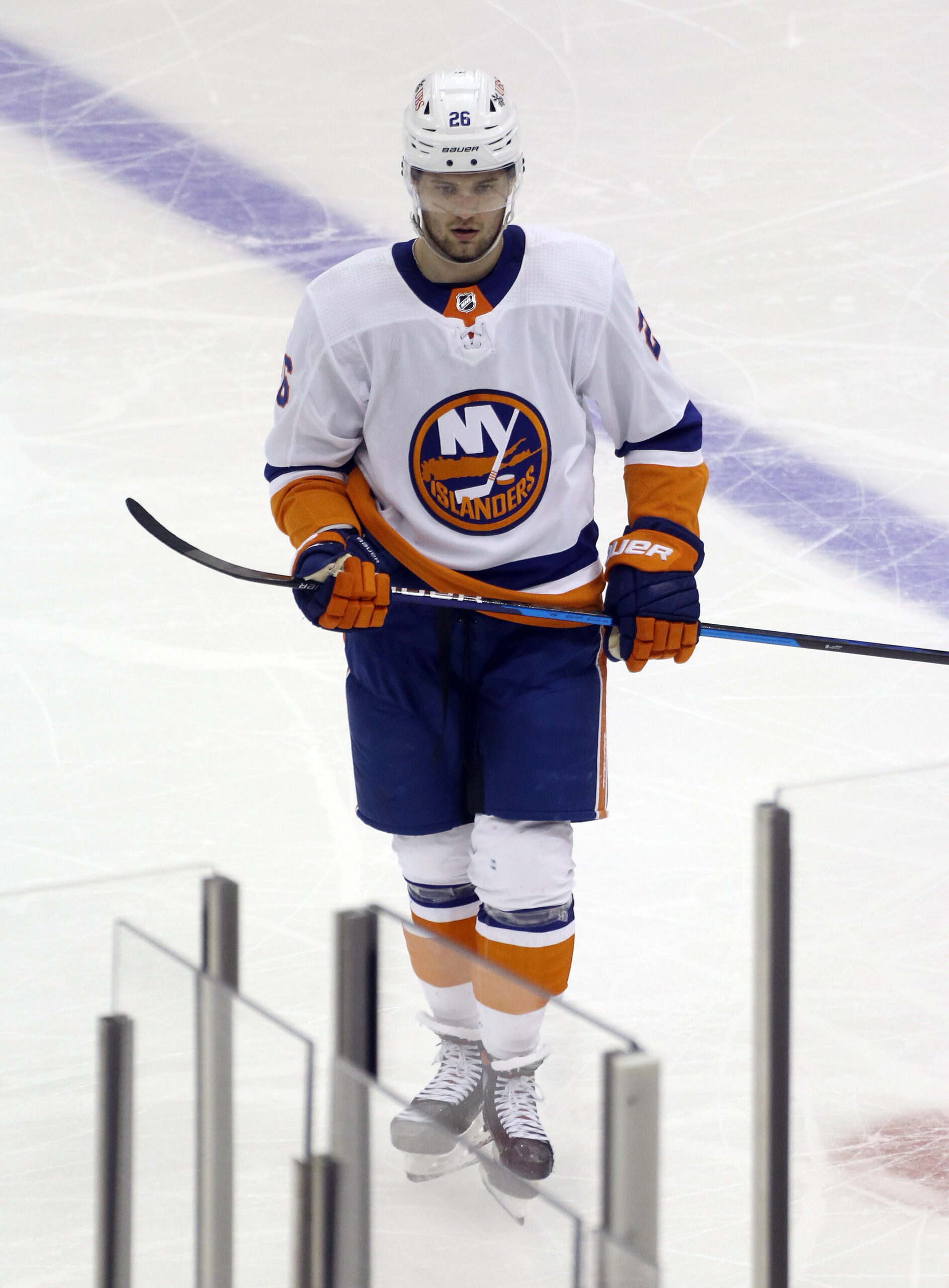 Wahlstrom had a year to forget last season. Coming off an ACL injury the year before, he was largely a non-factor on the nights he was in the lineup, recording just two goals and four assists in 32 games. That had some wondering if the two sides could part ways. Instead, they avoided arbitration with this deal, one that essentially represents a do-over on last season. However, given the cheap deal and one-year term, it’s quite possible that the Isles still move on from Wahlstrom, either via a trade or even the waiver wire if they’re willing to risk losing him for no return. Suffice it to say, things haven’t gone as planned so far for the 11th pick in the 2018 draft.
Holmstrom had a solid showing last season, scoring five shorthanded goals and 15 overall in 75 games despite playing nearly exclusively in the bottom six. However, he elected to take less than his qualifying offer in order to secure a one-way contract which should help his chance of making the team in a similar role to last season’s. MacLean was a feel-good story, making his NHL debut last season at the age of 25 and playing his way into a regular spot on the fourth line after that. Rather than seek top dollar, he opted for security, getting three one-way years on his contract, an outcome that wouldn’t have seemed likely even at the midway point of last season. Cholowski and Thompson, meanwhile, are primarily AHL veterans at this point of their careers.
Departures
D Sebastian Aho (Pittsburgh, two years, $1.55MM)
G Kenneth Appleby (Charlotte, AHL)
D Robert Bortuzzo (Utah, one year, $775K)*
F Cal Clutterbuck (unsigned)
F Brian Pinho (Bridgeport, AHL)
F Karson Kuhlman (Lukko, Liiga)
D Paul Ladue (MoDo, SHL)
F Otto Koivula (Vaxjo, SHL)
F Matt Martin (PTO with the Islanders)
D Robin Salo (Malmo, SHL)
*-denotes two-way contract
For the most part, New York lost predominantly AHL or depth players. But their fourth line will look considerably different without Clutterbuck, who had been a fixture there for the past 11 seasons but wasn’t invited back despite recording 19 points and 273 hits. Martin, meanwhile, wasn’t expected to be back but is hanging around on a PTO, one that’s expected to last into the start of the regular season so he may or may not be a departure when all is said and done depending on if he signs.
Bortuzzo was acquired early last season to offset some injuries on the back end, much like Reilly was. But his role was much more limited, playing exclusively on the third pairing when he was in the lineup. Aho, meanwhile, had worked his way from being a depth defender to a full timer on the roster, one who played in 129 games for New York over the past two seasons, predominantly on the third pairing as well. But with their injured players returning and Reilly being retained, there wasn’t a vacant spot for Aho to potentially fill, resulting in him heading to the Penguins.
Salary Cap Outlook
At the moment, the Islanders have spent exactly to the $88MM Upper Limit (to the penny), per PuckPedia. And that’s with Tsyplakov not being on the roster. Presumably, they’re going to want to get him with the big club to start the season which has helped fuel the speculation around Wahlstrom’s future with the team. MacLean is their only waiver-exempt player and since he makes the league minimum, sending him down isn’t enough. Accordingly, expect to see some roster activity from the Isles in the coming weeks as they look to free up space for Tsyplakov, possibly Martin, while hoping to give themselves some wiggle room for in-season flexibility. Lamoriello has some work to do to achieve that.
Key Questions
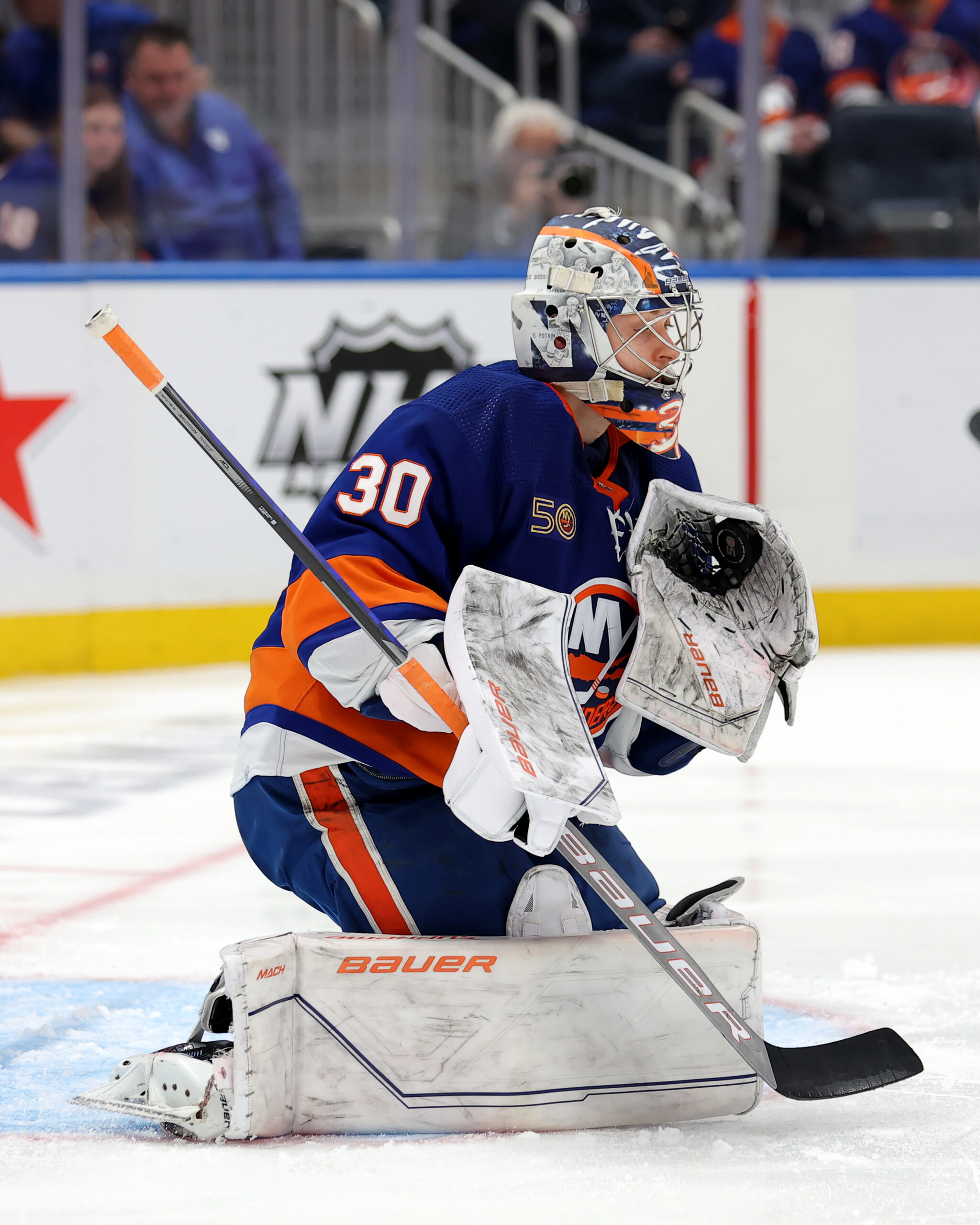 Can Sorokin Rebound? Through his first three seasons, Sorokin was an elite netminder, posting a 2.34 GAA along with a .924 SV% in 136 games. That helped him earn an eight-year, $66MM contract extension last July, one that kicks in this season. However, he struggled throughout last season, putting up a 3.01 GAA with a .908 SV%, a rate that was above the NHL average but well below his standards. Those struggles resulted in Semyon Varlamov being the starter for their series against the Hurricanes. Sorokin underwent back surgery this summer and while he isn’t expected to miss time, it only adds to the question of whether he can get back to the Vezina-contending form he has shown in the past.
Will The Offense Improve? New York finished in the bottom 12 offensively last season for the sixth straight year. The only proven addition of note is Duclair, a player who is probably a middle-six forward. He’ll help but he alone won’t bring this group to even a middle of the pack team. They did fare a bit better in this regard following the coaching change but is that sustainable? Of the 15 other playoff teams last season, the average number of goals scored was 276. New York checked in at 246 with only Washington coming in below them. If they want to get to that average, where are the extra 30 goals coming from? And if they can get that and a bounce-back showing from Sorokin, the Islanders could make some noise this season.
Can Dobson Reach Another Level? Noah Dobson was certainly a bright spot on the blueline for New York last season. Offensively, he blew past his career bests in assists (60) and points (70), finishing sixth and seventh league-wide in those categories for a defenseman. Meanwhile, he logged over 24 minutes a night, becoming a legitimate number one blueliner. Still just 24, how much more room is left to improve? If he can get into that elite tier of defenders, he’ll give the Islanders an element they haven’t had for a while. The timing would also be perfect as he’ll be a restricted free agent with arbitration eligibility next summer and will be looking to cash in.
Photos courtesy of USA Today Sports Images.
Salary Cap Deep Dive: Columbus Blue Jackets
Navigating the salary cap is one of the most important tasks for a front office. Teams that can avoid total cap chaos by walking the tightrope of inking players to deals that match their value (or compensate for future value without breaking the bank) remain successful. Those that don’t often see struggles and front office changes.
PHR will look at every NHL team and give a thorough look at their cap situation heading into the 2024-25 season. This will focus more on players who are regulars on the roster versus those who may find themselves shuttling between the AHL and NHL. All cap figures are courtesy of PuckPedia. We’re currently covering the Metropolitan Division, next up is Columbus.
Columbus Blue Jackets
Current Cap Hit: $63,201,666 (under the $88MM Upper Limit, also under the $65MM Lower Limit)
Entry-Level Contracts
F Adam Fantilli (two years, $950K)
D David Jiricek (two years, $918K)
F Dmitri Voronkov (one year, $925K)
Potential Bonuses
Fantilli: $3.2MM
Jiricek: $1MM
Total: $4.2MM
Fantilli had a solid first half of the season relative to the Blue Jackets’ struggles but his campaign ended early due to a calf laceration. Still, if he can take a step forward this season, he’s someone that the team may look to buck the trend and work out a long-term agreement with. It wouldn’t be surprising if the seven-year, $50MM deal that Seattle gave Matthew Beniers would be used as a possible comparable. Fantilli has $1MM of ‘A’ bonuses in his deal (four at $250K apiece) and if he stays healthy, he should hit at least a couple of those which could help push the Blue Jackets closer to the cap floor. Voronkov took a while to get going but turned in a quality freshman year himself. However, there has been speculation that his desire might be to return to Russia. If that’s not the case, he’s someone who might be in line for a $3MM bridge deal, more if he has a more productive showing this season.
Jiricek split last season between Columbus and AHL Cleveland but passed the 40-game mark to accrue a season of service time. However, the limited role he had makes a long-term deal unlikely at this point unless he takes on a top role within the next year or so. His bonuses are also four ‘As’ but without much of an offensive game, he may be limited to aiming for ones geared toward plus/minus, blocked shots, and ATOI.
Signed Through 2024-25, Non-Entry-Level
F Justin Danforth ($1.1MM, UFA)
F Trey Fix-Wolansky ($775K, RFA)
D Jordan Harris ($1.4MM, RFA)
D Jack Johnson ($775K, UFA)
F Sean Kuraly ($2.5MM, UFA)
F Mathieu Olivier ($1.1MM, UFA)
D Ivan Provorov ($4.75MM, UFA)*
G Daniil Tarasov ($1.05MM, RFA)
F James van Riemsdyk ($900K, UFA)
*-Los Angeles is retaining an additional $2MM on Provorov’s contract.
Kuraly has nicely filled a bottom-six center spot in the first three seasons with his hometown team. However, even with a slightly bigger role than he had with Boston, his offensive production has been somewhat limited. Accordingly, while he might be able to land another multi-year deal around this price point, it’s hard to see him commanding much more than that. Olivier has become an enforcer who can play more than just spot minutes which should help his cause heading to the open market. While a lot of teams don’t carry that type of player now, enough still do that at least a small raise could be achievable.
Danforth has turned into somewhat of a Swiss army knife for the Blue Jackets. Somewhat of a late bloomer, he opted to take an early extension last time but he might be better off testing the market this time around. If he can have another season of double-digit goals and 25-plus points, his versatility could make him very intriguing on the open market, allowing him to potentially double this price tag. As for van Riemsdyk, he was a late signing due to Columbus being limited up front. That he didn’t have much interest in a guaranteed deal beforehand was a bit surprising but it might forecast a similar fate next summer. Fix-Wolansky is far from guaranteed a roster spot but is at the point where there isn’t much left to prove in the minors. He could just be a high-end AHL player but even so, some of those have received one-way deals in recent years.
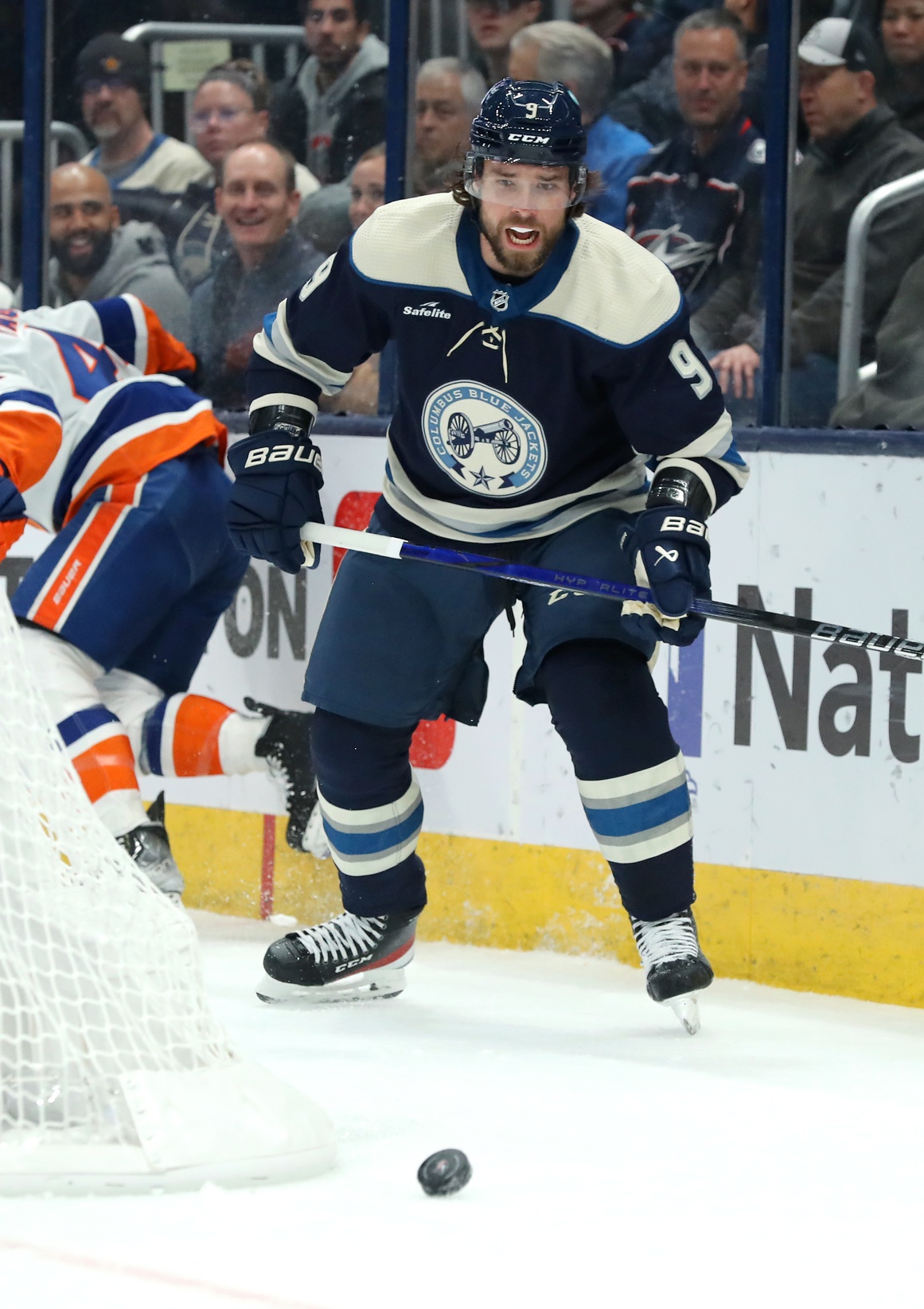 Provorov had a decent first season in Columbus but still came up short of the offensive production he had in his best days with Philadelphia. That will likely limit his earnings upside on his next deal as the expectation is that he’d be more productive by this point. However, the fact he’ll hit the open market at 28 should offset that somewhat; that’s a few years younger than a lot of impact blueliners for their first trip through unrestricted free agency. A breakout year under new head coach Dean Evason could change things but as it stands now, Provorov might be someone who winds up accepting a contract very close to the one he has now, both in salary and term (he’s ending a six-year agreement this season).
Harris was acquired from Montreal in the Patrik Laine trade and is likely to have a similar role with Columbus as he did with the Canadiens, that of a fourth or fifth defender with limited special teams time. With salary arbitration rights, he should be able to push past the $2MM mark but with limited production, his earnings upside will be capped. Johnson accepted a one-year deal at the league minimum this summer, a price point he’s likely to stay at if he signs for 2025-26.
Tarasov bounced back relatively well after a rough 2022-23 campaign but still hasn’t progressed past the level of a possible backup goalie. That said, it wouldn’t be surprising to see him play a bit more this season which could push his asking price to the $2MM range on another short-term agreement.
Signed Through 2025-26
F Yegor Chinakhov ($2.1MM, RFA)
D Erik Gudbranson ($4MM, UFA)
F Boone Jenner ($3.75MM, UFA)
F Cole Sillinger ($2.25MM, RFA)
Jenner hasn’t been able to get to the 30-goal mark in recent years but has quietly produced at that pace for three straight years but has simply dealt with injuries. He’s a legitimate two-way top-six center on a deal that was a team-friendly pact from the moment he signed it. Assuming he continues to log around 20 minutes a night, a multi-year deal worth more than $6MM per season could be where his market lands in 2026.
Sillinger rebounded well after a particularly rough sophomore year but he still isn’t established enough to the point where a long-term deal made no sense for either side. This bridge deal from earlier this summer buys both sides more time to evaluate. He’ll be arbitration-eligible next time out and at this point, it’s hard to project where he’ll land as his offensive game still has a lot of room to grow. Chinakhov took some steps forward last season when healthy, giving the Blue Jackets some secondary scoring. Still, he’s not yet a consistently reliable top-six forward which is where he’ll need to get to in order to get a raise of significance two years from now.
Gudbranson’s contract was widely panned at the time as a third-pairing player getting more money and term than many expected. However, he has played top-four minutes with the Blue Jackets, giving them at least some bang for their buck, especially after a career year offensively. That said, he’ll be 34 when he hits the open market and has a physical style that tends not to age well. It’d be surprising if he eclipses $4MM on his next deal as a result.
Signed Through 2026-27
F Kent Johnson ($1.8MM, RFA)
F Kirill Marchenko ($3.85MM, RFA)
G Elvis Merzlikins ($5.4MM, UFA)
Marchenko only has two NHL seasons under his belt but surpassed the 20-goal mark in each of them, giving him a bit of leverage in contract talks which didn’t seem to go to his liking early on. This is on the pricier end for a typical bridge agreement but both sides will get to see if he has another gear to get to before he gets one more crack at restricted free agency with arbitration rights and a $3.975MM qualifying offer. If he can keep scoring 20-plus goals, he’ll be in line for a sizable raise next time out. Johnson really only has one full NHL season under his belt; he burned a year with limited action after college and missed half of last year due to injury and some time in the minors. That made a three-year deal a bit surprising, especially at a rate that looks like a team-friendly one. It won’t take much for Johnson to out-perform this contract as he looks to establish himself as a top-six piece. If that happens, he’ll more than double this next time out.
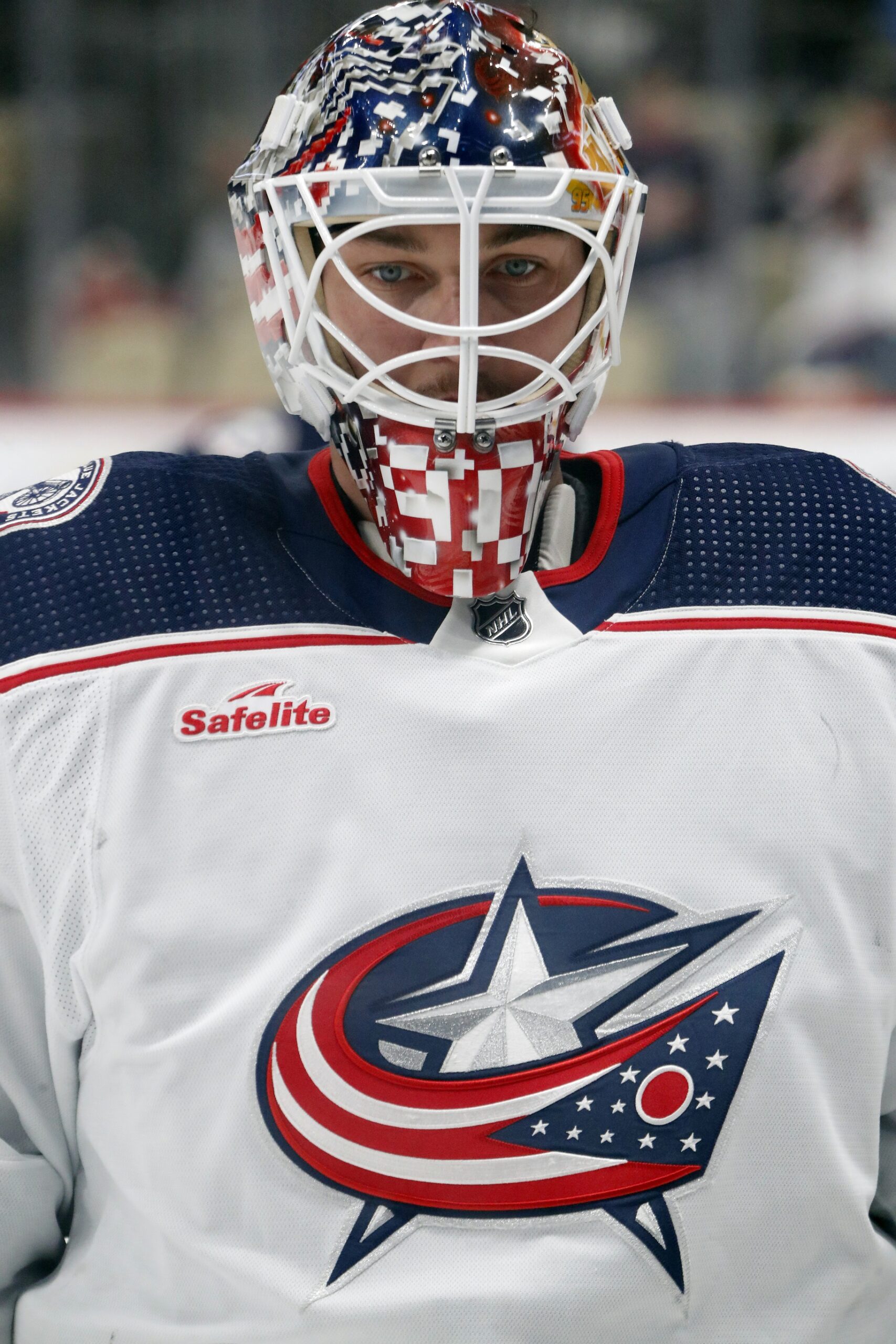 Merzlikins did have better numbers last season but that was a pretty low bar to meet considering how much he struggled in 2022-23. Even so, his level of performance was well below league average for a backup goalie let alone a starter. He has suggested in the past that he’d welcome a trade but earlier this summer, GM Don Waddell noted how hard that would be, saying “Let’s be honest, nobody is going to trade for that contract. Nobody”. That about says everything you need to know about the value perspective or lack thereof. At this point, a change of scenery could help him rebuild some value but at this point, his next contract seems likely to be a one-year, low-cost ‘prove it’ type of agreement.
Salary Cap Deep Dive: Carolina Hurricanes
Navigating the salary cap is one of the most important tasks for a front office. Teams that can avoid total cap chaos by walking the tightrope of inking players to deals that match their value (or compensate for future value without breaking the bank) remain successful. Those that don’t often see struggles and front office changes.
PHR will look at every NHL team and give a thorough look at their cap situation heading into the 2024-25 season. This will focus more on players who are regulars on the roster versus those who may find themselves shuttling between the AHL and NHL. All cap figures are courtesy of PuckPedia. Next up is the Metropolitan Division, beginning with Carolina.
Carolina Hurricanes
Current Cap Hit: $87,920,087 (under the $88MM Upper Limit)
Entry-Level Contracts
F Bradly Nadeau (three years, $918.3K)
Nadeau might have a chance to make the team out of training camp. He turned pro after a solid freshman year at college, even making his NHL debut while spending the playoffs as a Black Ace in Carolina. Given that his NHL career spans just one game so far, it’s far too early to project his next contract.
Signed Through 2024-25, Non-Entry-Level
G Frederik Andersen ($3.4MM, UFA)
D Brent Burns ($5.28MM, UFA)*
F Jesper Fast ($2.4MM, UFA)
F Tyson Jost ($775K, UFA)
F Brendan Lemieux ($775K, UFA)
G Spencer Martin ($775K, UFA)
D Dmitry Orlov ($7.75MM, UFA)
F Eric Robinson ($950K, UFA)
F Jack Roslovic ($2.8MM, UFA)
*-San Jose is retaining another $2.72MM on Burns’ contract.
Roslovic is coming off a down year, one which saw him notch just nine goals and 22 assists in 59 games between the Blue Jackets and Rangers. Rather than trying to sign a multi-year agreement, he opted for a one-year deal to try to rebuild his value. He’ll need to get back to the 40-point range if he wants to come close to the $4MM he made on his last deal. Fast, meanwhile, is already out for the season after neck surgery which won’t help his cause heading to the open market. A capable bottom-six winger, he’ll likely have to settle for a one-year deal to show he’s healthy. Although he’ll only be 33 next summer, he will be eligible for performance bonuses since he has played more than 400 NHL games and will be out for the entire year; it wouldn’t be surprising to see a team or two try to use that to their advantage in an offer.
Robinson split last season between Columbus and Buffalo and didn’t fare particularly well. However, with two seasons of double-digit goals before that, he was able to secure more than the minimum this time around. He’ll need to get back to that this season or else he could fall into the tier of players settling for the minimum salary. That’s where Lemieux and Jost already find themselves and barring a significant change in their fortunes this season, they’re likely to remain around that mark.
Orlov elected to take a short-term, above-market deal last summer, positioning himself for potentially another multi-year agreement in what should be a more favorable environment. However, he had a much more limited role than many expected last season and if he remains in the fourth or fifth slot, the price tag on his contract, might start with a four instead of a seven. Burns has fit in quite well since being acquired and is still logging big minutes. At some point, that’s going to change but if he wants to, he could hang around for another year or two even though he’ll turn 40 in March. It stands to reason that he’ll be going year-to-year at that point, but a $5MM price tag for next season shouldn’t be out of the question.
Andersen dealt with a blood clot issue for a big chunk of last season but was dominant in the limited action he had. That’s too small of a sample size to make a forecast from but his career numbers have him in the higher-end second-string range or lower-end starter (thanks to durability concerns). That could be worth a small raise but as he turns 35, he’s a candidate to take a slightly lesser deal in exchange for a multi-year agreement. Martin projects to be the third-string option but was a full-time NHL player last season thanks to some waiver claims. With a salary at the minimum, he could be a candidate to be claimed should the Hurricanes try to send him down. He’ll need to play more frequently to have a shot at a seven-figure deal next summer.
Signed Through 2025-26
F Jack Drury ($1.725MM, RFA)
F Martin Necas ($6.5MM, UFA)
Necas was a speculative trade candidate for most of the offseason and frankly, this contract probably didn’t do too much to dispel that. A legitimate top-six forward, he will now be positioned to hit the open market at 27, an opportunity few impact players have. If he can get back to the 70-point range that he reached in 2022-23, he could command upwards of $8MM on the open market. Drury established himself as a full-timer last season while being a weapon at the faceoff dot. A productive scorer in the minors, he’ll need to find another gear offensively to have a shot at commanding more impactful money. Notably, his qualifying offer checks in slightly lower than this at $1.675MM.
Signed Through 2026-27
D Jalen Chatfield ($3MM, UFA)
D Shayne Gostisbehere ($3.2MM, UFA)
G Pyotr Kochetkov ($2MM, UFA)
F Jordan Martinook ($3.05MM, UFA)
F Jordan Staal ($2.9MM, UFA)
After being more of a limited player in his first few seasons with the Hurricanes, Martinook has become a capable secondary scorer while playing a sound defensive game. He’s still a role player in the grand scheme of things but he’s an upper-end third liner now which helped him earn a $1.25MM raise from last season. Staal took a more than 50% drop in salary last year to remain in Carolina while getting a four-year agreement that takes him to his age-38 season. By that time, he’ll likely have a more limited role so if he signs another deal, it could be at a lower price point once again.
Gostisbehere opted for a pay cut but some stability after playing on a one-year deal a year ago. He remains a capable offensive defenseman who will give some of that production back at the other end. However, with Burns potentially on the way out after the upcoming season, Gostisbehere could be in line for some more impressive offensive stats. Chatfield has worked his way from being a depth defender to one who is more of an every-game regular. $3MM is on the higher side for someone in a number six role but given the scarcity of right-shot defenders on the open market this past summer, he likely was getting it from someone if not Carolina.
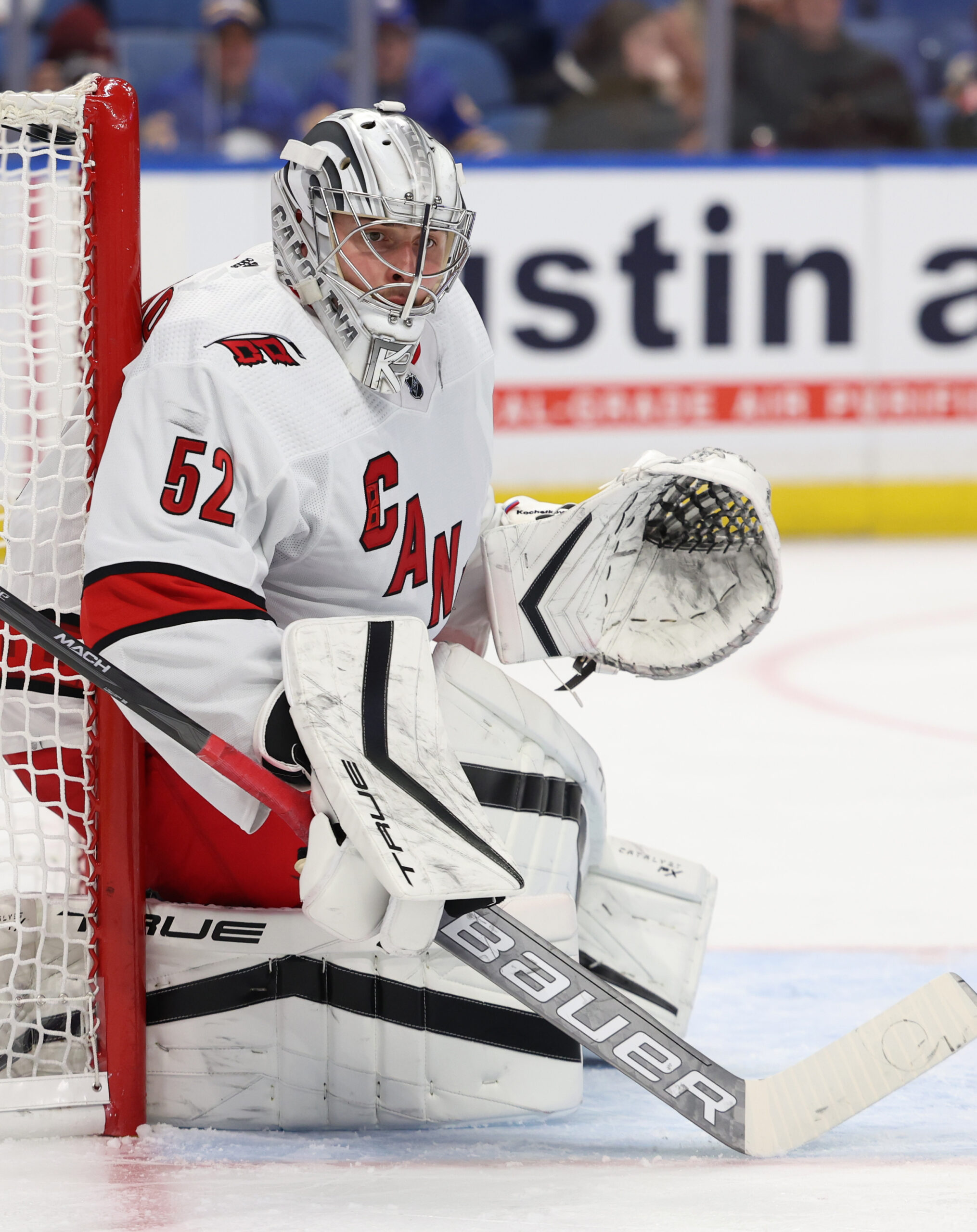 Kochetkov’s contract was one of the more interesting ones given to a goalie in recent years. At the time he signed it, he had primarily played in the minors though he showed some promising signs in limited NHL action. Even last season, the first year of that deal, saw Kochetkov spend some time in the AHL. But they’re banking on him playing at a backup level at a minimum and at this point, it looks like he’ll be able to do that at the very least. If he can land higher on the depth chart and take over as the full-fledged starter (or perhaps more likely, the strong side of a platoon), Carolina will get a terrific return on this agreement.
Signed Through 2027-28 Or Longer
F Sebastian Aho ($9.75MM through 2031-32)
F William Carrier ($2MM through 2029-30)
F Seth Jarvis ($7.42MM through 2031-32)
F Jesperi Kotkaniemi ($4.82MM through 2029-30)
D Jaccob Slavin ($5.3MM in 2024-25, $6.396MM from 2025-26 through 2032-33)
F Andrei Svechnikov ($7.75MM through 2028-29)
D Sean Walker ($3.6MM through 2028-29)
While Montreal’s offer sheet to Aho in the past was one Carolina easily matched, the one thing it did was put Aho in a position to reach UFA eligibility early which helped him land this agreement. He has averaged just over a point per game over the last six seasons combined and is a legitimate number one center. With the rising costs for impact middlemen, this deal is in line with many of those. Svechnikov bypassed the bridge contract to sign this agreement with the hopes it’d be a bargain as the deal progresses. When healthy, he performs as a top-line level but he has missed considerable time for two straight years now which means it’s not a team-friendly pact just yet but is heading in that direction.
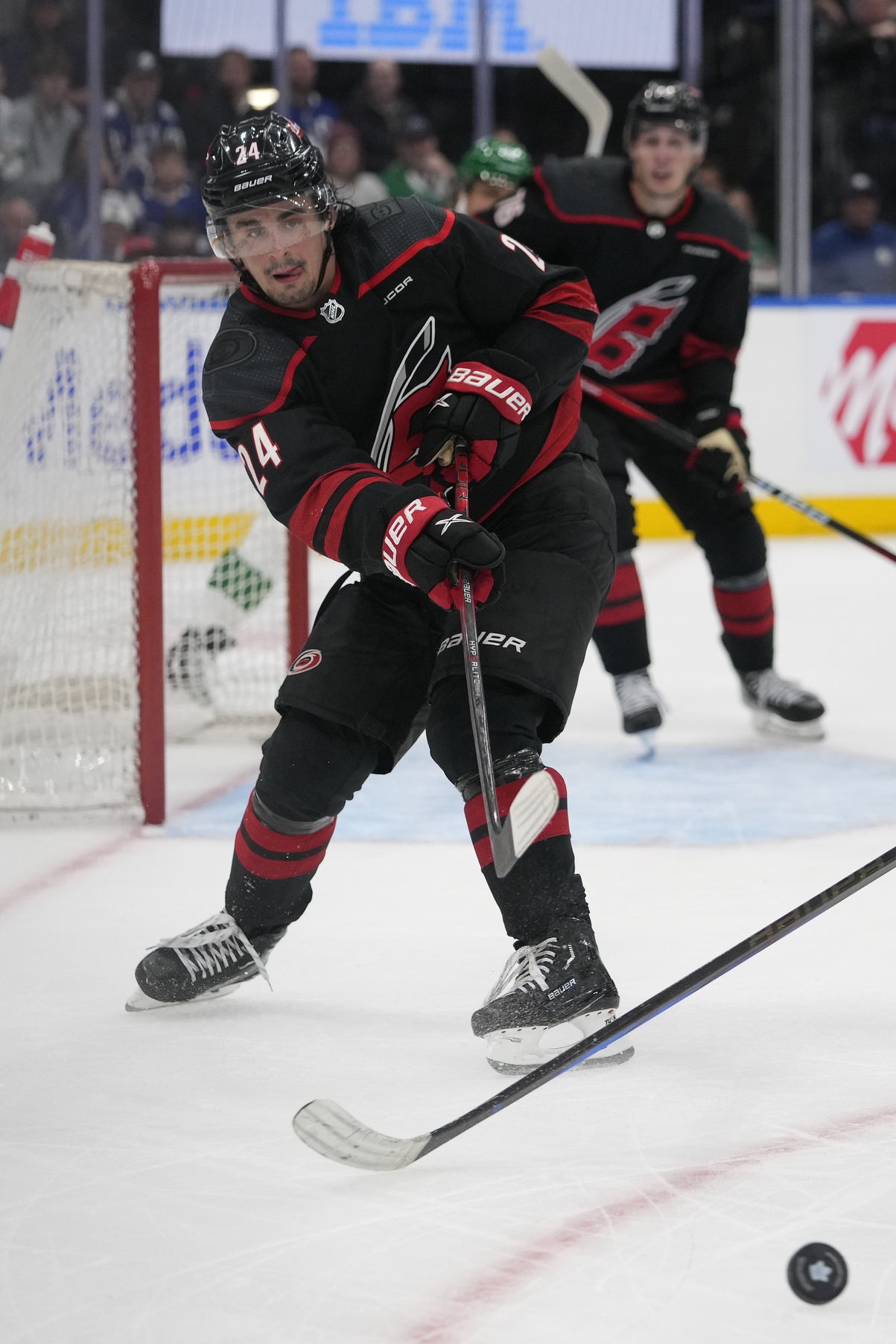 The deal with Jarvis took some time to put together this summer and for good reason. The sense is that the Hurricanes wanted to keep Svechnikov’s contract as the high point in discussions while Jarvis’ camp wanted more than that. They eventually found a happy medium as he will receive an average of $7.9MM per season (more than Svechnikov) but with $15.67MM in deferrals, the cap hit is lower than Svechnikov’s, meaning both sides got what they wanted. Jarvis only has one season above 40 points but that was 2023-24 when he had 67; clearly, both sides are banking on there being more to come. The deal might be a bit above market at the start but should be a team-friendly pact before long.
Carolina was hoping that Kotkaniemi’s deal would follow that path but it hasn’t yet. Even after accepting a pay cut following an inflated one-year offer sheet that Montreal elected not to match, the 2018 third-overall pick is now six years into his career but is still more of a bottom-six player than a top-six core element. Still just 24, that could change yet but the odds of that happening are starting to lessen. Carrier was an effective energy player for seven years in Vegas and opted for stability over trying to necessarily maximize his earnings with this contract. Six years is risky for a role player but the AAV is low enough to largely mitigate that.
Slavin has quietly been a high-end defender for several years but has largely flown under the radar. What limited him to an extent with his new contract is that he isn’t a high-end offensive threat which capped the overall upside. Still, it would be fair to say that he left money on the table with the new agreement that starts next season and not just because there is a bit of deferred money in there as well. Had he hit the open market next summer, an AAV starting with a seven and possibly an eight would have been doable.
Walker went from being a salary dump last summer to a quality top-four piece with Philadelphia and Colorado but the fact he wound up with less than $4MM a year suggests there was some skepticism that he could repeat that. That should work in Carolina’s favor as even if he holds down a number four role for most of this contract, they should get good value from it. If Walker can be as impactful as he was last season throughout the agreement, this will be a steal in a hurry.
Buyouts
None
Retained Salary Transactions
None
Still To Sign
None
Best Value: (non-entry-level) Kochetkov
Worst Value: Kotkaniemi
Looking Ahead
Money is going to be tight for Carolina this season as they’re likely to be right up against the Upper Limit. Fast being LTIR-eligible will buy them some wiggle room when injuries strike but since cap space can’t be banked when a team is using it, they’re going to be a money-in, money-out team in 2024-25.
The Hurricanes have more longer-term money on the books than a lot of teams with over $64MM in commitments in 2025-26, nearly $56MM in 2026-27, and just under $42MM in 2027-28. That said, there are enough contracts coming off the books those years to give GM Eric Tulsky some flexibility to tweak the core by re-signing or replacing those pieces but it might be a while before they’re able to make a big addition to strengthen what they already have.
Photos courtesy of USA Today Sports Images.
Poll: Who Will Win The Metropolitan Division In 2024-25?
A three-headed monster for much of the past few years, the Metropolitan Division only had two serious contenders last season. The Presidents’ Trophy-winning Rangers and second-place Hurricanes ran away with things, creating a 17-point gap between them and the third-place Islanders.
There are question marks around whether the Metro will return to its former level of competitiveness in 2024-25. What does seem relatively certain, however, are the Rangers’ chances of staying at the top of the division.
Little has changed for the Blueshirts. Their top-six forward group sees only one new name, veteran Reilly Smith, who’ll likely be part of a revolving door of wingers alongside Chris Kreider and Mika Zibanejad, like how things transpired last year. Their forward depth returns are largely intact, too, with a full season of a healthy Filip Chytil as their third-line center, hopefully giving them some more punch. The defense remained as it was, aside from the loss of Erik Gustafsson. All in all, there’s little reason to suspect significant, if any, regression from the Rags.
Last year’s runner-up, Carolina, is where things start to get interesting. The Canes lost multiple key pieces to the free-agent market, including Jake Guentzel, Teuvo Teräväinen, Brett Pesce, Brady Skjei, and Stefan Noesen. They replaced their back-end departures, signing Shayne Gostisbehere and Sean Walker, but didn’t do nearly as well to replace their departing forwards. That leaves the Hurricanes, whose offense has been their biggest weakness since returning to championship contention a few years ago, with considerable question marks, especially after news that Jesper Fast will miss the entire season after undergoing neck surgery. They’ll be counting on UFA signings like William Carrier and Jack Roslovic to play larger roles than they’re accustomed to and could trot out 2023 first-rounder Bradly Nadeau in NHL minutes in his first professional season.
The Islanders return with plenty of familiar faces after squeaking into a divisional playoff spot with 94 points – a total that would have made them the second Wild Card in the Atlantic Division and kept them out of the playoffs entirely in the Western Conference. They’ll likely need an improvement to return to the dance for a third straight year, let alone capture a divisional title. Their X factor will be Anthony Duclair, set to take on top-line duties alongside Mathew Barzal and Bo Horvat after signing a four-year deal in free agency. The four-time 20-goal scorer will be relied upon heavily to help lift the Isles’ offense out of the league’s bottom half for the first time since 2018. A rebound from Ilya Sorokin, who regressed to a rather pedestrian .908 SV% after two years of .920+ play, should help too.
The Capitals’ season will be dominated by more Alex Ovechkin headlines. After all, the captain is just 41 goals away from tying Wayne Gretzky‘s all-time record. But there’s a clear directive to remain competitive while he’s still around, as evidenced by their pickup of key names like Jakob Chychrun, Pierre-Luc Dubois, Andrew Mangiapane, and Logan Thompson on the trade market and Matt Roy in free agency. All of a sudden, the Caps have one of the more well-rounded defense corps in the conference and are in a much better position to repeat last year’s 40-win, 91-point campaign without the concerningly low -37 goal differential.
The Penguins, fresh off signing Sidney Crosby to a two-year extension, also have dreams of just sneaking back into the playoffs rather than competing for a division title. They’re hoping some added speed on the back end in the form of Sebastian Aho and Matt Grzelcyk, as well as depth forward pickups like Anthony Beauvillier and Cody Glass, can help aid a still-skilled but aging core. Whether 2022 first-round pick Rutger McGroarty is ready to make an NHL impact after being acquired from the Jets this offseason is also a big question that will receive an answer over the next few weeks.
The Flyers seem set to remain in the mushy middle. It’s not a bad thing – they’re past the dark days of their rebuild with brighter days ahead – but no one is expecting them to be a top contender this season. A strong rookie season from 2023 seventh overall selection Matvei Michkov could go a long way toward firing up expectations for the future, though, and rightfully so. Early signs indicate it’ll be a two-horse race between him and Sharks first-overall selection Macklin Celebrini for this season’s Calder Trophy. He likely won’t be enough to lift an otherwise largely untouched roster from last season that finished with 87 points back into the playoff picture, though.
After an injury-plagued season plummeted the Devils to a seventh-place finish in the Metro, there’s no team with a better potential for a rebound campaign in the league. Whether New Jersey will reach the heights of their 112-point 2022-23 campaign remains to be seen, but it’s a safe bet that they’ll be knocking on the door of a playoff spot – if not working their way into the division title conversation. Their goaltending tandem is reworked with a duo of proven veterans in Jacob Markström and Jake Allen, their defense is again among the league’s elite with a healthy Dougie Hamilton and the additions of Brenden Dillon and Pesce, and the guts of the offense that finished fourth in the league two years ago are still intact.
Then there’s the Blue Jackets, who are set for another development season with new head coach Dean Evason at the helm. They’ll be looking for 2023 third-overall pick Adam Fantilli to stay healthy after a calf laceration truncated his rookie season, and they’ll also look for 2022 top-10 pick David Jiricek to take a step forward with increased responsibilities on the back end. They’re running back one of the league’s worst starters over the past two seasons in goal in Elvis Merzļikins, though, and while there are some breakout candidates elsewhere in the lineup, a third straight last-place finish in the division seems likely.
So, we ask you, PHR readers, who will finish atop the Metropolitan Division at the end of the 2024-25 season? Vote in the poll below:
Who will win the Metropolitan Division in 2024-25?
-
New York Rangers 43% (517)
-
New Jersey Devils 19% (223)
-
Carolina Hurricanes 12% (145)
-
Pittsburgh Penguins 7% (81)
-
Philadelphia Flyers 6% (67)
-
Washington Capitals 5% (59)
-
New York Islanders 5% (56)
-
Columbus Blue Jackets 4% (43)
Total votes: 1,191
Mobile users, click here to vote!
Summer Synopsis: New Jersey Devils
The New Jersey Devils looked like a team that was poised to break through during the 2023-24 NHL season, but they struggled to maintain consistency, especially in the defensive zone. Despite their potent offense, defensive lapses and inconsistencies in the net prevented them from reaching the playoffs. The tandem of Vitek Vanecek and Akira Schmid struggled, leaving the Devils vulnerable throughout most of last season. Their talented defense also had issues and lacked the depth and structure to handle their assignments, leading to a string of costly goals in key games. This summer, New Jersey made it a priority to address those weaknesses. They filled out the depth on their blue line and found stability in the crease by bringing in a veteran goaltender to provide a stronger foundation behind the improved defense.
Draft
1-10: D Anton Silayev, Torpedo Nizhny Novgorod (KHL)
2-49: G Mikhail Yegorov, Omaha (USHL)
3-85: F Kasper Pikkarainen, TPS (Liiga)
3-91: F Herman Traff, HV71 (SHL)
5-139: F Max Graham, Kelowna (WHL)
5-146: G Veeti Louhivaara, JYP (Liiga)
6-171: F Matyas Melovsky, Baie-Comeau Drakkar (QMJHL)
With the 10th overall pick, the Devils selected 6’7″ defenseman Silayev. The Russian rearguard is known for his work in the defensive zone as well as his physical presence. As a 17-year-old, Silayev made a significant impact in the KHL playing in 63 games last season. Silayev is extremely mobile and agile for his size and will likely improve in that department making it easy to see why he has drawn comparisons to Lightning defenseman Victor Hedman.
The Devils also strengthened their goaltending depth by drafting Yegorov, the top-ranked North American goaltender, in the second round. The USHL product has terrific size but struggles with a lot of traffic in front of him. He has drawn comparisons to another Lightning player in goaltender Andrei Vasilevskiy but will need to refine aspects of his game to meet those lofty expectations. His USHL numbers leave a lot to be desired, but given his makeup, Yegorov is a very promising goalie with a ton of potential.
Pikkarainen has great size and plays with a lot of intensity. He isn’t afraid to engage his opponents physically and can close gaps in open ice. He is also a terrific passer and is clever with the puck, making strong plays in the offensive zone as well as in transition.
Traff plays the game with a ton of pace and is an excellent forechecker, he is another player who isn’t afraid to get involved in contact and will take the puck to the opponent’s net every chance that he can. He could develop into an NHLer who is very difficult to play against.
Trade Acquisitions
F Adam Beckman (Minnesota)
F Paul Cotter (Vegas)
D Johnathan Kovacevic (Montreal)
G Jacob Markstrom (Calgary)
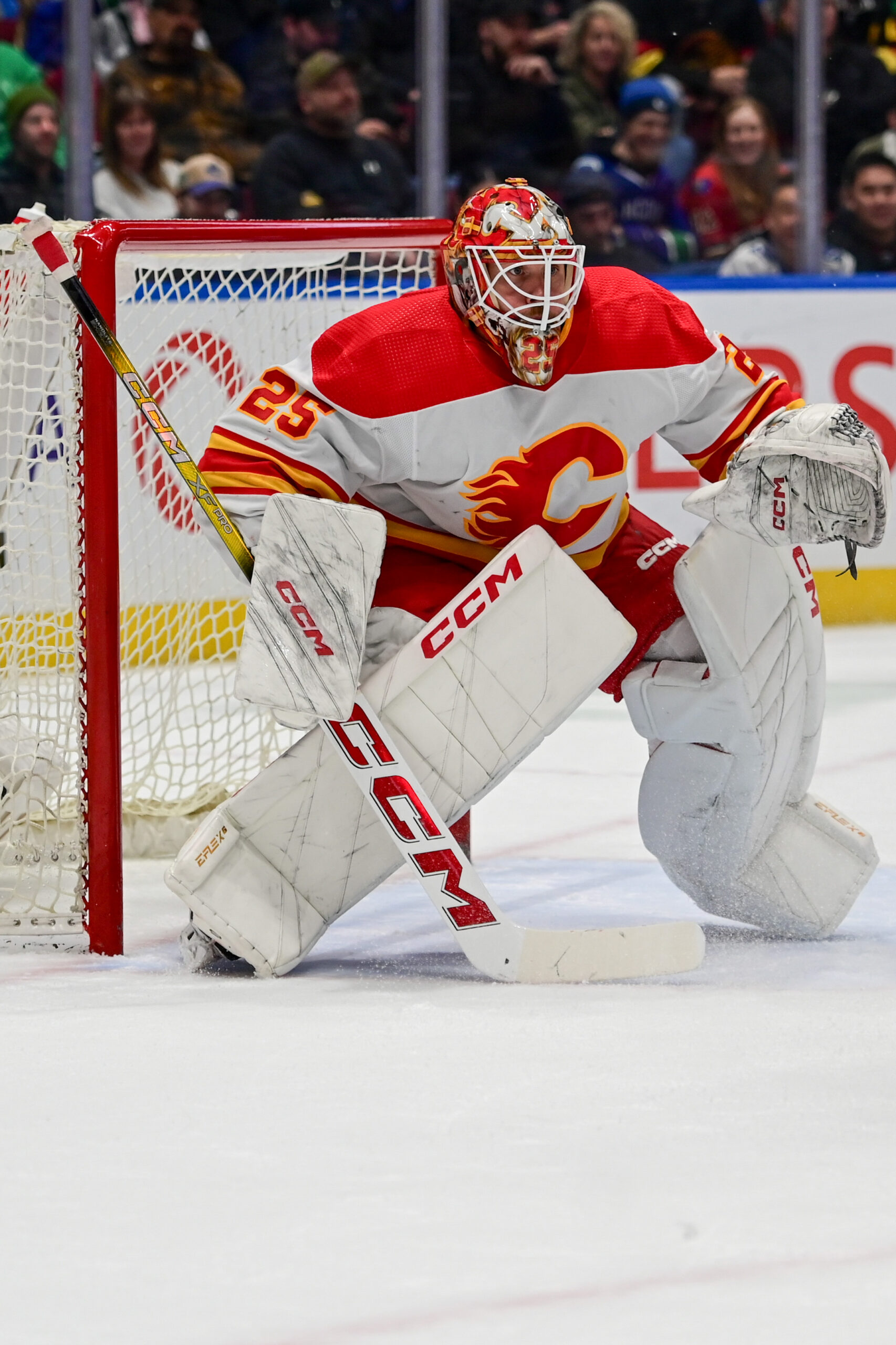
The New Jersey Devils made a significant move by trading for veteran goaltender Jacob Markstrom. His arrival should finally allow the Devils to solidify their goaltending position as they finally have a proven NHL starter who can bring stability, experience, and consistency to the Devils’ crease. Markstrom’s puck-tracking skills and solid reflexes have made him a reliable presence in Calgary during a tough time, as the veteran still managed to post several seasons with a save percentage above .900 despite the team struggles. His acquisition fills a crucial need for New Jersey, who struggled with inconsistent goaltending last season.
The Devils’ acquisition of Cotter was met with a lukewarm response from Devils fans even though Cotter does fill a need and has some upside. Cotter should bring a physical element to the Devils and could be a solid piece in the bottom half of their lineup. The issue that many Devils fans had with the move was giving up on Holtz who was drafted seventh overall just four years ago and finally played a full season in the NHL last year.
UFA Signings
D Brenden Dillon (three-year, $12MM)
F Mike Hardman (two-year, $1.55MM)*
F Stefan Noesen (three-year, $8.25MM)
D Brett Pesce (six-year, $33MM)
F Tomas Tatar (one-year, $1.8MM)
D Colton White (two-year, $1.55MM)*
* denotes a two-way contract
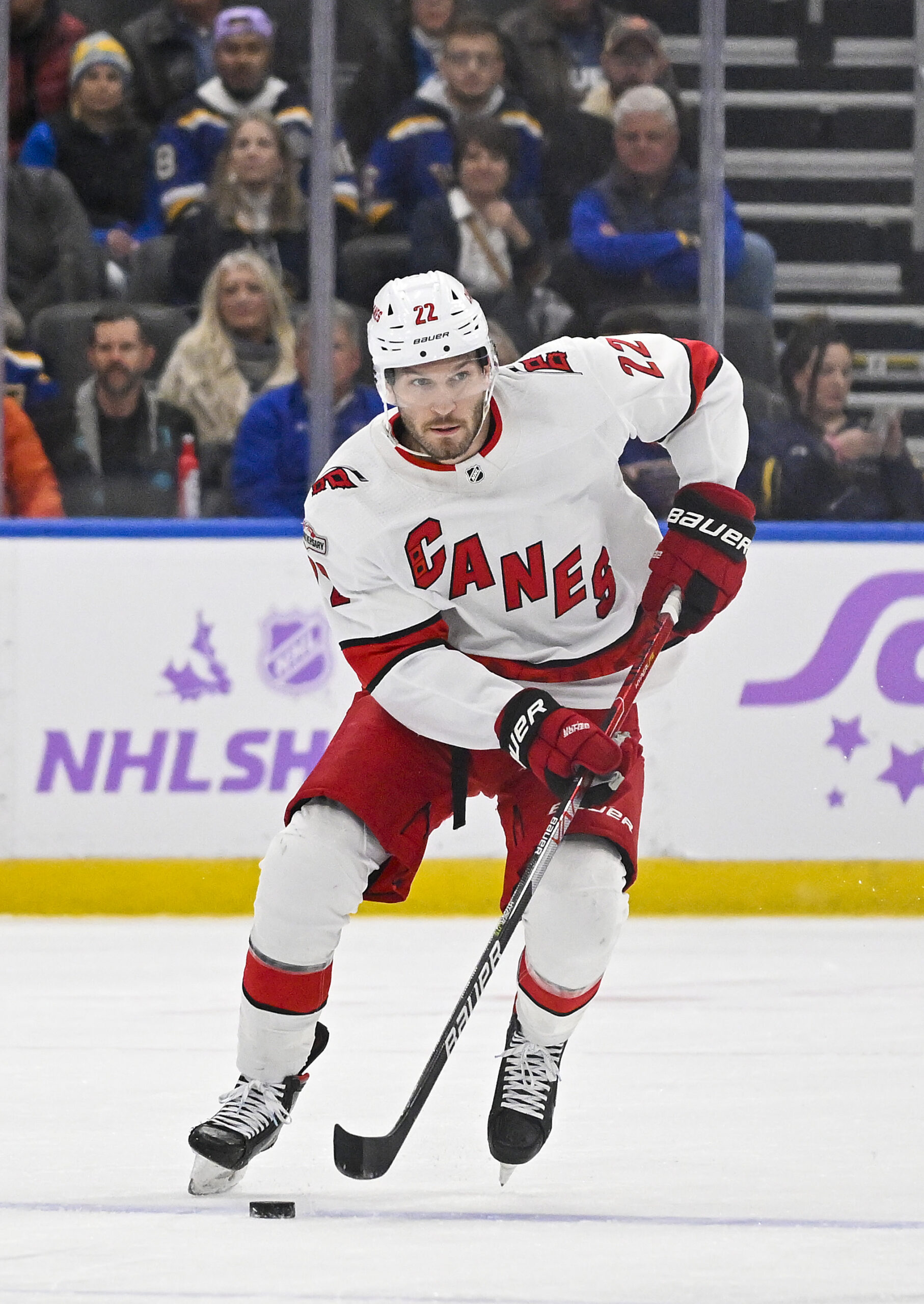
Brett Pesce signing in New Jersey was probably the worst-kept secret heading into free agency and it’s easy to see why given that the Devils had a massive need on defense and Pesce brings a wealth of experience and defensive prowess. In Carolina, Pesce developed into a consistent shutdown defenseman and was a huge part of the Hurricanes defensive core. With the Devils, Pesce will likely find himself on the second defensive pairing and should be a big part of New Jersey’s penalty kill as his shot blocking and defensive acumen will improve the team when shorthanded.
Dillon will also help the Devils defensively as well as on the penalty kill. Like Pesce, Dillon doesn’t post a ton of offense, but he does have a decent first pass and is the perfect complement to an offensive partner. He should help New Jersey tighten up their defensive game but a concern with him is that he is known to take a sizable number of penalties which creates additional strain on the penalty kill units.
Noesen is an interesting signing, as he was a first-round pick way back in 2011 but didn’t develop into an everyday NHLer until he was 29. Noesen was a solid fit in Carolina, topping 36 points in each of the last two seasons and he could be a bargain if he can continue that sort of production. However, fit is always a concern with a late bloomer, as Noesen has never flourished outside of Carolina and was a tweener for the first decade of his professional career.
RFA Re-Signings
F Shane Bowers (two-year, $1.55MM)*
G Nico Daws (two-year, $1.63MM)*
D Nick DeSimone (one-year, $775K)
F Nolan Foote (one-year, $825K)*
D Santeri Hatakka (one-year, $775K)*
F Nathan Legare (one-year, $775K)*
F Dawson Mercer (three-year, $12MM)
* denotes a two-way contract
Mercer only signed his extension a few days ago but it puts him and the team in a good position going forward. Mercer has a chance to get paid handsomely in three years if he turns into the player many believe he will become, but it also allows the Devils to see some savings if he develops sooner than later. Mercer remains a terrific skater and has good hockey sense on both sides of the game. He struggled offensively last year, but at 22 years of age, he already has two 20-goal seasons under his belt and is just a year removed from posting 56 points in 82 games.
Daws signed a two-year deal this summer after a disappointing 2023-24 season. The former third-round pick bounced between the AHL and NHL and wasn’t particularly great in either league. At 23 years old Daws still has some time to develop into an NHL goaltender but will likely see AHL time this season given the Devils depth in net and the structure of his two-way contract. Daws might be able to slide into a backup role in the second year of his deal, but given his development thus far, he should be an AHL regular this season.
Departures
D Kevin Bahl (traded to Calgary)
F Graeme Clarke (traded to Minnesota)
C Kyle Criscuolo (signed in AHL)
D Cal Foote (signed in Slovak Extraliga)
F Alexander Holtz (traded to Vegas)
G Kaapo Kahkonen (Winnipeg, one-year, $1MM)
G Erik Kallgren (signed in SHL)
G Keith Kinkaid (signed PTO with Islanders)
D John Marino (traded to Utah)
F Michael McLeod (signed in KHL)
F Tomas Nosek (Florida, one-year, $775K)
G Akira Schmid (traded to Vegas)
D Brendan Smith (Dallas, one-year, $1MM)
C Chris Tierney (unsigned free agent)
D Tyler Wotherspoon (signed in AHL)
* denotes a two-way contract
The Devils struggled with defense and goaltending last season which makes it unsurprising to see many of their departures come from those two areas. The Devils moved Schmid as part of the Cotter trade, and he will look for a fresh start in Vegas while the Devils will try and different mix of goaltenders and should have more success this season.
On the backend, New Jersey moved young defenseman Bahl to Calgary as part of the Markstrom trade and moved Marino to Utah for draft picks. Marino struggled last season after having a fantastic first season in New Jersey. He looked like he would be a big minute eater for the Devils but fell off a cliff last year. He will likely bounce back in Utah, but the Devils felt that moving out his cap hit and acquiring draft capital were the move that made sense for the franchise this summer.
Upfront the Devils moved on from Holtz after just three NHL seasons. The 22-year-old started to come into his own last season posting 16 goals and 12 assists in 82 games, but the team felt that they wanted to go in a different direction. He remains an intriguing player because of his skill set and age and could develop into a strong offensive contributor in Vegas.
Salary Cap Outlook
The Devils are just shy of a million dollars in cap space as they approach the regular season which should give them room to sign another player on a PTO if they choose to do so. Long term they don’t have any major players to sign to expensive deals and could have some cap room next summer to make further additions. The Devils core is largely locked into reasonable long-term deals which could open up the opportunity for the team to make a few solid runs at the Stanley Cup before their group becomes much more expensive.
Key Questions
Can The Powerplay Be Better? Much like their division counterparts the Pittsburgh Penguins, the Devils boast a ton of firepower to use on the man advantage, but the results just weren’t there last season. The Devils converted on 22.45% of their opportunities which is respectable, but those numbers placed them 13th in power-play conversions last season. Granted, it’s not 15% like the Penguins, but the results simply didn’t match with the names on the lineup card, and it will be interesting to see if the Devils can crawl into the top 10 this season, and also if the team can generate more opportunities than last year where they ranked 18th in power play chances.
What Will The Goaltending Look Like? The Devils have overhauled their goaltending in 2024 and will be expecting dramatically different results this season. Almost everyone knew that New Jersey needed a goaltender, so they went out and got a stud in Markstrom, and didn’t have to dramatically overpay either. The Devils will also have a full season of backup Jake Allen, who should be able to take on a huge chunk of the workload to keep Markstrom fresh throughout the season.
Is The Defence Better? The Devils committed a lot of resources to improving their backend and on paper, it certainly appears like an improvement. But while they brought in some help, the team will need internal improvement as well from the likes of Luke Hughes and Jonas Siegenthaler.
Photos courtesy of USA Today Sports Images.
Salary Cap Deep Dive: Winnipeg Jets
Navigating the salary cap is one of the most important tasks for a front office. Teams that can avoid total cap chaos by walking the tightrope of inking players to deals that match their value (or compensate for future value without breaking the bank) remain successful. Those that don’t often see struggles and front office changes.
PHR will look at every NHL team and give a thorough look at their cap situation heading into the 2024-25 season. This will focus more on players who are regulars on the roster versus those who may find themselves shuttling between the AHL and NHL. All cap figures are courtesy of PuckPedia. We wrap up our look at the Central Division with Winnipeg.
Winnipeg Jets
Current Cap Hit: $82,223,691 (under the $88MM Upper Limit)
Entry-Level Contracts
None for players projected to be full-time regulars.
Signed Through 2024-25, Non-Entry-Level
F Mason Appleton ($2.167MM, UFA)
F Morgan Barron ($1.35MM, RFA)
F Nikolaj Ehlers ($6MM, UFA)
F Axel Jonsson-Fjallby ($775K, UFA)
G Kaapo Kahkonen ($1MM, UFA)
F Rasmus Kupari ($1MM, RFA)
F Alex Iafallo ($4MM, UFA)
F Vladislav Namestnikov ($2MM, UFA)
D Neal Pionk ($5.875MM, UFA)
D Dylan Samberg ($1.4MM, RFA)
F Gabriel Vilardi ($3.4375MM, RFA)
Ehlers has been in trade speculation for a while now but nothing has happened on that front and he’ll start the season with the Jets. While he is a bit of a streaky player and has had some injury woes, he has averaged at least 0.74 points per game (a 61-point pace per 82 games) in five straight years. That type of overall consistency should earn him another long-term deal with an extra million or so on the cap hit. Iafallo was part of last summer’s Pierre-Luc Dubois trade but wasn’t able to provide the same level of scoring despite spending a lot of time in the top six. If he has another stat line like that in 2024-25, he could be looking at a small dip but if he gets back to the 40-point range, he could check in a bit higher than his current cost.
Vilardi was arguably the key piece of the Dubois trade. A 2017 first-round pick, he had shown flashes of being a top-six piece in Los Angeles but struggled to do so consistently and dealt with injuries. With Winnipeg, he was consistently productive but the injury struggles continued as he missed 35 games. Nonetheless, the 25-year-old showed that he can be a core piece for the Jets and is someone who they’ll want to have around for the long haul although the injury history will be a complicating factor. Even so, there’s a good chance his next contract will start with at least a six which will come in well past his $3.6MM qualifying offer.
Appleton stayed healthy last season after battling injuries in 2022-23, reaching a new career-high in points in the process with 36. A true middle-six winger who moves up and down the lineup, he should be able to add at least $1MM to his current price tag on a multi-year deal; it could approach $4MM if he puts up a similar point total this season. Namestnikov hasn’t had much success on the open market in recent years as he has struggled to find a long-term fit. While he’s coming off his best point total since 2017-18 with 37, he’d need another season like that to get to the $3MM mark. As things stand, another two-year deal around $2.5MM per season might be where he winds up.
Barron was limited to primarily fourth-line ice time last season and he’s likely to have a similar role this season which won’t help his cause. He’s owed a $1.4MM qualifying offer with arbitration rights so if his production dips a bit in 2024-25, he could become a non-tender candidate. Failing that, a small raise to around $1.5MM to $1.75MM could be achievable. Kupari was also brought in from Los Angeles last summer but struggled mightily with his new team. Owed a $1.1MM qualifying offer next summer, that seems on the high side unless he’s able to secure a full-time roster spot and have a bit of success this season. Jonsson-Fjallby has been up and down in recent years while holding a fringe role when he has been in the NHL. Accordingly, it’s likely that he’ll stay at or near the minimum moving forward.
Pionk’s best season was his first with Winnipeg back in 2019-20. Since then, he has still shown flashes of being an above-average blueliner but has struggled somewhat with consistency. Having said that, he can still log over 20 minutes a night without much issue, has passed 30 points in five straight years, and is a right-shot player. That’s a strong combination heading into free agency, positioning himself for likely another long-term deal with a price tag starting with a six. Samberg has been limited to third-pairing duty thus far but has fared well in that role. Still, he’ll need to take on a bigger role if he wants any sort of significant raise from the $1.5MM offer he’ll be owed in the summer with arbitration rights.
Kahkonen struggled last season with San Jose but did well in a small sample size with New Jersey to finish the year. Still, the lasting memory of his time with the Sharks didn’t help his cause in free agency, resulting in this one-year deal at a sizable pay cut. Given Winnipeg’s recent track records with backups, this could be a good landing spot for him but he’ll need to come closer to maintaining his numbers with the Devils to get back to the $2.75MM of his last contract.
Signed Through 2025-26
G Eric Comrie ($825K, UFA)
F Kyle Connor ($7.143MM, UFA)
F David Gustafsson ($835K, RFA)
D Ville Heinola ($800K, RFA)
F Adam Lowry ($3.25MM, UFA)
D Colin Miller ($1.5MM, UFA)
D Logan Stanley ($1.25MM, UFA)
Connor will be the next big-ticket contract that the Jets have to contend with relatively quickly. The 27-year-old has emerged as a legitimate top-line threat, averaging more than a point per game over the past five seasons combined while passing the 30-goal mark in four of those. If that continues over the next two years, he will make a strong case to become Winnipeg’s highest-paid player with a price tag in the $9MM range.
Lowry doesn’t put up the offensive numbers to necessarily be worth this money but as a strong defensive player as well, he’s well worth the contract. Best suited as a third-line pivot, we’ve seen some of those players push past $4MM lately and it stands to reason that he’ll be able to do so as well. As for Gustafsson, he’s still working on securing himself a full-time role in the lineup. He’ll need to do that to have a chance at pushing past the $1MM threshold on his next agreement.
Miller didn’t play much with Winnipeg after they acquired him at the trade deadline but it didn’t stop them from re-signing him. It’s the second straight contract in which he has accepted a pay cut, a reflection of his diminishing role. At $1.5MM, they don’t need him to do much but they’ll be hoping he can at least get back to the 15-20-point range.
Stanley and Heinola have seemingly been on shaky ground for a while now but they’re still in Winnipeg. Stanley has been a frequent healthy scratch, especially the last two years which led to a trade request that went unfulfilled. The two years is a small showing of faith but if he’s still in this role at the end of this contract, it’d be shocking to see him re-signed. Heinola made the team in training camp last year but was injured in the final preseason game and once he was cleared to return, he stayed in the minors the rest of the way. Playing time was hard to come by when he was healthy and he’s likely on the fringes again although he’s now waiver-eligible. Still, this is a low-risk move that buys more time to evaluate and if Heinola can produce like he did in the minors (and stay healthy which is already an issue again), this could be a team-friendly pact quite quickly.
Comrie is back for his third stint with the team. The second one saw him put up his best performance before going to Buffalo in free agency where he struggled. It’s possible that he pushes for the backup spot but considering that he cleared waivers last season, they may view him as a third-string option. Until Comrie can re-establish himself as a regular backup, this is more the price range he’s likely to stay in.
Signed Through 2026-27
F Nino Niederreiter ($4MM, UFA)
Niederreiter has settled in as a player who should hover around 20 goals and 35-40 points per season. At this price point, that’s neither a bargain nor a bad value deal as reliable secondary scoring can be hard to come by. He’ll be 35 when this contract is up, however, which means he might be going year-to-year from there.
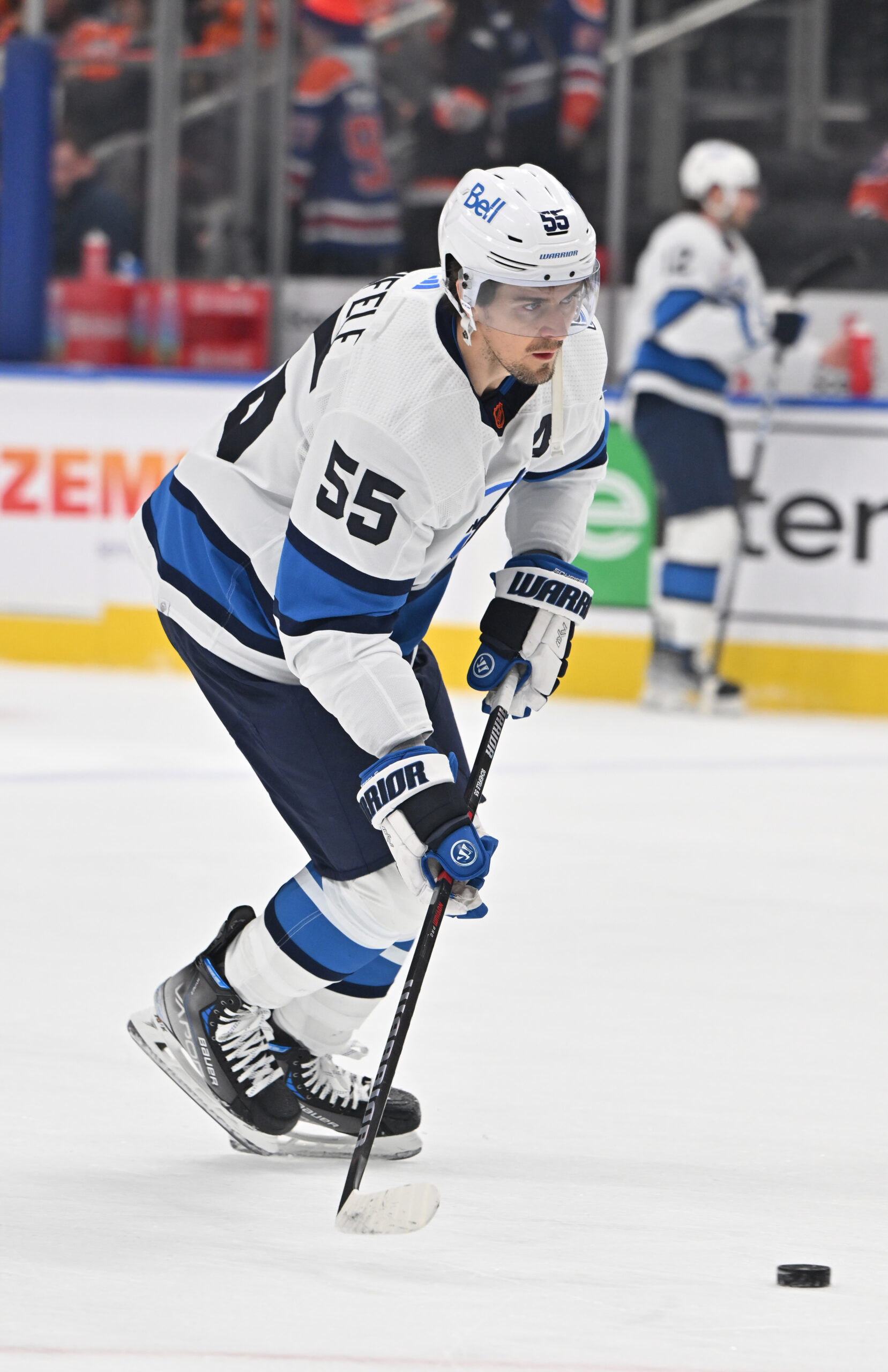
Poll: Who Will Win The Atlantic Division In 2024-25?
The NHL’s Atlantic Division had been a clear-cut case of the have-and-have-nots for the past few seasons. That’s begun to change, though, with the Sabres finishing one point out of a playoff spot in 2022-23 and the Red Wings losing out on a playoff spot thanks to a tiebreaker in 2023-24.
The basement is rising, and the ceiling is falling. The Panthers, Maple Leafs, Bruins and Lightning have all made the playoffs for multiple years in a row, but at least one of those streaks could end with most of the division’s other half expecting to challenge to end their postseason droughts.
In most eyes, the safest spot belongs to that of the defending Stanley Cup champion. Only two teams in the salary cap era, the 2006-07 Hurricanes and the 2014-15 Kings, missed the playoffs after winning it all the previous season.
There’s little reason to suggest the Panthers will join that list. They have lost key names on the back end in Brandon Montour and Oliver Ekman-Larsson and haven’t landed surefire replacements. But Adam Boqvist and Nate Schmidt are now in the mix and will work with returnees Dmitry Kulikov and Niko Mikkola to help replace the losses by committee.
But up front and in goal, they’re still one of the league’s scariest teams. Little has changed from the top end of Florida’s championship-caliber forward core aside from the departure of trade deadline pickup Vladimir Tarasenko. Sergei Bobrovsky is back between the pipes with a high-ceiling option at backup in 2019 first-rounder Spencer Knight.
The Maple Leafs didn’t embark on a full retool after yet another first-round heartbreaker. But they’re arguably in a much better position to contend for the division title – and a Stanley Cup – after a free-agency shopping spree landed them Ekman-Larsson, Chris Tanev, and Jani Hakanpää on the back end. Their forward corps largely remains intact, although they will be counting on some depth names to step up and replace the loss of top-six winger Tyler Bertuzzi. Their goaltending is improved as well with Anthony Stolarz, the league’s best backup with the Panthers last year, in to replace the hot-and-cold Ilya Samsonov.
Over the past couple of seasons, the Bruins’ fate has hinged on the back of spectacular goaltending by Jeremy Swayman and Linus Ullmark. The latter is out the door to a division rival, and the former remains unsigned amid a contract stalemate that doesn’t appear to be ending soon. That could cause serious issues early on for Boston, which did well in replacing its departing UFAs with new faces but still has concerns about depth scoring. Their No. 1 option between the pipes for now is Joonas Korpisalo, who posted a .890 SV% in 55 games for the Sens last year and is a historically below-average netminder over his 276-game NHL career.
The Lightning may have lost Steven Stamkos but replaced him with the younger Jake Guentzel, who’s produced at the same level as the former captain over the past two seasons. Outside of Guentzel, Nikita Kucherov, and Brandon Hagel, their wing depth is concerningly thin. But they still have a solid one-two-three punch down the middle, have an all-world netminder in Andrei Vasilevskiy, and did well to rebalance their defense this summer by reacquiring Ryan McDonagh from the Predators.
After the Ullmark acquisition, the Senators may be the Atlantic rebuilder best positioned to reclaim a playoff spot in 2025. They addressed their biggest weakness, added some solid top-nine scoring depth in Michael Amadio and David Perron, and improved their depth at right defense by recouping solid stay-at-home presence Nick Jensen while parting ways with Jakob Chychrun.
The Red Wings will undoubtedly be in the conversation, too, after finishing tantalizingly close to a playoff spot in 2024. But they did little to address a porous defense that made them one of the league’s worst possession teams last season and paid to unload arguably their best shutdown defender, Jake Walman, on the Sharks. Their scoring depth is in good shape after signing Tarasenko, and their goaltending has some decent veteran tandem options, but whether a defense that took a step back on paper can be salvaged by top-10 picks Moritz Seider and Simon Edvinsson remains to be seen.
The Sabres are also chomping at the bit to return to playoff action for the first time in 13 years. Injuries decimated them last season, and they’re hoping an overhauled bottom-six forward group now oozing with two-way responsibility can give them the roster makeup they need. Familiar face Lindy Ruff is back behind the bench, too.
The Canadiens, while seemingly on track in their rebuild, are likely to be the only non-factor in the Atlantic in a welcome change of pace. Their next wave is still a year or two out, although a potential full season of 20-year-old Lane Hutson on the blue line will be a story to watch. Some added scoring after picking up Patrik Laine in a trade with Columbus should boost their record, too, but not much above their 76-point finish last season.
So, we ask you, PHR readers, who do you think will have locked down the No. 1 spot in the Atlantic at the end of the regular season? Let us know by voting in the poll below:
Who will win the Atlantic Division in 2024-25?
-
Florida Panthers 31% (448)
-
Toronto Maple Leafs 24% (350)
-
Boston Bruins 19% (273)
-
Tampa Bay Lightning 7% (108)
-
Detroit Red Wings 7% (99)
-
Montreal Canadiens 6% (89)
-
Buffalo Sabres 4% (58)
-
Ottawa Senators 2% (32)
Total votes: 1,457
Mobile users, click here to vote!