
PHR Mailbag: Bounce-Back Seasons, McDavid, Breakout Player, Flames, Bedard, Demidov, No-Move Clauses
Topics in this edition of the PHR Mailbag include what type of point production could be expected from Connor Bedard this season, which teams could be interested in Calgary’s veterans, and much more. If your question doesn’t appear here, check back in last weekend’s mailbag.
frozenaquatic: This is a question about expectations, both low and high: Who has a bigger bounce-back season, Matthew Beniers or Trevor Zegras? How do Leo Carlsson and Adam Fantilli stack up in their sophomore campaigns? And what do we really expect out of Pierre-Luc Dubois for the Caps in terms of production (what’s your prediction for goals and points)?
DigbyGuy: I would add Dylan Cozens to the bounce-back season question.
1) Between Beniers, Zegras, and Cozens, I’d go with Cozens. The Ducks had a dreadful showing offensively last year and didn’t add anyone of consequence to help their roster. Yes, there will be some improvement from their young core – including Zegras – but a bounce-back year for him might be staying healthy and getting to 55 points. I think Beniers can beat his rookie-season numbers although I’m not expecting a huge jump past that. I’d put him in the 60-65-point range. Cozens has already gotten there before and I expect the Sabres to be more consistent offensively so I’d slot him a few points ahead of Beniers.
2) I’m concerned about the offensive situation in Columbus. More specifically, the lack thereof. The Blue Jackets have a very weak attack as things stand and even if Fantilli plays a big role, a big point total is unlikely. I could see him around 50-55 points. Anaheim’s situation, as I noted above, isn’t particularly good either but I’d put theirs ahead. Add to that Carlsson likely playing on the front line (Fantilli probably starts behind Sean Monahan, their big offseason signing) and I think Carlsson lands around 60-65 points.
3) I think Dubois will primarily line up on the second line which is going to put his playing time pretty close (maybe slightly better) than it was with the Kings last season. He’s also now on a team that doesn’t have quite as much offensive depth. That should give Dubois enough runway to be more productive than he was a year ago but I wouldn’t put him at the level he was at with Winnipeg. I think he’ll wind up somewhere around 22 goals and 53 points.
drew ford: There’s social media banter about Connor McDavid playing out his Oiler contract and signing back home in Toronto. Do you think this is a possibility?
Two years out from McDavid’s free agency, anything is technically a possibility at this point. If things go entirely off the rails this season, he could very well decide that he wants to see what it’s like to play somewhere else and yes, his hometown team could theoretically be one of those options. But the odds of that happening have to be quite low.
For starters, Edmonton is widely expected to be a contender this season and just inked Leon Draisaitl to a record-setting contract, declining to match two offer sheets to ensure enough money was available to do so. This is a team that is squarely focused on winning now. When you’re in an environment like that and having the type of success he has had, why leave? If they were embarking on a rebuild, that’s one thing but there’s no indication they’ll be in that situation for the foreseeable future.
The other challenge the Maple Leafs would have is affording him. Yes, Mitch Marner and John Tavares are on expiring contracts and if they were only replaced (or retained) on one-year deals, they could keep enough flexibility to be able to afford McDavid should he actually hit the open market in 2026. I don’t see that happening so I’m skeptical they’d be able to afford the $16MM or more it’s probably going to take to sign him. But again, it’s highly unlikely he makes it that far anyway. Never say never to a hypothetical free agent situation two years out but let’s just say this is something I don’t expect to happen.
Nha Trang: Time for my annual question: who’s the guy who comes out of nowhere to be a major impact player this season?
Evidently, I’m getting worse at this each season. The first time this question came up, I had Tage Thompson in his breakout year. Then I went with Taylor Raddysh for 2022-23 and while he managed 20 goals, that wasn’t the same level of a breakout. Morgan Geekie was my pick last season and although he had a career year with 39 points in 76 games, that’s not a true breakout. (I did get a reasonable return on one of my two longshot picks though with Michael Carcone getting a 21-goal campaign after just having six career NHL tallies heading into the year.)
For 2022-23, I put in a self-imposed criterion that a player couldn’t be in the top 300 in scoring. Otherwise, that player wouldn’t exactly be coming out of nowhere. I’ll continue to stick with that despite it making this question a bit more challenging.
My initial thought to this question is Montreal’s Kirby Dach. He’s coming off yet another injury-riddled campaign but he showed some positive signs when healthy in his first season with the Canadiens. He also now has an intriguing winger in Patrik Laine. If the two of them can stay healthy (and that’s a big if on both fronts), it’s not out of the realm of possibility that Dach could push for 60 points which would be a new personal best by a pretty big margin. That’s not quite a Thompson-like leap but it would certainly flip the script on him being an underwhelming top-three pick to an impact player.
Jaysen: I’m not an expert by any means but I can sense that the Flames are about to enter a full-scale rebuild, even though they might not say it. Kadri has been rumored to be available. But that Huberdeau contract is nearly impossible to move. I’d keep Weegar, for now.
What are your top three destinations for both Kadri and Huberdeau, and what would be the best trade return for both players that could benefit the Flames? And for Huberdeau, let’s propose a return where the Flames retain and one where they don’t.
DigbyGuy: I would add Rasmus Andersson to this as well.
I’m going to cover Jonathan Huberdeau first as the answer here is pretty quick. With him making $10.5MM through 2030-31 and coming off two seasons with a point total in the 50s, there isn’t one viable trade option for him let alone three. That contract might be the worst in the league. Could there be a fit with maximum retention? Possibly but the return wouldn’t be anywhere near enough to justify the $36.75MM in actual money they’d have to pay Huberdeau not to play for them; ownership probably isn’t signing off on that type of move either. Maybe there would be an option three or four years from now when the term isn’t as bad but right now, that’s not a movable contract.
Nazem Kadri, on the other hand, has a viable trade market should GM Craig Conroy choose to pursue it. At $7MM for four years, it’s a bit pricey for a second liner but there’s always high demand for a center. Winnipeg comes to mind as a good fit as they’ve been looking for a consistent second center behind Mark Scheifele for a while. Minnesota would be another fit although they’d need to wait until next season to do it (or Calgary would really have to pay down the cost) to make it work within their current cap situation. But they’re another team that hasn’t had a consistent number two option for a while.
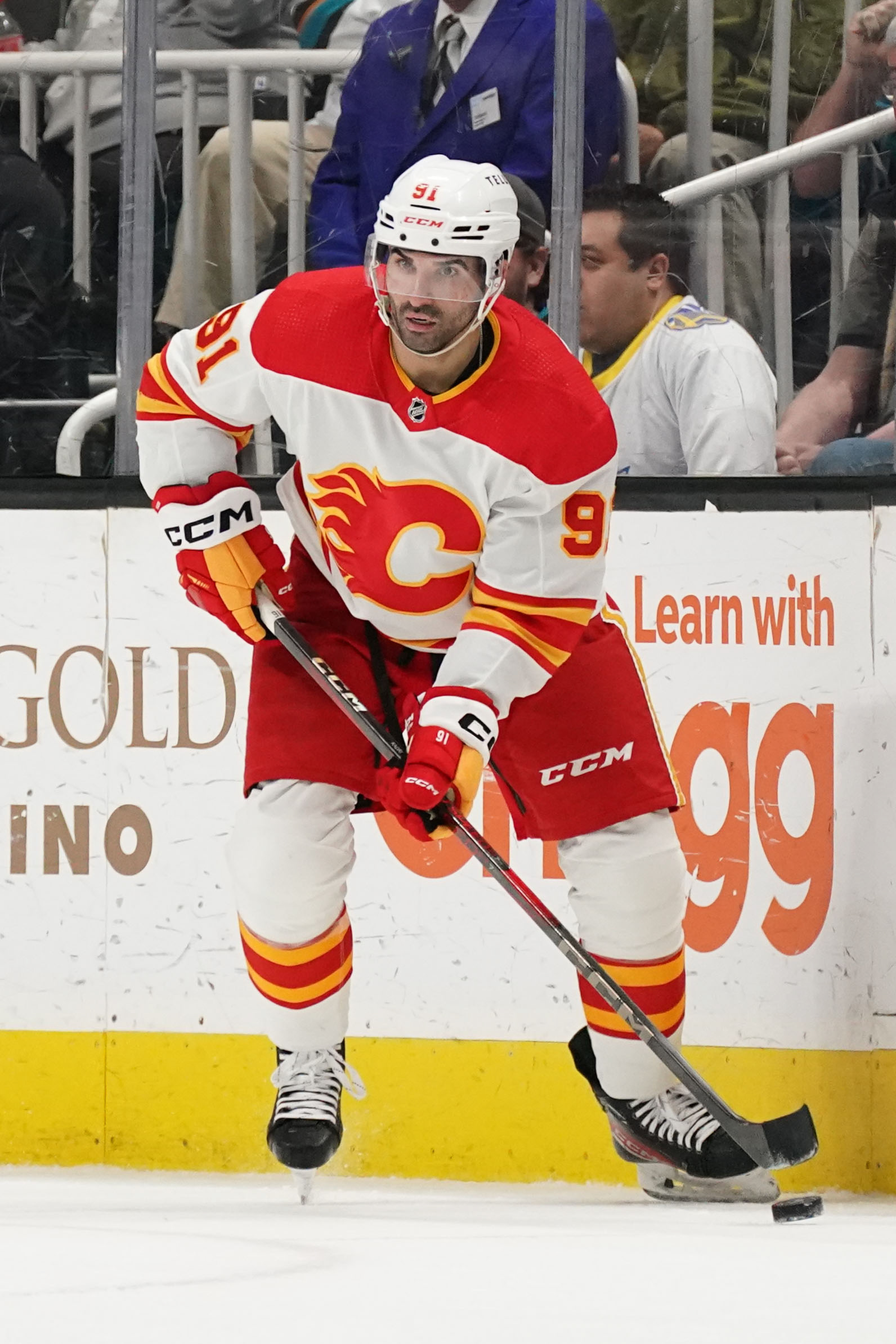 For a third team, I’d put Chicago which might seem strange at first glance given the prospect depth they have down the middle. But those prospects might be a couple more years away and at that point, Kadri becomes a high-end third option, one they can afford since they’ll have so many players and prospects on likely below-market contracts. But as they look to get through their rebuild, they will need some capable veterans.
As for a hypothetical trade scenario, there are way too many elements to consider here. Can they retain? If so, how much? Can they take money back? If so, how much? How full-scale of a rebuild are they going for? That determines the preferred type of assets to acquire (draft picks, junior-aged prospects, or pieces close to contributing now.) Each answer to each question would modify the trade proposal and that’s too many variables to get through in a piece like this for three separate teams. The short answer is that if it’s a full-scale rebuild (and I’m not convinced it is), get the best combination of assets possible regardless of whether they’re near-ready pieces or ones that are five or six years away. You can always find short-term stopgaps (bridge players as I call them sometimes) to fill out a roster or hold a spot to allow a prospect to develop properly so Conroy shouldn’t restrict himself to looking for specific types of assets.
Onto Andersson now. If Calgary decides to move him, I imagine Conroy would get a call from about 15 general managers in about 15 minutes. The contract is more than manageable ($4.55MM for a top-pairing player for only two years) and he’s a right-shot player to boot, the side that’s always in high demand. The best way to answer this is as follows. If you’re wondering about teams who might be interested, look at the standings on March 1st. Pretty much any team within five points of a playoff spot at that time would be calling unless they’re a team already well-stocked on the back end. Dallas and Nashville come to mind in particular; no, I wasn’t cherry-picking Central Division teams as landing spots on purpose, it just worked out that way.
bottlesup: With Bedard getting a year of experience under his belt and much more veteran support around him, is it possible to think he can hit a point per game this year?
Yeah, I’d say that’s a more than reasonable goal to try to achieve. He wasn’t that far off the mark last season with 61 points in 68 games. With the return of Taylor Hall (who missed all of last season) and the additions of Tyler Bertuzzi and Teuvo Teravainen, he’s going to have wingers who are much better fits to play on the top line and should be better at finishing some of Bedard’s passes. If he stays healthy, 90 points is where I’d peg Bedard’s point total at for the upcoming season.
Summer Synopsis: Nashville Predators
The Nashville Predators were one of, if not the busiest team in the NHL this summer. Most pundits believe that the Predators won the summer, which means precious little if the team doesn’t gel and deliver on the ice. It’s hard to argue with the assessment that Nashville won out the summer as the team added multiple Stanley Cup champions and locked up their franchise goaltender. However, with all the big-money deals, the Predators have assumed a great deal of risk, and it isn’t unheard of for teams to load up in the summer, only to have it not work out on the ice.
Draft
1-22: C Yegor Surin, Loko Yaroslavl (MHL)
2-55: F Teddy Stiga, USA U18 (NTDP)
3-77: D Viggo Gustafsson, HV71 J20 (J20 Nationell)
3-87: F Miguel Marques, Lethbridge (WHL)
3-94: F Hiroki Gojsic, Kelowna (WHL)
4-99: G Jakub Milota, Cape Breton (QMJHL)
4-127: F Viktor Nörringer, Frölunda HC (SHL)
7-213: F Erik Påhlsson, Dubuque (USHL)
The Predators’ first-round selection Surin played most of last season in the MHL posting 22 goals and 30 assists in 42 games. He was also heavily penalized with 108 PIM during that time. He is a solid puck handler and is quick and agile, however, many scouts viewed him as a later first-round pick so Nashville might have reached when selecting him 22 overall.
In the second round, Nashville selected Stiga who was actually projected to go higher in the draft. He is slated to go to Boston College next year and has been described by scouts as being cerebral, as his playmaking and offensive instincts are highly acclaimed.
In the third round, Nashville selected defensive defenseman Gustafsson who doesn’t put up much offense but has a good reach and is a stabilizing presence in the defensive zone. Some scouts felt that Gustafsson was a reach in the third round due to his limited offensive abilities.
Many scouts view Marques as a steal in the third round as he is considered a well-rounded offensive player with a high skill level and very good offensive instincts. Last season, he posted 28 goals and 46 assists in 67 WHL games and should see a bump in those numbers this upcoming season.
Trade Acquisitions
G Magnus Chrona (San Jose)
C David Edstrom (San Jose)
F Jordan Frasca (Pittsburgh)
D Andrew Gibson (Detroit)
F Ozzy Wiesblatt (San Jose)
Edstrom was acquired in the Askarov trade with the San Jose Sharks and has been traded twice since being drafted by Vegas in the first round back in 2023. The 19-year-old spent last season in Sweden posting seven goals and 12 assists in 44 games with Frölunda HC of the Swedish Hockey League. While those numbers look pedestrian, the young center tied for first among skaters under the age of 20 in assists and tied for fourth in points amongst players his age or younger.
23-year-old Chrona played up and down the Sharks organization last season seeing action in the ECHL, AHL, and NHL. Most of his playing time was in the AHL where his numbers weren’t pretty. Chrona posted a 3.49 goals-against average with an .894 save percentage and a 6-17-6 record. While his numbers weren’t great in the AHL, it was his first season as a pro, and he has great size at 6’4” and 209 pounds.
Gibson is probably the most intriguing of all of Nashville’s trade acquisitions this summer. The 19-year-old is a big, mobile defenseman who can take care of his own end and get around the ice with relative ease. He likely will project as a bottom-pairing defenseman, however, if he can develop better offensive instincts and puck skills, he could slide into a top-four role in the future.
UFA Signings
F Kieffer Bellows (one-year, $775K)*
D Nick Blankenburg (two-year, $1.55MM)*
F Vinnie Hinostroza (two-year, $1.55MM)*
C Jake Lucchini (two-year, $1.55MM)*
F Jonathan Marchessault (five-year, $27.5MM)
G Matthew Murray (one-year, $775K)*
D Brady Skjei (seven-year, $49MM)
C Steven Stamkos (four-year, $32MM)
D Spencer Stastney (two-year, $1.65MM)*
G Scott Wedgewood (two-year, $3MM)
* denotes a two-way contract
There were no bigger winners than Nashville in this year’s free agency window. Brand new general manager Barry Trotz put the team on an entirely new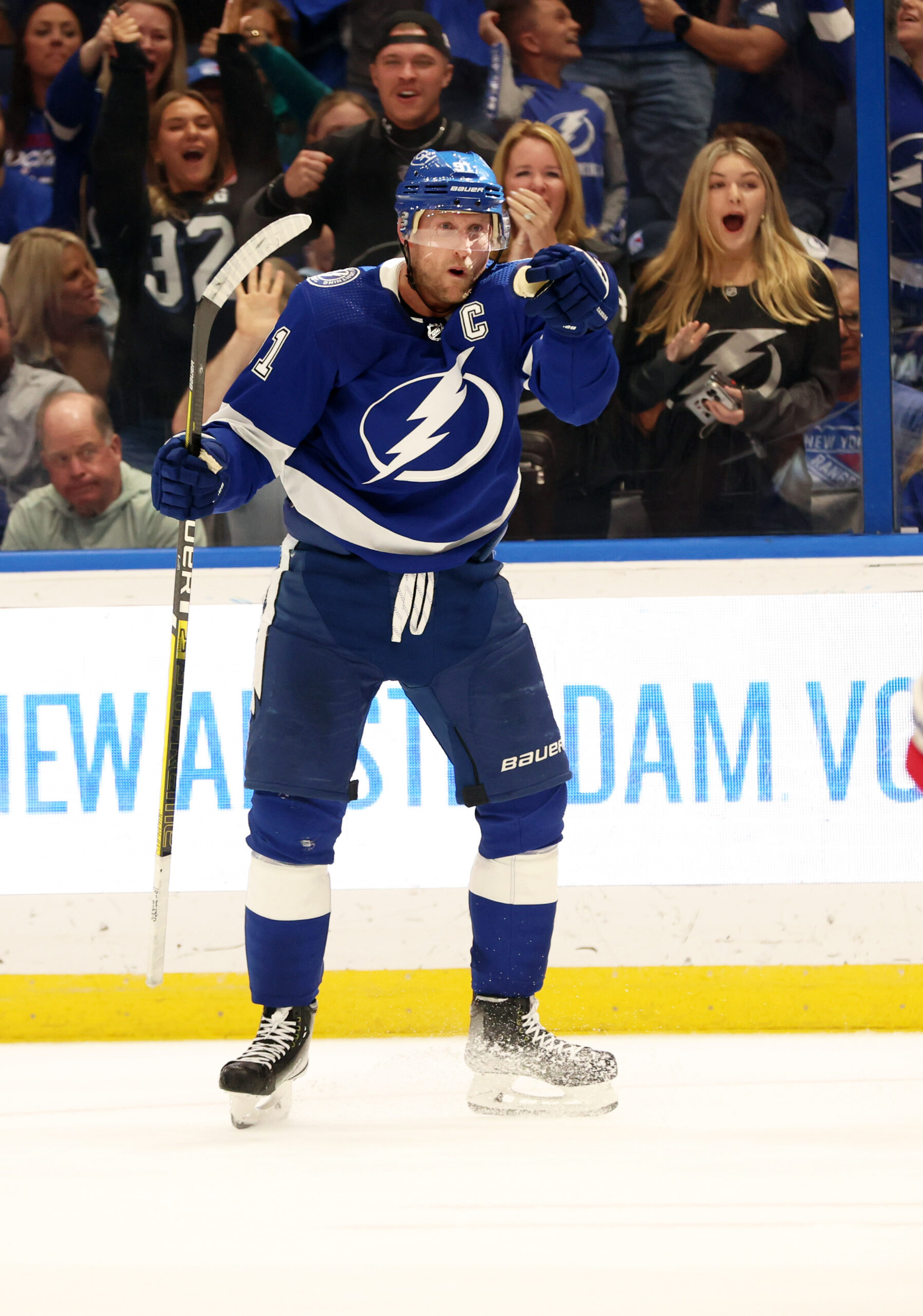 course with the signing of future Hall Of Famer Steven Stamkos, bolstered by the additions of solid #2’s Brady Skjei and Jonathan Marchessault. Nashville will host the first change of scenery of Stamkos’ evergreen career. He continues to score at a top rate, recording the seventh 40-goal season of his career last season and breaking the 100-point mark as recent as two seasons ago. His supporting cast in Nashville’s top-six are all coming off defining years of their own, with both Marchessault (42) and Filip Forsberg (48) recording career-high goals, and Ryan O’Reilly once again reaching 69 points for the first time since the 2018-19 season.
That may be one of the few top-sixes better than what Stamkos was working with in Tampa Bay, and Nashville continues the excitement into the bottom-six. Every single role, save for Tomas Novak’s spot as third-line center, seems up for grabs – which could make for good training camp competition between veterans like Hinostroza and Cole Smith, and promising youngsters like Luke Evangelista and Juuso Parssinen.
Meanwhile Skjei should bring relief to Roman Josi, finally bringing another elite talent to a Predators blue-line in need. The pair will work with fellow UFA signee Stastney to man the left-side, while Dante Fabbro, Alexandre Carrier, and Luke Schenn will fight out for ice time on the right-side. They’ll look to protect franchise goaltender Juuse Saros and one of Murray or Wedgewood at backup.
RFA Re-Signings
D Marc Del Gaizo (one-year, $775K)*
C Juuso Parssinen (one-year, $775K)
* denotes a two-way contract
Nashville wasn’t as exciting in handling their RFAs, so far only inking Del Gaizo and Parssinen to league-minimum contracts. Both players will join the long list of depth players fighting for a roster spot out of training camp, though their chances of earning ice time vary. Del Gaizo earned the first nine NHL games of his career last season, after posting routine scoring and strong defense in the minor leagues. He recorded three assists with the Predators, though ultimately closed the year in the minors once Nashville’s blue-line got healthy. Parssinen has carved out a much more consistent role, splitting his time nearly perfectly between the NHL and AHL lineups over the last two seasons. He’s managed a commendable 14 goals and 37 points in 89 career games with the Predators, and could be a favorite to sneak his way into a minor role to start the year.
Parssinen’s chances could hinge on when Nashville’s only remaining RFA, Philip Tomasino, decides to sign. Tomasino’s role in the lineup has been debated since he made his debut in 2021, and while his 70 points in 148 career games isn’t anything to scoff at, it also fails to vindicate his first-round selection in 2019. Next season will need to come with an improved role for Tomasino, though whether it will be a chance to become an everday lineup piece, or a final chance before the team moves on, could be dictated by his next contract.
Departures
F Wade Allison (signed in Europe)
F Jaret Anderson-Dolan (Winnipeg, two-year, $1.55MM)*
G Yaroslav Askarov (traded to San Jose)
D Tyson Barrie (Edmonton, PTO)
F Anthony Beauvillier (Pittsburgh, one-year, $1.25MM)
F Nolan Burke (traded to San Jose)
C Liam Foudy (New York Islanders, one-year, $775K)*
F Cody Glass (traded to Pittsburgh)
G Troy Grosenick (Minnesota, one-year, $775K)*
D Jordan Gross (signed in KHL)
G Kevin Lankinen (unsigned free agent)
D Ryan McDonagh (traded to Tampa Bay)
D Roland McKeown (signed AHL contract)
F Kiefer Sherwood (Vancouver, two-year, $3MM)
F Jason Zucker (Buffalo, one-year, $5MM)
* denotes a two-way contract
Nashville managed a franchise-defining summer surprisingly unscathed. Their biggest loss only came recently, when premier goaltending prospect Yaroslav Askarov requested a move to a bigger role. He’s now landed in San Jose, while Matthew Murray will take on his role as third-string. The trio of Beauvillier, Barrie, and Glass each stand as more impactful lineup changes, though none of the three were able to win out much of a role last season. In fact, Sherwood may stand as a more notable loss than any of the three – after potting a career-high 27 points last season, most of anyone on this list.
The list of departees will certainly change things up at the bottom of the NHL, and top of the AHL, lineup. But the turnover offers more opportunity than hesitation, and could end up a great proving ground for Nashville’s quickly-improving prospect pool.
Salary Cap Outlook
Nashville is entering training camp with a projected $1.496MM in cap space, per PuckPedia. That should be just enough to sign Tomasino to a reasonable, short-term deal – though it may take some strategic cap logistics for Nashville to carry enough of a buffer into the new year. Nashville might need to get used to cap gymnastics, though, with four years of paying $20.5MM for their trio of Stamkos, Marchessult, and Skjei ahead.
Key Questions
How High Can Nashville Go? The impact of Nashville’s off-season additions can’t be understated. The Predators ranked 10th in the league in goals-per-game last season, and have now added one of the main faces in the fifth-ranked Lightning. It seems the wind is behind each of Stamkos, Forsberg, Marchessault, and O’Reilly – seemingly setting Nashville up with one of the best forward groups across the NHL. But questions swarm the bunch – with even simple things like Stamkos’ role on the wing versus center standing relatively unclear. The Predators will also have to balance between keeping effective linemates together – such as O’Reilly and Gustav Nyquist – while injecting enough change to take the next step. That could be a lot to handle for fresh-faced head coach Andrew Brunette, though the reward for putting the pieces together correctly could be staggering.
Which Prospects Will Get A Chance? Nashville has quickly reeled in a heap of promising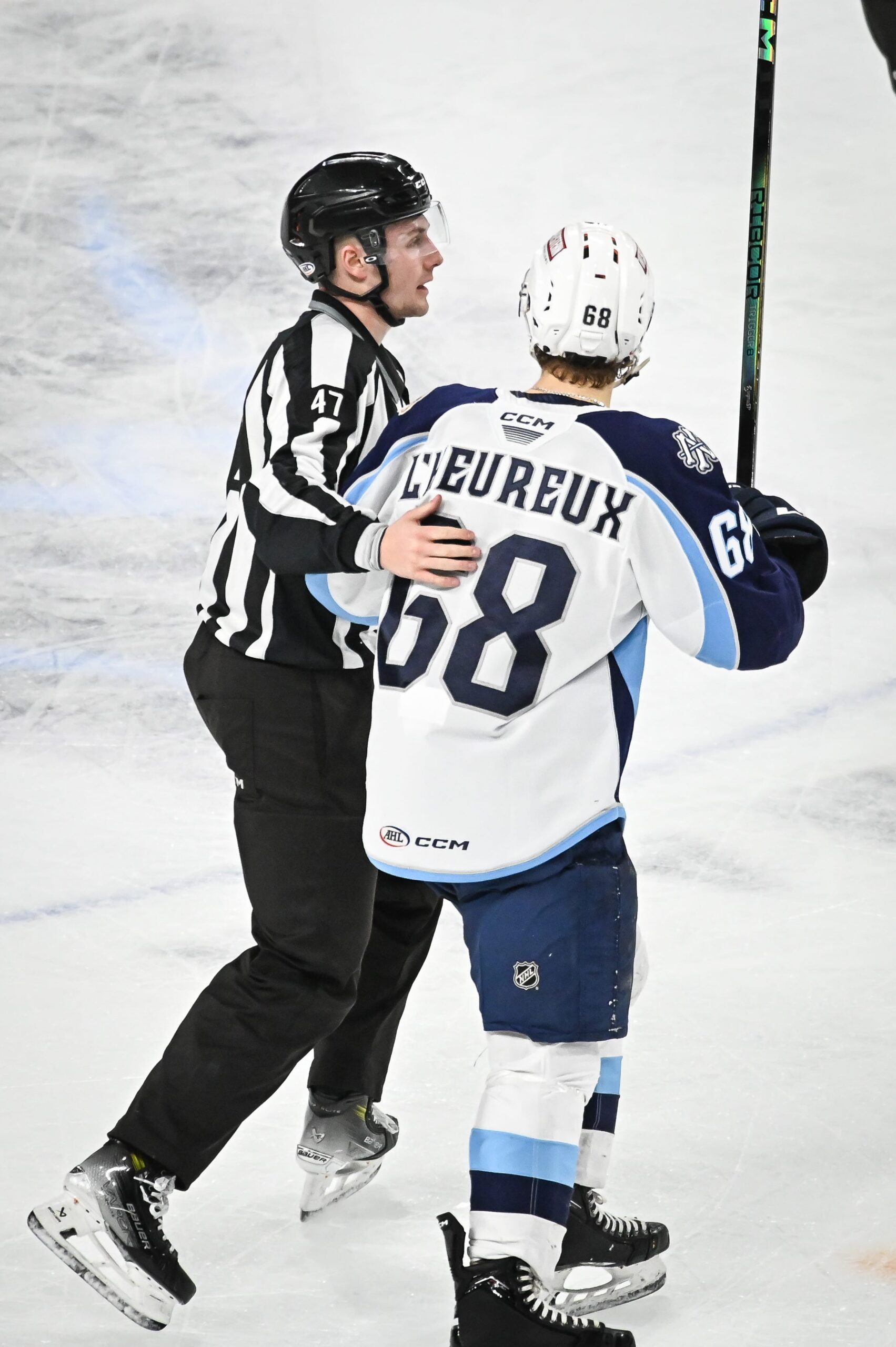 prospects – with Parssinen and Tomasino flashing at the NHL level, while each of Zachary L’Heureux, Joakim Kemell, and Fyodor Svechkov plant their feet in the minors. All five are worthwhile pros capable of filling NHL ice time, likely bringing the decisions between them down to semantics – such as L’Heureux’s discipline or Tomasino’s scoring consistency. Nashville may not need to worry as much about their third-line during the regular season, thanks – frankly – to the additon of Stamkos. But they’ll need sharp depth to make a long playoff run, and have 82 games to properly bring any of their selected youngsters up to NHL speed. How ice time is disseminated among the bunch of top prospects will stand as another difficult task ahead of Brunette’s staff.
Was Saros The Right Choice? 2024-25 will be a defining year for Nashville not only because of their UFA signings, but also their firm selection of Saros over prospect Askarov. It’s hard to knock that decision – after all, Saros boasts a .917 save percentage in 350 career games, standing as one of the league’s best starter where Askarov is all potential. But Saros will now fully embrace the role of franchise starter in an organization known for their goaltending, taking the torch from mentor and Predators legend Pekka Rinne. Saros is as ironclad as they come, playing in the most games of any NHL goalie since 2021 and recording a save percentage north of .910 in every season save for last year (.906). That’s precedent worth staking your faith in – but years of heavy usage and now no contingency plan both contribute to the narrow spotlight that Saros will draw this season.
Photos courtesy of USA Today Sports Images.
Salary Cap Deep Dive: Utah Hockey Club
Navigating the salary cap is one of the most important tasks for a front office. Teams that can avoid total cap chaos by walking the tightrope of inking players to deals that match their value (or compensate for future value without breaking the bank) remain successful. Those that don’t often see struggles and front office changes.
PHR will look at every NHL team and give a thorough look at their cap situation heading into the 2024-25 season. This will focus more on players who are regulars on the roster versus those who may find themselves shuttling between the AHL and NHL. All cap figures are courtesy of PuckPedia. We begin with a look at the Central Division; next up is Utah.
Utah Hockey Club
Current Cap Hit: $78,079,643 (under the $88MM Upper Limit)
Entry-Level Contracts
F Logan Cooley (two years, $950K)
F Josh Doan (two years, $925K)
F Dylan Guenther (one year, $894K)
Potential Bonuses
Cooley: $3.5MM
Guenther: $850K
Total: $4.35MM
Cooley’s first NHL season was a solid one. They kept him in the top six for most of the year while not frequently exposing him to top checking. While he struggled mightily at the faceoff dot (many rookies do), Utah still views Cooley as their top center of the future. If he can take a step forward offensively this season, he could be a candidate for a long-term extension next summer. If that happens, his camp will likely use Juraj Slafkovsky’s contract (eight years, $60.8MM) as a comparable.
Doan impressed in his first taste of NHL action down the stretch, giving him a shot at earning a full-time spot in camp. But even if that happens, he’ll likely have too small of a track record for an early extension next summer. Guenther, meanwhile, was able to play in the minors last season but played his way into a promotion relatively quickly where he picked up 35 points in 45 games. With just 78 games under his belt, an extension in the coming weeks is unlikely but if he puts up a full season at that level of production, he could push for a long-term deal starting with a seven next summer.
Signed Through 2024-25, Non-Entry-Level
F Nick Bjugstad ($2.1MM, UFA)
F Michael Carcone ($775K, UFA)
D Ian Cole ($3.1MM, UFA)
F Alexander Kerfoot ($3.5MM, UFA)
F Jack McBain ($1.599MM, RFA)
G Karel Vejmelka ($2.725MM, UFA)
Kerfoot was a nice addition by Arizona last summer, giving them a capable two-way pivot who is capable of playing high in the lineup, allowing them to ease Cooley in. If he can have a similar offensive showing this season (45 points), he could push for upwards of $5MM on a multi-year agreement next summer given the consistently high demand for centers. Bjugstad made the decision to return to the Coyotes last summer and it was a good one as he had his best season offensively since 2017-18. While they’re certainly pleased with the performance, his track record is as a player with limited offense. Accordingly, an early extension would be hard to come by as both sides would be better off seeing if his production can be repeatable. If it is, he could come in closer to $4MM next time out.
McBain has become a capable checking center who has chipped in a bit offensively while throwing his body around. That’s a solid profile for a player at this price point. If the upcoming season is similar to these last two, he could double this price tag with arbitration eligibility. Carcone reached 20 goals last season, his first full NHL campaign at the age of 27. Obviously, getting a 20-goal scorer for the league minimum is excellent value but how close he comes to repeating that will dictate if he’s going to stay close to this price tag or easily reach seven figures in 2025-26.
This is the fourth year in a row that Cole has taken a one-year deal with a price point between $2.9MM and $3.1MM. Barring a significant change in his performance, it seems fair to infer that he could be in line for something close to that range next summer as well.
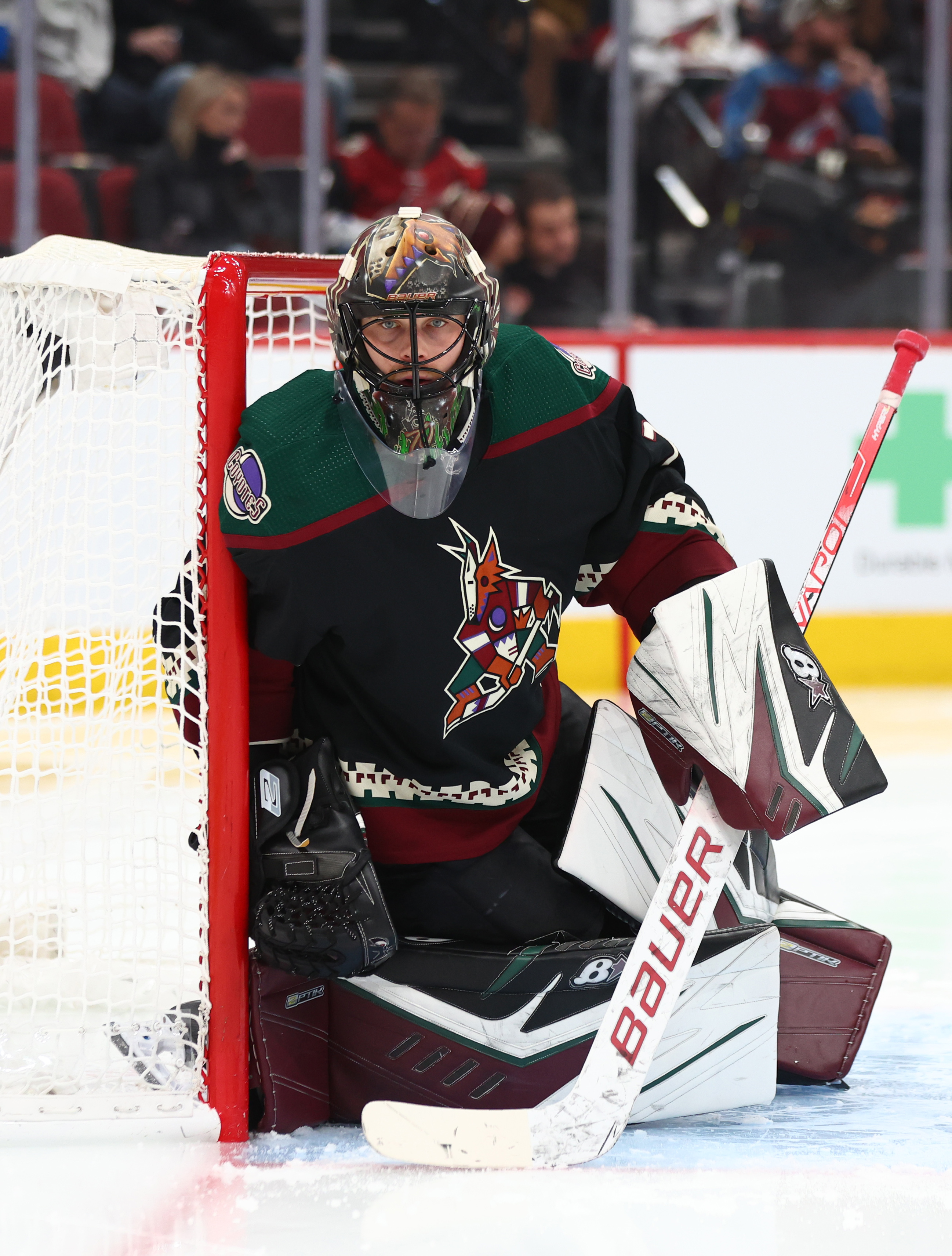 Vejmelka is an interesting case in terms of his free agent value. On the surface, his numbers are rather pedestrian; he has yet to record a save percentage of .900 or better while the lowest GAA of his three-year career is 3.35, set last season. And yet, the general perception around him has been that perhaps on a better team, he’s someone who might be more impactful. With the overhaul Utah has had on the back end this summer, this could be a good test of that theory. If that happens, Vejmelka could conceivably push for a contract in the higher tier of backup or platoon goalies with a price tag approaching $4MM. If that doesn’t happen, however, a small pay cut might be coming his way.
Signed Through 2025-26
F Barrett Hayton ($2.65MM, RFA)
G Connor Ingram ($1.985MM, UFA)
D Michael Kesselring ($1.4MM, RFA)
F Matias Maccelli ($3.425MM, RFA)
F Nick Schmaltz ($5.85MM, UFA)
F Kevin Stenlund ($2MM, UFA)
D Juuso Valimaki ($2MM, UFA)
D Shea Weber ($7.857MM, UFA)
Schmaltz has very quietly been one of the steadier Coyotes in recent seasons, ranging between 58 and 61 points in the last three seasons, two of which saw him over a point per game while dealing with injury trouble. While he’s not a full-time center anymore, he can still play down the middle which will help from a value perspective. Assuming this production keeps up, he should push past the $7MM mark on his next deal. Maccelli, meanwhile, wasn’t quite able to produce at the same level as 2022-23 but he came close, giving Arizona solid value on the first year of his bridge deal. Staying around this level of offensive numbers could put him around the $6MM range on his next contract.
Hayton followed up a career year with arguably his worst one, resulting in what amounts to a second bridge contract. He’ll only have one season of club control left after this contract expires and both sides will be hoping that he can become much more impactful by then. Stenlund had a solid season with Florida, chipping in 11 goals in a limited role which allowed him to double his price tag from a year ago and tack on a second season. This is more on the upper tier for someone who projects as a fourth liner but if he can hang around the double-digit goal mark, he could beat this price tag.
Weber has been on LTIR for the past three years and will continue to be there for the rest of the deal. With Utah having ample cap space, he won’t be a burden on their cap. Valimaki has become a reliable second-pairing defender at a price point well below market value. While the additions could push down his playing time, he could still conceivably double this in 2026. Kesselring spent most of last season in Arizona for his first consistent taste of NHL action. He fared pretty well all things considered but with his limited track record, a bridge deal was the way to go. He’ll have arbitration rights next time out and could double this if he holds onto a regular spot on the third pair.
Ingram has turned into one of the better waiver claims in recent years, going from a third-string option with Nashville to a starter as he played in 50 games last season while leading the league in shutouts. If he continues on that trajectory and becomes a consistent starter, he could push past $5MM two years from now.
Signed Through 2026-27
F Lawson Crouse ($4.3MM, UFA)
D John Marino ($4.4MM, UFA)
F Liam O’Brien ($1MM, UFA)
It took some time but Crouse has emerged as a consistent top-six power forward, hitting the 20-goal mark in three straight years while averaging 183 hits per season in that span. Given the high demand for players like this, Crouse appears to be well on his way to passing the $6MM mark on his next deal. If the cap goes up quickly before 2027, $7MM could be possible if he stays at that level of production. O’Brien had a career year offensively last season while leading the league in penalty minutes. That helped earn him this three-year contract, something that a lot of enforcers don’t typically get. Even if O’Brien struggles, the deal can come off the cap entirely if he’s in the minors, making it a low-risk signing.
Marino was acquired at the draft from New Jersey to help bolster the back end. While he hasn’t been able to get back to the level of production from his rookie year (which largely helped him earn this agreement), he has been a consistent minutes-eater, logging over 20 minutes a night in each of his five NHL seasons while recording 25 points in two of the last three years. For a second-pairing player, that’s solid value.
Summer Synopsis: Montreal Canadiens
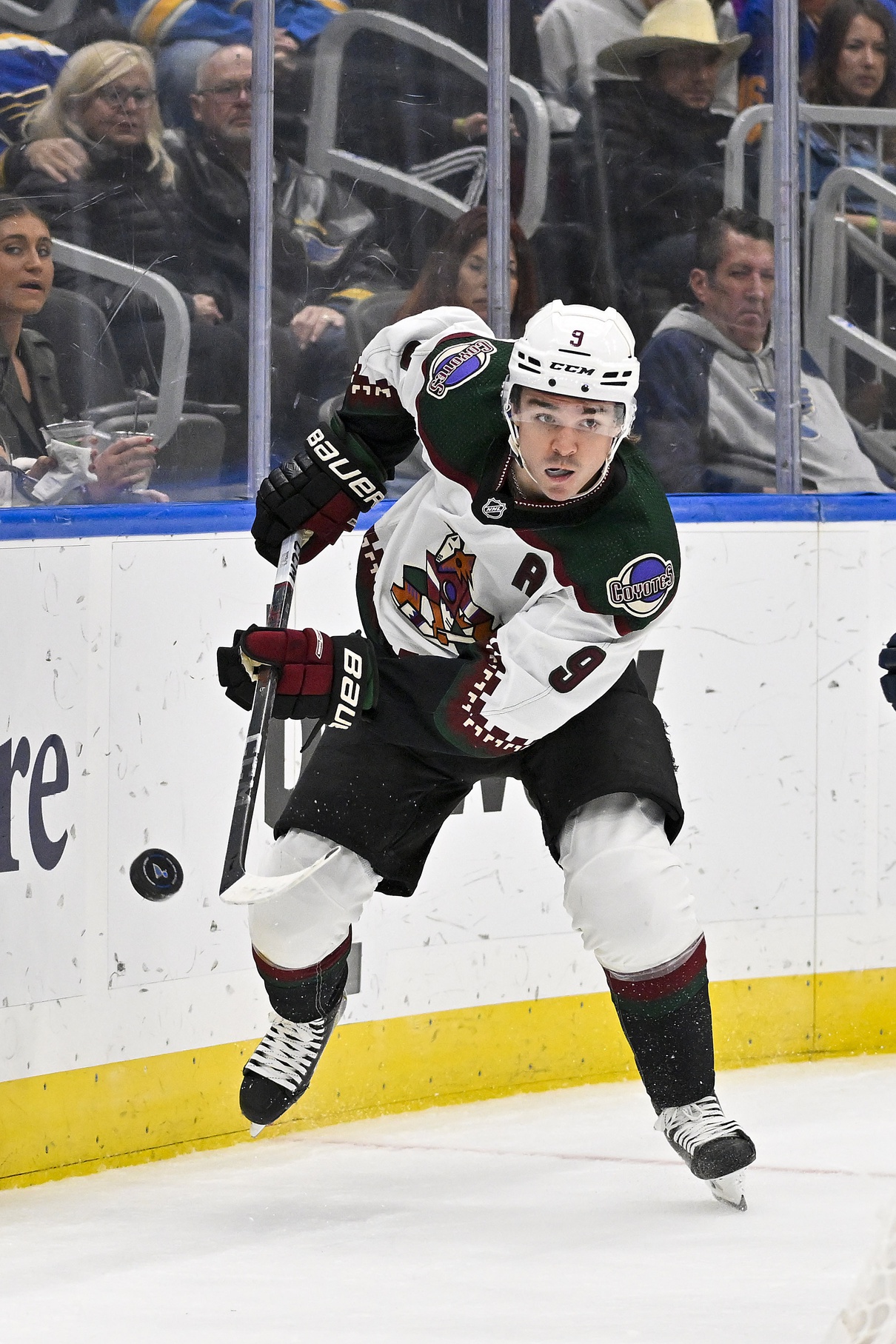
In a summer when many teams either looked to add to their rosters to aid in their expected playoff push or sold as part of their rebuilding process, the Canadiens have largely stood pat, opting to continue their current trajectory from the rebuild that began in the season following their improbable run to the Stanley Cup Final in 2021. In doing so, they’ll be banking on continued development from their young core while hoping for better luck on the health front after dealing with considerable injury trouble in recent years.
Draft
1-5: RW Ivan Demidov, SKA-1946 St. Petersburg (MHL)
1-21: C Michael Hage, Chicago Steel (USHL)
3-70: C Aatos Koivu, TPS U20 (U20 SM-sarja)
3-78: C Logan Sawyer, Brooks Bandits (BCHL)
4-102: D Owen Protz, Brantford Bulldogs (OHL)
5-130: RW Tyler Thorpe, Vancouver Giants (WHL)
5-134: G Mikus Vecvanags, Tukums (Latvia2)
6-166: C Ben Merrill, St. Sebastian’s School (USHS-Prep)
7-210: RW Makar Khanin, Dynamo St. Petersburg (VHL)
7-224: D Rasmus Bergqvist, Skelleftea AIK J20 (J20 Nationell)
Some expected Demidov to go as high as second overall with few figuring he’d be available with the fifth selection. After passing on another high-offense winger the year before in Matvei Michkov, the Canadiens were happy to get their hands on a player who they believe could be a game-breaking talent. While he’ll play this season in the KHL, he’s expected to sign with Montreal once that campaign ends, providing the possibility that he could get into a game or two with the Canadiens before the end of the 2024-25 season.
That won’t be the case for Hage, however. After a strong second half in the USHL, Hage is on his way to the University of Michigan. While some college prospects are one-and-done, the likelier scenario for Hage is that he spends at least two seasons with the Wolverines, allowing him to ease his way into a top role before turning pro.
To start the second day of the draft, the Canadiens turned to a bloodline they’re familiar with in Koivu whose father Saku spent 13 years with the team. While Saku was in the NHL two years after being drafted, that isn’t expected to be the case for Aatos who will be looking to make the full-time jump to the professional ranks in Finland. Sawyer, a big center is also a longer-term project even after reclassifying to start with Providence College this season instead of waiting until 2025-26.
In recent years, the Canadiens have opted to largely eschew drafting from the CHL, a decision that gives them a longer signing timeline with most of their picks; only Protz and Thorpe have to sign by June 1, 2026. As a team carrying 21 players on entry-level contracts at the moment, their hope is that this approach will allow them more time to integrate their prospects into their minor league system and lessen the potential of having too many to sign at a certain time. And with a dozen picks for 2025 already, they may be continuing that approach for a little while longer.
UFA Signings
F Alex Barre-Boulet (one year, $775K)
G Connor Hughes (one year, $775K)*
*-denotes a two-way contract
Arguably no team was quieter than the Canadiens on the free agent front this summer. Their one move was to make an addition that some feel is more for their AHL team than Montreal. Barre-Boulet played in a career-high 36 games with Tampa Bay last season, picking up nine points. But the 27-year-old has been a high-end AHL performer, recording 302 points in 294 games over six seasons at the minor league level. An offseason training injury to Rafael Harvey-Pinard could give Barre-Boulet a path to a roster spot to start the season but if that doesn’t happen, he’s likely to play a big role with AHL Laval pending waiver clearance.
Technically, Hughes was signed in the spring, inking this deal nearly a month before free agency opened up but with Montreal not doing anything else on the open market, we’ll note it here. The 28-year-old has taken a unique path to this NHL contract. After not landing a CHL opportunity in his junior career, Hughes spent the last seven seasons in Switzerland, working his way up from the second league to the NL where he posted a 1.73 GAA and a .940 SV% in 19 games with Lausanne last season. He’ll also likely battle for playing time in Laval.
Trade Acquisitions
F Patrik Laine (acquired from Columbus)
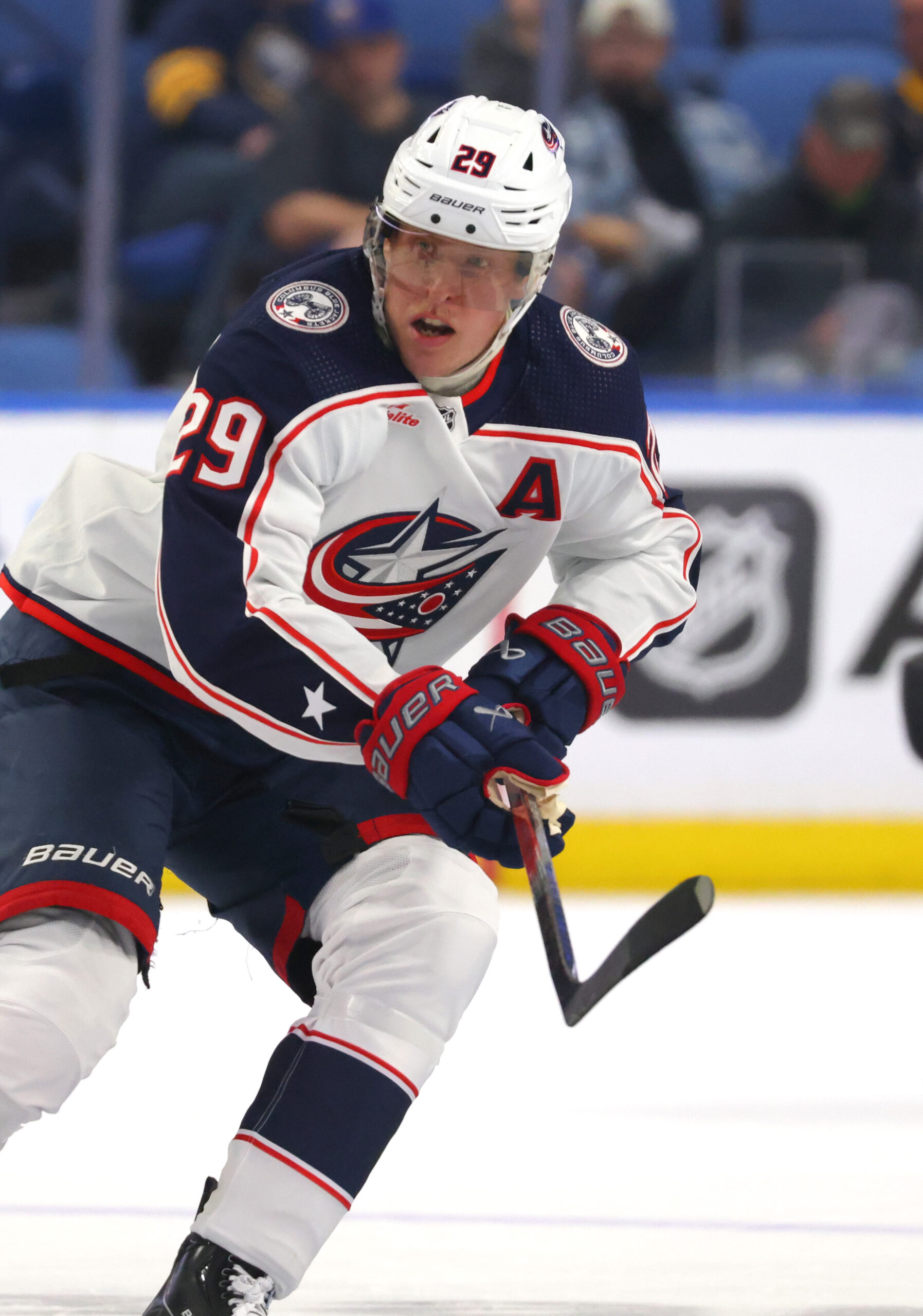 Again, it’s a pretty small section to work with as GM Kent Hughes only made one addition on the trade front. It was, however, a notable one as Laine immediately becomes Montreal’s highest-paid skater at $8.7MM for the next two seasons; the contract was enough of an issue that the Canadiens also received a second-round pick as part of the move to absorb the full cost of it.
Last season was a rough one on multiple fronts for the 28-year-old. When healthy, he struggled to the point of even being healthy scratched. Laine then underwent shoulder surgery and entered the NHL/NHLPA Player Assistance Program soon after, only being taken out of that in recent weeks. The end result was a career-low 18 games played with just nine points. However, Laine was a point-per-game or better in his two previous years in Columbus and Montreal will be counting on at least somewhat of a return to form to give them a lift offensively.
RFA Re-Signings
D Justin Barron (two years, $2.3MM)
D Arber Xhekaj (two years, $2.6MM)
Again, you guessed it, it was a pretty small list of RFAs for the Canadiens to navigate. Both blueliners broke camp with Montreal last season but wound up seeing time in the AHL with the Rocket in an effort to work on some areas of concern before returning to the big club.
Barron, a 2020 first-round pick, logged over 18 minutes a night when he was with the Canadiens, often seeing time in the top four. With only one other veteran right-shot blueliner in the mix (David Savard) and the fact he’s now waiver-eligible, Barron should have an opportunity to cement himself as a full-time regular this season.
As for Xhekaj, his playing time has been a bit more limited so far, averaging under 16 minutes a night in his first two seasons. The 23-year-old has been one of the better undrafted free agent CHL players in recent memory, going from being undrafted in 2021 to seeing NHL action the following year. Montreal doesn’t have a lot of intimidating players on their roster and it stands to reason he’ll be penciled in to remain on the third pairing for at least the short-term future. Worth noting is that Xhekaj remains waiver-exempt so if the Canadiens are looking to dip in and out of LTIR (or stay out altogether), he could be someone who gets papered to the minors somewhat regularly early on.
Contract Extensions
D Kaiden Guhle (six years, $33MM)
F Juraj Slafkovsky (eight years, $60.8MM)
Continuity was the theme of Montreal’s summer so it comes as no surprise that their most prominent transactions in July revolved around that.
 The team wasted little time getting a max-term extension for Slafkovsky done, buying four years of extra club control in the process while respecting the salary structure of Nick Suzuki being their top-paid forward (before Laine took that on six weeks later). The 2022 number one pick had a dreadful start last season, leaving some calling for him to spend time in Laval. Instead, Canadiens coach Martin St. Louis took a different approach, instead elevating Slafkovsky to the top line. The move worked wonders as Slafkovsky picked up 16 goals and 19 assists in the second half of the season, showing signs of becoming the impactful power forward they want him to be. Clearly, management felt that this was a sign of things to come and with this extension, Montreal’s top line is all signed through at least the 2029-30 campaign.
Meanwhile, management determined that Guhle is one of the building blocks on a back end that has gotten very young very quickly (with a few prospects still looking to make the jump). The 2020 first-round pick has had injury issues in his first two professional campaigns but when he was in the lineup, he logged over 20 minutes each year. Montreal will be counting on him to play a key defensive role both now and in the future on a back end that is still expected to have a fair amount of turnover over the next couple of years. The deal buys two extra years of club control while giving Guhle a chance to hit the open market at 29, giving him a chance at another long-term deal.
Departures
F Lias Andersson (Biel-Bienne, NL)
F Filip Cederqvist (Frolunda, SHL)
F Arnaud Durandeau (Amur Khaborovsk, KHL)
D Jordan Harris (trade with Columbus)
D Brady Keeper (Poprad, Slovakia)
D Johnathan Kovacevic (trade with New Jersey)
F Philippe Maillet (Ambri-Piotta, NL)
D Mattias Norlinder (MoDo, SHL)
F Tanner Pearson (PTO, Vegas)
F Mitchell Stephens (Seattle, two years, $1.55M)*
F Colin White (San Jose, AHL)
D Chris Wideman (retirement)
F Jesse Ylonen (Tampa Bay, one year, $775K)*
*-denotes a two-way contract
On the trade front, the Canadiens parted with a pair of regular defenders from the past two seasons, opening up room for some younger players to push for a spot. Harris was the return going to Columbus in the Laine swap. The 24-year-old has 131 career NHL contests under his belt already, establishing himself as a capable depth defender, a role he should be able to push for with the Blue Jackets. As for Kovacevic, he was a waiver claim late in training camp in 2022 and more or less was a full-time player after that, getting into 139 NHL games since then. Signed for one more year at a cap charge below the league minimum salary, Kovacevic is likely to have more of a depth role with New Jersey, barring injuries.
On the free agent departure side, Montreal didn’t lose any core pieces. Ylonen played in a career-best 59 games last season but managed just eight points, resulting in a non-tender. Pearson was acquired as a salary offset in a late-summer trade with Vancouver last year but had a very limited role while White, a late-season waiver pickup, failed to record a point in 28 NHL games last season. Aside from Wideman (who didn’t play due to injury), the rest of the departures were from the AHL level; the Canadiens are opting to fill those roles with prospects and some veterans on minor-league contracts.
Salary Cap Outlook
At the moment, the Canadiens project to be a little more than $2MM above the cap ceiling, per PuckPedia. However, that figure includes Carey Price ($10.5MM) who remains LTIR-eligible should Montreal not be able to get below the $88MM Upper Limit before the start of the season. While staying in LTIR would give them a seven-figure bonus overage penalty for 2025-26 (as they have this season and had the year before), Price being on LTIR would give them more than enough space to operate with. If they opt to stay in LTIR all season, it’s possible that they look to take on a contract from a team looking to open up extra cap space.
Key Questions
What Will Laine Provide? When Laine is at his best, he is a high-end goal scorer who can play around a point-per-game level. If he can get back to that level, he can provide a significant boost to Montreal’s forward group, giving them some much-needed secondary scoring on a roster that has been in the bottom six in goals scored in three straight years. But his struggles pre-injury with the Blue Jackets were certainly significant and after being off since mid-December, it’s far from a guarantee that he can get back to his top form. Laine asked for a fresh start and now he has it; we’ll soon see if that can kick-start him after a rough 2023-24 campaign.
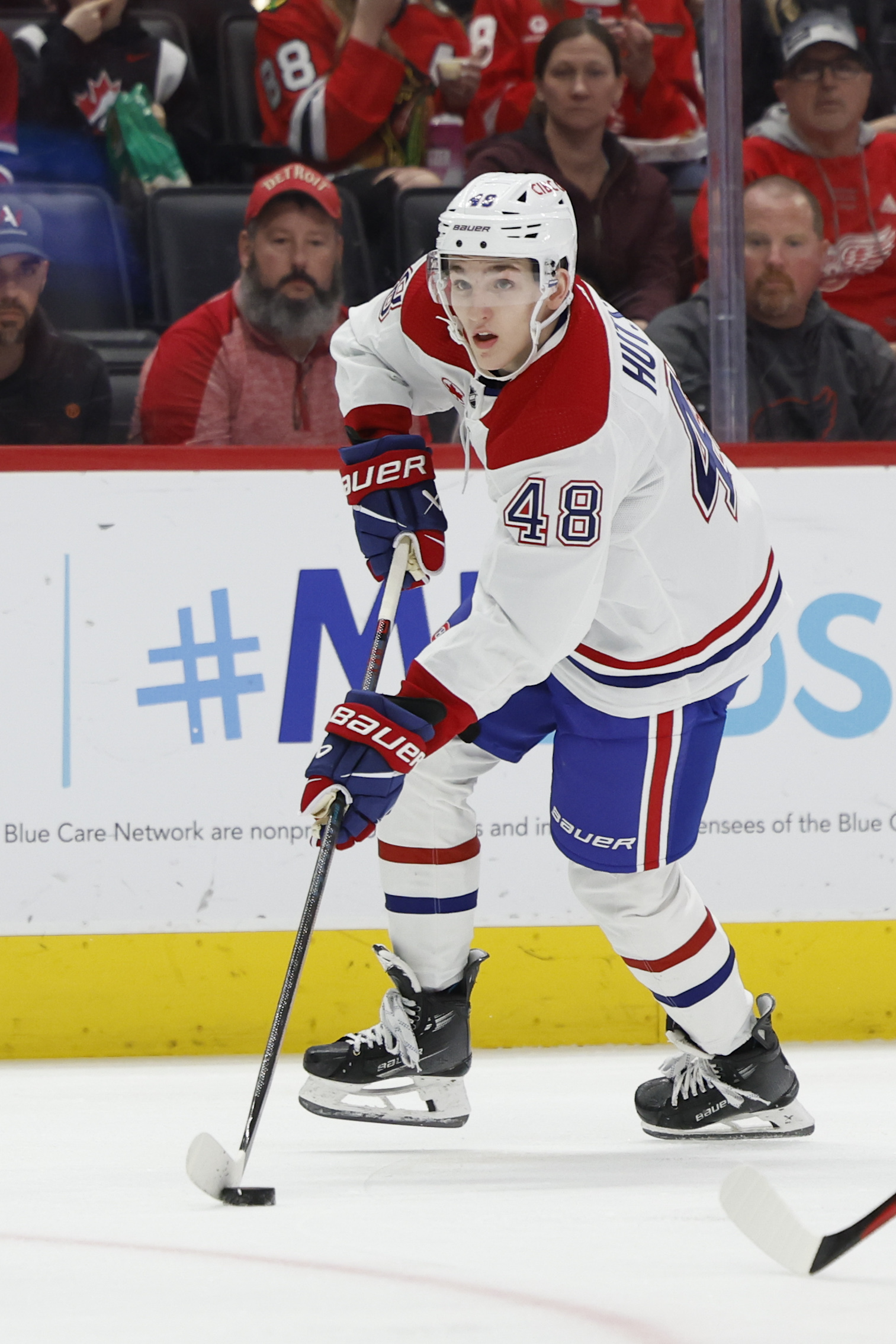 Is Hutson Ready For Prime Time? One of the storylines heading into the 2022 draft was Lane Hutson, a player with first-round talent but he was well undersized for a blueliner. He slipped to the end of the second round and then lit up the NCAA for two seasons, securing his entry-level deal and getting into two games with Montreal to finish the year where he had two assists. Will Hutson and his high-skilled offensive game be able to stick with the Canadiens or will he need time with Laval? If Hutson can crack Montreal’s roster, he should become a second legitimate offensive threat from the back end, joining Mike Matheson who quietly finished ninth in points by a defenseman last season.
Can Dach Become A Full-Time Top-Six Center? After showing some promise down the middle late in 2022-23, Kirby Dach was slotted in as Montreal’s second-line center to start last season. That lasted for all of four periods before he suffered a season-ending knee injury. Injuries have been a consistent problem for the 2019 third-overall selection going back to his time with Chicago. Nonetheless, the Canadiens didn’t look to add any help down the middle this summer; their only other potential center with some offensive upside is Alex Newhook who might be better suited on the wing. Suffice it to say, they’re counting on Dach staying healthy and having a breakout year. With Hage being at least a couple of years away and being their top center prospect, Dach has some runway to work with. Can he become that core player the Blackhawks were counting on him to be five years ago? This season might go a long way toward answering that question.
Photos courtesy of USA Today Sports Images.
Salary Cap Deep Dive: St. Louis Blues
Navigating the salary cap is one of the most important tasks for a front office. Teams that can avoid total cap chaos by walking the tightrope of inking players to deals that match their value (or compensate for future value without breaking the bank) remain successful. Those that don’t often see struggles and front office changes.
PHR will look at every NHL team and give a thorough look at their cap situation heading into the 2024-25 season. This will focus more on players who are regulars on the roster versus those who may find themselves shuttling between the AHL and NHL. All cap figures are courtesy of PuckPedia. We begin with a look at the Central Division; next up is St. Louis.
St. Louis Blues
Current Cap Hit: $86,732,208 (under the $88MM Upper Limit)
Entry-Level Contracts
F Jake Neighbours (one year, $835.8K)
Neighbours wasn’t expected to be one of the Blues’ top goal-getters in his first full NHL season but he did just that, notching 27 tallies, good for a tie for second on the team. That said, it makes sense for both sides to see if it that’s repeatable before approaching extension talks. A bridge deal at this point should check in around $3MM but another strong showing could push those discussions toward a longer-term agreement.
Signed Through 2024-25, Non-Entry-Level
F Radek Faksa ($3.25MM, UFA)
G Joel Hofer ($775K, RFA)
D Pierre-Olivier Joseph ($950K, UFA)
F Kasperi Kapanen ($1MM, UFA)
D Scott Perunovich ($1.15MM, RFA)
D Ryan Suter ($775K, UFA)
F Alexey Toropchenko ($1.25MM, RFA)
D Tyler Tucker ($800K, UFA)
Potential Bonuses
Suter: $2.25MM
Faksa was acquired from Dallas in a cap-clearing move but he still is a capable player in a checking role while consistently being above-average at the faceoff dot. That said, his limitations offensively will hurt him on the open market. His track record is good enough to secure another multi-year deal but the cap hit is more likely to start with a two than a three this time around.
Toropchenko has been a good depth scorer who has added plenty of physicality in his first two NHL campaigns. That said, with a limited role, he shouldn’t be able to land too much more than this, even with arbitration eligibility. On the high end, the 25-year-old might be able to get to the $2MM mark. Kapanen’s first full season with St. Louis saw him struggle, resulting in him taking a sizable pay cut to stick around. Now, the deal has a chance to be a team-friendly one if he can get back to the 30-point level. He’ll need to do so in order to have an opportunity to get any sort of notable raise next summer.
Perunovich has shown flashes of the offensive ability that made him a touted prospect but staying healthy has been a consistent problem for him. This contract buys both sides a bit more time for evaluation but he’ll need to stay healthy and be a consistent contributor to have a chance at a multi-year agreement. Joseph comes over from Pittsburgh after being non-tendered (a fate that could await Perunovich if he has another injury-plagued campaign) where he had a limited role. He’s likely to have a similar role with his new team so unless he’s willing to stay around this price point, he could be non-tendered again to avoid arbitration.
Suter signed with the Blues in free agency after being bought out by Dallas. There are four levels of bonuses based on games played; if he maxes those out, he’ll receive $1.725MM if he gets to 60 games ($1.125MM at 40) plus another $500K if his team makes the playoffs and he plays in 60 games. If the Blues are out of the playoffs and look to move Suter, that $500K potential bonus would transfer to the acquiring team which will be something worth noting. It’s a creative contract structure to say the least and if Suter wants to keep playing after 2024-25, he could very well sign another one like this. Tucker has had a depth role the last couple of years but hasn’t locked down a full-time spot yet. He’s likely to be in a similar situation this season which won’t help his marketability. If he plays in 28 games with St. Louis, however, the Blues can regain his RFA rights instead of him becoming a Group Six free agent.
Hofer did quite well in his first season as a full-time backup, putting up a GAA (2.65) and SV% (.913) that were better than league average. Another showing like that could push the asking price towards the $3MM mark, especially if the Blues wanted to buy out a UFA year or two. If he falters a bit this season, then the cost should check in closer to $2MM.
Signed Through 2025-26
D Philip Broberg ($4.581MM, RFA)
F Dylan Holloway ($2.29MM, RFA)
D Matthew Kessel ($800K, RFA)
F Mathieu Joseph ($2.95MM, UFA)
D Nick Leddy ($4MM, UFA)
F Brandon Saad ($4.5MM, UFA)
F Oskar Sundqvist ($1.5MM, UFA)
F Alexandre Texier ($2.1MM, RFA)
F Nathan Walker ($775K, UFA)
Saad hasn’t been able to get back to the scoring levels he had earlier in his career with Columbus but he has averaged 23 goals per season since joining the Blues. This price tag for that type of production is pretty well close to market value. That said, he’ll be 33 when his next deal starts so he’s probably not putting himself in position for a sizable increase next time out either. Joseph was acquired from the Senators in a cap-clearing move and will look to build off a career year in 2023-24. A capable checker, if Joseph could stay around that 30-point mark, he could earn a small raise two years from now.
Holloway came over from Edmonton in one of the offer sheets tendered earlier this month. His production thus far doesn’t justify that price tag but if he can secure a regular spot in the top nine, the scoring output to warrant that cost should come fairly quickly. Texier was acquired from Columbus and was quickly signed to this deal. Offensive consistency has been a problem so far in his career and he’ll need to improve on that if he wants to get to the next level contract-wise. He’ll be arbitration-eligible next time out and if his production dips a bit, he could get into non-tender territory as well but on the flip side, if the change of scenery helps, he could command at least $3MM in 2026.
Sundqvist had to settle for a minimum contract in 2023-24 and did rather well with it, earning this extension just before the trade deadline in March. With the extra depth they’ve brought in, it’s hard to see him boosting his production enough to warrant a considerable raise down the road; he seems likely to stay around this price point moving forward as a result. Walker has seen more NHL time than AHL time the last two seasons, giving him this two-year, one-way deal. But with the additions they’ve made, he could be on the outside looking in before too long. Any sort of extended AHL stretch on this contract could hurt his chances of a one-way agreement two years from now.
Broberg was the big addition via the offer sheet route as the Blues feel he can become a core defender down the road. But right now, this is a fairly steep overpayment based on what he has accomplished so far. He’ll have a chance to change that over the next two years and if he becomes the blueliner they think he can, he could be the next Blues defender to get a long-term deal. Leddy has logged big minutes since joining St. Louis but it stands to reason that Broberg will start to cut into that with him being part of the long-term plans with Leddy, currently 33, not likely to be in those. Even so, if he can play a steady role at 18-20 minutes a night, another short-term deal around this price tag could be doable. Kessel held his own in 39 games with St. Louis last season but his waiver exemption is likely to work against him. Until he can secure a full-time role, he won’t be able to make a case for much more than this.
Signed Through 2026-27
G Jordan Binnington ($6MM, UFA)
D Justin Faulk ($6.5MM, UFA)
D Torey Krug ($6.5MM, UFA)
Faulk took a bit of a step back offensively last season while injuries didn’t help either. But for the most part, he has been an above-average contributor while spending a lot of time on the top pairing. He might not necessarily be a true top-pairing piece on every team but Faulk has made it work in that role, giving St. Louis a solid return so far. Krug hasn’t had as much success and now there are concerns about if he’ll be able to play again. At a minimum, he’s out for the season so if the Blues have some injuries, he’ll be LTIR-eligible, giving them some flexibility on that front and in doing so, it takes him off the table for their potential worst-valued contract.
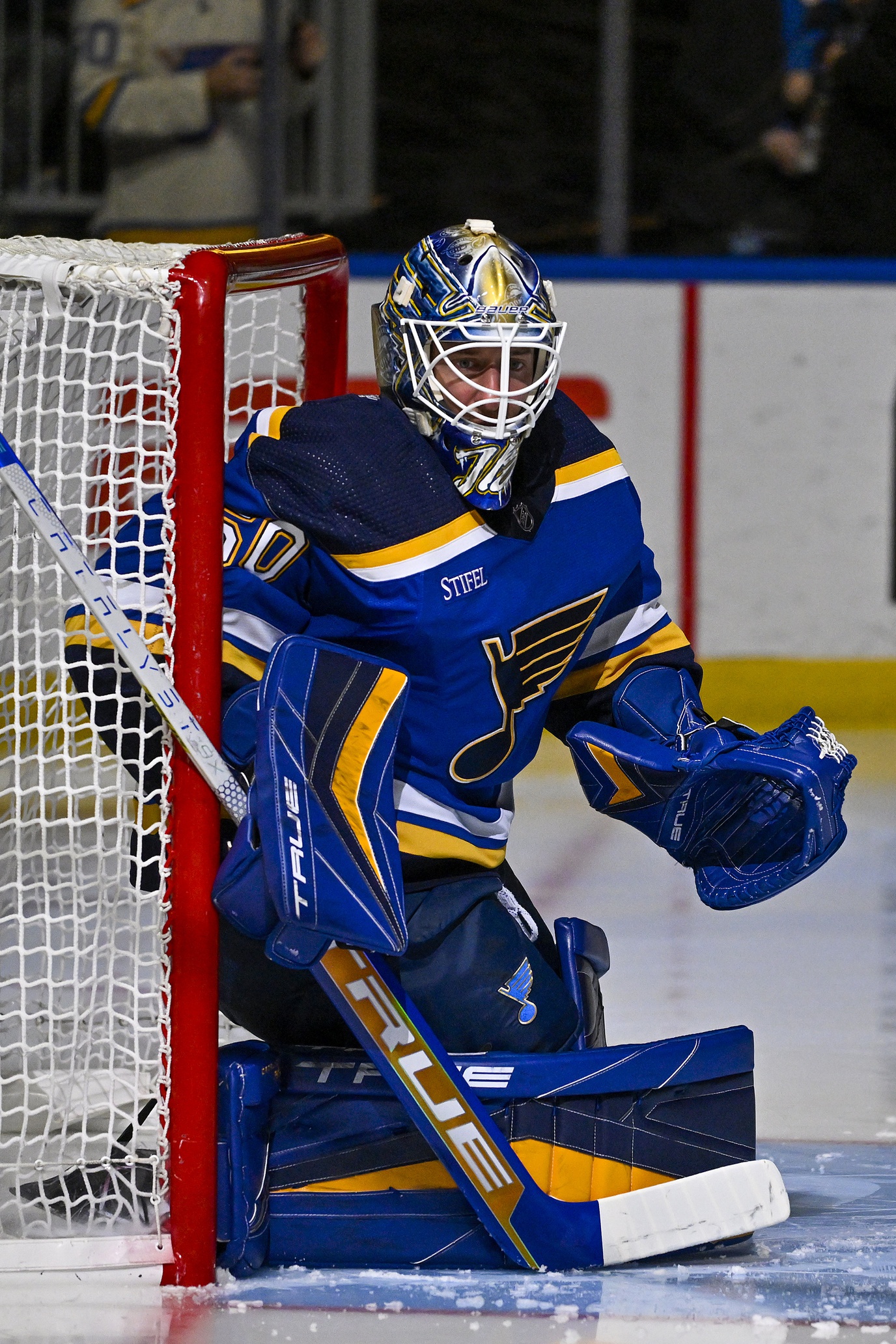 Binnington has been hit or miss in recent years when it comes to playing at the level of a starting goaltender, let alone one of the higher-paid ones. Last season was one of the better ones as he finished sixth in the league in games played while being tied for eighth in save percentage (with Hofer, among others). Unfortunately, that’s the highest save percentage he’s had in the last five years. Binnington is the seventh-highest-paid goalie in the league in terms of AAV for 2024-25, sixth if you take Carey Price (who will once again be on LTIR) out of the equation. While the Blues received a level of performance at least close to that range last season, they haven’t had that with enough consistency to get a good return on this contract.
Summer Synopsis: Minnesota Wild
The Minnesota Wild had a far tamer summer than some of their peers around the league – ultimately relying on strong decision-making in the draft and free agency to help round out their lineup, rather than overturning major positions. That could bode well for a team anticipating the return of Jared Spurgeon, and seeing more and more progress out top youngsters like Matt Boldy and Marco Rossi. Hard-hitting depth signings have bolstered those options – effectively placing the faith in Minnesota’s returning stars to carry the team over the 12-point deficit that held them out of the 2024 Stanley Cup Playoffs.
Draft
1-12: D Zeev Buium, Denver (NCHC, NCAA)
2-45: F Ryder Ritchie, Prince Albert (WHL)
4-122: D Aron Kiviharju, HIFK (Liiga)
5-140: D Sebastian Soini, Ilves (Liiga)
5-142: G Chase Wutzke, Red Deer (WHL)
6-174: D Stevie Leskovar, Mississauga (OHL)
Minnesota has quietly built one of the best prospect pools in the NHL over the last few years, making up for a lack of much pick value with lucrative drafting. That sentiment reached a peak this year, with the Wild landing a littany of falling talents. That started with Zeev Buium, who held a claim as the top defender of college hockey’s National Championship last year, using his superb puck-control to drive play and open chances for the Pioneers. Buium was an expected top-10 name, but the Wild jumped when they saw him fall out, trading two picks to the Philadelphia Flyers to move up to the 12-spot.
Their hot day continued when the Wild landed Ryder Ritchie in the second round, and Aron Kiviharju in the fourth round. Both players held first-round acclaim at one point this season. Ritchie – a high-IQ winger with tireless drive and special teams upside – seemed a typical casualty of eager drafting. But the first-round precedent was much more emphatically zapped away from Kivihajru when he went down in November with an ACL injury. The injury limited the standout Finnish defender – once considered in a conversation with Macklin Celebrini and Ivan Demidov – to just seven games and two points last season. He returned to the ice in April, and even managed light work at the NHL Draft Combine, but that wasn’t enough to reassure teams of his upside. Still, Kiviharju has 28 games of Liiga experience to his name at just 18 years old – and could emerge as one of the 2024 Draft’s biggest steals if he returns to his prior glory.
Minnesota backed two high-value picks with a trio of safe bets. Sebastian Soini is far from the most refined defender, but has shown a strong ability to square up to, and beat, opponents when defending the rush. He has a long reach, heavy frame, and hard passing – keeping him effective on his own side of the red line. Wutzke stands as Minnesota’s perennial goalie-pick, after managing a .904 save percentage in 36 games with the WHL’s Red Deer Rebels. Wutzke boasts plenty of athleticism and speed, but needs to continue honing his ability to square up to pucks and stop on a spot. The list of role-based picks ends with Leskovar, who made a name for himself as a mean defender this year. He posted just 12 points through 61 games this year, but added 113 penalty minutes – taking pleasure in using his six-foot-three, 200-pound frame to dominate the gritty areas of the ice. While his profile doesn’t scream upside, Leskovar could prove yet another lucrative Minnesota prospect, with a size and the physical edge that seem well-matched for the pros.
UFA Signings
F Ben Jones (two-years, $1.6MM)*
F Brendan Gaunce (two-years, $1.6MM)*
F Reese Johnson (one-year, $775K)*
F Travis Boyd (one-year, $775K)*
F Yakov Trenin (four years, $14MM)
D Jacob Middleton (extended to four years, $17.4MM)
D Cameron Crotty (one-year, $775K)*
D Joseph Cecconi (one-year, $775K)*
G Troy Grosenick (one-year, $775K)*
* denotes two-way
Minnesota’s off-season was spent rebuilding the depths of the AHL Iowa Wild, who lost a long list of young, upside-bets to other minor league deals this season. Rather than mimic the youth, Minnesota opted to sign a litany of proven veterans – adding 614 games worth of NHL experience through just the additions of Gaunce, Johnson, and Boyd. All three played NHL games last season – and Boyd even managed double-digit goals and 34 points as recently as 2022-23. But their two-way deals suggest that Minnesota is looking more for top-line minor-leaguers capable of being impactful call-ups, rather than everyday lineup pieces.
That’s largely thanks to the addition of Yakov Trenin, who rounds out a Wild bottom-six that didn’t see much change this summer. Trenin became a polarizing player last season, after failing to carry his production to the Colorado Avalanche, despite the team giving up Jeremy Hanzel and a third-round pick in a Trade Deadline swap for the winger. But Trenin did bring his hard-nosed physicality, ultimately ranking fourth among Avalanche forwards with an average of 10.89 hits-per-game. Even better, Trenin carried that physicality through 16 games in Colorado, while only managing one penalty. He’s formerly a 17-goal scorer, twice netting 24 points on a season, but Trenin’s mean streak is what makes him stand out. That’s a factor that’s been missing from the Wild bottom-six since the departure of Brandon Duhaime and aging of Marcus Foligno. Trenin should bring that in droves – while holding onto a fairly manageable $3.5MM cap hit.
The Wild also proved diligent with the extension of defender Jacob Middleton, who will now stick around for four more years after his current deal expires next summer. Middleton proudly planted his feet on Minnesota’s second pairing this season, netting seven goals and 25 points while averaging just under 20 minutes of ice time each game. While his upside has been debated, this deal sets up the 28-year-old, former seventh-round pick for a hardy career as a second-pair option.
Trade Acquisitions
F Graeme Clarke (acquired from New Jersey)
F Jakub Lauko (acquired from Boston)
Minnesota made a pair of trades in June, first acquiring forward Jakub Lauko when Boston opted to trade up in the fourth-round – moving from 122 to 110. But it’s Minnesota stands as the early winner of the deal after using the later selection on defender Aron Kiviharju. Lauko is fine supplementary material as well, having scored 10 points in 60 games last season – his first full year in the NHL. He’s a heavy-framed centerman who’s worked his way up to the top flight with diligent two-way play and consistent physicality. Those are the pieces Minnesota feels their missing – if their UFA signings are any indication. Lauko won’t be one to jump off the page this season, but he will stand as a legitimate option for the Wild’s fourth-line center role – likely entering competition with new additions Boyd, Gaunce, and Johnson.
Meanwhile, Clarke will begin fighting his way to the NHL lineup in a new setting, after moving to Minnesota in a one-for-one swap with Adam Beckman. He climbed the mountain with the New Jersey Devils last year, being awarded the first three games of his NHL career after posting 25 goals and 49 points in 67 AHL games. He went scoreless in his NHL appearances but made a few good plays and looked capable of keeping up with opponents. Clarke, still just 23, has managed 149 points through 218 career AHL games – speaking promise to his long-term upside.
RFA Re-Signings
F Graeme Clarke (one-year, $800K)*
F Adam Raska (one-year, $775K)*
F Sammy Walker (one-year, $775K)*
D Declan Chisholm (one-year, $1MM)
D Brock Faber (eight years, $68MM)
* denotes two-way
Minnesota quickly re-signed Clarke, adding him to the quartet of depth pieces ensured with one-year, two-way deals. He’ll join Raska and Walker in competition for the final pieces of Minnesota’s lineup, though it’d be Raska who stands as the early favorite, having already played five games with the Wild last year. He didn’t score in the outings – not helped by his meager AHL production of seven points in 49 games – but Raska did stand as the heavy-frame, gritty piece Minnesota needed. The addition of Trenin could make Raska’s role a bit more obsolete, especially if he can’t boost his scoring, which could pave way for the higher-skilled options of Clarke or Walker. The latter also appeared in four games with the Wild last year, and also went without a point, though he did manage a much more substantial 45 points in 70 AHL games.
But while the depth forwards vie for spots, it seems Declan Chisholm has locked in his lineup role – earning a one-way deal after scoring eight points in 29 games with Minnesota last season. He was a mid-year waiver claim, and will now, at the least, fill the seventh-defender role vacated by Dakota Mermis.
All of the previous RFA signings pale in comparison to the lofty extension of RFA Brock Faber, who will become a wealthy man when his entry-level deal expires next summer, after opting to go the long-term route on an extension. Faber was simply phenomenal last season, stepping up as Minnesota’s unrivaled top defender after captain Jared Spurgeon went down with a season-ending injury. Faber played in all 82 games of his rookie season, scoring eight goals and 47 points and dominating both sides of possession. He was a favorite for the Calder Trophy, but ultimately placed second behind Central Division competitor Connor Bedard. Still, Faber seems bound for a long pro career, after averaging nearly 25 minutes of ice time in just his first season.
Departures
F Servac Petrovsky (unsigned draft pick, invited to Utah’s Rookie Camp)
F Jujhar Khaira (Tampa Bay, one-year, $775K)*
F Jake Lucchini (Nashville, two years, $775K)*
F Nick Swaney (Chicago Wolves, AHL, one-year, $775K)*
F Steven Fogarty (retirement)
F Turner Elson (unsigned, unrestricted free agent)
F Adam Beckman (traded to New Jersey)
F Vinni Lettieri (traded to Boston)
D Alex Goligoski (retirement)
D Dakota Mermis (Toronto, one-year, $775K)*
D Will Butcher (signed with Barys Astana, KHL)
G Zane McIntyre (signed with Straubing, DEL)
* denotes two-way
As aforementioned, Minnesota turned over much of their minor league depth this season. Many of those options took lateral steps – including Khaira, Lucchini, and Mermis, who will all re-enter the race of top-line minor-leaguers fighting for an NHL spot. Mermis stands as a particularly-interesting option, moving to a Toronto Maple Leafs blue-line in the midst of a major overhaul. The 30-year-old defender worked his way into the first NHL role of his career last season, initially being recalled as the seventh-defender but ultimately slotting into a third-pair role in 47 games. He scored eight points in those appearances, while managing his responsibilities in all three zones. Toronto is experiencing some confusion around signee Jani Hakanpaa – though a major depth role could open up on the left-hand side, should Hakanpaa opt not to join the Leafs.
Will Butcher is another exciting departure, making the move to Russia after finding little success in the NHL. Butcher scored 44 points in 81 games as a rookie in 2017-18, but has seen a hit in scoring every year since, ultimately falling to a routine AHL role through the last two seasons. That proved insufficient for the former fifth-round pick, who has now joined Barys for the first two games of the KHL season, recording one assist.
Salary Cap Outlook
Minnesota is entering training camp tightly bound by the salary cap. They carry just $756.4K in open space, per PuckPedia – not even enough to afford a league-minimum deal. But the Wild have all of the pieces of their lineup locked up, with no remaining RFAs – effectively shifting their focus from buying new additions to finding ways to pad their cap space for any necessary moves once the season starts.
Key Questions
How Will The Defense Shape Up? The ace up Minnesota’s sleeve for the last few years has been the unrelenting tandem of Jared Spurgeon and Jonas Brodin. The two complimented each other beautifully, effectively controlling play on both ends of the ice any time they’re out there. But Spurgeon missed all but 16 games last season, pushing Minnesota into a bit of a scramble for effective right-handed defenders. Luckily, Faber emerged as a star – taking on the bulk of Spurgeon’s role while Zach Bogosian and Mermis offered secondary support. Spurgeon is expected to be ready to go for next season and will certainly boost the defense, though how his role is balanced against Faber – and if the two can work with Brodin and Middleton to form another formidable blue-line – will be the chief focus of Wild fans as games roll around.
Which Star Will Emerge? Minnesota doesn’t boast the superstar talents of a team like Toronto or Edmonton, but they’ve quietly found major contributors through the likes of Kirill Kaprizov, Matt Boldy, and Joel Eriksson Ek. All three took a big step forward last year – with Kaprizov rivaling his career-highs with 46 goals and 96 points; and both Boldy and Eriksson Ek setting career-highs with 69 and 64 points respectively. The trio provide confident momentum at every forward position, and could each continue their climbs next year, backed by a healthy blue-line and rounded-out offense. Kaprizov seems a certain bet to rival the 100-point ceiling again, though both Boldy and Eriksson Ek are sleeper candidates to join him on that flight. Boldy in specific seems to be settling into more-and-more of an impact role, even scoring 20 points across the last 18 games of the season. While the depth scoring of Minnesota’s offense may prove a concern, the trio of stars leading the pack all seem destine for a big year.
Who’s On First – Or, In Net? The Wild seemed to be headed for a quiet and amicable split with future Hall-of-Fame goaltender Marc-Andre Fleury. His contract was due this summer, and while he’s spent three hardy years in Minnesota, the 2023-24 campaign marked the first time since the dead-puck era – 2005-06 to be exact – that Fleury posted a sub-.900 save percentage. Minnesota has the effective Filip Gustavsson and top prospect Jesper Wallstedt waiting for a more concrete shot at the starting role – which made it all the more confusing when the Wild granted Fleury’s request for a farewell tour, signing him to a one-year, $2.5MM contract. Fleury ceded the lion’s share of starts last season – with Gustavsson playing in 45 games and posting an .899 – while Wallstedt posted a .910 in 45 AHL games. That seems to be the split Minnesota is headed for again this season, though how Gustavsson is able to control more starts – and how Wallstedt is able to overcome legendary competition for the backup spot – could go a long way towards determining the Wild’s odds at success.
Summer Synopsis: Los Angeles Kings
It wasn’t that long ago that the Los Angeles Kings were a team that appeared to be on the cusp of breaking through, they were entering win-now mode and had just acquired Kevin Fiala from the Minnesota Wild. General manager Rob Blake had steered the team through a tough rebuild and managed to keep several veterans from the 2012 and 2014 Stanley Cup-winning teams in the fray. This year the mood around the team feels quite different after a third straight first-round exit at the hands of the Edmonton Oilers. It also feels that many of the Kings’ moves this summer were panic moves that show a lack of direction going forward.
Draft
1-26: F Liam Greentree, Windsor (OHL)
2-57: G Carter George, Owen Sound (OHL)
6-164: D Jared Woolley, London (OHL)
7-198: F James Reeder, Dubuque (USHL)
The Kings dropped back in the draft from 21st to 26th and selected Windsor Spitfires right winger Greentree. The 6’2”, 214-pound forward is a left shot on the right wing and is a creatively gifted skater with an incredible ability to move the puck while he is in motion and traffic. He is extremely slippery and has a good mind for the game, particularly in the offensive zone where he is calm and clever with the puck on his stick.
Thunder Bay, Ontario native Carter George was the Kings’ second-round pick after spending two seasons with the Owen Sound Attack of the OHL. George led the league with four shutouts last season and was selected to the OHL First All-Rookie Team and the Third All-Star Team. His numbers in the OHL weren’t great with a .907 save percentage and a 3.30 goals-against average, however, goaltenders tend to have skewed numbers due to the high-scoring nature of the league. George has good lateral movement and keeps good angles, but he is undersized and could stand to work on his rebound control. He will likely be a project for Los Angeles and could take five to seven years to reach the NHL.
The Kings had to wait until the sixth round to pick again and chose bruising 6’5” defender Woolley from the London Knights of the OHL. Woolley split last season between London and the St. Thomas Stars of the GOJHL. The Port Hope, Ontario native steadily improved as the season went on and finished by playing four games in the Memorial Cup. Woolley is a physical presence in the defensive zone, both at his blue line and around the net. He is also solid with the puck on his stick, showing patience with the puck at the offensive blue line and starting plays with a good first pass.
Finally, Los Angeles selected James Reeder in the seventh round. The Glenview, Illinois native is set to play in the NCAA at the University of Denver this season and will likely spend all four years of his eligibility there. The two-way forward is dynamic with the puck and isn’t afraid to drive to the net to make a play happen. He plays with a quick pace and can get to open space with relative ease using his speed and hockey sense to create room for himself in the offensive zone. He is a bit undersized but should flourish in Denver over the next few seasons.
Trade Acquisitions
D Kyle Burroughs (San Jose)
F Tanner Jeannot (Tampa Bay)
G Darcy Kuemper (Washington)
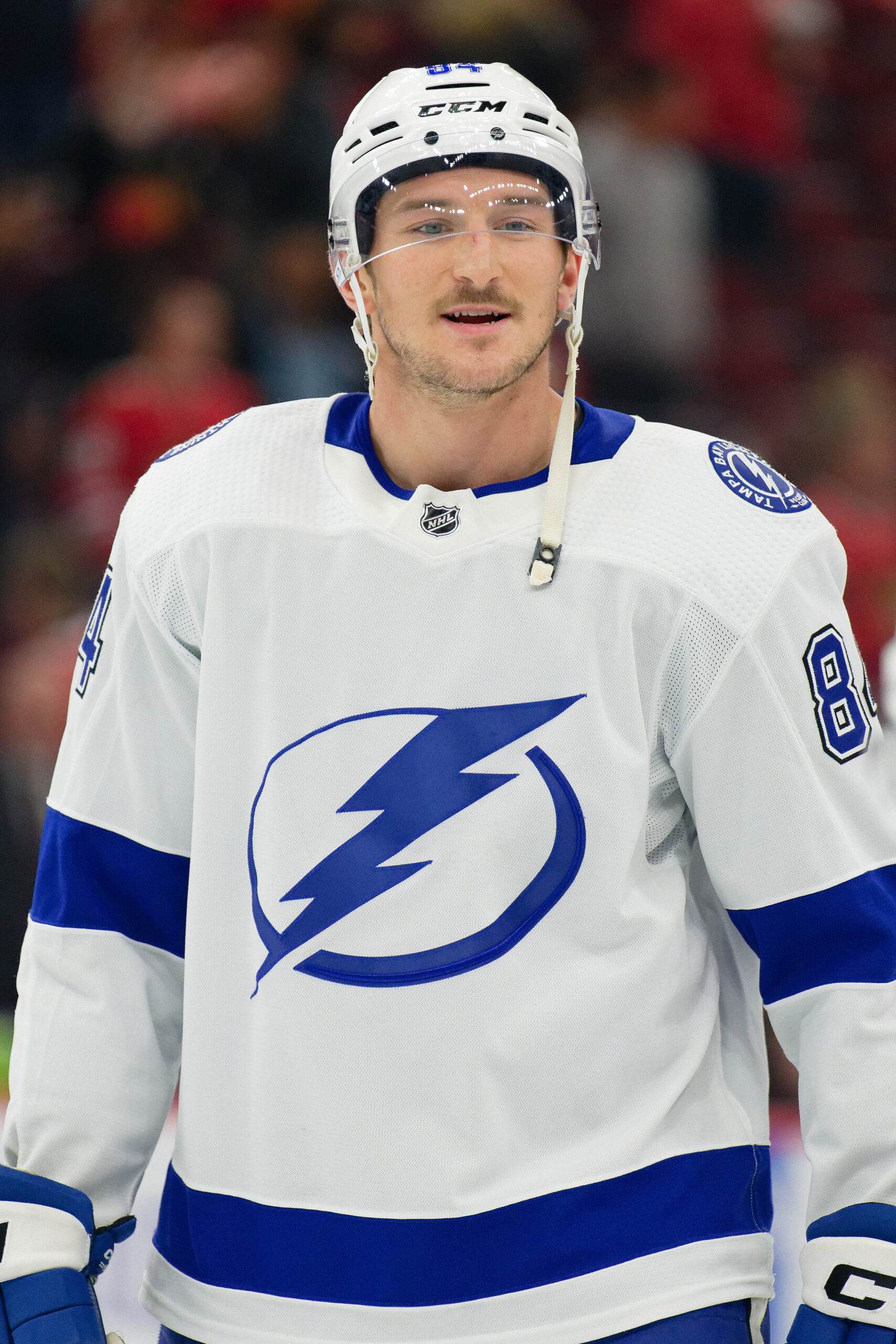
The Kings are counting on bounce-back seasons from a couple of trade acquisitions that were brought in this summer. Kuemper struggled with the Washington Capitals after winning the Stanley Cup in 2022 with Colorado. He was brought in on a five-year $26.25MM contract but posted a very pedestrian 35-40-10 record in Washington with a .902 save percentage and a 3.03 goals-against average. Los Angeles hasn’t had solid goaltending during the previous few seasons and is hoping Kuemper can regain his previous form to help the team get over the hump.
Jeannot is another player who will be hoping for better results in a new environment as he underwhelmed in Tampa Bay after being acquired for five draft picks and Callan Foote at the 2023 NHL trade deadline. The Estevan, Saskatchewan native had just seven goals and seven assists in 55 games last season and lost the scoring touch that made him so valuable the season prior. He took a ton of penalties last season and will have to clean that up if he hopes to be a good contributor on the third line.
UFA Signings
D Joel Edmundson (four-year, $15.4MM)
F Warren Foegele (three-year, $10.5MM)
F Glenn Gawdin (two-year, $1.55MM)*
D Caleb Jones (one-year, $775K)*
F Jeff Malott (two-year, $1.55MM)*
C Jason Studnicka (one-year, $775K)*
D Reilly Walsh (one-year, $775K)*
* denotes a two-way contract
Los Angeles signed Edmundson to a four-year contract, which was a massive gamble for a 31-year-old whose body appears to be breaking down the later he gets in his career. Edmundson does give the Kings a big body and should help in the defensive zone come playoff time as he can clear the front of the net and battle in the corners. However, he does have significant warts to his game as he doesn’t do much when the puck is on his stick and he gives up a ton of scoring chances when he is on the ice. The contract could become an albatross for Los Angeles if Edmundson can’t stay healthy.
The Kings signed Foegele away from Edmonton to add depth to their forward group. The contract is a gamble given that Foegele played fourth-line minutes last year with the Oilers. The upside to Blake’s gamble is that Foegele can skate and is good on the forecheck, and he is good at creating scoring opportunities for his linemates despite the limited playing time. He managed 41 points in 82 games last year, which suggests he could become a more prominent offensive contributor in the future.
RFA Re-Signings
F Quinton Byfield (five-year, $31.25MM)
F Samuel Fagemo (one-year, $775K)*
F Joe Hicketts (one-year, $775K)*
F Andre Lee (one-year, $775K)*
D Jordan Spence (two-year, $3MM)
C Akil Thomas (two-year, $1.55MM)*
F Alex Turcotte (three-year, $2.325MM)*
* denotes a two-way contract
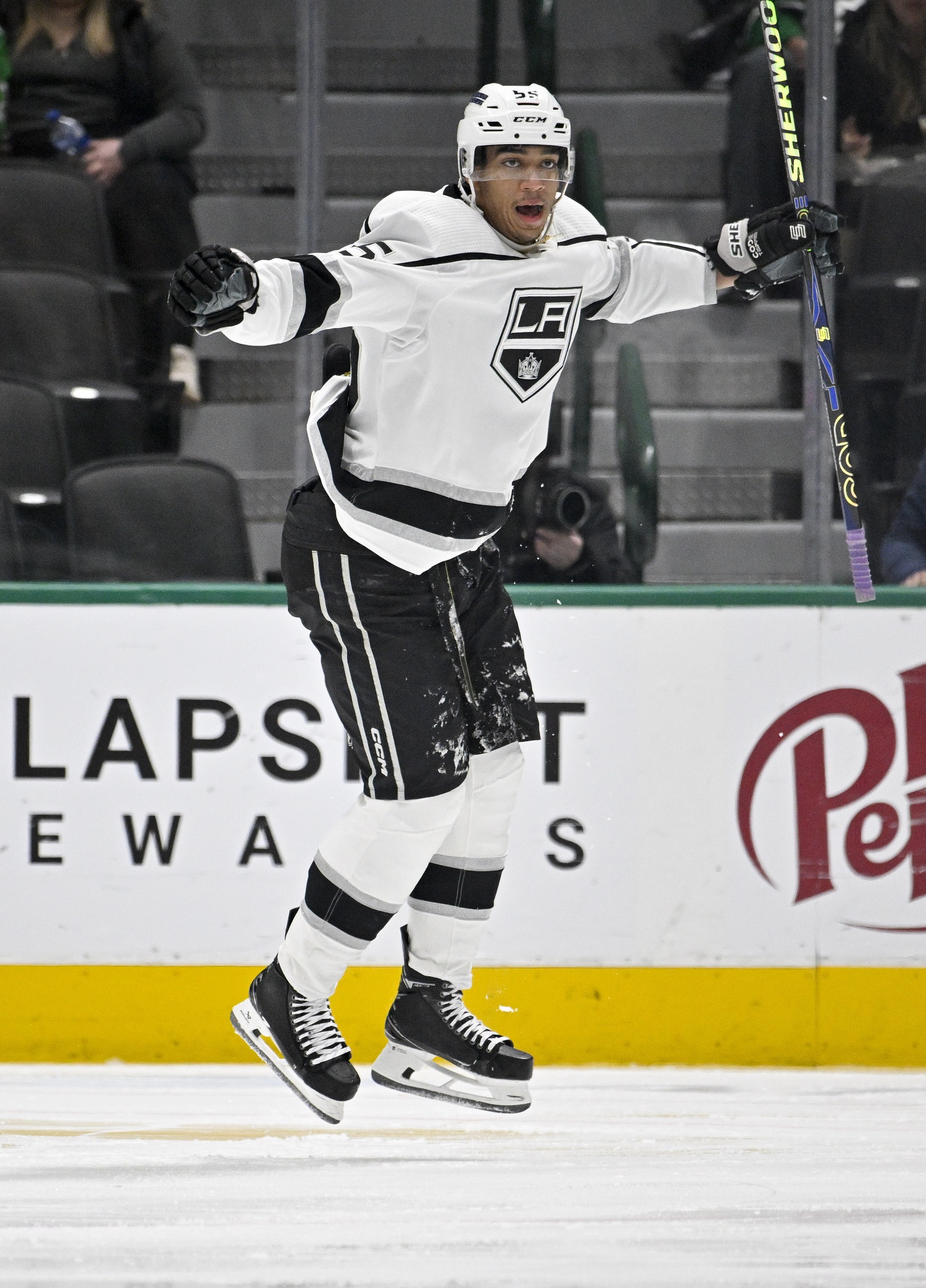
Los Angeles took care of one of their most important players when they locked Byfield into a five-year extension. The second overall pick in 2020 had a breakout season last year, registering 20 goals and 35 assists in 80 games. Byfield hadn’t shown much at the NHL level before last year and took a huge jump forward turning into a two-way center who will most likely fill a middle-six role for the Kings next year. Byfield’s playmaking reached new levels last season, and his 46 takeaways suggest that his defensive game is trending upward as well. At $6.25MM per season, Los Angeles is gambling that the 22-year-old is only scratching the surface, and they will likely be proven right over the next few seasons.
The Kings signed Spence to a two-year extension after the 23-year-old found some offensive success for the first time in three NHL seasons. Spence averaged 14:26 in ice time last season and was sheltered in a favorable role. His underlying numbers were quite good, demonstrating that the young rearguard is solid at generating offensive opportunities while making good defensive choices. Spence’s emergence likely influenced the Kings’ decision to move on from Matt Roy.
Departures
F Viktor Arvidsson (Edmonton, two-year, $8MM)
D Kevin Connauton (Utah, two-year, $1.55MM)*
G Aaron Dell (unsigned free agent)
F Pierre-Luc Dubois (traded to Washington)
F Carl Grundstrom (traded to San Jose)
F Hayden Hodgson (Ottawa, one-year, $775K)*
G Jacob Ingham (unsigned free agent)
C Blake Lizotte (Pittsburgh, two-year, $3.7MM)
F Mikhail Maltsev (signed in KHL)
D Matt Roy (Washington, six-year, $34.5MM)
D Steven Santini (Tampa Bay, one-year, $775K)*
G Cam Talbot (Detroit, two-year, $5MM)
F T.J. Tynan (Colorado, one-year, $775K)*
* denotes a two-way contract
Los Angeles let go of a lot of forward depth this summer as Arvidsson, Lizotte, Dubois, and Grundstrom have moved on. The effects of those departures could be felt this season, particularly if Jeannot doesn’t re-capture his game and if some of the Kings’ younger pieces are unable to take the next step.
The Dubois trade was one of necessity for the Kings as his contract had become an albatross after just a single season. Getting out of it was likely the right move for Los Angeles long term, even if it does cost them some depth scoring this season. Dubois didn’t fit in Los Angeles for some reason, he opted far too often to pass away the puck, rather than carrying it to the offensive zone to create scoring opportunities for teammates. Dubois could still work out in Washington, but if his game resembles that of what we saw last year, the Capitals could end up regretting the trade to acquire him.
Arvidsson was a valuable offensive contributor for the Kings but didn’t offer much last season as he was injured for a great deal of it. The Kings certainly missed his scoring and weren’t able to replace it this summer.
Carl Grundstrom was never much of a scorer but did contribute a decent amount for the little that he played. He also offered the Kings a physical presence, but that part of his game should be replaced adequately by Jeannot.
Lizotte is a low-maintenance player that the Kings opted to move on from. On paper, his departure doesn’t seem like a huge loss, but it could quietly be a blow to the Kings’ depth up front. Lizotte was a good forechecker, who could kill penalties and play with pace, something Los Angeles could use if they run into the Oilers again in the playoffs. The 26-year-old didn’t have a great offensive season last year but is just a year removed from a 34-point campaign and is an underrated passer.
Salary Cap Outlook
The Kings figure to enter training camp with just over $1.3MM in salary cap space and could potentially add a veteran player before the start of the regular season. Blake might also opt to keep the space open to make an in-season move to try and improve his club. Long term the Kings don’t have any pressing issues as most of their younger players are now signed to long-term deals. However, improvement in the future might become challenging as the Kings have several long-term contracts that aren’t exactly desirable and might be hard to move on from if the team wants to make significant additions.
Key Questions
Is The Team Better? The Kings shifted a lot of the furniture this offseason, tinkering on the edges of the lineup while maintaining most of their core players. But did it make them better? The answer will lie in the on-ice results but at the moment it’s hard to say whether shifting things around has made the group stronger. The Kings have run into the Oilers for three straight seasons and will likely face a similar opponent in the playoffs once again, and this year Blake focused on players who can help come playoff time, but it remains to be seen if that strategy will work.
What Will The Goaltending Look Like? Los Angeles is banking on Kuemper returning to form and if he does their goaltending should be a lot better. But will he get back to the goaltender he was a few years ago? The answer is very unclear, and the Kings don’t have a great plan B if Kuemper falters. Los Angeles could try and take a swing on another trade if Kuemper’s game isn’t where they need it to be, but they would be unlikely to move on from Kuemper’s cap hit in that scenario which would make a trade very difficult.
How Will The Defence Be? The Kings opted to let Roy go to free agency which won’t impact the top pairing of Mikey Anderson and Drew Doughty. However, it will move Spence onto the second pairing after he spent last season being sheltered. For the Kings’ third pairing, veteran Edmundson will likely line up alongside Brandt Clarke. Overall, it’s hard to say whether that defensive setup is better than last year’s lineup, but the Kings will be hoping it is if they want to take the next step.
Photos courtesy of USA Today Sports Images.
Summer Synopsis: Florida Panthers
The Florida Panthers achieved the ultimate goal earlier this year by winning the franchise’s first Stanley Cup in team history. Like most champions in the salary cap era, the Panthers have their work cut out for them regarding filling out their depth options for the upcoming campaign. The team has done well in keeping most of their core talent together but the negative externalities of the team’s run of success have created some holes further down the lineup.
Draft
2-58: C Linus Eriksson, Djurgårdens IF (HockeyAllsvenskan)
3-97: D Matvei Shuravin, Krasnaya Armiya Moskva (MHL)
4-129: C Simon Zether, Rögle BK (SHL)
6-169: C Stepan Gorbunov, Belye Medvedi Chelyabinsk (MHL)
6-193: F Hunter St. Martin, Medicine Hat Tigers (WHL)
7-201: G Denis Gabdrakhmanov, Tyumenski Legion (MHL)
It was always going to be difficult for Florida to make any noise during the draft due to their lack of draft capital. The organization swung some trades to acquire additional capital but only came away with one player projected to make an impact.
Eriksson is a legitimate NHL prospect after securing a solid season last year with Djurgårdens IF. The young center scored three goals and 11 points in 29 regular season contests and showed a knack for being a physical presence in all three zones. He was a star on the international stage last season scoring seven goals and 22 points in 22 international contests while playing for Sweden’s U18 squad.
Zether is the only other draft pick from the Panthers this summer that could become a fixture in Florida’s future lineup. Zether managed 42 games in the Swedish Hockey League last year while securing four assists. Rögle also kept him around for the playoffs with the team eventually losing in the Finals.
UFA Signings
D Adam Boqvist (one-year, $775K)*
F Jesper Boqvist (one-year, $775K)*
G Chris Driedger (one-year, $795K)
F MacKenzie Entwistle (one-year, $775K)*
F A.J. Greer (two-years, $1.7MM)
D Jaycob Megna (one-year, $775K)*
F Tomas Nosek (one-year, $775K)*
D Nate Schmidt (one-year, $800K)
* denotes a two-way contract
Most of Florida’s available cap space went to Sam Reinhart and his new eight-year, $69 MM contract. The team took a similar approach to last summer to find buy-low bargains on the open market.
The organization hopes that (Adam) Boqvist and Schmidt become a buy-low bargain as the Panthers require help on their blue line. The former is not far removed from being a top defensive prospect but has seen his career hampered by injuries up to this point. He recently scored five goals and 24 points in 46 games for the Columbus Blue Jackets in the 2022-23 NHL season but the team cut him loose after only posting one goal and 10 points in 39 games last year.
Schmidt will probably have a longer leash than Boqvist on the back end due to his lengthy experience and he could even sneak into the team’s top four. Schmidt is a trustworthy defenseman as evidenced by his 50.6% career CorsiFor% and he should be a seamless fit in Florida’s playstyle.
RFA Re-Signings
F Anton Lundell (six-years, $30MM)
Lundell has been a terrific middle-six option for the Panthers since his rookie campaign three years ago. He’s already collected 216 games in Florida with 43 goals and 112 points. He gives the Panthers another offensive player who can carry responsibility in all situations. The young Finnish forward was a major tool in the Panthers capturing their first Stanley Cup earlier this year with three goals and 17 points in 24 postseason contests.
Departures
D Lucas Carlsson (San Jose, two-year, $1.6MM)
F Nick Cousins (Ottawa, one-year, $800K)
D Oliver Ekman-Larsson (Toronto, four-year, $14MM)
D Casey Fitzgerald (NY Rangers, two-year, $1.55MM)*
G Magnus Hellberg (Dallas, one-year, $775K)*
F Ryan Lomberg (Calgary, two-year, $4MM)
D Brandon Montour (Seattle, seven-year, $50MM)
F Kevin Stenlund (Utah, two-year, $4MM)
G Anthony Stolarz (Toronto, two-year, $5MM)
F Vladimir Tarasenko (Detroit, two-year, $9.5MM)
*denotes a two-way contract
It was going to be next to impossible for Florida to keep around all their depth from last season and the team lost quite a bit this summer. The most concerning losses will be Montour and Ekman-Larsson on the blue line as the two combined for 17 goals and 65 points in 146 regular season games. The team still has Gustav Forsling and Aaron Ekblad left to carry the load but the Panthers will need major improvements from other members of their defensive core to replicate that success.
The trio of Cousins, Lomberg, and Stenlund were not game-breakers in their own right but their presence will be missed. That group of forwards gave Florida a certain level of grit last year making them irritating to play against. The team should be able to replicate their tenacity throughout the season and at the trade deadline but it seems like an edge they’re missing headed into this year.
Salary Cap Outlook
The Panthers have a similar situation to last year with only $766K in cap space heading into the regular season. The team will continue to accrue cap space throughout the regular season and should be able to upgrade their roster once the trade deadline rolls around. The team’s core is still intact meaning they won’t need to add any high-level talent via trade this year so they are in a good position to be competitive again. Nex summer could be dramatic as Ekblad, Sam Bennett, and Carter Verhaeghe are expected to reach unrestricted free agency.
Key Questions
Where Will The Physicality Come From? Florida was one of the most physical teams last year with 12 players recording more than 100 hits on the year. Four of those players left via free agency meaning the Panthers will need to supplant the missing toughness. It has become a part of their team identity and a tool for their success. Megna is the only addition from this offseason that could reach 100 hits throughout an entire regular season but this already feels like something the team will need to address at the trade deadline.
What Is The Plan For Spencer Knight? It was not long ago when Knight was one of the most exciting goaltending prospects in the league. He achieved an impressive run during the 2021-22 campaign leading the Panthers to extend him on a three-year, $13.5MM contract. Sergei Bobrovsky took back the reins in a turn of events that eventually led to Knight spending the entirety of last year with the AHL’s Charlotte Checkers. He played well with the Checkers earning a 25-14-5 record in 45 games with a .905 SV% and is projected to play backup for Bobrovsky this season. Still, Knight’s $4.5MM salary is one of the highest in the league for a backup netminder and the cap-strapped Panthers may look to move on from him if they get a reasonable offer.
Photos courtesy of USA Today Sports Images.
Possible Comparables For Dawson Mercer’s Contract
One of the more prominent remaining free agents is Devils forward Dawson Mercer. While he’s coming off a down season, he has had enough success over his first three NHL seasons that New Jersey would likely want to work out a long-term deal with them. Whether they can afford to, however, might be a different story.
The 22-year-old had the lowest output of his career last season but still managed 20 goals and 13 assists while playing all 82 games for the third straight year. But with a 42-point effort in his rookie season and a 56-point showing in his sophomore campaign, there’s enough of a track record for a long-term deal to potentially make sense.
Looking at some potential comparables, one of their division rivals has a couple of them in Joel Farabee and Travis Konecny (his current deal, not the extension he just signed). Both were post-entry-level pacts, checking in at $5MM and $5.5MM respectively. Mercer’s numbers are better than Farabee’s so it’s likely to come in above that while Mercer’s best year was better than Konecny’s at that point. If we use cap percentages (to reflect the increase in the salary cap at that time), the range of the two deals moves to between $5.333MM and $5.94MM.
Other possible comparable players in that range are Florida’s Anton Lundell ($5MM signed this year) and Nick Schmaltz ($5.875MM). Notably, none of those contracts were for the maximum eight years either; three were six-year agreements while Schmaltz was the exception at seven seasons. At this point, something in the high-$5MM area might be the right fit on a six-year deal for Mercer, one that would buy out two years of UFA eligibility. Going longer (adding on more UFA years) would only push that price tag higher.
But even affording the six-year contract would appear to be a challenge at first glance. At the moment, the team projects to have $4.976MM in cap space for the upcoming season, per PuckPedia, with a projected 22-player roster. They could increase that wiggle room by not carrying a full-sized roster but that leaves them vulnerable to injuries.
It’s also worth mentioning that they have more than $5MM in potential performance bonuses for Simon Nemec and Luke Hughes so they may want to leave themselves some wiggle room to absorb some of those – if earned – on the 2024-25 cap instead of rolling them over to their 2025-26 cap. Additionally, they will almost certainly want to leave themselves some room for in-season movement.
Put it all together and a long-term contract simply isn’t doable, not without moving someone of consequence off their current roster. And while something like that isn’t impossible, a lot of teams are now tight to the cap ceiling so it’s not as easy as it was six weeks ago to move money; let’s face it, it wasn’t all that easy then either.
That squarely pushes the contract needle in the bridge direction for Mercer. A two-year agreement would only cover one arbitration-eligible season but should check in around the $3.5MM per season mark, one that would leave GM Tom Fitzgerald at least $1MM in flexibility heading into the fall. That’s not a lot – especially if there’s an early injury – but that would still have them in reasonable shape. With him being four years away from UFA eligibility, something in the three-to-five-year range would be a bit riskier so it’s less likely to be one of those lengths.
While it might sound simple enough in theory, this is the type of contractual situation that can drag out. If Mercer’s camp wants to hold out for the possibility of a long-term agreement, they’ll need to wait to see if something happens in terms of roster movement over the next six weeks or so. And if both sides are resigned to a short-term agreement, Mercer could simply opt to wait until closer to camp to see if there’s an injury that gives him a bit more leverage and perhaps gives him a chance at a bit more money. Neither of those scenarios are any reason for concern, that’s just sometimes how things play out with players coming off entry-level deals if they’re not signed at this point.
Despite the down year, Mercer is quite likely to be viewed as a key piece of New Jersey’s plans for the foreseeable future. But with how their roster looks, it seems unlikely that they’ll be able to give him the type of contract commensurate with a core player. Barring a change, that contract will have to come after they get through a bridge deal first.
Salary Cap Deep Dive: Nashville Predators
Navigating the salary cap is one of the most important tasks for a front office. Teams that can avoid total cap chaos by walking the tightrope of inking players to deals that match their value (or compensate for future value without breaking the bank) remain successful. Those that don’t often see struggles and front office changes.
PHR will look at every NHL team and give a thorough look at their cap situation heading into the 2024-25 season. This will focus more on players who are regulars on the roster versus those who may find themselves shuttling between the AHL and NHL. All cap figures are courtesy of PuckPedia. We begin with a look at the Central Division; next up is Nashville.
Nashville Predators
Current Cap Hit: $84,904,199 (under the $88MM Upper Limit)
Entry-Level Contracts
F Luke Evangelista (one year, $797.5K)
Evangelista’s first full NHL campaign was a good one as he notched 39 points after putting up 15 points in 24 games in 2022-23. That isn’t a statistical profile that suggests a long-term agreement will be forthcoming but if he can have a similar offensive showing this season, Evangelista could approach the $3MM mark on a bridge agreement.
Signed Through 2024-25, Non-Entry-Level
D Dante Fabbro ($2.5MM, UFA)
F Gustav Nyquist ($3.15MM, UFA)
Nyquist came to Nashville in the middle of a down season which hurt his market last summer. However, his first full season with the Preds was his best as he set new career bests in assists (52) and points (75). A repeat showing could give him a shot at a fair-sized raise, albeit on a short-term deal as he’ll be 36 when the 2025-26 season kicks off.
Fabbro has shown flashes of being a key secondary piece on Nashville’s back end in the past but has settled into more of a depth role in recent years. That said, he’s still just 26 and as a right-shot player, he should still command a fair bit of interest next summer in free agency. Even if he stays in the role he’s had lately, he should push past the $3MM mark on his next contract.
Signed Through 2025-26
F Mark Jankowski ($800K, UFA)
D Jeremy Lauzon ($2MM, UFA)
F Michael McCarron ($900K, UFA)
D Luke Schenn ($2.75MM, UFA)
F Cole Smith ($1MM, UFA)
F Colton Sissons ($2.857MM, UFA)
D Spencer Stastney ($825K, RFA)
G Scott Wedgewood ($1.5MM, UFA)
Sissons’ seven-year contract drew some ire at the time for someone whose role was somewhat limited at the time but it has held up relatively well in most of those seasons. He has provided enough secondary scoring to give them some value on that front while being a key defensive player. He should land another multi-year deal above $3MM if that holds up the next two years. Smith has emerged as a viable fourth-line physical winger over the last two seasons. Those players tend to do well on the open market still so if he can push past the double-digit goal mark, he could double his price tag in 2026. McCarron and Jankowski have been depth players throughout their careers and are likely to see their future contracts check in relatively close to the league minimum.
Schenn had a resurgent season in 2022-23, moving him from someone making around the minimum salary to someone making nearly four times that much. He had a limited role with the Preds last season; it’s fair to suggest they were expecting him to cover more than 15 minutes a night. Continuing with that level of ice time could land him back near the minimum in 2026.
Lauzon was counted on to play a bigger role last season, ranking fourth among Nashville blueliners in ATOI while leading the NHL in hits by 60 over the next closest player. Two more years like that would give him a strong market heading to free agency where doubling his current price tag could be doable. Stastney split last season between Nashville and AHL Milwaukee and might be in a similar role this season. He’ll need to crack the lineup full-time before having a shot at passing the $1MM mark.
Wedgewood had a good run as the backup in Dallas which allowed him to get a 50% raise on this deal with Nashville. Barring injury, he won’t be counted on to play as many games as a top-level backup and if that winds up being the case, that will prevent him from getting closer to the top backup money ($3MM or more) that many netminders have received in recent years.
Signed Through 2026-27
D Alexandre Carrier ($3.75MM, UFA)
F Thomas Novak ($3.5MM, UFA)
F Ryan O’Reilly ($4.5MM, UFA)
 The decision to sign O’Reilly as their top center last summer was a bit of a curious one considering that he hadn’t been in that role for several years and the fact he was coming off his lowest point-per-game rate since he was a teenager. However, he showed that he still had a high level of offense in his game while continuing to be an above-average player at the faceoff dot and a strong defender. Even if there’s a bit of a dip in his production given some of the extra firepower brought in this summer, this is still a good price tag if O’Reilly ultimately settles in as more of a second liner. There may be some concern for the final year of the deal when he’s 36 but right now, this has worked out quite well for the Preds.
Novak was a feel-good story in 2022-23, putting up 43 points in 51 games after being recalled from the minors. He showed last year that the performance wasn’t just a mirage, surpassing the 40-point mark again, earning himself this new deal in the process. As long as Novak continues to stay around the 40-point range, Nashville will get at least a reasonable return on this contract.
Carrier bounced back well after a rough 2022-23 season, spending a lot of time in Nashville’s top four which gave him some leverage heading to the open market. He opted not to test it, instead accepting a 50% increase in his cap hit, not a bad outcome for someone who only became a regular NHL player in 2021-22.