PHR Mailbag: Tkachuk, Red Wings, Rebuilds, Sabres, Blue Jackets
Topics in this edition of the PHR Mailbag include some Brady Tkachuk trade proposals, discussions about rebuilds, and much more. If your question doesn’t appear here, check back in our last two mailbag columns.
SkidRowe: Any potential for a deal centered around David Pastrnak for Brady Tkachuk?
I would say probably not. For starters, moving a pair of franchise players within their own division is something we rarely see and I suspect both teams would hesitate there. Cap-wise, Ottawa can’t afford to take on an extra three-plus million per year on their books so that’s a deal-breaker as well. But let’s dig a bit deeper.
For the Bruins, can they afford to lose even more firepower? While Tkachuk undoubtedly fits the Boston archetype, so to speak, he has been a point-per-game player just once in his career and he just barely got there. Pastrnak has been at or above that level every year since 2018-19. Going into play today, the Bruins sit 26th in goals scored. While their numbers are a bit closer this year, I’d be really hesitant about taking away more natural scoring talent from a team that frankly doesn’t have a lot of it at the moment.
As for the Senators, Tkachuk is their one true power forward out of their young core. (I know Joshua Norris has been more physical this year but they’re not in the same class.) The fact that he can play center when needed also gives him some extra value. He also fits in with the age of their core group whereas Pastrnak is three years older (and again, $3MM more expensive for longer). It’d be hard to see them make that swap.
Value-wise, it’s not a bad foundation at all. But it’d shock me if this move was made.
SoCalADRL: Zegras, Mintyukov, Sidorov, and a 2026 1st for Brady Tkachuk. Who says no?
I’d say Ottawa says no at a minimum. Picking up from the above thoughts, they’re still losing the power forward without getting anything like that in return (Yegor Sidorov is not that type of prospect). Ottawa ran into an issue last year with three top-four left-shot defensemen which played a role in them moving Jakob Chychrun at the start of free agency last summer. Adding Pavel Mintyukov – a promising rearguard, no doubt – puts them basically right in that spot. And Trevor Zegras’s trade value is about the lowest it has ever been. To me, the most intriguing asset is the 2026 first-rounder, assuming it’s unprotected. With Ottawa in a fight for the playoffs and trying to emerge from its rebuild, this isn’t the type of move they should be making.
Anaheim, on the other hand, I think would say yes to this, even though it means losing two premier assets in Mintyukov and the first-rounder. If GM Pat Verbeek was looking to make a move earmarked toward helping its young core become much more competitive, adding a player like Tkachuk would give them a dimension they don’t necessarily have while his style of play would fit in the West. But I don’t see a good case for the Sens to accept this offer.
Brassroo: Realistically, what kind of return could the Red Wings expect for any of Compher; Tarasenko or Talbot? Detroit needs to make some room in their Cap and roster for ‘25-‘26.
This probably isn’t a good time for Detroit to be trying to move J.T. Compher. He’s signed at $5.1MM a year through the 2027-28 campaign and is having a rough year with six goals and 14 assists in 43 games while seeing his playing time cut by nearly three minutes a night from last season. At the moment, his value is probably the lowest it’s been in a long time. While I understand the desire to create cap space, the likeliest outcome if they moved him now would be a swap of similarly-priced underachieving contracts, meaning they wouldn’t be getting much cap room. He feels like more of an offseason move when teams have more flexibility heading into free agency although again, offloading the full freight of that deal seems unlikely.
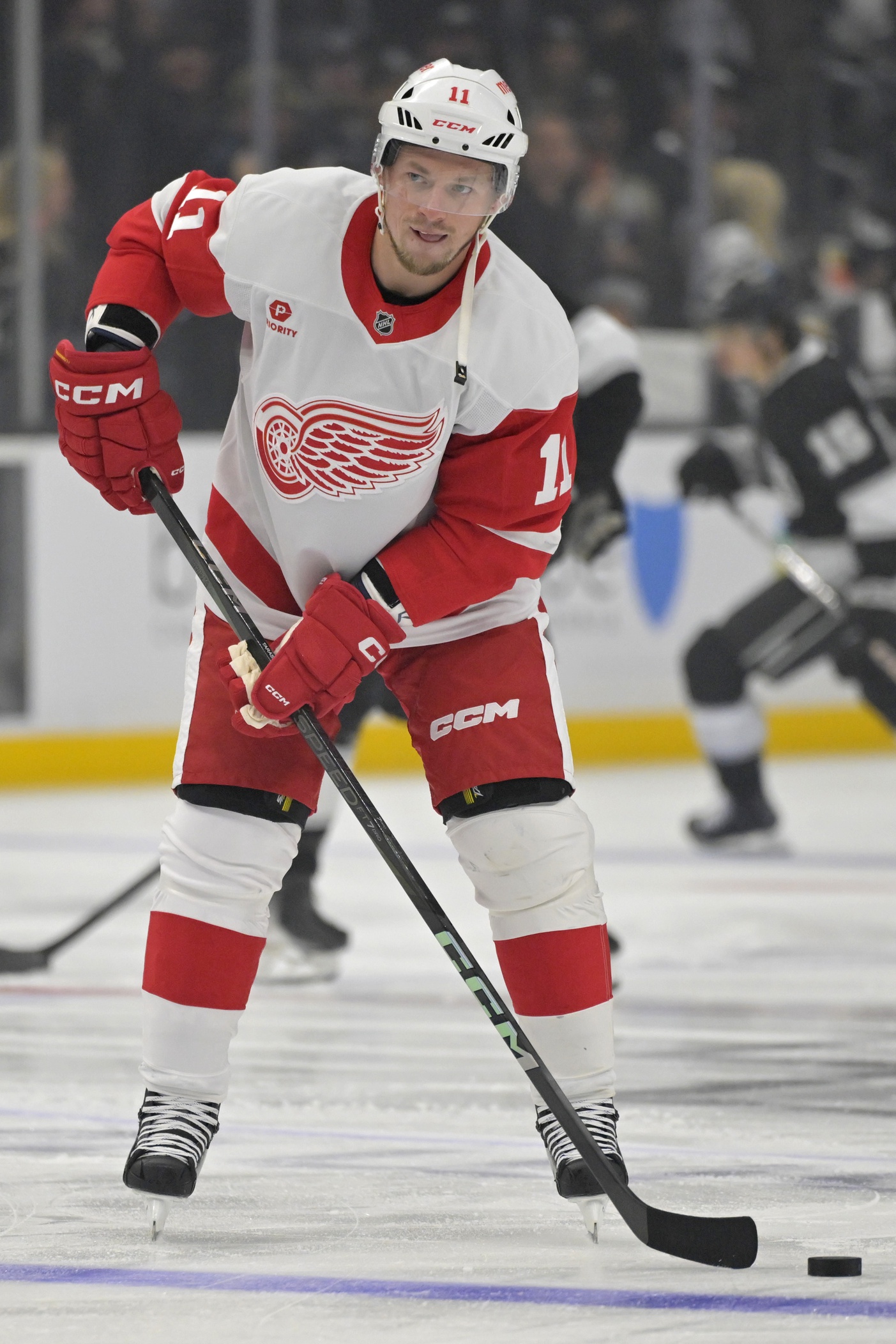 At $4.75MM for one more season after this one, it probably would be easier for Vladimir Tarasenko to be dealt although he has a full no-trade clause to contend with. But the Red Wings would be trying to sell a team that his struggles with them is the outlier, not a sign that he’s slowing down at age 33. I don’t think he’d be a priority add for most teams though but rather a third or fourth option type of addition. Without retention, they’d probably have to take a smaller contract back and maybe land a third-round pick. With some retention, he’d be worth a second-rounder but then you’re obviously hamstringing your cap space for next season. Again, he’s probably easier to move in the summer and his trade protection drops considerably at that time.
There doesn’t appear to be a particularly strong goalie market at the moment. That can change with a few injuries, of course, but I don’t think there’s a return out there that would justify moving Cam Talbot. And frankly, at $2.5MM for next season, they’re not really saving a whole lot there either as unless they feel Sebastian Cossa is ready for full-time action, they’ll have to sign a replacement who will probably cost a similar price anyway. With his age and the extra year, I’m skeptical they could land a second-round pick so I don’t think there would be much value in moving him.
Grocery stick: Are good old full-scale rebuilds still a thing? It’s been a while since we’ve seen a team pull it off. The Red Wings had multiple top-10 picks who should deliver by now, but they are still playing catch-up. The Sabres had two firsts overall, and they are nowhere near playoff contention. The Coyotes have been at or near the bottom for years, and they are a bubble team at the moment. The Devils are leading the Metro, but it’s already been more than five years since they drafted Jack Hughes, and they have been lucky to trade away their prospects at the right time since then. Do we need to be more patient with rebuilding teams? Is it the fault of the individual GMs? Or is tanking for high picks a strategy of the past?
Full-scale rebuilds are definitely still a thing. Look at what Chicago and San Jose have been doing in recent years. I’d put Anaheim in that class as well as a team that has been out for a few years already and is probably a few more away from being even a playoff threat again. When a team goes that route, they’re not embarking on a short-term solution.
You mentioned the Coyotes (now Utah). It was fairly recently that GM Bill Armstrong said he felt that they were only at the midway point of the process and that they were still several years away from getting where they think they can get to. That franchise has been at it even longer than these three so viewed in that lens, more patience is probably needed. A rebuild isn’t a matter of a quick teardown and a few years to build back up; it clearly takes more time than that to do it properly.
As for it being the fault of the GMs, it largely does fall on them. The teardown to bottom out is the easy part as teams will happily trade for better talent. But if that’s not executed properly and they don’t maximize their assets, then that delays things. Then, as they’re building up, do they commit to the right core players and acquire or sign the right pieces to move things along? That last bit is especially difficult. In the meantime, is the proper infrastructure in place in terms of coaching and player development? Hit on all of these and a team can truly do this type of rebuild and thrive afterward. But miss along the way and it definitely slows the process down.
I don’t think this is a strategy of the past simply because top talents are going to be tantalizing to try to get. But it also can’t be a strategy that more than a few teams take at one time simply by virtue of there generally only being one elite star (or sometimes generational) player in a draft class; ten teams can’t tank for that.
We’re now starting to see teams start a rebuild and then trade draft picks and future assets for some younger but still established NHL players to try to speed up the process. Montreal is a team that seems to be taking that approach, for example. I’ll be curious to see if more try to follow suit this way knowing the higher risks associated with the ‘scorched earth’ approach that doesn’t always work as well as planned.
KL: Can Columbus build on their spirited play at home in the first half of the season to challenge for a playoff spot?
I don’t think anyone would have realistically thought that the Blue Jackets would be one of the top-scoring teams in the league this season after losing their two most prominent veterans but entering today’s action, they’re fourth. That’s a testament to the young players stepping up, Zach Werenski having a Norris-worthy season, and the coaching staff for bringing it all together. If they can keep that up in the second half, sure, they can stay in the mix.
Having said that, I’d still pick against that happening. I’m not convinced that their high-scoring ways are sustainable, especially with a young roster. On top of that, their goaltending is still a significant issue. Elvis Merzlikins has shaved 0.4 goals per game off his GAA but his save percentage is down to just .890 which is below average. Daniil Tarasov is having an even rougher season while third-stringer Jet Greaves hasn’t played enough to reliably be counted on at this time.
Now, if GM Don Waddell can find a move to make to upgrade his goaltending, that could change their fortunes in a hurry. In that instance, I think they’d have a much better chance of getting to the playoffs. But for now, I think they’ll fall out of the race at some point.
Poll: Who Will Win The 2025 Vezina Trophy?
The season has hit its halfway point, drawing attention to the leaders of the 2025 NHL Award races. Of the bunch, the long list of candidates for this year’s Vezina Trophy as ‘Goalie of the Year’ seem the least played out. There are plenty of goalies serving as the backbone to their team’s success this season – including repeat Vezina winners, seasoned veterans getting their first bid at the title, and youngsters finally flaunting their talent. It’s a race that will likely be determined by which goalie can best weather the season’s second half. But let’s take a moment to gauge the playing field, and answer the question of which goalie could win the quintessential award.
For the rich mix of names, two-time Vezina winner Connor Hellebuyck seems like a clear front-runner. He’s leading the gauntlet, ranked on top of the NHL in games played (34), wins (26), save percentage (.928), and goals-against-average (2.02). Even better, Hellebuyck’s success has coupled perfectly with the Winnipeg Jets’ 3.55 goals-per-game average, third-best in the league, to push the Jets to a tie for the top spot in the entire league. Hellebuyck has, once again, looked unbeatable – continuing his dominance after winning the 2024 Vezina Trophy with 37 wins, a .921 Sv%, and 2.39 GAA in 60 games last year. Another title win this year would make Hellebuyck the first goaltender since Martin Brodeur (2003, 2004; 2007, 2008) and Dominik Hasek (1996 -1999) to win the award in back-to-back years.
But Hellebuyck is facing mounting competition from the names behind him – most notably from Jacob Markstrom, who’s brought solace to a New Jersey Devils crease in need of someone solid. Markstrom has 21 wins, a .911 Sv%, and a 2.19 GAA through 32 games this season. He’s been heavily utilized in his first year with the Devils, and the team is playing to their strengths with him at the helm. The Devils rank sixth in the league with a 26-15-4 record, while allowing the fourth-fewest goals-against per-game (2.53). Markstrom ranked second in Vezina Trophy voting in 2022, after tallying 37 wins and a .922 in 63 games with the Calgary Flames. This season could be his chance to return to those heights, especially if he can mount a strong second-half.
Darcy Kuemper is singing a similar story out West, clawing his way back to Vezina Trophy acclaim with 12 wins and a .919 in his first 20 games with the Los Angeles Kings since 2017-18. Kuemper landed on injured reserve with a lower-body injury earlier in the year, limiting his chance to build a strong case for the title. But he’s returned in full, playing in 10 of Los Angeles’ 15 games since returning from injury and posting a dazzling 8-0-2 record and .937 Sv%. Continued health, and dominant hockey, could quickly push Kuemper into the first top-three Vezina finish of his career.
Behind the veterans are a long list of young and improving netminders leading strong charges. Kuemper’s departure from the Washington Capitals has opened the door for Logan Thompson to step into the spotlight. He’s split starts with Charlie Lindgren, but nonetheless posted an impressive 18-2-3 record, .919 Sv%, and 2.32 GAA through 23 games this season. Thompson is still just 27, and only has one year of experience serving as his team’s full-time starter – when he posted 25 wins and a .908 Sv% in 46 games with Vegas last season. That inexperience could hurt his chances at taking home hardware, but his launch in Washington may make it easier to ignore. The same dialogue largely surrounds Seattle Kraken starter Joey Daccord who – like Kuemper – faced tough battles with injuries but is still thriving in his starting role. Daccord has a .914 and 2.45 GAA in 25 games this season, both in line with his strong first year as Seattle’s starter last season. He’s proving his place, and a strong second-half and award nomination could be enough to stamp it permanently.
The list of contenders drags on out West. Mackenzie Blackwood is turning a new leaf with the Colorado Avalanche – posting a stellar 10 wins and .939 Sv% in 11 games with the club. Rookie goaltender Dustin Wolf has finally won Calgary’s starting role, and managed 14 wins and a .916 in 22 games to push himself into both Vezina and Calder Trophy discussions. But of the Western Conference netminders making claims, few are louder than Filip Gustavsson. Many questioned Gustavsson’s longevity in Minnesota’s starting crease, with Jesper Wallstedt inching closer to a full-time NHL role. But Gustavsson is showing just how capable he is this season. Serving as one of the few routinely-healthy pieces of Minnesota’s lineup, Gustavsson has posted a 18-7-3 record and .918 Sv% – enough to lead Minnesota to a top-five rank in the NHL. How the Wild battle through their laundry list of injuries in the second-half will define how this season goes down in their history books – and Gustavsson’s strong play could be the sole piece that keeps a hot year from falling downhill.
There are plenty of strong contenders for this year’s Vezina Trophy, and it seems the best is yet to come for many of these netminders. All have elevated their teams with consistently strong play. Who do you think will keep it going through the Spring, and take home this year’s ‘Goalie of the Year’ award?
Who Will Win The 2025 Vezina Trophy?
-
Connor Hellebuyck 74% (395)
-
Jacob Markstrom 8% (41)
-
Filip Gustavsson 5% (27)
-
Darcy Kuemper 4% (19)
Total votes: 531
2024-25 NHL Waiver Claims
The following is a list of all waiver claims made across the NHL in the 2024-25 season. The corresponding story for each waiver claim is linked with the date preceding the transaction. This list will be continuously updated throughout the campaign.
Updated 3-6-25
Oct. 2, 2024 – Bruins claim G Jiří Patera from Canucks
Oct. 7, 2024 – Canucks claim G Jiří Patera from Bruins
Oct. 7, 2024 – Ducks claim G James Reimer from Sabres
Oct. 7, 2024 – Blue Jackets claim F Zach Aston-Reese from Golden Knights
Oct. 7, 2024 – Golden Knights claim F Cole Schwindt from Flames
Oct. 7, 2024 – Golden Knights claim F Raphael Lavoie from Oilers
Oct. 9, 2024 – Oilers claim F Raphael Lavoie from Golden Knights
Oct. 11, 2024 – Avalanche claim G Kaapo Kähkönen from Jets
Oct. 11, 2024 – Golden Knights claim F Raphael Lavoie from Oilers
Nov. 10, 2024 – Blue Jackets claim D Dante Fabbro from Predators
Nov. 12, 2024 – Jets claim G Kaapo Kähkönen from Avalanche
Nov. 13, 2024 – Sabres claim G James Reimer from Ducks
Nov. 19, 2024 – Oilers claim F Kasperi Kapanen from Blues
Dec. 11, 2024 – Oilers claim D Alec Regula from Bruins
Dec. 12, 2024 – Utah claims D Dakota Mermis from Maple Leafs
Dec. 13, 2024 – Wild claim D Travis Dermott from Oilers
Dec. 14, 2024 – Bruins claim F Oliver Wahlstrom from Islanders
Jan. 3, 2025 – Maple Leafs claim D Dakota Mermis from Utah
Jan. 5, 2025 – Utah claims D Nick DeSimone from Devils
Jan. 6, 2025 – Rangers claim F Arthur Kaliyev from Kings
Jan. 22, 2025 – Sharks claim F Walker Duehr from Flames
Jan. 31, 2025 – Islanders claim D Adam Boqvist from Panthers
Feb. 5, 2025 – Wild claim F Vinnie Hinostroza from Predators
Feb. 9, 2025 – Penguins claim D Vladislav Kolyachonok from Utah
Feb. 10, 2025 – Predators claim D Andreas Englund from Kings
Feb. 27, 2025 – Oilers claim D Travis Dermott from Wild
March 6, 2025 – Predators claim F Jakub Vrána from Capitals, D Jordan Oesterle from Bruins
March 6, 2025 – Blue Jackets claim F Christian Fischer from Red Wings
PHR Mailbag: Offer Sheets, Flyers, Werenski, Rossi, Soderblom, Islanders, Standings
Topics in this edition of the PHR Mailbag include Zach Werenski’s Norris candidacy, forecasting the next contract for Marco Rossi, and much more. If your question doesn’t appear here, check back in last weekend’s mailbag while we’ll run one more next weekend as well.
Gmm8811: It’s looking like the Broberg/Holloway offer sheets have worked out really well for the Blues. Do you foresee more GM’s taking a harder look at that option in the future? Thoughts on next year’s steals?
At this point, the Blues certainly have to be happy with how things turned out. Philip Broberg is a legitimate top-four defender for them and Dylan Holloway has blown past his career bests offensively and turned into a capable top-six winger. For what it’s worth, Edmonton pivoted relatively well with their low-cost replacements of Ty Emberson and Vasily Podkolzin, given the circumstances. Those two aren’t playing at the level Broberg and Holloway are now but they are playing to the level those two likely would have performed at had they stayed with the Oilers.
That type of success story should make general managers a bit more willing to look into offer sheets as an option although I do think more of them get floated around than we ever see. We only find out when one is signed, not when one is discussed between teams and agents. With another fair-sized jump expected in the salary cap, there’s definitely going to be a chance for a strategic offer sheet or two this summer.
The challenge is finding a team that will be cap-strapped early in free agency. There will be plenty, sure, but identifying them now isn’t as easy as there are many signings and trades to be made over the next six months. It’s also finding a younger player who wants a shorter-term deal as with the divisor for offer sheet compensation only being a maximum of five (even on a contract longer than that) cranks up the draft pick cost too high to be worthwhile.
If Florida finds a way to re-sign or replace both Aaron Ekblad and Sam Bennett, they’re going to have to look at low-cost deals to round out their roster. That could make someone like Mackie Samoskevich a bit vulnerable as the Panthers would probably prefer a cheap one-year contract while he could command a two-year or three-year deal from a team that sees him playing a bigger role and is willing to pay him accordingly. If Seattle re-signs or replaces Yanni Gourde and Brandon Tanev, that might push them into a lower-cost deal with Ryker Evans so I think teams would sniff around that but he seems less likely. If the Stars are active between retaining or replacing their veterans, they could be vulnerable if they force themselves to pursue shorter-term agreements with their RFAs. Wyatt Johnston probably isn’t attainable but if there’s a team that really believes in Mavrik Bourque, I could see him garnering offer sheet interest as well.
Emoney123: Is there a trade or potential 2025 free agent the Flyers can pair with Michkov?
From a UFA perspective, it depends on whether Philadelphia views Mikko Rantanen as a center, a position he has played off and on with Colorado. If Rantanen wants to go for top dollar (which likely takes him off the table to re-sign), the Flyers are one of the teams that would have enough cap space that they could plausibly afford him without needing to do much subtraction from their roster. I suppose Mitch Marner fits as well if Matvei Michkov switches to the left wing as a left-hand shot but is that too much raw playmaking on one line? That said, if the Flyers had a shot at adding a top talent like that, do it and figure the rest out later might be the best approach there.
On the trade front, Vancouver seems like the team to try to make a move with if they ultimately decide to move one of Elias Pettersson or J.T. Miller (who has full no-trade protection). Legitimate top centers don’t come available too often and while both players have recent question marks, they also have a proven track record of recent production. The cost for either would be significant, both in terms of current and future assets and with the Flyers still being in the build-up stage, a swap like that might not be at the most optimal time. But again, with the scarcity of those types of players being traded, that shouldn’t dissuade GM Daniel Briere from inquiring at least about what it would cost to get one of them.
bottlesup: It might be a bit early, but is it safe to throw Werenski’s name into the Norris conversation?
I’d say it’s very safe to have Werenski in that mix. He’s among the league leaders among blueliners for points, plays in all situations (all-around ability is right in the criteria for the award), and leads the NHL in average ice time. When you’re in the mix offensively with the likes of Cale Makar and Quinn Hughes, you’re definitely doing something right. He has undoubtedly played a significant role in the Blue Jackets surprisingly finding themselves in the battle for a playoff spot at the midway mark of the season, an outcome few would have seen coming.
I expect that their playoff situation will ultimately dictate whether he wins the award. That, and staying healthy, of course. It’s not unprecedented that a non-playoff blueliner wins it as Erik Karlsson did just two years ago. However, his numbers were so far and beyond the rest (he had 25 points more than any other defender) that they were enough of a difference-maker. Werenski isn’t going to have that luxury. If the Blue Jackets come up short of a playoff spot, he’ll probably land plenty of second and third-place votes but that won’t be enough to win. But if they get in, he’ll be the driving reason why which should sway lots of first-place votes his way and make the difference.
Zakis: What does a Marco Rossi extension look like?
Why are the Iowa Wild perpetually bad and has that had influence on prospects seemingly not reaching another level (thinking Hunt, Lambos, Jiricek)?
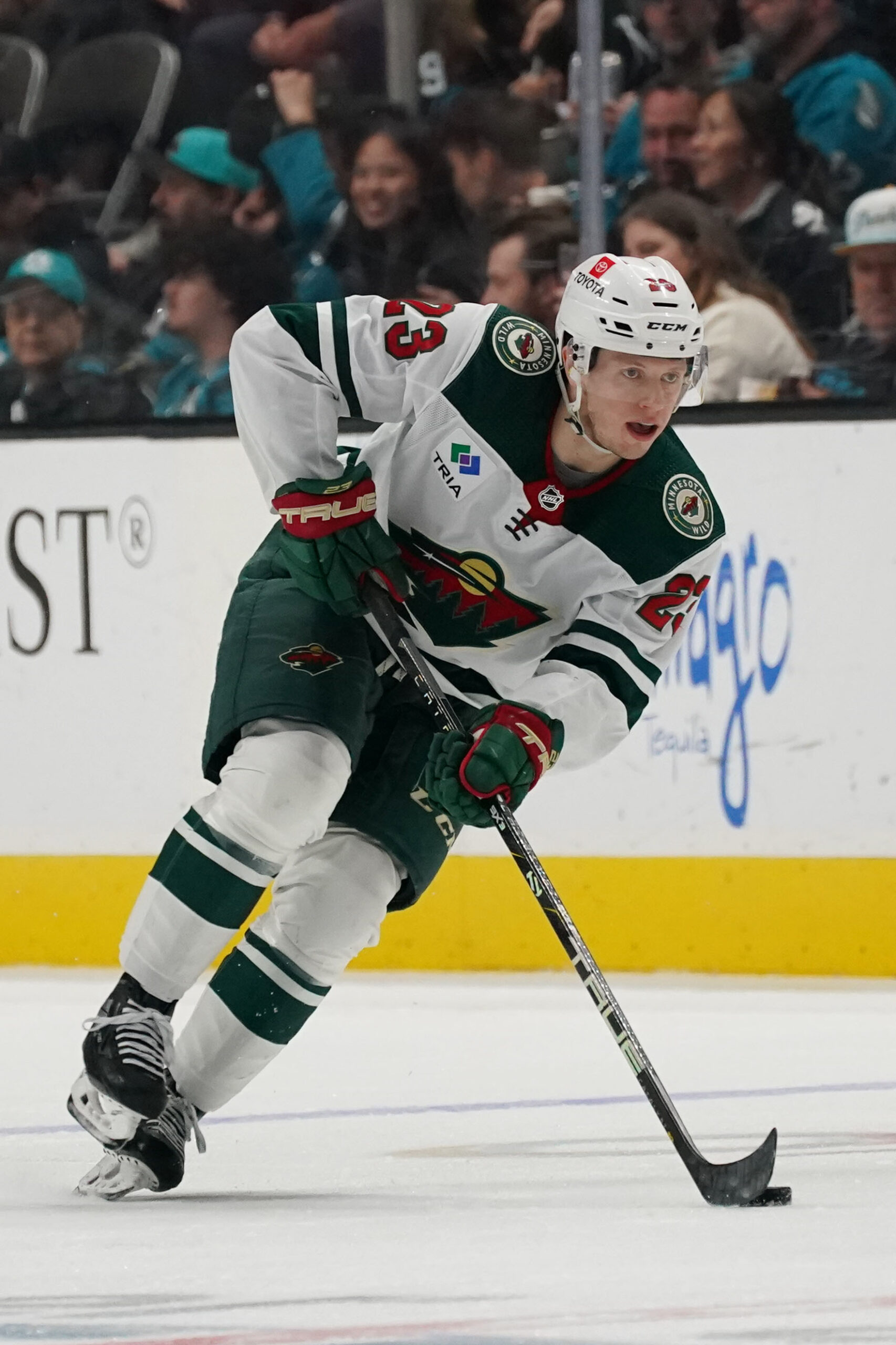 Back in the summer, I basically pegged Rossi’s range as a bridge deal starting with a three or a long-term deal starting with a five if he had a season similar to 2023-24 this year. That clearly isn’t happening since he’s already nearly matched his point total from a year ago in half the games. That’s certainly going to change the numbers. The bridge deal now will probably start with a four and a longer-term agreement that buys out UFA years coming closer to the $7MM range depending on how many years it buys out. (And if he produces at an even higher rate in the second half, those numbers will go up even more).
Despite the strong showing this season, I tend to lean toward the bridge deal for Rossi. There has been a lot of smoke about the Wild not being fully sold on Rossi (who’s undersized for a center) and while the team has tried to quash that, I don’t think they’re going from being uncertain about him to handing him a long-term deal. I also expect Minnesota to take advantage of their cap space and try to make a splash or two in free agency (or on the trade front) that might push them to have to go that route anyway.
As for the farm team, I didn’t realize the history was that bad. For those who don’t follow Iowa, in their first 11 years of existence, they made the playoffs once and lost in the play-in round once. There has been considerable turnover in terms of their coaching along the way as well. Without watching them closely, I can’t begin to assess what’s happening beyond simple guesswork which doesn’t do any good.
I don’t think it’s fair to put David Jiricek in that group considering he’s barely been with them for a month but I would suggest that yes, a continuous losing environment doesn’t help from a development perspective. Sometimes it’s good to have more prospects meaning the youngsters are getting playing time but I believe there’s value in being in a good spot, playing meaningful hockey, and seeing some playoff action. It’s hard to objectively state that yes, that held some players back from getting to another level – it’s not that simple, obviously – but I’d say it hasn’t helped.
Unclemike1526: Not being able to watch the games this year, I’m just curious is Soderblom that much better or is it just a mirage? After being able to watch the last three games I’m not exactly missing watching them anyway. It would be nice to get an opinion. I’d dare say right now Soderblom is the best G on the Hawks since Laurent Brossoit can’t play. As bad as Soderblom was last year it’s hard to believe he is that much better.
It’s a combination of a couple of things. Arvid Soderblom is still young (he’s 25) and it was reasonable to think he’d bounce back, at least to a point after a tough 2023-24 season. Also, year-to-year volatility for goalies is pretty common, especially younger ones; if veterans can have big swings in performance, so can the unproven ones. I wouldn’t necessarily say it’s a mirage, it’s just a young goalie who hopefully improved after a tough year and with less than 20 appearances, it’s still too early to say much conclusively.
With Brossoit out and Petr Mrazek a veteran placeholder, you’re absolutely right in that Soderblom is their best option right now. And with the Blackhawks going nowhere in the standings this year, they should be going to Soderblom more often right now so that they can better assess him. There’s a reason why he was their goalie of the short-term future not long ago and a reason why they had to go add Brossoit in the summer since he played so poorly last year. Right now, they need to get a better sense of what they have and see if he’s still part of the future plans.
Salary Cap Deep Dive: Boston Bruins
Navigating the salary cap is one of the most important tasks for a front office. Teams that can avoid total cap chaos by walking the tightrope of inking players to deals that match their value (or compensate for future value without breaking the bank) remain successful. Those that don’t often see struggles and front office changes.
PHR will look at every NHL team and give a thorough look at their cap situation for the 2024-25 season. This will focus more on players who are regulars on the roster versus those who may find themselves shuttling between the AHL and NHL. All cap figures are courtesy of PuckPedia. We’re currently covering the Atlantic Division, first up is the Bruins.
Boston Bruins
Current Cap Hit: $87,387,497 (under the $88MM Upper Limit)
Entry-Level Contracts
F John Beecher (one year, $925K)
D Mason Lohrei (one year, $925K)
Potential Bonuses
Lohrei: $250K
Beecher spent most of last season in Boston, albeit in a limited role, one that has carried over to this season. He’s having a decent season on their fourth line but players like this tend to sign a short-term second contract. He should be able to add a few hundred thousand to his current price tag on a two-year deal.
Lohrei performed well in Boston last season, getting into half of their games, helping him secure a full-time spot this year. His role has largely been limited – he’s often on the third pairing – but a regular role on the power play has him sitting second in scoring among Bruins blueliners. A bridge deal is likely for him as well but it should check in around double of what Beecher winds up with.
Signed Through 2024-25, Non-Entry-Level
F Justin Brazeau ($775K, UFA)
F Trent Frederic ($2.3MM, UFA)
F Morgan Geekie ($2MM, RFA)
F Cole Koepke ($775K, UFA)
F Brad Marchand ($6.125MM, UFA)
F Oliver Wahlstrom ($1MM, RFA)
D Parker Wotherspoon ($800K, UFA)
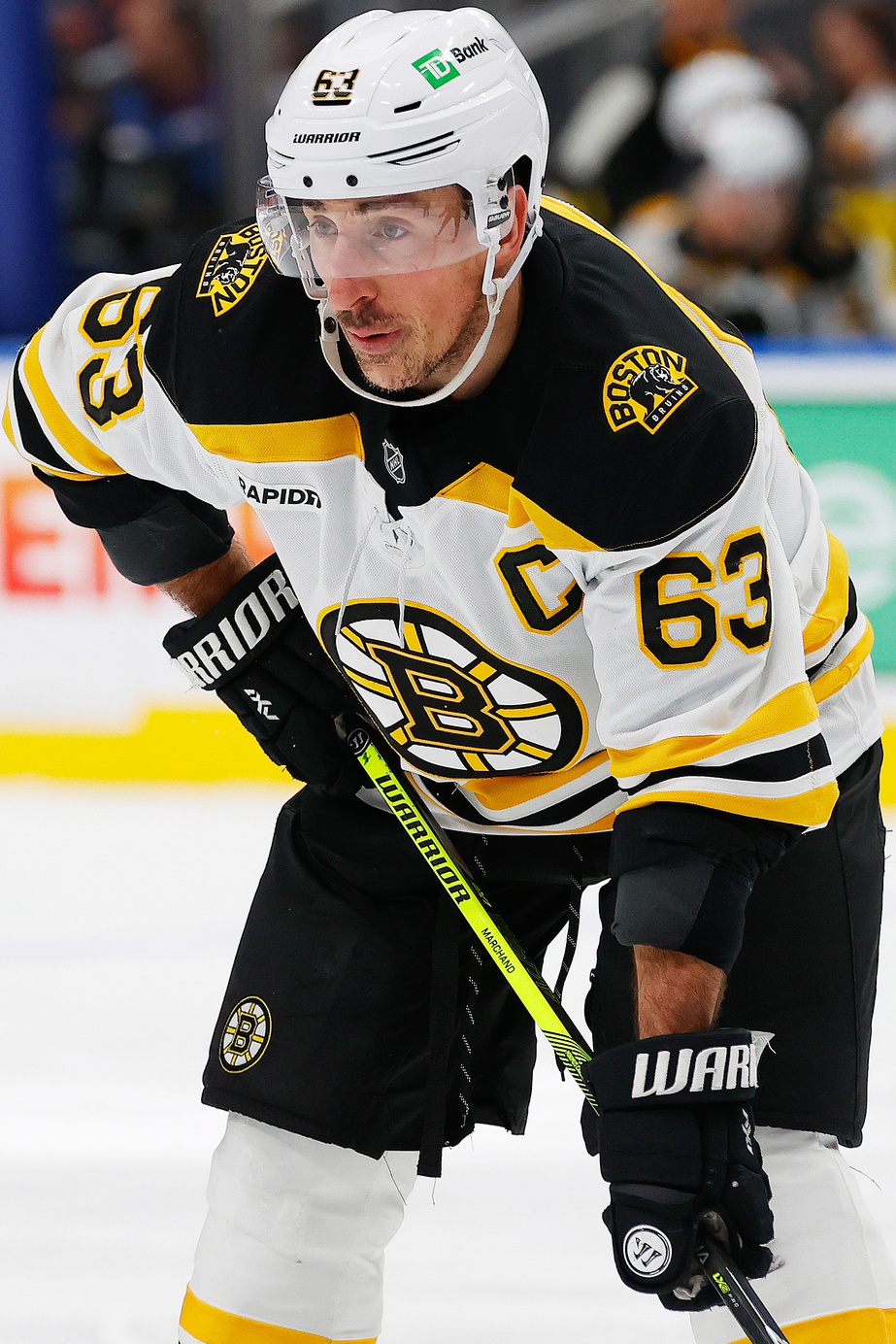 Marchand is by far the most notable among Boston’s potential free agents. The captain has been on a team-friendly deal for pretty much the majority of his career, even with his production starting to drop – though he’s still second in scoring this season. Given the pricier deals that management has handed out in recent years, it’s reasonable to expect that Marchand will be looking for a raise as well, even with his output going in the wrong direction. He’ll be 37 when his next deal starts so it’ll be a short-term one, likely between one and three years. Three years would likely allow for a lower AAV than a one-year pact but with the cap going up, Marchand should still be in line for a raise next year.
Frederic came into this season coming off his best two offensive years, seemingly putting him in line for a nice jump closer to the $3.5MM mark. However, his production has tailed off this season which won’t help his cause. That said, he has enough of a track record as a solid and physical checker that there should be enough interest to put him around the $3MM range even if his offense doesn’t come around. Geekie had a career year offensively last season, his first with Boston after being non-tendered by Seattle to avoid giving him arbitration eligibility. That concern could come into play for him again over the summer, especially with his output dropping as sharply as Frederic’s. He’s worth a raise to the $3MM area but if the Bruins think he could get more from an arbitrator, he could be a non-tender candidate as well.
Wahlstrom was a non-tender candidate last summer with the Islanders but eventually settled on this deal, a last chance type of contract. Things didn’t go well and he wound up on waivers where Boston recently picked him up. Being arbitration-eligible, it’d be surprising to see him get qualified this summer unless he is able to rediscover his scoring touch in the second half of the season.
Brazeau was a feel-good story last season, turning an AHL deal into a two-year NHL agreement. Since then, he has been a productive bottom-six winger. Now that he has shown himself to be a capable NHL winger, it wouldn’t be shocking for him to at least double this on the open market. Koepke has been a nice addition to Boston’s fourth line but he’s 26 and in his first full NHL season. That will limit his market to a point but he should be able to push past the $1MM mark at least if he stays a regular the rest of the way.
Wotherspoon played in half of Boston’s game last season, helping secure a one-way salary for the first time in his career. But playing time has been harder to come by this year. As a result, he’s trending toward heading back to a two-way contract for next season, one that probably will be at $775K at the NHL level.
Signed Through 2025-26
F Charlie Coyle ($5.25MM, UFA)
D Jordan Oesterle ($775K, UFA)
D Andrew Peeke ($2.75MM, UFA)
Coyle has been quiet offensively this season but before that, his previous three seasons saw him produce at a second-line level so it’s fair to suggest he’ll get back to that level and the market will view him as that. Having said that, he’ll be 34 on his next deal so he’s likelier to land around three or four years and an anticipated drop in production at the end of that term might drive the price down to something relatively close to where he is now.
Peeke struggled in the first year of this contract, often being scratched in Columbus before being acquired by Boston at the trade deadline. He has played more regularly with the Bruins but has primarily been on the third pairing. If that holds up over the next year and a half, it wouldn’t be surprising for Peeke to be looking at a small pay cut while Boston’s preference may be to have someone cheaper in that roster slot. Oesterle has split time between the NHL and AHL the last couple of years and is likely to continue to stay at or near the minimum salary moving forward unless he can lock down a full-time spot in Boston’s lineup.
Signed Through 2026-27
D Brandon Carlo ($4.1MM, UFA)
F Pavel Zacha ($4.75MM, UFA)
Zacha has found another gear offensively since joining Boston in 2022. In his first season with them, he set new benchmarks in goals, assists, and points. Last year, he tied or beat them, putting up 59 points in 78 games. Like many this year, he’s off to a slower start but even so, his numbers are comparable to his best seasons in New Jersey. Assuming he can get back to putting up second-line production, this contract should age pretty well for the Bruins and it’s plausible that he pushes past the $6MM mark in 2027.
After his bridge deal, Carlo signed this agreement, a six-year pact. Through the first half of it, he continued to be a strong defensive specialist and that has continued into this year. For someone often on the second pairing, the price tag is reasonable but his very limited offensive upside will limit him on the open market. While top stay-at-home players have seen their markets improve in recent years, Carlo might not be able to command much more than $5MM per season, even with an anticipated jump in the cap.
PHR Mailbag: Lightning, Panthers, Chychrun, Hughes, Kings, Jets, Spengler Cup
Topics in this edition of the PHR Mailbag include the cap crunch the Panthers will be facing as they look to re-sign two key unrestricted free agents this summer, options for the Jets to solve their roster needs, and much more. With so many questions this time around, we’ll break them into three separate pieces instead of the usual two.
FeeltheThunder: As a Tampa fan, I’m wondering the type of combo Tampa will go for in the trade deadline. Tampa is a much-improved team from last year (night and day, really). I feel Tampa may go for one or two forwards to add more additional depth to their middle/bottom six group like they did a few years ago with Brandon Hagel and Nick Paul (that’s worked out quite well). They have a pretty good defensive group overall and have some depth so I don’t know if adding a defensive piece is necessary. What do you think of the combo they’ll go with and who may the targets be?
I feel one name for starters (if available) Jake Evans from Montreal has a number of qualities Tampa tends to aim for in a player and Tampa/Montreal have traded in the past.
In follow-up comments, you also mentioned Luke Kunin (who I’ve tossed out before as a possible fit for them) and Will Cuylle (who might be one of the more untouchable Rangers at the moment). I still like Kunin as a fit for them. If memory serves, I had Mikael Granlund on that list previously, assuming they can make the money work with the Sharks out of retention slots. I think he’s still a good fit for them too.
Evans is a good one as well although the asking price on him is going to be fairly high with the start he’s off to this season. At a $1.7MM cap charge, he’ll be affordable for a lot of contenders which will drive up the acquisition cost. If Buffalo sells, Jordan Greenway could be viewed as trying to refill the Tanner Jeannot slot, probably at a much lesser price point than what was paid to Nashville to get Jeannot. Another center that could interest them is Sean Kuraly, someone who can kill penalties and play with an edge. If Utah sells, Nick Bjugstad could also fit the bill.
If they go for two forwards, it’ll be a center/winger combo (and if they wound up with someone like Kunin who plays all three positions), even better for them. Aside from Granlund, all are cheap enough that Tampa Bay could afford them outright without necessarily needing retention at the trade deadline if they’re able to stay healthy between now and then.
Having said that, it wouldn’t shock me if one of their additions is on the back end, looking for a third-pairing upgrade. Someone who can kill penalties, play with an edge, and give them a bit more depth in case injuries arise. In essence, something like the David Savard move a few years ago (just not at the cost of a first-round pick). Depending on what happens with Savard in Montreal and what they look to do up front, he could be a potentially plausible fit again.
Sunshine swede: Do you think Panthers can extend both Ekblad and Bennett? Guess Bennett will earn a raise, while Ekblad might have a cut. What do you think about their next deals?
Keeping one is definitely doable but both could be a challenge. Per PuckPedia, they have $72.5MM in commitments on the books for next season already to 15 players. If the salary cap lands around the $92MM range (some could see it going higher but for now, that’s the 5% allowable increase), that gives them a little less than $20MM to work with, a bit less than that if they want to leave themselves some in-season wiggle room.
Coming into the season, Sam Bennett was probably looking at a long-term deal in the $6.5MM range. Given the dearth of impact centers set to become an unrestricted free agent and the fact he’s on pace for career highs offensively across the board, it stands to reason that he could push past $7MM on his next deal. Frankly, something along the lines of Aaron Ekblad’s current price tag ($7.5MM) wouldn’t shock me given his playoff success.
As for Ekblad, he’s also set to benefit from a fairly weak UFA market; it’s basically between him and Neal Pionk for the top veteran right-shot option available. While he’s not the big point producer he was earlier in his career, he still plays a big defensive role, logs heavy minutes, and is on pace for around 40 points again. I could see a small cut in his pay but I could also see a long-term deal at that price tag again depending on how many teams are serious about bidding for him.
If the two of them cost, say, $14MM combined, now you’re down to only around $5MM to re-sign Mackie Samoskevich and sign a couple of depth forwards and depth defenders. That’d make it tough to do anything to materially improve the roster. Of course, losing one of those two would certainly hurt things as well. I think the likeliest outcome is that they only keep one but if they really want to make their roster more top-heavy, there’s a way to keep both of them around and then restructure a bit once their $14.5MM goalie tandem sees their contract expire in 2026.
2012orioles: Is a Jakob Chychrun extension with the Capitals going to happen?
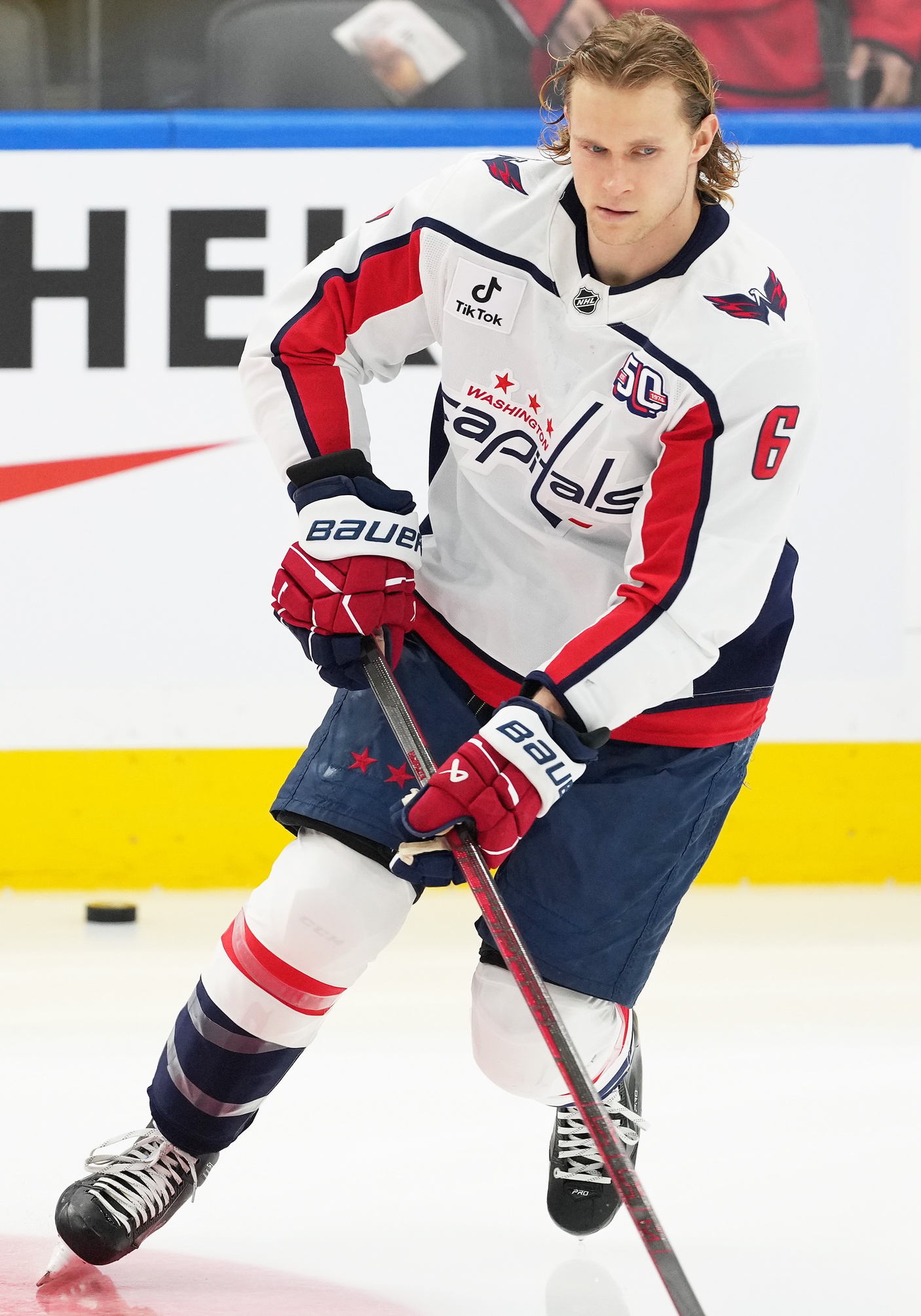 Last month, Chychrun indicated to Sportsnet’s Luke Fox that he could see himself re-signing with Washington. And frankly, it’s easy to see why. The Caps have been one of the biggest pleasant surprises of the season with their roster makeover during the summer paying dividends with Chychrun playing a big role in that. He’s on pace for a career year offensively with 11 goals and 14 assists in just 33 games. His shooting percentage (15.1%) is a lot higher than his career average so there might be a bit of regression coming on the goal front but even so, he should blow past his personal benchmark of 41 points as long as he stays healthy. In a contract year, that’s great news for him.
That next contract is going to be quite pricey, however. He was probably in the $7MM range heading into the season and with the year he’s having offensively and the talk of a salary cap increase of more than 5%, it wouldn’t be shocking to see his next AAV start with an eight. That might seem high but he’ll be 27 when he hits the open market; whoever signs him will be getting several of his prime years.
Can the Capitals be the team that gives him that contract? I think they can be. Per PuckPedia, they have $63.7MM on the books for 2025-26 with 14 players signed. Granted, they need to sign a goalie tandem that will cost a lot more than the sub-$2MM they’re paying this year but there’s room for another big-ticket deal on the books. Having said that, a Chychrun extension would push them past $30MM (probably closer to $32MM) on their back end so they may want to trim a bit. But they can afford it and he’s a very good fit. I think they can get it done.
DevilShark: What do you see as Hughes III ceiling in Norris voting this year? Could he crack the top 10?
Let’s recap his first half of the season. Luke Hughes has three goals and 15 assists in 33 games so far. Decent offensive numbers, sure, but hardly worthy of award consideration. It’s even a step back from his per-game production from last season. On top of that, his playing time is down by nearly two minutes a night from last year. He sits fifth among New Jersey defenders in ATOI as a result.
Is this realistically the profile of a player who should be in consideration for the Norris Trophy as the NHL’s best defenseman? Logically, doesn’t Hughes need to be New Jersey’s top blueliner to be even considered for the award? While it’s worth noting that the Devils run three very balanced pairings, I don’t see a case to be made for him to land on a ballot let alone finish in the top ten in voting.
It wouldn’t shock me for Hughes to one day land in there. Once he takes on a bigger role and if he can become the type of highly productive blueliner many project him to be, he’ll get into that range. But that’s not going to happen this season.
rpoabr: What’s the trade that puts the LA Kings into true Cup contention? Doughty coming back soon (hopefully) should already be a boost.
Drew Doughty’s eventual return will be the biggest boost they get. Adding a legitimate number one blueliner to the roster puts the rest of the back end in a more optimal spot on the depth chart and gives them a bit more depth in general. If they stay healthy the rest of the way, they probably don’t need to make a move to add defensive depth so we can scratch that off the list of trade options.
But here’s the problem. When Doughty returns (probably later this month), that’s the end of their cap space. The Kings are operating in LTIR which means they haven’t been banking cap space. Right now, they have lots to spend with an LTIR pool of more than $10MM. When he comes back, they have to start trimming players to get back into cap compliance. That puts them in a spot where they’re going to have to match money or get double retention on a player. That means there isn’t a trade available to them this season that’s going to vault them into true Cup contention.
What could help put them into at least semi-contender status would be adding a top-six winger to help get them out of the middle of the pack offensively. Making the money work would require double retention but players like Jason Zucker and Kyle Palmieri come to mind, players that will boost their middle six and should be acquirable for a package starting with a second-round pick. But even with that, when you’re in a division with Vegas and Edmonton, they’re going to be hard-pressed to get to true Stanley Cup contention no matter what move(s) they make.
Kings’ Brandt Clarke Proving Long-Term Potential
To be eligible for the Calder Trophy – the NHL’s ‘Rookie of the Year’ title – a player must enter the year with fewer than 25 games of NHL experience under their belt. That puts top Los Angeles Kings defenseman Brandt Clarke, who played nine games in 2022-23 and 16 games last year, narrowly outside of eligibility. Without the allure of a yearly title, attention has pulled away from Clarke, but his first full year in the NHL couldn’t be going better.
Only 19 players in the NHL are younger than the 21-year-old Clarke. That provides some framing for just how impressive his pursuit of the Kings’ top defense role has been. Clarke proudly leads Los Angeles defenders in scoring with 21 points in 37 games, five more than Vladislav Gavrikov in second. Even better, Clarke has been on the ice for 29 goals-for and 17 goals-against at even-strength, giving him a 63 percent GF% that leads the defense and ranks fifth on the Kings as a whole.
Clarke’s hot play is earning him quick recognition from new Kings coach Jim Hiller, who boosted Clarke into top-pair minutes in late November – though he eventually returned to the second pair after not maintaining his scoring. But Clarke has found a cushy role quarterbacking the team’s power-play, where he’s scored six points – matching the man-advantage scoring of Kings legend Anže Kopitar.
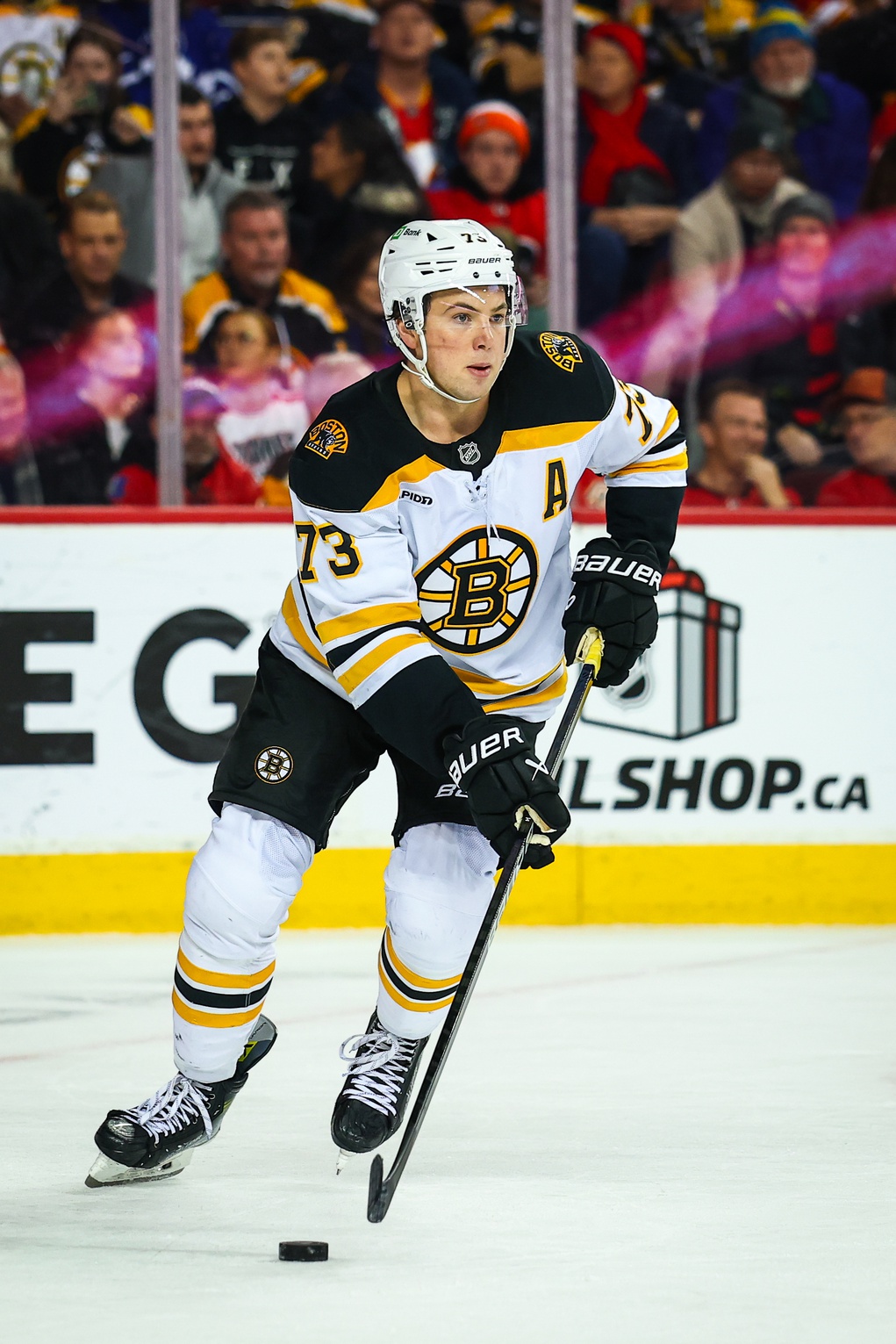
Clarke’s statistical success is great, but the timing of his step into a full-time role has been even better. The Kings have been without star right-defender Drew Doughty all season, as he nurses a broken left ankle that required surgery in October. In the wake of the injury, Los Angeles was forced to move left-shot Gavrikov to the right side, while Clarke and Jordan Spence vied for minutes behind him. But they’ve both matched the bill, proving they can stand up to meaningful minutes on a playoff-bound team.
Doughty has returned to skating drills, and could return to the lineup quickly in the new year. That should bring some sense of normalcy back to the Kings’ lineup, likely moving Gavrikov back to his natural left-side and bumping one of Joel Edmundson or Jacob Moverare out of the lineup. Doughty’s return will give Clarke more challenge for power-play minutes and offensive starts, but it will also give the Kings another capable scorer on the back-end. That could draw attention away from Clarke, and give him even more space to rack up dazzling scoring. Clarke is currently on pace for 47 points this year, which would sandwich him between Alexei Zhitnik (48) and Rob Blake (46) for the third-highest all-time from a rookie Kings defenseman. Both Zhitnik and Blake went on to have tremendous pro careers – and Clarke seems well within the realm of joining them, after stamping his spot at the top of Los Angeles’ lineup through the first half of the 2024-25 campaign.
List Of Players Now Eligible To Sign Extensions
New Year’s Day does have particular significance on the NHL calendar. As of this morning, players on one-year contracts are now eligible to sign extensions for next season and beyond. Here’s a list of players by club (limited to those currently on an active roster or injured reserve) who can now put pen to paper on a new deal after inking a one-year commitment with their current home.
Anaheim Ducks
F Brett Leason (RFA)
F Isac Lundeström (RFA)
Boston Bruins
F Cole Koepke (UFA)
F Marc McLaughlin (Group VI UFA)
F Oliver Wahlstrom (RFA)
D Parker Wotherspoon (UFA)
Buffalo Sabres
F Nicolas Aubé-Kubel (UFA)
D Jacob Bryson (UFA)
D Dennis Gilbert (UFA)
D Henri Jokiharju (UFA)
G James Reimer (UFA)
F Jason Zucker (UFA)
Calgary Flames
D Tyson Barrie (UFA)
F Justin Kirkland (UFA)
F Anthony Mantha (UFA)
F Jakob Pelletier (RFA)
F Kevin Rooney (UFA)
Carolina Hurricanes
F Tyson Jost (UFA)
F Eric Robinson (UFA)
F Jack Roslovic (UFA)
D Ty Smith (RFA)
D Riley Stillman (UFA)
G Dustin Tokarski (UFA)
Chicago Blackhawks
D Louis Crevier (RFA)
F Pat Maroon (UFA)
D Alec Martinez (UFA)
F Craig Smith (UFA)
Colorado Avalanche
D Calvin de Haan (UFA)
F Jonathan Drouin (UFA)
F Joel Kiviranta (UFA)
D Oliver Kylington (UFA)
F Jere Innala (UFA)
F Juuso Pärssinen (RFA)
Columbus Blue Jackets
F Zach Aston-Reese (UFA)
D Jake Christiansen (RFA)
F Justin Danforth (UFA)
D Dante Fabbro (UFA)
D Jack Johnson (UFA)
F Kevin Labanc (UFA)
F James van Riemsdyk (UFA)
Dallas Stars
F Oscar Back (RFA)
F Colin Blackwell (UFA)
F Matt Duchene (UFA)
D Nils Lundkvist (RFA)
D Brendan Smith (UFA)
F Sam Steel (UFA)
Detroit Red Wings
F Jonatan Berggren (RFA)
F Christian Fischer (UFA)
D Albert Johansson (RFA)
F Patrick Kane (UFA)
F Tyler Motte (UFA)
Edmonton Oilers
F Connor Brown (UFA)
D Ty Emberson (RFA)
F Kasperi Kapanen (UFA)
F Corey Perry (UFA)
F Jeff Skinner (UFA)
Florida Panthers
D Adam Boqvist (RFA)
F Jesper Boqvist (RFA)
F Tomáš Nosek (UFA)
D Nate Schmidt (UFA)
Los Angeles Kings
F Arthur Kaliyev (RFA)
F Andre Lee (RFA)
F Trevor Lewis (UFA)
G David Rittich (UFA)
Minnesota Wild
D Declan Chisholm (RFA)
D Travis Dermott (UFA)
G Marc-André Fleury (UFA)
F Devin Shore (UFA)
While Fleury has already confirmed this season will be his last in the NHL, he’s still technically eligible to sign an extension.
Montreal Canadiens
none on active roster
Nashville Predators
D Adam Wilsby (RFA)
New Jersey Devils
D Nick DeSimone (UFA)
F Tomáš Tatar (UFA)
New York Islanders
D Dennis Cholowski (UFA)
F Simon Holmström (RFA)
F Matt Martin (UFA)
D Mike Reilly (UFA)
F Maxim Tsyplakov (RFA)
New York Rangers
G Louis Domingue (UFA)
D Ryan Lindgren (UFA)
G Jonathan Quick (UFA)
D Urho Vaakanainen (RFA)
Ottawa Senators
F Nick Cousins (UFA)
F Adam Gaudette (UFA)
F Noah Gregor (RFA)
D Nikolas Matinpalo (RFA)
F Cole Reinhardt (RFA)
Philadelphia Flyers
D Erik Johnson (UFA)
Pittsburgh Penguins
F Anthony Beauvillier (UFA)
D Nathan Clurman (UFA)
D Matt Grzelcyk (UFA)
D Pierre-Olivier Joseph (RFA)
D Ryan Shea (UFA)
F Philip Tomasino (RFA)
San Jose Sharks
F Luke Kunin (UFA)
Seattle Kraken
F Kaapo Kakko (RFA)
D Josh Mahura (UFA)
F Daniel Sprong (UFA)
G Ales Stezka (UFA)
St. Louis Blues
D Scott Perunovich (RFA)
D Ryan Suter (UFA)
Tampa Bay Lightning
F Cam Atkinson (UFA)
F Gage Goncalves (RFA)
Toronto Maple Leafs
F Connor Dewar (RFA)
D Jani Hakanpää (UFA)
F Steven Lorentz (UFA)
D Philippe Myers (UFA)
F Max Pacioretty (UFA)
F Nicholas Robertson (RFA)
Utah Hockey Club
D Robert Bortuzzo (UFA)
D Ian Cole (UFA)
D Dakota Mermis (UFA)
G Jaxson Stauber (RFA)
Vancouver Canucks
D Erik Brännström (RFA)
D Derek Forbort (UFA)
G Kevin Lankinen (UFA)
Vegas Golden Knights
F Victor Olofsson (UFA)
F Tanner Pearson (UFA)
G Ilya Samsonov (UFA)
F Cole Schwindt (RFA)
Washington Capitals
F Taylor Raddysh (UFA)
F Jakub Vrána (UFA)
Winnipeg Jets
D Dylan Coghlan (UFA)
D Haydn Fleury (UFA)
PHR Chatter: Hypothetical 2025 All-Star Game Rosters
There won’t be an All-Star Game this season due to the two-week break in the schedule for the 4 Nations Face-Off. Just as well – with how much the format has changed in recent years, it’s hard to know what the event would have even looked like.
But roster debate is always fun, and just because there’s no actual event this year doesn’t mean it’s worth looking at who would have been worthy selections. For this exercise, I went back to the division-based format as compared to 2024’s player-led fantasy draft for obvious reasons. I kept the likely 3-on-3 play in mind and went for nine skaters and three goalies for each division, just like how last year’s rosters shook out. I also tried to keep defense selections to a minimum in line with how things have trended over the past few years. The one-player-per-team rule was also kept intact.
Who would be on your teams? Any glaring omissions or bad inclusions on the list below? Discuss in the comments.
Atlantic Division
F – Aleksander Barkov (Panthers)
F – Nikita Kucherov (Lightning)
F – Mitch Marner (Maple Leafs)
F – David Pastrňák (Bruins)
F – Brayden Point (Lightning)
F – Sam Reinhart (Panthers)
F – Nick Suzuki (Canadiens)
F – Tage Thompson (Sabres)
D – Victor Hedman (Lightning)
G – Anthony Stolarz (Maple Leafs)
G – Cam Talbot (Red Wings)
G – Linus Ullmark (Senators)
Metropolitan Division
F – Jesper Bratt (Devils)
F – Sidney Crosby (Penguins)
F – Jack Hughes (Devils)
F – Travis Konecny (Flyers)
F – Anders Lee (Islanders)
F – Martin Nečas (Hurricanes)
F – Alex Ovechkin (Capitals)
F – Artemi Panarin (Rangers)
D – Zach Werenski (Blue Jackets)
G – Jacob Markström (Devils)
G – Igor Shesterkin (Rangers)
G – Logan Thompson (Capitals)
Central Division
F – Connor Bedard (Blackhawks)
F – Kyle Connor (Jets)
F – Matt Duchene (Stars)
F – Filip Forsberg (Predators)
F – Kirill Kaprizov (Wild)
F – Nathan MacKinnon (Avalanche)
F – Mikko Rantanen (Avalanche)
F – Robert Thomas (Blues)
D – Cale Makar (Avalanche)
G – Filip Gustavsson (Wild)
G – Connor Hellebuyck (Jets)
G – Karel Vejmelka (Utah)
Pacific Division
F – Macklin Celebrini (Sharks)
F – Leon Draisaitl (Oilers)
F – Jack Eichel (Golden Knights)
F – Jonathan Huberdeau (Flames)
F – Anže Kopitar (Kings)
F – Connor McDavid (Oilers)
F – Mark Stone (Golden Knights)
D – Quinn Hughes (Canucks)
D – Shea Theodore (Golden Knights)
G – Joey Daccord (Kraken)
G – Lukáš Dostál (Ducks)
G – Adin Hill (Golden Knights)
Salary Cap Deep Dive: Vegas Golden Knights
Navigating the salary cap is one of the most important tasks for a front office. Teams that can avoid total cap chaos by walking the tightrope of inking players to deals that match their value (or compensate for future value without breaking the bank) remain successful. Those that don’t often see struggles and front office changes.
PHR will look at every NHL team and give a thorough look at their cap situation for the 2024-25 season. This will focus more on players who are regulars on the roster versus those who may find themselves shuttling between the AHL and NHL. All cap figures are courtesy of PuckPedia. We’re currently covering the Pacific Division, last up is the Golden Knights.
Vegas Golden Knights
Current Cap Hit: $87,344,447 (under the $88MM Upper Limit)
Entry-Level Contracts
F Alexander Holtz (one year, $894K)
Potential Bonuses
Holtz: $850K
Holtz was acquired from New Jersey over the offseason in the hopes that a change of scenery would help him reach some of the potential that made him the seventh overall pick in 2020. That hasn’t come to fruition so far as his role and production have been as limited as they were with the Devils. It’s still too early to give up on him but he’s heading for a short-term bridge deal that shouldn’t cost too much more than his entry-level deal does. At this point, his bonuses are unlikely to be reached.
Signed Through 2024-25, Non-Entry-Level
D Nic Hague ($2.294MM, RFA)
G Adin Hill ($4.9MM, UFA)
F Victor Olofsson ($1.075MM, UFA)
F Tanner Pearson ($775K, UFA)
G Ilya Samsonov ($1.8MM, UFA)
F Cole Schwindt ($800K, RFA)
Olofsson didn’t have a great platform year with Buffalo last season, leading to this deal where he hoped that a strong showing with Vegas could give him a stronger market next summer. Injuries have limited him thus far but he still has seven goals in 14 games. If he can stay close to that level, he should be able to get closer to the $3MM or $4MM mark albeit likely on another short-term agreement.
Schwindt was claimed off waivers at the start of the season and has held down a spot on the fourth line for most of the year. He’s arbitration-eligible which could work against him as this is a roster spot that Vegas will want to keep close to the minimum. If Schwindt is open to a short-term deal around this price point, that could be enough to keep him around. Pearson converted a preseason PTO into a minimum salary deal. While he has fit in well in a limited role, it’s hard to see him landing much more than this next offseason.
Hague has been a fourth or fifth defender for most of his career although his role and playing time have been reduced this season. That’s not ideal as he’s heading toward having to be qualified at $2.7MM with arbitration rights that could push the cost closer to $4MM per season. If he stays in more of a sixth role, he could become a non-tender candidate.
With Logan Thompson being moved to Washington, Hill became the undisputed starter, a good spot to be in considering it’s a contract year. That said, his play has been a bit inconsistent which will make it difficult for him to command much more than he’s making now. That said, he should be able to get something around this price point on a longer-term agreement than the two-year pact he’s playing on. Samsonov had a rough year with Toronto in 2023-24 resulting in Samsonov looking for a place to try to rebuild his value. He has performed a little better than a year ago but certainly not to the point where teams will be looking at him as a starter. That said, a strong second half could allow him to approach the $3MM to $3.5MM mark as a backup who can play starters minutes when needed.
Signed Through 2025-26
F Pavel Dorofeyev ($1.835MM, RFA)
F Jack Eichel ($10MM, UFA)
D Ben Hutton ($975K, UFA)
D Kaedan Korczak ($825K, RFA)
Eichel has become the number one center that Vegas was hoping he’d be when they acquired him in 2021. That said, he never has really had high-end point production before this season which might limit his market value to a point. A small raise should still be expected on a max-term agreement but unless he can get to that 100-point threshold, he might be hard-pressed to beat someone like Vancouver’s Elias Pettersson ($11.6MM) barring a big jump in the salary cap by then. Dorofeyev impressed in limited action last season and is producing at a better rate so far this year, making him a strong value piece on his bridge deal. He’ll have arbitration rights in 2026 and if he continues to score at the pace he’s on, he could jump past $5MM per season on his next contract.
Hutton has been a capable depth defender for several years now which has helped earn him some stability with Vegas. But these types of pieces generally stay low-cost and it would be surprising to see Hutton land any sort of notable raise on this deal, especially as teams will want to keep the back-of-the-roster spots as close to the minimum as possible. Korczak is in a similar situation, although he’s young enough (23) to still change those fortunes. If he stays in a depth role, he’s in the same boat as Hutton and his arbitration eligibility could work against him. If he locks down a full-time spot, he could push for something more in the $1.5MM range.
Signed Through 2026-27
F William Karlsson ($5.9MM, UFA)
D Alex Pietrangelo ($8.8MM, UFA)
F Nicolas Roy ($3MM, UFA)
F Mark Stone ($9.5MM, UFA)
When healthy, Stone is a legitimate top-line two-way threat, one that’s a key part of this lineup. Of course, staying healthy has been a challenge for him over the years as he has missed significant time due to injuries over the past several years. That will hurt him when it comes time for his next deal, as will the fact he’ll be 35 at that time. Even in what should be a more favorable cap environment by then, Stone will likely be heading for a pay cut. It wouldn’t be shocking to see a longer-term deal with an eye on getting the cap hit lower, similar to what Pittsburgh did with Kris Letang and Evgeni Malkin in the past (though Stone’s price tag should come above theirs).
Karlsson has been a solid second option down the middle throughout most of his tenure with Vegas and the price tag for those players has shot up over the years. That said, he’ll be 34 which means there’s a good chance his next contract is his last one. Assuming it’s a longer-term one to keep the AAV down, it’s possible Karlsson’s price tag stays in this range. Roy has held the third center role for the bulk of his time with the Golden Knights and has been above-average on the production side for the last few seasons. It’s already a below-market deal and if he stays in that 40-point range, his next contract should start with a four.
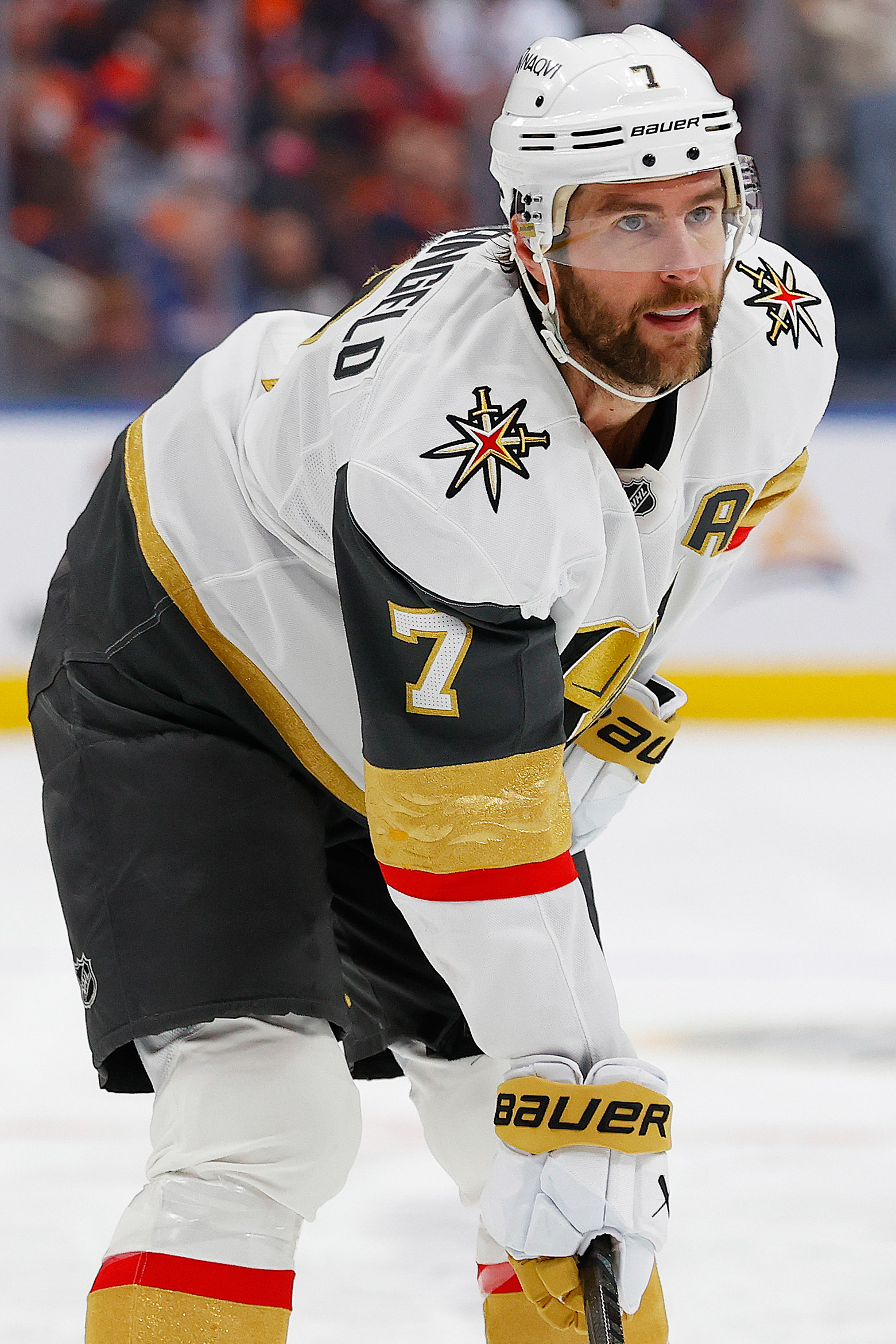 In his prime, Pietrangelo was a high-end two-way threat from the back end. However, he turns 35 next month and his production and ice time have dropped in recent years. When he started in Vegas, Pietrangelo was worth this price tag, if not more. But as the offensive numbers go down and he slips a bit more on the depth chart (or they at least try to manage his minutes a bit more), the perception of this deal will flip to an above-market one, an outcome that shouldn’t come as much surprise as that was the expectation at the time it was signed. Having said that, he’s still playing a big enough role to give Vegas a decent return and that should continue for at least a little while longer.