
Trade Deadline Primer: Columbus Blue Jackets
With the 4 Nations Face-Off break approaching, the trade deadline looms large and is about a month away. Where does each team stand, and what moves should they be looking to make? We continue our look around the league with the Columbus Blue Jackets.
The Blue Jackets’ performance in 2024-25 has exceeded all expectations. Training camp began weeks after star winger Johnny Gaudreau and his brother Matthew died after being struck by an accused drunk driver. Captain Boone Jenner has been unavailable for the entire regular season after sustaining a shoulder injury during a preseason practice, and core pieces Yegor Chinakhov, Erik Gudbranson, Kirill Marchenko, and Sean Monahan have all missed significant time. Nonetheless, they enter the 4 Nations break one point back of the Red Wings for the second wild card spot in the Eastern Conference, enough for general manager Don Waddell to anoint himself as a buyer entering the final few weeks before the deadline.
Record
26-22-8, 4th in the Metropolitan Division
Deadline Status
Conservative Buyer
Deadline Cap Space
$85,690,994 on deadline day, 0/3 retention slots used, 46/50 contracts used, per PuckPedia.
Upcoming Draft Picks
2025: CBJ 1st, MIN 1st*, CBJ 3rd, STL 4th, CBJ 4th, CBJ 6th, VGK 7th
2026: CBJ 1st, COL 3rd, CBJ 3rd, TOR 4th, NYR 4th, CBJ 4th, CBJ 5th, PIT 6th, CBJ 6th, CBJ 7th
*2025 MIN 1st is top-five protected.
Trade Chips
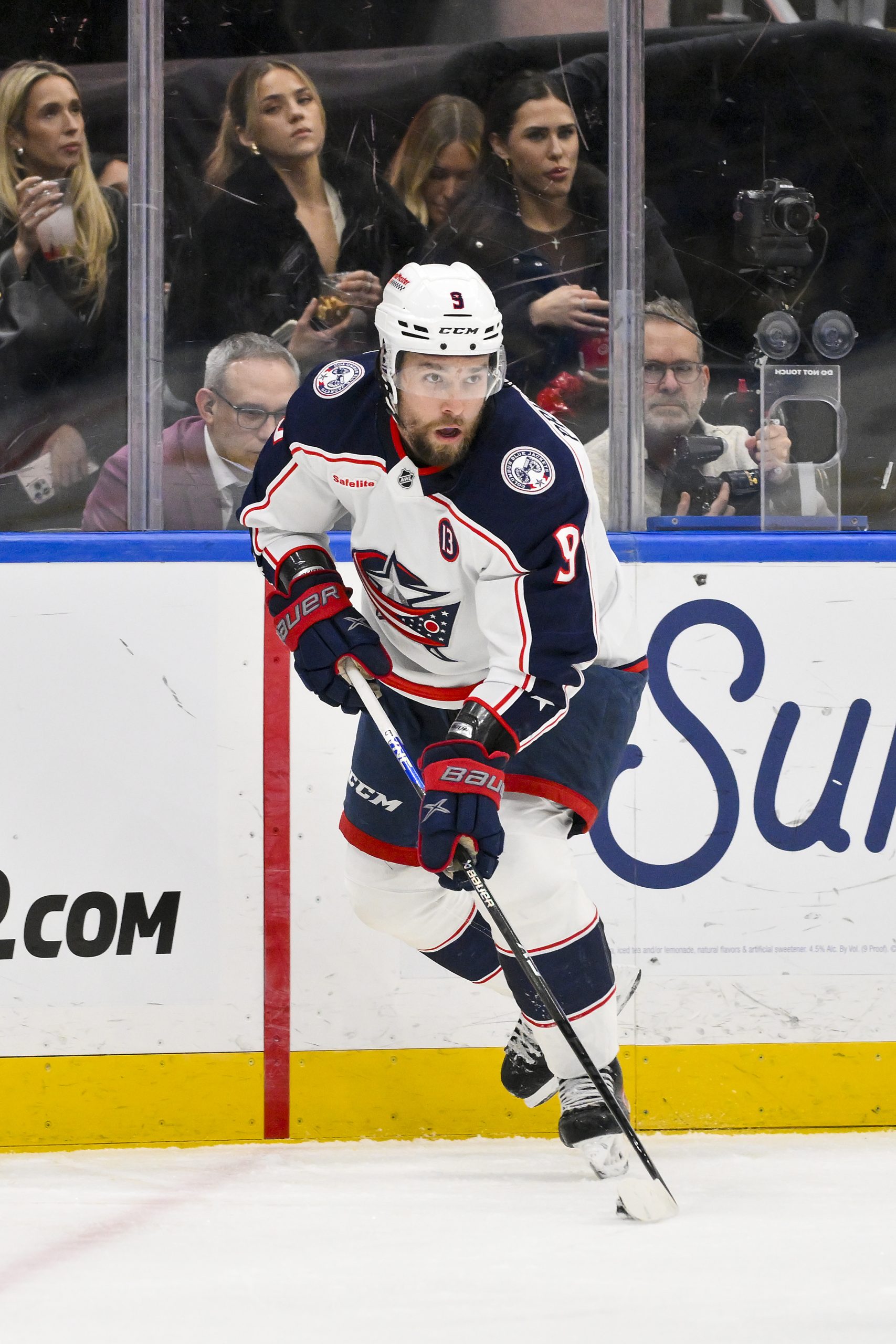 Early in the season, it seemed like a foregone conclusion the Blue Jackets would at least shop pending UFA defenseman Ivan Provorov around before the deadline. But with the blue-liner interested in an extension and Columbus looking to add, not subtract, to their roster, it will take a gargantuan offer to convince the Jackets to move on at this stage.
While Columbus may have declared itself a buyer, don’t expect them to deal any of its genuinely high-value prospects or young players. Most of them are already in the NHL, and outside of Hart and Norris Trophy candidate Zach Werenski, they’re the ones driving the bus in the absence of names like Gudbranson, Monahan and Jenner.
Even among their young talent still developing in the AHL, they’re unlikely to dip into names like Gavin Brindley and Corson Ceulemans for a rental. Those names will only be in play if the Blue Jackets make a run for a young center with term. They’ve been connected to the Sabres’ Dylan Cozens and the Canucks’ Elias Pettersson to varying degrees, but they haven’t been mentioned as finalists for the former in recent reports, and the latter is almost certainly sticking around in Vancouver after teammate J.T. Miller was traded to the Rangers.
That leaves their arsenal of draft picks, particularly in the deeper 2026 class, as their primary fodder for acquiring lower-cost rental pickups to boost the team heading into the stretch run. They’re without any second-rounders in the next two years – 2025’s was traded to acquire Provorov, and 2026’s was given to the Canadiens to offload Patrik Laine. But plenty of mid-round picks remain available, and their currently well-stocked prospect pool, plus clear emergence from their rebuild, could entice them to leverage one of the two first-rounders they currently own for June’s draft.
The Blue Jackets have already shown an unwillingness to part ways with any of their lower-level pending UFAs. With essentially unlimited cap space, there won’t be a need to leverage any of them for financial flexibility, either.
Team Needs
1) Top-Nine Forward: Columbus’ biggest addition will be Jenner, who’s been skating for weeks and is expected to make his season debut sometime before the deadline. That, plus Monahan’s eventual return, doesn’t make a center a pressing need if they also continue to run Adam Fantilli and Sean Kuraly down the middle. One of those four could easily shift to wing like Kent Johnson and Cole Sillinger already have, but either way, they need another option to avoid overtaxing call-ups like Luca Del Bel Belluz and short-term veteran pickups like James van Riemsdyk as they enter every-point-matters territory. Center or wing may not matter to them much longer, but they’ll still be in the mix for names like Brock Nelson and Brandon Tanev and could even make a run for higher-impact names with a bit of term left like Rickard Rakell if the price is right.
2) Goaltending Depth: The Jackets’ possession numbers have faltered amid a four-game losing streak, but that’s to be expected with injuries piling up. Otherwise, Columbus’ skater core has played extremely solid two-way hockey this season. The limiting factor on their record has been goaltending. While Elvis Merzļikins has at least rebounded to a respectable .895 SV% and 2.99 GAA on the season, backup Daniil Tarasov‘s play remains a concern. The 25-year-old Russian has been wildly inconsistent in limited action this season, conceding six goals above expected (MoneyPuck) in just 14 appearances while posting a .876 SV% and 3.69 GAA. Picking up a name that could challenge Merzļikins for the starting role may be too optimistic, given the lack of names on the goalie market, but there should be at least a marginal upgrade over Tarasov out there that’s worth pursuing. Among veteran pending UFAs, James Reimer and Vítek Vaněček could be available as limited upside but low-risk pickups.
Image courtesy of USA Today Sports.
Trade Deadline Primer: Colorado Avalanche
With the 4 Nations Face-Off break approaching, the trade deadline looms large and is about a month away. Where does each team stand, and what moves should they be looking to make? We continue our look around the league with the Colorado Avalanche.
The Colorado Avalanche have been busy on the trade market this season, moving on from long-time star Mikko Rantanen and acquiring two netminders to remake their goaltending. Given the talent on the team, it would be fair to say their season has been a disappointment. However, with the injuries that the Avalanche have dealt with this year, it’s fair to say that they’ve navigated some bumpy waters admirably. Colorado does have holes in its lineup, but with how busy they’ve been in-season up to this point, it’s hard to imagine them making many moves over the next few weeks.
Record
33-22-2, 4th in the Central
Deadline Status
Buyer
Deadline Cap Space
$3,986,500 on deadline day, 1/3 retention slots used, 46/50 contracts used, per PuckPedia.
Upcoming Draft Picks
2025: CAR 2nd, NYR 2nd, COL 4th, VAN 4th, COL 7th
2026: COL 1st, COL 4th, CAR 4th, COL 5th, PHI 5th, COL 7th, NYR 7th, OTT 7th
Trade Chips
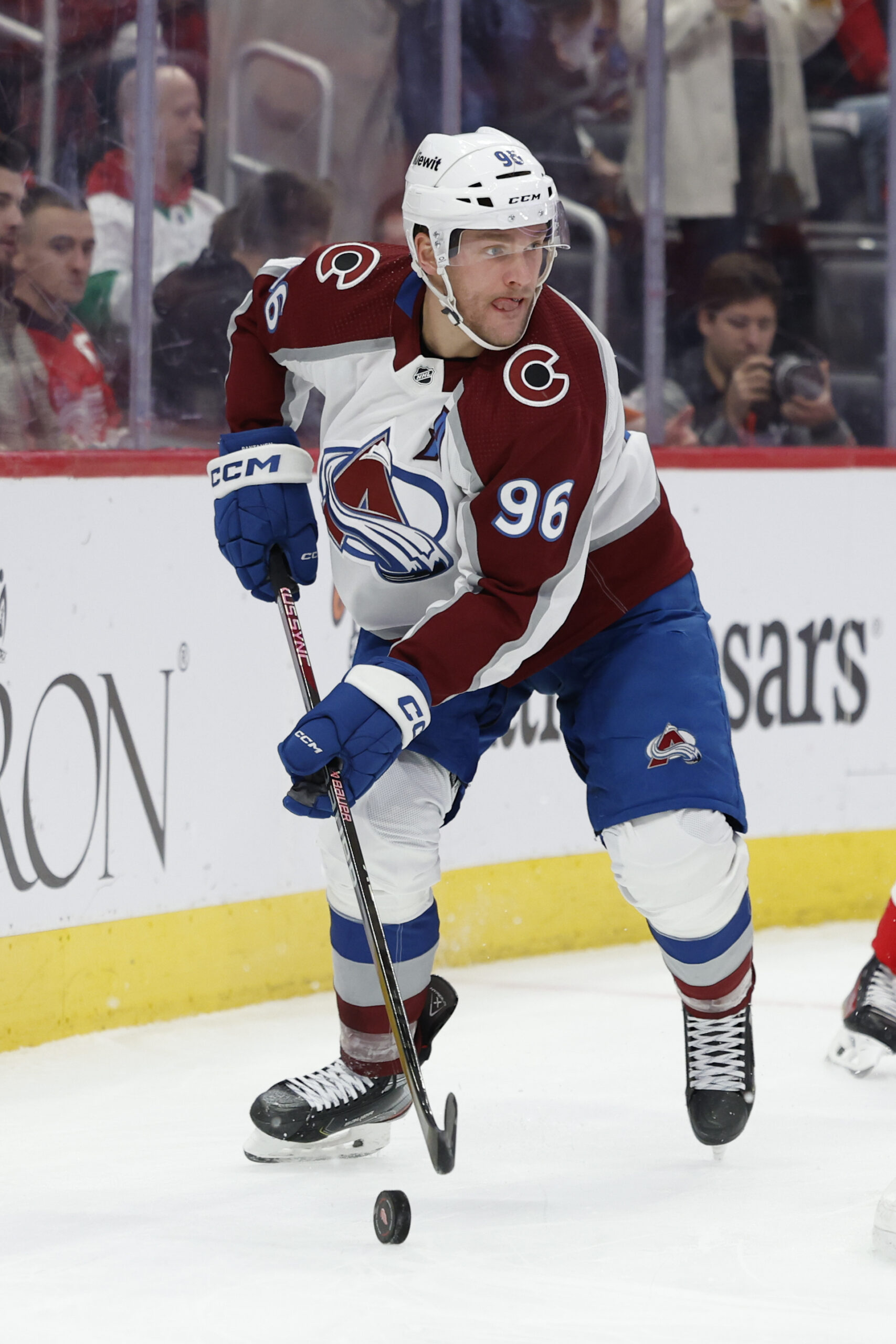
The Avalanche don’t have many desirable trade chips that they would be willing to move on from, which is the price you pay when you are a team that has been in Stanley Cup contention for the last few years and you’ve already moved on from your biggest pending UFA . In terms of roster players that Colorado could move, center Casey Mittelstadt and forward Ross Colton come to mind, but both players have term remaining and have struggled this season.
Mittlestadt started the season on fire, posting six goals and seven assists in his first 10 games. However, since that torrid start, the 26-year-old has struggled considerably, tallying just three goals and 16 assists in 47 games. His underlying numbers have also fallen off this year; his possession numbers have dropped at even strength, as evidenced by his CF%, which was 56.7% last season and has fallen to 50.5%. Any acquiring team is going to see Mittelstadt as a bounce-back candidate with a change of scenery but likely won’t want to pay a big cost to trade for him.
Colton’s decline this season hasn’t been as pronounced as Mittelstadt’s, however, his play hasn’t been what it was in previous years. On the surface, Colton’s 13 goals in 40 games represent the best pace of his career, however, he has produced these numbers with the most favorable deployment of his career. His overall point production has declined, with just 16 points in 40 games, and his control of the puck has been a problem throughout the season. Colton has 33 turnovers in 40 games compared to just 23 in 80 games a year ago.
Outside of their roster players, Colorado isn’t exactly ripe with draft picks, but they do have two second-round picks in this year’s NHL Entry Draft, as well as two fourth-round picks. Next season, Colorado has eight draft picks available, including their first-round pick. However, they don’t have a second or a third-round pick, and three of those eight picks are in the seventh round.
Finally, Colorado could dip in their prospect pool and look to move out some pieces from an already thing depth chart. Center Calum Ritchie and defenseman Mikhail Gulyayev are arguably their top two prospects, and while neither player is a can’t miss prospect, they do have an upside, though. Both players would be a valuable trade piece if Colorado is looking to swing a bigger deal. Ritchie had a seven-game NHL audition this season, posting a single goal. He has since been tearing it up in the Ontario Hockey League with the Oshawa Generals, registering 14 goals and 42 assists in 30 games.
Gulyayev, on the other hand, has been playing in the KHL this season and has posted six goals and six assists in 52 games. While those numbers don’t jump off the page, it is a solid improvement on last season’s numbers when he had four goals and eight assists in 64 games. The 19-year-old was a late first-round pick and is undersized at just 5’10” and 172 lbs, which could chase some teams off who have seen undersized defensemen struggle in recent seasons when trying to break into the NHL.
Other Potential Trade Chips: F Jonathan Drouin
Team Needs

1) A Center: With J.T. Miller off the market, the options for Colorado might be limited here. At the start of the year, it didn’t seem possible that Colorado would be hunting for a center, but the play of Casey Mittelstadt has been a major cause for concern. Acquiring a second line center could allow Mittelstadt and recently acquired Jack Drury to shift down the depth chart, which would likely suit both players better at this point in their respective careers. If that is a route Colorado opts to go, their options will be extremely limited. Dylan Cozens of the Buffalo Sabres is available, but the cost would be high, and like Mittelstadt, the young center has struggled this year. Brayden Schenn is another possibility out of St. Louis, but with three more seasons at $6.5MM per year, Colorado might not want to take on a veteran on a high-priced long-term deal. If they want a younger center under control, Trevor Zegras out of Anaheim would be an option. The 23-year-old has one more year at $5.75MM and would be an arbitration-eligible RFA in the summer of 2026. The Avalanche might need to pivot and look at other forwards or perhaps add a center to the bottom half of their forward group, it will all come down to how the market shakes out.
2) A Defenseman: In an ideal world, the Avalanche would probably love to acquire a right-shot, second-pair defenseman to slot alongside Samuel Girard. Injured defender Josh Manson could certainly fill that role when he returns but would be better served on a third pairing at this point in his career. Bumping Manson down to the third pairing would mirror what the Avalanche did in 2022 when they acquired Manson and bumped veteran Erik Johnson to the third pair. Manson has dealt with injuries this season and would likely be more effective in a less demanding role. Right shot defensemen are always in demand, and acquiring one is never easy, especially in season. Erik Karlsson and Seth Jones are two defensemen who are available, but both would come with high-priced cap hits and may not fit in the salary cap structure of the Avalanche.
Photo courtesy of USA Today Sports Images.
Trade Deadline Primer: Chicago Blackhawks
With the 4 Nations Face-Off break approaching, the trade deadline looms large and is about a month away. Where does each team stand, and what moves should they be looking to make? We continue our look around the league with the Chicago Blackhawks.
Despite a litany of veteran additions this summer, the Chicago Blackhawks have once again found themselves competing with the San Jose Sharks for dead-last in the NHL. It’s been a stressful season for the team’s young stars, with 19-year-old Connor Bedard playing the most minutes among Hawks forwards, while Landon Slaggert and Frank Nazar fight to step up and support the third-lowest scoring team in the NHL. Chicago’s Trade Deadline will focus on building the support around those burgeoning prospects, as they try to craft a roster that can climb to long-term success.
Record
16-31-6, 8th in the Central Division
Deadline Status
Seller
Deadline Cap Space
$10.23MM on deadline day, 2/3 retention spots used, 42/50 contract spots used, per PuckPedia.
Upcoming Draft Picks
2025: CHI 1st, TOR 1st, CHI 2nd, DAL 2nd, CHI 3rd, CHI 4th, NYR 4th, CHI 6th, CHI 7th
2026: CHI 1st, CHI 2nd, NYI 2nd, TOR 2nd, CHI 3rd, CHI 4th, OTT 4th, CHI 5th, CHI 6th
Trade Chips
Another down year has put the Blackhawks’ veterans at the center of trade attention. It seems any of their aging options could be available for the right return. That rings particularly true for alternate captain Seth Jones, who’s been tasked with holding down the Chicago blue-line for the last four seasons. The Blackhawks acquired Jones alongside a first and sixth-round pick (turned into Nolan Allan and Dominic James) in exchange for Adam Boqvist, two first-round picks, and a second-round pick (turned into Cole Sillinger, David Jiricek, and Aleksi Heimosalmi) in the summer of 2021. They signed Jones to an eight-year, $76MM extension on the same day, setting him up for to seemingly ride out the rest of his career in the Windy City.

Jones brought his patented all-offense, no-defense style with him – with his 51 points in the 2021-22 season marking the most a Hawks defender had scored since Erik Gustafsson potted 60 points in 2018-19. But Jones has been on a gradual decline ever since then. He scored 37 points in the 2022-23 season, and fell to 31 in the year after – as he struggled to produce on a vacated Chicago offense. He’s improved a bit this year – with 24 points in 36 games, a 55-point pace across 82 games. That could be the turnaround needed to convince teams to take on his daunting $9.5MM cap hit. But that price tag still stands as the wedge between Jones and a likely move. The Blackhawks will almost certainly need to retain a heavy chunk of Jones’ cap in a move – a move made challenging by the fact that they only have one retention spot available after facilitating the Mikko Rantanen trade. A high cost will also likely limit the return the Hawks are able to receive for their high-scoring defender, even if he does offer the potential to play on a top pair.
Should those factors dissuade teams from looking into Jones, Chicago should also have a heap of veteran forwards available. Centerman Ryan Donato tops that list on the back of a red-hot scoring season. He has 32 points, split evenly, through 51 games this year – a full-season pace of 51 points. Donato also ranks third among all Hawks forward with 87 hits. He’s managed those numbers despite a middling role in the Blackhawks lineup, and minimal ice time with the team’s star prospects. The Trade Deadline is often about finding the hot hand rather than the best asset – and Donato’s consistent scoring on a muddling team suggests he could bring a lot to a playoff hopeful.
Chicago can also offer a lofty physical presence through wingers Pat Maroon or Ilya Mikheyev. Maroon has continued to serve in the diligent, fourth-line role he’s carried through tenures with four teams over the last three seasons. He has just 11 points in 47 games, while averaging 11:32 in ice time. But he’s a veteran presence with multiple Stanley Cup rings, and could offer a cheap way for Cup hopefuls to add more size to their lineup. Mikheyev could offer the same, with a bit more scoring and defensive prowess to boot. The Russian winger has 16 points in 51 games, but he’s worked his way into a top-six role alongside Jason Dickinson and Teuvo Teravainen. Mikheyev’s $4.04MM cap hit could pose problems for hopeful – but those issues could be mitigated by a cheap return or added sweeteners.
Other trade chips: Philipp Kurashev, Craig Smith, Alec Martinez, T.J. Brodie
Team Needs
1) Future Capital: The Blackhawks have a lot of options to move this Deadline, but none seem poised to bring in a massive return. Even trading Jones would require strategic negotiating from Hawks general manager Kyle Davidson, as he tries to convince teams to take on a lofty salary cap. With seemingly light trades on the horizon, Chicago’s focus will need to be on continuing to build out their future through the acquisition of draft capital and low-grade prospects. Plenty of teams seem one addition away from pushing for playoff, or even Stanley Cup, contention – and Chicago could find a trade partner with plenty of expendable future capital in a team like the Columbus Blue Jackets, Ottawa Senators, or even the Detroit Red Wings. All three teams are within sparring distance of the Eastern Conference’s second wild card, and could be convinced to spend a bit more to round out their lineup and hedge their bets.
2) A Binding Center: If Chicago is looking for roster players on the open market, they should be looking for more support down the middle. Both Luke Richardson and Anders Sorensen have awarded veteran center Jason Dickinson prime minutes this season, largely thanks to his ability to win faceoffs and hold down the defensive zone where young players like Bedard and Nazar struggle. But Dickinson has recently fallen to injury, and even then – his 16 points in 53 games are at the core of Chicago’s struggles to score. Finding another veteran center who can fill middle-six minutes and support Dickinson would go a long way in giving Bedard, Nazar, and Slaggert a sturdier platform to perform from. Philadelphia Flyers center Scott Laughton seems a sure bet to bring modest offense, defense, and leadership to a Hawks lineup in need – though the Flyers have previously said they’d need a hefty return to move Laughton. Should Chicago get priced out, they could also turn towards the Nashville Predators, who have options like Thomas Novak, Michael McCarron, or Colton Sissons up for grabs. All three players have faced their own unique struggles this year, but would again bring an air of physicality and gumption to a Chicago lineup lacking in both regards. Adding a center, even if he may retire before Chicago reaches their next prime, could prove the rich lineup support the team needs.
Images courtesy of USA Today Sports.
Salary Cap Deep Dive: Buffalo Sabres
Navigating the salary cap is one of the most important tasks for a front office. Teams that can avoid total cap chaos by walking the tightrope of inking players to deals that match their value (or compensate for future value without breaking the bank) remain successful. Those that don’t often see struggles and front office changes.
PHR is looking at every NHL team and giving a thorough look at their cap situation for the 2024-25 season. This will focus more on players who are regulars on the roster versus those who may find themselves shuttling between the AHL and NHL. All cap figures are courtesy of PuckPedia. We’re currently covering the Atlantic Division, next up is the Sabres.
Buffalo Sabres
Current Cap Hit: $82,494,010 (under the $88MM Upper Limit)
Entry-Level Contracts
F Zach Benson (two years, $950K)
F Jiri Kulich (three years, $886.7K)
F JJ Peterka (one year, $855.8K)
F Jack Quinn (one year, $863.3K)
Potential Bonuses
Benson: $650K
Quinn: $850K
Total: $1.5MM
Benson had a solid rookie season last year after somewhat surprisingly making the team out of training camp. However, his per-game output has actually dipped this season which isn’t ideal and has him on pace to miss his ‘A’ bonuses. At this point, it would be surprising to see the Sabres prioritizing a long-term deal on his next contract; a bridge pact with an AAV around the $3MM mark is the likelier outcome. Kulich is just starting out in the NHL which makes his next agreement difficult to forecast. Based on his early production though, he’d be trending toward a bridge deal as well.
Quinn is someone who Buffalo likely hoped would be a candidate for a long-term pact but injuries last year didn’t help in that regard, nor have his struggles this year. A bridge contract could still land around the $4MM mark, however, and with there still being some uncertainty about him, it makes sense for both sides to lean that way. In the meantime, he’ll need to pick up the pace offensively to have a shot at any of his ‘A’ bonuses. Peterka is someone who should get consideration for a long-term deal, however. After putting up 50 points last year, he’s on pace to beat that this season and has established himself as a legitimate top-six winger. With another big increase in the salary cap coming, there’s a chance Peterka could become their highest-paid forward, surpassing the $7.15MM mark on a long-term agreement.
Signed Through 2024-25, Non-Entry-Level
F Nicolas Aube-Kubel ($1.5MM, UFA)
D Jacob Bryson ($900K, UFA)
D Bowen Byram ($3.85MM, RFA)
D Dennis Gilbert ($825K, UFA)
F Jordan Greenway ($3MM, UFA)
D Henri Jokiharju ($3.1MM, UFA)
F Ryan McLeod ($2.1MM, RFA)
G James Reimer ($1MM, UFA)
F Jason Zucker ($5MM, UFA)
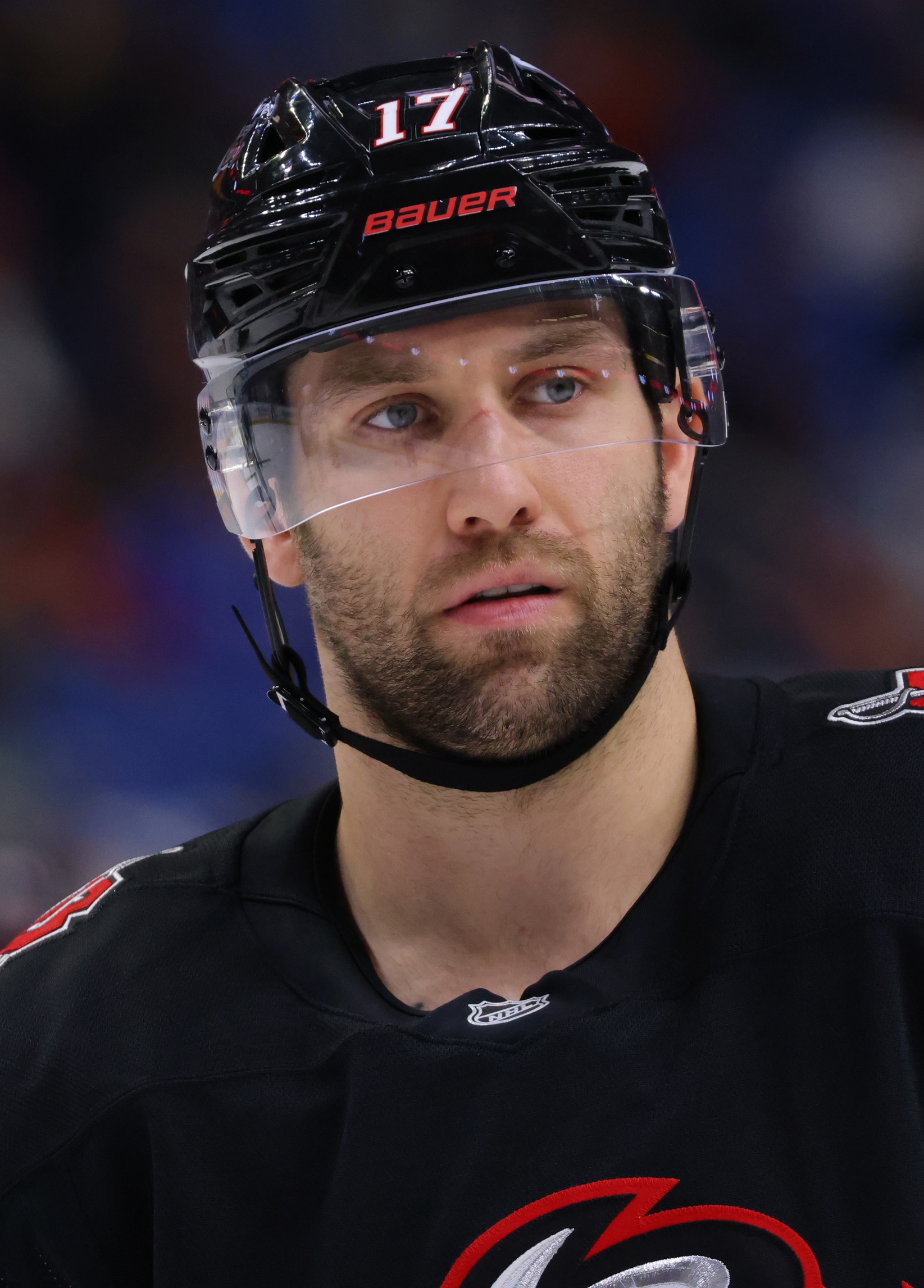 Zucker has been a very nice pickup in his second straight year of playing on a one-year pillow contract in the hopes of restoring his market value. The last one didn’t go so well but this one has as he’s playing at an offensive pace close to his career year back in 2017-18. That should help his chances of securing at least a multi-year agreement this time around. However, because of his age (33) and his inconsistency with other teams in recent years, Zucker may be hard-pressed to command top dollar on that multi-year deal. Instead, that deal might not cost a whole lot more than what he’s getting now if teams have any doubts about his ability to fit in with them based on what happened elsewhere.
Greenway has shown flashes of being an impact player since being acquired two years ago but staying healthy has been a concern. Nonetheless, a 6’6 power forward is going to garner plenty of interest on the open market. Missing more than half the season so far with injuries won’t help his cause but even with that, a small increase in pay and another multi-year agreement should be coming his way.
McLeod has fared well in his first season since coming over from Edmonton and is nearing his career highs offensively from last year. Assuming he reaches those thresholds, the improved production and arbitration eligibility could push him closer to the $3.5MM range on a contract that buys a year or two of team control. Aube-Kubel has had some success as a fourth liner in the past but that hasn’t happened yet this year. He had enough of a market to garner more than expected last summer but recently cleared waivers and was sent to the minors where he still partially counts against the cap. As a result, his next deal seems likely to come in close to the minimum salary.
Byram is the headliner among the defensemen. He’s on pace to shatter his personal bests offensively, plays in all situations, and has stayed healthy which is notable for someone with his concussion history. While the Sabres could opt for another short-term deal, the likelier outcome is a long-term agreement. With his output this season and arbitration rights, that could push his price tag into the $7MM range. Can they afford that long-term with two big deals already on the books on the back end? That’s a decision they’ll have to make.
Jokiharju has seen his stock fall sharply. He’s no longer in Buffalo’s top four on the back end and his level of play has suffered for it, hardly ideal heading into his first trip through unrestricted free agency. Still, he’s going to be a rare 26-year-old UFA (thanks to reaching seven years of service time) and is a right-shot player who has logged 20 minutes a game in the past. Accordingly, even with his decline in performance, he could still come in pretty close to this price tag in July. Bryson took a greater than 50% pay cut to stay with Buffalo in the summer and has had a very limited role thus far. With that in mind, he’ll likely stay around this price point as will Gilbert who has played even less.
Reimer was originally signed to be the veteran third-string option but after being reacquired on waivers early in the season, the plan changed and he stayed in Buffalo while Devon Levi went to the minors to play more minutes. (While Levi has gotten a spot start here and there since then, he’s not on the verge of meeting any bonuses which is why he wasn’t mentioned with the entry-level players.) Reimer has played limited minutes and is more of a lower-end backup or third-string option so he could wind up coming closer to the league minimum of $775K next time out.
Signed Through 2025-26
D Connor Clifton ($3.33MM, UFA)
F Peyton Krebs ($1.45MM, RFA)
F Sam Lafferty ($2MM, UFA)
F Beck Malenstyn ($1.35MM, UFA)
F Alex Tuch ($4.75MM, UFA)
Tuch was a legitimate top-line point-per-game player in 2022-23 but hasn’t been able to produce at the same level since then and his numbers are down again this year. Even so, he’s still an all-situations player in a prominent role while making second-line money. Even with the drop in scoring, he’d likely pass the $7MM mark if he hit the open market today, a number that would only go up if he gets back to his level of production from a couple of years ago. Lafferty was brought in as part of the revamp on the fourth line and hasn’t been as impactful as the team expected. If that continues into next season, a small cut in pay seems likely though his overall track record is good enough to prevent him from facing any sort of steep drop.
Krebs hasn’t been able to become an impactful producer just yet at the NHL level. One of the key pieces of the Jack Eichel trade, he has been more of a depth middleman than a top-six center of the future. He’s at least doing better than last season which should buy him more rope from a development perspective but it’s hard to see him landing a long-term agreement on his next deal if this continues. But with arbitration rights, doubling his current price tag is doable. Malenstyn was the other player brought in to change up the fourth line and has fit in well in that role while playing less than he was in his career year with Washington last season. If he remains a prominent hitter, he could push past $2MM in 2026.
Clifton’s contract was a bit of a headscratcher at the time and it hasn’t panned out thus far. Being a right-shot defender certainly helps his value but being limited to third-pairing duty doesn’t. Assuming he stays in this role moving forward, he might land closer to $2.5MM next time out, even with a higher salary cap by then.
Trade Deadline Primer: Carolina Hurricanes
With the 4 Nations Face-Off break approaching, the trade deadline looms large and is about a month away. Where does each team stand, and what moves should they be looking to make? We continue our look around the league with the Carolina Hurricanes.
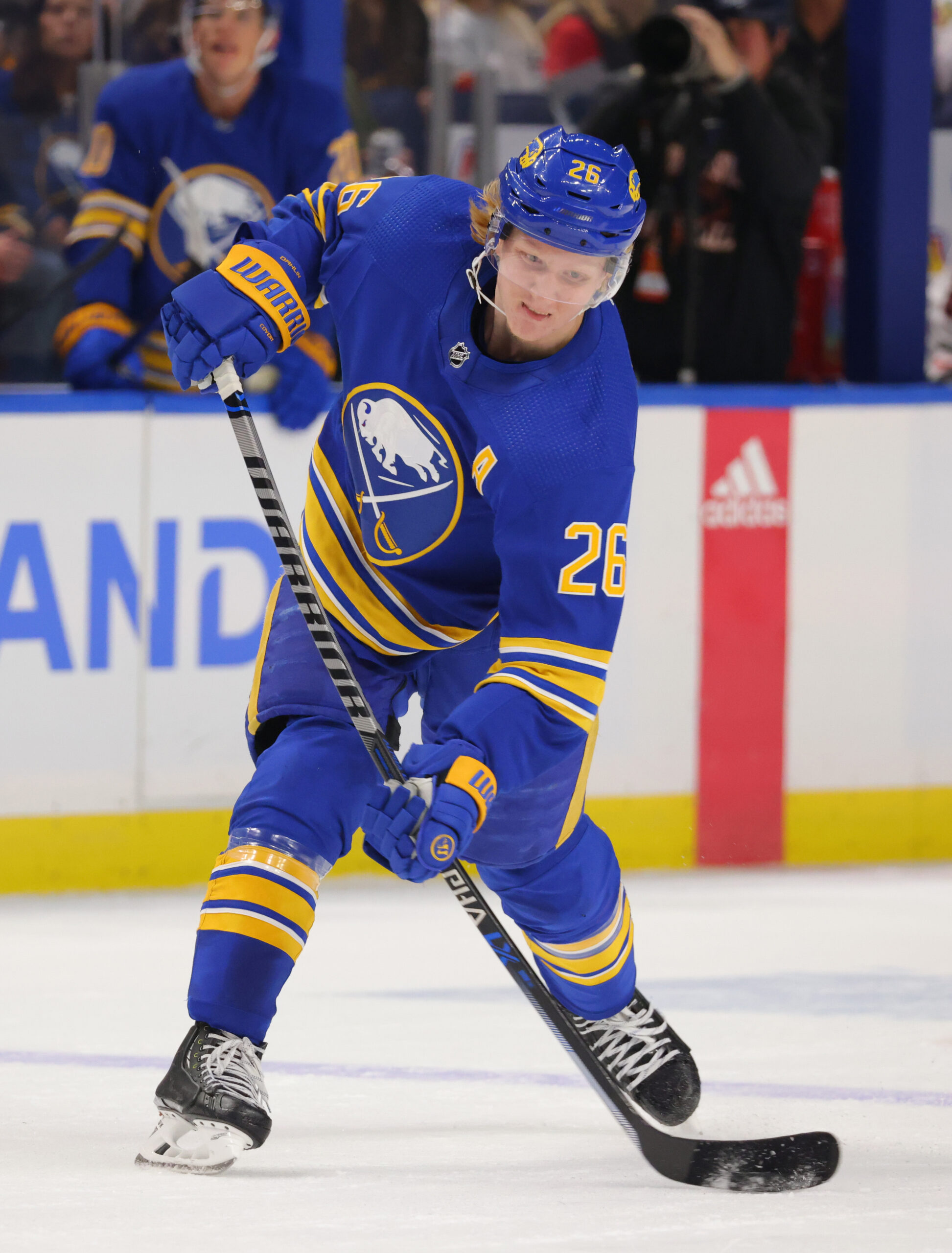
Like a handful of other teams, the Hurricanes already landed their big fish well in advance of the March 7 trade deadline. Mikko Rantanen and Taylor Hall are in for Martin Nečas and Jack Drury, giving them some additional scoring punch on the wings. There are still some areas for improvement on the roster, though, and general manager Eric Tulsky may have another more minor move or two up his sleeve.
Record
32-18-4, 2nd in the Metropolitan
Deadline Status
Buyer
Deadline Cap Space
$282K on deadline day + $3.17MM LTIR pool, 0/3 retention slots used, 46/50 contracts used, per PuckPedia.
Upcoming Draft Picks
2025: CAR 1st, TBL 3rd, CAR 4th, CAR 6th, CAR 7th
2026: CAR 1st, CAR 2nd, CAR 5th, TOR 6th, CAR 6th, CAR 7th
Trade Chips
Unlike most contenders, the Hurricanes’ draft pick pool is quite well-stocked. Their prospect pool also ranks in the league’s upper echelon – depending on who you include – and they barely dipped into it in the Rantanen blockbuster by leveraging an already-established top-six winger in Nečas. Whether they have the cap flexibility to acquire an asset that warrants a first-round pick remains to be seen, but they do have their own picks for the next few years left at their disposal, plus a 2026 second-rounder that’s also fairly valuable.
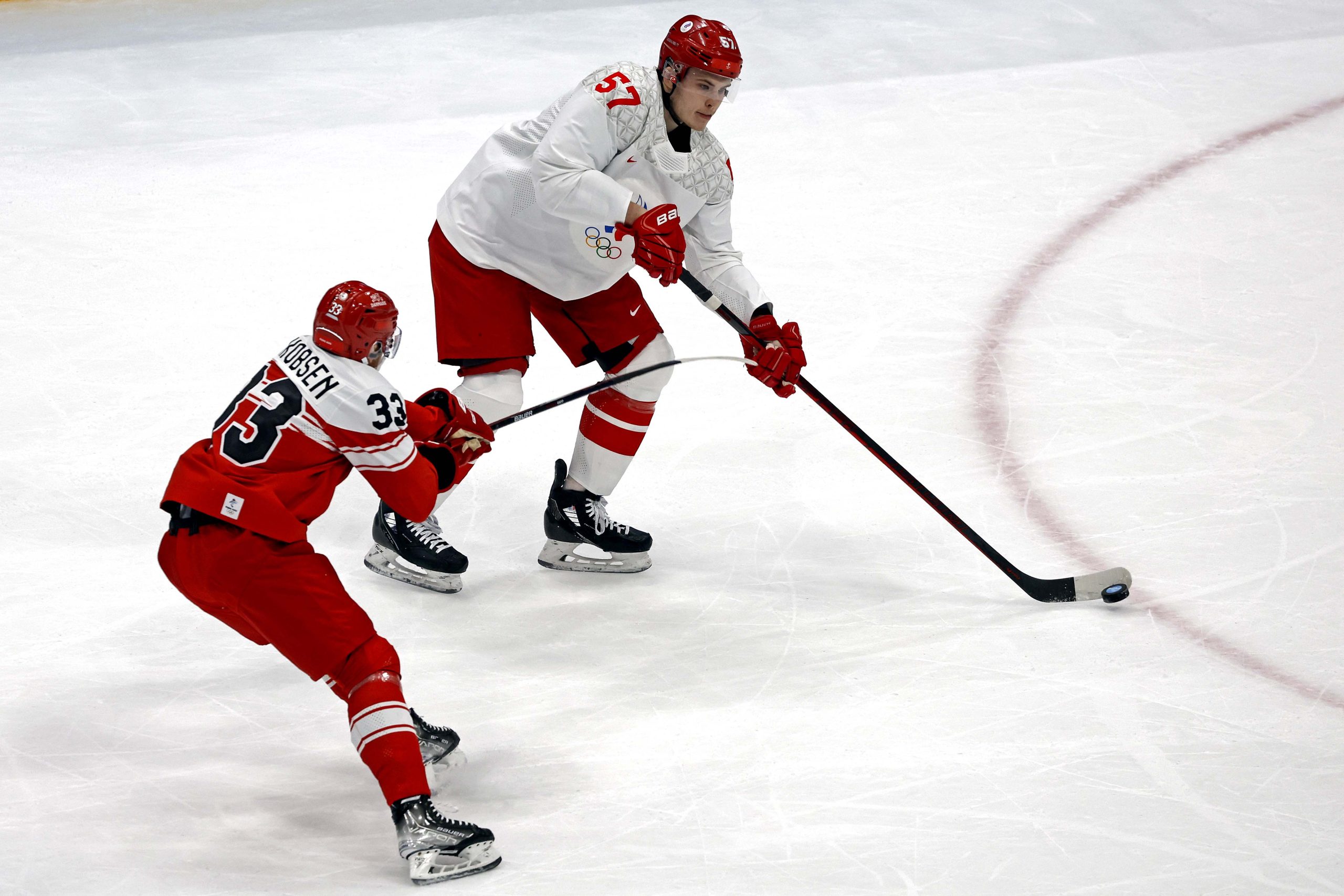 The qualifier in the first paragraph refers to defenseman Alexander Nikishin, who’s the most valuable trade chip Carolina could leverage outside of their first-round picks. The 23-year-old lefty has aged out of being able to be considered a prospect in some circles, but he’s easily the best and highest-ceiling player in the Hurricanes organization who’s not on the roster. Standing at 6’4″ and 216 lbs, the 2020 third-round pick has blossomed into arguably the best defenseman not currently in the NHL.
Now in his second season as captain of SKA St. Petersburg of the Kontinental Hockey League, he’s led KHL defensemen in scoring in back-to-back seasons and has added 35 points in 47 games this year with a +17 rating. He’s on an expiring contract and will almost certainly be coming to the NHL next season, whether that’s in Carolina or elsewhere, if they deal his signing rights. They’d prefer retaining him, especially with Brent Burns and Dmitry Orlov on expiring contracts, but he’s an asset they’ll need to consider if they figure out a way to make another sizable splash. But depending on how (and if) their other top defense prospect, Scott Morrow, performs after this week’s recall, they could be more willing to move on from one or the other.
Outside of that, it’s hard to imagine the Hurricanes dealing from their roster again after already parting ways with Nečas and Drury. There are some other depth pieces in their prospect pool they could be willing to move, namely wingers Nikita Artamonov and Felix Unger Sörum, but the organization has spoken highly of both and would likely rather part ways with their draft capital.
Team Needs
1) Help Down The Middle: While Rantanen’s been snakebitten since his acquisition with a goal and an assist in five games, he’s shooting at just 5.6% and will rebound soon enough. They accomplished their main objective of adding general scoring punch and high-end talent – something that’s been sorely lacking throughout their championship window to date outside of Sebastian Aho and Andrei Svechnikov. They now have time to focus on positional needs, where adding another player who can ice out Jesperi Kotkaniemi as their second-line center reigns supreme. He’s producing more offense than 2023-24’s nightmarish 12-15–27 line in 79 games played, but he’s still barely clicking at a 40-point pace and has underwhelming possession numbers in already limited minutes for someone currently tasked with centering Hall and Svechnikov. It could be another low-cost, high-risk pickup in the vein of last season’s Evgeny Kuznetsov trade, of which Ryan Donato would fit the bill if the Blackhawks are willing to be trade partners again. He’d be affordable given their tight cap situation – the same can’t be said for others on the board like Dylan Cozens or Brock Nelson without a third team retaining salary in a deal. The Canadiens’ Jake Evans is also producing at a slightly higher rate than Kotkaniemi this year in more extended usage, with much better relative possession impacts.
2) Another Depth Forward: The Hurricanes have a strong No. 3 option in goal in Dustin Tokarski and decent defensive depth in case of injury, with names like Morrow, Ty Smith, Joakim Ryan, and Riley Stillman providing a good mix of offensive utility and experience in case of an injury to their ironclad top-six group. The same can’t be said for their depth wingers, which have taken a hit with Jesper Fast‘s season-long absence and a long-term injury to his replacement, William Carrier. Their LTIR flexibility could allow them to at least add a six-figure winger with a bit more experience or offensive upside to rotate into their bottom six in case of added injury issues.
Image courtesy of USA Today Sports.
Trade Deadline Primer: Calgary Flames
With the 4 Nations Face-Off break approaching, the trade deadline looms large and is about a month away. Where does each team stand, and what moves should they be looking to make? We continue our look around the league with the Calgary Flames.
This season hasn’t quite gone as many anticipated in Calgary. But unlike some underachieving things, not going as expected is actually a good thing. The Flames went into the season as expected sellers but instead enter tonight’s action with a share of the final Wild Card spot in the Western Conference. As a result, we’ve seen them make one buyers move already although they could look to play both a buying and selling role as the deadline approaches.
Record
26-20-7, T-4th in the Pacific
Deadline Status
Long-Term Buyer, Possible Short-Term Seller
Deadline Cap Space
$78.698MM on deadline day, 1/3 retention slots used, 44/50 contracts used, per PuckPedia.
Upcoming Draft Picks
2025: FLA 1st*, NJ 1st, COL 2nd, CGY 3rd, CGY 5th, CGY 6th, CGY 7th
2026: CGY 1st, VGK 1st, CGY 2nd, CGY 3rd, VAN 3rd, CGY 4th, CGY 5th, CGY 6th, CGY 7th
*-Depending on how the Draft Lottery falls, it’s possible that Florida’s first-round pick will go to Montreal in which case Calgary would keep their own. There is also a remote chance that the pick won’t be conveyed to the Canadiens until 2026. This is from the Sean Monahan trade in 2022.
Trade Chips
There’s a big difference between what teams want Calgary’s trade chips to be and what they’re actually going to be. It was recently reported that the Flames have been receiving calls on top veterans Nazem Kadri, MacKenzie Weegar, and Rasmus Andersson but GM Craig Conroy has been rebuffing those efforts, telling inquiring teams that those players aren’t available. While Andersson’s contract is up after next season, early indications are that the team believes they can get him signed to an extension. So those players, as well as their other top ones, are off the table.
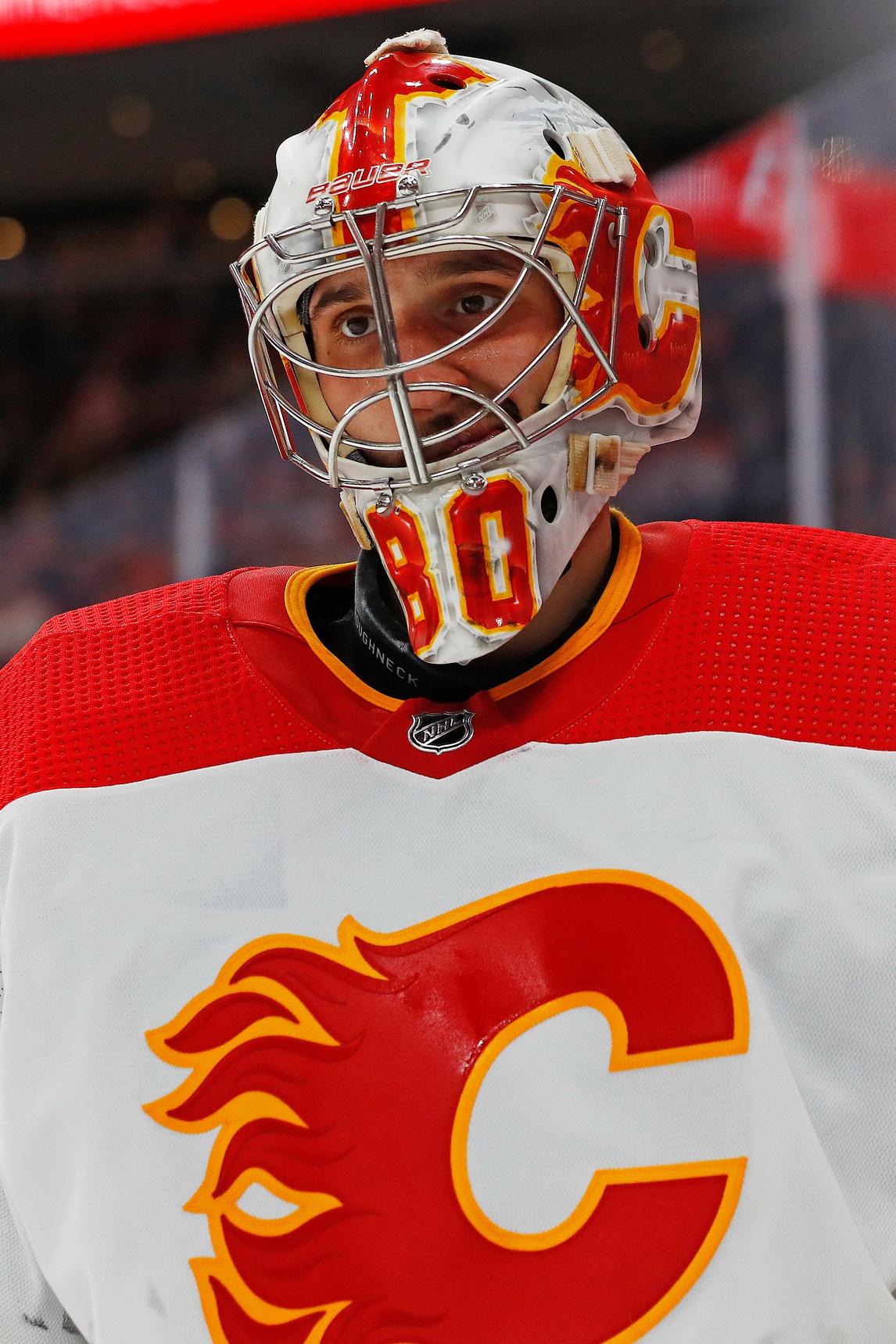 It’s not a great group of rental players for Calgary as many of the ones on shorter-term deals were moved out already over the past 13 months or so. But one that might draw some interest is goaltender Daniel Vladar. After undergoing hip surgery last season, he has played a bit better this season, shaving more than a half-goal off his GAA while adding six points to his save percentage. Early on, he was platooning with top prospect Dustin Wolf but the youngster has taken full hold of the top spot now. At $2.2MM and on an expiring deal, Vladar could be a lower-cost acquisition for a team looking for extra depth or a short-term option if one of their options goes down. While it might seem strange for a team with playoff hopes to move a goalie, they do have one in the minors who is more than making a case for an extended look.
That player is Devin Cooley. The 27-year-old is signed through next season at the league minimum and has been dominant with AHL Calgary this season, posting a 2.24 GAA and a .928 SV% and playing a big role in putting the Wranglers atop the Western Conference at the All-Star break. If Vladar is moved, Cooley will likely get the chance to make a case for the full-time backup spot next season. But it’s also possible that teams will come calling about Cooley with the intent of evaluating him for their own second-string slot next season. The Flames would undoubtedly need another AHL goalie as part of any return but if there are teams who feel he’s NHL-ready (or want to keep their goalie costs down), he might actually have more suitors than Vladar.
Among their healthy veterans on expiring deals, the most notable ones are blueliner Tyson Barrie and center Kevin Rooney. Barrie, on a $1.25MM deal, has been a frequent healthy scratch and his value, if there is any, would be for a late-round pick at most. Rooney hasn’t had a great year but he can kill penalties and play with some grit. He’s the type of late-deadline depth addition a couple of teams might consider and with a $1.3MM price tag, he’d be affordable but again, the return would be minimal. They also have the RFA rights to Nikita Okhotyuk, the 24-year-old playing in the KHL but has 67 career NHL games under his belt. If Calgary wants to add a low-cost addition, he’s someone they could potentially dangle instead of parting with a draft pick or prospect. But all things considered, if the Flames aren’t selling, they don’t have much in the way of physical trade options to work with.
But they do have cap space. More than any other team than Columbus, in fact. Conroy might be able to add some extra draft picks by taking on an expiring contract or being a third-party retainer to facilitate another team’s trade. If they don’t do anything goaltending-wise, their open cap space might be their best chip to play.
Team Needs
Left-Shot Top-Four Defenseman: Usually, it’s the right side of the back end that teams often need to upgrade at. But with Weegar in the fold long-term and the Flames believing they can re-sign Andersson, that side should be in good shape for a while. (One of their top prospects, Zayne Parekh, also shoots from the right.) But the left side isn’t anywhere near as secure. Jake Bean, Kevin Bahl (currently injured), and Joel Hanley are among those who have seen top-four time on the left side of the back end and that’s not a core group of a contender. If Conroy wants to make a short-term buyer move, adding a rental who can fill that void would go a long way. Failing that, it will be near the top of their to-do list over the summer.
Continue Growing Young Core: Conroy has talked before about wanting to add more players around the same age as some of their younger core group. That played a role in their recent pickups of Morgan Frost (25) and Joel Farabee (24) while also leveraging some of their financial flexibility. It’s fair to say that a longer-term roster goal will be to try to continue to add players around that age. Those generally don’t move too often in-season but expect Calgary to kick the tires on more moves like their recent one with Philadelphia.
Photo courtesy of Imagn Images.
Trade Deadline Primer: Buffalo Sabres
With the 4 Nations Face-Off break approaching, the trade deadline looms large and is about a month away. Where does each team stand, and what moves should they be looking to make? We continue our look around the league with the Buffalo Sabres.
Another year, another disappointing season for the Sabres franchise. Not only is Buffalo on pace to miss the playoffs for the 14th consecutive season, but they’re tracking toward their seventh bottom-five finish during that stretch.
Record
21-26-5, 8th in the Atlantic
Deadline Status
Seller
Deadline Cap Space
$26.52MM on deadline day, 0/3 retention slots used, 45/50 contracts used, per PuckPedia.
Upcoming Draft Picks
2025: BUF 1st, BUF 2nd, BUF 3rd, BUF 4th, MIN 4th, BUF 5th, BUF 6th, WSH 7th, NSH 7th, BUF 7th
2026: BUF 1st, BUF 2nd, BUF 3rd, BUF 4th, BUF 5th, BUF 6th, BUF 7th
Trade Chips
Not to be misconstrued as a positive, the Sabres are in a unique position for the upcoming deadline season. Buffalo is saturated with underperforming players and should be open for business regarding just about anybody. Thankfully, one of the only positive takeaways from the current iteration of the Sabres is that there aren’t any expensive contracts significantly weighing down the team long-term.
Even defenseman Owen Power, whose $8.35MM salary could be considered high by many due to his uninspiring play on the defensive side of the puck this season, is ranked 16th in the NHL among defensemen for total cap hits. The percentage of the salary cap he’s taking up will decrease as the cap goes up, and he has plenty of time to improve as a 22-year-old blue-liner.
The two bigger question marks come in the form of forward Dylan Cozens and defenseman Bowen Byram. After this year, Cozens will have five years and $35.5MM left on his contract and has wildly underperformed since his 31-goal, 68-point performance only two years ago. Byram is a restricted free agent after this season and is likely expecting a substantial increase from his $3.85 million salary. 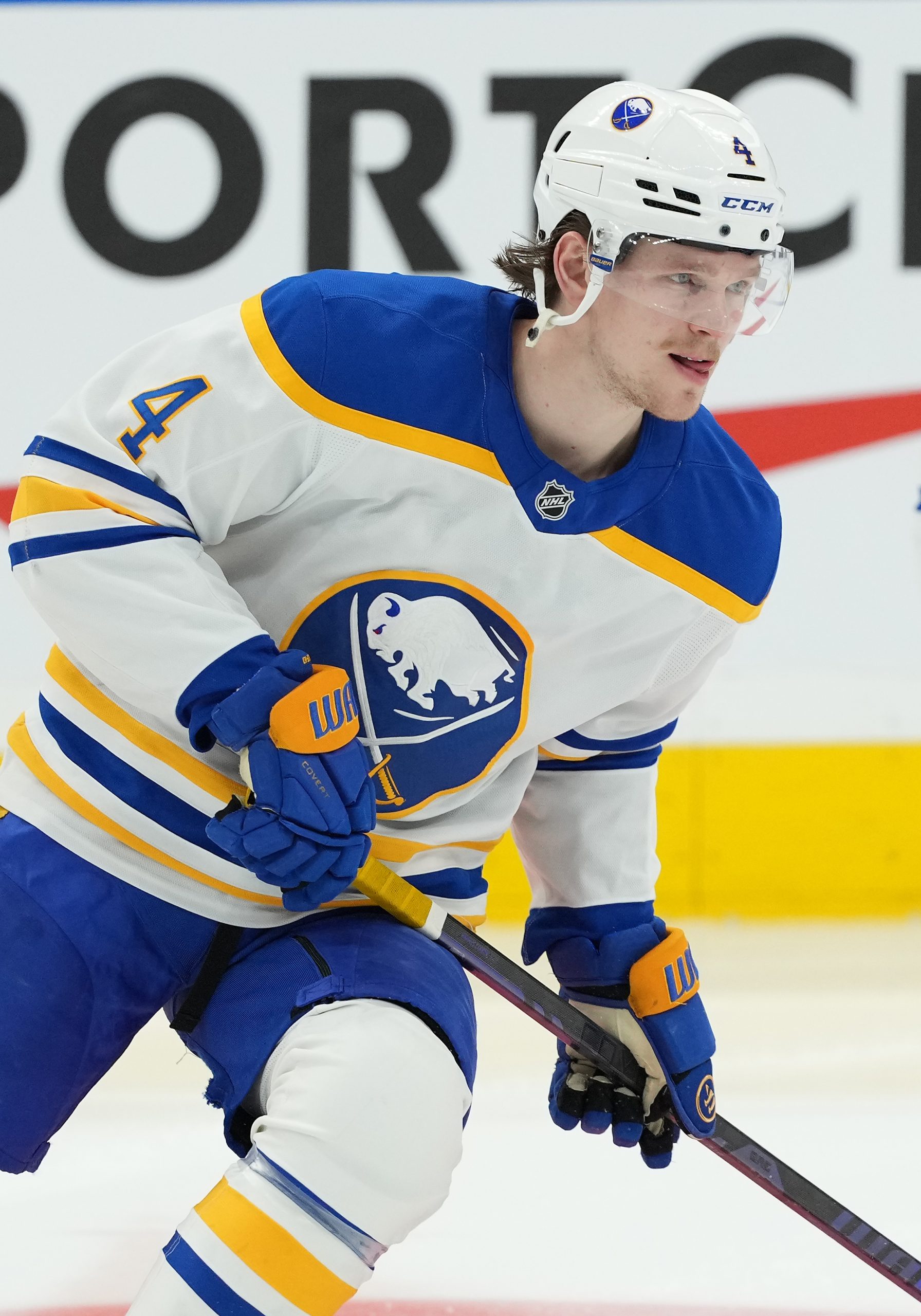
Byram is the most likely candidate to be traded, although it wouldn’t be surprising to see both players remain with the Sabres after the trade deadline. Buffalo would likely be selling low on Cozens if they attempted to move him, making Byram the highest-value trade asset in the lineup.
The other two valuable trade assets are pending unrestricted free agents Jason Zucker and Henri Jokiharju. The Sabres have the option to retain the salaries of both players, which could slightly enhance their trade return. However, some reports suggest Buffalo may be more interested in extending Zucker than trading him as a rental player.
Team Needs
A Right Shot Top Four Defenseman: The Sabres are a team that continues to have a lot of needs, demonstrated by another season at the bottom of the NHL standings. Their biggest need is a top-four defenseman on the right side who can bump Connor Clifton back to the third pairing, which would better suit his skill set. The Sabres were reportedly in on Jacob Trouba before he was dealt to Anaheim, but it would be wise to find an emerging defenseman to fill that role. That is certainly easier said than done, as right-shot defenders are always at a premium, as demonstrated by the Trouba trade and the fact that the Rangers were able to get out from under his contract. The Sabres are currently ranked 28th in the NHL in goals against, and given the offensive talent they have on the left side of their defense core, they would be wise to look for a defensive defenseman to slot in on the second pairing next to Power. The price will be steep if the Sabres intend to fill that role, however, they will have plenty of cap space this summer and have all of their draft picks for the next three years plus a handful of extra late-round picks this year.
A Top Six Winger: The Sabres bought out Jeff Skinner last summer and then brought in Zucker via free agency on a one-year deal. Zucker has been terrific this year in Buffalo but is a possible candidate to be dealt at the NHL Trade Deadline (if the Sabres can’t sign him) and isn’t an ideal option long-term at 33 years old. The Sabres need a bonafide top-six winger who can bring more of a two-way game to Buffalo’s forward core. The team could wait for Jack Quinn or Zach Benson to emerge and fill the role. However, both men are better suited as third-line players at this early stage of their careers. The Sabres could be patient and wait until the summer to fill the winger role as there are a number of highly coveted wingers who will be available in free agency, although the Sabres might be forced to overpay to bring them to Buffalo given the Sabres lack of recent success.
Photos courtesy of USA Today Sports.
PHR’s Josh Cybulski contributed to this article.
Trade Deadline Primer: Boston Bruins
With the 4 Nations Face-Off break approaching, the trade deadline looms large and is about a month away. Where does each team stand, and what moves should they be looking to make? We continue our look around the league with the Boston Bruins.
With tight playoff races in both conferences, there are many teams without a clear agenda heading into deadline day. The Bruins are one of those teams. An early-season coaching change hasn’t done much to jumpstart general manager Don Sweeney‘s club, as an 18-13-3 record under interim head coach Joe Sacco still has them one point out of a playoff spot with negative games in hand. With a subpar possession game, unusually below-average goaltending, and a captain on an expiring contract, Boston isn’t in a good position to be the aggressive buyers they’ve routinely been at recent deadlines.
Record
26-22-6, 5th in the Atlantic
Deadline Status
Conservative Seller
Deadline Cap Space
$1.87MM on deadline day, 0/3 retention slots used, 45/50 contracts used, per PuckPedia.
Upcoming Draft Picks
2025: BOS 1st, BOS 3rd, BOS 5th, BOS 6th, BOS 7th
2026: BOS 1st, BOS 2nd, BOS 3rd, BOS 4th, BOS 5th, BOS 7th
Trade Chips
 If any Bruins roster players move – which isn’t a given – pending UFA forward Trent Frederic is the likeliest candidate. Whether he’s shipped out as part of a true selling move or a retooling swap remains to be seen, but in any event, the 26-year-old is likely more valuable to Boston as a trade chip than as an extension candidate through what looks to be a few questionable seasons. The versatile middle-six grinder has been drawing interest for weeks now, which should only be growing as Mikael Granlund has already come off a thin list of rental forwards with usability at center.
However, Frederic is amid a major offensive regression, posting seven goals and seven assists in 52 games after a career-best 18-goal, 40-point showing last year. That comes despite Frederic averaging a career-high 14:05 per game, most of which has come at even strength. He’s been deployed on the second power-play unit with quarterback Hampus Lindholm missing extended time but hasn’t seen much use shorthanded despite what his reputation as a checking piece may indicate. Frederic does rank second on the team with 142 hits, though, and his $2.3MM cap hit won’t likely require retention for most interested parties. That, plus his effectiveness as a strong secondary scoring piece in the prior couple of seasons, should net Sweeney a solid return as he looks to restock his draft and prospect cupboard and rework his roster.
Big-bodied wingers Justin Brazeau and Cole Koepke are also pending UFAs and have provided far more value to the Bruins this season than their league-minimum two-way deals would predicate. Brazeau, in particular, has found a niche, checking in as one of the team’s six double-digit goal scorers with 10 and 20 points through 51 games. He’s seen usage higher in the lineup, particularly with Elias Lindholm and Brad Marchand, and has a 6’5″, 220-lb frame while carrying above-average possession impacts. If his play holds, he’d be an upgrade on nearly every contender’s fourth line and could even check in as a top-nine piece on a few. Koepke has cooled off after a hot start to the year but has still been part of one of the league’s best shutdown lines this year with John Beecher and Mark Kastelic. The 26-year-old has 12 points in a career-high 47 games, and the trio’s 1.28 xGA/60 ranks second in the league among qualified trios, per MoneyPuck.
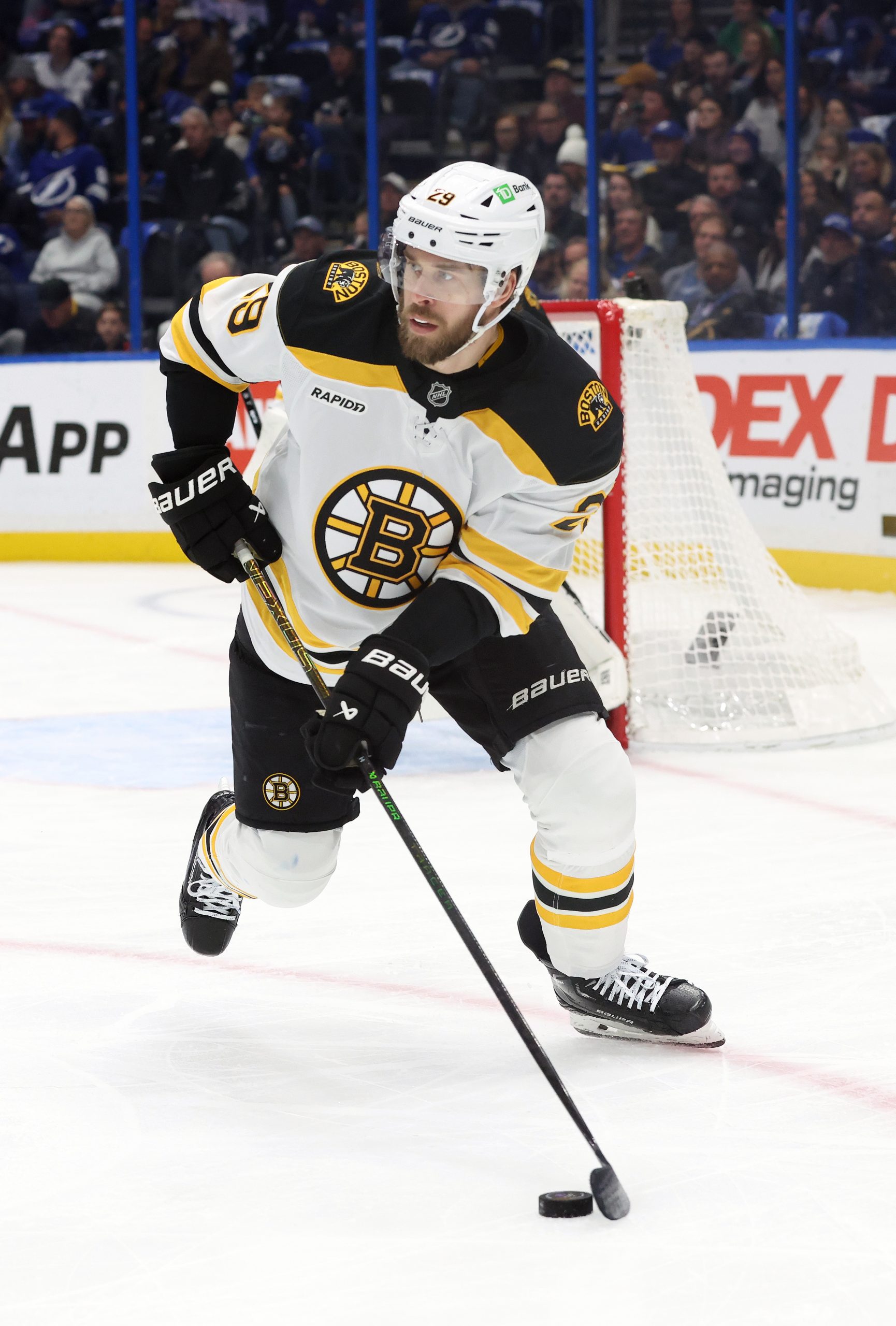 On the back end, left-shot Parker Wotherspoon is likely to draw interest from teams looking to add some injury insurance ahead of the postseason. A pending UFA with an $800K cap hit, he has a goal and an assist in 30 appearances for the Bruins this year while logging fringe shorthanded usage. He plays a low-event game, carrying the worst offensive impacts of any full-time Bruins skater at even strength this season, but his 1.8 GA/60 ranks among the team’s best.
Then there’s Marchand, who enters deadline season without an extension after he denied a report from Elliotte Friedman of Sportsnet in October that a three-year deal was imminent. The 36-year-old still ranks second on the team in scoring with 42 points in 54 games and would net at least a first-round pick as part of a bigger return package. Trading him would signal a more aggressive sell-off than the Bruins have undertaken in decades, though, and remains an outside possibility at best despite his pending free agency.
Team Needs
1) Defense Prospects: While the Bruins’ pool is lacking in talent overall, they still have a pair of promising U-23 forwards in Fabian Lysell and Matthew Poitras. The same can’t be said for their future on defense, which lacks players with surefire NHL upside behind 24-year-old Mason Lohrei, who’s already established himself as a regular. The few first-round picks the Bruins have kept in recent years have all gone to forwards – understandable, given their increasing lack of secondary scoring – leaving the blue line unattended. More cost-effective youth to phase out overpaid depth like Andrew Peeke works to their present and future advantage.
2) Top-Six Forward: If it’s a retooling approach instead of a sellers’ one that Sweeney takes to the deadline, acquiring a top-six forward – whether a polished one or one with relatively certain upside – is a must. Morgan Geekie has been serviceable but overtaxed in a top-line role with David Pastrňák and Pavel Zacha, and Lindholm’s lack of goal-scoring (nine goals in 54 GP) has put more pressure on their wingers to be productive.
Photos courtesy of USA Today Sports.
Trade Deadline Primer: Anaheim Ducks
With the 4 Nations Face-Off break approaching, the trade deadline looms large and is about a month away. Where does each team stand, and what moves should they be looking to make? We start our look around the league with the Anaheim Ducks.
The 2024-25 season has returned the Anaheim Ducks to a very familiar spot. They’re once again fending off last place in the Pacific Division and being propped up by a dismal San Jose Sharks lineup. Another middling year has meant another year of trying to rebuild the Ducks lineup into a team that’s both capable of making a late-season push and fits the vision of head coach Greg Cronin and general manager Pat Verbeek. They’ve already acquired rough-and-tumble veteran Jacob Trouba and burly depth forward Justin Bailey via trade – pushing a clear message of size and grit that’s sure to carry through their Trade Deadline.
Record
21-24-6, 7th in the Pacific
Deadline Status
Sellers
Deadline Cap Space
$78.49MM on deadline day, 1/3 retention slots used, 45/50 contracts used, per PuckPedia.
Upcoming Draft Picks
2025: ANA 1st, ANA 3rd, TOR 3rd, DET 4th, EDM 5th, ANA 5th, ANA 6th, ANA 7th
2026: ANA 1st, ANA 2nd, ANA 3rd, ANA 5th, ANA 6th, ANA 7th
Trade Chips
Another year of trade conversation inevitably leads to another year of conversation around now-backup goaltender John Gibson. The 31-year-old netminder has been the talk of trade discussions dating back to, at least, 2020 – but Anaheim hasn’t yet found a suitor. That’s in large part thanks to his daunting $6.4MM cap hit – making him the seventh-most expensive goaltender in the league. Gibson has struggled to vindicate the lofty cap hit since signing the deal in 2019. He’s set an 82-138-35 record and .901 save percentage over the course of the deal, which is set to expire after next season. Those are middling numbers but Gibson has finally found relief from them this season, largely thanks to emerging star Lukas Dostal shouldering the starting responsibilities.
Finally relieved from playing at a 50-game pace, Gibson has posted an admirable .913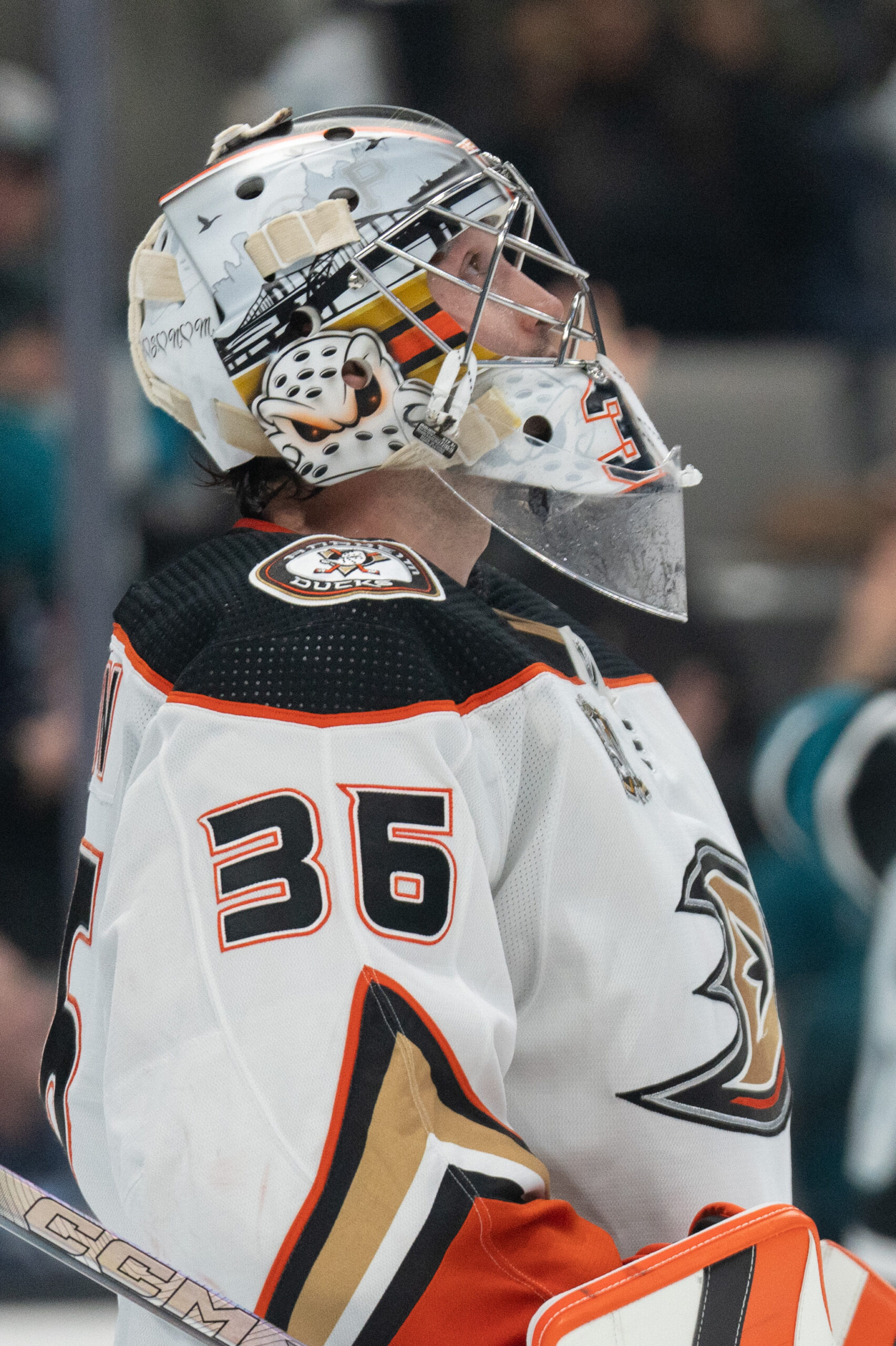 Sv% through 22 games this season – actually leading the team in the stat, compared to Dostal’s .908 in 30 games. It has been a resurgence for the struggling veteran, but a move out of Anaheim still seems like his only option. Dostal has gained control of the starter’s crease at the young age of 24, and backed his rise with an impressive, Gold Medal performance at the 2024 World Championship. While two strong netminders are a great asset for a playoff team, Anaheim seems far removed from that acclaim – and stands to benefit most from giving Dostal a clear runway. That means Anaheim will continue on in the difficult spot of trying to move Gibson’s hefty deal. They’ll likely be forced to retain at least part of his salary, and may need to ask for a new backup in return – with Calle Clang and Oscar Dansk each posting save percentages below .900 in the minor leagues.
Top forward Trevor Zegras could stand as the more rationale trade chip. He has also been oft mentioned in trade rumors, backed by talks of a stylistic divide between the nimble and skilled Zegras and the hard-nosed coaching of Cronin. Zegras wasn’t helped along by persistent injuries last season. He missed more games than he played – appearing in just 31 of Anaheim’s 82 games. That made it incredibly difficult for the young forward to find a scoring groove. He ended the year with just six goals and 15 points – far below the 60-point pace he managed in his first two seasons. Zegras hasn’t been free from injuries this year – suffering a torn meniscus in December that limited him for five weeks. But he’s been healthier than last year, and mounted 13 points in 29 games as a result. That’s an 82-game pace of just 36 points – still far from his scoring ceiling – but the improved performance could be enough to market Zegras as a scorer with upside to teams in need of a boost to their top-end. The former top-10 draft pick will turn 24 two weeks after the Trade Deadline, and carries a cost-controlled $5.75MM cap hit through the end of next season. While certainly a riskier bet than some on the market, Zegras brings tantalizing goal-scoring upside and youth to a league-wide trade board lacking in both categories.
Other potential trade chips: F Isac Lundestrom, F Mason McTavish, D Tristan Luneau
Team Needs
Rough and Tumble Forwards: The Ducks are paving their path with recent trade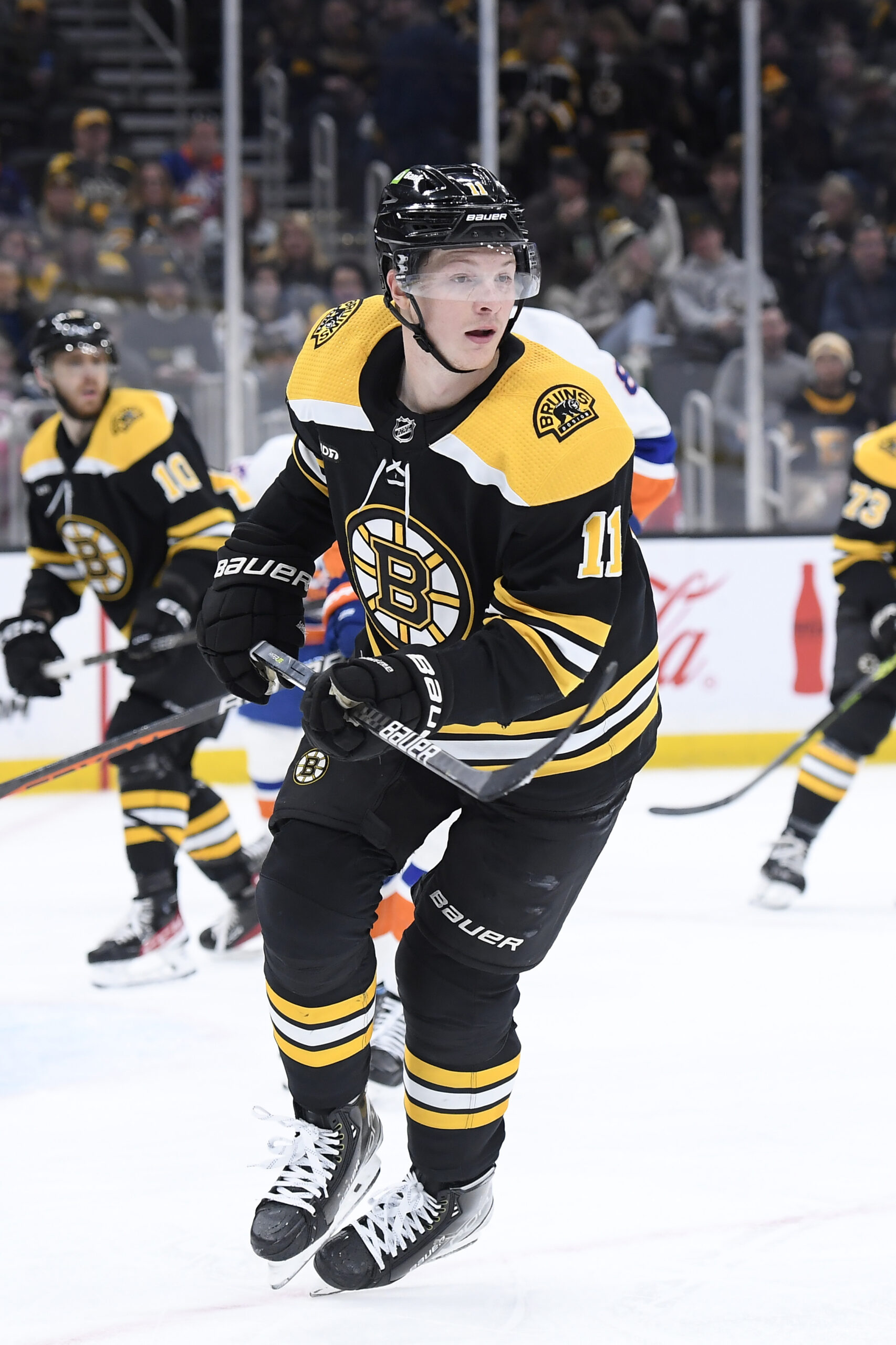 buzz. Talks of Zegras’ departure, coupled with the arrival of multiple bruting skaters, points towards the team clearly wanting a roster capable of winning games by force. They’ll need more size and grit in the lineup if they want to pull that off, putting the Ducks firmly in the market for some of the market’s heaviest options. Boston Bruins forward Trent Frederic seems like the most compelling bet – offering the flexibility to play center or wing, and bringing plenty of grit to either role. Frederic has just seven goals and 14 points in 48 games this season, but his heft down the lineup has proved helpful for a Bruins team in need of a star-protector. Frederic has four fighting majors this season, and was voted as the clear winner in all of them by fans on HockeyFights.com. He could be a low-cost acquisition as the Ducks look for a physical spark in their bottom-six. Anaheim could also turn towards Montreal’s Jake Evans, or Seattle forwards Brandon Tanev or Yanni Gourde, for a physical presence with more scoring upside – but each of the three are likely older than the team would prefer.
Young Scoring Forwards: Anaheim will need to be careful to not fall too far down the well of bruising forwards as the Deadline approaches. Their bottom-six is averaging just 11.5 points, and that number is helped along quite significantly by rookie Cutter Gauthier‘s 21 points. With this season already looking lost, the Ducks can afford to be patient with the impact of whoever they acquire. Main trade rumors haven’t revealed a lot of options for that role – though Buffalo’s Dylan Cozens could be a speedy, high-cost option with the heft to stick in Anaheim’s forward group. But more realistic options could be Toronto’s Nicholas Robertson, or Nashville’s Thomas Novak. Both players bring admirable physicality – particularly Novak – and likely wouldn’t cost Anaheim much to acquire mid-season.
Free Agents To Watch For On AHL Deals
The NHL’s 50-contract limit per organization, combined with the AHL’s veteran rule, means there are always a few spots on affiliates’ rosters for players not contracted with their NHL parent club. AHL-only contracts are a good way to add experienced talent to aid in prospect development without using up a precious NHL contract slot. They’re also frequently used to evaluate undrafted free agents before deciding whether to commit to them on an entry-level deal.
In the past few years, some notable quick ascensions from AHL deals to NHL playing time have occurred, most recently the Avalanche’s Ivan Ivan and the Capitals’ Ethen Frank. The Sharks recently tore up forward Colin White‘s deal with their AHL affiliate and replaced it with an NHL two-way commitment. We’ll likely see more of those moves before the trade deadline as teams look to add recall options and reward depth players for strong performances.
Here are some free agents to watch who could be in line for an NHL contract soon, whether it’s midseason or during free agency:
 Calen Addison, D, Henderson Silver Knights (VGK)
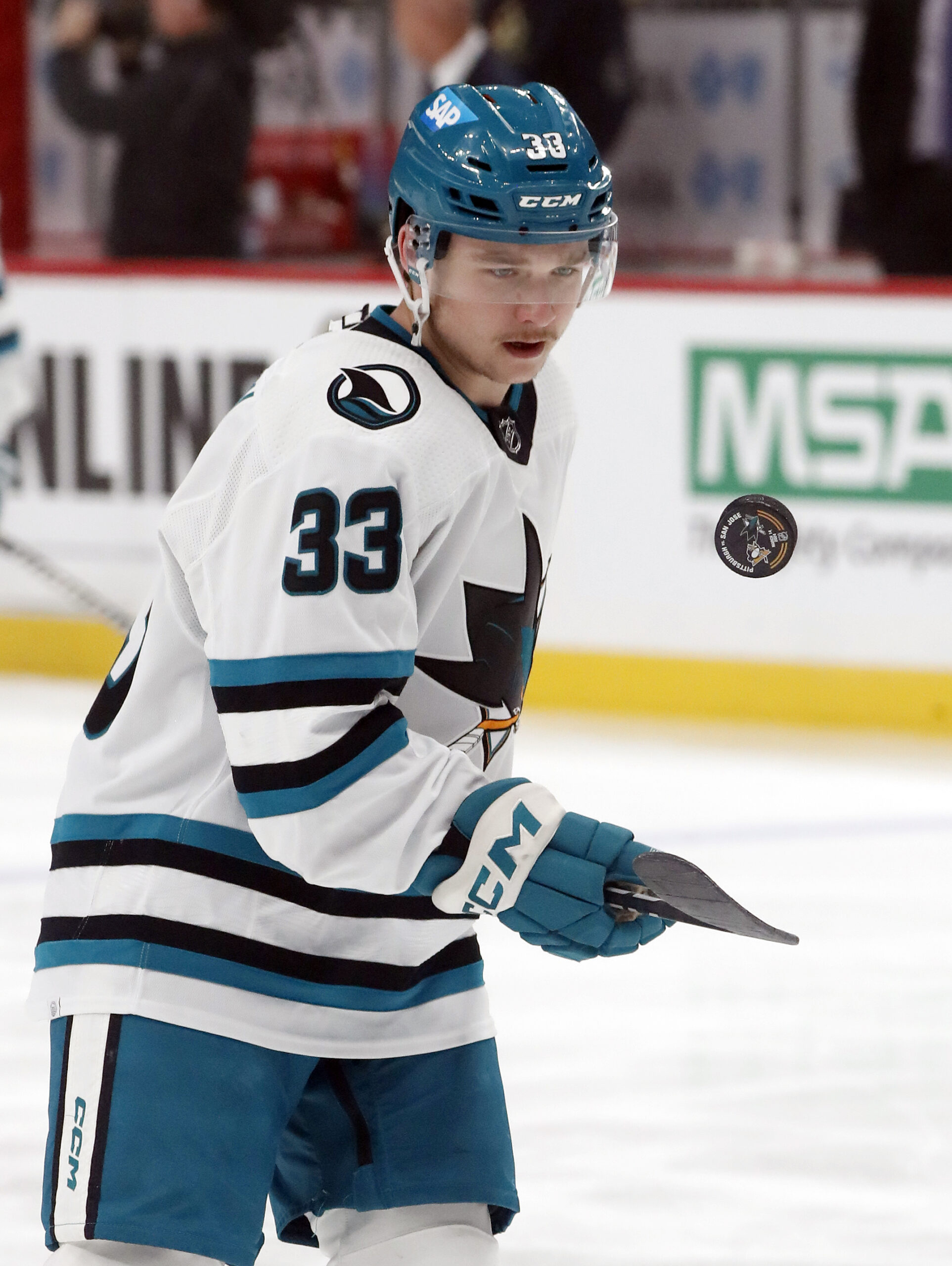
Addison already has over 150 NHL games under his belt, but the 24-year-old’s limited utility outside of being a power-play quarterback led to him needing to settle for minor-league playing time. Selected by the Penguins in the second round of the 2018 draft, he was traded to the Wild in the 2020 Jason Zucker deal. Addison managed 38 points in 92 games with Minnesota before being traded again to the lowly Sharks early in the 2023-24 campaign. In San Jose, he finished the season with a -35 rating and only 12 points in 60 showings. That led to a non-tender, and Addison couldn’t land an NHL contract in training camp on a tryout with the Senators, either.
Despite that track record of teams quickly cutting bait with the 5’11” righty, he’s never had a tangibly negative impact on his team’s even-strength possession numbers in limited minutes. His team-worst -20 rating in 35 AHL games with the Golden Knights’ affiliate is a bit of an eyesore, but the team has struggled overall defensively. His 22 points are tied for 13th in the league among defenders and could put him back in consideration for a two-way deal, whether in Sin City or elsewhere over the summer.
Braeden Bowman, F, Henderson Silver Knights (VGK)
Sticking in Nevada, the 21-year-old Bowman has impressed in his first professional season. After going undrafted through three seasons with the Ontario Hockey League’s Guelph Storm, Bowman ranks fifth on the Silver Knights with 19 points through 38 games and is tied for second on the team with nine goals. He leads the league in scoring among rookies not affiliated with NHL clubs. The 6’2″ winger also captained Guelph last season, leading them with 37 goals in 68 games.
Brandon Halverson, G, Syracuse Crunch (TBL)
Halverson was a second-round pick of the Rangers in 2014 and even got a cup of coffee with them in a relief appearance in the 2017-18 season. However, the Michigan native’s development flamed out, and he became an ECHL full-timer shortly thereafter. Now 28 and two seasons removed from suiting up in the German second-tier pro league, Halverson has dominated the league with a sparkling .925 SV%, 2.02 GAA, and four shutouts in 24 appearances for Syracuse. With backup Matt Tomkins as Tampa Bay’s only current recall option and eight open contract slots, it’s hard to see why the Bolts haven’t snapped him up yet with a two-way deal to keep him from leaving the organization.
Cameron Hebig, F, Tucson Roadrunners (UTA)
The 28-year-old Hebig is in his seventh professional season, the past five of which have been spent in the Coyotes/Utah organization with Tucson. He jumped to the pros in 2018 after receiving an entry-level contract from the Oilers, but they didn’t qualify him upon expiry in 2020, and he’s spent the last half-decade on AHL deals with the Roadrunners. That patience could pay off, as the versatile 5’10” forward is amid a career year with 14 goals and 14 assists for 28 points through 34 games. That’s good for second on the team, as is his +13 rating.
 Boris Katchouk, F, Wilkes-Barre/Scranton Penguins (PIT)
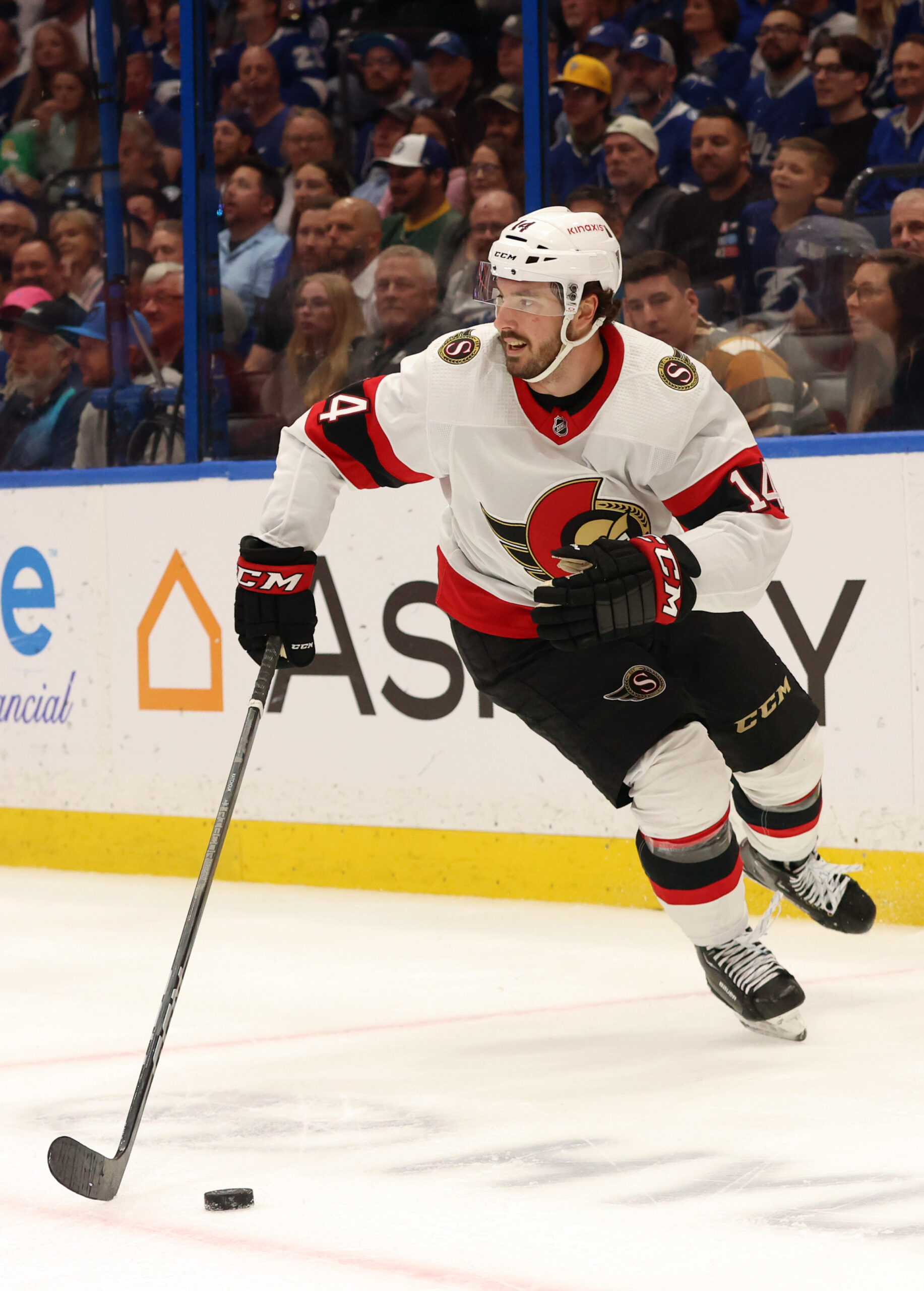
Katchouk played at least 50 NHL games every year between 2021-22 and 2023-24, but that wasn’t enough to secure an NHL offer on the open market this summer following a non-tender from the Senators. He appeared in training camp with the Ducks on a tryout, and while his performance wasn’t sufficient to land him a two-way contract, it did get him an extended look with Pittsburgh’s AHL affiliate. His decision was wise, as the 6’2″ physical winger has rediscovered his offensive mojo. After ending last year with four points in 21 games for Ottawa following a waiver claim from the Blackhawks, he has 27 points in 33 AHL games with WBS. That ranks third on the team, and his +10 rating is tied for first. It could be enough for teams to consider him an option as a bottom-six complementary scorer.
Matt Luff, F, Springfield Thunderbirds (STL)
Luff, 27, had seen NHL ice in five straight seasons until 2023-24. He was under a one-way league minimum deal with the Red Wings but was injured for most of the campaign and only saw AHL action when healthy. He landed a training camp tryout with the Panthers but was promptly released. The 6’3″ right-winger had four points in six games for AHL Charlotte on a PTO before they, too, released him, and Springfield moved quickly to give him a guaranteed deal for the rest of the year. He’s exploded for his second point-per-game AHL season in the last four years, potting 11 goals and 15 assists through 26 appearances.
Zach Metsa, D, Rochester Americans (BUF)
Perhaps no one has a more intriguing case for a contract on this list than Metsa, who’s broken out for 28 points and a +7 rating in 40 appearances with Rochester in his second professional campaign. The 26-year-old captained Quinnipiac to a national championship in 2023 and received NHL interest then, but the righty’s 5’9″ frame was a pressing concern. The likelihood of him becoming a full-time NHLer is slim, but he ranks third in the league in points from the blue line and is at least deserving of a call-up opportunity, whether it’s in Buffalo or elsewhere.
Jack Millar, D, Ontario Reign (LAK)
Millar, 24, is a hulking 6’5″ righty in his first pro campaign after a four-year run at Colorado College. The stay-at-home defender has seven assists through 34 games but leads the Reign with a +19 rating and has largely stayed out of the box with only 15 PIMs. That’s a good mix of talent for an under-25 skater and will likely earn him at least a brief NHL look somewhere down the line.
Dominik Shine, F, Grand Rapids Griffins (DET)
Shine is a Michigan lifer, now in his ninth season with the Griffins after four years with Northern Michigan University. The 31-year-old forward has never inked an NHL contract, though. That could be in line to change soon, as after nearly a decade of middling fourth-line/middle-six production, he’s broken out for 11 goals and 21 assists for 32 points through 40 games. He’s just one point short of his career high, set last season, and leads the team in scoring ahead of NHL-experienced veterans like Sheldon Dries, Joe Snively and Austin Watson.
Jake Wise, F, Colorado Eagles (COL)
A third-rounder by the Blackhawks in 2018, he didn’t land an NHL contract after a sometimes tumultuous collegiate tenure with Boston University and Ohio State and became a free agent. After an inconsistent rookie AHL campaign split between two clubs last year, he’s looking more comfortable this season in the Avalanche organization. He’s skated in 32 games for an Eagles squad that’s seen a lot of in-season turnover up front thanks to a rash of injuries on their parent club, tied for second the team with 12 goals through 32 games. He’ll be 25 next month and posted 39 points in 40 games for OSU in his final collegiate season.
Images courtesy of USA Today Sports.