
Salary Cap Deep Dive: Florida Panthers
Navigating the salary cap is one of the most important tasks for a front office. Teams that can avoid total cap chaos by walking the tightrope of inking players to deals that match their value (or compensate for future value without breaking the bank) remain successful. Those that don’t often see struggles and front office changes.
PHR is looking at every NHL team and giving a thorough look at their cap situation for the 2024-25 season. This will focus more on players who are regulars on the roster versus those who may find themselves shuttling between the AHL and NHL. All cap figures are courtesy of PuckPedia. We’re currently covering the Atlantic Division, next up is the Canadiens.
Florida Panthers
Current Cap Hit: $87,250,999 (under the $88MM Upper Limit)
Entry-Level Contracts
F Mackie Samoskevich (one year, $925K)
Potential Bonuses
None
This is Samoskevich’s first full NHL season (aside from a brief cap-related stint in the minors). He’s holding down a regular spot in the bottom six but players in that role can’t command a long-term second contract. A two-year bridge deal in the $1.5MM to $1.75MM range feels like the right fit for him.
Signed Through 2024-25, Non-Entry-Level
F Sam Bennett ($4.425MM, UFA)
F Jesper Boqvist ($775K, RFA)
D Aaron Ekblad ($7.5MM, UFA)
F Tomas Nosek ($775K, UFA)
D Nate Schmidt ($800K, UFA)
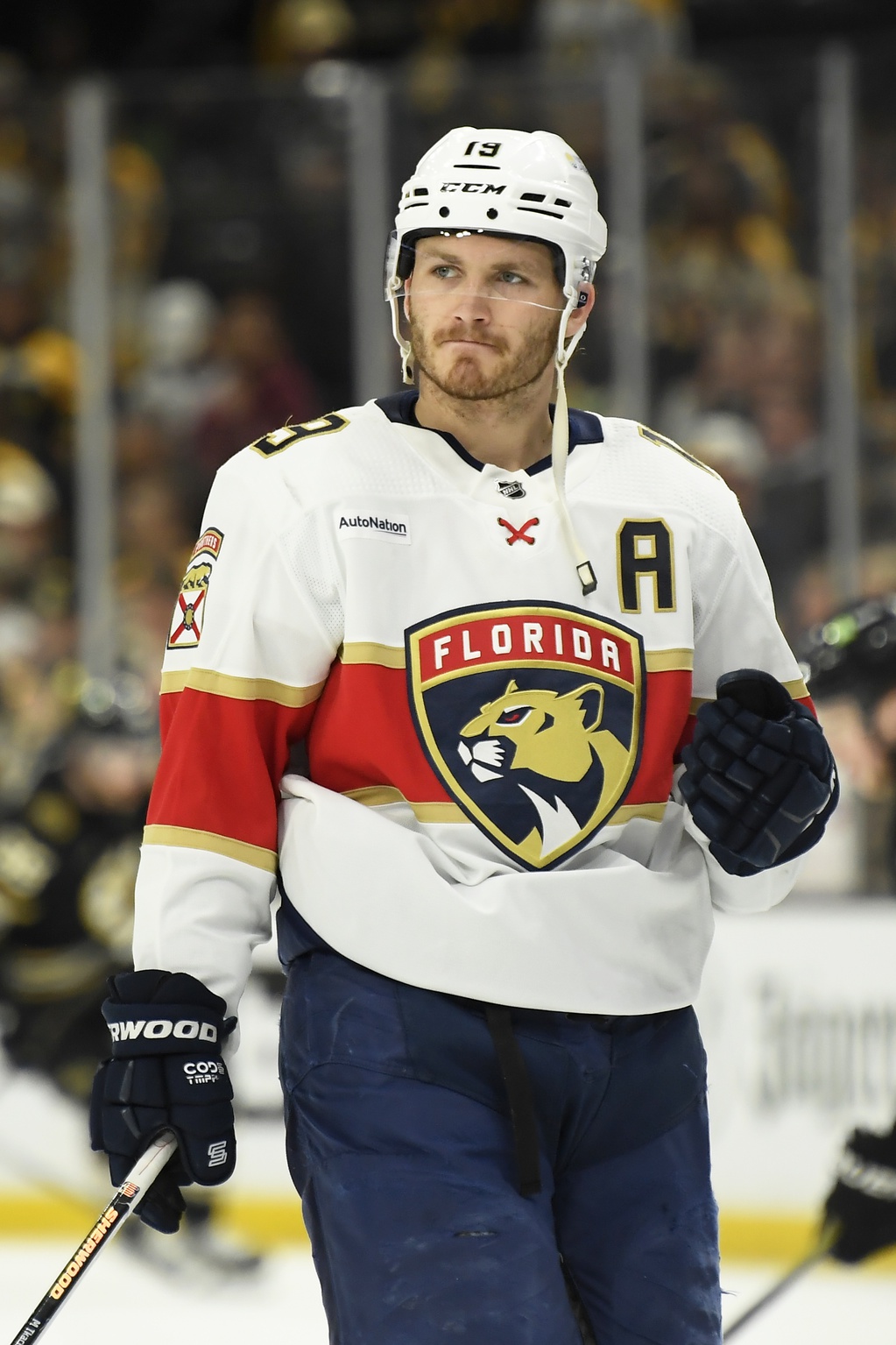 Bennett is arguably Florida’s biggest decision to make when it comes to their upcoming free agents. He’s on pace for a career year offensively which certainly doesn’t hurt his cause but that’s only a part of his game. After splitting time at center and the wing in Calgary, he has become a full-time middleman with the Panthers. And, of course, his physicality makes him stand out at a position that doesn’t have a lot of power forwards. Bennett will hit the open market at 29 so a long-term deal will carry some risk but that’s unlikely to act as a deterrent for a lot of teams. If he signs elsewhere, a max-term seven-year agreement isn’t out of the question while adding at least $2MM to his current price tag.
Boqvist has rebounded nicely after a tough year in Boston that saw him get non-tendered. He already has set a new benchmark in goals and is close to matching his career high in points. That could allow him to double his current price tag with arbitration rights but that eligibility could work against him if the Panthers need to keep their end-of-roster spots at or near the league minimum. Nosek has largely stayed healthy this year which helps but he’s not as impactful at the faceoff dot as he used to be while his production is quite limited. A small raise could happen but if Florida wants to keep him, it wouldn’t be shocking if they tried to bring him back at the minimum.
Ekblad is the other free agent of significance that GM Bill Zito will need to try to re-sign. The 29-year-old has been an anchor on their back end for 11 years already after being the top pick in 2014. He hasn’t been able to get back to the top offensive level of a few years ago but he’s still a top-pairing, right-shot blueliner. A big raise might not be likely as the contract will have some of his declining years but a near max-term deal around this price point could be doable. Schmidt quickly caught on with the Panthers after Winnipeg bought him out and he has held down a spot on the third pairing. If a team still views him as a second-pairing piece, he could get back into the $2.5MM range or so but if he’s valued in a fifth or sixth role, his market value might be closer to $2MM.
Signed Through 2025-26
D Uvis Balinskis ($850K, UFA)
G Sergei Bobrovsky ($10MM, UFA)
F Jonah Gadjovich ($775K, UFA)
F A.J. Greer ($850K, UFA)
G Spencer Knight ($4.5MM, RFA)
D Niko Mikkola ($2.5MM, UFA)
Greer has become a capable fourth line energy winger in recent years but doesn’t provide much offense to go along with that which limits his market to a point. Still, now that he’s a bit more proven in that role, he could make a case to push past $1MM on his next deal. Gadjovich has had to take a minor league deal before and with the limited role he has, he’s quite likely to stay at the minimum moving forward.
Mikkola has been counted on more since joining Florida, playing regularly in their top four while playing more of a throwback shutdown role. While he’s not much of a point producer, his defensive play and physicality should give him a much stronger market in 2026 which could push his cost past $4MM per season. Balinskis is Florida’s sixth defender and has even played up front a bit. His limited playing time will likely keep him viewed as a sixth or seventh blueliner which will probably keep him at least close to this price tag.
Bobrovsky has been hit or miss throughout his tenure in Florida with last season being one of the high points. But he’s the highest-paid active netminder in the league (until next season) and that type of volatility isn’t the most ideal. Notably, Bobrovsky will be entering his age-38-year on his next deal. If he’s still a full-fledged starter then, he could land around $6MM or so but a lot could change between now and then. Knight, meanwhile, is back up after spending last year in the minors, hardly great value for his price tag. He’s done well so far and is starting to make a push for more playing time. Florida’s hope will be that he can be their starter of the future and the limited action the last two years might keep the cost a little lower. Still, he’ll be owed a $4.5MM qualifying offer with arbitration rights so if the Panthers want to keep him around, it will likely cost $5MM to do so, more if he’s the full-fledged starter by then.
Signed Through 2026-27
F Eetu Luostarinen ($3MM, UFA)
F Evan Rodrigues ($3MM, UFA)
After his run through free agency in 2022 didn’t go as planned, Rodrigues jumped at the stability of a four-year offer from Florida the following summer, one that looked pretty team-friendly then and that hasn’t changed. A versatile player who can play up and down the lineup for this price is a good deal. Rodrigues should be able to command more on the open market next time out but there was a case for that to happen on his last two trips on the open market too. Luostarinen has worked his way up the depth chart which helped secure this extension last season. If he can get back to being a 40-point player as he was a couple of years back, he could add another million or so on his next deal. If not, the raise could be a bit smaller for him.
Trade Deadline Primer: Ottawa Senators
With the 4 Nations Face-Off break approaching, the trade deadline looms large and is about a month away. Where does each team stand, and what moves should they be looking to make? We continue our look around the league with the Ottawa Senators.
The Ottawa Senators limped into the 4 Nations Face-Off break on a three-game losing streak but remain positioned to buy at the NHL Trade Deadline as they currently occupy the first Wild Card spot in the Eastern Conference. The Senators haven’t made the playoffs since 2017 and will likely opt to be a buyer at the deadline as they try to break their playoff drought. The team will also look to show their core that they are serious about winning after years of negative headlines surrounding the franchise. Ottawa isn’t a lock to make the playoffs with four teams within four points of them. However, a few solid moves could propel them to the playoffs for the first time in nearly a decade.
Record
29-23-4, 4th in the Atlantic Division
Deadline Status
Buyer
Deadline Cap Space
$880K on deadline day, 1/3 retention spots used, 47/50 contract spots used, per PuckPedia.
Upcoming Draft Picks
2025: OTT 1st*, OTT 2nd, FLA 3rd, OTT 5th, OTT 6th, OTT 7th
2026: OTT 1st*, OTT 3rd, FLA 3rd, WASH 3rd, OTT 5th, OTT 6th, COL 6th
*Ottawa must forfeit their first-round pick in either 2025 or 2026 for the Evgenii Dadonov penalty.
Trade Chips
As surprising as this may be, the Ottawa Senators may not get too many runs at the playoffs with their current core due to poor drafting and asset management. Ottawa has one of the worst prospect rankings in the NHL (27th in the NHL as per The Athletic) and will be without a first-round pick in one of the next two drafts due to Dadonov penalty. The positive for Ottawa is that they have their young core locked into long-term deals, and with new management in place, they can still rebuild the farm system. What this all means for the Senators is that they don’t have a ton of desirable trade assets if they want to hunt for an impact player at this year’s deadline, and they also lack cap space, which will limit their ability to make moves.
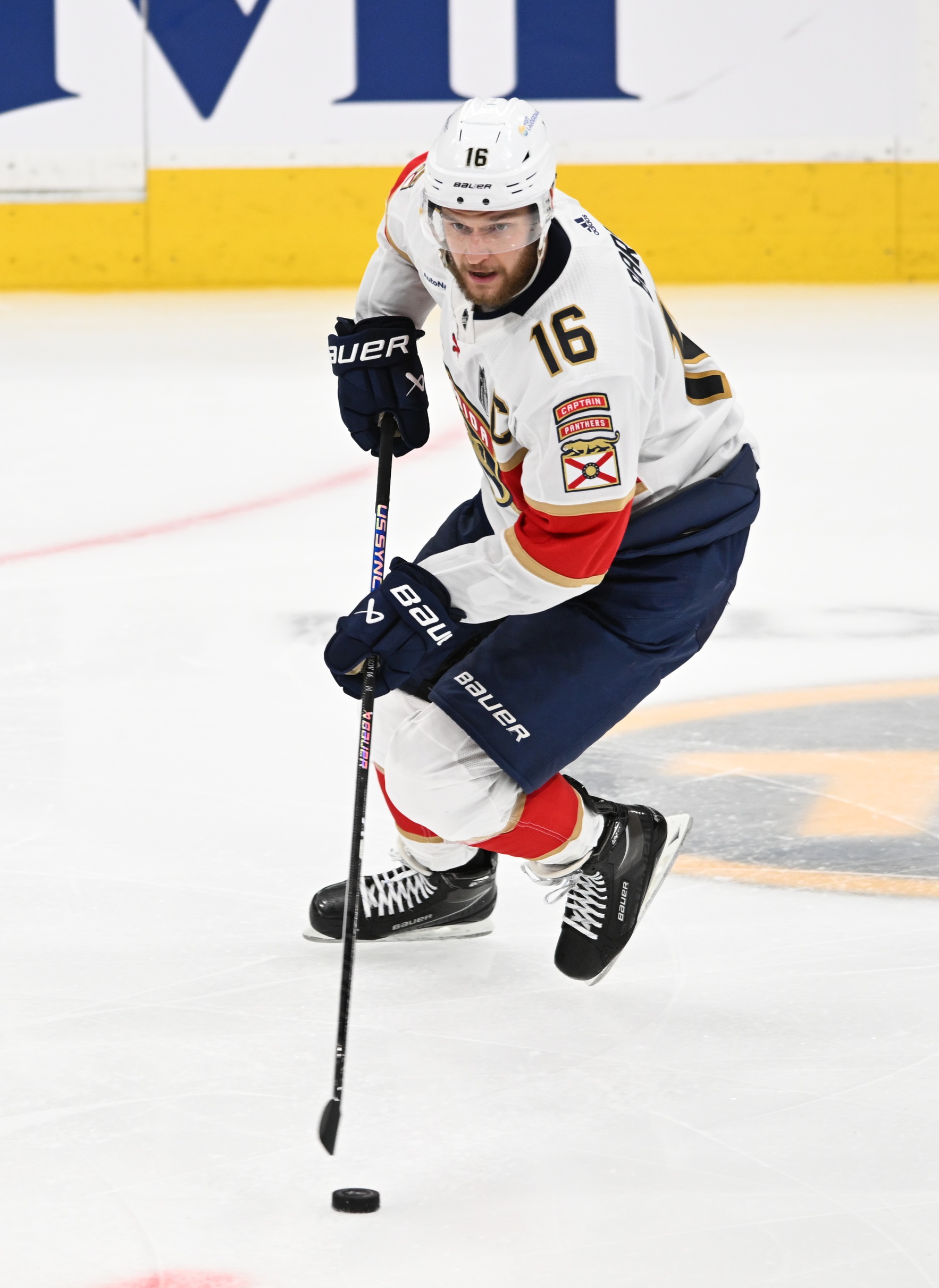
The Senators benefitted immensely from the Erik Karlsson trade with San Jose back in 2018, acquiring the third overall pick in 2020 that became Tim Stützle as well as center Josh Norris (and several other pieces, including Dylan DeMelo). While Stützle has become a star, Norris has carved out a solid career as well when he is healthy. Norris has averaged 31 goals per 82 games. However, he has only played more than 60 games once in his career (66 games in 2021-22) and missed a combined 106 games between 2022 and 2024. The 25-year-old Norris has had his name pop up in trade rumors earlier in the season, and given his contract and injury history, it could make sense for Ottawa to try and move on from his $7.95MM cap hit. Ottawa also has Shane Pinto, who could slide into Norris’s spot if the Senators feel that he is ready.
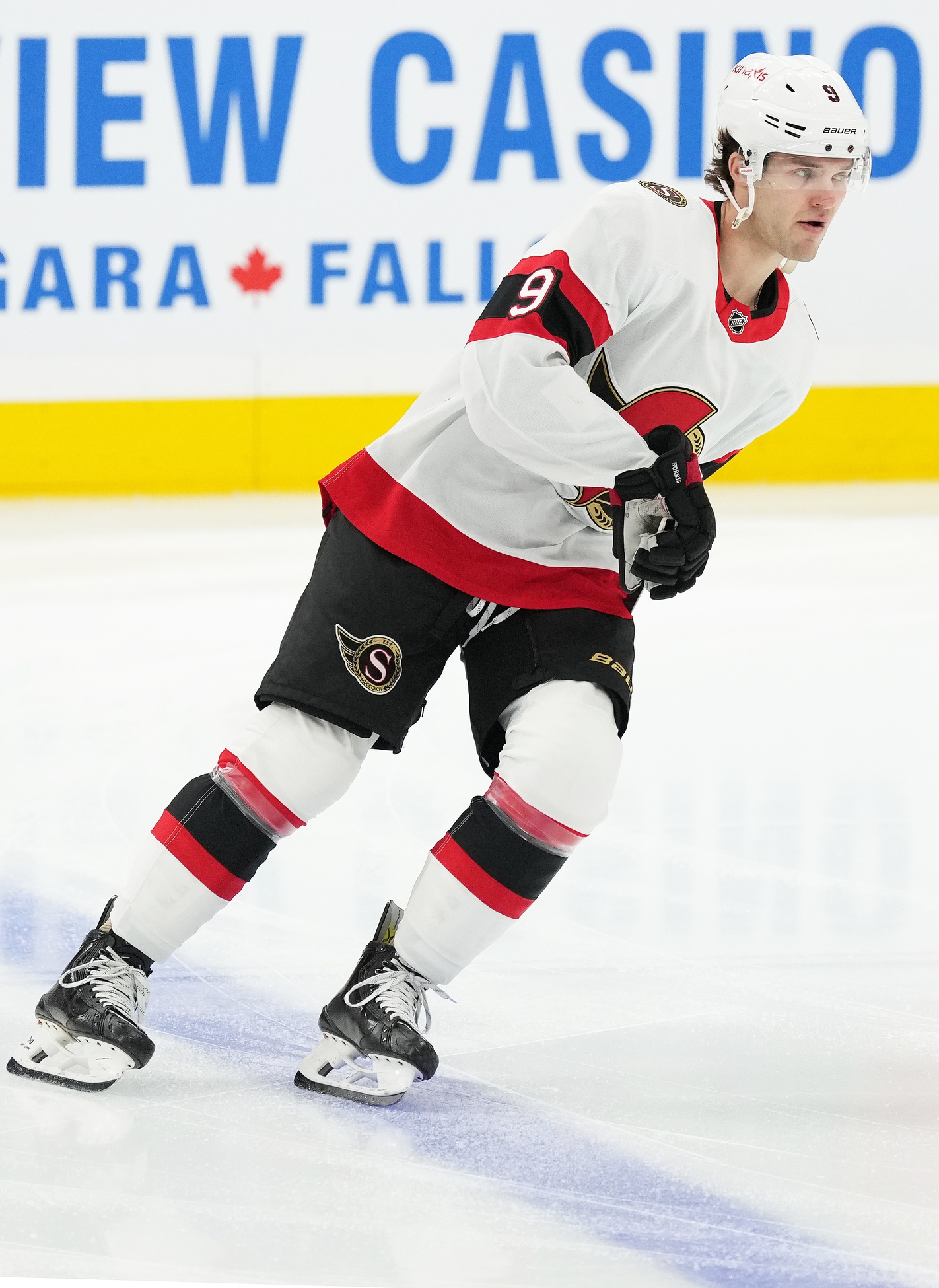
Another chip the Senators could dangle is backup goaltender Anton Forsberg. Forsberg is an expensive luxury at this point and has been considerably outplayed by youngster Leevi Merilainen this season. The 32-year-old is in the final season of a three-year contract and is counting $2.75MM against the salary cap. In 21 games this year, Forsberg has posted an 8-10-1 record with a 2.89 goals-against average and a .893 save percentage. While on the surface, those numbers look pedestrian, the NHL is a league starved for goaltending, and Forsberg has registered a goals saved above expected of 1 this season (as per Money Puck). Ottawa could look to flip out Forsberg for a small asset and then use the cap savings to fill out a hole in their roster and call up Merilainen for the remainder of the season.
Ottawa could opt to move on from other veterans who have underperformed, such as David Perron or Michael Amadio, but given the tight salary cap situation for most teams this year, it would be wise to wait until the summer for such a move.
If the Senators decided to move out draft picks or prospects, there would certainly be interest in a first-round pick, but that would leave Ottawa without a first-round pick in back-to-back drafts. Ottawa does hold three third-round picks next season and could move out one of those for a depth piece at the deadline. If Ottawa wanted to trade a prospect, Carter Yakemchuk would have a ton of trade value but would leave the Senators without their top prospect in an already-thin pool. Mads Søgaard is another name Ottawa could move on from, but at 24, he holds almost no trade value and would be viewed as a long shot by most teams.
With a shallow pool of prospects, limited roster pieces to move, and questions around their more desirable draft picks, Ottawa doesn’t have a ton of assets with much trade value, which will limit their ability to improve the team this season.
Team Needs
1) Depth Defensemen: Ottawa has been a good defensive team this season (10th in the NHL), but that doesn’t mean they don’t have holes in their defense core. One listen to any Ottawa-based radio program or podcast and you will hear a plethora of fans calling for the Senators to find a third pairing defenseman, preferably of the right shot variety. Veteran Travis Hamonic has played considerably better this year than last, but he still struggles on the possession front and probably plays too much for what he is at this point in his career. Ottawa has also used Tyler Kleven on the third pairing, and while the 23-year-old looks to have potential, his numbers have mirrored Hamonic’s.
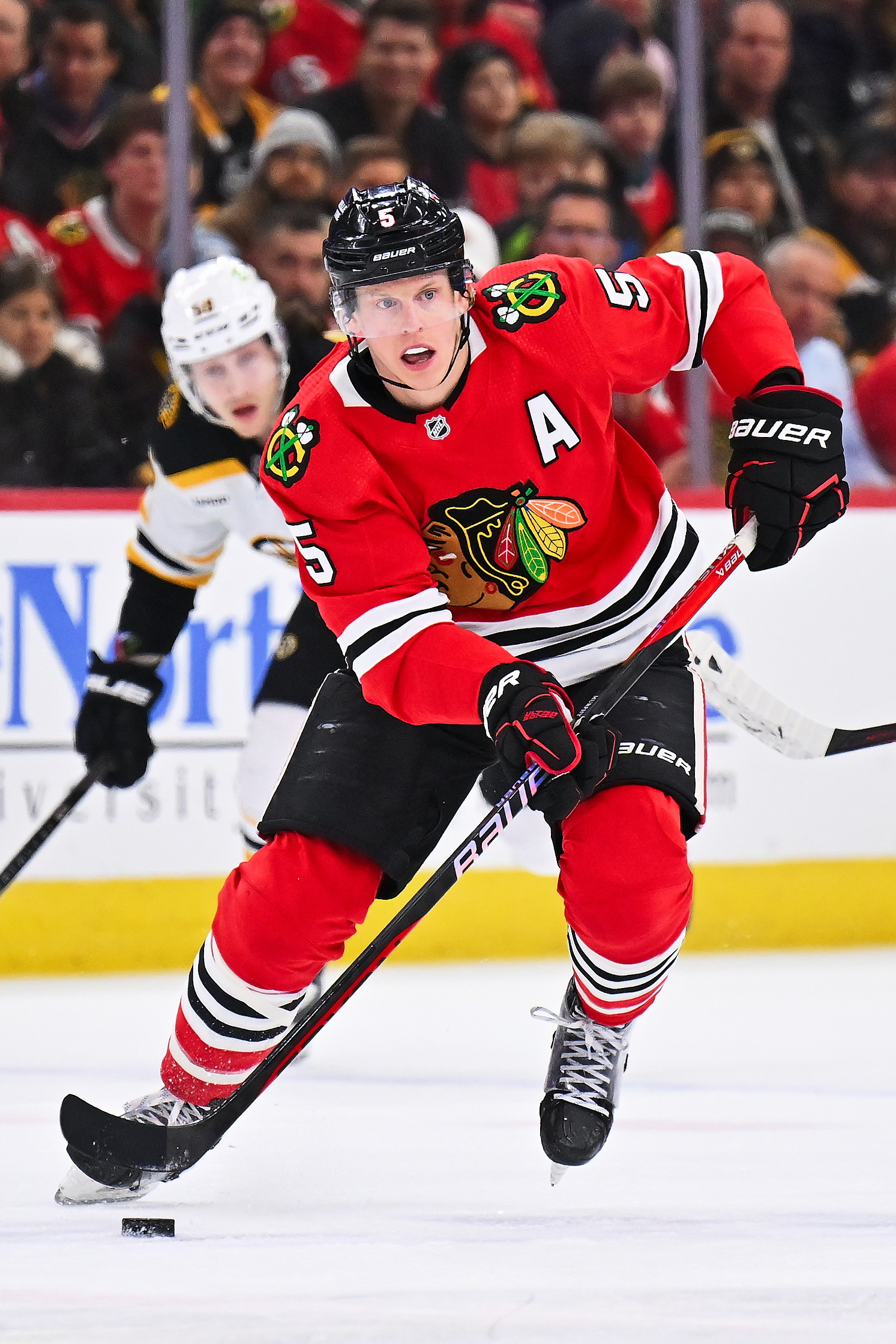
The Senators don’t need to break the bank to acquire a defenseman, and there should be plenty available heading into the deadline. Rasmus Ristolainen is a name that has been kicked around in trade rumors (not involving the Senators), but Ottawa would be wise to steer clear of him and his $5.1MM cap hit. Another name is Carson Soucy out of Vancouver, but he too is expensive and has been among the worst defensemen in the NHL this season, as per Evolving-Hockey’s all-in-one goals above replacement stat (subscription required). A name that could make sense for Ottawa, if they can clear cap space, is Connor Murphy of the Chicago Blackhawks. Murphy was once considered a top-four defender but has been saddled with tough minutes on the rebuilding Blackhawks. Murphy carries a $4.4MM cap hit for this year and next season but would likely flourish in a depth role with the Senators.
2) Depth Forward: Ottawa has had to use several players in the top six this season who would benefit from playing in the bottom six. Some of them have posted elevated numbers (Adam Gaudette), but for the most part, there have been struggles. Ottawa appears to be conscious of this, as they have already been linked to Ryan Donato of Chicago, which makes sense for them, given his low cap hit for the rest of this season and his on-ice impact. Donato has 19 goals and 18 assists in 53 games this season and is also a physical presence, registering 89 hits. With some shuffling, Ottawa could fit his modest $2MM cap hit into their lineup. The issue that Ottawa might face with Donato is that his offensive production benefits greatly from playing in an elevated role with Connor Bedard on a less talented Blackhawks team.
The Senators have also been linked to Brandon Tanev of the Seattle Kraken, who would inject some energy and physicality into the bottom-six forward group but wouldn’t offer much more than depth offense. The 33-year-old has nine goals and eight assists in 55 games this season and has topped 30 points just once in his career. Tanev is the kind of player who could thrive in a physical playoff series, as evidenced by his 170 hits in 46 career NHL playoff games.
Ottawa will have some options for forward depth leading into the trade deadline, but it will all come down to whether or not they can free up cap space to add to their current lineup.
Images courtesy of USA Today Sports.
Trade Deadline Primer: New York Rangers
With the 4 Nations Face-Off break approaching, the trade deadline looms large and is about a month away. Where does each team stand, and what moves should they be looking to make? We continue our look around the league with the New York Rangers.
This Trade Deadline may not mean more for one team than for the New York Rangers. They’ve been among the most active teams this season, dealing away Jacob Trouba, Filip Chytil, and Victor Mancini in deals that landed them J.T. Miller and Urho Vaakanainen. Their early returns have proven more promising than many expected, but it hasn’t been enough to pull the Rangers up from their slide down the standings. They enter mid-February in firm competition for the Eastern Conference wild cards with four other teams. The Rangers have scored the second-most and allowed the 10th-most goals in the league since the start of January and could be poised to lean into their inconsistent year with an overhaul at the deadline.
Record
27-24-4, 5th in the Metropolitan Division
Deadline Status
Buyer
Deadline Cap Space
$16.48MM on deadline day, 0/3 retention spots used, 47/50 contract spots used, per PuckPedia.
Upcoming Draft Picks
2025: SEA 3rd, ANA 4th, MIN 5th, SEA 6th, NYR 6th, NYR 7th
2026: NYR 1st, NYR 3rd, NYR 5th, NYR 6th, VAN 7th
Trade Chips
A deadline with such high stakes will inevitably force the Rangers to make some more tough decisions. Many of their core veterans have looked out of touch with their prime or out of sync with each other for nearly the entire season. That precedent is head-manned by former 50-goal scorer Chris Kreider, who entered the year on the heels of three dazzling seasons. Kreider scored 52 goals and 77 points in 81 games of the 2021-22 season and succeeded with 36 and 39 goals in the following two years. After nine years of finding his footing at the top flight, Kreider seemed to finally be blossoming into the routinely great goal-scorer he showed the potential to be. But that flame has fizzled out, and Kreider stands with just 16 goals and four assists through 47 games this season – an 82-game pace of 28 goals and 35 points. That monotonous scoring will put him at the top of the list as New York looks like a place where they may be able to bolster their lineup.
Close behind Kreider will be longtime linemate Mika Zibanejad, who’s also struggled to find ground all season. Zibanejad has a commendable 11 goals and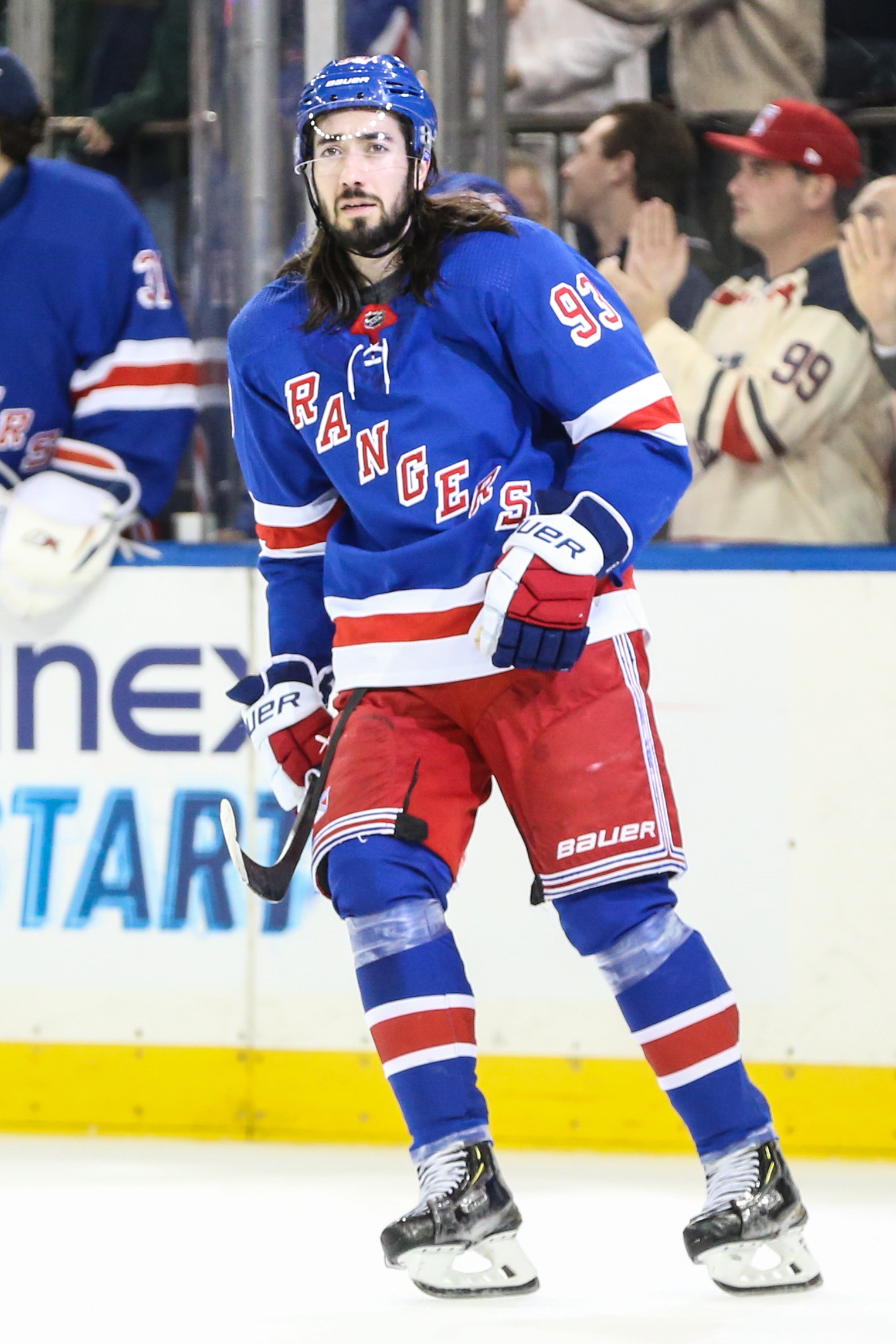 37 points in 55 games on the year, but his stat line is marred by a -24 – and his ice time has fluctuated between as little as 13 minutes and as much as 24 minutes through points this season. He’s been hard to trust and endured an eight-game scoring drought through December. Zibanejad likely holds the upper hand over Kreider when it comes to New York’s chopping block, given his boost in scoring and 53.1 faceoff percentage. However, questions emerging on year three of his eight-year, $68MM contract could be enough to send Zibanejad – and his $8.5MM annual cap hit – packing for the right return. The Fourth Period’s David Pagnotta has reported multiple times that Zibanejad is willing to waive his no-move clause for the “right situation.”
New York faces a similar competition on their blue line as well, where both Ryan Lindgren and K’Andre Miller have failed to inspire much of anything. The duo has 15 points in 50 games and 13 points in 49 games, respectively, and each boasts negative plus-minuses. Lindgren has served as the handcuff to Norris Trophy winner Adam Fox through parts of the last three seasons, while Miller has gained a boost in minutes in the wake of Trouba’s departure. Both players fill a strong role, but neither has found the offense needed to support one of the NHL’s lowest-scoring blue lines. Rangers defenders have combined for just 18 points on the year. That’s fewer goals than Cale Makar (22), and one higher than Zach Werenski (17), have managed on their own this season.
The Rangers still stand in an advantageous position with any looming moves. While Kreider has had a down year, his scoring precedent and 862 career games will still command a high price. The cost will be even more to afford one of Zibanejad, Miller, or Lindgren – who each fill roles that will need to be immediately replaced should the Rangers want to stay competitive. That sets New York up for a potentially lucrative swap of roster players that are bolstered by their lack of any retained contracts.
Team Needs
1) Offensive Defensemen: Acquiring another scoring defenseman will be about more than improving their blue line’s collective goals. New York superstar Fox scored a career-high 17 goals last season, bolstered by each of Erik Gustafsson, Miller, and Braden Schneider contributing their own handful (eight, six, and five respectively). But with no downhill jump behind him this year, Fox has fallen to just four goals in 40 games. He’s maintained the year with a dazzling 40 assists – fifth-most among NHL defenders – but Fox is still set to snap his three-year streak of 70-point seasons when this year ends.
He needs another creator to help lift the defense-first Rangers, which could point the team toward Chicago Blackhawks defender Seth Jones. Jones and his lofty contract have been on and off the trade block over the last few seasons – but his lack of belonging in Chicago has become glaring this year. He leads the Blackhawks blue-line with 26 points in 38 games and leads the lineup with an average of 24:38 in ice time. Those marks will leave a humongous hole in Chicago’s lineup should Jones get moved, but the right price could land the all-offense, no-defense defender on a playoff contender.
Should New York prefer a hardier future bet, with a cheaper price tag than Jones’ $9.5MM cap hit, they could also turn towards recent Buffalo Sabres acquisition Bowen Byram. It’s hard to think Buffalo moves Byram without a substantial return, rooted in plenty of future capital. That could be a tough price for New York’s desolate prospect pool, but the return would be an all-out scorer capable of playing top-pair minutes. Byram has 29 points in 54 games this season and averages 23 minutes of ice time each game. He’s already been moved once and would become the second-youngest defenseman on New York’s blue line with a move. That could be the exact kind of lucrative bet the Rangers need to pull back into serious playoff contention.
2) Wing Depth: If not a defender, the Rangers need to use this Deadline to figure out their flanks. Their wingers have been incredibly inconsistent this year. Aside from Artemi Panarin – who leads the team with 57 points in 53 games – the Rangers’ most reliable winger has arguably been William Cuylle, who’s scored a career-high 29 points in 55 games from the team’s third line. Cuylle sits just three points behind former first-overall pick Alexis Lafreniere in scoring, and ahead of both Kreider and summer addition Reilly Smith. With the latter three all losing ground this season, the Rangers desperately need someone to right the ship in their top six.
That could make them a golden landing spot for red-hot Pittsburgh Penguins winger Rickard Rakell, who’s managed 25 goals and 45 points in just 56 games this year. That’s already 11 more points than Rakell managed last season, but still 21 shy of his 69-point career-high from 2017-18. He’s been a routine goal threat, capable of maintaining his scoring through changing lineup roles and mid-season trades. Rakell’s hot year will likely demand a package beginning with a first-round pick. That’ll be a tough pill to swallow for the Rangers, but they’re falling in the playoff race to the Columbus Blue Jackets – and a lofty trade could be exactly what’s needed to spark a slouching lineup.
Images courtesy of USA Today Sports.
Sasha Pastujov Emerging As Top Prospect For Ducks
Ducks 2021 third-rounder Sasha Pastujov is among the hottest prospects in hockey this month. The 21-year-old winger sits atop all of the AHL’s active U22 players in per-game scoring, with 14 goals and 33 points through 32 games this season, giving him 1.03 points per game.
Pastujov has reached those heights on the back of a dazzling 12 points in his last 10 games, pushing him into exciting conversation. Only four other young minor-leaguers have topped a point-per-game average this season – Zachary L’Heureux, Frank Nazar, Luca Del Bel Belluz, and Marco Kasper. All four have since made their NHL debuts, while Pastujov continues to wait for the first call-up of his career. But in the depths of an Anaheim Ducks team that’s scored the fewest goals in the NHL this season, Pastujov’s breakout scoring could quickly demand recognition.
The title of overlooked top-scorer is far from a new one for Pastujov. He’s carried that burden since his youth hockey days in 2018-19 when he rivaled Dylan Duke and Red Savage for the scoring title on Compuware’s U16 team. The trio joined the NTDP for the following two years, where Pastujov again carved out a quick niche as a top-end scorer. He scored 50 points in his U17 NTDP season, tying Chaz Lucius for the team’s scoring title. Lucius faced substantial injuries in the following year, giving Pastujov a clear runway to the role of top scorer. He took that on in stride, netting a daunting 65 points in 41 games – 12 more than Duke, who played in nine more games, in second place. Even Duke, Pastujov’s longtime battery mate, recently made his NHL debut and scored his first career goal.
Pastujov followed his two years at the NTDP with two seasons in the OHL. He led the Guelph Storm in scoring with 76 points in 65 games of the 2021-22 season but lost his title streak when he joined the Sarnia Sting via a mid-season trade in 2022-23 – netting 98 points in 60 games, good for fourth in the league but second on the Sting.
That was Pastujov’s final year of junior hockey before joining the AHL last year – and he’s stayed red-hot as a pro. He scored a commendable 23 points in 46 games as an undersized AHL rookie. Perhaps looking to inspire those numbers a bit more, Anaheim opted to start Pastujov in the ECHL this season – but he quickly broke out of the league after netting 16 points in the first 12 games of the year.
He’s since been a force in the AHL and seems to be gaining steam with every point he adds. Pastujov is a slick, aggressive forward with a nifty shot and strong downhill drive. Those aspects of energy and determination are central to the Ducks’ identity, even if Pastujov’s lack of physicality is notably off-brand.
Still, he’s shown the ability to score at every single level and responded well to a challenging start to the year. The wind is behind Pastujov’s sails, and if Anaheim can’t find their scoring when they return from the 4 Nations Face-Off break, turning towards their perennial top-scoring prospect could be a golden chance to mend their offense while still looking towards the future.
List Of NHL-Affiliated Prospects In The Ontario Hockey League
The Canadian Hockey League trade deadlines are in the rearview mirror. That makes it a good time to take stock of where NHL teams have their prospect pool skating ahead of the big league deadline. We’re taking a look at how many prospects each team has in the world’s top junior association, starting with the Ontario Hockey League:
Anaheim Ducks
F Ethan Procyszyn (North Bay Battalion)
F Beckett Sennecke (Oshawa Generals)
D Konnor Smith (Brampton Steelheads)
F Carey Terrance (Erie Otters)
Buffalo Sabres
G Ryerson Leenders (Brantford Bulldogs)
F Ethan Miedema (Kingston Frontenacs)
Calgary Flames
F Jacob Battaglia (Kingston Frontenacs)
D Henry Mews (Sudbury Wolves)
F Luke Misa (Brampton Steelheads)
D Zayne Parekh (Saginaw Spirit)
Chicago Blackhawks
D Ty Henry (Erie Otters)
F Nick Lardis (Brantford Bulldogs)
F Martin Misiak (Erie Otters)
F Alex Pharand (Sudbury Wolves)
F Jack Pridham (Kitchener Rangers)
F A.J. Spellacy (Windsor Spitfires)
F Marek Vanacker (Brantford Bulldogs)
Colorado Avalanche
F Christian Humphreys (Kitchener Rangers)
F Calum Ritchie (Oshawa Generals)
Columbus Blue Jackets
G Nolan Lalonde (Soo Greyhounds)
D Luca Marelli (Oshawa Generals)
F Luca Pinelli (Ottawa 67’s)
Dallas Stars
D Tristan Bertucci (Barrie Colts)
F Brad Gardiner (Barrie Colts)
F Emil Hemming (Barrie Colts)
F Angus MacDonell (Brampton Steelheads)
Detroit Red Wings
G Landon Miller (Soo Greyhounds)
Edmonton Oilers
D Beau Akey (Barrie Colts)
F Connor Clattenburg (Flint Firebirds)
G Nathaniel Day (Flint Firebirds)
F William Nicholl (London Knights)
F Sam O’Reilly (London Knights)
F Brady Stonehouse (Peterborough Petes)
F Dalyn Wakely (Barrie Colts)
Los Angeles Kings
G Carter George (Owen Sound Attack)
F Liam Greentree (Windsor Spitfires)
D Matthew Mania (Flint Firebirds)
D Jared Woolley (London Knights)
Minnesota Wild
D Stevie Leskovar (Brampton Steelheads)
Montreal Canadiens
D Owen Protz (Brantford Bulldogs)
Nashville Predators
D Andrew Gibson (Oshawa Generals)
F Joey Willis (Kingston Frontenacs)
New Jersey Devils
F Cole Brown (Brantford Bulldogs)
New York Islanders
F Jesse Nurmi (London Knights)
New York Rangers
F Nathan Aspinall (Flint Firebirds)
Ottawa Senators
D Matthew Andonovski (Kitchener Rangers)
D Gabriel Eliasson (Barrie Colts)
F Lucas Ellinas (Kitchener Rangers)
D Tomas Hamara (Brantford Bulldogs)
F Blake Montgomery (London Knights)
Philadelphia Flyers
F Denver Barkey (London Knights)
D Oliver Bonk (London Knights)
F Jett Luchanko (Guelph Storm)
F Noah Powell (Oshawa Generals)
Pittsburgh Penguins
F Cooper Foster (Ottawa 67’s)
D Finn Harding (Brampton Steelheads)
D Emil Pieniniemi (Kingston Frontenacs)
San Jose Sharks
F Igor Chernyshov (Saginaw Spirit)
D Sam Dickinson (London Knights)
F Kasper Halttunen (London Knights)
F Quentin Musty (Sudbury Wolves)
Seattle Kraken
D Jakub Fibigr (Brampton Steelheads)
F Andrei Loshko (Niagara IceDogs)
F Carson Rehkopf (Brampton Steelheads)
F Nathan Villeneuve (Sudbury Wolves)
St. Louis Blues
D Quinton Burns (Kingston Frontenacs)
D Lukas Fischer (Sarnia Sting)
D Adam Jiříček (Brantford Bulldogs)
D Matthew Mayich (Ottawa 67’s)
Tampa Bay Lightning
F Ethan Hay (Kingston Frontenacs)
F Kaden Pitre (Flint Firebirds)
Toronto Maple Leafs
F Easton Cowan (London Knights)
D Ben Danford (Oshawa Generals)
F Sam McCue (Flint Firebirds)
Utah Hockey Club
F Owen Allard (Soo Greyhounds)
F Cole Beaudoin (Barrie Colts)
F Noel Nordh (Soo Greyhounds)
Vancouver Canucks
F Vilmer Alriksson (Brampton Steelheads)
F Riley Patterson (Barrie Colts)
F Anthony Romani (Barrie Colts)
Vegas Golden Knights
F Trent Swick (Kitchener Rangers)
F Tuomas Uronen (Kingston Frontenacs)
Washington Capitals
D Cam Allen (London Knights)
F Ilya Protas (Windsor Spitfires)
F Patrick Thomas (Brantford Bulldogs)
Winnipeg Jets
F Colby Barlow (Oshawa Generals)
F Kevin He (Niagara IceDogs)
F Jacob Julien (London Knights)
F Kieron Walton (Sudbury Wolves)
Trade Deadline Primer: New York Islanders
With the 4 Nations Face-Off break here, the trade deadline looms large and is less than three weeks away. Where does each team stand, and what moves should they be looking to make? We continue our look around the league with the New York Islanders.
Against all odds, the Islanders have a fighting chance at a sixth postseason berth in the last seven years. Despite organizational pillars Mathew Barzal, Noah Dobson, and Ryan Pulock all missing significant time due to injuries – and they all remain out as of the break – they’ve put together an 8-3-0 run and sit four points back of the Red Wings for the final playoff spot in the East. That will likely motivate general manager Lou Lamoriello to focus on extending his veteran pending UFAs, but will he be willing to lose them for nothing if talks aren’t productive?
Record
25-23-7, 6th in the Metropolitan Division
Deadline Status
Retooler
Deadline Cap Space
$1.95MM on deadline day + $7.775MM LTIR pool, 0/3 retention slots used, 49/50 contracts used, per PuckPedia.
Upcoming Draft Picks
2025: NYI 1st, NYI 2nd, NYI 3rd, NYI 4th, NYI 5th, NYI 6th, NYI 7th
2026: NYI 1st, NYI 3rd, NYI 4th, NYI 6th, NYI 7th
Trade Chips
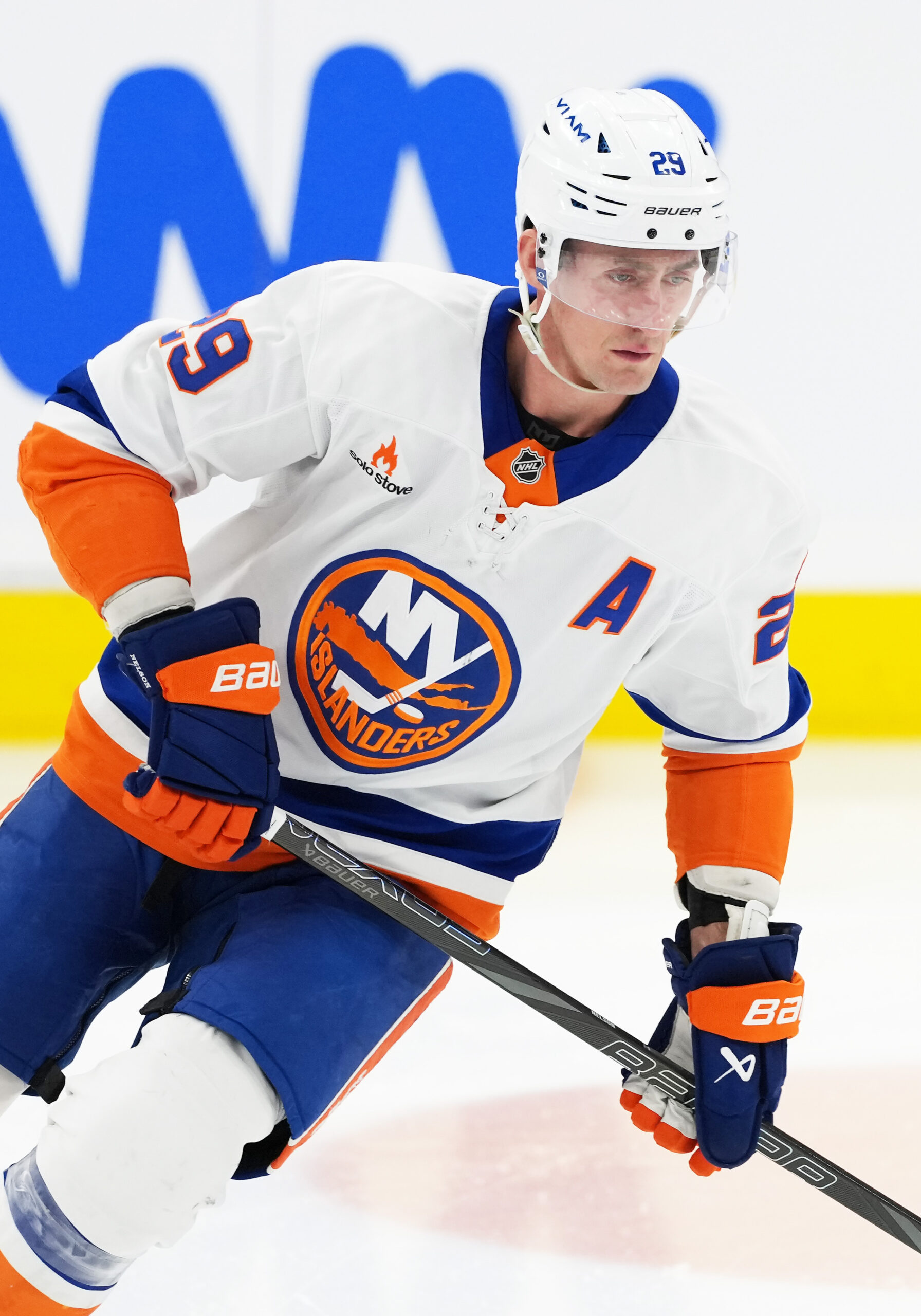 Despite ongoing preliminary extension discussions, veteran center Brock Nelson remains the best New York has to offer as arguably the most valuable rental asset still available on the market. He’s currently championship-bound with the United States at the 4 Nations, but in league play, the steady 33-year-old has contributed 17-18–35 in 55 games with a plus-one rating. While he’s on pace to fall short of the 30-goal mark for the first time since the shortened 2020-21 campaign, he’s still a veritable top-six talent.
He’s bounced between wing and center over the course of his career but has settled in down the middle. Faceoffs have routinely been a struggle for Nelson, but not this season. He’s winning draws at a career-best 53.2% clip, is averaging a career-high 19:10 per game, and should expect more goal-scoring down the stretch after finishing at 11.6%, nearly three points south of his career average, so far.
Nelson’s longtime linemate, winger Kyle Palmieri, is a pending UFA in the same boat. There’s been less said about extension negotiations there, but if Nelson isn’t sticking around for a playoff rate, there’s little use in not getting value out of Palmieri as well. The 34-year-old is still a bonafide top-six talent, tying Bo Horvat for the team lead in assists with 21 while tallying 37 points in 18:15 of ATOI. He’s one year removed from the second 30-goal campaign of his 15-year career, and while his $5MM cap hit may require a small bit of salary retention to get a deal across the finish line, he’ll net a significant return.
Outside of those two, there won’t be many Islanders drawing trade interest if they do decide to sell off assets and commit to a roster retool. All of their top talents (including Nelson and Palmieri) have some form of trade protection, and they’ve already tried and failed to move on from deals with term left like Jean-Gabriel Pageau‘s $5MM AAV through 2025-26. They’ve also gotten their blue line work out the way early, acquiring veteran Tony DeAngelo and pending RFAs Adam Boqvist and Scott Perunovich to weather the storm in the absence of Dobson and Pulock.
It’s worth noting Dobson is a pending RFA who’s recently changed his representation, but rumors of him being on the trade market were again squashed by Sportsnet’s Elliotte Friedman on Friday’s 32 Thoughts podcast.
Team Needs
1) Offensive Needle-Mover: The Islanders’ offensive struggles aren’t a new or unforeseeable phenomenon. They rank 26th in goals per game with 2.73, the seventh year in a row they’ve been decidedly in the bottom half of the league. They’ll need to offload significant assets to make it happen – potentially even Dobson, whose name was reportedly discussed in a lone scenario for a first-line forward – but a bonafide 90-point player would give New York the offensive centerpiece they haven’t had on the Island since John Tavares‘ departure.
2) Backup Goaltender: Ilya Sorokin has had to handle the lion’s share of starts since veteran backup Semyon Varlamov exited the lineup with a lower-body injury in early December. He was initially ruled as day-to-day but is now on LTIR and remains out indefinitely. No. 3 option Marcus Högberg did well in limited usage after being called up from AHL Bridgeport, notching a .947 SV% in seven appearances, but he’s now on IR and leaves the organization without a reliable option to relieve Sorokin as they look to stay in the race.
Image courtesy of USA Today Sports.
Trade Deadline Primer: New Jersey Devils
With the 4 Nations Face-Off break here, the trade deadline looms large and is less than three weeks away. Where does each team stand, and what moves should they be looking to make? We continue our look around the league with the New Jersey Devils.
A fully healthy Devils lineup is showing us exactly what they can do. New Jersey is safely positioned in a playoff spot entering the trade deadline after finishing bottom-five in the Eastern Conference last season. Still, the team is firmly set at the top for their forward core and defense, giving them little to add at the deadline. They have room to add in some areas but they won’t need too much heavy lifting to become a bona fide contender.
Record
31-20-6, 3rd in the Metropolitan
Deadline Status
Buyer
Deadline Cap Space
$5.558MM on deadline day, 0/3 retention slots used, 45/50 contracts used, per PuckPedia.
Upcoming Draft Picks
2025: NJ 2nd, EDM 2nd, WPG 2nd, VGK 3rd, NJ 4th, SJ 6th, NJ 6th
2026: NJ 1st, NJ 2nd, NJ 3rd, DAL 4th, WPG 4th, NJ 5th, NJ 6th, NJ 7th
Trade Chips
Although they don’t have their first-round pick for the 2025 NHL Draft thanks to the trade that landed netminder Jacob Markström, the Devils have a trio of second-round picks they easily part with at the deadline. The Oilers’ second-round pick was acquired in the trade sending John Marino to the Utah Hockey Club this past offseason, and they landed the Jets’ second-round pick after trading Tyler Toffoli during last year’s deadline.
It’s inarguable where the Devils will trade from if they look to move prospects. New Jersey already carries one of the deepest blue lines in the league and has plenty of youngsters waiting in the wings. 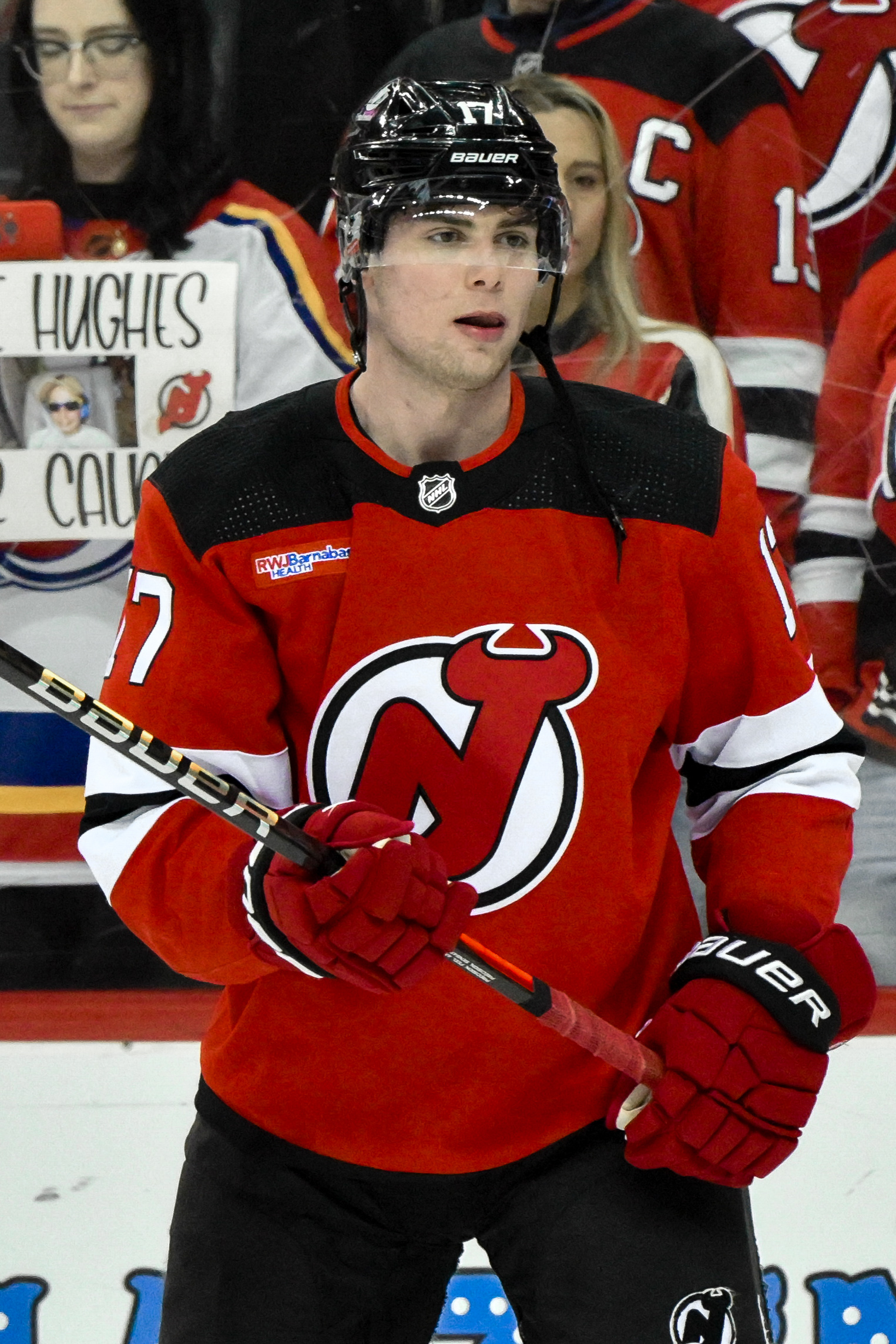
Scoring three goals and 15 points in 20 games with the AHL’s Utica Comets, defenseman Seamus Casey likely has similar value to a first-round pick. A prospect of his caliber would normally be a lock for NHL minutes relatively soon but Dougie Hamilton, Brett Pesce, and Simon Nemec are blocking most if not all of his minutes.
Beyond Casey, a recent first-round pick of the Devils, Anton Silayev, could also garner interest. He’s got a higher ceiling than Casey given his size and skating ability, but he’s still a few years away from being an NHL regular. Given the Devils’ immediate needs, neither defenseman strikes as a popular trade candidate for the deadline but New Jersey could make both available in the offseason for a high-impact move.
Team Needs
1) Third-Line Center: If the Devils need anything to supplement their roster, it’s a third-line center. Erik Haula has performed admirably, securing a 54.4% faceoff rate with over 500 attempts. Still, Haula is better served in a fourth-line role at this point of his career giving New Jersey a hole on their third line. Jake Evans of the Montreal Canadiens, who the Devils have already been linked to, would be the obvious choice as a rental candidate. Outside of Evans, New Jersey could look into the market for San Jose Sharks’ Luke Kunin, Utah’s Nick Bjugstad, and Trent Frederic of the Boston Bruins for a similar addition.
2) Additional Bottom-Six Depth: Despite specifically needing a third-line center, the Devils could generally use more depth in the bottom-six of their forward core. Paul Cotter and Stefan Noesen have been two of their better additions from the offseason but the Devils could stand to make the likes of Tomas Tatar a rotational piece. It wouldn’t be a game-changing add, but a winger such as Brandon Tanev, Michael Carcone, or Alexandre Texier could slightly move the needle when it comes to New Jersey’s playoff chances.
Photo courtesy of USA Today Sports Images.
Salary Cap Deep Dive: Detroit Red Wings
Navigating the salary cap is one of the most important tasks for a front office. Teams that can avoid total cap chaos by walking the tightrope of inking players to deals that match their value (or compensate for future value without breaking the bank) remain successful. Those that don’t often see struggles and front office changes.
PHR is looking at every NHL team and giving a thorough look at their cap situation for the 2024-25 season. This will focus more on players who are regulars on the roster versus those who may find themselves shuttling between the AHL and NHL. All cap figures are courtesy of PuckPedia. We’re currently covering the Atlantic Division, next up is the Red Wings.
Detroit Red Wings
Current Cap Hit: $85,238,023 (under the $88MM Upper Limit)
Entry-Level Contracts
D Simon Edvinsson (two years, $894.1K)
F Marco Kasper (three years, $886.7K)
Potential Bonuses
Edvinsson: $850K
Kasper: $1MM
Total: $1.85MM
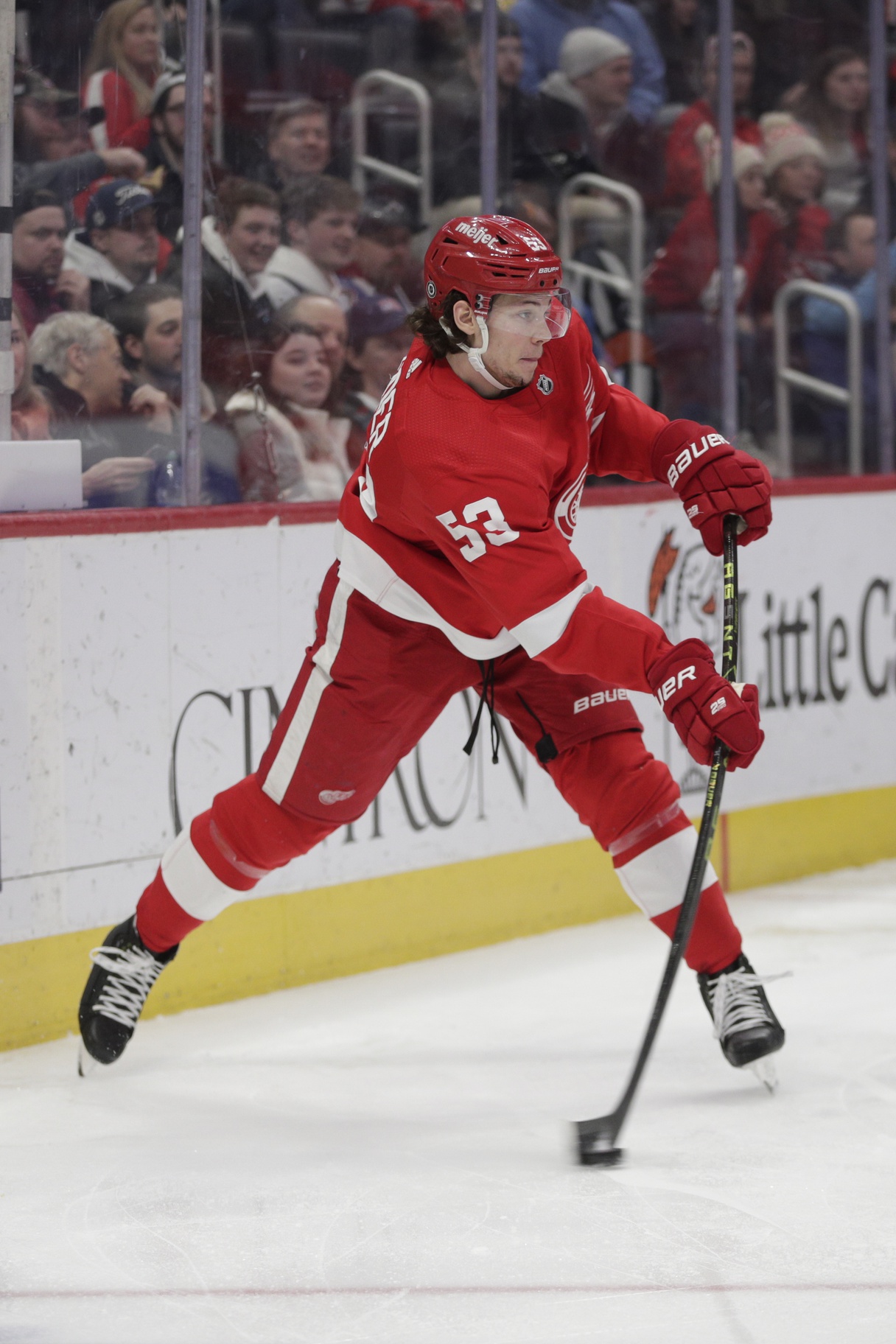
Kasper’s first full NHL season has been solid thus far with the Red Wings not throwing a lot at him, allowing him to ease his way in. That doesn’t necessarily bode well for him from a bonus perspective but development-wise, it’s not a bad strategy. At this point, it would seem like a bridge contract would make sense for his next contract but a breakout effort next year could change those plans.
Edvinsson has certainly been an impactful blueliner in his first full NHL campaign. The offensive numbers don’t jump off the chart but defensively, he’s quickly becoming a core piece. Speculatively, he’s someone Detroit might want to bypass a bridge deal with in 2026 and if his production stays around the level it is now, he won’t be able to command top dollar. He could seemingly use Kaiden Guhle’s contract as a barometer ($5.5MM AAV for six years) although in a higher cap environment, the comparable could push past the $6MM mark on a deal of that length. Bonus-wise, he’s well on his way to reaching two of his four ‘A’ bonuses (ATOI and plus/minus) while he’s within striking distance hitting the other two with blocks and assists.
Signed Through 2024-25, Non-Entry-Level
F Jonatan Berggren ($825K, RFA)
D Albert Johansson ($775K, RFA)
F Christian Fischer ($1.125MM, UFA)
G Ville Husso ($4.75MM, UFA)
F Patrick Kane ($4MM, UFA)
G Alex Lyon ($900K, UFA)
F Tyler Motte ($800K, UFA)
D Jeff Petry ($2.344MM, UFA)*
*-Montreal is retaining $2.344MM on Petry’s deal while Pittsburgh is retaining an additional $1.563MM.
Potential Bonuses
Kane: $2.5MM
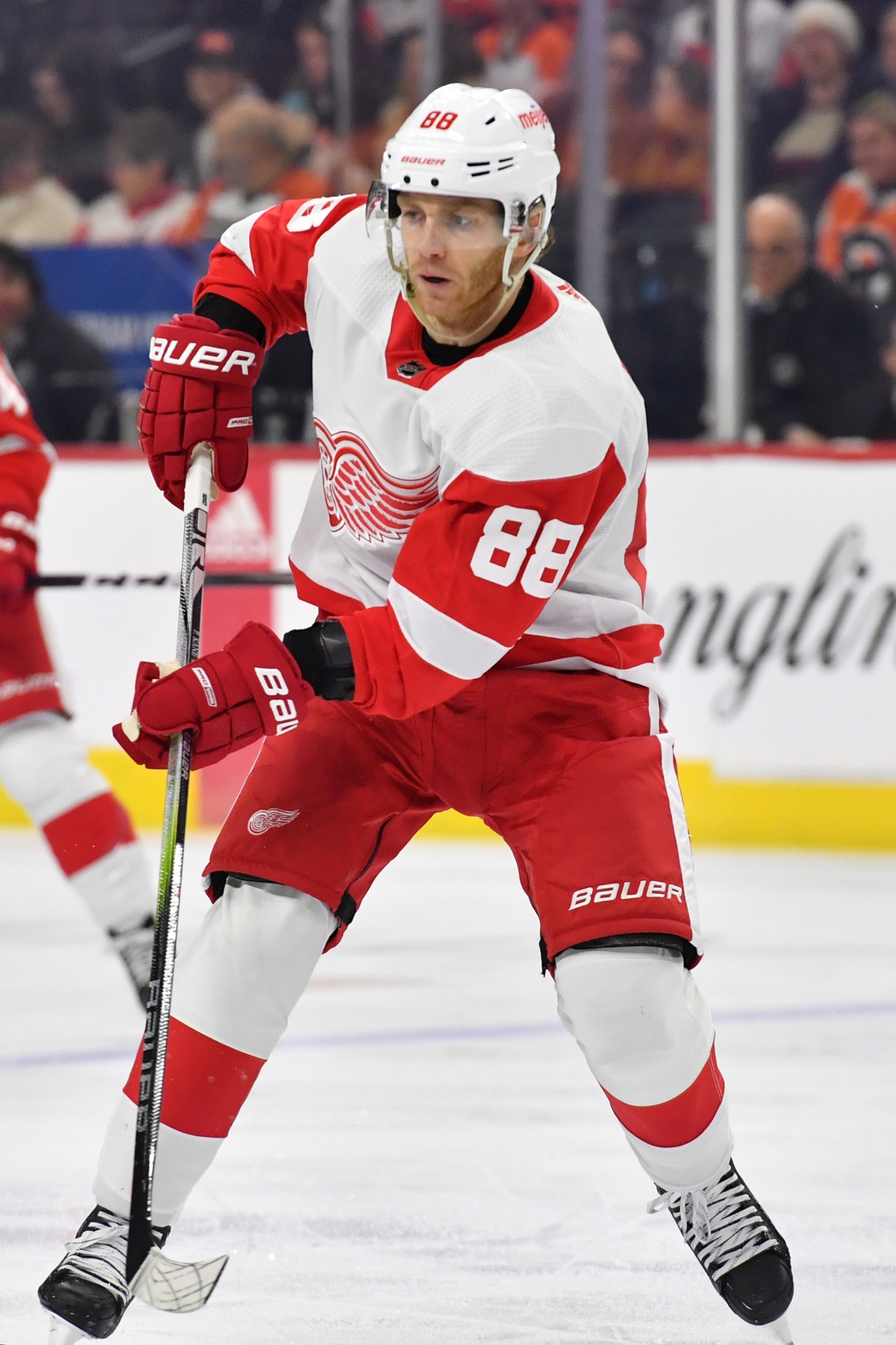 Kane’s second season with the Red Wings hasn’t gone quite as well as his first. After hovering near the point-per-game mark in 2023-24, he isn’t producing close to that level this year while dealing with some injuries. Nonetheless, the bonus-laden structure shields Detroit a bit. Speaking of those bonuses, he has already reached $1.5MM of those and if he stays healthy the rest of the way, he’ll get at least another $250K. The other $750K ($500K for making the playoffs and $250K for making the playoffs and getting 60 points) are less likely although if Detroit was to move Kane to a contender at the trade deadline, he could still reach that. With how this year has gone, a similar one-year deal could still be doable, perhaps with a bit less guaranteed money in there.
Fischer is having a rough year and while he has a track record of being a good fourth liner, a small dip into the six figures still seems likely for him. Berggren has arbitration eligibility and with a 28-point rookie season under his belt and being on pace for a similar number this year, doubling his current price tag could be doable. If Detroit doesn’t want to take the risk of an award from a hearing, he could be a non-tender candidate as well. Motte has been just above the minimum salary the last couple of years and although he’s a serviceable penalty killer, it’s possible he might wind up dropping to the minimum salary of $775K for next season.
For many years, Petry was a solid top-four defender who could handle top-pairing minutes when needed. That’s not the case anymore. He’s more of a fourth or fifth option at this point and at 37, there’s a risk of the decline being fairly steep. Accordingly, he’s likely looking at going year-to-year now. Something around the price that Detroit is responsible for on his current contract might be reasonable with some incentives pushing the potential total past the $3MM mark as well. Johansson is in his first NHL season and has had a limited role thus far. He’s arbitration-eligible as well which should allow him to get more than his $813K qualifying offer. Something a little closer to the $1MM mark could be doable.
Lyon has become quite a bargain for Detroit. Originally viewed as a third-string option, he took over as the starter last year and has improved on those numbers this season albeit in more of a backup role. With the way the market has gone for higher-end backups lately, a short-term deal around the $3MM mark is where his market could fall. Husso, on the other hand, was supposed to be the starter when acquired but has played his way down to third-string status. It’s hard to see him getting an offer to be a backup goalie this summer but because he has done well in the minors and has a bit of a track record in the AHL, he could land a deal similar to what Lyon’s getting now, a one-way pact worth more than the minimum to be an experienced third option.
Signed Through 2025-26
D Ben Chiarot ($4.75MM, UFA)
D Erik Gustafsson ($2MM, UFA)
D Justin Holl (3.4MM, UFA)
G Cam Talbot ($2.5MM, UFA)
F Vladimir Tarasenko ($4.75MM, UFA)
F Joe Veleno ($2.275MM, RFA)
Tarasenko had to settle for a one-year deal in 2023 and, despite having a solid season, he didn’t seem to have a strong market last summer, yielding this two-year pact at a small pay cut instead. This season hasn’t gone well for the 33-year-old and it’s possible that Detroit looks to try to move him to get out of the second year of the contract. If this production carries over into next season, he could be dropping closer to the $3MM range on his next deal. Veleno has never been able to carry over his offensive success in junior to the pros although he has become a capable checker. His deal is a little front-loaded, meaning the qualifying offer only checks in at $1.75MM which is notable as if his usage continues as more of a fourth liner, that’s more of the price range he should be in. He’ll be arbitration-eligible and a likely non-tender candidate if a deal can’t be reached by the start of the 2026 free agent period.
Chiarot’s contract drew some ire when it was signed a couple of years ago as a high price for someone who’s probably best served in a fourth role. He plays enough to make the price tag somewhat reasonable although for someone who doesn’t contribute a lot offensively, it’s still on the high side and it’s one Detroit could try to get out of if they want to open up some flexibility this summer. He’ll be 35 for his next trip on the open market and it’s hard to imagine he’d get this type of money again. A deal with an AAV starting with a three might be more plausible.
Holl’s contract seemed like quite an overpayment given his limited usage late in his time with Toronto. Unfortunately for them, that has largely been the case. He cleared waivers in October but has spent most of the year with Detroit in a limited role. He’s a possible buyout candidate or could be moved with retention. Either way, his next deal might not be worth half of this one. Gustafsson had a strong year with the Rangers which allowed him to get a multi-year contract for the first time since 2018. He hasn’t produced at the same level with the Red Wings but the cost is low enough that it shouldn’t be much of a burden. He’ll need to pick up the pace in terms of his points though as otherwise, he’s probably back in the year-to-year territory with a cost closer to half of what he’s making now.
Talbot opted for the security of a two-year deal last summer over going year-to-year which, at 37, probably wasn’t a bad strategy for someone viewed as more of a platoon option at this point. He has been more than that for Detroit as he has been their primary netminder while putting up numbers above league average. That said, if there’s another contract coming, it’d be for his age-39 year so the cost will likely be low even if he keeps up this level of performance.
Signed Through 2026-27
F Andrew Copp ($5.625MM, UFA)
F Alex DeBrincat ($7.875MM, UFA)
DeBrincat and the Red Wings couldn’t work out a long-term deal after he was acquired so the sides settled on a medium-term pact instead. It’s working out reasonably well so far although the price tag is a little high for someone whose production is in the lower-end range for a top-line winger. That said, by the time DeBrincat reaches free agency (when the salary cap is much higher), he could still be in line for a raise if he stays in the 25-30-goal, 60-plus-point range. Copp received this contract coming off a career year, one he hasn’t been able to repeat since then. He’s more of a bottom-six pivot getting paid as a second-liner which isn’t great value but he is a valuable secondary piece nonetheless.
PHR Mailbag: 4 Nations, In-Season Tournament, Midseason Break, Suspensions, Schenn, Sabres, Capitals, Montembeault
With the 4 Nations Face-Off now underway, our latest mailbag focuses on that with a couple of other topics sprinkled in. If your question doesn’t appear here, check for it in one of our next two mailbags.
Black Ace57: It feels like the only people excited for the 4 Nations are media members promoting it. It doesn’t compare to the World Juniors or the Olympics. Instead of trying to copy other international tournaments has the NHL considered doing anything like the NBA in-season tournament?
This was something that NHL Commissioner Gary Bettman was asked about before and while he didn’t come out with an outright no, it doesn’t seem to be something they’d seriously consider. It’s also a bit of a scheduling nightmare as the NBA has to do part of its schedule midseason as all of the teams eliminated from contention have to have a couple of games scheduled on short notice. If they can do it, the NHL can but that would undoubtedly be cited as a reason against trying it.
The NBA’s in-season tournament has only been around a couple of years but I feel like this season lost a lot of its intrigue from the first. From the pieces of games I saw, it’s not as if teams were playing any harder with the potential of moving on in the tournament. It all felt a little too random so I’m not sure copying that format is the right way to go, not unless its popularity really rises in the future.
What the NHL could do if they wanted to do something to dress up some regular season games could be some regional challenges. The seven Canadian teams have six games designated as Canadian Challenge Cup games and the team with the most points out of those wins a trophy and the players get a small bonus. The three California-based teams have two head-to-heads against each rival designated as a mini tournament, stuff like that where it’s not just a random grouping. It certainly doesn’t work to put all 32 teams into a logical region though so it’s far from a perfect idea.
They could also group by division (instead of random groups like the NBA does) and just designate a certain number of games as ‘tournament’ matchups. There are options if they want to do something, I’m just not sure it’s actually worth them doing anything with this.
Pyramid Headcrab: What’s the real reason for the winter break every season? Obviously, players need a break from travel, and fair dinkum… But is that something they negotiated in the collective agreement? Or does the break exist for a different, but equally practical, reason?
Cuz I think we all know nobody cares about the All-Star Game or the Four Nations Whatever.
This isn’t a direct CBA element but is actually related to the All-Star Game. When the change was made to go to a three-on-three format, the NHL had to agree to this as a concession to get the NHLPA to agree to the format switch as, in theory, there’s a lot more skating involved at three-on-three. (In reality, the All-Star Games aren’t played at remotely close to full speed but I digress.)
In general, the idea is that without the bye week, the NHL’s top stars don’t exactly get a lot of rest. They play to the break, fly in for the All-Star event, then are back in action a couple of days later and some feel that’s not fair to them. By doing the bye weeks, they ensure that the stars at least get some time off while it’s around the time of year when all teams could benefit from some extra days off to heal up some of the nagging aches and pains.
As for no one caring about the All-Star Game, I disagree. It has an audience it caters to, it’s just not so much the established fans. They try to promote things for the younger demographic that they’re trying to hook as fans while there’s a major corporate element to it as well with a lot of the league’s top sponsors being involved. As long as those two things are in play, the All-Star Game will continue…even next season when the in-season break will be even longer for the Olympics.
FearTheWilson: If a player happens to receive a suspension during the Snore Nation’s tournament, does the suspension carry over to the NHL season or does it count towards international play?
The 4 Nations Face-Off is not an IIHF-sanctioned event. That’s why there’s no break in those leagues for players (or coaches) to possibly take part which is what made this an NHL-only tournament. Accordingly, any suspension would be applied against NHL games, not international.
While we’re on the subject of not being IIHF-sanctioned, it doesn’t seem as if the 2028 World Cup event will be either. That will likely complicate things for some of the countries that don’t quite have enough NHL players to form a full roster. In a press conference earlier this week, Bettman alluded to needing to “work with each country’s federation to find a balance” when it comes to player participation so there are going to be some hurdles to clear for three years from now.
Gmm8811: Is there a roster freeze during the 4 Nations? Can trades still be made? Where would be the best fit for Brayden Schenn if he waives his NMC? Realistic return for him?
Since this question was posted, we have seen a very minor trade which kind of answered this one for me already. But there is no roster freeze and teams are free to make any moves as long as they remain compliant with the salary cap and roster rules (teams have to have two goalies, six defensemen, and 12 forwards on their active roster). I’ll be honest, I thought we’d see another trade or two by now so that when teams come back to practice next week, the potential acquisition would get lots of practice time. Of course, I also suspect that teams were quietly discouraged against doing anything that would take attention and focus away from the tournament so maybe that’s playing a role as well.
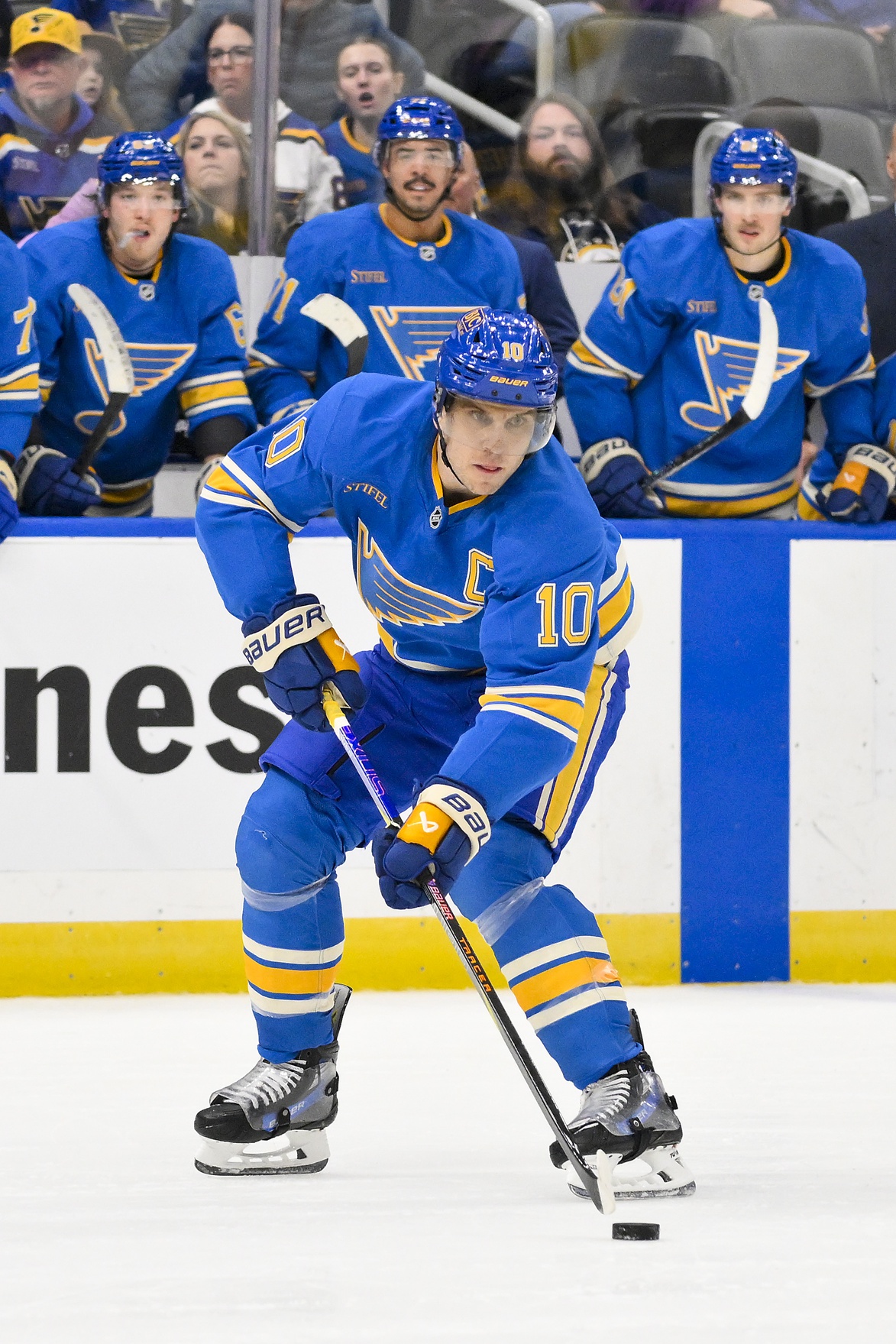 Now, onto a couple of non-tournament questions for now before getting back to them later on. Staying in the Central Division is probably the best fit for him. Colorado has been looking for center help since they lost Nazem Kadri and Schenn doesn’t quite have the offense Kadri did now but he’d still be quite impactful. Winnipeg has been looking for a longer-term second middleman for years now with minimal success. And Minnesota has a genuine need for more center depth at a minimum and with continued whispers about Marco Rossi that don’t seem to be going away (despite GM Bill Guerin trying to tone that down a while back), adding Schenn would at least give them some more flexibility if they wanted to do something with Rossi. I could even make a case for Utah here. I know trading a core player within the division doesn’t happen a lot but there are enough strong fits that could net St. Louis a strong return.
As for that return, I think it’s fair to say that it would start with a first-round pick. Yes, a $6.5MM price tag through 2027-28 for a 33-year-old is a little high but with the big jump coming in the salary cap, it becomes a lot easier to absorb. Not to the point where it’s an asset by any stretch but it shouldn’t be a deterrent now. It wouldn’t shock me if they were to land another first-round-caliber asset either though not necessarily a draft pick but rather a prospect or young player who’s either in the NHL or close to being ready. I doubt the Blues are going to flip the switch to do a long-term rebuild so an all-futures return doesn’t seem likely. It also wouldn’t shock me to see them take a veteran player back to help offset some of the money as I doubt they’re going to retain salary to make a move happen. It’s a big price but with the dearth of quality centers available, I think they could get it if they move him.
sabres3277: Do you believe the Sabres will make the inevitable GM change during the break to allow an interim GM to handle the trade deadline? I think this could happen because Adams is clearly out of his league when trying to make deals etc. The fanbase has had it with the incompetence that he has shown in trying to end this disgraceful playoff drought.
It hasn’t happened yet so it’s safe to say that it’s not going to happen. Frankly, if a team had concerns about their general manager, they wouldn’t let that person stay in place this close to the trade deadline. By all accounts, Kevyn Adams has been working the phones in recent weeks on the trade and contract front so this is his team to lead through the deadline.
While the Flyers are a recent notable exception, general managers generally don’t get let go right around the deadline. Instead, changes like that often come after the regular season ends. If Buffalo does decide to make a change at the GM position, I think it will be made in April as the playoffs are about to start. Doing something now would surprise me.
Trade Deadline Primer: Nashville Predators
With the 4 Nations Face-Off break here, the trade deadline looms large and is less than three weeks away. Where does each team stand, and what moves should they be looking to make? We continue our look around the league with the Nashville Predators.
Things were not supposed to be like this in Nashville. After a stellar second half to last season, the Predators were one of the most active teams in free agency, signing a trio of core players to long-term contracts, making them a trendy preseason pick to be a safe playoff team, if not a viable contender in the Western Conference. Instead, they currently sit 18 points out of a Wild Card spot, meaning they’re likely to be on the outside looking in, barring a fantastic run like they had a year ago.
Record
19-28-7, 7th in the Central
Deadline Status
Seller
Deadline Cap Space
$32.381MM on deadline day, 1/3 retention slots used, 45/50 contracts used, per PuckPedia.
Upcoming Draft Picks
2025: NSH 1st, TB 1st, VGK 1st, NSH 2nd, TB 2nd, NSH 3rd, NSH 4th, NSH 5th, COL 6th, NSH 6th
2026: NSH 1st, NSH 2nd, NSH 3rd, NSH 4th, NSH 5th, NSH 7th
Trade Chips
This season hasn’t been a great one for Gustav Nyquist. The 35-year-old has just nine goals and 11 assists in 52 games despite logging over 17 minutes a night. However, he’s only one season removed from a career year, one that saw him put up 23 goals and 52 assists in his first season with the Preds. With that in mind, it’s quite reasonable to think that the veteran is more than capable of rebounding and bouncing back in the right situation although he’d likely be playing a little lower in the lineup. Nyquist has a $3.185MM AAV and Nashville could pay that down by up to 50% which would make him easier for a lot of teams to afford. He’d probably land them a mid-round pick in return.
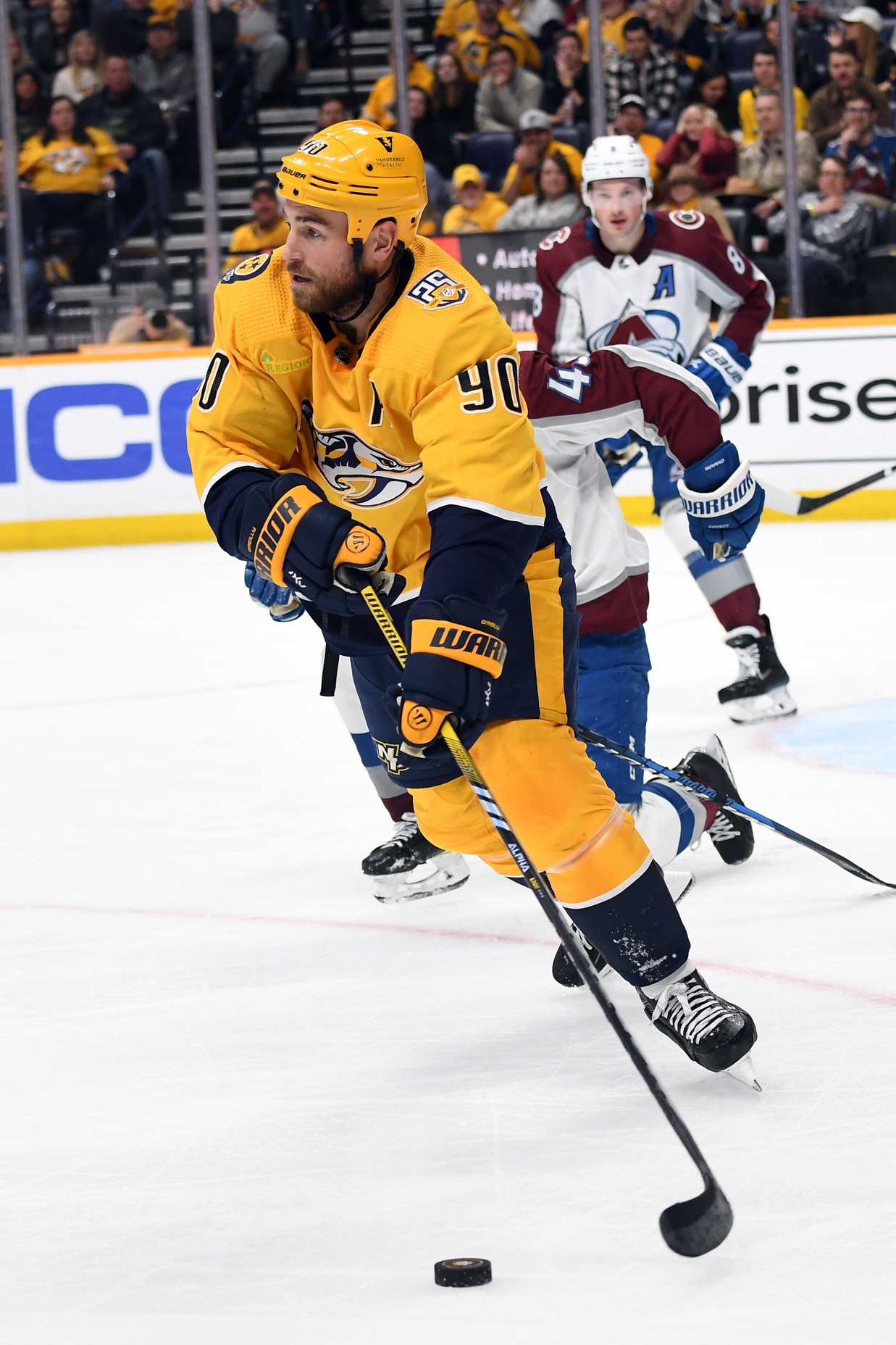 The other veteran of some note up front isn’t a rental. That would be center Ryan O’Reilly. This is only the second year of a four-year contract and considering he’s Nashville’s top middleman, he’s not necessarily a logical trade candidate. But the belief is that GM Barry Trotz is allowing teams to make pitches for the 34-year-old who is being treated as if he has full trade protection even though he doesn’t have any in his contract. However, his $4.5MM cap charge is team-friendly for someone who would be a second or third-line option on most playoff teams and with it being difficult for teams to add impact centers, it stands to reason that the Preds could command a significant return for O’Reilly’s services which might be enough for Trotz to approach him about a move.
Veteran forward Michael McCarron hasn’t lived up to his first-round draft billing back in 2013 but has become a quality fourth liner. As someone who can play both center and the wing, kill penalties, and play with an edge, he’s likely to generate some interest. Considering he’s signed through next season at $900K, his market could be stronger than it might seem. With Colton Sissons only having one year left after this on what was once a seven-year contract worth $2.857MM per season, he’s likely to attract some attention from teams looking to add some grit and versatility to their bottom six. Center Thomas Novak has struggled this season after two straight years of more than 40 points. With two years left at $3.5MM, he isn’t someone Nashville might be ready to give up on but if they are looking to shake things up, there should be teams interested in him as well.
The options aren’t as plentiful on the back end but veteran Luke Schenn is someone to keep an eye on. He’s no stranger to being moved at the trade deadline and would be of interest to teams looking to add some grit to their third pairing while the fact he’s a right-hand shot will make him a bit more appealing. A $2.75MM price tag through next season for someone who’s best served as a sixth defender tempers that appeal a bit, however. Even so, Nashville might be able to unload the full contract for a light return while if they retain some money, he could bring back a mid-round selection.
Team Needs
1) Young, NHL-Ready Pieces: While Nashville has traded some of its younger players away this season, they’ve also added one in Justin Barron in exchange for veteran Alexandre Carrier. With an older roster in general and a couple of months of likely just playing out the stretch, this feels like a good time for Trotz to take a flyer on two or three younger players that could potentially benefit from a change of scenery. Not all will pan out, obviously but if they could even pick up one player who could be part of the plans beyond this season, that would be a good step in the right direction while hedging against some concerns they seem to have about rushing their top prospects with AHL Milwaukee to the big club.
2) Impact Center: With three first-rounders, they could possibly take a bigger swing on the trade front as well and look to bring in someone more established. Someone like Buffalo’s Dylan Cozens, for example, is young enough to be a key player for a while so even though buying might not make a lot of sense right now, if the right opportunity presents itself, they could strike. If Trotz goes that route, getting a center should be the priority. With O’Reilly in possible trade discussions and Novak struggling, targeting a longer-term player down the middle would be a reasonable target. That feels like more of an offseason move but if the opportunity presents itself now, the Predators could plausibly try to land that player even while selling some of their veterans.
Photo courtesy of Imagn Images.