
Trade Deadline Primer: Montreal Canadiens
With the 4 Nations Face-Off break approaching, the trade deadline looms large and is about a month away. Where does each team stand, and what moves should they be looking to make? We continue our look around the league with the Montreal Canadiens.
The Montreal Canadiens haven’t yet spurred their years near the bottom of the standings, but their successes this year suggest that time could be coming soon. Rookie defenseman Lane Hutson has provided a stellar spark behind Nick Suzuki and Cole Caufield. The trio has been backed by promising young goalie Jakub Dobes, finally giving Montreal a sign of the future at every stop in the lineup. Even the Laval Rocket are surging, currently ranked on top of the AHL’s North Division with a roster led by young prospects Joshua Roy, Owen Beck, Logan Mailloux, and Adam Engstrom. The future looks bright in Montreal, and the upcoming Trade Deadline will give the club another chance to trim extra weight and build out what’s to come.
Record
25-26-5, 7th in the Atlantic Division
Deadline Status
Seller
Deadline Cap Space
$7.45MM on deadline day, 2/3 retention slots used, 45/50 contract spots used, per PuckPedia.
Upcoming Draft Picks
2025: MTL 1st, CGY 1st, MTL 2nd, PIT 2nd, MTL 3rd, VAN 3rd, NJD 3rd, MTL 4th, BOS 4th, MTL 5th, MTL 6th, MTL 7th
2026: MTL 1st, MTL 2nd, CBJ 2nd, MTL 3rd, MTL 4th, NJD 4th, MTL 5th, MTL 6th, MTL 7th
Trade Chips
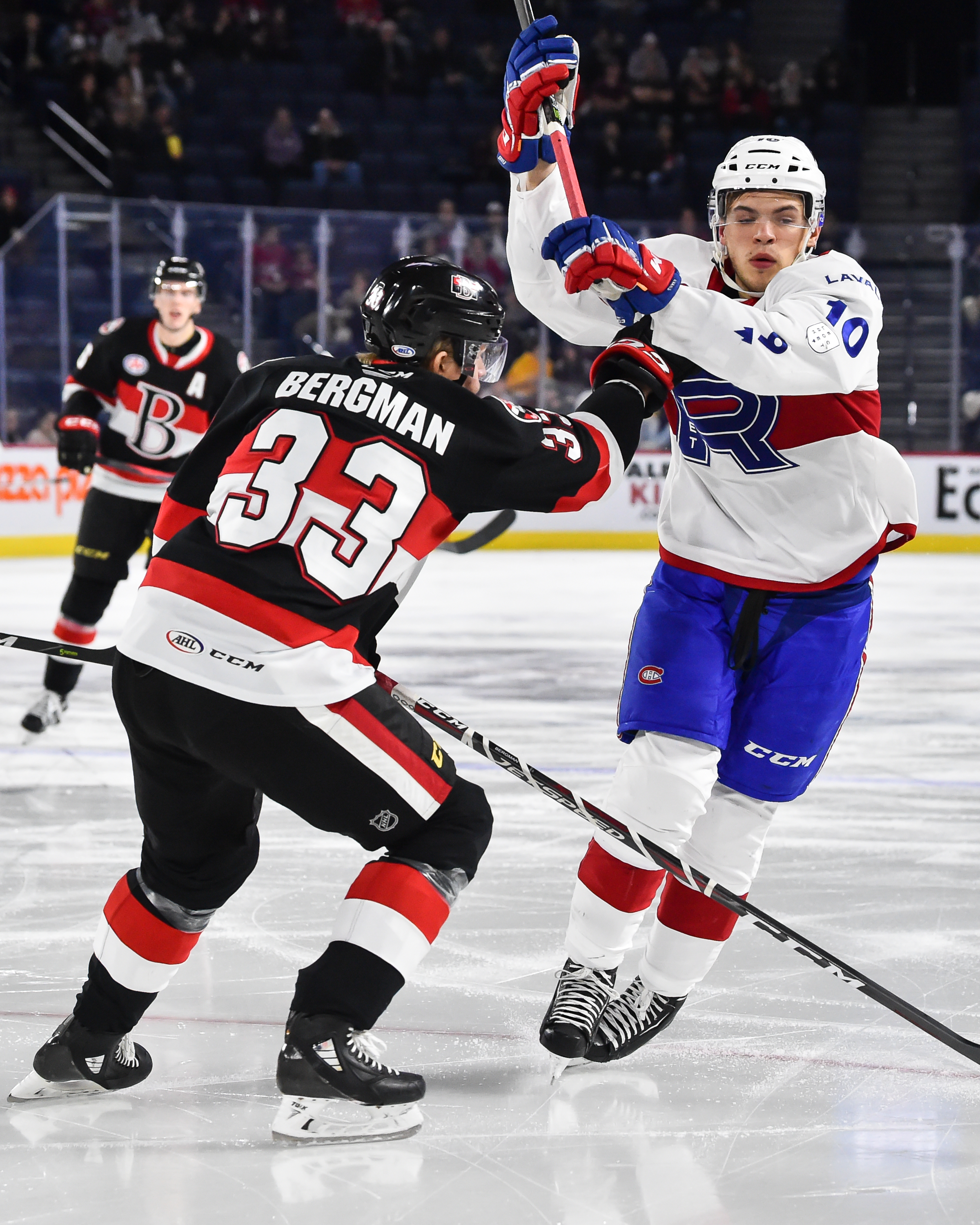 Montreal is entering the Deadline with plenty of extra weight to shed. They have a long list of impactful veterans who could be on the block, led by surging centerman Jake Evans. Evans has posted 11 goals and 26 points through 56 games this season, good enough for fifth on the team in both categories. He’s only three points away from breaking his career-high 29 points set in 72 games of the 2021-22 season. That was one of only two years where Evans played a full NHL season, next to his 28 points in 82 games last season. That precedent makes his 40-point scoring pace this season all the more encouraging. Evans is posting those numbers with a cushy, third-line role and minimal power-play ice time. That’s sure to be an encouraging sign for playoff hopefuls looking to flesh out their bottom-six – teams like the Dallas Stars, Detroit Red Wings, and Ottawa Senators. Recent reports suggest that Evans and Montreal could be at an impasse with extension negotiations, potentially making the center a cheaper buy as the deadline approaches.
If not Evans, Montreal could turn back to routine trade rumors. 30-year-old winger Josh Anderson has posted a modest eight goals and 18 points in 56 games this season. His 121 hits is also tied with Juraj Slafkovsky for the most hits on the offense. Anderson has been on the trade block for years now, but his lofty $5.5MM cap hit and minimal lineup role have been dissuading up to this point. To make matters worse, Anderson has two more seasons on his deal after this year – which could make retaining part of his salary a tough bet for the Canadiens. Though it’s worth noting that both Jeff Petry and Jake Allen will come off of Montreal’s retention slots when their contracts end this summer. But for a cheap price, he’ll stand as a physical option for teams in need of more heft. For teams looking the other way, Montreal could also make forward Alex Newhook available. He’s struggled through two years in Montreal, netting just 52 points in 111 games with the team. Newhook hasn’t posted the well-rounded presence Montreal has needed, but he’s added size with the Canadiens and stands as an interesting project on the open market.
The Canadiens can offer plenty of defense as well. Veteran David Savard joined his hometown Montreal in 2021, looking to stand as a consistent pillar behind a young lineup. But his solid presence has continued through the last four seasons, and Savard doesn’t seem close to slowing down in his age-34 season. He has a modest $3.5MM cap hit that’s set to end this summer, which could make him an attractive rental for teams in need of assurance on the blue-line. Savard may be aged and low-scoring, but his high-defense and high-physical presence could land a return that rivals Evans. Montreal also has a wealth of young defenders, including Jayden Struble – who could be seen as dead weight behind the team’s wealth of left-defenders. Struble has five points and a minus-10 through 30 games this season. But he’s in just his second NHL season, and is working to add more physicality to his style. Those could be attractive traits to build up, at a cheap price.
Team Needs
1) Future Capital – Montreal is entering the 2025 NHL Draft with a whopping 12 picks. That’s plenty for comfort, but with the 2024-25 season seeming a bit lost, there’s little more for the Canadiens to ask for. They’ll enter the Deadline with a true seller’s mindset, looking to drive the price up on each of Evans, Savard, and Anderson. Landing a first-round pick for either of the former, or any return for the latter, will be mark successful Trade Deadline for the Canadiens letting them open space for top prospects and really begin kicking off their future.
2) Right-Shot Defense – If any position group appears shallow in Montreal, it’s their right- shot defense. The team has already made moves to address that hole this season, using a December swap of Alexandre Carrier for Justin Barron to boost up their top-four. They also have top prospect Logan Mailloux working his way up the minor-league lineup, and former top-10 draft pick David Reinbacher working his way back from injury. Both players could stand as strong options on the right-side in due time, but Montreal is hinging on Carrier and Savard to hold them up in the meantime. Finding another cheap veteran, or a promising young defender, could go far in rounding out the team’s lineup in the few years remaining in their rebuild.
Trade Deadline Primer: Minnesota Wild
With the 4 Nations Face-Off break upon us, the trade deadline looms large and is less than a month away. Where does each team stand, and what moves should they be looking to make? We continue our look around the league with the Minnesota Wild.
The Minnesota Wild find themselves in an interesting situation as they have been a pleasant surprise this season and are likely bound for the playoffs, barring a collapse. The Wild have done this despite having nearly $15MM of dead money counting against the salary cap and their top player missing significant time due to injury. While the Wild have overachieved, they may be limited by their cap situation. However, they could also use some of their draft capital or promising prospects to move out some money if they find a player that they feel can help them.
Record
33-19-4, 3rd in the Central Division
Deadline Status
Buyers
Deadline Cap Space
$1.4MM on deadline day*, 0/3 retention slots used, 47/50 contract slots used, per PuckPedia.
*Since Kirill Kaprizov is on long-term injured reserve but is expected to return before the end of the regular season, we’re not including his LTIR pool here. They may have some added flexibility at the deadline if he remains on LTIR but they would still need to remain cap-compliant down the stretch by making subsequent roster moves.
Upcoming Draft Picks
2025: MIN 2nd, TOR 4th, CBJ 5th, MIN 6th
2026: MIN 1st, MIN 2nd, MIN 3rd, MIN 4th, SJS 5th, MIN 5th, BOS 6th, MIN 6th, MIN 7th
Trade Chips
Minnesota traded their first-round pick earlier this season as part of a large package to the Columbus Blue Jackets for defenseman David Jiříček. While Jiříček hasn’t contributed much this season, he looks like a long-term fixture for the Wild, which will ultimately make the trade worthwhile. However, it added a barrier to improving this year’s club (coupled with the lack of salary cap space) and leaves them with few trade chips to part with. As mentioned earlier, the Wild could move future draft picks or promising prospects, but they probably don’t have an appetite for that right now unless they can acquire a player with term who will fit in their plans. The Wild hold just four draft picks this year. However, they have all of their picks next season plus two additional late-round picks.
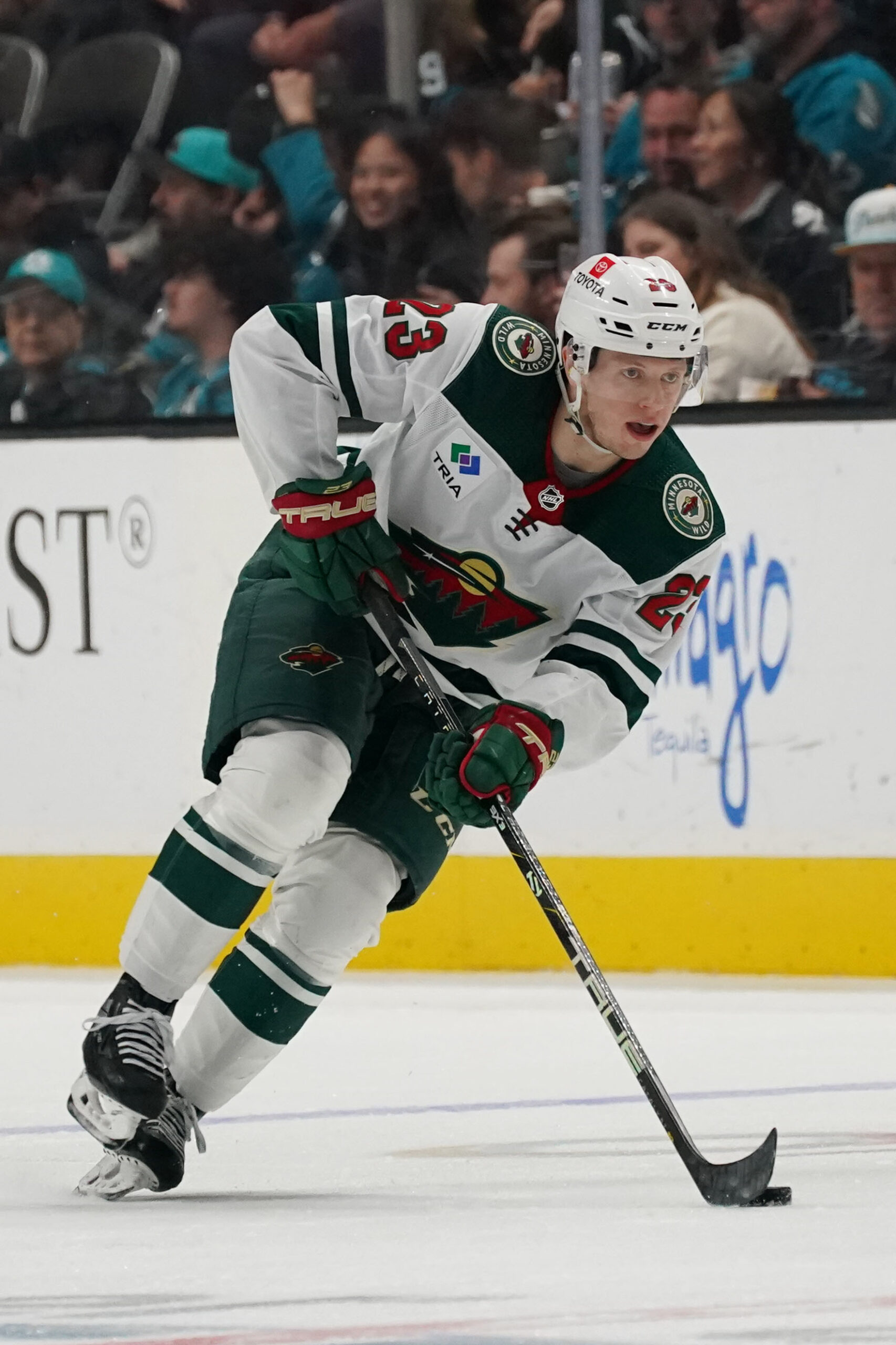
As far as pieces that could be moved for help this season, Marco Rossi is a name that can’t seem to escape trade rumors. The 23-year-old has emerged as a solid offensive contributor this season for Minnesota, registering 19 goals and 28 assists in 56 games. Rossi was selected by the Wild 9th overall in the 2020 NHL Entry Draft and has started to show why teams were so high on him. If Minnesota were to move on from the undersized forward, they would create a hole in their forward group that Rossi has been filling for most of this season. Although, given his age and production, he would net the Wild a significant return that they could then use to fill other holes. Rossi is a restricted free agent this summer and is making just $863,334 this season.
The Wild don’t have many other pieces that could be moved off of their NHL roster in a deal, as they have several forwards who are underperforming offensively. However, they do have several prospects who are almost NHL-ready and could be part of a massive deal if Minnesota has the appetite and cap space to facilitate a move. Forward Liam Ohgren is a name that comes to mind; the 2022 first-round pick (19th overall) is still finding his way but has had a run in the NHL this season, posting a goal and three assists in 19 games. While those offensive numbers are underwhelming at first glance, they are distorted by an incredibly low shooting percentage of just four percent.
Another forward the Wild could potentially part with is Riley Heidt, who was their second-round pick in 2023 (64th overall). Heidr is currently the captain of the Prince George Cougars of the Western Hockey League and is having a terrific season, posting 25 goals and 41 assists in 43 games. Heidr is a bit undersized, but he more than makes up for it with his physical play. Teams will covet his enthusiasm for getting to the dirty areas of the ice and playing a disruptive game, but Minnesota may not be willing to part with a player who could very well be their captain one day.
Team Needs
 1.) A Top Six Forward: The Wild have been operating with a patchwork forward group since Kaprizov went down with injury and were further depleted when Joel Eriksson Ek was also missing time. On paper, The Wild’s forward group looks like a mishmash of journeymen forwards and young skilled forwards, but in reality, they’ve been a middle-of-the-road offensive team (17th out of 32). Minnesota could benefit from an additional top-six forward who could displace some of the forwards who are punching above their weight class at the moment. However, the cost to acquire and the additional salary will likely make this kind of addition a difficult one. Minnesota has just $1.4MM in deadline day cap space, meaning they would likely need other teams to retain salary if they were to bring in a veteran. Local boys Brock Nelson and Brock Boeser would make a lot of sense for Minnesota as they would represent major upgrades to the top six. However, both men have salaries north of $6MM and will likely be too rich for Minnesota’s tastes this year.
2.) Depth Scoring: The Wild would benefit immensely from more depth scoring from the likes of Ryan Hartman; however, the next best option might be to find more scoring on the trade market. Ryan Donato of the Chicago Blackhawks could be a good option with his $2MM cap hit and the potential to be a lower-cost acquisition. However, it’s always tricky when a player is having a career year and then gets traded, and there is no guarantee that Donato would carry that momentum over in a trade. However, given the Wild’s predicament, Donato may be their best option. Another good depth option could be Jake Evans of the Montreal Canadiens, who has also put together a career year and is a pending unrestricted free agent (just like Donato). At 28 years old, Evans has never topped 30 points in a season, but with 11 goals and 16 assists in 56 games this year, he will most certainly set career highs and should get a nice payday this July.
Photos courtesy of USA Today Sports.
PHR’s Josh Cybulski contributed to this article.
Analyzing Ryan Donato’s Trade Value
Since the turn of the calendar, especially leading up to the trade deadline, one player receiving plenty of interest is Chicago Blackhawks winger Ryan Donato. Despite the perceived market building around Donato, the Blackhawks reportedly haven’t ruled out negotiating an extension for their third-highest scorer.
The trade interest isn’t just because of hasty buyers either. Donato is having a career year, scoring 19 goals and 18 assists in 53 games which has already topped his previous high of 31 points in 74 games during the 2021-22 season.
Typically a pending unrestricted free agent averaging 0.70 points per game on an affordable $2MM salary would command a first-round pick or a pair of seconds. However, there is some reason for pause when considering Donato as a potential trade deadline pick.
Since January 1st, Connor Bedard, Taylor Hall, or Teuvo Teräväinen have assisted on six of Donato’s eight goals. Additionally — those three players have contributed to just over half of his total points this season. Now it’ll become a question about who exactly is contributing more to who’s success.
Given that Donato is having an offensive breakout in his eighth season, and his average ice time has jumped from a career average of 12:46 to 15:03 this season, he’s most likely benefiting from Chicago’s poor supporting cast. The Blackhawks have given Donato more responsibility than he’s ever had at the NHL level, allowing him to play with the game’s young star in Bedard and one of the best passers in Teräväinen.
If interested parties begin to believe this, it could limit what they’re willing to spend on Donato. It’s likely the probable reason why Chicago is entertaining an extension rather than giving Donato away for less than their asking price.
The comparable deal for Donato in recent history is the trade that sent Tyler Toffoli from the New Jersey Devils to the Winnipeg Jets last trade deadline for a 2025 second-round pick and a 2024 third-round pick with the Devils retaining the remaining 50% of his contract.
Toffoli had 26 goals and 44 points in 61 games for the Devils before the trade — similar to Donato’s production this season. Should the Blackhawks want more than a second and third-round pick for their highest-goal scorer, they might be better served in signing him to a two- to three-year extension.
Submit Your Questions For The #PHRMailbag
The 4 Nations Face-Off will provide a breather from day-to-day transactions, leaving general managers added time to focus on what the next month may entail for their clubs before the March 7 trade deadline. There have been multiple big swaps already, but more are still to come, with Dylan Cozens, Seth Jones, Brock Nelson, and Rickard Rakell among the names who could be on the move.
With that in mind, it’s a good time for our next mailbag segment. Our last one was split into two parts. The first included forward targets for the Lightning, the likelihood of the Panthers retaining both Sam Bennett and Aaron Ekblad, and whether Jakob Chychrun will stick with the Capitals, among other topics. The second discussed offer sheet strategies for the summer, additions the Flyers could make to pair with Matvei Michkov, and whether Zach Werenski can bring a Norris Trophy to Columbus.
You can submit a question by using #PHRMailbag on Twitter/X or by leaving a comment down below. The mailbag will run on the weekend.
Trade Deadline Primer: Los Angeles Kings
With the 4 Nations Face-Off break upon us, the trade deadline looms large and is less than a month away. Where does each team stand, and what moves should they be looking to make? We continue our look around the league with the Los Angeles Kings.
The Kings are in a peculiar position leading into the trade deadline. They have been a consistently competitive team in the Western Conference but don’t carry the same offensive firepower as divisional opponents such as the Edmonton Oilers or Vegas Golden Knights, leading to early exits in the Stanley Cup playoffs. General manager and vice president of hockey operations, Rob Blake, for better or for worse, isn’t a stranger to big moves. Will he add more offense to balance the Kings out, double down on their pesky defense, or stand pat like he did last year?
Record
29-17-7, 3rd in the Pacific
Deadline Status
Conservative buyer
Deadline Cap Space
$4.516MM on deadline day, 1/3 retention slots used, 43/50 contracts used, per PuckPedia.
Upcoming Draft Picks
2025: LAK 1st, LAK 3rd, LAK 4th, LAK 5th, LAK 6th, LAK 7th
2026: LAK 1st, LAK 2nd, LAK 3rd, LAK 4th, LAK 5th, LAK 6th, LAK 7th
Trade Chips
If the Kings’ front office believes they’re in a window of contention, Los Angeles could trade one of their first-round picks in 2025 or 2026. Since selecting Brandt Clarke as the eighth overall pick in the 2021 NHL Draft, the Kings have added 19 prospects to their organization via the draft, giving the flexibility to trade a higher-valued draft selection. Still, unless they trade some salary from the active roster, Los Angeles doesn’t have the financial flexibility to add a needle-mover thus negating most reasoning to move a first-round pick. 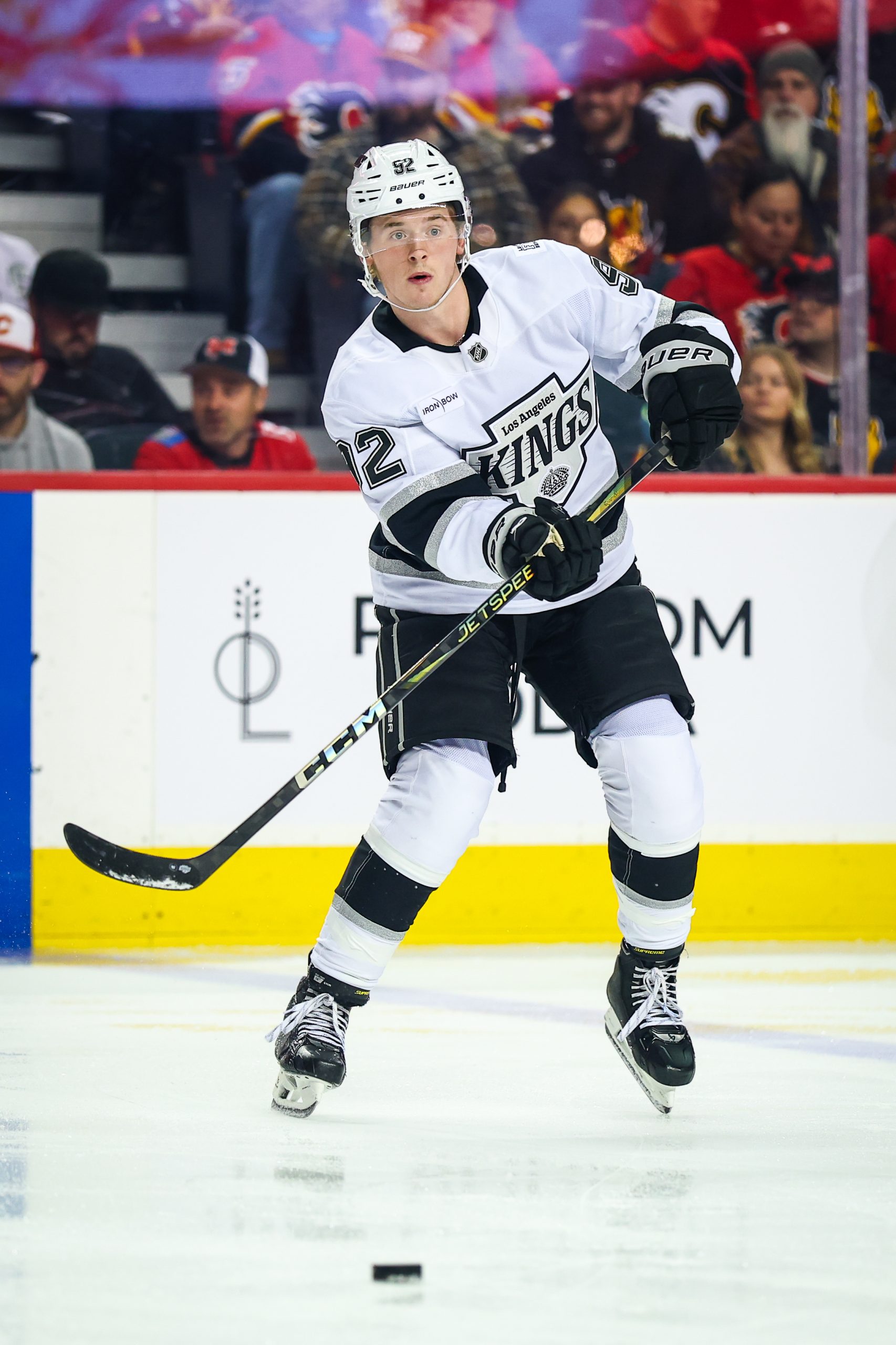
Although the Kings’ organization has many prospects, the overall quality of those prospects is lacking. Since graduating the likes of Clarke, Akil Thomas, and Alex Turcotte to the NHL level, forward Liam Greentree is objectively the best prospect remaining giving Los Angeles every reason to retain him. Greentree was selected as the 26th overall pick in last summer’s draft and is the OHL’s third-highest scorer this year with 35 goals and 51 assists through 50 games.
Still, one thing the Kings’ pipeline has is goaltending depth. According to Scott Wheeler’s prospect rankings in The Athletic (Subscription Required), three of Los Angeles’ top-five prospects are goaltenders: Erik Portillo, Hampton Slukynsky, and Carter George. Portillo is the closest to NHL-ready with the latter two being several years away. Although goaltending depth is always important, no team needs three goaltenders for the future so the Kings’ could look to move either Slukynsky or George for more immediate talent.
Team Needs
1) Second Line Center: As much as Los Angeles would like Quinton Byfield to be a top-six center for years to come, it’s not working out that way. To Byfield’s credit, the Kings are controlling the puck more 5 on 5 when he’s on the ice, but his 43.6% faceoff success rate and his 88.4% on-ice save percentage in all situations show he’s more of a top-six winger. As mentioned, Los Angeles doesn’t have the cap space or the necessary capital to acquire a player like Dylan Cozens or Casey Mittelstadt, but they should be one of the team’s calling on Jake Evans or Trent Frederic. Both players would blend well into the Kings’ system given their defensive awareness and would allow their wingers more freedom and creativity on the offensive side of the puck.
2) Scoring Depth: Los Angeles has no problems keeping the puck out of the net. The Kings are fifth in goals-against per game, fourth in penalty kill percentage, first in shots-against, and ninth in save percentage. On the flip side, they are 20th in goals-for-per-game, 29th in powerplay percentage, and 28th in shots on goal. Again, given their available trade assets, Los Angeles would be better served looking into the trade markets for players such as Ryan Donato or Luke Kunin. The former’s perceived trade value has risen recently but it shouldn’t take a ‘Kings’ ransom to pry him away from the Blackhawks.
Image courtesy of USA Today Sports.
Trade Deadline Primer: Florida Panthers
With the 4 Nations Face-Off break upon us, the trade deadline looms large and is less than a month away. Where does each team stand, and what moves should they be looking to make? We continue our look around the league with the Florida Panthers.
The defending Stanley Cup champion Florida Panthers are again one of the top teams in the league. While many factors can influence the outcome before the Stanley Cup is awarded this season, MoneyPuck currently gives Florida a 15.9% chance of winning again, the highest probability of any team. Probability doesn’t always reflect reality, however, and the Panthers will look to put the finishing touches on their roster by deadline day. Still, given that this season’s roster is remarkably similar to last year’s, Florida won’t have to do much.
Record
34-20-3, 1st in the Atlantic
Deadline Status
Conservative buyer
Deadline Cap Space
$3.506MM on deadline day, 0/3 retention slots used, 45/50 contracts used, per PuckPedia.
Upcoming Draft Picks
2025: CGY 4th, FLA 4th, SJ 5th, FLA 5th, FLA 6th, FLA 7th
2026: FLA 1st, FLA 2nd, FLA 4th, FLA 5th, FLA 6th, FLA 7th
Trade Chips
The Panthers are somewhat limited in terms of trade assets. They are unlikely to trade any draft picks, especially since their next selection won’t come until the fourth round of the 2025 NHL Draft. While their 2026 first-round pick holds significant value, the Panthers have not had a first-round pick since the 2021 NHL Draft. Despite Florida being in their championship window, missing out on adding a promising prospect for several years is concerning.
They don’t have many prospects to trade either. Scott Wheeler of The Athletic (Subscription Article) recently ranked Florida dead last in prospect pool rankings although they had more quantity than their lower-ranked peers. Still, it’s hard to imagine the Panthers trading away two, three, or four of their prospects to land an impact player. 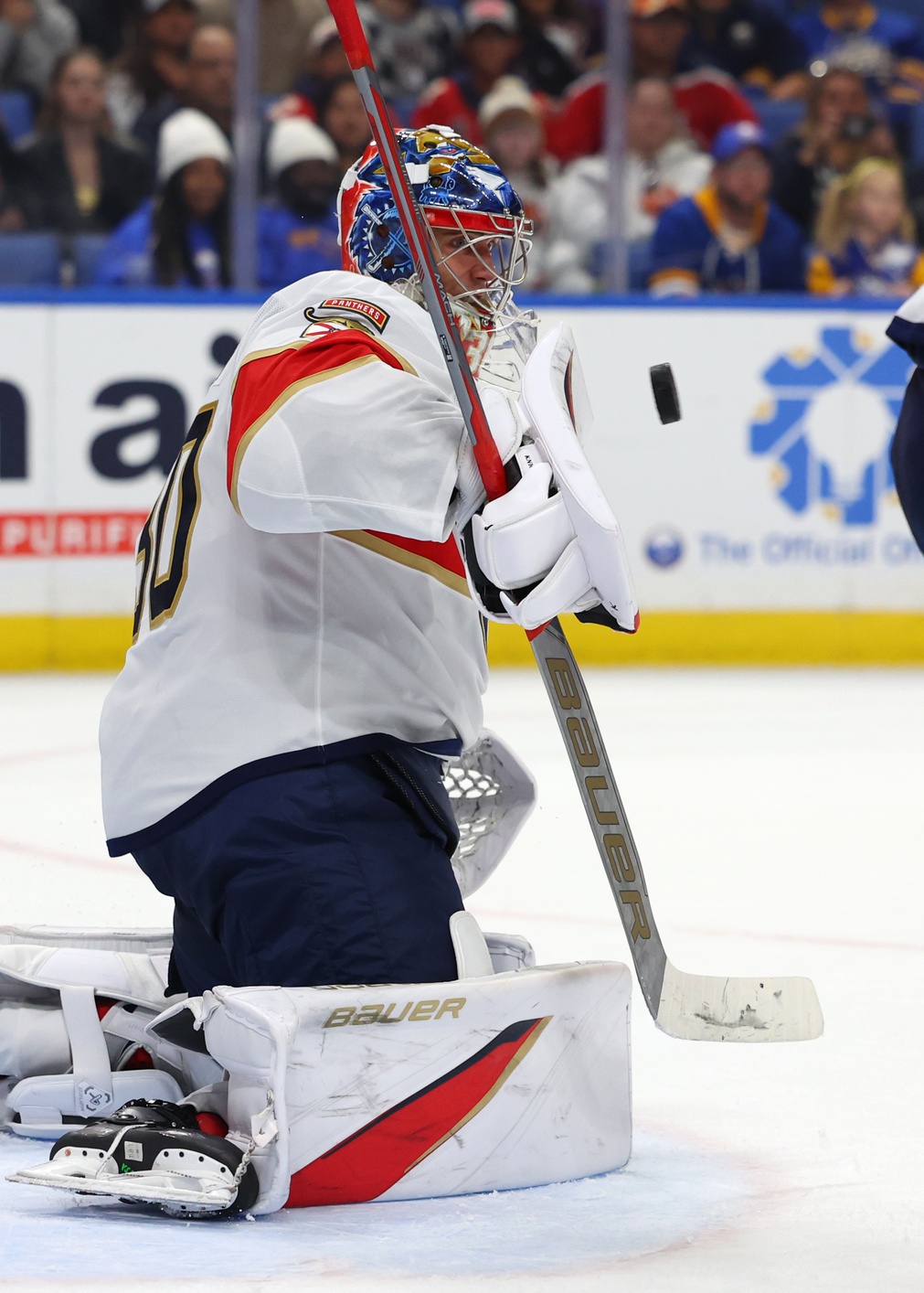
Thanks to top-notch performances from players already on the team, and an important lack of injuries this season, Florida doesn’t need to add much. The only player on the roster that may have value, and the Panthers might be inclined to move in the right deal, is netminder Spencer Knight. The former 13th overall pick of the 2019 NHL Draft is doing well in his return to the NHL, managing an 11-8-1 record through 20 starts with a .906 save percentage and 2.47 goals-against average. Still, the perceived trade market for goalies and a $4.5MM salary for this year and next might push a decision on Knight’s future with the team to the offseason.
All in all, this deadline should look remarkably similar to last year’s for the Panthers. Florida acquired Vladimir Tarasenko and Kyle Okposo in separate deals for a combination of three mid-round picks. Should the deadline become a buyers’ market, Florida may be willing to deal with some fourth- or fifth-round picks but it’s unlikely to be more.
Team Needs
1) Right-Handed Defenseman: If Florida needs anything, it’s a right-handed shooting defenseman. Aaron Ekblad is the only one on the NHL roster and one of only three, including their AHL affiliate, the Charlotte Checkers. Henri Jokiharju of the Buffalo Sabres is likely their best option. He’s posted solid possession and defensive metrics in his role with Buffalo which should translate well into the Panthers’ system. They do not need an offensive weapon from the back end, given that Florida has a top-five offensive and top-10 powerplay. Jokiharju should help keep the puck out of the net and improve a 17th-ranked penalty kill.
Image courtesy of USA Today Sports.
Trade Deadline Primer: Edmonton Oilers
With the 4 Nations Face-Off break upon us, the trade deadline looms large and is less than a month away. Where does each team stand, and what moves should they be looking to make? We continue our look around the league with the Edmonton Oilers.
The Oilers were one of the busier teams over the offseason, adding as much veteran scoring depth as possible after falling painfully short of a Stanley Cup in a hard-fought Final against the Panthers. As usual for Edmonton, things were slow out of the gate, but they have heated up since then with a 24-8-2 record since Nov. 23. Unlike last season, they didn’t require a coaching change, and Kris Knoblauch has his club rolling with both a top-10 offense and defense entering the stretch run as they battle it out with the Golden Knights for the divisional crown.
Record
34-17-4, 1st in the Pacific
Deadline Status
Buyers
Deadline Cap Space
$948K on deadline day + $5.13MM LTIR pool, 0/3 retention slots used, 46/50 contracts used, per PuckPedia.
Upcoming Draft Picks
2025: STL 2nd, STL 3rd, EDM 6th, EDM 7th
2026: EDM 1st, EDM 2nd, EDM 3rd, EDM 4th, EDM 5th, EDM 6th, EDM 7th
Trade Chips
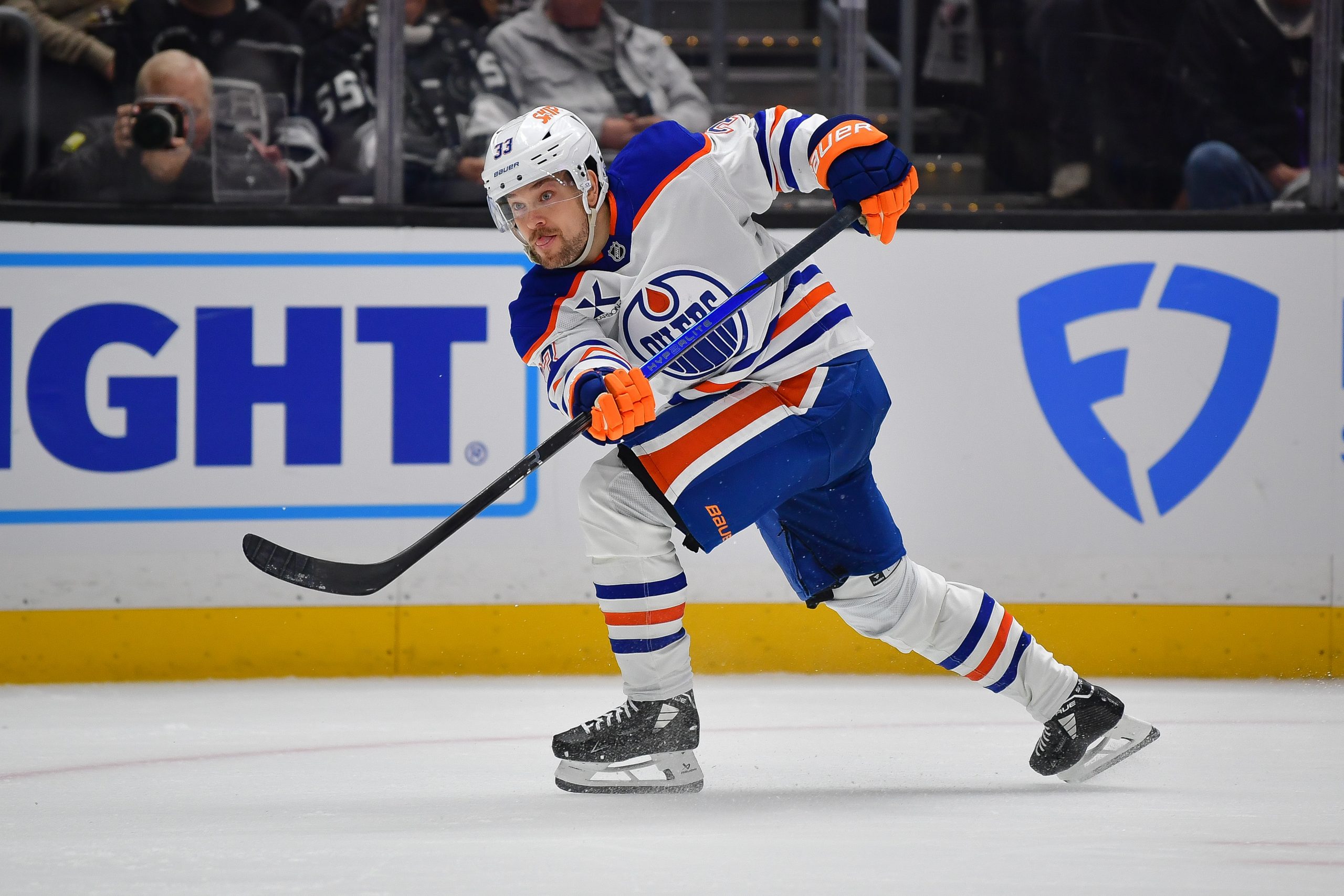 While the Oilers still have decent depth scoring, all the big names on the roster aside from Leon Draisaitl have taken a significant step back in their production from the 2023-24 campaign. Among their non-stars, it’s been a resurgent Connor Brown and a quiet late-offseason pickup in Vasily Podkolzin driving the bus. Their major UFA splashes, Viktor Arvidsson and Jeff Skinner, have both disappointed. The latter won’t be on the move as he holds an NMC and is slated for the first postseason appearance of his 15-year career, but Arvidsson and his $4MM AAV through next season could be on the block if the Oilers need to clear a space for an upgrade in their top nine. He missed over a month with an undisclosed injury and hasn’t been himself when healthy, limited to 7-11–18 in 40 games with his lowest ATOI in nine years.
Edmonton’s roster has been relatively cost-effective outside of those pickups, and it’s hard to envision them moving anyone else. They’ll need to turn to the minors, where 21-year-old center Matthew Savoie stands as their top trade chip. Acquired from the Sabres in last summer’s Ryan McLeod trade, the ninth overall pick of the 2022 draft ranks second on AHL Bakersfield in scoring with 12-22–34 in 42 games in his first entire season at the professional level. The 5’9″ pivot also has a team-high +14 rating and would be most comprise most, if not all, of the trade value in return for a big fish. Whether any player is available who could command that value remains to be seen, though, and they’ll likely restrict themselves to the rental market with Evan Bouchard needing a new deal this summer and extensions required for Connor McDavid, Mattias Ekholm and Stuart Skinner in 2026.
In reality, the Oilers will likely be dealing from their 2026 draft pool to fill their short-term needs. There are some other intriguing prospects in their limited pool that teams might be interested in, though. They won’t be keen on moving 2024 first-rounder Sam O’Reilly, but 19-year-old defender Beau Akey, winger Roby Järventie, and netminder Olivier Rodrigue will hold some value. Akey, in particular, will be an intriguing pickup for rebuilders looking to add to their defense pool if he’s available. The 20-year-old already inked his entry-level contract, was a second-rounder in 2023, and has 4-22–26 in 38 games for the Ontario Hockey League’s Barrie Colts this season after missing most of his post-draft campaign with an injury.
Team Needs
1) Top-Four Option On Defense: The ever-steady Ekholm, continued dominant possession play from Bouchard, and a bounce-back year from Darnell Nurse largely have Edmonton’s defense in good shape. Ty Emberson, Brett Kulak and Troy Stecher have all been solid but upgradable depth pieces. Recent veteran pickup John Klingberg has fared okay at even strength so far in his five-game return to the league but has yet to receive any power-play deployment, which is where his principal value resides. There’s a clear need for at least another option for Knoblauch to deploy on the second pairing alongside Nurse, even if they’re not an established top-four player. Without many quality call-up options, more depth is needed, especially with Klingberg’s injury history a pressing concern.
2) Depth Center: The Oilers got a twofer down the middle at last year’s deadline when they picked up Sam Carrick and Adam Henrique from the Ducks. The latter is still in the fold and anchors their fourth line, as Knoblauch has recently opted for a more balanced lineup, deploying McDavid, Draisaitl, and Ryan Nugent-Hopkins on separate lines down the middle. He’d surely like to return one to the wing, but they need another player with top-nine utility. They’ll consider parting ways with one of their B-tier prospects or a decent pick from their 2026 crop to land a Henrique-esque talent this time.
Image courtesy of USA Today Sports.
Poll: Who Will Win The 4 Nations Face-Off?
The first (and perhaps only) 4 Nations Face-Off is less than 48 hours away. Festivities will kick off in Montreal on Wednesday at 7:00 p.m. CT, with Canada versus Sweden. As a refresher, the tournament will consist of seven matchups: six round-robin games and a championship match on Feb. 20 between the top two clubs in the standings (which will use a 3-2-1-0 points system!).
Canada’s roster, while still without a couple of glaring omissions, remains the favorite. Icing the duos of Connor McDavid–Mitch Marner and Sidney Crosby–Nathan MacKinnon on two different lines will do that for you – especially with two-way dynamos Sam Reinhart and Mark Stone on their respective left wings (at least to start, per Chris Johnston of TSN and The Athletic). Add in a dynamic “checking” line of Sam Bennett, Anthony Cirelli, and Brandon Hagel, plus a defensive corps quarterbacked by Cale Makar and anchored by top shutdown presence Colton Parayko, and there aren’t many question marks among the skaters despite names like Mark Scheifele and Nick Suzuki being left off the roster.
Goaltending, as discussed at length in the public zeitgeist, will be the make-or-break factor. All signs point to 2023 Stanley Cup winner Adin Hill as their Game 1 starter. While he’s already recorded a career-high 20 wins through 34 starts for the Golden Knights, his .900 SV% and 2.64 GAA are rather pedestrian, and his 8.8 goals saved above expected ranks 21st in the league (per MoneyPuck). He’s good but not great – making it an especially damning decision for Canada to leave Vezina Trophy contender Logan Thompson off the roster. He’d give them a much more legitimate contender to compete with the Americans’ Connor Hellebuyck and the Swedes’ Filip Gustavsson, both bonafide top-10 netminders in the league based on this season’s sample.
While Hellebuyck stands as the primary reason for the United States’ optimism for a championship, their left-wing depth has allowed them to ice Kyle Connor, Jake Guentzel, and Matt Boldy on different lines. A one-two punch of Jack Eichel and Auston Matthews down the middle puts them much closer in talent there to Canada than the two European participants, and while they’ve lost their top defenseman in Quinn Hughes due to injury, a top pairing of Jaccob Slavin and Adam Fox gives them a combination of arguably the league’s best defensive mind and a player who’s produced over 70 points for three seasons in a row.
Down seasons from most of Sweden’s center corps mean they look thin up front, with Elias Pettersson and Mika Zibanejad anchoring their top six. A largely veteran group, especially on their depth lines, also raises some questions about whether declining talents like Viktor Arvidsson and Gustav Nyquist will be able to keep up with the scoring depth of the Canadians, Americans, and even the Finns. But their top two goalies, Gustavsson and Linus Ullmark, give them a clear advantage at the position over everyone but the United States, and their defensive corps boasting two-way dynamos like Mattias Ekholm and Gustav Forsling, in addition to some of the league’s top offensive talents give them a fluid blue line that can compete for a title.
Finland’s championship candidacy looks incredibly bleak after injuries decimated their blue line, keeping star Miro Heiskanen out as well as solid depth pieces Jani Hakanpää and Rasmus Ristolainen. Their goaltending trio of Kevin Lankinen, Ukko-Pekka Luukkonen and Juuse Saros grades out more similarly to Canada’s than it does to the U.S. or Sweden, so they’ll need to rely on their forward group for success. They have scoring depth in spades, with Aleksander Barkov, Sebastian Aho, Roope Hintz, and Anton Lundell all centering their own lines. An elite sniper and power-play piece in Patrik Laine helps things along in addition to having names like Mikko Rantanen and Mikael Granlund in their top nine. But how effective will Finland be with the man advantage with Utah depth defender Juuso Välimäki projected as their top power play quarterback?
Who do you think will win the tournament? Have your say in the poll below!
Who Will Win The 4 Nations Face-Off?
-
United States 51% (736)
-
Canada 38% (546)
-
Sweden 7% (103)
-
Finland 5% (71)
Total votes: 1,456
Mobile users, click here to vote.
Trade Deadline Primer: Detroit Red Wings
With the 4 Nations Face-Off break upon us, the trade deadline looms large and is less than a month away. Where does each team stand, and what moves should they be looking to make? We continue our look around the league with the Detroit Red Wings.
It’s been a tale of two seasons for Detroit. The playoff-hopeful Red Wings started the 2024-25 campaign with a 13-17-4 record, nearly falling to last place in the Eastern Conference. Since relieving former head coach Derek Lalonde of his duties and replacing him with veteran bench boss Todd McLellan, the Red Wings have vaulted themselves back into the playoff conversation. Detroit is holding down the final wild-card spot in the East heading into the 4 Nations Face-Off thanks to a 15-5-1 record under McLellan. The recent hot streak has likely changed Detroit’s trade deadline strategy.
Record
28-22-5, 5th in the Atlantic
Deadline Status
Conservative Buyer/Conservative Seller
Deadline Cap Space
$12,626,183 on deadline day, 0/3 retention slots used, 47/50 contracts used, per PuckPedia.
Upcoming Draft Picks
2025: DET 1st, DET 2nd, NYR 3rd, DET 3rd, DET 5th, DET 6th, STL 7th, DET 7th
2026: DET 1st, DET 2nd, DET 3rd, DET 4th, DET 5th, DET 6th, DET 7th
Trade Chips
The Red Wings are in a position to buy leading up to the trade deadline now that they’re back in the playoff conversation. Still, general manager Steve Yzerman has been known to trade expiring assets even with his eyes set on the playoffs.
Detroit doesn’t have many valuable rental pieces. Patrick Kane‘s no-trade clause and looming $1MM performance bonuses (should the acquiring team make the playoffs) will likely drive away most interested parties. Defenseman Jeff Petry‘s recent surgery could keep him out of action until a handful of games remain in the regular season, although his $2.34MM salary is more than palatable. Lastly, netminder Alex Lyon may be the most valuable rental asset, but the goalie market and the Red Wings’ desire to win should preclude his name from any trade conversations. 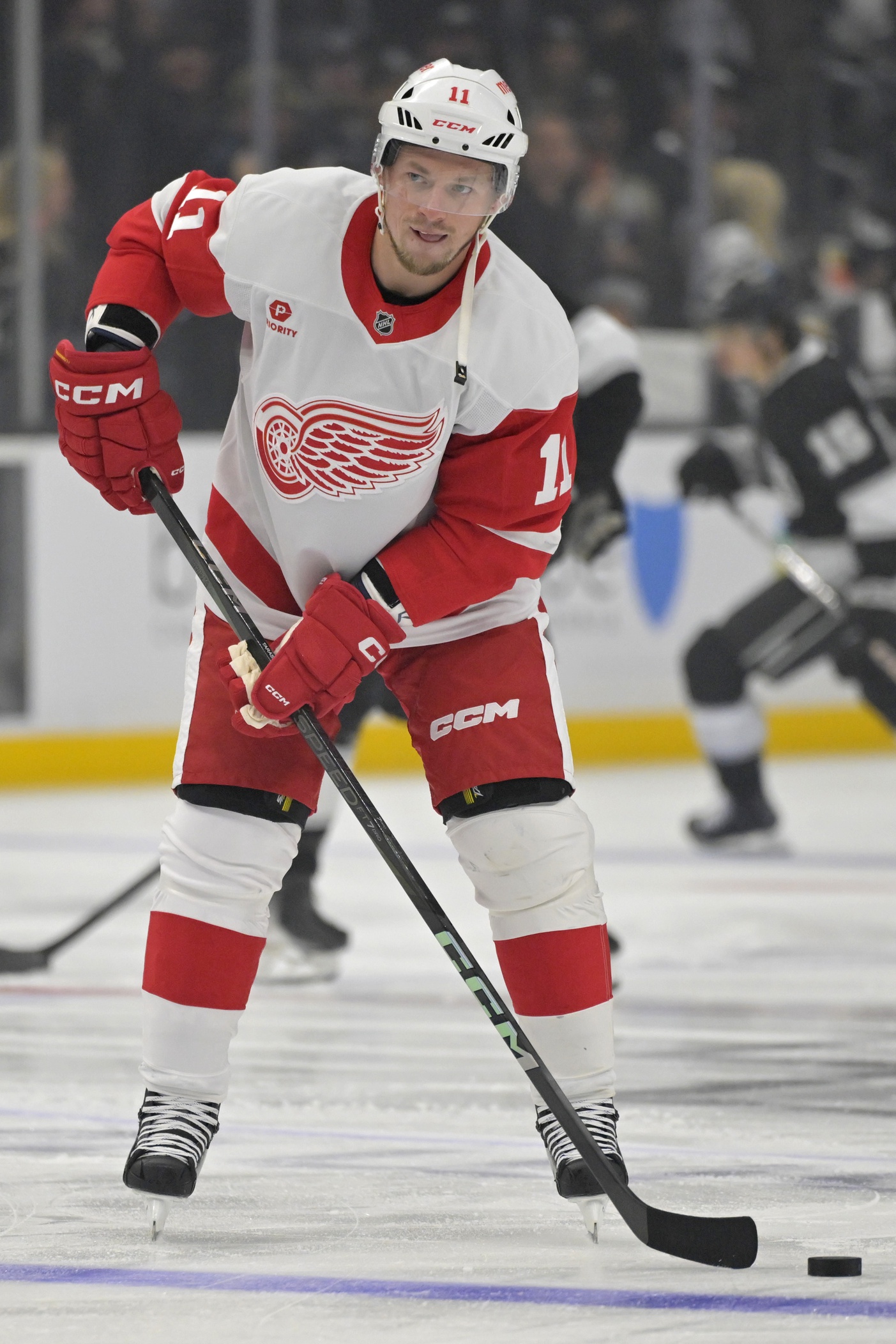
The one established player recently mentioned in trade rumors is winger Vladimir Tarasenko. In last week’s ‘Saturday Headlines,’ Sportsnet’s Elliotte Friedman notes that Tarasenko is a player to monitor, even with his entire no-trade clause in effect this season. The former 40-goal scorer is enthralled in one of the worst statistical seasons of his career, scoring seven goals and 22 points in 53 games in the first year of a two-year, $9.5MM contract signed with Detroit last offseason. Reasonably, assuming the relationship hasn’t proven beneficial for either side, Detroit may work with Tarasenko to send him to a more favorable destination.
If the Red Wings aim to make a strong playoff push this season, they must actively engage with other teams about their prospects. Detroit has not historically been motivated to move their prospects, especially under Yzerman’s regime. Defensive prospects such as Axel Sandin-Pellikka, William Wallinder, and Shai Buium are likely out of the question, given the lack of long-term contracts on the blue line on the NHL roster. Still, the Red Wings could dangle forward prospects such as Nate Danielson, Carter Mazur, or Amadeus Lombardi should the right player become available.
Team Needs
1) A Right-Handed Defenseman: Although rookie defenseman Albert Johansson has filled in nicely next to Simon Edvinsson on the second-pairing after Petry succumbed to his injury, Detroit would be better served having a more experienced talent on the right side. Moritz Seider and Sandin-Pellikka are assuredly the long-term answers on the right side of the defense, so it may be an opportune time to enter the rental market. Now that Cody Ceci has already joined the Dallas Stars for the rest of the season, Montreal Canadiens’ David Savard and Buffalo Sabres’ Henri Jokiharju may be the remaining options.
2) A Second Line Center: Despite signing Andrew Copp and J.T. Compher in back-to-back offseasons, the Red Wings have yet to figure out their long-term answer behind Dylan Larkin. Yzerman might believe Marco Kasper will fulfill that role as his game develops, but it’s challenging to rely on that now in his career. Detroit has already been linked to Buffalo’s Dylan Cozens and Vancouver Canucks’ Elias Pettersson. Still, the latter may have already been pulled from the trade block, given their recent trade activity. Casey Mittelstadt of the Colorado Avalanche and Trevor Zegras of the Anaheim Ducks have also been floated as trade candidates this year. At any rate, it might be time for the Red Wings to take a shot.
Photo courtesy of USA Today Sports Images.
Trade Deadline Primer: Dallas Stars
With the 4 Nations Face-Off break upon us, the trade deadline looms large and is less than a month away. Where does each team stand, and what moves should they be looking to make? We continue our look around the league with the Dallas Stars.
The Stars have barely missed a beat following an offseason that raised more questions than it answered. Questions arose about their defensive depth for the first time in a while, but they’ve managed to keep their two-way system alive and remain a legitimate championship contender. After making two notable adds last month in Mikael Granlund and Cody Ceci from the Sharks, could there be more for Dallas to do to improve their roster in the wake of injuries to key players?
Record
35-18-2, 2nd in the Central
Deadline Status
Buyer
Deadline Cap Space
$5.52MM on deadline day + $12.3MM LTIR pool, 0/3 retention slots used, 46/50 contracts used, per PuckPedia.
Upcoming Draft Picks
2025: DAL 3rd, NJD 5th, DAL 5th, DAL 6th, DAL 7th
2026: DAL 1st, DAL 2nd, DAL 3rd, DAL 5th, DAL 6th, TOR 7th, DAL 7th
Trade Chips
While Dallas may have already made their big splash, they’ve got plenty of financial flexibility to make another with Nils Lundkvist and Tyler Seguin on long-term injured reserve, and both are expected to remain out through the regular season. None of their top trade chips from last year’s deadline are available – Lundkvist was one of them, as were then-AHLers Mavrik Bourque and Logan Stankoven, who are now top-nine forwards on the NHL roster and won’t be going anywhere. If general manager Jim Nill still wants to make a big splash for a defenseman, he could make 2022 first-rounder Lian Bichsel available. Still, even he’s working his way into a third-pairing role on the Stars’ defense with injuries to Lundkvist and star Miro Heiskanen.
Their prospect pool is thinner than in years past (for a good reason; they’re reaping the rewards), but they still have a recent first-rounder in winger Emil Hemming to leverage if they’re able to swing a significant upgrade for a thin right side on the blue line. The 18-year-old was the 29th overall pick last year and jumped to North America from his native Finland. He’s suiting up for the Ontario Hockey League’s Barrie Colts and has done reasonably well amid a deep forward group there, posting 14-22–36 through 44 games. He also scored once and added three assists in seven games for the Finns en route to a silver medal at last month’s World Junior Championship. The 6’2″ sniper likely checks in as a B-tier prospect in terms of his trade value, though – too valuable to leverage for a lower-level rental stopgap but not valuable enough on his own to land a big fish.
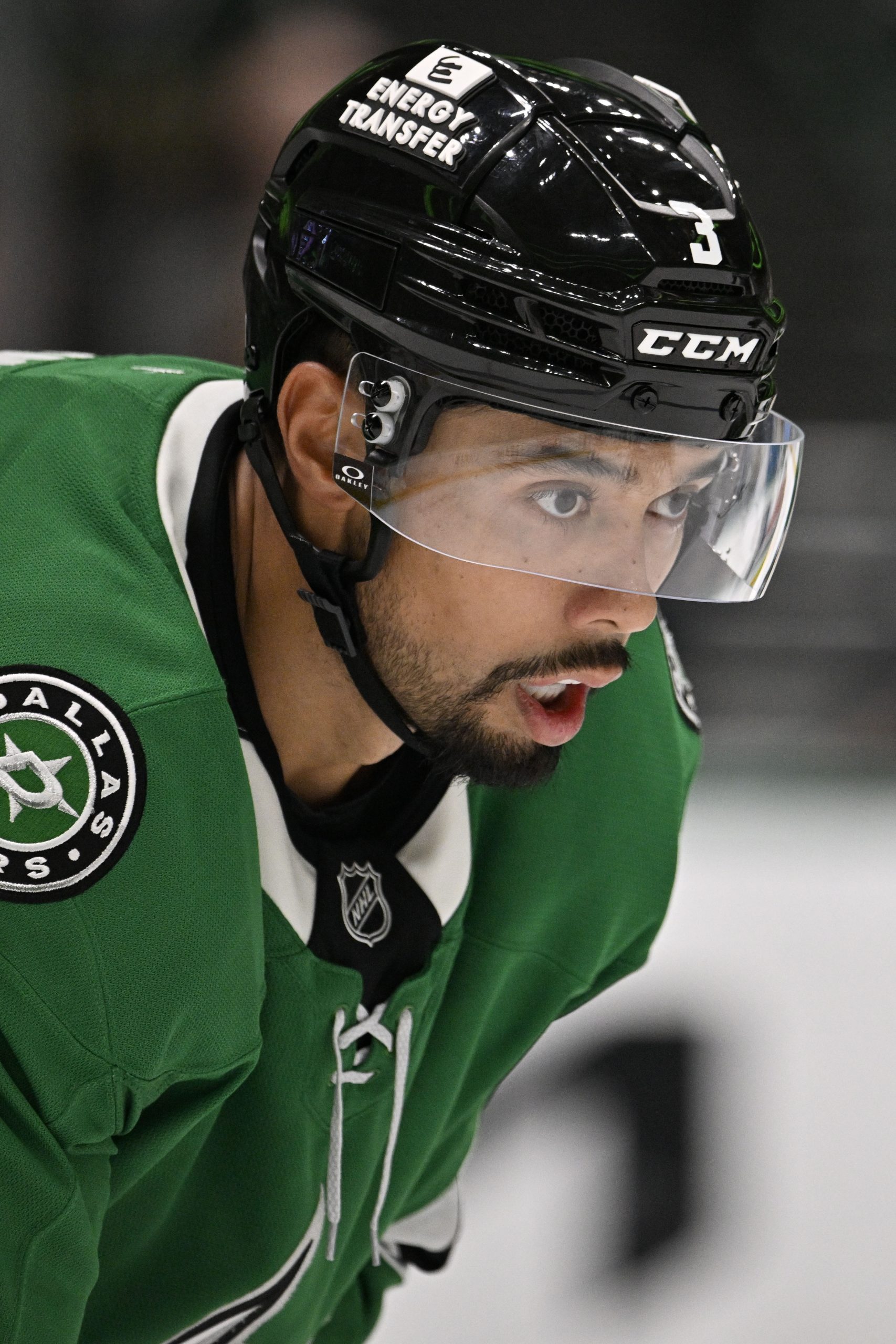 Regarding roster players who could move out, they likely don’t need to do any salary-matching in any other acquisitions they make, given their vast in-season flexibility. But they have a substantial free-agent crop this summer, including Jamie Benn, Matt Duchene and Wyatt Johnston. They’ll likely be tight fits even with the salary cap increasing to $95.5MM, so if there’s an opportunity for the Stars to send out a contract with term in a swap, they may take it. Dealing from a position of need may be puzzling, but 30-year-old Mathew Dumba has underperformed in the first year of his two-year, $3.75MM AAV deal. If he has any positive trade value left (or even if he doesn’t and the Stars need to attach a draft pick with him), it wouldn’t be surprising to see him head out the door to make room for a more dynamic player on the right side.
Outside of Hemming, another prospect who could draw interest is forward Antonio Stranges. The 23-year-old was in the ECHL as recently as two seasons ago but has exploded in the AHL this season, leading the Texas Stars in scoring with 17-22–39 through 41 games. The 5’11”, 185-lb left-winger was a fourth-round pick in 2020, and while his development may have been a bit of a slow burn thus far, his breakout indicates he still has fringe top-six potential.
Other Potential Trade Chips: F Matěj Blümel, F Justin Hryckowian, D Christian Kyrou
Team Needs
1) Right-Shot D Upgrade: Ceci’s acquisition gives them a serviceable second- or third-pairing stopgap (and is a Dumba upgrade if they can move him), but they’re missing a secondary offensive presence behind Thomas Harley in Heiskanen’s and Lundkvist’s absence. Even when healthy, Lundkvist had emerged as arguably their top right-shot option – not a particularly strong one for a championship contender. Even without Heiskanen, the left side is set in the interim, with Harley and Esa Lindell anchoring the top four. Rasmus Ristolainen and David Savard are some of the top options available, but don’t put up the point totals of the archetype they need. Could they be among the few teams making sense for a Seth Jones trade?
2) Cheap Forward Depth: Scoring isn’t what the Stars need – they’re a top-10 offense that’s already added Granlund. Their AHL call-up options are high-ceiling, but they’ve been given minimal ice time when dressed. A more experienced fourth-line piece/13th forward could be more desirable for head coach Peter DeBoer to rotate in along with Oskar Back, Colin Blackwell and Sam Steel.
Image courtesy of USA Today Sports.