
Trade Deadline Primer: Winnipeg Jets
With the Olympic break upon us, the trade deadline is under a month away. Where does each team stand, and what moves should they be looking to make? We continue our look around the league at teams on the playoff bubble, next up: the Jets.
The Jets entered this season with the loftiest expectations after capturing the Presidents’ Trophy last year. Unfortunately, injuries and inconsistency have set the club back, and it is well below .500, struggling to climb the Western Conference standings. The playoffs look unlikely at this point, but with most of their stars signed long term, the Jets aren’t likely to push the button on a rebuild. A small retool in the offseason seems probable, and the Jets do have the personnel to turn around their fortunes in a hurry. The deadline feels like a good time to begin the retooling, and it seems likely they will move on from their pending UFAs.
Record
22-26-8, 7th in the Central (5.5% playoff probability)
Deadline Status
Seller
Deadline Cap Space
$17.44MM on deadline day, 0/3 retention slots used, 45/50 contracts used, per PuckPedia.
Upcoming Draft Picks
2026: WPG 1st, WPG 3rd, WPG 5th, WPG 6th, WPG 7th
2027: WPG 1st, WPG 3rd, WPG 5th, WPG 6th, WPG 7th
Trade Chips
Winnipeg has yet to define itself as a seller, but it will need to pivot to that mindset, barring a miraculous short-term turnaround. The Jets want to win and were presumably built to win this season, but things haven’t panned out. If the team does begin a mini selloff, it has some desirable veteran pieces, particularly on the backend.
Big Logan Stanley is a pending UFA and would surely draw interest from any team looking to beef up their blueline. The 27-year-old couldn’t have picked a better time to have a career year, and he is sure to get paid when he hits the open market. He and the Jets haven’t engaged in contract talks, which is a strong sign he is done in Winnipeg after this year. If the Jets do indeed punt on the season, Stanley could net them some decent assets. At 6’7” and 230 lbs, Stanley will have multiple suitors, which could create a bidding war for Winnipeg to cash in on.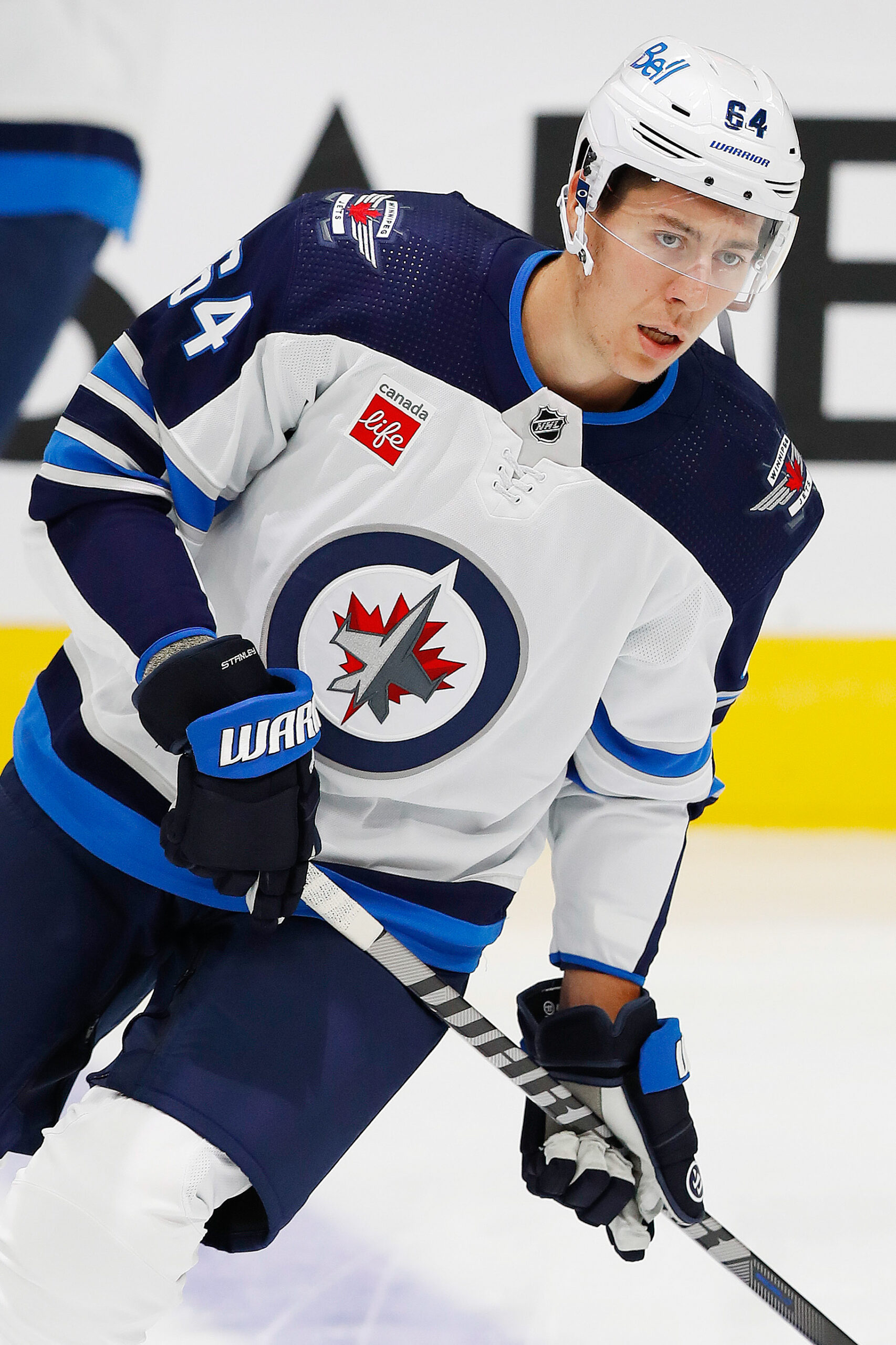
Another defenseman who could net some assets is Luke Schenn. The 18-year NHL veteran isn’t having a great year, but that doesn’t mean he won’t have suitors. Schenn still blocks shots and hits a ton, both desirable traits in the eyes of most NHL GMs. A year ago, the Jets acquired Schenn from the Pittsburgh Penguins for a second-round pick, but it’s hard to envision them getting the same return this time around. That being said, the Jets should be able to nab a similar pick if Schenn is made available, as right-shot defenseman almost always go for a premium.
Up front, Winnipeg has a couple of forwards who would be in demand despite their own poor seasons. Jonathan Toews was brought in to potentially serve as Winnipeg’s second-line center, but he hasn’t been close to the player he once was. He has just 19 points in 56 games this year, but could still serve as a fourth-line center on a solid playoff team. Toews remains elite in the faceoff circle, winning 61% of his draws, and he hasn’t been a drain on possession, even though he’s clearly not the skater he once was. He would need to waive his no-movement clause to facilitate a deal, but if he wants one more shot at a Stanley Cup, it could be possible for him to do so.
Another forward who could fetch a draft pick for the Jets is veteran Gustav Nyquist. The 36-year-old has had a dreadful season with the Jets, tallying just nine assists in 35 games while averaging almost 13 minutes per game of ice time. It’s a sharp drop from two seasons ago, when Nyquist had 23 goals and 52 assists in 81 games and was a key contributor for the Nashville Predators. Nyquist has been fairly inconsistent offensively since crossing the 30-year-old mark, and it looks as though he is a 20-30-point player at this stage of his career. Given the teams that are looking for help offensively, there should be a small, lukewarm market for Nyquist, but if the Jets are selling, there is really no reason to hang onto Nyquist past the trade deadline.
The Jets also have veterans Tanner Pearson, Cole Koepke, and Colin Miller on their roster, but none of those three are likely to fetch much at the deadline other than a low-level prospect or a very late draft pick. Miller is currently dealing with a knee injury, but if he can return to health, he could command the highest return given the robust market for right-handed defensemen.
Team Needs
A Second Line Center: The Jets hoped Toews could recapture the magic from his early Chicago days and fill the void at second-line center. However, Toews’s limited playing time over the last few years has been a glaring issue, and he is no longer a top-six fixture, likely best suited to fourth-line duties. It was a worthy gamble for Winnipeg, given that the market for second-line centers wasn’t exactly a buyer’s market. The Jets need to fill that role going forward, and it likely won’t be easy. Top-six centers don’t grow on trees, and the cost in both the trade market and free agency will be high.
The Jets don’t need to address the issue before the deadline, but if they can trade pending UFAs and stack draft capital and prospects, they could use those assets to try to be buyers in the trade market this summer. There will be options available, likely for veteran players such as Nazem Kadri or Tyler Seguin. While these players have had great careers, the Jets would be better served by targeting a younger player, though it will certainly cost more.
More Depth Scoring: The Jets have relied heavily on their stars this year, which has put a lot of pressure on the likes of Kyle Connor and Mark Scheifele. If those players don’t score, the Jets generally don’t produce offense, since their bottom-six forwards haven’t been able to provide consistent point production. It’s not something Winnipeg is likely to address before the trade deadline. Still, it could be something they target if the right move presents itself, similar to how the Penguins brought in Thomas Novak at last year’s deadline, even though they weren’t a playoff team. Winnipeg needs another playmaker in its middle-six group, and given that playoff teams will be vying for exactly that kind of player, Winnipeg might find better prices in the summer.
If they can find someone to fill that void, particularly on the second forward unit, it could push everyone else down in the lineup, which might allow for better balance and team play five-on-five, something that is lagging well behind other playoff teams.
Photo by Perry Nelson-USA TODAY Sports
Trade Deadline Primer: Calgary Flames
With the Olympic break now upon us, the trade deadline is less than a month away. Where does each team stand, and what moves should they be looking to make? We begin our look around the league with teams that have clear plans near the extremes of the standings, this time with the Flames.
The rebuilding Flames got much closer to playoff contention last season than anyone expected, finishing with 96 points and losing out on the second wild-card spot by virtue of a tiebreaker with the Blues. This season, they’ve been more representative of pundits’ expectations and have been in the basement of the Western Conference from the get-go. They’re at an uncomfortable stage of a rebuild now: most of the grunt work is done, and they’re playing a waiting game for their prospects to graduate. That doesn’t mean they can’t make some more future-oriented moves, though.
Record
23-27-6, 7th in the Pacific (3.6% playoff probability)
Deadline Status
Seller
Deadline Cap Space
$45.57MM on deadline day, 2/3 retention slots used, 45/50 contracts used, per PuckPedia.
Upcoming Draft Picks
2026: CGY 1st, VGK 1st, CGY 2nd, CGY 3rd, VAN 3rd, CGY 4th, CGY 5th, CGY 6th
2027: CGY 1st, VGK 1st*, CGY 2nd, CGY 3rd, CGY 4th, CGY 5th, CGY 6th, CGY 7th
*The Golden Knights’ 2027 first-rounder is top-10 protected.
Trade Chips
The Flames don’t have much in the way of traditional rentals to sell. They’re light on pending unrestricted free agents. Only one, enforcer Ryan Lomberg, would be of any interest to a contender and would only net a mid-round pick at most. Jake Bean‘s injury likely rules him out of being moved. They had a big name in Rasmus Andersson, but he’s already been sent off to Vegas.
That’s good news for the Flames if they’re looking to add even more firepower to a highly stocked prospect pool. The names they’ll dangle will all be ones with term, who will naturally yield higher returns.
If you’re combining both player value and likelihood to be moved, winger Blake Coleman reigns supreme among the Flames’ trade chips. Multiple teams – including the Stars and Canadiens – have demonstrated clear interest. He’s been a valuable contributor for Calgary since signing his six-year, $29.4MM payday in 2021, but with one year left on his deal and him now being in his age-34 season, he’s far from a long-term piece.
Coleman’s point production has settled around a half a point per game over the past couple of seasons following a career-best 30-goal showing in 2023-24. With 13 goals in 44 games this season, shortened due to injury, there’s a decent chance he’ll lock in the fourth 20-goal campaign of his career this year. At a stomachable $4.9MM cap hit, plus his proven playoff track record and desirable physical game, he’ll be of utmost interest to any forward-needy contender in a third-line role. With a 10-team approved trade list baked into his contract, he’ll have quite a lot of say in where he ends up, too.
Nazem Kadri would be the headlining name if he’s available. With three years left on his contract, there’s a greater chance Calgary can still squeeze value out of the last couple of years of his deal as they look to turn the corner back toward playoff contention in short order. The prospect of moving him in the middle of a down season likely only adds to the Flames’ hesitance to cut bait. After rattling off a pair of 60-plus point seasons, he only managed 10 goals and 39 points with a -24 rating in 56 games before the Olympic break.
It’s not often a bona fide top-six center, albeit an aging one, is even in conversation to be moved at the deadline, though. He’s grown increasingly comfortable in a top-line role with Calgary and doesn’t break the bank in a rising cap environment at $7MM. If there’s a particularly aggressive club willing to make an offer Calgary can’t refuse, they’re going to listen.
Team Needs
Dynamic Left-Shot Defenseman: The Flames are set on the right side on defense in terms of ceiling. Behind Zayne Parekh, they’ve got two other names with a top-four ceiling in Henry Brzustewicz and Henry Mews. The same can’t be said for the left side, where arguably the most promising young long-term piece, Yan Kuznetsov, is nearly 24 years old and has now graduated to a full-time role this season. With Kevin Bahl also in the mix long-term in the top four, it’s fair to wonder if Calgary is comfortable with two names with such one-dimensional defensive games occupying both first- and second-pairing roles – and that’s assuming Kuznetsov is capable of top-four duties long-term. Whether it’s an intriguing prospect or a young name already on the roster, a better left-shot option in the pool is a clear long-term need.
Finishing Help: If the Flames don’t opt for an entirely futures-based return for Coleman (or anyone else they may move), they’ll look to land a scoring forward in return. The all-around effectiveness of their game is of little consequence. Finishing has been such an extreme issue for the Flames this season that “replacing” Coleman with an Andrei Kuzmenko-type sniper on the wing, similar to their Elias Lindholm deal with Vancouver in 2024, would be some welcome short-term help and potential long-term middle-six security if they’re under team control for a few years. The Flames are scoring a league-worst 2.50 goals per game this season, fueled by an absolutely disastrous team shooting percentage of 8.6%.
Trade Deadline Primer: Carolina Hurricanes
With the Olympic break now upon us, the trade deadline is less than a month away. Where does each team stand, and what moves should they be looking to make? We begin our look around the league with teams that have clear plans at the extremes of the standings, this time with the Hurricanes.
Last season, the Hurricanes seemingly landed their big fish, acquiring Mikko Rantanen from the Colorado Avalanche. Unfortunately, due to an initial lack of traction in extension negotiations and a flat-out denial to sign a new contract, Carolina shipped Rantanen to the Dallas Stars for Logan Stankoven and several draft picks. Furthermore, the Hurricanes attempted to swap Rantanen for Mitch Marner, then with the Toronto Maple Leafs, before being told that he, too, wouldn’t sign an extension. Regardless, Carolina has remained one of the top teams in the Eastern Conference during the regular season and has been connected to nearly every big-ticket trade candidate.
Record
36-15-6, 1st in the Metropolitan (99.8% playoff probability)
Deadline Status
Buyer
Deadline Cap Space
$40.52MM on deadline day, 0/3 retention slots used, 48/50 contracts used, per PuckPedia.
Upcoming Draft Picks
2026: DAL 1st, SJ 4th, TOR 6th, CAR 6th
2027: CAR 1st, CAR 2nd, DAL 3rd, CAR 3rd, CAR 4th, CAR 5th, CAR 6th, CAR 7th
Trade Chips
Given that nearly every report indicates the Hurricanes are going big-game hunting, there wouldn’t be any surprise to see them move one, if not both, non-lottery first-round picks they have through next season (assuming they’re competitive again next year). Still, there are a few prospects and rostered players Carolina could dangle for a big addition.
Despite being on pace to reach the Stanley Cup playoffs for the eighth consecutive season, the Hurricanes have one of the league’s better prospect pools. Highlighted by Kurban Limatov, Bradly Nadeau, Dominik Badinka, Felix Unger-Sörum, and Nikita Artamonov, Carolina could conceivably trade any of them for a big addition to the team. In an ideal scenario, since it is not always easy for the Hurricanes to attract big free agents, the team could retain Nadeau long-term for a future top-six role. He has scored 18 goals and 41 points in 34 games for the AHL’s Chicago Wolves this season.
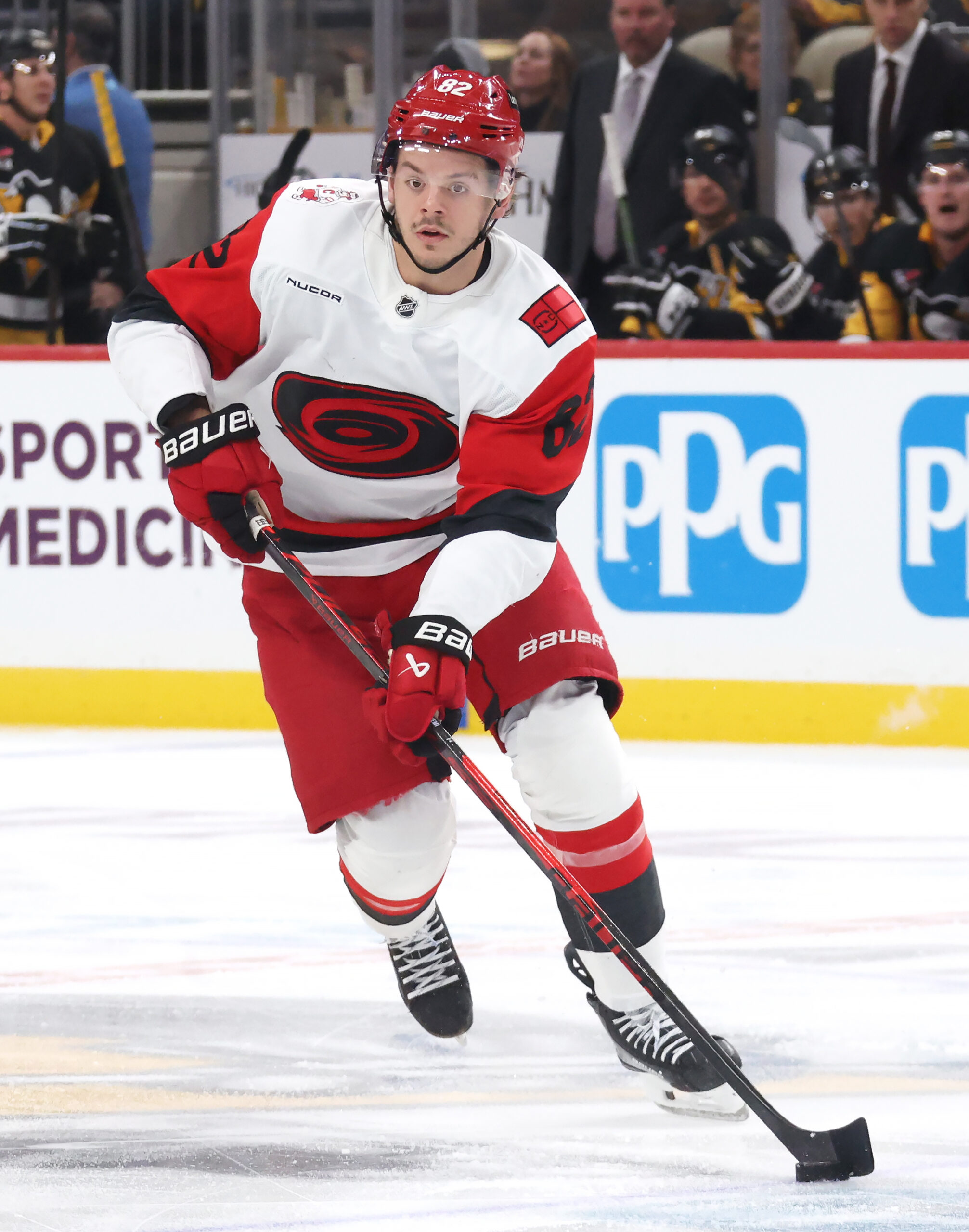 Still, Carolina may be able to land an upper-level player without parting with any prospects. The Hurricanes are known to be shopping Jesperi Kotkaniemi, and are reportedly open to moving defenseman Alexander Nikishin for the right price. Given that he’s signed through the 2029-30 season at a $4.82MM price tag, and he’s only scored two goals and nine points through 36 games this season, Kotkaniemi would be a complementary piece in any trade. However, a package of Nikishin, Kotkaniemi, and their two first-round picks through next season could land a more than meaningful addition.
Nikishin’s value is self-explanatory. He’s a formidable two-way defenseman, scoring seven goals and 22 points in 56 games while averaging 18:20 of ice time per game. Additionally, he’s third on the team in hits with 100, and has a 91.5% on-ice save percentage at even strength. It’s hard to imagine any team balking at adding a player like Nikishin to their defensive core for the next several years, if not more.
Team Needs
Star Forward: As described, the Hurricanes desperately need a star. There’s nothing wrong with Sebastian Aho leading the pack, but putting a star next to him would put Carolina into a different tier. Given the trade market this year, Robert Thomas of the St. Louis Blues appears to be the ideal candidate. Thomas, 26, has scored 58 goals and 200 points in his last 194 games and helped the Blues win their first Stanley Cup title in 2019. He doesn’t have the best possession metrics, but would seemingly fit effortlessly into Rod Brind’Amour‘s system. Given that they have an aging defensive core (outside of Philip Broberg and Logan Mailloux), St. Louis, which has expectedly put a high price on Thomas, could be enticed by a package of Nikishin, Kotkaniemi, two first-round picks, and one of Carolina’s top-five prospects.
Goalie Depth: The best word to describe the Hurricanes’ goaltending tandem is weird. The team has relied heavily on rookie netminder Brandon Bussi, who’s managed a 23-3-1 record in his first 27 games with a .906 SV% and 2.16 GAA. Carolina, of all teams, isn’t a stranger to riding the hot hand in the playoffs (looking at you, Cam Ward), but it would be prudent to give him some better insurance. Frederik Andersen, 36, is having the worst season of his professional career, and there’s no guarantee that Pyotr Kochetkov will return this season. Unfortunately, there aren’t a ton of options on the trade market, but the Hurricanes could look at some expiring assets, such as Alex Nedeljkovic of the San Jose Sharks or James Reimer of the Ottawa Senators.
Image courtesy of Charles LeClaire-Imagn Images.
Trade Deadline Primer: Tampa Bay Lightning
With the Olympic break now upon us, the trade deadline is less than a month away. Where does each team stand, and what moves should they be looking to make? We begin our look around the league with teams that have clear plans at the extremes of the standings, this time with the Lightning.
An aging core with extensive injury issues usually isn’t a recipe for success. No one’s told that to the Lightning, who’ve been one of the most consistent clubs in the league after starting the year on a 1-4-2 skid. They’ve lost nearly 70 man-games just from star players like Andrei Vasilevskiy, Nikita Kucherov, Brayden Point, Anthony Cirelli, and Victor Hedman, but still rank top-five in both goals for and goals against while allowing the seventh-fewest shots per game in the league. In a wide-open Eastern Conference, they have as good a chance as anyone to make their fourth Stanley Cup Final appearance in seven years.
Record
37-14-4, 1st in the Atlantic (99.92% playoff probability)
Deadline Status
Buyer
Deadline Cap Space
$3.84MM on deadline day, 0/3 retention slots used, 47/50 contracts used, per PuckPedia.
Upcoming Draft Picks
2026: TBL 2nd, TBL 3rd, SEA 5th, TBL 5th, TBL 6th, TBL 7th
2027: TBL 2nd, TBL 3rd, TBL 4th, TBL 6th, TBL 7th
Trade Chips
Unlike in years past, the Bolts’ arsenal of draft picks isn’t completely drained. They don’t have their firsts for the next two years, but they do still have one in 2028. With the Artemi Panarin trade potentially setting a precedent for a buyer’s market, that may not matter too much if the Bolts follow their usual M.O. of opting for depth over flash at the deadline. The firsts they’re missing, though, went to acquiring players who are still contributing this season – Oliver Bjorkstrand and Yanni Gourde.
General manager Julien BriseBois was seemingly interested in landing a big fish this time around in Panarin, though. However, with Tampa’s player acquisition approach usually centering around a hyper-specific approach, it’s unrealistic to expect that eagerness to apply to just anyone.
 High-value, middle-six forwards with term will remain attractive. In doing so, they’ll need to put forth a package in which the most attractive asset is worth more than a mid-to-late second-round pick. If they were in anything close to legitimate talks to acquire Panarin, even as a rental, they had to at least breach the subject of flipping their new top prospect. Tampa acquired center Sam O’Reilly from the Oilers last summer in a swap of late first-round picks last offseason. The 32nd overall pick in the 2024 draft, O’Reilly is in his final junior season in the OHL and was recently traded by the London Knights to the Kitchener Rangers. He hasn’t shown overwhelming offensive development since his draft year, but he was always touted as a safe, two-way third-line agitator with good vision.
If, for example, Tampa were to pursue a reunion with Flames winger Blake Coleman, they’d likely need to leverage O’Reilly to get him. The retooling Flames are under no imminent pressure to move him, since his deal runs through next season at a $4.9MM cap hit, and their ask from Tampa would likely be higher anyway, since Calgary would need to retain money on Coleman if they’re not taking a roster player back. They gave up a first-round pick to get him from the Devils back in 2020 and, while they don’t have a close one to spare this time around, O’Reilly could hold similar value.
Any trade the Bolts make is unlikely to involve a roster player of any consequence going the other way. They’ve been hanging on by a thread due to injuries for most of the campaign anyway and, while some expert coaching from Jon Cooper has kept their underlying numbers on the up-and-up throughout, making any meaningful subtraction from their depth – unless they’re bringing in multiple pieces like last year’s Bjorkstrand/Gourde pickup from Seattle – is antithetical to the Bolts’ usual preferences. One name they could have more comfortably leveraged, center Jack Finley, was just claimed off waivers by the Blues.
Behind O’Reilly, Tampa’s prospect pool was regarded as one of the weakest in the league entering the season. Years of contention will do that. That notion has been somewhat salvaged by an incredible breakout from 2025 fourth-rounder Benjamin Rautianen, though. In his native Finland, the 20-year-old center has exploded for 17 goals and 61 points in 46 games with Tappara, leading the Liiga in scoring. Expecting the Bolts to be willing to lose both O’Reilly and Rautianen in one trade deadline might simply be too much risk for a team without much else in the pipeline, though.
Team Needs
Third-Line Piece: It just so happens that Tampa’s preferred deadline target continues to make too much sense this time around. A down year for Point and injuries to him and Cirelli make their depth chart look thin down the middle at the moment, but at full strength, that’s not a concern. Finding someone to bump a more offensively limited name like Gage Goncalves out of a top-nine role on the wing, though, would be a legitimately helpful addition to an offense that already ranks fourth in the league at the Olympic break. Coleman makes sense, as could pending UFA Michael Bunting out of Nashville.
Right-Shot Depth On Defense: Tampa doesn’t need a needle-mover on the blue line. Darren Raddysh‘s breakout this season has ensured that. Still, he and Erik Černák are the only two righties in the system capable of playing NHL minutes in the postseason on a regular basis. Maxwell Crozier is a fine depth option, but expecting him to step into the top four in case Černák or Raddysh gets hurt – or dealing with some chemistry issues by icing so many lefties – isn’t a great thought. An experienced rental 3RD option for a mid-round pick, like Connor Murphy or a reunion with Luke Schenn, might be a shrewd move.
Image courtesy of Perry Nelson-Imagn Images.
2026 Trade Deadline Primer Series
Pro Hockey Rumors continues to contribute to its wealth of free-to-view original content with our yearly Trade Deadline Primer series. In advance of the March 6 trade deadline, we look at how each of the NHL’s 32 teams may look to prioritize their roster construction coming out of the Olympic break. That could be a complete sell-off, an all-in push for the 2026 Stanley Cup Final, or something in between. This page will be updated with links to new articles as they are published.
Atlantic Division
- Boston Bruins
- Buffalo Sabres
- Detroit Red Wings
- Florida Panthers
- Montreal Canadiens
- Ottawa Senators
- Tampa Bay Lightning
- Toronto Maple Leafs
Metropolitan Division
- Carolina Hurricanes
- Columbus Blue Jackets
- New Jersey Devils
- New York Islanders
- New York Rangers
- Philadelphia Flyers
- Pittsburgh Penguins
- Washington Capitals
Central Division
- Chicago Blackhawks
- Colorado Avalanche
- Dallas Stars
- Minnesota Wild
- Nashville Predators
- St. Louis Blues
- Utah Mammoth
- Winnipeg Jets
Pacific Division
Trade Deadline Primer: Chicago Blackhawks
With the Olympic break now upon us, the trade deadline is less than a month away. Where does each team stand, and what moves should they be looking to make? We begin our look around the league with teams that have clear plans at the extremes of the standings, this time with the Blackhawks.
In the early portion of the season, it appeared there could be some intrigue regarding the Blackhawks’ plans at the trade deadline later in the year. First-year head coach Jeff Blashill had the team punching above their weight, lingering in the Western Conference’s playoff race, and looking far less like the obvious seller most observers would have expected them to be once the calendar flipped to March. But Chicago wasn’t able to sustain the winning pace it kept up for the beginning of the year, and now finds itself back in a familiar position: well outside the playoff race and overwhelmingly likely to enter trade deadline season as firm sellers.
Record
22-26-9 (6th in the NHL’s Central Division)
Deadline Status
Sellers
Deadline Cap Space
$63.04MM on deadline day, 1/3 retention slots used, 41/50 contracts used per PuckPedia.
Upcoming Draft Picks
2026: CHI 1st, FLA 1st (Top-10 Protected), CHI 2nd, NYI 2nd, TOR 2nd, CHI 3rd, OTT 4th, CHI 7th, FLA 7th
2027: CHI 1st, CHI 2nd, VAN 2nd, CHI 3rd, CHI 4th, CHI 6th, CHI 7th
Trade Chips
While the Blackhawks in prior years have listened to offers on veteran players without much consideration to contract status, the team is now in a different stage of its rebuilding process. The team may have once been interested in how it could use any veteran asset to help contribute to its stockpile of draft picks and prospects, it does not make as much sense for the club to do that now. Veterans with multiple years of team control remaining, such as Teuvo Teravainen, Tyler Bertuzzi, and Ryan Donato, for example, each play a role in supporting the team’s young players in the lineup, and retaining those players would help the Blackhawks’ rebuild propel forward in a variety of different ways.
As a result, it’s likely that Chicago’s selling at the deadline will be more concentrated on its pending UFAs, the players who are unlikely to be retained by the team beyond 2025-26. Among pending UFAs, the Blackhawks have several veteran players likely to attract interest from contending teams. 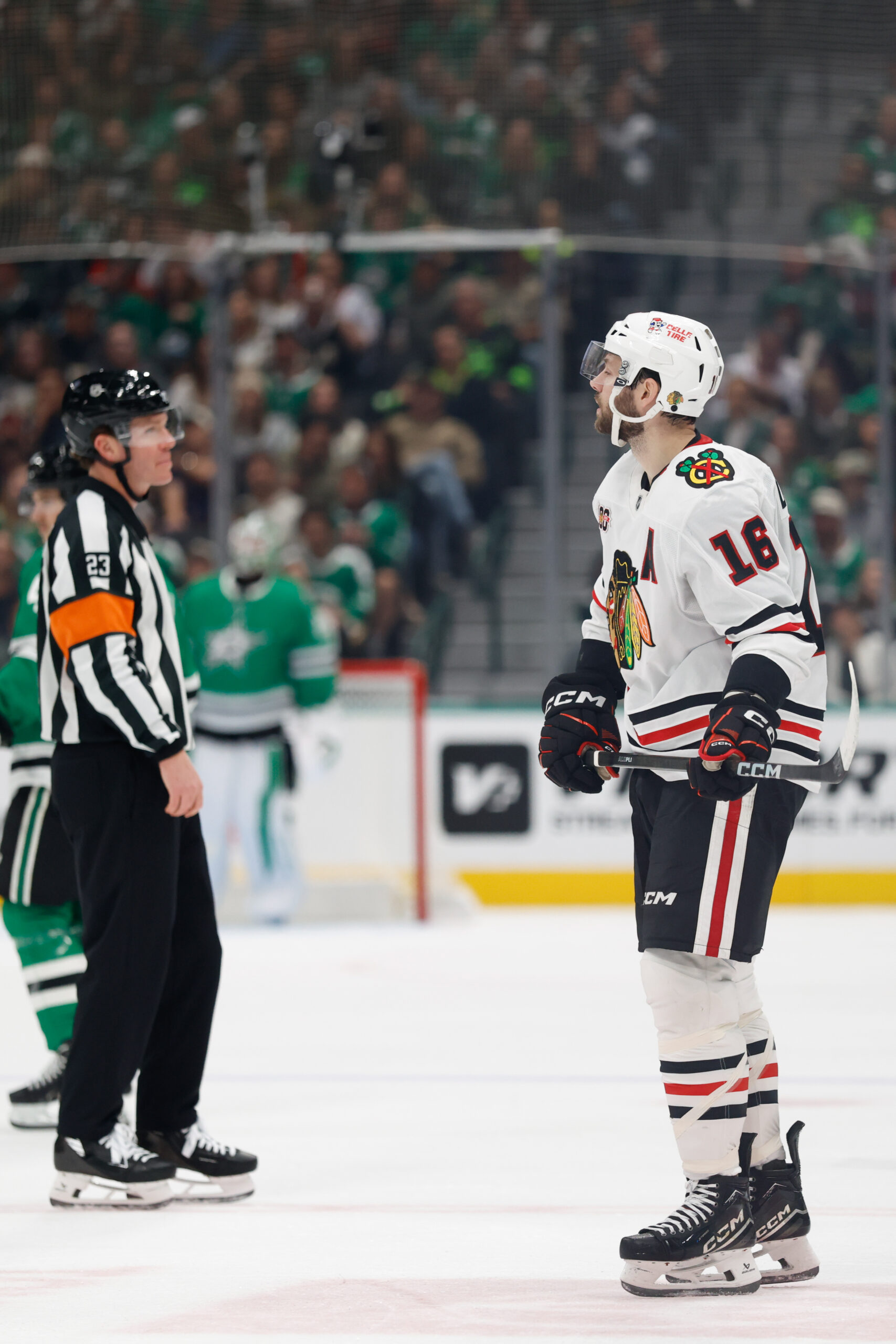
In what is widely expected to be a thin market for centers, Jason Dickinson could be among the top options for a team looking to add a bottom-six pivot.
While his days of scoring 22 goals, as he did in 2023-24, may be over, he remains a fixture on Chicago’s penalty kill, wins nearly half of his draws, and has even received Selke Trophy votes during his time in Chicago.
His $4.25MM cap hit is also unlikely to be too prohibitive for contending teams to be able to fit into their payroll, especially if the Blackhawks elect to retain salary.
One of Chicago’s other top veteran pending UFAs, like Dickinson, plays at a premium position. 32-year-old Connor Murphy is a right-shot defenseman who has been the subject of trade rumors throughout his Blackhawks tenure, in large part due to his reliability as well as positional value. While he’s ceded a top-four role this season to other younger Blackhawks blueliners, he remains among the team’s most heavily-used defender on the penalty kill, and could be an attractive option for a team looking for a stable veteran defensive defenseman. Murphy has a 10-team no-trade list on his contract.
While Dickinson and Murphy are the team’s two most obvious trade candidates, and the players likely to hold the most value on the trade market, Chicago does have a few other pending UFA players who could draw interest: Captain Nick Foligno is a respected veteran leader who contending teams could be eager to add as a bottom-six forward. Veteran winger Ilya Mikheyev is flirting with a second consecutive 20-goal season in Chicago, and is the team’s top penalty-killing forward. Although he has a 12-team no-trade list, he could be of great interest to contending teams.
Versatile forward Sam Lafferty has had a season to forget, but does have the ability to play center and was an in-demand bottom-six forward during his last go-around with the Blackhawks. If a team is looking to add a depth center without giving up significant assets, Lafferty could very well be a player they have interest in.
A team looking to stabilize its bottom pairing on defense, perhaps even with a veteran player who could fill in on the power play in case of injuries, could have interest in blueliner Matt Grzelcyk. The 32-year-old, who scored 40 points in 2024-25, has just 12 points in 57 games this season after joining the Blackhawks originally on a PTO. He’s unlikely to return Chicago very much in a trade, but is nonetheless a candidate to be dealt due to his experience level and pending UFA status.
Trade Needs
NHL-Ready Young Talent: The Blackhawks aren’t at the stage of their rebuild where draft picks are at their most valuable. Sure, the team could still benefit from adding more picks and prospects to its pipeline, but that is unlikely to be their most pressing interest. Chicago has picked high in the draft in each of the last four years, including inside the top-three picks of the draft in each of the last three years.
There are more than enough players on the way, and more importantly, there are already many young players on the roster in need of additional support, such as franchise face Connor Bedard, 2022 first-rounder Frank Nazar, and a wealth of other young pieces.
If the Blackhawks trade away some veterans at this deadline, their top priority in terms of return should be trying to add prospects, not picks, and especially prospects who are close to NHL-ready, players who the Blackhawks could quickly plug into their NHL lineup and assess whether they’re a fit to be part of the team’s next contending core.
Photos courtesy of Chris Jones-Imagn Images
Trade Deadline Primer: St. Louis Blues
With the Olympic break approaching, the trade deadline is about a month away. Where does each team stand, and what moves should they be looking to make? We begin our look around the league with teams that have clear plans at the extremes of the standings, this time with Blues.
The Trade Deadline will mark a fork in the road for the St. Louis Blues. The 2025-26 season has not gone according to plan, with the Blues sat last in the NHL Central Division and battling for last in both goals scored and goals allowed. Even with the bright spots of a solid blue-line and well-performing youngsters, the Blues have struggled to manage anything inspiring, sticking the team with the question of whether to replace or rebuild. The question will carry more weight than usual, as the answer will not only define the next few seasons, but also the first years of Alexander Steen‘s reign as the Blues’ general manager set to begin next season. With that change in sights, St. Louis will begin to blaze their trail this March.
Record
20-28-9 (8th in NHL Central Division)
Deadline Status
Sellers
Deadline Cap Space
$20.52MM on deadline day, 0/3 retention slots used, 48/50 contracts used per PuckPedia.
Upcoming Draft Picks
2026: STL 1st, STL 3rd, STL 4th, DAL 4th, STL 5th, PIT 5th, STL 6th, STL 7th
2027: STL 1st, STL 3rd, STL 4th, ANA 4th, STL 5th, STL 6th, STL 7th
Trade Chips
With a potential seller’s market ahead, many of the trade rumors swirling around the Blues have focused on their top-line veterans. Franchise center Robert Thomas has become a popular name, as teams wonder if the 26 year old’s prime will be wasted on a Blues team years away from Stanley Cup contention. Thomas is a top-end playmaker who posted 60 assists in each of the last two seasons. He continues to lead the Blues in points-per-game this season, with 33 points in 42 games.
But moving Thomas would represent a monumental shift for the Blues franchise – and leave them with a future search for a replacement first-line center. The team would be less scathed by moving scoring-winger Jordan Kyrou, who ranks second on the team in points-per-game with 32 points in 47 games. Kyrou offers an explosive bit of tempo and play-driving that could entice needs in need of a boost on offense, while not dragging down the Blues’ future structure. The same can be said for Pavel Buchnevich – third in points-per-game – who has been on-and-off the trade block through the last few seasons.
The Blues’ price on all three of their high-scorers is said to be sky-high – seen as the price to pay for breaking up the lineup, in addition to buying star talent. Costs might be a bit cheaper on the Blues’ veterans who have dwindled in impact. Defenseman Justin Faulk has continued to stand up to a nightly, number-one role with 11 goals and 30 points in 57 games. But at the age of 33, Faulk is a hard name to bet on through the next few seasons. The same goes for former Stanley Cup legend Jordan Binnington, who has posted a dismal .864 save percentage in 32 games this season. A change of scenery could bring the best out of either player, while only costing a few future assets.
Trade Needs
Young Potential: No matter if their goal is to compete in one year or five years, the Blues’ sights will be firmly on the future. Their new era is beginning to come into focus, built on the backs of budding potential like Philip Broberg, Dylan Holloway, Jimmy Snuggerud, Dalibor Dvorsky, Otto Stenberg, and Joel Hofer. But, even with a likely top-five pick in the 2026 NHL Draft, St. Louis seems to lack a game-breaker to lead them into their new era. Finding that talent on the trade market could be enough to swing Thomas or Kyrou away from the only NHL club they’ve ever played for. For St. Louis, trade talks should begin with the other team’s top prospects and draft capital. Landing a hopeful star like centers Michael Hage and Shane Wright, or goalie Jesper Wallstedt, would give the Blues lineup pieces to build around over the next few seasons. It would also take the weight off of the shoulders of Dvorsky, or a future draft pick, to try and carry the team through quiet years ahead. It seems clear that, no matter how the chips fall at the Deadline, the Blues’ priority will be building up for what’s to come.
A Massive Return: St. Louis is approaching the Spring with more on the trade block than they’ve had in many years. Their focus will be on building up the first few years of Steen’s reign, though more than that, the team feels on the precipous of a blockbuster deal. How high will the bidding war ride for a player like Thomas or Kyrou, two stars in their prime who would undoubtedly bring tough-to-find value to any new destination. Could the Blues land multiple star prospects to join an already-loaded pool? Or could they stock their cupboard of draft picks full. More than that, how will the heat of trades impact a St. Louis club that also has Brayden Schenn, Cam Fowler, Colton Parayko, and Pius Suter eyeing the tail-end of their careers? Even with an existing foundation for the future, now could be the Blues best chance to go full scorched-earth and tear down their existing structure – in the name of giving Steen plenty of firepower to build the team he wants to see through the rest of the 2020s.
Photo courtesy of John E. Sokolowski-Imagn Images.
Trade Deadline Primer: Minnesota Wild
With the Olympic break approaching, the trade deadline is about a month away. Where does each team stand, and what moves should they be looking to make? We begin our look around the league with teams that have clear plans at the extremes of the standings, this time with Wild.
Our Trade Deadline primer series rolls on with the market’s current big fish. The Minnesoa Wild pulled off one of the biggest trades in recent memory when they sent top-six center Marco Rossi, top prospect Zeev Buium, wing prospect Liam Ohgren, and a first-round pick to the Vancouver Canucks for franchise defenseman Quinn Hughes. The monster move has already returned dividends. Minnesota has posted a 16-5-5 record with Hughes in the lineup – but still appear a few lineup pieces shy of true Stanley Cup contention. The Trade Deadline will challenge Minnesota to mend those holes with a recently-thinned wallet.
Record
34-14-10 (2nd in Central Division)
Deadline Status
Buyers
Deadline Cap Space
$14.52MM on deadline day, 0/3 retention slots used, 42/50 contracts used per PuckPedia.
Upcoming Draft Picks
2026: MIN 3rd, MIN 4th, SJS 5th, MIN 5th, MIN 6th, MIN 7th
2027: MIN 1st, MIN 3rd, MIN 4th, MIN 5th, MIN 6th, MIN 7th
Trade Chips
The Wild dealt most of their loose pieces in their big buy for Hughes. What was left behind is a relatively solid lineup with no major value-buys sticking out. That hasn’t stopped Minnesota from finding ways to stay on top of the trade market. The club has dangled star goalie prospect Jesper Wallstedt in recent trade discussion, in an attempt to find a star addition on offense.

Wallstedt offers unprecedented market value. The Nashville Predators traded top goalie prospect Yaroslav Askarov, and a third-round pick, to the San Jose Sharks in 2024 in exchange for David Edstrom, Magnus Chrona, and a first-round pick. Counting Edstrom’s draft capital, that is the equivalent of two first-round picks – a price that Wallstedt could supercede with his performance this season. Finally stuck in an NHL role, Wallstedt has posted 14 wins and a .914 save percentage in 23 games this season. He has proven to be a true force in the NHL, after doing as much in both the AHL and SHL.
The Wild could land a serious addition on the back of Wallstedt’s value alone. They could add to it their 2027 first-round pick or top prospects like Charlie Stramel or Ryder Ritchie to seemingly land some of the biggest names on the market. With plenty of cap space on deadline day and one more year on Hughes’ current contract, there could be little-to-nothing holding Minnesota back from going all-in.
Trade Needs
Thee Center: Minnesota has held tryouts for their top-center role through the last four seasons. None of Rossi, Joel Eriksson Ek, Ryan Hartman, or Danila Yurov have appeared capable of leading a Cup-winning offense. It is clear the Wild are one piece short of a true top lineup. Luckily, this year’s market is unusually rife with center talent.
Minnesota might be able to swing Robert Thomas away from the St. Louis Blues with their assembly of Wallstedt and future capital. Thomas is a clear top center in the midst of his prime on a Blues team heading the wrong way. He would offer a forechecking and playmaking presence that would fit seamlessly next to play-driving scorers Kirill Kaprizov and Matt Boldy, like it has next to Jordan Kyrou in St. Louis. The Blues will need to be swayed to trade away their core forward, especially to an interdivision rival, but a core future piece like Wallstedt could be enough.
The Wild could pull off a similar deal for Calgary Flames center Nazem Kadri, though the Flames are less likely to be swayed by a trade package surrounding a star goalie. That offer could be more convincing should the Vancouver Canucks let Minnesota double-dip and target Elias Pettersson.
Should Thomas, Kadri, and Pettersson be too rich for Minnesota’s taste, they could find cheaper options in Rangers’ center Vincent Trocheck or Sharks’ center Alexander Wennberg. Neither player would fill the top-line role outright, though they could add some nice diversity next to Hartman, Eriksson Ek, and Yurov on the depth chart. Trocheck has 12 goals and 36 points in 43 games with New York, while Wennberg has stepped up with 37 points in 55 games.
Some Goalie Reassurance: Dangling Wallstedt for another big trade is a bold, and potentially franchise-altering, decision by the Wild. They would need to replace their backup goalie role should Wallstedt move, with Calvin Petersen and Samuel Hlavaj both boasting sub-.900 save percentages in the minors.
The Wild could find that quite easily if they make it a priority in their buy of a new center. The Blues could likely be separated from former Cup-winner Jordan Binnington in a deal where they land Wallstedt. That would give the Wild a veteran addition – and a rival familiar to Wild and Team USA general manager Bill Guerin – to backup Filip Gustavsson. Minnesota could also find a few different options in the Canucks, who currently have Nikita Tolopilo and Jiri Patera battling for the NHL backup role after an injury to Thatcher Demko.
Should Minnesota want to split their buys into two deals, they could benefit from connecting with the Pittsburgh Penguins or Florida Panthers, in an attempt to buy netminders like Joel Blomqvist or Daniil Tarasov. Both would come with a cost, though could probably be pulled away with the right argument.
Photo courtesy of John E. Sokolowski-Imagn Images.
Trade Deadline Primer: Dallas Stars
With the Olympic break approaching, the trade deadline is about a month away. Where does each team stand, and what moves should they be looking to make? We begin our look around the league with teams that have clear plans at the extremes of the standings, next up with the Stars.
This season has been what you would expect from a roster as talented as Dallas’. Despite their success, they sit third in the very gifted Central Division and would face the Minnesota Wild in the first round if the season started today. That kind of series could be a coin flip and might be the kind of matchup that forces Dallas to add to an already talented roster. The Stars have only a few more kicks at the proverbial can in this contention window, and with a significant extension for Jason Robertson looming, this could be the year they go all in.
Record
33-14-9, 3rd in the Central
Deadline Status
Buyer
Deadline Cap Space
$3.267MM on deadline day, 0/3 retention slots used, 47/50 contracts used, per PuckPedia.
Upcoming Draft Picks
2026: DAL 2nd, SEA 3rd, DAL 5th, DAL 6th, DAL 7th, TOR 7th
2027: DAL 1st, DAL 2nd, DAL 4th, DAL 5th, DAL 6th, DAL 7th
Trade Chips
Dallas doesn’t have a lot to work with in terms of prospects and picks, which is the cost of being a consistent Stanley Cup contender over the past half-decade. The Stars do have some young pieces they could move, though, if they go big-game hunting on the trade market. Defenseman Lian Bichsel was a first-round pick in 2022, and at 6’7”, he is the kind of hulking presence on the blue line that teams line up for. His transition to the NHL hasn’t been smooth, as the 21-year-old has dealt with injuries and inconsistency this season. Bichsel appeared ready to break out last season, but he hasn’t delivered this year and has struggled through 26 games, failing both the eye test and the analytics test. Bichsel has a lot of upsides, though, and could be the centrepiece of a much bigger deal if Dallas goes all in.
Another prospect Dallas could look to move is right winger Emil Hemming. The 19-year-old was selected in the first round (29th overall) of the 2024 draft and is having a strong offensive season with the Barrie Colts of the OHL. Hemming is a potential NHL power forward with a good shot and isn’t afraid to get dirty at the net. He also plays a solid two-way game, which should endear him to teams seeking well-rounded wingers. The Stars could pair Hemming with a second- or third-round pick if they are on the hunt for trade deadline candidates that aren’t in the upper tier of trade targets but are solid NHLers.
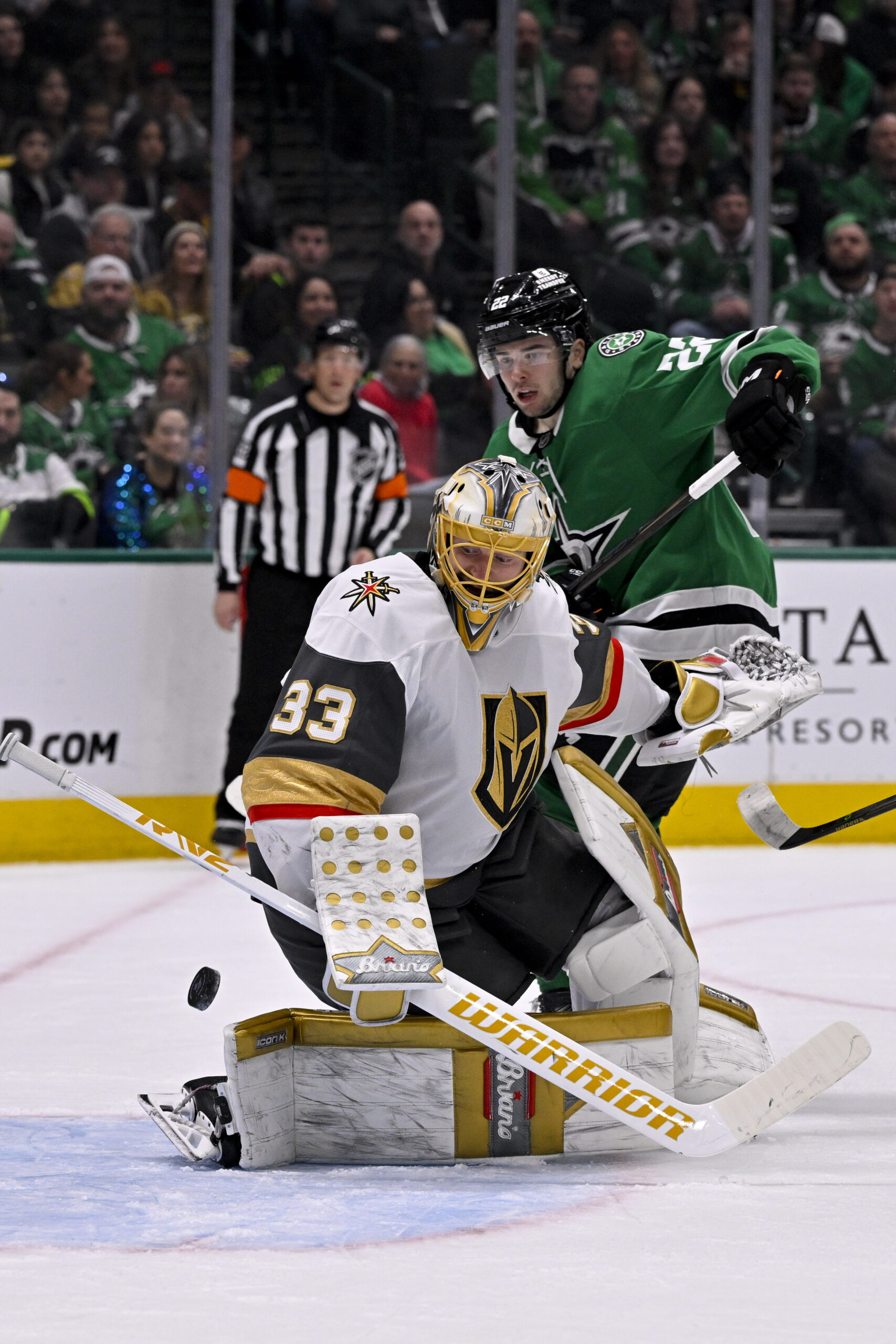
Another potential trade piece for the Stars is young WHL forward Cameron Schmidt of the Seattle Thunderbirds, who was recently involved in a significant trade in that league. The Stars took Schmidt in the third round of last year’s draft (94th overall) and might have gotten a steal given his performance in the WHL thus far this season. Schmidt is currently third in league scoring and likely would’ve been a first- or second-round pick had it not been for his size (5’8” and 161 lbs). Dallas had no problem rolling the dice with Schmidt after succeeding with small centre Logan Stankoven, who is now in Carolina, and they could go that route with Schmidt as well.
Now, the Stars might have a pretty barren prospect cupboard, but they do have another promising young player on the NHL roster in Mavrik Bourque, who, at 24, is far from a finished product. Bourque was a late first-round pick in 2020 (30th overall) and has blossomed into a depth scorer, but there is still untapped potential in his game. Bourque tore up the AHL in 2023-24 with 77 points in 71 games, but struggled through his rookie campaign last year, finishing with just 11 goals and 14 assists in 73 games.
This year, Bourque’s offensive numbers have ticked up slightly, a good sign, especially given that many of his underlying numbers are also moving in the right direction. It’s hard to say whether Dallas is willing to part with Bourque, as they have been patient with his development, but if they have a chance to acquire a player who pushes them over the top, one would have to believe they would part with him.
Team Needs
Right-Shot Top Four Defenseman: The Dallas Stars will be joined by several teams seeking a right-shot top four defenseman. The Stars are solid on the top pair, but Thomas Harley has had a tough year on the second pairing, paired with depth options, and the results have been underwhelming to say the least. Harley’s offensive numbers are only slightly off his usual pace from the past two years. Still, his underlying numbers and on-ice results have taken a steep drop, likely due to instability on the right side and playing with depth options such as Ilya Lyubushkin and Nils Lundkvist. A stable right-side partner, such as Dougie Hamilton, would go a long way toward alleviating some of the pressure on Harley. However, the math doesn’t exactly work with Hamilton unless Stars general manager Jim Nill gets extremely creative with the accounting, or forward Tyler Seguin is, in fact, done for the season and the playoffs.
A Top Nine Forward: The Stars would likely look to add a top-nine forward to improve depth up front, ideally on the left wing. Currently, the Stars are deploying Justin Hryckowian on the top line alongside centre Wyatt Johnston and Mikko Rantanen. Hryckowian is solid defensively and has some playmaking ability, but he is unlikely to be a top-six player for a team that fancies itself a Stanley Cup contender. There is some versatility with Hryckowian, as he can play centre, so the Stars have options to add a winger and shift the 24-year-old down the lineup and over to centre, depending on their configurations.
Dallas could also opt for a right winger on the trade market and bump Bourque down the lineup, if they want, or perhaps Sam Steel. Given the players currently in the lineup, there is significant shuffling that could occur, but Dallas likely wants to add one more piece to that group so it can place all of their remaining depth into roles that better suit their skill sets.
Photo by Jerome Miron-Imagn Images
Trade Deadline Primer: Colorado Avalanche
With the Olympic break approaching, the trade deadline is about a month away. Where does each team stand, and what moves should they be looking to make? We begin our look around the league with teams that have clear plans at the extremes of the standings, this time with the Avalanche.
Colorado will come out of the Olympic break as the Presidents’ Trophy favorites and will likely remain so up until the trade deadline. There are a few teams that could conceivably catch them between now and then, but the Avalanche have put themselves in a spot where they won’t need to be too active at the deadline, barring injuries. Colorado ranks first in GF/G, first in GA/G, 31st in PP%, second in PK%, and first in SV%.
Record
36-9-9, 1st in the Central (~100% playoff probability)
Deadline Status
Buyer
Deadline Cap Space
$6.48MM on deadline day, 0/3 retention slots used, 46/50 contracts used, per PuckPedia.
Upcoming Draft Picks
2026: CAR 4th, COL 4th, PHI 5th, BOS 5th, COL 5th, NYR 7th, OTT 7th, PIT 7th, COL 7th
2027: COL 1st, MIN 2nd, COL 2nd, COL 4th, SJ 5th, COL 5th, COL 6th, COL 7th
Trade Chips
Depending on how aggressive they want to be, the Avalanche could likely use their plethora of draft picks to acquire the depth they need. Obviously, it’s more quantity over quality, but as the league’s best team, they only need to add around the fringes.
Still, if they wanted to make a more notable addition, particularly to their defensive core, Colorado has a few prospects at their disposal. It wouldn’t be the worst idea in the world for the Avalanche to push most of their chips in with only two more guaranteed years of consistent Norris threat, Cale Makar.
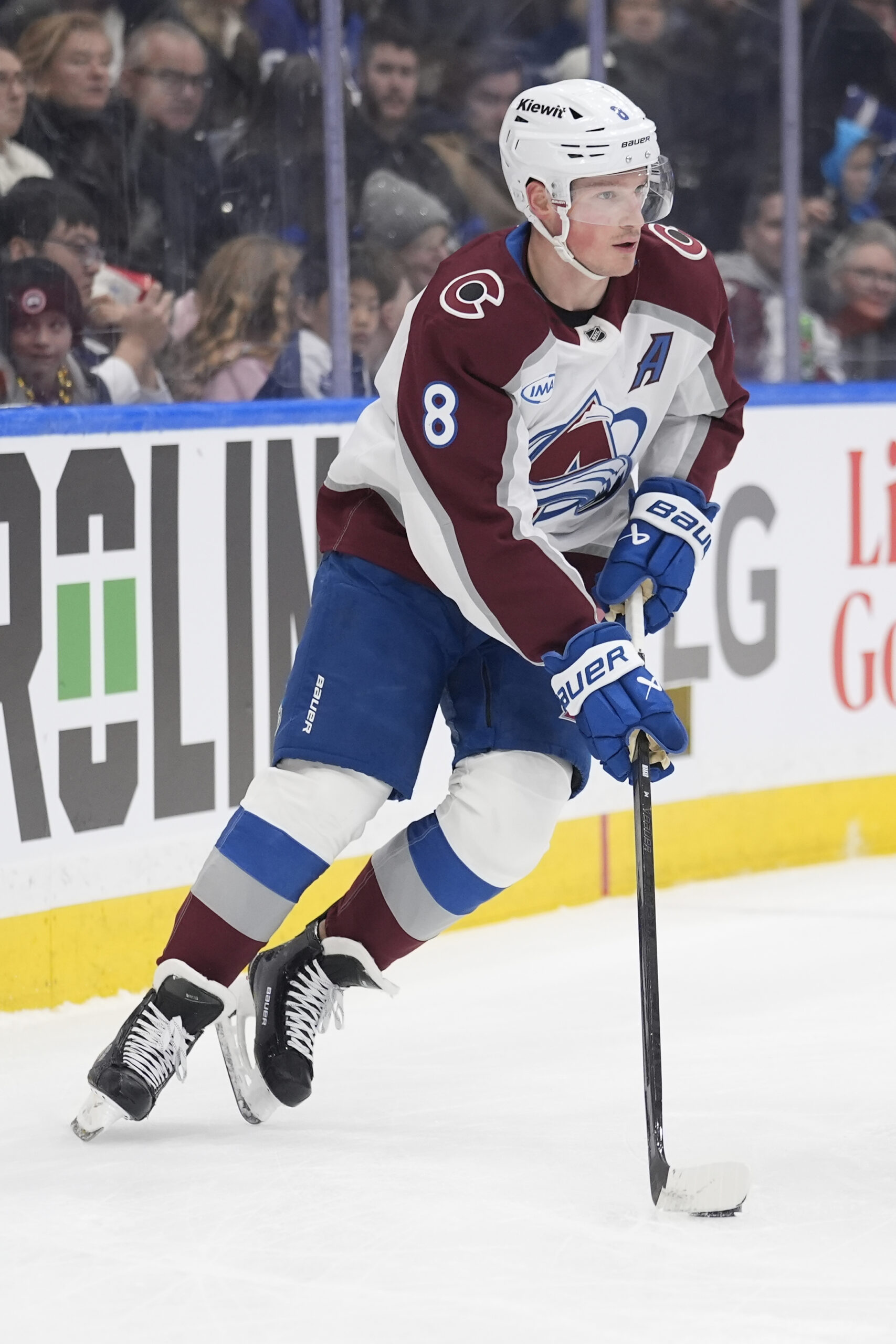 Two of Colorado’s better prospects are playing in the KHL, so they wouldn’t be negatively impacting the NHL squad or the AHL’s Colorado Eagles. Defenseman Mikhail Gulyayev, whom Colorado selected with the 31st overall pick of the 2023 NHL Draft, is playing for the Avangard Omsk. Furthermore, Ilya Nabokov, selected with the 38th overall pick of the 2024 NHL Draft, is having a solid year with the Metallurg Magnitogorsk.
Considering how he’s played the last three years, Nabokov would have significant value if the Avalanche included him in trade conversations. Nabokov, 22, has managed a 67-34-9 record in 123 KHL games with a .920 SV% and 2.31 GAA. Although it’s not a direct comparison, the Florida Panthers were able to acquire Sam Reinhart with Devon Levi and Seth Jones with Spencer Knight in recent years. Both played integral roles in the Panthers’ back-to-back Stanley Cup titles.
Outside of those two, Colorado could include defenseman Sean Behrens or forward Nikita Prishchepov, both of whom are playing with AHL Colorado, for less significant additions. Unfortunately, according to Daily Faceoff’s preseason rankings, the Avalanche have the 29th-ranked farm system, meaning their cupboards are lacking in prospect capital. Regardless, it’s unimaginable that Colorado would part with anyone on the active roster, considering how the team has played this year.
Team Needs
Defensive Depth: At the time of writing, the Avalanche has only six defensemen on the active roster, without much depth. Yes, the likes of Keaton Middleton, Jacob MacDonald, Ronald Attard, and Jack Ahcan can and have all served when needed, though they wouldn’t be the best options to have in case of injuries leading up to or in the postseason. In a perfect world, the Colorado would target a defenseman who can play on both sides of the blueline, though they’ll want to seek out a left-handed shot at the very least. Fortunately, there should be a few options available to them with varying degrees of talent. Logan Stanley of the Winnipeg Jets, Matt Grzelcyk of the Chicago Blackhawks, Mario Ferraro of the San Jose Sharks, and Brett Kulak of the Pittsburgh Penguins all make sense as potential additions.
Bottom-Six Center: Outside of most contending teams, the Avalanche don’t have much to be concerned about regarding their center core. Nathan MacKinnon (51.1%), Brock Nelson (49.4%), and Jack Drury (59.2%) are all having solid years in the faceoff dot, with the former two providing much of the team’s offense. However, there is a steep drop-off in faceoff talent on the team’s fourth line. The team has typically used Parker Kelly or Zakhar Bardakov in that role. However, they’ve only managed a 32.1% and 43.4% in the faceoff circle, respectively. If he’s willing to leave his native Winnipeg in pursuit of one last shot at the Stanley Cup, Jonathan Toews would be a perfect addition, as he has a 61.0% faceoff rate this season. However, if Toews is unwilling to leave Manitoba, lower-cost additions such as Jason Dickinson (49.7%) or Erik Haula (50.3%) would also help round out the bottom-six.
Image courtesy of John E. Sokolowski-Imagn Images.