
Canucks Prospect Lukas Jasek Signs In Finland
Canucks prospect Lukas Jasek isn’t waiting to see if he gets a qualifying offer from Vancouver next month to decide his playing future. Instead, Pelicans of the SM-liiga announced that they’ve signed the forward to a one-year contract for next season.
The 23-year-old was a sixth-round pick of the Canucks back in 2015 (174th overall) but opted to play at home in the Czech Republic for three more seasons before coming to North America. While he hasn’t seen any NHL action yet, he very quietly tied for the team lead in scoring with AHL Utica this season with four goals and 19 assists in just 28 games, notching nearly as many points as he had the year before in half the games.
Between that performance and Jasek already signing overseas, it would make sense for Vancouver to tender him his qualifying offer to retain his RFA rights (which last until he reaches UFA eligibility when he turns 27). In their release, the Finnish team indicated that they intend to play Jasek at center after he has spent a good chunk of his career on the wing so in a year or two from now, he could be worthy of another opportunity in North America.
Offseason Checklist: Chicago Blackhawks
The offseason has arrived with roughly half of the league missing the playoffs and several more having since been eliminated. It’s time to examine what those teams need to accomplish over the coming months. Next up is a look at Chicago.
The Blackhawks were one of the early-season surprises this season. Despite losing Jonathan Toews for the season (the hope is that he returns next year) and a very unproven goaltending trio (which appears likely to remain next season), they were in the playoff race for most of the year before falling out late. Considering they weren’t expected by many to be in postseason contention heading into the season, being in the race as long as they were is a small victory but GM Stan Bowman will need to take some more strides towards improving the roster for 2021-22. On top of that, some important decisions need to be made regarding a pair of players who are on the fringes of the core.
Utilize LTIR Flexibility
While there is some uncertainly with Toews’ availability for the start of next season, there isn’t any with Brent Seabrook ($6.875MM) and Andrew Shaw ($3.9MM). Both players have effectively retired, announcing they won’t be able to play again due to their respective injuries, a hip issue for Seabrook and lingering concussion trouble for Shaw. This past season, they were among several Blackhawks on LTIR and Bowman will have that option once again.
On the one hand, it’s possible that both go there in the summer, giving them some room to spend in free agency but Bowman has been hesitant to go that route in the past. Whether they do it early or closer to the start of the season though, they have the ability to add a player or two, either adding to their roster or adding a future asset or two for taking on a contract as they did with Brett Connolly near the trade deadline. With the team having to proceed as if Toews will be available, this will likely be their biggest source of cap space this summer.
Avoid Arbitration With Zadorov
The flat salary cap has already created some restrictions on the ‘middle-class’ earners in the league and that’s likely to be the case for a while. Accordingly, that has increased the pressure for teams to work out early contracts with some of their pending restricted free agents that have arbitration eligibility where they fear the award would be too low to walk away from but too high to fit in their salary structure. Chicago has one of those players in defenseman Nikita Zadorov.
The 26-year-old was acquired last fall from Colorado as part of the trade that saw Brandon Saad head to the Avalanche and provided his usual brand of physical play, albeit with some shaky play at times in his own end and limited offensive upside. However, he logged over 19 minutes a night and at 6’6, few blueliners can match his size. The 16th pick in 2013 has shown enough flashes to warrant keeping around but only at the right price tag. After signing a one-year, $3.2MM contract upon being acquired, that number now represents his qualifying offer. But he also has arbitration eligibility where his 411 career NHL contests could push an award higher than Chicago is willing to pay.
There have been mutual expressions of interest in getting something done between the Blackhawks and Zadorov but this also feels like a situation where the team isn’t going to give the blueliner a chance to get it to a hearing and risk a reward that they don’t want to pay; the minimum award to qualify for walkaway rights was $4.539MM and it’s unlikely Zadorov would go above that in a hearing. Accordingly, that makes July 26th the date to watch for as that’s the deadline to tender a qualifying offer.
Strome Decision
When the Blackhawks acquired Dylan Strome from Arizona back in 2018, he made an immediate impact and it looked like he was quickly becoming a core player for the future. His numbers dipped in 2019-20 but he did well enough to earn a two-year, $6MM bridge contract, getting a longer look in the process.
 Unfortunately, that longer look did not go well. Strome struggled offensively, did not adjust well to playing on the wing at times, and when it mattered most down the stretch when they were trying to stay alive in the playoff hunt, he was a healthy scratch. Forget about him being a core player for years to come. Is he even part of the plans for next season now?
Strome feels like a viable change of scenery candidate this summer. Toews could be back as will Kirby Dach and those two should reclaim their spots down the middle while Pius Suter held his own in his rookie season. Knowing that Strome isn’t particularly comfortable on the wing, he could be the odd man out. However, with a $3.6MM salary, that’s a bit pricey for someone that could be viewed as a potential reclamation project which will limit his market. Bowman will have to decide if taking a lesser return is worth it or if they’re better off holding on to him to see if he rebounds in a contract year.
Clear Forward Logjam
One thing that Bowman has done in recent years is improve their depth up front. He has hit on recent international additions in Suter, Dominik Kubalik, and Philipp Kurashev. Prospects Mackenzie Entwistle (trade), Brandon Hagel, Reese Johnson, and Mike Hardman (undrafted free agent signings) have shown some upside and all saw NHL action this season. Even if none of them turn into stars, cost-controllable depth is great to have.
But they seem to quickly be reaching the point where they may have a bit too much. Dach will be back next year, as will Alexander Nylander. Toews could be back. Trade deadline acquisitions Connolly (two years remaining) and Adam Gaudette (pending RFA) should still be around. Plus, for good measure, Henrik Borgstrom has a two-year, one-way deal while one of their top prospects Lukas Reichel just signed and could make the jump quickly.
A quick look at their depth chart yields around 20 forwards who could potentially be ready for NHL action to start next season without even factoring in who could potentially be brought in using their LTIR space. Yes, some of those are waiver-exempt and can start in the minors and there could be injuries in training camp but on the surface, it appears as if they have some expendable depth. With affordable NHL players being of increasing importance, Bowman may want to turn some of that depth into some future pieces in the form of draft picks or prospects to keep the system well-stocked.
Photo courtesy of USA Today Sports Images. Contract information courtesy of CapFriendly.
Oilers Forward Gaetan Haas Signs In Switzerland
Edmonton center Gaetan Haas has decided to head back home. After spending the last two years with the Oilers, EHC Biel-Bienne of the Swiss NLA announced that they’ve signed Haas to a five-year contract.
The 29-year-old decided to try his hand in North America in 2019 following a pair of strong offensive seasons with SC Bern in Switzerland. However, while Haas was a capable checker in Edmonton, he didn’t produce much offensively in his first NHL season, notching just five goals and five assists in 58 games. Still, he did enough to earn a second chance, inking a one-year, $915K one-way contract back in April.
But things didn’t go any better this past season. While he got to spend some time in Bern where his offensive production returned, it failed to carry over when he returned to Edmonton. As a result, he managed only two goals and one assist in 34 games in 2020-21 despite averaging over 11 minutes a game in ice time.
While Haas could have returned to the open market and tried his hand at catching on somewhere else, this seems like the wiser course of action for him as he now returns to his hometown team. In the meantime, the Oilers will be looking for cheap depth to round out their roster and could look to free agency to find a replacement although Ryan McLeod has certainly made a case for a full-time roster spot next season and could slide into Haas’ role to start with an eye on quickly moving up the depth chart.
Expansion Primer: Winnipeg Jets
Over the next few weeks, we will be breaking down each team’s situation as it pertains to the 2021 NHL Expansion Draft. Which players are eligible, who will likely warrant protection, and which ones may be on the block to avoid the risk of losing them for nothing? Each team is required to submit their protection lists by 4:00 PM CDT on July 17th. The full eligibility rules can be found here while CapFriendly has an expansion tool to make your own lists.
The Jets had a bit of an up-and-down season as they went from battling for the top spot in the North Division to backing into the playoffs. Then they went from sweeping Edmonton in the first round to being swept by Montreal in the second round. GM Kevin Cheveldayoff will have some decisions to make this summer as a result including a couple of calls to make in terms of their expansion planning. In the Vegas draft, they traded down 11 spots in the first round to secure the protections of Marko Dano and Toby Enstrom. Will they need to make another protection trade this time around?
Eligible Players (Non-UFA)
Forwards:
Mason Appleton, Kyle Connor, Andrew Copp, Marko Dano, Pierre-Luc Dubois, Nikolaj Ehlers, Jansen Harkins, Bryan Little, Adam Lowry, Skyler McKenzie, Mark Scheifele, Ivan Telegin, Blake Wheeler (NMC)
Defense:
Nathan Beaulieu, Dylan DeMelo, Luke Green, Josh Morrissey, Sami Niku, Nelson Nogier, Neal Pionk, Logan Stanley
Goalies:
Mikhail Berdin, Connor Hellebuyck, Cole Kehler
Notable Unrestricted Free Agents
D Jordie Benn, G Laurent Brossoit, D Derek Forbort, F Mathieu Perreault, D Tucker Poolman, F Paul Stastny, F Nate Thompson, F Dominic Toninato
Notable Exemptions
F David Gustafsson, D Ville Heinola, F Cole Perfetti, D Dylan Samberg, F Kristian Vesalainen
Key Decisions
There is some intrigue on the back end for Winnipeg. There are certainly more than three players worthy of protection but at the same time, there is no case to make to shift from the typical 7 F/3 D/1 G strategy to eight skaters and a goalie.
In terms of the obvious ones to protect, it’s Pionk and Morrissey. Those two logged heavy minutes all season while contributing a good chunk of their offensive production. Morrissey is already signed long-term through 2028 and it seems likely at this point that Cheveldayoff will try to get Pionk, who is arbitration-eligible for the first time, locked up to a long-term deal as well. That leaves one spot for everyone else.
DeMelo’s absence was certainly felt after exiting the series quickly against the Canadiens. While he doesn’t put up many points or even log a lot of minutes, he is a stabilizing defensive presence and penalty killer on a defense corps that is often shaky in their own zone. That’s why they handed him a four-year, $12MM contract last fall and it’s unlikely their opinion of him has changed much in the last nine months; he’s clearly someone that they want around for a while. But having said that, in this cap environment, would a $3MM AAV for someone who typically plays third-pairing minutes be enough to scare Seattle off to the point where not protecting him could be viable?
That question is what they will be considering when it comes to Stanley. The 23-year-old just made his NHL debut this season but he has been on an NHL contract for three years, making him eligible for selection. The 2016 first-round pick (16th overall) had a limited role but blueliners often develop slower than forwards and given his size, the learning curve was a bit steeper. If they believe he’s capable of playing himself into a more prominent role over the next couple of years, it would be tough to risk losing him for nothing. And from Kraken GM Ron Francis’ perspective, Stanley is exactly the type of young player to either take a flyer on to develop or to flip in another trade.
Beaulieu and Niku are also worth a mention. Beaulieu has been serviceable on the third pairing for the last few years and with a $1.25MM cap hit, he’s someone that could be picked and flipped. Niku dominated in the AHL in 2017-18 with 54 points in 76 games and was productive in shorter stints the last couple of years. However, he hasn’t had much of an NHL opportunity yet and is someone that has been a prime change of scenery candidate for a while. His $725K cap hit will also be below the NHL minimum salary next season ($750K) which could also be appealing.
Up front, Little looked like someone who would likely be protected just a couple of years ago but he hasn’t played since suffering a perforated eardrum back in November of 2019. While his injury hasn’t been confirmed to be career-ending, that could still change which could render him exempt from selection.
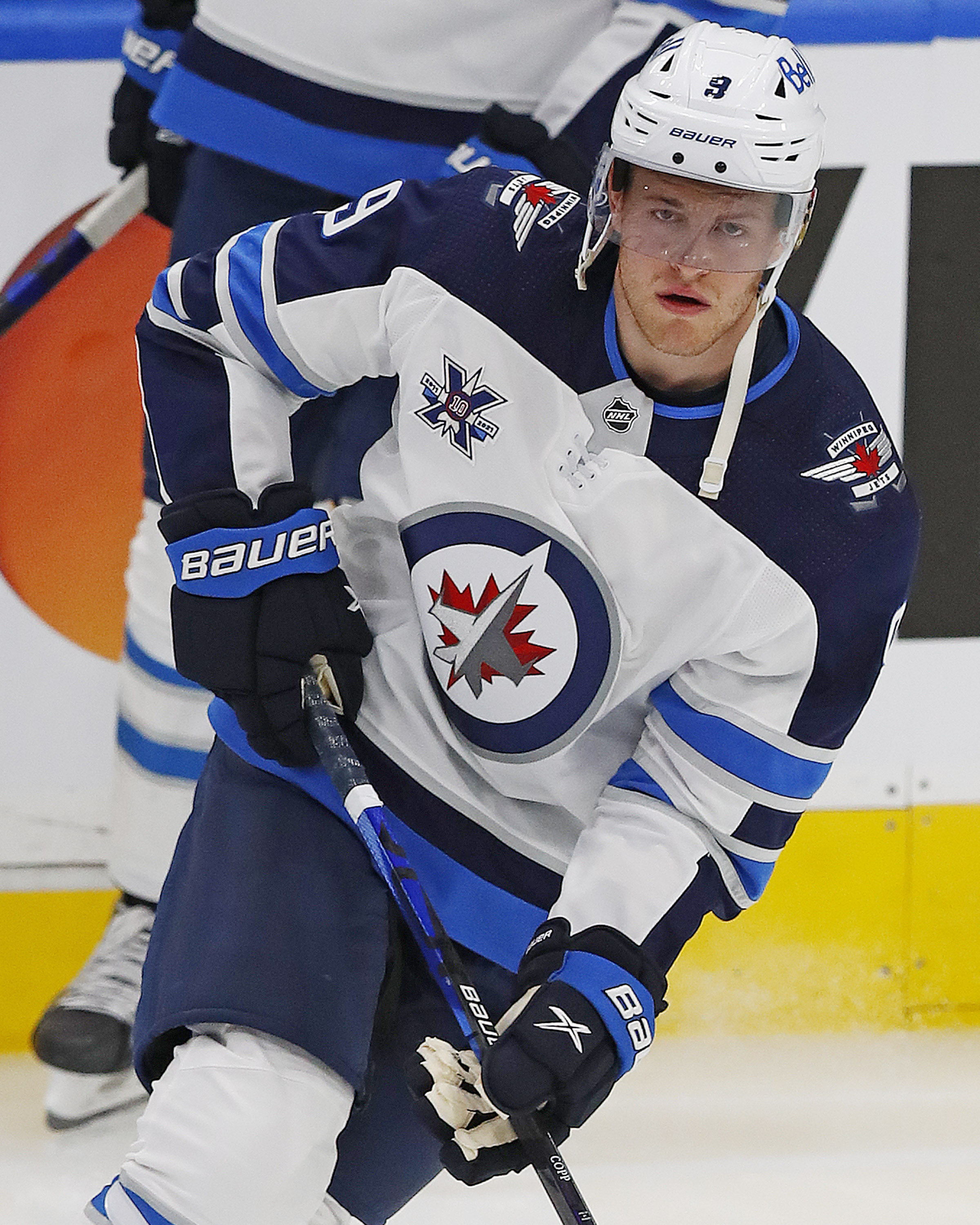 Their other top-six forwards that are under contract should be locks for protection and after Lowry inked a five-year, $16.25MM extension back in April, it’s a safe assumption that one of the remaining slots will be his. That leaves one spot left and a couple of viable options in Lowry’s linemates on Winnipeg’s third line.
Copp had shown flashes of offensive improvement over the previous few seasons but took that to another level this year, setting career highs in goals (15), assists (24), points (39), and ATOI (18:15). Whenever injuries struck, Copp was often the one to move up in the lineup while playing the wing or down the middle when needed. That type of versatile player is critical for teams to have and while he’s set to earn a raise from his $2.3MM qualifying offer in restricted free agency this summer in his final season of arbitration eligibility, it’s a price that Winnipeg (or Seattle, if he’s ultimately made available) would happily be willing to pay.
The other part of that third trio is Appleton whose track record isn’t quite as long. The 25-year-old was a full-time NHL player for the first time this season and he was fairly productive in a limited role, notching 12 goals and 13 assists in 56 games. Of those 25 points, all but one came at even strength (and the one special teams point was a power play assist). Five-on-five scoring is always highly coveted and the early indication is that Appleton is a capable contributor in that regard. He also only has a $900K cap hit through next season and productive low-cost depth is hard to come by. Being only able to protect one of Copp or Appleton will hurt.
Projected Protection List
F Kyle Connor
F Andrew Copp
F Pierre-Luc Dubois
F Nikolaj Ehlers
F Adam Lowry
F Mark Scheifele
F Blake Wheeler (NMC)
D Dylan DeMelo
D Josh Morrissey
D Neal Pionk
Skater Exposure Requirement Checklist
When Vegas had their expansion draft, a minimum of two forwards and one defenseman had to be exposed that were under contract and played either 40 games in the most recent season or 70 over the past two combined. Due to the pandemic, those thresholds have been changed to 27 games played in 2020-21 or 54 in 2019/20 and 2020-21 combined. In creating our expansion list for each team in this series, we will ensure that these criteria are met.
Forwards (2): Mason Appleton, Jansen Harkins
Defensemen (2): Nathan Beaulieu, Logan Stanley
While some teams will be losing veteran talent, it certainly feels like Winnipeg will be losing one of their younger regulars as their roster currently stands. Appleton looks like a promising late-bloomer and after being viewed as a potential bust, Stanley took an important step forward in his development this season and should be part of their future plans now. Is that enough for Cheveldayoff to make another side deal? He has roughly six weeks to make that decision.
Photo courtesy of USA Today Sports Images. Contract information courtesy of CapFriendly.
Offseason Checklist: Arizona Coyotes
The offseason has arrived with roughly half of the league finished up after missing the playoffs and several more having been eliminated. It’s time to examine what those teams need to accomplish over the coming months. Next up is a look at Arizona.
2020-21 was not a great year for Arizona. After making the playoffs last year through the bubble, they were hoping to make it two straight postseason appearances. However, the same issues crept up as a lack of scoring proved costly. Not surprisingly, GM Bill Armstrong is in for a very busy summer. Here’s a look at some of the things the Coyotes should be looking to do.
Hire A Head Coach
The Coyotes have one of the four head coaching vacancies around the league after they decided to let go of Rick Tocchet after four seasons with the team. In that stretch, they only finished in the top half of their division once while finishing no higher than 21st in goals scored. Arizona is more of a budget team than one that will spend to the cap and it wouldn’t be surprising to see that be the case for their coaches as well. That would seemingly take them out of the mix for most of the veteran coaches so it wouldn’t be surprising to see another first-time hire when they make their selection.
Rebuild The Back End
Arizona has had a capable veteran defense corps over the past several years but the time for change has arrived. Alex Goligoski, Niklas Hjalmarsson, and Jason Demers are all set to become unrestricted free agents this summer, freeing up over $14MM in cap space in the process. (Jordan Oesterle is also a UFA but his expiring cap hit of $1.4MM is a lot lower than the others and he could be brought back for a similar amount.) While there are cases to bring Goligoski and Hjalmarsson back out of the trio, it would need to be at a much lower price tag.
This is going to be an interesting situation to follow. If those veterans don’t return, Armstrong will need to bring in some proven replacements in a UFA market that doesn’t have a lot of them. Of course, they can also leverage their cap space (bolstered by Marian Hossa’s contract finally expiring) to pick up a replacement in a trade. Regardless, it looks like it will be a new-look blueline in 2021-22.
That said, the bigger question is how much they want to spend on the back end. The Coyotes are consistently towards the bottom of the league in goals scored and this represents an opportunity to redistribute some of their money on defense up front in an effort to add a top-six forward or two. Replacing the veterans with similarly-priced rearguards ensures that they’ll be a squad with a strong back end once again but that’s a roster composition that hasn’t worked for them lately. If Armstrong wants to shake up the structure of the team, this is it.
Deal For Garland
Sometimes, teams can get lucky in the draft and that’s what happened with Conor Garland. The undersized winger went unpicked in his first year of eligibility, was scooped up with a fifth-rounder by Arizona the following draft as a low-risk flier, and now, he finds himself as one of the top scorers on the Coyotes. It has worked out great for the team so far, getting top-six production for a bargain price tag as Garland accepted a two-year low-cost bridge deal that carried a cap hit of just $775K. As far as top bargains in the NHL go, he should have been in the conversation more than he had been.
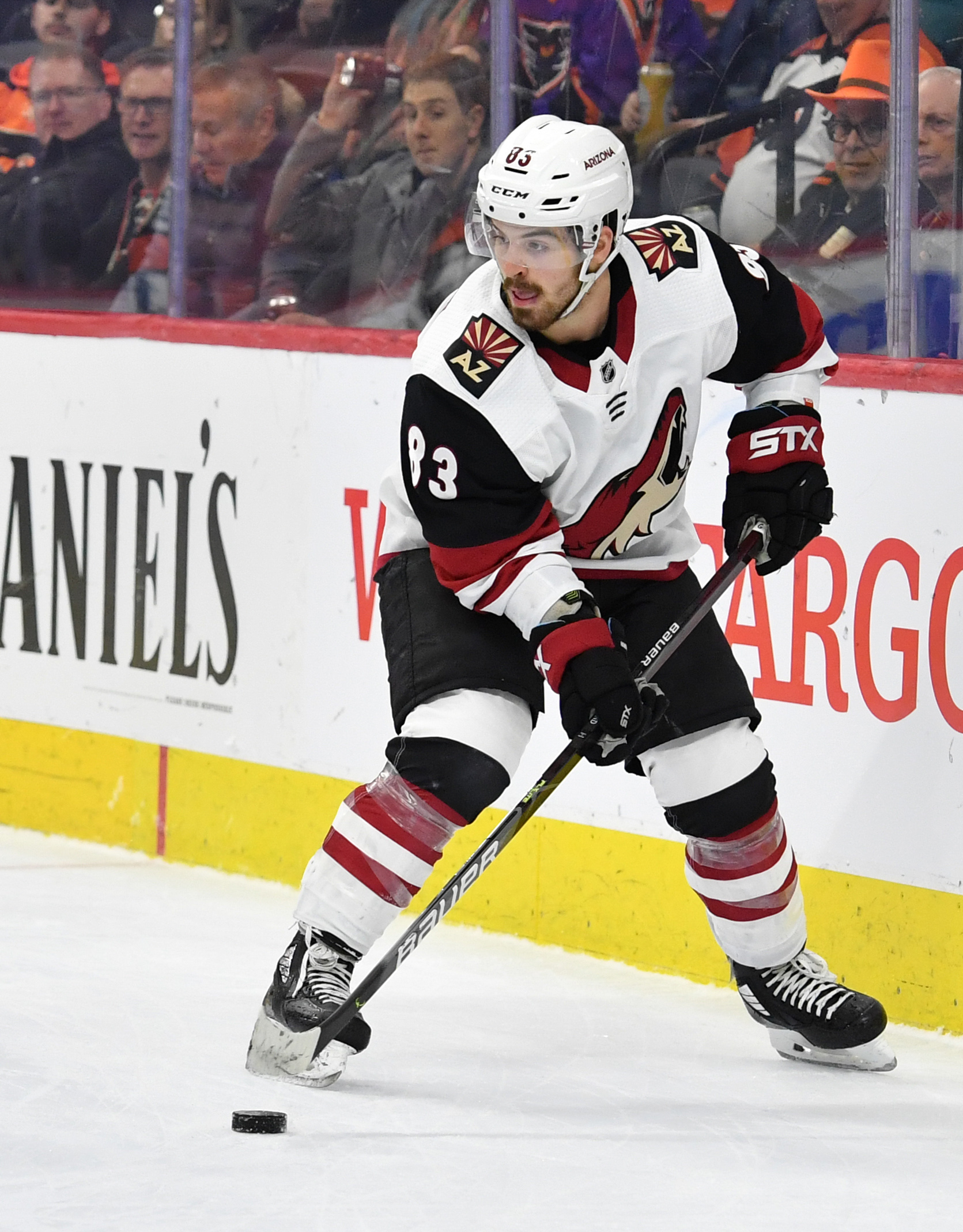 It’s about to work out a lot better for the 25-year-old. That bridge contract is up this summer and he’s about to become a restricted free agent with arbitration eligibility for the first time. Along the way, he’ll be able to add several million dollars to his price tag for next season and beyond. He’s two years away from being eligible for unrestricted free agency so if they wind up with a one-year pact and push the bigger commitment down the road, that’s not the worst outcome, especially with some questions surrounding just how much he’s worth.
It’s for that reason that Garland came up in trade speculation closer to the trade deadline where it got to the point that they were willing to move him although the right price obviously never got offered up. Still, it suggested that Arizona may not view Garland as a long-term player to build around which makes the prospects of a long-term agreement in the coming weeks a little lower. Accordingly, a deal could mean two different things here – a new contract, or a new team altogether.
Extension Talks
A pair of core veterans will be entering the final year of their contracts this summer and once the calendar flips to the 2021-22 campaign at the beginning of free agency, the Coyotes will be allowed to sign Darcy Kuemper and Phil Kessel to extensions.
Kuemper went from being a lower-end backup early in his career to one of the top goalies in the league after being acquired in 2018. In each of the last two seasons, he was among the league leaders in save percentage but took a step back this season as his save percentage dipped to .907, his lowest since his final year in Minnesota. Still, there has been much more good than bad for the 31-year-old and with Adin Hill not looking like a starter of the future (though he should be the full-time backup next season), there is a need for Kuemper to stick around a little while longer.
Meanwhile, Kessel has seen his offensive numbers plummet since joining the Coyotes but he still finished one point off the team lead in 2019-20 and led the team in points this season. He may not be a player that can carry a line which is what they were hoping for when he was acquired in 2019 but he is still a capable, albeit streaky, scorer. The free agent market wasn’t kind to wingers last year and it’s likely to be the case for most wingers this year as well which means he won’t have any success trying to find a deal close to his current $8MM price tag (with Pittsburgh still paying 15% of that). If Armstrong is able to upgrade their forward group, Kessel could be in line for a rebound year which would give him a better case for a new contract a year from now.
Of the two, Kuemper seems like the likeliest to sign an early extension but Armstrong will undoubtedly be having discussions on both fronts in the months to come.
Photo courtesy of USA Today Sports Images. Cap information courtesy of CapFriendly.
Hurricanes Loan Vasili Ponomaryov To Spartak Of The KHL
Back in October, Carolina signed prospect forward Vasili Ponomaryov to a three-year, entry-level contract. At the time, it was expected that he’d return to Shawinigan of the QMJHL next season before turning pro in 2022. Instead, Spartak of the KHL announced today that they’ve added the winger to their roster for the 2021-22 campaign, signing him to a contract that runs through April 2022.
The 19-year-old was a second-round pick (53rd overall) last year following his first season with the Cataractes that saw him impress with 18 goals and 31 assists in 57 games in his first taste of hockey in North America. While that league had some starts and stops this season, the QMJHL was able to get through a shortened season where he managed 10 goals and 28 helpers in just 33 games while picking up four points in five playoff contests.
Staying with Shawinigan certainly would have made sense but now Ponomaryov will have an opportunity to get his feet wet at the professional level and play closer to home for a year as well. His contract slid this season since he didn’t see any NHL action and will do so again in 2021-22 for the same reason for Carolina will still have him signed for three years if he returns to North America for the 2022-23 campaign with AHL Chicago.
Oilers Re-Sign Devin Shore
The Oilers have taken care of one of their pending restricted free agents as they announced the re-signing of forward Devin Shore to a two-year contract. The deal carries an AAV of $850K with CapFriendly clarifying (Twitter link) that he will make the league minimum of $750K next season and $950K in 2022-23.
The 26-year-old was non-tendered last fall by Columbus and had to settle for a PTO deal with Edmonton in late December, one that he was able to convert to a two-way contract. Shore wound up spending most of the season with the Oilers, getting into 38 games where he had five goals and four assists. While he did clear waivers a couple of times as Edmonton shuffled several veterans back and forth from their taxi squad, he clearly made enough of an impression to stick around, earning himself a one-way deal in the process.
Shore spent most of this past season in a depth role, often playing on the fourth line when he was in the lineup and it stands to reason that he’ll have a similar role throughout this contract. The Oilers, like many teams, will be relying on cheap depth to free up a little bit of wiggle room on the salary cap and that will allow Shore to stick around for a couple more years.
GM Ken Holland still has plenty of work to get to before free agency begins. He has a trio of other restricted free agents to re-sign while 11 others will soon see their contracts expire as pending unrestricted free agents so there should be several signings to come over the coming weeks.
Blackhawks Sign Lukas Reichel
June 9: Now that the tournament is over, the Blackhawks have officially signed Reichel to his three-year entry-level contract. The deal comes with a cap hit of $925K. Blackhawks GM Stan Bowman released a statement on his newest forward:
Lukas made tremendous strides in his second year as a professional. The game appeared to slow down for him this past season, which allowed his play-making skills to be on full display. Bringing him over to North America is the logical next step for his continued development and we’re excited to be able to add such a young, dynamic player to our forward group.
May 22: After being drafted last fall, Blackhawks prospect Lukas Reichel estimated that he was a couple of years away from being ready for the NHL. However, after a strong season with Eisbaren Berlin in Germany where he worked his way up the lineup down the stretch while transitioning from the wing to center, that timeline could be accelerated. To that end, Reichel’s agent Allain Roy told Ben Pope of the Chicago Sun-Times that the expectation is that the youngster will sign his entry-level deal at the conclusion of the World Championships.
The 19-year-old was a late riser in the 2020 draft and went from being ranked as a second-round pick by some agencies to the 17th pick by Chicago after a good first season with Berlin. He followed that up by finishing fifth in scoring with Berlin this season on a veteran-laden team with 10 goals and 17 assists in 38 games while chipping in with five more points in nine playoff contests. That helped him earn an invite to the Worlds where he is tied for the tournament lead in scoring through the first few days with two goals and three helpers in just two games. His presence at that tournament prevents him from being signed right away which is why they’ll have to wait a couple of weeks.
Chicago doesn’t have to have Reichel in the NHL right away, however. Though he’s still junior-aged, he is eligible to play with AHL Rockford since he wasn’t drafted out of the CHL and that might not be a bad idea for his development to ease his transition to the smaller North American ice surface. In that event, his deal would be eligible to slide a year if he plays in nine or fewer NHL games next season. Either way, Reichel should be playing under the watchful eye of the organization in 2021-22.
Snapshots: Development Camps, IIHF, Lundell, Abdelkader
While vaccination rates continue to grow across the NHL’s 32 cities, it doesn’t seem as if one of the staples of the offseason won’t be happening this year either. Player agent Andy Scott of Octagon Hockey told Postmedia’s Bruce Garrioch that he doesn’t expect Development Camps to be held due to the various travel and quarantine restrictions. To that end, some rookie tournaments could also potentially be in jeopardy or will need to be shortened unless things open up considerably over the next couple of months. It will be a compressed summer schedule with the draft and free agency being later in July but there could be a couple of notable events that are absent from the usual offseason calendar.
Elsewhere around the hockey world:
- The IIHF announced that they have made several changes to their rulebook in an attempt to amalgamate those used in the NHL and various international leagues. Among the changes that will be noticeable is the institution of the trapezoid behind the net, expanded video review and challenge options, plus the adaptation of the NHL’s offside rule which allows for a player to be onside as long as the skate is over the plane of the blue line instead of having to have the skate touch the line. These changes will be in effect for the Women’s Worlds which were recently moved to Calgary in late August as well as the upcoming Olympic qualification tournaments.
- The Panthers intend to have 2020 top pick Anton Lundell at training camp in the fall, GM Bill Zito told David Furones of the South Florida Sun-Sentinel. The center was picked 12th overall and is coming off a strong season with HIFK in the SM-liiga while being Finland’s leading scorer at the World Championships. It’s worth noting that Lundell has not yet signed his entry-level deal but with Zito’s comments, it appears they expect to get him signed by then.
- Winger Justin Abdelkader was on Team USA’s entry at the Worlds before suffering a lower-body injury in their round robin victory over Germany. GM John Vanbiesbrouck told Detroit Hockey Now’s Kevin Allen that the veteran will need to have some work done to fix the injury which is speculated to be a knee issue. That could make it tougher for him to return to the NHL for next season which is his intention. The 34-year-old was productive with EV Zug in the Swiss League, notching eight points in nine regular season games plus nine more in 13 playoff contests.
Offseason Checklist: Ottawa Senators
The offseason has arrived with roughly half of the league finished up after missing the playoffs. It’s time to examine what those teams need to accomplish over the coming months. Next up is a look at Ottawa.
Expectations were low for the Senators heading into this season. They were still not quite ready to come out of their rebuild and not many had them as a playoff contender. That’s how it played out in the first half as they struggled mightily at times but as the year progressed, they became a lot harder to beat as they won 10 games over their final month. Even so, they’re unlikely to deviate much from their current course of letting their top prospects play their way into bigger roles so the to-do list isn’t overly long for GM Pierre Dorion this summer; the heavy lifting to put the final pieces in place will come a little later.
Add New Bridge Veterans
The acquisition of Derek Stepan right before training camp raised some eyebrows, especially with Ottawa paying a second-round pick to get him. The logic felt like they’d be able to recover that pick (with retention) at the trade deadline and the team would benefit from having someone like that to work with their young forwards. It was the same type of idea for Erik Gudbranson, only that the acquisition cost was a lot lower. It didn’t work out quite as planned with Stepan’s torn labrum that ended his season prematurely while Gudbranson (and Braydon Coburn) fetched next to nothing at the trade deadline.
Stepan, along with Artem Anisimov and Ryan Dzingel, are set to become unrestricted free agents this summer which means their elder statesmen are Evgenii Dadonov who, at 32, has more KHL seasons than NHL seasons under his belt and Nikita Zaitsev. These are capable veterans but when young teams talk about ‘veteran presence’ to work with the youngsters, these two aren’t the types of players that come to mind. Both have multiple years left as well (Dadonov two years, Zaitsev three) so they would appear unlikely to be flipped at the deadline if 2021-22 is similar to this season.
With that in mind, Dorion will likely want to add this year’s versions of Stepan and Gudbranson, veterans on expiring contracts that can play a certain limited role, work with Ottawa’s young players, and then be pushed out once some of their players with AHL Belleville are ready to jump up. The good news for the Sens is that with so many teams looking to shed money this summer, they should be able to add some useful bridge pieces for a low cost and then flip them with retention at the deadline for more than they paid to get them.
Re-Sign Tkachuk
This is the big one for them as Brady Tkachuk is set to become a restricted free agent this summer. It’s not as if he’s a dominant offensive player – his point-per-game averages per season range from 0.62 on the low end to 0.64 on the high end which is a roughly 50-point pace over an 82-game campaign. That alone doesn’t make him a core piece. It’s the physicality that he brings as well. Tkachuk has become one of the top power forwards in the game quite quickly (he’s only 21) and those are incredibly difficult to come by. It certainly stands to reason that Dorion will want to start discussions on a max-term deal with the winger soon if he hasn’t already done so.
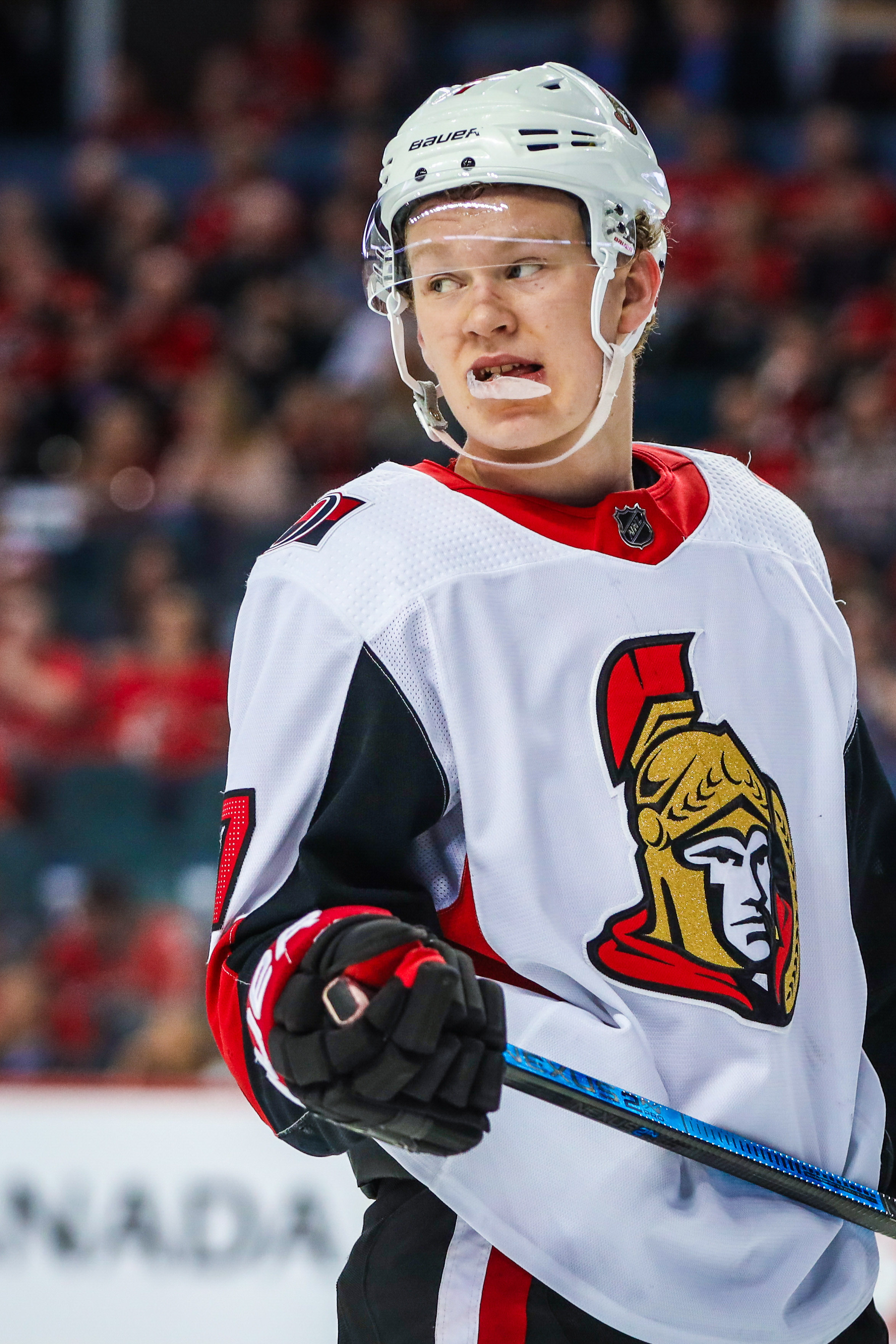 However, the flat-cap environment doesn’t necessarily make an eight-year contract particularly appealing to Tkachuk. If he believes that he can take a step forward offensively over the next couple of seasons, a bridge contract looks more desirable. Look no further than his brother Matthew Tkachuk in Calgary who is playing on a three-year, $21MM pact but remains RFA-eligible at the end of it. For the first two years, their offensive numbers were similar and while Matthew had a much better platform campaign offensively, that can be offset somewhat by Brady’s physicality and how unique of a player he is. If that’s the rough ballpark for a short-term deal, that would seem more desirable on the surface than committing to a long-term pact. It’s still a significant raise but gets him arbitration eligibility at the end of it and potentially a more favorable cap environment as league revenues start to stabilize.
Cap space isn’t an issue for the Senators as they’re well below the $81.5MM Upper Limit for next season so that won’t impact these talks. Even so, with Ottawa’s likely preference being a max-term contract and it appearing to make more sense for Tkachuk to go with a bridge, it’s going to make for a very interesting negotiation in the weeks and months to come.
Bring In Defensive Upgrades
While there is help on the back end on the horizon (Jacob Bernard-Docker, Jake Sanderson, and Lassi Thomson), none of them are ready to step into Ottawa’s lineup next season. Bernard-Docker will need some time with Belleville, Sanderson will remain in college, and Thomson’s first AHL season wasn’t particularly strong so more time there will be needed.
That means the defense corps that was in place for most of the season remains intact and while there is one strong piece (Thomas Chabot is definitely a legitimate top-pairing player), it’s a group that’s light on high-end options and even depth. Erik Brannstrom hasn’t progressed as they hoped when he was the centerpiece of the Mark Stone trade with Vegas and Victor Mete (a pending RFA himself) was a late-season waiver claim. Both are young enough to still have some upside but as far as in-house improvements go, that’s about all they can count on.
Again, a serviceable veteran or two that could be flipped at the deadline when Bernard-Docker and maybe Thomson are more ready to play would work. But even with that, a controllable top-four pickup should also be high on Dorion’s wish list. Not all prospects pan out so one more quality addition to go along with Chabot, Zaitsev, and Artem Zub would at least bolster their core group and allow ample development time for their prospects. The flat cap could force some quality players to be on the move and Ottawa should be willing to deal some of their future capital to make sure they get a more significant addition and if they wind up with a surplus of quality defenders down the road, that’s quite a nice ‘problem’ to have.
Photo courtesy of USA Today Sports Images. Cap information courtesy of CapFriendly.