
East Notes: Jarry, Jarnkrok, Pinto, Tokarski
The Penguins announced that they’ve sent goaltender Tristan Jarry back to Pittsburgh from their current road trip to work with their director of goaltending Jon Elkin. Head coach Mike Sullivan indicated that this was the plan heading into the trip which has two games remaining on it. Jarry is off to a particularly rocky start with a 5.47 GAA and a .836 SV% through his first three starts and while that’s a small sample size, he struggled late last season as well, eventually losing the starting role to Alex Nedeljkovic. The assignment will give Jarry a few days to reset away from the team and he will remain on the active roster during this time.
More from the Eastern Conference:
- Maple Leafs winger Calle Jarnkrok’s lower-body injury is believed to be a sports hernia, reports Sportsnet’s Luke Fox. The 33-year-old has filled an important middle-six role for Toronto over the last two years but hasn’t been able to play this season due to the injury. Jarnkrok is currently on LTIR and while he’s eligible to return in early November, that doesn’t seem likely to happen at this point as he has yet to skate since sustaining the injury.
- Senators center Shane Pinto is listed as a game-time decision for their game on Friday, relays Sportsnet’s Alex Adams (Twitter link). The 23-year-old is off to a decent start to his season with three points in six games while logging nearly 18 minutes a night. If he doesn’t play, Ridly Greig will likely move back to his natural position down the middle.
- Still with the Senators, Postmedia’s Bruce Garrioch suggests that Ottawa might need to make a move to shore up their goaltending depth with Mads Sogaard being injured last weekend. If they do look to do that, he feels they could once again turn to veteran Dustin Tokarski. Ottawa brought in the 35-year-old on a training camp tryout that ended without a contract but Tokarski hasn’t signed anywhere since. He spent last season with AHL Rochester, posting a 3.32 GAA and a .890 SV% in 24 games and is a veteran of more than 400 appearances at that level over 14 seasons.
Calen Addison Signs AHL Contract With Henderson
Calen Addison’s stock has certainly taken a hit over the last couple of seasons. After failing to secure an NHL contract in free agency, he has accepted an AHL one as Henderson, affiliate of the Golden Knights, announced that they’ve signed the blueliner to a one-year deal.
In 2022-23, the 24-year-old picked up 29 points in 62 games with Minnesota and it looked like he at least had found a fit as an offensive-minded depth player. However, he struggled in the early going last season before being traded to San Jose. Unfortunately for both him and the Sharks, things didn’t go particularly well for Addison there either. He managed just one goal and 11 assists in 60 games following the swap and struggled considerably in the defensive end. That resulted in San Jose deciding to non-tender him in late June.
Addison eventually had to settle for a training camp tryout with Ottawa in early September. He got into three games with the Sens where he was held off the scoresheet and eventually was released. Now a couple of weeks into the season, it’s clear there wasn’t an NHL offer on the horizon for him.
Addison has 78 career AHL appearances under his belt and has fared quite well at that level, notching 13 goals and 45 assists in those contests while being named to the All-Rookie Team in 2020-21. He should be an impactful player for the Silver Knights as well and if he fares well with them, an NHL opportunity could come up later in the season, either with Vegas or elsewhere.
Five Key Stories: 10/14/24 – 10/20/24
With the 2024-25 season in full swing, things were a bit quieter away from the ice but there was still some news of note from the past seven days which is recapped in our key stories.
Calling It A Career: Veteran defenseman Anton Stralman has hung up his skates at the age of 38 and has retired. A seventh-round pick by Toronto back in 2005, Stralman played in 938 career NHL contests over parts of 16 seasons for seven different teams. He wasn’t a big offensive producer although he did manage 293 points to his name but Stralman was known for being a solid defensive blueliner who was capable of logging 20 minutes a night. He’s now slated to begin his coaching career but not necessarily in the sport you might be thinking of; he has joined the coaching staff of Swedish women’s soccer club Skultorps IF.
Injuries For Defensemen: Utah HC made some moves to shore up their back end this summer but they’ll have to wait a while for one of their newcomers to debut as John Marino is set to miss multiple months due to an upper-body injury. The 27-year-old has averaged over 20 minutes a game in his first five NHL seasons and was poised to play a big role for them but that’s now on hold. Sean Durzi, their top blueliner from last year, is also set to be out for a while due to an upper-body injury of his own. Meanwhile, Wild rearguard Jared Spurgeon will be out for a few more games at least as he’s dealing with issues from the back and hip surgeries he had last season. While the soreness and stiffness were expected and this isn’t a setback, it means Minnesota will be without a key piece for a while and it wouldn’t be surprising if this is something that creeps up again later in the season.
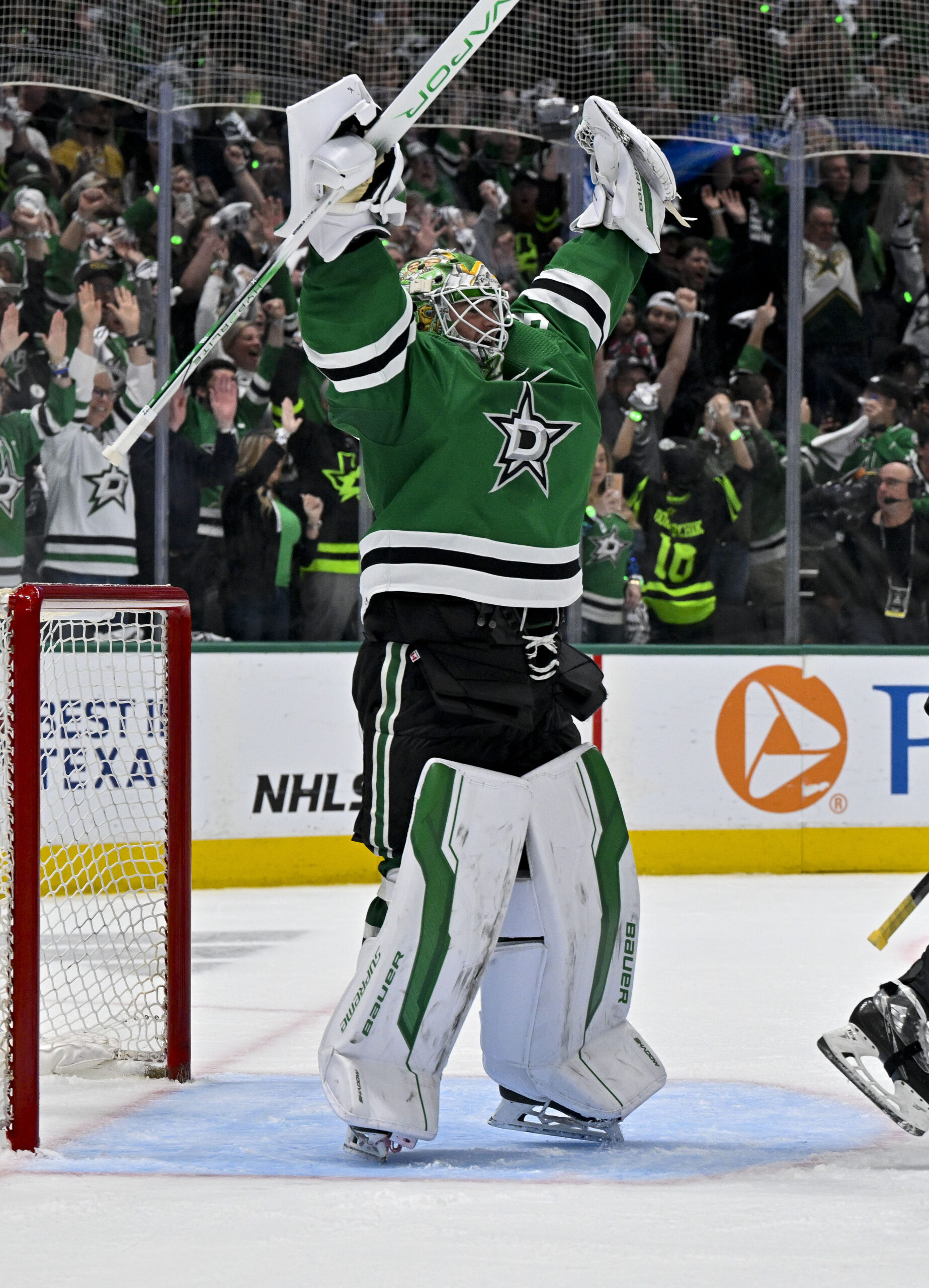 Eight For Oettinger: Goalies have been getting paid in recent weeks and the latest to land a new contract was Stars netminder Jake Oettinger. He received an eight-year, $66MM deal that begins next season. If those figures sound familiar, it’s the exact contract that Boston gave Jeremy Swayman earlier this month. In fact, aside from Oettinger having one extra year eligible for a no-move clause, the structure of the contracts is identical. Oettinger is in his fifth NHL season and has already established himself as one of the upper-echelon netminders. He now will be one of four goalies with that AAV (joining Sorokin, Linus Ullmark, and Ilya Sorokin) and will be tied for the fourth-highest cap hit among goaltenders in 2025-26.
Flames Looking To Add Center Help: Over the past 12 months, the Flames have primarily been selling veterans for pieces that will help them in the future. However, they’re off to a strong start to the season, sitting atop the Pacific Division with a 4-0-1 start. With that in mind, they appear to be open to being a buyer following a report from Daily Faceoff’s Frank Seravalli that suggests they’re looking to add help down the middle. Specifically, their desired target is a middle-six player who fits their age group (and preferably shoots right-handed) so this isn’t a case of them looking to target a rental player. However, it appears that they’re willing to expedite their rebuilding process if they can get a longer-term additional who could step in and play a regular role right away.
Two For Slaggert: While Landon Slaggert didn’t make Chicago’s roster out of training camp, the team feels that he’s going to be part of their longer-term plans. Accordingly, they elected to sign him to an early extension, signing him to a two-year, $1.8MM contract that begins next season. Notably, the deal carries a one-way salary in both years, a decent payday for someone who is currently in the minors. Slaggert was a third-round pick of the Blackhawks in 2020, going 79th overall and had a strong four-year stint at the University of Notre Dame before turning pro last season where he got into 16 NHL games down the stretch. Slaggert is eligible to be exempt from waivers through 2025-26 though that can change depending on how much NHL action he sees between now and the end of next season.
Photo courtesy of USA Today Sports Images.
Panthers Begin Extension Talks With Sam Bennett
Earlier this month, the Panthers got a deal done with one of their prominent pending unrestricted free agents when they signed winger Carter Verhaeghe to an eight-year, $56MM extension. Now, it appears they’ve turned their focus to another key forward as Sportsnet’s Elliotte Friedman reports (video link) that the team has started extension discussions with center Sam Bennett. He also noted that this is just the start of talks and that no new deal is necessarily imminent.
The 28-year-old was the fourth overall pick by Calgary back in 2014 but never really seemed to live up to those high expectations. Over his five full seasons with them, he only reached the 30-point mark once. Eventually, that led to them flipping Bennett to Florida for a second-round pick and prospect Emil Heineman (who was later dealt to Montreal).
With the Panthers, Bennett’s fortunes have changed substantially. Offensively, he has been more impactful, collecting at least 40 points in each of his first three seasons with the team while adding a 28-goal effort in 2021-22. He’s off to a solid start on that front this year as well with seven points in as many outings. Bennett also has gone back to being a full-time center after primarily playing on the wing with the Flames and from a value standpoint, middlemen are worth more than a winger.
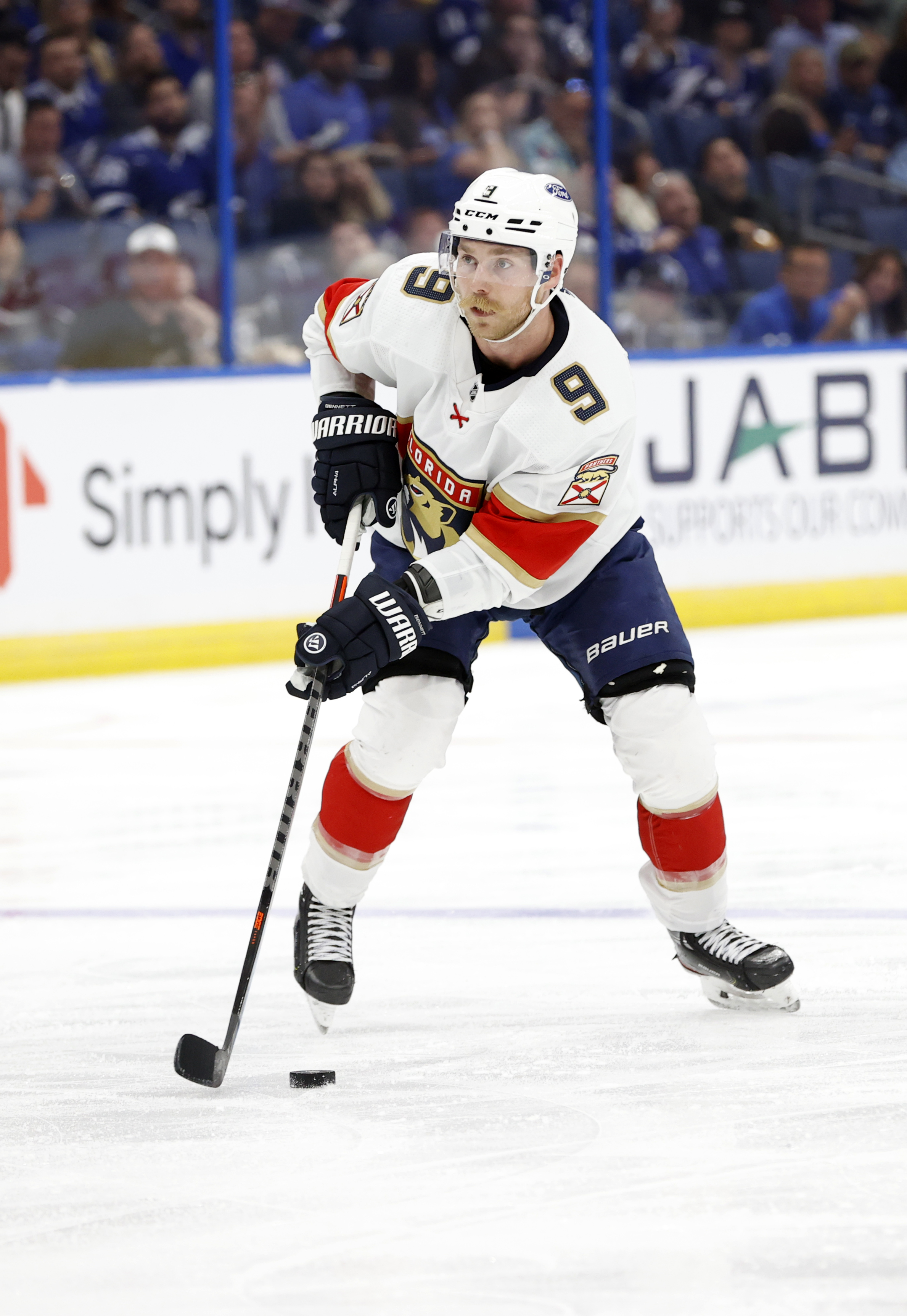 Of course, Bennett’s contributions aren’t just on the offensive side of things as he is also a prominent power forward. Those players tend to get a premium on their contracts, especially in UFA-eligible seasons. Bennett also played a prominent role in Florida’s last two playoff runs, including their 2024 Stanley Cup title so he also has that on his side in discussions.
Accordingly, all signs point to Bennett landing a considerable raise on his current $4.425MM AAV. But how much of one can Florida realistically afford? That’s where things could get a bit more interesting.
The Panthers have Aleksander Barkov signed through 2029-30 at $10MM per season. It’s safe to say he’s not going anywhere. They also committed $5MM per year to Anton Lundell through 2029-30. Lundell as their third center is a nice luxury to have while they can afford it but Bennett’s contract is likely to push past the $6MM mark on a long-term pact. Barring a position change for one of Bennett or Lundell, that would be a lot to commit long-term to a third-line player.
As things stand, Florida has a little over $73MM committed to 16 players for next season, per PuckPedia. With the expectation of another few million being added to the current $88MM Upper Limit, there’s definitely room for them to afford that type of contract. But it should be noted that Aaron Ekblad’s deal is also expiring so they will need to re-sign or replace him. While there’s room for one more pricey contract on their books, fitting two in – Bennett plus an Ekblad re-signing or a newcomer to take his place – would be a lot trickier.
But even with that in mind, parting with an impactful center would be hard to do and it’s fair to say that Bennett would have a very strong market next summer if he were to reach free agency in July. We’ll see in the coming weeks if the two sides can work something out.
Photo courtesy of USA Today Sports Images.
Jakub Zboril Signs In Czech League
After spending last season in the minors, free agent defenseman Jakub Zboril had to settle for a PTO in training camp, getting one with New Jersey. While he played in four games for them in the preseason, no contract came his way so now, he’s heading back home. HC Dynamo Pardubice of the Czech Extraliga announced that they’ve signed the blueliner to a contract through the 2028-29 campaign.
The 27-year-old was a first-round pick by Boston in 2015, going 13th overall. He was the first of three consecutive first-rounders by the Bruins, followed by Jake DeBrusk and Zachary Senyshyn. Zboril was a solid two-way defender at the major junior level but wasn’t able to replicate that offensive success in the pros.
Zboril played in 76 NHL games over parts of four seasons with the Bruins, almost exclusively in a third-pairing role while also battling injuries. He had a goal and 15 assists in those appearances while averaging 15:38 per game.
Zboril played in 46 games in the AHL last season, split between Boston’s farm team and Columbus after he was acquired at the trade deadline, collecting 13 assists. Overall, he has played in 228 games at that level, tallying 11 goals and 59 assists.
Considering that Zboril didn’t qualify for full AHL veteran status for this season (320 or more professional games played), it’s likely that he had offers to play at that level. However, if those were the options he had on the table, it certainly makes sense for him to play at home. With it being a five-year deal, however, that might take away a chance for him to return to North America down the road.
Golden Knights Have Not Started Extension Talks With Adin Hill
Recently, we’ve seen several pending free agent goaltenders sign contract extensions. Linus Ullmark (four years, $33MM) and Joey Daccord (five years, $25MM) inked new deals to stop them from reaching unrestricted free agency while Jake Oettinger inked an eight-year, $66MM extension over reaching restricted free agency next summer. Those moves came on the heels of Boston’s signing of Jeremy Swayman to an eight-year, $66MM deal, ending a long stalemate in his trip through restricted free agency.
With Ullmark and Daccord coming off the list of potential UFAs and the Rangers and Igor Shesterkin still plugging away at what’s expected to be a record-setting extension, Golden Knights goaltender Adin Hill is poised to be one of the top netminders remaining out of next summer’s crop of goaltenders. Unlike some of the others, however, don’t expect a new deal for him to come about anytime soon as David Pagnotta of The Fourth Period reports (Twitter link) that talks on a possible extension aren’t expected to begin until sometime in the new year.
The 28-year-old is in his third season with Vegas and has seen his fortunes change considerably since joining them. Originally acquired as injury insurance in 2022, he didn’t see a ton of action during the regular season that year but, of course, played an instrumental role in them winning the Stanley Cup. His performance there helped earn him a two-year, $9.8MM deal, effectively serving as another bridge contract.
Last season, Hill wasn’t able to put up as good of numbers as his first year with the team but he still managed a 2.71 GAA and a .909 SV% in 35 regular season games while playing quite well in his three playoff appearances. This year, he’s off to more of a sluggish start with a 3.81 GAA and a .851 SV% but only two weeks into the season, things can change quickly.
That said, Hill’s market is likely a bit trickier to determine at this point. His 35 appearances last season were a career high but is still on the low side compared to most starters. Between his previous roles and injuries, he has largely been a backup or platoon option. There is always interest in those types of players but not at a level where he could command considerably more than he’s making now. Frankly, if he’s viewed league-wide as a platoon player and not a true starter, matching this contract from an AAV perspective could be difficult.
With that in mind, it makes sense for both sides to wait this out for a little while. If Hill stays healthy and plays like a legitimate starter over the next few months, he’ll have a stronger case in negotiations than he wound now. Meanwhile, if he falters a little bit, it wouldn’t be shocking if Vegas either came in at a lower number or pushed things back further.
The Golden Knights have had a fair bit of turnover since joining the league with only two netminders spending parts of four years with the team while only five have played more than 35 games. An extension for Hill would give them some stability at that position but based on this report, it won’t be coming for a while yet.
Kent Johnson’s Injury Not A Short-Term One
It has been a rough first few weeks for the Blue Jackets on the injury front. Boone Jenner might not play this season, Dmitri Voronkov has yet to play, and Erik Gudbranson could be facing a longer-term absence, among others.
Now, Kent Johnson can be added to that list. Speaking after practice today, head coach Dean Evason told reporters including Brian Hedger of the Columbus Dispatch (Twitter link) that the upper-body injury for Johnson is not expected to be a short-term issue. While he has not yet been placed on injured reserve, that is expected to happen in the near future.
The 22-year-old was injured in Thursday’s victory over Buffalo after colliding with teammate James van Riemsdyk. It was actually the second game in a row the Blue Jackets had a ‘friendly fire’ injury with Gudbranson’s injury coming on a collision with Sean Monahan.
Last season, Johnson battled injuries and some ineffectiveness, limiting him to just 42 games with Columbus where he had just six goals and ten assists while also spending time with AHL Cleveland. That resulted in the two sides working out a bridge contract this summer, a three-year, $5.4MM agreement as while he’s still viewed as a long-term building block for the rebuilding Blue Jackets, he certainly hadn’t shown enough for a long-term contract to be viable.
Johnson was off to a nice start to his season before the injury as he had two goals and three assists through his first four appearances and had logged an average of just over 20 minutes a night in his first three full outings. However, it looks like it’s going to be a little while at least before he has a chance to build on that.
Snapshots: Panthers, Joshua, Honzek, Harkins
Already missing three forwards due to illness or injuries, the Panthers won’t have forward Jonah Gadjovich available to them tonight against Vegas due to an undisclosed injury, relays team reporter Jameson Olive. The 26-year-old has taken a regular turn on the fourth line so far this season, picking up a goal in Florida’s first six games. As Florida doesn’t have enough cap space to afford a recall from the minors, they will dress just 17 skaters for this one, ten forwards and seven blueliners.
It’s not all bad news on that front, however. Head coach Paul Maurice indicated that winger Matthew Tkachuk is expected to return from his illness on Tuesday while captain Aleksander Barkov should be back not long after that. Meanwhile, Tomas Nosek is due to return early next month for their Global Series games. With that in mind, while the Panthers will be eligible for a cap-exempt recall after tonight’s contest, they’re unlikely to actually need to use it.
More from around the NHL:
- Canucks forward Dakota Joshua skated today for the first time as he continues to recover from surgery to address a cancerous lump from earlier this summer, mentions NHL.com’s Adam Kimelman (Twitter link). The 28-year-old had a breakout effort last season, notching career-highs in goals (18), assists (14), points (32), and hits (245) across 63 regular season contests, earning him a four-year, $13MM extension in late June. There remains no timetable for Joshua’s return but the fact he has returned to the ice is certainly a good sign.
- The Flames have placed forward Samuel Honzek on injured reserve, relays Tim Hiebert of The Hockey News (Twitter link). The 19-year-old is in his first professional season and played in four games before sustaining an upper-body injury that will keep him out on a week-to-week basis. Calgary now has an open slot on their active roster and it stands to reason that it won’t take too long for it to be filled, likely with the expected pending return of Kevin Rooney who was a full participant in practice on Friday.
- The Ducks have re-assigned forward Jansen Harkins to AHL San Diego, per the AHL’s transactions log. The 27-year-old is in his first season with Anaheim after signing with them in free agency but cleared waivers at the end of training camp. Harkins was brought up yesterday following the injury to Isac Lundestrom and Frank Vatrano’s absence from the team for paternity leave and he suited up in their loss to Colorado, recording one shot on goal in 10:11 of ice time. In a corresponding move, Vatrano is now back on the active roster.
Kings Announce Multiple Roster Moves
The Kings have made several roster moves in advance of their game tomorrow against Anaheim. The team announced (Twitter link) that goaltender Darcy Kuemper has been placed on injured reserve, netminder Pheonix Copley has once again been recalled from AHL Ontario on an emergency basis, and defenseman Joel Edmundson has been reinstated to the active roster.
Kuemper is in his first season with Los Angeles after being acquired over the offseason in exchange for forward Pierre-Luc Dubois. He got off to a solid start in his first two outings, allowing just three goals on 59 shots. However, he struggled mightily in his third outing this week against Ottawa with eight shots beating him in an overtime loss. Since then, he has been listed as out with a lower-body injury. The Kings can back-date the placement to October 15th, meaning Kuemper will be eligible to return early next week.
As for Copley, he returns to the active roster after being papered back to the Reign earlier today. He made one appearance in his first stint, coming in relief earlier this week against Toronto, allowing two goals on a dozen shots. The 32-year-old has 77 career NHL appearances under his belt and will continue to serve as David Rittich’s backup until Kuemper is able to return.
Edmundson, meanwhile, had been away from the Kings for the past few days following the birth of his child. The 31-year-old is in his first season with Los Angeles after inking a four-year, $15.4MM contract with them back in July. He has played in three games with them so far, recording an assist and eight blocked shots in a little over 21 minutes a night. With his return, the team is now back to carrying eight healthy blueliners.
West Notes: Blues Injuries, Kapanen, Celebrini, Hartman
The Blues announced (Twitter link) that winger Alexey Toropchenko is listed as day-to-day due to a lower-body injury. The 25-year-old was a quality secondary scorer last season, notching 14 goals along with 165 hits while playing in all 82 games, predominantly in a bottom-six role for St. Louis. Toropchenko has been deployed similarly through the first five contests of 2024-25 where he has an assist and a dozen hits in a little under 11 minutes a night.
Meanwhile, defenseman Nick Leddy, who missed Thursday’s game with a lower-body injury, has been ruled out for tonight’s contest against Carolina and is questionable to return on Tuesday versus Winnipeg. The veteran has logged over 22 minutes a night in his first four appearances of the season, good for third among Blues blueliners.
More from out West:
- Still with the Blues, Lou Korac of The Hockey News wonders if winger Kasperi Kapanen could be the odd man out up front when St. Louis gets their full complement of forwards back. The 28-year-old did well after being claimed off waivers in 2023 but struggled in his only full season with them, collecting 22 points in 73 games last year. Kapanen has been held off the scoresheet in four games so far this season. Still, the Blues opted to give him a one-year, $1MM contract in the summer, one that could be appealing if he lands on the waiver wire in the coming weeks as other players return.
- The Sharks are likely to be without center Macklin Celebrini for at least a couple more weeks, reports Daily Faceoff’s Frank Seravalli. The first-overall pick back in June, Celebrini played in San Jose’s opener and fared well, picking up a goal and an assist. However, he hasn’t suited up since with what’s believed to be a nagging hip issue that the team is opting to try to let him fully recover from over having it flare up at times throughout the year. It appears that a full recovery is still at least a couple of weeks away.
- Wild center Ryan Hartman is listed as a game-time decision for tonight’s game against Columbus, relays Sarah McLellan of the Minneapolis Star-Tribune (Twitter link). The 30-year-old is dealing with an upper-body injury sustained on Tuesday against St. Louis. Hartman has two goals through four games so far this season while logging 15:21 per night.