
Navigating the salary cap is one of the most important tasks for a front office. Teams that can avoid total cap chaos by walking the tightrope of inking players to deals that match their value (or compensate for future value without breaking the bank) remain successful. Those who don’t often see struggles and front office changes.
PHR will look at every NHL team and give a thorough look at their cap situation for the 2025-26 season. This will focus more on players who are regulars on the roster versus those who may find themselves shuttling between the AHL and NHL. All cap figures are courtesy of PuckPedia. We’re currently covering the Atlantic Division, next up are the Canadiens.
Montreal Canadiens
Current Cap Hit: $95,173,995 (under the $95.5MM Upper Limit)
Entry-Level Contracts
F Zachary Bolduc (one year, $863.3K)
F Ivan Demidov (two years, $940.8K)
G Jacob Fowler (three years, $923.3K)
D Lane Hutson (one year, $950K)
F Oliver Kapanen (two years, $925K)
Potential Bonuses
Bolduc: $425K
Fowler: $80K
Demidov: $2MM
Hutson: $850K
Kapanen: $637.5K
Total: $3.9925MM
The Canadiens were able to get Demidov signed earlier than expected, allowing him to play in the playoffs last season and burn a year of his contract. He’s off to a strong start to his rookie year and it feels like he’s the next player that GM Kent Hughes will look to get signed to a long-term deal and bypass a bridge pact. At the rate salaries are going up, that could land in the $10MM range, especially if they sign an early extension and get the eighth year in. Meanwhile, half of his bonuses are ‘A’ ones and could realistically be hit.
Kapanen is having much more success this season after playing a very limited role at the beginning and end of last year. While he has fared well with Demidov, there remain enough questions about his offensive ceiling to make a shorter-term deal likely. That could fall in the $4MM range depending on his point production. He has three ‘A’ bonuses in his deal and has a realistic shot at reaching at least the goals one. Bolduc came over in an offseason move from St. Louis and has shown some signs of being a capable secondary scorer. Still, he’s likely to be in bridge territory as well, likely surpassing the $3MM mark. He has two ‘A’ bonuses in his deal with a 20-goal one being the most realistic.
Hutson will get a longer look later but for now, it’s worth noting that he has four ‘A’ bonuses in his contract and could conceivably hit them all. However, he has a rare clause in his contract that caps the total bonuses achievable in the deal at $1.15MM. He has already hit $750K of that so even if he hits enough of the criteria to reach all four bonuses, his payment will be capped at $400K. Notably, Kapanen is one of the other few players in the league with that restriction on bonus money.
Fowler was brought up a few weeks back and made enough of an impression to get more than a spot start. As a result, he’s already hit his games played bonuses. The Canadiens are hoping that he’ll be their starter of the future. The price tag of those players has jumped past $8MM in recent years but most of those were UFA deals where Fowler has a ways to go to get to UFA eligibility. But with the cap escalating, if he pans out, he could very well land in that range. For now, he’s back in AHL Laval but the bonuses will still count.
Signed Through 2025-26, Non-Entry-Level
F Kirby Dach ($3.363MM, RFA)
F Patrik Laine ($8.7MM, UFA)
F Joe Veleno ($900K, RFA)
D Arber Xhekaj ($1.3MM, RFA)
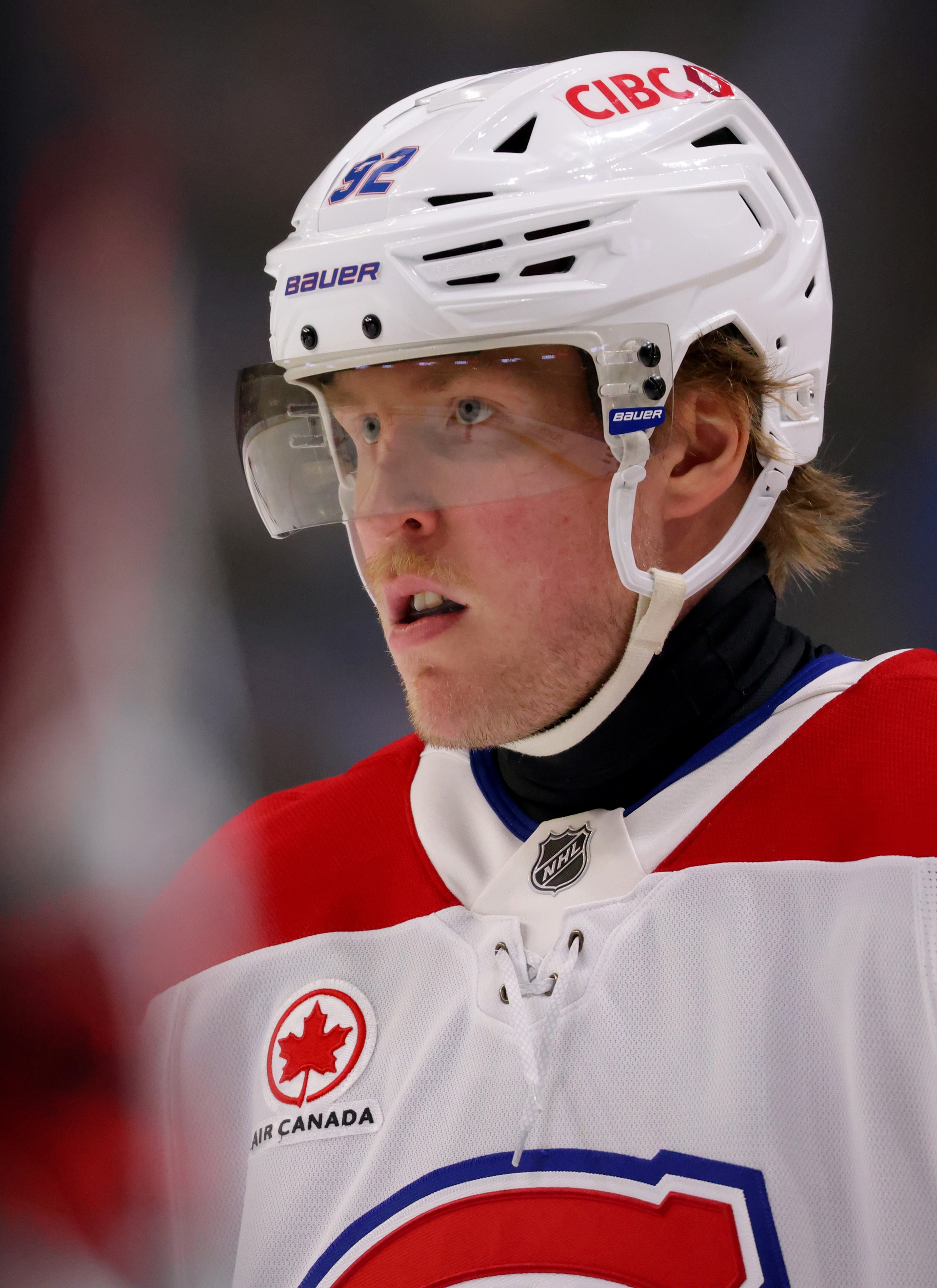 The Canadiens took a flyer on Laine in the 2024 offseason after it was clear that a return to Columbus wouldn’t be tenable. The hope was that he’d bring some extra firepower and might be a better fit in a secondary role. When healthy, he has shown flashes of being that threat, especially with the man advantage where he was one of the top scorers last year despite missing two months with knee trouble. However, he also spent a lot of time on the fourth line and was there this season before suffering a long-term lower-body injury. That sets him up with eligibility for performance bonuses in a one-year contract and frankly, that might be the best way for him to potentially maximize his earnings while the signing team can mitigate the risk. A deal like that could have a couple million in base salary and then a few million in bonuses tied to games played and production.
Dach’s injury history is even longer than Laine’s as he has missed more games than he has played since being acquired at the 2023 draft. When healthy for an extended stretch, he has had some moments to show that a top-six player could still be in there but between the inconsistency and injuries, it’s far from a given he’ll get there permanently. His qualifying offer jumps to $4MM and a long-term deal is unlikely. Instead, another shorter-term deal around that number might be the way to go. Veleno came over in free agency after being bought out by Seattle and landing in a soft free agent market. A sub-$1MM qualifying offer helps but with his history, he’d likely garner much more than that in a hearing making him a strong non-tender candidate. Given how things went this past summer, it doesn’t seem likely that his market would be much stronger in 2026.
Xhekaj hasn’t been able to break through his deployment as a sixth defender in recent years, something that won’t likely change the rest of this season. Still, he’ll likely be past 200 games by the offseason and could plausibly double his current price tag which would be on the high side for someone in his role.
Signed Through 2026-27
F Josh Anderson ($5.5MM, UFA)
D Alexandre Carrier ($3.75MM, UFA)
F Phillip Danault ($5.5MM, UFA)
G Jakub Dobes ($965K, RFA)
F Brendan Gallagher ($6.5MM, UFA)
G Samuel Montembeault ($3.15MM, UFA)
F Alex Newhook ($2.9MM, RFA)
D Jayden Struble ($1.413MM, RFA)
After being on a bargain contract on his second deal, Gallagher’s contract has been anything but for the majority of it so far. At 33 with a lot of wear and tear on him, that’s probably not going to change. Now a full-time bottom-six player, he could be looking at a 50% drop in pay on his next contract. Anderson hasn’t provided a lot of value on his deal either as primarily a bottom-six piece as well but he’s a couple of years younger than Gallagher and provides a lot of physicality. It would be surprising to see him beat this amount on his next deal but the drop in salary might be pretty short overall.
Danault returned for his second stint in Montreal with a trade right before the holiday roster freeze. A legitimate two-way player early in his contract, he has been more of a defensive specialist the last couple of years. While that’s still a useful player, someone in that role isn’t going to provide great value at this price point. Like Anderson, he’s probably looking at a small cut in pay at a minimum.
Newhook hasn’t been able to lock down a full-time top-six spot like Montreal hoped when they got him a couple of years ago. He’s consistently in the 30-point range (though he was off to a better start this year before his long-term injury) and his positional versatility certainly helps so he’s someone they’ll likely want to keep when his deal is up. His qualifying offer drops to a manageable $2.1MM but, like Dach, a shorter-term contract that buys a year or two of team control might make the most sense; a contract like that could run near the $4MM range.
Carrier fit in quite well after being acquired from Nashville in a midseason trade, stabilizing the back half of their back end. A right-shot player who can cover 20 minutes a game when needed (even if that’s not the most optimal option for him), he should have a strong market in his next trip through free agency which likely pushes his price point past $4MM as well. Struble is in the first season of his bridge deal and has been in and out of the lineup early on. His situation resembles Xhekaj’s right down to playing on an identical cap percentage and, like Xhekaj, doubling this price tag could be doable depending on how things play out.
Last season, Montembeault showed some signs of becoming a legitimate starting goaltender which would be a promising development from a waiver claim a few years back. If he stayed on that trajectory, he could have found himself in the $6MM per season range on his next deal. But early-season struggles have probably scuttled those hopes. Now, he needs to reestablish himself as a starter before thinking about a big raise. Dobes is on his bridge deal and has established himself as a full-time NHLer. Depending on where he lands on the depth chart down the stretch and into next season, his next contract could range between $2MM and $5MM per season depending on how things go; the variance potential is quite high.
Signed Through 2027-28
F Alexandre Texier ($1MM in 2025-26, $2.5MM in 2026-27 and 2028, UFA)
Texier was signed recently after asking for a contract termination from St. Louis, taking a pay cut of more than 50% in the process. He got off to a strong start though, earning him a two-year extension soon after at a rate higher than the one he walked away from. If Texier can remain an impactful player, the Canadiens will do well here but if he goes back to being a depth player, they might wind up regretting this one.
Signed Through 2028-29
F Jake Evans ($2.85MM, UFA)
For the longest time, it looked like Evans was heading for a trade but just before the trade deadline last season, he opted to accept this offer from Montreal to stick around. While his 36 points from 2024-25 likely isn’t repeatable, he can still provide some positive value on this contract with a point output around 25 as long as he’s playing a key role on their penalty kill. That should be the case for at least a couple more seasons.
Signed Through 2029-30 Or Longer
F Cole Caufield ($7.85MM through 2030-31)
D Noah Dobson ($9.5MM through 2032-33)
D Kaiden Guhle ($5.5MM through 2030-31)
D Lane Hutson ($8.85MM from 2026-27 through 2033-34)
D Mike Matheson ($4.875MM in 2025-26, $6MM from 2026-27 through 2030-31)
F Juraj Slafkovsky ($7.6MM through 2032-33)
F Nick Suzuki ($7.875MM through 2029-30)
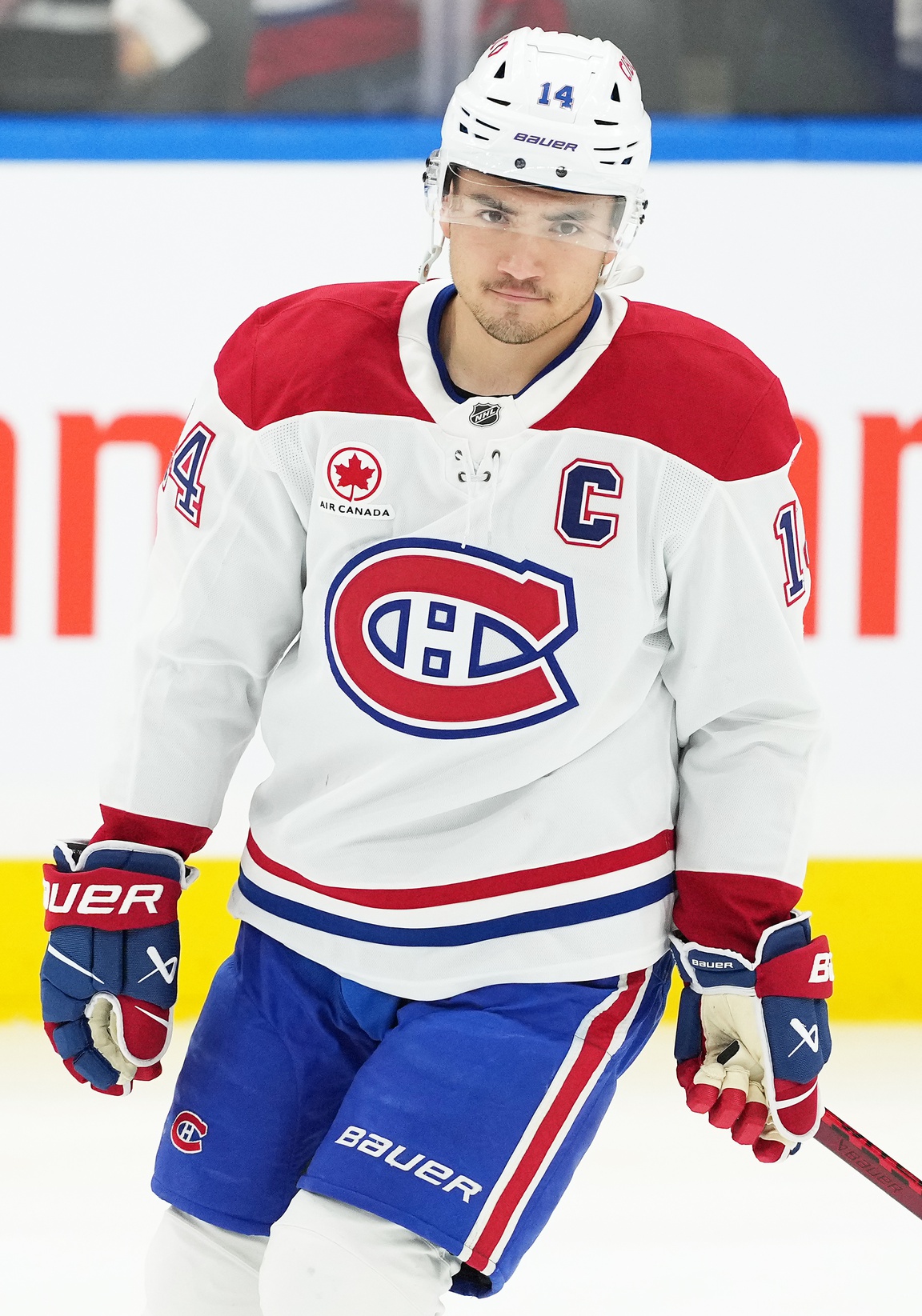 After losing Jesperi Kotkaniemi via an offer sheet, former GM Marc Bergevin made sure history wouldn’t repeat itself with Suzuki as he was signed to an early extension. That deal has proven to be quite beneficial as Suzuki has improved to become a legitimate two-way number one center while Hughes was able to use that price tag as an internal ceiling when he signed Caufield and Slafkovsky to their post-entry-level contracts. Suzuki’s market value is already well above this price tag and with the Upper Limit expected to continue to jump up quickly, it’s not implausible that he could double this AAV on his next deal if he’s still playing at a top-line level.
Caufield has shown steady improvement each season and is coming off a career-best 37-goal campaign; he is on pace to beat that this year. While he’s certainly on the small side in terms of height, he has become a legitimate top-line winger and this price tag for that role will look even better a few years from now. They’re banking on Slafkovsky taking the same step in his development as his play to this point of his career doesn’t warrant the contract just yet. The 2022 top pick has spent a lot of time on the top line over the last couple of years although his offensive production has improved more gradually. Still, top-six power forwards are difficult to come by so even if the point total doesn’t jump much higher than his personal best of 51, they still should get some value out of his deal down the road.
That will be a little trickier with Dobson, whose contract covered only one RFA season. With the Islanders, he was their top offensive defenseman and put up some big point totals to help drive up his price tag. That isn’t the case with Montreal with Hutson getting the prime minutes offensively at the moment. Still, top-pairing right-shot defenseman seldom become available in a trade and while Montreal paid a big price in terms of the return and the contract, they’ll probably feel justified with the move for the long haul.
Hutson had a terrific rookie season, earning the Calder Trophy for his efforts while putting up 66 points to be one of the top-scoring blueliners league-wide. That helped earn this extension in mid-October, one that cements him in his current role for the long haul. Undersized blueliners don’t always have extended success in the NHL but clearly, Montreal feels that his rookie-year impact is sustainable. It’s early but so far, so good on that front.
Matheson projected to be one of the better blueliners available on the open market next summer but instead elected for a long-term deal to stay in Montreal. A $6MM price tag for a player pushing 25 minutes per game of playing time seems on the team-friendly side but he will be 32 when this deal begins and there’s a good chance his role is significantly shorter by the time the deal is up. Still, this feels like another below-market pact, at least in the first few seasons.
When healthy, Guhle is a capable top-four defenseman who can play a shutdown role against top opponents and chip in a bit offensively. However, staying healthy has been a challenge throughout his career and was likely factored into this contract not being a max-term one like the others. If he can hold down the second-pairing spot with regularity and stay in the lineup, they’ll do fine with this deal but if the injury woes continue, it could be a problematic contract.
Buyouts
None
Retained Salary Transactions
None
Carryover Bonus Overage Penalty
$1.7525MM
Best Value: (non-entry-level) Suzuki
Worst Value: Laine
Looking Ahead
With Montreal flipping a fifth-round pick to San Jose to clear the final year of Carey Price’s contract, the Canadiens were hoping to operate out of LTIR for the first time in several years. However, with several injuries and the Danault acquisition, they wound up in LTIR for a big chunk of the season and have only recently exited it. As a result, their cap room is minimal, making them more of a money-in, money-out team heading to the trade deadline.
With Laine’s big contract off the books this summer plus Danault, Gallagher, and Anderson expiring the following year, Montreal is well-positioned to shift some of that money toward their younger core. That, coupled with the rising cap, gives them a lot of short-term flexibility cap-wise. Even after factoring in their recent extensions, Montreal has around $13.8MM in cap room for next season with around only a few spots to fill on the roster. That jumps to nearly $55MM in space for 2027-28, albeit with two-thirds of a roster to fill. Hughes has spoken about adding at the right time as they emerge from their rebuild. The opportune time to utilize that cap space and add could be coming pretty soon.
Photos courtesy of Timothy T. Ludwig and Nick Turchiaro-Imagn Images.
Gentlemen, please, if you can find any way out from under what’s left of Laine, you will have righted the only true wrong you have made in your Habs’ tenure. Doing all that great work building a character roster made his “addition” all the more confusing at the time.
It’s a breakup that has felt inevitable to me since Laine was acquired. He’s not a hockey player. He’s a dancer.
The trade for Laine was absolutely fine. It’s just unused cap space for, at the time, a second round pick and the upside he could have provided. He only has a couple months remaining and it allowed them to trade for Danault.
Are they ahead of where they were at? Barely. But it’s not at all a bad trade or one they should regret.