
Salary Cap Deep Dive: New York Islanders
Navigating the salary cap is one of the most important tasks for a front office. Teams that can avoid total cap chaos by walking the tightrope of inking players to deals that match their value (or compensate for future value without breaking the bank) remain successful. Those that don’t often see struggles and front office changes.
PHR will look at every NHL team and give a thorough look at their cap situation heading into the 2024-25 season. This will focus more on players who are regulars on the roster versus those who may find themselves shuttling between the AHL and NHL. All cap figures are courtesy of PuckPedia. We’re currently covering the Metropolitan Division, next up is the Islanders.
New York Islanders
Current Cap Hit: $88,000,000 (at the $88MM Upper Limit)
Entry-Level Contracts
F Maxim Tsyplakov (one year, $950K)
Potential Bonuses:
Tsyplakov: $1MM
The Isles beat out a long list of suitors to secure Tsyplakov’s services after a breakout year in the KHL that saw him score 31 goals. He projects to play in the bottom six, however, meaning he shouldn’t have a goal total anywhere near there. If Tsyplakov stays in that role, he likely won’t reach any of his ‘A’ bonuses either. Worth noting is that he will be arbitration-eligible next summer even though he’s exiting his entry-level deal.
Signed Through 2024-25, Non-Entry-Level
D Samuel Bolduc ($800K, RFA)
D Noah Dobson ($4MM, RFA)
F Hudson Fasching ($775K, UFA)
F Simon Holmstrom ($850K, RFA)
F Brock Nelson ($6MM, UFA)
F Kyle Palmieri ($5MM, UFA)
D Mike Reilly ($1.25MM, UFA)
D Alexander Romanov ($2.5MM, RFA)
F Oliver Wahlstrom ($1MM, RFA)
Nelson has been somewhat of a late bloomer. His last three seasons have been the best of his career, reaching at least 34 goals and 59 points in each of them. If he can extend that streak to four, he could land a small increase, an outcome that didn’t seem likely early on in this deal. Palmieri didn’t fare well over his first two seasons in New York but did return to form last season, matching his career-high in goals with 30. He’ll need to stay around that level to have a chance to stay around this price tag as three seasons between 21 and 33 points before 2023-24 will hurt him in negotiations.
Wahlstrom struggled considerably last season, leading to speculation about his future with the team (which hasn’t really changed heading into this year). Assuming he doesn’t take a big leap forward this season, he’s likely to stay around this price point and could be a non-tender candidate given his arbitration rights. Holmstrom’s first full NHL season was a good one with 15 goals, including five on the penalty kill but took a bit less than his qualifying offer to secure a one-way salary. A similar showing could get him closer to double that next summer. Fasching has had a limited role over the past couple of seasons and is likely to stay in that spot in 2024-25 which means he should stay around the league minimum mark next summer.
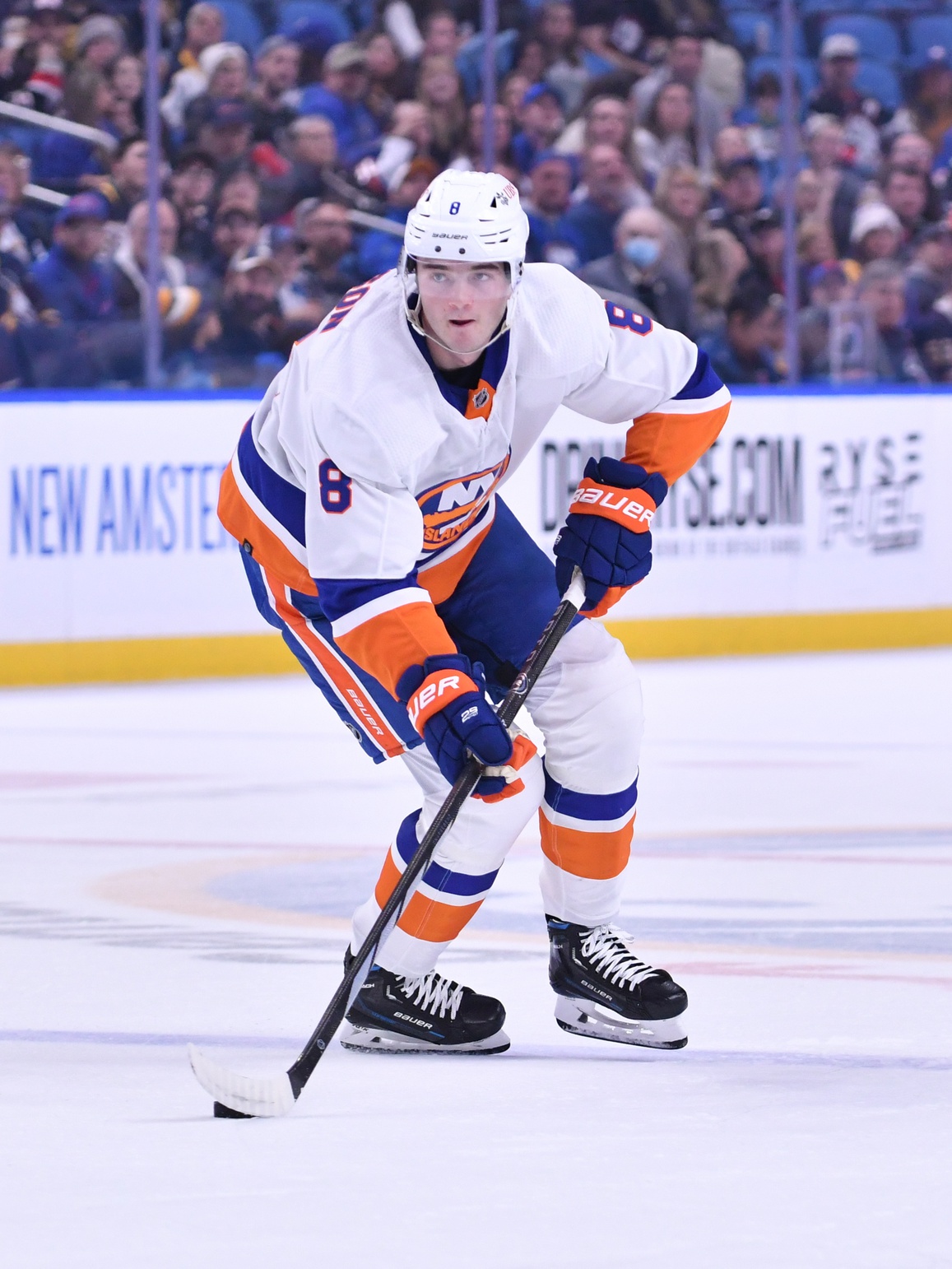 When Dobson signed his current deal, it was a situation where the Islanders had more of the leverage. That’s not the case anymore. He showed that his breakout 2021-22 performance wasn’t a fluke and built on it last season, recording 70 points and logging more than 24 minutes a night. Essentially, he performed like a true number one defender. With arbitration rights this time around, Dobson gets the leverage in that if early talks don’t go well, he could file for arbitration where he’d make a very strong case for a substantial raise. Assuming neither side wants it to get to that point, it wouldn’t be surprising to see Dobson’s camp pushing for $10MM or more on a long-term deal at this stage.
Romanov has emerged as a legitimate second-pairing option in his first two seasons with the Isles while producing a bit more offensively than he did with Montreal. Like Dobson, he’s also now arbitration-eligible and if he puts up a similar performance this season, Romanov could land closer to $4.5MM on his next contract.
Reilly re-signed after playing a regular role following his early-season waiver claim. What will hurt him in future talks is how much he has bounced around which will give some teams pause in free agency when it comes to offering him a contract. Accordingly, there’s a good chance he sticks around this price tag on more short-term deals over the next little while. Bolduc has been in the seventh defender role over the past two seasons and is likely to stay in that spot this season. Arbitration rights could give him a small raise but with the raises coming to Dobson and Romanov, they might need to keep this salary slot at the minimum.
Signed Through 2025-26
F Anders Lee ($7MM, UFA)
F Jean-Gabriel Pageau ($5MM, UFA)
Lee managed to reach the 20-goal mark for the seventh time in the last eight years last season but with just 37 points, that was his lowest full-season total since 2015-16. Now 34, the captain is showing signs of slowing down which means the last couple of years of this deal could be an issue from a value perspective. If that happens, his next deal will be closer to half of this amount. The same can be said for Pageau who is a luxury they can no longer afford on the third line which is where he’s best utilized. But with that type of playing time, he won’t put up the production to justify the price tag. It wouldn’t be surprising to see New York try to move him at some point but that won’t be easy.
Signed Through 2026-27
F Casey Cizikas ($2.5MM, UFA)
F Kyle MacLean ($775K, UFA)
G Semyon Varlamov ($2.75MM, UFA)
Cizikas is halfway through a six-year deal, a term rarely given to a player his age who plays exclusively in the bottom six. With an uptick in production the last two seasons, they’ve done alright with it so far but he’ll be 36 when this contract ends so things could change quickly. His next contract, if there is one, should come in below that. MacLean was a career minor leaguer until partway through last season. This deal was a nice one for both sides in that it gives him some financial stability while New York gets a player at the minimum for a few seasons which they’ll need given the pricey contracts they have (and will soon be adding to).
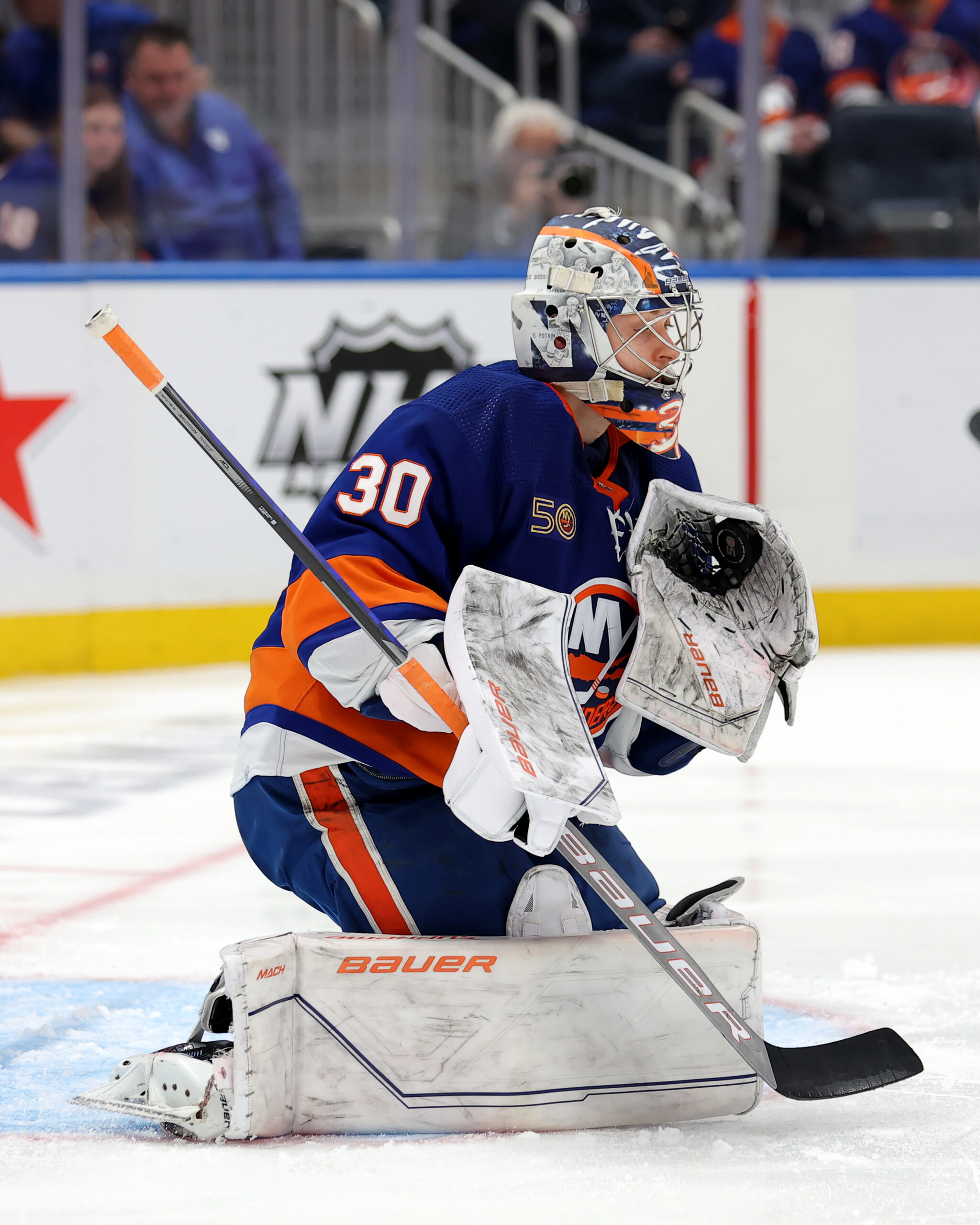
Varlamov is still an above-average second goaltender and getting that at this price point is good. What could be problematic down the road is that he’s already 36 with three years left on his contract. But goalies can still be serviceable into their late 30s so there’s a chance that this deal will work out well for New York.
Salary Cap Deep Dive: New Jersey Devils
Navigating the salary cap is one of the most important tasks for a front office. Teams that can avoid total cap chaos by walking the tightrope of inking players to deals that match their value (or compensate for future value without breaking the bank) remain successful. Those that don’t often see struggles and front office changes.
PHR will look at every NHL team and give a thorough look at their cap situation heading into the 2024-25 season. This will focus more on players who are regulars on the roster versus those who may find themselves shuttling between the AHL and NHL. All cap figures are courtesy of PuckPedia. We’re currently covering the Metropolitan Division, next up is New Jersey.
New Jersey Devils
Current Cap Hit: $87,023,897 (under the $88MM Upper Limit)
Entry-Level Contracts
D Luke Hughes (one year, $925K)
D Simon Nemec (two years, $918K)
Potential Bonuses
Hughes: $1.85MM
Nemec: $3.25MM
Total: $5.1MM
Hughes had a strong rookie season offensively, notching 47 points while maxing out his $850K of ‘A’ bonuses in the process. Even with that being his only full season of experience, with the way young blueliners have been locked up lately, a max-term agreement could be coming his way, one that could run past $8MM. However, an injury to start the season won’t help his cause. Nemec, meanwhile, spent most of last season in New Jersey, acquitting himself well to the NHL. He doesn’t have quite the offensive upside that Hughes does but he could be an all-situations player; that, coupled with his lofty draft status (second overall in 2022), could have him surpassing $8MM on his next contract if he progresses as expected.
Signed Through 2024-25, Non-Entry-Level
G Jake Allen ($1.925MM, UFA)*
F Nathan Bastian ($1.35MM, UFA)
D Nick DeSimone ($775K, UFA)
D Johnathan Kovacevic ($758K, UFA)
F Curtis Lazar ($1MM, UFA)
F Tomas Tatar ($1.8MM, UFA)
*-Montreal is retaining an additional $1.925MM on Allen’s contract.
Tatar returns to New Jersey after a particularly rough season between Colorado and Seattle but he’s only a year removed from putting up 48 points with the Devils. It’s possible that he’s on the decline but it’s reasonable to think he’ll produce enough to warrant this price tag. He hasn’t fared well lately in free agency so even if he rebounds, he probably won’t command a huge jump in salary. Bastian is a capable fourth liner who showed some offensive upside in 2021-22 but will need to get back to that level if he wants to match this deal next summer let alone beat it. Lazar is coming off a career year offensively which is an outlier relative to the rest of his career. If he can repeat the 25 points he had, he could double this price point or even more. However, if he goes more to his career averages, a small increase is about the best he could hope for.
DeSimone was a midseason waiver claim from Calgary and held his own in a depth role. It’d be surprising to see him advance past that this season so he’s likely to stay around the minimum salary moving forward. Kovacevic came over in a trade from Montreal over the summer after largely holding down a spot on the third pairing the last two years. While a lot will depend on if he can play a regular role this season, the fact he’s a right-shot defender with some experience under his belt could give him a shot at doubling his current rate next summer.
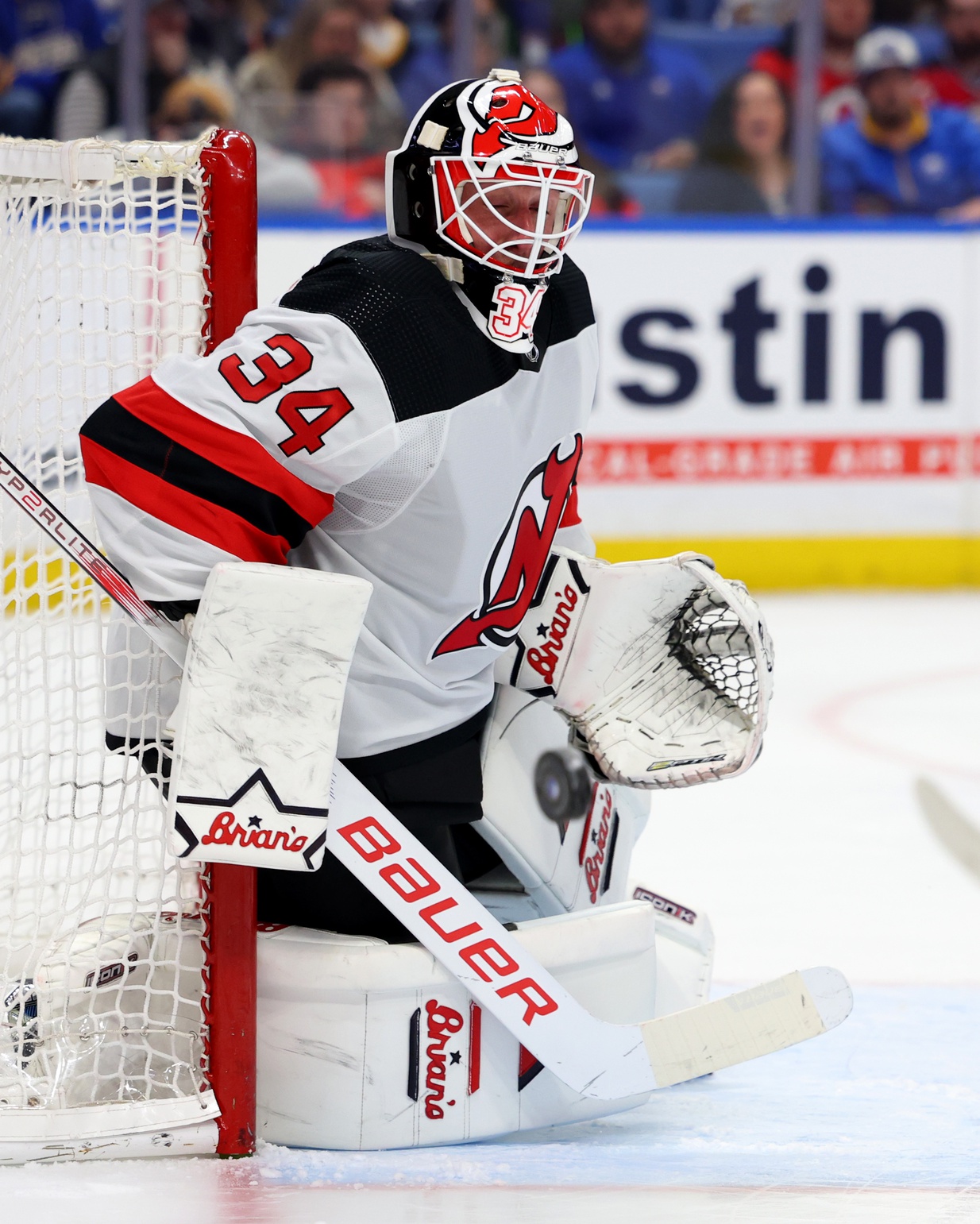 Allen also was acquired from Montreal, this time back at the trade deadline where he stabilized things between the pipes down the stretch. Stabilizing is a fitting description for what Allen’s best role is at this point of his career. He can handle a starting workload for brief stretches but is best utilized in a platoon type of role or as a high-end backup which is where he’ll be this season. The market for those types of netminders has flattened out somewhat in recent years, however, while the fact he’ll be 35 heading into 2025-26 will also hurt him. It’s possible that he can get a two-year deal but a possible comparable might be the two-year, $5MM pact that Cam Talbot received from Detroit this summer.
Signed Through 2025-26
F Paul Cotter ($775K, RFA)
F Erik Haula ($3.15MM, UFA)
G Jacob Markstrom ($4.125MM, UFA)*
*-Calgary is retaining an additional $1.85MM on Markstrom’s contract.
Haula hasn’t been able to get back to the level of production he had when he started with Vegas in 2017-18 but he has settled in nicely over the last three seasons as someone who will play around a 15-goal, 40-point pace. That price point for a center is solid value but he’ll also be 35 when this deal is up which could limit his shot at a raise in 2026. Cotter was acquired from Vegas this summer as a way for the Devils to add some more grit to their lineup. Part of the reason the price was relatively high (Alexander Holtz and Akira Schmid) is the fact he’s signed for two more years at the league minimum. Cotter could triple that or more on his next deal if he plays at a similar rate for the next two seasons.
It took a little longer than first expected to get Markstrom to New Jersey but they got the deal done before the draft. He’s a solid starter although he’s also getting closer to the end of his career as he’s already 34. Accordingly, even if the starting goalie market goes up (depending on what contracts Jeremy Swayman and Igor Shesterkin get), Markstrom is likelier to stay closer to his current price point if he can maintain his current level for two more seasons.
Signed Through 2026-27
D Brenden Dillon ($4MM, UFA)
F Nico Hischier ($7.25MM, UFA)
F Kurtis MacDermid ($1.15MM, UFA)
F Dawson Mercer ($4MM, RFA)
F Stefan Noesen ($2.75MM, UFA)
F Ondrej Palat ($6MM, UFA)
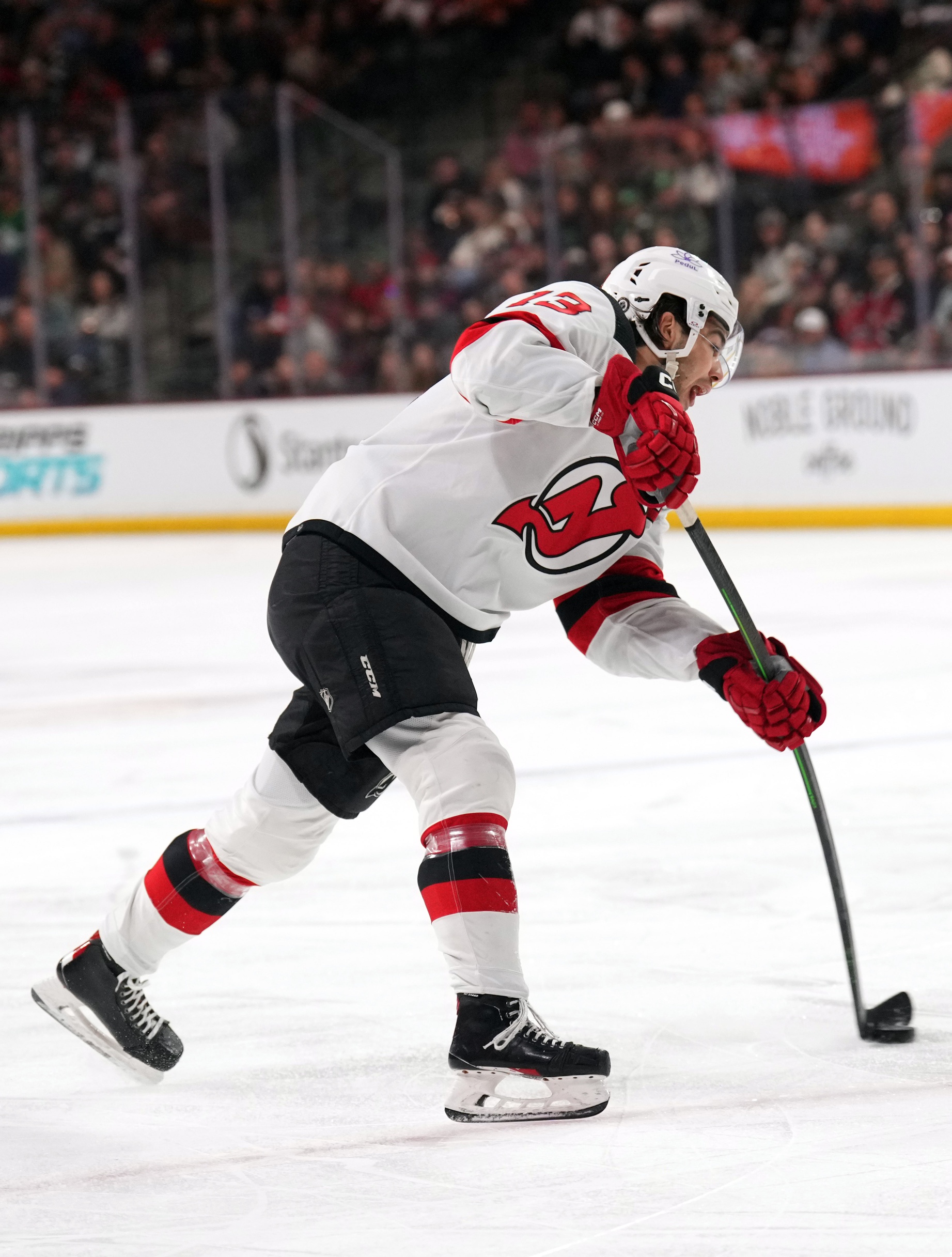 At the time that Hischier’s contract was signed, he had just two seasons under his belt so there was certainly some risk to a max-term commitment at the time. However, it has worked out rather well so far for the Devils as it is already below market value at the time he’s entering his prime years. (The success of this contract provided a road map for other teams to take similar approaches with their top youngsters as well as these types of contracts are much more prevalent now.) Hischier probably won’t produce enough to be viewed as a true number one center but his two-way game is strong enough that there will be teams that treat him as one. Accordingly, between that and the fact he’ll hit free agency at 28, Hischier could command a double-digit AAV on his next contract.
Palat hasn’t been able to produce at the levels he did with Tampa Bay over his first two seasons with New Jersey with injuries being an issue at times as well. Already 33, if he’s not able to turn things around, this is a deal that could be problematic for them as GM Tom Fitzgerald continues to try to add to his roster. Mercer was all but guaranteed to land a bridge contract given New Jersey’s current cap situation but the fact they got a third season at that price point will help. However, it takes him to within a year of UFA eligibility so it’s not without its risk. Mercer will be owed a $4.25MM qualifying offer with arbitration rights and if he can get back to his 2022-23 production (56 points), he could add a few million per year to that number.
Noesen proved to be quite a bargain for Carolina for the last two seasons, recording 36 and 37 points for a cap hit below the league minimum. That helped earn him this deal, well above the six-figure price tags he was accustomed to getting. Is this his new baseline performance? He’ll need it to be if he is going to stay around this price moving forward. MacDermid signed this deal back in May to avoid free agency. It’s a reasonable price tag for an enforcer and falls within the range of some of the more established options. It’s also fully buriable in the minors if they decide a tough guy is something they can no longer afford to carry.
Dillon was part of the defensive makeover this summer, coming over from Winnipeg. This will be seasons 11 through 13 that he makes more than $3MM with this price tag being the highest. He’ll be 36 when he tests the market again and if he’s still a fourth or fifth blueliner at that time, that streak could be extended though potentially on a year-to-year basis moving forward.
Salary Cap Deep Dive: Columbus Blue Jackets
Navigating the salary cap is one of the most important tasks for a front office. Teams that can avoid total cap chaos by walking the tightrope of inking players to deals that match their value (or compensate for future value without breaking the bank) remain successful. Those that don’t often see struggles and front office changes.
PHR will look at every NHL team and give a thorough look at their cap situation heading into the 2024-25 season. This will focus more on players who are regulars on the roster versus those who may find themselves shuttling between the AHL and NHL. All cap figures are courtesy of PuckPedia. We’re currently covering the Metropolitan Division, next up is Columbus.
Columbus Blue Jackets
Current Cap Hit: $63,201,666 (under the $88MM Upper Limit, also under the $65MM Lower Limit)
Entry-Level Contracts
F Adam Fantilli (two years, $950K)
D David Jiricek (two years, $918K)
F Dmitri Voronkov (one year, $925K)
Potential Bonuses
Fantilli: $3.2MM
Jiricek: $1MM
Total: $4.2MM
Fantilli had a solid first half of the season relative to the Blue Jackets’ struggles but his campaign ended early due to a calf laceration. Still, if he can take a step forward this season, he’s someone that the team may look to buck the trend and work out a long-term agreement with. It wouldn’t be surprising if the seven-year, $50MM deal that Seattle gave Matthew Beniers would be used as a possible comparable. Fantilli has $1MM of ‘A’ bonuses in his deal (four at $250K apiece) and if he stays healthy, he should hit at least a couple of those which could help push the Blue Jackets closer to the cap floor. Voronkov took a while to get going but turned in a quality freshman year himself. However, there has been speculation that his desire might be to return to Russia. If that’s not the case, he’s someone who might be in line for a $3MM bridge deal, more if he has a more productive showing this season.
Jiricek split last season between Columbus and AHL Cleveland but passed the 40-game mark to accrue a season of service time. However, the limited role he had makes a long-term deal unlikely at this point unless he takes on a top role within the next year or so. His bonuses are also four ‘As’ but without much of an offensive game, he may be limited to aiming for ones geared toward plus/minus, blocked shots, and ATOI.
Signed Through 2024-25, Non-Entry-Level
F Justin Danforth ($1.1MM, UFA)
F Trey Fix-Wolansky ($775K, RFA)
D Jordan Harris ($1.4MM, RFA)
D Jack Johnson ($775K, UFA)
F Sean Kuraly ($2.5MM, UFA)
F Mathieu Olivier ($1.1MM, UFA)
D Ivan Provorov ($4.75MM, UFA)*
G Daniil Tarasov ($1.05MM, RFA)
F James van Riemsdyk ($900K, UFA)
*-Los Angeles is retaining an additional $2MM on Provorov’s contract.
Kuraly has nicely filled a bottom-six center spot in the first three seasons with his hometown team. However, even with a slightly bigger role than he had with Boston, his offensive production has been somewhat limited. Accordingly, while he might be able to land another multi-year deal around this price point, it’s hard to see him commanding much more than that. Olivier has become an enforcer who can play more than just spot minutes which should help his cause heading to the open market. While a lot of teams don’t carry that type of player now, enough still do that at least a small raise could be achievable.
Danforth has turned into somewhat of a Swiss army knife for the Blue Jackets. Somewhat of a late bloomer, he opted to take an early extension last time but he might be better off testing the market this time around. If he can have another season of double-digit goals and 25-plus points, his versatility could make him very intriguing on the open market, allowing him to potentially double this price tag. As for van Riemsdyk, he was a late signing due to Columbus being limited up front. That he didn’t have much interest in a guaranteed deal beforehand was a bit surprising but it might forecast a similar fate next summer. Fix-Wolansky is far from guaranteed a roster spot but is at the point where there isn’t much left to prove in the minors. He could just be a high-end AHL player but even so, some of those have received one-way deals in recent years.
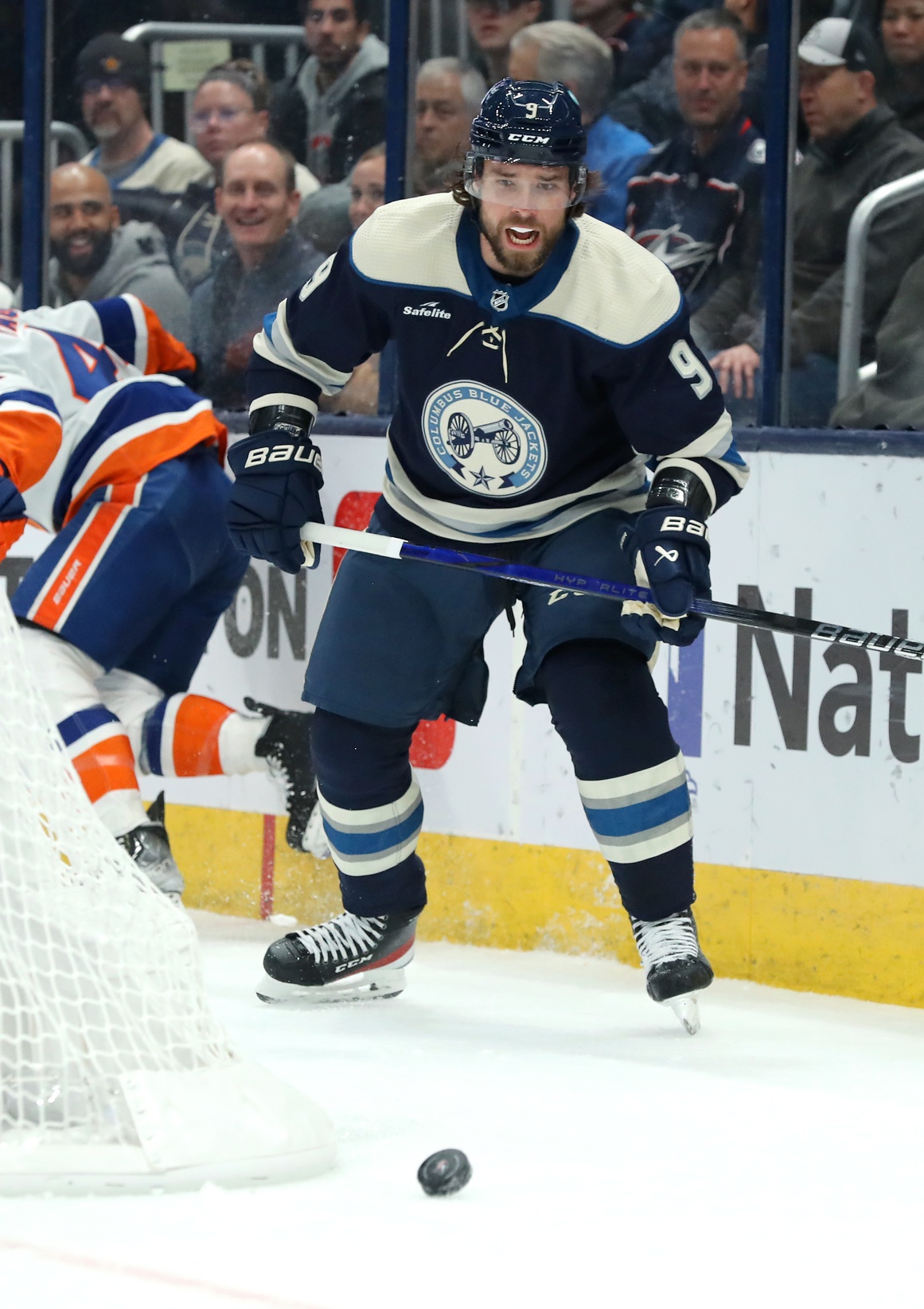 Provorov had a decent first season in Columbus but still came up short of the offensive production he had in his best days with Philadelphia. That will likely limit his earnings upside on his next deal as the expectation is that he’d be more productive by this point. However, the fact he’ll hit the open market at 28 should offset that somewhat; that’s a few years younger than a lot of impact blueliners for their first trip through unrestricted free agency. A breakout year under new head coach Dean Evason could change things but as it stands now, Provorov might be someone who winds up accepting a contract very close to the one he has now, both in salary and term (he’s ending a six-year agreement this season).
Harris was acquired from Montreal in the Patrik Laine trade and is likely to have a similar role with Columbus as he did with the Canadiens, that of a fourth or fifth defender with limited special teams time. With salary arbitration rights, he should be able to push past the $2MM mark but with limited production, his earnings upside will be capped. Johnson accepted a one-year deal at the league minimum this summer, a price point he’s likely to stay at if he signs for 2025-26.
Tarasov bounced back relatively well after a rough 2022-23 campaign but still hasn’t progressed past the level of a possible backup goalie. That said, it wouldn’t be surprising to see him play a bit more this season which could push his asking price to the $2MM range on another short-term agreement.
Signed Through 2025-26
F Yegor Chinakhov ($2.1MM, RFA)
D Erik Gudbranson ($4MM, UFA)
F Boone Jenner ($3.75MM, UFA)
F Cole Sillinger ($2.25MM, RFA)
Jenner hasn’t been able to get to the 30-goal mark in recent years but has quietly produced at that pace for three straight years but has simply dealt with injuries. He’s a legitimate two-way top-six center on a deal that was a team-friendly pact from the moment he signed it. Assuming he continues to log around 20 minutes a night, a multi-year deal worth more than $6MM per season could be where his market lands in 2026.
Sillinger rebounded well after a particularly rough sophomore year but he still isn’t established enough to the point where a long-term deal made no sense for either side. This bridge deal from earlier this summer buys both sides more time to evaluate. He’ll be arbitration-eligible next time out and at this point, it’s hard to project where he’ll land as his offensive game still has a lot of room to grow. Chinakhov took some steps forward last season when healthy, giving the Blue Jackets some secondary scoring. Still, he’s not yet a consistently reliable top-six forward which is where he’ll need to get to in order to get a raise of significance two years from now.
Gudbranson’s contract was widely panned at the time as a third-pairing player getting more money and term than many expected. However, he has played top-four minutes with the Blue Jackets, giving them at least some bang for their buck, especially after a career year offensively. That said, he’ll be 34 when he hits the open market and has a physical style that tends not to age well. It’d be surprising if he eclipses $4MM on his next deal as a result.
Signed Through 2026-27
F Kent Johnson ($1.8MM, RFA)
F Kirill Marchenko ($3.85MM, RFA)
G Elvis Merzlikins ($5.4MM, UFA)
Marchenko only has two NHL seasons under his belt but surpassed the 20-goal mark in each of them, giving him a bit of leverage in contract talks which didn’t seem to go to his liking early on. This is on the pricier end for a typical bridge agreement but both sides will get to see if he has another gear to get to before he gets one more crack at restricted free agency with arbitration rights and a $3.975MM qualifying offer. If he can keep scoring 20-plus goals, he’ll be in line for a sizable raise next time out. Johnson really only has one full NHL season under his belt; he burned a year with limited action after college and missed half of last year due to injury and some time in the minors. That made a three-year deal a bit surprising, especially at a rate that looks like a team-friendly one. It won’t take much for Johnson to out-perform this contract as he looks to establish himself as a top-six piece. If that happens, he’ll more than double this next time out.
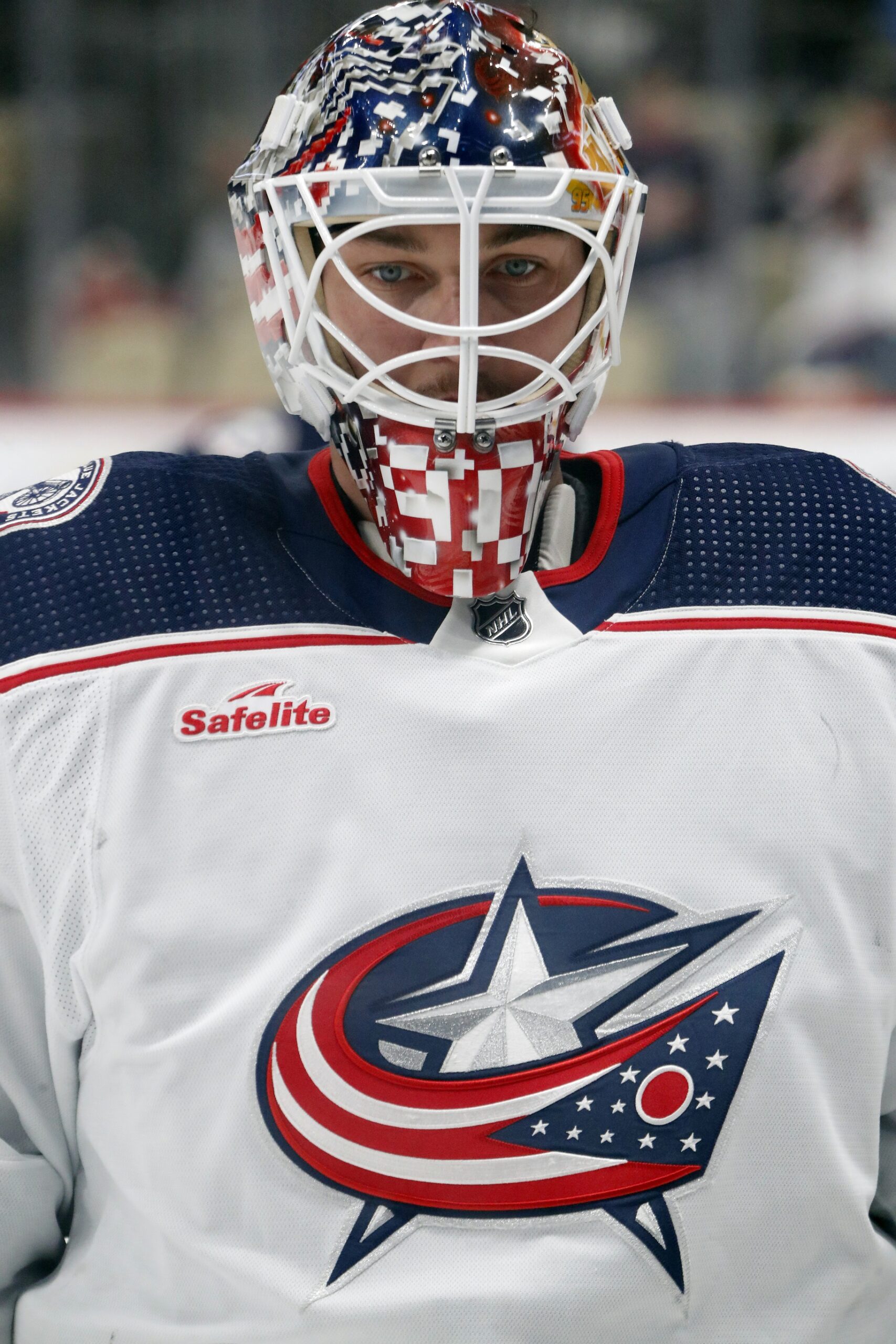 Merzlikins did have better numbers last season but that was a pretty low bar to meet considering how much he struggled in 2022-23. Even so, his level of performance was well below league average for a backup goalie let alone a starter. He has suggested in the past that he’d welcome a trade but earlier this summer, GM Don Waddell noted how hard that would be, saying “Let’s be honest, nobody is going to trade for that contract. Nobody”. That about says everything you need to know about the value perspective or lack thereof. At this point, a change of scenery could help him rebuild some value but at this point, his next contract seems likely to be a one-year, low-cost ‘prove it’ type of agreement.
Salary Cap Deep Dive: Carolina Hurricanes
Navigating the salary cap is one of the most important tasks for a front office. Teams that can avoid total cap chaos by walking the tightrope of inking players to deals that match their value (or compensate for future value without breaking the bank) remain successful. Those that don’t often see struggles and front office changes.
PHR will look at every NHL team and give a thorough look at their cap situation heading into the 2024-25 season. This will focus more on players who are regulars on the roster versus those who may find themselves shuttling between the AHL and NHL. All cap figures are courtesy of PuckPedia. Next up is the Metropolitan Division, beginning with Carolina.
Carolina Hurricanes
Current Cap Hit: $87,920,087 (under the $88MM Upper Limit)
Entry-Level Contracts
F Bradly Nadeau (three years, $918.3K)
Nadeau might have a chance to make the team out of training camp. He turned pro after a solid freshman year at college, even making his NHL debut while spending the playoffs as a Black Ace in Carolina. Given that his NHL career spans just one game so far, it’s far too early to project his next contract.
Signed Through 2024-25, Non-Entry-Level
G Frederik Andersen ($3.4MM, UFA)
D Brent Burns ($5.28MM, UFA)*
F Jesper Fast ($2.4MM, UFA)
F Tyson Jost ($775K, UFA)
F Brendan Lemieux ($775K, UFA)
G Spencer Martin ($775K, UFA)
D Dmitry Orlov ($7.75MM, UFA)
F Eric Robinson ($950K, UFA)
F Jack Roslovic ($2.8MM, UFA)
*-San Jose is retaining another $2.72MM on Burns’ contract.
Roslovic is coming off a down year, one which saw him notch just nine goals and 22 assists in 59 games between the Blue Jackets and Rangers. Rather than trying to sign a multi-year agreement, he opted for a one-year deal to try to rebuild his value. He’ll need to get back to the 40-point range if he wants to come close to the $4MM he made on his last deal. Fast, meanwhile, is already out for the season after neck surgery which won’t help his cause heading to the open market. A capable bottom-six winger, he’ll likely have to settle for a one-year deal to show he’s healthy. Although he’ll only be 33 next summer, he will be eligible for performance bonuses since he has played more than 400 NHL games and will be out for the entire year; it wouldn’t be surprising to see a team or two try to use that to their advantage in an offer.
Robinson split last season between Columbus and Buffalo and didn’t fare particularly well. However, with two seasons of double-digit goals before that, he was able to secure more than the minimum this time around. He’ll need to get back to that this season or else he could fall into the tier of players settling for the minimum salary. That’s where Lemieux and Jost already find themselves and barring a significant change in their fortunes this season, they’re likely to remain around that mark.
Orlov elected to take a short-term, above-market deal last summer, positioning himself for potentially another multi-year agreement in what should be a more favorable environment. However, he had a much more limited role than many expected last season and if he remains in the fourth or fifth slot, the price tag on his contract, might start with a four instead of a seven. Burns has fit in quite well since being acquired and is still logging big minutes. At some point, that’s going to change but if he wants to, he could hang around for another year or two even though he’ll turn 40 in March. It stands to reason that he’ll be going year-to-year at that point, but a $5MM price tag for next season shouldn’t be out of the question.
Andersen dealt with a blood clot issue for a big chunk of last season but was dominant in the limited action he had. That’s too small of a sample size to make a forecast from but his career numbers have him in the higher-end second-string range or lower-end starter (thanks to durability concerns). That could be worth a small raise but as he turns 35, he’s a candidate to take a slightly lesser deal in exchange for a multi-year agreement. Martin projects to be the third-string option but was a full-time NHL player last season thanks to some waiver claims. With a salary at the minimum, he could be a candidate to be claimed should the Hurricanes try to send him down. He’ll need to play more frequently to have a shot at a seven-figure deal next summer.
Signed Through 2025-26
F Jack Drury ($1.725MM, RFA)
F Martin Necas ($6.5MM, UFA)
Necas was a speculative trade candidate for most of the offseason and frankly, this contract probably didn’t do too much to dispel that. A legitimate top-six forward, he will now be positioned to hit the open market at 27, an opportunity few impact players have. If he can get back to the 70-point range that he reached in 2022-23, he could command upwards of $8MM on the open market. Drury established himself as a full-timer last season while being a weapon at the faceoff dot. A productive scorer in the minors, he’ll need to find another gear offensively to have a shot at commanding more impactful money. Notably, his qualifying offer checks in slightly lower than this at $1.675MM.
Signed Through 2026-27
D Jalen Chatfield ($3MM, UFA)
D Shayne Gostisbehere ($3.2MM, UFA)
G Pyotr Kochetkov ($2MM, UFA)
F Jordan Martinook ($3.05MM, UFA)
F Jordan Staal ($2.9MM, UFA)
After being more of a limited player in his first few seasons with the Hurricanes, Martinook has become a capable secondary scorer while playing a sound defensive game. He’s still a role player in the grand scheme of things but he’s an upper-end third liner now which helped him earn a $1.25MM raise from last season. Staal took a more than 50% drop in salary last year to remain in Carolina while getting a four-year agreement that takes him to his age-38 season. By that time, he’ll likely have a more limited role so if he signs another deal, it could be at a lower price point once again.
Gostisbehere opted for a pay cut but some stability after playing on a one-year deal a year ago. He remains a capable offensive defenseman who will give some of that production back at the other end. However, with Burns potentially on the way out after the upcoming season, Gostisbehere could be in line for some more impressive offensive stats. Chatfield has worked his way from being a depth defender to one who is more of an every-game regular. $3MM is on the higher side for someone in a number six role but given the scarcity of right-shot defenders on the open market this past summer, he likely was getting it from someone if not Carolina.
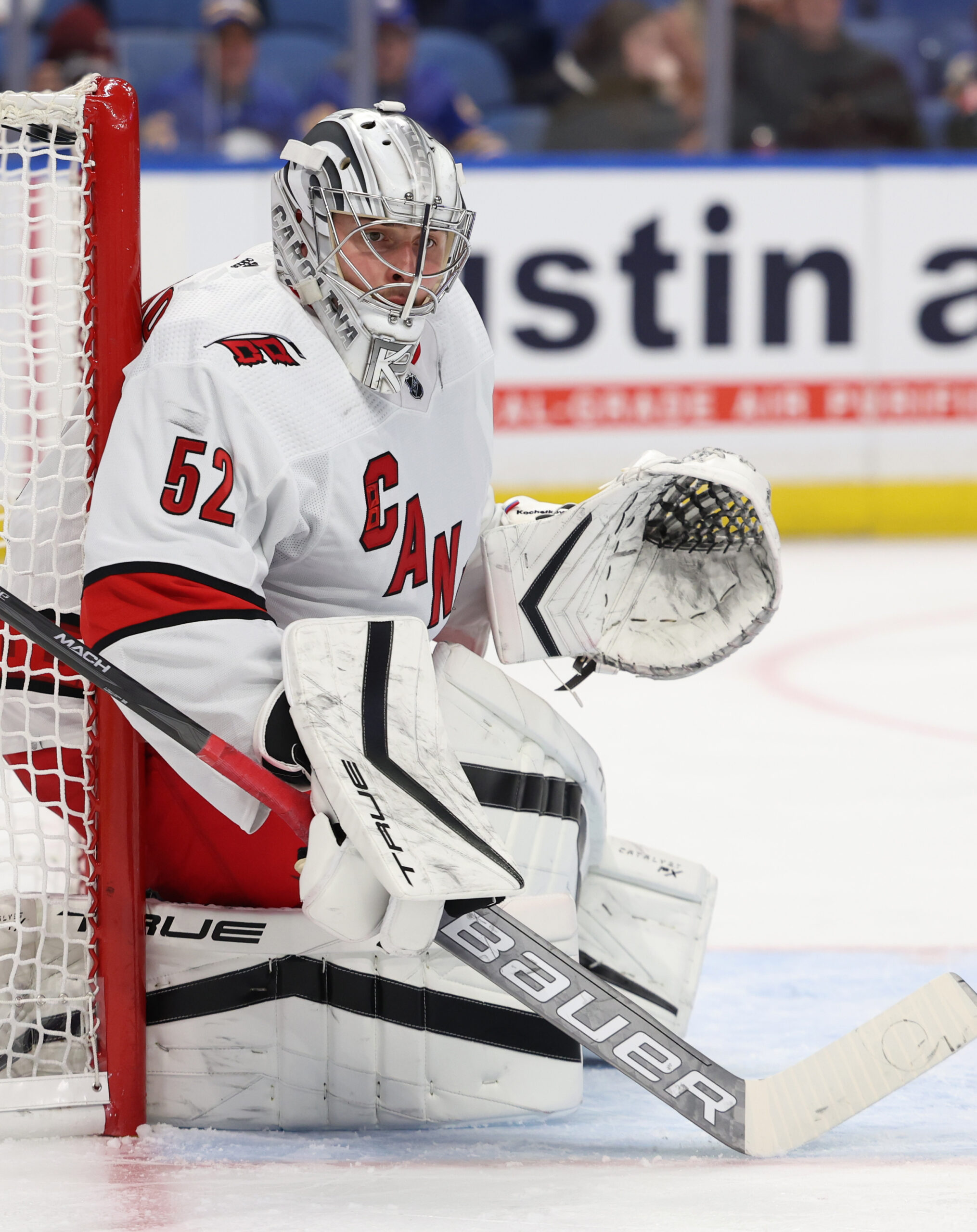 Kochetkov’s contract was one of the more interesting ones given to a goalie in recent years. At the time he signed it, he had primarily played in the minors though he showed some promising signs in limited NHL action. Even last season, the first year of that deal, saw Kochetkov spend some time in the AHL. But they’re banking on him playing at a backup level at a minimum and at this point, it looks like he’ll be able to do that at the very least. If he can land higher on the depth chart and take over as the full-fledged starter (or perhaps more likely, the strong side of a platoon), Carolina will get a terrific return on this agreement.
Signed Through 2027-28 Or Longer
F Sebastian Aho ($9.75MM through 2031-32)
F William Carrier ($2MM through 2029-30)
F Seth Jarvis ($7.42MM through 2031-32)
F Jesperi Kotkaniemi ($4.82MM through 2029-30)
D Jaccob Slavin ($5.3MM in 2024-25, $6.396MM from 2025-26 through 2032-33)
F Andrei Svechnikov ($7.75MM through 2028-29)
D Sean Walker ($3.6MM through 2028-29)
While Montreal’s offer sheet to Aho in the past was one Carolina easily matched, the one thing it did was put Aho in a position to reach UFA eligibility early which helped him land this agreement. He has averaged just over a point per game over the last six seasons combined and is a legitimate number one center. With the rising costs for impact middlemen, this deal is in line with many of those. Svechnikov bypassed the bridge contract to sign this agreement with the hopes it’d be a bargain as the deal progresses. When healthy, he performs as a top-line level but he has missed considerable time for two straight years now which means it’s not a team-friendly pact just yet but is heading in that direction.
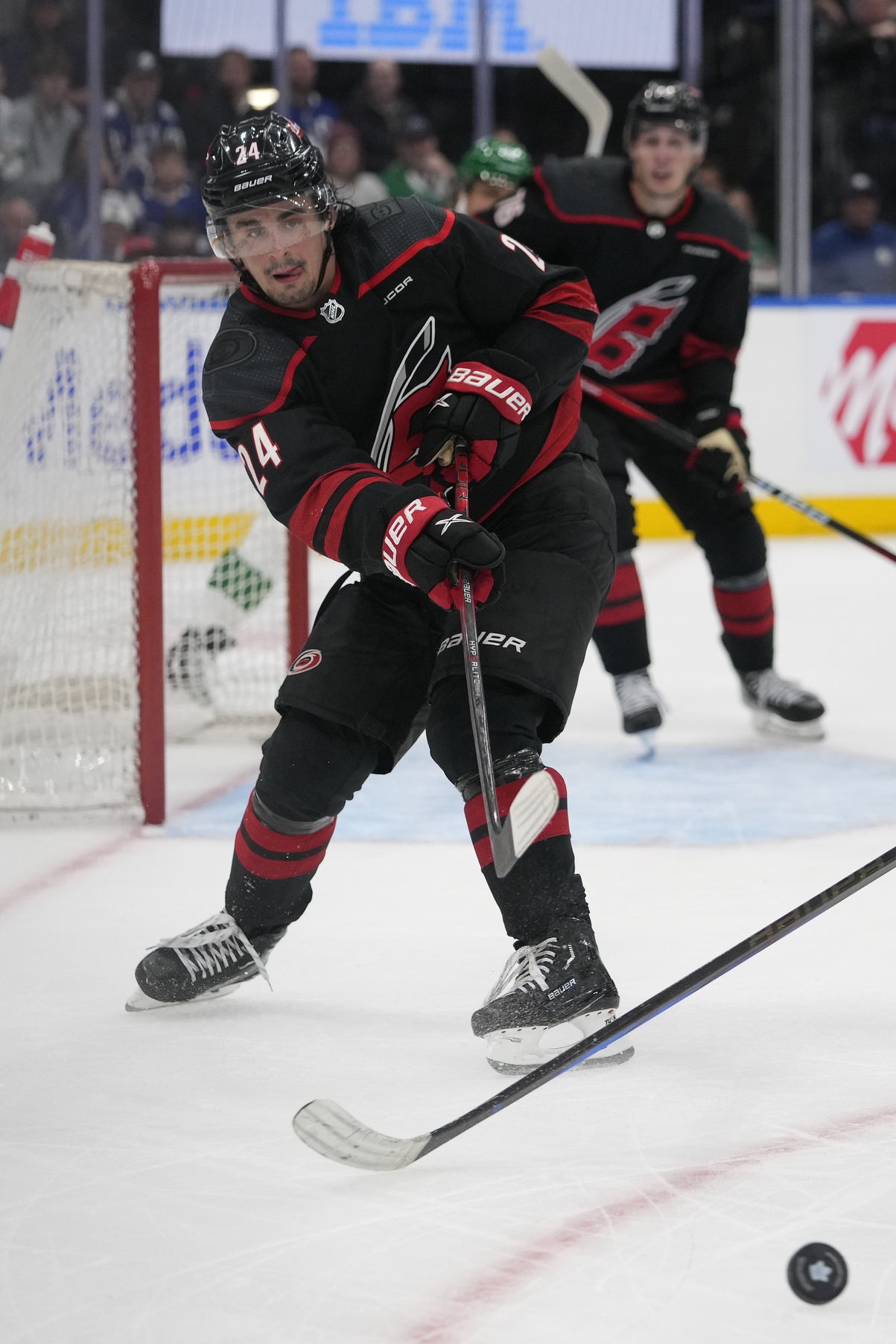 The deal with Jarvis took some time to put together this summer and for good reason. The sense is that the Hurricanes wanted to keep Svechnikov’s contract as the high point in discussions while Jarvis’ camp wanted more than that. They eventually found a happy medium as he will receive an average of $7.9MM per season (more than Svechnikov) but with $15.67MM in deferrals, the cap hit is lower than Svechnikov’s, meaning both sides got what they wanted. Jarvis only has one season above 40 points but that was 2023-24 when he had 67; clearly, both sides are banking on there being more to come. The deal might be a bit above market at the start but should be a team-friendly pact before long.
Carolina was hoping that Kotkaniemi’s deal would follow that path but it hasn’t yet. Even after accepting a pay cut following an inflated one-year offer sheet that Montreal elected not to match, the 2018 third-overall pick is now six years into his career but is still more of a bottom-six player than a top-six core element. Still just 24, that could change yet but the odds of that happening are starting to lessen. Carrier was an effective energy player for seven years in Vegas and opted for stability over trying to necessarily maximize his earnings with this contract. Six years is risky for a role player but the AAV is low enough to largely mitigate that.
Slavin has quietly been a high-end defender for several years but has largely flown under the radar. What limited him to an extent with his new contract is that he isn’t a high-end offensive threat which capped the overall upside. Still, it would be fair to say that he left money on the table with the new agreement that starts next season and not just because there is a bit of deferred money in there as well. Had he hit the open market next summer, an AAV starting with a seven and possibly an eight would have been doable.
Walker went from being a salary dump last summer to a quality top-four piece with Philadelphia and Colorado but the fact he wound up with less than $4MM a year suggests there was some skepticism that he could repeat that. That should work in Carolina’s favor as even if he holds down a number four role for most of this contract, they should get good value from it. If Walker can be as impactful as he was last season throughout the agreement, this will be a steal in a hurry.
Buyouts
None
Retained Salary Transactions
None
Still To Sign
None
Best Value: (non-entry-level) Kochetkov
Worst Value: Kotkaniemi
Looking Ahead
Money is going to be tight for Carolina this season as they’re likely to be right up against the Upper Limit. Fast being LTIR-eligible will buy them some wiggle room when injuries strike but since cap space can’t be banked when a team is using it, they’re going to be a money-in, money-out team in 2024-25.
The Hurricanes have more longer-term money on the books than a lot of teams with over $64MM in commitments in 2025-26, nearly $56MM in 2026-27, and just under $42MM in 2027-28. That said, there are enough contracts coming off the books those years to give GM Eric Tulsky some flexibility to tweak the core by re-signing or replacing those pieces but it might be a while before they’re able to make a big addition to strengthen what they already have.
Photos courtesy of USA Today Sports Images.
Salary Cap Deep Dive: Winnipeg Jets
Navigating the salary cap is one of the most important tasks for a front office. Teams that can avoid total cap chaos by walking the tightrope of inking players to deals that match their value (or compensate for future value without breaking the bank) remain successful. Those that don’t often see struggles and front office changes.
PHR will look at every NHL team and give a thorough look at their cap situation heading into the 2024-25 season. This will focus more on players who are regulars on the roster versus those who may find themselves shuttling between the AHL and NHL. All cap figures are courtesy of PuckPedia. We wrap up our look at the Central Division with Winnipeg.
Winnipeg Jets
Current Cap Hit: $82,223,691 (under the $88MM Upper Limit)
Entry-Level Contracts
None for players projected to be full-time regulars.
Signed Through 2024-25, Non-Entry-Level
F Mason Appleton ($2.167MM, UFA)
F Morgan Barron ($1.35MM, RFA)
F Nikolaj Ehlers ($6MM, UFA)
F Axel Jonsson-Fjallby ($775K, UFA)
G Kaapo Kahkonen ($1MM, UFA)
F Rasmus Kupari ($1MM, RFA)
F Alex Iafallo ($4MM, UFA)
F Vladislav Namestnikov ($2MM, UFA)
D Neal Pionk ($5.875MM, UFA)
D Dylan Samberg ($1.4MM, RFA)
F Gabriel Vilardi ($3.4375MM, RFA)
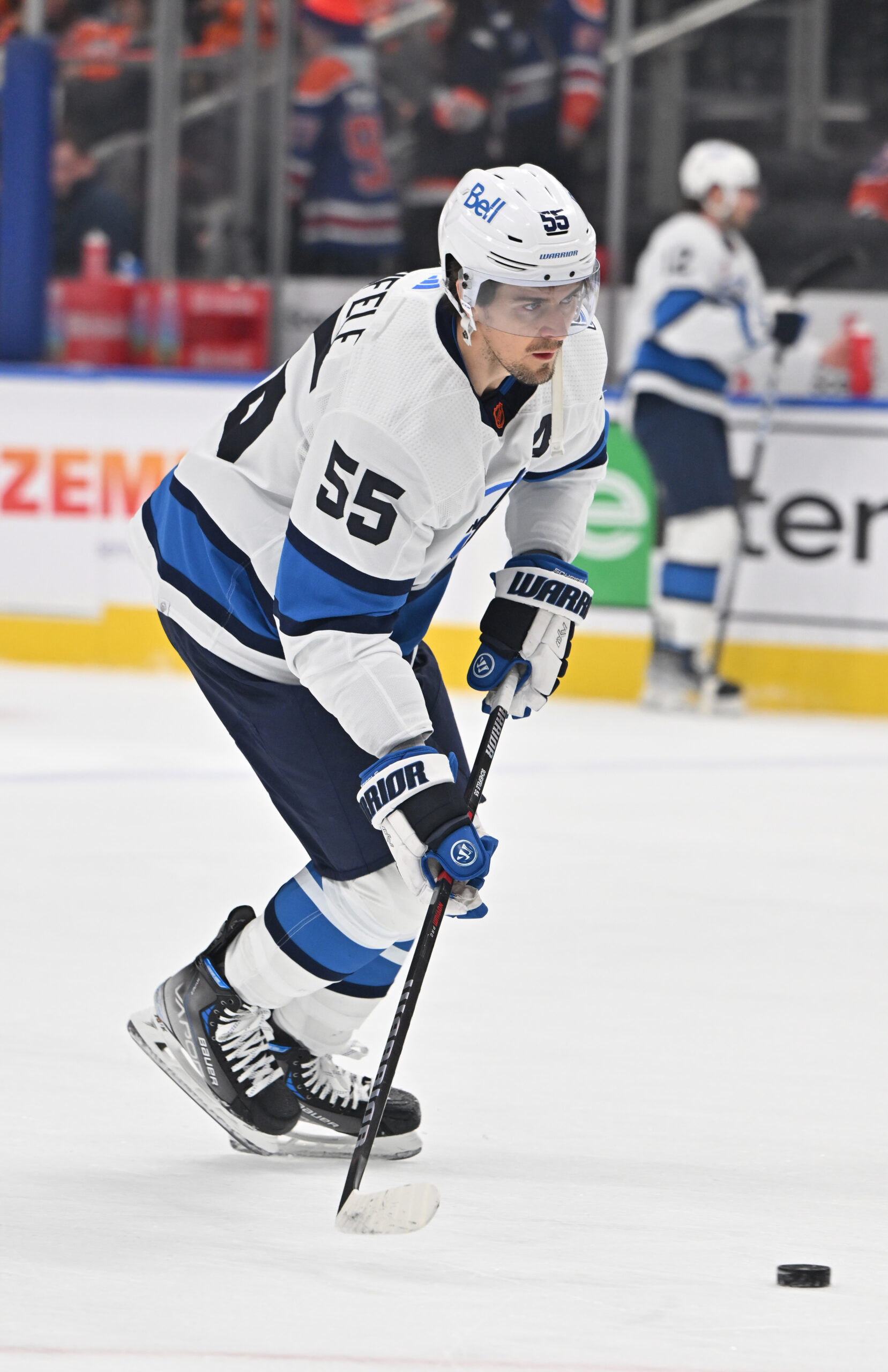
Ehlers has been in trade speculation for a while now but nothing has happened on that front and he’ll start the season with the Jets. While he is a bit of a streaky player and has had some injury woes, he has averaged at least 0.74 points per game (a 61-point pace per 82 games) in five straight years. That type of overall consistency should earn him another long-term deal with an extra million or so on the cap hit. Iafallo was part of last summer’s Pierre-Luc Dubois trade but wasn’t able to provide the same level of scoring despite spending a lot of time in the top six. If he has another stat line like that in 2024-25, he could be looking at a small dip but if he gets back to the 40-point range, he could check in a bit higher than his current cost.
Vilardi was arguably the key piece of the Dubois trade. A 2017 first-round pick, he had shown flashes of being a top-six piece in Los Angeles but struggled to do so consistently and dealt with injuries. With Winnipeg, he was consistently productive but the injury struggles continued as he missed 35 games. Nonetheless, the 25-year-old showed that he can be a core piece for the Jets and is someone who they’ll want to have around for the long haul although the injury history will be a complicating factor. Even so, there’s a good chance his next contract will start with at least a six which will come in well past his $3.6MM qualifying offer.
Appleton stayed healthy last season after battling injuries in 2022-23, reaching a new career-high in points in the process with 36. A true middle-six winger who moves up and down the lineup, he should be able to add at least $1MM to his current price tag on a multi-year deal; it could approach $4MM if he puts up a similar point total this season. Namestnikov hasn’t had much success on the open market in recent years as he has struggled to find a long-term fit. While he’s coming off his best point total since 2017-18 with 37, he’d need another season like that to get to the $3MM mark. As things stand, another two-year deal around $2.5MM per season might be where he winds up.
Barron was limited to primarily fourth-line ice time last season and he’s likely to have a similar role this season which won’t help his cause. He’s owed a $1.4MM qualifying offer with arbitration rights so if his production dips a bit in 2024-25, he could become a non-tender candidate. Failing that, a small raise to around $1.5MM to $1.75MM could be achievable. Kupari was also brought in from Los Angeles last summer but struggled mightily with his new team. Owed a $1.1MM qualifying offer next summer, that seems on the high side unless he’s able to secure a full-time roster spot and have a bit of success this season. Jonsson-Fjallby has been up and down in recent years while holding a fringe role when he has been in the NHL. Accordingly, it’s likely that he’ll stay at or near the minimum moving forward.
Pionk’s best season was his first with Winnipeg back in 2019-20. Since then, he has still shown flashes of being an above-average blueliner but has struggled somewhat with consistency. Having said that, he can still log over 20 minutes a night without much issue, has passed 30 points in five straight years, and is a right-shot player. That’s a strong combination heading into free agency, positioning himself for likely another long-term deal with a price tag starting with a six. Samberg has been limited to third-pairing duty thus far but has fared well in that role. Still, he’ll need to take on a bigger role if he wants any sort of significant raise from the $1.5MM offer he’ll be owed in the summer with arbitration rights.
Kahkonen struggled last season with San Jose but did well in a small sample size with New Jersey to finish the year. Still, the lasting memory of his time with the Sharks didn’t help his cause in free agency, resulting in this one-year deal at a sizable pay cut. Given Winnipeg’s recent track records with backups, this could be a good landing spot for him but he’ll need to come closer to maintaining his numbers with the Devils to get back to the $2.75MM of his last contract.
Signed Through 2025-26
G Eric Comrie ($825K, UFA)
F Kyle Connor ($7.143MM, UFA)
F David Gustafsson ($835K, RFA)
D Ville Heinola ($800K, RFA)
F Adam Lowry ($3.25MM, UFA)
D Colin Miller ($1.5MM, UFA)
D Logan Stanley ($1.25MM, UFA)
Connor will be the next big-ticket contract that the Jets have to contend with relatively quickly. The 27-year-old has emerged as a legitimate top-line threat, averaging more than a point per game over the past five seasons combined while passing the 30-goal mark in four of those. If that continues over the next two years, he will make a strong case to become Winnipeg’s highest-paid player with a price tag in the $9MM range.
Lowry doesn’t put up the offensive numbers to necessarily be worth this money but as a strong defensive player as well, he’s well worth the contract. Best suited as a third-line pivot, we’ve seen some of those players push past $4MM lately and it stands to reason that he’ll be able to do so as well. As for Gustafsson, he’s still working on securing himself a full-time role in the lineup. He’ll need to do that to have a chance at pushing past the $1MM threshold on his next agreement.
Miller didn’t play much with Winnipeg after they acquired him at the trade deadline but it didn’t stop them from re-signing him. It’s the second straight contract in which he has accepted a pay cut, a reflection of his diminishing role. At $1.5MM, they don’t need him to do much but they’ll be hoping he can at least get back to the 15-20-point range.
Stanley and Heinola have seemingly been on shaky ground for a while now but they’re still in Winnipeg. Stanley has been a frequent healthy scratch, especially the last two years which led to a trade request that went unfulfilled. The two years is a small showing of faith but if he’s still in this role at the end of this contract, it’d be shocking to see him re-signed. Heinola made the team in training camp last year but was injured in the final preseason game and once he was cleared to return, he stayed in the minors the rest of the way. Playing time was hard to come by when he was healthy and he’s likely on the fringes again although he’s now waiver-eligible. Still, this is a low-risk move that buys more time to evaluate and if Heinola can produce like he did in the minors (and stay healthy which is already an issue again), this could be a team-friendly pact quite quickly.
Comrie is back for his third stint with the team. The second one saw him put up his best performance before going to Buffalo in free agency where he struggled. It’s possible that he pushes for the backup spot but considering that he cleared waivers last season, they may view him as a third-string option. Until Comrie can re-establish himself as a regular backup, this is more the price range he’s likely to stay in.
Signed Through 2026-27
F Nino Niederreiter ($4MM, UFA)
Niederreiter has settled in as a player who should hover around 20 goals and 35-40 points per season. At this price point, that’s neither a bargain nor a bad value deal as reliable secondary scoring can be hard to come by. He’ll be 35 when this contract is up, however, which means he might be going year-to-year from there.
Salary Cap Deep Dive: Utah Hockey Club
Navigating the salary cap is one of the most important tasks for a front office. Teams that can avoid total cap chaos by walking the tightrope of inking players to deals that match their value (or compensate for future value without breaking the bank) remain successful. Those that don’t often see struggles and front office changes.
PHR will look at every NHL team and give a thorough look at their cap situation heading into the 2024-25 season. This will focus more on players who are regulars on the roster versus those who may find themselves shuttling between the AHL and NHL. All cap figures are courtesy of PuckPedia. We begin with a look at the Central Division; next up is Utah.
Utah Hockey Club
Current Cap Hit: $78,079,643 (under the $88MM Upper Limit)
Entry-Level Contracts
F Logan Cooley (two years, $950K)
F Josh Doan (two years, $925K)
F Dylan Guenther (one year, $894K)
Potential Bonuses
Cooley: $3.5MM
Guenther: $850K
Total: $4.35MM
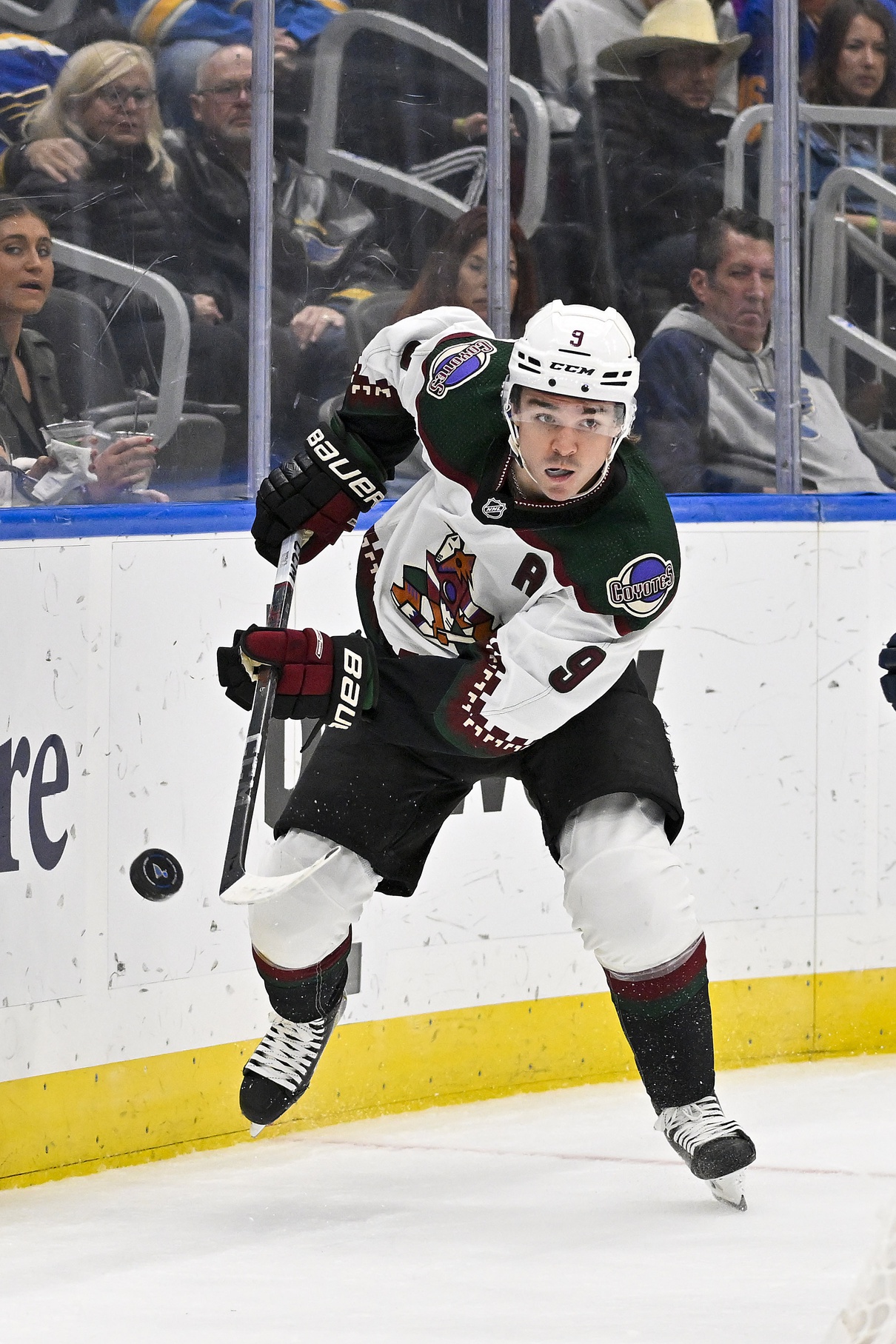
Cooley’s first NHL season was a solid one. They kept him in the top six for most of the year while not frequently exposing him to top checking. While he struggled mightily at the faceoff dot (many rookies do), Utah still views Cooley as their top center of the future. If he can take a step forward offensively this season, he could be a candidate for a long-term extension next summer. If that happens, his camp will likely use Juraj Slafkovsky’s contract (eight years, $60.8MM) as a comparable.
Doan impressed in his first taste of NHL action down the stretch, giving him a shot at earning a full-time spot in camp. But even if that happens, he’ll likely have too small of a track record for an early extension next summer. Guenther, meanwhile, was able to play in the minors last season but played his way into a promotion relatively quickly where he picked up 35 points in 45 games. With just 78 games under his belt, an extension in the coming weeks is unlikely but if he puts up a full season at that level of production, he could push for a long-term deal starting with a seven next summer.
Signed Through 2024-25, Non-Entry-Level
F Nick Bjugstad ($2.1MM, UFA)
F Michael Carcone ($775K, UFA)
D Ian Cole ($3.1MM, UFA)
F Alexander Kerfoot ($3.5MM, UFA)
F Jack McBain ($1.599MM, RFA)
G Karel Vejmelka ($2.725MM, UFA)
Kerfoot was a nice addition by Arizona last summer, giving them a capable two-way pivot who is capable of playing high in the lineup, allowing them to ease Cooley in. If he can have a similar offensive showing this season (45 points), he could push for upwards of $5MM on a multi-year agreement next summer given the consistently high demand for centers. Bjugstad made the decision to return to the Coyotes last summer and it was a good one as he had his best season offensively since 2017-18. While they’re certainly pleased with the performance, his track record is as a player with limited offense. Accordingly, an early extension would be hard to come by as both sides would be better off seeing if his production can be repeatable. If it is, he could come in closer to $4MM next time out.
McBain has become a capable checking center who has chipped in a bit offensively while throwing his body around. That’s a solid profile for a player at this price point. If the upcoming season is similar to these last two, he could double this price tag with arbitration eligibility. Carcone reached 20 goals last season, his first full NHL campaign at the age of 27. Obviously, getting a 20-goal scorer for the league minimum is excellent value but how close he comes to repeating that will dictate if he’s going to stay close to this price tag or easily reach seven figures in 2025-26.
This is the fourth year in a row that Cole has taken a one-year deal with a price point between $2.9MM and $3.1MM. Barring a significant change in his performance, it seems fair to infer that he could be in line for something close to that range next summer as well.
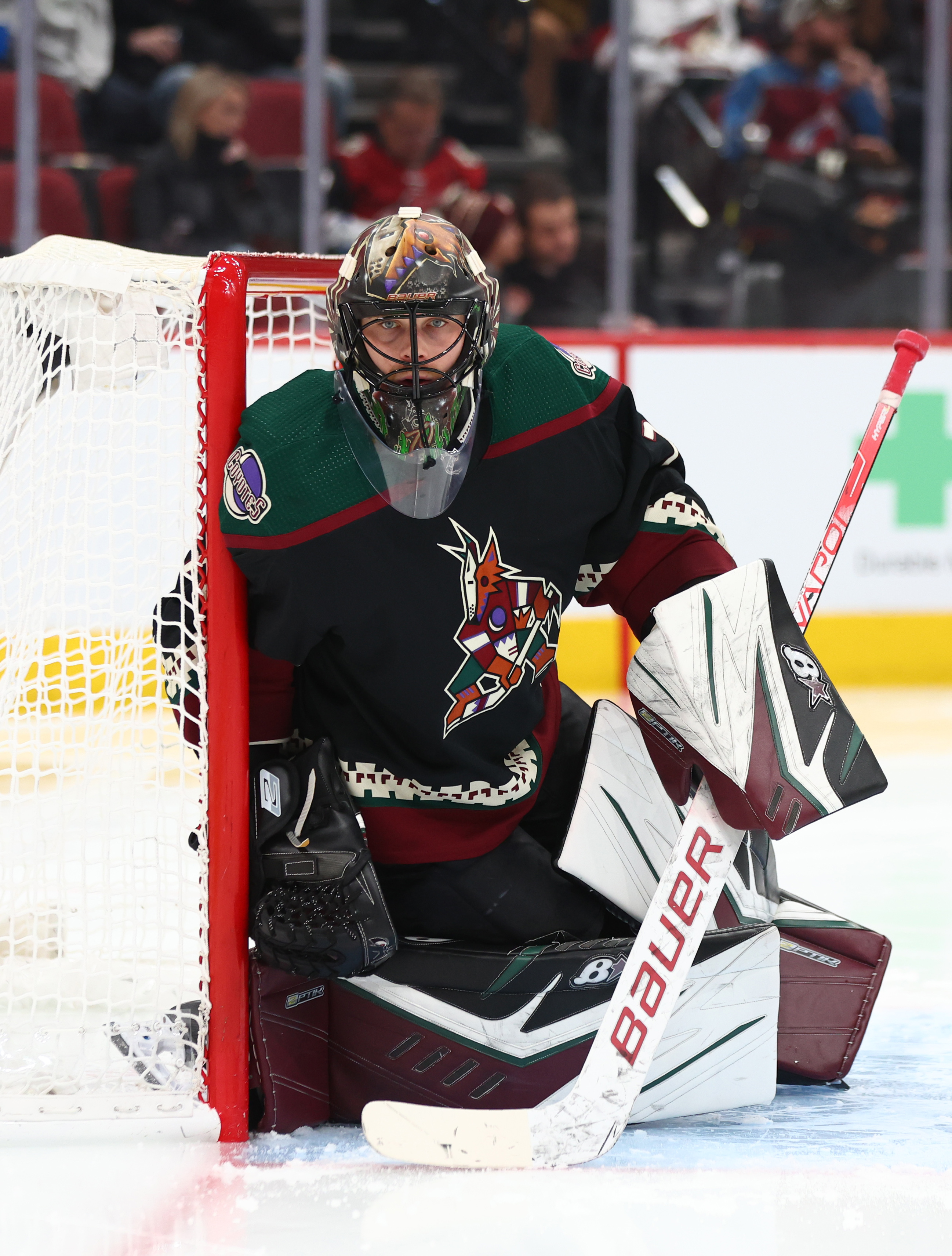 Vejmelka is an interesting case in terms of his free agent value. On the surface, his numbers are rather pedestrian; he has yet to record a save percentage of .900 or better while the lowest GAA of his three-year career is 3.35, set last season. And yet, the general perception around him has been that perhaps on a better team, he’s someone who might be more impactful. With the overhaul Utah has had on the back end this summer, this could be a good test of that theory. If that happens, Vejmelka could conceivably push for a contract in the higher tier of backup or platoon goalies with a price tag approaching $4MM. If that doesn’t happen, however, a small pay cut might be coming his way.
Signed Through 2025-26
F Barrett Hayton ($2.65MM, RFA)
G Connor Ingram ($1.985MM, UFA)
D Michael Kesselring ($1.4MM, RFA)
F Matias Maccelli ($3.425MM, RFA)
F Nick Schmaltz ($5.85MM, UFA)
F Kevin Stenlund ($2MM, UFA)
D Juuso Valimaki ($2MM, UFA)
D Shea Weber ($7.857MM, UFA)
Schmaltz has very quietly been one of the steadier Coyotes in recent seasons, ranging between 58 and 61 points in the last three seasons, two of which saw him over a point per game while dealing with injury trouble. While he’s not a full-time center anymore, he can still play down the middle which will help from a value perspective. Assuming this production keeps up, he should push past the $7MM mark on his next deal. Maccelli, meanwhile, wasn’t quite able to produce at the same level as 2022-23 but he came close, giving Arizona solid value on the first year of his bridge deal. Staying around this level of offensive numbers could put him around the $6MM range on his next contract.
Hayton followed up a career year with arguably his worst one, resulting in what amounts to a second bridge contract. He’ll only have one season of club control left after this contract expires and both sides will be hoping that he can become much more impactful by then. Stenlund had a solid season with Florida, chipping in 11 goals in a limited role which allowed him to double his price tag from a year ago and tack on a second season. This is more on the upper tier for someone who projects as a fourth liner but if he can hang around the double-digit goal mark, he could beat this price tag.
Weber has been on LTIR for the past three years and will continue to be there for the rest of the deal. With Utah having ample cap space, he won’t be a burden on their cap. Valimaki has become a reliable second-pairing defender at a price point well below market value. While the additions could push down his playing time, he could still conceivably double this in 2026. Kesselring spent most of last season in Arizona for his first consistent taste of NHL action. He fared pretty well all things considered but with his limited track record, a bridge deal was the way to go. He’ll have arbitration rights next time out and could double this if he holds onto a regular spot on the third pair.
Ingram has turned into one of the better waiver claims in recent years, going from a third-string option with Nashville to a starter as he played in 50 games last season while leading the league in shutouts. If he continues on that trajectory and becomes a consistent starter, he could push past $5MM two years from now.
Signed Through 2026-27
F Lawson Crouse ($4.3MM, UFA)
D John Marino ($4.4MM, UFA)
F Liam O’Brien ($1MM, UFA)
It took some time but Crouse has emerged as a consistent top-six power forward, hitting the 20-goal mark in three straight years while averaging 183 hits per season in that span. Given the high demand for players like this, Crouse appears to be well on his way to passing the $6MM mark on his next deal. If the cap goes up quickly before 2027, $7MM could be possible if he stays at that level of production. O’Brien had a career year offensively last season while leading the league in penalty minutes. That helped earn him this three-year contract, something that a lot of enforcers don’t typically get. Even if O’Brien struggles, the deal can come off the cap entirely if he’s in the minors, making it a low-risk signing.
Marino was acquired at the draft from New Jersey to help bolster the back end. While he hasn’t been able to get back to the level of production from his rookie year (which largely helped him earn this agreement), he has been a consistent minutes-eater, logging over 20 minutes a night in each of his five NHL seasons while recording 25 points in two of the last three years. For a second-pairing player, that’s solid value.
Salary Cap Deep Dive: St. Louis Blues
Navigating the salary cap is one of the most important tasks for a front office. Teams that can avoid total cap chaos by walking the tightrope of inking players to deals that match their value (or compensate for future value without breaking the bank) remain successful. Those that don’t often see struggles and front office changes.
PHR will look at every NHL team and give a thorough look at their cap situation heading into the 2024-25 season. This will focus more on players who are regulars on the roster versus those who may find themselves shuttling between the AHL and NHL. All cap figures are courtesy of PuckPedia. We begin with a look at the Central Division; next up is St. Louis.
St. Louis Blues
Current Cap Hit: $86,732,208 (under the $88MM Upper Limit)
Entry-Level Contracts
F Jake Neighbours (one year, $835.8K)
Neighbours wasn’t expected to be one of the Blues’ top goal-getters in his first full NHL season but he did just that, notching 27 tallies, good for a tie for second on the team. That said, it makes sense for both sides to see if it that’s repeatable before approaching extension talks. A bridge deal at this point should check in around $3MM but another strong showing could push those discussions toward a longer-term agreement.
Signed Through 2024-25, Non-Entry-Level
F Radek Faksa ($3.25MM, UFA)
G Joel Hofer ($775K, RFA)
D Pierre-Olivier Joseph ($950K, UFA)
F Kasperi Kapanen ($1MM, UFA)
D Scott Perunovich ($1.15MM, RFA)
D Ryan Suter ($775K, UFA)
F Alexey Toropchenko ($1.25MM, RFA)
D Tyler Tucker ($800K, UFA)
Potential Bonuses
Suter: $2.25MM
Faksa was acquired from Dallas in a cap-clearing move but he still is a capable player in a checking role while consistently being above-average at the faceoff dot. That said, his limitations offensively will hurt him on the open market. His track record is good enough to secure another multi-year deal but the cap hit is more likely to start with a two than a three this time around.
Toropchenko has been a good depth scorer who has added plenty of physicality in his first two NHL campaigns. That said, with a limited role, he shouldn’t be able to land too much more than this, even with arbitration eligibility. On the high end, the 25-year-old might be able to get to the $2MM mark. Kapanen’s first full season with St. Louis saw him struggle, resulting in him taking a sizable pay cut to stick around. Now, the deal has a chance to be a team-friendly one if he can get back to the 30-point level. He’ll need to do so in order to have an opportunity to get any sort of notable raise next summer.
Perunovich has shown flashes of the offensive ability that made him a touted prospect but staying healthy has been a consistent problem for him. This contract buys both sides a bit more time for evaluation but he’ll need to stay healthy and be a consistent contributor to have a chance at a multi-year agreement. Joseph comes over from Pittsburgh after being non-tendered (a fate that could await Perunovich if he has another injury-plagued campaign) where he had a limited role. He’s likely to have a similar role with his new team so unless he’s willing to stay around this price point, he could be non-tendered again to avoid arbitration.
Suter signed with the Blues in free agency after being bought out by Dallas. There are four levels of bonuses based on games played; if he maxes those out, he’ll receive $1.725MM if he gets to 60 games ($1.125MM at 40) plus another $500K if his team makes the playoffs and he plays in 60 games. If the Blues are out of the playoffs and look to move Suter, that $500K potential bonus would transfer to the acquiring team which will be something worth noting. It’s a creative contract structure to say the least and if Suter wants to keep playing after 2024-25, he could very well sign another one like this. Tucker has had a depth role the last couple of years but hasn’t locked down a full-time spot yet. He’s likely to be in a similar situation this season which won’t help his marketability. If he plays in 28 games with St. Louis, however, the Blues can regain his RFA rights instead of him becoming a Group Six free agent.
Hofer did quite well in his first season as a full-time backup, putting up a GAA (2.65) and SV% (.913) that were better than league average. Another showing like that could push the asking price towards the $3MM mark, especially if the Blues wanted to buy out a UFA year or two. If he falters a bit this season, then the cost should check in closer to $2MM.
Signed Through 2025-26
D Philip Broberg ($4.581MM, RFA)
F Dylan Holloway ($2.29MM, RFA)
D Matthew Kessel ($800K, RFA)
F Mathieu Joseph ($2.95MM, UFA)
D Nick Leddy ($4MM, UFA)
F Brandon Saad ($4.5MM, UFA)
F Oskar Sundqvist ($1.5MM, UFA)
F Alexandre Texier ($2.1MM, RFA)
F Nathan Walker ($775K, UFA)
Saad hasn’t been able to get back to the scoring levels he had earlier in his career with Columbus but he has averaged 23 goals per season since joining the Blues. This price tag for that type of production is pretty well close to market value. That said, he’ll be 33 when his next deal starts so he’s probably not putting himself in position for a sizable increase next time out either. Joseph was acquired from the Senators in a cap-clearing move and will look to build off a career year in 2023-24. A capable checker, if Joseph could stay around that 30-point mark, he could earn a small raise two years from now.
Holloway came over from Edmonton in one of the offer sheets tendered earlier this month. His production thus far doesn’t justify that price tag but if he can secure a regular spot in the top nine, the scoring output to warrant that cost should come fairly quickly. Texier was acquired from Columbus and was quickly signed to this deal. Offensive consistency has been a problem so far in his career and he’ll need to improve on that if he wants to get to the next level contract-wise. He’ll be arbitration-eligible next time out and if his production dips a bit, he could get into non-tender territory as well but on the flip side, if the change of scenery helps, he could command at least $3MM in 2026.
Sundqvist had to settle for a minimum contract in 2023-24 and did rather well with it, earning this extension just before the trade deadline in March. With the extra depth they’ve brought in, it’s hard to see him boosting his production enough to warrant a considerable raise down the road; he seems likely to stay around this price point moving forward as a result. Walker has seen more NHL time than AHL time the last two seasons, giving him this two-year, one-way deal. But with the additions they’ve made, he could be on the outside looking in before too long. Any sort of extended AHL stretch on this contract could hurt his chances of a one-way agreement two years from now.
Broberg was the big addition via the offer sheet route as the Blues feel he can become a core defender down the road. But right now, this is a fairly steep overpayment based on what he has accomplished so far. He’ll have a chance to change that over the next two years and if he becomes the blueliner they think he can, he could be the next Blues defender to get a long-term deal. Leddy has logged big minutes since joining St. Louis but it stands to reason that Broberg will start to cut into that with him being part of the long-term plans with Leddy, currently 33, not likely to be in those. Even so, if he can play a steady role at 18-20 minutes a night, another short-term deal around this price tag could be doable. Kessel held his own in 39 games with St. Louis last season but his waiver exemption is likely to work against him. Until he can secure a full-time role, he won’t be able to make a case for much more than this.
Signed Through 2026-27
G Jordan Binnington ($6MM, UFA)
D Justin Faulk ($6.5MM, UFA)
D Torey Krug ($6.5MM, UFA)
Faulk took a bit of a step back offensively last season while injuries didn’t help either. But for the most part, he has been an above-average contributor while spending a lot of time on the top pairing. He might not necessarily be a true top-pairing piece on every team but Faulk has made it work in that role, giving St. Louis a solid return so far. Krug hasn’t had as much success and now there are concerns about if he’ll be able to play again. At a minimum, he’s out for the season so if the Blues have some injuries, he’ll be LTIR-eligible, giving them some flexibility on that front and in doing so, it takes him off the table for their potential worst-valued contract.
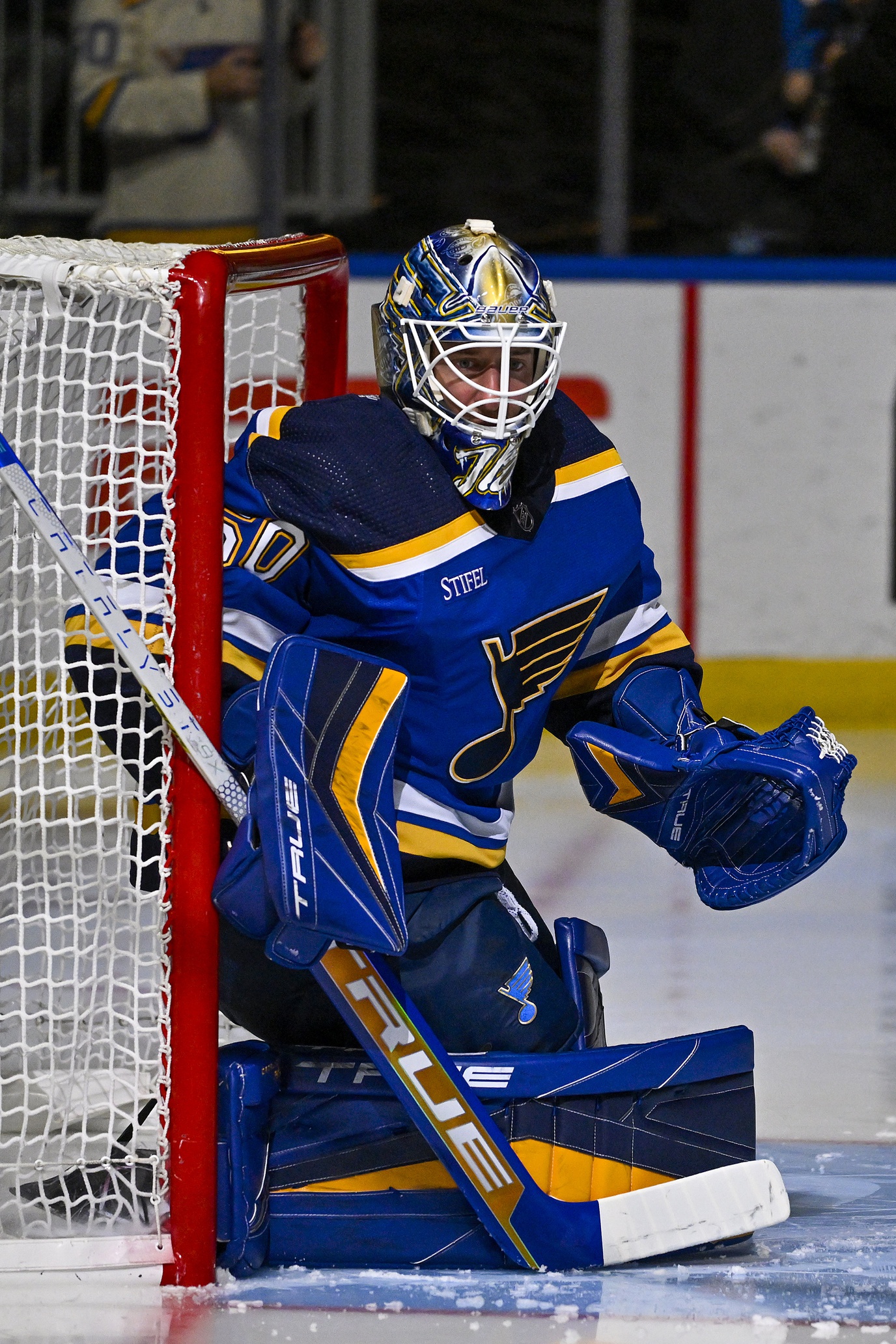 Binnington has been hit or miss in recent years when it comes to playing at the level of a starting goaltender, let alone one of the higher-paid ones. Last season was one of the better ones as he finished sixth in the league in games played while being tied for eighth in save percentage (with Hofer, among others). Unfortunately, that’s the highest save percentage he’s had in the last five years. Binnington is the seventh-highest-paid goalie in the league in terms of AAV for 2024-25, sixth if you take Carey Price (who will once again be on LTIR) out of the equation. While the Blues received a level of performance at least close to that range last season, they haven’t had that with enough consistency to get a good return on this contract.
Salary Cap Deep Dive: Nashville Predators
Navigating the salary cap is one of the most important tasks for a front office. Teams that can avoid total cap chaos by walking the tightrope of inking players to deals that match their value (or compensate for future value without breaking the bank) remain successful. Those that don’t often see struggles and front office changes.
PHR will look at every NHL team and give a thorough look at their cap situation heading into the 2024-25 season. This will focus more on players who are regulars on the roster versus those who may find themselves shuttling between the AHL and NHL. All cap figures are courtesy of PuckPedia. We begin with a look at the Central Division; next up is Nashville.
Nashville Predators
Current Cap Hit: $84,904,199 (under the $88MM Upper Limit)
Entry-Level Contracts
F Luke Evangelista (one year, $797.5K)
Evangelista’s first full NHL campaign was a good one as he notched 39 points after putting up 15 points in 24 games in 2022-23. That isn’t a statistical profile that suggests a long-term agreement will be forthcoming but if he can have a similar offensive showing this season, Evangelista could approach the $3MM mark on a bridge agreement.
Signed Through 2024-25, Non-Entry-Level
D Dante Fabbro ($2.5MM, UFA)
F Gustav Nyquist ($3.15MM, UFA)
Nyquist came to Nashville in the middle of a down season which hurt his market last summer. However, his first full season with the Preds was his best as he set new career bests in assists (52) and points (75). A repeat showing could give him a shot at a fair-sized raise, albeit on a short-term deal as he’ll be 36 when the 2025-26 season kicks off.
Fabbro has shown flashes of being a key secondary piece on Nashville’s back end in the past but has settled into more of a depth role in recent years. That said, he’s still just 26 and as a right-shot player, he should still command a fair bit of interest next summer in free agency. Even if he stays in the role he’s had lately, he should push past the $3MM mark on his next contract.
Signed Through 2025-26
F Mark Jankowski ($800K, UFA)
D Jeremy Lauzon ($2MM, UFA)
F Michael McCarron ($900K, UFA)
D Luke Schenn ($2.75MM, UFA)
F Cole Smith ($1MM, UFA)
F Colton Sissons ($2.857MM, UFA)
D Spencer Stastney ($825K, RFA)
G Scott Wedgewood ($1.5MM, UFA)
Sissons’ seven-year contract drew some ire at the time for someone whose role was somewhat limited at the time but it has held up relatively well in most of those seasons. He has provided enough secondary scoring to give them some value on that front while being a key defensive player. He should land another multi-year deal above $3MM if that holds up the next two years. Smith has emerged as a viable fourth-line physical winger over the last two seasons. Those players tend to do well on the open market still so if he can push past the double-digit goal mark, he could double his price tag in 2026. McCarron and Jankowski have been depth players throughout their careers and are likely to see their future contracts check in relatively close to the league minimum.
Schenn had a resurgent season in 2022-23, moving him from someone making around the minimum salary to someone making nearly four times that much. He had a limited role with the Preds last season; it’s fair to suggest they were expecting him to cover more than 15 minutes a night. Continuing with that level of ice time could land him back near the minimum in 2026.
Lauzon was counted on to play a bigger role last season, ranking fourth among Nashville blueliners in ATOI while leading the NHL in hits by 60 over the next closest player. Two more years like that would give him a strong market heading to free agency where doubling his current price tag could be doable. Stastney split last season between Nashville and AHL Milwaukee and might be in a similar role this season. He’ll need to crack the lineup full-time before having a shot at passing the $1MM mark.
Wedgewood had a good run as the backup in Dallas which allowed him to get a 50% raise on this deal with Nashville. Barring injury, he won’t be counted on to play as many games as a top-level backup and if that winds up being the case, that will prevent him from getting closer to the top backup money ($3MM or more) that many netminders have received in recent years.
Signed Through 2026-27
D Alexandre Carrier ($3.75MM, UFA)
F Thomas Novak ($3.5MM, UFA)
F Ryan O’Reilly ($4.5MM, UFA)
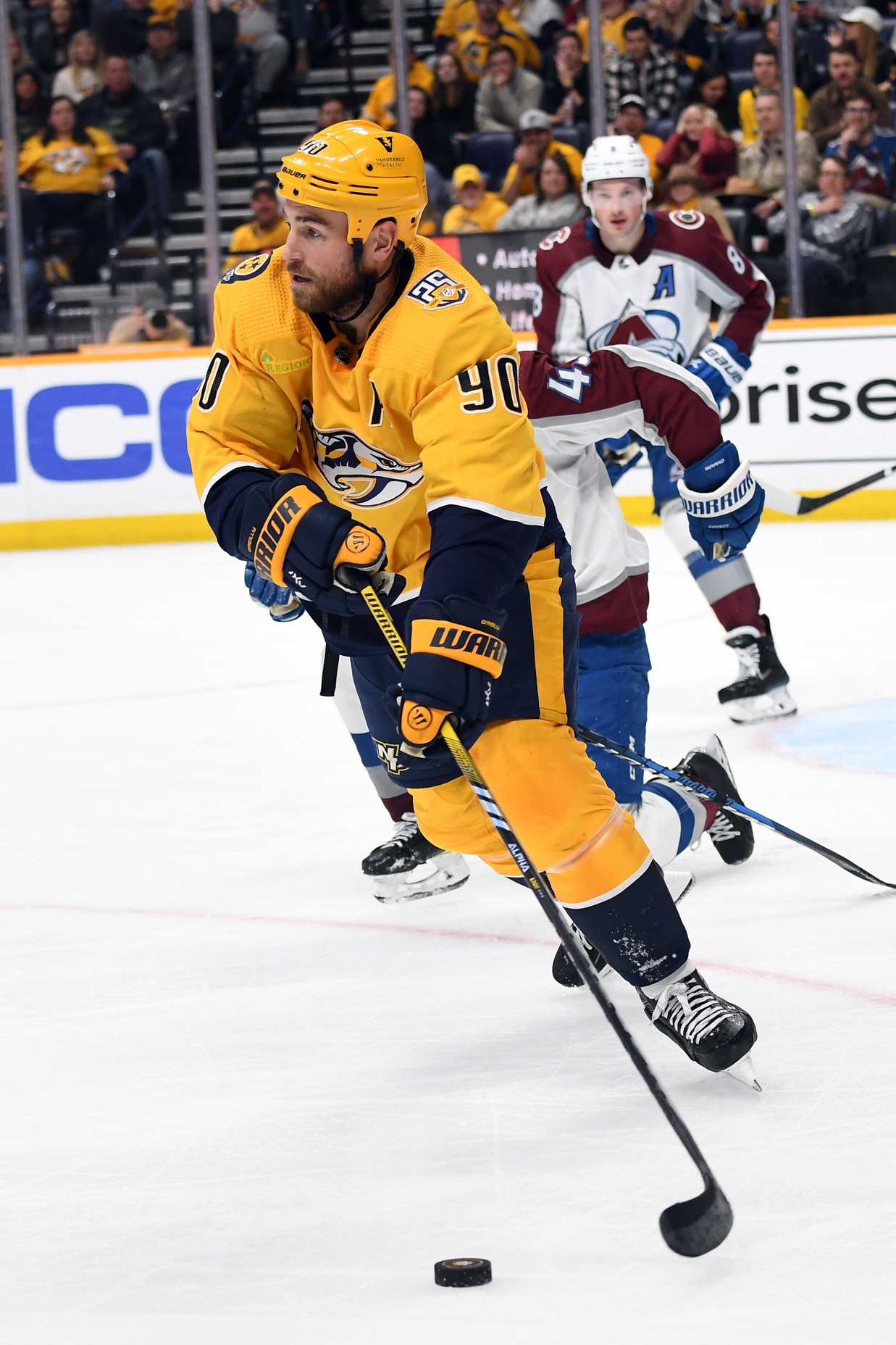 The decision to sign O’Reilly as their top center last summer was a bit of a curious one considering that he hadn’t been in that role for several years and the fact he was coming off his lowest point-per-game rate since he was a teenager. However, he showed that he still had a high level of offense in his game while continuing to be an above-average player at the faceoff dot and a strong defender. Even if there’s a bit of a dip in his production given some of the extra firepower brought in this summer, this is still a good price tag if O’Reilly ultimately settles in as more of a second liner. There may be some concern for the final year of the deal when he’s 36 but right now, this has worked out quite well for the Preds.
Novak was a feel-good story in 2022-23, putting up 43 points in 51 games after being recalled from the minors. He showed last year that the performance wasn’t just a mirage, surpassing the 40-point mark again, earning himself this new deal in the process. As long as Novak continues to stay around the 40-point range, Nashville will get at least a reasonable return on this contract.
Carrier bounced back well after a rough 2022-23 season, spending a lot of time in Nashville’s top four which gave him some leverage heading to the open market. He opted not to test it, instead accepting a 50% increase in his cap hit, not a bad outcome for someone who only became a regular NHL player in 2021-22.
Salary Cap Deep Dive: Minnesota Wild
Navigating the salary cap is one of the most important tasks for a front office. Teams that can avoid total cap chaos by walking the tightrope of inking players to deals that match their value (or compensate for future value without breaking the bank) remain successful. Those that don’t often see struggles and front office changes.
PHR will look at every NHL team and give a thorough look at their cap situation heading into the 2024-25 season. This will focus more on players who are regulars on the roster versus those who may find themselves shuttling between the AHL and NHL. All cap figures are courtesy of PuckPedia. We begin with a look at the Central Division; next up is Minnesota.
Minnesota Wild
Current Cap Hit: $87,243,590 (under the $88MM Upper Limit)
Entry-Level Contracts
D Brock Faber (one year left on ELC at $925K, has signed extension)
F Marat Khusnutdinov (one year, $925K)
F Liam Ohgren (three years, $886.6K)
F Marco Rossi (one year, $863.3K)
Potential Bonuses
Faber: $250K
Khusnutdinov: $850K
Ohgren: $475K
Rossi: $850K
Total: $2.425MM
Khusnutdinov spent last season in the KHL but with his team there missing the playoffs, he was able to get into 16 games down the stretch with the Wild. He didn’t do a lot with somewhat limited minutes but that’s not entirely surprising for someone making their debut late in the season. A top-six role seems unlikely which makes a bridge deal the most probable outcome, one that’s a bit too early to handicap while hitting his bonuses seems unlikely. Ohgren, meanwhile, also got his feet wet with Minnesota late in the year and held his own. In a perfect world, he finds his way onto the roster, giving the Wild some secondary scoring depth. However, with their cap situation, it wouldn’t be surprising to see him start at AHL Iowa to allow them to bank some early-season cap space but he should be up at some point. It doesn’t seem likely that he’ll hit his bonuses unless he’s a full-timer and makes an impact on the scoresheet.
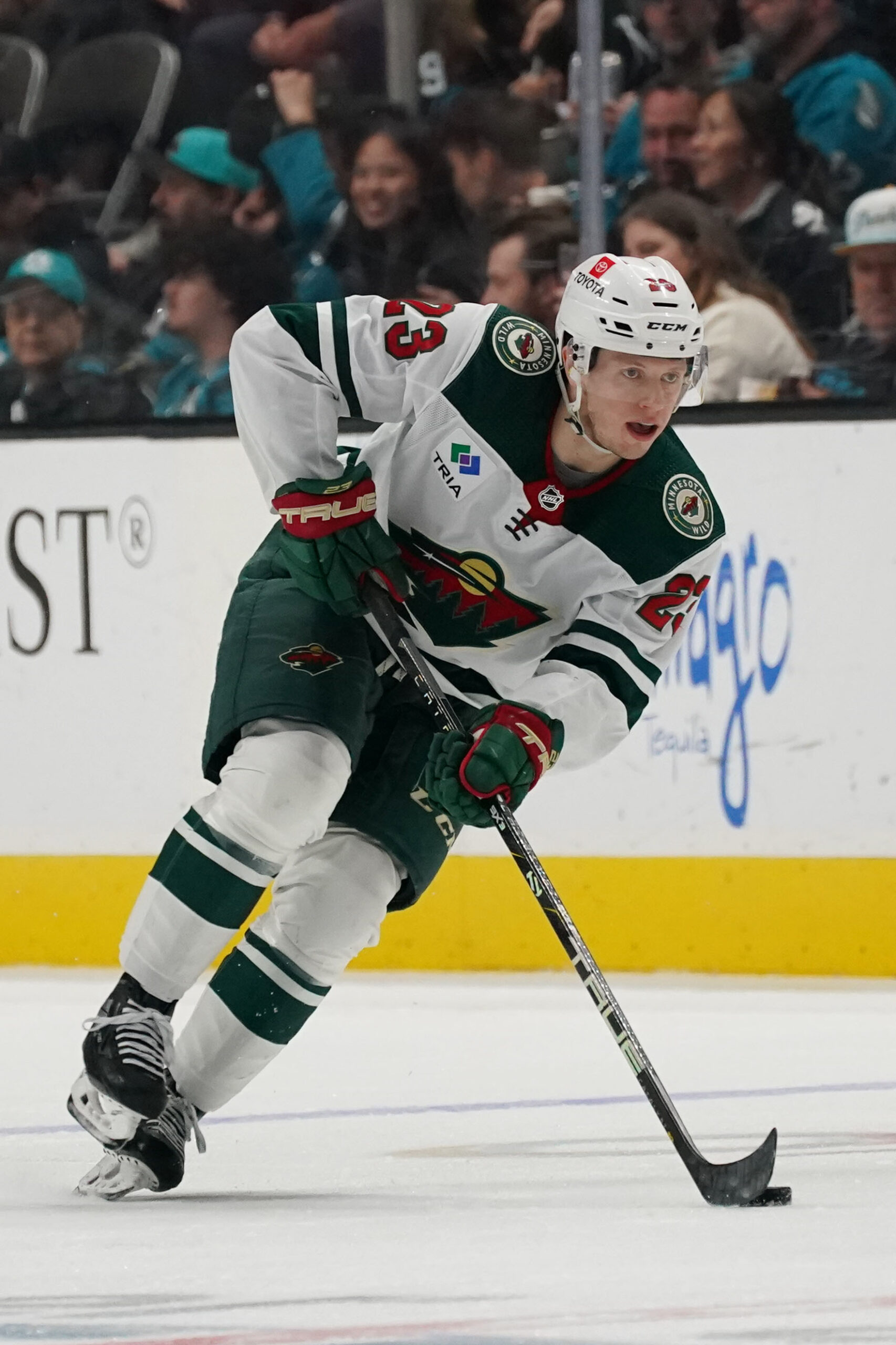 Rossi made the jump to the NHL full-time last season and turned in a solid rookie campaign with 21 goals and 19 assists although that didn’t stop him from being in trade speculation earlier this offseason. He reached two of his ‘A’ bonuses last season (ATOI and goals) and assuming he has a similar role this year, he has a good chance at reaching those again, counting at $212.5K apiece. Considering the perception of his availability, it stands to reason that Minnesota’s preference is probably going to be a bridge deal. If Rossi has another season like 2023-24, that contract should surpass $3MM per year on a two-year pact while a long-term agreement would likely push past $5MM per season.
Faber is worth a quick mention here due to the bonuses as they weren’t in the first or second year of his deal. If he has anywhere near a repeat performance from a year ago, it’s going to be safe to pencil those into Minnesota’s cap planning.
Jesper Wallstedt (one year, $925K plus $425K in bonuses) isn’t mentioned above as while he’s expected to see some action between the pipes, it’s unlikely they’ll be able to carry him on the roster on a full-time basis. That means the bonuses won’t be hit and with what’s likely to be a limited NHL workload, his next deal likely maxes out at what San Jose gave Yaroslav Askarov (two years, $2MM per season); it wouldn’t be shocking if it came in well below that either.
Signed Through 2024-25, Non-Entry-Level
D Declan Chisholm ($1MM, UFA)
G Marc-Andre Fleury ($2.5MM, UFA)
F Marcus Johansson ($2MM, UFA)
F Reese Johnson ($775K, RFA)
F Jakub Lauko ($787.5K, RFA)
D Jonathon Merrill ($1.2MM, UFA)
Johansson didn’t light it up like he did after being acquired at the trade deadline the year before although 30 points for this price point isn’t bad value. However, he’s someone who hasn’t had a lot of success on the open market in recent deals before this one so it wouldn’t be surprising to see his next contract land around this one. Lauko was acquired from Boston at the draft and was brought in to add some grit on the fourth line. With a rather limited overall track record (just 83 career NHL games), his next deal shouldn’t cost much more than $1MM barring an offensive outburst in 2024-25. Johnson was signed to a two-way deal after being non-tendered by Chicago to avoid arbitration. He’ll likely see action on the fourth line if he makes the team but with over 140 NHL games, he’s a potential non-tender candidate again as well.
Merrill saw his stock drop a bit last season, averaging less than 13 minutes a night when he was in the lineup. A serviceable depth defender, it wouldn’t be surprising if the Wild tried to run him through waivers to open up a bit of flexibility; all but $50K of the contract would come off the books when he’s in the minors. Looking ahead, he’ll have a hard time pushing past the $1MM mark unless he can re-establish himself closer to the 15-plus minute mark. Chisholm, meanwhile, fared well after being claimed midseason from Winnipeg but a limited track record hurt his market value this summer. If he can stay as a full-time option on the third pairing, doubling his price tag could be doable.
Many expected Fleury to retire but he opted to come back for one final season. He’s coming off a down year but if he can bounce back a bit, Minnesota should get decent value with this price tag being below the top backup options.
Signed Through 2025-26
D Zach Bogosian ($1.25MM, UFA)
G Filip Gustavsson ($3.75MM, UFA)
F Kirill Kaprizov ($9MM, UFA)
F Mats Zuccarello ($4.125MM, UFA)
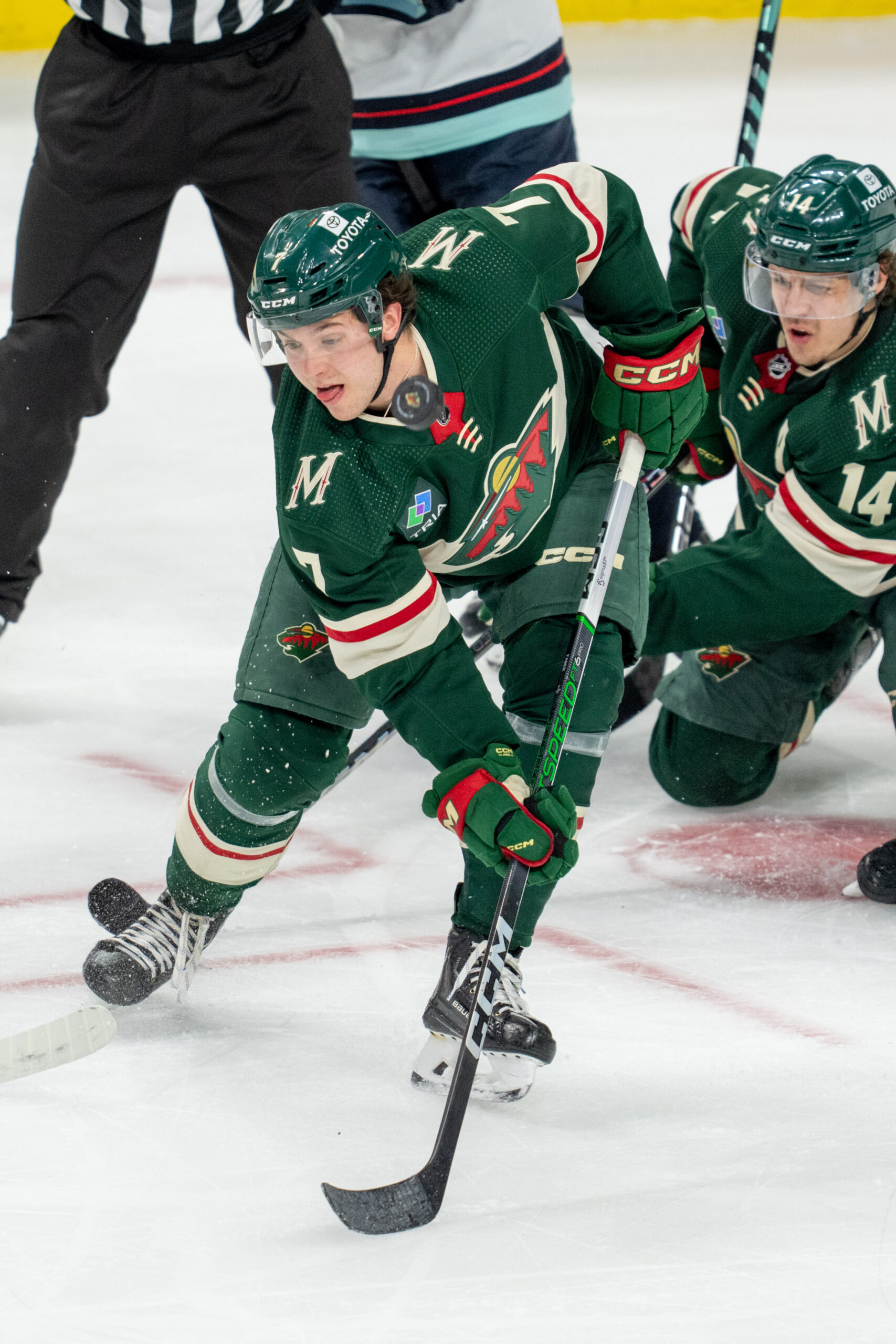
Kaprizov has emerged as one of the top wingers in the NHL and he will be signing this deal at the age of 29, meaning he will still have some prime years left when the time comes to sign his next contract. As a result, it wouldn’t be surprising to see him surpass Artemi Panarin’s $11.643MM AAV; while his point totals haven’t been as high, the increase in the salary cap between the two contracts should make the difference. Zuccarello signed this extension early and has put up at least 63 points the last three seasons. If that holds up, the Wild will do quite well here. Even if the output starts to drop, it should hold up relatively well. He’ll be entering his age-39 year on his next contract which means it’s far from a guarantee that there will be a next contract.
Bogosian did well in a limited role after being acquired from Tampa Bay. As long as he stays around that fifth slot in terms of usage, they’ll do relatively well with this contract.
Gustavsson wasn’t expected to necessarily repeat his breakout numbers from 2022-23 but he didn’t exactly come close to them either. He dropped 32 points on his save percentage while his goals-against average went up by nearly a full goal per game. The end result was a stat line that was below average, even for a second-stringer. It’s safe to say they’ll be counting on some sort of rebound.
Signed Through 2026-27
F Ryan Hartman ($4MM, UFA)
D Jared Spurgeon ($7.875MM, UFA)
Hartman didn’t get back to his output from 2021-22 but he still reached the 20-goal mark. As long as he can stay there and play down the middle, this contract should age well.
Spurgeon, meanwhile, is coming off an injury-plagued year. When healthy, he’s a top-pairing player but whether he can still be one for the final three seasons of this contract remains to be seen as he’ll turn 35 in late November. It’s possible as a result that this one could become an issue for Minnesota down the road.
Salary Cap Deep Dive: Dallas Stars
Navigating the salary cap is one of the most important tasks for a front office. Teams that can avoid total cap chaos by walking the tightrope of inking players to deals that match their value (or compensate for future value without breaking the bank) remain successful. Those that don’t often see struggles and front office changes.
PHR will look at every NHL team and give a thorough look at their cap situation heading into the 2024-25 season. This will focus more on players who are regulars on the roster versus those who may find themselves shuttling between the AHL and NHL. All cap figures are courtesy of PuckPedia. We begin with a look at the Central Division; next up is Dallas.
Dallas Stars
Current Cap Hit: $81,756,241 (under the $88MM Upper Limit)
Entry-Level Contracts
F Mavrik Bourque (one year, $894K)
F Wyatt Johnston (one year, $894K)
F Logan Stankoven (two years, $814K)
Potential Bonuses
Johnston: $318.75K
Stankoven: $82.5K
Total: $401.25K
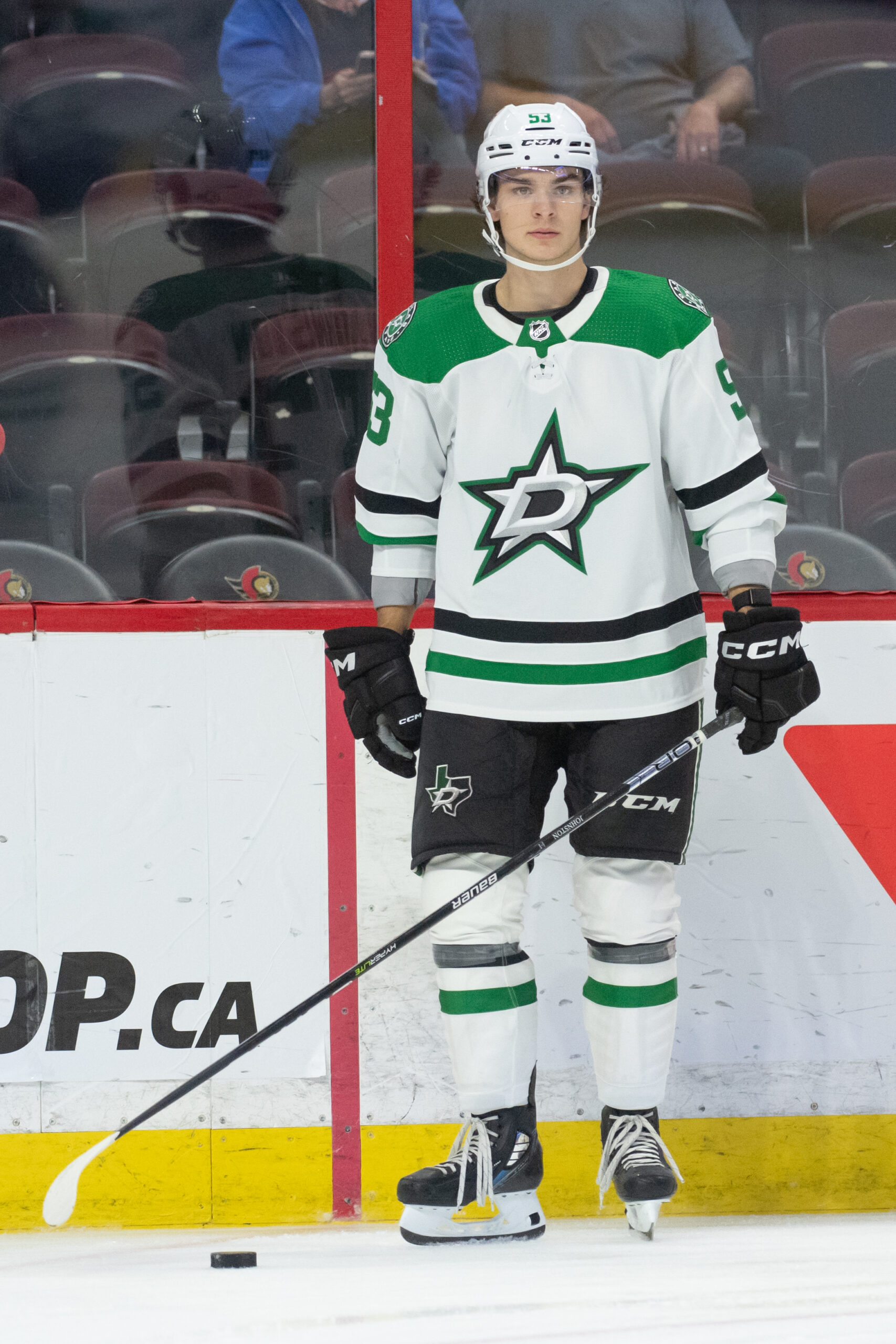 It’s fair to say that Johnston has provided significant value on his contract so far. After putting up 24 goals and 41 points in his rookie season, those numbers jumped to 32 and 65 respectively last year while also tying for the team lead in playoff scoring. This is the type of player that the Stars will want to lock up on a long-term agreement. However, that deal is going to be quite pricey. At this point, if Johnston has even a similar performance this coming season let alone a more productive effort, he could be looking for $8MM or more on that second contract. If their cap situation ultimately dictates a short-term second deal, it’s likely to come in around the $6MM range.
Stankoven was one of the top scorers in the minors last season before being recalled and was productive in a middle-six role. Assuming he locks down a full-time spot this year, he could make a case for a longer-term second contract, one that is a bit too early to project at this point. Bourque eventually took over as the top scorer at the AHL level with Stankoven’s departure and only got into one regular season game with Dallas. That should change this season but unless he has a big year offensively, he’s someone who will likely wind up with a bridge deal for his second contract.
Signed Through 2024-25, Non-Entry-Level
F Jamie Benn ($9.5MM, UFA)
F Colin Blackwell ($775K, UFA)
F Evgenii Dadonov ($2.25MM, UFA)
F Matt Duchene ($3MM, UFA)
D Esa Lindell ($5.8MM, UFA)
D Nils Lundkvist ($1.25MM, RFA)
G Jake Oettinger ($4MM, RFA)
D Brendan Smith ($1MM, UFA)
F Sam Steel ($1.2MM, UFA)
When Benn signed this contract, he was among the top-scoring wingers in the NHL. While he hasn’t been able to get to that level of production (high-80s in points) since then, he has rebounded nicely over the last couple of seasons, notching 78 and 60 points respectively. While that’s not a great return on this price tag, he’s still producing like a core player. Given his age when his next contract will begin (36), the AAV might be closer to the $5MM mark. If he signs a one-year deal next time out, he’ll be eligible for performance incentives, similar to what Dallas had been doing with Joe Pavelski before his retirement.
Duchene was a late entrant to the free agent market last summer so the one-year, $3MM deal he signed then made sense for both sides, seemingly positioning himself for a raise and a multi-year guarantee this past summer. Instead, he opted to stick around on the same contract, leaving some money and security on the table in the process. It’s possible he agrees to do so again next summer but if he doesn’t, he could still land a three-year (or so) agreement closer to $4.5MM per season. Dadonov wasn’t as productive as he was late in the 2022-23 season after being acquired but with 23 points in 51 games, he still provided a decent return on this deal. He has indicated that he doesn’t want any early extension talks and has left the door open to finishing up his career in the KHL.
Steel had a decent season in the bottom six but his arbitration eligibility was a concern, resulting in him being non-tendered. While he did have some interest elsewhere, he ultimately elected to remain with the Stars. With that outside interest, Steel should be able to land this deal or a bit more next summer if he has a similar showing this season. Blackwell struggled with injuries the last two seasons which certainly didn’t help his cause going into free agency. Nonetheless, as a capable penalty killer who can play center in a pinch, he could rebuild his value with a good showing in 2024-25 and push past the $1MM mark on his next contract.
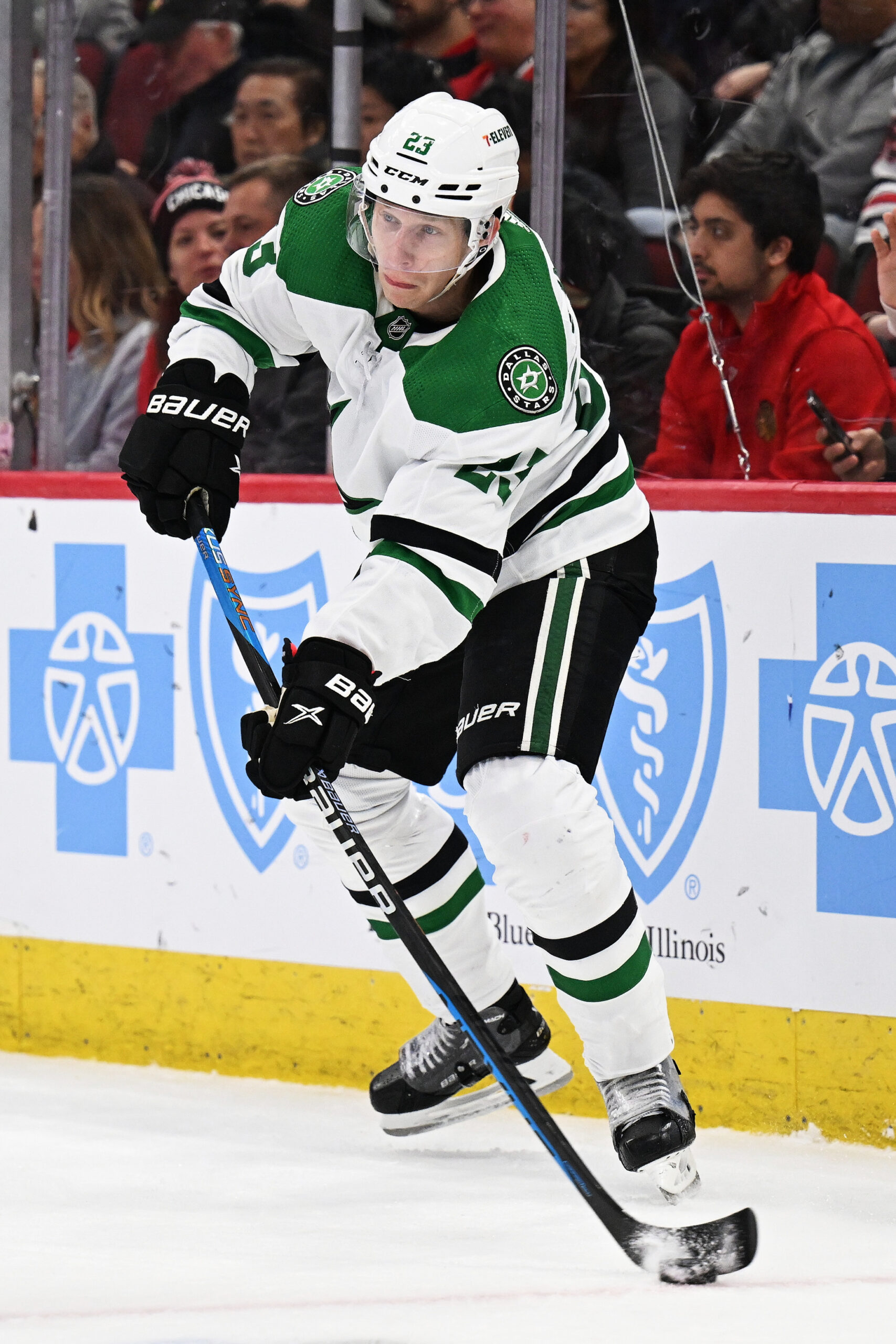 Lindell is one of the more intriguing defensemen league-wide who is heading into the final year of his contract. When he signed this contract back in 2019, he was coming off a bridge deal and what looked like a breakout 32-point campaign. If he could find another gear offensively, Lindell would become quite a bargain at this price point. Instead, he hasn’t gotten back to that total since with his best output coming this past season at 26. While Lindell is still a very capable defensive defender, the limited production will limit his market to an extent as will the fact he’ll be 31 when his next contract starts. With the cap starting to go up, a small raise could be doable but if he wants a long-term agreement (seven or eight years), it wouldn’t be surprising if the AAV came in slightly below this, barring an offensive breakout in the coming months.
Lundkvist hasn’t been able to provide the secondary offensive contributions Dallas was hoping for when they moved a pair of draft picks (including a first-rounder) for him in 2022. Then, when the playoffs came around, his playing time was just 4:28 per night in a dozen games when he wasn’t a healthy scratch. Thus, it wasn’t entirely shocking that he was non-tendered to avoid arbitration although the fact he was brought back might have. He’ll once again look to earn some trust from the coaching staff (and perhaps a small raise if he’s able to do so) but will be a non-tender candidate next summer as well. Smith came over in free agency and is set to play a depth role. Now 35, it’s likely he’ll be going year-to-year on similarly-priced contracts from here on out.
Signed Through 2025-26
D Matt Dumba ($3.75MM, UFA)
F Mason Marchment ($4.5MM, UFA)
F Jason Robertson ($7.75MM, RFA)
Robertson has emerged as a legitimate top-line star, notching 268 points in 238 games over the last three seasons. Signing after a 41-goal effort, the two sides worked out a rare four-year bridge deal, one that gives Dallas some good value on the contract while also setting him up for a pricier contract in his final RFA-eligible campaign. He’s owed a qualifying offer of $9.3MM with arbitration rights at that time and unless he struggles over the next couple of seasons, there’s a good chance he’ll push past the $10MM mark in 2026. Marchment, meanwhile, rebounded nicely after a quiet first season in Dallas. If he stays near the 50-point mark over the next two seasons, he’ll have demonstrated enough consistency to give him a much stronger market, especially with the premium typically given to power forwards. That could push his next price tag past $6MM per season.
Dumba didn’t get the long-term deal he sought last summer, resulting in him taking a one-year pact with an eye on having more success this summer. That didn’t exactly happen as he had a quiet season in Arizona before finishing up with Tampa Bay, putting him back on the open market in a similar spot. Getting two years at this money was more due to his track record than his performance last season; he’ll need to rebound if he wants a chance to get past the $4MM mark again in 2026.
Signed Through 2026-27
G Casey DeSmith ($1MM, UFA)
D Ilya Lyubushkin ($3.25MM, UFA)
F Tyler Seguin ($9.85MM, UFA)
It was expected that the best was yet to come from Seguin when he signed this contract in 2018. While his best showing came just after this contract was signed (in the last season of his old deal), he has struggled since then, only putting up more than 50 points just once, that coming last season when he got to 52. He’s still a capable top-six player but this is a price tag that’s well above market value. His next deal might check in closer to half of this one as a result.
Lyubushkin rarely plays above the third pairing but did well enough last season to command his best contract so far. That said, unless he can take on a bit more of a workload, it’s hard to see him getting another raise in 2027 as this is already on the rich side for someone destined to play around 16-17 minutes a night.
DeSmith gave Vancouver a small boost at the backup goalie position last season but after being surpassed by Arturs Silovs on the depth chart in the playoffs, it was clear DeSmith would be going elsewhere. He elected for stability and a winning environment over chasing top dollar, giving the Stars a reliable second-string option at a below-market cost.