
Salary Cap Deep Dive: Nashville Predators
Navigating the salary cap is one of the more important tasks for any GM. Teams that can avoid total cap chaos by walking the tightrope of inking players to deals that match their value (or compensate for future value without breaking the bank) remain successful. Those that don’t see struggles and front office changes.
PHR will look at every NHL team and give a thorough look at their cap situation for the 2022-23 season and beyond. This will focus more on players who are regulars on the roster versus those who may find themselves shuttling between the AHL and NHL. All cap figures are courtesy of CapFriendly.
Nashville Predators
Current Cap Hit: $80,873,601 (under the $82.5MM Upper Limit)
Entry-Level Contracts
None
Signed Through 2022-23, Non-Entry-Level
D Mark Borowiecki ($900K, UFA)
D Alexandre Carrier ($733K, RFA)
D Dante Fabbro ($2.4MM, RFA)
F Cody Glass ($874K, RFA)
F Tanner Jeannot ($800K, RFA)
G Kevin Lankinen ($1.5MM, UFA)
F Michael McCarron ($750K, UFA)
F Zach Sanford ($850K, UFA)
F Kiefer Sherwood ($750K, UFA)
F Cole Smith ($750K, UFA)
It feels like Glass is in a make-or-break year. After spending most of last season in the minors, he broke camp with Nashville and has been a regular early on. Young centers with size get long leashes and simply holding down a regular role will earn him another opportunity, albeit at one that isn’t much higher priced than this. But if he can’t do that, they could look to move on. That won’t be the case for Jeannot who became an impact power forward last season and is off to a strong start this year. If he tops the 20-goal mark again, comparable contracts elsewhere could push him past the $5MM mark, especially with arbitration eligibility.
As for the pending UFAs, Sanford didn’t have a particularly strong market this summer and quickly settled for this contract with the hopes of rebuilding his value. With limited minutes early on, that’s unlikely to happen and accordingly, his next deal should come in close to this one. Smith has held a regular role early but with limited NHL experience prior to this season, he’d be hard-pressed to pass the $1MM mark unless he picks things up offensively. McCarron and Sherwood have bounced between the NHL and the minors in recent years and are likely heading for contracts at or near the minimum again.
Fabbro was once viewed as a future top-four piece but his average ice time is down considerably this season and is fifth among Nashville defenders. A $2.4MM qualifying offer with arbitration rights is a bit on the high side for a fifth blueliner and if he doesn’t recover from his slow start, he could be a candidate for a change of scenery. If he rebounds and gets back to the 19-minute ATOI mark, a small raise to the $3MM range could be doable. Borowiecki is best utilized as a seventh defender at this point of his career and players like that aren’t likely to surpass $1MM on their contracts. If he sticks around next year, it’ll be at a similar price point. Carrier has worked his way into a regular role and logged nearly 21 minutes a game last season. With one year of RFA eligibility remaining, the Preds will likely want to work out a multi-year deal that could push his cost into the $3MM range.
Lankinen is another free agent signing that is looking to rebuild his value after a tough year in Chicago. A bounce-back year could make him one of the more intriguing UFAs next summer as he’ll only be 28. A strong showing might be enough to push him closer to the $2.5MM AAV range on a multi-year deal.
Signed Through 2023-24
F Nino Niederreiter ($4MM, UFA)
F Eeli Tolvanen ($1.45MM, RFA)
F Yakov Trenin ($1.7MM, UFA)
Niederreiter’s first trip through unrestricted free agency wasn’t as successful as he likely hoped as he had to settle for a pay cut. The market for secondary wingers isn’t as strong as it was a few years ago but in 2024, there should be a higher jump in the salary cap which could give him a chance to get closer to the $5MM mark if he’s productive with the Preds. Trenin only has had one full season under his belt but had 17 goals in that year which gave him a bit of leverage this summer. This is basically another bridge deal to see if he can repeat that type of production. If so, he could add another million in free agency but if not, he’s likely looking at a small dip. Tolvanen has shown flashes of upside over the last couple of seasons but hasn’t been able to put together a consistently productive season yet. If he can get to the 20-goal mark and cement himself as part of Nashville’s future core, he could more than double this contract. If not, his last RFA year should be closer to $2MM.
Signed Through 2024-25
F Mikael Granlund ($5MM, UFA)
F Ryan Johansen ($8MM, UFA)
G Juuse Saros ($5MM, UFA)
Johansen had some tough seasons but last year was arguably his best, at least in his time with the Predators. He still didn’t put up top-line production but he played a big role in Nashville having two strong scoring lines. He’ll be 33 when this deal is up and at this point, it still seems safe to forecast a dip in his salary, even if he remains around the 60-point mark. Granlund had by far his best season with Nashville last year and is off to a similar start this year. He doesn’t score very often anymore but as an all-situations veteran that is spending more time at center than he used to, he’s filling an important role. He’ll also be 33 when this contract is up and if he’s still logging 20 minutes a night, he could get a little more at that time as long as his production doesn’t go back to what it was a couple of years ago.
Saros has certainly established himself as a quality starter after playing more than 40 games for the first time last season. He’s undersized which scares a lot of teams off but if he has three more seasons like last year (one that saw him finish third in Vezina Trophy voting), he should have a strong market that could push his AAV past the $7MM mark.
Salary Cap Deep Dive: Minnesota Wild
Navigating the salary cap is one of the more important tasks for any GM. Teams that can avoid total cap chaos by walking the tightrope of inking players to deals that match their value (or compensate for future value without breaking the bank) remain successful. Those that don’t see struggles and front office changes.
PHR will look at every NHL team and give a thorough look at their cap situation for the 2022-23 season and beyond. This will focus more on players who are regulars on the roster versus those who may find themselves shuttling between the AHL and NHL. All cap figures are courtesy of CapFriendly.
Minnesota Wild
Current Cap Hit: $79,231,774 (under the $82.5MM Upper Limit)
Entry-Level Contracts
D Calen Addison (one year, $795K)
F Matt Boldy (one year, $880.8K)
F Marco Rossi (three years, $863K)
Potential Bonuses
Addison: $82.5K
Boldy: $600K
Rossi: $850K
Boldy didn’t play a full season last year but if he had, he might have had a shot at the Calder Trophy. He has very quickly established himself as a legitimate top-six forward and has been on the front line for good chunks of this season early on. He’s the type of player that GM Bill Guerin would love to sign long-term but fitting that in could be difficult. If Boldy produces at a similar pace as last year over a full season, a bridge deal for him could be in the $4MM range. Rossi is just getting his NHL career started but is being eased in slowly so it’s unlikely that he’ll hit any of his ‘A’ bonuses this season.
Addison has shown some upside in limited NHL action and is off to a nice start this year as he looks to establish himself as a full-time regular. If he can do that, he’ll have a good chance of hitting most of his games played bonuses but with a limited track record and Minnesota’s cap situation next summer, he’s almost certainly heading for a bridge deal. A decent season offensively could have that contract in the $2MM range.
Signed Through 2022-23, Non-Entry-Level
F Brandon Duhaime ($750K, RFA)
D Matt Dumba ($6MM, UFA)
F Frederick Gaudreau ($1.2MM, UFA)
G Filip Gustavsson ($787.5K, RFA)
F Tyson Jost ($2MM, RFA)
F Sam Steel ($825K, RFA)
Expectations for Jost have been high since he was drafted 10th overall back in 2016 but he hasn’t been able to live up to them. Last season, Colorado decided to move on from him but Jost hasn’t been much better with the Wild. Owed a $2.25MM qualifying offer, Jost will need to come close to his career high in points (26) if he wants a shot at being tendered. Gaudreau has been a nice example of perseverance paying off as he became a full-fledged regular for the first time last season at 28. He is coming off a career year offensively and even if he comes up a little short of the 44 points he had, he’s in a position to potentially double his price tag next summer. Steel had a pretty soft market this summer after being non-tendered by Anaheim but is still controllable for two more years through arbitration. It’s possible that he could be viewed as a replacement for Jost if he’s willing to stay around this price point. Duhaime provided some depth scoring with plenty of hits last season which is a combo that typically looks good in arbitration. Doubling his AAV is achievable if he puts up around 20 points this season.
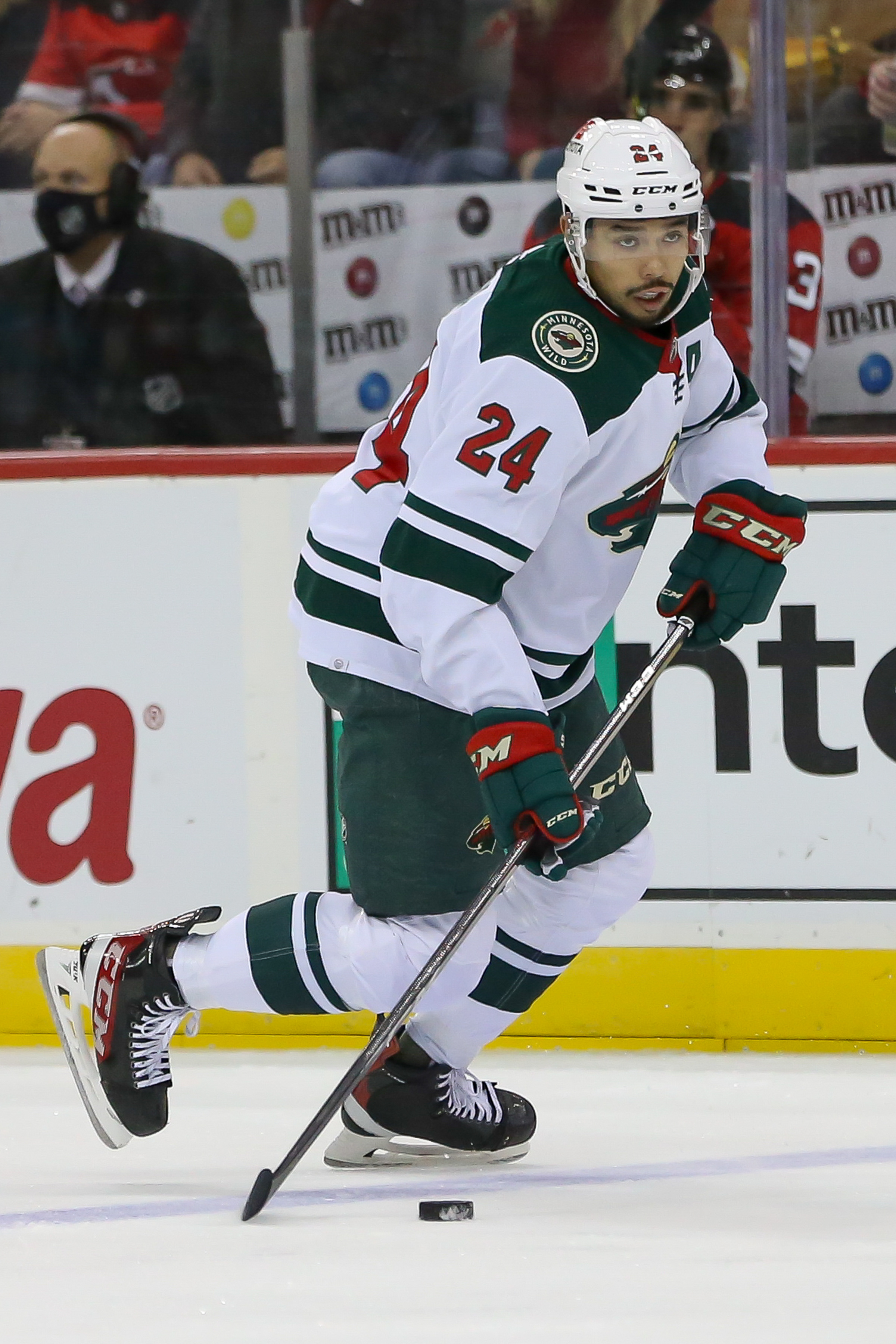 Dumba’s future with Minnesota has been in question for several years now. First, there was speculation that he wouldn’t be able to reach a new contract but he did. Then, he was supposed to go to Seattle in expansion but the Wild found a way to protect him. Now, the question is can they afford to keep him? He’ll be 29 next season and hasn’t been able to come close to the 50 points he put up in 2017-18. The lower point total I think actually works in Minnesota’s favor if they want to try to re-sign him; between that and his age, his next contract shouldn’t check in too much higher than this one. Knowing the cap is going to go up in the not-too-distant future, there’s a path to extending this partnership if both sides are interested.
Gustavsson came over in an offseason trade from Ottawa and has yet to establish himself as a full-time backup. He’ll get that chance this season but chances are that his playing time will be limited enough that a multi-year agreement will be hard to come by. If he does well, a one-year deal in the $1.5MM range that buys both sides more time to evaluate would be a reasonable outcome.
Signed Through 2023-24
F Connor Dewar ($800K, RFA)
G Marc-Andre Fleury ($3.5MM, UFA)
F Marcus Foligno ($3.1MM, UFA)
D Alex Goligoski ($2MM, UFA)
F Ryan Hartman ($1.7MM, UFA)
F Mats Zuccarello ($6MM, UFA)
Zuccarello had a career year last season and is off to an even better start this year as he is starting to make his cap hit look like a bargain. However, he’ll be 37 when this contract is up which won’t help his market value. If he stays around the 60-point mark, he could land a couple of years around this price tag but a big increase isn’t likely. Foligno has put up a particularly high shooting percentage in the last two years but even factoring in some regression, he can be counted on for third-line production, strong defensive play, and lots of physicality. He’ll be 33 when his next contract starts and a three-year deal could push him past the $4MM mark if he can hang around the 30-point plateau.
One player that appears to be well on his way toward a significant raise is Hartman. After bouncing around early in his career, he has secured a full-time role in the top six with the Wild and is doing so as a center which only helps his value. The market for second-line centers is well over $6MM and if Hartman has a couple more seasons like last year, that could certainly be attainable for him. As for Dewar, he’s trying to establish himself as a regular but if he continues with a limited role, he’s someone that shouldn’t get a whole lot more than his qualifying offer which checks in just below $900K.
Goligoski took a high-priced one-year deal to return home last season and then accepted this much cheaper two-year contract to stay there. He is more of a depth defender at this point and considering he’ll be 39 just days after this agreement expires, there’s a good chance that this is his last deal.
There were some questions about whether or not Fleury would want to stick around with the Wild after joining them late last season but then accepted this deal, one that gives Minnesota a veteran starter for the price of a high-end backup. He’ll be 39 when this contract is up and it’s difficult to see him signing another one after this.
Signed Through 2024-25
F Jordan Greenway ($3MM, UFA)
D Jon Merrill ($1.2MM, UFA)
D Jacob Middleton ($2.45MM, UFA)
Greenway has shown some signs of blossoming into an impact power forward but has struggled with consistency and staying healthy. If he’s able to turn that around and become a 20-goal player, he could see his price tag jump past the $5MM mark in 2025. Even if he hovers around the 30-point mark, a raise is almost certain with how sought-after physical wingers that can provide some secondary scoring are.
Middleton was brought in to help strengthen the depth of the back end after a breakout season last year that saw him become a regular for the first time at 26. That limited track record allowed Guerin to work out an extension that gave Middleton some stability while still being at a below-market rate for someone playing in the top four. Three more seasons with a similar performance to last year will make his market a lot stronger next time around when he could add more than a million to his current cost. Merrill didn’t generate much interest in his last two trips through free agency so he understandably jumped at a three-year extension offer last January. For a depth defender, it’s a fair cost but it’s unlikely he’ll land much more than that three years from now.
Salary Cap Deep Dive: Dallas Stars
Navigating the salary cap is one of the more important tasks for any GM. Teams that can avoid total cap chaos by walking the tightrope of inking players to deals that match their value (or compensate for future value without breaking the bank) remain successful. Those that don’t see struggles and front office changes.
PHR will look at every NHL team and give a thorough look at their cap situation for the 2022-23 season and beyond. This will focus more on players who are regulars on the roster versus those who may find themselves shuttling between the AHL and NHL. All cap figures are courtesy of CapFriendly.
Dallas Stars
Current Cap Hit: $82,358,333 (under the $82.5MM Upper Limit)
Entry-Level Contracts
F Ty Dellandrea (one year, $863K)
F Wyatt Johnston (three years, $894K)
D Nils Lundkvist (two years, $925K)
F Jacob Peterson (one year, $842.5K)
Potential Bonuses
Dellandrea: $537.5K
Lundkvist: $850K
Peterson: $82.5K
Total: $1.47MM
Johnston cracked the opening roster out of training camp and a decision on whether or not to burn the first year of his contract is fast approaching. So far, he has played well enough to stick around so his deal should stay on the books into next week when he passes the nine-game mark. Dellandrea is in a regular role this year after spending all of last season in the minors. He’s still a likely candidate to land a bridge deal and unless his production increases, he’s unlikely to hit his ‘A’ bonuses. Peterson, meanwhile, was a regular for most of last year but has hardly played this season which puts him in short-term bridge territory as well. His bonuses are games played-based and it’s unlikely he’ll max out on those.
Dallas paid a high price to land Lundkvist, sending a first-rounder in 2023 along with a 2025 conditional selection to land him from the Rangers. If he can lock down a regular role and be productive, he’s someone that could bypass a bridge deal while hitting some of his ‘A’ bonuses this season. That said, with some of the big-ticket contracts on the horizon, the Stars might have to go the bridge route with Lundkvist as well.
Signed Through 2022-23, Non-Entry-Level
F Luke Glendening ($1.5MM, UFA)
F Denis Gurianov ($2.9MM, RFA)
D Joel Hanley ($750K, UFA)
F Roope Hintz ($3.15MM, RFA)
G Anton Khudobin ($3.33MM, UFA)
F Joel Kiviranta ($1.05MM, UFA)
F Joe Pavelski ($5.5MM, UFA)
Potential Bonuses
Pavelski: $500K
Pavelski surprisingly had a career year last season at the age of 37, allowing him to extend his stay with the Stars. He maxes out on the games played bonuses at 50 but adding those achievable incentives gives Dallas some flexibility to roll those over to next year if needed. As long as he continues to produce on their top line, he should have a strong market next July if he decides to test the open market. Hintz is one of the big-ticket contracts on the horizon. This is the final year of his bridge deal and he’ll be a year away from UFA eligibility at that time. Another 70-point performance should push that asking price past the $7MM mark if not higher.
Gurianov has been hit or miss throughout his career to the point where it looked like it would be questionable for him to be qualified at $2.9MM. They found a way to make it work this year but if he has another season like the last few, he’s a luxury they likely won’t be able to afford. He has already been scratched once this year which isn’t a good sign. Glendening continues to be an elite player at the faceoff dot which will once again generate some strong interest on the market. It won’t be at the highest of salaries – something in the $1.5MM range might be his ceiling – but he should have several suitors to choose from if he doesn’t re-sign. Kiviranta hasn’t been able to find his scoring form from the bubble that landed him this deal although he’s at least holding down a regular spot in the lineup. That could help land him a small raise next summer but nothing substantial.
Hanley has been an ideal seventh defender for Dallas in recent years, someone that can cover minutes where necessary even after long stretches in the press box and is willing to play for the minimum. They’ll need a seventh defender at that price tag moving forward and it very well could be him.
Khudobin is in the minors but still is on the books directly for more than $2.2MM. At this point, they’re hoping for an injury to pop up somewhere where they can offload most of the deal. Meanwhile, he’ll be 37 next season. A one-year deal around the $1MM range is about where his value would be right now.
Signed Through 2023-24
D Jani Hakanpaa ($1.5MM, UFA)
D Colin Miller ($1.85MM, UFA)
G Scott Wedgewood ($1MM, UFA)
Miller struggled the last four seasons but his two before that showed some legitimate offensive upside which helped him land this contract. But if he struggles to produce on his deal, he’s going to have a hard time landing more than this on his next deal; if anything, his value probably would go down in that situation. Hakanpaa has shown that he’s capable of logging a regular role while being one of the most prolific hitters in this league. He didn’t have much of a track record when he hit free agency in 2021 but he will this time around. If he keeps up this type of performance, he could add a million on his next deal in a contract that would be similar to Radko Gudas.
Wedgewood opted to not test free agency to get some long-desired stability. He has bounced around in recent years, often spending time as a third-stringer. If he can hold his own as a full-time backup, he could have a chance to double this price tag in 2024.
Signed Through 2024-25
F Jamie Benn ($9.5MM, UFA)
F Radek Faksa ($3.25MM, UFA)
D Esa Lindell ($5.8MM, UFA)
G Jake Oettinger ($4MM, RFA)
D Ryan Suter ($3.65MM, UFA)
Benn’s contract has been a negative-value one from the moment it was signed. He’s still a capable NHL player but he’s better off being on the third line in an ideal situation. The typical going rate for that role is about a third of this cost. A few years ago, Faksa looked to be on his way to being a quality two-way center but over the last couple of seasons, his scoring has fallen off completely. If he can get back to the 30-point mark routinely over the next few years, he could get another deal around this price point. Otherwise, his price tag will be coming down.
Lindell has been a fixture on the top pairing for several years now although his usage is down in the early going this season. That stretch aside, he’ll be 31 when this contract is up and if he gets back to being a 22-minute or more player that can chip in with some secondary scoring, he could land a small raise on a long-term (six or seven-year) deal. Suter surprised some by getting four years from the Stars last summer and while he’s logging 23 minutes a night now, that will drop by the end of the contract. If he decides to stick around after this pact, it’ll almost certainly be a one-year agreement.
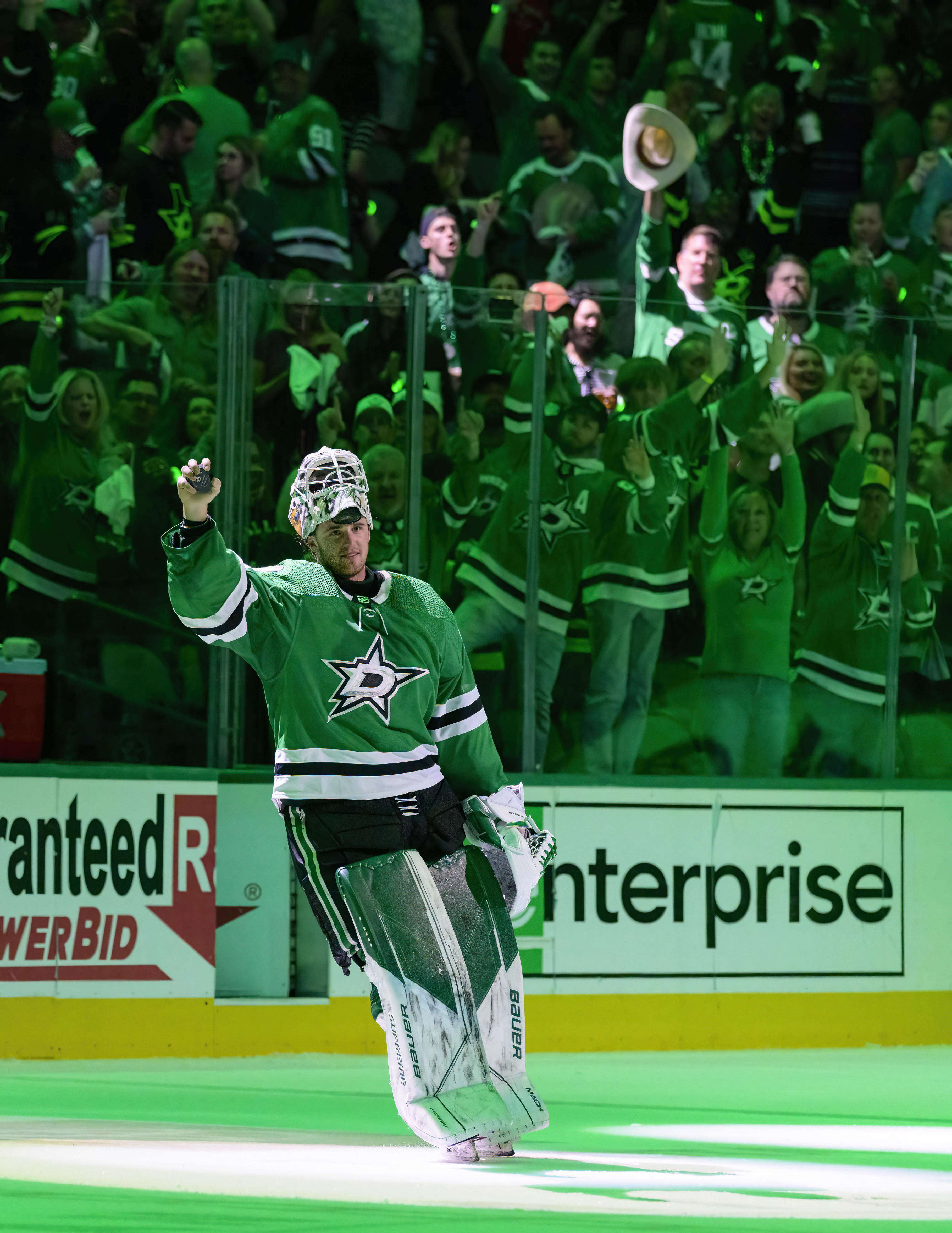 Oettinger’s contract was one of the more intriguing RFA ones that were signed this summer. With barely one season’s worth of games under his belt and no arbitration rights, his contract was going to be somewhat of a market-setter. This bridge contract was the obvious outcome (especially with their cap situation) and it’s one that sets up Oettinger nicely. He’ll be owed a $4.8MM qualifying offer and will have arbitration rights at that time. If he remains the starter for this time (a very likely scenario) and the salary cap is starting to go up by then (also a very likely scenario), Oettinger should be in a position to command at least $7MM on a max-term agreement for his next contract.
Salary Cap Deep Dive: Colorado Avalanche
Navigating the salary cap is one of the more important tasks for any GM. Teams that can avoid total cap chaos by walking the tightrope of inking players to deals that match their value (or compensate for future value without breaking the bank) remain successful. Those that don’t see struggles and front office changes.
PHR will look at every NHL team and give a thorough look at their cap situation for the 2022-23 season and beyond. This will focus more on players who are regulars on the roster versus those who may find themselves shuttling between the AHL and NHL. All cap figures are courtesy of CapFriendly.
Colorado Avalanche
Current Cap Hit: $80,628,637 (under the $82.5MM Upper Limit)
Entry-Level Contracts
D Bowen Byram (one year, $894K)
F Martin Kaut (one year, $863K)
F Alex Newhook (one year, $908K)
Potential Bonuses
Byram: $2.5MM
Kaut: $425K
Newhook: $850K
Total: $3.775MM
The departure of Nazem Kadri has created an opportunity for Newhook to push for that spot on the second line. If he can grab it, it’s possible that Colorado could look to give him a longer-term deal in the $4MM range, one that’s above market value now but below it down the road. Otherwise, a two-year bridge contract in the $2MM range is likely where he winds up. He’ll need to produce in their top six to have a chance at some of his ‘A’ bonuses. Kaut cleared waivers to start the season but might be up for a little while due to some injuries up front. That said, he will have a very limited role based on how little they deploy their fourth line so he’s a candidate to take less than his qualifying offer in exchange for a higher two-way salary or perhaps a one-way deal at the minimum.
Byram, when healthy, was an impactful player last year and is off to a good start this season. He’s the type of young core player that a team would typically like to lock up close to the maximum term. That’s harder to predict here due to Byram’s concussion history. He has missed a lot of time with that particular issue already so there might be some hesitance to commit that type of deal to him at this time. A bridge contract could still run Colorado past $4MM per year based on some recent comparables so they’ll have to leave some room for that. If Byram stays healthy, he’s a strong bet to reach the $850K in ‘A’ bonuses in his deal so that will need to be accounted for either this season or next.
Signed Through 2022-23, Non-Entry-Level
F Andrew Cogliano ($1.25MM, UFA)
F J.T. Compher ($3.5MM, UFA)
F Darren Helm ($1.25MM, UFA)
F Dryden Hunt ($763K, UFA)
D Erik Johnson ($6MM, UFA)
F Jayson Megna ($750K, UFA)
F Evan Rodrigues ($2MM, UFA)
Compher avoided arbitration with this contract back in 2019, one that he’d become more productive during the contract. That hasn’t happened as instead, he has basically produced at a similar point-per-game level since then. He’ll be 28 next summer and as a center, he should have a fairly strong market but unless he can lock down Kadri’s old role, it’s hard to see him getting much more than this. Rodrigues was a late signee after misreading the market early in free agency. If he can produce at a similar level as a year ago, he should be able to get a bit more than this on the open market next year as he’ll have shown that 2021-22 wasn’t an outlier.
Cogliano had a nice playoff run which earned him this one-year deal back in July. Now in his age-35 season, he’ll almost certainly be going year to year and with his production being at the level of a fourth liner in recent seasons, his price tag should dip a bit more next summer. Helm is in a very similar situation although he has been a bit more productive than Cogliano lately and can play center which, in theory, should give him a bit of a stronger market. Even so, his role has been decreasing and he’s better off as a fourth liner so Helm’s next contract should be similar to this one. Hunt and Megna haven’t established themselves as regulars yet and accordingly, unless something changes, they’ll be signed for close to the minimum next year. Colorado can’t afford to go much higher than that for their end-of-roster spots either.
Johnson was a core defender for a long time although his role and efficiency have dipped in recent seasons. He’ll be 35 next summer and while he is doing well enough to land a contract somewhere, it’s likely that it will check in at least 50% lower than his current deal.
Signed Through 2023-24
G Pavel Francouz ($2MM, UFA)
D/F Kurtis MacDermid ($988K, UFA)
D/F Jacob MacDonald ($763K, UFA)
D Devon Toews ($4.1MM, UFA)
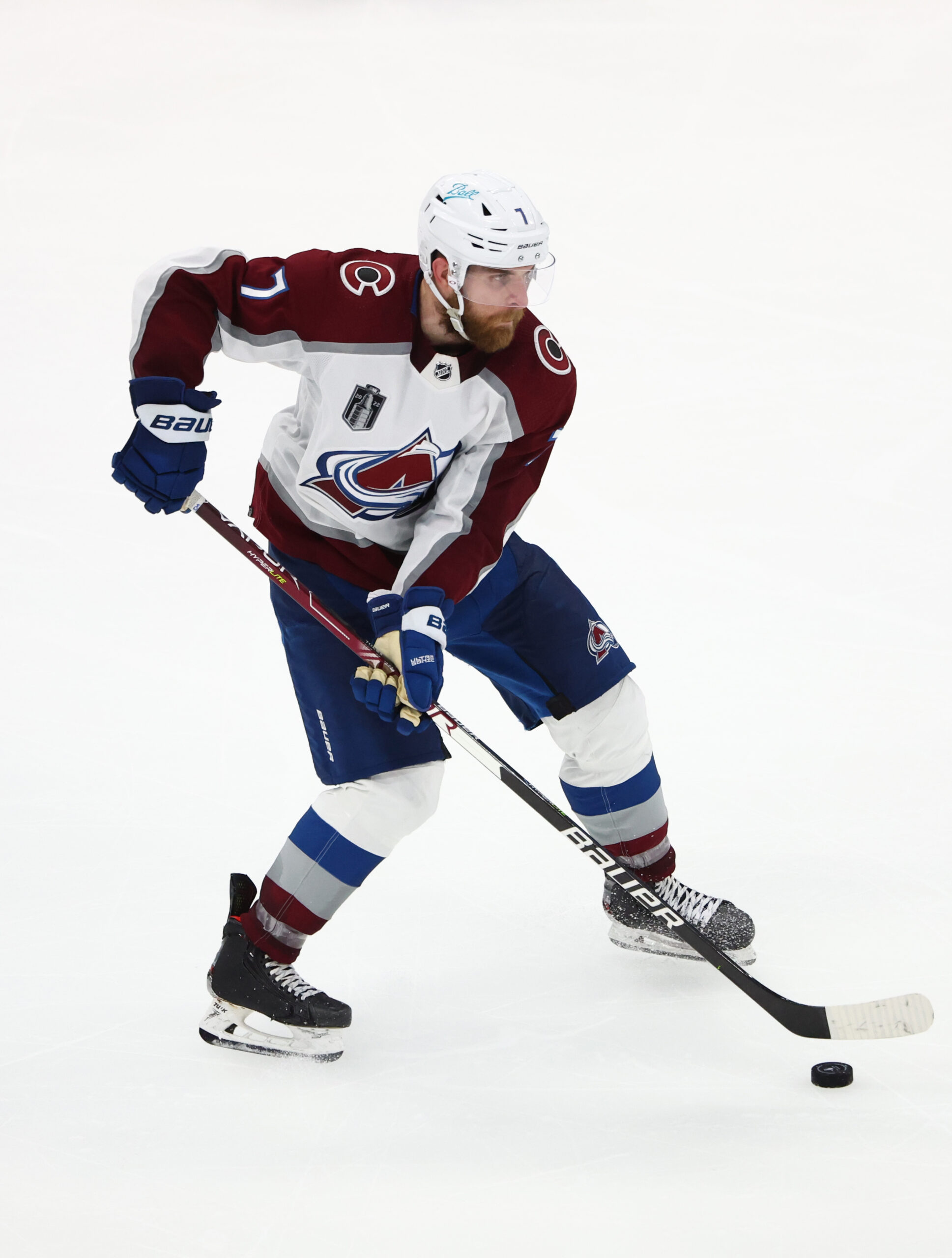 GM Joe Sakic took advantage of the Islanders needing to clear cap space, allowing them to acquire Toews for a couple of second-round picks and then signed him to this contract which has become team-friendly in a hurry. His offensive game has taken off with Colorado and he’s coming off a 57-point campaign. Toews will be 30 when his next contract will begin and he’s already on his way to a considerable raise. If he stays around the 50-point mark these next two seasons though, he could be doubling his price tag and then some on a max-term deal. This is the next big-ticket contract that Sakic will need to work out although he’ll have to wait until next July to work on it.
MacDermid has moved between defense and the wing somewhat regularly and has held his own in both limited roles. Of course, he’s best known for his physicality and the positional versatility helps. But with minimal production, it’s unlikely that MacDermid will be able to do much better than this on his next deal. MacDonald has largely been in the minors in his career and will need to establish himself as a regular if he wants to get much more than the minimum two years from now.
Francouz has battled injury issues but when he is healthy, he has done well as evidenced by a career .921 SV% heading into the season. But with the injuries and a limited track record (57 NHL appearances heading into the year), he opted for stability and took this extension last season. If he can stay healthy and play at a similar level, he could be in line for something in the $3MM range on the open market in 2024.
Signed Through 2024-25
F Logan O’Connor ($1.05MM, UFA)
G Alexandar Georgiev ($3.4MM, UFA)
F Mikko Rantanen ($9.25MM, UFA)
Rantanen has been a legitimate top-line star for several seasons now and is coming off a year that saw him set new career highs in goals, assists, and points. While this is already his eighth season with some NHL action under his belt, he’s still only 25 and will hit the open market at 28. The cap is expected to be a fair bit higher then than it is now and he’ll still be in his prime. Accordingly, Rantanen could be a candidate to best Artemi Panarin’s $11.643MM AAV in free agency if he gets there. O’Connor has just one full NHL campaign under his belt (last season) but was a valuable bottom-six role player and the Avs opted for the early team-friendly extension. As long as he continues to be a regular and produces around 20-25 points, he’ll be in position to make a few hundred thousand more on his next deal.
Georgiev was acquired from the Rangers this past summer once Colorado realized that they wouldn’t be able to bring back Darcy Kuemper. He had some good and bad moments with New York and that allowed Colorado to sign him for a rate that is close to what veteran backups that can make 30 starts get on the open market. If Georgiev can play like a legitimate starter with the Avalanche, it will be a very team-friendly contract while the netminder could command closer to $5.5MM on his next deal.
Salary Cap Deep Dive: Chicago Blackhawks
Navigating the salary cap is one of the more important tasks for any GM. Teams that can avoid total cap chaos by walking the tightrope of inking players to deals that match their value (or compensate for future value without breaking the bank) remain successful. Those that don’t see struggles and front office changes.
PHR will look at every NHL team and give a thorough look at their cap situation for the 2022-23 season and beyond. This will focus more on players who are regulars on the roster versus those who may find themselves shuttling between the AHL and NHL. All cap figures are courtesy of CapFriendly.
Chicago Blackhawks
Current Cap Hit: $76,467,143 (under the $82.5MM Upper Limit)
Entry-Level Contracts
D Alec Regula (one year, $867K)
D Filip Roos (two years, $925K)
Roos signed as an undrafted free agent after spending last season in the SHL but not many were expecting him to make the team right away. That’s what he did, however, as he is logging over 16 minutes a night in the early season thus far. It’s still too early to forecast his next deal as a lot will depend on whether he keeps his lineup spot throughout the season or if they decide time in Rockford is required. Regula spent most of his first two professional years in the minors and has had a limited role when he has been in Chicago. That’s the type of player that will likely receive a short-term bridge deal, perhaps a two-year pact that checks in a little lower than this but with more guaranteed money on a two-way contract with possibly one of those seasons being a one-way deal.
Signed Through 2022-23, Non-Entry-Level
F Andreas Athanasiou ($3MM, UFA)
F Max Domi ($3MM, UFA)
D Jack Johnson ($950K, UFA)
D Caleb Jones ($1.35MM, RFA)
F Patrick Kane ($10.5MM, UFA)
F Jujhar Khaira ($975K, UFA)
F Philipp Kurashev ($750K, RFA)
G Alex Stalock ($750K, UFA)
D Jarred Tinordi ($900K, UFA)
F Jonathan Toews ($10.5MM, UFA)
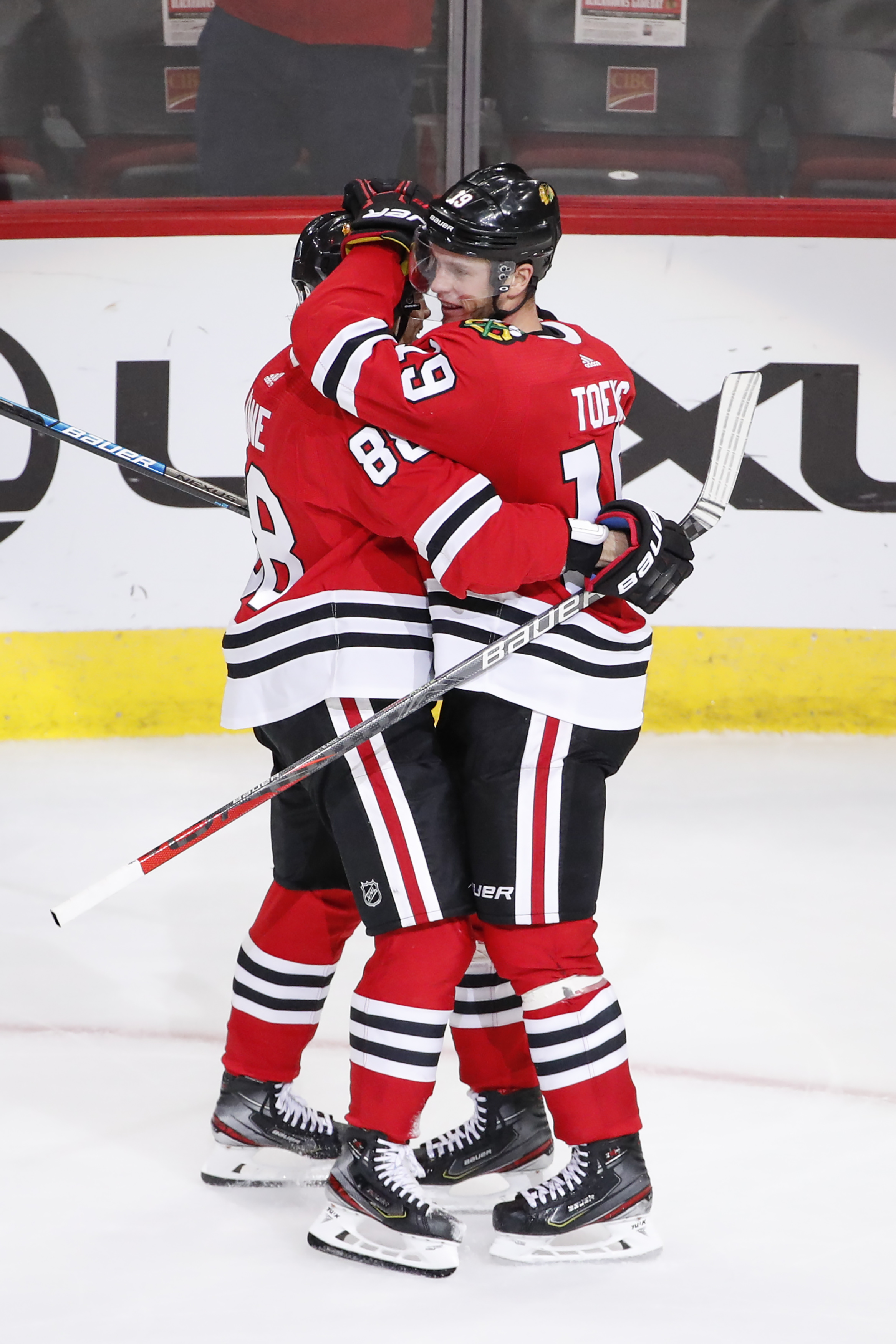 Kane and Toews have been on identical contracts for 13 straight years now but that will come to an end after this season. Kane remains one of the top offensive threats in the NHL and while it’s fair to expect that he’s going to slow down, he still should be an impact player for a few more years. His next deal probably won’t be $10.5MM but something around the $9MM mark should be achievable on a four-year deal or longer. Toews, on the other hand, has only had one high-end offensive season in recent years. While he remains a strong player at the faceoff dot and can kill penalties, his days of being a top-liner are over. Accordingly, his market value might be closer to half of his current price tag.
Domi and Athanasiou both came on identical deals this summer but at a much lower cost. They’re both looking for bounce-back seasons to build back some value. However, Athanasiou has had some good years lately and still didn’t have a particularly robust market in his previous trips through unrestricted free agency. Unless he gets closer to the 50-point mark this season, it’s hard to see his price tag going higher. As a center, Domi has a bit more potential when it comes to a bigger contract. He has had some down years since his 72-point campaign in 2018-19 but in a bigger role with Chicago, he at least has an opportunity to try to re-establish himself as a second liner which could give him a chance at a small raise.
Khaira has dealt with some injury issues the last couple of years and has been more of a fourth liner in that time. Accordingly, his next contract will come in close to this one. As for Kurashev, he’s on his prove-it deal, one that saw him take less than his qualifying offer to get a one-way guarantee. He has shown some flashes of promise early in his career and if he’s able to even get to 25-30 points this season, he’ll do enough to warrant a raise past the $1MM mark, especially with arbitration eligibility.
The younger Jones is still trying to get himself established as a full-time NHL player and has been on the third line when he has played for most of his career. He’ll be arbitration-eligible again this summer with a $1.35MM qualifying offer and a small raise could come his way if he’s able to stay healthy and on the third pairing. Johnson signed as a free agent this summer after being a depth player in Colorado. He could legitimately sign a similar type of contract in July around this price tag as it’s unlikely he’ll garner a multi-year deal now as he’ll turn 36 in January. Tinordi was somewhat surprisingly claimed off waivers after spending most of last season in the minors. It’s hard to see him getting much of a raise this summer but if he stays up for the full year with Chicago, another one-way deal could be doable.
The last two years have been tough for Stalock who was unable to play for most of that time due to myocarditis and he struggled in limited AHL action last season which limited his market this past summer. At his age (35), he’s probably going year-to-year moving forward but if he stays healthy and has a decent season, he should command more interest in July which would likely push his price tag past the $1MM mark.
Signed Through 2023-24
F Colin Blackwell ($1.2MM, UFA)
F Mackenzie Entwistle ($800K, RFA)
F Jason Dickinson ($2.65MM, UFA)
F Tyler Johnson ($5MM, UFA)
F Boris Katchouk ($758K, RFA)
F Sam Lafferty ($1.15MM, UFA)
G Petr Mrazek ($3.8MM, UFA)
F Taylor Raddysh ($758K, RFA)
Johnson was a cap dump by Tampa Bay and hasn’t produced at a top-six level with consistency for a few seasons now. On top of that, he is more of a winger than a center now which doesn’t help his value. He’ll be in his age-34 season on his next contract and it’s one that should be 50% lower at a minimum as things stand. Dickinson was a cap dump by Vancouver recently and isn’t too far removed from showing some third-line potential. If he can play at that level in Chicago, he could have a chance at a similar contract two years from now. But if he plays at the same level as last season with the Blackhawks, he’ll be closer to the level of a PTO candidate.
Blackwell came over in free agency after being a late-bloomer, only securing a regular NHL roster spot at 27. He has shown some offensive upside in that stretch and a contract like this for a fourth liner that could have a little upside is certainly reasonable. A similar showing to his last two seasons could give him a small bump in pay in 2024. Lafferty hasn’t produced much in his career but showed that he was capable of logging third-line ice time with Chicago last season. Maintaining that role would help his market value two years from now but he’ll need to produce more than single-digit goals to have a chance of really pushing his AAV up.
Entwistle is in a similar situation as Lafferty, just with a shorter track record. He provides Chicago with some physicality but the offense will need to come around if he wants a chance at a seven-figure contract. Raddysh didn’t produce much with Tampa Bay last season but impressed down the stretch with the Blackhawks, producing at close to a top-six level. Similar production coupled with arbitration rights could push him past the $2.5MM mark two years from now. Katchouk also came over from Tampa Bay and once he’s able to return, his priority will be simply securing a spot in the lineup on a regular basis which doesn’t bode well for the chances of a sizable increase in 2024.
Mrazek was a cap dump from Toronto back at the draft in a move that saw Chicago elevate a second-round pick into a first-rounder. He has shown flashes of playing at a number one level in the past but has struggled with consistency and staying healthy. He’ll need to provide at least some stability if he wants to land a contract around this price tag two years from now; at this point, a dip seems quite likely.
Salary Cap Deep Dive: Arizona Coyotes
Navigating the salary cap is one of the more important tasks for any GM. Teams that can avoid total cap chaos by walking the tightrope of inking players to deals that match their value (or compensate for future value without breaking the bank) remain successful. Those that don’t see struggles and front office changes.
PHR will look at every NHL team and give a thorough look at their cap situation for the 2022-23 season and beyond. This will focus more on players who are regulars on the roster versus those who may find themselves shuttling between the AHL and NHL. All cap figures are courtesy of CapFriendly.
Arizona Coyotes
Current Cap Hit: $65,578,566 (under the $82.5MM Upper Limit)
Entry-Level Contracts
F Dylan Guenther (three years, $894K)
F Matias Maccelli (one year, $853K)
F Jack McBain (one year, $884K)
D J.J. Moser (two years, $887K)
Potential Bonuses
Guenther: $850K
McBain: $850K
Moser: $32.5K
Total: $1.7325MM
Guenther is coming off a dominant season in the WHL but is in the situation that many NHL teams don’t like for their top prospects – they might not yet be good enough to be in the NHL on a full-time basis but are too good to play in junior. Unfortunately, there aren’t other options. Expect Arizona to drag out the time to get him to nine games so they can best assess whether he’s going to stay for the season. McBain signed quickly after being acquired last season and has held his own. So far, he has had somewhat of a limited role which will likely have him heading for a bridge deal. Unless both he and Guenther get big roles, they’re unlikely to hit their bonuses. Maccelli was quite productive in the minors last season although that wasn’t the case in his NHL action. Unless that changes this year, a bridge deal – perhaps even a one-year contract – will be on its way.
Moser came up midseason last year and didn’t look back, quickly playing his way into a regular role. His usage has been quite high early on (injuries are playing a role in that) but he looks like a long-term piece of the puzzle on the second pairing. He could be a player that Arizona views as somewhat comparable to Mattias Samuelsson in Buffalo (seven years, $30MM) where they might overpay at the beginning in the hopes of having a bargain at the end when they’re emerging from their rebuild.
Signed Through 2022-23, Non-Entry-Level
F Nick Bjugstad ($900K, UFA)
F Christian Fischer ($1.126MM, RFA)
D Shayne Gostisbehere ($4.5MM, UFA)
G Connor Ingram ($733K, RFA)
F Andrew Ladd ($5.5MM, UFA)
F Nick Ritchie ($2.5MM, UFA)
D Troy Stecher ($1.2MM, UFA)
D Conor Timmins ($850K, RFA)
D Juuso Valimaki ($1.55MM, RFA)
Let’s get Ladd out of the way first. He’s expected to miss all of the season and is LTIR-eligible although Arizona has no need to put him there since they have so much cap space. Ritchie was productive after Toronto unloaded his contract, scoring 10 goals in 24 games. That’s a small sample size but if he produces at a similar level, he could actually get a raise next summer. Halfway through last season, that would have sounded crazy. Fischer is getting to the point where he’s going to become a non-tender candidate unless he can start to produce more than a handful of goals per year. He plays a physical game but players that are known mostly for hitting are strict fourth liners and it’d be difficult to see them wanting to pay much more for someone in that role. Bjugstad has been on cheap deals the last couple of years and barring a big change, he’ll stay around that price tag moving forward.
Gostisbehere struggled at the end of his time with Philadelphia to the point where they sent multiple draft picks to the Coyotes to take on his contract. He responded with one of the best seasons of his career. A similar performance will give him a chance to get more on his next deal which would be a striking turnaround for someone who cleared waivers not long ago. Valimaki was a recent waiver claim from Calgary and will get a chance to turn things around in the desert. If he doesn’t, he’s a strong non-tender candidate as he’s owed a $1.86MM qualifying offer. Stecher came over in free agency this summer as a third-pairing option and while he might have a bigger role than that at times in Arizona, his price tag next summer should check in close to this one. Timmins, if healthy, has a chance to establish himself as a key part of their back end but he will probably land a one-year deal to give both sides more time to see what he can do.
Ingram recently joined the Coyotes after being claimed off waivers from Nashville. He’ll have a chance to be a full-time backup and a decent showing could give him a chance to double his qualifying offer which could push him into the $1.6MM range next season. On the other hand, if he struggles, his next deal might be a two-way one.
Signed Through 2023-24
F Travis Boyd ($1.75MM, UFA)
D Josh Brown ($1.275MM, UFA)
F Barrett Hayton ($1.775MM, RFA)
F Zack Kassian ($3.2MM, UFA)
F Bryan Little ($5.292MM, UFA)
F Liam O’Brien ($775K, UFA)
D Patrik Nemeth ($2.5MM, UFA)
Once again, let’s get the injured forward out of the way first. Arizona absorbed Little’s contract as part of the move to land McBain but he hasn’t played since November 2019 and won’t play again. His deal is also LTIR-eligible but they won’t need the extra cap space.
Kassian came over from Edmonton this summer in a draft-day move that allowed the Oilers to clear salary. When he’s on, he’s a capable power forward but his consistency and discipline have been issues. It’s unlikely he’ll come close to this on his next deal unless those elements improve over the next two years. Hayton eventually settled for a bridge contract that ensures a higher qualifying offer ($2.13MM) while giving him time to show that he can be a top-six player. If so, he could more than double that qualifier but if not, he’ll settle in closer to the $2.5MM range. Boyd was one of the feel-good stories last season. After being more of a depth player for most of his career, he did well in a top-six role, earning him some stability and a nice raise. If he stays around the 30-point mark for the next couple of years, there’s some room for that price tag to go up a bit more. Otherwise, he should settle in closer to the $1.25MM mark.
The Rangers compensated the Coyotes for taking on Nemeth’s deal, one that looked puzzling when it was signed a year ago. He’s a serviceable player on the third pairing but is making roughly twice what someone should in that role. At this point, he could be a PTO candidate in 2024 unless he establishes himself as a regular in their lineup. Brown is a blueliner that’s on the fringes of being a regular and unless he can become one, this is about as high of a contract as he can realistically expect to get.
Signed Through 2024-25
D Jakob Chychrun ($4.6MM, UFA)
D Dysin Mayo ($950K, UFA)
G Karel Vejmelka ($2.75MM, UFA)
Chychrun has only been featured in trade speculation for about a year and a half now. Not because he’s a bad player but because he’s an impact defenseman whom the Coyotes can command a high asking price for. If he can get to a contending team and play a big role there, he should easily pass the $6.5MM mark on his next deal. If his production gets near his 2020-21 level, then the $8MM range is where his next contract should fall. Mayo had a nice rookie season that saw him log more than 20 minutes a game but it came at the age of 25 which limited his leverage. This deal gives him a bit of security but carries very little risk for the Coyotes as even if he slips to being a seventh defender, it’s still not a bad contract for them. And if he stays in that top-four role, it becomes an extremely team-friendly deal.
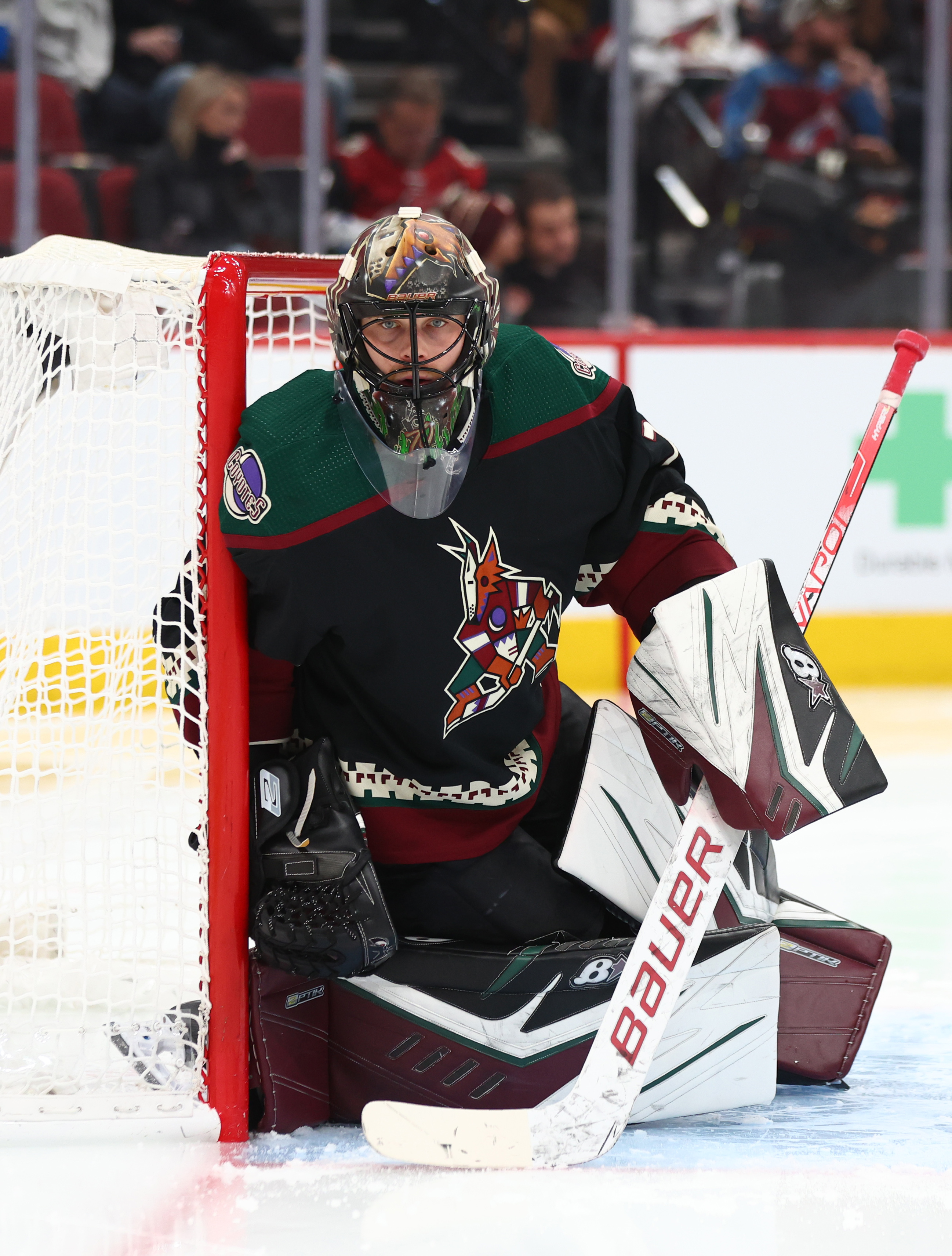 Vejmelka wasn’t expected to be the starter for Arizona last season. He was in his first season in North America after playing at home in the Czech Extraliga and expectations were low. He quickly played well enough to earn a longer look and not long after that, the number one job was his. This deal was signed just before the trade deadline and it’s one that gives them at least one netminder that they’re comfortable with in the remainder of their building years while he gets a lot more money than he could have expected when he signed with them. However, he’ll be hard-pressed to put up strong numbers during that time which won’t help his marketability for potential suitors in 2025.
Salary Cap Deep Dive: Washington Capitals
Navigating the salary cap is one of the more important tasks for any GM. Teams that can avoid total cap chaos by walking the tightrope of inking players to deals that match their value (or compensate for future value without breaking the bank) remain successful. Those that don’t see struggles and front office changes.
PHR will look at every NHL team and give a thorough look at their cap situation heading into the 2022-23 season. This will focus more on players who are regulars on the roster versus those who may find themselves shuttling between the AHL and NHL. All cap figures are courtesy of CapFriendly.
Washington Capitals
Current Cap Hit: $88,821,666 (over the $82.5MM Upper Limit)
Entry-Level Contracts
D Martin Fehervary (one year, $791K)
F Connor McMichael ($two years, $863K)
McMichael had a relatively quiet rookie campaign with the Capitals easing him into the thick of things. If he gets put into a more prominent role this season due to injuries, his offensive production could jump to a point where Washington wants to do something longer-term but at this point, a bridge deal is likely heading his way two years from now.
Fehervary’s rookie campaign was more impressive. He ranked third among Washington’s defensemen in ATOI while chipping in with plenty of physicality and some decent secondary production. This is the type of profile that some teams will look to try to do a long-term deal now to try to get him at a lower rate than market value at the end of the deal (think six years and an AAV over $3MM) but Fehervary would be better off waiting until next summer as a repeat performance could push a bridge deal towards the $2.5MM mark.
Signed Through 2022-23, Non-Entry-Level
F Connor Brown ($3.6MM, UFA)
F Lars Eller ($3.5MM, UFA)
D Erik Gustafsson ($800K, UFA)
F Carl Hagelin ($2.75MM, UFA)
F Garnet Hathaway ($1.5MM, UFA)
D Matt Irwin ($750K, UFA)
D Nick Jensen ($2.5MM, UFA)
F Marcus Johansson ($1.1MM, UFA)
D Dmitry Orlov ($5.1MM, UFA)
F Conor Sheary ($1.5MM, UFA)
F Dylan Strome ($3.5MM, RFA)
D Trevor van Riemsdyk ($950K, UFA)
Brown was Washington’s big addition up front this summer, coming over in a trade from Ottawa. With the Sens, he became a crucial two-way winger that can log heavy minutes but he likely won’t need to play 20 minutes a night with the Capitals which won’t help Brown’s market next summer. Right now, his next AAV should be in the $4.5MM range but if he’s able to show more offensively, he could surpass the $5MM threshold. Eller has been a solid third center for a long time in Washington for the last six years but is getting toward the point where there should be an expectation of diminishing returns. A return is definitely possible but after being at this AAV for nine years (including this one), he’s likely looking at a small dip a year from now.
How Strome fares will also play a role in Eller’s future. Non-tendered by Chicago, he signed with Washington where he’ll have a legitimate shot at a consistent top-six role. If he thrives, they’re likely to want to keep him over Eller moving forward. He had a strong market this summer in free agency and even a decent season in the 40-point range should nudge him towards at least a small raise next summer where he will once again be arbitration-eligible. Hagelin’s short-term future is in question as he tries to work his way back from an eye injury. He has been skating but didn’t suit up in the preseason. At this point, if he gets another deal, it’ll be a one-year agreement at a substantially lower rate (closer to the minimum) while he’s heading for LTIR to start the season.
Sheary is coming off one of the best seasons of his career and should be in line for a similar spot on the depth chart this year. That said, his profile (small and skilled) is the one we’ve seen have weaker markets than expected in free agency lately. Another 40-point season wouldn’t hurt his value but he might be someone that lands closer to $2MM on the open market than $3MM even with that production. Hathaway had a career year last season with 14 goals which chipping in with his usual physicality. Depth players often don’t have big markets in free agency but if he produces near that level again, power forwards are the exception which could push his AAV over the $2MM mark. Johansson decided to stick around after being brought back at the deadline and after two straight low-price, one-year deals, it’s safe to say that this is his market moving forward unless he has a surprisingly strong offensive season.
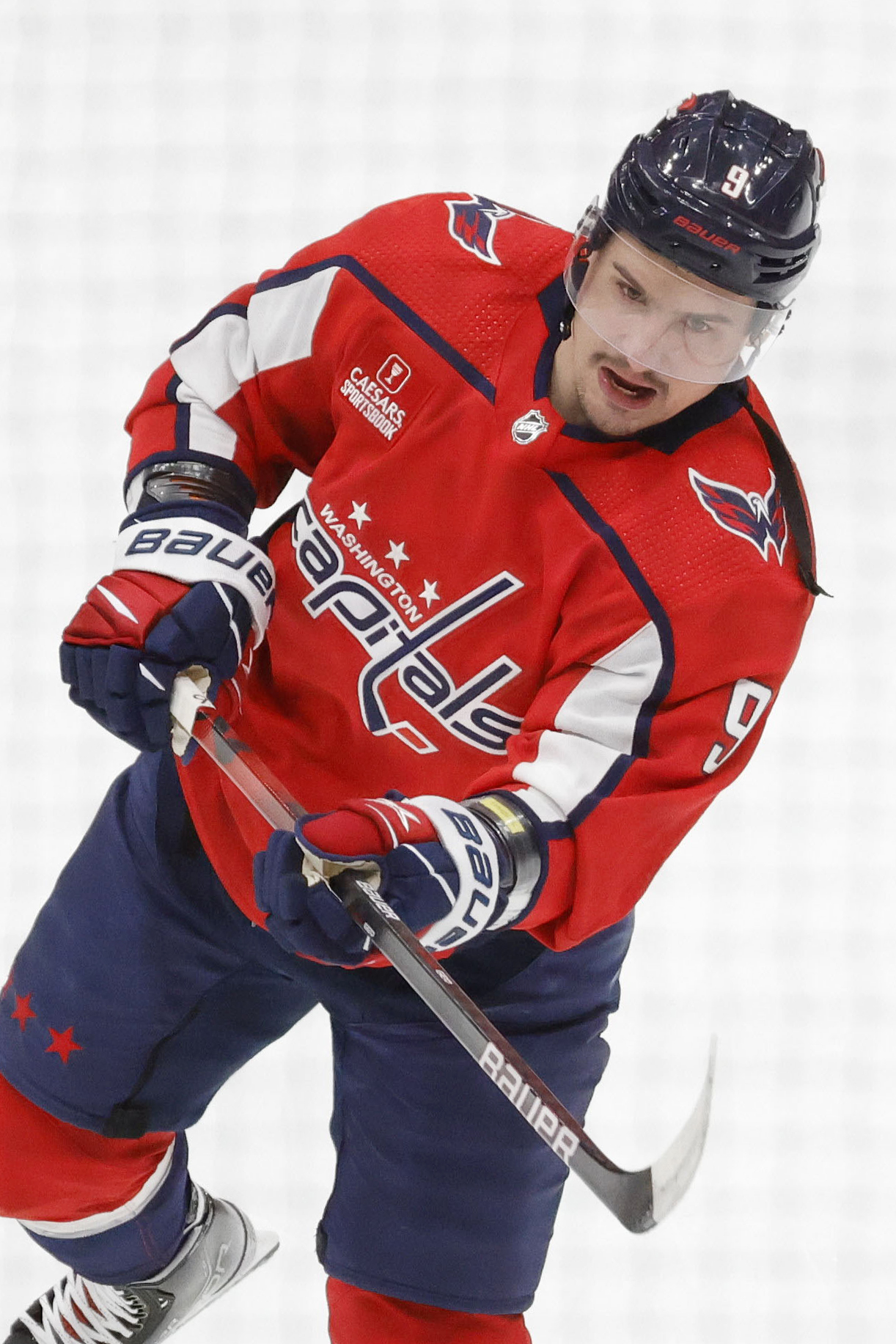 Onto the defense where all but one player is on an expiring deal this season. Orlov is the most prominent of the group and is also coming off a career season offensively. A few years ago, he was logging upwards of 23 minutes a night but over the last two years, that has dipped to the point where his usage is more of a second-pairing player which is notable. He’ll be 32 next season and while the offensive boost helps, that should more or less offset the reduced role. Orlov will still get a long-term deal but if he prioritizes getting as long of a deal as possible, there’s a chance that the AAV could come in slightly below his current rate. Otherwise, a medium-term agreement should cost somewhere in the $5.5MM to $6MM range.
Jensen also had the best year of his career and provided some value on what previously looked like a deal that was well above market value. Even so, his long-term track record is that of a third-pairing player and that will be hard to shake. The fact he’s right-handed certainly helps (the side that’s typically in higher demand) but it’s hard to forecast a raise at this point. A similar season to 2021-22 could help him land a similar AAV next summer though. Gustafsson, van Riemsdyk, and Irwin are all veteran depth players who aren’t going to command sizable raises at this point of their careers. It’s possible that van Riemsdyk will eclipse the $1MM mark but he shouldn’t get much more than that while the other two are likely to be close to the minimum moving forward.
Signed Through 2023-24
F Anthony Mantha ($5.7MM, UFA)
F Tom Wilson ($5.167MM, UFA)
The Capitals paid a high price to acquire Mantha and they haven’t been rewarded for it thus far as the veteran has missed most of the last two seasons due to injuries. When he has played, he hasn’t produced at the level of someone at his current AAV either. Some of that again is injury-related but it’s safe to say that they haven’t got what they bargained for from Mantha so far. The same can’t be said for Wilson. His contract seemed like a considerable overpayment at the time to many but that isn’t the case now. Despite the penalty and suspension trouble he gets into, he produces at a high enough rate to make him a true top-six power forward which is something that is very hard to find and is always in high demand. At this point, he should surpass the $6MM mark on his next deal.
Signed Through 2024-25
F Nicklas Backstrom ($9.2MM, UFA)
F Nic Dowd ($1.3MM, UFA)
F Evgeny Kuznetsov ($7.8MM, UFA)
G Charlie Lindgren ($1.1MM, UFA)
F T.J. Oshie ($5.75MM, UFA)
Backstrom picked the right time to sign this contract as it came just before the pandemic shutdown that has since flattened the cap; had he waited, the AAV almost certainly would have been lower. His hip injury situation has been well-documented and he’ll begin the year on LTIR. It wouldn’t be surprising if he was there for the entire year which would give Washington some extra space to work with this season. Kuznetsov has had some ups and downs which makes the value he provides each year range from poor to solid. He’s coming off a year that saw him produce at nearly a point per game and if he stays near that mark, they’ll get good value moving forward. With Backstrom out long-term, there’s extra pressure on Kuznetsov now.
Oshie saw his output dip sharply last season on a points-per-game basis which wasn’t entirely unexpected as he’s now 35. He’s in the back half of the long-term deal he signed which provided Washington with some cap-friendly years and now they’re entering the years that won’t be so team-friendly. Dowd is being paid as a fourth-line center but his usage has been closer to that of a third liner the last couple of seasons and as someone that can kill penalties, win draws, and can score at a decent depth rate, the Capitals are doing quite well with this deal. He’ll be 35 when this deal is up though so chances are that he won’t be able to command much more than this on his next contract.
Lindgren has spent the majority of his career in the minors but is coming off a strong season in the minors that was good enough to land him a three-year guarantee. Notably, the full amount can be buried in the AHL without cap penalty if he struggles but if he can give them 20-25 serviceable starts, Washington will be pleased with the contract and he’ll be boosting his value for his next trip through free agency.
Salary Cap Deep Dive: Pittsburgh Penguins
Navigating the salary cap is one of the more important tasks for any GM. Teams that can avoid total cap chaos by walking the tightrope of inking players to deals that match their value (or compensate for future value without breaking the bank) remain successful. Those that don’t see struggles and front office changes.
PHR will look at every NHL team and give a thorough look at their cap situation heading into the 2022-23 season. This will focus more on players who are regulars on the roster versus those who may find themselves shuttling between the AHL and NHL. All cap figures are courtesy of CapFriendly.
Pittsburgh Penguins
Current Cap Hit: $84,055,175 (over the $82.5MM Upper Limit)
Entry-Level Contracts
D Ty Smith (one year, $863K)
Potential Bonuses
Smith: $400K
Smith came over in an offseason trade from New Jersey that saw John Marino go the other way. It was a move that was designed to clear some cap space that was later used to add another blueliner but it also gives them a 22-year-old that has shown some promise in his first two seasons, albeit with some struggles in his own end. This is the type of player that typically signs a bridge deal and a decent showing this season could put that contract close to the $2MM range.
Signed Through 2022-23, Non-Entry-Level
F Josh Archibald ($900K, UFA)
F Teddy Blueger ($2.2MM, UFA)
D Brian Dumoulin ($4.1MM, UFA)
F Danton Heinen ($1MM, UFA)
G Tristan Jarry (3.5MM, UFA)
F Ryan Poehling ($750K, RFA)
F Jason Zucker ($5.5MM, UFA)
Zucker has struggled since joining the Penguins, both in terms of production and staying healthy. At 30, he could still turn things around but right now, it looks like he’ll be heading for a significant cut next summer, one that will almost certainly come with another organization. Blueger has shown some offensive improvement over the last couple of years while his performance at the faceoff dot has also improved. He’s on track to become a sought-after third-line center in free agency which should add at least another million to his current AAV.
Heinen was non-tendered by Pittsburgh this summer but eventually came back at a discounted rate relative to the 18 goals he put up last season. On paper, he should be worth more but he has had a soft market for a couple of years now so his ceiling might not be much higher than this for now. Archibald comes over after missing most of last season with Edmonton. As a fourth-liner, his earnings upside isn’t going to be much higher unless he has a breakout year with his new team. Poehling came over from Montreal this summer and will be battling for a depth role with the Penguins. He shouldn’t cost much more than this if he plays like he did a year ago but he’ll be arbitration-eligible which could make him a non-tender risk if they believe he could push for more than they’re comfortable with in terms of paying a depth player next season.
Dumoulin has been a steady defensive defender for several seasons now but he has never been able to be much of an offensive threat. That won’t help his market next summer as he looks to land one last long-term deal. A small raise is achievable given his ability to play hard minutes but there could be a trade-off between maximizing his AAV and securing as long of a deal as possible that could keep the cap hit close to what it is now.
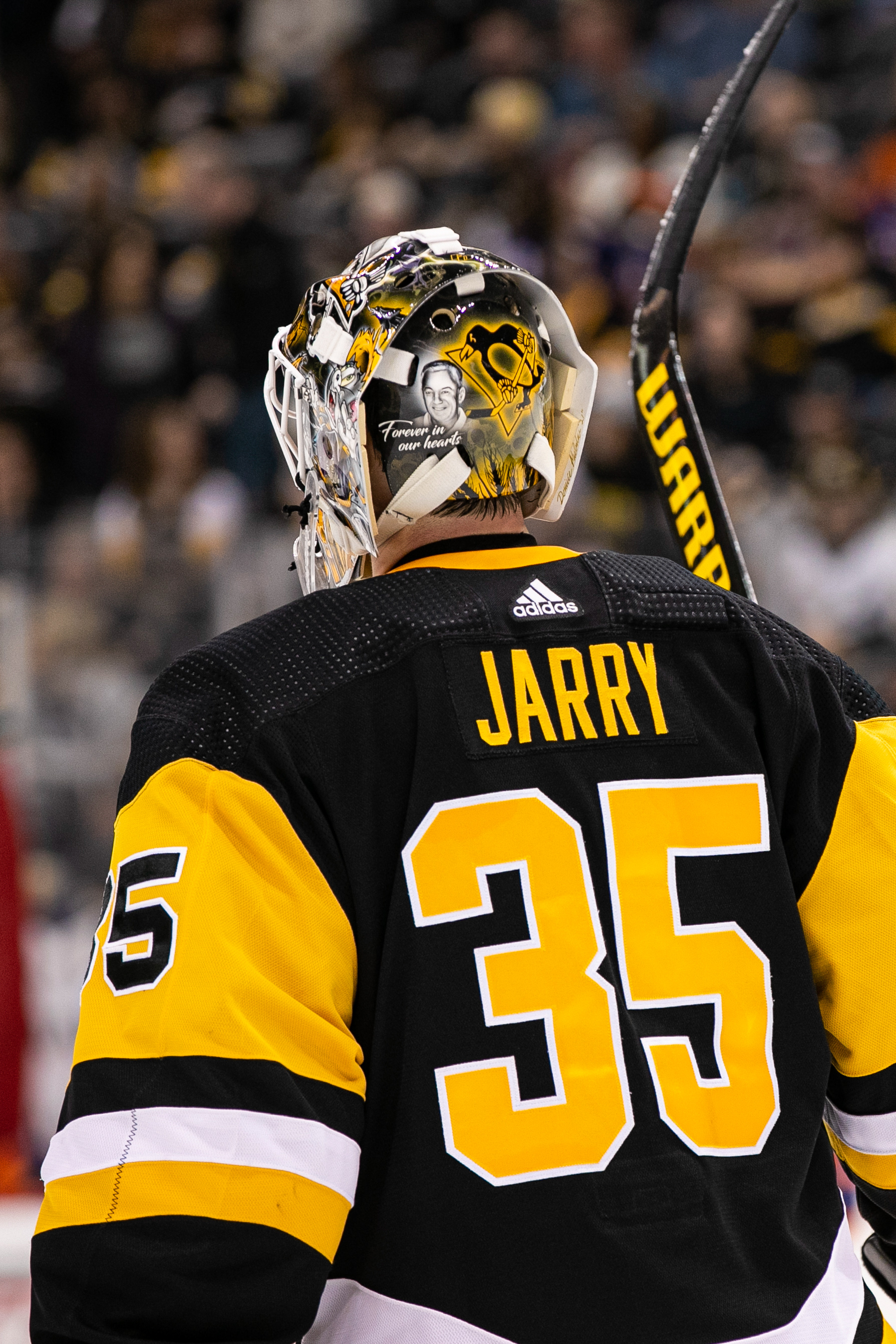 Jarry is likely Pittsburgh’s top priority in terms of trying to work out an extension sooner than later. He’s coming off arguably his best season, one where he was able to sustain top-level performance for a full year. At the moment, he’s tied for 30th in the league in terms of AAV, behind some second-string or platoon options. While he’s not an elite starter, he’ll hit the open market at 28 and still in the prime of his career which should allow him to push for an AAV in the $6MM range. A similar performance in 2022-23 to that of his play last season could move the cap hit closer to $6.5MM per year. With that in mind, it wouldn’t be surprising to see something get worked out before he gets to free agency.
Signed Through 2023-24
F Jeff Carter ($3.125MM, UFA)
G Casey DeSmith ($1.8MM, UFA)
D Mark Friedman ($775K, UFA)
F Jake Guentzel ($6MM, UFA)
D Pierre-Olivier Joseph ($825K, RFA)
F Kasperi Kapanen ($3.2MM, UFA)
D Chad Ruhwedel ($800K, UFA)
Guentzel signed his deal before he had proven himself to be a consistent top-line threat and it was a decision that worked out terrific for the Penguins who have had a sizable bargain for several years now. He’s coming off another 40-goal season and has averaged more than a point per game for the last three. If he stays at that pace and the jump in the cap comes in 2024, it’s possible to see him in the $9MM range on his next deal.
There was some uncertainty as to whether or not Kapanen would be tendered a qualifying offer this summer and what he ultimately received worked out to be another bridge contract. If he can establish himself as a consistent second-line winger, he could add a million or more a year from now. However, more of the same inconsistency will put him in third line territory and cap his earnings upside close to what he’s getting on this deal. Carter will be 39 at the end of this contract and it’s quite possible there won’t be another one for him. If he does stick around, a one-year deal with a lower base salary but some games played bonuses that brings the total compensation close to the $3MM mark might be doable if he can still play 15 or so minutes a night and be productive.
Joseph’s short-term future has come into question as he hasn’t locked down a spot in Pittsburgh’s defensive rotation. Whether he’s with them or someone else though, he’ll need to become a regular on the third pairing if he wants to get much more than his $850K qualifier in 2024. Ruhwedel has become a steadying piece on the third pairing but his track record resulted in him taking some guaranteed money over testing the market this summer. Two more years at that level of performance would give him a much better case in free agency and could put him in a spot to come closer to $1.5MM per year. Friedman is a cheap seventh defender and it’s unlikely Pittsburgh will be able to afford more for someone in that spot but if he’s not playing regularly, he won’t be able to command much more either. We’ll see if he’s still in the organization after being waived earlier today.
DeSmith opted to forego testing free agency to stay in Pittsburgh on a contract that’s a fair bit cheaper than what other capable backups have received. But again, like Ruhwedel, his track record was somewhat limited which didn’t help things. He has posted a save percentage between .912 and .914 in each of his last three NHL seasons, better than the league average. Two more years of that should propel him past the $3MM mark in 2024.
Signed Through 2024-25
F Sidney Crosby ($8.7MM, UFA)
F Brock McGinn ($2.75MM, UFA)
D Jeff Petry ($6.25MM, UFA)
D Marcus Pettersson ($4.025MM, UFA)
D Jan Rutta ($2.75MM, UFA)
Crosby continues to provide strong value on his deal. While he’s not the leading scorer in the league anymore, he continues to produce more than a point per game, a rate he has hit in each of his 17 seasons. There will come a time when he slows down but that will be factored into his next deal, if he chooses to sign one at what would likely be a lower rate than this. McGinn had a decent first season with Pittsburgh filling the role he was supposed to as a defensive winger that could produce more than a typical depth piece. However, the contract he has for that role is overpriced. At a time when cap space is at quite a premium, they’re not getting good value on him and as a result, he’ll be tough to try to trade if GM Ron Hextall wants to move him to open up some cap flexibility.
Petry was acquired from Montreal this summer as part of the Mike Matheson deal. He’s coming off a down year by his standards but is capable of being a number two defender that can be used in all situations. Assuming he rebounds, this will be a fair-market deal for the Penguins. The same can’t be said for Pettersson who has yet to rediscover the form he had when he first joined Pittsburgh in a midseason trade from Anaheim. He’s a good third-pairing player but is making top-four money. His is another contract that will be difficult to move out as a result. Rutta’s deal was a bit of a surprise this summer but at the time, they didn’t have Petry and they were intent on shoring up the right side of their blueline. He’s also someone that’s best utilized on the third pairing and this price tag for that role is on the high side. Of course, two straight long playoff runs only helped boost his open-market value this summer.
Salary Cap Deep Dive: Philadelphia Flyers
Navigating the salary cap is one of the more important tasks for any GM. Teams that can avoid total cap chaos by walking the tightrope of inking players to deals that match their value (or compensate for future value without breaking the bank) remain successful. Those that don’t see struggles and front office changes.
PHR will look at every NHL team and give a thorough look at their cap situation heading into the 2022-23 season. This will focus more on players who are regulars on the roster versus those who may find themselves shuttling between the AHL and NHL. All cap figures are courtesy of CapFriendly.
Philadelphia Flyers
Current Cap Hit: $84,273,107 (over the $82.5MM Upper Limit)
Entry-Level Contracts
D Ronnie Attard (one year, $884K)
F Bobby Brink (two years, $925K)
F Noah Cates (one year, $925K)
D Cam York (two years, $881K)
Potential Bonuses
Attard: $850K
Brink: $212.5K
Cates: $450K
York: $725K
Total: $2.2375MM
Brink did well in a late-season call-up last season but it’ll be a while before he sees the ice in 2022-23 as he’ll be out until late 2022 or early 2023 after undergoing hip surgery. He’ll be on season-opening injured reserve which will carry a reduced AAV at the ratio of the number of NHL days divided by total days in the season. As far as his next contract goes, how he fares upon returning will go a long way towards dictating that. Cates was also quite impressive late last season and should have a chance at a full-time role this year. However, even if he locks down a regular spot, his limited experience last season pushes him towards a likely bridge deal.
York got into 30 games in his rookie year with some up-and-down results. As a strong point producer at the lower levels, he’s the type of player that could break out and earn a big second contract but that doesn’t look likely just yet. Attard signed back in March and acquitted himself relatively well on the third pairing the rest of the way. As is the case with Cates, the limited NHL action overall will make a long-term deal unlikely. He, like the other three in this section, is probably heading for a bridge contract.
Signed Through 2022-23, Non-Entry-Level
D Justin Braun ($1MM, UFA)
F Patrick Brown ($750K, UFA)
F Morgan Frost ($800K, RFA)
F Zack MacEwen ($925K, RFA)
D Travis Sanheim ($4.625MM, UFA)
F James van Riemsdyk ($7MM, UFA)
Potential Bonuses
Braun: $750K
While the contract has rightfully been criticized, it’s at least worth mentioning that van Riemsdyk held the team lead in goals at the end of last season with 24 while finishing fourth in points with 38. However, that’s not worth $7MM in this marketplace. He’ll be 34 next season and while he should still draw a reasonable amount of interest on the open market, it should be for around half of what he’s getting now. MacEwen filled an enforcer-type role a year ago but with another player in that role now, he’s someone that could be non-tendered if the Flyers don’t want to push his salary past the $1MM mark next summer. Frost took a ‘show-me’ deal after an up-and-down season. Now waiver-eligible, he’ll be a full-timer on the roster and even a reasonable showing could give him a chance at doubling his AAV with arbitration rights. If he can earn a top-six role, he could head towards the $3MM range. Brown has been a depth player in recent years and his next deal should be at or close to the minimum.
Discussions on a new deal have already started with Sanheim who, for now at least, is set to hit the open market at 27. He’s coming off a career year which complicates things a little bit but at this point, a long-term deal will probably push him past the $6MM mark. A similar performance to last season in 2022-23 could push it closer to the $7MM threshold with impact defenders his age not coming available too often. Braun is a capable third-pairing veteran who took a lower base salary but his bonuses are tied to games played and bonuses so it’s quite possible that most, if not all of those, are reached. At this stage of his career, these are the types of contracts he’s likely to be signing moving forward.
Signed Through 2023-24
D Anthony DeAngelo ($5MM, UFA)
G Carter Hart ($3.979MM, RFA)
G Felix Sandstrom ($775K, UFA)
D Nick Seeler ($775K, UFA)
F Owen Tippett ($1.5MM, RFA)
Tippett was a logical candidate to receive a bridge contract after a bit of an up-and-down showing last season. He’ll get more of a consistent opportunity with the Flyers and there’s a pretty good chance he’ll outperform this contract. He’s owed a $1.75MM qualifying offer with arbitration rights in 2024 and should be able to get a fair bit more than that if he locks down a top-six role.
DeAngelo was Philadelphia’s big summer acquisition on the heels of a career year with the Hurricanes. He has put up 50 points in his last two full NHL seasons and that type of output is hard to find. With how things transpired from his departure from the Rangers, there are off-ice factors that certainly influenced his market (Carolina gave him permission to talk to teams before the trade this summer) but the 26-year-old could be a bargain if his production continues at that level. Seeler is a veteran depth defender that could go back and forth to the minors if he clears waivers and his next deal should be in the area of the league minimum again.
Hart has had a bit of an up-and-down start to his career. His first two seasons were strong, making it look like he was their starter of the future. His third season was rocky, to put it lightly, resulting in a bridge deal instead of a long-term pact. Last year was a little better but still not at the level from a couple of years before. If he wants a shot at getting starter-type money in the $5.5MM to $6MM range, his next two seasons will need to be like his first two. Sandstrom, for now, is the presumptive backup after plans to bring Ivan Fedotov over for this season fell through. If he can establish himself as a capable second-stringer, he could double his current AAV two years from now.
Signed Through 2024-25
F Cam Atkinson ($5.875MM, UFA)
F Travis Konecny ($5.5MM, UFA)
D Ivan Provorov ($6.75MM, UFA)
Atkinson had a bit of a bounce-back season last year, finishing second to Konecny in scoring. He isn’t a pure top-line scorer as he was a few years ago but he should still provide some value for a couple more years at least. His next deal will be in his age-36 season, however, and he could be going year-to-year from there at a lower rate than this. Konecny hasn’t been able to become a consistent top-liner but he has settled in on the second line as a secondary scorer. He’s not a bargain at this price point but it’s not a considerable overpayment either. With the Upper Limit expected to be higher by 2025, he could land a contract similar to this one at that time.
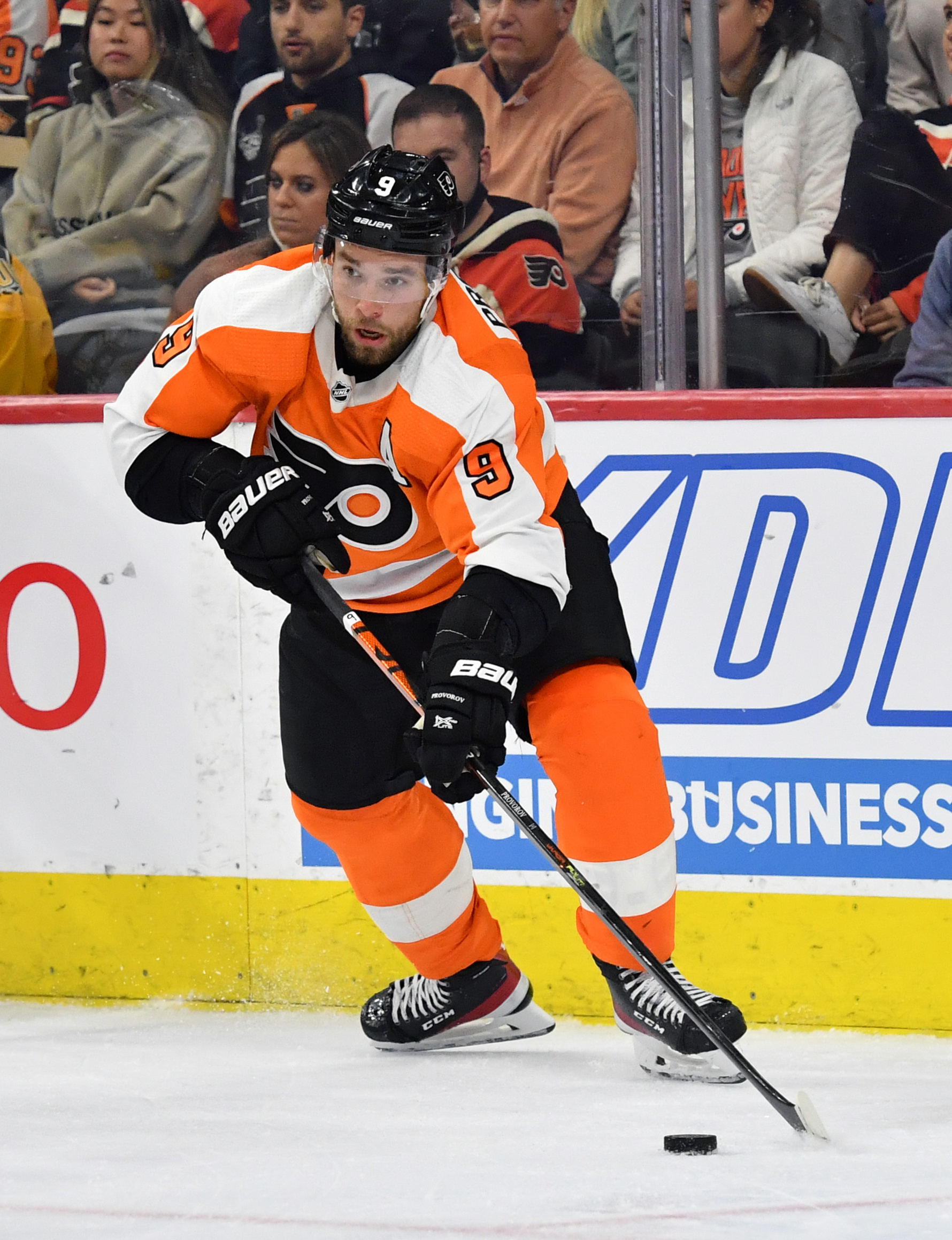 Provorov is someone who hasn’t quite lived up to the extremely high expectations but has still become a high-end part of their back end. He very quietly has averaged over 24 minutes per game for each of the last five seasons; he’s only six years into his career for context. That’s consistent number one usage. However, he also hasn’t been able to get back to the level of production from his sophomore year. At 25, there’s still room for improvement on that front and if that happens, his next contract could be in the $9MM range, especially with the expected increase to the cap by then. This is one of the contracts that the team will need to keep in mind when it comes to their future plans.
Salary Cap Deep Dive: New York Rangers
Navigating the salary cap is one of the more important tasks for any GM. Teams that can avoid total cap chaos by walking the tightrope of inking players to deals that match their value (or compensate for future value without breaking the bank) remain successful. Those that don’t see struggles and front office changes.
PHR will look at every NHL team and give a thorough look at their cap situation heading into the 2022-23 season. This will focus more on players who are regulars on the roster versus those who may find themselves shuttling between the AHL and NHL. All cap figures are courtesy of CapFriendly.
New York Rangers
Current Cap Hit: $81,491,469 (under the $82.5MM Upper Limit)
Entry-Level Contracts
D Zachary Jones (one year, $925K)
F Alexis Lafreniere (one year, $925K)
D K’Andre Miller (one year, $925K)
D Braden Schneider (two years, $925K)
Potential Bonuses
Lafreniere: $2.85MM
Miller: $400K
Schneider: $400K
Total: $3.65MM
Lafreniere’s per-game numbers last season were nearly identical to his rookie-season numbers which doesn’t help bolster his case for a bridge-bypassing contract. The top pick in 2020 certainly has shown some upside but for now, a bridge in the $2.5MM range might be the best way to go for both sides. His ‘B’ bonuses are almost certainly unattainable but an improved performance could give him a shot at one or two of the ‘A’ bonuses worth $212.5K apiece.
Miller has averaged more than 20 minutes per game in his first two seasons and is pegged to have a top-four role again in 2022-23. His limited offensive production, however, makes it difficult to project a long-term contract as Miller’s camp would likely prefer a bridge with the hopes that the output will come. A two-year deal around $2.75MM or a three-year contract worth a little over $3MM might be where his next price tag checks in. Schneider and Jones will both be looking to establish themselves as full-time regulars this season. For Jones, that doesn’t leave much time to command a pricey second contract so he, too, will be looking for a bridge. Schneider has a bit more runway but like Miller, he might not produce enough for both sides to find a long-term price tag that they’ll like.
Signed Through 2022-23, Non-Entry-Level
F Sammy Blais ($1.525MM, UFA)
F Ryan Carpenter ($750K, UFA)
F Filip Chytil ($2.3MM, RFA)
F Julien Gauthier ($800K, RFA)
D Libor Hajek ($800K, RFA)
G Jaroslav Halak ($1.5MM, UFA)
F Dryden Hunt ($762.5K, UFA)
F Vitali Kravtsov ($875K, RFA)
F Ryan Reaves ($1.75MM, UFA)
Potential Bonuses
Halak: $50K
Chytil took a bit of a step back last season. He continues to show some signs of being able to crack a top-six spot but the consistency hasn’t been there yet. He’s likely to remain on the third line where he’ll see time both on the wing and down the middle but unless he takes a sizable jump forward offensively (his career-high in points is 23), he might not be able to get much more than his $2.6MM qualifying offer. Kravtsov is one of the bigger wildcards this season in New York. He’s no longer waiver-exempt and he wasn’t exactly lighting it up in the KHL the last couple of years. If he can lock down a regular spot in the lineup, he’ll be well-positioned for at least a small raise but otherwise, he’s likely to wind up around the $1MM mark. Gauthier hasn’t been able to progress beyond being a fringe winger thus far and it’s telling that he took less than his qualifying offer to secure a one-way deal. Until he establishes himself as a regular, he probably won’t pass the $1MM mark.
As for the UFAs, Reaves is one of the few remaining enforcers in the league. He’ll be 36 when he signs his next deal and this might be the one that starts to drive his salary downward. Blais missed almost all of last season after undergoing ACL surgery and will be looking to restore some value a year out before free agency. If he can establish himself as a power forward that’s capable of playing on the third line, he could push for double his AAV next summer. Hunt established himself a regular last season which will help him a bit but if he stays in a fourth-line role, he won’t be able to command much more than $1MM. Carpenter had to settle for the league minimum this summer in free agency and if he winds up in a depth role again, that’s about where his next deal will be as well.
Hajek was a frequent healthy scratch last season and hasn’t lived up to the billing of being an important part of the Ryan McDonagh trade in 2018. He should be on the fringes again this year. He’s not in danger of being non-tendered but at this point, the raises will be incremental at most moving forward.
Halak comes over after a tough showing in Vancouver last season. He should be able to play a bit more this time around after going long stretches between starts a year ago but he’ll be 38 next summer and will be going year-to-year from here on out with a cap hit around this range.
Signed Through 2023-24
F Kaapo Kakko ($2.1MM, RFA)
D Ryan Lindgren ($3MM, UFA)
Kakko, one of the top picks from 2019, struggled to stay healthy and couldn’t manage too much production so a bridge deal was the natural move for both sides. Considering he’s still only 21, there’s still room for him to improve and become a full-time top-six player which would give him a shot at a sizable raise in 2024.
Lindgren has stepped up into a top-four role and has become one of New York’s better shutdown defenders over the last couple of seasons. As was the case with some of their entry-level blueliners, limited production will limit his earnings potential but as he’ll be a year away from UFA eligibility in 2024, he’ll hold a lot of leverage and will be owed a $3.6MM qualifying offer. A long-term agreement would be closer to the $5MM range.
Signed Through 2024-25
G Igor Shesterkin ($5.67MM, UFA)
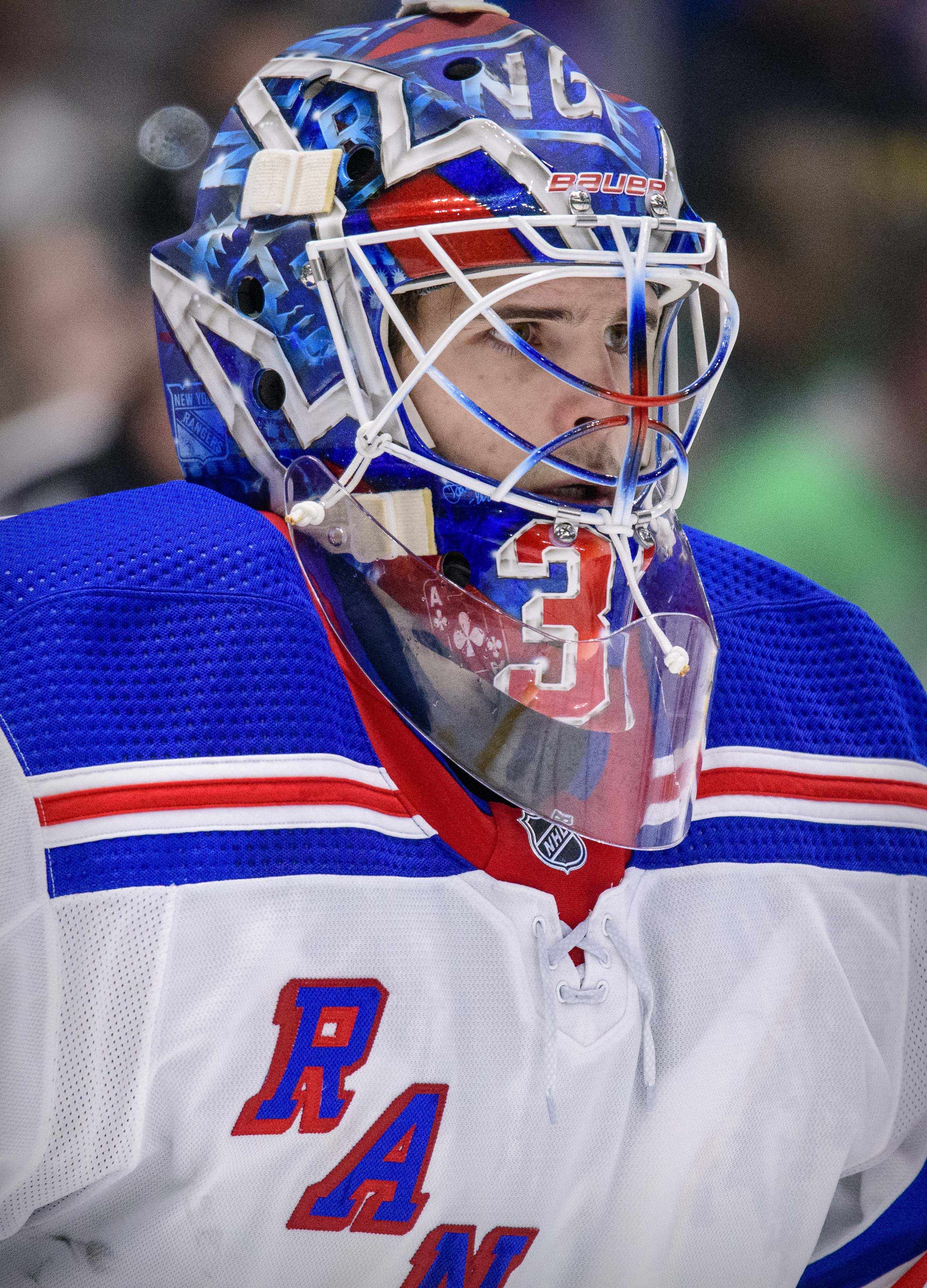 Shesterkin’s deal was signed when had less than 50 career NHL appearances under his belt so it did carry some risk. However, the reward already looks quite high as the Vezina Trophy winner and first-team All-Star is coming off a dominant season. He’s not in the top ten in the NHL in terms of his cap hit so the Rangers have quite a bargain on their hands. Looking ahead to three years from now, as long as he remains one of the top goalies in the league, he’ll hit the open market at 29 in a position to command close to a max-term deal where he’ll be able to become one of the top-paid netminders in NHL history. Not too shabby for someone who even now has just 100 NHL regular season contests under his belt.