
2008 NHL Draft Take Two: Sixteenth Overall Pick
Hindsight is an amazing thing, and allows us to look back and wonder “what could have been.” Though perfection is attempted, scouting and draft selection is far from an exact science, and sometimes, it doesn’t work out the way teams – or players – intended. For every Patrick Kane, there is a Patrik Stefan.
We’re looking back at the 2008 NHL Entry Draft and asking how it would shake out knowing what we do now. Will the first round remain the same, or will some late-round picks jump up to the top of the board?
The results of our redraft so far are as follows with their original draft position in parentheses:
1st Overall: Steven Stamkos, Tampa Bay Lightning (1)
2nd Overall: Drew Doughty, Los Angeles Kings (2)
3rd Overall: Roman Josi, Atlanta Thrashers (38)
4th Overall: Alex Pietrangelo, St. Louis Blues (4)
5th Overall: Erik Karlsson, Toronto Maple Leafs (15)
6th Overall: John Carlson, Columbus Blue Jackets (27)
7th Overall: Jacob Markstrom, Nashville Predators (31)
8th Overall: Braden Holtby, Phoenix Coyotes (93)
9th Overall: Jordan Eberle, New York Islanders (22)
10th Overall: Jared Spurgeon, Vancouver Canucks (156)
11th Overall: Cam Atkinson, Chicago Blackhawks (157)
12th Overall: T.J. Brodie, Buffalo Sabres (114)
13th Overall: Josh Bailey, Los Angeles Kings (9)
14th Overall: Adam Henrique, Carolina Hurricanes (82)
15th Overall: Tyler Myers, Ottawa Senators (12)
The drop wound up being a small one for Myers who only goes three spots later than his original draft position. While he has been maligned at times due to some contracts that paid him above market value, he has turned in a solid career thus far.
Throughout his junior days, Myers wasn’t known for his point-producing abilities with his career-high in points checking in at 42 in his final season with Kelowna. Not bad, but players who top out at that level don’t typically become highly-productive players in the pros.
Myers put that theory to the test in his rookie season as he had more goals (11), assists (37), and points (48) than in any of his major junior campaigns. That made him the runaway winner of the Calder Trophy and all of a sudden, it looked like Buffalo had their two-way star defender of the future.
Unfortunately, that didn’t go as planned. While Myers’ numbers in his sophomore year were still pretty good (the second-best of his career thus far), he eventually became more of a stay-at-home defender. Eventually, the Sabres decided to shake things up, moving him to Winnipeg in 2015 as part of the Evander Kane trade.
With the Jets, Myers was a capable, albeit pricey blueliner for parts of five seasons. Since then, he has spent three years in Vancouver as a capable, albeit pricey defenseman.
That said, it’s worth looking at some of Myers’ numbers in context. In his 13-year NHL career, he has averaged over 20 minutes a night in every one of them. He’s eighth in all-time games played from this draft class and with a couple of years left on his contract, he’ll have a good chance of staying in the top ten when all is said and done. No, Myers didn’t quite live up to the promise of his rookie year but he has had a very solid career so far.
Now, we move on to the 16th selection which was held by Boston. They opted to take a longer-term project, selecting Joe Colborne out of the AJHL. However, after two very strong college seasons, the Bruins turned him pro in 2019 but he never played a game for them. Instead, they moved him, a first-round pick, and a second-rounder to Toronto to rent Tomas Kaberle at the 2011 trade deadline. (If you’re curious, that first-rounder turned into Rickard Rakell.)
Colborne spent parts of three seasons with Toronto but again, didn’t play much. He was flipped to Calgary in 2013 for a fourth-round pick that eventually was used on Ville Husso.
Colborne saw regular action with Calgary for three years and spent most of another year in Colorado but hung up his skates in 2018 after a seven-year NHL career that spanned 295 games. In the grand scheme of things, Boston could have done much worse with this pick but it’s safe to say in hindsight, there were better options available.
So, who should they have picked with that benefit of hindsight? With the 16th pick in the 2008 redraft, who do they take? Make your choice by voting in the poll below.
2008 Redraft: Sixteenth Overall
-
Gustav Nyquist 23% (146)
-
Derek Stepan 21% (130)
-
Jake Allen 13% (80)
-
Zach Bogosian 7% (44)
-
Justin Schultz 6% (39)
-
Travis Hamonic 6% (35)
-
Jake Gardiner 5% (34)
-
Marco Scandella 3% (21)
-
Luke Schenn 2% (14)
-
Tyler Ennis 2% (13)
-
Matt Martin 2% (13)
-
Michael Del Zotto 2% (11)
-
Colin Wilson 1% (9)
-
Jason Demers 1% (9)
-
Matt Calvert 1% (6)
-
Mikkel Boedker 1% (6)
-
Luca Sbisa 1% (6)
-
Zach Boychuk 1% (4)
-
Zack Smith 0% (3)
Total votes: 623
App users, click here to vote.
2008 NHL Draft Take Two: Fifteenth Overall Pick
Hindsight is an amazing thing, and allows us to look back and wonder “what could have been.” Though perfection is attempted, scouting and draft selection is far from an exact science, and sometimes, it doesn’t work out the way teams – or players – intended. For every Patrick Kane, there is a Patrik Stefan.
We’re looking back at the 2008 NHL Entry Draft and asking how it would shake out knowing what we do now. Will the first round remain the same, or will some late-round picks jump up to the top of the board?
The results of our redraft so far are as follows with their original draft position in parentheses:
1st Overall: Steven Stamkos, Tampa Bay Lightning (1)
2nd Overall: Drew Doughty, Los Angeles Kings (2)
3rd Overall: Roman Josi, Atlanta Thrashers (38)
4th Overall: Alex Pietrangelo, St. Louis Blues (4)
5th Overall: Erik Karlsson, Toronto Maple Leafs (15)
6th Overall: John Carlson, Columbus Blue Jackets (27)
7th Overall: Jacob Markstrom, Nashville Predators (31)
8th Overall: Braden Holtby, Phoenix Coyotes (93)
9th Overall: Jordan Eberle, New York Islanders (22)
10th Overall: Jared Spurgeon, Vancouver Canucks (156)
11th Overall: Cam Atkinson, Chicago Blackhawks (157)
12th Overall: T.J. Brodie, Buffalo Sabres (114)
13th Overall: Josh Bailey, Los Angeles Kings (9)
14th Overall: Adam Henrique, Carolina Hurricanes (82)
With the 14th overall selection of the 2008 redraft, readers voted to re-write history and have the Hurricanes choose Henrique instead of Zach Boychuk, who Carolina actually picked in this spot 14 years ago. Although Boychuk has been a solid pro at several levels still to this day, taking the fan-favorite Henrique at this spot would have represented far better value. Henrique doesn’t have the illustrious resume that some of his fellow 2008 selections do, but he’s put together a solid career worthy of a mid-first-round pick.
Originally drafted in the third-round, 82nd overall by the New Jersey Devils, Henrique took some time to develop, but burst onto the scene in 2011-12 with 51 points in 74 games. He’d add another 13 in 24 playoff games, including the goal he may be best remembered for: an iconic overtime winner that sent the Devils to the Stanley Cup Finals. Throughout his career, he’s hit the 50-point mark three separate times and the 20-goal mark six times, including a 30-goal performance in 2015-16.
Having established himself as a fan favorite in New Jersey, the forward was dealt early on in the 2017-18 season in a hockey trade that sent defenseman Sami Vatanen to New Jersey from the Anaheim Ducks. Out west, Henrique continued his solid play, albeit with a small step back in production. This season however, the 32-year-old appeared to find his scoring touch once again, registering 19 goals and 23 assists in just 58 games, nearly a 60-point pace. In the end, the Devils found great value by selecting Henrique in the third-round, but going even as high as 14th to the Hurricanes in a redraft appears to still lend great value.
Having addressed Henrique, we turn to the 15th overall pick. Now, first and foremost, there are some terrific hockey players with great resumes left to pick from, but none compare to the generational talent that is Erik Karlsson, who went 15th back in 2008. In the redraft, Karlsson bumped well up the draft board, going fifth overall. The defenseman’s case is an interesting one given the sensational seasons he had as a member of the Ottawa Senators, but also his recent injury history. Had we run this series five years ago, there’s a very good chance he would have been the first selection.
When Ottawa selected the slick, puck-moving defenseman out of the Frolunda organization, he had just come off a 37-point season in 38 games in the Swedish junior league which also included a seven-game stint with Frolunda in the then-Swedish Elite League. The Senators opted to have the defenseman spend another year in Europe, where he played a majority of the season with Frolunda, recording 10 points in 45 games. The following season, 2009-10, Karlsson came over and stepped right into the Ottawa lineup.
After establishing himself as an NHL regular, Karlsson broke out as a superstar during the 2011-12 campaign, where he scored 19 goals to go along with 59 assists. This breakout would start a run of seven years with Karlsson being among the best, if not the best defenseman in the NHL, regularly tallying at least 15 goals and 65 points per season, but hitting career-highs with 21 goals in 2014-15 and 82 points in 2015-16.
Entering the 2018-19 season, with the Senators in a full-scale rebuild and Karlsson’s contract set to expire after the season, the team was looking for suitors and found one in that of the San Jose Sharks. Though the deal, and the entire Senators rebuild for that matter, was met with criticism, the ultimate return would be arguably as franchise-altering as selecting Karlsson was in the first place. For Karlsson and forward Francis Perron, the Senators received forwards Joshua Norris, Chris Tierney and Rudolfs Balcers, defenseman Dylan DeMelo, as well as a conditional first-round draft pick and two conditional second-round draft picks. While one of the second round picks was dealt, the other picks would turn into Zack Ostapchuk and budding superstar Tim Stutzle, who they selected third overall in 2020.
San Jose was able to work out an extension with Karlsson just ahead of free agency, an eight-year, $92MM deal, one which was appropriate at the time, but has now seemingly gone sideways. Since the trade to San Jose, Karlsson has dealt with a bevy of injury issues that have cost him games played and appeared to hamper his game to a degree as he’s played through them. His production has dropped off to a degree, but has managed to maintain close to a 60-point pace per 82-games played, but whether or not that is worth an $11.5MM hit against the salary cap remains in question, and is arguably a driving force behind the Sharks current state as a presumed rebuilder.
Given recency bias, it would make sense that a defenseman once considered among the very best players in the league for several seasons in that of Karlsson would slide down to fifth overall in a 2008 redraft. However, there’s no doubt that his original selection – 15th overall – was a fantastic pick by Ottawa. But, running through the first round again, taking Karlsson here is no longer an option. Though not a possible Hall of Famer, Ottawa will still get a quality player this time around, but who will it be?
2008 Redraft: Fifteenth Overall
-
Tyler Myers 23% (181)
-
Gustav Nyquist 17% (129)
-
Derek Stepan 15% (116)
-
Jake Allen 9% (69)
-
Justin Schultz 6% (45)
-
Zach Bogosian 5% (41)
-
Travis Hamonic 5% (39)
-
Jake Gardiner 4% (33)
-
Marco Scandella 3% (24)
-
Tyler Ennis 2% (19)
-
Michael Del Zotto 2% (14)
-
Luke Schenn 2% (13)
-
Zach Boychuk 1% (11)
-
Jason Demers 1% (11)
-
Matt Martin 1% (10)
-
Colin Wilson 1% (8)
-
Mikkel Boedker 1% (7)
-
Matt Calvert 1% (6)
-
Zack Smith 0% (3)
Total votes: 779
Trade Rumors app users, click here to vote.
2008 NHL Draft Take Two: Fourteenth Overall Pick
Hindsight is an amazing thing, and allows us to look back and wonder “what could have been.” Though perfection is attempted, scouting and draft selection is far from an exact science, and sometimes, it doesn’t work out the way teams – or players – intended. For every Patrick Kane, there is a Patrik Stefan.
We’re looking back at the 2008 NHL Entry Draft and asking how it would shake out knowing what we do now. Will the first round remain the same, or will some late-round picks jump up to the top of the board?
The results of our redraft so far are as follows with their original draft position in parentheses:
1st Overall: Steven Stamkos, Tampa Bay Lightning (1)
2nd Overall: Drew Doughty, Los Angeles Kings (2)
3rd Overall: Roman Josi, Atlanta Thrashers (38)
4th Overall: Alex Pietrangelo, St. Louis Blues (4)
5th Overall: Erik Karlsson, Toronto Maple Leafs (15)
6th Overall: John Carlson, Columbus Blue Jackets (27)
7th Overall: Jacob Markstrom, Nashville Predators (31)
8th Overall: Braden Holtby, Phoenix Coyotes (93)
9th Overall: Jordan Eberle, New York Islanders (22)
10th Overall: Jared Spurgeon, Vancouver Canucks (156)
11th Overall: Cam Atkinson, Chicago Blackhawks (157)
12th Overall: T.J. Brodie, Buffalo Sabres (114)
13th Overall: Josh Bailey, Los Angeles Kings (9)
For the first time in our 2008 Redraft series, we see a player slide from his original draft spot. Bailey, originally selected ninth overall by the New York Islanders falls just four spots to thirteenth overall, where he would instead head to the Kings. Looking back on it, there were more than a couple names taken after Bailey who may have been the more prudent selection for the Islanders, who took him ninth, but that doesn’t necessarily make him a poor selection for the slot. Over his career, Bailey has recorded modest point totals while playing a 200 foot game and serving as a veteran character player on Long Island. Now, the winger serves as the longest-tenured member of the Islanders.
Due respect to Colten Teubert, who the Kings originally selected thirteenth overall, however had they been able to and opted to select Bailey, they surely would have been better served. Even if Bailey wasn’t the best choice for the Kings, the simple fact alone that he has played nearly 1,000 NHL games as compared to Teubert’s 24 would make Bailey an excellent alternative. The Kings did get value out of Teubert after all, trading him along with a pair of draft picks to acquire forward Dustin Penner, who would go on to win a Stanley Cup in Los Angeles.
We now turn our attention to the fourteenth overall pick which belonged to the Carolina Hurricanes. With their pick, Carolina selected a forward already playing for the Hurricanes: Zach Boychuk from the WHL’s Lethbridge Hurricanes. Boychuk had already established himself as one of the best players in junior hockey when Carolina selected him and continued down that path with another impressive season after. In addition to a fourth straight dominant WHL season, Boychuk was also able to make his NHL debut that season, suiting up for a pair of October contests with Carolina. Boychuk became a full-time pro in 2009-10, splitting time between the NHL and AHL, recording nine points in 31 games for Carolina and 36 points in 52 games with the Albany River Rats.
Although it wasn’t a superstar pro debut, Boychuk’s performance was respectable and created plenty of excitement for him to build on his success the year after, and build he did. In 2010-11, the forward recorded a phenomenal 65 points in 60 games in the AHL. Still, he couldn’t repeat that success at the NHL level, with just seven points over 23 games. Ultimately, this would be the pitfall of Boychuk’s NHL career. As he continued to impress in the AHL and become a key piece of the Charlotte Checkers, he simply couldn’t repeat that success up in the NHL. After just two points in 16 games in 2011-12, Boychuk bounced around the following year, playing with Carolina, the Pittsburgh Penguins and the Nashville Predators before returning to the Carolina organization.
Boychuk would spend parts of three more seasons with the origination, his last NHL action coming in 31 games in 2014-15. After the 2015-16 season, Boychuk left North America in pursuit of opportunities in Europe, where he would find success and regular roles. The now-veteran spent parts of three seasons in the KHL, followed by parts of two seasons in Switzerland, and finally three more in Germany, where he’s currently a member of the Berlin Polar Bears of the DEL.
With the chance to do it over again, it’s likely the Hurricanes would go with another name at fourteenth overall. As good of a pro as Boychuk has been, his 30 points in 127 NHL games simply wouldn’t warrant a selection with names such as Tyler Myers, Adam Henrique, Gustav Nyquist or Derek Stepan still left on the board. So, with the fourteenth overall selection in our 2008 redraft, who should Carolina select?
2008 Redraft: Fourteenth Overall
-
Adam Henrique 25% (133)
-
Tyler Myers 16% (86)
-
Derek Stepan 15% (79)
-
Gustav Nyquist 13% (69)
-
Jake Allen 6% (34)
-
Zach Bogosian 4% (22)
-
Justin Schultz 3% (17)
-
Travis Hamonic 3% (16)
-
Luke Schenn 3% (15)
-
Jake Gardiner 2% (11)
-
Marco Scandella 2% (8)
-
Zach Boychuk 1% (7)
-
Matt Martin 1% (5)
-
Tyler Ennis 1% (5)
-
Michael Del Zotto 1% (5)
-
Matt Calvert 1% (5)
-
Mikkel Boedker 1% (3)
-
Zack Smith 1% (3)
-
Jason Demers 0% (2)
-
Colin Wilson 0% (2)
Total votes: 527
Trade Rumors app users, click here to vote.
2008 NHL Draft Take Two: Twelfth Overall Pick
Hindsight is an amazing thing, and allows us to look back and wonder “what could have been.” Though perfection is attempted, scouting and draft selection is far from an exact science, and sometimes, it doesn’t work out the way teams – or players – intended. For every Patrick Kane, there is a Patrik Stefan.
We’re looking back at the 2008 NHL Entry Draft and asking how it would shake out knowing what we do now. Will the first round remain the same, or will some late-round picks jump up to the top of the board?
The results of our redraft so far are as follows with their original draft position in parentheses:
1st Overall: Steven Stamkos, Tampa Bay Lightning (1)
2nd Overall: Drew Doughty, Los Angeles Kings (2)
3rd Overall: Roman Josi, Atlanta Thrashers (38)
4th Overall: Alex Pietrangelo, St. Louis Blues (4)
5th Overall: Erik Karlsson, Toronto Maple Leafs (15)
6th Overall: John Carlson, Columbus Blue Jackets (27)
7th Overall: Jacob Markstrom, Nashville Predators (31)
8th Overall: Braden Holtby, Phoenix Coyotes (93)
9th Overall: Jordan Eberle, New York Islanders (22)
10th Overall: Jared Spurgeon, Vancouver Canucks (156)
11th Overall: Cam Atkinson, Chicago Blackhawks (157)
Beyond Stamkos and Doughty, there really isn’t a better pair of back -to-back selections in this draft than the 156th and 157th overall selections: Spurgeon and Atkinson. In our re-draft, this pair once again goes back-to-back, but now 10th and 11th overall instead. We’ve covered Spurgeon’s story, drafted but unsigned by the Islanders, invited to training camp as a prospect by the Wild, and the rest is history, but now it’s the Blue Jackets turn to find incredible value.
The 2008 draft was a backwards one in Columbus, their first few selections not necessarily panning out as hoped, most notably their selection of Russian winger Nikita Filatov at sixth overall. Filatov was supposed to be an elite point producer Columbus could pair with the likes of Rick Nash and Derick Brassard, but his time in Columbus came to a close after 44 unimpressive games. Towards the later rounds of the draft however, the Blue Jackets found a pair of foundational pieces in Matt Calvert in the fifth round and Atkinson in the sixth. Calvert became a key piece of the team’s bottom-six for eight seasons and Atkinson established himself as the dynamic offensive weapon the organization was looking for with their sixth-overall pick – they just so happened to get him at 157.
Three seasons after Columbus took him, Atkinson made his debut and by the 2013-14 season had become a regular 20 goal and 40 point contributor. In 2016-17, the winger broke out, setting career-highs with goals, 35, and points, 62. Two years later, he eclipsed those marks again with 41 goals and 69 points en route to a playoff appearance and the club’s first playoff series victory. Having played a major role in taking the team to new heights, Atkinson was traded during the 2021 offseason as the team continued its re-tool, landing with the Philadelphia Flyers. Altogether, Atkinson provided incredible value for his spot in the draft, but given his and his team’s success with him at the top of the lineup, going 11th overall in a re-draft makes plenty of sense.
We now turn our attention to the 12th overall selection, which belonged to the Buffalo Sabres. After back-to-back trips to the conference Finals in 2006 and 2007, the 2007-08 Sabres just missed the playoffs, but secured a prime pick. With that pick, they selected hulking defenseman Tyler Myers from the WHL’s Kelowna Rockets. Buffalo sent Myers back to Kelowna for additional development in 2008-09, but the following year Myers made his NHL debut and became an instant regular in the lineup. A 19 and 20-year-old Myers averaged 23:44 of time-on-ice, the second most of his career while contributing 11 goals and 37 assists for 48 points, all career-highs to this day. Those numbers not only made Myers one of the most impactful players on a Buffalo team that made its return to the playoffs, but also lead him to an All Star appearance and the Calder Trophy.
Already, Myers looked to be an absolute steal at 12th overall, cementing himself as a cornerstone player just one season after being drafted. However, Myers was never able to repeat on his rookie success. The 2010-11 campaign saw Myers put up solid numbers once again adding 37 points while averaging 22:27 of time-on-ice. Good numbers for a 6’8″ shutdown defenseman, they still weren’t what he had already shown he was capable of, and they continued to drop over the next few seasons, complimented with injury issues. In February of 2015, Buffalo dealt Myers to the Winnipeg Jets in a multi-player deal that most notably brought Evander Kane back the other way.
Myers would spend parts of five seasons on the Jets blueline, getting somewhat close to the player he had been during his early days in Buffalo, highlighted by a 36-point effort where he played 21:26 per night, now firmly entrenched as a defense-first defenseman. Myers hit the free agent market in the summer of 2019 and opted to sign a five-year, $30MM contract to head west to the Vancouver Canucks. With the Canucks, Myers has remained healthy and been one of the Canucks’ key shutdown defensemen, but hasn’t been able to match the offensive production he debuted with and found once again in Winnipeg.
Given Myers’ lengthy track record as a reliable defensive defenseman who’s shot and size cannot be ignored, his place at 12th overall in this draft is understandable. But, given some of his issues, like his spotty offensive track record and injuries issues in the prime of his career, that slot could be considered a little too high. It’s hard to imagine he’d slide too far in our re-draft, but should he repeat as the 12th overall pick? Or would hindsight give us someone else? Let your voice be heard by voting in the poll below.
2008 Redraft: Twelfth Overall
-
T. J. Brodie 18% (127)
-
Josh Bailey 15% (108)
-
Adam Henrique 14% (98)
-
Tyler Myers 12% (87)
-
Gustav Nyquist 8% (58)
-
Derek Stepan 7% (49)
-
Jake Allen 4% (32)
-
Justin Schultz 4% (27)
-
Travis Hamonic 3% (21)
-
Jake Gardiner 3% (19)
-
Zach Bogosian 3% (18)
-
Matt Martin 1% (10)
-
Michael Del Zotto 1% (10)
-
Luke Schenn 1% (9)
-
Tyler Ennis 1% (9)
-
Mikkel Boedker 1% (9)
-
Marco Scandella 1% (7)
-
Matt Calvert 1% (7)
-
Colin Wilson 1% (5)
-
Zack Smith 0% (2)
-
Jason Demers 0% (1)
Total votes: 713
Trade Rumors App users, click here to vote.
2008 NHL Draft Take Two: Eleventh Overall Pick
Hindsight is an amazing thing, and allows us to look back and wonder “what could have been.” Though perfection is attempted, scouting and draft selection is far from an exact science, and sometimes, it doesn’t work out the way teams – or players – intended. For every Patrick Kane, there is a Patrik Stefan.
We’re looking back at the 2008 NHL Entry Draft and asking how it would shake out knowing what we do now. Will the first round remain the same, or will some late-round picks jump up to the top of the board?
The results of our redraft so far are as follows with their original draft position in parentheses:
1st Overall: Steven Stamkos, Tampa Bay Lightning (1)
2nd Overall: Drew Doughty, Los Angeles Kings (2)
3rd Overall: Roman Josi, Atlanta Thrashers (38)
4th Overall: Alex Pietrangelo, St. Louis Blues (4)
5th Overall: Erik Karlsson, Toronto Maple Leafs (15)
6th Overall: John Carlson, Columbus Blue Jackets (27)
7th Overall: Jacob Markstrom, Nashville Predators (31)
8th Overall: Braden Holtby, Phoenix Coyotes (93)
9th Overall: Jordan Eberle, New York Islanders (22)
10th Overall: Jared Spurgeon, Vancouver Canucks (156)
2008 was quite a year for defensemen as Spurgeon becomes the sixth blueliner to go in the top ten in our redraft. He takes the place of Cody Hodgson who was the original pick of the Canucks.
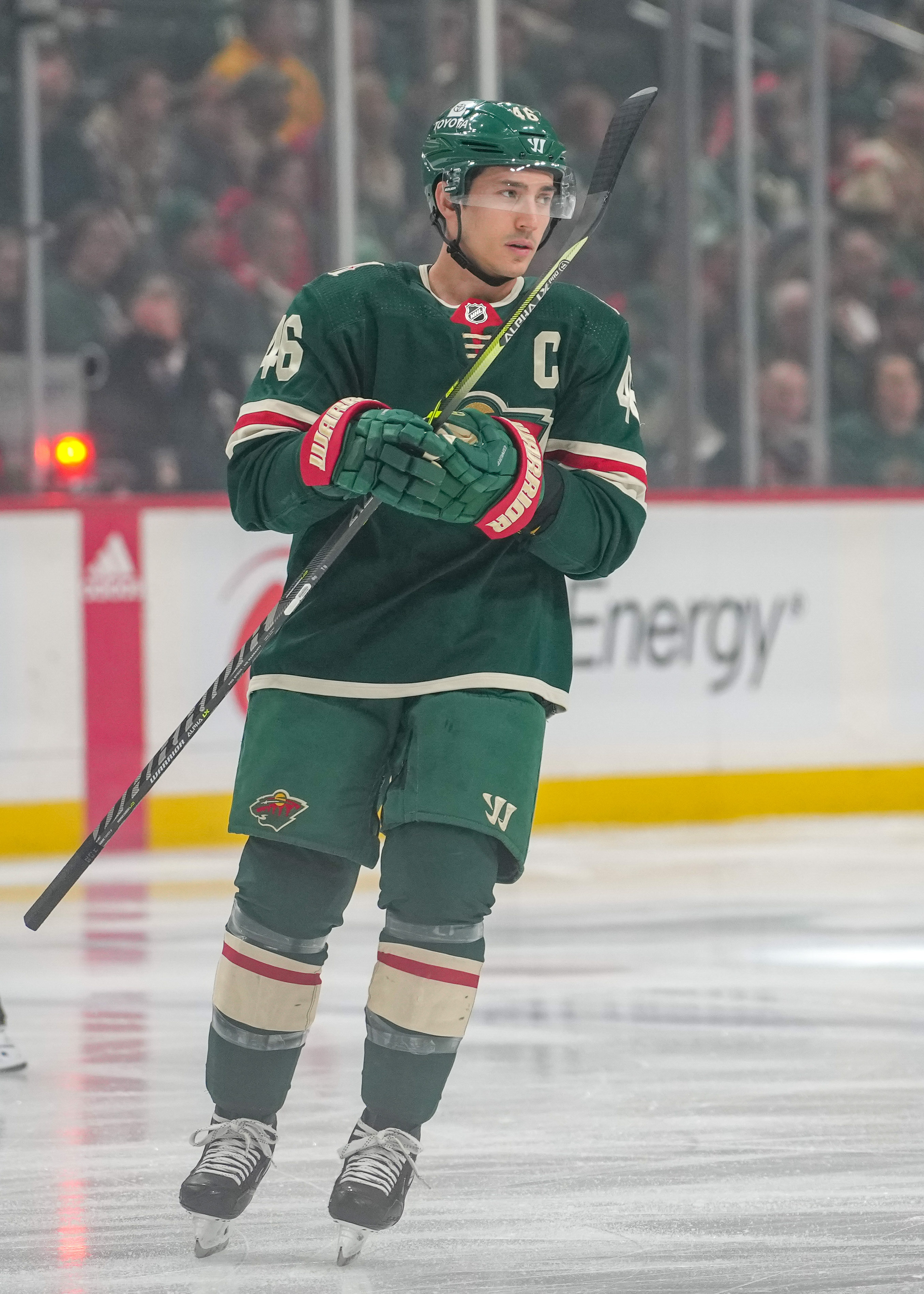 The Islanders did quite well in drafting Spurgeon early in the sixth round. If you’re thinking to yourself that you don’t remember the blueliner being with New York, there’s a good reason for that. They opted not to sign him despite two strong seasons with Spokane, making him an unrestricted free agent. Minnesota invited him to rookie camp and liked what they saw, quickly signing him to an entry-level contract in 2010.
That decision certainly worked out well for the Wild as he made his NHL debut that season and never looked back from there. He has played in a dozen NHL seasons, all with Minnesota and he sits second in franchise history in points by a defenseman. He’s 24 behind Ryan Suter for that distinction and assuming he stays healthy, he should get there at some point this upcoming season.
Spurgeon was named Minnesota’s captain in January 2021 and has five seasons left on his contract. Along the way, he should pass former captain Mikko Koivu for their all-time games played mark. Not too shabby for a player that the Islanders opted not to sign.
Now, we move on to pick number eleven which was held by the Chicago Blackhawks. They selected center Kyle Beach from the WHL, a true power forward that put up plenty of points and plenty of penalty minutes. He signed his entry-level deal in 2009, making his pro debut soon after with Rockford. Unfortunately for him and Chicago, he wasn’t able to duplicate the offensive success he had in junior and in 2013, he was traded to the Rangers for winger Brandon Mashinter.
It also must be noted that in 2010 when he served as a Black Ace for the Blackhawks’ Stanley Cup run, he was sexually assaulted by then-video coach Brad Aldrich. While he was identified as John Doe during the course of the NHL’s investigation into the incident and lawsuit which concluded last year, he revealed himself to be the victim in an interview with TSN’s Rick Westhead in October. Stan Bowman was let go soon after while Joel Quenneville resigned his position as head coach of the Panthers following the results of the investigation being made public.
Since the 2013-14 season, Beach has played overseas, spending time in Sweden, Austria, Germany, and Slovakia. He spent the last two years in the German third division, averaging over a point and a half per game. He is not currently under contract for the upcoming season.
With what transpired back in 2010, there will be a lingering question of ‘what if’ when it comes to Beach but it’s also clear that there were better choices for them at that time. As we continue our hindsight draft, who should the Blackhawks have selected? Make your selection in the poll below.
2008 Redraft: Eleventh Overall
-
Cam Atkinson 36% (262)
-
T.J. Brodie 10% (72)
-
Adam Henrique 9% (67)
-
Josh Bailey 9% (64)
-
Derek Stepan 5% (38)
-
Tyler Myers 5% (37)
-
Gustav Nyquist 5% (35)
-
Jake Allen 5% (33)
-
Zach Bogosian 3% (21)
-
Travis Hamonic 2% (18)
-
Justin Schultz 2% (13)
-
Jake Gardiner 2% (11)
-
Luke Schenn 1% (9)
-
Jason Demers 1% (9)
-
Tyler Ennis 1% (9)
-
Marco Scandella 1% (8)
-
Michael Del Zotto 1% (7)
-
Matt Martin 1% (6)
-
Mikkel Boedker 1% (6)
-
Colin Wilson 1% (4)
-
Matt Calvert 0% (3)
-
Zack Smith 0% (1)
Total votes: 733
App users, click here to vote.
Photo courtesy of USA Today Sports Images.
2008 NHL Draft Take Two: Tenth Overall Pick
Hindsight is an amazing thing, and allows us to look back and wonder “what could have been.” Though perfection is attempted, scouting and draft selection is far from an exact science, and sometimes, it doesn’t work out the way teams – or players – intended. For every Patrick Kane, there is a Patrik Stefan.
We’re looking back at the 2008 NHL Entry Draft and asking how it would shake out knowing what we do now. Will the first round remain the same, or will some late-round picks jump up to the top of the board?
The results of our redraft so far are as follows with their original draft position in parentheses:
1st Overall: Steven Stamkos, Tampa Bay Lightning (1)
2nd Overall: Drew Doughty, Los Angeles Kings (2)
3rd Overall: Roman Josi, Atlanta Thrashers (38)
4th Overall: Alex Pietrangelo, St. Louis Blues (4)
5th Overall: Erik Karlsson, Toronto Maple Leafs (15)
6th Overall: John Carlson, Columbus Blue Jackets (27)
7th Overall: Jacob Markstrom, Nashville Predators (31)
8th Overall: Braden Holtby, Phoenix Coyotes (93)
9th Overall: Jordan Eberle, New York Islanders (22)
Voters opted to have the New York Islanders go with Eberle over their original selection, lifelong Islander Josh Bailey. Eberle may have had a stronger start to his career, and has likely had a bit more of an impact overall, but it’s hard to imagine the Islanders organization without Bailey’s leadership for the past decade-plus. The upgrade in play between Eberle and Bailey also likely wouldn’t have done much for the Islanders, who still weren’t close to competing for a number of seasons after drafting Bailey in 2008.
None of that is to discredit Eberle’s career, which rightfully earns him top-ten honors in this redraft. His 595 career points in 858 games have him third overall in the class in that regard and second among forwards, trailing only Stamkos and Karlsson in total. While he hasn’t repeated the 60-plus point seasons from his early career with the Edmonton Oilers, who originally drafted him 22nd overall, he’s maintained a solid pace for a top-six forward over the years and now figures to be an important leader for the second-year Seattle Kraken.
Up next at the podium for the tenth overall pick was the Vancouver Canucks, finishing with only 88 points despite having a top-ten defense and goaltending combo in the league with Roberto Luongo, Mattias Öhlund, Sami Salo, and a young Alexander Edler. The team was anemic offensively, with only three 40-point players on the roster (Henrik Sedin, Daniel Sedin, Markus Naslund). They hoped that their original 10th overall choice in 2008, Cody Hodgson, a center from the OHL’s Brampton Battalion, would become an important piece in revitalizing the Canucks offense.
But it was not to be. Hodgson did well in the remainder of his OHL career but failed to make the impact in the Vancouver lineup as quickly as Canucks fans hoped. Hodgson didn’t make his NHL debut until 2010-11 and appeared in 12 playoff games during Vancouver’s 2011 run to the Stanley Cup Final. But during his first full season in the NHL, 2011-12, Hodgson was traded to the Buffalo Sabres at the trade deadline in exchange for Zack Kassian. He had 33 points in 63 games at the time – not awful totals from a rookie, no doubt, especially when playing under 13 minutes per game.
To date, it remains a bit of a puzzling trade, as Hodgson went on to have a few successful seasons in Buffalo. His best season came the following year, during the lockout-shortened 2012-13 season. Playing the full 48 games, Hodgson finished second on the Sabres in scoring with a 15-goal, 34-point season while also playing top-line minutes.
Unfortunately for Sabres fans, it was not a sign of things to come. Hodgson set a career-high 20 goals and 44 points the following season in 2013-14, but his per game pace dropped dramatically as he played in 72 games. However, it was the 2014-15 campaign that sent Hodgson’s NHL career off the rails. An abysmal year for the team (which led to them landing Jack Eichel) was also an abysmal year for Hodgson, whose point total dropped to just 13 in 78 games, his worst offensive pace in any league he’d ever played in. Bought out by the Sabres, he tried to resurrect his career the following season with the Nashville Predators, where he posted just eight points in 39 games. It was the last season of Hodgson’s professional career, playing his last game of pro hockey just eight years after going 10th overall.
Undoubtedly, there were better choices for Vancouver at that spot. Having Jared Spurgeon in their lineup right now alongside Quinn Hughes would be the difference between a playoff bubble team and a Stanley Cup contender, fixing a glaring hole at a position of need. T.J. Brodie would also be a solid option on defense while drafting Cam Atkinson or Josh Bailey would have given them a much more consistent scoring winger.
So PHR readers, who would you have told the Canucks to pick at 10th overall out of the players still available on our board? Vote in the poll below and discuss in the comments.
2008 Redraft: Tenth Overall
-
Jared Spurgeon 35% (300)
-
Cam Atkinson 26% (225)
-
Josh Bailey 7% (63)
-
T.J. Brodie 6% (51)
-
Adam Henrique 5% (46)
-
Tyler Myers 4% (36)
-
Derek Stepan 4% (31)
-
Gustav Nyquist 3% (26)
-
Jake Allen 1% (13)
-
Luke Schenn 1% (10)
-
Jake Gardiner 1% (10)
-
Zach Bogosian 1% (9)
-
Tyler Ennis 1% (8)
-
Mikkel Boedker 1% (6)
-
Travis Hamonic 1% (5)
-
Marco Scandella 1% (5)
-
Justin Schultz 1% (5)
-
Michael Del Zotto 1% (5)
-
Colin Wilson 0% (4)
-
Matt Martin 0% (3)
-
Jason Demers 0% (3)
-
Zack Smith 0% (3)
Total votes: 867
2008 NHL Draft Take Two: Ninth Overall Pick
Hindsight is an amazing thing, and allows us to look back and wonder “what could have been.” Though perfection is attempted, scouting and draft selection is far from an exact science, and sometimes, it doesn’t work out the way teams – or players – intended. For every Patrick Kane, there is a Patrik Stefan.
We’re looking back at the 2008 NHL Entry Draft and asking how it would shake out knowing what we do now. Will the first round remain the same, or will some late-round picks jump up to the top of the board?
The results of our redraft so far are as follows with their original draft position in parentheses:
1st Overall: Steven Stamkos, Tampa Bay Lightning (1)
2nd Overall: Drew Doughty, Los Angeles Kings (2)
3rd Overall: Roman Josi, Atlanta Thrashers (38)
4th Overall: Alex Pietrangelo, St. Louis Blues (4)
5th Overall: Erik Karlsson, Toronto Maple Leafs (15)
6th Overall: John Carlson, Columbus Blue Jackets (27)
7th Overall: Jacob Markstrom, Nashville Predators (31)
8th Overall: Braden Holtby, Phoenix Coyotes (93)
The Coyotes’ original 2008 eighth-overall selection, Mikkel Boedker, had a long career in Phoenix, but squarely belongs in the “disappointing” category of top-ten picks. Not a bust by any means, having played over 700 NHL games, he had just 327 points in those 709 games. Those numbers aren’t great, but they are good enough for 15th in scoring among the class, which was weak for forwards overall. It also means that Boedker’s offense would have been an easily replaceable asset in free agency, so it’s reasonable to wonder if taking Holtby and his Stanley Cup-winning pedigree would’ve made a difference in the Coyotes’ fortunes.
While the organization never had elite scoring talent and failed to build consistent year-to-year performances, goaltending was usually the least of their worries. Immediately after the draft, Phoenix got the three best seasons of Ilya Bryzgalov‘s career, including a Vezina Trophy nomination in 2009-10. After his departure in 2011, Mike Smith immediately broke out, guiding them to the Western Conference Final in 2012. Over 310 starts in the desert, Smith served the Coyotes well with a .916 save percentage. While you’ll hear little argument that Holtby was the better goaltender between those three, the upgrade is marginal enough that it likely wouldn’t have made much of a difference in the team’s fortunes.
The New York Islanders stepped up to the plate for the ninth-overall selection, trading four spots down on draft day in total from the fifth overall pick. It was a move that worked out extremely well for them in hindsight. Their selection at ninth overall was Josh Bailey, who remains third in scoring among forwards from the class on this day. When comparing Bailey’s career with that of the fifth overall selection (Luke Schenn) and seventh overall selection (Colin Wilson) that they dealt away that day, it was an even smarter move from then-general manager Garth Snow. Bailey, who’s remained a career Islander ever since draft day and is currently an alternate captain, has 555 career points and will play his 1,000th game as an Islander this season.
Bailey made his NHL debut in November of 2008, just five months after he was drafted, and played nearly a full NHL season as a 19-year-old. He had 25 points in 68 games during his rookie season, good enough for ninth in scoring on an atrocious Islanders team that finished with just 61 points. From that point forward, Bailey was a surefire threat for anywhere between 30 and 50 points in a full season. He set a career-high of 71 points in 76 games in 2017-18, 15 more points than his next-best season total.
Despite the impressive career as an Islander, there may have been better selections available yet on the board at ninth overall for New York. There’s Jordan Eberle, who did end up an Islander anyway after a few seasons in Edmonton, who’s the only forward that ranks ahead of Bailey in terms of career points from the class not named Steven Stamkos. There’s also current Minnesota Wild captain Jared Spurgeon, who perenially remains one of the most underrated defensemen in the NHL.
So we ask you, who should have the New York Islanders selected with the ninth overall pick in 2008? Make your voice heard in the poll below.
2008 Redraft: Ninth Overall
-
Jordan Eberle 36% (303)
-
Jared Spurgeon 20% (168)
-
Cam Atkinson 14% (118)
-
Josh Bailey 9% (77)
-
T.J. Brodie 4% (33)
-
Tyler Myers 3% (23)
-
Gustav Nyquist 2% (20)
-
Derek Stepan 2% (17)
-
Adam Henrique 2% (16)
-
Zach Bogosian 1% (11)
-
Jake Allen 1% (9)
-
Travis Hamonic 1% (9)
-
Luke Schenn 1% (6)
-
Jake Gardiner 1% (6)
-
Marco Scandella 1% (6)
-
Matt Martin 1% (6)
-
Justin Schultz 1% (5)
-
Michael Del Zotto 1% (5)
-
Jason Demers 0% (4)
-
Colin Wilson 0% (2)
-
Tyler Ennis 0% (2)
-
Mikkel Boedker 0% (0)
Total votes: 846
Trade Rumors app users, click here to vote.
2008 NHL Draft Take Two: Eighth Overall Pick
Hindsight is an amazing thing, and allows us to look back and wonder “what could have been.” Though perfection is attempted, scouting and draft selection is far from an exact science, and sometimes, it doesn’t work out the way teams – or players – intended. For every Patrick Kane, there is a Patrik Stefan.
We’re looking back at the 2008 NHL Entry Draft and asking how it would shake out knowing what we do now. Will the first round remain the same, or will some late-round picks jump up to the top of the board?
The results of our redraft so far are as follows with their original draft position in parentheses:
1st Overall: Steven Stamkos, Tampa Bay Lightning (1)
2nd Overall: Drew Doughty, Los Angeles Kings (2)
3rd Overall: Roman Josi, Atlanta Thrashers (38)
4th Overall: Alex Pietrangelo, St. Louis Blues (4)
5th Overall: Erik Karlsson, Toronto Maple Leafs (15)
6th Overall: John Carlson, Columbus Blue Jackets (27)
7th Overall: Jacob Markstrom, Nashville Predators (31)
In the real draft, Nashville made an all-around solid pick with forward Colin Wilson, a college standout who would carry his hard-working game over into the NHL ranks. Wilson’s 286 career points are good enough for 18th among 2008 draftees. Though he wasn’t a bust, Nashville could have potentially found another outcome by selecting Markstrom with the seventh pick, which might seem peculiar at first, but may have had an enormous positive impact overall. On the date of the 2008 draft, franchise great Pekka Rinne had played just three NHL games to date, establishing himself as a star the following season.
Having Markstrom in the fold behind Rinne would have blocked the younger goaltender, but may have proven a valuable trade asset for Nashville. Markstrom’s value as a prospect was as high as it could be in the early 2010’s given his ceiling, and Florida used that to its advantage, trading him along with forward Shawn Matthias to the Vancouver Canucks for Roberto Luongo and a minor leaguer. Had Nashville opted to keep Markstrom around, it’s interesting to consider that he didn’t establish himself as a regular starter until the 2017-18 season, right around the time Rinne began to take a step back due to injury and age. This could have fit as a perfect transition, however as we have seen, Nashville found that nonetheless with Juuse Saros.
We now turn to the eighth overall selection and one of two first-round picks belonging to the then-Phoenix Coyotes. The Coyotes, much like the Predators before them and the New York Islanders right after, picked a good player and someone far from a bust in forward Mikkel Boedker. For his career, Boedker had 118 goals and 209 assists for 327 points over 709 games played, enough for 15th in points and 19th in games played among members of the 2008 draft class. Those numbers put Boedker out of an elite class of player, like Stamkos, Doughty, and Karlsson ahead of him, but fit him squarely among good, solid NHLers.
The speedy Danish winger began his career with a pair of seasons in the Frolunda development program over in Sweden prior to joining the OHL’s Kitchener Rangers for the 2007-08 season – his draft year. Boedker dominated with Kitchener, netting 29 goals along with 44 assists in 66 games. Not only that, but the forward notched six points in as many games playing for Denmark’s World Juniors squad that year.
The impressive performance was enough not only to have Boedker selected eighth-overall, but would help him make the Coyotes roster as an 18-year-old. Despite his age, Boedker showed he was ready for the NHL, putting up a relatively impressive 11 goals and 17 assists in 78 games in the desert. After his rookie effort, the Coyotes opted to give the forward more time to develop, having him spend the majority of the 2009-10 and 2010-11 campaigns in the AHL, though he didn’t take too much of a step forward there.
After establishing himself as a reliable secondary option in the seasons before, Boedker broke out in 2013-14, tallying 51 points in 82 games for the final Phoenix team, his 19 goals marking a career-high. Fast forward to 2015-16, Boedker again hit the 51 point mark, ultimately tying his career-high, but was dealt at the trade deadline to the Colorado Avalanche. The deal worked out well for Boedker, who had 12 points in 18 games down the stretch, however the Avalanche would fail to make the playoffs. The trade didn’t work out so well either for what was now known as the Arizona Coyotes. They acquired prospects Connor Bleackley and Kyle Wood, neither of whom ever played an NHL game (in fact, Bleackley re-entered the draft in 2016, and was selected by the St. Louis Blues in the fifth round), as well as veteran forward Alex Tanguay, who provided a similar 13 points in 18 games the rest of the way, retiring at season’s end.
Returning to the winner of the trade, Boedker himself, his run with the Avalanche capping off three straight seasons of solid production which helped him sign a four-year, $16MM deal with the San Jose Sharks in free agency that summer. The forward spent the first two seasons of that deal with San Jose, eventually being traded to the Ottawa Senators. At the conclusion of the contract, Boedker signed with Lugano in Switzerland, likely finishing off his NHL career.
All in all, the Coyotes got fairly decent value for their eighth overall selection, receiving 213 points in 445 games over eight seasons, fetching some worthwhile value on the deadline trade market. However, in hindsight, there were several other names available who may have had a greater impact on the franchise. Who could have had a greater impact in Arizona: an impact defenseman like Tyler Myers or Jared Spurgeon? A Vezina Trophy winner like Braden Holtby? Another scorer, but one who admittedly helped get the puck in the back of the net a bit more, like Cam Atkinson or Jordan Eberle? Or was Boedker the right choice all along?
With the eighth overall pick in the 2008 NHL draft, who will the Phoenix (Arizona) Coyotes select? Cast your vote below.
2008 Redraft: Eighth Overall
-
Braden Holtby 22% (160)
-
Jordan Eberle 22% (157)
-
Jared Spurgeon 15% (106)
-
Cam Atkinson 14% (105)
-
T.J. Brodie 5% (37)
-
Tyler Myers 4% (27)
-
Adam Henrique 3% (24)
-
Gustav Nyquist 2% (15)
-
Josh Bailey 2% (12)
-
Derek Stepan 2% (12)
-
Colin Wilson 2% (11)
-
Zach Bogosian 1% (10)
-
Jake Allen 1% (8)
-
Luke Schenn 1% (8)
-
Mikkel Boedker 1% (6)
-
Jake Gardiner 1% (6)
-
Marco Scandella 1% (5)
-
Tyler Ennis 1% (4)
-
Travis Hamonic 1% (4)
-
Justin Schultz 1% (4)
-
Michael Del Zotto 0% (3)
-
Matt Martin 0% (1)
Total votes: 725
Trade Rumors app users, click here to vote.
Poll: Who Will Win The Atlantic Division?
After asking our readers to pick the winners of the Central and Pacific Divisions next season, it’s time to turn toward the Eastern Conference. While the Pacific Division vote was split nearly evenly between the Edmonton Oilers (who held the edge) and the Calgary Flames, the Colorado Avalanche dominated the vote counter for the Central, garnering over 62% of the votes. No other team had more than 15%.
The Eastern Conference, like last season, carries a far bit more intrigue, though. With a tumultuous offseason, there’s poised to be a shuffling of the deck, with former titans falling and upstart teams emerging.
No team may exemplify that better than last season’s Presidents’ Trophy winners — the Florida Panthers. Last season’s 58-18-6 record was by far the best in team history, but they bowed out quietly in the Second Round, being swept by the eventual Eastern Conference champion Tampa Bay Lightning.
That playoff disappointment beckoned a host of changes, beginning behind the bench. Interim head coach and Jack Adams Award finalist Andrew Brunette was dismissed in favor of veteran coach Paul Maurice, who aims to gel the team’s defensive holes that ultimately doomed them. That will be a tough challenge with a defense core that’s already missing Mackenzie Weegar via trade and whose most notable additions were depth veterans Marc Staal and Michael Del Zotto. A refresh on offense also hit the team’s scoring depth, with breakout star Mason Marchment departing in free agency and franchise cornerstone Jonathan Huberdeau replaced with Matthew Tkachuk. The team will also have to manage the first few months of the season without Anthony Duclair, who’s rehabbing an Achilles tendon injury.
The Toronto Maple Leafs roared to a 115-point season last year for second place in the division, but they too have taken hits to the roster. A new goaltending tandem of Matt Murray and Ilya Samsonov begs more questions than it gives answers, and the team will miss Ilya Mikheyev and Ondrej Kase as important depth scoring. They did get some of that depth back in the form of Calle Jarnkrok signing in free agency, but the team will largely be forced to run it back with question marks in net.
2021-22 was a season of threes for the Tampa Bay Lightning, who finished third in the Atlantic en route to their third straight Stanley Cup Final appearance. After losing in the Final, though, they’ll need to figure out how to replace the losses of Ondrej Palat and Ryan McDonagh largely internally. They’ll bet on a big breakout season from forward Brandon Hagel, who they paid a steep price at the Trade Deadline to acquire just for that reason. They’ll also have to get through the start of the year without Selke-caliber center Anthony Cirelli, who’s likely out until December with a shoulder injury.
The Boston Bruins are bringing Patrice Bergeron and David Krejci back for one last ride, but they’ll have to do it without Brad Marchand, Charlie McAvoy, Matt Grzelcyk, and Mike Reilly to start the season. With that level of firepower out of the lineup, it could spell trouble in such a competitive division. An apparent downgrade behind the bench as well means the team could struggle to reach the 50-win, 100-point mark again this season.
The Ottawa Senators and Detroit Red Wings both made incredible splashes in free agency, and figure to make it a six-team race for three to five playoff spots in the Atlantic. Ottawa’s additions of Alex DeBrincat and Claude Giroux give them one of the highest-powered top-sixes in the conference, while Detroit’s additions of David Perron, Andrew Copp, and Ben Chiarot give them high-quality depth to support their growing stars.
The Buffalo Sabres and Montreal Canadiens, while likely to be at the bottom of the division again, will both look to take steps forward with significant improvement expected from their young franchise cornerstone. Owen Power‘s rookie performance will be the storyline all season in Buffalo, while Cole Caufield will look to transform his elite skill into the consistency required to be an All-Star.
So, PHR readers, we ask you again — who do you think will win the Atlantic Division next season? Make sure to vote in the poll below and leave a comment below to contribute to the discussion.
Who Wins The Atlantic Division In 2022-23?
-
Toronto Maple Leafs 31% (507)
-
Tampa Bay Lightning 27% (442)
-
Florida Panthers 20% (329)
-
Boston Bruins 6% (95)
-
Ottawa Senators 6% (95)
-
Detroit Red Wings 4% (58)
-
Buffalo Sabres 3% (50)
-
Montreal Canadiens 2% (35)
Total votes: 1,611
Mobile users, click here to vote!
2008 NHL Draft Take Two: Seventh Overall Pick
Hindsight is an amazing thing, and allows us to look back and wonder “what could have been.” Though perfection is attempted, scouting and draft selection is far from an exact science, and sometimes, it doesn’t work out the way teams – or players – intended. For every Patrick Kane, there is a Patrik Stefan.
We’re looking back at the 2008 NHL Entry Draft and asking how it would shake out knowing what we do now. Will the first round remain the same, or will some late-round picks jump up to the top of the board?
The results of our redraft so far are as follows with their original draft position in parentheses:
1st Overall: Steven Stamkos, Tampa Bay Lightning (1)
2nd Overall: Drew Doughty, Los Angeles Kings (2)
3rd Overall: Roman Josi, Atlanta Thrashers (38)
4th Overall: Alex Pietrangelo, St. Louis Blues (4)
5th Overall: Erik Karlsson, Toronto Maple Leafs (15)
6th Overall: John Carlson, Columbus Blue Jackets (27)
Instead of the underwhelming Nikita Filatov, the Blue Jackets grab one of the best offensive defensemen of the last decade. Carlson has posted at least 70 points in three of the past four years and reached his career-high of 75 in the COVID-shortened 2019-20 campaign, earning him a second-place finish in the Norris Trophy voting. He logged nearly 26 minutes a night in his 2018 Stanley Cup run and is on track to hit 600 career points early this season. It’s not often that a draft has five defensemen this capable that can dominate the early board but the Blue Jackets have followed the trend and picked their own franchise blueliner.
We now move on to the seventh selection and the first of two first-round selections by the Nashville Predators.
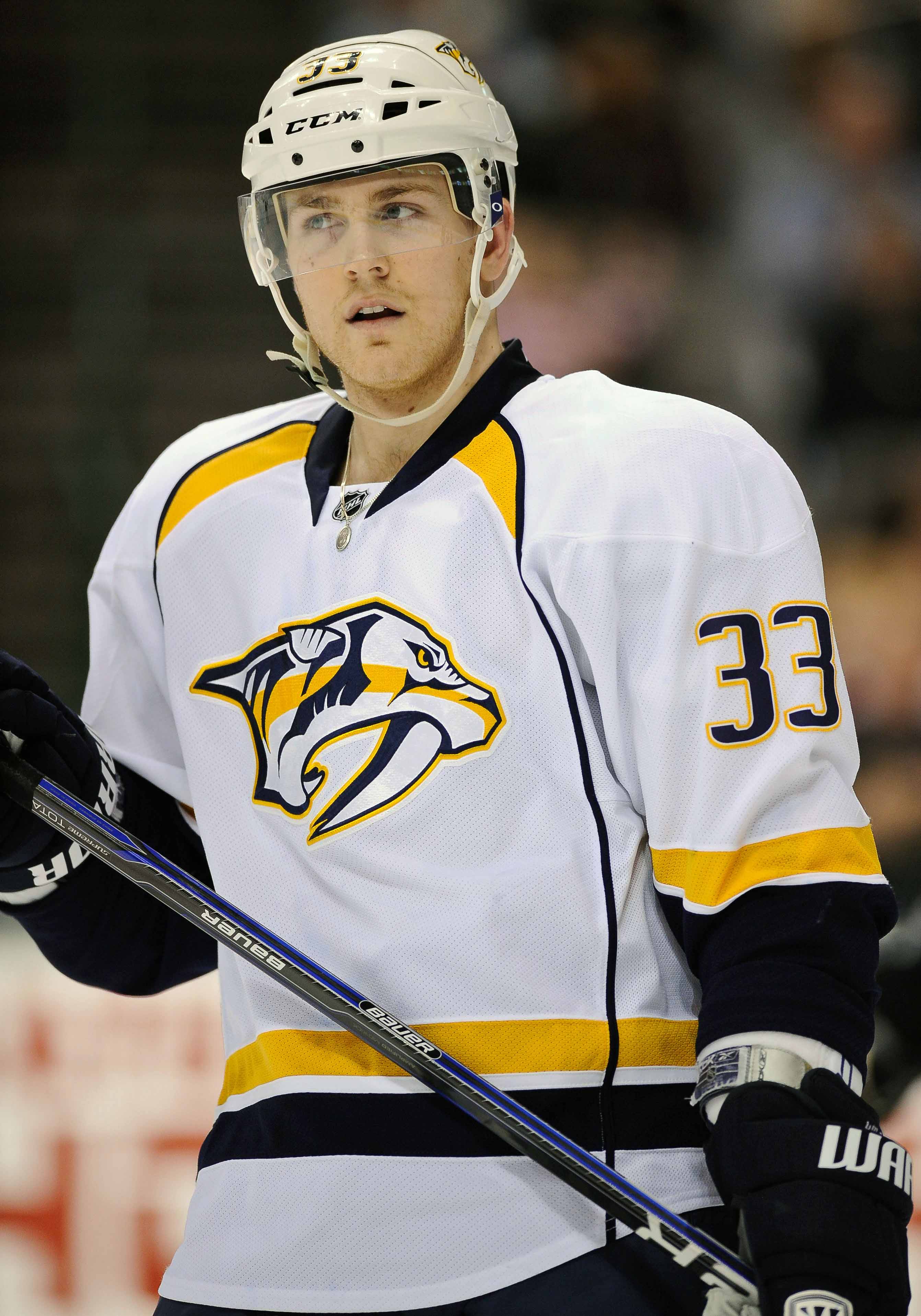 There was always a chance that the Predators could change the direction of their franchise with the 2008 draft, though few would expect it to come from the second round, when Josi was selected 38th. Instead, one would have thought it was either the seventh or 18th pick that would become the franchise-altering talent down the road.
With their first selection, general manager David Poile (who has been well connected to USA hockey for a very long time) decided to dip into the college ranks and take freshman standout, Colin Wilson, from Boston University. Wilson had absolutely dominated the U18s, scored six goals in six games at the World Juniors and had NHL pedigree. His father, Carey Wilson, had scored over 400 points at the NHL level and competed in the Olympics (for Canada), his uncle Geoff Wilson was a draft pick of the Pittsburgh Penguins, and his grandfather Jerry Wilson played three games for the Montreal Canadiens in 1956-57. In fact, Carey had been acquired by the Calgary Flames just months after Poile had left his role there as AGM, making the selection of Colin a kind of odd family circle.
This wasn’t some nepotistic pick, though. Wilson was a powerhouse for BU, scoring 12 goals and 35 points in 37 games as a freshman, making him the ninth-ranked North American skater by NHL Central Scouting and a sure bet to be an impact player at the professional level. When he won the Jim Johannson Award as the USA Hockey College Player of the Year the following season and led BU to a national championship, it was clear he was ready to make the jump. He played in the World Championship that spring against NHL talent (where Poile was AGM for the U.S. team) and then transitioned to professional hockey in 2009-10.
While he may not be the best player selected that year, Wilson had a solid career, scoring 113 goals and 286 points in 632 games. He was a versatile middle-six forward for many years with the Predators, reaching a career-high 20 goals and 42 points in 2014-15.
After announcing his retirement in early 2021, Wilson continued to have a positive impact in a very different way. He released an emotional piece in The Players’ Tribune that detailed his struggles with a diagnosis of obsessive-compulsive disorder, his battle to keep a career on the rails, and his hopes that others facing similar difficulties would open up about them in the future.
I played in the NHL. I lived my dream. And I fought through hell to make a career for myself. My name might not be on the Stanley Cup, and that’s fine. Because I know there is an opportunity ahead of me to not just leave my mark on the game of hockey, but also on lives all across the world.
When Jimmy Hayes tragically died in the summer of 2021 because of an apparent drug overdose, Wilson took to the Tribune’s pages again, to go even deeper into his own history of drug abuse. It was an attempt to come clean with himself and perhaps shine a bit brighter spotlight on the growing overdose epidemic, and how it affects people with mental health disorders.
Unlike some of the other players that were picked in the first round, Wilson wasn’t a bust. He sits 18th in points among all players from the draft class. But With the advantage of hindsight, the Predators can pick a different talent, someone that would have had an even greater effect on the organization.
With the seventh overall pick in the 2008 NHL Draft, who will the Nashville Predators select? Cast your vote below.
2008 Redraft: Seventh Overall
-
Jacob Markstrom 28% (301)
-
Jordan Eberle 16% (172)
-
Braden Holtby 15% (165)
-
Jared Spurgeon 10% (112)
-
Cam Atkinson 9% (102)
-
T.J. Brodie 3% (31)
-
Josh Bailey 3% (29)
-
Gustav Nyquist 2% (22)
-
Derek Stepan 2% (21)
-
Adam Henrique 2% (20)
-
Tyler Myers 2% (19)
-
Colin Wilson 2% (18)
-
Zach Bogosian 1% (13)
-
Michael Del Zotto 1% (9)
-
Luke Schenn 1% (8)
-
Jake Allen 1% (8)
-
Justin Schultz 1% (7)
-
Jake Gardiner 1% (6)
-
Tyler Ennis 1% (6)
-
Marco Scandella 0% (5)
-
Travis Hamonic 0% (4)
-
Mikkel Boedker 0% (3)
-
Matt Martin 0% (2)
Total votes: 1,083
[Mobile users click here to vote!]
Photo courtesy of USA Today Sports Images