
Zach Senyshyn Requests Trade
The third member of the Boston Bruins’ infamous 2015 first-round trio, Zach Senyshyn is also the one with the fewest NHL games played. He’s played just 14 times at that level, recording a goal and three points. For the Providence Bruins, he’s been a strong contributor, wearing an “A” as an alternate captain the last two seasons and registering 92 points in 213 games. But now he wants out.
Speaking with Mark Divver of Rinkside Rhode Island, Senyshyn explained that he has requested a trade out of the Bruins organization. To be clear, he said that he will report back to Providence after the holiday break, but believes it would be best for both sides for him to get a fresh start.
Selected 15th overall, Senyshyn was the third-straight Bruins pick in the first round. Jakub Zboril and Jake DeBrusk were the other two, both players who have also at one point in their careers requested a trade out of Boston. While all three have been disappointments relative to their draft position, the picks were considered all the worse thanks to the three players that came directly after them. Mathew Barzal, Kyle Connor, and Thomas Chabot were picked 16, 17, and 18. Senyshyn even touches on that specifically in his interview with Divver, which is understandable given that every media outlet (this one included) seems to mention the draft outcomes when he’s discussed.
In 21 games this season, the 24-year-old forward has 13 points with Providence and is tied with Oskar Steen or the team lead in goals with eight. He agreed to a new one-year, two-way contract in the offseason that normally would have left him a restricted free agent again, but, like Zboril, Senyshyn will become a Group VI unrestricted free agent should he fail to reach 80 NHL games by the end of the year. With 66 needed to hit that threshold, he’s not going to make it even if a trade went through in the coming days, meaning one way or another he’ll get a chance at his fresh start soon enough.
What Your Team Is Thankful For: Montreal Canadiens
As the holiday season approaches, PHR will take a look at what teams are thankful for as the season passes the one-quarter mark. There also might be a few things your team would like down the road. We’ll examine what’s gone well in the early going and what could improve as the season rolls on for the Montreal Canadiens (when it eventually resumes).
What are the Canadiens thankful for?
Carolina’s playoff position.
There’s no getting around it, the Canadiens and Hurricanes have beef (manufactured for social media or not). After Montreal signed Sebastian Aho to an offer sheet in the summer of 2019, Carolina came back two years later and signed Jesperi Kotkaniemi to an outlandish offer that the Canadiens simply couldn’t afford to match. The Hurricanes didn’t make any attempt to hide the fact that it was a revenge play, even including the same verbiage Marc Bergevin had used initially in Don Waddell‘s press release and adding a $20 signing bonus (an homage to Aho’s jersey number) in the Kotkaniemi contract.
It’s ironic then, that the Canadiens have so much riding on Carolina’s performance this season.
When Montreal traded for Christian Dvorak almost immediately after declining to match the Kotkaneimi offer sheet, they included a first-round pick in the package sent to the Arizona Coyotes. The Coyotes will receive the better of the two picks Montreal owns–their original selection and the one received from Carolina in compensation. That is of course unless one or both of the picks end up in the top-10, in which case the Coyotes will receive the worse of the two. Montreal looks destined to have a pick in the top-10 after this dreadful season, meaning it’s Carolina’s pick that will eventually transfer to Arizona. But there’s no additional protection involved; if Carolina somehow slipped out of the playoff race and fell down the standings, there’s a chance Montreal could be giving up quite the pick. Remember, the new lottery rules come into effect this year, meaning that teams outside the playoffs can only jump up a maximum of ten spots, but it would still be quite the nervous night if the Hurricanes managed to miss the postseason somehow.
Who are the Canadiens thankful for?
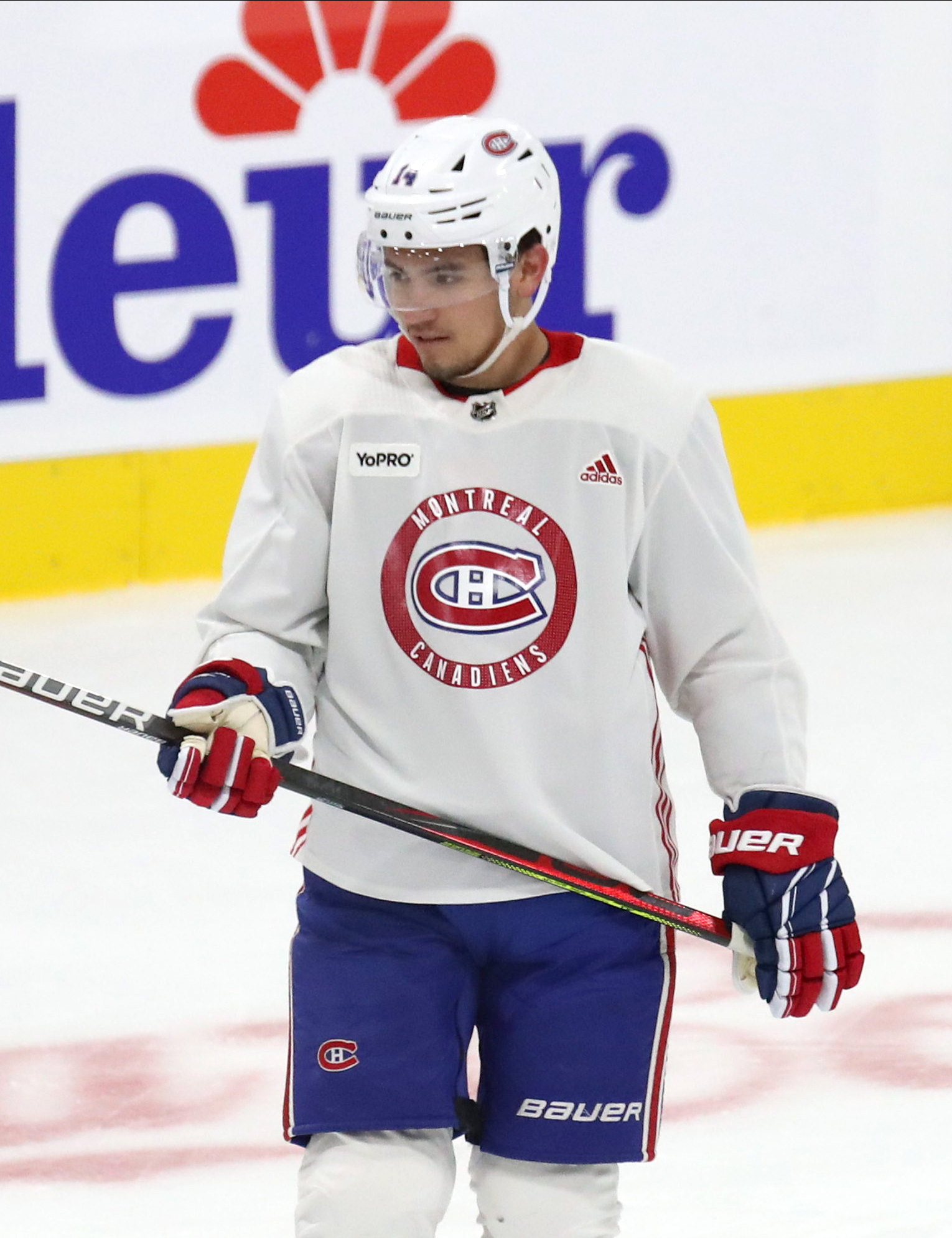
There hasn’t been much to celebrate in Montreal this season. Cole Caufield, the odds-on favorite to win the Calder Trophy according to many before the season, has just a single goal and six points in 23 games. Mike Hoffman, brought in to provide some offensive firepower has been injured, sick or ineffective and has just eight points so far. David Savard, brought in to stabilize the defense in Shea Weber‘s absence, has been brutal and his four-year deal looks like a massive mistake.
Even Suzuki, the brightest star in a sea of dim light, has been underwhelming. He leads the team with 18 points through 31 games, but it’s his long-term contract that is something to look forward to in Montreal. Even if the team goes through a rebuild, they will know exactly how much their top center costs and how long they have him. Suzuki is signed through the 2029-30 and invested in the Canadiens success. Sure, had they waited until after this poor season to sign him it may have been a bit cheaper, but who knows if he commits to eight years after this dreadful campaign.
A comparison could be made to Dylan Larkin, who made it through the bad years in Detroit only to return to his explosive self this season when given some more talent to work with. Larkin hit a career-low of 23 points in 2020-21 and has 29 already this year. Even if it’s a forgettable year in Montreal and for Suzuki, he’s too good to be kept that way forever.
What would the Canadiens be even more thankful for?
A lottery win.
Listen, players like Matthew Savoie, Logan Cooley, and Danila Yurov are great talents and should have long productive NHL careers. But there’s a reason why all 10 scouts surveyed by Bob McKenzie of TSN put Shane Wright at the top of their board for 2022. The Kingston center was in a tier by himself in Corey Pronman’s rankings for The Athletic and colleague Scott Wheeler wrote that he is “not worried about his place at the top of this draft class” despite a rather pedestrian start by his standards (30 points in 22 games).
With the Canadiens now in 31st place, just a few points ahead of the Coyotes for last in the NHL, that first-overall pick is a legitimate possibility in 2022. Selecting second or third would certainly still help the rebuild, but nabbing Wright would lock in another top-six, two-way center that could give Montreal a considerable duo down the middle for 2022 and years to come.
What should be on the Canadiens’ Holiday Wish List?
Stalled young players.
While the Canadiens could and should target draft picks at the upcoming deadline, the team already does have quite a few to work with this year. They’ll pick seven times in the first four rounds even if they don’t make a single move, adding quite a few prospects to the pipeline. A more interesting strategy might be going after some of the young players around the league who have stalled in their development or need fresh starts.
Again, an example in Detroit could be of use here. The Red Wings acquired Robby Fabbri in 2019 for Jacob de La Rose, a player that now finds himself playing in Sweden. Fabbri had been a highly-touted youngster, but major knee injuries had stalled his career in St. Louis. Snatched for almost nothing, he rebuilt himself in Detroit by receiving top-six playing time that he wasn’t likely to get elsewhere and recently signed a new three-year, $12MM contract extension. If the Canadiens are going to clear some of the veteran names off the books, there will be opportunities in the lineup for young players to get back on track.
Photo courtesy of USA Today Sports Images
Snapshots: Canadiens, Kane, Sustr
In their final game before being shut down, the Montreal Canadiens welcomed the Philadelphia Flyers to town. Things were going normally until the provincial government instructed that the game be played without fans. That caused “a lot of grumbling” according to Elliotte Friedman of Sportsnet, who writes that there is real worry about the reduced capacity in Canadian markets affecting the league’s revenue projections.
Pierre LeBrun of The Athletic adds that if the Canadiens are still not allowed to have fans at their home games in January, some of them could be rescheduled to later in the season. Montreal is set to return after the holiday break on a three-game road trip, before the Washington Capitals come to town on January 4.
- COVID-19 outbreaks are obviously not limited to the NHL, as many AHL teams have also seen players move in and out of the protocol throughout the year. One notable name today was Evander Kane, who entered the protocol along with Nick Cicek and Jasper Weatherby of the San Jose Barracuda. Kane, if you’d forgotten, has been playing in the AHL since his suspension ended last month and has eight points in five games with the Barracuda–the first five minor league games of his entire career. Now 30, Kane remains a potential trade candidate but he’ll have to isolate for the time being as he goes through the protocol.
- There won’t be many minor league transactions today as the league goes dark, but the Tampa Bay Lightning did sneak in one more before things closed. Andrej Sustr has been reassigned to the AHL for the break, saving the Lightning a few dollars. The 31-year-old has been used in spot duty throughout the year, playing eight games for Tampa Bay and 12 for the Syracuse Crunch.
AHL Cancels 2022 All-Star Game
Due to the ongoing COVID-19 situation in Quebec and across the continent, the AHL has announced that they will not hold the scheduled All-Star festivities in Laval this year. The events were set to take place over February 6-7 and though they have technically been listed as “postponed” that is only in regard to returning to Laval at some point in future years.
AHL president Scott Howson released a statement:
The Laval Rocket and Place Bell have done an outstanding job preparing to host our All-Star Classic festivities this year,” said Howson. “But with the event only six weeks away and faced with ongoing challenges pertaining to health and safety, international travel, and group gatherings, the League and the Rocket organization feel it is in everybody’s best interests to postpone the event. We remain committed to bringing the All-Star Classic to Laval in the future.
This will be the second year in a row that the AHL will not hold an All-Star Game after last year’s event was also canceled during the shortened season. The NHL, on the other hand, is very much committed to hosting its event in Las Vegas at the beginning of February. In fact, with the Olympics now out of the way, the All-Star festivities may be an easier logistics project for the league.
For those players that would have been headed to the AHL celebration, there actually may be a better event to attend this year. Since the NHL isn’t going to the Olympics, AHL players might end up being selected for their respective countries. Likely only those on AHL contracts will be able to attend, as they did in 2018, but for many, that would still be a dream come true (despite the obvious challenges of these Games).
NHL Officially Withdraws From Olympic Participation
Though there have been signs for weeks and reports over the last few days, the NHL had not officially confirmed whether or not they will be participating in the Olympics–until now. The league has issued a statement from commissioner Gary Bettman explaining their withdrawal from the Games, noting the same “profound” disruption that they had warned about:
The National Hockey League respects and admires the desire of NHL Players to represent their countries and participate in a ‘best on best’ tournament. Accordingly, we have waited as long as possible to make this decision while exploring every available option to enable our Players to participate in the 2022 Winter Olympic Games. Unfortunately, given the profound disruption to the NHL’s regular-season schedule caused by recent COVID-related events — 50 games already have been postponed through Dec. 23 — Olympic participation is no longer feasible. We certainly acknowledge and appreciate the efforts made by the International Olympic Committee, the International Ice Hockey Federation and the Beijing Organizing Committee to host NHL Players but current circumstances have made it impossible for us to proceed despite everyone’s best efforts. We look forward to Olympic participation in 2026.
Our focus and goal have been and must remain to responsibly and safely complete the entirety of the NHL regular season and Stanley Cup Playoffs in a timely manner. Therefore, with stringent health protocols once again in place, we will begin utilizing available dates during the Feb. 6-22 window (originally contemplated to accommodate Olympic participation) to reschedule games that have been, or may yet be, postponed.
Of note, this is not a joint release with the NHLPA. The NHL has taken the lead here, even though there were obvious concerns from the players as well. For their part, the NHLPA has released a statement from executive director Don Fehr:
Since the CBA extension was reached 17 months ago, NHL players have looked forward with great anticipation to once again participating in the Winter Olympics. Until very recently, we seemed to be on a clear path to go to Beijing. COVID-19 has unfortunately intervened, forcing dozens of games to be postponed this month alone. No matter how much we wish it were not the case, we need to utilize the Olympic period to reschedule these games.
Certainly, the players and hockey fans are quite disappointed. But playing a full 82-game season this year, something the pandemic has prevented us from doing since the 2018-19 season, is very important. We expect that NHL players will return to the Olympics in 2026.
The players will continue to push for NHL participation in the 2026 Games, something that seems very far away at the moment. Those games will be held in Italy, hopefully with the best players in the world participating. To be clear, players are not allowed to individually opt into attending the 2022 Games without facing punishment from the league.
With the vast amount of postponements recently, there will be serious changes to the schedule in February.
Snapshots: All-Star Game, Cooper, World Juniors, Rust
While it appears the NHL and NHLPA will soon officially be pulling the plug on participating in the upcoming Olympics, it doesn’t appear as if All-Star Weekend will be doomed to a similar fate. At least, not yet. ESPN’s Greg Wyshynski notes that at this point, there haven’t been any substantial discussions about whether or not to delay or cancel that event which is scheduled for February 4th and 5th in Vegas. Depending on what happens over the coming weeks when it comes to further postponements on the schedule, the league may need to utilize those dates for makeup games but after not having the event last season, it’s one they’ll likely try to keep intact if they can.
More from around the hockey world:
- Prior to their game against Vegas tonight, Lightning head coach Jon Cooper was placed in COVID protocol, relays Eduardo A. Encina of the Tampa Bay Times (Twitter link). Tampa Bay was one of the few teams left that didn’t have anyone in COVID protocol before this placement.
- The World Juniors will have considerably fewer fans than originally planned for following an announcement that Alberta will be limiting capacity to 50% at both arenas. There is no timeline for when those measures will be revisited and they will also affect the Flames and Oilers once their games resume although Edmonton comes out of the holiday break with a six-game road trip due to the tournament.
- The Penguins and winger Bryan Rust held extension talks but have shelved them after being unable to find common ground in talks, reports Pittsburgh Hockey Now’s Dan Kingerski. It has been a tough season for the 29-year-old who has been limited to just a dozen appearances due to injuries after two strong years that saw him pot 49 goals in 111 games which doesn’t help his case as he looks to land a sizable raise on his current $3.75MM AAV. Matt Vensel of the Pittsburgh Post-Gazette mentions that Rust skated with the team in Monday – albeit in a non-contact jersey – which suggests that he could be back not long after play resumes following the holiday break.
Salary Cap Deep Dive: Colorado Avalanche
Navigating the salary cap is one of the more important tasks for any GM. Teams that can avoid total cap chaos by walking the tightrope of inking players to deals that match their value (or compensate for future value without breaking the bank) remain successful. Those that don’t see struggles and front office changes.
PHR will look at every NHL team and give a thorough look at their cap situation for the 2021-22 season and beyond. This will focus more on players who are regulars on the roster versus those who may find themselves shuttling between the AHL and NHL. All cap figures are courtesy of CapFriendly.
Colorado Avalanche
Current Cap Hit: $81,972,800 (over the $81.5MM Upper Limit)
Entry-Level Contracts
D Bowen Byram (two years, $894K)
F Alex Newhook (two years, $908K)
Potential Bonuses
Byram: $2.5MM
Newhook: $850K
Total: $3.35MM
Newhook got a taste of NHL action last season in a limited role but spent most of the early part of this year back in the minors. However, he has been quite productive since being recalled and is staking a claim to a full-time spot which would give him a chance of hitting at least a couple of his ‘A’ bonuses at just over $212K apiece. Even with that, however, a bridge contract seems likely in order to preserve some space for the bigger ticket expiring deals at that time.
The same reasoning is likely to be applied to Byram as well. He is a bit more established than Newhook but his concussion trouble is going to create some hesitance on GM Joe Sakic’s part to commit to a big-money, long-term contract. If he can stay healthy for a few years, such a move would be more likely but they’re not going to get to that point in 2023. As for his bonus situation, if he’s able to get cleared to return and can stay in the lineup for a while, he has a chance of meeting the four ‘A’ bonuses, earning $850K of his potential bonuses; the rest are unlikely.
One Year Remaining, Non-Entry-Level
F Nicolas Aube-Kubel ($1.075MM, RFA)
F Andre Burakovsky ($4.9MM, UFA)
G Pavel Francouz ($2MM, UFA)
F Darren Helm ($1MM, UFA)
D Jack Johnson ($750K, UFA)
F Nazem Kadri ($4.5MM, UFA)
G Darcy Kuemper ($3.5MM, UFA)
D Kurtis MacDermid ($875K, UFA)
D Ryan Murray ($2MM, UFA)
F Valeri Nichushkin ($2.5MM, UFA)
When Colorado acquired Burakovsky, he had shown flashes of top-six ability but he was also quite inconsistent. The flashes are still there and they are much more frequent now as his production has risen significantly. He isn’t at a level where he can necessarily command top dollar for wingers but he could jump past the $6MM mark. Kadri is having quite the contract year and is in the top five in league scoring. That won’t set him up to get elite center money on the open market – especially with his past – but good centers are always in high demand and short supply. If he continues at this pace, surpassing $7MM on a long-term deal is a definite possibility.
Nichushkin has been particularly strong in limited action this season but his history since being with the Avs is that he works as a middle-six winger. The market was a lot better for those players over the summer so a raise into the mid-to-high $3MM range should be doable for him. Aube-Kubel and Helm could feel the squeeze of a tight cap situation as those spots will probably need to go to players making closer to the minimum next season. Both could have a case for receiving similar money to what they’re getting now but they may have to go elsewhere to do so; arbitration eligibility could make Aube-Kubel a non-tender candidate.
Murray’s market didn’t really materialize so he opted for a bit of a pillow situation to try to showcase his value on a good team. It hasn’t gone quite as planned as he has had a limited role when he’s in the lineup and as has been the case for most of his career, staying healthy has been a challenge. On reputation alone, he could still land somewhere near this price on a one-year deal next summer but it’s hard to see a multi-year commitment heading his way unless the second half goes a lot better than the first. MacDermid brings plenty of physicality but is best utilized in a depth role which will cap his earnings upside at a level not much higher than it is now. As for Johnson, he has been a nice bargain pickup for the Avs. Given his past, however, it’s hard to see him going more than year-to-year at this point although he could land a small raise next summer.
The Avs paid a high price tag to get the final year of Kuemper’s deal and the results have been mixed so far. Based on his numbers with Arizona, he’s someone worthy of passing $5MM per season. With Colorado? Not so much. A big second half and playoff run can change things but as of right now, he’s someone who could land about $1MM more with teams being hesitant to go past that with him only passing the 30-game mark twice in his career. Francouz has yet to play an NHL game on this contract which started last season due to injury. That doesn’t bode well for his future earnings and a cheap one-year deal may be all he can manage.
Two Years Remaining
F J.T. Compher ($3.5MM, UFA)
D Erik Johnson ($6MM, UFA)
F Tyson Jost ($2MM, RFA)
F Nathan MacKinnon ($6.3MM, UFA)
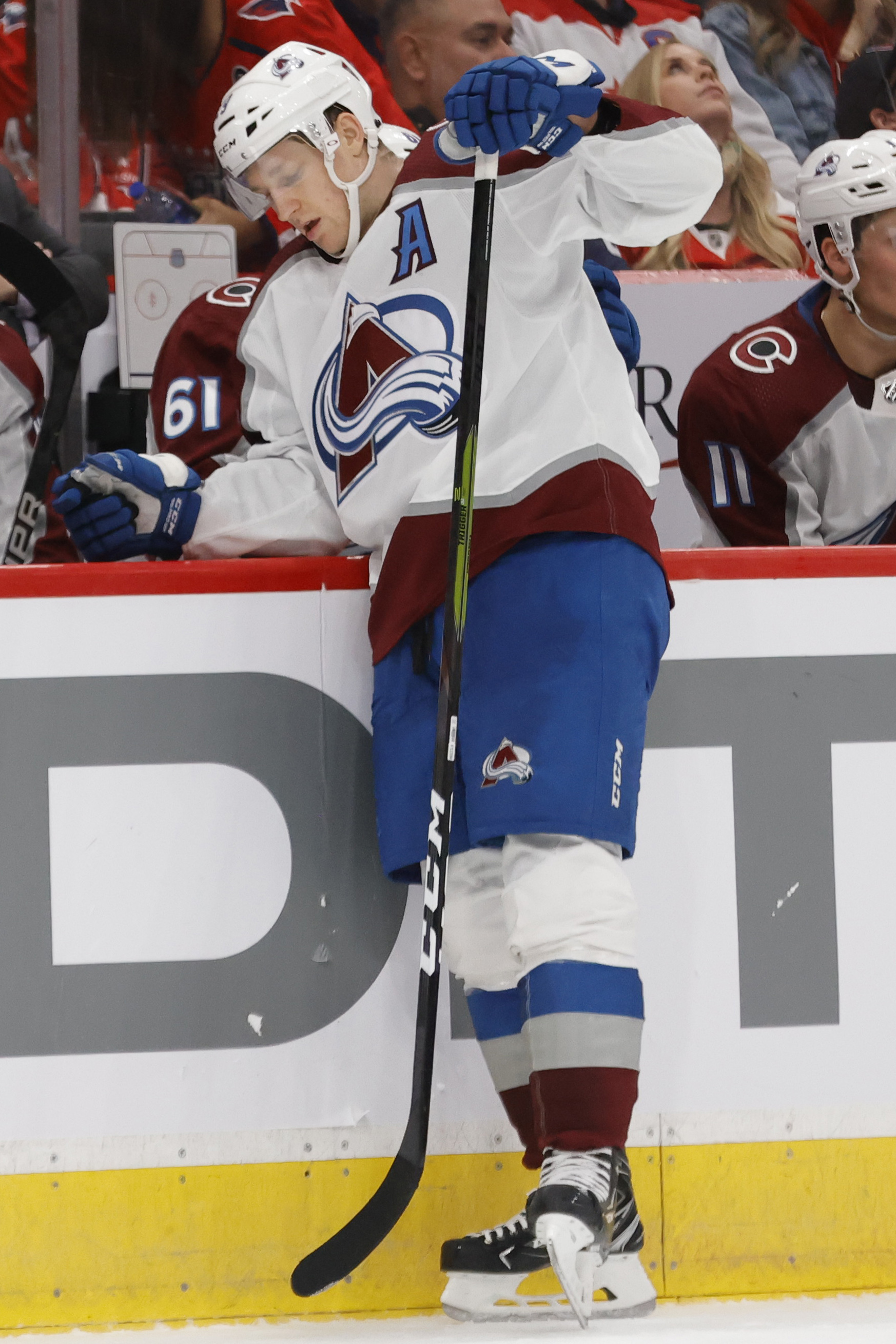 It’s MacKinnon’s contract situation that will make long-term commitments hard to hand out between now and then. Over the past five years, two players have recorded more points than he has (and they both play for Edmonton). If there’s anyone that can challenge Connor McDavid for the highest AAV in NHL history, it may very well be MacKinnon. He’ll hit the open market at 28 so a max-term contract is all but a given (eight years from Colorado, seven from anyone else). Even if he doesn’t pass the $12.5MM mark, he should come close which would add upwards of $6MM to their payroll. Until they have a sense of what they can do with their star center, Sakic should be looking at short-term options to ensure they have the flexibility to keep MacKinnon in the fold.
Compher did well in MacKinnon’s absence earlier this season which bolsters his case that he’s capable of being a regular top-six player. When everyone is healthy for the Avs, however, he isn’t in that situation. Unless something changes (such as Kadri moving on and Compher moving up a notch on the depth chart), he’ll be hard-pressed to get much more than what he’s making now. Jost has been a little better this season but is still underwhelming relative to his draft stock. He’s not consistent enough to be a top-six player and pure bottom-six players without a particular specialty don’t often get big deals. He’s owed a $2.25MM qualifying offer in 2023 and depending on what happens with MacKinnon, that may be too rich for them.
A few years ago at the start of this contract, Johnson was seeing plenty of time on the top pairing and playing a prominent role. Now he’s 33 and missed almost all of last season due to injury. His days of being a fixture on the top pair are over and he’s more of a role player. He’s actually off to a nice start to his season, showing he has something left in the tank, albeit not at a $6MM level. If he stays healthy, he could drop to the high-$3MM range or perhaps a bit less if someone wants to give him a longer-term contract, a risk as he’ll be subject to 35+ rules (unless the contract is structured uniformly).
Three Years Remaining
D Devon Toews ($4.1MM, UFA)
A tough cap situation for the Islanders was great news for Colorado as they were able to add Toews for a pair of second-round picks and sign him to a deal that he is outperforming significantly. He’s up over a point per game this season after notching a career-best 31 last year and is logging nearly 25 minutes a night again. As a result, Toews is providing top-pairing production while getting paid less than what some teams are paying their third blueliner. If he continues on this trajectory, doubling his current AAV could be attainable.
Injury Updates: Knyzhov, Wild, Anderson
When Sharks defenseman Nikolai Knyzhov was expected to miss eight to ten weeks after undergoing surgery for a lower-body injury, it appears he’s well behind schedule in his recovery. The early point of that timeline would have had him returning now but Curtis Pashelka of The Mercury News mentions that the blueliner is still very early in the rehab stage and doesn’t appear to be close to returning. Knyzhov very quietly played in all 56 games for San Jose last season, collecting 10 points while logging nearly 17 minutes a night on the back end. This slow recovery will make it tough for them to rely on his return in the second half which means the team may need to look to the trade market to try to add some low-cost depth.
Other injury notes from around the NHL:
- While a firm diagnosis on Joel Eriksson Ek’s injury isn’t yet known, Sarah McLellan of the Minneapolis Star-Tribute notes that the Wild center was spotted postgame in a sling which suggests he’ll be out for a little while at least. That would be a big blow to Minnesota’s attack with the 24-year-old on pace for career highs offensively as he currently has 11 goals and nine assists in 30 games. Minnesota should have winger Jordan Greenway back for their next game on Monday after he missed yesterday’s contest due to a lower-body injury.
- Sabres goaltender Craig Anderson is making progress as he works his way back from his upper-body injury with GM Kevyn Adams expressing optimism that he’d be back this season, relays Mike Harrington of The Buffalo News. Harrington notes that the injury is believed to be a head or neck issue which would help explain the uncertain timeline; he started off as day-to-day before being re-classified as month-to-month. Anderson was off to a nice start before the injury, posting a 2.50 GAA with .921 SV% in his first six starts.
What Your Team Is Thankful For: Minnesota Wild
As the holiday season approaches, PHR will take a look at what teams are thankful for as the season passes the one-quarter mark. There also might be a few things your team would like down the road. We’ll examine what’s gone well in the early going and what could improve as the season rolls on for the Minnesota Wild (when it eventually resumes).
What is Minnesota thankful for?
Finally having a true star to market.
Throughout the history of the Minnesota Wild, there have been some excellent players. Marian Gaborik, the team’s first-ever draft pick, stepped into the spotlight as a teenager and scored 30 goals in his sophomore season. He would hit a career-high 42 in his last full, healthy season with the Wild, but was never really even close to any individual awards. Mikko Koivu was picked sixth overall in 2001, but it took him several years to reach the NHL and when he did, his two-way ability was probably never appreciated as much as it should have been. He was a Selke finalist once in a long career, but never received a single vote for any other individual award–not exactly a superstar, even if he was the heart and soul of the franchise.
In 2012, Ryan Suter and Zach Parise put the Wild on the NHL map by signing massive free agent contracts to head back to the State of Hockey, but even they blended into a mediocre team that would make the playoffs on a yearly basis without ever really contending.
Now things have changed, with their marketable, dynamic star forward Kirill Kaprizov. There’s no doubt that signing Kaprizov to a five-year, $45MM contract this offseason was a risk; after all, he had played just 55 regular season games to that point. But there was no doubting Kaprizov’s obviously ability, not only to put the puck in the net but also to invigorate the Minnesota market. Kaprizov was called “the most exciting player in franchise history” almost from the moment he arrived, and with 36 points in 30 games, he’s on pace to set a team record in just his second year. Only one player in Wild history has registered more than 80 points–Gaborik, exactly once. Kaprizov looks like that won’t be much of a problem for him should he stay healthy throughout this contract.
 Who is Minnesota thankful for?
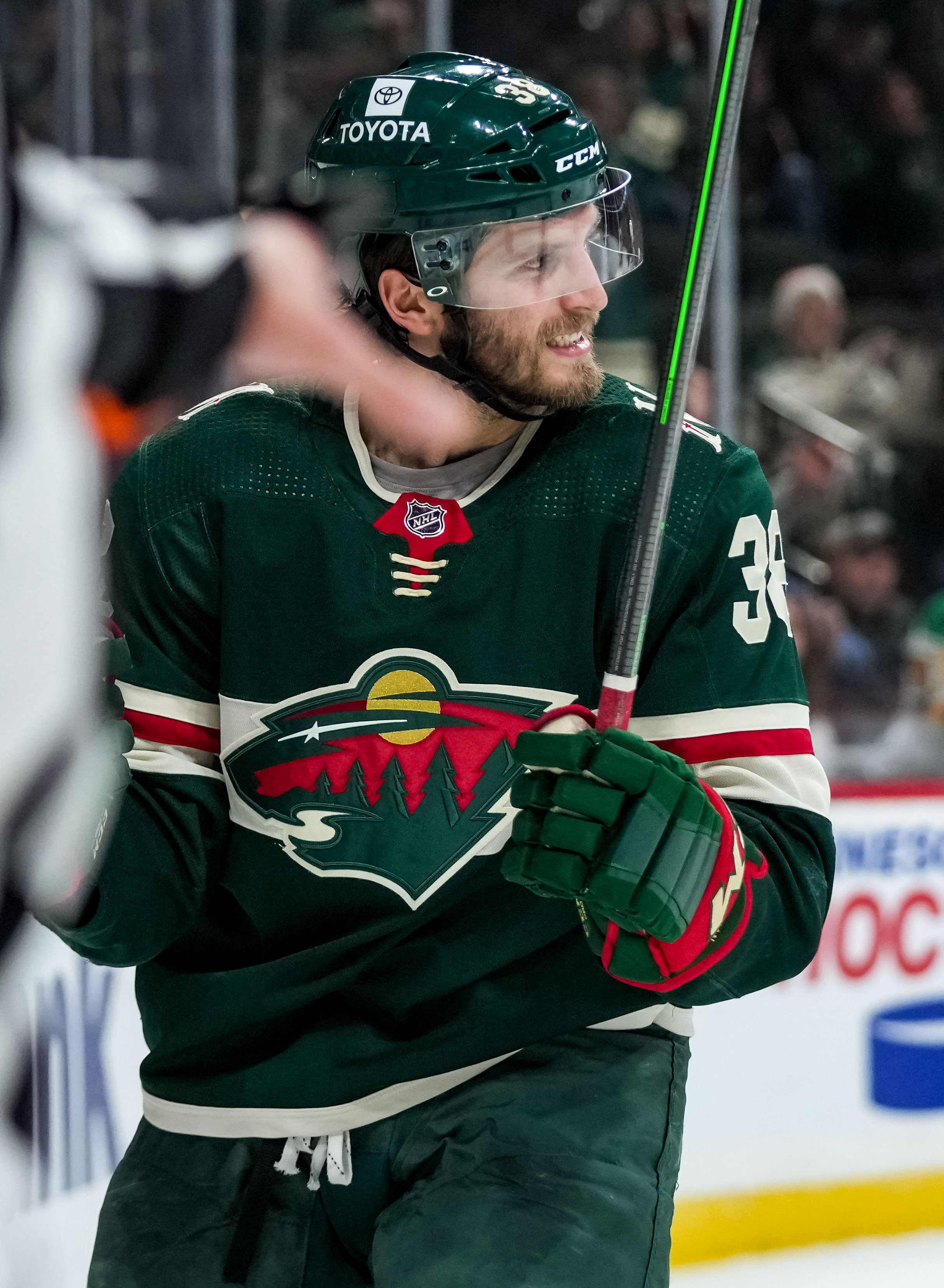
There’s no doubt that Kaprizov is the most marketable, and arguably the most important player on the team. That doesn’t, however, mean that the team is most thankful for him in particular. For that, we come to Hartman, who has figured it out at age-27 and now looks like one of the most incredible bargains in the league.
After two mediocre seasons with Minnesota, Hartman actually accepted a three-year contract that saw his cap hit go down this offseason, dropping from $1.9MM to $1.7MM. He’ll carry that number through 2023-24 and actually earns just $1.1MM in actual salary this season. What do you get for $1.1MM? How about 14 goals and 26 points through 30 games, all while driving possession and contributing defensively. If plus-minus is more your thing, Hartman leads the entire league at +22 to this point and has done nearly all of his damage at even strength. It’s an impressive accomplishment for a player that is on his fourth team and has a career-high of 31 points. If this is what Minnesota is going to get from Hartman moving forward, he’ll be one of the most valuable contracts out there.
What would Minnesota be even more thankful for?
A consistent Kevin Fiala.
Make no mistake, when at his best, Fiala is one of the most dynamic offensive players in the entire league. There’s good reason to believe that he could have become that marketable star that Minnesota longed for, had he been able to find any level of consistency to this point. But it just hasn’t been there for him this season, as he struggles to find the back of the net despite plenty of good chances.
It’s not that Fiala is having a terrible year–20 points in 30 games is certainly nothing to turn your nose up at–but it’s those flashes of superstardom that leave fans wanting so much more out of the 25-year-old forward. Decision time is coming quickly as Fiala is a restricted free agent after the season, owed a qualifying offer that would open up a potential arbitration award even higher than his current $5.1MM salary. With whispers about his future in the organization (or lack thereof) coming out earlier this year, a more consistent performance over the second half of the year would go a long way to securing the next stage of his career.
What should be on Minnesota’s Holiday Wish List?
More center depth.
While this may actually come from an internal source, if the Wild decide that Marco Rossi is ready for the NHL, there’s little doubt that the center ice position is still an area of weakness for Minnesota. Joel Eriksson Ek‘s upcoming diagnosis after leaving with injury last night will likely decide what kind of player the Wild need to target on the trade market, but a center of some level is needed even if he’s healthy enough to quickly return to action.
The clock has struck midnight on Victor Rask‘s 2020-21 performance, with the veteran center now receiving just around 10 minutes a night when he’s even in the lineup, Nick Bjugstad is basically a fourth-line winger at this point, and the combination of Nico Sturm and Frederick Gaudreau doesn’t inspire a ton of confidence when it comes to long playoff runs. If Eriksson Ek is out long-term, the team will desperately need to add a top-six center to the mix at some point. If he’s coming back, some extra depth will still be required.
Photo courtesy of USA Today Sports Images
USA Hockey Names Captains For WJC
Another defenseman will lead his squad into the World Junior Championship that starts this weekend. Jake Sanderson has been named captain of the U.S. National Junior Team, where he can show exactly why the Ottawa Senators picked him fifth overall in 2020. He’ll be joined by Matty Beniers, Brock Faber, and Landon Slaggert who will serve as alternates for the tournament.
Head coach Nate Leaman explained that it’s not just these four who will lead the team:
The strength of this team is its leadership and we have a group of guys that have earned the letter on their jersey both on and off the ice. There are even more leaders in our locker room. We’re excited about this group overall, and for us to be successful, every player will need to find a way to lead.
Sanderson, a sophomore at the University of North Dakota, has improved his offensive game this season to go with a defensive repertoire that could likely have him hold his own in the NHL right now. In 15 games for the Fighting Hawks, he has 19 points and is obviously processing the game at a higher level when the puck is on his stick. There’s still work to be done if Sanderson’s going to become the true top-pairing player that the Senators hope for, but there’s little doubt he will dominate this tournament as a do-it-all defender for Team USA.
Beniers, the second-overall pick from 2021, is in his sophomore season at the University of Michigan and is once again playing at a point-per-game pace. With 22 points in 20 games he needs just two more to match the total he set in the shortened 2020-21 season, one which left many Michigan players wanting another crack at the NCAA tournament. The Seattle Kraken were happy to see him return but will likely be looking to sign Beniers as soon as possible, in order to start building their brand around the 19-year-old forward.
Faber, another member of the Los Angeles Kings’ huge number of high-end prospects, is a defenseman for the University of Minnesota, where he is in his sophomore season. While he has just nine points in 18 games this season, he showed at last year’s World Junior tournament that he can step directly into an offensive role if given the opportunity as well. It’s his mobility on the defensive end that stands out with Faber though, as he smoothly closes gaps and disrupts plays with extremely quick feet.
Slaggert, the lowest draft pick of the bunch, is a returnee to the team (they all are) after he played his way in during selection camp last year. The Chicago Blackhawks third-round pick from 2020, Slaggert has continued to take steps forward in his overall game while playing at Notre Dame but doesn’t provide the kind of offensive upside some of his teammates will. That doesn’t matter, as there’s absolutely no quit in Slaggert’s high-energy play which will set the tone for the U.S. squad every game.