
PHR Mailbag: Senators, Dumba, Rangers, Underrated Players, Kraken, Bruins, Kings, Penguins Coaching Staff
Topics in this edition of the PHR Mailbag include Mathew Dumba and Minnesota’s cap crunch, the Rangers’ center situation beyond this season, Seattle’s underwhelming year, and much more. If your question doesn’t appear here, check back for it in last weekend’s mailbag.
MoneyBallJustWorks: What is the next step for the Sens. The team has stockpiled a good core of youth (especially on the blue line) but what do they have to do this offseason to take the next step?
The young nucleus for the Senators is pretty strong between Brady Tkachuk, Joshua Norris, Tim Stutzle, and Drake Batherson up front plus Thomas Chabot and Jake Sanderson on the back end. Now, they need to upgrade the supporting cast, so to speak.
Defensively, they need a top-four, all situations type of player. Players like Nick Holden, Nikita Zaitsev, and even trade deadline acquisition Travis Hamonic are serviceable veterans that can raise the floor of their defense corps. While that’s useful, now GM Pierre Dorion needs to raise the ceiling for this group to take a step forward. Chabot and Sanderson plus Artem Zub and Erik Brannstrom have some room to grow but with the right veterans, they’ll get there faster.
Up front, the top line is pretty much set with Tkachuk, Norris, and Batherson. But Stutzle’s linemates aren’t as consistent or anywhere near as good. Connor Brown is a good veteran but he’s not a big scorer while Alex Formenton’s speed is high-end but his scoring isn’t. Upgrading one (or if you want to aim big, both) of those spots would really deepen the offense.
On top of that, a goalie upgrade would help them take a step forward. Anton Forsberg isn’t a true starter, Matt Murray has underachieved, and Filip Gustavsson may not be ready for a full-time NHL roster spot (although waiver eligibility will probably keep him up).
That’s a huge wish list but adding any of those elements will help them get back to at least realistically battling for a playoff spot next season. That would be a good next step for Ottawa who isn’t really in a position to go from a bottom-feeder to a contender overnight unless Dorion manages to have the offseason of a lifetime and hit on all of these areas.
DarkSide830: With his name in past rumors and MIN needing to make a move, I wonder, can PHI make a move for Dumba? They need to get better on the back end and he could be available for 80 cents on the dollar with MIN’s crunch. I presume they need to move out a JVR then. Can they move enough of JVR’s cap without having to give someone a pick with it so they can reasonably fit Dumba in?
While I agree that Minnesota has a cap crunch, I disagree that they will make someone like Dumba available for 80 cents on the dollar. Yes, everyone knows they need to clear money but whoever goes – Dumba or Kevin Fiala (who’d fit one of those holes in Ottawa we just went over) – there will be enough demand that they’ll be able to get full value. Let’s say it’s Dumba. The UFA market for impact defensemen isn’t the deepest and Dumba’s cap hit is lower than what players like Kris Letang and John Klingberg are going to get. That bodes well for maximizing trade value, even with their hand being forced.
As for James van Riemsdyk, they’re not going to get much cap relief in a trade unless they send a pick with him. If I was an acquiring team, I’m pointing at the Patrick Marleau to Carolina trade as a benchmark; that move cost Toronto a first-rounder. Is it possible that they flip him for another underachieving veteran that makes a little less? Sure. That is definitely a plausible option. But will they save enough to fit Dumba’s $6MM in? Nope. Frankly, I’m not sure they’d save more on the cap next season than if they bought him out ($4.33MM cap charge) with a trade.
And if I’m Philadelphia GM Chuck Fletcher, notwithstanding the van Riemsdyk thing, do I really want to part with the first-round pick and/or a top young asset that it will probably take to get into the bidding to acquire Dumba? That’s not a smart strategy for a non-playoff team, even if it’s a core he thinks is better than it has shown. Once you do factor in the likely cost to offload van Riemsdyk’s contract for cap relief on top of the acquisition cost, the price for Dumba is one they shouldn’t be willing to pay.
Bill Blueshirt: The NYR need a 2C next year while being in a cap squeeze. Strome seems unaffordable. Do they a) sign Copp, b) go with Chytil and backfill at 3C, c) trade some of their many prospects for a C (and who would that be), or d) ???
I’m not convinced the bidding for Ryan Strome is going to be super high this summer. Yes, he has put up impressive numbers the last couple of seasons but he was doing that with Artemi Panarin on the wing a good chunk of the time. But his history before getting to New York was spotty at best and I’m confident there are general managers out there who will be hesitant to commit a big contract to him this summer.
I’m not saying there won’t be a good market for him but I wouldn’t be shocked if his AAV winds up being close to where Andrew Copp’s lands. If that’s the case, I don’t think Strome re-signing can easily be ruled out.
Do they need to free up some money? Probably. I wonder if they try to find a taker for Patrik Nemeth and take a cheaper player back to give them some wiggle room. But if they go with some cheap end-of-roster options and make a small cap-clearing move or two (Alexandar Georgiev being another one), I think they can cobble enough together to make an intermediate type of offer that could be enough to keep one of Copp or Strome in the fold. So, to answer your question, I’ll pick either a or d.
FearTheWilson: In your opinion who are the most underrated players in the league?
This is always a hard question to answer as underrated can be interpreted in a few different contexts. I could rhyme off some names that some of you may not be familiar with that are actually important players and that would qualify as underrated. But I suspect you’re looking for more prominent names so I’ll go with those.
Quick, think of an impact center on the Blues. No, not Ryan O’Reilly. Not Brayden Schenn either who, for many, would be the second one that comes to mind with his contract. Meanwhile, all Robert Thomas did this season was lead their centers in scoring while logging nearly 19 minutes a night. He was an impact offensive player in junior and while it has taken a few years for him to truly become an impact player in the NHL, he’s there, even if he doesn’t immediately come to mind when St. Louis centers are being discussed.
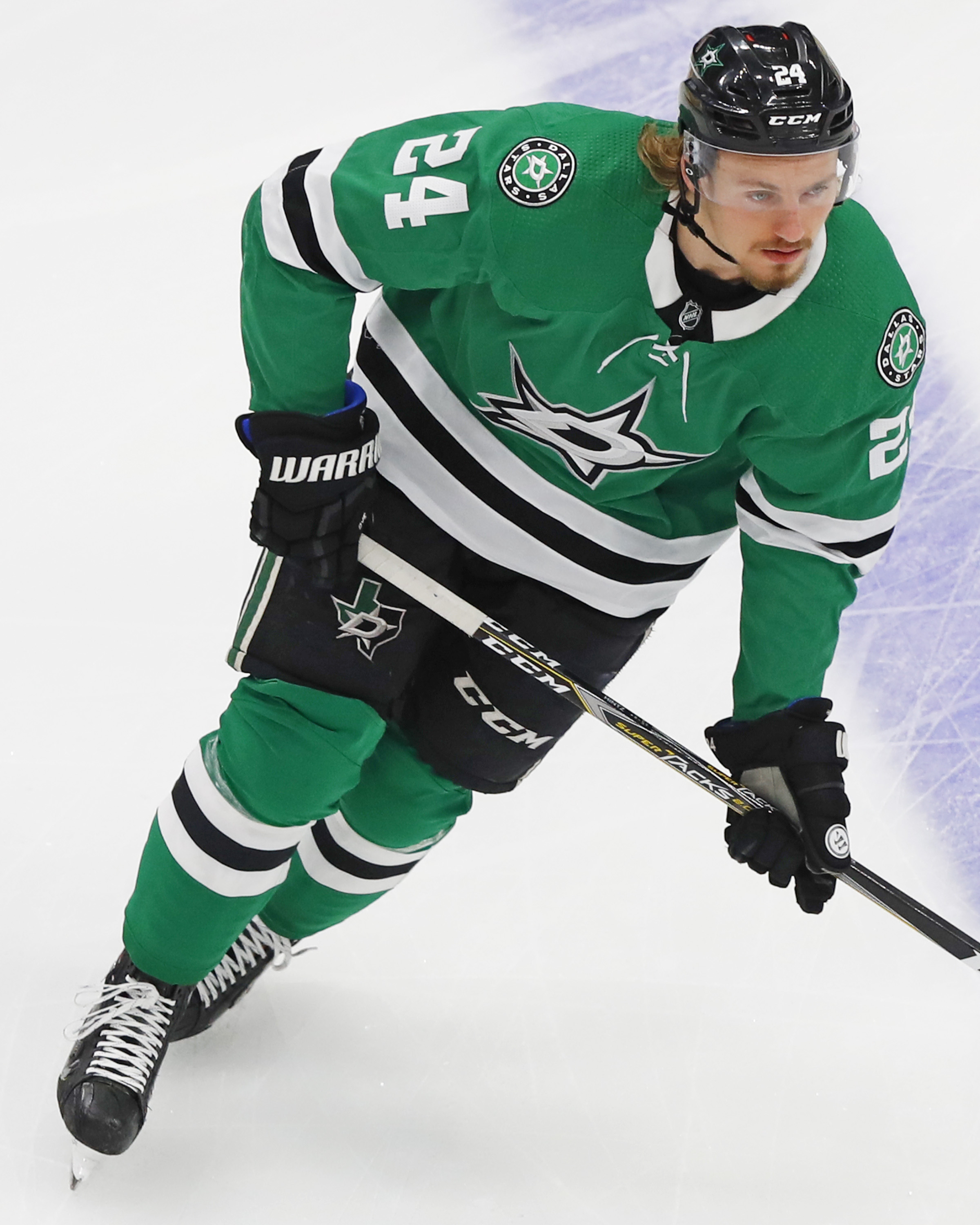 Roope Hintz is a player that many are familiar with. If you were thinking to yourself that he’s a good secondary scorer, it’d certainly be understandable. When digging into this question, that’s where I was leaning. But he averaged over a point per game last year and followed that up with 37 goals and 35 assists this season, finishing tied for 20th in the league in goals. That’s not a good secondary scorer, that’s a higher-end primary player who, by the way, spends a lot of time at center after coming up as a winger a few years ago. He definitely fits the bill of being underrated.
As for a defenseman, the first one that came to mind was Calgary’s Rasmus Andersson. He showed flashes of offensive upside over his first few NHL seasons but found another gear this season as he very quickly reached the 50-point mark. But he isn’t just a slick-skating, offensive defender. He takes a regular turn on the penalty kill and is trusted in all situations while leading the Flames in ice time. Despite all of that, if I ran a poll of what type of blueliner he is, I think a ‘good number four’ would probably win out. He’s much more than that; Andersson is quietly pushing for lower-end number one territory.
I’ll add a goalie to the list as well in Islanders netminder Ilya Sorokin. His delayed arrival in North America has resulted in limited exposure; he has played in just 74 career NHL games. On top of that, New York had a season to forget as they were out of contention early. But Sorokin very quietly was second in the league in save percentage this season (.925) and fourth in goals against average (2.40), impressive numbers for a non-playoff team. If he puts up similar numbers next season and the Isles rebound in the standings, Sorokin will be in the discussion for the Vezina Trophy. But when it comes to thinking of top NHL goaltenders, his name often doesn’t come up.
trak2k: If the Kraken do not “do anything” in free agency and or struggle at the beginning of next season do they fire the GM?
I don’t think there’s any chance of a GM change in Seattle within the next year. When the Kraken chose their roster in expansion, it became more than evident that they were planning a longer-scale build. In other words, they were going to have the development curve of a traditional expansion team. That results in losing seasons early on.
Don’t get me wrong, I don’t think Ron Francis did a particularly good job in assembling his roster in expansion and even their coaching choice was underwhelming. But he got the green light to build this way. To turn around and go back on that this early doesn’t seem like a likely outcome.
If I was Francis, I wouldn’t be overly active in free agency this summer. With so many teams in cap trouble, they’re ripe for the picking in terms of adding extra picks and prospects in exchange for taking on an unwanted contract or two, improving their future, and probably helping the current team in the process. Basically, do what they didn’t do a year ago.
Offseason Checklist: Anaheim Ducks
The offseason has arrived for half of the league’s teams that weren’t playoff-bound plus those who were eliminated early in the postseason. It’s time to examine what they will need to accomplish over the coming months. Next up is a look at Anaheim.
The Ducks got off to a good start this season which had them in the thick of the playoff race for most of the year before slowing down late in the year which helped lead to a significant sale at the trade deadline. GM Pat Verbeek now has a largely clean slate to work with as he enters his first summer at the helm but has some work to do.
Leverage Cap Space
At the moment, Anaheim has over $39MM in cap space with their most prominent restricted free agents being forwards Sonny Milano, Isac Lundestrom, and Sam Steel. They’re all capable young players but none of them are going to break the bank and significantly cut into that spending room. If Verbeek has the green light to go to the $82.5MM Upper Limit, he could be a big player in the summer spending around the league.
The big question is what is the best way to spend that money? They could try to go for the quick fix and look to add several impact veterans which would help replace the exodus of veterans at the trade deadline. At a time when many teams will have to show restraint in free agency, the Ducks could splurge. That said, with what’s coming down the pipeline a year from now (more on that shortly), is that the best route for them to take? And is the rebuild ready to be over or does more work need to be done? If the answer is the latter, spending big now makes less sense.
If they’re not ready to spend big just yet, then leveraging that cap space in trade talks might be the better way for Anaheim to go. They should be able to get some future assets in exchange for acquiring an above-market contract with the approach that Arizona has taken recently. Those contracts will often be shorter in length compared to what they’d be handing out to free agents in July which would preserve their flexibility when their young core is closer to being ready to try to contend. Retaining salary in a trade (or being a third-party facilitator) to add extra assets is another option as well. One way or the other, Verbeek will need to take advantage of the opportunity he has with the scarcity of cap space around the league.
Determine Gibson’s Future
Few players have been with the Ducks as long as John Gibson has. Along the way, the 28-year-old has seen his fair share of ups and downs, both in terms of Anaheim’s performance and his own. Back at training camp, however, he voiced his frustration with the team shifting towards a rebuild, indicating he was tired of losing. That has resulted in plenty of speculation about his future with the team.
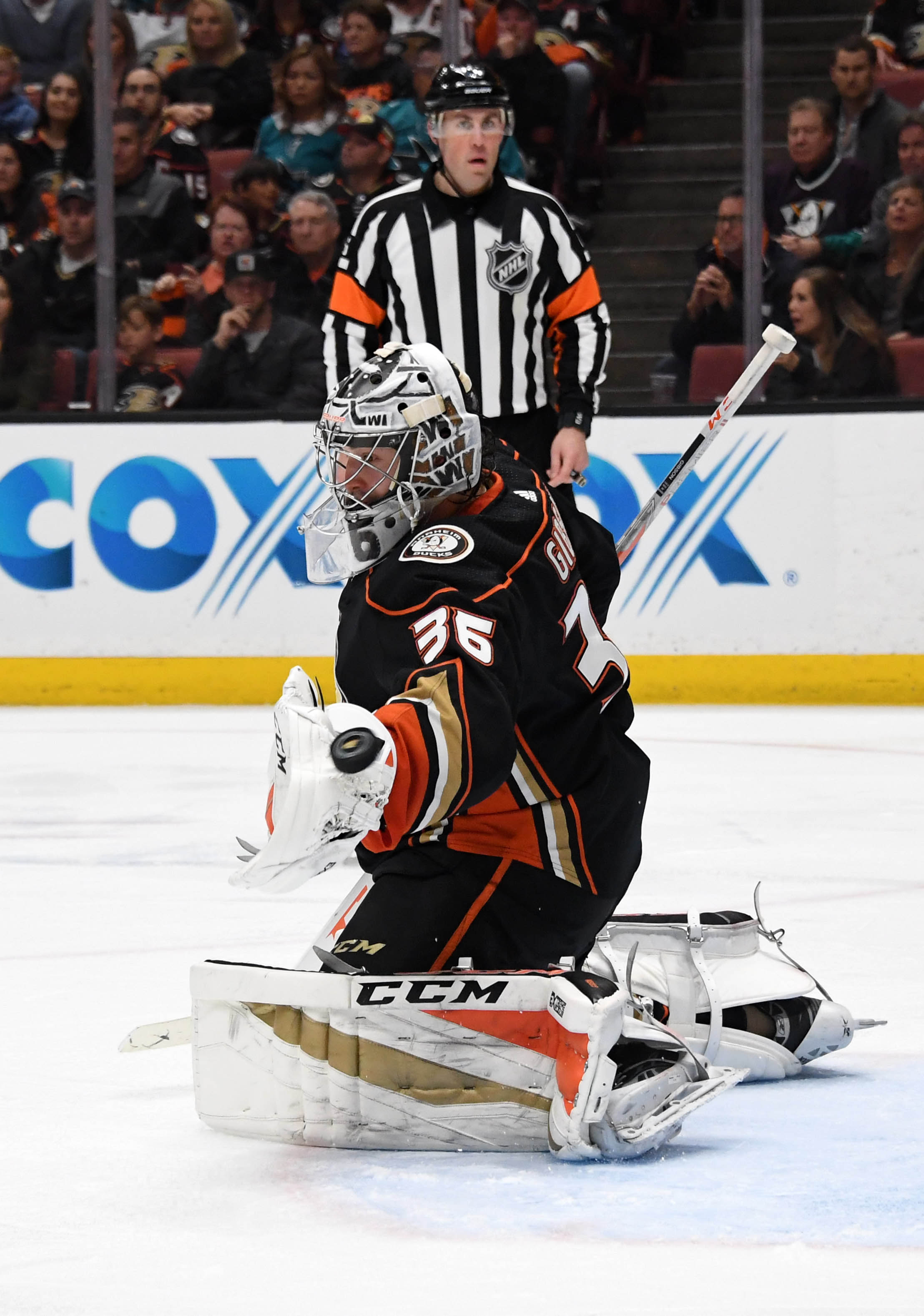 This isn’t a situation where Gibson is on an expiring contract and a decision of either extend or trade needs to happen. With five years left on his deal, they’re not going to be in that situation anytime soon. But with Gibson’s discontentment about where Anaheim has been from a competitive standpoint, they will have to consider whether or not to move him, especially if Verbeek intends to extend the rebuild for another year or two. Keeping a player who is clearly going to be frustrated with that situation isn’t ideal.
That said, it’s not as if his trade market is particularly strong. His .904 SV% was below the NHL average this season while a 3.19 GAA isn’t overly impressive either. Part of that is playing behind a team that had a lot of inexperienced players but that’s only part of it; Gibson wasn’t particularly sharp as well. For perspective, his save percentage has hovered around that mark for the last three seasons. A netminder with those numbers that has another half of a decade left on his contract at a $6.4MM AAV isn’t going to carry a lot of trade value. In general, starting goalies don’t carry great value in the first place but certainly, ones that have underachieved as Gibson has aren’t going to have a lot of suitors.
Are they better selling low and taking a run at a replacement goalie in free agency to partner with Anthony Stolarz next season or do they hold onto one of their longest-tenured players even with him being unhappy about rebuilding? Neither scenario is great but it’s something that will need to be looked at this summer.
Extension Talks
Right now, cap space is plentiful but that is going to change next summer when three of their top young players are all in need of new contracts.
Troy Terry had a breakout year, leading the Ducks in scoring with 37 goals and 30 assists in 75 games after putting up just 48 points in his first 129 career contests. The low output led to a bridge contract which he has clearly outperformed already. Since he’s on his second contract already, the 24-year-old will be arbitration-eligible next summer where he’ll be two years away from UFA eligibility and anything close to a repeat season would push his asking price into the $7MM or more range on a long-term deal while giving him a strong arbitration case if got that far. If Verbeek is convinced that Terry’s production wasn’t a one-off but rather a sign of things to come, it would make sense for him to try to work out an extension now.
Meanwhile, Trevor Zegras and Jamie Drysdale will be in the final year of their entry-level deals next season and are also extension-eligible in mid-July. Both players will have five years of team control left next summer and won’t be able to file for arbitration. Zegras didn’t look out of place as their top center last season and with Ryan Getzlaf gone, he will be carrying a bigger workload as well which could result in a jump from the 61 points he had this season. Drysdale, meanwhile, averaged nearly 20 minutes per game in his first NHL campaign while chipping in with 32 points, numbers that should only go up in 2022-23. Many teams often try to work out an early extension over running the risk of an extended negotiation the following summer and Verbeek will certainly want to do that here.
Getting these extensions worked out early would give the Ducks a much better overview of what their salary cap picture will look like in 2023 and beyond. Three long-term contracts will take a big chunk out of their spending room but if the two sides are too far apart in negotiations to the point where a shorter-term deal makes sense (more for Drysdale and Zegras than Terry), that would then open up some extra spending room for a couple of years. The sooner they know what they have to work with, the better.
Coaching Decisions
Verbeek opted to pick up the team option on Dallas Eakins’ deal, ensuring he’ll return for his fourth season behind Anaheim’s bench. But teams often don’t like their head coaches heading into ‘lame-duck’ situations so this might not be desirable for the team. In those instances, a one-year or two-year extension could be on the table, one that takes away any short-term uncertainty but also doesn’t carry a significant commitment if things go sideways and Verbeek decides he wants to make a change.
There is also some work to do at the AHL level as a full coaching staff is required for the second straight summer. Joel Bouchard along with assistants Daniel Jacob and Max Talbot were somewhat surprisingly let go after their first season following San Diego being eliminated in the play-in round for the playoffs. AHL coaching staffs don’t have to be in place at the start of free agency but if they want to try to go after some free agents that are ticketed for the Gulls, it would be useful for them to have their staff in place by then to avoid any uncertainty as those free agents will likely want to know who is coaching before they sign.
Photo courtesy of USA Today Sports Images. Contract information courtesy of CapFriendly.
Pacific Notes: Megna, Chiasson, Tanev
Prior to their semi-final game against Finland today, the United States found themselves down another defenseman as it was revealed by Daily Faceoff’s Chris Peters (Twitter link) that Sharks defenseman Jaycob Megna had left the team to tend to a family emergency. That left the Americans with just four healthy defensemen for the game while the team is out of available roster slots which meant they weren’t able to add Montreal blueliner Jordan Harris – who has skated with the team as an extra all tournament – to the roster. Sam Lafferty and Riley Barber, both forwards, comprised the third pairing and will likely do so again on Sunday when they battle Czechia for the bronze while Finland and Canada go for gold.
More from the Pacific:
- Earlier this week, a report surfaced that Canucks winger Alex Chiasson would be heading to Switzerland for next season. However, his agent Pat Morris told Rick Dhaliwal of CHEK and The Athletic (Twitter link) that the pending UFA has no intention of signing in Switzerland and intends to pursue an NHL contract this season with his first choice being to re-sign with Vancouver. Chiasson will have to wait a while for that option to present itself as team president Jim Rutherford recently indicated that they won’t decide on whether or not to keep the 31-year-old until after free agency. Chiasson had 13 goals and nine assists in 67 games this season.
- On Friday, the extent of the injuries for Flames defenseman Chris Tanev was revealed – including a torn labrum and a dislocated shoulder. Today, the veteran told reporters, including Sportsnet 960’s Pat Steinberg (Twitter link) that the recovery time for the labrum surgery he’ll be undergoing next week carries a recovery time of four to six months. If things go well, the 32-year-old would be ready around the start of training camp but if the recovery time is towards the back end of that range, he could miss more than a month of the regular season.
Offseason Checklist: Buffalo Sabres
The offseason has arrived for half of the league’s teams that weren’t playoff-bound plus those that were eliminated early in the postseason. It’s time to examine what they will need to accomplish over the coming months. Next up is a look at Buffalo.
It wasn’t a great year in the standings but things are looking up for the Sabres. The team was much more competitive in Don Granato’s first season behind the bench and several of their young players made promising strides to show that brighter days could soon be on the horizon. With that in mind, Buffalo’s checklist looks a bit different than it has in recent years as they should now begin the process of trying to add talent and emerge from their rebuild.
Sign A Veteran Goalie
At the moment, Buffalo has six goaltenders under contract. Once the calendar flips to the new league year in July, that number drops to zero. GM Kevyn Adams will be busy on that front, to say the least, both in terms of NHL and AHL signings. Let’s look at the NHL situation here.
It’s widely expected that Ukko-Pekka Luukkonen will be promoted from the minors to fill one of the two spots with Buffalo as he continues his development and the team continues to evaluate whether or not he’ll be the goalie of the future for them. But the most games he has played in any of his professional seasons is 44. Between that and the fact he has just 13 NHL appearances under his belt, it’s safe to say that he’s not yet ready to assume the true starting role.
As a result, Adams will be looking for a veteran that is capable of playing more than a typical backup role. A short-term starter would make some sense or failing that, a platoon netminder to split time with Luukkonen would also work. Craig Anderson is among Buffalo’s pending unrestricted free agents and it seems like re-signing the 41-year-old would be their preference as he fit in quite well in his first season with Buffalo. It’s questionable if he can hold up under a higher workload than the 31 games he played in 2021-22 so if he is their choice, a veteran third-stringer to stash at AHL Rochester certainly would make some sense.
Decide Olofsson’s Future
Victor Olofsson has had an up-and-down tenure with Buffalo so far. After a surprise showing in his rookie season that saw him put up 20 goals and 22 assists in just 54 games, the two sides settled on a bridge contract, a reasonable course of action. The first year didn’t go well and for the majority of this season, things weren’t much better. At the end of February, he had just seven goals in 44 games and looked like he could be heading for non-tender territory.
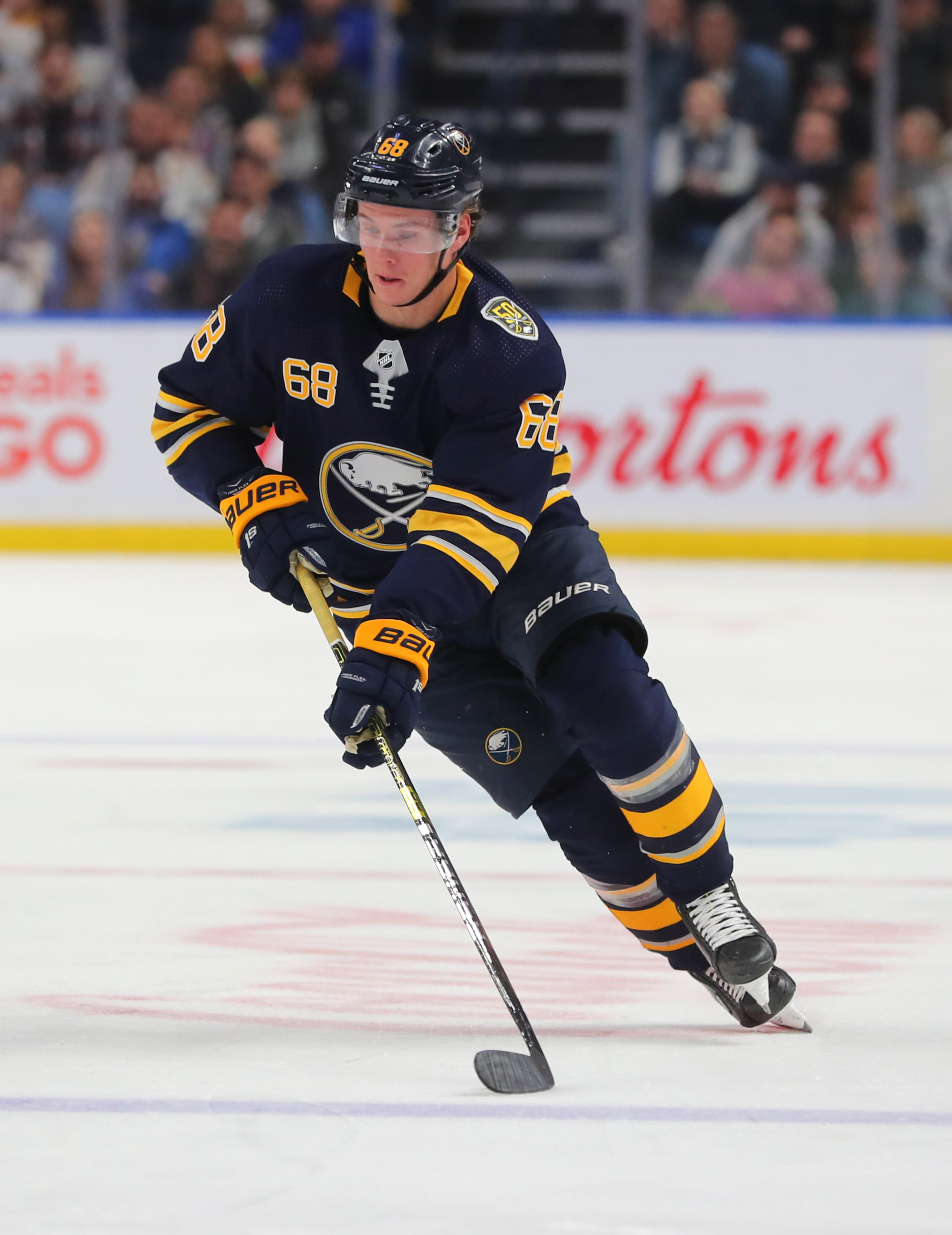 But once March hit, the 26-year-old suddenly rediscovered his scoring touch, potting 13 goals along with 12 assists in the final 28 games. While the usual caveat about reading too much into production when a team is well out of playoff contention certainly applies, Olofsson may have shown enough to warrant another contract.
If that’s the case, what is the right deal? This is Olofsson’s final year of RFA eligibility so it’s not as if they can work out a short-term pact and then re-assess before he’s UFA-eligible. With him being unrestricted no matter what, a one-year contract isn’t ideal from Buffalo’s perspective while finding common ground on a long-term deal could be tricky given the year-to-year variability in his performance.
Olofsson is owed a $3.25MM qualifying offer and has arbitration eligibility this summer. With a little over six weeks until qualifiers are due, Adams will need to make a decision on this front sooner than later.
Add Defensive Help
At the moment, Buffalo has just three defensemen signed for next season that are locks to make the opening roster. They’re all aged 22 or younger in Rasmus Dahlin, Henri Jokiharju, and Owen Power. That’s a solid cluster of young impact blueliners that are going to be around for a little while but they need some veteran support.
This is something that the Sabres haven’t really tried to address in recent years which is understandable with the team clearly more interested in being at the bottom of the standings than the top over that stretch. Doing so allowed Dahlin and Jokiharju to log heavy minutes and play through some mistakes.
However, assuming their plan is to start to push forward with trying to get back to the playoffs after missing the postseason for an 11th straight year, they need some veterans capable of logging heavy minutes to work with these three. In an ideal world, they find three of them, one to partner with each youngster which would allow someone like Mattias Samuelsson to see more AHL action.
That said, adding three impact blueliners would be a tall task for any team, especially since there aren’t a lot of them available in free agency this summer. With more than ample cap space though, this seems like an area where Adams should have the green light to bid aggressively. Three would be perfect, two would be nice, but one is simply a necessity if they want to help their goalies and more importantly, help their young rearguards find another level in their development.
Thompson Extension Talks
The first season of Tage Thompson’s bridge contract didn’t go well as he put up just 14 points in 38 games in 2020-21. Heading into this season, expectations were quite low as a result. If he could lock down a full-time spot and play with some consistency, it likely would have been viewed as a success.
But what the 24-year-old did in 2021-22 was far beyond realistic expectations, likely beyond even the most optimistic projections for Thompson as he put up 38 goals and 30 assists. That goal total put him 19th in the entire league while he also made the transition to playing down the middle. While it took several years, Thompson certainly showed the offensive promise that made him a first-round pick back in 2016.
Thompson’s timing for his offensive outburst was pretty optimal as well as he’s eligible to sign a contract extension once free agency opens up in mid-July and he officially enters the final year of his deal. If Adams and the Sabres believe that Thompson’s performance is a sign of things to come, they will almost certainly try to work out an extension this summer as anything close to a repeat performance in 2022-23 will only drive the asking price higher. Meanwhile, after being a depth player for the first few years of his career, the prospect of a big money, long-term extension might appeal to Thompson. This is something that doesn’t have to happen but it wouldn’t be surprising to see both sides take a run at an extension in the coming months.
Photo courtesy of USA Today Sports Images. Contract information courtesy of CapFriendly.
Oliver Ekman-Larsson Suffers Fractured Foot At World Championship
It was a disappointing World Championship on a couple of fronts for Vancouver defenseman Oliver Ekman-Larsson. Sweden blew a 3-0 lead in the third period to Canada on Thursday before falling in overtime and to add to that frustration, he was also injured as the Canucks announced (Twitter link) that he suffered a foot fracture in the tournament.
The veteran blueliner had a fairly quiet first season in Vancouver after coming over in a trade back at the draft last summer. He picked up 29 points in 79 games, his lowest point per game average since his rookie year back in 2010-11. Regardless, Ekman-Larsson still played over 22 minutes a game, second on the team to only Quinn Hughes while also taking a regular turn on both the power play and penalty kill. He was similarly quiet at the Worlds, collecting just a pair of assists for Sweden in their six games while logging 19:20 per contest, third among their blueliners.
Fortunately for Ekman-Larsson and the Canucks, the recovery time for this injury is four to six weeks which means while his offseason training will be interrupted, he should be fully recovered by the time training camp rolls around in September. Vancouver will likely be icing a similar back end to the one they had this season so they’ll be counting on Ekman-Larsson to have a bounce-back season in 2022-23.
Blues Assign Charlie Lindgren To AHL
While the season has come to an end for the Blues, at least one player will play on for a little while longer as goaltender Charlie Lindgren has been sent back to Springfield of the AHL, per the AHL’s transactions log. He had been serving as the backup to Ville Husso after Jordan Binnington was injured earlier in their second-round series against Colorado.
The 28-year-old had his best professional campaign this season, posting a 2.21 GAA and a .925 SV% in 34 games with the Thunderbirds, both career bests. On top of that, he also impressed in his limited NHL action, putting up a stellar 1.22 GAA with a .958 SV% in five appearances with St. Louis, numbers that had some wondering if the Blues might have considered giving Lindgren a chance against Colorado over sticking with Husso. But with just 29 career NHL games under his belt, sticking with Husso certainly made sense.
Lindgren will now have a chance to reclaim the starting job with the Thunderbirds as they look to make it to the Eastern Conference Finals against his former team in Laval, the affiliate of the Canadiens. With a good finish to his AHL playoffs plus his performance during the regular season, Lindgren should have a strong market this summer in unrestricted free agency as a veteran third-string goaltender that can be called on to make a few NHL starts when injuries arise.
East Notes: Flyers, Ruotsalainen, Beaulieu
The Flyers are expected to interview Jim Montgomery for their vacant head coaching position next week, reports Sam Carchidi of Philly Hockey Now. Montgomery has been an assistant in St. Louis since 2020 and with the Blues being eliminated last night, teams can now talk to him about their coaching vacancies. Montgomery has some NHL head coaching experience under his belt having coached Dallas for parts of two seasons before being let go for unprofessional conduct which he later revealed was related to his battle with alcoholism. John Tortorella and Barry Trotz are among those that are believed to have already interviewed for Philadelphia’s vacant position.
Elsewhere in the East:
- Following Rochester’s elimination in the AHL, Sabres winger Arttu Ruotsalainen told reporters, including Mike Harrington of The Buffalo News, that his intention is to re-sign with Buffalo and not go to the Swiss League as has been previously suggested. Assistant GM Jason Karmanos also stated a desire to keep the 24-year-old in the fold. Ruotsalainen, who will be a restricted free agent with arbitration eligibility this summer, had four points in 18 games with Buffalo this season but was quite productive in the minors, notching 51 points in 57 contests while tying for the team lead in playoff scoring.
- After acquiring Nathan Beaulieu at the trade deadline, Seth Rorabaugh of the Pittsburgh Tribune-Review suggests it’s likely that the defenseman will leave the Penguins without ever suiting up for them. Pittsburgh picked him for a conditional draft pick that they ultimately retained as the conditions weren’t met. Beaulieu was added as injury insurance for the playoffs and while he was close to suiting up, he wound up being a healthy scratch in the postseason after being activated off LTIR. The 29-year-old will be an unrestricted free agent this summer and after playing in just 24 games with Winnipeg this season while averaging less than 11 minutes a game, it’s unlikely the 2011 first-rounder will be able to command much more than the minimum salary.
Joe Thornton Undecided About His Playing Future
With the Panthers being eliminated earlier this week, the speculation about Joe Thornton’s playing future has already started. Speaking with reporters today including NHL.com’s Alain Poupart, the veteran indicated that it’s too early to know if he’ll return for a 25th NHL season:
I haven’t put any thought into it at all right now. I think it’s still so quick. I wasn’t expecting that. It took me by surprise, so I’m sure I’ll talk with the family and see what our plan is next. I haven’t decided if I’m going to play or not, but we’ll talk and see how everybody’s feeling about it. We’ll see.
The 43-year-old signed with Florida early in free agency last summer but had a very limited role throughout the season when he was healthy enough to play. He missed 20 games due to injuries and was a scratch for another 28, resulting in a career-low 34 appearances where he managed just five goals and five assists while averaging just 11:09 per game, also a career-low. Thornton’s usage was even more limited in the playoffs as he played just once – the last game of the Tampa Bay series.
While Thornton is far from the All-Star player he was in his prime, he has a reputation for being a strong positive presence in the dressing room which likely played a role in Florida signing him last summer. It’s also worth noting that he’s within striking distance of the all-time games played record set by long-time teammate Patrick Marleau; Thornton is 65 appearances away from equaling that mark. A fully healthy season in 2022-23 could give him a realistic shot at setting the new standard.
At this point of his career, Thornton is going to be limited to a contract that’s basically at or around the minimum salary of $750K and he has signed minimum-salary deals the last two years. Accordingly, there’s no real rush for him to make a decision; the types of offers he might have a shot at early in free agency will still be there at any other point of the offseason. While many may want to know what’s next for Thornton, that decision may not be coming for a while.
Offseason Checklist: Detroit Red Wings
The offseason has arrived for half of the league’s teams that weren’t playoff-bound plus some that were eliminated early in the playoffs. It’s time to examine what they will need to accomplish over the coming months. Next up is a look at Detroit.
It has been a rough few seasons for the Red Wings. After their streak of 25 straight playoff appearances came to an end in 2017, they haven’t seen the playoffs since then. They have brought in several promising youngsters in recent years and the expectation is that they’ll soon get back to battling for a playoff spot at a minimum. With that in mind, their summer checklist is more geared towards win-now moves compared to recent years.
Hire A Head Coach
First things first. After parting ways with Jeff Blashill, who had been one of the longer-tenured coaches in the league, Detroit now needs a new bench boss for the first time since 2015 when Mike Babcock left for Toronto. Blashill’s tenure wasn’t overly successful in terms of his record (204-261-72) but with the team going through a reset, it wasn’t as much of a concern. But now with an expectation of more on-ice success, GM Steve Yzerman decided now is the right time for a change.
With that in mind, it will be interesting to see what direction they go. Are they looking for someone that is going to help them get back to the playoffs first and foremost or are they hoping for a longer-term fit? The two don’t have to be mutually exclusive but the first category opens up the ability to hire a veteran coach who can get quick results but who typically has a short shelf life, giving them some extra options to consider. On the other hand, if Yzerman is looking for a long-term fit, then the potential for a first-time hire stands out a bit more.
Either way, getting a coach in place well before the summer transactions get underway will be important as whoever takes the job will likely want to provide some input on what else the Red Wings do this summer.
Extension Talks
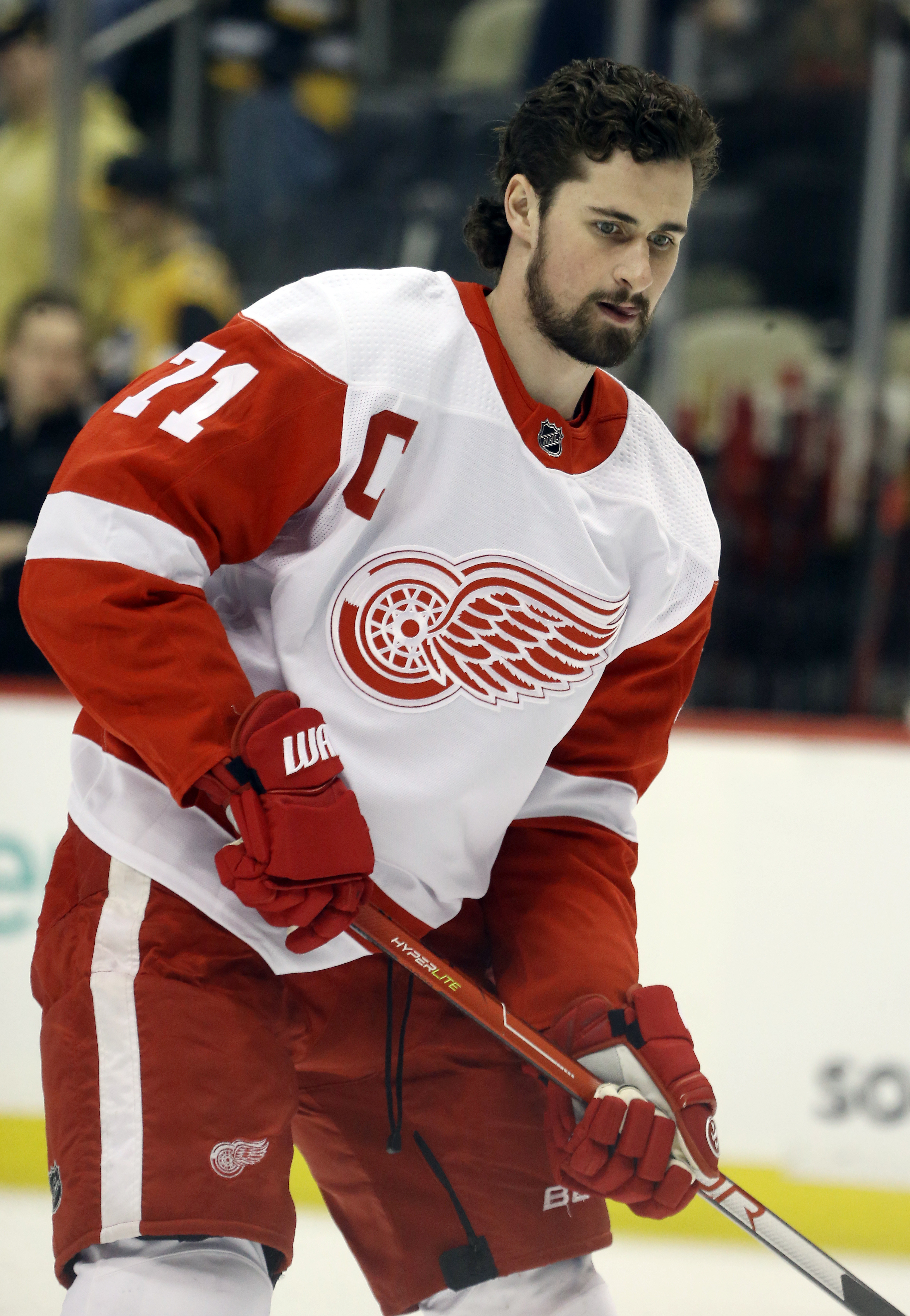 Two of Detroit’s top players will be eligible for contract extensions once free agency opens up in July in Dylan Larkin and Tyler Bertuzzi. Larkin, their captain, has been on a bargain contract for the past four seasons with a $6.1MM AAV, a price tag that’s below market value for a number one center. That will certainly change on his next contract as recent comparables will likely push his price tag over the $8MM mark per season. There’s no doubt that Yzerman will want to extend the Michigan native and keep him in the fold, especially since they don’t have an up-and-coming number one center behind him. In Tampa Bay, Yzerman’s talks with captain Steven Stamkos went right down to the wire. In an ideal world, that doesn’t happen so they’re likely to try to hammer something out this summer.
As for Bertuzzi, while he was in the headlines for not being able to play in Canada due to his vaccination status, that overshadowed a career year that saw him set career highs in goals (30) and assists (32) in 68 games while averaging nearly 20 minutes a night. That’s top-line production at a $4.75MM price tag which is also well below market value. Bertuzzi is a couple of years older than Larkin but at 27, he’s still young enough to be part of the core. This summer, Yzerman needs to find out what Bertuzzi’s asking price is to see if it fits within their future salary structure. If not, his name could be in trade speculation soon after.
Reshape The Back End
Detroit’s back end got a big lift this season with the arrival of Moritz Seider who is a very strong contender to win the Calder Trophy as the top rookie next month. However, their defense corps has been a weak spot for the past several seasons and will need to be addressed this offseason.
Long-time rearguard Danny DeKeyser is set to become an unrestricted free agent this summer and is unlikely to return unless it’s at a very steep discount. Marc Staal is also a pending UFA and while he’s not the higher-end shutdown player he was in his prime, he still filled a stable stay-at-home role for the Red Wings over the last couple of years. He could be back but would need to be replaced if he doesn’t return.
At the moment, there are only three other regular defensemen signed for next season beyond Seider – Filip Hronek, Gustav Lindstrom, and Jordan Oesterle. Hronek had a tough year in his own end but has some trade value if they decide to shake things up while Lindstrom and Oesterle are better as depth pieces. So, too, are recent signing Steven Kampfer and pending RFAs Olli Juolevi and Jake Walman. Beyond Hronek, none of those players should be in impact roles next season.
Detroit will have another top youngster coming to North America in 2022-23 in Simon Edvinsson and while he has shown plenty of promise, it’s hard to expect he’ll come in and suddenly solve all of their defensive issues. Adding an impact veteran (if not two) will be needed to help shore up a group that allowed the third-most goals in the league this season and help take some pressure off the goaltenders. Fortunately, they have over $35MM in cap space at their disposal so they can afford to shop at the higher end of the market this summer.
Find A New Second Goalie
Speaking of their goalies, Detroit needs to find a second goaltender to partner with Alex Nedeljkovic. Thomas Greiss had a particularly tough season and is unlikely to be retained while Calvin Pickard, their third-string option, is also a pending UFA and isn’t really in the mix for an NHL spot either. Magnus Hellberg signed late in the year but he’s more of a viable third-string option than a strong contender for the backup spot.
As usual, there are several Greiss-like goalies available, veterans that can be signed for a year or two to continue the platoon and maintain the status quo. Alternatively, a handful of netminders could be moved this summer that could be plausible platoon options as well.
That said, are the Red Wings better off looking for a longer-term option? Darcy Kuemper still has a few years as a starter left in him while Ville Husso and Jack Campbell have both shown flashes and are young enough to be around for a while. While Detroit has Sebastian Cossa, a prospect they have high hopes for, it typically takes a few years for a goaltender to be NHL-ready. Instead of continuing to churn through goalies for short-term fixes, perhaps a longer-term solution that serves as a bridge to Cossa is a better way for them to go this summer. Either way, they will need a new netminder in the next couple of months.
Photo courtesy of USA Today Sports Images. Salary figures courtesy of CapFriendly.
Islanders Sign Ruslan Iskhakov
Islanders prospect Ruslan Iskhakov has had an interesting journey over the last few years but he has secured his first NHL deal as CapFriendly reports (Twitter link) that the 21-year-old has signed a two-year, entry-level contract. The deal carries a cap hit of $855K and an AAV of $925K.
The forward spent his draft-eligible season playing in Russia but had committed to playing in college at UConn just days before the draft. As a result, he became subject to the four-year rule which meant that New York had until only next Wednesday to get him under contract even though his college days had already ended.
Iskhakov spent just two years in college before deciding to turn pro, signing with TPS Turku in Finland in 2020. He was quite productive in the Liiga, notching 38 points in 54 games but once again opted for a change of scenery for this season when he decided to play with Adler Mannheim in Germany. Iskhakov was similarly productive, albeit in limited action due to injury, as he put up seven goals and 15 assists in just 25 games, a good enough performance to convince the Islanders to sign him after he was granted his release from his German league contract earlier this month.
While he has spent two seasons in the pros overseas, it would be surprising to see Iskhakov jump to the NHL right away. Instead, it’s quite likely he’ll start next season with Bridgeport of the AHL, allowing himself to get reacclimated to playing in North America. But as a player who has been able to produce in good leagues overseas, he should become an intriguing recall option on a New York team that only finished 24th in goals scored this season.