
Hypothetical Landing Spots For Martin Necas
With the excitement of the 2024 Stanley Cup playoffs and some notable events that have already taken place, one important news item buried over the last week is that the Carolina Hurricanes do not intend on signing forward Martin Necas to an extension this summer, and could look to move him in the offseason. Necas will become a restricted free agent on July 1st after his two-year, $6MM bridge deal expires.
Over the last four years, Necas has shown flashes of being a consistent scorer at the NHL level and other flashes of being a complimentary piece at best. Because of this, the General Manager Don Waddell and the Hurricanes organization do not seem adamant about meeting Necas’ demands, who likely has his eyes on a long-term deal. Since Necas is still only 25 years old, an eight-year contract extension would put him between 33 and 34 upon expiration, meaning this may be his only chance at signing a max contract.
Playing up and down Carolina’s lineup, Necas certainly looks more comfortable on the wing but has been known to line up down the middle on occasion. In 362 games spent with the Hurricanes, Necas has scored 97 goals and 243 points while also putting up 11 goals and 30 points over 59 postseason games, as well.
Not only has Necas shown an ability to put together strong seasons, but playing in Carolina’s system has allowed his possession numbers to flourish, posting a 63.6 and a 61.8 CorsiFor% in the last two years alone. In the right situation, Necas could prove to be a wise investment in the near and long term.
Since Necas lies somewhere between a top-line winger and a complimentary piece, and assuming the Hurricanes allow him to discuss an extension with the acquiring team, Necas would be wise to look for an already established team. The two that come to mind, in terms of need and style of play, would be the Colorado Avalanche and the Florida Panthers.
Even before the loss of winger Valeri Nichushkin for at least the next six months, the Avalanche have had a problem at the winger position since the loss of Gabriel Landeskog after the 2022 Stanley Cup run. With Landeskog once again expected to start the season on LTIR, and Nichushkin’s contract in the NHLPA Player Assistance Program, Colorado should have more than enough financial flexibility to sign Necas. With Zach Parise confirmed to have played his last game at the NHL level last week, and Jonathan Drouin potentially pricing himself out of Denver with a solid year, Necas could be a solid fit to move fluidly in the top two lines of the Avalanche forward core.
Moving back to the Eastern Conference; if any team was going to challenge the Hurricanes as the best defensive team in hockey, it would be the Panthers. Finishing behind Carolina in both CorsiFor% and penalty kill percentage, the Panthers were only one of two teams to suffer less than 200 goals during the 2023-24 regular season.
Unfortunately, Florida has a tough offseason coming up, with Sam Reinhart and Brandon Montour set to hit unrestricted free agency with too few dollars to go around. Acquiring Necas, will not completely replace the production left by Reinhart, but it would certainly soften the blow. Picking up Necas from the Hurricanes would also allow the Panthers to prioritize signing Montour to have a mostly intact defensive unit heading into the 2024-25 NHL season.
As far as the price for Necas, outside of a possible extension, should not be as steep as many would think. Since it has already broken out into the open that Carolina has no intention of giving Necas what he is asking for, the acquiring team would only be responsible for acquiring his signing rights out of the gate.
In this case, the Avalanche may be in a better position to acquire Necas from Carolina, as the Hurricanes may entertain an offer for the 24th overall pick of this year’s upcoming draft. Florida, on the other hand, does not have ownership over their first-round pick this year, having already sent it to the Philadelphia Flyers in the Claude Giroux trade.
Poll: Should The Toronto Maple Leafs Trade Mitch Marner?
At the start of the 2018-19 NHL season, there was not a more excited fanbase than that of the Toronto Maple Leafs. Not only did the Maple Leafs have young phenoms budding in Auston Matthews, Mitch Marner, and William Nylander, but the organization brought marquee free agent John Tavares into the mix on a seven-year, $77MM contract.
Since the informal start of the ‘Core Four’, Toronto has appeared in the playoffs for eight consecutive seasons but has only managed to get out of the First Round once. Although there has been some speculation in the past, it appears the Maple Leafs organization may be giving more serious thought to breaking up the quartet.
To preface, Marner is not uniquely worse than any other member of the group, as they all bring their separate strengths to Toronto’s lineup. However, with Tavares’ $11MM cap hit next season likely keeping him from the trade block, coupled with Matthews and Nylander recently signing big-money extensions to stay with the organization, Marner looks like the most predictable candidate to be the odd man out.
Marner is entering the last season of a six-year, $65.408MM extension signed with Toronto in 2019, with a full No-Move Clause kicking in on July 1st of last year. If the Maple Leafs are set on moving Marner this offseason, they will need his consent no matter the destination or the return package.
Assuming Toronto does not retain any salary, and they are not taking any large AAV contracts back in return, moving Marner will allow the Maple Leafs to free up nearly $11MM in cap space, as well as acquire plenty of young talent and draft capital in return. Especially if the acquiring team can sign Marner to an extension as a part of the trade package, Toronto could set themselves up nicely for the future even by trading just one of the ‘Core Four’.
Although it would be nice if Toronto could have more future capital, as well as the flexibility to better re-allocate their financial resources, there is no guarantee that any player or pick acquired will turn out to be half the player that Marner is. Over eight years in Toronto, Marner has put up 639 points in 576 games; an offensive output that is rare to come across in an individual player. Since it’s hard to imagine a prospect or draft pick coming back to the Maple Leafs being even nearly as good as Marner, it complicates the argument that a move such as this would put them in a better position to win.
Now the vote is left to you, to be a more competitive team in next year’s playoffs, is Toronto better served by keeping Marner for the long haul, or should they try and move on from him this summer?
Should The Toronto Maple Leafs Trade Mitch Marner?
-
Trade Marner 66% (1,876)
-
Keep Marner 34% (954)
Total votes: 2,830
2024 NHL Free Agents By Team
Pro Hockey Rumors’ up-to-date list of 2024 free agents by team is below. These are players who are eligible for restricted or unrestricted free agency after the 2023-24 season. Potential restricted free agents are marked with (RFA). Only players who logged significant NHL time this past season are listed.
This list will continue to be updated throughout the next few months and into free agency, so be sure to use it and our list of 2024 free agents by position/type [RESTRICTED] [UNRESTRICTED] as points of reference.
All lists can be found under the flame icon on our mobile menu. If you have any corrections or omissions, please contact us.
Updated 6/28/24
Anaheim Ducks
- William Lagesson
- Ben Meyers
- Urho Vaakanainen (RFA)
- Isac Lundeström (RFA)
- Max Jones (RFA)
- Brett Leason (RFA)
- Jackson LaCombe (RFA)
- Gustav Lindström (RFA)
Boston Bruins
- Jake DeBrusk
- Danton Heinen
- Matt Grzelcyk
- Kevin Shattenkirk
- James van Riemsdyk
- Derek Forbort
- Pat Maroon
- Oskar Steen
- Jeremy Swayman (RFA)
- Jesper Boqvist (RFA)
Buffalo Sabres
- Victor Olofsson
- Zemgus Girgensons
- Eric Comrie
- Eric Robinson
- Tyson Jost
- Ukko-Pekka Luukkonen (RFA)
- Henri Jokiharju (RFA)
- Peyton Krebs (RFA)
- Jacob Bryson (RFA)
Calgary Flames
Carolina Hurricanes
- Jake Guentzel
- Brady Skjei
- Teuvo Teräväinen
- Brett Pesce
- Stefan Noesen
- Jordan Martinook
- Tony DeAngelo
- Antti Raanta
- Martin Necas (RFA)
- Seth Jarvis (RFA)
- Jack Drury (RFA)
Chicago Blackhawks
- Tyler Johnson
- Nikita Zaitsev
- Jarred Tinordi
- Jaycob Megna
- Colin Blackwell
- Sam Lafferty
- Taylor Raddysh (RFA)
- Joey Anderson (RFA)
- Mackenzie Entwistle (RFA)
- Isaak Phillips (RFA)
- Louis Crevier (RFA)
- Reese Johnson (RFA)
Colorado Avalanche
- Sean Walker
- Jonathan Drouin
- Yakov Trenin
- Brandon Duhaime
- Jack Johnson
- Caleb Jones
- Fredrik Olofsson
- Joel Kiviranta
Columbus Blue Jackets
- Brendan Gaunce
- Carson Meyer
- Kirill Marchenko (RFA)
- Jake Bean (RFA)
- Alexandre Texier (RFA)
- Cole Sillinger (RFA)
- Kent Johnson (RFA)
- Alexander Nylander (RFA)
- Jake Christiansen (RFA)
Dallas Stars
- Joe Pavelski
- Matt Duchene
- Chris Tanev
- Scott Wedgewood
- Jani Hakanpää
- Craig Smith
- Thomas Harley (RFA)
- Sam Steel (RFA)
- Nils Lundkvist (RFA)
- Ty Dellandrea (RFA)
Detroit Red Wings
- Shayne Gostisbehere
- Daniel Sprong
- Patrick Kane
- David Perron
- Christian Fischer
- James Reimer
- Austin Czarnik
- Lucas Raymond (RFA)
- Moritz Seider (RFA)
- Joe Veleno (RFA)
- Jonatan Berggren (RFA)
Edmonton Oilers
- Adam Henrique
- Warren Foegele
- Sam Carrick
- Connor Brown
- Corey Perry
- Mattias Janmark
- Vincent Desharnais
- Sam Gagner
- Troy Stecher
- Adam Erne
- Dylan Holloway (RFA)
- Philip Broberg (RFA)
Florida Panthers
- Sam Reinhart
- Brandon Montour
- Vladimir Tarasenko
- Oliver Ekman-Larsson
- Anthony Stolarz
- Dmitry Kulikov
- Kyle Okposo
- Nick Cousins
- Ryan Lomberg
- Kevin Stenlund
- Steven Lorentz
- Anton Lundell (RFA)
- Josh Mahura (RFA)
Los Angeles Kings
- Matt Roy
- Viktor Arvidsson
- Cam Talbot
- Pheonix Copley
- Trevor Lewis
- Quinton Byfield (RFA)
- Blake Lizotte (RFA)
- Arthur Kaliyev (RFA)
- Carl Grundström (RFA)
- Jordan Spence (RFA)
Minnesota Wild
- Alex Goligoski
- Dakota Mermis
- Jake Lucchini
- Adam Beckman (RFA)
- Mason Shaw (RFA)
- Declan Chisholm (RFA)
Montreal Canadiens
- Tanner Pearson
- Colin White
- Justin Barron (RFA)
- Arber Xhekaj (RFA)
- Jesse Ylönen (RFA)
Nashville Predators
- Alexandre Carrier
- Anthony Beauvillier
- Jason Zucker
- Tyson Barrie
- Kiefer Sherwood
- Kevin Lankinen
- Philip Tomasino (RFA)
- Juuso Pärssinen (RFA)
- Spencer Stastney (RFA)
- Jaret Anderson-Dolan (RFA)
New Jersey Devils
- Brendan Smith
- Kaapo Kähkönen
- Chris Tierney
- Tomáš Nosek
- Dawson Mercer (RFA)
- Nico Daws (RFA)
- Akira Schmid (RFA)
- Nolan Foote (RFA)
- Santeri Hatakka (RFA)
New York Islanders
- Mike Reilly
- Matt Martin
- Cal Clutterbuck
- Robert Bortuzzo
- Sebastian Aho
- Simon Holmström (RFA)
- Oliver Wahlstrom (RFA)
New York Rangers
- Jack Roslovic
- Erik Gustafsson
- Alexander Wennberg
- Blake Wheeler
- Chad Ruhwedel
- Tyler Pitlick
- Ryan Lindgren (RFA)
- Braden Schneider (RFA)
Ottawa Senators
- Dominik Kubalík
- Rourke Chartier
- Shane Pinto (RFA)
- Erik Brännström (RFA)
- Parker Kelly (RFA)
- Boris Katchouk (RFA)
- Mads Søgaard (RFA)
Philadelphia Flyers
- Erik Johnson
- Marc Staal
- Yegor Zamula (RFA)
- Bobby Brink (RFA)
Pittsburgh Penguins
- Vinnie Hinostroza
- Jansen Harkins
- Radim Zohorna
- Ryan Shea
- Pierre-Olivier Joseph (RFA)
- Emil Bemstrom (RFA)
San Jose Sharks
- Alexander Barabanov
- Mike Hoffman
- Kevin Labanc
- Jacob MacDonald
- Justin Bailey
- Luke Kunin (RFA)
- Filip Zadina (RFA)
- Calen Addison (RFA)
- Henry Thrun (RFA)
- Ty Emberson (RFA)
Seattle Kraken
- Justin Schultz
- Tomáš Tatar
- Pierre-Édouard Bellemare
- Matthew Beniers (RFA)
- Eeli Tolvanen (RFA)
- Kailer Yamamoto (RFA)
St. Louis Blues
Tampa Bay Lightning
- Steven Stamkos
- Anthony Duclair
- Mathew Dumba
- Calvin de Haan
- Tyler Motte
- Austin Watson
- Alex Barré-Boulet
- Haydn Fleury
Toronto Maple Leafs
- T.J. Brodie
- Tyler Bertuzzi
- Max Domi
- Ilya Samsonov
- Mark Giordano
- John Klingberg
- Ilya Lyubushkin
- Joel Edmundson
- Martin Jones
- Timothy Liljegren (RFA)
- Noah Gregor (RFA)
- Nicholas Robertson (RFA)
- Connor Dewar (RFA)
Utah Hockey Club
- Travis Boyd
- Josh Brown
- Travis Dermott
- Sean Durzi (RFA)
- Juuso Välimäki (RFA)
- J.J. Moser (RFA)
- Barrett Hayton (RFA)
- Victor Söderström (RFA)
Vancouver Canucks
Vegas Golden Knights
- Jonathan Marchessault
- Chandler Stephenson
- Anthony Mantha
- Michael Amadio
- Alec Martinez
- William Carrier
- Pavel Dorofeyev (RFA)
- Kaedan Korczak (RFA)
Washington Capitals
Winnipeg Jets
Offseason Checklist: Buffalo Sabres
The offseason has arrived for all but a handful of teams who are still taking part in the playoffs. Accordingly, it’s now time to examine what they will need to accomplish over the coming months. Next up is a look at Buffalo.
It looked like this could be the year for the Sabres were going to take a step forward and reach the playoffs. They were returning the bulk of one of the top-scoring groups in the league and with Devon Levi, they hoped they’d get some stability between the pipes. Things didn’t go as planned, however. Levi was overmatched early on and while he’s still part of their long-term future, he played more AHL games than NHL ones. Meanwhile, they dropped 50 goals off their 2022-23 total, going from the top three to outside the top 20 in that regard, resulting in them missing the playoffs again. GM Kevyn Adams moved quickly, bringing back Lindy Ruff as head coach to replace Don Granato who was fired after the season. However, plenty of work needs to be done roster-wise in the coming months as well.
Extension Talks
Before getting into the additions that need to be made, let’s look a little further out. The Sabres have a trio of key players that will become extension-eligible on July 1st as they enter the final year of their respective contracts.
Up front, J-J Peterka was one of the few players to take a step forward offensively this season, going from 12 goals in his rookie year to 28 while also reaching the 50-point mark. If the Sabres think he can get to another gear in 2024-25, it would be worth exploring what an early extension would cost. Forecasting further improvement into the offer, a long-term agreement should cost at least $5.5MM and probably more. Adams has been aggressive when it comes to getting some of these types of deals done and it wouldn’t be shocking to see him explore what a long-term pact with the 22-year-old would cost.
Jack Quinn is the other forward of note in this situation but his case is different. Injuries limited him to just 27 games this season although he was productive in those, collecting 19 points while improving his per-game rates considerably. With just 104 games under his belt though, a long-term extension wouldn’t necessarily be viable. However, they could look to work out an early bridge deal, one that gives Quinn some security after an injury-riddled campaign while also potentially giving Buffalo a team-friendly price tag if Quinn has a breakout year. It might take a price tag starting with a three to get Quinn to sign now.
Then there’s Bowen Byram. He was able to stay healthy this season for the most part and responded with a career year, notching 29 points in 73 games and logged nearly 22 minutes a night after being acquired from Colorado at the deadline for Casey Mittelstadt. Considering what they gave up to get him, it’s fair to say he’s in Buffalo’s long-term plans so he’s someone they’ll likely want to lock up sooner than later. With his injury history, it shouldn’t come in as high as Owen Power’s new deal ($8.35M) but it should easily cross the $6MM mark. Notably, he’s owed a qualifying offer of $4.62MM next summer with arbitration rights so they’ll have to make an appealing offer to get him to put pen to paper early.
While it’s unlikely all three will ultimately sign new deals over the summer, Adams will want to at least get an idea of what each player will be looking for sooner than later as that information should help them when it comes to the rest of their planned spending this summer.
Re-Sign Luukkonen
While Levi wasn’t able to lock down the number one job, it wasn’t all bad news between the pipes for Buffalo this season. Ukko-Pekka Luukkonen overcame a rough start to his season to become a true starter in the second half, posting a .919 SV% after January 1st, a span of 36 games. That performance helped keep the Sabres within striking distance of the playoffs longer than it looked like they were going to be early on.
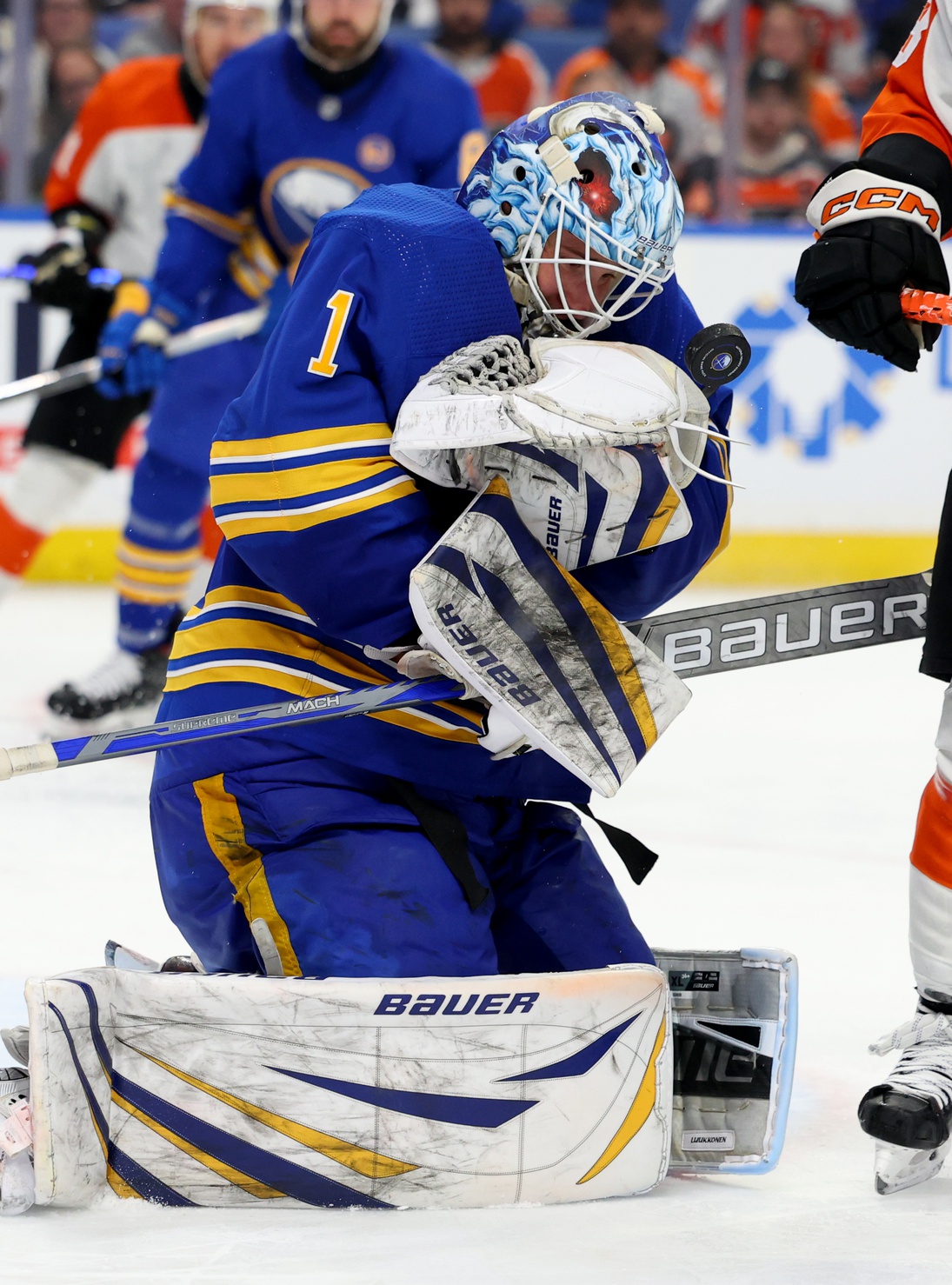 The timing for his improvement was certainly good for Luukkonen as he’s eligible for restricted free agency this summer with arbitration eligibility. Midseason, it looked as if he wouldn’t be able to command any kind of significant deal as a backup with some question marks. Now, after the second half he had, the 25-year-old at least has some leverage heading into negotiations.
This negotiation could go a couple of different ways. Considering that he has just 100 games of NHL experience under his belt, it would be difficult to work out a satisfactory long-term agreement. And if Levi is still their intended starter of the future, they likely wouldn’t want to have Luukkonen locked up that long either. It’s also worth noting at this point that he is two years away from UFA eligibility.
Assuming the Sabres don’t want to sign him to a contract that walks him right to the open market, that means the options are a one-year deal or a medium-term pact that buys an extra year or two of club control. If it’s the former, the contract should check in around the $3.5MM mark. On the latter, it’s likely that Minnesota’s Filip Gustavsson’s three-year, $3.75MM pact would be used as a starter in negotiations with a price point creeping into the $4MM range. Even when Levi gets more expensive in 2025-26 when he needs a new contract, they should be able to afford both netminders in this price range with their salary structure.
While we’re on the topic of goaltending, the Sabres will also need to add a veteran goalie this summer. With Levi still having waiver exemption, there may come a time when they decide to give him a run of starts with AHL Rochester, necessitating the need to have a quality third option in the fold. There will be several of those players available in free agency but bringing in someone who they can play in a pinch with some confidence would be beneficial.
Add Top-Six Winger
While there’s a case to be made for not doing any sort of panic move due to the considerable drop-off in scoring this season and hoping that Ruff can help re-spark their attack, there is still a definite need to add, particularly on the wing. Yes, players like Jiri Kulich, Matthew Savoie, and Isak Rosen are on the rise and aren’t too far away but they can still benefit from time in the minors or being eased into things at the NHL level.
At the moment, they have around $65.5MM in commitments for next season, per CapFriendly, assuming Levi is back up full-time. With the remaining funds, they need to sign upwards of six forwards, a couple of defensemen (including Henri Jokiharju who’s owed a $2.6MM qualifying offer), and Luukkonen. As far as cap situations go, that’s one of the more optimal ones around the league and Adams will have enough room to make a splash if he wants to.
Knowing some of the contracts that are coming down the road – this is where the knowledge from the early extension talks comes in – a move at the top end of the market might not make the most sense as when their 2025 RFAs get a lot more expensive in a hurry, it could cause a bit of a cap crunch. However, there are plenty of options a tier down, including shorter-term veterans like Jonathan Marchessault if he doesn’t re-sign in Vegas, Vladimir Tarasenko, Tyler Toffoli, or even Patrick Kane who has been a speculative Buffalo target for a while now. If they want a longer-term piece, someone like Teuvo Teravainen, Tyler Bertuzzi, or Jake DeBrusk makes sense.
All of those players should fit within their long-term salary structure while also giving their forward group a boost. That, coupled with at least some internal improvement offensively, could give the Sabres a big lift next season.
Add Center Depth
For the first three quarters of this season, Buffalo had strong center depth with Mittelstadt joining Tage Thompson and Dylan Cozens. They were comfortable enough to deal from that by using Mittelstadt to get Byram but now they need to back-fill that spot. Peyton Krebs got an extended look down the middle following the trade but didn’t exactly make the most of it while scoring just four goals all season. A pending RFA, he’s worth keeping around to see if Ruff can help get that part of his game going once again after being an impactful scorer in junior.
Meanwhile, long-time Sabre Zemgus Girgensons is unlikely to return as is Tyson Jost; both players spent some time down the middle this season. So did Kyle Okposo before being moved to Florida at the trade deadline. Internally, there aren’t any centers from Rochester that are likely to be pushing for a roster spot in training camp either (assuming Savoie needs some time in the minors to start). Accordingly, there’s at least one spot to fill and likely two.
Again, ample cap space will give them plenty of options. Depending on what they do on the wing, they could have enough money to take a run at someone like Sean Monahan to give them that quality third option that they had when Mittelstadt was still there. Chandler Stephenson would cost a bit more but the same idea would apply to him. Alexander Wennberg could also fit nicely in that third role as someone who could move up in a pinch when injuries arise.
It wouldn’t be shocking to see the Sabres target a veteran fourth liner. As a result of a long-term rebuild and playoff drought, there aren’t many veterans on this team. Adding some experienced players seems like something they’ll try to do, even on the wing if they opt to dip into free agency or the trade market to add a shorter-term piece or two. But at a minimum, there’s a need to replenish their center depth so expect them to be aggressive on that front over the next couple of months.
Photo courtesy of USA Today Sports Images.
PHR Mailbag: Unrestricted Free Agency, Predators, Saros, Flyers, Top Pick, International Leagues
Topics in this edition of the PHR Mailbag include the year that was for Nashville, what the Flyers could look to do this summer, and more. If your question doesn’t appear here, check back in our past two mailbag columns.
SkidRowe: Given this year’s group of UFAs, who would you sign if you only have $11MM to spend and you need a top-six forward and a left shot defenseman?
This is a question that can have a lot of different answers based on team needs. Is there a need for an impactful top-four left-shot blueliner which could cost half of that amount or more or do they only need a depth piece, freeing up more money for the forward? Does that team need a center more than a winger? As a result, I could come up with a lot of viable answers depending on those needs. But let’s focus on a couple of scenarios.
If my team has a couple of top-four left-shot options already and I’m looking to go a bit cheaper on the blueline and spend more up front, I’m targeting Oliver Kylington. He had 31 points in 2021-22, his last full NHL season. He was more limited this year after returning so a cut from his $2.5MM is certainly possible, especially if it’s a short-term deal. At 27 (as of today) and with his last full season being a good one, I think he’s going to be one of the better low-cost upside plays, giving me lots of room to spend on the forward. Failing that, if that team wants some extra firepower, I’d kick the tires on Erik Gustafsson, a player who produces some points but causes enough goals the other way to keep his price tag low.
What’s left after signing Kylington should be enough to shop towards the upper tier of the market. We’re not in Sam Reinhart territory but if Kylington comes in around $2MM, that should be enough for Jake Guentzel or Steven Stamkos should he not come to terms with Tampa Bay. The back end of Guentzel’s deal might be iffy – long-term agreements like that often are – but it’d be hard to pass up a shot at an impact scorer.
Now, if the team needs a top-four guy, things change. It’s not a great market for impactful left-shot blueliners. There’s Brady Skjei and well, that’s about it. Shayne Gostisbehere scores enough to be a top-four guy but if you’re looking for a 20-minute-plus minutes-eater, he’s not that player. Among lefties, only Skjei is. That will push his price tag past the $6MM mark, potentially closer to $7MM if there winds up being a big market for his services.
That means I don’t have much left up front so I need to get creative and shoot for some upside. Chandler Stephenson could be nice but it’s iffy that there’s enough left for him. What does the medical testing about Patrick Kane say? If the team doctors say he’s likely to hold up, would a multi-year deal for what’s left represent enough of a commitment? Would a one-year deal for what’s left with some incentives (which can be applied if needed on the 2025-26 books) do it? Sean Monahan might also fit in this price range as some teams will be scared off with his injury history. If I need to pay up to get Skjei, I might need to get creative to try to get an impact top-six forward as well.
GBear: What was the point of the Preds 2023/24 season? They’ll once again pick outside the top 20 in the draft and got booted in the first round of the playoffs again, being led mostly by veteran-age players. Aren’t they just doing what they always have in the past despite saying they didn’t want to be in the mushy middle any longer?
It’s definitely a fair question to ask. I’ll be honest, I didn’t see Nashville as a playoff team heading into the season. I thought this was going to be a culture-setting season with a new front office, a new coach, and new leaders. They’d set the tone and foundation to move forward from and if they made the playoffs, that was just an added bonus. I wouldn’t be shocked if management sees it this way as well.
But you’re absolutely right in saying that they basically wound up where they’d been before when all is said and done. They’re not really closer to necessarily contending, nor are they going to be able to bring in a top prospect based on where they’re drafting. Framed that way, yeah, it was a bit of a ‘tires spinning in the mud’ type of year.
If you’re looking for a positive takeaway from this season, it might be this – the floor of the roster is better than most anticipated. Nashville has ample cap space this summer to go out and try to add a couple of impact players. If they hand the starting job to Yaroslav Askarov and move Juuse Saros (more on that idea shortly), they might even have enough for a third impact piece. Add that to the floor this group showed and that could be enough to create a group that could have some damage although being in a division with Dallas, Colorado, and Winnipeg certainly doesn’t help things.
tigers22 2: What package of picks and players would the Red Wings need to give up to get Saros?
There are some teams where acquiring and extending Saros makes a lot of sense. I’m not sure Detroit is one of them. Sebastian Cossa is viewed as their goalie of the future and there’s little reason to assume they’re starting to second-guess that. He’s a couple of years away but that’s perfectly fine for a 21-year-old. But if he’s their guy moving forward, extending Saros on a long-term deal at a cap hit over $8MM is going to block Cossa. And as their young core group gets more expensive (Lucas Raymond and Moritz Seider are up for pricey deals this summer), if they can avoid another pricey long-term pact, it’ll give them more flexibility moving forward.
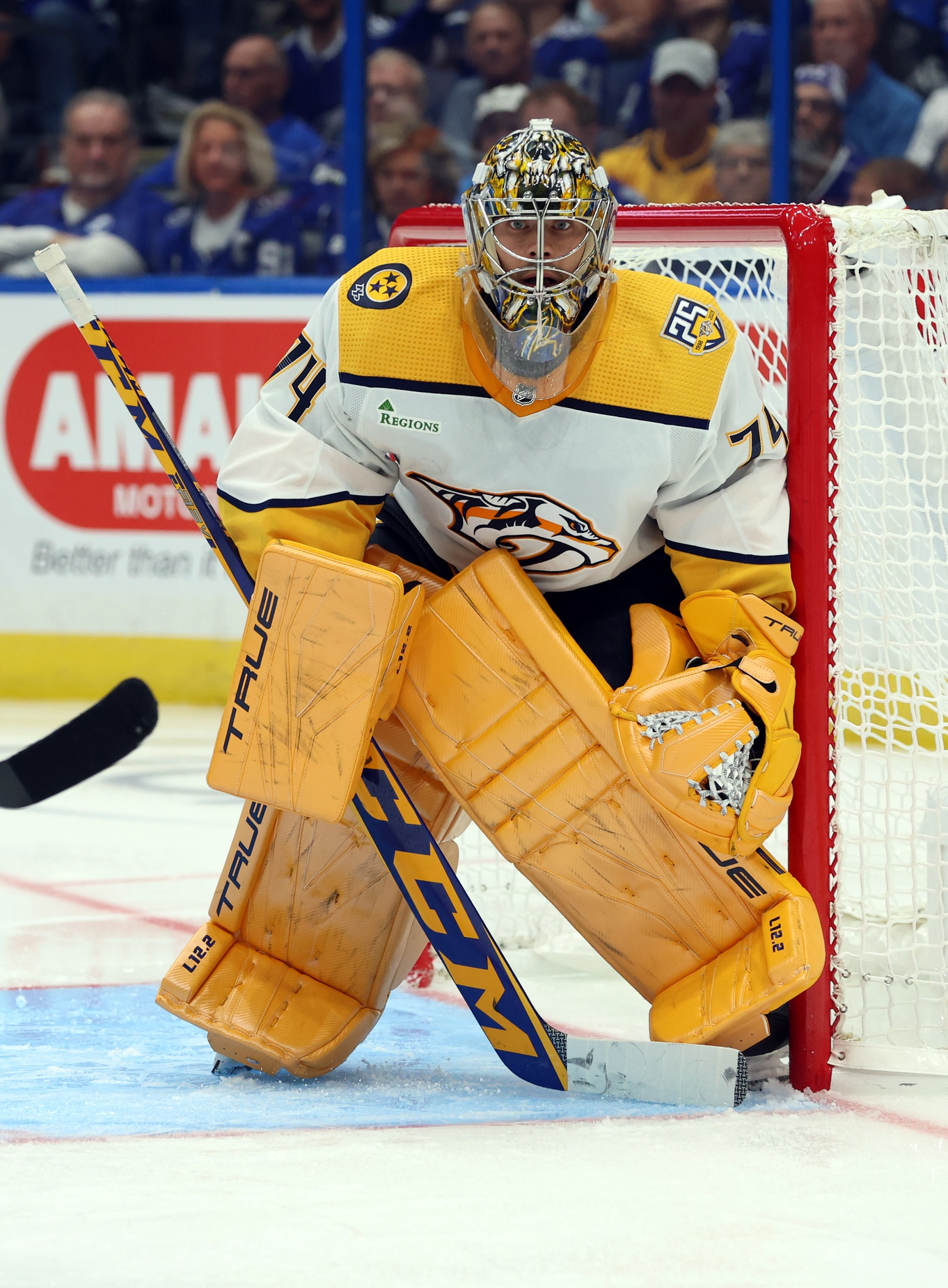 However, adding Saros as a rental player for next season does make some sense for them. Detroit is at the point where they need to start getting their core group some playoff experience. We think back to the long playoff streak they had but they haven’t made it once since then; they’ve missed eight years in a row. Something has to give sooner than later and GM Steve Yzerman knows it. With goaltending being a big issue, perhaps getting Saros in to shore that up would be enough to get them back into the postseason. From there, then they can get a better sense of what they’re going to need moving forward. Even as a short-term addition, I think that’s worthwhile.
As for the cost, the Preds were believed to have a very high asking price to move him at the trade deadline. With the other goalies that could be in play, I think they’re going to have to lower that. And if Detroit doesn’t want to sign Saros to an extension as part of the deal, that should lower the price tag as well.
Let’s get the easy part out of the way and say that Ville Husso ($4.5MM for next season) needs to go the other way to match money. I could see Nashville being more interested in players than picks, however. I could see Michael Rasmussen being someone they ask for, a middle-six forward with some control. I also think they’d ask for a young blueliner although if they were to get Rasmussen, they wouldn’t be able to ask for a top youngster. But William Wallinder, an early second-round pick back in 2020, might be someone they want. He’s still a year or two away but that’s better than a junior-aged prospect or draft pick that’d even be farther away.
If Linus Ullmark, Jacob Markstrom, and even John Gibson are all on the block this summer, it’s going to make it hard for the Preds to get a first-round pick and another key piece or two. A package like this, one that gives them some pieces that would help now (especially if Husso can get back to the level he was with St. Louis) and down the road, might be enough to get Saros as a pure rental. But if several teams want to acquire and extend him, the asking price might get out of Detroit’s range.
Emoney123: With Fedotov and Ersson set in goal, what happens to Hart [RFA]? Who should the Flyers add with Michkov to mentor/develop into a scorer and playoff team?
With Carter Hart being a restricted free agent, the Flyers would have to issue him a $4.479MM qualifying offer to retain his rights. He’s a year away from UFA eligibility which is particularly noteworthy considering it doesn’t sound like the court case will be held anytime soon. Even if the offer was issued to retain his rights, chances are he’d be an unrestricted free agent by the time he potentially becomes eligible to play again depending on how the case plays out. With that in mind, there’s no real benefit to tendering him so chances are he’ll go unqualified next month.
I touched on this a bit in Friday’s mailbag but are the Flyers at the point where they can say the rebuild is over and it’s time to add pieces to get into the playoffs? This is a team that went into last year with a roster that looked nowhere near playoff-caliber and then, while in a playoff spot, sold. After collapsing down the stretch, is that going to be the trigger point to say it’s time to go for it? I don’t think so; they’re not there yet even with how the season went. So I’m not sure they’re going to be too active in terms of trying to add pieces to become a playoff team.
If they can get Matvei Michkov over early (and it looks like this could happen), the idea of a mentor makes some sense in theory but I have to admit, finding the right fit is harder than I thought. I don’t think the Flyers are going to be shopping at the top end of the free agent pool which takes some of the more prominent names off the table.
Vladimir Tarasenko stands out as a fit among the secondary pieces, however. As an offensive player, he had to become a better defensive player in recent years which should help under a coach like John Tortorella. Meanwhile, the Senators liked his off-ice value in a younger room before moving him at the trade deadline so he could have that same type of benefit for his fellow countryman. After free agency didn’t go well last time around, a multi-year commitment at a small raise from the $5MM he made this year might get it done which is a price tag they can afford by going into LTIR. I’d go with him as a veteran to try to add to work with Michkov.
Unclemike1526: Any chance the Hawks can move from 2 to 1? Thanks.
San Jose has already made it clear that they intend to take Macklin Celebrini, someone who they quite likely view as a foundational piece. More importantly, he’s a foundational center, allowing them to have a strong future one-two punch with him and Will Smith down the middle. Given how hard it is to find a middleman with that type of value, that makes it a lot harder for the Sharks to move that pick. They’d want a foundational center in return. The Blackhawks have one but it’s safe to say they’re not moving him.
Chicago can make a compelling offer to San Jose, certainly more compelling than probably any other team can. If they offered up the second pick and, say, Frank Nazar, that’s a pretty solid offer. But I don’t see Sharks GM Mike Grier biting at it and it won’t be a matter of adding extra lesser pieces to make the difference. When you have a chance to get a franchise fixture down the middle, it’s almost impossible to pass up.
PyramidHeadcrab: It’s generally suggested that the KHL is the second-best professional hockey league in the world, but how competitive would a complete KHL team be if they were to compete in the NHL?
Additionally: How do the major European leagues (KHL, SHL, Liiga, German Elite League, etc.) compare to the North American pro game? Are they more on par with the AHL? ECHL?
And if we really wanna get spicy… What level would pro leagues in countries like Australia, Japan, and United Kingdom be comparable to?
While the reputation of the KHL has been that it’s the second-best league, I don’t think that’s the case anymore as there has been a drop-off in talent in recent years. To answer your first question, I don’t think the typical KHL team would have much success at all in the NHL. Even if you look at the roster and stats of the reigning champions Metallurg Magnitogorsk, I don’t see that franchise giving many teams a run for their money most nights. They’d win some games, sure, but they’d probably be a strong candidate for the top spot in the draft lottery.
I’d have the SHL as the second-best league out there now by a narrow margin. But again, those teams wouldn’t put up much of a fight against a typical NHL squad. Now, against an average AHL squad, now we’re talking. Teams from that league, or the KHL, or even Liiga I think would hold their own. Maybe some Swiss teams as well as that league has picked up in terms of competitiveness lately. Meanwhile, for the DEL and ICEHL (Germany and Austria), they’re not quite at that level so I suppose they’d be closer to the ECHL and even that might be a little generous.
As a random aside, back in 2013, AHL Rochester was invited to participate in the Spengler Cup, an international tournament featuring some club teams from various leagues. The Amerks didn’t fare well (going 0-3) in that event and an AHL squad hasn’t been invited back since. Having said that, they certainly weren’t at their best due to injuries and recalls but that’s about the only semi-recent basis for comparison that I can think of.
As for the lower-level leagues, I’m not even sure I could come up with a guess. I can’t sit here and say I’ve seen enough (or anything) from some of those levels to even attempt to come up with a reasonable comparison. Your guess would be as good as mine.
Photo courtesy of USA Today Sports Images.
Offseason Checklist: New Jersey Devils
The offseason has arrived for three-quarters of the NHL for teams that either missed the playoffs or were eliminated in the first round. Accordingly, it’s now time to examine what they will need to accomplish over the coming months. Next up is a look at New Jersey.
Virtually nothing went right in 2023-24 for the Devils. After smashing down the doors of the rebuild and breaking out for 112 points last season, most expected the squad to stay in the upper echelon of the Eastern Conference and potentially even contend for the Presidents’ Trophy.
Instead, an early season-ending injury to top defenseman Dougie Hamilton and sieve-like goaltending meant they never got very far away from the .500 mark, missing the playoffs entirely with just 81 points. With an unknown head coach stepping in next season to replace the fired Lindy Ruff and a goaltending rotation that’s guaranteed to look different, playoffs will be the expectation again in the Garden State.
Fill The Coaching Vacancy
The Devils’ mediocre showing cost Ruff his job before they were completely out of the playoff picture, as he was fired the week of the trade deadline after a 30-27-4 showing through 61 games. General manager Tom Fitzgerald‘s deadline moves and interim promotion of Travis Green to head coach backfired, as the team limped to an 8-12-1 finish for their fifth sub-.500 season in the last six years.
At the time of writing, assistant coaches Sergei Brylin, Ryan McGill and Chris Taylor look to be back with the club next season. That just leaves their head coaching add, something that will likely be confirmed in a matter of days.
Recent reporting indicates ex-Maple Leafs coach Sheldon Keefe and former Oilers bench boss Jay Woodcroft are the two most likely candidates, especially after Craig Berube replaced Keefe in Toronto on Friday and the Hurricanes locked in pending free agent Rod Brind’Amour to a five-year extension. Todd McLellan, who was fired midseason by the Kings, has also interviewed with New Jersey.
In fact, most expected the Devils to have made their move by now. Keefe and Woodcroft don’t appear to be the favorites for any other open jobs, though, so their sense of urgency has likely dwindled a tad.
Make The Goalie Splash
Fitzgerald’s goaltending upgrades at the trade deadline were underwhelming, adding journeyman Jake Allen and the inconsistent Kaapo Kähkönen while parting ways with Vítek Vaněček, who was serviceable in a tandem role last year but struggled with a .890 SV% in 32 appearances this season.
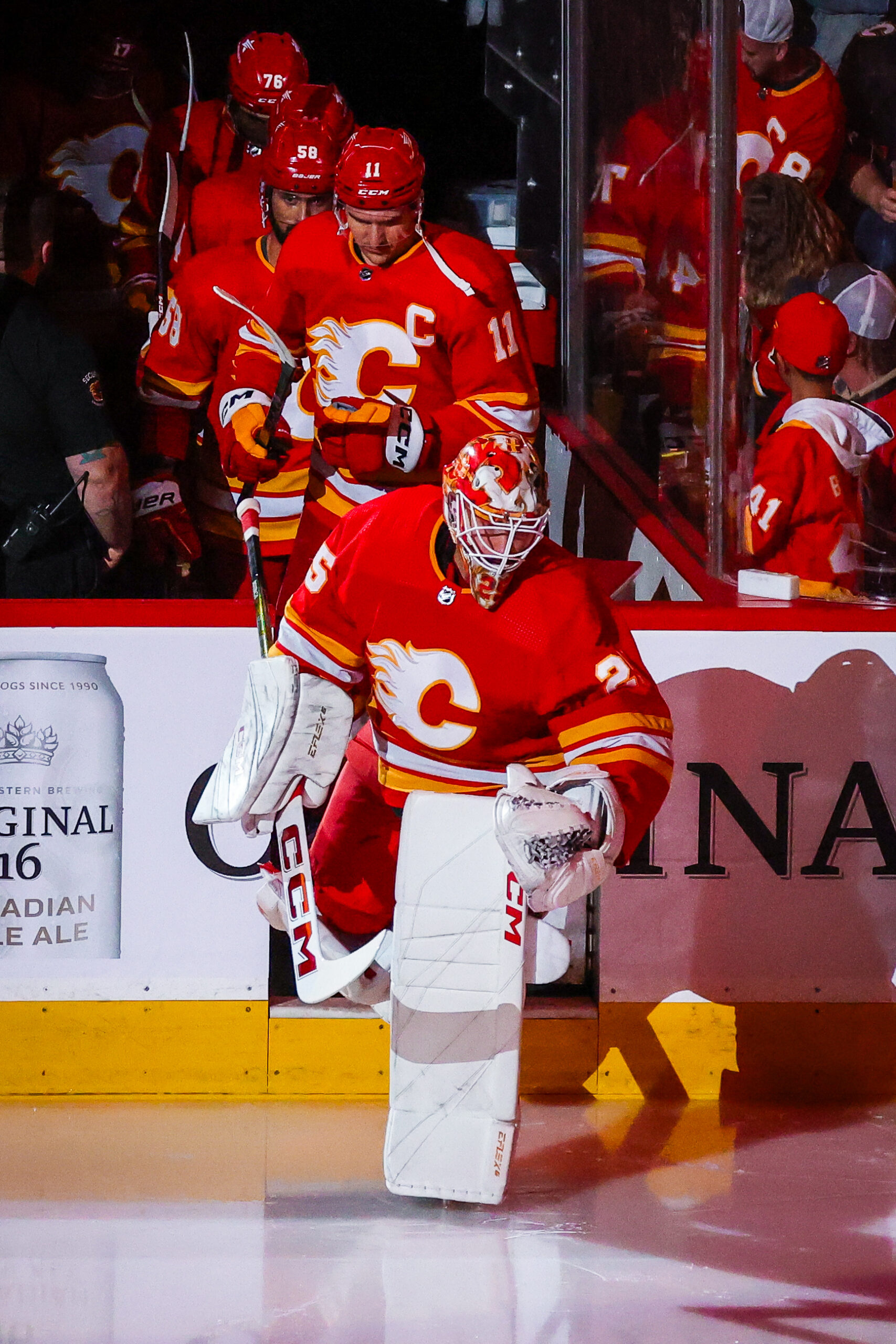 That wasn’t necessarily his intention, though. There was quite a lot of smoke around a move for Flames star Jacob Markström, and talks got so advanced he reportedly waived his no-move clause to accept the deal. It didn’t get across the finish line, but talks are expected to resume closer to the draft next month.
Markström’s 23-23-2 record this season wasn’t particularly impressive, but he managed to churn out another above-average season despite missing significant chunks of the campaign with injuries. His 13.7 goals saved above expected were ninth league-wide, per MoneyPuck. He’s not a terribly long-term solution, though – he’s already 34 and has two seasons left at a $6MM cap hit before becoming a free agent again.
There will be other bonafide starters available for the right price. The Bruins may move on from 2023 Vezina Trophy winner Linus Ullmark in order to re-sign the younger Jeremy Swayman, but he has a modified no-trade clause and has expressed his desire to stay in Beantown as he enters the final season of his contract. Predators starter Juuse Saros may also be on the block with one year left on his deal, with top prospect Yaroslav Askarov waiting in the wings.
Add/Replace Depth Scoring
New Jersey doesn’t have a lot of free-agent turnover. Among forwards who logged NHL time this year, only Tomas Nosek and Chris Tierney are slated to become UFAs on July 1. Kurtis MacDermid and Maxwell Willman were set to join them but have signed extensions in the past few days.
That leaves a clear picture of the Devils’ roster needs, which includes a hole in their top nine. Whether 2020 top-10 pick Alexander Holtz can take a step forward under a new head coach will be a hot topic, and energy winger Curtis Lazar is currently penciled in for a third-line role before taking injuries into account. 22-year-old Dawson Mercer is a sure bet to bounce back after being limited to 33 points in 82 games last year, but as it stands, there are just a few too many question marks across the board for a team with aspirations of a deep playoff run.
A big-ticket add isn’t a need – that money should and will be reserved for goaltending. But a consistent middle-six winger to bump Lazar to a fourth-line role and provide insurance if Holtz continues to struggle is a clear vacancy on their depth chart. Someone in the $3MM-$4MM range annually should do the trick. Anthony Duclair, Warren Foegele and Jack Roslovic are just a handful of names that could likely be had for that price on the open market.
Extend Hughes
2021 fourth-overall pick Luke Hughes earned a Calder Trophy nomination this year by stepping up in a big way to fill the offensive vacancy left by Hamilton’s pectoral injury, leading the Devils blue line with 47 points in 82 games. He’s also eligible to sign an extension beginning July 1 as he enters the final season of his entry-level pact.
The Devils didn’t opt to get his older brother Jack signed immediately after becoming eligible, but they did sign him just a few weeks into the 2021-22 campaign, the final season of his ELC. The eight-year, $64MM commitment seemed a tad rich at the time for a player who had struggled with injuries to begin his career and had yet to establish himself as a first-line caliber player, but he’s immediately made the deal look like a bargain with three straight seasons well over a point per game.
If Fitzgerald opts to take a similar path with Luke, expect a matching deal or something close to it. Evolving Hockey projects the defender’s extension to come in at eight years with a $7.979MM cap hit.
Image courtesy of USA Today Sports.
PHR Mailbag: Blackhawks, Marner, Laine, Trade Proposals
Topics in this edition of the mailbag include what’s next for the Blackhawks, Mitch Marner trade suggestions, and more. If your question doesn’t appear here, check back in last weekend’s mailbag. The final one from our recent call-out for questions will run this weekend.
Unclemike1526: The Hawks have two firsts and three seconds. Who are the best goalie prospects in this year’s field? Commesso played well in the playoffs against a good team. I have no faith in Stauber or Soderblom. Gajan is far away. Who can they draft to solidify the position? 2nd round is where goalies seem to end up going and their own 2nd-round-pick should be a high one. As for Davidson, he says he wants to start adding talent to win. Where do you think he adds? Thanks.
I’ll start with the standard caveat that I’m not much of a scout and when it comes to goalies, I’m even worse so take this with the requisite grain of salt. I don’t think it’s a particularly strong field, to be honest. Last year, we saw talk of a goalie possibly going in the first round, that certainly doesn’t appear to be the case this time around. Carter George, Mikhail Yegorov, and Eemil Vini are the more prominent netminders of this class. When a question like this came out last year, I also added a darkhorse candidate so I’ll pick Ryerson Leenders for that spot.
You noted that the Blackhawks have a couple of quality goalie prospects already in Drew Commesso and Adam Gajan. Both have NHL potential and were drafted in the top 50 in their respective drafts, going 46th and 35th respectively. We also know that there’s a long development curve for netminders. So is it really in Chicago’s best interest to go after a goalie with their top second-rounder (34th overall) when that goalie might not be ready until 2029 or 2030? (Not to mention that picking one of those goalies would be a reach.) Wouldn’t it be better to go with a skater who will probably be a top-20 to top-25 option on their board? I’m not against them picking a goalie but I wouldn’t consider it until the third round at the earliest with the two promising ones they already have.
As for where GM Kyle Davidson is looking to add, I don’t think there’s really a positional target, so to speak. Instead, I think it’s going to targeting specific veterans who will be fits in the room and raise the floor of this group. If it’s a top-four defenseman, great. If it’s three bottom-six guys that take some of the defensive pressure off the younger forwards, that would work too. Having said that, if Davidson got his best-case addition, I think it’d be a top-six winger that’s signed for a couple of years to give Connor Bedard an upgraded running mate. Basically, another Taylor Hall type of pickup, just one that hopefully won’t miss most of next season due to injury.
based: It looks like the Leafs and Marner both possibly may want to move on. How about to Philly? A team trading for him I assume would need a contract extension in place.
I’m not so sure there’s a mutual desire to move on between Toronto and Mitch Marner. While management was non-committal about bringing the core back, Marner said that a goal of his was a contract extension from the Maple Leafs this summer. I think if he got his way, he’d stick around.
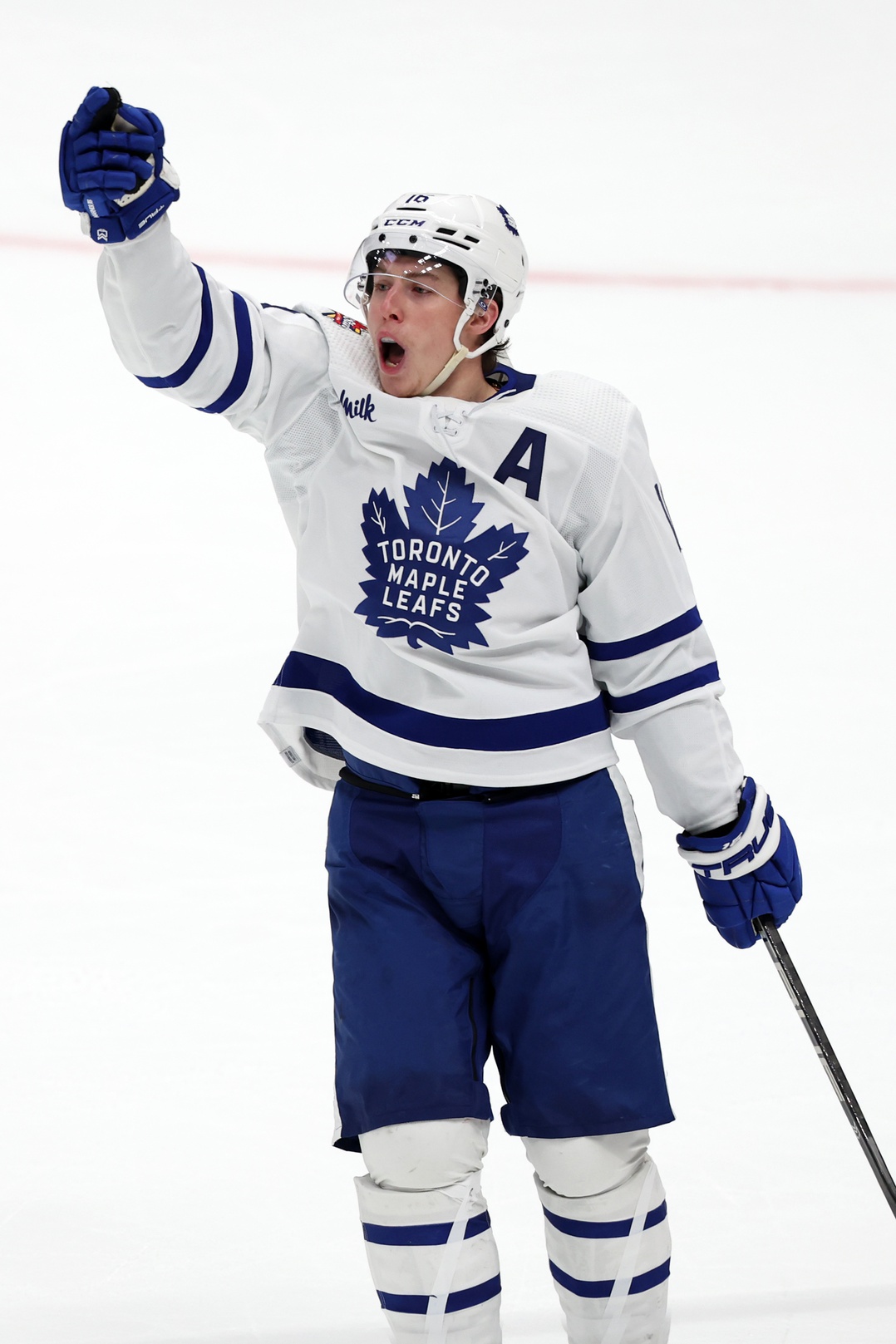 But let’s talk about the fit in Philadelphia. A lot would depend on where the Flyers feel they are in their rebuilding process. I’m not convinced the season they just had will lead to them accelerating their timeline (and that’s probably a good thing long-term). So is making a move for Marner the right thing to do? I don’t think it’d be the worst idea if the price was right but this seems a bit early in the process for them to make that type of move.
Another challenge here is, as you noted, the need for a contract extension. Trading for Marner as a straight-up rental makes no sense for them so a new deal would need to be in place. I expect his will be a record-setting contract for a winger and I think the sweet spot is going to be around eight years and $100MM if you’re going to get him to sign now. (That matches the cap percentage that Artemi Panarin got from the Rangers on the open market by design.) Does Marner make sense on that contract in that market at this time? That’d be a tough sell.
There’s also the matter of finding a viable trade return. Even if we concede your premise that the Maple Leafs want to move on from Marner, they’re not just giving him away. This is a legitimate top-line winger so the asking price would be high. I expect Travis Konecny would be in there as part of a package which begs the question that if GM Daniel Briere wants to pony up for a winger, why not just lock up Konecny long-term at a lesser rate and keep the other trade assets in the fold? If I’m choosing between that or acquiring Marner, I’m going with the former.
Jaysen: Your thoughts on a Marner for Saros trade, straight up? Potentially as a sign-and-trade for both?
Or if the above proposal is a no-go, maybe Marner to Chicago or to Utah? And yes, let’s pretend that Marner waives…
Finally, Toronto must make changes to the roster. I’m interested in what would be your most mind-blowing, no way, they did what scenario.
Thank you.
Starting with your trade proposal, I like it for Nashville, assuming it’s a double sign-and-trade. Yaroslav Askarov is their goalie of the future and if they can get a legitimate top-line winger for a starting goalie, that’s a whole lot better of a return than most starters fetch.
I’m less enthusiastic from Toronto’s point of view, however. Juuse Saros will be entering his age-30 season when his next deal starts and has had the heaviest workload in terms of games played for the last three years. That’s a bit concerning when you’re going to hand him a deal comparable to Connor Hellebuyck’s $8.5MM per season. Yes, he’d certainly represent an upgrade but that’s a lot of offense to sacrifice to get it and a big amount to give up to keep him around. My Plan A would be to aim a tier lower for a goalie upgrade where it wouldn’t take Marner going the other way even if you wind up moving Marner in a separate move later on.
As for Chicago and Utah being possible landing spots, assuming he waives his trade protection, they’re interesting ideas. I have the same concern for the Blackhawks as I do for Philadelphia in that it might be early but if they think he’s the running mate for Connor Bedard, then I’d say it’s justifiable even if it is early. Finding a win-now package going Toronto’s way would be tough, however. Utah, meanwhile, should be exiting its rebuild and likely will be looking for a talent upgrade. They have several quality young players they could couple with a win-now player (Nick Schmaltz stands out as an option) that could make for a compelling offer.
When I first saw the last part of this question, my initial thought was if Utah won the lottery, they dealt the first-overall pick for Auston Matthews, sending Matthews to the former Arizona team just after they left his hometown state. But that’s not happening and San Jose certainly isn’t making that move with where they are.
But let’s stick with the premise. If I’m picking the ‘no way’ type of move, you have to go big so I’d say it’s moving Matthews while making the decision to pivot to using William Nylander full-time down the middle. That would lessen the need to get a win-now center coming the other way as they’d have him and John Tavares as their one-two options for next season. As part of the return, the Leafs would get a young center with top-six potential that ideally would slide into that role the following year (or soon after if Tavares is re-signed at a lower rate). But the key part of the package would be a legitimate number one defenseman.
If I were to ask who is the least likely of their core forwards to be moved, I think it’d be Matthews. But in this pie-in-the-sky scenario, Tavares, Marner, and Nylander all refuse to waive their trade protection, resulting in them pivoting to Matthews and using him to fill a key need now, add a piece for the future, and bank on Nylander adapting to and thriving in the number one role. That’d be a shocker to me.
Breakaway: I heard that Patrik Laine is selling his place in Columbus. He could be buying a new place but is most likely looking for a trade. Who do you think would be interested, what would the trade package look like and would Columbus need to retain some salary?
Notwithstanding the report about selling his house, it makes sense for both sides to have at least some interest in a change of scenery, assuming he’s cleared to return from the NHL/NHLPA Player Assistance Program. Columbus hasn’t got much bang for their buck on his contract and as a result, Laine appears to be heading toward a sizable pay cut if he repeats the performance of the last two years. In situations like this, a move makes a lot of sense for both sides…in theory, at least.
Here’s the problem for Columbus. Laine’s trade value is probably at an all-time low right now. Yes, there’s a longer-term track record of some success but he has 28 goals in the past two years combined, spanning just 73 games due to injuries and his entrance to the Assistance Program. He also has a cap hit of $8.7MM and is owed $9.1MM in actual money for each of the two remaining years on his contract. He also controls his destiny to a point with a ten-team no-trade list.
There are three options for them to consider, none of which are particularly ideal. They can give him away for next to nothing simply to clear up the cap space and save on salary. They can retain half the contract and receive a potentially halfway-decent return, maybe a reasonable draft pick (I’m thinking a second-rounder as I type this) and a middle-six forward. Or, they can try to find another pricey short-term contract that isn’t going well for a team and try to make a swap with the rest of the package being determined by the difference in caliber of the player. This last one is more theoretical as I don’t see a great fit at first glance.
If the Blue Jackets decide to just cut bait, Chicago makes a lot of sense; it would be a move just like the Hall trade from last summer. Here’s a top-six player with a bit of upside on paper and a legitimate shooter to work with Bedard. If things go well, he’s the type of player I could see them extending. But again, like Hall, the return would be negligible; they’d have to have a plan in place to utilize the cost savings.
If they want to retain money and make more of a hockey trade, Seattle stands out at first glance. GM Ron Francis might prefer the shorter-term option over a free agent acquisition and if Laine is healthy, he’d be an intriguing fit in a Kraken lineup that needs more firepower. To make the money work, someone like Brian Dumoulin could go the other way with the draft pick or equivalent prospect. I also like Utah’s fit here. They have money to spend and at 26, Laine is a young enough veteran to fit in with their group. The matching money part isn’t as easy but probably isn’t needed; a deal based on draft and prospect capital should work for them and we know they have plenty of both.
Whoever Columbus hires as GM will have options when it comes to trading Laine if they decide to go that route. But whichever way they go, the return will pale in comparison to what they gave up to get him in the first place.
Offseason Checklist: Calgary Flames
The offseason has arrived for three-quarters of the NHL for teams that either missed the playoffs or were eliminated in the first round. Accordingly, it’s now time to examine what they will need to accomplish over the coming months. Next up is a look at Calgary.
Gone are the inconsistent yet high-ceiling Flames teams led by Johnny Gaudreau. After another underwhelming campaign, this time under first-year head coach Ryan Huska, Calgary failed to make the postseason in back-to-back years since 2013 and 2014. With rookie general manager Craig Conroy entering his second season at the helm, he has some work to do to continue his aggressive retooling of the club over the past few months and steer them back toward playoff contention in the coming years.
Make A Goaltending Decision
Is Dustin Wolf ready?
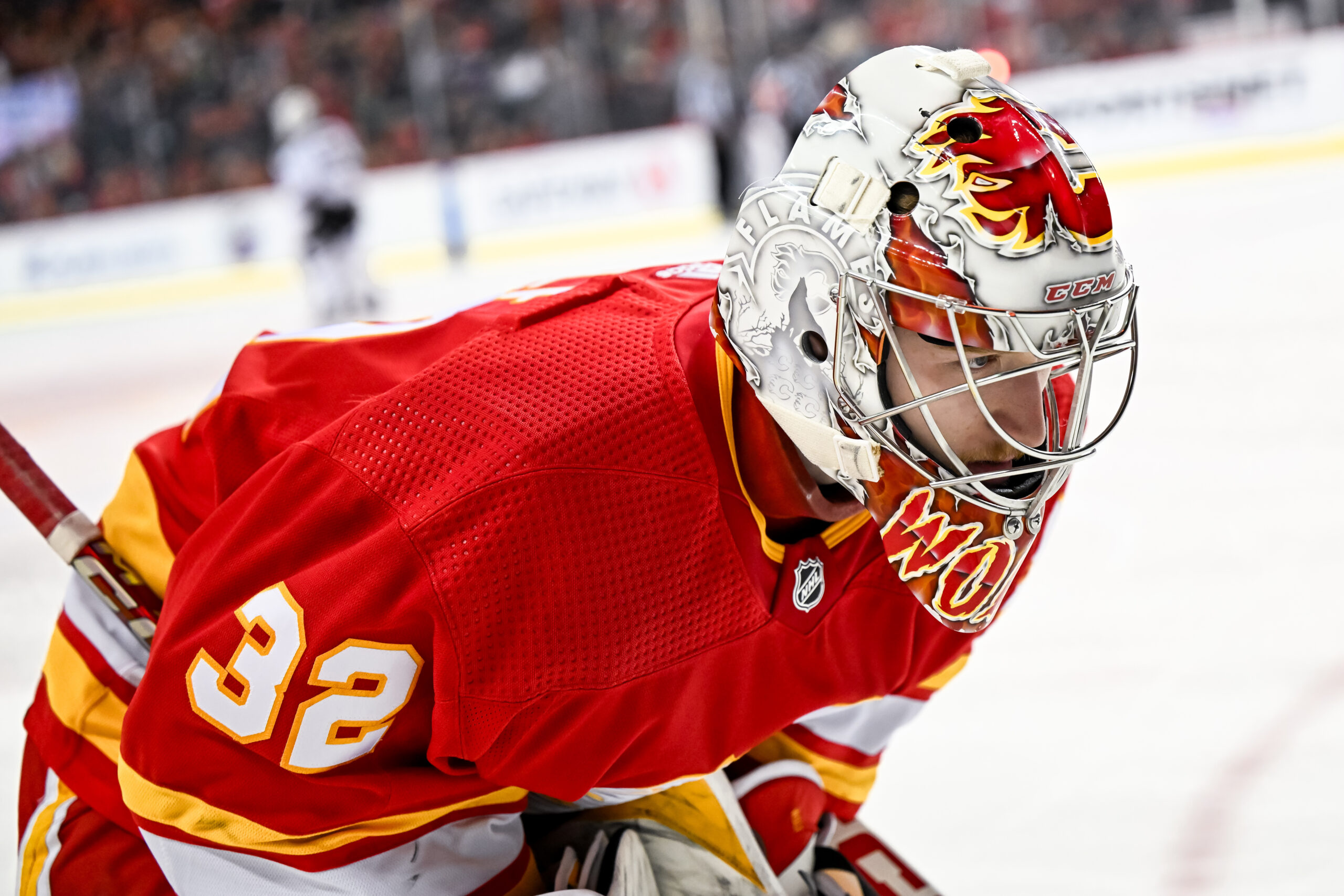 That’s likely the question that makes Conroy lose the most sleep this summer. His star goaltending prospect’s ascension from being selected 214th overall in 2019 is well-documented. After three incredible seasons with AHL Stockton and Calgary, compiling a 2.29 GAA, .926 SV% and 11 shutouts in 141 appearances, it’s clear the California native is ready for a longer look.
He got a longer look this year, though, and failed to truly confirm he’s ready for NHL duties. His numbers, while better than the older Daniel Vladař‘s, were unimpressive, posting a .893 SV% in 15 starts and two relief appearances. It wasn’t due to poor team defense, either – his -10.1 goals saved above expected were nearly on par with Vladař’s -12.5, per MoneyPuck.
While he’s likely suited for a backup role, especially if Vladař is his only competition, that’s likely not the question Conroy grapples with. Starter Jacob Markström nearly ended up with the Devils at this year’s trade deadline in a rather public saga that involved him waiving his no-move clause only for a deal not to get done. The Devils, who didn’t make any longer-term moves to shore up their crease, will likely re-engage this summer. Even if it’s not New Jersey, Markström could still waive his NMC for someone else after expressing frustration with the way things played out prior to the deadline.
That would leave Wolf and Vladař, the latter of whom will be an unrestricted free agent in 2025, as the Flames’ goaltending tandem next season unless a goalie is added in return for Markström. It’s hard to imagine Wolf not getting the majority of the starts in that scenario, especially after Vladař’s poor showing this season, something Calgary should be cautious of rushing him into.
Solve The Huberdeau Enigma
A constant of the last two seasons in Calgary has been highly underwhelming play from winger Jonathan Huberdeau. After being acquired from the Panthers in the Matthew Tkachuk trade and signed to an eight-year, $84MM extension that kicked in this season, the NHL’s assist leader just two years ago has managed just 27 goals, 80 assists and 107 points in 160 games as a Flame. In his final season in Florida, the Canadian winger lit up the league with 85 assists and 115 points in just 80 games.
The dropoff has confused many. Most of his underlying metrics haven’t changed to explain the lack of production. A coaching change from Darryl Sutter in 2022-23 to Huska this season did nothing.
An NHL team is just that – a team, not an individual player. But at such a steep cap hit of $10.5MM through the end of the decade with a no-move clause, it’s worth having an organizational discussion about how Huska can implement systems that help Huberdeau get back to the point-per-game plateau. Whether it’s solely a systems change that unlocks Huberdeau or if Calgary makes some coaching staff alterations or targeted player acquisitions remains to be seen, but if they want to get back to playoff contention in the next few seasons, they simply need more out of him.
Reconstruct The Defense
Calgary got rid of half their blue-line regulars via trade this season, unloading Noah Hanifin, Chris Tanev and Nikita Zadorov for a considerable combined haul. All were on expiring contracts.
While Conroy’s work was solid, making the trades was only half the battle. With depth defenders Dennis Gilbert, Oliver Kylington and Jordan Oesterle needing new contracts to avoid unrestricted free agency in July, he has some decisions to make about how much money he wants to invest in reshaping the Flames’ blue line next year.
Daniil Miromanov looked good after being picked up from the Golden Knights in the Hanifin deal, posting seven points in 20 games down the stretch as he logged over 21 minutes per game. He’s penciled in to replace one of the departed defenders, joining Rasmus Andersson and MacKenzie Weegar. That leaves Joel Hanley, Nikita Okhotyuk, Brayden Pachal, Ilya Solovyov, and any UFAs they choose to re-sign to compete for around four spots. It’s not the most inspiring group. Is it smart to make a play for a big name in free agency this summer? There is no shortage of intriguing names.
Don’t Strike Out On Draft Day
The Flames have done just okay in the past few seasons to acquire some high-ceiling talent without having top-10 picks, namely 2021 first-rounder Matthew Coronato. However, they’ll have a much better chance of landing a true impact prospect late next month, holding the ninth overall pick at the 2024 draft in Vegas.
If Kelowna Rockets winger Tij Iginla is still available, he’ll almost certainly be a Flame. The son of all-time Flames great Jarome, who’s now back with the team in a front-office role, is tabbed to go somewhere between sixth and 15th overall by most public rankings but is likely to go near the higher end of that range with nine goals in 11 WHL playoff games. He may not be available by the time Calgary picks.
A backup plan should involve a high-ceiling pick, either at forward or defense. Calgary’s prospect pool is fine – a number of names there likely have NHL futures – but it lacks any true blue-chip players outside of Coronato, who lit up the AHL for more than a point per game in his first professional season.
Image courtesy of USA Today Sports.
Offseason Checklist: Seattle Kraken
The offseason has arrived for three-quarters of the NHL for teams that either missed the playoffs or were eliminated in the first round. Accordingly, it’s now time to examine what they will need to accomplish over the coming months. Next up is a look at Seattle.
What a difference a year can make. After the Kraken surprised many by making it to the second round in their second season of existence, expectations were relatively high coming into this season. However, they weren’t able to sustain that success and instead of building on it, they missed the playoffs altogether. As a result, GM Ron Francis will have a busy few months ahead of him. Here’s what should be on his to-do list this summer.
Hire A Head Coach
Despite his previously-signed contract extension not beginning until July, Francis decided to make a change behind the bench, firing Dave Hakstol after three seasons with the team. The Kraken played to a 107-112-27 record under Hakstol’s tutelage, a record that’s relatively respectable considering they were an expansion franchise but their playoff run in 2022-23 accelerated the expectations and they clearly came up short, warranting the change in Francis’ mind.
Seattle has a pair of assistants who could make a real case for the role. Dave Lowry has some experience running an NHL bench having taken over from Paul Maurice in Winnipeg midway through the 2021-22 season after Maurice unexpectedly resigned. Meanwhile, Jay Leach has worked his way up through the coaching ranks and is someone who has been speculated to have had some head coaching interviews in the past. It feels like a matter of time before he gets a chance whether it’s filling this vacancy or going somewhere else.
Alternatively, they could also look to their farm team which is run by former NHL bench boss Dan Bylsma. He has run Coachella Valley the past two seasons, leading them to the Calder Cup Final last season while the team posted a .715 points percentage in both years. Bylsma has head coaching experience at the top level with Detroit and Buffalo but hasn’t run an NHL bench since the 2016-17 campaign.
It would appear that Francis is looking for someone who can help this group get back to the playoffs over kicking off any sort of rebuild. Accordingly, it stands to reason that if they look outside the organization for a new head coach, they’ll look for someone with experience. Among the options currently available are Craig Berube, Dean Evason, Todd McLellan, Sheldon Keefe, and Jay Woodcroft.
Seattle technically doesn’t have to have a head coach in place by the start of free agency but if the new bench boss will have any sort of input on who the team pursues in the summer, they’ll want that hire in place well before July 1st.
Re-Sign Beniers
Heading into the season, it looked like Matthew Beniers was in a strong position to secure a long-term agreement and cement himself as their franchise fixture up front. While that could still happen, his performance in his sophomore campaign has made that long-term deal a bit less certain.
Beniers burned the first year of his contract late in the 2021-22 campaign when he impressed with nine points in ten games. He didn’t produce quite as high of a point-per-game rate last season but still managed 57 points in 80 regular season games, earning him the Calder Trophy. He then followed it up with seven points in 14 contests, not a bad result for his first taste of playoff action. Based on that, expectations were high heading into his second full season.
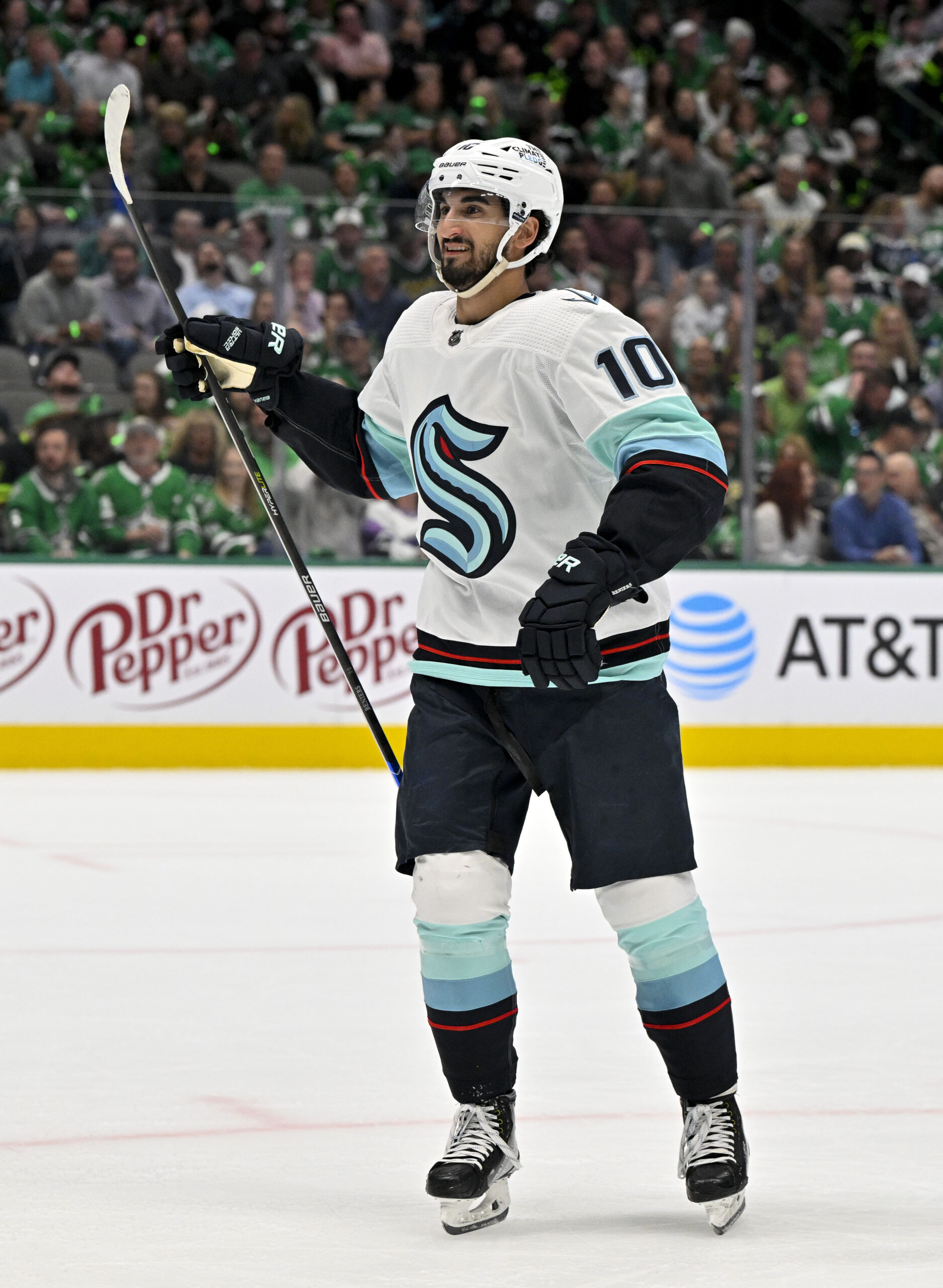 This season, Beniers was Seattle’s top center fairly regularly and the results were mixed. He got off to a particularly slow start, notching just five goals in the first 39 games (spanning October to December) and while he picked up the pace after that, he still managed just ten in the final 40 contests. For someone who was expected to push closer to the 25-goal, 70-point mark, it’s safe to say he underachieved.
Has he shown enough to get a max-term (or close to it) contract, one that would likely carry an AAV in the $8MM range? Or would one (or both) of the two sides prefer a shorter-term bridge deal to allow for more evaluation time? This feels like the more probable outcome at this point.
So, what would that bridge deal cost? The three-year, $17.25MM contract that Anaheim gave Trevor Zegras last summer stands out as a viable comparable. Zegras’ numbers at the end of his entry-level deal were a bit better but with the salary cap set to jump up by around $4MM, that should balance out the lower production. It’s worth noting that like Zegras had last year, Beniers has five years of team control remaining so Seattle can comfortably go with a three-year bridge deal without running the risk of their key middleman filing for arbitration and walking himself straight to UFA eligibility. These contracts can sometimes take until right up to training camp so it’s possible this won’t be resolved for a while yet.
Add Scoring Help
In 2022-23, Seattle was sixth in the league in goals scored. The offense-by-committee approach worked with the end result being a group that was more impressive than the sum of its parts. However, it’s not always easy to have success with that route and even with bringing back the majority of the same group, things didn’t go as well this season. Instead, they dropped 72 goals and slipped to 29th in total goals scored.
Is this group going to struggle that much moving forward? Probably not and they’ll be hoping that a new coach will help improve things on that front. However, it’s also unrealistic to think that this core can go back to pushing to be in the top five in goals scored league-wide; the realistic outcome is somewhere in between. But that’s still a pretty big divergence in terms of range.
As a result, it would make a lot of sense for Seattle to pursue some scoring help this summer. They’re not in a bad situation cap-wise with around $23MM in cap room, per CapFriendly. Yes, a new deal for Beniers (and for Eeli Tolvanen who is arbitration-eligible and should be eyeing a fair-sized raise on the $1.45MM he made this year) will cut into that but they’ll still have ample space to pursue an upgrade or two beyond potentially adding someone like Shane Wright into the lineup full-time.
While some teams might want to pursue their upgrades via the trade route, it would make more sense for Seattle to look at free agency. Their prospect pool is still relatively thin, understandably so considering they’ve only been around for three years. With that in mind, trading from that pool isn’t as desirable as trying to sign a player outright on the open market, even if they have to pay a bit of a premium to do so.
Look Into Goalie Market
When Seattle made its expansion picks, their goaltending wasn’t looking too shabby. Vitek Vanecek had some upside, Chris Driedger was coming off his breakout year, and Joey Daccord was a third-stringer with some upside. After flipping Vanecek for a second-round pick and signing then-Vezina finalist Philipp Grubauer, it looked like a real strength on paper.
Of course, things haven’t quite gone as planned. Driedger struggled in his first season with the team and has been injured or in the minors since then. Meanwhile, Grubauer hasn’t come close to living up to his $5.9MM per season deal, one that still has three more years left on it. Daccord had a breakout showing this year but is he a sure-fire number one goalie moving forward or did a lot go right this season and he’s a potential regression candidate?
Given the potential uncertainty, Francis would be wise to at least examine what’s out there in the goalie market this summer. With all the speculation surrounding some veteran underachieving netminders, it feels like this could be a year that we see some change of scenery trades, swapping one underperformer for another in the hopes that a new team, a new system, and a new goalie coach will do the trick. There are some of those around the same price point as Grubauer with multiple years left so perhaps there is an opportunity to try to shake things up there.
Failing that, Driedger is set to hit the open market this summer and will be in search of a full-time NHL backup job so it’s unlikely he returns to AHL Coachella Valley. The Firebirds have a pair of youngsters signed for next season in Niklas Kokko and Victor Ostman but neither of them will be NHL-ready for a while. Accordingly, at a minimum, the Kraken should be on the hunt for a veteran third-stringer to give them some more NHL-ready support if injuries strike or someone falters.
Photo courtesy of USA Today Sports Images.
PHR Mailbag: Playoffs, Bruins, Jets, Devils, Draft
Topics in this edition of the PHR Mailbag include some discussion about the playoffs, what New Jersey’s big-game hunting could look like in the coming weeks, and much more. With all the questions submitted, we’ll break it into three columns between now and next weekend so if yours doesn’t appear here, check back in one of those pieces.
schwa: Few questions here:
What was the biggest surprise to you in the first round?
What’s your favorite matchup for the second?
What potential matchup excites you most for CFs / SCF?
There weren’t a lot of surprises for me in the first round but Winnipeg flaming out would be the biggest. While I had concerns that their core group – one that has been more miss than hit in the postseason – could sustain a long run, I thought they really had a chance to get past Colorado, especially with Alexandar Georgiev struggling mightily down the stretch. But the Avs picked them apart and made it look easy which is hard to do to a team that put up 110 points in the regular season. While I had the Jets winning, the fact the Avalanche did isn’t the biggest surprise. But how they did it was something I wasn’t expecting.
Going into the round, it was Colorado and Dallas and that hasn’t changed. The Stars are one of the most balanced teams in the league but had the toughest first-round battle. They can match the Avalanche talent-wise but are they going to wear down as this series went on with how hard the Vegas matchup was? These are two of the top teams in the NHL but that question is going to linger for me.
For Conference Final matchups, I think Edmonton and Colorado would be intriguing just for the potential for some back-and-forth, high-octane hockey that we don’t typically see that deep into the playoffs. In the East, it looks like the Rangers are coming out of the Metropolitan and if I’m picking for what might be the more interesting series from a watching perspective, it’d be Florida. Then, for the Cup Final, the Avs and Rangers. If I was predicting what was going to happen, that’s probably not where I’d go but those would be some compelling series.
Nha Trang: Will the numerous pundits who predicted that the Bruins were going to go down in the biggest first-round upset enjoy the crow they’re being served, or will they collectively pretend they never made such a prediction and hope people have forgotten?
While we didn’t publish our picks, I’ll be up front and say I had Toronto winning that series. It wasn’t my biggest upset prediction (Nashville over Vancouver which also didn’t pan out was) but I thought the Maple Leafs would be able to score enough to get through this round and then fall to Florida again. Frankly, it was a close enough series on paper heading in that I don’t think many would have had that as their biggest upset.
As to your question, I’m sure some will try to pretend they didn’t pick it but that’s the beauty of internet archiving; anyone who posted their picks has those picks saved somewhere. But collectively, no, I don’t think there would have been any group effort to deny the existence of those selections.
Besides, it’s not as if the Bruins ran away with that series. It took seven games and three attempts to clinch it with the winning goal coming in overtime. It was a pretty tightly played series overall so if you’re hoping to see some ‘I was wrong about the Bruins’ comments, they might have to get a little deeper into the postseason and win a bit more convincingly.
Cla23: Do you see Sean Monahan signing long-term with the Jets?
Do you see coach Bowness sign an extension or will he choose to retire and spend his time with his beautiful wife? After the scary year they had on a personal/health level.
If he retires, is it Scott Arniel’s time to be head coach?
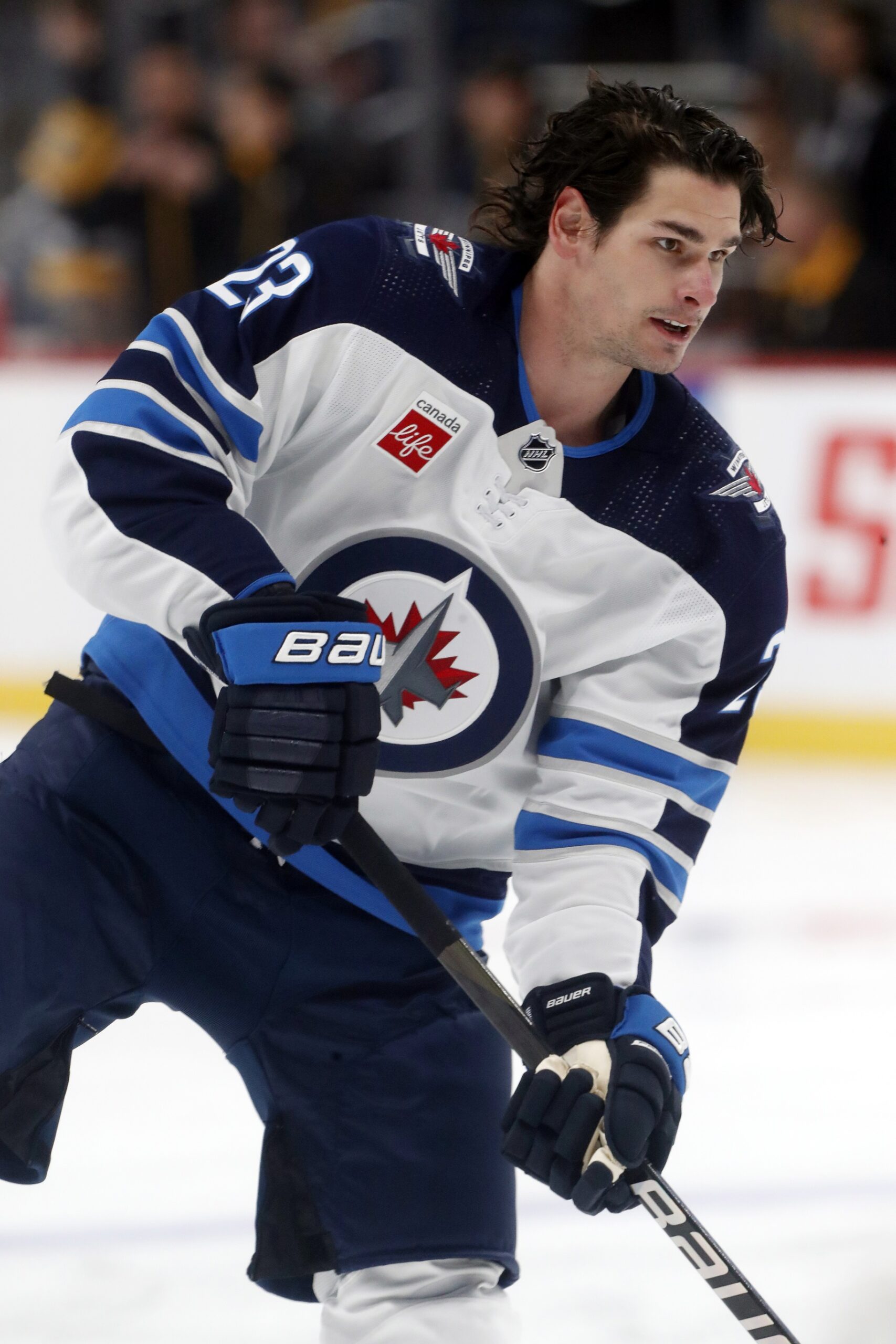 When it comes to Monahan, a lot of it is going to revolve around what he’s looking for. Is he looking to go to a contender? Is he looking to maximize money? Will the term of the contract be the top priority? If he wants a longer-term deal, I think Winnipeg would have a very good chance at keeping him. Monahan had a strong start to the year with Montreal and fit in quite well following the trade. He fits on that roster as it’s currently constructed and Jets GM Kevin Cheveldayoff might be more inclined to offer up a longer-term agreement (despite his injury history) knowing it isn’t always easy attracting talent to Winnipeg. If Monahan gets the term and at least close to the money he’s looking for, I could see him sticking around.
That said, if he wants to go try to play for a contender and is willing to take another short-term deal at a lesser rate to make that happen, then that probably pushes Winnipeg out of things. We’ll see what his top priority will be for his next contract soon enough.
Obviously, we now know the answer to the Bowness question as he announced his retirement soon after this question was posed. That didn’t come as much of a surprise to me for the reasons you noted in the question; this was the logical and expected outcome.
As for Arniel, the question I ask myself is this – is he getting any attention for the other vacancies around the league? While teams don’t exactly divulge this information, it doesn’t seem like it at first glance. So if Arniel isn’t garnering head coaching attention elsewhere, should he really be up for the top job with the Jets? I think he’s a safe short-term pick and might be the favorite to land the role but all else being equal, he wouldn’t be my first choice, especially for a team that’s built to try to win now. I’d be looking for a veteran who might have a shorter shelf life but a proven track record of getting quick results.
SpeakOfTheDevils: Devils said they are going “big-game hunting” this offseason.
Let’s apply this to both the coach and 1A goalie.
Who do they get? Realistically.
Is there a big-game type of coach out there? Of the coaches that are currently available, is there a true headliner? In terms of experience and success, it’s probably Joel Quenneville who may or may not be eligible to coach again. Todd McLellan and Gerard Gallant qualify more as retreads at this point than big-name guys. Craig Berube would be next but I could see him landing in Toronto.
If I was picking their next coach, I’d swing for upside. As a result, I’d go right off the board for the coach (when it comes to who has been linked for the position) and pick Jay Leach as their new bench boss. He’s paid his dues as an assistant and head coach in the minors and now three years as an assistant in Seattle. He finished up his playing career in New Jersey’s organization as well so there’s a bit of familiarity with the market which helps. In terms of ‘upside’ for a coach, he’d be near the top of the list so if they take a big swing, maybe it’s for upside over experience. Having said that, you asked who I think they’ll get, not who I’d pick so for who I think they get, I’ll go with Jay Woodcroft, someone who might still have a perception as a coach with a bit of upside given that he’s still early on in his coaching career.
As for the goalie situation, I think they wind up with Jacob Markstrom. It sounded like some of the money-related hurdles had been cleared closer to the deadline so if they rekindle talks at that point, they should be able to get something done. Calgary’s asking price will probably have to come down given the other netminders that many expect to be available and that will help bridge the gap that existed when talks broke down in March.