
Kraken Fire Head Coach Dave Hakstol
The Kraken are firing head coach Dave Hakstol, Sportsnet’s Elliotte Friedman reports. Assistant coach Paul McFarland will also not return to the team next season, the team confirmed.
Speaking to reporters early last week, general manager Ron Francis declined to confirm whether Hakstol would be back with the team in 2024-25 despite a two-year extension kicking in on July 1. Francis released a statement on Hakstol’s firing today:
I thank Dave for his hard work and dedication to the Kraken franchise. Following our end-of-the-season review, we have decided to make a change at our head coach position. These decisions are never easy, but we feel this is a necessary step to help ensure our team continues to improve and evolve. Dave is a good coach and a terrific person. We wish him and his family all the best. We will begin our search for the Kraken’s next head coach immediately.
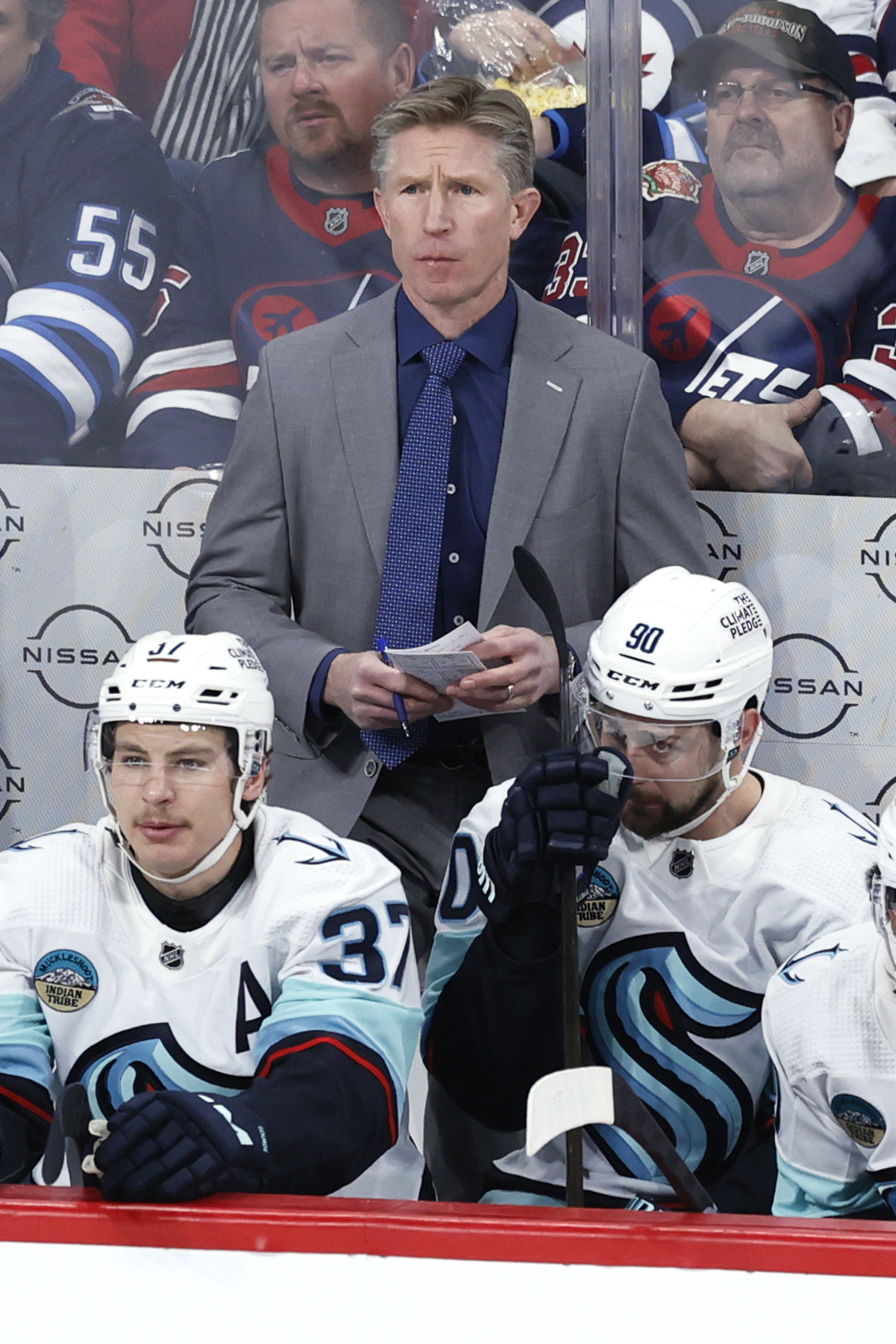 Hakstol, now 55, was hired as the first head coach in Kraken history in June 2021, four months before the puck dropped on their inaugural season. The former Flyers bench boss had been working on Sheldon Keefe‘s bench in Toronto as an assistant after getting fired by Philadelphia in 2018-19, partway through his fourth season with the club.
While the Kraken weren’t able to catch lightning in a bottle like their older expansion siblings, the Golden Knights, they’ve still reached a competitive standard of play in short order. They were nowhere near contention in their inaugural season, finishing with a 27-49-6 record, but the understaffed roster managed decent possession results at even strength in Hakstol’s system and was largely doomed by below-average seasons from goalies Chris Driedger and Philipp Grubauer.
Goaltending didn’t improve much in 2022-23 with Martin Jones entering the fold, but another season of above-average 5-on-5 possession and a second-place 11.6 shooting percentage earned Seattle a 100-point season and, with it, their first playoff berth. Despite missing 40-goal scorer Jared McCann for nearly half of their playoff games, the Kraken upset the defending champion Avalanche in the first round and took the 108-point Stars to seven games in the second before finally bowing out. It showed what the team could do against strong competition with even just average goaltending, supported by Grubauer’s .903 SV% and 2.7 goals saved above expected in 14 games, per MoneyPuck. Hakstol earned a nomination for that year’s Jack Adams Award as a result.
This season saw Joey Daccord give the club some much-needed stability between the pipes, but a major drop in offense (289 GF in 2022-23, 217 GF in 2023-24) doomed the club to a finish just below the .500 mark, 17 points back of a playoff spot. The drop in offense was mainly due to a 2.5% drop in their finishing to 9.1%. Seattle still managed solid possession numbers across the board at 5-on-5, controlling 51.8% of shot attempts, 51.2% of scoring chances and 50.6% of high-danger chances despite top defenseman Vince Dunn and top-six winger André Burakovsky missing significant time with injuries.
Across the board, those results suggest the Kraken are what they’ve been in all three seasons – a solid two-way team without a truly game-breaking offensive talent. It’s hard to fault Hakstol for a roster construction issue, but as Seattle is set to graduate prospects like Ryker Evans and Shane Wright to full-time NHL roles, it’s evident Francis wants a different voice to oversee the club as they shift their aim toward becoming more consistent playoff challengers. They’ll add to an already solid prospect pool with the eighth overall pick in this year’s draft, although that position may change based on the results of next week’s draft lottery.
Luckily for Hakstol, there are plenty of vacancies on the market that he could be considered for. The Blues, Devils, Kings, Senators and Sharks either fired their coach after the season ended or finished the campaign with interim bench bosses without a full-time replacement named.
For Seattle, it’s fair to wonder if Hakstol’s replacement may come from within. Assistant Jay Leach has drawn documented interest for head coaching vacancies in the past and will do so again with multiple positions open. If not, though, the recent rash of coach firings leaves Francis with an experienced list to pick from, as well as multiple up-and-coming candidates like University of Denver head coach David Carle.
Like Hakstol, McFarland had been with the Kraken since their inception. He was previously the GM and head coach of the Ontario Hockey League’s Kingston Frontenacs and has held assistant roles with the Maple Leafs and Panthers.
Image courtesy of USA Today Sports.
Canucks Without Casey DeSmith For Game 4, Arturs Silovs Starts
Just one week into the postseason, the Canucks are down to their third-string goalie. Latvian rookie Arturs Silovs is expected to start Game 4 against the Predators this afternoon after Casey DeSmith sustained an undisclosed injury in Friday’s Game 3 win, reports Daily Faceoff’s Frank Seravalli.
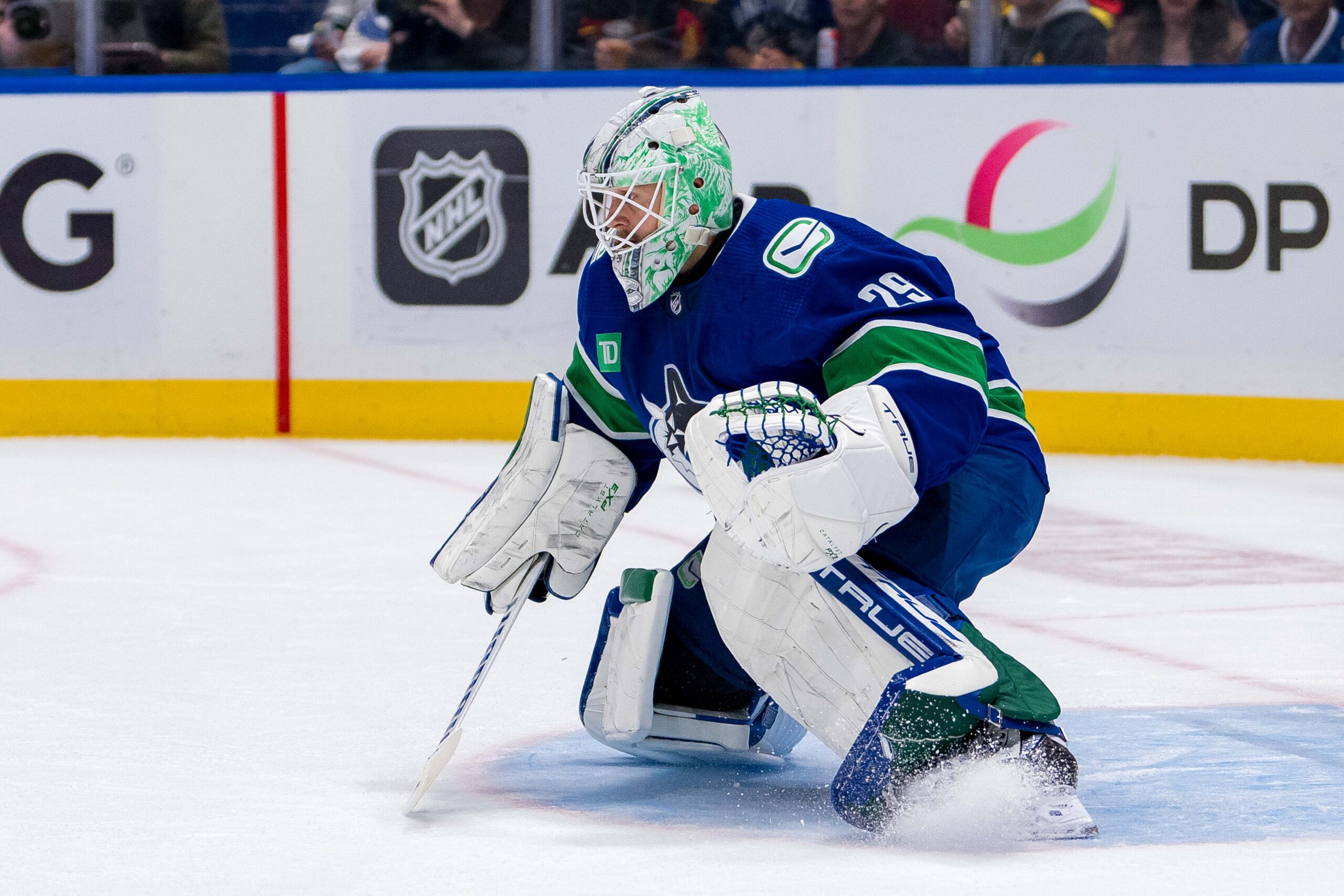 DeSmith’s injury occurred late in Game 3 and is unrelated to the hit he took from Predators center Michael McCarron in the first period that resulted in a minor penalty and a fine for the latter. He’s listed as day-to-day and remains an option for Game 5 on Tuesday, per Seravalli. Vancouver will dress 24-year-old Belarusian netminder Nikita Tolopilo from AHL Abbotsford to backup Silovs today – he was rostered under emergency conditions earlier in the week.
Vancouver is already without starter and likely Vezina Trophy nominee Thatcher Demko, thanks to a suspected knee injury in Game 1. He’s listed as week-to-week, and there’s no consensus on when he may become available.
DeSmith did well under unexpected pressure, stopping 41 of the 45 shots he faced for a .911 SV% and 2.02 GAA. He made 29 saves on 30 shots to buoy the Canucks in Game 3, who won 2-1 despite only getting 12 shots through to Preds netminder Juuse Saros. The 32-year-old had only one playoff start entering Game 2 of this series, coming in 2022 with the Penguins in Game 1 of their first-round loss to the Rangers. He stopped 48 of 51 shots faced before leaving due to injury in the first overtime – Pittsburgh eventually won 4-3 in 3OT with backup Louis Domingue stopping all 17 Rangers shots he faced.
The Canucks now turn to Silovs, who spent most of the year with Abbotsford but made four starts down the stretch while Demko missed multiple weeks with an unrelated knee injury. Vancouver went 3-0-1 in games Silovs started, but the 23-year-old didn’t post the prettiest numbers, logging a .881 SV%. Shot quality data points to that being an artificially low number, though, as the Canucks didn’t give him much help defensively – Silovs saved exactly as many goals as expected, per MoneyPuck. The 2019 sixth-round pick had a .907 SV%, 2.74 GAA and four shutouts in 34 showings for Abbotsford this year, compiling a 16-11-6 record.
While inexperienced at the NHL level, Silovs is no stranger to performing well in big moments. He had a strong .914 SV% in two postseason games for Abbotsford last year and has been exceptional on the international stage, logging a .929 SV% and 1.96 GAA in 14 appearances for Latvia at the 2022 and 2023 World Championships. He was named the MVP of last year’s tournament, backstopping his country to a bronze medal – their first ever at the event.
Backing up Silovs is Tolopilo, an undrafted free-agent pickup last summer out of the second tier of Swedish pro hockey. He’s had similar numbers to Silovs with Abbotsford this year, earning a .905 SV% and 2.83 GAA in 35 appearances.
Image courtesy of USA Today Sports.
Lightning To Activate Mikhail Sergachev From LTIR, Expected For Game 4
Lightning defenseman Mikhail Sergachev is taking normal line rushes during warmup ahead of tonight’s must-win Game 4 against the Panthers, indicating he’s been activated off long-term injured reserve, per the team’s Chris Krenn. Sergachev has been out since fracturing his fibula and tibia during a game on Feb. 7, and head coach Jon Cooper said earlier this month that he wasn’t expected back until the second round at the earliest. The team later confirmed he’ll be entering the lineup as they try to stave off early elimination against their cross-state rivals.
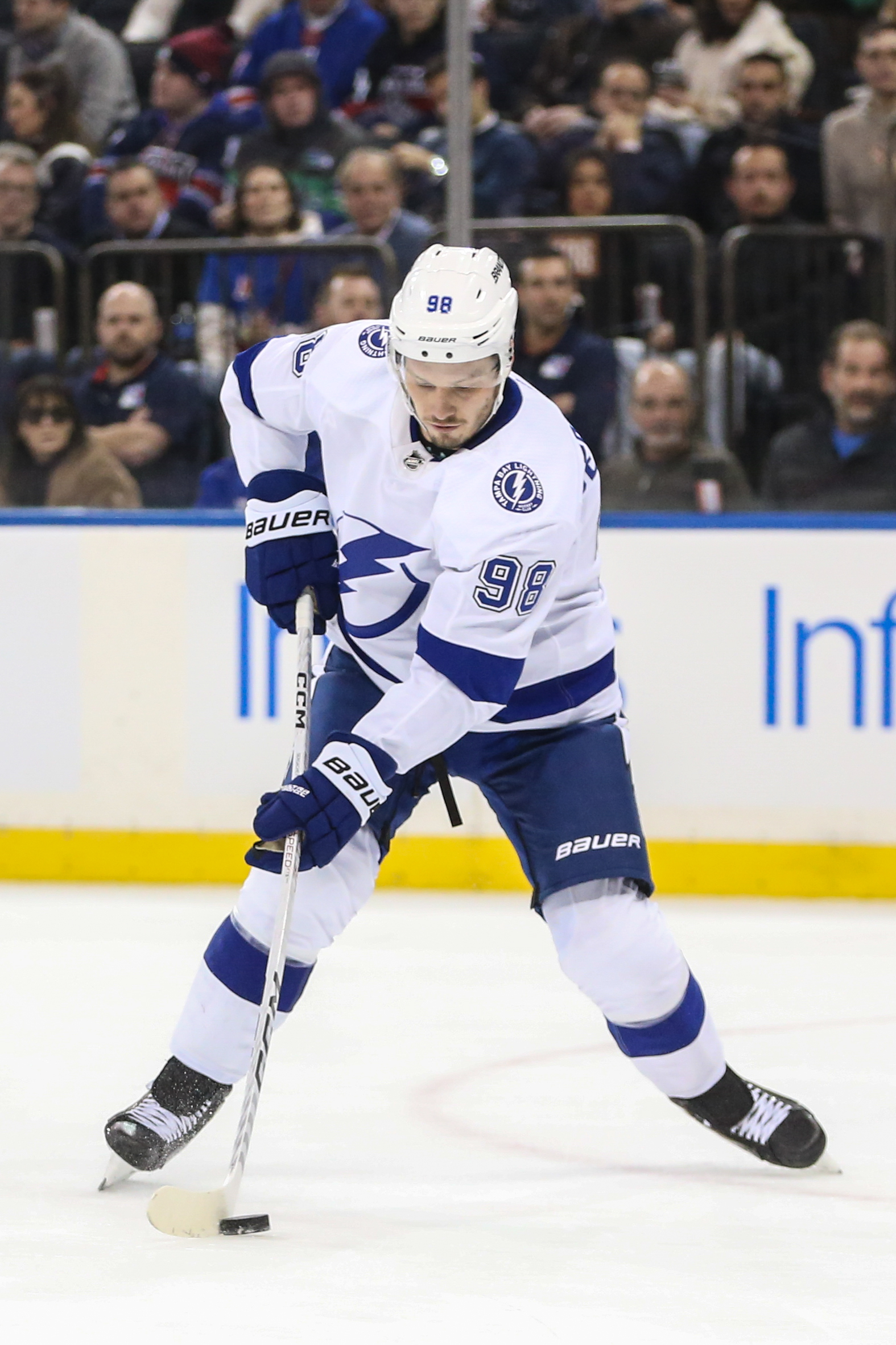 Sergachev, 25, hasn’t played a full game in over four months. He sustained a lower-body injury against the Blues on Dec. 19 that kept him out of game action through the All-Star break and sustained the freak double-break in his left leg while attempting to lay a hit on Rangers winger Alexis Lafrenière in his first game back.
Those injuries limited the top-four fixture to 34 appearances in the regular season, his fewest as a Lightning. Before his initial injury, Sergachev was struggling to recapture his 2022-23 form that earned him Norris Trophy consideration for the first time. Offensively, his points per game pace dropped from 0.81 to 0.56, and his possession metrics dipped slightly as well. The latter was to be expected, though, after a salary cap crunch forced the Lightning to part with many key depth players after last season.
He was actually on the ice for fewer expected goals against per game at even strength than he was last season, something you wouldn’t glean from his -16 rating. That was tanked due to the majority of Sergachev’s playing time coming while starting netminder Andrei Vasilevskiy was out recovering from preseason back surgery, forcing inexperienced backup Jonas Johansson into most of the starts to begin the year.
Line rushes indicate he’ll be paired with Erik Černák as the Lightning begin to try and climb out of a 3-0 series deficit. The two were routinely partners when Sergachev was healthy this season, playing 238 minutes together in 31 games. Per MoneyPuck, the pair controlled 48% of expected goals when deployed together.
They’ll operate as Cooper’s second defense pairing behind Victor Hedman and Mathew Dumba in Game 4. Dumba moves up alongside Hedman as Darren Raddysh is a late scratch with an undisclosed injury. Raddysh took just two shifts in the third period of Game 3.
Photo courtesy of USA Today Sports.
Bob Cole Passes Away
Iconic Canadian play-by-play voice Bob Cole passed away Wednesday night at age 90, his daughter Megan told CBC News today.
Cole was regarded as one of the most legendary voices in hockey broadcasting history on both sides of the border, even if all his work was done for Canadian networks. He had a remarkable 50-year career calling games for both CBC and Rogers on television and a few seasons on radio in his early years starting in 1969. He was inducted into the Hockey Hall of Fame in 1996 and rightly received the Hall’s Foster Hewitt Memorial Award for broadcasting excellence that year, also receiving the Academy of Canadian Cinema and Television’s Lifetime Achievement Award at the 10th Canadian Screen Awards in 2022.
The Newfoundland and Labrador native was the voice of multiple Canadian generations, working as the lead play-by-play announcer for CBC’s “Hockey Night in Canada” from 1980 to 2008, as well as their coverage of the Stanley Cup Final, until Jim Hughson was named his successor. He returned to coverage for Sportsnet in 2014, shortly after Rogers acquired the exclusive national rights for the NHL in Canada, where he remained until he called his last game in February 2019, a regular-season match between the Canadiens and Maple Leafs.
Perhaps even more consequential in the fabric of Canadian society were his calls for seminal moments internationally. He was on the air for Canada’s victory over the United States in the gold medal game of the 2002 Winter Olympics in Salt Lake City (video link), as well as the final game of the 1972 Summit Series between the Soviet Union’s national team and an NHL All-Star contingent that was the most-watched sporting event in Canada for decades.
All of us on the PHR team send our deepest condolences to Cole’s family and friends and to all those who benefited from his decades of service to the sport and the broadcasting field.
Blackhawks Sign Alex Vlasic To Six-Year Extension
11:10 a.m.: Per PuckPedia, Vlasic has a 10-team no-trade list in 2028-29 and 2029-30, the two seasons of the deal he’d otherwise be eligible for unrestricted free agency. The full breakdown of the contract is as follows:
2024-25: $1.5MM base salary + $4.5MM signing bonus
2025-26: $1.8MM base salary + $4MM signing bonus
2026-27: $4.3MM base salary
2027-28: $1.3MM base salary + $3MM signing bonus
2028-29: $1.6MM base salary + $2MM signing bonus
2029-30: $1.6MM base salary + $2MM signing bonus
10:04 a.m.: The Blackhawks have signed promising defenseman Alex Vlasic to a six-year extension with a $4.6MM cap hit, The Athletic’s Scott Powers reports Thursday. The deal, which will pay Vlasic $27.6MM in total, walks him to unrestricted free agency in 2030. The team later confirmed the terms of the deal as initially reported.
Vlasic, 23 in June, was the Blackhawks’ second-round pick in 2019 after they took Kirby Dach third overall. That year, he was the top shutdown defender for the USNTDP’s U-18 squad and was viewed as a consensus late first/early second-round choice. However, he fell a bit to Chicago at 43rd overall. He then embarked on a three-year stint at Boston University, where the 6’6″ blue-liner quietly continued to improve his shutdown game while managing four goals and 20 points in 82 games. His career +1 rating there wasn’t all that impressive, but BU was a rather middling program during his time there and never finished higher than fifth in the Hockey East conference.
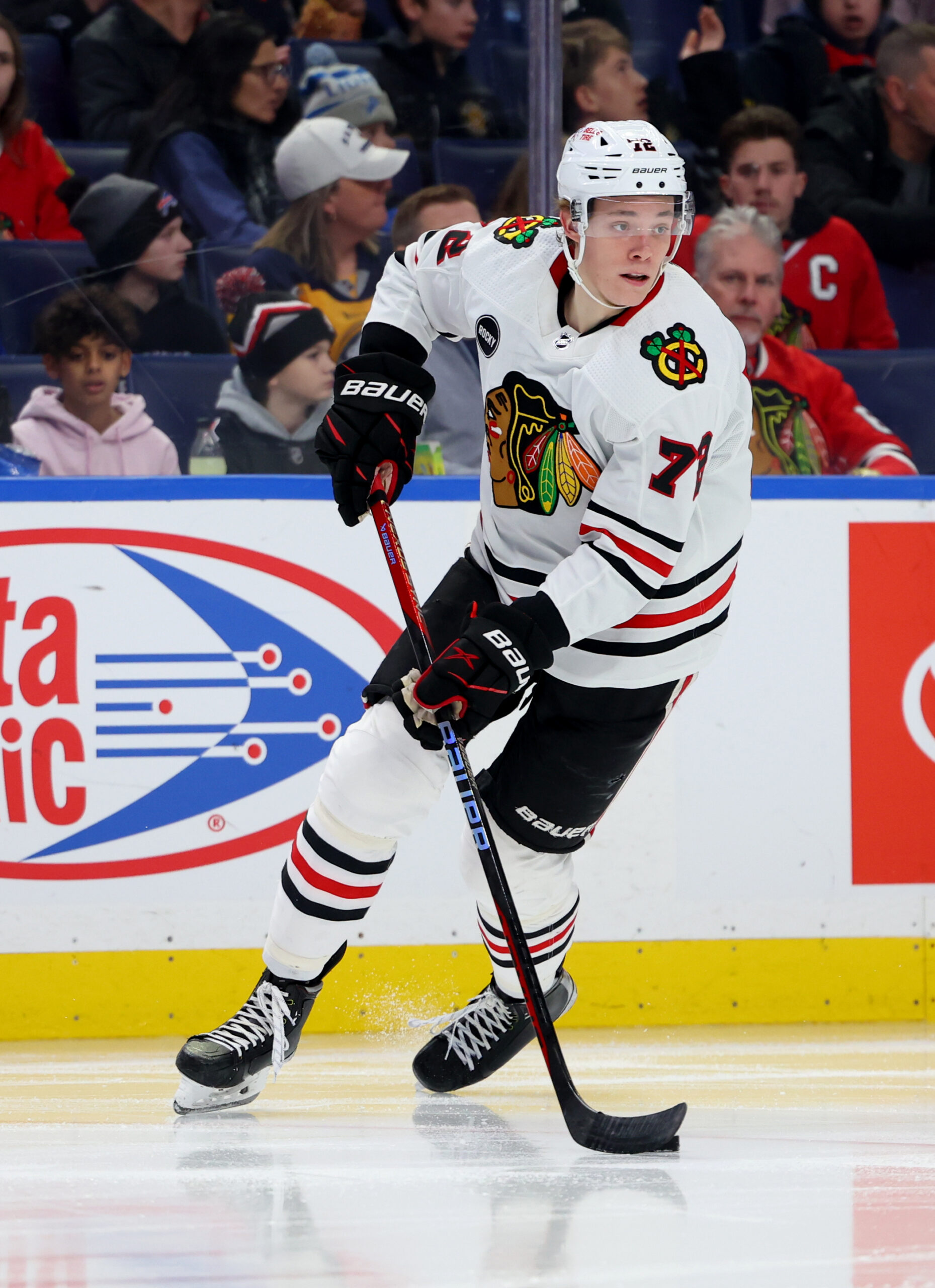 The Chicago native turned pro with his hometown club after his junior season, inking a three-year entry-level contract in March 2022 that kicked in immediately. He played 15 games for the Hawks down the stretch, recording his first two NHL points (one goal, one assist) with a -2 rating while averaging 14:19 per game. His possession metrics were decent on a rebuilding club that won just twice in regulation in 20 games after he signed, posting a 44.0 CF% and 54.9 xGF% at even strength, per Hockey Reference. It wasn’t enough to earn him a full-time spot on their 2022-23 roster, playing in only six games last year, but he did post a +12 rating to lead all AHL Rockford defensemen, along with 19 points in 56 games.
He landed an opening night roster spot this season and never looked back. Vlasic operated in a number-one capacity for stretches of the season when Seth Jones was sidelined with injury, finishing second behind Jones in average time on ice (21:29). He put up two goals and 16 points in 76 games in his first full NHL season, adding on a very respectable -4 rating, 44.9 CF%, and 47.7 xGF% while playing shutdown matchups for one of the weakest rosters in the league. When he wasn’t controlling possession himself, he was competent at keeping the puck out of dangerous areas, leading the team with 148 blocks.
Vlasic will never be a point producer, but his linear development and strong showing this season in difficult minutes are exemplary hints that he can be a high-end, top-four complementary shutdown defender for years to come. There haven’t been any major road bumps in his development since his draft day. He navigated the obstacles of the COVID-19 pandemic quite well and hit his likely ceiling earlier than most defenders.
In getting Vlasic signed long-term early on, Blackhawks GM Kyle Davidson continues the recent trend of early long-term commitments to developing defenders. The Sabres’ Owen Power and the Senators’ Jake Sanderson both signed long-term deals after their first full NHL seasons in 2022-23, although they both had one year remaining on their entry-level deals at the time. Vlasic was headed for restricted free agency this summer. It’s an extremely comparable extension to another young Buffalo defender, 24-year-old shutdown man Mattias Samuelsson, who inked a seven-year, $30MM ($4.29MM AAV) agreement in October 2022.
Vlasic joins Jones as the only Blackhawks skaters signed past 2026. Their deals will expire simultaneously after the 2029-30 campaign. Before today’s news, Jones and veteran Connor Murphy were the only Chicago defenders signed to one-way contracts for next season. Vlasic and Jones are expected to reprise their role as Chicago’s top defense pairing in 2024-25.
Image courtesy of USA Today Sports.
Sharks Fire Head Coach David Quinn
The Sharks have relieved head coach David Quinn of his duties, per a team announcement Wednesday. San Jose’s head athletic trainer Ray Tufts will also not return next season, per Curtis Pashelka of The Mercury News.
GM Mike Grier issued the following statement:
After going through our end of the season process of internal meetings and evaluating where our team is at and where we want our group to go, we have made the difficult decision to make a change at the head coach position. David is a good coach and an even better person. I would like to personally thank him for his hard work over these past two seasons. He and his staff did an admirable job under some difficult circumstances, and I sincerely appreciate how they handled the situation.
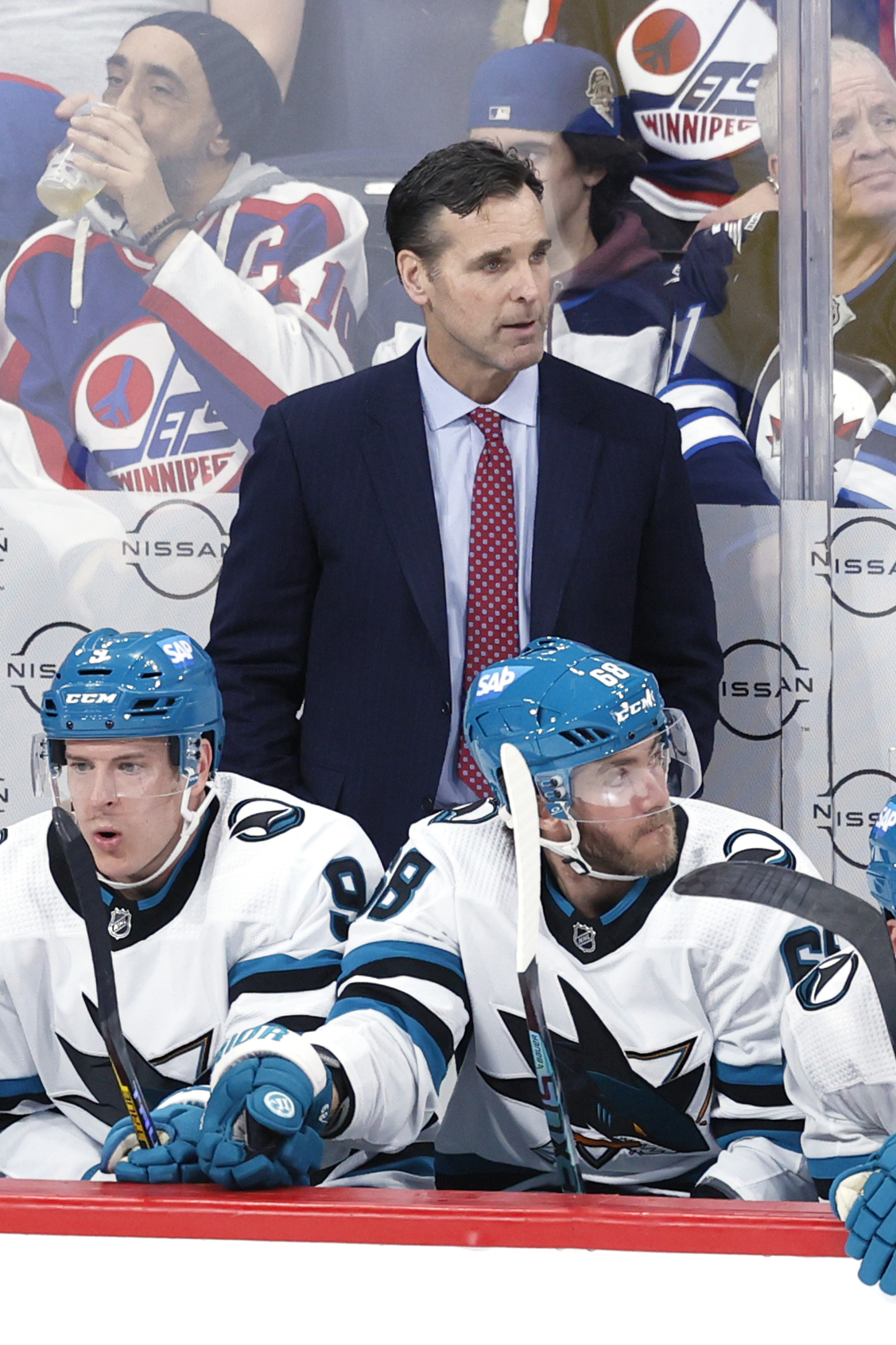 Quinn, 57, lasted two seasons behind the San Jose bench. His 41-98-25 record was poor but not much worse than expected for the rebuilding club. He’d signed a three-year contract with the club in 2022 to replace Bob Boughner, who was canned after guiding the club to three straight seasons under the .500 mark, the franchise’s longest such stretch since their first season above the mark in 1999-00.
This season was exceptionally difficult for Quinn and the Sharks. With a 19-54-9 record, San Jose became the first team in the salary cap era not to reach 20 wins in an 82-game season. Despite having near league-average goaltending from Mackenzie Blackwood and Kaapo Kähkönen, who combined for 68 starts, the Sharks allowed 326 goals – the third most in the salary cap era behind last year’s Blue Jackets and Ducks squads. Considering their top four defenders by average time on ice this season were Mario Ferraro, Henry Thrun, Jan Rutta and Kyle Burroughs, though, it’s difficult to make an argument that Quinn’s coaching was the primary cause.
Quinn’s lone previous role leading an NHL bench was with the Rangers from 2019 to 2021, leading their retool in the first few seasons of Alexis Lafrenière‘s and Kaapo Kakko‘s careers. The team hovered around the .500 mark throughout his time there, posting a 96-87-25 record, including two COVID-shortened seasons. After missing out on a playoff spot by 11 points in 2020-21 in the temporary East Division, the Rangers sacked him with two years left on his contract. He was earning cashflow from both New York and San Jose last season.
Speaking to reporters last weekend, Grier didn’t tip his hand either way regarding Quinn’s future, saying he was still in the evaluation process. He said Quinn and his staff “did a good job communicating and motivating the players throughout the year” and “they should be proud of” their efforts behind what he admitted was a banged-up, understaffed roster (via Pashelka).
Those comments weren’t dissimilar to what Kraken GM Ron Francis said Monday about the future of head coach Dave Hakstol, saying they were still evaluating his future after the club missed the playoffs. He’s already inked a two-year extension that kicks in next season.
The Sharks were expected to finish 32nd in the league entering the season. Most betting markets set the over/under on their points at 67.5 during the preseason. Still, a historically bad campaign rarely results in coaches being brought back. Anaheim and Columbus parted ways with their head coaches after their sieve-like seasons last year. However, the Red Wings notably retained Jeff Blashill behind the bench for a few more years after finishing with a .275 points percentage in the stunted 2019-20 season, still the worst in the salary cap era.
Those odds were set before captain Logan Couture was lost for nearly the whole season due to osteitis pubis, though. Considering star center Tomáš Hertl also played just 48 games before being shipped to the Golden Knights at the trade deadline, there was incredibly little for Quinn to work, especially for the back half of the campaign.
There were some things Quinn should be applauded for. He helped coax a bounce-back season out of center Mikael Granlund, who led the team with 60 points and 69 games and averaged 20:58 per game, a career-high. His 0.87 points per game tied his 2017-18 showing with the Wild for the best offensive performance of his career. He also oversaw a strong rookie campaign from 2021 seventh-overall pick William Eklund, who had 16 goals and 45 points in 80 games, including 15 points in his last 14 appearances.
Nevertheless, the Sharks will move on from Quinn with one season remaining on his contract. They’ll scour the market for his replacement for 2024-25, a squad they hope will be led by presumptive 2024 first-overall pick Macklin Celebrini.
The organization also parts ways with Tufts, who held his role with the club for 26 seasons. The 59-year-old also served as the head athletic trainer for Team USA at the 2010 Winter Olympics.
Image courtesy of USA Today Sports.
Jakub Voráček Announces Retirement From Playing Career
Long-time Philadelphia Flyers winger Jakub Voráček has announced his retirement from playing in an exclusive March interview with Martina Jandová of Czechia’s Showtime Program. The 1,000-game veteran cited 12 concussions as the reason he can no longer play, describing four of the injuries as, “heavy”. This announcement brings an official end to Voracek’s career, something many speculated would happen after he accepted a job supporting Jaromir Jagr‘s Kladno at the start of the season. Voráček said, “I started helping with the A team. [Jagr] called me in September to ask if I could help. So I decided to try it part-time. I enjoy it a lot. We’ll see what happens in the future, but I can’t go on the ice anymore.”
Voráček will retire as a member of the Arizona Coyotes despite never suiting up with the team. His rights were traded away from the Columbus Blue Jackets at last year’s Trade Deadline, with Columbus receiving Jon Gillies in return for the cap dump. Columbus drafted Voráček with the seventh-overall pick in the 2007 NHL Draft, taking him in a top 10 that also featured Patrick Kane, James van Riemsdyk, and Logan Couture. Voráček played one more season in the QMJHL – the league he was drafted out of – before debuting with the Blue Jackets in the 2008-09 season. His rookie year brought just nine goals, but still a solid 38 points, in 80 games.
Voráček was the focal piece of the 2011 blockbuster trade that sent a then 27-year-old Jeff Carter to Columbus for a 21-year-old Voráček and the draft picks used to select Sean Couturier and Nick Cousins. It was in Philadelphia that Voráček built his legacy, recording six separate 20-goal seasons and consistently rivaling 50 or 60 points. His career-year came in 2017-18, when he managed 20 goals and 85 points in just 82 games.
Columbus would re-acquire Voráček in 2021, sending Cam Atkinson to Philadelphia. Voráček would play in 90 more games with the Blue Jackets, scoring 68 points, before his career came to a close midway through the 2022-23 season. Voráček totaled 1,058 games in the NHL, netting 223 goals and 806 points. He remains the third-highest scoring Czech player in NHL history, behind just Jagr and Patrik Elias.
Sabres Hire Lindy Ruff As Next Head Coach
The Buffalo Sabres have hired Lindy Ruff to be their next head coach, per Sportsnet’s Elliotte Friedman (Twitter link). Ruff most previously served behind the New Jersey Devils bench, before being dismissed by the team on March 4th. He now returns to the Buffalo organization, where he received the first head coaching opportunity of his career in 1997. Ruff would serve 16 years behind Buffalo’s bench, becoming the longest-tenured, active coach in the NHL – and then the second longest across all four major sports leagues behind Gregg Popovich – before he was dismissed by the Sabres in February of 2013.
Ruff led the Sabres to the postseason eight different times over his tenure, including twice in his final three years. But that success wasn’t enough, with the team deciding to go a different direction just 17 games into the lockout season of 2013. Buffalo hasn’t seen a postseason berth since, extending the record for the longest playoff drought in NHL history at 13 seasons this year. That’s a dismal record to have, though it seems Buffalo’s worst days are behind them. They moved away from long-time general manager Jason Botterill in 2019-20 and have since brought in multiple key players, with incumbent Kevyn Adams adding Bowen Byram, Devon Levi, Jack Quinn, and John-Jason Peterka. He’s also built out the team’s prospect room, drafting Zach Benson, Jiri Kulich, and Matthew Savoie in just the last two years.
Adams has had plenty of time to put the Sabres on a new path, even if it’s come at the cost of a few playoff races. But now, coming off the heels of their two highest-scoring seasons since Ruff left, the Sabres are ready to pursue the postseason
Adams has had plenty of time to chart a new course for the Sabres, and it’s clearly paid off – with the last two years marking Buffalo’s two highest-scoring seasons since Ruff left. But their woes now seem to be a question of performance, instead of talent, and there’s no doubt that the right system could spark talent throughout the Sabres lineup. They seem ready to lean into that talent with this move – gearing up to pursue the playoffs in the only way they know how: with Lindy Ruff behind the bench.
Golden Knights Activate Mark Stone, William Carrier From LTIR
3:30 PM: The Vegas Golden Knights have officially activated both Mark Stone and William Carrier off of LTIR, per CapFriendly (Twitter link). The moves bring the team back to full health just in time for the postseason.
9:45 AM: The Golden Knights are expected to activate captain Mark Stone off long-term injured reserve ahead of tonight’s Game 1 against the Stars, reports ESPN’s Emily Kaplan. He’ll likely return to the lineup to kick off the first-round series after missing two months with a Grade 3 spleen laceration.
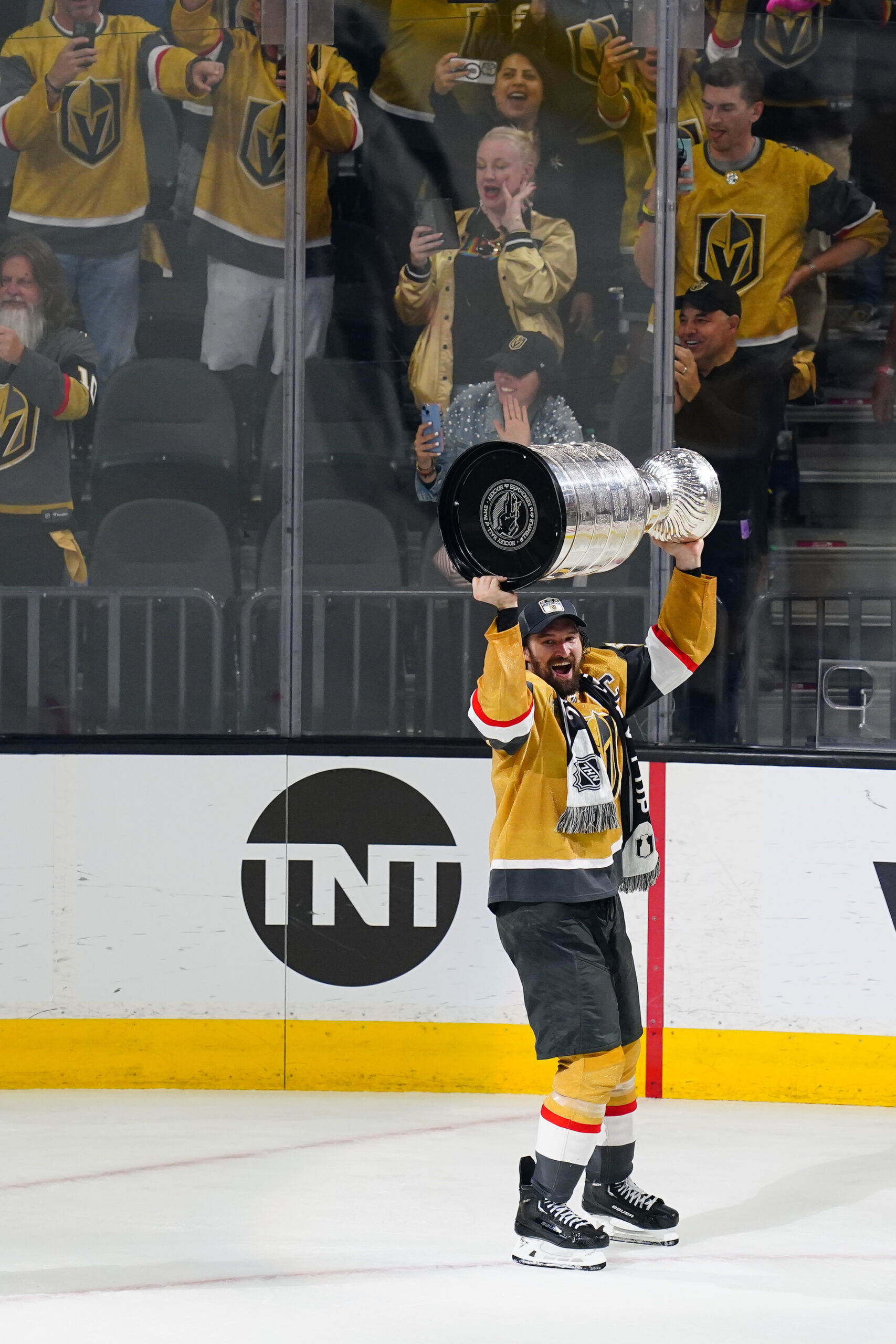 The timing of Stone’s injury and LTIR placements over the past few seasons have drawn skepticism from nearly every fanbase in the league. A mid-February LTIR placement followed by an activation just before the first playoff game has now happened three seasons in a row, although his absences in 2022 and 2023 were due to lingering back injuries. Speaking to The Athletic’s Jesse Granger over the weekend, Vegas GM Kelly McCrimmon offered his explanation/defense:
I want to just touch on a couple of things with it, because there has been a lot of speculation and a lot of insinuation about his injury. The NHL is 100 percent involved in any of these (LTIR) situations involving teams. Their chief medical director speaks to the surgeon, speaks to our medical team, speaks to our athletic therapist, has access to every document that is filed and every diagnostic test that is given. They have access to all of that information. That’s what keeps the system legitimate. They are the people that are fully involved in this. So, I don’t know if maybe the fans or the media understand the degree to which these injuries are scrutinized.
Stone sustained the laceration against the Predators on February 20. He hasn’t played since, although he’s ramped up his workload in practice over the past couple of weeks. A Grade 3 splenic injury certainly qualifies as severe but may not result in an extremely long-term absence – medical literature indicates these can be treated more conservatively than a Grade 4 or 5, the latter of which indicates a wholly ruptured/shattered spleen. McCrimmon says team doctors told him after Stone’s injury that the laceration could carry something as lengthy as a three-to-six-month timeline but could swing less if his recovery went well.
Vegas isn’t the same team without their captain. They went 13-11-2 after his injury, dropping to the second wild-card spot in the Western Conference and earning a date with conference-champion Dallas to open postseason play.
Still, placing his $9.5MM cap hit on LTIR allowed them to go big-game hunting at the trade deadline, picking up Noah Hanifin, Tomáš Hertl and Anthony Mantha with varying degrees of salary retention. Those will be significant reinforcements as Vegas attempts to be the second team this decade to win back-to-back Stanley Cups and the first eight-seed to win since the Kings in 2012.
Stone still managed to finish fourth on the team in scoring with 53 points (16 goals, 37 assists) in 56 games and second on the team in points per game behind Jack Eichel. His defensive impacts weren’t the extremely stout numbers that have earned him Selke nominations in the past, but write off the 31-year-old at your own risk. He erupted for 11 goals and 24 points in 22 postseason games last year, averaging 18:55 per game as Vegas won the Cup only six years into their existence. Line rushes over the weekend indicated that Stone is expected to play on the Knights’ second line, centered by Hertl and flanked by Chandler Stephenson on the left.
Image courtesy of USA Today Sports.
Ryan Johansen Not Expected To Play In 2024-25
Flyers center Ryan Johansen isn’t expected to play before his contract expires at the end of the 2024-25 season, GM Daniel Brière told reporters Friday (including Jon Bailey of Philly Hockey Now).
Johansen was acquired from the Avalanche as part of the Sean Walker trade before the trade deadline, and he was waived the following day for assignment to AHL Lehigh Valley. He informed the Flyers after the trade that he was dealing with a hip injury, which was subsequently confirmed by the team’s medical staff, resulting in his AHL assignment being reversed. The 31-year-old remained on the active roster for the rest of the season but did not play in a game.
Brière said that he didn’t ever envision Johansen suiting up for the Flyers after the trade, although that was before he had knowledge of the injury. It’s a long-term absence, as implied by Brière’s full statement today, which means the team can’t execute a buyout on the final season of his contract:
All I can tell you is I don’t expect him to be back. I don’t know, exactly, the situation. We’re dealing on the medical side with him. The thing for him is getting him back to be able to play at this time. He doesn’t think he can play hockey. I wish I had a better answer for you. We need to get him better to figure out if there’s even a remote chance of him dressing for the organization.
Johansen’s contract has been moved twice in the past calendar year. Entering this season at an $8MM cap hit for two more years with the Predators, Nashville traded him to Colorado last summer at 50% retention. The Avs hoped he would be able to plug their second-line center vacancy behind Nathan MacKinnon, but the former 71-point scorer struggled mightily in the role, posting just 13 goals and 23 points in 63 games before the team cut ties and traded him and his reduced $4MM cap hit to Philadelphia. Johansen didn’t miss any time in Colorado with his apparently severe hip injury.
He was a negative possession player during his time in Colorado and averaged only 13:39 per game, although he was still strong in the faceoff dot with a 53.1 FOW%. Still, his offensive production and average ice time was lower than all four of the Flyers’ regular centers (Sean Couturier, Morgan Frost, Scott Laughton, Ryan Poehling) last season, and he wouldn’t have had a fit on the team even if healthy.
The Flyers may be unable to rid themselves of the final year of Johansen’s contract entirely. But if his hip injury stretches into next season as expected, they can place his $4MM cap hit on long-term injured reserve and gain cap relief that way, much like they did with defenseman Ryan Ellis‘ $6.25MM cap hit this season. Ellis, acquired from Nashville as part of a three-team trade in 2021, had five points in four games for the Flyers before sustaining a career-ending pelvic injury.