
Oilers Sign Jason Dickinson To Five-Year Extension
The Oilers announced Sunday that center Jason Dickinson has signed a five-year, $20MM extension with a $4MM cap hit. Mark Spector of Sportsnet had reported Saturday there was “very positive movement” toward an extension that would keep him with the Oilers and off this summer’s unrestricted free agent market. PuckPedia reports the breakdown of the deal is as follows:
| Year | NHL Salary | Signing Bonus | Trade Protection |
| 2026-27 | $2.5MM | $1.5MM | NMC |
| 2027-28 | $2.5MM | $1.5MM | NMC |
| 2028-29 | $2.5MM | $1.5MM | NMC |
| 2029-30 | $2.5MM | $1.5MM | 16-team NTC |
| 2030-31 | $3MM | $1MM | 16-team NTC |
Edmonton is likely to announce another pending UFA extension this week while also solidifying their successor to Kris Knoblauch behind the bench, Spector added. There’s now only 10 days until the opening of free agency with Connor Ingram, Connor Murphy, and Jack Roslovic among the several other names the Oilers are at risk of losing to the open market.
It’s no surprise general manager Stan Bowman diverted significant resources toward retaining Dickinson. He paid a steep price to acquire the 30-year-old bottom-six center from the Blackhawks at the trade deadline, parting ways with a first-round pick in next year’s draft to bring in both him and Colton Dach.
Still, his performance with the Oilers down the stretch makes the choice to retain him questionable. Brought in for defensive help, Dickinson posted the worst possession numbers of his career in his 17-game stretch with Edmonton to end the regular season. Averaging over 15 minutes per game, the Oilers controlled just 39.5% of shot attempts with Dickinson on the ice at 5-on-5 while he provided just one goal and three assists. He was more successful offensively in the postseason, recording a pair of goals and an assist in four games in their first-round loss to the Ducks, but was in and out of the lineup due to a lingering leg injury he sustained at the end of the regular season.
Edmonton is down to over $10.5MM in cap space with five roster spots to fill, per PuckPedia. Dickinson’s strong defensive performance over the last few seasons in Chicago had him projected to land him a four-year deal just north of $5MM annually on the open market this summer, AFP Analytics projects. Edmonton gave him an additional year of term to save a bit on cap, but that’s still a hefty commitment to a player who’s averaged just nine goals and 22 points per 82 games over the past two seasons, especially on an Edmonton club that already struggles to generate offense from its bottom six.
The Oilers have handed out some ill-advised extensions to aging bottom-six pieces recently, namely Adam Henrique – another pending UFA. They’ll hope the same pattern doesn’t repeat with Dickinson, who will be 35 years old when his new deal expires in 2031.
Oilers Sign Connor Ungar To One-Year Contract
According to a team announcement, the Edmonton Oilers have signed netminder Connor Ungar to a one-year, two-way contract for the 2026-27 season. Ungar’s new deal will pay him $850K at the NHL level.
Ungar, 24, has been with the Oilers organization for the last several years. A product of the WHL’s Moose Jaw Warriors, Red Deer Rebels, and Brandon Wheat Kings, Ungar finished his final Major Junior year with a 26-7-0 record in 38 games with a .925 SV% and 2.58 GAA during the 2022-23 season. Ungar backstopped the Warriors as far as the WHL Conference Semifinals, but they were ultimately defeated by the Winnipeg Ice in six games.
After a one-year stint with Brock University in St. Catharines, ON, Ungar has been playing at some level in the Oilers organization. His first professional season was spent entirely with the ECHL’s Fort Wayne Komets, managing a 19-12-4 record in 35 games with a .903 SV% and 2.74 GAA.
This past season, Ungar moved around quite a bit in the ECHL, again suiting up for the Komets while also appearing in games for the Greensboro Gargoyles and the Orlando Solar Bears. Additionally, he performed exceptionally throughout his first few games with the AHL’s Bakersfield Condors, producing a 9-2-2 record in 13 games with a .923 SV% and 2.51 GAA.
Given his debut with the club this past season, Ungar could become the full-time backup for the Condors next season. It’s unlikely that the Oilers have any interest in re-signing Calvin Pickard, but they also have Matt Tomkins signed through next season.
Oilers Cleared To Hire Mike Babcock After Investigation
June 18th: Less than two weeks later, the NHL has finished its investigation into any and all wrongdoing during Babcock’s time with the Blue Jackets. According to an announcement, Babcock has been cleared to join the Oilers, saying, “The League has completed its review of Mike Babcock’s tenure in Columbus, and of certain alleged conduct associated therewith. Our investigation has concluded that, even in a light least favorable to Mr. Babcock, there is no current basis to restrict his employment in the League.”
June 8th: According to TSN’s Darren Dreger, the Edmonton Oilers are consulting with the NHLPA to see if any objections need to be resolved if they were to hire Mike Babcock as their next head coach. Edmonton’s inquiry to the NHLPA about a potential investigation suggests their interest in Babcock is quite serious.
Dreger later added that if an investigation is warranted, the NHL would manage it. TSN’s Pierre LeBrun added that if the Oilers were to hire Babcock, former Los Angeles Kings interim head coach D.J. Smith would likely join his staff.
There are a lot of “ifs” to work through, but it would obviously be one of the most controversial coaching hires in recent memory if Edmonton were to hire Babcock. Despite his tremendous success with the Mighty Ducks of Anaheim and the Detroit Red Wings, Babcock has experienced unceremonious endings to his tenures with the Toronto Maple Leafs and the Columbus Blue Jackets, thanks to multiple scandals.
A significant part of this began during his time with the Red Wings. In 2019, former Red Wing Johan Franzen called Babcock “the worst person I’ve ever met” in an interview with Helene St. James of the Detroit Free Press. Veteran defenseman Chris Chelios added that Babcock verbally abused Franzen to the point of the latter suffering a nervous breakdown. Additionally, during the 2010-11 season, Babcock made Mike Modano a healthy scratch on multiple occasions at the end of the season, causing the legend to finish one game shy of 1,500 games played.
Then came the Mitch Marner incident. A year into an eight-year, $50MM contract with the Maple Leafs, Babcock asked Marner, who was a rookie at the time, to rank his teammates from first to last in work ethic. The stunt understandably angered the team, putting Marner in an awkward position just days into his professional career. The details of this incident wouldn’t come out until Babcock was fired by the Maple Leafs in 2019.
Babcock became radioactive after the news broke. Coupled with the controversies throughout his time in Detroit, no player was keen on playing for Babcock, and no team was willing to give him another opportunity. Still, under the assumption that time heals all wounds, the Blue Jackets became the first team to offer him an opportunity in 2023.
However, Babcock would finish his time with the Blue Jackets without coaching a single game. Originally shared on the Spittin’ Chiclets podcast, host Paul Bissonnette revealed that Babcock had approached multiple players, including captain Boone Jenner, asking them to share personal photos and sometimes displaying them for the rest of the team to see. Babcock resigned from his role a few days later.
Since then, although Babcock has appeared in rumblings here and there, none have been as serious as the Oilers’ current attempts. In late May, Babcock told Dreger that he considers himself retired, but obviously, Edmonton has gotten his attention one way or another.
The Common Denominator Among Elite Teams
The NHL has long been a copycat league, as every offseason teams look at the organizations that had the most on-ice success and ask themselves, “What do they have that we don’t?” Now, as the Carolina Hurricanes and Vegas Golden Knights compete in the Stanley Cup Finals, there appear to be glaring differences between their rosters, given that they took different paths to build them. While the Hurricanes have relied on drafting and development, using free agency and trades to supplement their homegrown talent, the Golden Knights have been aggressive in free agency and on the trade market, using future assets to grab talent that helped them win immediately. As glaring as their differences are, there is one obvious similarity, and that is that both teams have avoided handing out disastrous contracts, and it’s clearly a big reason why they are where they are.
Sure, you can point to the elite players, fantastic coaching, and strong drafting and development, but those factors are buoyed by the fact that both Carolina and Vegas have spent relatively wisely as it pertains to the salary cap. In fact, if you look back at all four conference finalists, there aren’t many albatross contracts to be found. The Colorado Avalanche and Montreal Canadiens have a couple of tough cap hits in Josh Anderson of the Habs and Ross Colton of the Avalanche, but both men have just one year left on their respective deals, at a $4MM AAV for Colton and $5.5MM for Anderson. Carolina also has a problematic contract in Jesperi Kotkaniemi, but the remainder of his deal can be bought this summer for 1/3 of the cost because of his age.
Even going back to last season, when the final four featured the Florida Panthers, Carolina Hurricanes, Edmonton Oilers, and Dallas Stars — those teams had relatively efficient salary cap structures, with their highest-paid players generally performing at or above the value of their cap hits, allowing management to build deeper rosters around them.
If you look at Edmonton as an example, they have quite a few bad contracts on the books now and have taken on arguably two of the worst contracts in the last 12 months, signing Trent Frederic to an eight-year deal and trading for what is left of goaltender Tristan Jarry’s albatross of a deal. Those poor contracts hurt the Oilers this season and could become very problematic going forward if Edmonton can’t find a way to navigate them.
It’s been a long-standing issue in the NHL, as countless teams have signed bad contracts that killed their contention window. The Pittsburgh Penguins likely shut the door on their window of contention eight years ago when they signed defenseman Jack Johnson in free agency and, the following season, traded for Erik Gudbranson. That left the Penguins paying two of the worst defensemen in the league north of $7MM combined during the 2018-19 season, before they were promptly swept in the first round by the New York Islanders.
Those bad contracts in the $3MM-$5MM add up over time, especially if you pile a few of them onto your ledger. In a hard cap league, every dollar matters, and the teams contending this season know that and have been keenly aware of how not to spend cap dollars. A $4MM cap hit tied up in an underperforming veteran isn’t horrible in a vacuum, but two of them could be a top-four defenseman, or a top-six winger, or even a second-line center.
The Hurricanes have long been accused of not spending big money, but the truth is that the team has avoided many long-term mistakes. Their core players, who were drafted and/or developed in the organization, are well compensated but still provide surplus value. Sebastian Aho remains a legitimate first-line center and is making just $9.75MM long term. Andrei Svechnikov continues to be a top-six impact winger at just $7.75MM per season. Both men remain on the right side of 30, continuing Carolina’s tradition of regularly paying players based on future value rather than past performance.
The Golden Knights have always been spenders during their short existence, but they, too, have paid for future performance and haven’t been shy about trading away popular players if it means freeing up cap space to improve the team. The team had no issue dumping goaltender Marc-Andre Fleury just a year after he won the Vezina Trophy. Fleury was beloved in Vegas, but the team was in the game of paying for future production and saw the writing on the wall with his play.
Hockey fans like to point to Vegas’ hidden competitive advantage, but the truth is that their advantage has been not handing out disastrous long-term contracts. And while every contract they have isn’t a bargain, no one is significantly underperforming relative to their cap hit, showing that championship teams are often built by avoiding big mistakes, coupled with making solid moves.
Over the next few weeks, nearly every general manager who did not win the cup will make a rash decision, justifying it by saying their team is one move away from being a contender. Some of these GMs will be praised for winning the summer, convincing themselves that the big-money contract was necessary to elevate the club. And while not every UFA signing will be a disaster, some teams will get into bidding wars and sign a player to a contract that will be bought out by their successor. But that is the price of giving top money to the wrong players, and it’s something the best teams in the NHL have managed to avoid.
Flyers And Darnell Nurse Have Mutual Interest
There is mutual interest between the Flyers and veteran defenseman Darnell Nurse as the Oilers blueliner looks for a new home, reports Jackie Spiegel of The Philadelphia Inquirer. To that end, Philadelphia is believed to be on the shortlist of teams that Nurse will waive his trade protection to go to. The 31-year-old has been a top defender for Edmonton in the past and is getting paid like one with a $9.25MM per season contract that runs through the 2029-30 campaign. However, he’s better off being more of a second or third option. With that in mind, it stands to reason that the Oilers will need to pay down at least a portion of the contract in order to make it more palatable for potential trade partners. The Flyers already have Travis Sanheim, Cameron York, and Nick Seeler as left-shot players on their back end so if they were to acquire Nurse, either one would have to move to their off-side or some more tinkering on the blueline might need to be done if one isn’t moved as part of a trade.
Connor McDavid, Evan Bouchard Make All-Star Teams
And with that, the NHL Award season is over. On the heels of announcing the 2025-26 All-Rookie Team, the NHL has also revealed the First & Second All-Star Teams from this past season. Now, the only two awards left to hand out are the Stanley Cup and the Conn Smythe Trophy. The two All-Star Teams are as follows:
First All-Star Team
LW Jason Robertson, Dallas Stars
C Connor McDavid, Edmonton Oilers
RW Nikita Kucherov, Tampa Bay Lightning
D Cale Makar, Colorado Avalanche
D Zach Werenski, Columbus Blue Jackets
G Andrei Vasilevskiy, Tampa Bay Lightning
Second All-Star Team
LW Cole Caufield, Montreal Canadiens
C Nathan MacKinnon, Colorado Avalanche
RW David Pastrnak, Boston Bruins
D Rasmus Dahlin, Buffalo Sabres
D Evan Bouchard, Edmonton Oilers
G Logan Thompson, Washington Capitals
There are no real surprises among the forwards and defensemen. It’s difficult to argue that anyone should be excluded from this list, as many of the names included were finalists for major awards during the 2025-26 campaign.
There is one big surprise for the goaltenders. Vasilevskiy makes plenty of sense, given that he won the Vezina Trophy this season. However, Thompson finished fourth in Vezina Trophy voting behind Ilya Sorokin of the New York Islanders and Jeremy Swayman of the Boston Bruins.
Arguably, Thompson should have been a finalist for the Vezina. He finished the season with a 31-21-6 record in 58 games with a .912 SV%, 2.44 GAA, and 29.3 GSAx according to MoneyPuck. His GSAx wasn’t the best per 60 minutes, but he finished ahead of Vasilevskiy in both metrics, demonstrating how strong he played this year. The difference is in who votes for each; the Vezina is voted on by the league’s General Managers, while the All-Star Teams are chosen by the Professional Hockey Writers Association.
Darnell Nurse Requests Trade To Move On From Oilers
4:30 p.m.: According to David Pagnotta of The Fourth Period, Nurse has submitted a list of three to five teams that he would accept a trade to. Pagnotta added that the Los Angeles Kings and Pittsburgh Penguins are believed to be on that list.
1:10 p.m.: According to a report by Elliotte Friedman, Oilers defenseman Darnell Nurse has gone to the organization to request a trade out of Edmonton, as first reported by Marc Spector.
Friedman also reports that Nurse has a 3-5 team list that he would consider. He also has the right to limit the number of legit destinations. Originally, it was said that Oilers GM Stan Bowman would be speaking with Edmonton’s alternate captain within this timeframe to discuss his future; however, if he said he wants to be an Oiler for another season, then trade talk would be halted, and the team would welcome him back for one more year.
Nurse, who currently holds a full no-movement clause on his contract until the end of the 2026-27 season before it moves to a 10-team no-trade list in 2027-28, is ready to be dealt away as soon as possible by the Oilers. The 31-year-old finished his 2025-26 season scoring seven goals for 24 points in his fifth 80+ game season of his NHL career. He amassed over 100 penalties in minutes, by far the most in his career, and a 32 PIM increase from last season. Nurse also finished with the worst goals percentage of his career since exiting his entry-level contract at 44.4%.
Edmonton originally extended Nurse for the start of the 2022-23 season to an eight-year deal at $74MM ($9.25MM AAV) when he was 26, coming off a career-high 43 points in 82 games in 2020-21, which saw him rank second in goals by a defenseman in the NHL that season, with his 16 tallied only two behind Arizona’s Jakob Chychrun. Entering year five of eight, he has three years left before the deal expires, when he will be 35 years old. While they’re set to bring in a potential new head coach in Mike Babcock, they’ll have to part ways with one of their longest-tenured players ever, who’s seventh in all-time games played, with 798.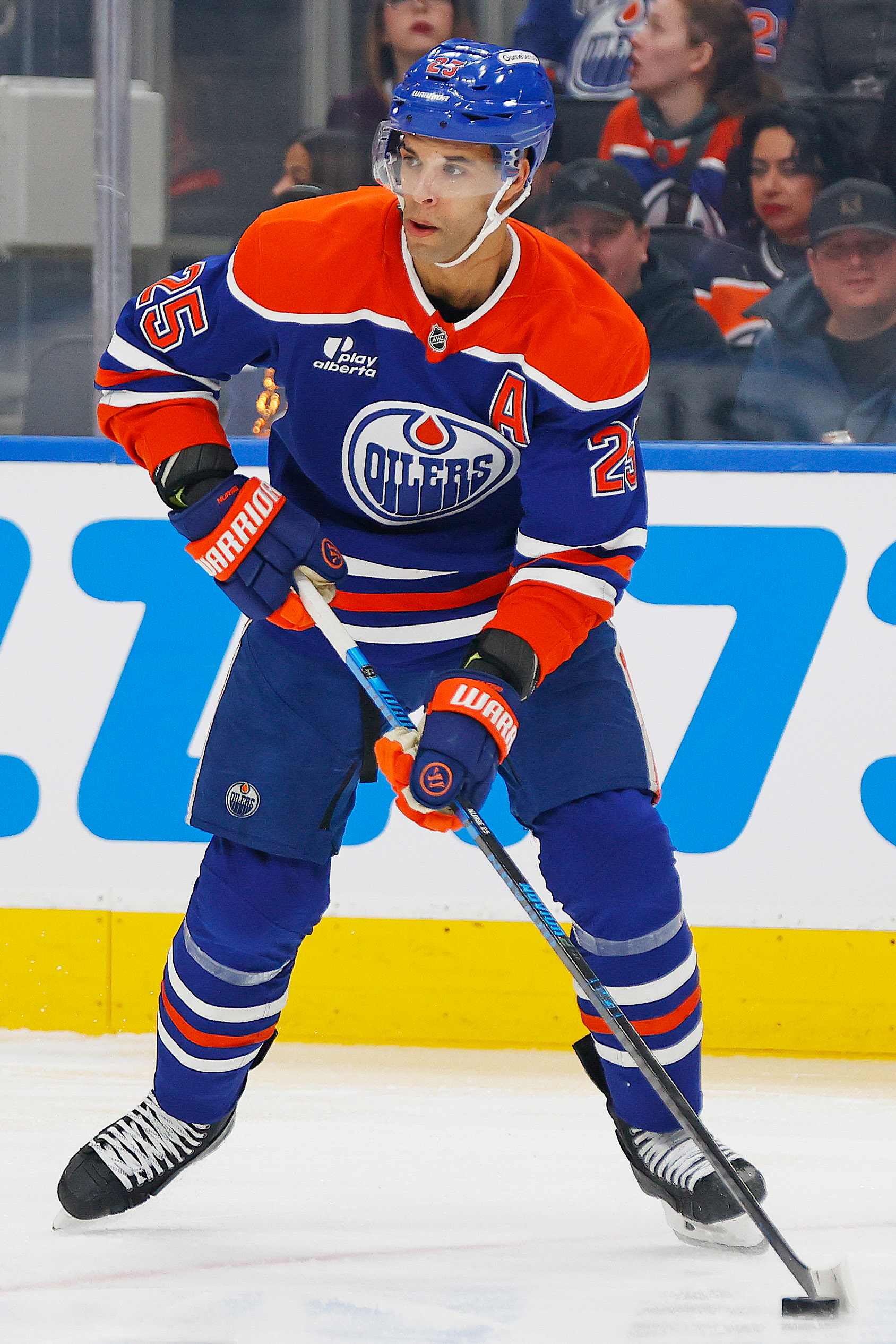
The former seventh overall pick by the Oilers in the 2013 NHL Draft has never inked a contract elsewhere. Nurse signed his entry-level contract in July of 2013, with a salary of $863.3K a season starting in 2015-16, when he saw his first full season of NHL play. After those five years, he signed a two-year, bridge deal at $6.4MM ($3.2MM AAV). Ending as an RFA in 2020, he kept the years the same on his next deal, with an increased value of $11.2MM ($5.6MM AAV) before signing his current contract that the Oilers appear eager to get off their books.
Even with the NHL cap hit rising to $104MM, Nurse’s payment, similar to that of a top-pair defenseman, hasn’t proved worthy of that cap hit. His hockey sense has seen a lack of translation to some notably questionable reads in high-pressure situations. Having made back-to-back Stanley Cup Finals in 2024, the coaching staff had slowly dropped Nurse’s ice time and considered scratching him, per Spector’s report. So much so, he ranked last among the seven Oilers defenders who played in that series, averaging just 15:51 of ice time per game.
In a trade, it’ll be likely that teams will look for the Oilers to take on a portion of the $9.25MM cap hit that he’s owed for four more years in the event a deal is agreed upon. Regardless, Edmonton will free up more money that will add to the team’s current cap space of around $14.6MM as it stands this summer with eight unrestricted free agents and two restricted free agents, notably from the team’s main roster.
Photo Credit: Perry Nelson-Imagn Images
Bruce Cassidy Would Entertain Any NHL Head Coach Role
Not even an electric Stanley Cup Finals has been enough to keep the Vegas Golden Knights from pushing for an advantage over the rest of the league. Amid one of the most energetic coaching wires in recent memory, Vegas is exercising their right to prevent recently-fired head coach Bruce Cassidy from interviewing for other jobs. The NHL has raised no issue with Vegas’ approach, pointing out that Cassidy would forfeit the $5MM his multi-year contract with Vegas promised him for the 2026-27 season by interviewing for another role. That money might not be an obstacle for the former Stanley Cup winner, though. In speaking with The Athletic, Cassidy shared that he simply wants to get back to work and would welcome the chance to fill any head coach role.
This will be prominent news for the Edmonton Oilers and Toronto Maple Leafs, the NHL’s only current coaching vacancies. Both clubs are in need of a leader after spinning their tires for the last few seasons. With the pressure of star-studded lineups, both clubs have also turned towards surprising ideas to try and bring in a difference-maker. Edmonton has kicked off a league investigation with their interest in former Leafs head coach Mike Babcock, who resigned from his most recent coaching role before coaching a single practice. The Maple Leafs are looking towards the other side of experience, interviewing 2024 retiree Joe Pavelski who spent last season coaching 15U hockey in Wisconsin. As shocking as both ideas are, they could each have merit, as Edmonton looks to strong-arm a Stanley Cup win while Toronto tries to kickoff a new era.
A free agent like Cassidy may be too great to ignore. The 61-year-old head coach is a two-time Jack Adams Trophy finalist and one-time winner. He has continued to stock his trophy cabinet over the last three years, winning the 2023 Stanley Cup, 2025 4-Nations Face-Off, and supporting a Silver medal at the 2026 Winter Olympics. More than his accolades, Cassidy’s proof is in the results. After missing out despite a winning record in his first year coaching in the AHL, Cassidy has led every single team has helmed to the postseason. That includes four trips to the Calder Cup Playoffs and nine trips to the Stanley Cup Playoffs – a mark that would have grown to 10 had Vegas retained his role for eight more games.
Cassidy’s clubs have made it by the first-round in eight of those 13 playoff runs. He made his first run to the Stanley Cup Finals in 2019, only to be disappointed by a fate-struck St. Louis Blues club. That mistake didn’t repeat itself when he returned to the 2023 Finals. Through the regular season, Cassidy has combined for a 373-173-72 record in the NHL – or an 82-game average of 50-23-9. He has reached those marks on strong Boston Bruins and Golden Knights clubs and should only reach higher heights with the strength of Connor McDavid and Leon Draisaitl or Auston Matthews and, potentially, Gavin McKenna.
That potential should be enough to keep both Canadian clubs patient for a few more weeks. The Stanley Cup Finals will end by June 17th, at the latest, and Cassidy could choose to forfeit his promised salary in the name of a new role soon after that. He would be far-and-away the top option on a coaching market pulling in names from hockey past, present, and future.
Oilers Have Player's Consent To Hire Mike Babcock
- After yesterday’s report indicating that the Edmonton Oilers have zeroed in on Mike Babcock as their next head coach, many questioned how this would affect the team’s leadership, particularly the future of Connor McDavid. According to TSN’s Ryan Rishaug, Babcock has already met with Edmonton’s player leadership, which would obviously include McDavid among others. Per Rishaug, the players gave the Oilers’ front office their full support to hire Babcock if possible.
[SOURCE LINK]
Offseason Checklist: Edmonton Oilers
The offseason has arrived for half of the league’s teams that aren’t taking part in the playoffs plus those who have already been eliminated. Accordingly, it’s now time to examine what they will need to accomplish over the coming months. Next up is a look at Edmonton.
After a pair of appearances in the Stanley Cup Final, expectations were justifiably high in Edmonton. However, the season didn’t go according to plan and they wound up being ousted by Anaheim in the opening round. GM Stan Bowman made a few moves in-season to try to shore things up, now he’ll have to make several more to try to help get the team back into contention.
Hire A Head Coach
With the Kings being set to hire Peter Laviolette as their next head coach, there are just two vacancies remaining with the Oilers being one of them. How the opening came about was a little unusual, as word leaked that they were hoping to speak to former Vegas bench boss Bruce Cassidy while Kris Knoblauch was still employed. It was only a few days after that report that Bowman decided to make it official that he was looking for a new head coach.
As of yet, Edmonton hasn’t received permission to speak to Cassidy yet, resulting in them continuing their search without his name in the mix. They’ve spoken to several veteran candidates and it appears there is a bit of a surprising front-runner, with the team doing some extra due diligence on Mike Babcock. More specifically, they’re trying to work through any potential concerns about hiring him with the NHLPA, signaling that they’re quite serious about the idea.
With Connor McDavid beginning his new two-year extension, it’s fair to say that there is a sense of urgency for the Oilers. With that in mind, it’s not surprising that they’re looking for someone with a proven track record although Babcock’s recent history makes his consideration stand out that much more. At this point, the risks are well-known and if they’re still willing to hire him, they’re banking on his success back with Detroit and Anaheim carrying the day to try to get Edmonton back to contention.
With the draft now less than three weeks away and offseason planning well underway, a hire needs to be in place in the near future.
Land A Goalie Upgrade
Last offseason, the thought was that they could once again get away with a Stuart Skinner–Calvin Pickard tandem. After all, while the day-to-day was consistently inconsistent, overall, it was good enough to get them to the Stanley Cup Final in two straight years. It was a cheap tandem and that would allow them to spend on filling other holes. Bowman then took advantage of Utah’s desire to move Connor Ingram, adding him for future considerations to give them a third netminder with experience.
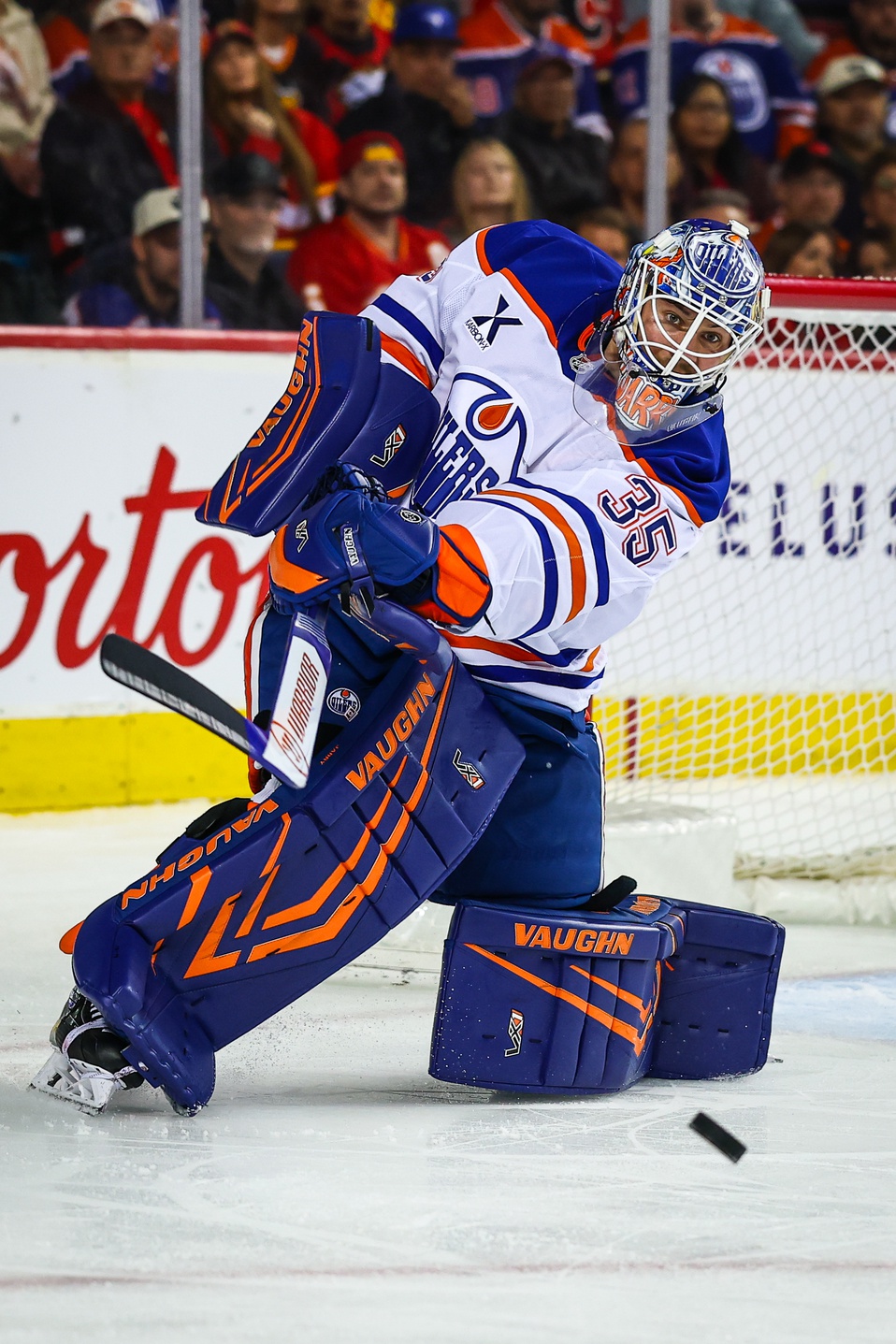 That move proved to be a shrewd one as he ultimately took over the backup role when Pickard struggled, then moved onto the starting job later in the season. But while that trade worked, the other one didn’t. Skinner was eventually moved with Brett Kulak and a second-round pick to get Tristan Jarry, thinking that Jarry would help stabilize things between the pipes. Instead, Jarry was worse, much worse, which eventually pressed Ingram into the starting role.
Jarry has two years left on his contract at a $5.375MM price tag. Between that and his performance, it’s safe to say that he’s not going to be traded. Meanwhile, Ingram is a pending unrestricted free agent. He can’t be brought back to be the starter as that’s a role he isn’t really suited for. But Jarry can’t be the starter either given how poorly he performed.
As a result, just months after trading for what he thought was a goalie upgrade, Bowman is going to have to make a move to upgrade on the upgrade. The free agent market has Sergei Bobrovsky who would be a short-term solution but he’s also coming off a rough year. Not many starters are available either so they may have to look at a bit of a short-term gamble, hoping that a netminder playing behind their defense could rebound. Buffalo has a surplus while Montreal will likely look to move Sam Montembeault but Bowman surely will be looking to see what other options are out there. But after how badly things went between the pipes this season, last summer’s history can’t repeat itself here.
Keep A Rental
The Oilers made a pair of moves with Chicago to shore up their roster before the trade deadline, adding center Jason Dickinson to strengthen the bottom six and Connor Murphy to add a stabilizing defensive presence on the back end. They’d undoubtedly like to keep both around. However, they only have around $14.5MM in cap space per PuckPedia and several roster spots to fill, including a goalie. While keeping both would be nice, they may be limited to just keeping one.
At this point, it’s evident that Edmonton’s preference is to have Ryan Nugent-Hopkins on the wing, allowing him to play higher up the depth chart. However, they’ve had some challenges filling the third-line center role, often resulting in their plans for Nugent-Hopkins being scrapped. While Dickinson is unlikely to repeat the 22-goal, 35-point effort from 2023-24, he’s a solid option to fill that spot if he stays. He’s reliable defensively, can kill penalties, and play with a bit of an edge. However, given the overall dearth of options available down the middle in free agency, his market may be strong enough to beat the $4.25MM he made the last two years while getting a considerably longer-term deal as well.
Murphy, meanwhile, logged big minutes after being acquired, logging over 20 minutes a night which was well above his average with the Blackhawks before the swap. He served as an anchor on the penalty kill while stabilizing the second pairing. A right-shot defender, he’ll certainly be in high demand if he makes it to the open market but at 33 years old, he won’t be in a position to command the type of longer-term deal that Dickinson should be able to. On the other hand, the Oilers already have more than $32MM in commitments on the back end; re-signing Murphy would give them the most expensive defense corps in the NHL, barring other moves made around the league, of course.
Keeping both players would be great, but would make accomplishing their other objectives much more difficult. Accordingly, re-signing one out of two might have to suffice.
Add A Top-Six Forward
Given the firepower this team possesses, this might seem a little strange. However, they only had four forwards reach the 40-point mark in 2025-26 and they did try to fill this spot last summer when they signed Andrew Mangiapane in a move that simply didn’t work out. Meanwhile, Jack Roslovic, who quietly put up 21 goals this season, seems likely to move on in free agency. Needless to say, there’s a spot to be filled here.
In an ideal world, Vasily Podkolzin and Matthew Savoie continue their development while Isaac Howard makes a legitimate push for a spot as well. If all of those things happened, they’d probably be fine. But this is a veteran-laden team with a win-now mentality; they’re probably not going to want to leave this to chance. While there aren’t many top-line forwards in free agency this summer, there are more second-liners available. A chance to line up alongside one of McDavid or Leon Draisaitl should be enough of a selling point to give Bowman some options, if they’re still able to afford this after addressing their other areas.
There’s a case to make that the defense needs to be shored up as well but it’s possible Murphy re-signs which would probably suffice. Failing that, it could also be rejigged depending on what Darnell Nurse wants to do, something that’s entirely in his hands now. While they’re waiting to see if he’s amenable to move, they should be setting their sights on lengthening their offense to take some of the pressure off their top players up front.
Photo courtesy of Sergei Belski-Imagn Images.